apologetics
Sensationalism through banality in Apologetics and Counter-Apologetics- Be skeptical (with examples)

Sensationalism sells. We know this in basically every field. But when it comes to faith, unfaith, apologetics, and counter-apologetics, we need to be especially aware of this. Confirmation bias is a major thing and we often want to jump on or share things with which we agree. What’s especially surprising to me is how often apologists and counter-apologists sensationalize points that are actually extremely banal to anyone who has read almost anything in the related field. I wanted to share two recent examples of this, with some commentary on why it matters.
First, Christian apologist Michael Licona shared the image that I put leading this post. He writes, “You do have a number of non-Christian scholars who acknowledge that the disciples believe Jesus had been raised physically, bodily, from the dead.” Conversational tone aside (“you do…”), the point is mundane and would be obvious to just about anyone with any awareness of anything in the field. Licona doesn’t necessarily “sensationalize” this one, but the fact that it’s being shared in a block quote as if it’s some kind of revolutionary point in apologists’ favor is disturbing to me. With any such point, whether it’s pro- or anti-Christianity, there will be someone coming along to disagree, of course. The point I’m making isn’t that such naysayers don’t exist; it’s that they’re fairly obvious in their extreme bias against what are basically indisputable facts. That there were some disciples who believed Jesus was raised bodily from the dead is a pretty easily established thing in the Gospel narratives and coming from early church history as well. It’s not just unsurprising but obvious that even some who aren’t Christian would grant this.
Licona–whether intentionally or not–seems to be setting this quote up to imply a bigger point, though. Something like “and this supports the notion that Jesus actually did bodily raise from the dead” is an inference any apologist would want someone to make. And of course, in the narrowest sense, this is true. If Jesus did, in fact, raise from the dead, then having disciples who believed that would be a likely outcome. And having those beliefs demonstrated in at least one disciple provides some very minimal support to the notion that it might have actually happened (else where did that belief come from?). I’m not intending to start a debate over that here, what I’m trying to say is that it seems this fairly banal point is intended to make some bigger implication, and leaving it unstated disturbs me. I’d much rather an apologist just come out and make the argument. And, to be fair, this is just the style Licona has on his page: share a rather mundane quote from his works somewhere and let people infer and argue as much as they want about it in the comments. I think that’s a potentially misleading way of interacting, especially as an apologist.
An example from a counter-apologist standpoint was a recent video put up by Paulogia, who markets himself as “A former Christian takes a look at the claims of Christians, wherever science is being denied in the name of ancient books.” Paulogia, as Licona, makes some good points occasionally. But he’s also prone to sensationalizing points as if they’re something major, when they absolutely are not.
The recent video was entitled “Paul Wasn’t a Christian — The Shocking Truth From a Scholar.” With such a title, I was expecting… a shocking truth. Instead, the point made in the video is that [I paraphrase] “Paul wasn’t a Christian, because there was no Christianity to convert to. So he didn’t convert, he instead saw his beliefs as making Jesus part of his already existing Jewish faith.” I mean, of course that’s true. Anyone who has done even the slightest amount of studying the formation of Christianity would know this. Reading the Bible alone would fill one in on Paul being Jewish. It’s not some revelatory point.
But Paulogia stresses this numerous times in the video. When introducing the issue with the scholar he’s featuring (Dr. Paula Fredriksen), he even says that when he was a Christian this kind of point would have made his formerly Christian self “very uncomfortable.” Dr. Fredriksen chuckles and says “Oh dear, I don’t want to alarm anybody.” She’s just there sharing some great insights into the development of the early church, but Paulogia keeps pushing to make her points sensational. I think this is intentional in this case due to the “shocking truth” tagline. He wants to make it seem like these relatively obvious points about the early church are somehow “shocking” to Christians in a way that might make them deeply “uncomfortable.”
Now, I don’t want to deny that some Christians would likely find it uncomfortable to acknowledge that Paul wasn’t a Christian in the historical sense. But that point is… obvious. There was no Christianity in the broad sense to convert to, so having him build upon his Jewish foundation with a Jewish Messiah is completely unsurprising. Paulogia in the description even says the interview is “explosive” and that while apologists “have built entire arguments on Paul’s story” it’s possible that “their foundation is completely wrong.” I mean, come on. This is absurd to the extreme, and I’m kind of surprised that someone who’s as careful a thinker as Paulogia often seems to be would even frame this discussion in this way.[1]
So we have here two simple points being framed in ways that make them seem more than they are. I think we should not do that. Banality isn’t necessarily a bad thing. Making obvious points can be helpful to those who don’t already know them. But to then sensationalize the banal as if it is some major point that can shift a paradigm, that’s something that I think we need to be very careful about and quite skeptical of.
[1] I think Paulogia’s critique of Habermas’s work counting scholars, for example, is a somewhat crucial and destructive takedown. Also, Paulogia and Fredriksen discuss other points which may be deeply uncomfortable for very conservative Christians, such as how the Gospels differ (to the extent where Fredriksen says we might categorize some of it as historical fiction if written today) and the like. But even here Fredriksen answers Paulogia’s question about whether there’s anything we can take as reliable in the Gospels with a more positive review–we have to take some of it as a real basis for things that historically happened. Paulogia seemed briefly defalted by Fredriksen’s (I’ll use the word again) banal point. But come on, this is silly to even deny.
SDG.
Harmonization of Scripture, Inerrancy, and History- Can inerrantists harmonize like historians?
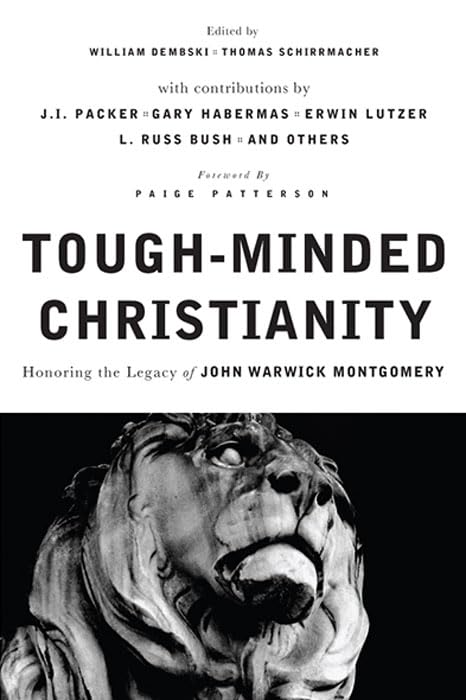
John Warwick Montgomery has been hugely influential on my own faith life, including in my development of theology while disagreeing with some of what he says. When he passed last year, I wrote a brief in memoriam. Since then, I’ve been rereading works by him and about him. One such work is Tough-Minded Christianity, a collection of essays in honor of Montgomery that was published in 2009 [1].
One essay in the collection takes on James Barr’s work, Fundamentalism. Barr was an extremely well-respected Old Testament Scholar who launched many a fusillade against fundamentalism and, in particular, against fundamentalist readings of Scripture. In particular, Barr wrote about how inerrancy would not work as a way of reading the Bible, and he especially attacked such a reading as impossible given the Bible we already have. Irving Hexham’s essay, “Trashing Evangelical Christians: The Legacy of James’ Barr’s Fundamentalism” clearly takes issue with Barr’s approach. Hexham frequently writes about Barr’s work in derogatory terms, such as calling it a “propaganda tract,” among other things. But Barr was a deep enough scholar to prompt Hexham to try to refute some of his arguments, and in doing so, I think he actually shows where Barr is right and evangelical defenders of inerrancy are wrong.
Hexham seeks to defend fundamentalist attempts to harmonize apparent contradictions in the Biblical text. One such example that he cites is the attempt to harmonize the cleansing of the Temple in John 2 with the same account in Luke 19, Mark 11, and Matthew 21). Barr writes about how some have argued that the best way to harmonize these passages is to assert that Jesus cleansed the temple twice, once at the beginning of his ministry and again near the end of his ministry. Barr writes that this harmonization is “simple but ludicrous.”
Hexham, by contrast, takes extreme issue with the use of the term “ludicrous,” and argues instead that it’s not unreasonable to make such an attempt at harmonization because, after all, we don’t have complete historical records. Hexham skirts around Barr’s incisive critique of the same evangelicals also attempting to harmonize two ascension accounts by arguing one is literal and the other is telescoping by asserting that Barr is just wrong to think fundamentalists can’t use both literal and non-literal techniques to read the Bible. At issue, however, is not whether one can defend inerrancy of Scripture by mixing ways of reading it; the issue is instead whether such readings are plausible or even necessary to begin with.
A more powerful critique from Hexham is the note that historians do this kind of harmonization all the time. And this is an extremely vital point. Hexham writes, “Harmonization, far from being an unhistorical attempt to explain discrepancies, is precisely what most traditional historians do every time they discover conflicting accounts in the archival record.” He goes on to cite others who note that historians often have “no external evidence as to whether the event recorded happened once, twice, or even three times…” and that in almost any historical writing, a selection effect is occurring which means the authors are intentionally highlighting aspects of the narrative at hand.
It is true indeed that no author can comprehensively write every detail of anyone’s life, nor do the Gospels claim to be doing so for Jesus. I think it’s also largely true that historians are quite comfortable harmonizing different stories to make them make sense. Indeed, it would quickly become impossible to write or engage with history if, every time there was a discrepancy between accounts, one simply said the account was unreal or did not happen. But there’s a huge gap between conceding that point and conceding that therefore the historical documents can be considered inerrant. Indeed, the opposite seems to be true.
When historians are harmonizing differing texts about an event, they aren’t doing so with the assumption that either text is completely without error. This is a far cry from what evangelical/fundamentalist readers of Scripture have to do in order to harmonize texts. Once one holds a doctrine like inerrancy, in which the entire Bible is supposed to be completely free from error, the process of harmonization takes on entirely new difficulties. One cannot, as historians do, harmonize two passages by simply stating one is mistaken. If one document says an event occurred at 14:00 and the other says it occurred at 04:00, the historian can do many things, such as find another source that might confirm one and deny the other. But the inerrantist cannot do that. They must come up with a harmonization that not only brings two passages together, but also makes them both somehow emerge from the harmonizing completely unscathed. And that is where things start to become absurd. Because for the inerrantist, the only way to harmonize the two times for the same event above is to multiply the event. After all, the times cannot be wrong; admitting one of the times is wrong is to admit an error into the text. Therefore, the event itself must have occurred at both times. And that is what Barr is getting at with his critique of fundamentalists readings as being ludicrous.
Certainly one may punt to the broad possibility that we don’t have the Bible telling us that a cleansing of the temple only occurred one time, but every indication seems to be that such an event was unique and powerful, not something that Jesus decided to do, say, every Tuesday or so. The ascension is even more absurd to multiply, which is what leads the inerrantist to suddenly abandon their attempt to read the historical narrative as historical reportage and instead read it as a telescoping timeline. That’s the only way to salvage the text–by turning it into something that is intentionally not reporting things in the exact timeline in which they occurred.
Hexham’s attempt to salvage inerrantist harmonization methods, then, fails. While it is still remotely possible that some events happened twice, allowing there to be a direct, historical reporting happening in both instances of an event; such a broad possibility is not all that matters. Not every harmonization can be achieved by simply multiplying instances of the event occurring. And no historian is attempting to harmonize other historic texts by assuming they are entirely without error. The parallel Hexham attempts to draw upon is undermined by his own prior commitments. Inerrantists aren’t mashing two texts together by using other sources to determine their accuracy or looking at the plausible explanations. No, they are absolutely committed to the assumption that any two (or more) Scriptural passages they are trying to harmonize are entirely without error, and therefore any harmonization must preserve that central assumption. There’s a vast chasm between those two methodologies, and one that makes the inerrantist reading seem, at times, ludicrous.
Notes
[1]It’s remarkable looking at the book now, with its foreword by Paige Patterson, who has since been implicated in covering up sexual abuse (see here), an essay by Ravi Zacharias (multiple allegations of sexual abuse here), and thinking about how highly touted this book was at the time. In apologetics circles, I remember seeing a lot of discussion, though I’ve rarely seen it mentioned since about 2014. This might be, in part, due to JWM not being as well-loved in those circles as some other apologists. In any case, this collection purports to carry on JWM’s “tough minded” approach to Christianity, one built upon strength of evidence and an apologetic approach of the same.
All Links to Amazon are Affiliates
Links
Be sure to check out the page for this site on Facebook!
Book Reviews– There are plenty more book reviews to read! Read like crazy! (Scroll down for more, and click at bottom for even more!)
SDG.
——
The preceding post is the property of J.W. Wartick (apart from quotations, which are the property of their respective owners, and works of art as credited; images are often freely available to the public and J.W. Wartick makes no claims of owning rights to the images unless he makes that explicit) and should not be reproduced in part or in whole without the expressed consent of the author. All content on this site is the property of J.W. Wartick and is made available for individual and personal usage. If you cite from these documents, whether for personal or professional purposes, please give appropriate citation with both the name of the author (J.W. Wartick) and a link to the original URL. If you’d like to repost a post, you may do so, provided you show less than half of the original post on your own site and link to the original post for the rest. You must also appropriately cite the post as noted above. This blog is protected by Creative Commons licensing. By viewing any part of this site, you are agreeing to this usage policy.
John Warwick Montgomery (1931-2024)
John Warwick Montgomery died on September 25, 2024. John Warwick Montgomery is the most well known apologist from Lutheran circles in decades. From within the Lutheran Church-Missouri Synod, he fought not just external threats to apologetics, but also internal ones. As a Lutheran, he was forced by turns to defend even the prospect of apologetics from those who would lean towards fideism or some form of Lutheran irrationalism.
Montgomery was highly prominent in discussions about apologetic method. When the presuppositional method arose within Reformed circles, Montgomery was perhaps its most vocal and engaging critic. His famous (or infamous, depending on one’s stance) essay “Once Upon an A Priori” used fables to engage with presuppositional method and showed that the method would likely collapse under its own arguments when faced with an equally staunch presuppositionalist from another faith tradition. He wrote quite a bit in defense of evidentialist apologetics, and generally believed and argued that the Resurrection was historical fact and can and should be investigated as such.
Inerrancy was another of Montgomery’s pillars of argument. He argued against positions which would qualify inerrancy more, and attempted to defend it within the Lutheran tradition. He argued against other Lutherans who left his own denomination, asserting that their changed stance on inerrancy was the “fuzzification” of inerrancy to the point at which it would become unrecognizable as such. Indeed, I find his arguments to that effect fairly convincing, and that is part of the reason I don’t hold to inerrancy; it simply does not work with how the Bible was written. Montgomery would vociferously disagree, but I’m thankful to him for clarifying quite adroitly how qualifying a position like inerrancy begins to make it difficult to pin down.
Montgomery was a lawyer as well. He wrote on a vast range of topics, from law to demonology, from apologetics to historiography. His texts show a man whose mind was capable of absorbing and expanding on countless theologically-inclined topics in ways that, if they didn’t reflect particular expertise, still would show a general grasp of the topic and drive engagement with it. I have read and re-read some of his books to the point where covers are beginning to fall off. It’s often popular to read only those with whom one agrees, or to read one with whom one disagrees only to challenge and condemn. Montgomery, for me, is a constant challenging duelist. Where I disagree, I continue to find reading his works fruitful and challenging. Where I agree, I find pleasure in seeing his defense ably lay out points of impact.

I had the pleasure of meeting him at a conference in 2012. He was friendly and vivacious. The lecture he gave on religious conversion was fascinating to me at the time. I wrote up the lecture notes for a blog post here, and he sent me an email about my post, apparently thinking I had simply re-posted his lecture. He wrote, “Can you inform me as to where you obtained it and whose permission you obtained for doing so? I am willing to have you retain it on your website–but I need to know your source for posting it.” I wrote him back, explaining I had based my post upon my own notes based upon his lecture. His response was gracious, and to the point, thanking me for my detailed response and exposition of his lecture. It was my last interaction with him–I wish I’d had the courage to e-mail him again later.
Montgomery’s voice will be missed. He was an able defender of his positions and his mind wriggled into the logical holes in others’ positions in ways that made it uncomfortable to disagree with him. I admire the man, and I hope to see him in the hereafter.
SDG.
Links
John Warwick Montgomery– See all my posts tagged about John Warwick Montgomery (scroll down for more).
——
The preceding post is the property of J.W. Wartick (apart from quotations, which are the property of their respective owners, and works of art as credited; images are often freely available to the public and J.W. Wartick makes no claims of owning rights to the images unless he makes that explicit) and should not be reproduced in part or in whole without the expressed consent of the author. All content on this site is the property of J.W. Wartick and is made available for individual and personal usage. If you cite from these documents, whether for personal or professional purposes, please give appropriate citation with both the name of the author (J.W. Wartick) and a link to the original URL. If you’d like to repost a post, you may do so, provided you show less than half of the original post on your own site and link to the original post for the rest. You must also appropriately cite the post as noted above. This blog is protected by Creative Commons licensing. By viewing any part of this site, you are agreeing to this usage policy.
“The Foolishness of God” by Siegbert W. Becker- An engaging struggle
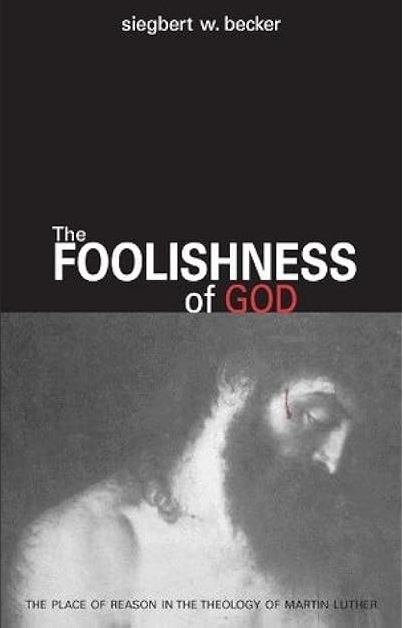
Many years ago, when I was deep into apologetics and trying to figure out my place in the world and in my faith, my dad gifted me with a copy of The Foolishness of God: The Place of Reason in the Theology of Martin Luther by Siegbert W. Becker. Well, a lot has changed since then, and I am still trying to figure out my place in the world and in my faith, but I am much more skeptical of apologetics than I was then… to say the least. I re-read The Foolishness of God now, probably more than a decade after my original reading. It was fascinating to see my scrawling notes labeling things as ridiculous or wrong when I now basically think a lot of it is right. On the flip side, I still have quite a bit to critique. I’ll offer some of my thoughts here, from a viewpoint of a progressive Lutheran.
Becker starts by quoting several things Luther says about reason, from naming it “the devil’s bride” to being “God’s greatest and most important gift” to humankind (1). How is it possible that reason can be a great evil, vilest deceiver of humanity while also being one of the most enlightening parts of human existence? One small part of Luther’s–as Becker interprets him–answer is that it depends on what reason is being used for. That’s a simplistic answer, though, suggesting one could categorize things like nature and science (reason is good!) and judging biblical truth (reason is bad!) into neat boxes for Luther. In some ways, this can be done; but in others, when one digs more deeply, it becomes clear that such an application would be an okay rule of thumb for reading Luther but would not be accurate all the way through. For example, where Luther sees the Bible teaching directly on nature or science, using reason to judge that teaching would be rejected. This, of course, opens up my first and probably greatest point of disagreement with Luther’s theses about reason. And yet, it also is confusing, because in some ways I’m not sure I wholly disagree.
What I mean by this is that I, too, am skeptical of the use of human reason for any number of… reasons. This is especially true when it comes to thinking about God. Supposing it is true that there is a God and that God is an infinite being in any way–whether it is infinitely good, infinitely powerful, etc. In that case, it seems that to suggest that we can use reason to grasp things about God is a fool’s errand. We are not infinite and can certainly not grasp the infinite; how can we expect our brains that cannot contain the multitudes to reason around God? On the other hand, in many ways reason is all we have. Even supposing God exists, we ultimately act or believe in ways and things we think are reasonable. And I’m deeply skeptical of a denial of this. What I mean by the latter is that I simply do not believe that people can believe things they think are inherently anti- or irrational. Becker outright makes the claim that Luther–and presumably Becker himself–do believe such things. Time and again, Becker flatly states that some claims of Christianity are inherently contradictory–be it the Trinity, the Incarnation, or [for Lutherans] Christ’s presence in the Lord’s Supper. So Becker is claiming that Luther truly did believe in things he thought were inherently anti-reason and irrational. But when push comes to shove, I strongly suspect that Luther and people like him who make these claims think that it imminently reasonable to believe in the irrational. Even while claiming that they believe in things they claim they think are contradictory, they are doing so because it makes sense to them. And this is precisely because of the limitations of human reason and thinking. We cannot go beyond our own head, we have to go with what we think is right, perhaps even while claiming we think it is irrational to do so.
Setting aside that question, Luther’s solution to the gap between the finite and the infinite is that of revelation. Because God became incarnate and came to humanity, we, too, can know God. God revealed God to us. Becker rushes to use this to attempt to counter what he calls Neo-orthodox interpretations that stack the Bible against Christ. He writes, “Neo-orthodoxy’s distinction between faith in Christ and faith in statements, or ‘faith in a book,’ is artificial and contrary to reason. By rejecting ‘propositional revelation’ and making the Bible only a ‘record of’ and ‘witness to’ revelation, the neo-orthodox theologians drain faith of its intellectual content” (11). I find this deeply ironic wording in a book that later has Becker outright claiming that Luther–and by extension Becker himself–believed things that are contrary to reason and affirming that this is a perfectly correct (we dare not say “reasonable”) thing to do. In my opinion, at least, it is quite right to make the distinction between faith in Christ and faith in statements. That doesn’t mean the Bible is devoid of revelation or can have no revelation; rather, it means that, as Luther put it [paraphrasing here], the Bible is the cradle of Christ. But to put the Bible then on par with Christ as a similarly perfect revelation is to make a massive mistake, as people, including Lutherans like Dietrich Bonhoeffer, have argued.
All of this might make it seem I have a largely negative outlook on Becker’s work. Far from it. I found it quite stimulating and generally convincing on a number of points. Most of it, of course, is exegesis of Luther’s own views of reason. And I think that Luther, while he could stand to be far more systematic and clear, makes quite a few excellent points about reason. When it comes to trying to draw near to God, reason does not do well. Why? Our own era has so many arguments in philosophy of religion about the existence of God. Anyone who has read or engaged with the minutiae of analytic theology or analytic philosophy getting applied to God has experienced what I think, in part, Luther was warning against. Philosophers, apologists, and theologians continue to attempt to plumb the very nature of God and gird it up with scaffolds of reason, providing any number of supposed arguments for God’s existence, proofs of Christological points, and the like. Bonhoeffer, a favorite theologian of mine, put many of these attempts to shame in a succinct quote: “A God who could be proved by us would be an idol.”
I think a similar sentiment applies to so much about God and even just the universe. I mean, we’re on a planet that is less than a speck in a cosmos that is so unimaginably huge and ancient that thinking we can comprehend it is honestly shocking. Sure, we can slap numbers on it, using our human reason to try to slice the universe into chewable bites, but when we find out things like how it takes more than 1 million Earth’s to fill the Sun, and that our Sun isn’t even remotely the largest star, nor the largest solar system, etc… how absurd is it to think we really comprehend any of it? And so, for me, from a very different angle, Luther’s words about reason make sense. Sure, we can use it to try to understand little slices of nature. But when we start to line it up with things of the infinite, it may be better to just let God be God.
The Foolishness of God is a fascinating, engaging, and sometimes frustrating work. In a lot of ways, it’s like engaging with Luther’s own works. It’s not systematic; it doesn’t cohere; it’s intentionally provocative. I will likely give it another read one day, and who knows where I–and it–shall stand?
All Links to Amazon are Affiliates links
Links
Dietrich Bonhoeffer– read all my posts related to Bonhoeffer and his theology.
Be sure to check out the page for this site on Facebook and Twitter for discussion of posts, links to other pages of interest, random talk about theology/philosophy/apologetics/movies and more!
SDG.
——
The preceding post is the property of J.W. Wartick (apart from quotations, which are the property of their respective owners, and works of art as credited; images are often freely available to the public and J.W. Wartick makes no claims of owning rights to the images unless he makes that explicit) and should not be reproduced in part or in whole without the expressed consent of the author. All content on this site is the property of J.W. Wartick and is made available for individual and personal usage. If you cite from these documents, whether for personal or professional purposes, please give appropriate citation with both the name of the author (J.W. Wartick) and a link to the original URL. If you’d like to repost a post, you may do so, provided you show less than half of the original post on your own site and link to the original post for the rest. You must also appropriately cite the post as noted above. This blog is protected by Creative Commons licensing. By viewing any part of this site, you are agreeing to this usage policy.
Joshua and Judges as contrasting accounts- Archaeological evidence and apologetic import
Joshua and the Conquest Narratives- Archaeology says otherwise
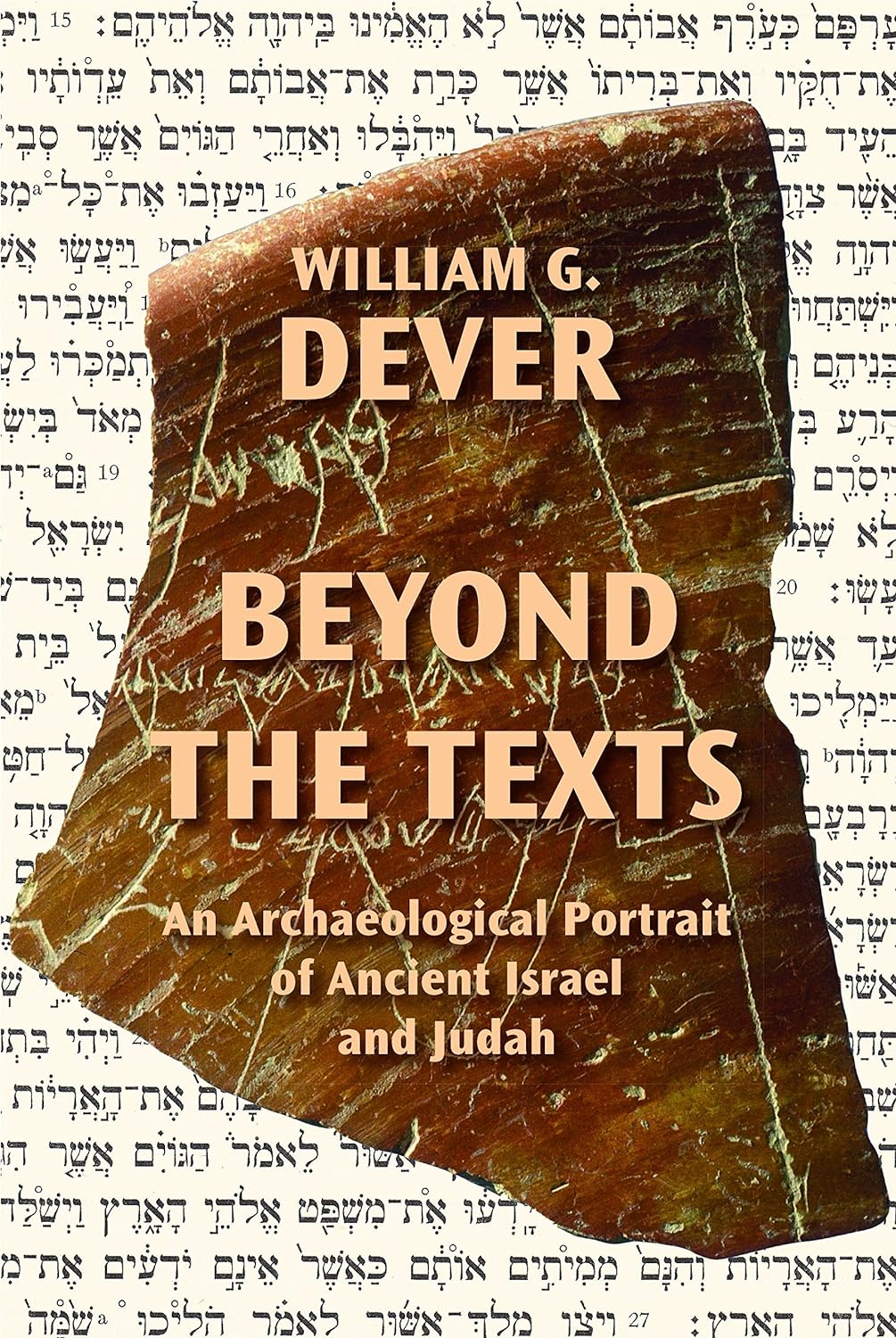
Dever’s work, Beyond the Texts: An Archaeological Portrait of Ancient Israel and Judah is hyper-focused on the archaeological evidence related to Ancient Israel and Judah. There’s a lengthy section at the beginning about the differences between looking at archaeological evidence and its (largely) “given” nature (eg. a soup bowl is a soup bowl-that’s its use, and arguing otherwise doesn’t change it) as opposed to texts like the Bible or other writings which have interpretation, memory, hyperbole, fictionalization, etc. built in.
The book is full of major insights, and Dever continues to rely almost exclusively upon archaeological evidence to make his points. Eventually, he gets to the conquest narratives of Joshua-Judges. Of the 30+ sites mentioned as being conquered in those books of the Bible, only 3-4 have any signs of destruction in the right time period. Writes Dever:
“[I]n the light of the overwhelming archaeological evidence, there was no large scale warfare on the thirteenth- and twelfth-century horizon, except that initiated by the Philistines along the coast… The inevitable conclusion is that the book of Joshua is nearly all fictitious, of little or no value to the historian. It is largely a legend celebrating the supposed exploits of a local folk hero.” (186)
I kind of knew this already–a major impact point for myself as someone who literally got a degree in apologetics was looking at the evidence in ANE history and trying to reconcile that with the Bible. And broadly speaking, evangelicalism has a severe problem when it comes to the archaeological evidence here.
Dever, however, doesn’t simply unload on the Joshua account and move on. He shows the marked contrast between how Judges shows the inhabitation of the land and how Joshua does so, noting the difference in themes between the two books. Dever concludes regarding the two books:
“The conclusion in light of archaeology is inevitable. The book of Joshua looks like a late, Deuteronomistic construct preoccupied with theological concerns, such as the Sinai covenant, centralization, and the temple, that were paramount particularly in the exilic and postexilic era. Its authors were scarcely familiar or concerned with life in the early Iron Age settlements. The book of Judges, by contrast, has the ring of truth about it. The core of the narrative consists of stories about everyday life in the formative, prestate era, when ‘there was no king in Israel [and] all the people did what was right in their own eyes’ (Judges 21:25). The portrait of as much as two hundred years of struggles under charismatic leaders with other peoples of the land–of a long drawn-out process of socioeconomic, political, and cultural change–is more realistic than that of the book of Joshua, which is really the celebration of a legendary hero” (187-188).
These conclusions are supported broadly by Dever’s own look at the way people of that time period were living, with fascinating insights into the lack of states and lack of even defensive positions throughout the region at the time (see 133ff). Additionally, the conclusions are supported by Dever’s noting of the contrast between how Joshua does not accurately represent that region at the time while Judges even has details of how the people lived at the time portrayed in accurate ways (188). A careful reading of the two books reveals these contrasts, to go along with the list complied by Dever which includes things like Israel being a huge territory immediately conquered in Joshua compared to a small, decentralized entity in Judges. Again, the latter, a group of settlements with little to unify them and no central state, reflects the time period and the archaeological data far more than the concept of a vastly populated land ripe for dramatic, swift conquest. This is all buttressed even more by the fact that many of the sites mentioned in Joshua have been excavated and shown to either be unoccupied or unconquered with no layers of destruction in the time period it supposedly would have taken place.
These aspects present a series of problems for the conservative apologist as one who wants a unified, inerrant text with total historical accuracy. We’ll look at one attempt to do just that below, but for now I want to note the import of moving beyond such a view. Dever’s point of Joshua being theologically oriented to questions of the time in which it was written is vastly important. To say that Joshua doesn’t present an accurate view of what actually happened in the land does nothing to undermine its intent. It is not intended to be historically accurate as an account of Iron Age settlement in the region. Instead, it is focused upon questions of the land, the temple, and the strict monotheism, sprinkled with a heaping helping of hero worship of Joshua and classic Ancient Near Eastern hyperbole. It is only when the book is forced into modern boxes that it becomes problematic. The genocidal violence it portrays did not happen, and therefore does not present a problem for God’s character. While some may press that even this portrayal calls into question the character of God, I’m much less interested in that argument, because once we acknowledge that it is a work of humans attempting to understand God, it becomes, for me, much more understandable that sometimes they get it wrong.
A Contrasting, Evangelical View and Some Problems
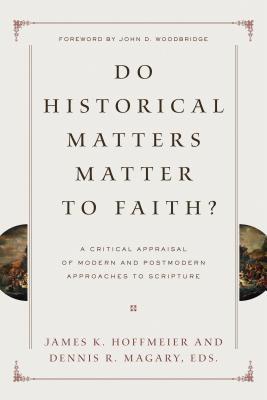
Evangelical apologists, a group which once would have included me, have had a confrontation with this evidence in sight for a long time. In Do Historical Matters Matter to Faith?, a group of evangelical authors published with a conservative press (Crossway, 2012) a collection of essays attempting to confront some of the “modern and postmodern” challenges to Scripture. John M. Monson’s chapter is entitled “Enter Joshua: The ‘Mother of Current Debates’ in Biblical Archaeology.” Monson notes that apart from the most conservative scholars, the Joshua conquest account has been taken to be historically unreliable (431).
Monson confronts this presumed unreliability by calling into question a few things related to consensus views of archaeology. First, he plants the seeds of doubt by complaining that archaeology has been “given a privileged role of proving or–through assumed lack of evidence–disproving the biblical record” (431). Note the wording of this first contention. The use of the word “assumed” here carries a lot of weight in the sentence. Monson is implying that people are simply assuming the biblical text is mistaken on the conquest (and other) accounts. But that implies that there simply hasn’t been anything found, and so people are assuming with “lack of evidence” that there is no evidence. That is not the case, however, as Dever and others have demonstrated. Dever’s book outlines a list of 35+ sites mentioned in the Biblical conquest accounts. Of those sites, only 3-4 have any evidence of even possibly being threatened by Israelite incursions, and the majority of those which have been excavated do not show a layer of destruction in the right timeline for the conquest narratives. Thus, it is hardly fair to say people are assuming the biblical account is unreliable based on a “lack of evidence.” Instead, there is positive evidence to suggest that the Joshua conquest accounts are indeed inventions.
Monson, however, goes on in his defense. He argues that archaeology is a younger discipline and that combining its findings with other disciplines remains “fraught with challenges” (435, 439), he suggests that archaeology is simply assumed to be the discipline to confirm ancient writings but implies that such a use is perhaps mistaken (438-439), and he maintains that archaeology, due to its “scattered, random, and incomplete nature” struggles to find the right place alongside the Bible’s account which “is selective, ancient, and theologically oriented” (439). Many of these points are points that resonate with me, particularly the latter. Archaeology, like paleontology, relies quite a bit on luck. Now, both disciplines can rely increasingly on technology to help guide their finds, so “random” isn’t necessarily correct, but there is no corrective for discovering things which simply no longer exist. Like ancient creatures whose entire fossil record may have been destroyed by vulcanism, excavation, construction, or simply lack of preservation, with archaeology there are any number of figments of the past which no longer exist for any number of reasons. To rely too heavily upon archaeology for the construction of the ancient past seems to be the wrong approach. However, Monson’s own words about the Bible being “selective, ancient, and theologically oriented” should suggest to him and other apologetically oriented and/or evangelical readers that perhaps it is their own view of Scripture which is at fault here. If they are going in assuming that a text written with a theological (or other) purpose is supposed to yield faultless history, then perhaps that assumption itself is worth questioning as well. Indeed, why not simply acknowledge that Joshua is attempting to make theological and selective points rather than convey a 100% accurate historical picture of what happened in Israel?
Monson, for himself, goes on to make an argument that Joshua records geographically accurate accounts of coming into the land. When I originally read the book about 10 years ago, I found this utterly convincing. However, reflection now suggests that Monson’s argument is too neat. For one, while it is elegant in attempting to show that Israel’s conquest as recorded in Joshua would make sense along geographic lines, that doesn’t account for the fact that whatever ancient writers/editors of the book would also be well-familiar with the geography of the region and so would be unlikely to invent or embellish an account which did not correspond to the geography of the area. Second, Monson claims that his argument from geography shifts the burden of proof such that it “lies with those who would deconstruct these stories” (452). That may be, but having two alleged campaigns correspond geographically with the reason does not somehow undermine or disprove the archaeological evidence directly showing that multiple sites allegedly conquered during this time period either show no signs of occupation or no signs of conquest. This, notwithstanding Monson’s claims that some of these sites were uninhabited and so wouldn’t have had such signs (I believe I’m understanding his argument correctly on p. 436-438).
Monson’s argument appears to be revisionist and reactionary. While he provides one positive evidence in support of his claim, his entire argument for these two supposed campaigns relies not upon the actual evidence of destroyed sites but rather on the lay of the land. Fascinatingly, Monson is forced into analogical language even in this geographic argument, such as spending extensive time arguing that the Hebrew word for “gate” can refer to geographical features (448-449). That may well be the case, but it is hard to credit Monson for making an argument that supposedly buttresses the Joshua conquest narratives against archaeological evidence when he is to be found arguing not just that “gate” means a geographical feature, but also that Ai, the region being considered, can be referred to as “The Ruin” due to another lengthy argument relying upon the definite article being used with “ruins” (443-444) and that Ai, apparently problematic for a number of archaeological regions, could have, “For all we know,” been “nothing more than a small squatter’s settlement in the vicinity of the imposing ruins of the mighty Early Bronze Age City of the third millennium BC” (437-438). Well sure, but for all we know, that “squatter’s settlement” would then not make a lot of sense as the sight for two massive military campaigns that crisscrossed a whole region!
Finally, the real motivation between Monson becomes clear at the very end of his chapter. After pointing out the text of Joshua shows him remaining faithful to God, Monson writes: “Over a millennium later, another Joshua walked through this same region. He too remained faithful. If we dismiss the real Joshua ben-Nun and his times, what is to stop us from dismissing the later Joshua, Jesus of Nazareth?” (457). This remarkable final sentence of Monson’s chapter is a case study in a loaded question. First, it implies that only by agreeing with the conquest narratives in toto can one agree there was a “real Joshua ben-Nun.” Second, it implies that there is an evidential link between Jesus and Joshua’s conquest narratives. That may be true, but it is unargued for here. Third, it uses scare tactics. Only those who agree with a slippery slope type argument will acquiesce to it, but for those people–presumably inerrantists–it’s a powerful way to thwart disagreement. After all, if the Bible isn’t historically accurate on Joshua, then that somehow means we have to question Jesus! This, of course, is ridiculous, but it’s exactly what Monson is implying. And frankly, this scare tactic shows where Monson is coming from in the earlier parts of his chapter. There’s not a genuine engagement with the evidence happening. Rather, the evidence needs to be massaged, evaded, or simply denied in order to maintain the story of Joshua at all costs; because for Monson, Jesus and the literal, genocidal conquest of Canaan stand or fall together.
Conclusion
It is probably clear to the reader at this point that I think Dever’s account is much more convincing than Monson’s. Yet, I say this as one who remains a Christian. Reading Dever actually gave me a sigh of relief. For so long, I had a bunch of issues with these accounts. Initially it was the ethical problem–why would God destroy these peoples? Later, I had the archaeological problem–now that I’d sacrificed my ethical impulse to condemn the slaughter, what if it hadn’t actually happened? To have someone who studies the archaeology simply lay out the evidence and say “This did not happen, and it was likely a fictitious invention to celebrate a folk hero” is, in a way, a relief. For one, his following that up with arguing that Judges is likely a much more accurate account makes me convinced yet again of something I’ve thought for a while–that once one leaves aside inerrancy, the biblical text becomes not just more readable but less scary in some ways–it doesn’t require you as a reader to constantly defend the indefensible. For another, setting aside the conquest narratives means that it is what I had long leaned towards–that these parts of the Bible are really just people trying to hyperbolically make “their guy” sound better than “the other guy”–seems backed by archaeological evidence. And Christians, we should truly be concerned with truth rather than attempting to support a pet doctrine, inerrancy, that doesn’t work on its own terms anyway.
All Links to Amazon are Affiliates links
Links
Be sure to check out the page for this site on Facebook and Twitter for discussion of posts, links to other pages of interest, random talk about theology/philosophy/apologetics/movies and more!
Reconstructing Faith– Links for posts related to my own faith journey and how I have been reconstructing faith (scroll down for more).
Inerrancy With No Autographic Text?– Even those looking to defend inerrancy are having difficulty with the concept of the autographic text. But what if it is not just that we can never find such a text, but rather that no such text existed to begin with? I argue that such is the case at least for some works and that inerrancy therefore does not work.
SDG.
——
The preceding post is the property of J.W. Wartick (apart from quotations, which are the property of their respective owners, and works of art as credited; images are often freely available to the public and J.W. Wartick makes no claims of owning rights to the images unless he makes that explicit) and should not be reproduced in part or in whole without the expressed consent of the author. All content on this site is the property of J.W. Wartick and is made available for individual and personal usage. If you cite from these documents, whether for personal or professional purposes, please give appropriate citation with both the name of the author (J.W. Wartick) and a link to the original URL. If you’d like to repost a post, you may do so, provided you show less than half of the original post on your own site and link to the original post for the rest. You must also appropriately cite the post as noted above. This blog is protected by Creative Commons licensing. By viewing any part of this site, you are agreeing to this usage policy.
Inerrancy With No Autographic Text?
The Chicago Statement on Biblical Inerrancy, perhaps the most well-known and oft-cited affirmation of biblical inerrancy, declares that inerrancy as a doctrine applies explicitly to the autographic text of Scripture- “Article X. WE AFFIRM that inspiration, strictly speaking, applies only to the autographic text of Scripture, which in the providence of God can be ascertained from available manuscripts with great accuracy.” The reality is that inerrancy as defined by the majority of inerrantists, including the Chicago statement, simply cannot stand up to the reality of how the Bible was formed. What makes this point most starkly, in my opinion, is that conservatives who affirm inerrancy are now finding themselves in the unenviable position of learning and having to acknowledge that for some of the Bible, the very concept of an autographic text is an impossibility.
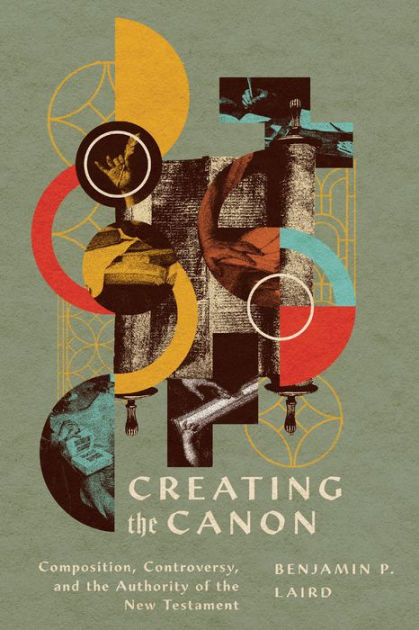
One example of this is Benjamin P. Laird. Laird is associate professor of biblical studies at the John W. Rawlings School of Divinity of Liberty University. Liberty University’s statement of faith includes a clause about the Bible which states, in part, “We affirm that the Bible, both Old and New Testaments, though written by men, was supernaturally inspired by God so that all its words are the written true revelation of God; it is therefore inerrant in the originals and authoritative in all matters.” Once again, at question is the “original” text of Scripture. But what if there is no original? I want to be clear, I’m not asking the question, which is oft-discussed in inerrantist writings, of what happens if we don’t have the original. Textual preservation has made that almost impossible for any ancient text, and inerrantists have long argued that this is no problem because while inerrancy only applies to the original or autographic text, the Holy Spirit has worked to preserve the text faithfully to the extent that we can be assured that we know enough to have proper faith and practice.[1] No, the claim I’m discussing isn’t whether we have the original text, but whether we can definitively point to any (imagined) autographic text as the original or the autograph at all.
Laird’s discussion of autographs in his book, Creating the Canon, is informative. The book focuses on the formation of the canon of the New Testament. Laird notes that the longtime assumption of [some] scholars was that the original text was the inerrant one. However, he goes on to look at how letters and other works were produced in antiquity, including a number of difficult questions this raises: “When we refer to an original autograph, are we referring to the initial draft of a work, a later revision or expansion, the edition that first began to circulate, or to the state of the writing at some later stage in the compositional process?” (48). Additionally, after noting that “it would seem most appropriate to identify the original autograph of a work not as the initial draft but as the final state of the writing that the author had reviewed and approved for public circulation” (49), he notes that letter writing in the ancient world often included the writer using a scribe and having that scribe produce “one or more duplicate copies” for themselves, including copies that may have differed depending upon the audience to whom they were sent (49, 54ff).
A concrete example is the ending of Romans, which Laird notes has some problematic textual history (56-57). After noting the difficulty of determining just how long the “original” letter to the Romans was, Laird notes various scholarly responses, including the possibility that there were two different “original” editions of Romans, one with a longer doxology that would have been intended for local audiences and one which omitted it, which were eventually combined (60-61). This leads to the remarkable conclusion that “it is a strong possibility that at least three copies of the text of Romans were produced at the end of the compositional process: one for the Romans, one for those in Corinth, and one for Paul and/or his associates” (61-62). In the conclusion of this fascinating section, Laird states, “Rather than assume that the compositional process of the canonical writings culminated with the production of a single ‘original autograph,’ it is therefore best to think of something that might be described as an original edition” (64).
I admire Laird’s dedication to highlighting the problematic nature of the concept of “autograph” when it comes to the biblical text, but have to wonder what kind of cognitive dissonance that might create for someone who teaches at a place where the statement of faith explicitly refers to inerrancy in the “originals.” Sure, Laird could punt the issue to whatever he means by “original edition” as opposed to “original autograph,” but at that point, what does inerrancy even mean?
I affirmed and defended inerrancy for many years. I finally let go of it for a number of reasons which are largely beyond the scope of this post. But I understand inerrancy, and understand how to defend it. I have even done so on this very blog. What I know included things like we defended the doctrine as applying to the autographic text. But if, as Laird and many, many others are pointing out, it’s true that there is no autographic text for at least some of the Bible, how can a defense of inerrancy even make sense? It’s like a constantly retreating battle for inerrantists: declare the Bible inerrant; but which Bible?; declare it only applies to the autographs; but we don’t have the autographs; so say that the autographic text is preserved at least to the extent that it doesn’t impact essentials of the faith; but autographs don’t exist to begin with. What’s supposed to follow that? For Laird the answer seems to be “say the original edition is inerrant.” But what is an original edition? And Laird’s questions, which are quite helpful, would absolutely apply to any such discussion- is it the drafts made along the way to the “final product,” and which final product- the one(s) Paul kept for himself or the one(s) to the local church or the one(s) to the church(es) at large?
The massive import of these questions for any doctrine of inerrancy must be made explicit. The Chicago Statement makes its stand upon the autographic text. If there is no autograph to which we can point, that statement falls. Almost every definition of inerrancy in modern times does the same. They are written as if we could travel back and time and point to a text, fresh off the pen of a scribe or writer, and say “this text is inerrant.” The reality is that not only do we not have such a manuscript today, but it is becoming increasingly clear that such a scenario needs to be rewritten, with a number of different texts directed towards different audiences, with different inclusions and exclusions in the text. Would the time traveler have pointed to a text of Romans with a doxology or without it? Would they point to a work in progress or a final draft? Would certain stories that seem to have been edited into the text be part of the inerrant text or not? The time traveler scenario is now complicated beyond imagining. We don’t have a single text of Romans we could point to definitively and say “there it is.” This is admitted even by those who wish to affirm inerrancy. And so again, what does it even mean to affirm that doctrine?
It’s worth at this point stopping the discussion to ask a simple question: is inerrancy worth it? Is there something about inerrancy that makes it an unassailable doctrine that all Christians must affirm such that we must continue to circle the wagons in ever smaller circles in order to try to be able to point at something that is inerrant in Scripture? Or–hear me out–or is it possible that evangelicals have made the wrong thing inerrant? Instead of making a text inerrant and essentially equivalent to God, what if we allowed that place to stay with Christ, the God-Man Himself, and the person whom the Bible attests as the divine Word of God? This has been, historically, the position of the church[2], and is a position which requires far less retreating whenever a new discovery is made that seems to call into question some potential error in the Bible or some problem with how modern statements on how the Bible must work are read. Rather than trying to constantly revise and salvage a doctrine that appears to need a revisiting every few years, Christians should focus instead upon God, whose steadfast love never changes.
Notes
[1] See, for example, the Chicago Statement, again Article X- “WE DENY that any essential element of the Christian faith is affected by the absence of the autographs. We further deny that this absence renders the assertion of Biblical inerrancy invalid or irrelevant.”
[2] A history of the doctrine of inerrancy is very revealing and shows it to be a largely American invention in the late 19th to early 20th centuries. The statements on this doctrine were not found in ecumenical councils, nor creeds, nor really anywhere until the 20th century. Efforts to read the doctrine back onto history are just that- reading into history rather than reading history. For example, there is not discussion of the “autographic text” in early Christian writings on the canon. They didn’t even have a concept of why that would be important. The doctrine is totally dependent upon post-Enlightenment and modernist categories. Ironically, it is parasitic upon textual criticism, developing essentially in opposition to that which those who affirm the doctrine wished to deny. When textual criticism pointed out difficulties in the text as it stood, inerrantists punted the doctrine to the autographs. This is just one example of how inerrancy is entirely dependent on categories foreign to historical Christian doctrine or to the Bible itself.
As a Lutheran, an additional note- I mention here the Lutheran church explicitly because even in the earliest times for Lutherans, some Lutherans–including Luther–had questions about the canonicity of some accepted books of the Bible, along with some other issues that were raised. Lutherans have held almost from the beginning that, as Luther said, the Bible is the cradle of Christ; the Bible is not God. Some Lutheran denominations today hold explicitly to inerrancy (eg the LCMS and WELS), but this does not seem continuous with global Lutheranism or Lutheran doctrine specifically.
All Links to Amazon are Affiliates links
Links
Be sure to check out the page for this site on Facebook and Twitter for discussion of posts, links to other pages of interest, random talk about theology/philosophy/apologetics/movies and more!
SDG.
——
The preceding post is the property of J.W. Wartick (apart from quotations, which are the property of their respective owners, and works of art as credited; images are often freely available to the public and J.W. Wartick makes no claims of owning rights to the images unless he makes that explicit) and should not be reproduced in part or in whole without the expressed consent of the author. All content on this site is the property of J.W. Wartick and is made available for individual and personal usage. If you cite from these documents, whether for personal or professional purposes, please give appropriate citation with both the name of the author (J.W. Wartick) and a link to the original URL. If you’d like to repost a post, you may do so, provided you show less than half of the original post on your own site and link to the original post for the rest. You must also appropriately cite the post as noted above. This blog is protected by Creative Commons licensing. By viewing any part of this site, you are agreeing to this usage policy.
Book Review: “The Uncontrolling Love of God” by Thomas Jay Oord
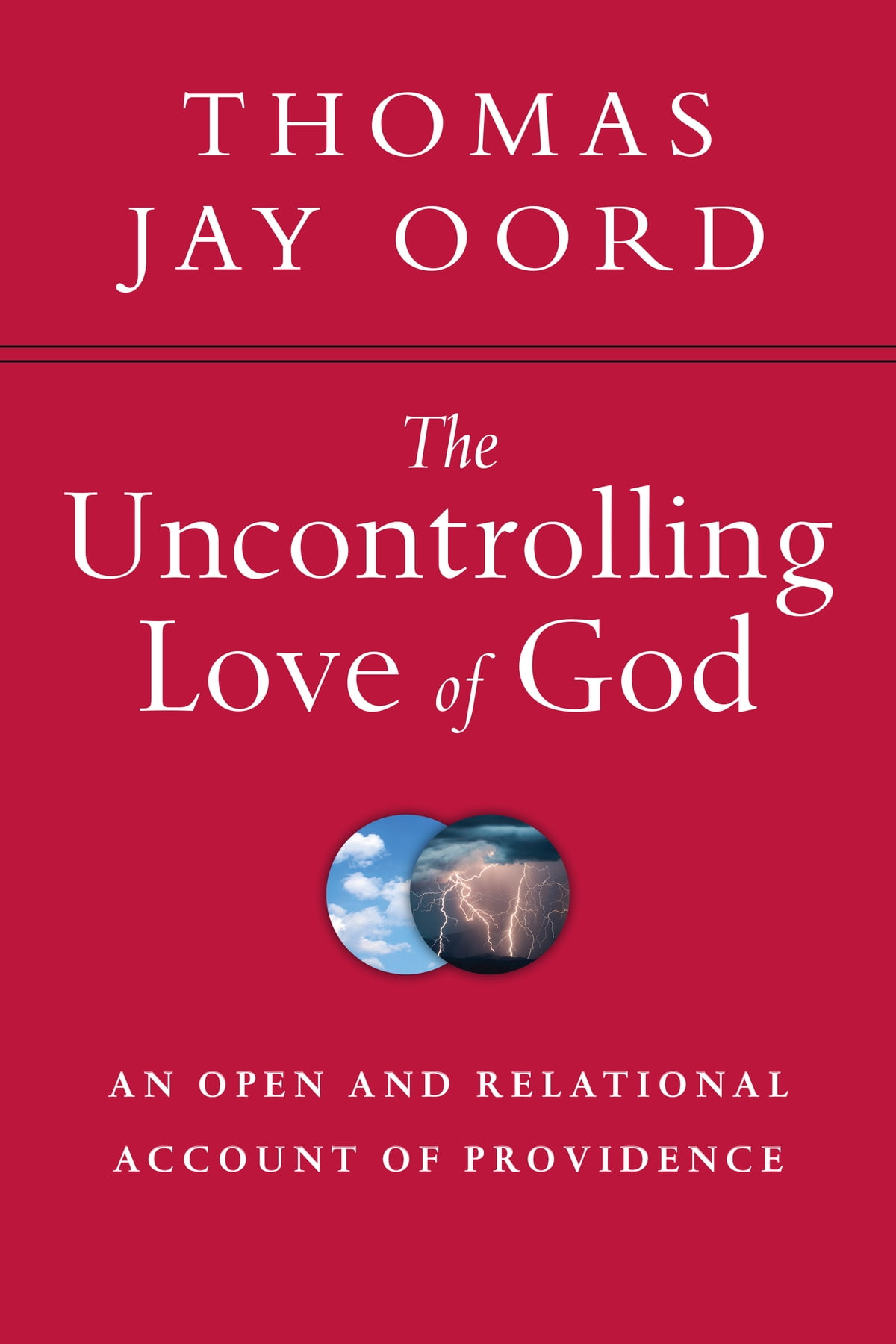
The Uncontrolling Love of God: An Open and Relational Account of Providence by Thomas Jay Oord is the kind of book that I would have either intentionally sought out to pick apart or steered clear of a few years ago. Why? Oord unabashedly challenges traditional conceptions of divine providence, especially digging at the wounds of evil to argue that such accounts are insufficient answers to the problem of evil that we face in the real world.
Before turning to evil, though, Oord argues for the establishment of actually random events. That is, events that are not predetermined by anything. This randomness is real, not apparent, and is balanced by laws of nature which are to be read as regularities, not as comprehensive explanations of reality in lawlike terms (43-44). Going along with this, non-predetermined free choice is another factor in the world which must be accounted for in accounts of providence.
A central concept of the book is the notion of “genuine evil.” Oord notes that philosophers tend to distinguish between necessary and gratuitous evils. He essentially labels gratuitous genuine evils. These evils are “events that, all things considered, make the world worse than it might have been” (65). That doesn’t mean there can’t be goods that might come from them; rather, they are events where the actors involved could have chosen something better instead (65-66). Most Christian theological positions are keen to prevent God from being the primary cause of evil or the one predetermining evil, and there are various attempts to avoid doing this. Oord presses the point though, arguing that even having God as a secondary cause for evil, or attempting to portray overriding goods or ultimate goods as somehow overcoming evil is insufficient to adequately respond to genuine evils (chapter 4 on Models of God’s Providence delves into this deeply).
Ultimately, Oord offers an alternate model of providence, which he calls the “essential kenosis model.” As the name implies, this focuses on the notion of kenosis–divine emptying of the divine self or power–for the sake of other. The model holds that God is essentially, not accidentally good. That is, God does not choose good, but rather is good. Along with this, Oord’s position, in contrast with almost every other position of providence, argues that “God cannot unilaterally prevent genuine evil” (167). Such a position, Oord argues, is aligned with views that God cannot do logically impossible actions. On this position, God preventing all genuine evil unilaterally is a logical and actual impossibility. Thus, Oord’s position avoids the difficulty of needing an overriding good for ultimate resolution of good and evil. The palatability of this will vary, but Oord makes a compelling case for his position.
The Uncontrolling Love of God presents a challenge to more traditional conceptions of divine providence. Oord takes the position to the logical extremes, which will likely alienate some readers. For those seeking an alternative to all-controlling views of God and evil, the book will resonate.
All Links to Amazon are Affiliates links
Links
Be sure to check out the page for this site on Facebook and Twitter for discussion of posts, links to other pages of interest, random talk about theology/philosophy/apologetics/movies and more!
Book Reviews– There are plenty more book reviews to read! Read like crazy! (Scroll down for more, and click at bottom for even more!)
SDG.
——
The preceding post is the property of J.W. Wartick (apart from quotations, which are the property of their respective owners, and works of art as credited; images are often freely available to the public and J.W. Wartick makes no claims of owning rights to the images unless he makes that explicit) and should not be reproduced in part or in whole without the expressed consent of the author. All content on this site is the property of J.W. Wartick and is made available for individual and personal usage. If you cite from these documents, whether for personal or professional purposes, please give appropriate citation with both the name of the author (J.W. Wartick) and a link to the original URL. If you’d like to repost a post, you may do so, provided you show less than half of the original post on your own site and link to the original post for the rest. You must also appropriately cite the post as noted above. This blog is protected by Creative Commons licensing. By viewing any part of this site, you are agreeing to this usage policy.
“Camp Damascus” by Chuck Tingle- A surprising look at faith, hope, and bigotry

CW: Conversion therapy, demonology, horror fiction, discussion of sexuality
Camp Damascus by Chuck Tingle
I just read this novel by Chuck Tingle (more on author below). The story follows a young woman who’s part of an insular evangelical group that basically owns the town she’s in. The religious group is internationally famous for its Camp Damascus, a gay conversion camp that boasts a 100% success rate.
Fairly early on, some elements of horror crop up, and the main character seeks to figure out what’s going on. It becomes more and more clear that Camp Damascus is the center of something quite insidious. Just how did they get the 100% success rate, and how does it tie into the horrifying things experienced throughout town?
I wanted to bring the novel to this blog because it is a remarkably strong look at deconstruction from within a cult-like group, along with several other deep looks at Christianity. There are scenes in which characters fire verses back and forth at each other to try to discredit the other. There is discussion of science/faith and a logical/evidence vs. spiritual/faith based approaches to reality that is incredibly nuanced for genre fiction. Tingle asks readers how far is too far to go when it comes to one’s beliefs.
The book is horror, so it has several gruesome moments and isn’t probably the best pre-sleeping reading at times. It definitely tugs at the heartstrings and should engage readers to consider their opposition to LGBTQ+ rights.
I honestly grabbed it because I know the author will cause a stir, but was blown away by the content. I was shocked to see such frank and honest discussion of difficulties with faith and finding middle ground and even finding one’s way back when one’s been harmed by that faith.
I can’t in good conscience share without noting broader context of the author. Chuck Tingle is (in)famous for some extremely raunchy and intentionally ridiculous stories (search Amazon for his author name and you’ll see- NSFW titles FYI). A glance at his Wikipedia shows a strange history. The intent appears to be satirizing more than anything, but having not read these other works I can’t comment more upon them. Anyway, I am glad curiosity led me to read this book because it is such a thought-provoking look at faith and doubt.
Camp Damascus has me thinking. I was not expecting it to get me thinking. I don’t really know what I was expecting, but I thought it was worth writing more about. What happens when we make our own narratives; when we are willing to do what it takes to get results? And what of faith? How do we balance it and logic or evidence? I recommend the book, but only so long as readers are comfortable.
SDG.
Biblical Archaeology: Does the Mt. Ebal Tablet Prove the Bible?
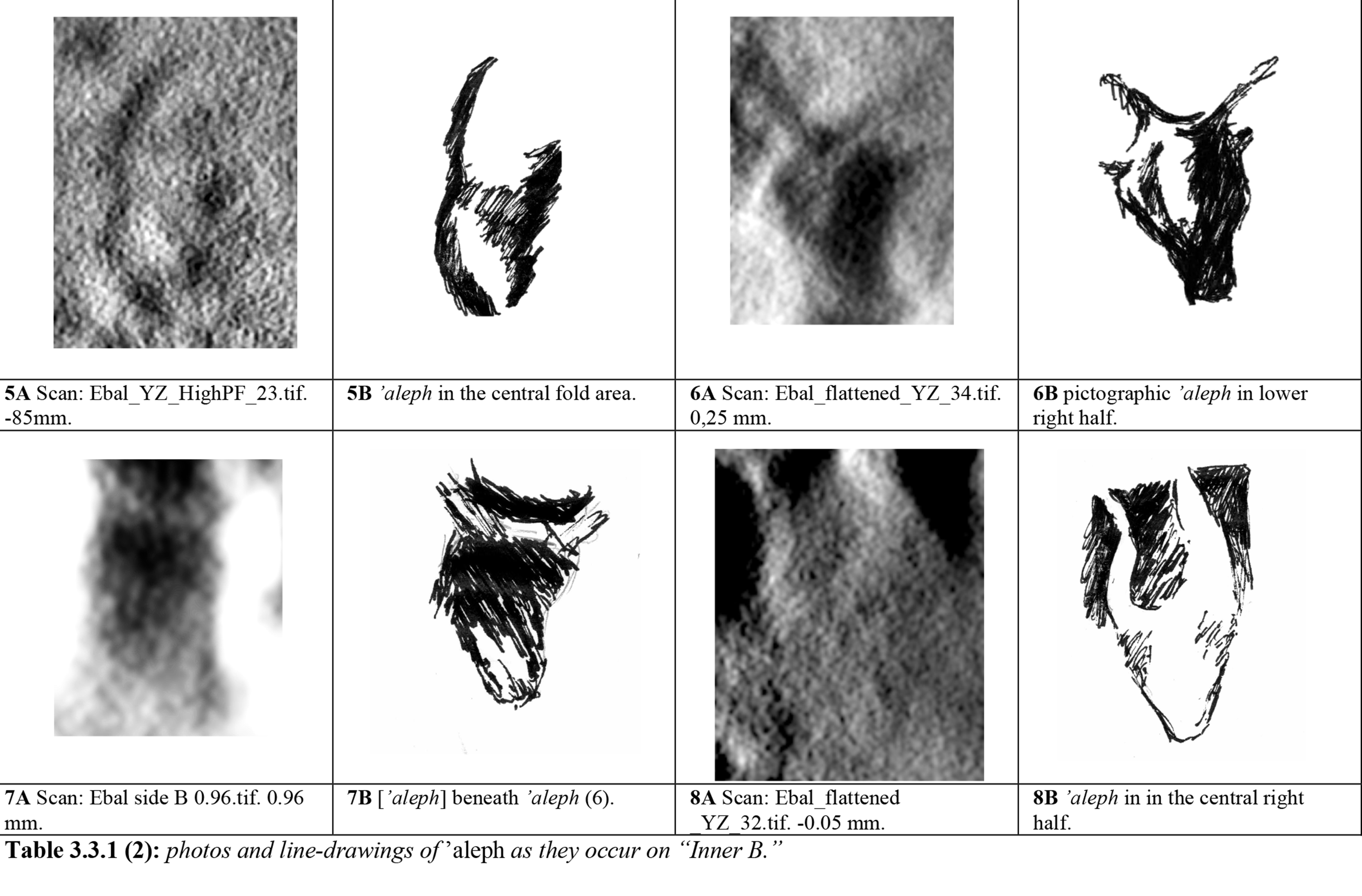
The “Mt. Ebal Curse Tablet” has created something of a stir in some circles, especially those interested in Christian apologetics. The find itself could be extraordinary, assuming it passes additional review. While published in a peer reviewed journal, the publication of the findings is not published in an archaeology journal, leading to some skepticism about the ability to stand up to archaeological peer review. Others have pointed out additional problems with the journal publication, some of which are summarized in an article from the Biblical Archaeology Society.
What I want to hone in on, though, are the fantastical claims made about the fine by Scott Stirpling, one of the archaeologists involved in the find and interpretation thereof, in a video he made with Sean McDowell. The video is on YouTube and entitled, “Oldest Hebrew Writing? Mt. Ebal Curse Tablet (Revisited).” Stirpling makes a number of claims in this video, and I think some of these are emblematic of the way the apologetics community unfortunately over-inflates the evidence for Christianity. This, I believe, is detrimental to the aims of Christian apologetics, because if we make claims that cannot be adequately backed by evidence, it makes people more likely to doubt other claims which may have a better evidentiary grounds for belief.
I won’t be reviewing the whole video, nor do I personally have expertise in archaeology. Any time I write about the “curse tablet” it should be understood that is meant as an “alleged” due to the highly controversial nature of the find. What I want to point out instead are problems with what I do have expertise in: apologetics.
Stirpling claims, among other things:
1. the curse tablet provides evidence for the notion that Moses and Joshua were literate (Starting around 20:00 into the video)
2. The curse tablet is directly tied to Deuteronomy 27 and Joshua 8 as a real find that really backs up those specific chapters of the Bible (21:20 and following)
3. The curse tablet undermines the documentary hypothesis (35:00 and following)
4. The curse tablet summarizes Deuteronomic curses and therefore provides evidence for them as historical events (9:20)
1. Curse Tablet and Literacy
The argument here has a number of hidden assumptions. First, that having a single inscribed tablet suggests widespread literacy. Second, it appears Stirpling is actually at least skirting the claim of suggesting this tablet just was written by Joshua and/or Moses. That’s a huge assumption and claim that I don’t think anyone could take as anything beyond invention. Would it be great to have? Of course! But this tablet is not that proof. It’s not like it’s signed “-Moses” or “-Joshua.” I don’t get it. Even assuming the tablet has writing, and that that writing is earlier than the earliest Proto-Hebrew we have, one has to ask the question: how does this prove that Moses and/or Joshua were literate/wrote this tablet? So far as I can tell, there is no evidence to suggest this is correct.
2. and 4. Curse Tablet and Bible verses
I couldn’t find the exact time stamp for one of the claims I heard from Stirpling as I listened to the video a couple times, but not only does he claim that the curse tablet is tied to Deuteronomy 27 and 28 and Joshua 8, he also claims that Job 19:24, in which the author exclaims desire to have their words inscribed by iron implement(s) on lead shows that this curse tablet is the exact kind of thing being referenced there. If a reader happens to watch the video and can find that reference again, I’d appreciate it.
Anyway, this claim is incredible to me. Not only does Stirpling acknowledge immediately after making it that he has to presuppose the exacting historical nature of the references in the Bible in order to make the argument (thus making it a kind of loop: Dt. 27 and Jsh. 8 and Job 19 all tie together to show a lead curse tablet; the lead curse tablet proves the veracity of those references), but the claim itself is so much stronger than the evidence at hand suggests we ought to make. Assuming Stirpling is right about the date of the tablet, its location[1], it actually having text, that text actually being “Proto-Hebrew,” and that text actually reading as Stirpling et al. suggest it does, how does a tablet that reads [quoting directly from their paper]:
“A.You are cursed by the god yhw—cursed. B. You will die, C. Cursed – C’. Cursed, B’. you will surely die. A’.Cursed you are by yhw—cursed.”
…how does that text actually support the claim that this is a summary of Deuteronomy 27 and 28’s curses? What exactly is there here to tie this tablet so explicitly to the exact curses of Deuteronomy, as Stirpling directly claims it is? Other than it using the word “cursed” and a possible version of the divine name, YHWH, what connection is there between this tablet and the verses it’s supposed to confirm? There doesn’t seem to be any other than in the imagination of those who want to connect the two, and that’s highly problematic for evidential value.
3. Documentary Hypothesis
The Documentary Hypothesis itself is a bit of a misnomer, as its splintered off into a number of different theories, and more recent works I’ve read (extreme caveat–I’m not an expert, so I may very well be behind the times here) seem to suggest that the overarching hypothesis has fallen somewhat out of favor due to its somewhat pedantic way of reading the Bible. Anyway, it’s really not clear to me how this find, if genuine, is supposed to undermine the Documentary Hypothesis (DH hereafter). We know that worship of YHWH was more ancient than most or all of the Bible, and that YHWH was worshiped in other lands possibly or probably prior to the ancient Israelites coming into the region. So having an ancient inscription using the name YHWH does nothing to the DH so far as I can tell. It’s not that no one ever used the name YHWH before the Yahwist came and edited the Bible. Instead, the DH, to my knowledge, suggests that a Yahwistic worshiper came through later and edited the Bible to insert YHWH’s name into portions somewhat haphazardly to ensure worship was properly being directed to YHWH instead of just or merely Elohim/El. But nothing about the date of the use of the divine tetragrammaton would somehow disprove or distort the DH. I’m willing to be corrected here, of course, but I just don’t see the relevance.
Conclusion
More study of the Mt. Ebal curse tablet is needed. I personally hope it turns out to be something genuine that might have value. The limited scope of the supposed text on the tablet, however, along with the already highly contested nature of the text itself makes me urge caution. We should not set up apologetics claims that are so grandiose that it’s easy to knock them down.
Additional Notes
[1] Stirpling admits at several points that his group is relying upon the earlier excavators’ accuracy in reporting exactly where the debris that they sifted through came from. Allowing for human error, it’s possible the tablet didn’t even come from an altar as the report claims. Moreover, the location of Mt. Ebal is, according to Stirpling himself, only known through the Bible. So while that doesn’t mean it’s wrong, one does wonder how one can tie this exact find to this exact mountain as the exact one in the Bible and on the exact altar of Joshua, as Stirpling claims in one of the claims I’m not covering at more length. He really does say that he thinks that the rounded altar this tablet supposedly came from due to notes from another archaeologist about where the debris came from that they sifted to find the tablet just is the altar Joshua used in Joshua 8. Why? It seems mostly because that would be of the most apologetic significance.
SDG.
“An Artful Relic” by Andrew R. Casper- Apologetics of the Shroud
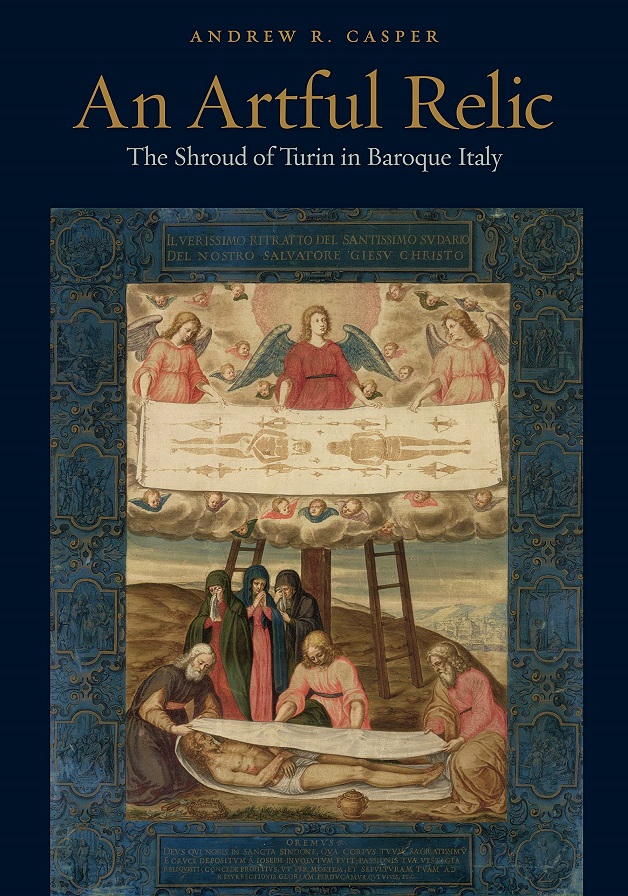
An Artful Relic: The Shroud of Turin in Baroque Italy by Andrew R. Casper is an impressive study of the impact of the Shroud of Turin on art, artists, and society in the 1500s-1600s. Not only is it lavishly illustrated, it also provides excellent historical data for those interested in the Shroud of Turin.
The thesis of the book is simple: the Shroud of Turin was immensely important in shaping art and even culture in Baroque Italy. That said, the work touches upon many important aspects for those interested in Shroud research. One aspect is the debate over its authenticity in history. While the debate over the Shroud’s authenticity continues today, the historical debate should inform those interested in the question. Casper notes that the acceptance of the Shroud’s authenticity in Italy (and elsewhere) was at least partially due to the immense influence of the House of Savoy. Their vested interest in making the Shroud a focal point for veneration and cultic worship greatly raised its esteem in Europe. Additionally, its survival of a fire in 1532 was seen as only explicable by miraculous intervention, thus leading more to accepting the Shroud as authentic (10). Neither of these, of course, will fully tilt opinion in modern minds regarding the Shroud’s authenticity. For people interested in that question, though, they should take into account the fact that the Shroud’s authenticity only became cemented in this time, and that its appearance in history cannot be traced to earlier than the latter half of the 1300s.
Casper draws attention to the way artists and others commented upon the supposed miraculous nature of the Shroud’s image in Baroque Italy. This included much comment on the way blood formed the image. The notion that the Shroud was explicitly a work of art made by God arose in this time period. It was insisted that God’s handiwork was shown with Christ’s blood as the pigmentation (57-58). These contentions had to deal with earlier Christian theology that argued against the possibility of Christ’s blood being left behind in the resurrection. For example, Aquinas had argued that because Christ’s body was true and complete in the Resurrection, the blood all rose with Christ “without any diminution” (73). Of course, not all Christian theology held to this view, and others argued that not all the blood had to be back in Christ’s body at the resurrection (74). The notion that it was the blood that formed the image stands in contrast to some modern arguments that radiation from the energy of resurrection formed the image. While it might be too strong to suggest that these two interpretations are irreconcilable, the inability to agree upon the formation of the Shroud remains an open question in research. Casper notes the blood as central to the veneration and worship of/around the Shroud in Baroque Italy, however. This would suggest that any modern explanation that does not hold to the same view has shown evolution from and important differences with earlier thought on the Shroud.
Casper goes over the influence of the Shroud on art in detail, noting the care with which copies were made, contrasting that with the apparent carelessness (or at least, lack of caring for) selection of artists to copy the Shroud was sometimes conducted. The Shroud and veneration thereof appeared all over in artwork, and influenced how illustrations of Christ were made. Casper forcefully makes the point that the Shroud as an artwork hasn’t been explored enough, and that its influence on contemporary artwork (here going with the assumption that it did not exist earlier than the 14th century) is quite strong.
Indeed, this raises a question for those who argue in favor of the Shroud’s authenticity: why did it not influence art so heavily before? While some arguments insist upon coins or certain icons being based upon the Shroud, no artwork exists depicting the Shroud qua Shroud prior to this time period. If the Shroud existed and was venerated in the 4th century or earlier, as some argue, why did artwork not depict it as such? No argument about the alleged secret history of the Shroud could work here, because if other artworks depicting Christ were widely distributed that depict a Christ allegedly based upon the Shroud of Turin, why could not the Shroud itself exist in such artworks? And why is it that only once an imminently powerful European family, the House of Savoy, threw their weight behind it that the Shroud rose in cultural prominence? One could anticipate various answers to these questions, but for this author, the answers are insufficient to demonstrate the Shroud’s actual existence prior to the 14th century. Indeed, the ubiquity and influence of the Shroud in and upon art in Baroque Italy seems an argument against its earlier existence.
Casper’s work is not, I should clarify, an argument for or against the authenticity of the Shroud. While he touches upon the question, his focus is almost entirely on the way the Shroud was depicted in art. nd this itself is a fascinating question. Casper presents many firsthand accounts of the Shroud, explanations of its depiction, and specific inquiries into artworks based upon it. The book therefore is of great interest to anyone interested in the Shroud of Turin.
An Artful Relic is a highly recommended read. It clearly demonstrates the influence of the Shroud in Baroque Italy and raises many questions and paths of research into religious art and the Shroud specifically. Those interested in the question of its authenticity should also read the book and see what questions and answers may come to mind based upon Casper’s thorough research.
Links
The Shroud of Turin- An Apologetics Sinkhole? – My first post in the series on the Shroud of Turin in which I comment broadly about my interest in it and why I think it demonstrates so many problems.
Be sure to check out the page for this site on Facebook and Twitter for discussion of posts, links to other pages of interest, random talk about theology/philosophy/apologetics/movies and more!
SDG.
——
The preceding post is the property of J.W. Wartick (apart from quotations, which are the property of their respective owners, and works of art as credited; images are often freely available to the public and J.W. Wartick makes no claims of owning rights to the images unless he makes that explicit) and should not be reproduced in part or in whole without the expressed consent of the author. All content on this site is the property of J.W. Wartick and is made available for individual and personal usage. If you cite from these documents, whether for personal or professional purposes, please give appropriate citation with both the name of the author (J.W. Wartick) and a link to the original URL. If you’d like to repost a post, you may do so, provided you show less than half of the original post on your own site and link to the original post for the rest. You must also appropriately cite the post as noted above. This blog is protected by Creative Commons licensing. By viewing any part of this site, you are agreeing to this usage policy.

 J.W. Wartick - Reconstructing Faith