apologetics
Coins, Icons, and the Shroud of Turin- Apologetics of the Shroud

One category of claims made in favor of the authenticity of the Shroud is that other artwork reflects the image of the Shroud. Often, this is linked to legal status for points of congruence. Thus, for example, it is argued that legally, 14 points of congruence between a suspect’s fingerprint and a fingerprint from a crime scene are necessary to determine a match. But with the Shroud, there are allegedly many icons and coins and other objects with a huge number of points of congruence well beyond the legal standard. Thus, in a video on Shroud3D (linked to me by one apologist interest in the Shroud), it is stated that there are “250 points of congruence between [the] Shroud and icon,” which is left as an argument for the clear link between the icon and the Shroud.
There are a number of problems with this species of argument related to the Shroud of Turin. I don’t have the time nor the expertise to analyze individual alleged points of congruence. Indeed, most of the sources I found making claims like this cited other sources, which in turn cited other sources, which in turn I was either unable to find or unable to determine the specific alleged points of congruence. The video I linked above shows someone waving a mouse icon on a screen at some alleged similarities between the Shroud and an icon, but that, with the claim on screen of “250 points of congruence,” does not do nearly enough to allow for any kind of detailed analysis. And, again, I am not any kind of expert in forensics of icons or the like. Instead, what I’m going to focus on are some broader problems with the argument.
Why It Matters
The reason this argument matters is that apologists of the Shroud claim that because coins, icons, and possibly other artworks reflect attempts to imitate the Shroud, this allows them to place the date of the Shroud much earlier in history than the earliest historical mentions of it (14th century). The logic is simple: if coins from earlier than the 14th century show that they are copied from or based upon the Shroud, it follows that the Shroud existed prior to the 14th century. I’ll have more to say about this argument in the future.
Points of Congruence
I mentioned above that claims are made about these alleged “points of congruence” or similarities between the Shroud of Turin and other objects. What I’ve struggled to track down are both the actual diagrams showing these exact points of congruence, the methodology used to detect these alleged points, and the linkage between those points and actual forensic evidence. After some deep searching online on the website of the Department of Justice, I was able to find a number of articles about fingerprint analysis. One of these, an abstract of a chapter of a book about forensics and fingerprinting, notes that identification of similarities involves: “perception, similarity judgments, memory, and decision making. These abilities vary among individuals and can be improved with training and experience.” This raises far more questions than it answers regarding the alleged proof of the earlier dating of the Shroud of Turin based upon its alleged “congruencies” with icons, coins, and the like.
First, what kind of actual training do those marking these supposed similarities have? From what I can tell, the people making these types of claims do not have any training in forensic analysis of photographs, art, or fingerprints. While expertise is not absolutely necessary in order to make identification of similarities (I’m fairly sure that without a degree in art, I could identify a painting by or in the style of Salvador Dali, for example), it certainly would give more credence to the claims being made. And, it’s possible that I, being fairly new to this discussion, am missing people with relevant degrees or job experience. But I do know how often I’ve seen online apologists making these claims without citation, and those doing that certainly do not have the relevant expertise, nor are they citing sources with that expertise. This alone should be enough to urge skepticism about said claims.
Second, what about making judgment calls? If I have an image with a crown of thorns and another image with a crown of thorns, how do I make a judgment call of how many similarities there are? One has a thorn piercing the forehead directly in the middle of the left eyebrow? That could be evidence of congruence, but it could also be happenstance–the thorns had to hit the head at some points, after all. It seems somewhat obvious to me that those making these judgment calls in favor of the Shroud may have significant bias in favor of finding more congruence than there may actually be. And without degrees or expertise to back them up, this becomes even more likely. It’s easy to multiply points of congruence when one wants them to be there. And, as I will note below, this is even more problematical because of the nature of what is being alleged about, anyway (see the section on Baseline below).
Third, it’s clear that nearly every aspect of these points of congruence regarding the Shroud and various artworks are matters of opinion. But when the subject being depicted has many features that are generally well-known (crucified figure, scourged, with crown of thorns, etc.), how does one determine whether a point of congruence is evidence of actual copying or whether it is just happenstance based upon the known circumstances of the subject being depicted? It seems like sorting that question out would be nearly impossible. It would rely so much upon judgment calls it would start to become absurd. Indeed, one would have to constantly assume intent into the depictions on the coins or icons–that they were intended to look like the Shroud, rather than happening to follow the same general outline of an image. But that brings us to the argument below.
There is a Baseline
Perhaps the most severe problem with claims about the supposed congruence between the Shroud and various artworks, coins, etc. is that these arguments fail to note the works are not independent. What I mean by this will take a little explaining. Going back to the example that is being cited–fingerprint analysis–the example has no independent goal towards which to aim. If I have a fingerprint from a crime scene, and I have the fingerprints of the suspect, I can compare them and conclude that if there are enough similarities–whatever that standard is legally–then that means they’re a match.
With the Shroud, however, we have two objects, the Shroud, and some other item, say a coin, which are not independent of each other. This isn’t like plucking a fingerprint from somewhere and hoping to find a match. Instead, it is taking two objects, each of which has a goal oriented towards depiction of a specific subject, and then declaring that because they have similarities to each other, they are necessarily connected. Icons, coins, and the like are all intended to depict Jesus, at least in some sense. Obviously, they didn’t have a photograph, and details about what Jesus looked like in the Bible are totally scarce, but there are very early artistic depictions of Jesus, some with significant variation. There are also obvious features of a crucified human being with a crown of thorns that would lead to points of similarity in depiction of a human in that state. Two people trying to show a crucified Jewish man from the first century would likely align on many “points of congruence” without having any other knowledge of each others’ works.
The history of iconography of Jesus is its own separate subject, but by the time the artworks like the coins and icons being discussed by Shroud apologists were created, there was already an established baseline for what Jesus was supposed to look like in such iconography. So if you have an established representative style for what a subject, Jesus, is supposed to look like, and you have an icon and a coin that match that style, having another object–the Shroud–have many dozens or even hundreds of “points of congruence” with those other objects does not prove that those objects are based upon the Shroud. At best, it just proves the Shroud is consistent with the established baseline representation of Jesus in that era, but that would hardly be surprising whether it is a copy or genuine. But if I have three independent things, Bob, a coin that is supposed to depict Bob, and something that allegedly is the cloth Bob was buried in, it would hardly be surprising that both the burial cloth and coin are similar, given that they are both trying to aim at Bob as an image. That would be true whether the cloth is genuine or not.
One example of this was found in a podcast I was listening to about the Shroud of Turin [and, of course, my apologies as I have been unable to find the exact time stamp, but it was the Backstory on the Shroud of Turin Podcast, “The Stories Coins Can Tell with Justin Robinson,” August 11, 2022]. In that podcast, the person being interviewed noted that the way a strand of hair came across Jesus’s face matches the Shroud of Turin. In fact, it gets better, said Robinson, because the coin had to be printed in reverse, and so the artist was intentionally matching how that strand of hair came across the face to the Shroud of Turin! But this argument is specious. If you have two depictions intentionally aimed at a long haired Jewish man crucified, it would hardly be surprising for there to be a strand of hair dangling across the face, no matter which side the strand of hair falls upon. And the argument about the image having to be flipped for a coin does nothing to strengthen the attempt to link it to the Shroud, apart from making a supposed link to intention that cannot be proven. But these types of arguments are put forth as if they give definitive proof of (or at least, strong evidence for) the notion that these artists were copying the Shroud. Even as one who would love to have such evidence, this rings hollow and reads as attempted justification for something tenuous at best.
Fingerprints and Coins?
Similarly, those making claims about coins, icons, and the like fail to recognize the goal-directed nature of artwork. These aren’t just someone’s happenstance fingerprints or something; these are intentional depictions of a figure purported to be a representation of Jesus. The people making the argument about forensic evidence in court of law and applying that same style of evidence-gathering to questions about the Shroud of Turin seem to be engaging in a category error.
Fingerprints, as one might note, are not coins. Fingerprints are subjects of nature, possibly subject to scarring, and have numerous other aspects that are quite different from coins or icons. Icons and the faces on coins are intentional depictions of something. They are meant to appear as whatever vision the artist intended. Not only does this make it problematic as an argument because there is a baseline, as noted above, but it also means that trying to establish a 1:1 correspondence between what is required to demonstrate in court of law that a suspect and a piece of fingerprint evidence are the same and what is required to establish that a coin was specifically based upon the Shroud at least requires some kind of argument to establish. But that argument is never made. It’s just noted that in court of law there is some number of similarities required for fingerprints, and then because there are allegedly even more similarities between the Shroud and some piece of artwork, that establishes the artwork was copying the Shroud.
The leaps in logic here are over vast chasms. Criminal forensic evidence just is not the same as analysis of art and vice versa. Expert analysis simply does not exist for comparison of the coins with the Shroud imagery, so far as I can tell. Forensic analysis would not be the correct category to make this comparison with anyway. What possible correspondence could there be between an artwork and a supposedly genuine image of a body and between a naturally occurring phenomenon–a fingerprint–and the discovery of a fingerprint at the scene of a crime? They’re entirely different fields of study with entirely different backgrounds, contexts, and levels of intent. While it sounds like a good argument to cite one to defend the other, when one examines the actual arguments, they fall apart.
Conclusion
There are more problems that could be raised with the supposed similarities between the Shroud and various icons or coins or other artworks, but many of them would need to focus on specific artwork. I have left aside analysis of specific, individual claims to focus more upon methodology. Because of this, my argument may be dismissed by some as being to vague or broad. That may be, but I think that the points I’ve raised here should cause some to pause and urge caution about claims related to the Shroud of Turin. So often, it’s not experts doing this analysis, the arguments are vague, or categories are confused. Apologists should hold ourselves to a higher standard, and I don’t think this is happening with the Shroud.
Links
The Shroud of Turin- An Apologetics Sinkhole? – My first post in the series on the Shroud of Turin in which I comment broadly about my interest in it and why I think it demonstrates so many problems.
Be sure to check out the page for this site on Facebook and Twitter for discussion of posts, links to other pages of interest, random talk about theology/philosophy/apologetics/movies and more!
SDG.
——
The preceding post is the property of J.W. Wartick (apart from quotations, which are the property of their respective owners, and works of art as credited; images are often freely available to the public and J.W. Wartick makes no claims of owning rights to the images unless he makes that explicit) and should not be reproduced in part or in whole without the expressed consent of the author. All content on this site is the property of J.W. Wartick and is made available for individual and personal usage. If you cite from these documents, whether for personal or professional purposes, please give appropriate citation with both the name of the author (J.W. Wartick) and a link to the original URL. If you’d like to repost a post, you may do so, provided you show less than half of the original post on your own site and link to the original post for the rest. You must also appropriately cite the post as noted above. This blog is protected by Creative Commons licensing. By viewing any part of this site, you are agreeing to this usage policy.
The Shroud of Turin: A Secret History? – Apologetics of the Shroud
I am writing a series of posts about the problems I see in apologetics related to the Shroud of Turin. Check out my introductory post here.
Tracing the Shroud in History
A number of claims are made about the Shroud historically and the alleged trail that can be pieced together in order to get it from Turin back to Palestine. Most apologists I’ve read or watched in videos are careful to say that we know with a fairly high degree of certainty where the Shroud was in the 14th century, but before that it becomes murkier. That doesn’t stop many apologists from then turning to making extremely specific claims about the Shroud in history. Here, I’ll be starting an examination of “The Shroud of Turin: Photograph of the Resurrection,” a video from Duran Smith, an apologist with Ratio Christi, an apologetics organization.
Even referring to a “murky history of the Shroud” prior to the 14th century begs the question in a way, by assuming the Shroud did exist and so would have had a history at all prior to the 14th century. I wrote in my introductory post that I’m not convinced by the evidence for the Shroud. In fact, I think the apologetics related to the Shroud of Turin generally show many of the issues I have identified with apologetics more broadly.
Duran Smith, in this video, goes over a wide swathe of arguments about the Shroud of Turin. Here, I’ll be focusing only on how he traces the Shroud in the earliest periods of its supposed existence.
The Discipline of the Secret?
Smith alleges that the Discipline of the Secret is something that can be applied to discussions of the Shroud. In the video at 8:24, you can see a slide in which he writes about the Discipline of the Secret: “It was used until the 5th century.” Intentionally or not, this slide and the discussion surrounding it make it seem as though the Discipline of the Secret is both an established fact of history with a specific lineage and that it persisted in Christianity from the beginning “until the 5th century.” Neither of these are true as stated that way. The Discipline of the Secret is, like many assignations from historians, a categorization of something they observed in the past, rather than a specific Discipline. Hopping again over to Wikipedia, one can trace the historical origins of the phrase and that it was a categorization invented in the 17th century to describe something happening in the 4th and 5th centuries, but not before. So it is technically true that the practice was “used until the 5th century,” but not true that it was persistent throughout Christianity until then, and certainly doesn’t appear to be some kind of strict practice as Smith makes it out to be.
I belabored the above point because it is important to see that it is easy to throw out terms, phrases, and dates and start piecing a case together based upon them. The untrained eye may find it very easy to go along with this. However, on examination, it makes the case pretty thin to have it based on a 17th century categorization of something that was 4th-5th century, especially when it’s applied in this way. Smith specifically says that the Christians after Jesus’s resurrection “had to keep a lot of things hidden,” which strongly implies he is saying that this was a 1st century discipline. “There were things that they couldn’t… write down,” Smith says (about 8:35).
Smith actually goes on to make a number of claims about the Discipline of the Secret. Starting around 8:50 into the video, he claims: “the Apostles and the disciples spoke in a secret code… it was called The Discipline of the Secret. That’s [a/the] name given to it by some of the early church fathers. It was a code language that the early Christians used to protect themselves [from] being found out by the oppressive government. And it was used until the 5th century.” He goes on to imply this may be why we don’t have exacting evidence of the Shroud’s existence in this early period. The problem is that each of these claims, so far as any research I can do, appears to be false. There is no church father that talks about the “Discipline of the Secret,” falsifying the claim that that name was “given to it by some of the early church fathers.” Web searches turn up many, many sites talking about the discipline, but even in the corners of Catholic Encyclopedias, one finds time and again that they say that term did not originate until the 17th century or so, and the practice itself may have had earliest origins with Tertullian (3rd century) but didn’t solidify until the time of Basil (early 4th century) or Gregory of Nazianzus (mid-late 4th century). Not one of these church fathers used the phrase “Discipline of the Secret.” Where Smith found a source for his claim is unclear, and I understand YouTube is not an easy place for citations, nor are lectures like this, but I am curious as to exactly what source Smith is basing this claim upon. There doesn’t appear to be a foundation for it anywhere.
The claims about this Discipline continue, as Smith says a lot of research goes into decoding this secretive language and says that “this is where the fish comes from” referring to the symbol of a fish as a symbol early Christians used. Once again, there is no source cited or concrete evidence to suggest that this is in any way connected to an actual discipline that any church father referenced or named anywhere.
Note that I have not used the word “lying” here in regards to what Smith is saying about the Discipline of the Secret. I don’t know Smith’s intentions or mindset and believe one should always assume others are sincere unless you have direct counter-evidence. Instead, what I’m observing is that Smith is making a number of explicit claims about the origins of the Shroud and this “Discipline,” none of which appear to be backed by reliable historical data. So where did it come from? It is possible Smith made it up, but in my own experience in academic apologetics as well as apologetics circles online, it seems more likely that Smith has fallen victim to what I’ve seen as a kind of group re-affirmation process in which a claim is made and then others pile on more supposed evidences to back up that claim, whether through anecdotes or other experiences, which are then taken to be true and real evidences, which then back up the claim, until an kind of circle of evidence is made such that the original claim seems unassailable. I could see someone reading about the Discipline of the Secret, and then having a kind of enthusiastic discussion about that related to the Shroud and how it could explain why there aren’t explicit writings about the Shroud or evidence referring explicitly to it prior to the 14th century. How you get from that to making an explicit claim that the church fathers explicitly gave the practice the name is conjecture on my end, but I could see it being inferred and then taken as true at some step along the way.
However it happened, Smith’s discussion of the Discipline of the Secret shows some gaps in understanding, along with several claims that, upon examination, cannot hold weight.
The Lost Gospel of the Hebrews?
Smith then turns to an allegedly lost Gospel of the Hebrews. Again, digging around online turns up that this lost Gospel may in fact be three separate Gospels, that it may have had its origin in the Gospels in the Bible today, and a number of other tidbits. There’s not a lot there, just some fragmentary quotes, including one from Origen (a favorite of mine) that hedges bets a bit when he writes “And if any accept the Gospel according to the Hebrews” before citing a fragment in his On John. Anyway, all of this is to say we don’t have much by way of established fact here, either.
After noting that the Gospel is lost and we don’t have it at all, Smith claims that “We use it to kind of get insight into what those early Christians were thinking… It’s used for some theological purposes, but it also has some historical details…” [around 10:20 and following]. Then he quotes it, “and when the Lord had given the linen cloth to the servant of the priest, He went to James and appeared to him.” I was able to confirm this is a quote from Jerome attributed to the Gospel of the Hebrews. Smith then states that the “servant of the priest probably refers to Peter, who was traditionally known as the Priest.” Going on, he says “it’s very likely that, according to the Discipline of the Secret, that the Gospel of the Hebrews is indicating that Jesus gave the linen cloth to Peter.” Going on, Smith notes that Peter is the head of the church, and the rock upon which the church is founded, and that it would then make sense that Peter would have this “very important relic” (the Shroud). Peter then spent quite a bit of time in Antioch.
There are problems with many of the claims made in this section. First, Peter wasn’t traditionally known as “the Priest.” He was known as the Rock. I don’t have comprehensive knowledge of or access to early church writings, but I struggle to find any reference to any tradition in which Peter is known as “the Priest.” Some believe he was known to the High Priest. Several Roman Catholic claims about Peter being the first Pope would then make him a priest, but having him referred to as “the Priest” is different from that claim. Again, I found no referent anywhere in searches online or through books on church history. I’m willing to be corrected here, of course, but it seems to me that if a claim can offhandedly be made that Peter “was traditionally known as the Priest” then that tradition should be fairly easily associated with Peter, and it is not. But suppose Smith is right, suppose Peter was known as “the Priest.” The passage he cites says that the “linen cloth” was given to “the servant of the priest.” So the passage would in fact be saying that the linen cloth was given to Peter’s servant, not to Peter himself. Of course, one might surmise that that would then mean that the linen made its way to Peter, but that is another step of transmission that Smith needs to establish. He also needs to establish that the linen cloth is, in fact, the Shroud.
Second, given the problems with Smith’s interpretation of the Discipline of the Secret noted above, it is highly problematical for him to deduce anything from that analysis. But he explicitly states that it is “according to the Discipline of the Secret” that the citation from the Gospel of the Hebrews is telling readers that the linen cloth is given to Peter. Note the shift here. It’s subtle, but it happens. In just a few minutes in the video, Smith has moved from saying that there is such a thing as a Discipline of the Secret in which Christians secretly communicated with each other to making that very Discipline the actor in interpreting passages from a fragmentary text available only through quotations from others. It isn’t that it is possible that there is a secretive explanation of a passage; no, Smith states that it is “according to” that secretive discipline that we may then infer that the passage is referring to the Shroud. In no small amount of time, and without argument, the Discipline of the Secret has moved to a broad way to explain that Christians spoke secretively to a means by which we may infer truths. I really can’t belabor this point enough because it’s a major shift. It is according to the Discipline, which is by no means established by a discipline and which did not exist even according to sources writing about it in this time period, that we may then conclude that a fragmentary passage from a book that is not extant to this day is explicitly referring to none other than the Shroud of Turin. This is such a massive leap, but is made without even an argument.
The shift from “there’s a secretive discipline in the early church” to “we may infer from that secretive discipline conclusions about what they were saying in specific texts” is huge. Again, careful examination of Smith’s arguments make it clear they come up quite short when it comes to whether they can actually support the conclusions he’s drawing.
Conclusion
Duran Smith has demonstrated here a number of problems I find in apologetics more generally. He makes claims that are unsupported by evidence, other claims are, upon closer examination, false. He shifts from argument to evidence without enough evidential support to make the conclusions he does. It also seems that he’s not as fully versed in the claims he’s making as someone giving a lecture on a topic ought to be. Whether it’s the claims about what Peter is traditionally called or about the actual dates and extent of the Discipline of the Secret, there are a number of errors that a bit more research could have prevented. But these errors are integral to the case Smith has made so far. If they are indeed errors, most of his case to this point falls apart. We’ll be examining more of the historical evidence Smith claims exists for the Shroud in the next post in this series.
Links
What’s Wrong with Apologetics? – I raise a number of pitfalls apologists ought to avoid.
Be sure to check out the page for this site on Facebook and Twitter for discussion of posts, links to other pages of interest, random talk about theology/philosophy/apologetics/movies and more!
SDG.
——
The preceding post is the property of J.W. Wartick (apart from quotations, which are the property of their respective owners, and works of art as credited; images are often freely available to the public and J.W. Wartick makes no claims of owning rights to the images unless he makes that explicit) and should not be reproduced in part or in whole without the expressed consent of the author. All content on this site is the property of J.W. Wartick and is made available for individual and personal usage. If you cite from these documents, whether for personal or professional purposes, please give appropriate citation with both the name of the author (J.W. Wartick) and a link to the original URL. If you’d like to repost a post, you may do so, provided you show less than half of the original post on your own site and link to the original post for the rest. You must also appropriately cite the post as noted above. This blog is protected by Creative Commons licensing. By viewing any part of this site, you are agreeing to this usage policy.
The Shroud of Turin: An Apologetics Sinkhole?
I have noticed an increasing amount of interest in some apologetics circles about the Shroud of Turin. When I was in graduate school, there was a group of people studying apologetics I deemed “The Shroud Crowd” due to their especial interest in the topic. Increasingly, I have seen articles getting shared about the supposed authenticity of the Shroud of Turin. For those unfamiliar, the Shroud of Turin [wiki link] is alleged to be the burial shroud in which Jesus was wrapped or covered after the crucifixion. Yes, the actual thing. One could see why this would be of great apologetic interest if it could be shown to be genuine.
I’ve found is that apologetic arguments in favor of the authenticity of the Shroud often fall victim to some of the issues I’ve found in apologetics more broadly. One of these is the tendency to make major claims instead of modest ones. Apologists tend toward maximal conclusions when minimal ones might be easier to establish based upon argument. But because maximal conclusions are more exciting and easily seen as relevant, apologists tend to focus on those rather than more minimalistic arguments. For the specific scenario of the Shroud, I have seen multiple videos of apologists arguing for its authenticity explicitly stating that “It is the true burial Shroud of Christ” without any kind of hedging or contextualizing of that claim. Such a bold claim needs a massive amount of evidential support to carry the day. A more modest claim regarding the Shroud might be more defensible[1]. By claiming not only that this is a burial shroud of someone in the first century, or someone who was crucified, or some other more modest claim, the apologist is taking on the burden of proof a number of degrees of certainty higher. After all, supposing the Shroud is from the first century and is from Palestine and is an actual burial shroud of someone who was crucified. None of that yet makes it the burial shroud or cloth of Jesus Christ!
Now, the apologists arguing in favor of that latter claim would likely counter by saying the miraculous nature of the image itself and how it was formed point to it being the shroud of Christ, but my point is that that claim itself needs a much more significant defense than a mere claim that it is a burial shroud of a crucified person. But of course that more modest claim doesn’t have the theological and apologetic import that making it the shroud of Christ would provide. It would be much less interesting if it were just an anonymous burial covering of a crucified man from the first century[2]. And for the apologist, the apologetic value of the shroud would be greatly undermined if it weren’t directly pointing at Christ.[3]
Another common mistake apologists make is to throw every possible argument at a question instead of focusing on the best arguments. Videos, lectures, and presentations I’ve watched about the Shroud of Turin are generally excellent examples of this very problem. Rather than focusing upon a select few extremely powerful evidences–or at least developing one or two arguments more fully–the apologist throws every possibly related argument in favor of their position out there. The seeming conclusion is then sometimes that this constitutes a great deal of evidence for the apologist’s claim. But simply making arguments is not the same as finding evidence. Conflating argument and evidence is a major problem in apologetics generally. Additionally, a bunch of speculative phrases or hypothetical scenarios thrown out alongside a few pieces of actually compelling arguments doesn’t bolster the strength of the latter, but can rather distract or even undermine them. Examples of this very situation regarding arguments related to the Shroud of Turin will be a primary focus of my future post(s) on this topic.
Apologists arguing for the authenticity of the Shroud also tend to make a number of seemingly outlandish claims related to it. For example, more than once I’ve seen arguments made that the Shroud’s image could only have been made by radiation coming from a body being miraculously resuscitated. While it is perfectly acceptable to hold such a belief, it is to me apparent that we can’t do much to evaluate such a claim. After all, how are we even supposed to begin testing it? We have no way to resuscitate a dead body, and no way to induce a miracle, so a claim that that is exactly the one and only possible explanation is either unable to be grounded in reality or may only be held as a pillar of faith. That’s fine, but claims like this are being presented at times as if they are themselves evidence!
So, where are we going from here? My plan is to look at a few apologetics videos related to the Shroud of Turin and analyze the arguments therein. I’ll be using the video(s) to show how apologists are arguing in favor of its authenticity and then offering my own counters to and problems found with several of these arguments.
I am by no means an expert in several of the related topics. I take some comfort in the fact that, so far as I have been able to determine, those apologists making arguments in favor of the Shroud are also people without expertise in any related field (eg. radiometric dating). That said, I want to make it clear that I’m not claiming any special authority in this area. I’m just an interested observer who believes there are severe problems in many of the most popular arguments in favor of the authenticity of the Shroud of Turin. I also want to be clear that I am a faithful Christian. It would certainly be wonderful if we could have such a wonderful piece of evidence for the resurrection, but I do not want to have people staking their belief in Christianity on what I believe are poorly constructed arguments.
[1] I say “might be more defensible” because while it would be easier to defend a more modest claim, I’m not convinced the endeavor would be worthwhile, nor am I convinced that a more modest claim could be carried on the evidence.
[2] Though, to be fair, any extant burial shroud from the first century of anyone, let alone someone who was crucified, would be of major archaeological interest, I would assume.
[3] And again, in this case, a more modest claim would still have apologetic value. After all, such an extant shroud could tell us a lot about how crucifixion occurred, the way it impacted the body, etc., etc., all of which would have apologetic import to some degree.
Links
What’s Wrong with Apologetics? – I raise a number of pitfalls apologists ought to avoid.
Be sure to check out the page for this site on Facebook and Twitter for discussion of posts, links to other pages of interest, random talk about theology/philosophy/apologetics/movies and more!
SDG.
——
The preceding post is the property of J.W. Wartick (apart from quotations, which are the property of their respective owners, and works of art as credited; images are often freely available to the public and J.W. Wartick makes no claims of owning rights to the images unless he makes that explicit) and should not be reproduced in part or in whole without the expressed consent of the author. All content on this site is the property of J.W. Wartick and is made available for individual and personal usage. If you cite from these documents, whether for personal or professional purposes, please give appropriate citation with both the name of the author (J.W. Wartick) and a link to the original URL. If you’d like to repost a post, you may do so, provided you show less than half of the original post on your own site and link to the original post for the rest. You must also appropriately cite the post as noted above. This blog is protected by Creative Commons licensing. By viewing any part of this site, you are agreeing to this usage policy.
“The Shape of the Past” by John Warwick Montgomery- A Christian Historiography?
John Warwick Montgomery is a Christian apologist who is perhaps best-known for his defense of the method of evidentialism and attacks on presuppositionalism. The Shape of the Past is a work that outlines a Christian historiography–a Christian way of reporting history. I first read it maybe a decade ago or so and remembered it being fairly impactful to my own development. I read it again recently and was struck by how my perceptions of it changed. While I still believe it to be useful book in some ways, I also found difficulties in others. Montgomery’s central theses developing a supposed Christian philosophy of history are problematic.
The first four chapters of the book focus on definitions of history and historiography, an intriguing look at history as time travel, classical conceptions of historiography, and modern histography [modern at the time- 1975]. These present a survey of some major approaches to history and historiography, while highlighting a few problems Montgomery identifies without what he’s going to build up as a central development of historical writing and research. For example, early on Montgomry notes that historians at some point must make decisions about motivations, acts, etc. such that they are making decisions about what is “humanly possible” or probable. But whither the criteria for “humanly possible”? Ultimately, he argues, “the historian’s conception of human nature stems from his general philosophy of life…” (14). Historians, on this problem, must have a sound philosophy of life in order to make sound judgments about historical events.
Montgomery here is clearly on to something, but he fails to take seriously enough his own noted problem. If, as he says, historians are dependent upon their philosophy and background beliefs in order to make determinations about history, how is objectivity in history possible? While it can largely be agreed that historical events did happen, the exacting details of how they happened are much harder to pin down. And if an historian states that, say, a specific soldier on the battlefield at Gettysburg turned right when he in fact turned left, what does this mean for the “objectivity” of history and the truth thereof? Does this undercut the rest of the historian’s narrative? How much of it is discredited by “minor” details being wrong? And if historical evaluation depends so much upon one’s philosophy of life, how does one even begin to judge said evaluations? Most of these questions don’t get answered (and some aren’t even asked) in the book.
To be fair, Montgomery isn’t trying to answer questions he didn’t ask. I bring them up because they seem a logical extension of the problems he himself points out with history, and it would be interesting to see his answers to them. He does, however, turn to objectivity in history. How are Christians different in this regard?
“The Christian Answer” is the title of Chapter Five, which purports to offer a Christian solution to this difficulty. To get there, Montgomery insists that Christianity can provide the valid interpretation of history because its truth is “‘accessible to science’ and rests upon an objective foundation”; namely, he argues that the Christian worldview rests upon “the objective, historical truth of the resurrection of Jesus from the dead” (138). However, to get to the point that resurrection is an “objective, historical truth,” he uses a very brief evidentialist style argument: that the Gospels “are found to be trustworthy historical documents”; that they report Jesus “exercis[ing] divine prerogatives”; that they describe Christ’s bodily resurrection “in minute detail”*; that the resurrection “cannot be discounted on a priori grounds” [emphasis removed]; that Christ spoke the truth regarding the OT and confirms the NT; and that “It follows from the preceding that all Biblical assertions bearing on philosophy of history are to be regarded as revealed truth” (138-139).
Examining each of these steps in detail is beyond my scope here. Instead, I want to reflect on the reasoning. The problem at hand is: how do we find objectivity in Christianity to give us a valid interpretation of history? The answer is a purported historical fact. But how do we validly interpret that question of the resurrection? So far as I can tell, Montgomery is insisting that it is an historical fact. But the question he’s seeking to answer is whether Christianity can provide an objective basis for historical interpretation, and then he answers that with an historical interpretation: that the resurrection is objective fact. It’s a circle, and I’m not sure how it is supposed to escape that circle. I don’t see a way out of this circle. Even if one introduced some hidden premises about historical reasoning to get to the historicity of the resurrection, that would undercut his argument that Christianity is the objective arbiter of historical interpretation by introducing some external mechanism for that same evaluation. It seems hopeless to me.[1]
Now, it is possible to simply state that Montgomery’s argument here has failed, but that Christianity is valuable in historiography because it can give an objective (or at least “better” by some measure) way of interpreting history. While that would undermine much of his argument, it would leave one free to delve into the questions of what Christianity brings to the table as an evaluative tool. Montgomery does list several “principles of Christian historical interpretation,” and some of these are indeed valuable. For example, under metaphysical principles, he notes that Christianity gives the possibility to historical intepretation that history is inherently meaningful due to “God’s… activity” (145). This would take some effort to hash out, but it seems a potentially fruitful path to pursue.
Other principles he gives seem almost hopelessly naïve, in my opinion. For example, he argues that “human nature is constant” on Christianity, and so “the Christian historian has the assurance that a common ground exists between himself and the [people] of past ages whom he studies…” (148). So, he lists Louis XVI as one possibility for the Christian historian to be able to “confidently interpret motives” due to this constancy of human nature (ibid). Even conceding that human nature is constant, one would wonder how that alone would make it possible to determine the motives of Louis XVI with such confidence, especially if purely based upon that premise. After all, the vast chasm between my own experience and that of Louis XVI makes even the smallest decisions we have to make entirely different. Because I have made so few decisions that even resemble decisions with which Louis XVI was presented, that should give me at least some caution in drawing out his motivations for specific tasks. Other criteria Montgomery presents are helpful, but some need additional caveats.
Ultimately, The Shape of the Past is a frustratingly tantalizing read. Montgomery’s writing style is winsome and matter-of-fact. He writes in an easy manner about all sorts of scholarly topics. The central theses, however, remain unproven and possibly viciously circular. His criteria for Christian historians are a mixed bag. It’s unclear to this reader that Montgomery truly provides a reason to suppose Christianity is superior to other historiographic methods when it comes to objectivity in history. A specifically Christian historiography might be possible and even desirable, but it will need to be heavily supplemented from here.
*Interestingly, Mark does not do this unless one accepts the longer ending as genuine.
[1] Montgomery does note several potential objections to his view, but none of them hint at the circularity inherent in this reasoning: 1. We need an objective standard for historical evaluation; 2. historical evaluation shows that the resurrection is objectively true; 3. therefore, Christianity can be the objective standard for historical evaluation.
All Links to Amazon are Affiliates links
Links
Be sure to check out the page for this site on Facebook and Twitter for discussion of posts, links to other pages of interest, random talk about theology/philosophy/apologetics/movies and more!
Book Reviews– There are plenty more book reviews to read! Read like crazy! (Scroll down for more, and click at bottom for even more!)
SDG.
——
The preceding post is the property of J.W. Wartick (apart from quotations, which are the property of their respective owners, and works of art as credited; images are often freely available to the public and J.W. Wartick makes no claims of owning rights to the images unless he makes that explicit) and should not be reproduced in part or in whole without the expressed consent of the author. All content on this site is the property of J.W. Wartick and is made available for individual and personal usage. If you cite from these documents, whether for personal or professional purposes, please give appropriate citation with both the name of the author (J.W. Wartick) and a link to the original URL. If you’d like to repost a post, you may do so, provided you show less than half of the original post on your own site and link to the original post for the rest. You must also appropriately cite the post as noted above. This blog is protected by Creative Commons licensing. By viewing any part of this site, you are agreeing to this usage policy.
Book Review: “The Qur’an and the Christian” by Matthew Aaron Bennett
The Qur’an and the Christian is an introduction to the Qur’an from the perspective of a Christian. I admit that going in I had no small amount of skepticism about such a project. Christians don’t have a sterling record when it comes to colonialism and Islam, and I was concerned that this would be more of an attempted take-down than a broad introduction. Instead, Matthew Aaron Bennet provides a genuinely winsome introduction to the Qur’an that will assist Christians in learning about Islam.
The first two parts of the book, “The Qur’an as Revelation” and “The Qur’an as a Text” help provide readers background not just into the Qur’an but into Islam’s teachings about the Qur’an and how Muslims often approach it. Bennett notes how the Qur’an itself teaches about revelation, how Muslims tend to view the Qur’an, and topics related to what the Qur’an teaches, how its laid out, and more. He also surveys major teachings found in the Qur’an, such as the absolute unity and singularity of God, tahwid (47, see also 73-77).
What’s helpful in all of this is that Bennett tends to report these teachings and beliefs matter-of-factly. There’s very little analysis in the early chapters; Bennett is just reporting what Muslims believe and what the Qur’an teaches. It is in the third part of the book that such analysis occurs. The analysis itself is not as much polemics as some might expect. Instead, he starts by looking at whether Christians should read the Qur’an, and how they might fruitfully do so. Then, Bennett turns to one apologetic method used by some Christian apologists in talks with Muslims. I initially thought the method was too simplistic, and was gratified to find that Bennett, rather than pushing a simple approach to an entire faith, points out some of the difficulties with this approach in speaking with Muslims. Other apologetic approaches are also considered, and the potential problems are highlighted. Ultimately, one comes away from this section more aware of the complex nature of approaching other religions in a simple fashion. Bennett does, in the final chapter, provide what he sees as a bridge to open meaningful dialogue between a Christian and a Muslim, but he doesn’t push it as a one-size-fits-all approach.
If there can be a fault found here, it’s that Bennett perhaps doesn’t provide a clear picture of the diverse array of Muslim scholarship, which, as I understand, is quite broad regarding various aspects of faith, including beliefs about the Qur’an. Bennett is likely trying to keep things simple, but having a clearer explanation of this, even in introductory form, would be helpful. Christians could come away from reading the book thinking there’s almost entire agreement among Muslims about the topics offered. I do also wish there had been an index included to make it easier to look up specific topics.
The Qur’an and the Christian is a great introduction to the Qur’an from a Christian perspective. Bennett doesn’t totally dismiss the Qur’an, instead offering genuine insight into how Muslims view their holy book and how Christians might begin to engage with it. Recommended.
All Links to Amazon are Affiliates links
Links
Be sure to check out the page for this site on Facebook and Twitter for discussion of posts, links to other pages of interest, random talk about theology/philosophy/apologetics/movies and more!
Book Reviews– There are plenty more book reviews to read! Read like crazy! (Scroll down for more, and click at bottom for even more!)
SDG.
——
The preceding post is the property of J.W. Wartick (apart from quotations, which are the property of their respective owners, and works of art as credited; images are often freely available to the public and J.W. Wartick makes no claims of owning rights to the images unless he makes that explicit) and should not be reproduced in part or in whole without the expressed consent of the author. All content on this site is the property of J.W. Wartick and is made available for individual and personal usage. If you cite from these documents, whether for personal or professional purposes, please give appropriate citation with both the name of the author (J.W. Wartick) and a link to the original URL. If you’d like to repost a post, you may do so, provided you show less than half of the original post on your own site and link to the original post for the rest. You must also appropriately cite the post as noted above. This blog is protected by Creative Commons licensing. By viewing any part of this site, you are agreeing to this usage policy.
The Christian Apologetics Alliance (CAA) – A Post-Mortem

I want to offer a post-mortem on the Christian Apologetics Alliance (CAA). What I mean isn’t that the CAA has died. The CAA Facebook Group is still alive and kicking. It still has several posts each day, and posts frequently pass the 10 comment threshold, some diving into the 100+. People are still engaged. It doesn’t seem to be driving the traffic it used to, but there’s still plenty of activity. No, what I mean is a post-mortem on the CAA as it could have been. It’s a post-mortem on how the CAA should have been, and as it was, however briefly.*
Imagine a place where Christians around the globe could mingle and discuss the defense of the Christian faith. It’s a place where people share meaningful posts, links, and struggles they’ve had. It’s a group in which people could bring up favorite apologetics arguments and hone their skills. People with a passing interest in the topic could join the group and rub virtual shoulders with published philosophers and skilled Christian debaters. Some time ago (more than a decade, I believe), a group of people got together with the desire to make just such a place. Enthusiastic about apologetics, with bookshelves overflowing with works in the field, these people made a group on Facebook, the “Christian Apologetics Alliance.” It was the first iteration of the group (later, after a catastrophic and, to my knowledge, still unexplained loss of the original group, we all migrated over to the group CAA: Christian Apologetics Alliance) that would unite thousands of members around one topic: Christian apologetics.
The vision I just described is anachronistic, in some ways. Those of us involved didn’t sit down with a specific plan of how we thought CAA would form and grow. But we did share our thoughts, concerns, and interests. From the beginning, we largely agreed (or at least said we agreed) that the Christian Apologetics Alliance would be a place that all Christians could mingle and talk and learn about apologetics.
It was a dream that wouldn’t last. But before the dream was totally shattered, there were a ton of awesome times. We had huge amounts of bloggers sharing blog posts, commenting on those of others’, honing arguments, and more. We inspired each other and new bloggers. Some in the group went on to “go pro,” getting degrees and teaching, earning a career as an apologist. All the while, we had a great community set up. I was hugely involved, especially in the first iteration. I was one of the first 5-10 members of the group and, as I recall, one of the few people involved in bringing the idea to fruition. I became a mod for a while, but stopped when the position became saddled with increasing responsibilities (eg. expectations for how long to be online in the group, etc.).
From almost the beginning, there were pushes in two directions that would lead to the CAA becoming less than it could have been. First, there was a strong push to organize it and enforce more and more strictures on the discussion. This impulse wasn’t entirely misguided: I can’t tell you the number of times debate over the age of the earth popped up. It was a favorite for some members, and the discussions would often devolve into name-calling frustration. The topic was quickly banned, and that and other topics that started to pop up and spark more fire than light on the discussions prompted the impulse to organize. Another part of that impulse, though, was the push to make the group ever more visible and prominent. Visions of conferences, t-shirts, and more abounded. I was excited, but never had the time to fully dive in. CAA chapters formed, and people began meeting in person to talk about apologetics. One epic moment was when I went to a Evangelical Philosophical Society Conference and met, in person, several of the people I’d only known online. It was a hugely awesome time. But the eagerness to expand came with more and more control being given to moderators to monitor and control discussion and that led to the second push that would make CAA less than it could have been.
The second push was for clarifying what it meant to be Christian. At first, this made some sense to me. Loud questions were raised about whether we needed to have membership requirements that would explicitly preclude, say, Mormons from joining the group. Were Mormons really Christian? And, there was one [known] Mormon who was actively involved in the group for some time. I don’t remember his name, but I remember the significant arguments people had with him and his eventually being asked to leave (again, foggy memory, but I believe he was asked and accepted rather than just being banned). The loudest members who wanted the clearest definitions pushed farther and farther on the definitions, though. For many–no, almost all–in the group, it was a given that Mormons or Jehovah’s Witnesses weren’t to be involved. But then came more questions, like how do we make that happen while having the widest tent possible?
For a while–a long while–we got by on a kind of moderator consensus of figuring things out. We tried to use things like the Apostles’ Creed. Apart from the pushback from non-credal traditions, however, we also received pushback from members saying that the Apostles’ Creed did not take things far enough. After all, many whom people wanted to exclude would affirm the Apostles’ Creed, if not in meaning, at least in the rote words that were on the page. This, of course, already shows some of the impetus driving the group’s decline. That is, an ever more exclusionary mindset was developing even at the earliest times. To my shame, I didn’t acknowledge it or really even notice it. Eventually, things like the Nicene Creed were proposed (but what of the filioque? asked some, whilst others still didn’t wish to affirm Creeds). Finally, several leaders got together and decided something had to give, and the lines had to be drawn.
Which lines mattered, though? The pressure from various members in the group was enormous. What would be the stance on marriage? What about salvation? How could they articulate the Trinity? I was involved in some of these discussions early on, but admit I checked out after a while, because they started to deviate to the many, many rabbit holes possible with 2000 years of theology to debate. What emerged was an increasingly complex statement of faith, which made somewhat predictable exclusions while also having some incredibly strange inclusions. The statement of faith may be viewed here. There are many, many things one could pick apart with the statement of faith and most definitely its clarifying notes. One low-hanging fruit is why the statement explicitly excludes universalists, for example? Universalism has a long and storied history within Christianity, and the statement of faith would, somewhat ironically, exclude many church fathers that I personally know several group members hold up as major examples of early apologists and incredibly important to the formation of Christianity.
Beyond that, though, there’s the much bigger issue: what is the purpose of such a statement? It could only be to exclude others. I didn’t think of this as it was being written and doubled-down upon, and by the time I started to really have reservations I was not in the leadership in the CAA anymore and, frankly, pretty checked out of the group more generally. I had been deeply disturbed by the many times my own faith was called into question for being a Lutheran, for example. No, not that anyone (to my knowledge) was in the group saying Lutherans weren’t Christians. Instead, the number of times people questioned things like infant baptism, the real presence in the Lord’s Supper, and more while having even some moderators argue that yes, these were entirely relevant and necessary discussions for broader apologetic import was disturbingly high. In retrospect, such questioning should have been entirely expected. The overwhelming majority of the group was some kind of Evangelical (very few Catholics, Lutherans, or Orthodox, or other believers were in the group even according to polls the occasional times they showed up). Thus, the group gravitated towards that sort of amalgam of Baptist/Reformed (or rabidly anti-Reformed) Puritan-esque theology from which Evangelicalism spawned. Because of that, many members were outright hostile to those outside of those theological circles.
One vivid memory was running into a member of CAA (in person) in an apologetics graduate-level course I was taking. This member not only thought that affirmation of infant baptism was only for “Catholics” rather than being the majority position of the worldwide church for all of history, but also questioned my salvation when I affirmed baptismal regeneration. He was astonished to discover later that I was not wrong when I pointed out that his theological strand related to baptism was in the extreme minority and itself the historical oddity, but never withdrew any of the statements about my need to repent of such beliefs. This discussion was a microcosm of what’s wrong with apologetics today, and also an illustration of the takeover of the CAA by exclusionary rather than inclusive beliefs.
The CAA has only become more hostile to believers outside a narrowly defined (and often implicitly so) group of beliefs. For example, while the statement of faith explicitly states “We are commanded by God to show compassion to suffering people,” many group members and posts repeatedly do not do so. Whether this is a total rejection of any kind of work for social justice [which again, the statement of faith seems to suggest is itself commanded**], or the extreme prejudice with which the group actively alienates progressive members, it is clear that apologetics in practice within the group is almost entirely done apart from and at the expensive of any work for justice and on-the-ground work. I could go on for quite a while on this tangent about how the tenor of the group is that apologetics is some kind of intellectual activity that many either agree to the premises that will inevitably yield to faith or not, instead of being a whole-person approach in which minds and lives are convinced to bend the knee to service to Christ and fellow humans, but I won’t.
The point of all of that is that within the CAA, a narrower and narrower definition of what is Christian (and not) is being utilized, a narrower definition of what is related to apologetics is being developed, and much of this is done at the expense of the original focus and premise of the group itself. Progressive Christians constantly have their faith called into question, whether explicitly through the numerous posts dedicated to the topic or implicitly through the statement of faith narrowing to exclude almost any form of progressivism.
The Christian Apologetics Alliance could have remained great. It really should have. But it didn’t. In part, that was my fault. As a leader for a while, I should have spoken more loudly, advocated more fully, and been more willing to put in time and effort to try to push back against an ever-more-exclusionary vision of apologetics. I didn’t. Some of the fruits of this can be seen across offshoot groups as well. One group is about parenting and apologetics and one of the most frequent topics of discussion is the supposed dangers of progressive Christianity. Once again, the vaguely American Evangelical nature of the group is showing. Rather than aligning with Christ and Christians worldwide across a spectrum of beliefs, the group and those it has influenced continue down a smaller path. It honestly brings me pain to reflect on what could have been.
None of this is to say no good work is done within the CAA. That’s not the case. But it’s also the case that rather than offering a broad spectrum group for engaging with non-Christians from all walks of Christianity, as was the original vision, the group has become yet another mouthpiece for a milquetoast American Religiosity.
So what can I do? I don’t know. Writing about it is just one step. I know of a few other, much smaller apologetics groups that allow for discussion from a much broader range of Christian voices, but even they have inroads happening with the same posts, the same content being shared again and again. Apologetics has almost become a codeword for defense not of Christianity but of a sterilized, antinomian faith much more concerned with dogmatic status quo than with reaching non-Christians.
*Much of this is written from my memory (well, almost all of it, really), not from specific documentation or saved screenshots or anything. I wasn’t there to do that. I might have some of the specific details and order of events slightly wrong. This post is meant to be my personal thoughts and recollections on what went wrong with the CAA.
**But! some may exclaim, But you have not defined what is meant by “compassion,” “suffering,” “show,” “justice,” “social,” or “people”! Yes, I know. That’s kind of the point. Instead of actually doing those things, may apologists in particular and Christians more generally prefer to sit around arguing about who may or may not be suffering, may need compassion and justice, and the like. But God prefers those who actually do justice and show mercy; no qualifications.
Links
Be sure to check out the page for this site on Facebook and Twitter for discussion of posts, links to other pages of interest, random talk about theology/philosophy/apologetics/movies and more!
Much Ado About Nothing: Alisa Childers’ “Another Gospel?”– I review a book that has been bounced around as the source for discussing Progressive Christianity.
Book Reviews– There are plenty more book reviews to read! Read like crazy! (Scroll down for more, and click at bottom for even more!)
SDG.
——
The preceding post is the property of J.W. Wartick (apart from quotations, which are the property of their respective owners, and works of art as credited; images are often freely available to the public and J.W. Wartick makes no claims of owning rights to the images unless he makes that explicit) and should not be reproduced in part or in whole without the expressed consent of the author. All content on this site is the property of J.W. Wartick and is made available for individual and personal usage. If you cite from these documents, whether for personal or professional purposes, please give appropriate citation with both the name of the author (J.W. Wartick) and a link to the original URL. If you’d like to repost a post, you may do so, provided you show less than half of the original post on your own site and link to the original post for the rest. You must also appropriately cite the post as noted above. This blog is protected by Creative Commons licensing. By viewing any part of this site, you are agreeing to this usage policy.
Book Review: “Does God Exist? A History of Answers to the Question” by W. David Beck
W. David Beck’s Does God Exist? A History of Answers to the Question is a remarkable historical survey of some of the best-known arguments for the existence of God. In a crowded field of books about the existence of God, Beck’s work sets itself apart by providing both an historical survey of the ways these arguments developed and working explanations and analyses of the arguments into today.
The first chapter introduces readers to the origins of theistic arguments, providing a broad background for the rest of the book. After that, the chapters act as a kind of typology of theistic arguments, dividing them into chapters on cosmological arguments, teleological arguments, moral arguments, and ontological arguments, respectively. A final chapter closes the book with a look ahead at the prospects and possibilities for theistic arguments and conclusions based upon the same.
Each chapter on a type of argument traces the argument from its earliest clear example into the modern day. It is important to note that these chapters are necessarily broad and plural. What I mean is that the chapters end with the plural “arguments” rather than “argument” for a reason–each type of theistic argument has numerous ways of presenting the argument and several different proponents and detractors through history and into today. Thus, for example, the cosmological argument can be traced back to the earliest known writings on philosophy both East and West and into today with sophisticated arguments based (in some cases) upon modern cosmology or physics.
I especially enjoyed the chapter on ontological arguments, which are surely the more opaque but hotly debated theistic arguments today. As with every other chapter, Beck doesn’t shy away from showing both theistic and atheistic takes on the argument. He gives the atheist philosopher Graham Oppy quite a bit of space and somewhat amusingly quotes Oppy to the effect of saying ontological arguments may work but it’s difficult to know whether they succeed. That is, due to the amazingly confusing nature of the multifarious questions any ontological argument raises (such as “is existence a property?”), it is possible the arguments work but don’t succeed–they don’t convince people due to the many trails and red herrings they raise. As someone deeply interested in the ontological argument, I found this a great way to end a thoroughly thought-provoking chapter.
Each chapter has its own issues raised. It’s already been mentioned, but bears repeating that Beck includes both theists and atheists in his survey of arguments. Many objections are noted, for example, in a lengthy section on the analysis of Aquinas’s version of a cosmological argument from the philosopher Paul Edwards (1923-2004). Over the course of several pages, Edwards’s objections to cosmological arguments are noted, but Beck also shows how several of these objections fail, even by Edwards’s own admission. Such introduction of modern debates, often featuring back-and-forth discussion edited for succinctness by Beck, make the book highly readable despite often heady subject matter. Again, each section must be brief, so the book provides more of an overview than it does anything in depth, but it’s clear how easily readers could pursue additional reading based on extensive, annotated bibliographies Beck provides section-by-section.
Does God Exist? is a fascinating read, even for readers like myself who are veterans of apologetics training or who have read hundreds of books on the subject. It could easily be used as a springboard for more discussion, as a reference with bibliographical data, or a grab bag of discussion. Beck has provided an invaluable resource to help spur additional discussion, and doesn’t shy away from highlighting powerful objections to theistic arguments even as he concludes it is reasonable and justifiable to believe God exists. Recommended.
Disclaimer: I was provided with a copy of the book for review by the publisher. I was not required to give any specific kind of feedback whatsoever.
All Links to Amazon are Affiliates links
Links
Be sure to check out the page for this site on Facebook and Twitter for discussion of posts, links to other pages of interest, random talk about theology/philosophy/apologetics/movies and more!
Book Reviews– There are plenty more book reviews to read! Read like crazy! (Scroll down for more, and click at bottom for even more!)
SDG.
——
The preceding post is the property of J.W. Wartick (apart from quotations, which are the property of their respective owners, and works of art as credited; images are often freely available to the public and J.W. Wartick makes no claims of owning rights to the images unless he makes that explicit) and should not be reproduced in part or in whole without the expressed consent of the author. All content on this site is the property of J.W. Wartick and is made available for individual and personal usage. If you cite from these documents, whether for personal or professional purposes, please give appropriate citation with both the name of the author (J.W. Wartick) and a link to the original URL. If you’d like to repost a post, you may do so, provided you show less than half of the original post on your own site and link to the original post for the rest. You must also appropriately cite the post as noted above. This blog is protected by Creative Commons licensing. By viewing any part of this site, you are agreeing to this usage policy.
Problems for the Minimal Facts Argument for Jesus’s Resurrection?
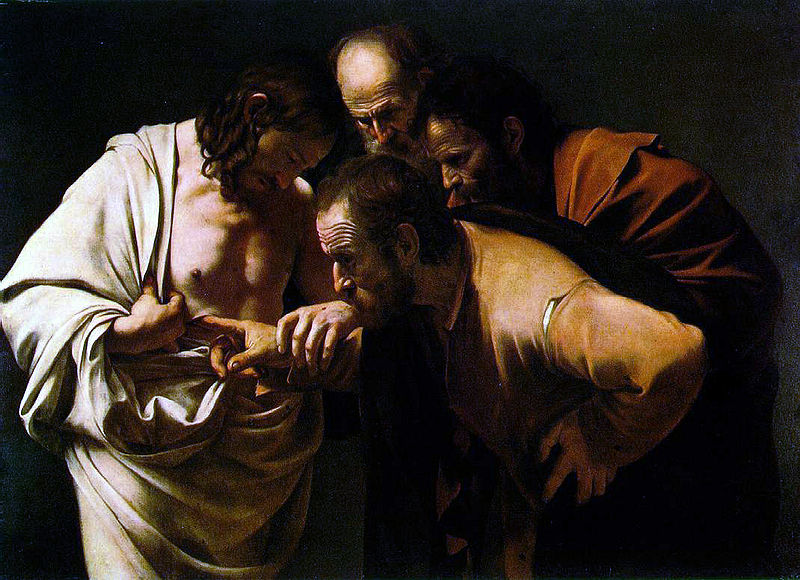
The minimal facts argument for Jesus’s Resurrection is one of the more popular arguments I’ve read–and learned–in apologetics-related circles. Basically, it goes like this: there are certain facts which the majority of scholars agree upon regarding Jesus’s resurrection such that, when considered together, make the resurrection the most reasonable or only possible explanation of the facts. I have personally used this argument to great effect and for some time thought it a fairly strong argument. However, I believe there are some problems with the argument. These make me hesitant to continue using it as I did before.
I was considering the minimal facts argument recently and something a philosopher* said stuck with me. Namely, that the minimal facts argument conflates sociology with epistemology. Now, what does that mean? Essentially, it means that the argument attempts to use a sociological method–counting up which scholars believe (or don’t believe) a certain historical fact occurred–in place of epistemology–“it is reasonable to believe x.” I’ve oversimplified this, because I want readers to think more about the problem than about my wording of it. This is important, because A) I’m not an epistemologist and so don’t have the skillset to present the point as well as one with training in that area would and B ) I think it’s still a powerful objection that needs to be weighed instead of debating my own wording of the argument.
It shouldn’t be downplayed that this at least appears to be a major problem. The minimal facts argument essentially smuggles in a kind of epistemology along with the sociological data. In other words, the skeptic–or Christian–is expected to move from “the majority of scholars believe these facts” to “these facts are reasonable for me to believe.” Or, minimally (sorry), that “it is reasonable to believe these facts.” But without an epistemic support system, once the argument is laid bare like that, it seems almost farcical. While I’d not go so far as to say it’s logically fallacious,** it does have the look of an unwarranted move.
Another way the argument conflates epistemology with sociology is just that–it essentially treats the counting up and tallying of scholars*** as a genuine way to find and ground knowledge. And while this may not seem entirely unreasonable–after all, I would tend to see a significant majority of immunologists agreeing that a vaccine is safe and effective as a good reason to believe that myself–the move itself needs more argument. Moreover, because the argument is dealing with historical facts, it has additional wrinkles to the move from “scholars think x” to “it is a fact that x.” The aside about vaccines is a good counterpoint, because it is possible to physically test and confirm scholars’ opinions in that regard. However, for an historical fact, the opinions of numerous scholars about whether an event took place stands on somewhat less firm ground. As someone interested in historiography, myself, I realize it is tenuous ground indeed.
In most popular versions of this argument, there’s a kind of hand-waving that occurs regarding these minimal facts. The argument goes that a “majority of scholars” agree upon whatever fact. That fact may be, for example, that the disciples believed Jesus appeared to them after his death. Another fact may be that Jesus died from crucifixion. Now, let’s say of 100 scholars of history, 95 believe the first, and 95 the second. That’s a great majority! They may not be the same 95, of course, but 95 is still a solid number. The more facts that get introduced/discussed, the more acute this problem seems. So, let’s say you introduce the empty tomb, and 85 scholars believe in that. Are they all included in the other 95? If not, does it seem to take away something from the argument? I believe it may, though I’m not sure I can put my finger on exactly what the problem is.
Another issue with the argument, and the epistemology/sociology point is relevant here, is that the opinions of scholars is subject to change. I’ve read before how in many fields of science it often takes a generational shift before a theory can be fully accepted, despite massive evidence for its being true. The reason is because people tend to cling to what they know–or believe–to be true even in the face of evidence to the contrary. What this means for historical scholarship is that it is entirely possible, generation to generation, that the “majority of scholars” could have rather large shifts in opinion. If, for example, death by crucifixion were to drop off the map for a majority of scholars in relevant fields, would that mean it is unreasonable to believe that Jesus died by crucifixion? Hardly. But according to how this argument is used, it would be. Or, perhaps, it would seem to be.
Questions about what is meant by “majority” abound, though in the strictest and strongest versions of the minimal facts argument, the entry point for “majority of scholars” is kept quite high instead of appealing to any amount over 50%. When one considers this, though, it again makes the problem of arbitrariness loom. Who gets to determine what percentage of scholars is required for reasonable acquiescence on the part of laity? And are those scholars in the minority inherently irrational for disagreeing?
There’s also the question of how the scholars themselves are being represented. For example, is it really true that all scholars lumped together as agreeing about Jesus’s death by crucifixion actually agree to the same minimal fact in the same way? Maybe. But it’s hard to know unless one is presented with exactly how the question is presented to the scholars and what they said in response. This seems a minor point, until one begins to explore what could be meant by it. Jesus died by crucifixion seems straightforward, but the mental baggage that comes with that sentence for many people is huge. Of course, one could potentially counter this by saying “But what is truly meant is, on the simplest level, simply that Jesus died by execution on a cross. Surely that’s simple enough that we can know whether a scholar believes that or not.” I basically agree with the heart of that, but still wonder about things like whether those scholars would agree about what is meant by “Jesus,” for example. I don’t mean whether they believe Jesus is God in human flesh–that’s beyond what I mean. Instead, I wonder whether some of those scholars in the “agree” category might say “yes, there was probably a first century man named Jesus who was executed by crucifixion.” But would they agree that was the Jesus born of Mary, with Joseph as (surrogate) father, and even other details? I’m not so sure about that. And that does make a huge difference. Moreover, without seeing the method behind how we got “majority of scholars” in agreement about this very basic historical claim, it’s difficult to analyze it in any meaningful way.
All of this is to say that I think we ought to be quite careful in our use of the minimal facts argument. I’m not entirely convinced we should be using it at all, to be honest. Much scholarly work needs to be done to lay the groundwork for the argument, and a surprising amount of that groundwork needs to be on the side of epistemology, because one of the biggest problems is that the argument itself doesn’t seem to do the work it claims to be able to do. Finally, because it is unfortunately the case that questioning people’s beliefs happens when one questions established apologetic arguments, I want to very clearly say that I believe Jesus physically rose from the dead and that that is an historic fact. I am just unconvinced that this argument is the way to establish that.
*The philosopher was Lydia McGrew. I credit her with being the on to point out this problem to me and several others. I’ve expanded on some reflection on that here.
**I’ve seen some claim it is basically an argumentum ad populum or appeal to authority, but the former is inaccurate given that the argument is, in its strongest form, based upon actual scholars in relevant fields and the latter is a mistake because appeal to authority is only fallacious when it is done, er, fallaciously.
***I mean this literally, because some apologists (notably Gary Habermas) have done extensive work literally tallying up opinions of scholars in relevant areas to make the argument.
Links
Be sure to check out the page for this site on Facebook and Twitter for discussion of posts, links to other pages of interest, random talk about theology/philosophy/apologetics/movies and more!
SDG.
——
The preceding post is the property of J.W. Wartick (apart from quotations, which are the property of their respective owners, and works of art as credited; images are often freely available to the public and J.W. Wartick makes no claims of owning rights to the images unless he makes that explicit) and should not be reproduced in part or in whole without the expressed consent of the author. All content on this site is the property of J.W. Wartick and is made available for individual and personal usage. If you cite from these documents, whether for personal or professional purposes, please give appropriate citation with both the name of the author (J.W. Wartick) and a link to the original URL. If you’d like to repost a post, you may do so, provided you show less than half of the original post on your own site and link to the original post for the rest. You must also appropriately cite the post as noted above. This blog is protected by Creative Commons licensing. By viewing any part of this site, you are agreeing to this usage policy.
Genocide and the Challenge of Apologetics: Randal Rauser’s “Jesus Loves the Canaanites”
There are times we read things in the Bible and we blow past them, not registering the content as disturbing because we have absorbed some explanation for its content that automatically allows us to keep moving. Randal Rauser’s Jesus Loves the Canaanites: Biblical Genocide in the Light of Moral Intuition confronts that practice in regards to the apparently genocidal passages in the Bible. Rauser analyzes the text from the perspective of international law in regards to the definition of genocide, compares it to the modern example of a close-in genocide in Rwanda, analyzes various apologetic approaches to the text, and finally, offers his own possible reading. Fair warning to readers- because the book discusses genocide, there is frank description of brutal violence, including violence of a sexual nature, and this includes discussions related to children.
For my part, Rauser’s powerful look at international law’s definition of genocide and application of the same to the text of Scripture is one of the strongest aspects of the book. Rauser notes that genocide does not necessarily require the intent to actually kill every single person of a demographic; rather, according to the definition of genocide, it also may simply be the action of removing or changing a group to ensure that group does not exist in an area. Rauser moves from the definition of genocide to its application in modern examples, and takes a very deep look at genocide in Rwanda. The reason he uses Rwanda as an example is because much of the killing took place up close and with weapons or implements used by hand (eg. a machete). This modern example, then, is closer to what would have occurred according to a plain reading of the narratives in the Bible.
Rauser notes the intense psychological distress not just upon the ones against whom the attack came, but also upon the perpetrators. This latter point is extremely important, and not one that I personally had reflected upon much. My own training in apologetics had inoculated me somewhat against the horrors of mass killing if one takes the texts at face value, but I had never before considered the immense psychological toll the killing would take upon the killers. Of course, now that I’ve written that, it seems obvious, but think about this, as Rauser does, in terms of the text. God has a chosen people whom he commands to destroy/remove an entire people group from the land in which they’re entering. After striking down tens or hundreds of individual men, women, and children with their own hands and whatever weapons they’d have had, their bodies covered with the blood of those who cried out for mercy, but were not spared, the Israelites are expected to have blissfully settled in and happily enjoyed their time in the land without ever a thought of the cruel, inhuman violence they had carried out to get there. It’s preposterous to think that could happen, and reasonable to assume the Israelites would have had an enormous amount of PTSD, sociopathy, and other mental health problems that would arise with their own actions, let alone the continued act of dehumanization or rationalization of their activity. This would surely have had a generations-spanning impact on the psychological health of the Israelite people, and thinking that God would have seen that as worth visiting upon God’s chosen people requires serious reflection.
By the time Rauer’s intensive analysis of the violence inherent in taking the text at face value is done, it is clear Christians options are somewhat limited. Though it is possible to bite the bullet and accept the immense mental damage done to a few generations of Israelites to secure the land for God’s people, it should cause extreme discomfort to do so. Hence, Rauser turns to various apologetic attempts to explain the text.
The first few attempts essentially accept the text as it stands and try to justify the violence. Thus, apologetic approaches that see the Canaanites as irredeemably evil or corrupting in influence against the Israelites argue that they had to all be killed in order to end this potential menace to their society. Of course, such an approach runs up against the problem of mental harm to the Israelites themselves, but it also seems quite extreme. Surely the sick and dying, the children, the infants do not pose such a threat to the incoming people of God! But according to this reading, they too must die. It seems cruel at best, but illogical as well. Attempts to argue for the truth of the text as just war reasoning also appear to fail. Readings of the text that see it as hyperbolic are somewhat less problematic, but Rauser points out that even most of these readings require acceptance of killing of the most vulnerable people in the land.
Rauser’s ultimate approach is to see the text as something to formulate disciples who love God and neighbor. These texts, argues Ruaser, cannot be seen as straightforward narrative because “When contemporaneous documentation and archaeological evidence fomr the region do not support the claims of documents composed centuries later, the wise course is to go with the weight of documentary and archaeological evidence. And that means that we should conclude based on the evidence that the conquest of Canaan likely never occurred in the manner described” (Kindle location 4652). Though Rauser only briefly notes this documentary and archaeological evidence, this reader has read the same problem with a straightforward reading of the text elsewhere. It is worth wondering then, why the text was written. Rauser notes the difference between the intended meaning of the text and the plain sense reading of the text and argues that if we approach the text from a perspective of believers seeking wisdom, we can then see it as teaching us to love God and others.
Rauser’s approach, then, has at least some in common with the approach of Webb and Oeste in Bloody, Brutal, and Barbaric? (my review here). The latter argue that the text is intended to move readers towards redemption and an ending of war, though Webb and Oeste accept much more of the narrative as written as historical reality than Rauser suggests. Rauser interacts with some other views that are somewhat similar to his own, rejecting some aspects of each. For example, his overview of Greg Boyd’s The Crucifixion of the Warrior God is largely positive, but notes that Boyd seems to fail to account for the lack of archaeological evidence in his own analysis.
What Rauser’s book does best, though, is force the problem for apologists. It is all too easy to look the other way when confronted by texts of horror in the Bible. Rauser turns a microscope on these texts and shows how they provide unique challenges for apologists. Additionally, he shows how most of the major options and explanations fail to account for the texts themselves in a satisfactory way. Much of this is through his analysis of moral intuition–we can sense when something seems off about a moral explanation. The alternative Rauser offers takes into account archaeological evidence as well as a few strands of explanatory power that have been offered through church history. Rauser’s account, I think, offers perhaps the only way to read the text faithfully while not subscribing to some kind of selective errancy.
Jesus Loves the Canaanites forces readers to look with open eyes upon the text of the Bible and think about in in far deeper ways than they may have done before. For that alone, it’s worth reading. But Rauser offers extensive interaction with and critique of apologetic methods, historical and modern, related to the biblical text. He also offers a possible solution to the text that maintains its integrity and inspiration. Much more could be said about Rauser’s various analyses of apologists, readings of the text, and own view, but this review should, hopefully, encourage others to go and read the book. It’s a must read for anyone wanting to look more deeply at these texts.
Disclaimer: I was provided with a copy of the book for review by the publisher. I was not required to give any specific kind of feedback whatsoever.
All Links to Amazon are Affiliates links
Links
Be sure to check out the page for this site on Facebook and Twitter for discussion of posts, links to other pages of interest, random talk about theology/philosophy/apologetics/movies and more!
Book Reviews– There are plenty more book reviews to read! Read like crazy! (Scroll down for more, and click at bottom for even more!)
SDG.
——
The preceding post is the property of J.W. Wartick (apart from quotations, which are the property of their respective owners, and works of art as credited; images are often freely available to the public and J.W. Wartick makes no claims of owning rights to the images unless he makes that explicit) and should not be reproduced in part or in whole without the expressed consent of the author. All content on this site is the property of J.W. Wartick and is made available for individual and personal usage. If you cite from these documents, whether for personal or professional purposes, please give appropriate citation with both the name of the author (J.W. Wartick) and a link to the original URL. If you’d like to repost a post, you may do so, provided you show less than half of the original post on your own site and link to the original post for the rest. You must also appropriately cite the post as noted above. This blog is protected by Creative Commons licensing. By viewing any part of this site, you are agreeing to this usage policy.
Apologetics Has Issues

I recently had an experience that forcefully reminded me of the deficiencies with apologetics, or, perhaps more accurately, apologists. For background, I have a degree in Apologetics myself, and have studied it for over a decade. I’m not a leading apologist–I don’t show up in lists on the internet of most popular apologists or anything of the sort. But I do have expertise. I’ve put in my time, got the degree, talked to the people.
About two years ago, I wrote a post called “What’s Wrong with Apologetics?” There, I highlighted some of the main problems I’ve observed with apologetics and apologists myself. These included things like “We believe we are experts when we’re not.” The words I wrote 2 years ago feel even more true and relevant today.
The interaction that reminded me so strongly of that post was centered around a statement a Christian made which was controversial. When I challenged some of the most outspoken people to post evidence for their claims, they posted a link to a video of a Christian with no relevant expertise and no published peer-reviewed work in the field. Once this was pointed out, the response was that because this person in the video had allegedly studied the field for a decade, it meant they were an expert, and that what mattered were the arguments, not the person.
Honestly, this is what led me to the somewhat disturbing conclusion I’ve been circling for years. We apologists are just not very good at holding ourselves to the same standard to which we hold others. In other words, I think perhaps the biggest issue in Christian apologetics is that we have a double standard.
1. We have a double standard when it comes to who we trust. People in general tend to trust sources which agree with positions they already hold. Apologists seem to think we’re immune to this, but we’re not. The example I mentioned above is a good one. The video shared happened to put forth a position that those sharing it agreed with. Thus, it didn’t matter that the person involved had no relevant credentials. They were just right, and their credentials were either artificially inflated in order to make them more relevant (“They have studied this topic for decades!”) or simply dismissed as irrelevant (“It’s the arguments that matter, not who’s making them.”)
Fellow apologists, there is absolutely no way we would accept this from someone with whom we were reasoning. For example, Richard Dawkins has written about religious-based topics for decades. He has no relevant degree in theology whatsoever, but he has certainly written entire works dedicated to telling people Christianity and religion in general is just obviously silly and wrong. Now, imagine if an atheist came along and said that because Dawkins had “studied the topic for decades,” he was an appropriate expert when it came to telling us what Christianity is or how to define it. That would be absurd. Yet that’s exactly the kind of thing we very frequently when it comes to discussing things on our side.
2. We have a double standard when it comes to objectivity. We are all too quick to believe that we have an objective position. That is, we think that we are capable of rising above our own subjective consciousness and have a position which is capable of judging all others. That’s just not possible. The notion of “neutral ground” when it comes to big questions is impossible, and to criticize others for pointing that out is, frankly, absurd. We have to acknowledge that we have biases, and certainly attempt to be as neutral as possible when it comes to analyzing facts. But we also must be aware of the fact that we cannot be truly, totally, entirely impartial.
3. We don’t take emotions seriously. This is another serious problem for apologists. I can’t tell you the number of times I have seen apologists decrying emotions. Whether it’s saying that an opponent doesn’t need to get emotional or whether it’s downplaying the emotional attachment we get to the questions at hand, we have to be honest and take emotions seriously. Frankly, to think otherwise is to make ourselves inhuman. If you don’t feel a deep, abiding love for Jesus Christ–something intimately connected with your emotions–and you’re doing apologetics, you should probably rethink what you’re doing. Our love of Christ and worship of God deeply involve our emotions, and we cannot just remove them from the equation when we’re reasoning with others. Moreover, the Bible itself offers direct refutation of this strange distance from emotions so many apologists attempt to accomplish. One of the shortest verses in the Bible is “Jesus wept.” Weeping is an intense emotional experience. Surely if our Lord and Savior expresses his emotions, we shouldn’t sneer at the emotions of others.
Conclusion
There continues to be so many things wrong with apologetics. But it’s still something that I think can be useful. I hope these points will help fellow apologists think about what we’re doing and how we’re presenting ourselves as we make a case for Christ.
Links
What’s Wrong with Apologetics? – I raise a number of pitfalls apologists ought to avoid.
Be sure to check out the page for this site on Facebook and Twitter for discussion of posts, links to other pages of interest, random talk about theology/philosophy/apologetics/movies and more!
SDG.
——
The preceding post is the property of J.W. Wartick (apart from quotations, which are the property of their respective owners, and works of art as credited; images are often freely available to the public and J.W. Wartick makes no claims of owning rights to the images unless he makes that explicit) and should not be reproduced in part or in whole without the expressed consent of the author. All content on this site is the property of J.W. Wartick and is made available for individual and personal usage. If you cite from these documents, whether for personal or professional purposes, please give appropriate citation with both the name of the author (J.W. Wartick) and a link to the original URL. If you’d like to repost a post, you may do so, provided you show less than half of the original post on your own site and link to the original post for the rest. You must also appropriately cite the post as noted above. This blog is protected by Creative Commons licensing. By viewing any part of this site, you are agreeing to this usage policy.

 J.W. Wartick - Reconstructing Faith