Molinism
Is Middle Knowledge Uncontroversial?
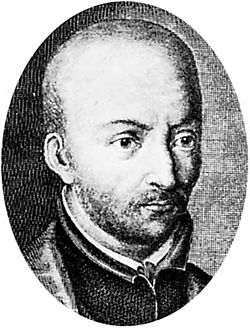 I was reading a recent blog post at one of the sites from which I read every post–the Pastor Matt blog–and discovered a point of some importance for those interested in the debate over omniscience and divine foreknowledge. His post “Middle Knowledge Misunderstood” is a brief introduction to the concept of middle knowledge. My focus is not going to be on that topic so much as on a claim made in the article: that middle knowledge is uncontroversial. Simply put, this claim is mistaken. Middle knowledge is the subject of much debate to this day.
Middle knowledge is God’s knowledge of counterfactuals of creaturely freedom: specifically, God’s knowledge of “If x, then y” in regards to human and other created beings’ freedom. It is more than that, and yes I am simplifying this quite a bit.
Middle knowledge has been the subject of no little amount of my efforts in studying, and when I read the claim that it is uncontroversial, I was taken aback. Frankly, to say that middle knowledge is not controversial is just entirely mistaken. I shall now demonstrate that point.
First, middle knowledge is controversial among those who deny that God has absolute knowledge of the future, namely, open theists. William Hasker, John Sanders, Clark Pinnock, and other open theists each explicitly deny the existence of these counterfactuals that make up middle knowledge. Greg Boyd, another prominent open theist, argues in multiple places that the “would” counterfactuals of middle knowledge (i.e. in situation x, person s would do y) should instead be “might” counterfactuals because “would” counterfactuals can have no truth value (see, for example, his response to William Lane Craig in Divine Foreknowledge: Four Views (Downers Grove, IL: Intervarsity, 2001).
Second, middle knowledge is controversial among Calvinists. Paul Helm, a noted Calvinist philosopher, writes:
Since the Reformed held that all that occurs is unconditionally decreed by God and that men and women are responsible for their actions, they saw no need for a third kind of divine knowledge, a middle knowledge, which depended upon God foreseeing what possible people would freely do in certain circumstances.
In other words, middle knowledge is superfluous. Helm goes on to state as much:
Not only is middle knowledge unnecessary to an all-knowing, all-decreeing God, but the Molinists’ conception of free will makes it impossible for God to exercise providential control over his creation. Why? Because men and women would be free to resist His decree.
I would contend that most any theological determinist should hold to a similar belief regarding middle knowledge. On such a position, middle knowledge is unnecessary and indeed contrary to their entire system. Certainly Calvinists in general would deny that middle knowledge is necessary or uncontroversial.
Third, Thomists, I believe, would also reject middle knowledge–and historically have–for a number of reasons, including the notion that it entails potentiality in God. The reason it would do so is because of the whole structure of modality–including possible worlds–which advocates of middle knowledge tend to put forward as well. If the assertion is that there is a different way that things God could have created, then that implies that there is a potential there–something that any Thomistic view of the world would deny. I believe the same point would go for Scholastic thinkers in general, but I’m not familiar enough with the range of scholasticism to say that is for sure.
All of this is not even delving into things like whether those who hold to simple foreknowledge would endorse middle knowledge. David Hunt, for example, in the aforementioned Divine Foreknowledge: Four Views, also argues that counterfactuals of freedom required for foreknowledge are illogical. Frankly, I think any position of simple foreknowledge would have to deny middle knowledge because on simple foreknowledge the whole concept is just as superfluous and contrary as it is for theological determinists. After all, if we contend that God just knows the future, then there is little room for things like God’s knowledge of what creatures would do in varied situations: God just knows what the future is going to be. Again, I don’t know the range of thought within the simple foreknowledge position to say for sure, but I suspect the majority position would be to deny middle knowledge.
Now when I shared some of these thoughts with Pastor Matt, his response was to grant that open theists deny middle knowledge, but then later he also granted that some Calvinists do. My point is that even were these the only ones who denied middle knowledge, that would not qualify as being “uncontroversial.” But now, having demonstrated that it is theological determinists, Calvinists, some who hold to simple foreknowledge, open theists, and Thomists (and possibly others?) who would deny middle knowledge, I think that the point has carried: middle knowledge is not uncontroversial.
I say all of this as someone who thinks middle knowledge does exist. But I think that we need to confront the reality that Molinism–the position which most closely endorses middle knowledge–is itself highly controversial and hardly above criticism.
Links
Be sure to check out the page for this site on Facebook and Twitter for discussion of posts, links to other pages of interest, random talk about theology/philosophy/apologetics/movies and more!
Middle Knowledge Misunderstood– Pastor Matt’s post on middle knowledge.
SDG.
——
The preceding post is the property of J.W. Wartick (apart from quotations, which are the property of their respective owners, and works of art as credited; images are often freely available to the public and J.W. Wartick makes no claims of owning rights to the images unless he makes that explicit) and should not be reproduced in part or in whole without the expressed consent of the author. All content on this site is the property of J.W. Wartick and is made available for individual and personal usage. If you cite from these documents, whether for personal or professional purposes, please give appropriate citation with both the name of the author (J.W. Wartick) and a link to the original URL. If you’d like to repost a post, you may do so, provided you show less than half of the original post on your own site and link to the original post for the rest. You must also appropriately cite the post as noted above. This blog is protected by Creative Commons licensing. By viewing any part of this site, you are agreeing to this usage policy.
Is Molina’s God Fallible? A response to James N. Anderson
 Recently, I responded to James White’s comments on molinism. Shortly thereafter, White had another podcast in which he made several comments on molinism. He also commented favorably on an article by James N. Anderson, which argues that God is fallible. I left a comment over on Anderson’s blog because I frankly think that he misrepresented Molina’s view. Here, I’ll reproduce the comment I left there with a bit more commentary after the block quote to demonstrate that Anderson’s argument, like White’s, really is a misrepresentation.
My comment (edited to make it a bit shorter):
You wrote, “In other words, there are possible worlds in which God actualizes C so that S will choose A, but S doesn’t choose A. There are possible worlds in which God’s eternal decree doesn’t come to pass, because libertarian-free agents do otherwise than he had planned.”
Molina, on the other hand, explicitly held that if we were to choose otherwise, God would have known otherwise. That is, on Molina’s view (and on the view of William Lane Craig), if we were to choose ~A instead of A, then God would have known ~A instead. Molina, in “On Divine Foreknowledge” makes this extremely clear.
Of course, you could argue that the means by which Molina argues that this is possible is itself mistaken, but the argument is complicated and I’m not going to reproduce it here. My main point is the very core of the argument you’ve given simply misrepresents the position of molinists. Molina (and Craig) held that if a creature were to choose otherwise, then God would know it. Period.
Anderson responded to my comment by noting his argument was related to the decree. Now, I’m not at all sure how this saves Anderson’s article from this error, which I think is fatal: his argument just fails to account for molinism on molinism’s terms. That is, his argument is an attempt at a reductio. Thus, he has to grant the system which he is trying to show is self-referentially incoherent its own terms. He failed to do so. Here is Anderson’s argument in a nutshell:
[T]he Molinist is committed to the claim that although God knows that S would choose A in C, and he actualizes C because he plans for S to choose A, it is nonetheless possible for S not to choose A in C. (Craig clearly affirm[ed] this point a couple of times in his exchange with Helm.) In other words, there are possible worlds in which God actualizes C so that S will choose A, but S doesn’t choose A. There are possible worlds in which God’s eternal decree doesn’t come to pass, because libertarian-free agents do otherwise than he had planned.
Thus, Anderson concludes, on the molinist view, God is possibly fallible. But, as I pointed out in my comment above, Anderson’s argument basically just ignores Molina’s own views about God’s knowledge. I take it from his response to me that he thinks that God’s eternal decree somehow trumps considerations about foreknowledge, and I would think that on a Calvinist system that may be correct, depending upon how one hashes at the details (i.e. on some Calvinists’ expositions of foreknowledge, I have read it is grounded on God’s own action; that is, God foreknows x will happen because God wills x). But of course we’re not here interested on a Calvinist view of foreknowledge or the decree; Anderson is allegedly addressing Molinists.
By now it should be fairly clear where Anderson’s mistake lies: he imports his Calvinistic understanding of foreknowledge and the decree into molinism. But he claims to be critiquing Molina’s views internally; that is, his argument is supposed to show that molinism is self-referentially incoherent because it entails a fallible God. But it doesn’t! It only does so once Anderson has forced the concept of the eternal decree (that is, the specifically Calvinist view of this) as the filter through which molinism must be drawn. But of course that hardly shows that molinism is wrong, any more than filtering Calvinism through an Arminian filter demonstrates Calvinism is incoherent. One must evaluate each view on its own merits; not by presupposing positions which make them false!
There are a few other major difficulties with Anderson’s argument, such as a continued confusion with free knowledge and middle knowledge. See the “technical discussion” below as well as the comments for more.
So to return to Molina and his modern defenders, we find that they affirm in apparent unanimity that if one were to choose to do ~x instead of x, then God would have known ~x to be the case and x to be false. Thus, there simply is no question of a subject bringing about the falsity of God’s knowledge. Moreover, Anderson’s argument also confuses middle knowledge with free knowledge. Once God has actualized a world, it simply is the case that if, in that world, God knows that S will choose A, then S will choose A. Middle knowledge is the moment which considers counterfactuals; free knowledge is the creation of the world and the actualization of those counterfactuals. Thus, Anderson’s argument fails because 1) it fails to actually take Molina’s views into account; 2) it fails to interpret Molina’s views in such a way as to show the view is self-referentially incoherent; and 3) it fails to distinguish between middle and free knowledge.
Technical Discussion in the Comments
Be sure to check out the comments for some great interaction in which Anderson came along and commented as well. It’s a great discussion.
For example, this comment I wrote draws out some of the difficulties with Anderson’s argument further:
Your [I am here addressing Anderson directly] argument is that molinism entails a fallible God. Thus, your argument is that molinism–on molinism’s terms–entails a fallible God. Now, you wrote, “It doesn’t do to say, ‘If S were to choose otherwise then God would have decreed otherwise,’ because that’s dodging the issue.”
First, you misstate the actual premise, which is not that God would have decreed otherwise but that God would have foreknown otherwise; again, this leads me to think you’re not taking molinism on molinism’s terms. Instead, it seems you continue to conflate foreknowledge and the decree. Now, perhaps you simply mistyped that and you meant to say foreknown instead of decreed… in that case:
Second, your argument, again, is to try to show internal incoherence of molinism. In order to do so, you have to grant the premises of molinism. After all, if one wants to show an internal incoherence in a position, simply denying that parts of that position are true will not yield internal incoherence; rather, one must show how the pieces that such a position actually holds do not cohere with each other. Thus, because molinists from Molina to Craig to Thomas Flint (and I think this point is unanimous, though there may always be a “maverick” somewhere, I’m sure) hold that “If S were to do otherwise, God would have known otherwise,” you can’t just deny that premise and say “HA, now see, it is internally incoherent once I’ve denied this premise!” Rather, you would have to show that that premise is itself false.
Now, Molina doesn’t just assert that God would have known otherwise. He does spend several pages developing exactly how it could be the case that If S were to do otherwise, God would have known it–all without appealing to backwards causation. Craig also defends this account in his lengthier work on the topic. Fredosso develops this defense over the course of p 57-63 and 65-68 of his translation of Molina’s “On Divine Foreknowledge.” In the same work, Molina defends his position may be found on p. 119-120; as well as several other places where a whole view of his account provides a lengthier defense.
Thus, it seems to me your argument fails to demonstrate internal incoherence. Molinism on molinism’s terms does not make God fallible.
Third, as far as why I argued you confused middle and free knowledge; the reason is because Molina himself held that because God is eternal and exists in the eternal now rather than as an omnitemporal or temporal being (contra Craig, who defends his position somewhat differently), it is incorrect to hold that once a world has been actualized, then the creatures world may bring it about that that world is not brought about. Again, this goes back to Molina’s view of foreknowledge and free will. But free knowledge is not middle knowledge and is absolute certainty about the “actualized” world. It is unchangeable. Thus, on this third point, your argument fails not only to demonstrate internal coherence but also to interact with Molina’s actual view. The reason is because your argument relies upon the notion that in the here and now a creature could bring it about that ~x if God knows that X will happen. But both Craig and Molina (and every other major defender of Molinism of whom I’m aware, though possibly not Zagzebski as I haven’t read her view) hold that if God knows x will happen, then, necessarily, x will happen. Thus, the freedom of creatures is found in middle knowledge, and that is how it is preserved. God’s actualizing a world brings it about that in that world, the counterfactuals God brought into being will happen. Again, Molina reconciles this as above (and alongside his view that God is Eternal in the technical sense rather than temporal).
Thus, although interesting, I once more conclude that your argument fails to either address molinism or show that it is internally incoherent.
Links
Be sure to check out the page for this site on Facebook and Twitter for discussion of posts, links to other pages of interest, random talk about theology/philosophy/apologetics/movies and more!
James White and Molinism- Confusion about middle knowledge– I argue that James White has made a couple key errors related to molinism. On his most recent comments regarding molinism (his 2/11 podcast), he repeats a key error by saying that in the “exact same circumstances” he chooses differently. In this post, I demonstrate the error of his statement, along with some other mistakes in his critique.
SDG.
——
The preceding post is the property of J.W. Wartick (apart from quotations, which are the property of their respective owners, and works of art as credited; images are often freely available to the public and J.W. Wartick makes no claims of owning rights to the images unless he makes that explicit) and should not be reproduced in part or in whole without the expressed consent of the author. All content on this site is the property of J.W. Wartick and is made available for individual and personal usage. If you cite from these documents, whether for personal or professional purposes, please give appropriate citation with both the name of the author (J.W. Wartick) and a link to the original URL. If you’d like to repost a post, you may do so, provided you show less than half of the original post on your own site and link to the original post for the rest. You must also appropriately cite the post as noted above. This blog is protected by Creative Commons licensing. By viewing any part of this site, you are agreeing to this usage policy.
James White on Molinism- Confusion about middle knowledge
Recently, James White (a theologian and apologist) did a review of the debate on the Unbelievable? radio show between Paul Helm and William Lane Craig [accessible here; audio will begin immediately]. I thought that White did a decent job critiquing the synergistic tendencies in Craig’s exposition, but I also felt he failed to grasp the thrust of Molinism. I say this with great respect for White, whom I consider very thoughtful in the areas in which he engages. However, it is because of this respect that I write this with the hope that he–or at least others who wish to engage in this area–may be better equipped to engage with Molinism.* Although there are a number of places I could engage with White’s commentary, I want to focus on three particular areas, along with a fourth, methodological, issue.
Molinism and Free Will
The most problematic area in James White’s exposition came when he argued that free will is essentially vacuous on Molinism. His argument was essentially that the Molinist assertion that God knows what we will do in any given circumstance (the doctrine of middle knowledge) entails: “In this circumstance, this person will always do this” (emphasis White’s). Thus, he argued that Molinism is incapable of preserving human free will, which is ironically what Molinism was intended to preserve.
White based his argument on an example [actually a few examples, but this was most prominent]. While biking, he often came to a certain fork in the road. On one day, he may choose to turn one way, on another, he may choose to turn the other. Here’s the issue: White then said “The exact same conditions…” were in play in the scenario he described. The difficulty should be immediately obvious: White is very clearly mistaken that these are the “exact same conditions.” One day is not “exactly the same” as another day. Period. Thus, White’s objection fails. It fails for another reason, which we’ll explore in the next section, but for now it is enough to point out that White bases this objection on the notion that humans are able to choose differently in similar circumstances. That is, although he used the terminology of “the exact same conditions,” his example is merely that of similar conditions. His objection therefore fails.
Confusion about Middle Knowledge
It pains me to point this out for someone who I value as much as White, but I must object that it appeared as though White was disturbingly unfamiliar with what middle knowledge actually is. He continually objected to middle knowledge, as shown above, by arguing that people should be able to choose differently on Molinism but may not. Now, I don’t know how much White has read in this area, but surely if he’s going to engage with Molinists like Craig, he should–as someone whom I recognize as taking great care to read and engage with primary sources–read and understand Molina [let me be clear: I’m not saying he never has–I do not know what White has or has not read and would not claim to know]. Molina himself answers White’s objections in this regard very explicitly at a number of points in his On Divine Foreknowledge.
First, White is mistaken when he portrays Molinists as holding that middle knowledge determines choice. He has it backwards. It is the choices which “would be made” which determine middle knowledge. If one would have chosen differently, middle knowledge would have had different content. This is absolutely central to Molina’s view, and I’ll just quote him once to prove it. In his exposition of how various church fathers allegedly taught things similar to his own view, Molina wrote, “…when free choice by its innate freedom indifferently chooses this or its opposite, then God will bring it about that from eternity He foreknew nothing else, they [the church fathers he is favorably citing] are obviously teaching not that things will come to be because God foreknows that they will, but rather just the opposite” (180, emphasis mine).
Now whether Molina accurately exegeted these church fathers, and regardless of the objection which clearly will follow such a statement (“How is this possible?”–something Molina himself answers in detail in On Divine Foreknowledge), the clear and plain teaching of Molina is exactly opposite of what White seemingly attributed to him: namely, the notion that God’s middle knowledge determines free choices. Rather, it–even according to Molina–is exactly the opposite. Thus, White’s critique in this regard is simply wrong.
Confusion about Middle Knowledge II
A final difficulty with White’s critique was that he, at at least one identifiable point, confused middle knowledge with free knowledge. White was criticizing Craig by saying “if you’re truly free” you should be able to choose a different thing from what middle knowledge states (such as buying a different car than the Mercedes you wanted).
White’s critique was off base for two primary reasons. First, as shown above, he failed to recognize the absolute core of Molina’s doctrine of middle knowledge: that middle knowledge is not dependent upon foreknowledge. Second, White’s critique fails to recognize that middle knowledge interacts with free knowledge (God’s comprehensive knowledge of all things which will occur in creation). The reason for this is because White argues that one, if one has freedom, cannot “violate the middle knowledge… that was supposedly true.”
Here White seemingly confused the free knowledge of God with middle knowledge. It is true that the free knowledge of God cannot have been otherwise, for it is a result of the decree of creation. However, what White failed to recognize is that free knowledge is posterior to middle knowledge and so the fact remains that on Molina’s system (as demonstrated above), one can, in effect, change middle knowledge which would thus bring about a different state of affairs.
Again, the question is not here how this may be the case. Instead, what I am arguing is that White failed to correctly explain Molina’s position and so his critique actually failed to be centered upon the view against which he was arguing.
Methodological Issue: Philosophy?
I was surprised to see White comment so frequently on how this or that “may fly in philosophy classrooms” but apparently would not fly in the “real world” [this latter is not a quote, but he contrasted philosophy classrooms with the world outside of them]. He repeated this claim–or something similar–a number of times. I’ll keep this brief: White’s own engagement with Molinism was almost entirely philosophical. He continued to bring up the grounding objection (a philosophical objection if there ever was one), and he also pressed the attack by saying that Molinism cannot adequately account for the free will it is supposed to preserve (again, a purely philosophical argument). I was surprised to see this from White because I do really think he is quite a careful thinker, but the bottom line is that in denigrating philosophy while using a number of philosophical objections to Molinism he appeared rather inconsistent. Philosophy is a tool of the theologian, and White himself uses it in a number of ways. I would urge him to drop this kind of tongue-in-cheek dismissal of philosophical reasoning, even within theology. It seems to me he himself finds philosophical objections to theological systems to be of worth.
Conclusion
I commend White for taking on a difficult issue, and I readily admit he has more knowledge on any number of areas than I can begin to claim. I highly recommend much of his work, and even where he and I disagree, I have found him to be thoughtful and challenging. That said, I maintain White is mistaken in a few aspects of his interpretation of molinism. In particular, he doesn’t seem to acknowledge the broader philosophical framework behind the view. He also failed to allow for Molina’s own very explicit distinctions and definitions, and thus his critique actually declared Molina’s view to be the exact opposite of that which Molina actually held. I hope my own critique will be seen not as an attack, but rather as a call for clarification for White and others who hope to interact with Molinism.
*Full disclosure: I am a Lutheran with Molinist leanings, though I reject the synergism Molina himself held to. I view Molinism as a philosophical framework as opposed to a complete system.
Links
Be sure to check out the page for this site on Facebook and Twitter for discussion of posts, links to other pages of interest, random talk about theology/philosophy/apologetics/movies and more!
Sources
Luis de Molina On Divine Foreknowledge, edited by Alfred Freddoso (New York: Cornell, 1988).
James White, “The Dividing Line,” January 16, 2014. Accessible here. The primary interaction starts a ways into the show.
SDG.
——
The preceding post is the property of J.W. Wartick (apart from quotations, which are the property of their respective owners, and works of art as credited; images are often freely available to the public and J.W. Wartick makes no claims of owning rights to the images unless he makes that explicit) and should not be reproduced in part or in whole without the expressed consent of the author. All content on this site is the property of J.W. Wartick and is made available for individual and personal usage. If you cite from these documents, whether for personal or professional purposes, please give appropriate citation with both the name of the author (J.W. Wartick) and a link to the original URL. If you’d like to repost a post, you may do so, provided you show less than half of the original post on your own site and link to the original post for the rest. You must also appropriately cite the post as noted above. This blog is protected by Creative Commons licensing. By viewing any part of this site, you are agreeing to this usage policy.
Molinism and Aseity- A knock-down argument against middle knowledge?
 One of the most recent “Straight Thinking” podcasts–a podcast put on by Reasons to Believe–featured Travis Campbell discussing Middle Knowledge (which is an aspect of the philosophical theological position known as molinism). Middle Knowledge is, essentially, God’s knowledge of counterfactuals–that is, the knowledge of things like “If someone talks about molinism, J.W. Wartick will be interested.” That is a counterfactual because it states something which may be contrary to fact–that is, it depends on some condition to be fulfilled in order to be true (in the example above, it is the occasion of someone to talk about molinism).
On the second part of the interview, Campbell discussed some objections to molinism which he felt made the position intractable. One of the first objections he presented was an objection from “aseity” that is, God’s self-existence. According to the doctrine of divine aseity, God does not rely upon anything else for God’s existence. Now, molinism classically holds that God surveys the realm of possible worlds prior to the creative act and so sees all possibilities related to free creaturely choices. Then, God creates the world God desires. Campbell argued that this undermines God’s aseity because it makes God dependent upon creatures for omniscience–one of God’s essential attributes.
The argument, if sound, has great force. After all, if molinism means one must deny an essential attribute of God, there is a pretty serious difficulty with the doctrine. But does it? Campbell cited William Lane Craig, a leading proponent of molinism, as admitting that molinism entails that God’s knowledge, at least, is in some sense dependent upon creaturely choices. From what I have read of WLC,* I have found it seems he frequently makes it appear as though molinism presents God as able to choose among any parts of possible worlds to construct whatever possible world God wants. Not correct… but possibly also not Craig’s actual view;* perhaps Craig is only making it seem thus when he discusses molinism in summary. What I’m getting at is that I’m not convinced Craig is as consistent a molinist as, well, Molina (or in modern times, Thomas P. Flint).
Now for the claim itself, I do not think it follows that God is actually dependent upon creaturely choices. And, if it follows from molinism that God is dependent in that way, then it must also be true of any view which holds to foreknowledge whatsoever. In fact, this is where I have a pretty serious bone to pick with any view which denies comprehensive foreknowledge. Unless I am much mistaken–which is quite possible–the realm of possible worlds is a set of necessary truths. That is, each possible world is a complete set of all true propositions for the entire history of that world.*** But if that is the case, then molinism is no different on God’s creative activity than any other view of creation, for God is simply selecting one from a set of possible worlds.
There is debate over how such a set of possible worlds might be populated–does the set of possible worlds come from God, or is it simply a set of necessary truths?** Whatever one’s answer for this, it remains clear to me that molinism is not defective in this area: the molinist simply holds that God selects a possible world from the set of possible worlds. The fact that the molinist emphasizes that these possible worlds include free choices is essentially a moot point so far as aseity is concerned. If there is such a set of possible worlds, then any view of God’s foreknowledge and creation has to acknowledge that God’s creative act is the bringing forth of one such possible world. If there is no such set, then it seems our universe is necessary, which would itself be problematic for the doctrine of creation.
So it seems to me that Campbell failed to make a compelling argument against molinism from aseity. In order for his argument to be successful, he would have to show that molinism’s view of possible worlds is somehow radically different from any other position and then also demonstrate that molinism’s view also necessarily makes God dependent upon creaturely freedom. But of course that would also involve him having to show that the set of possible worlds, on molinism, is itself independent of God. And it seems to me that although perhaps not all molinists hold that God does generate the set of possible worlds, it is entirely possible for a molinist to consistently hold that this is the case: the set of possible worlds is dependent upon God. And, if that is true, Campbell’s argument fails. I conclude that Campbell’s argument fails because it is both incomplete and unsound.
*I have his Divine Foreknowledge and Human Freedom but I am working through Molina’s work before I transition into it.
**Interestingly, Craig is working in this area for his next major academic work, according to his own discussion of related topics on his podcasts.
***One may hold that a possible world is merely the starting conditions of a world, but I do not see how that distinction could be made coherently. That is, I’m not convinced that a set of possible worlds would not include the entire history of the possible world. Moreover, any who would argue that God has comprehensive knowledge of the future would have to grant that God’s creative act would entail the history of the entire [possible] world.
Links
Be sure to check out the page for this site on Facebook and Twitter for discussion of posts, links to other pages of interest, random talk about theology/philosophy/apologetics/movies and more!
SDG.
——
The preceding post is the property of J.W. Wartick (apart from quotations, which are the property of their respective owners, and works of art as credited; images are often freely available to the public and J.W. Wartick makes no claims of owning rights to the images unless he makes that explicit) and should not be reproduced in part or in whole without the expressed consent of the author. All content on this site is the property of J.W. Wartick and is made available for individual and personal usage. If you cite from these documents, whether for personal or professional purposes, please give appropriate citation with both the name of the author (J.W. Wartick) and a link to the original URL. If you’d like to repost a post, you may do so, provided you show less than half of the original post on your own site and link to the original post for the rest. You must also appropriately cite the post as noted above. This blog is protected by Creative Commons licensing. By viewing any part of this site, you are agreeing to this usage policy.
The Consolation of Counterfactuals: The Molinism of Boethius
Whence comes this powerful understanding
That all things sees and all discerns?
…This is a cause more powerful
More forceful and effectual
Than that which passively awaits… (Boethius, The Consolation of Philosophy, Book V, section IV)

Molinism is holds that God has counterfactual knowledge of every situation. What this boils down to is that God knows conditional statements for every possible situation, such that God knows statements like “If J.W. has free time, then he will read.”
One prominent challenge to molinism is the notion that such counterfactuals about future choices cannot exist or that God simply couldn’t know them. I was startled as I read Boethius’ (480-525 AD) work, The Consolation of Philosophy, to see that he had anticipated this objection and provided the outline of an answer to it about 1500 years ago.
Boethius wrote the work as a dialog between himself and Philosophy, a woman who represented, well, philosophy. The last book focuses upon God’s foreknowledge and human freedom.
Writing as philosophy, Boethius states
All those things which happen without happening of necessity are, before they happen, future events about to happen, but not about to happen of necessity… But this, you will say, is the very point in question–whether there can be any foreknowledge of things whose occurrence is not inevitable. (Book V, section IV)
Again, it was amazing to see that Boethius had anticipated an objection to molinism–a system of theological thought which hadn’t been conceived fully yet (and wouldn’t be for about 1100 years!)–and provided an answer. The objection was seen above: many modern philosophers and theologians contend that God could not know that which is not necessitated to happen.
Yet Boethius answers the problem in a unique way:
The cause of this mistake [believing that God couldn’t know things that will not happen by necessity] is that people think that the totality of their knowledge depends on the nature and capacity to be known of the objects of knowledge. But this is all wrong. Everything that is known is comprehended not according to its own nature, but according to the ability to know of those who do the knowing. (Book V, section IV)
Before developing this argument, it is important to note that it rests squarely within Boethius’ later reflection upon the eternity of God–a being who has “the complete, simultaneous, and perfect possession of everlasting life” (Book V, section VI). Because Boethius holds that God is eternal in this sense–timeless–he can reasonably hold that God’s capacity to know is not limited by temporal constrictions.
Thus, we get back to the nature of his response to the counterfactual objection to molinism. Boethius, holding that God is eternal and therefore not limited by time, grounds the knowledge of counterfactuals not in their own inherent ability to be known or not known, but rather in the ability of the knower to know them.
It is worth emphasizing how radical and powerful this response is to the modern argument against molinism. If God is indeed timeless in the sense Boethius presses, then God would have access to the entirety of time as far as knowledge and action are concerned. Thus, by grounding knowledge not in the objects of knowledge themselves but in the capacity of the knower, Boethius grounded counterfactual knowledge.
Objection
Now, modern opponents of molinism would take this in stride and argue either against the contention that God is timeless or against the contention that knowledge is based in the capacity of the knower rather than the known. Exploring either of these objections is beyond the scope of this post, but it is worth noting that Boethius’ rebuttal to the problem of counterfactual knowledge works if both of his contentions are true. The question is, of course, whether they are.
A Final Objection and Response
Another way to attack Boethius’ defense of God’s knowledge of counterfactuals is to argue that even if it is the case that God is eternal and that His knowledge is grounded in the knower rather than the known, then it still would only mean that God knows what will happen, not what would happen if something were to happen. In other words, one could hold that Boethius’ answer doesn’t actually apply to counterfactual knowledge.
It seems possible, however, to modify Boethius’ defense to counter this argument as well. One could note that because God is eternal, any event that would happen, God would know about it. In other words, if x were z instead, then God’s knowledge would simply be z instead of x. This response turns the counterfactual into a counterfactual about God’s knowledge rather than about freedom. The response offered turns the question from whether God could know that “If x, then y” about John Smith into a question of “If z instead of x, then God knows z.”
Conclusion
It seems clear to me that there is much to develop yet in the objections and responses offered above. The last critique offered and my response certainly opens a number of areas of inquiry. However, for now it seems clear that Boethius has offered a unique way to look at the problem of counterfactual knowledge. Whether his perspective is correct remains a matter for further inquiry.
Boethius offered a unique and stirring defense of molinism over a thousand years before it was fully articulated by Luis de Molina. It is worth looking into his answer, even if it fails, simply for the foresight it provided. But Boethius’ work is known as an astounding discussion of divine eternity as well, among other things. Thus, I encourage readers to look into his short work, The Consolation of Philosophy. Who knows, you may even find the consolation of counterfactuals therein.
Edition Used: For this post I used the Penguin Classics edition of The Consolation of Philosophy (New York: Penguin, 1999).
SDG.
——
The preceding post is the property of J.W. Wartick (apart from citations, which are the property of their respective owners) and should not be reproduced in part or in whole without the expressed consent of the author. All content on this site is the property of J.W. Wartick and is made available for individual and personal usage. If you cite from these documents, whether for personal or professional purposes, please give appropriate citation with both the name of the author (J.W. Wartick) and a link to the original URL. If you’d like to repost a post, you may do so, provided you show less than half of the original post on your own site and link to the original post for the rest. You must also appropriately cite the post as noted above. This blog is protected by Creative Commons licensing. By viewing any part of this site, you are agreeing to this usage policy.
Book Review: “Salvation and Sovereignty: The Molinist Approach” by Kenneth Keathley
 Molinism is a topic hotly debated in theological circles. There have been several books on the topic published just in the past few years, which, for a topic of analytic theology, is extraordinary. Kenneth Keathley’s work, Salvation and Sovereignty: A Molinist Approach
Keathley’s central position is that the Calvinistic “TULIP” (Total depravity; Uncondtiional election; Limited atonement; Irresistible grace; Perseverance of the saints) is the incorrect approach to salvation. Instead, he endorses the “ROSES” approach (Radical depravity; Overcoming grace; Sovereign election; Eternal life; Singular redemption).
The contrast is laid out in detail through the book, but to sum up, Keathley provides a comparison in the introduction. Radical depravity allows for free will while still emphasizing the fallen nature of people. Overcoming grace emphasizes “God’s beckoning that overcomes our wicked obstinacy” (3-4); sovereign election is the affirmation that God desires salvation of all; eternal life is to note that believers “enjoy a transformed life that is preserved and we are given a faith which will remain” (4); finally, singular redemption emphasizes that Christ’s atonement is not limited to the elect (4).
Keathley seeks to wed these concepts of salvation and sovereignty with the analytic theological concept of molinism. Molinism, Keathley argues, is a “middle way between Calvinism and Arminianism” (7). Molinists can affirm that God controls all things, that “man does not contribute to his salvation,” that the believer is eternally secure in Christ; further, they can affirm that “God is not the author of sin” that “God desires the salvation of all,” and that “At crucial times, humans have the ability to choose” (7).
Keathley then turns to a defense of molinism. Here, he touches briefly on some of the philosophical aspects of the molinist account. There are three “moments” of God’s knowledge: natural knowledge, middle knowledge, and free knowledge. These are not to be understood as temporal moments but rather moments of logical priority. The first moment, natural konwledge, is God’s knowledge of all possibilities. God’s middle knowledge is the knowledge of everything that “would” happen in given circumstances. Between this “moment” and the next, God chooses a world to actualize. Finally, God’s free knowledge is that knowledge of everything that will happen, given the created world (17). Keathley distinguishes these moments as “could” (natural knowledge), “would” (middle knowledge), and “will” (free knowledge) (17-18).
Next, the Biblical account is expounded. Before going into depth with individual verses, Keathley argues that the Bible teaches that God exhaustively knows all things (including the future), that God is holy and righteous and does not cause sin, and that humans do have freedom–contingent choices are placed before people (20). Keathley then turns to exegetical studies of various aspects of God’s knowledge and human freedom. First, he argues that God has exhaustive knowledge of all things (including the future), meticulous providential control, freedom, and righteousness (20ff). He then turns to a defense of the notion of human freedom in the Bible through a study of “contingent choices” put before people. He draws on both Old and New Testament examples to make his case. [In the interest of length I’ll not go through these arguments, but I would like to note that he utilizes over 30 separate verses in the first two pages of the Biblical evidence sections alone.]
The second chapter covers a side topic: Does God desire salvation for all people? Here, Keathley outlines 4 major positions regarding this. First, there is universalism–all are saved; second, there is double predestination–God chooses who will be saved and who will be reprobate; third, God has two wills–a revealed will in which God desires salvation and a decretive will in which, for unknown reasons, He passes over some; fourth, God has a consequent and antecedent will–“God antecedently desires that all be saved, but He consequently wills that faith is a condition to salvation” (42-43). Keathley argues that the fourth option is the most defensible (43ff).
Next, Keathley turns his work towards a specific defense of the “ROSES” position discussed above. This defense encompasses the rest of the book.
Radical depravity is a rejection of determinism along with an affirmation that humans are in bondage to sin and fallen (63). Keathley endoreses “soft libertarianism,” which affirms that people’s characters can determine the range of choices, but also that they are the “origin and source of their choices” and that they are genuinely free to reject or choose specific actions (70ff).
Overcoming grace holds that while grace is monergistic–God is the only worker in salvation, it is resistible. “God’s grace is truly offered and available. The difference between the saved and the lost is the continued rebellion of the unbeliever” (105). This is an “ambulatory” model, which basically means that God is drawing all people to Him at all times, such that the only way to not be saved is to resist belief in Him.
Keathley holds “sovereign election” in which “God ordains the salvation of the elect but only permits the damnation of the reprobate” (142). Keathley follows this chapter with “Eternal Life” in which he argues that believers can feel certainty about their salvation. Finally, “Singular Redemption” is the notion that “redemption is provided for all, but applied only to those who believe” (194). This reflects the “penal substitutionary atonement” view (ibid). Thus, God provides salvation to all who believe, and applies it to those who do.
Salvation and Sovereignty is not unique simply because of its emphasis on the theological utility of molinism. The book is also written at a level that general readership will find accessible. Considering the extreme nuances and significant philosophical groundwork which must go into an explication of molinism, Keathley does a simply phenomenal job making the concept accessible to readers who are not philosophically trained.
However, it should be noted that because of this simplification, several of the philosophical issues related to molinism drop off. Not only that, but it seems that Keathley is operating under very slightly different views of what molinism entails. For example he states that molinism is a kind of “compatibilism” (5). This is false for most molinists, because most molinists defend libertarian freedom in conjunction with God’s foreknowledge. Thus, it is not compatibilism but libertarianism. Finally, many philosophical objections to molinism are left untouched. Due to the focus of the book, however, these seem minor flaws for the overall work.
Keathley’s work is exciting in many ways. It brings the molinist discussion to a more general readership. It provides a significant challenge to theological determinism. Finally, and perhaps most interestingly, it provides an account which shows the theological fruitfulness of the concept of middle knowledge. Readers interested in any of these topics should immediately get the book and read it. For those who have engaged with molinism on a philosophically developed level, it provides an interesting account of how to apply those studies to a theological framework. For those who know little or nothing about molinism, it provides an excellent introduction. While readers may not agree with all of Keathley’s theological positions, his work will challenge and inform anyone who reads it. It comes highly recommended.
Source:
Kenneth Keathley, Salvation and Sovereignty: A Molinist Approach
SDG.
——
The preceding post is the property of J.W. Wartick (apart from citations, which are the property of their respective owners) and should not be reproduced in part or in whole without the expressed consent of the author. All content on this site is the property of J.W. Wartick and is made available for individual and personal usage. If you cite from these documents, whether for personal or professional purposes, please give appropriate citation with both the name of the author (J.W. Wartick) and a link to the original URL. If you’d like to repost a post, you may do so, provided you show less than half of the original post on your own site and link to the original post for the rest. You must also appropriately cite the post as noted above. This blog is protected by Creative Commons licensing. By viewing any part of this site, you are agreeing to this usage policy.
Scrooge, Molinism, and the “Grounding Objection”
`Before I draw nearer to that stone to which you point,’ said Scrooge, `answer me one question. Are these the shadows of the things that Will be, or are they shadows of things that May be, only?’ …`Men’s courses will foreshadow certain ends, to which, if persevered in, they must lead,’ said Scrooge. `But if the courses be departed from, the ends will change. Say it is thus with what you show me.’
…`They [the curtains on Scrooge’s bed] are not torn down.’ cried Scrooge, folding one of his bed-curtains in his arms,’ they are not torn down, rings and all. They are here — I am here — the shadows of the things that would have been, may be dispelled. They will be. I know they will.’-The Christmas Carol, by Charles Dickens
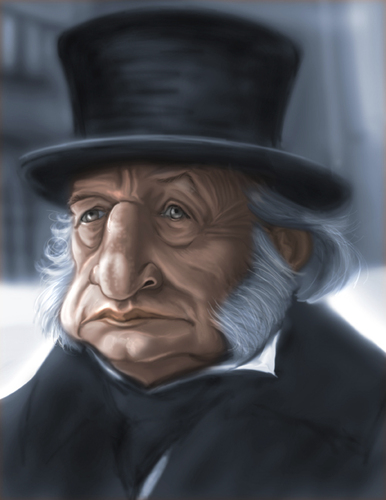
Such is Scrooge’s conclusion when he discovers that despite what he is shown about the future, he wakes up and discovers that he may change those ends. The story relies upon something which tends to be common in everyday language: the truths of counterfactuals. For example, Scrooge seems to conclude “If I change my course, then things will turn out differently.” Thomas Flint writes, “no one dismisses the story on the grounds that there simply are no such truths which ever could be revealed. The reason, I think, is that most people tacitly assume that there are such conditional truths” (Flint, 79, cited below).
It is therefore interesting that the most commonly cited philosophical objection to molinism is this very notion: that things can be true about what free beings will do in such-and-such circumstances. Most often the objection is put something like this: “What grounds the truths of these statements? If the creatures don’t exist yet, then how can there be anything to make such statements true?” I’ll be foregoing a lengthy philosophical defense of the position for now and instead focus on one rebuttal: Why suppose that such statements need to have a “truthmaker” or that they need to have a “grounding”?
What reason is there for supposing that “if a proposition is true, then something… causes it to be true…” (Alvin Plantinga quoted in Flint, 127)? Now Flint himself (and he says Plantinga follows) continues on beyond this to argue that there are in fact ways to ground such counterfactuals, but my own skepticism remains unconvinced. I’m not sure I understand the notion that propositions must have some grounds to make them true. It seems much more plausible to me that for any proposition, it is either true or false. Clearly, this is the case for many necessary truths. It is necessarily true that if something is pink it is colored. But does that mean that if nothing existed, this would not be true? Or would it follow that if no pink things existed, the statement would be meaningless? I’m not sure these things do follow, and so I remain highly skeptical of the notion that counterfactuals of freedom even need to be grounded to begin with. In any case, it seems to me highly questionable that they do.
It also seems extremely plausible to me to just accept my commonsense notion that the story of Scrooge just makes sense. If Scrooge had continued the life he had, then the things he was shown would have come about. Scrooge had a change of heart, so those things did not come about. But that doesn’t mean they would not have if he had not changed. The appeal to common sense is almost universally frowned upon in philosophy, but it seems like in this case there is little reason to doubt it.
Merry Christmas, all! I’ll resume posting after the day of the birth of our Savior!
Image Credit: Robert Doucette http://commons.wikimedia.org/wiki/File:George_c_scott_as_scrooge.jpg
SDG.
——
The preceding post is the property of J.W. Wartick (apart from citations, which are the property of their respective owners) and should not be reproduced in part or in whole without the expressed consent of the author. All content on this site is the property of J.W. Wartick and is made available for individual and personal usage. If you cite from these documents, whether for personal or professional purposes, please give appropriate citation with both the name of the author (J.W. Wartick) and a link to the original URL. If you’d like to repost a post, you may do so, provided you show less than half of the original post on your own site and link to the original post for the rest. You must also appropriately cite the post as noted above. This blog is protected by Creative Commons licensing. By viewing any part of this site, you are agreeing to this usage policy.
Is God just lucky?: Possible Worlds and God’s Providence, a Defense of Molinism

Knowing all the possible circumstances, persons, and permutations of these, God decreed to create just those circumstances and just those people who would freely do what God willed to happen. (William Lane Craig, 86).
I’ve argued previously that molinism allows for human freedom and God’s perfect knowledge of the future. One objection which has been raised to my argument is that, granting all of it, it would seem that God is just really lucky that the world He wants to actualize is possible. Looking back, we can see that the argument flows from the logical priority of God’s knowledge. Central to my defense was the notion that the possible worlds are full of the free choices of creatures. The objection therefore argues that God must simply “get lucky.” There must be a possible world which God actually wants to actualize.
The argument would look something like this:
1) God can only create that which is possible
2) The set of possible worlds covers all possibilities.
3) Therefore, if there is a world which God wants to create, He would have had to be simply lucky–there would have had to be a possible world that contained the outcomes God desired.
The objection is quite thoughtful. It is not easy to resolve. Before rebutting this objection, it is important to note that the set of all possible worlds is the same whether one is a determinist, open theist, or molinist. Granted, open theists deny that this set would include future contingents, but for now that is irrelevant. All the positions agree the set of possible worlds includes no contradictions. Thus, any position must account for the “God got lucky” objection.
I believe that molinism offers a way around this difficulty, and it does so by again focusing upon logical priority. William Lane Craig’s quote above illustrates this. God’s will is at the forefront. I suggest that God’s will is logically prior to the set of possible worlds. Consider the following argument, which focuses upon the redemption (as one of the outcomes God would desire):
1) God only wills what is possible
2) God wills the redemption
3) Therefore, the redemption is possible (modus ponens, 1-2)
4) Whatever is possible exists in the set of possible worlds (tautology)
5) Therefore, the redemption exists in the set of possible worlds (3, 4)
From this argument, it wouldn’t be too difficult to draw the inference that God isn’t lucky in regards to the possibilities–God’s will would have some kind of determining power over the set of possible worlds, because anything God wills would have to exist in a possible world. In other words, God’s will is logically prior to the set of possible worlds. That which God’s will must be possible, so it is not the set of possible worlds that determines what God can will, it is rather God’s will which determines the set of possible worlds.
A potential objection I could see is that this argument just moves the debate up another level–does God will things because they are possible or are they possible because God wills them? My response would again point to logical priority, and I would say that God’s nature (will) is logically prior to the set of possible worlds.
An objection could then be raised: “Why doesn’t God will for a world without evil?” Answer: Free will defense would work here also. God could clearly will for a world to have the redemption without destroying free will for all persons, but to will a world without evil would (possibly) impinge on all persons’ free will.
Therefore, it seems that only molinism can adequately account for both human free will and God’s omniscience and providence. Whatever God wills will occur. God is not lucky, rather, God is sovereign.
SDG.
Sources
William Lane Craig, “God Directs All Things: On Behalf of a Molinist View of Providence” in Four Views on Divine Providence ed. Stanley Gundry and Dennis Jowers, 79-100 (Grand Rapids, MI: Zondervan, 2011).
Image Credit: I took this picture at Waldo Canyon near Manitou Springs, Colorado on my honeymoon. Use of this image is subject to the terms stated at the bottom of this post.
——
The preceding post is the property of J.W. Wartick (apart from citations, which are the property of their respective owners) and should not be reproduced in part or in whole without the expressed consent of the author. All content on this site is the property of J.W. Wartick and is made available for individual and personal usage. If you cite from these documents, whether for personal or professional purposes, please give appropriate citation with both the name of the author (J.W. Wartick) and a link to the original URL. This blog is protected by Creative Commons licensing. By viewing any part of this site, you are agreeing to this usage policy.
The New Defenders of Molinism: Reconciling God’s Foreknowledge and Our Free Will
God has both complete foreknowledge concerning how… creatures will act and great control over their actions, in the sense that any act they perform is either intended or permitted by him. Yet because the knowledge which generates this foresight and sovereignty is not itself a product of free divine activity, our actions remain genuinely free, not the robotic effects of divine causal determinism. (Thomas Flint, 44, cited below)

Middle Knowledge–God’s knowledge of counterfactuals–is under attack from all sides. On one side, theological determinists argue that God’s foreknowledge necessitates all states of affairs. On the other side, open theists and process theists argue that foreknowledge limits the free will of creatures. That said, there are some extremely powerful philosophical defenses–and defenders–of the doctrine of middle knowledge.
Logical Priority and Creaturely Freedom
Essential to a correct understanding of molinism is an investigation of creation. Here, however, the discussion is not over the temporal nature of creation or the steps God took in creating. Rather, the focus is upon the logical priority within God’s creative act. By drawing out the logical priority involved, molinism solves the objections of both determinism and open theism.
The logical order of events is different from the chronological order in which they occur. Determinists focus only upon the chronological order: 1) Future contingents are true or false, God knows those which are true. 2) The events which are true occur (Craig, 128). From this, determinists (and open theists who deny God’s foreknowledge in order to preserve freedom of the will for this reason) conclude that everything is determined. The problem is they have ignored the contribution middle knowledge can make to reconciling free will and foreknowledge.
The logical priority of events occurring is quite different from its chronological order: 1) Events occur; 2) Statements about the events are true or false; 3) God knows the true statements.
By drawing out the logical priority of events’ occurring, one can then apply this to creation. William Lane Craig points out “The Three Logical Moments of God’s Knowledge”: 1) Natural Knowledge- God’s necessary knowledge of all possible worlds; 2) Middle Knowledge- God’s knowledge of creaturely counterfactuals. Here is the pivotal point: the third “logical moment” (again, note the distinction between chronological priority and logical priority) occurs only subsequent to God’s decision to create a world. God uses His natural knowledge to peruse the possible worlds, and His middle knowledge to determine how to best bring about His divine plans. Then, He chooses which possible world to create, and this brings about the third “moment” of God’s knowledge: 3) Free Knowledge–God’s contingent knowledge of the actual world (Craig, 131).
Note that God’s free knowledge is contingent–it is based upon actualizing a world from the set of possible worlds. Combining this with the facts of logical versus chronological priority, the resolution of the alleged difficulties from both determinists and open theists is revealed. Determinists ignored the fact that God, upon creating, is selecting from the set of possible worlds–included in each possible world is the set of free creaturely choices which will occur. God, therefore, does not determine which events will occur, but selects a world full of free choices. Open theists, on the other hand fail to recognize that the choices are free. The point must be emphasized: the choices themselves are logically prior to God’s knowledge of them. In other words, there is a set of possible worlds, each of which features various states of affairs. Middle knowledge reveals the free choices made by the individuals which can populate the possible worlds. God’s knowledge does not determine the choices–God simply chooses to actualize one of the worlds full of free choices. It is only the “free knowledge” of God which is determined by God (Flint, 42).
The Theological Superiority of Molinism
Reconciling God’s foreknowledge and creaturely free will is not the only reason to accept molinism. The doctrine has a number of theological advantages over both open theism and theological determinism. First, the doctrine undermines the extremely untoward idea within theological determinism that God causes evil. John Frame, for example, says quite simply “…[I]t is important to see that God does in fact bring about the sinful behavior of human beings, whatever problems that may create in our understanding” (Frame, 68). Molinists, on the other hand, acknowledge that God accounts for evil within His plan but they can rightly argue that evil is due to the free acts of creatures.
Molinism also provides a grounds for Biblical Inerrancy. Open theists have great difficulties providing any grounds for this doctrine (and often end up abandoning it). The reason for this is because open theists don’t believe God knows what free creatures will do. Thus, free creatures–the authors of the Bible–could be fallible. Middle knoweldge, on the other hand, shows that God knows what the creatures will do in whatever circumstances they are placed in. Thus, God would have known who, what, where, when, why, and how to bring about His infallible Word.
Most notably, prophecy perhaps only makes sense on a molinist account. While determinism allows for the truth of prophecy, it undermines the creature-creator relationship inherent in prophecy (and found in accounts like that of Jonah). God simply foreordains that His prophets come forward and prophecy, then He unilaterally brings about the truth of their prophetic utterances. Open theism, on the other hand, must force prophecy either into God’s luck or argue that it is one of the “unilateral” actions of God (which undermines the core of open theism–human freedom). Molinism, however, allows for human freedom and the truth of prophecy. Thomas Flint points out that prophecy on a molinist account could be brought about in two ways–either through God acting to bring about the truth of the prophetic utterance, or through God’s foreknowledge of the free actions of creatures (Flint 197ff).
Again, prayers and their answers may only make sense upon a molinist account. Determinists, in particular, have difficulty with prayer. God seems quite narcissistic–He foreordains that His creations worship Him, and then chooses to bring about their requests. Open theists, on the other hand, have left God hog-tied. I may pray for a friend to come to the faith, and God can only hope with me that that friend might change his/her mind. God doesn’t know what will happen, on open theism, so He, like me, can just try His best. Conversely, molinism allows for creaturely freedom to choose to pray, while also allowing God to bring about the states of affairs prayed for (Flint, 229ff–Flint specifically is discussing praying “for things to have happened”).
Conclusion
Molinism provides a wealth of theological insight. Not only that, but it also reconciles God’s foreknowledge with our free will. Molinism avoids the difficulties of both open theism and determinism, while making sense of theological and philosophical truths. The defenders of molinism have won their case.
Sources
William Lane Craig, The Only Wise God (Eugene, OR: Wipf and Stock, 1999).
Thomas P. Flint, Divine Providence: The Molinist Account (Ithaca, NY: Cornell, 1998).
John Frame, No Other God: A Response to Open Theism (Phillipsburg, NJ: P&R, 2001).
Image Credit: Bdpmax http://commons.wikimedia.org/wiki/File:Baitou_Mountain_Tianchi.jpg
SDG.
——
The preceding post is the property of J.W. Wartick (apart from citations, which are the property of their respective owners) and should not be reproduced in part or in whole without the expressed consent of the author. All content on this site is the property of J.W. Wartick and is made available for individual and personal usage. If you cite from these documents, whether for personal or professional purposes, please give appropriate citation with both the name of the author (J.W. Wartick) and a link to the original URL. This blog is protected by Creative Commons licensing. By viewing any part of this site, you are agreeing to this usage policy.
Molinism and Timelessness–A Match Made in Heaven (No, really!)
It seems to me that there are few matches better made than the doctrine of Divine Timelessness and Molinism (aka Middle Knowledge). I think they truly are a match made in heaven, for God Himself possesses both of these attributes/properties.
First, some definitions. God is timeless, which means that “God exists, but exists at no time” (Leftow, xi). Middle knowledge is God’s knowledge of counterfactuals (simplifying the case to some extent here, see Thomas Flint’s discussion in Divine Providence: The Molinist Account). Jointly these propositions serve as explanations for a number of phenomena of Christianity.
First, human freedom and divine omniscience is a problem curtailed jointly by these doctrines. Timelessness solves any kind of potential incompatibility by simply denying that omniscience is foreknowledge. Instead, it is simply knowledge, known all at once in one “instant” in eternity (Leftow, 246ff). That which is not in time cannot determine things “ahead of time”.
Molinism, on the other hand, can also deny any incompatibility by asserting that the counterfactuals of God’s knowledge are not under the control of God. In other words, God has no control over whether or not Jenny will freely choose to go mountain climbing. God can control the circumstances in which Jenny is placed, and then bring it about that some other counterfactual would be true (i.e. Jenny does not go mountain climbing because she stays home to nurse her ailing goldfish). But this control over circumstances does not entail control over choices. The choices remain free (Flint, 11ff).
Now, one objection to Molinism is that because God decides which circumstances in which to place Jenny before the creation of the world, he still is determining what she will do because he picks from the circumstances. But this is not quite the case. Jenny’s actions are not determined, but some of the circumstances in which she is placed are. This doesn’t preclude her free choice, however, for God only controls the situations Jenny will encounter, while her free choices remain outside of His control.
Timelessness is sometimes denied due to a perception that a timeless God could not have meaningful interactions with His creatures. This does not seem to be the case however, once one analyzes exactly what timelessness entails. Leftow argues convincingly that timelessness can be thought of as, in some sense, a parallel “time” during which all things happen at once, though not simultaneously. The relationship of successive temporal instants can be thought of in some ways as similar to logical priority. If a timeless God has middle knowledge, furthermore, then God can indeed have “real” interactions with creatures, because He, in eternity, all-at-once performs the creative, providential act. This includes the situations in which His creatures will be placed.
Thus, by His creative act, He sets the situations in which He will interact with His creatures, and this action is a true interaction because He factors in their free choices and takes such things into account. Furthermore, the objection that God’s interactions are diminished because they happen “before” the interaction occurs is a specious claim, for if God is timeless, then none of His actions occur “at a time” other than in Eternity.
Therefore, it seems to me that jointly, a molinist account and a timeless God make quite a lot of sense. This is not to say that there are no other accounts of God that make sense, but this is part of the interest of philosophy of religion, after all, particularly among Christians: the dialogue, the interaction with the Biblical texts which perhaps speak to each issue, and the different conclusions which can be drawn. These differing conclusions do not take away from or destroy the validity of our faith, rather, they ensure that we delve ever deeper, striving for an understanding of the divine Godhead.
Sources:
Leftow, Brian. Time and Eternity. Cornell University Press. 2009 (reprint).
Thomas Flint, Divine Providence: A Molinist Account. Cornell University Press. 2006.
——
The preceding post is the property of J.W. Wartick (apart from citations, which are the property of their respective owners) and should not be reproduced in part or in whole without the expressed consent of the author.

 J.W. Wartick - Reconstructing Faith

