Archive for
Getting Married, Will Be Away
I am driving (not right NOW) to Kansas (from Michigan) to get married. I will be leaving Sunday, but I work tonight and tomorrow and I need to finish packing everything. As such, I wanted to share that I will be mostly out of contact until about August 20th. After the wedding, we have a weeklong honeymoon, and then we move to Minnesota. So there’s a lot going in. I’ll check in once in a while as I get internet access here and there, but I wanted to explain why you won’t hear from me for a while. Therefore, if you comment, it may take several weeks for it to get approved, as I’ll be mostly out of touch. I look forward to coming back on here as a married man. The wedding is August 5th.
It would be impossible to describe how excited I am to be getting married. God has blessed me profoundly through Beth. In her, I found compassion, determination, love, gentleness, and grit all rolled into one. As a team, we’re going to be doing many great things, I am sure.
Keep us in your prayers, share any advice about marriage you may have, and, God willing, I’ll be back at it in about 3 weeks.
In Christ,
-J.W.
Inerrancy, Scripture, and the “Easy Way Out”
 Inerrancy, defined as simply as possible, is the Christian doctrine that the Bible is divinely inspired and without error.
But it is important to move beyond this simple definition, because people often come away with misconceptions about the doctrine. The Chicago Statement on Biblical Inerrancy explicates what evangelicals mean when they speak of inerrancy. I highly recommend that anyone interested in Inerrancy read this statement. It clears up a number of misconceptions.
A rejection of inerrancy is frequently due to a misunderstanding of what the doctrine means. Here are some common misreadings of the doctrine:
1) Inerrancy does not mean that there will be no discrepancies between Gospel accounts. These discrepancies, based upon an interpretation given by one who affirms inerrancy, are not seen as errors but as the different authors expressing their biographical accounts in different ways. Unlike modern conceptions that a quoted phrases must be exact, historians in the first century felt at their liberty to rearrange temporal events to better illustrate a common theme. The Gospels can be seen to utilize several methods of ancient biographies as they emphasize certain aspects of Christ’s life.
2) Inerrancy does not mean that there are no cultural or personal aspects to Scripture. An example of this can be seen in the geocentrism in the Bible. That there is geocentrism in the Bible does not undermine inerrancy. Inerrancy is the belief that what the Bible teaches is without error. The Bible does not teach geocentrism, but features it as part of the background beliefs of the cultural context of the authors. The authors have imported their culture into expressing God’s word, but that does not undermine the teachings.
3) Inerrancy does not mean God dictated the Bible word-for-word. This point ties into 2: God used human authors and gave them the leeway to write within their cultural background.
Those who reject inerrancy have taken an easy way out. Rather than investigating the issue of historical grammatical interpretation of Scripture or looking into what inerrancy means, they find what is perceived as an “error” in Scripture and reject the doctrine. The misconceptions outlined above are just a few of the errors made by people who do not investigate the issue seriously enough. Rather than coming upon a difficulty in the text and rejecting inerrancy, I urge readers to explore the difficulty, see what people have to say about it. I’ve found on more than one occasion that something I thought could be an error was explained by a cultural tradition or misreading of the text.
Finally, I’d like to address something that might come up to those reading through this. Often atheists object to the doctrine of inerrancy. I’ve run into this in my own personal discussions with those outside of the faith. They say things like “Do you really think a book written by a bunch of humans is without error?”
Well, if the Christian God exists, then the Bible is not just a book written by a bunch of humans. If God exists, there is no reason to think that God would be incapable of guiding His people to write a book to reveal Himself in a way that allows them to use their historical and cultural contexts without transmitting error in teaching. It would take a very powerful argument to convince me that an omnipotent deity would be unable to do this.
Image credit: http://commons.wikimedia.org/wiki/File:Bibbia_con_rosa.jpg
SDG.
——
The preceding post is the property of J.W. Wartick (apart from citations, which are the property of their respective owners) and should not be reproduced in part or in whole without the expressed consent of the author. All content on this site is the property of J.W. Wartick and is made available for individual and personal usage. If you cite from these documents, whether for personal or professional purposes, please give appropriate citation with both the name of the author (J.W. Wartick) and a link to the original URL. This blog is protected by Creative Commons licensing. By viewing any part of this site, you are agreeing to this usage policy.
Really Recommended Posts 7/25
My Really Recommended Posts for the day are below:
What is a Free Thinker? over at “Cold and Lonely Truth.” This post discusses the term “free thinker” and its implications. Arthur comes to the conclusion that a “free thinker” isn’t so much free as they are dogmatic. I had some similar ideas I expressed in my “Letter to a Free Thinker.”
Science Sez So: Man Made God over at “The Gospel of Erik.” Erik discusses the recent argument by some atheistic neuroscientists that mankind made God.
Another Reason I Won’t Debate the Historicity of Jesus Christ over at “Josiah Concept Ministries.” Cory links to a video of skeptic Bart Ehrmann demolishing an atheist in a discussion over whether Jesus existed or not.
Is the Bible from God? 3 Signs of the Supernatural at “Apologetics Guy.” A great introductory apologetics read for those looking to defend the Bible as God’s Word.
Erasing Hell at “In Christ Jesus.” A brief look at Francis Chan and Preston Sprinkle’s book, Erasing Hell. I recently got the book and will be reading it shortly.
Harry Potter and the Deathly Hallows: Part 2, A Christian’s thoughts
 I’ve made no secret of the fact that I’m a huge Harry Potter fan. I think the books are phenomenal, and the movies have often been just as great. What interests me, as usual, is how the Christian can relate to this extraordinarily popular series.
Harry Potter and the Deathly Hallows, Part 2 released over the weekend. I was at the midnight showing with my fiancee. The best description I can give of our feelings when it ended is this: bittersweet. The series is over. The books and movies are no longer coming. This is the end! Or is it?
THERE ARE MAJOR PLOT SPOILERS BELOW
And that is the feeling I got throughout the movie. Is death the end? The movie takes little time to get going. Soon, viewers are thrust into the epic final conflict in which Harry Potter rushes to destroy all the horcruxes (pieces of the evil Lord Voldemort’s soul) in order to finally defeat his enemy. Things get going fairly well. Harry shows up at Hogwarts again with resounding support. He quickly uses his allies to take back the school and set it up for a final showdown with evil. As his friends battle the forces of darkness closing in around them, Harry searches frantically for another horcrux while Hermione and Ron locate a basilisk fang–one of the only things capable of destroying these pieces of soul.
But once both Harry and Hermione/Ron have achieved their missions, the goal is still only close at hand. They must destroy Nagini, Voldemort’s snake (and another horcrux). They immediately set off to find the snake and witness the murder of Professor Snape–who turns out to be a double-agent after all. The fact that he killed Dumbledore turns out to not show his final betrayal, but the depth of his loyalty. But from Snape’s dying memories, Harry gleans the truth: Harry himself is an unintentional horcrux. When Voldemort killed Harry’s parents, he sealed part of his soul inside Harry. So Harry must die if evil is to be defeated.
Harry goes willingly to his death. He meets Voldemort among his followers, and allows himself to be killed. But it turns out that this is not the end. Dumbledore had sealed the Resurrection Stone inside a gift to Harry. This stone allows Harry to speak with his dead friends and family. Harry, once dead, is made alive once more after a discussion with Dumbledore [thanks to an astute reader for making this point more clear]. Harry awakens in a pivotal scene in which Voldemort is announcing his victory over all wizards, and he and Voldemort battle in a final, epic showdown in which Harry overcomes evil once and for all.
Christians reading this should be sensing some interesting underlying themes here. Harry Potter is innocent–he’s thrust into the events upon him. He willingly goes to his death, knowing it is literally the only way to defeat evil. And, once he’s died, he is resurrected, back to finally bring about his victory over Voldemort. Yeah, it seems Rowling might have borrowed a bit from the story of Jesus.
What explains the astounding popularity of the Harry Potter series? J.K. Rowling has weaved a series of books which tie together in sometimes amazing ways. What seem like random details and “fluff” in one book turn out to be of immense importance later in the series. Each book, mostly self-contained, features a different thrust. Yet they are all tied through broad overarching themes. But could it be that there is another theme, oft-ignored in discussions of Harry Potter? It seems so. The climax of the series occurs in the death and resurrection of Potter. The Christian story culminates in the same. Potter is fiction, but his tale, so wonderfully complex, leads us to the story of Christ. He had to die for the sake of all–Voldemort would have overcome. Jesus, similarly, had to die for the sake of all–lest sin and the devil overcome.
This parallelism with Christianity was not revealed until the final book, yet perhaps it can explain how Rowling was able to make the conclusion to her epic so satisfying. She was telling a story we all knew. She was telling us, in a very different way, what must happen for evil to be overcome. Her story is fiction, Christianity’s story is real. What we want to believe in (Harry Potter) is what many of us do believe (Christianity). Whether intentional or not (and I think it was intentional), Rowling wrote a story which resonates deeply with Christianity’s own. And her fiction points us towards the greater reality.
Christians, I encourage you to read and watch Harry Potter. The books and movies are just phenomenal pieces of literature and filmography. Think of the themes that are woven throughout the books. Think of the final showdown between good and evil. And think of Jesus while you do so. You’ll find that within Potter, we discover hidden truths of our own faith.
But hey, you don’t really have to think of all these themes. And it’s highly questionable whether these parallels are intentional or not. It’s okay to just enjoy the movies anyway. My point is that, as a Christian, I saw these themes. And I found it thrilling.
SDG.
——
The preceding post is the property of J.W. Wartick (apart from citations, which are the property of their respective owners) and should not be reproduced in part or in whole without the expressed consent of the author. All content on this site is the property of J.W. Wartick and is made available for individual and personal usage. If you cite from these documents, whether for personal or professional purposes, please give appropriate citation with both the name of the author (J.W. Wartick) and a link to the original URL. This blog is protected by Creative Commons licensing. By viewing any part of this site, you are agreeing to this usage policy.
Quick Links: Craig on the Ontological Argument
A common objection to the ontological argument for the existence of God is that existence is not a property. People often misunderstand that modern versions of the argument don’t rely on making existence a property, but upon the idea that necessary existence is greater than contingent existence. William Lane Craig has some clarifying comments on the ontological argument in response to two questions regarding this confusion: here.
Reading “Miracle of Theism” by J.L. Mackie: Introduction
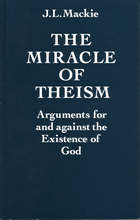
This post will serve as a base for links to the rest of the chapters as I read them:
One reader of my blog recently challenged me to take on the heady atheists. Rather than focusing on the kind of basic fallacies found in various atheistic objections to belief, he suggested I should devote some of my philosophical energy to rebutting the claims of atheists who should actually be taken seriously. I took the advice to heart, acquired copies of J.L. Mackie’s Miracle of Theism and Graham Oppy’s Arguing About Gods. I’ve started reading Mackie’s book. I will be posting thoughts as I continue to read through it, and tie it into an extended critique of his arguments. For today, I’ll discuss only the introduction.
I found a few areas of agreement. Mackie noted that a cumulative case would not point to certainty, but could overcome objections to individual arguments. I agree with him here. I tend to favor a “cumulative case” type of argument, though I think that some theistic arguments could easily stand on their own to prove general aspects of theism (like a first cause).
I find a bit of difficulty with Mackie’s rather dismissive attitude towards faith (p. 4-6). As tends to be the case when faith is discussed by non-theists, he just brought up arguments which he believes shows that reason must be the basis for belief, and then moved on. But I’m not totally convinced that faith can be tossed aside as it is so often. First, I think of Plantinga’s proper function account and I think that while it is ultimately based on reason, it allows for one to be justified in belief through faith. Second, I’m not persuaded that faith cannot work as a kind of reason or discovery of reality. Faith, as it were, seems to account for many of our beliefs (other minds, for example?). So I think while I tend to be an evidentialist when it comes to these things, I am skeptical of a simple dismissal of faith. If anyone could help me with these points, I’d appreciate it.
Mackie discussed the possibility of naturalistic explanations of religion. I’m continually perplexed by the pervasiveness of this idea.Why should the origin of a belief undermine its truth? This would only work if the origin would serve to discredit the belief itself (as in Plantinga’s Evolutionary Argument Against Naturalism).
And I’ve been similarly unconvinced when it comes to others who argue that an account of how religious came to be would undermine the belief. I know Plantinga gives the idea more credit than I: in Warranted Christian Belief, I think, I recall him arguing extensively against naturalistic accounts. But I don’t see them as much of a threat, and I admit I groaned a bit when Mackie started going in that direction. It always seems like the kind of “hidden weapon” atheists have: “We have an evolutionary account of religion!” Of course whether that is true or not, I don’t see it as very persuasive.
SDG.
——
The preceding post is the property of J.W. Wartick (apart from citations, which are the property of their respective owners) and should not be reproduced in part or in whole without the expressed consent of the author. All content on this site is the property of J.W. Wartick and is made available for individual and personal usage. If you cite from these documents, whether for personal or professional purposes, please give appropriate citation with both the name of the author (J.W. Wartick) and a link to the original URL. This blog is protected by Creative Commons licensing. By viewing any part of this site, you are agreeing to this usage policy.
Quick Link: N.T. Wright on Women in the Ministry
Eminent New Testament scholar N.T. Wright, former Bishop of Durham, is an egalitarian. Yes, he knows Pauline writing, and he believes women can (and should) be pastors. Check out his wonderfully lucid article on the topic: here.
Here are some choice quotes:
Mary Magdalene and the others are the apostles to the apostles. We should not be surprised that Paul calls a woman named Junia an apostle in Romans 16.7. If an apostle is a witness to the resurrection, there were women who deserved that title before any of the men.
In regards to 1 Timothy 2:
The key to the present passage, then, is to recognise that it is commanding that women, too, should be allowed to study and learn, and should not be restrained from doing so (verse 11). They are to be ‘in full submission’; this is often taken to mean ‘to the men’, or ‘to their husbands’, but it is equally likely that it refers to their attitude, as learners, of submission to God or to the gospel – which of course would be true for men as well. Then the crucial verse 12 need not be read as ‘I do not allow a woman to teach or hold authority over a man’ – the translation which has caused so much difficulty in recent years. It can equally mean (and in context this makes much more sense): ‘I don’t mean to imply that I’m now setting up women as the new authority over men in the same way that previously men held authority over women.’ Why might Paul need to say this?
Now if you were writing a letter to someone in a small, new religious movement with a base in Ephesus, and wanted to say that because of the gospel of Jesus the old ways of organising male and female roles had to be rethought from top to bottom, with one feature of that being that the women were to be encouraged to study and learn and take a leadership role, you might well want to avoid giving the wrong impression. Was the apostle saying, people might wonder, that women should be trained up so that Christianity would gradually become a cult like that of Artemis, where women did the leading and kept the men in line? That, it seems to me, is what verse 12 is denying. The word I’ve translated ‘try to dictate to them’ is unusual, but seems to have the overtones of ‘being bossy’ or ‘seizing control’. Paul is saying, like Jesus in Luke 10, that women must have the space and leisure to study and learn in their own way, not in order that they may muscle in and take over the leadership as in the Artemis-cult, but so that men and women alike can develop whatever gifts of learning, teaching and leadership God is giving them.
Really, check out the rest of his article.
Check out my argument for women pastors: here.
Really Recommended Posts 7/11
Readers, as part of my mission with this blog, I’d like to try to raise awareness of how many awesome sites about Christianity and apologetics there are out there. As such, rather than just leaving it to a blogroll, I’m going to start featuring certain blogs and posts here on a semi-regular basis. I encourage you to check them out!
- “The Christian and the Euthyphro Dilemma” by Erik over at The Gospel of Erik. This post is simply phenomenal. Erik shows how the Euthyphro Dilemma fails to challenge the Christian concept of God because it makes assumption about God which are false. Erik uses Scripture to point out these areas of divergence.
- “Should Governments Decide Human Worth?” by Arthur at Cold and Lonely Truth. I can’t describe how much I like this post. Arthur points out some of the difficulties with allowing the government to determine human values. It also has a really sweet clip from The Twilight Zone which lead me to watching the whole episode. Check it out. Now!
- “Barbie Girl” by Dan and Tiffany O’Day at the aptly named Dan and Tiffany O’Day. Body image is an issue which Christians should address more. There’s a really awesome video here of how much work goes into a shot of a model. I really recommend this post.
- Book Review of “The Christian Delusion” edited by John Loftus by Matthew/Madeleine Flannagan at MandM. A review from Philosophia Christi of a book arguing against Christianity. Great comments.
Flannagan
Book Review: “No Other God: A Response to Open Theism” by John Frame
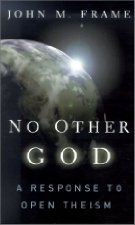 I recently finished No Other God
Areas of Agreement
One of the strengths of Frame’s book is how clear his thinking is. His style of argumentation is precise, and he clearly lays out what he considers evidence for his positions. He is unafraid to make statements with huge implications.
A particularly interesting aspect of Frame’s work was a brief historical look at the roots of Open Theism, leading it back to the Socinianism. Frame points out that advocates of Open Theism tend to portray their view as the “new theology on the block” despite the fact that it has been around (and rejected) for quite some time.
I believe Frame is correct when he argues against the centralization of any one attribute of God. Specifically, the centralization of love on Open Theism tends to ignore other important attributes of God (49ff). (Interestingly, Frame’s own account of God unnecessarily over-emphasizes Sovereignty, though he disguises this by calling it “Lordship.)
Frame levels strong critiques against Open Theism’s reading of Scripture. Open Theists tend to advocate the “straightforward” reading of texts which help their case. One of Open Theist’s favorite passages is God testing Abraham. Yet Frame rightly notes that if there is a straightforward reading of the text, then God did not know the present truth of Abraham’s heart, whereas Open Theists attempt to use this to support God not knowing the future (47). Further, if God was trying to figure out how Abraham would act in the future, then He was trying to do something He couldn’t (determine what the libertarian free choices of humans would be) according to Open Theism. So the story’s straightforward reading does not work to support Open Theism. Frame urges a similar examination of other passages, though he doesn’t expand on it.
Areas of Disagreement
Despite these areas of agreement, I vehemently oppose Frame’s position on several issues. Most notably, on theistic determinism, compatibilism, and libertarianism.
First, libertarianism. Frame correctly notes that the core of Open Theism is the assumption of libertarianism. Yet his critique of libertarianism is wrongheaded. He caricatures libertarians as believing that choices are made in the absence of any motivation. He writes, commenting on the libertarian view, “if our decisions are caused by anything or anyone (including our own desires), they are not properly our decisions… to be responsible, we must be able to do otherwise” (121). Yet this is explicitly not libertarianism. Peter van Inwagen, for example, explicates libertarianism by saying “…that someone’s acts are undetermined does not entail that they are uncaused” (van Inwagen, An Essay on Free Will, Oxford: 1983, p. 14).
But Frame explicitly centers his critique of libertarianism on a contra-causal account of freedom, saying, for example, “If guilt presupposed libertarian freedom, then in order to show that Hubert [a man accused of robbing a bank] is guilty, the prosecutor would have to show that his decision to rob a bank had no cause…” (126). But again, libertarians deny this very type of contra-causal freedom, so Frame is arguing against a straw man. Because Frame thinks libertarianism is so utterly central to Open Theism, this means that the core of his critique fails to hit home.
The problem with Frame’s counter against libertarianism is that it barely touches the surface of the philosophical arguments for the position. He correctly rails against the idea that our actions are just random occurrences, but incorrectly assumes that this is libertarianism.
Finally, the greatest area of disagreement I have with Frame is on his view of omnidetermination. Consider the following two quotes:
“The uniform witness of Scripture is that the evils of this life come from God” (140).
“…[I]t is important to see that God does in fact bring about the sinful behavior of human beings, whatever problems that may create in our understanding” (68).
I’d be curious to see how Frame reconciles these assertions with the constant witness of Scripture that God is just; fair; good; opposed to evil; etc. Frame utilizes several verses to support his position, but he makes primary those which say God uses “all things” and verses which say calamities are from God. But regarding the former, this can easily refer simply to permissive will, and regarding the latter, the verses he uses are out of context (and even were one to grant the “straightforward reading,” one could counter by saying the calamities are not every evil action, but merely those things which God uses–i.e. storms, other nations, etc.–to instruct His people). Frame, like many theological determinists, is not building even on sand, but on a void. Literally saying that God causes evil is so utterly repugnant and contrary to Scripture that this view overshadows all the good things Frame has to say.
Conclusions
Ultimately, No Other God is on target in a few ways, but it is wildly gunning the wrong direction on too many issues. Frame’s philosophical case against libertarianism is off the mark, he fails to deal with the strong philosophical arguments for libertarianism, and his view that God literally causes evil is baseless. Interestingly, while I went in reading this book looking for some good arguments against Open Theism, I came out with the realization that theological determinism is a far more dangerous doctrine indeed.
SDG.
Check out other posts about Open Theism here.
John Frame,No Other God
——
The preceding post is the property of J.W. Wartick (apart from citations, which are the property of their respective owners) and should not be reproduced in part or in whole without the expressed consent of the author. All content on this site is the property of J.W. Wartick and is made available for individual and personal usage. If you cite from these documents, whether for personal or professional purposes, please give appropriate citation with both the name of the author (J.W. Wartick) and a link to the original URL. This blog is protected by Creative Commons licensing. By viewing any part of this site, you are agreeing to this usage policy.
Refutation of Zeitgeist the Movie/farce.
One popular atheistic movie is “Zeitgeist,” a movie which purports (basically) to show that Christianity is made up , among other things.
As Peter Van Inwagen once said, it’s better to be right than original (irony? he wrote this in An Essay on Free Will), so I suggest anyone interested in refuting this farce of a “documentary” should go listen to Glenn Peoples’ podcast on the topic, found: HERE. Also, check out this great article which breaks Zeitgeist down point-by-point: HERE.
Those interested enough to check it out, I recommend watching the documentary, then listening to the podcast. Peoples really does an excellent job taking it down.

 J.W. Wartick - Reconstructing Faith
