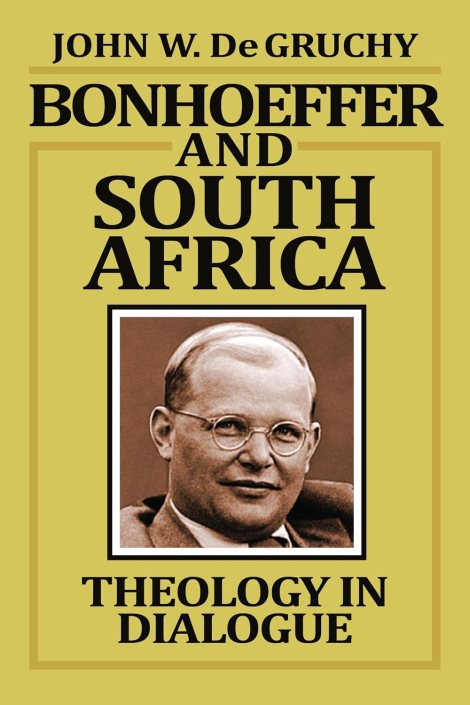
Finding a Bonhoeffer Quote- Research actually takes effort

There are two problems in reading and researching about Dietrich Bonhoeffer that I have encountered related to things he’s written. First, there are several misattributed quotes floating around. Most famous is perhaps the “Not to act is to act….” etc. quote that arose largely because Eric Metaxas falsely attributed to Bonhoeffer, possibly from a book that featured Martin Niemoller. People just assign things to important figures, and sometimes those quotes stick. Unfortunately, this quote is spurious, even if it sounds like something Bonhoeffer might say.

The other challenge I often run into is that the collected works of Bonhoeffer weren’t published in English until the 2010s and so authors writing before that had to go to various other sources to quote Bonhoeffer. Sometimes, this means standalone editions of Letters and Papers from Prison, other times it means collections of Bonhoeffer quotes, such as No Rusty Swords or A Testament to Freedom. This means that in order to track down a quote attributed to Bonhoeffer, readers often have to either have one of those other collections on hand (and then trace them back to an original source on Bonhoeffer’s works) or just hope they’re accurately quoting something.

I was reading a book by John W. De Gruchy, Bonhoeffer and South Africa, and at the beginning of a chapter there’s quote from Bonhoeffer. It helpfully has the name of the essay it’s from, along with the year. Even so, searching through Bonhoeffer’s works in English did not yield that essay title. The year helped narrow the results, but I couldn’t find the opening lines on a page of anything that seemed related to the topic (ecumenism or nationalism). I didn’t have the book of quotes De Gruchy referenced, No Rusty Swords. But, I finally thought of Archive.org. I logged in, borrowed the book, went to the page cited. Still didn’t help me find the essay title, but the heading on the page was Finkenwalde, so I went to Bonhoeffer’s works from Finkenwalde, looked at every essay with ecumenism, and found an essay with a different title. I finally found the quote! It was a very different translation from that cited, but the gist was completely the same. I did it!

All of this goes to show that research and finding quotes takes real effort. I’m not a doctoral student or professional writing about Bonhoeffer. I’m just a very interested lay reader. And yet, to find this one quote from Bonhoeffer involved about an hour of research across several books and the internet. I’m going to take a dig at AI here, because it is a fertile topic- AI simply cannot accomplish this. I ran into several “AI summaries” that were completely useless in finding this quote. And search engines continue to get worse, not better, at helping with actual research. So many people today are saying things about how AI will do the research for us or how much time and effort it takes to do research. Yes, that’s correct. It takes time and effort, and that’s a good thing. It’s part of the learning, digesting, and processing of a human mind to do things like track down a quote. It can be frustrating, and it can take hours we may not feel we have. But that’s part of learning and growth, and I’m kind of sick of hearing about how we need to short circuit that.

SDG.

Book Review: “The Way of Dante: Going Through Hell, Purgatory, and Heaven with C.S. Lewis, Dorothy L. Sayers, and Charles Williams” by Richard Hughes Gibson

The Way of Dante explores how Dante’s works influenced C.S. Lewis, Dorothy L. Sayers, and Charles Williams. Richard Hughes Gibson leads readers through an introduction to these thinkers, followed by a number of chapters highlighting each and how Dante inspired them.

Gibson leads readers across a wide array of topics related to these authors. The topics relate directly to the notions of hell, purgatory, and heaven (as noted in the book’s subtitle). Readers are presented with the writers’ wide array of thoughts and interactions on these topics, from reflections on the concept of hell to how a concept of the glory of heaven might be most adequately described.

By way of critique, I would note that I think the book is a bit in search of its audience. Gibson seems to assume at least some amount of background knowledge not just of Dante’s works but also of scholarship related to all of the authors mentioned. This assumption of background knowledge allows Gibson to dive into deeper themes more quickly, but can leave the reader feeling a bit lost without guidance. For example, a whole chapter dedicated to allegory notes not just the use of allegory in Dante, but also interplay between authors Sayers and Lewis on the topic of allegory. But readers are mostly left to their own devices to know the finer points of what the debate is even about. Also, because the book is exploring the interactions between three major Christian thinkers and Dante, there’s a necessary brevity to the points Gibson makes. But this brevity surely makes the book less useful to the scholar (the one with all the relevant background necessary to understand or know all the references being made) who may be looking for deeper insights. In short, the book leaves readers to dive into the deep end, sink or swim.

The Way of Dante touches on a lot of interesting themes. Readers will find quite a bit to digest here, though it can feel disorienting at times with the way the information is presented.

SDG.

Book Review: “Worth Doing: Fallenness, Finitude, and Work in the Real World” by W. David Buschart & Ryan Tafilowski

Worth Doing by W. David Buschart and Ryan Tafilowski explores the concept of “work in the real world” through a lens of fallenness and finitude.

The authors first introduce the concepts of finitude and fallenness, noting that their goal is to provide a theology of work for the “real world.” They use a few intriguing examples of how perspective can change attitudes related to workers. One is a comparison of the thoughts of both construction workers and office workers about the other–wishing they had what the other had not.

There are a few things that are notable for their absence. For example, there is little-to-no linkage of the concept of work to the capitalist system, nor are there critiques of unfettered capitalism and the exploitation of the worker. This, despite how neatly such a topic fits into the exploration. What could be more fallen than turning finite workers into mere numbers or cogs in the machine? The subject index, for example, doesn’t even have capitalism as a reference, while far more general terms (economics) or hyper-specific concepts (gig economy) get entries. Is it because there’s an avoidance of what could be a controversial critique of capitalism from a theological standpoint? I don’t know. What I do know is that the whole book seems to have such a topic looming in the background. When questions about how certain theologies of work might lead to the oppression of workers are right there and even being asked, the conspicuous absence of how capitalism can set up such an exploitation is all the more alarming.

The section on the goodness of work is another area where the critique of exploitative systems is notably so subtle as to be absent. Despite commenting on the goodness of work, it does so alongside the insights form Qoheleth (the teacher of Ecclesiastes). Even as discussing how everything is meaningless under the sun, the need for and even goodness of the harvest can be emphasized. Turning to the very end of the book, the authors urge readers to “still make hay while the sun rises” for creation is growning in need of redemption and renewal, but we must “come to terms with the kinds of creatures we are…” and that work, while “constrained… by finitude and haunted as it is by the curse, work is nonetheless a good gift from the good God and therefore worth doing” (195). I appreciate this ending note, though linked as it is with some of the discussion on vocation (see below) and the lack of critique of exploitative systems, it can feel a little empty or trite.

One section (190-193) has a scintillating discussion of the concept of “vocation” and how such a concept could be “easily put to exploitative use” through the notion of “doing what you love” (190). The authors call this a kind of “work mythology” that can use an “agency-dignity-power narrative” that “works well for those whose work is creative and satisfying” but perhaps not so much for those whose work is “degrading or unfulfilling” (190-192). Many scholars are referenced here–but one of the major thinkers on the concept of vocation, Martin Luther, is not. While the authors turn back on the concept of vocation and find some benefits, they do so in an explicitly theological framework that essentially sidelines the concept of work rather than integrating it into the concept of work. Here, Luther’s insights on the topic of vocation feel almost painfully absent. While the authors simply say that people were made for communion and union in Jesus Christ (193) and that “it is this; it is not a job or career or even a vocation” as the one thing we should be passionate about (ibid). Yet closing the discussion of vocation with this, moments after noting the lack of fulfillment that might be found in “degrading or unfulfilling” work reads almost as if the entire foregoing discussion on work and the “mythologies” involved in it is solved by a kind of “thoughts and prayers” response. Well, it’s one thing to have a job that we might feel is degrading; but worry not, our true fulfillment is found in union with Christ! Saying this is one thing; living it is another. And living it requires, ironically (based on the emphasis on “real world” in the subtitle), a more real world approach that has God entering into the world, entering into our suffering, and entering into our vocations.

The concepts of finitude and fallenness work well alongside discussions of work, and Buschart and Tafilowski are to be commended for bringing these insights alongside the concept of work. They do this alongside also finding the goodness of work. It’s a fine balance that the authors mostly navigate well (though, see above). Readers looking to start a theological exploration of work will certainly find plenty of depth to think on here.

Worth Doing is, well, worth reading if you’re interested exploring the intersection of theology and work. Readers of this review will, perhaps, think my thoughts are largely negative. But where I’m offering critique, I’m seeking more. There’s a wealth of information and topics to mine here, I just wish that some of them were turned to more incisive points made against what seems to be invisible problems lurking in the background. The book provoked quite a bit of thinking for me, and I believe it will for other readers, as well.

SDG.

Sensationalism through banality in Apologetics and Counter-Apologetics- Be skeptical (with examples)

A post from Michael Licona’s Facebook page, February 2, 2026

Sensationalism sells. We know this in basically every field. But when it comes to faith, unfaith, apologetics, and counter-apologetics, we need to be especially aware of this. Confirmation bias is a major thing and we often want to jump on or share things with which we agree. What’s especially surprising to me is how often apologists and counter-apologists sensationalize points that are actually extremely banal to anyone who has read almost anything in the related field. I wanted to share two recent examples of this, with some commentary on why it matters.

First, Christian apologist Michael Licona shared the image that I put leading this post. He writes, “You do have a number of non-Christian scholars who acknowledge that the disciples believe Jesus had been raised physically, bodily, from the dead.” Conversational tone aside (“you do…”), the point is mundane and would be obvious to just about anyone with any awareness of anything in the field. Licona doesn’t necessarily “sensationalize” this one, but the fact that it’s being shared in a block quote as if it’s some kind of revolutionary point in apologists’ favor is disturbing to me. With any such point, whether it’s pro- or anti-Christianity, there will be someone coming along to disagree, of course. The point I’m making isn’t that such naysayers don’t exist; it’s that they’re fairly obvious in their extreme bias against what are basically indisputable facts. That there were some disciples who believed Jesus was raised bodily from the dead is a pretty easily established thing in the Gospel narratives and coming from early church history as well. It’s not just unsurprising but obvious that even some who aren’t Christian would grant this.

Licona–whether intentionally or not–seems to be setting this quote up to imply a bigger point, though. Something like “and this supports the notion that Jesus actually did bodily raise from the dead” is an inference any apologist would want someone to make. And of course, in the narrowest sense, this is true. If Jesus did, in fact, raise from the dead, then having disciples who believed that would be a likely outcome. And having those beliefs demonstrated in at least one disciple provides some very minimal support to the notion that it might have actually happened (else where did that belief come from?). I’m not intending to start a debate over that here, what I’m trying to say is that it seems this fairly banal point is intended to make some bigger implication, and leaving it unstated disturbs me. I’d much rather an apologist just come out and make the argument. And, to be fair, this is just the style Licona has on his page: share a rather mundane quote from his works somewhere and let people infer and argue as much as they want about it in the comments. I think that’s a potentially misleading way of interacting, especially as an apologist.

An example from a counter-apologist standpoint was a recent video put up by Paulogia, who markets himself as “A former Christian takes a look at the claims of Christians, wherever science is being denied in the name of ancient books.” Paulogia, as Licona, makes some good points occasionally. But he’s also prone to sensationalizing points as if they’re something major, when they absolutely are not.

The recent video was entitled “Paul Wasn’t a Christian — The Shocking Truth From a Scholar.” With such a title, I was expecting… a shocking truth. Instead, the point made in the video is that [I paraphrase] “Paul wasn’t a Christian, because there was no Christianity to convert to. So he didn’t convert, he instead saw his beliefs as making Jesus part of his already existing Jewish faith.” I mean, of course that’s true. Anyone who has done even the slightest amount of studying the formation of Christianity would know this. Reading the Bible alone would fill one in on Paul being Jewish. It’s not some revelatory point.

But Paulogia stresses this numerous times in the video. When introducing the issue with the scholar he’s featuring (Dr. Paula Fredriksen), he even says that when he was a Christian this kind of point would have made his formerly Christian self “very uncomfortable.” Dr. Fredriksen chuckles and says “Oh dear, I don’t want to alarm anybody.” She’s just there sharing some great insights into the development of the early church, but Paulogia keeps pushing to make her points sensational. I think this is intentional in this case due to the “shocking truth” tagline. He wants to make it seem like these relatively obvious points about the early church are somehow “shocking” to Christians in a way that might make them deeply “uncomfortable.”

Now, I don’t want to deny that some Christians would likely find it uncomfortable to acknowledge that Paul wasn’t a Christian in the historical sense. But that point is… obvious. There was no Christianity in the broad sense to convert to, so having him build upon his Jewish foundation with a Jewish Messiah is completely unsurprising. Paulogia in the description even says the interview is “explosive” and that while apologists “have built entire arguments on Paul’s story” it’s possible that “their foundation is completely wrong.” I mean, come on. This is absurd to the extreme, and I’m kind of surprised that someone who’s as careful a thinker as Paulogia often seems to be would even frame this discussion in this way.[1]

So we have here two simple points being framed in ways that make them seem more than they are. I think we should not do that. Banality isn’t necessarily a bad thing. Making obvious points can be helpful to those who don’t already know them. But to then sensationalize the banal as if it is some major point that can shift a paradigm, that’s something that I think we need to be very careful about and quite skeptical of.

[1] I think Paulogia’s critique of Habermas’s work counting scholars, for example, is a somewhat crucial and destructive takedown. Also, Paulogia and Fredriksen discuss other points which may be deeply uncomfortable for very conservative Christians, such as how the Gospels differ (to the extent where Fredriksen says we might categorize some of it as historical fiction if written today) and the like. But even here Fredriksen answers Paulogia’s question about whether there’s anything we can take as reliable in the Gospels with a more positive review–we have to take some of it as a real basis for things that historically happened. Paulogia seemed briefly defalted by Fredriksen’s (I’ll use the word again) banal point. But come on, this is silly to even deny.

SDG.

“The Journey of Modern Theology: From Reconstruction to Deconstruction” by Roger E. Olson – An epochal work of theological history

The Journey of Modern Theology: From Resconstruction to Deconstruction by Roger E. Olson is a monumental achievement of theological analysis and history.

The book is focused around modernity and the theology inspired from it, opposed to it, and moving with, against, and towards it. It is roughly divided chronologically and topically, with each chapter denoting an era of theological development and highlighting various theologians involved in that development. Olson’s accounting is largely neutral and fact-based reportage–he is informing readers on what the various theologians taught and believed rather than providing an analysis thereof. However, many of the major thinkers’ sections include a small section on contemporaneous critiques and responses.

Olson starts off with a brief overview of modernism and modernity, showing the scientific and cultural revolutions often associated with it. Then, he moves to various chapters analyzing modernist theologians and thinkers. Theologians given overviews include (but are not limited to): Friedrich Schleiermacher, Albrecht Ritschl, Karl Barth, Horace Bushnell, Paul Tillich, Jurgen Moltmann, Dietrich Bonhoeffer, Hans Kung, Hans Urs von Balthasar, Charles Hodge, Stanley Hauerwas, Reinhold Niebuhr, Ernst Troeltsch, and many, many more. Chapters include: “Liberal Theologies Reconstruct Christianity in Light of Modernity,” Mediating Theologies Build Bridges Between Orthodoxy and Liberalism,” Theologians Look to the Future with Hope,” etc.

The chapter headings give broad brush introductions to the topics at hand. As I said above, these chapters are roughly chronologically based, though there is plenty of overlap. Olson organizes these around movements, showing the warp and weft movement of theology throughout the modernist period into the postmodern one. Again almost all of the analysis is fact based reportage–here’s what Schleiermacher wrote and believed–sometimes accompanied by a section of “here’s what Schleiermacher’s critics said.” Olson only really tips his hand in the conclusion, showing where his own views lie. As such, that makes the book an incredibly valuable work to simply learn about modernist theologians and theological movements. There were many times I found myself pursuing a thread of thought outside the bounds of the book, getting an interlibrary loan from an author I hadn’t read before, or researching more online.

The value of a book like this can’t really be understated. It is a must have for readers interested in theological history and knowing where and how a lot of current theology came from. Additionally, students of theology can find within it many guidelines for further research and avenues to explore. Are you interested in a theology of liberation? There’s a brief summary here that names names and shows where the thought process is going. Want to know about conservative development related to modernist thought? Those thinkers are here, too. Whether orthodox or not; intentionally or not; Olson does an incredible job across the board giving readers much to learn and contemplate.

The Journey of Modern Theology is a fantastic read that will give readers many, many avenues of further research alongside a baseline understanding of the origins and development of theology alongside and against modernism. Highly recommended.

All Links to Amazon are Affiliates

Links

Be sure to check out the page for this site on Facebook!

Book Reviews– There are plenty more book reviews to read! Read like crazy! (Scroll down for more, and click at bottom for even more!)

SDG.

——

The preceding post is the property of J.W. Wartick (apart from quotations, which are the property of their respective owners, and works of art as credited; images are often freely available to the public and J.W. Wartick makes no claims of owning rights to the images unless he makes that explicit) and should not be reproduced in part or in whole without the expressed consent of the author. All content on this site is the property of J.W. Wartick and is made available for individual and personal usage. If you cite from these documents, whether for personal or professional purposes, please give appropriate citation with both the name of the author (J.W. Wartick) and a link to the original URL. If you’d like to repost a post, you may do so, provided you show less than half of the original post on your own site and link to the original post for the rest. You must also appropriately cite the post as noted above. This blog is protected by Creative Commons licensing. By viewing any part of this site, you are agreeing to this usage policy.
