Archive for
The Shroud of Turin: A Secret History? – Apologetics of the Shroud

I am writing a series of posts about the problems I see in apologetics related to the Shroud of Turin. Check out my introductory post here.
Tracing the Shroud in History
A number of claims are made about the Shroud historically and the alleged trail that can be pieced together in order to get it from Turin back to Palestine. Most apologists I’ve read or watched in videos are careful to say that we know with a fairly high degree of certainty where the Shroud was in the 14th century, but before that it becomes murkier. That doesn’t stop many apologists from then turning to making extremely specific claims about the Shroud in history. Here, I’ll be starting an examination of “The Shroud of Turin: Photograph of the Resurrection,” a video from Duran Smith, an apologist with Ratio Christi, an apologetics organization.
Even referring to a “murky history of the Shroud” prior to the 14th century begs the question in a way, by assuming the Shroud did exist and so would have had a history at all prior to the 14th century. I wrote in my introductory post that I’m not convinced by the evidence for the Shroud. In fact, I think the apologetics related to the Shroud of Turin generally show many of the issues I have identified with apologetics more broadly.
Duran Smith, in this video, goes over a wide swathe of arguments about the Shroud of Turin. Here, I’ll be focusing only on how he traces the Shroud in the earliest periods of its supposed existence.
The Discipline of the Secret?
Smith alleges that the Discipline of the Secret is something that can be applied to discussions of the Shroud. In the video at 8:24, you can see a slide in which he writes about the Discipline of the Secret: “It was used until the 5th century.” Intentionally or not, this slide and the discussion surrounding it make it seem as though the Discipline of the Secret is both an established fact of history with a specific lineage and that it persisted in Christianity from the beginning “until the 5th century.” Neither of these are true as stated that way. The Discipline of the Secret is, like many assignations from historians, a categorization of something they observed in the past, rather than a specific Discipline. Hopping again over to Wikipedia, one can trace the historical origins of the phrase and that it was a categorization invented in the 17th century to describe something happening in the 4th and 5th centuries, but not before. So it is technically true that the practice was “used until the 5th century,” but not true that it was persistent throughout Christianity until then, and certainly doesn’t appear to be some kind of strict practice as Smith makes it out to be.
I belabored the above point because it is important to see that it is easy to throw out terms, phrases, and dates and start piecing a case together based upon them. The untrained eye may find it very easy to go along with this. However, on examination, it makes the case pretty thin to have it based on a 17th century categorization of something that was 4th-5th century, especially when it’s applied in this way. Smith specifically says that the Christians after Jesus’s resurrection “had to keep a lot of things hidden,” which strongly implies he is saying that this was a 1st century discipline. “There were things that they couldn’t… write down,” Smith says (about 8:35).
Smith actually goes on to make a number of claims about the Discipline of the Secret. Starting around 8:50 into the video, he claims: “the Apostles and the disciples spoke in a secret code… it was called The Discipline of the Secret. That’s [a/the] name given to it by some of the early church fathers. It was a code language that the early Christians used to protect themselves [from] being found out by the oppressive government. And it was used until the 5th century.” He goes on to imply this may be why we don’t have exacting evidence of the Shroud’s existence in this early period. The problem is that each of these claims, so far as any research I can do, appears to be false. There is no church father that talks about the “Discipline of the Secret,” falsifying the claim that that name was “given to it by some of the early church fathers.” Web searches turn up many, many sites talking about the discipline, but even in the corners of Catholic Encyclopedias, one finds time and again that they say that term did not originate until the 17th century or so, and the practice itself may have had earliest origins with Tertullian (3rd century) but didn’t solidify until the time of Basil (early 4th century) or Gregory of Nazianzus (mid-late 4th century). Not one of these church fathers used the phrase “Discipline of the Secret.” Where Smith found a source for his claim is unclear, and I understand YouTube is not an easy place for citations, nor are lectures like this, but I am curious as to exactly what source Smith is basing this claim upon. There doesn’t appear to be a foundation for it anywhere.
The claims about this Discipline continue, as Smith says a lot of research goes into decoding this secretive language and says that “this is where the fish comes from” referring to the symbol of a fish as a symbol early Christians used. Once again, there is no source cited or concrete evidence to suggest that this is in any way connected to an actual discipline that any church father referenced or named anywhere.
Note that I have not used the word “lying” here in regards to what Smith is saying about the Discipline of the Secret. I don’t know Smith’s intentions or mindset and believe one should always assume others are sincere unless you have direct counter-evidence. Instead, what I’m observing is that Smith is making a number of explicit claims about the origins of the Shroud and this “Discipline,” none of which appear to be backed by reliable historical data. So where did it come from? It is possible Smith made it up, but in my own experience in academic apologetics as well as apologetics circles online, it seems more likely that Smith has fallen victim to what I’ve seen as a kind of group re-affirmation process in which a claim is made and then others pile on more supposed evidences to back up that claim, whether through anecdotes or other experiences, which are then taken to be true and real evidences, which then back up the claim, until an kind of circle of evidence is made such that the original claim seems unassailable. I could see someone reading about the Discipline of the Secret, and then having a kind of enthusiastic discussion about that related to the Shroud and how it could explain why there aren’t explicit writings about the Shroud or evidence referring explicitly to it prior to the 14th century. How you get from that to making an explicit claim that the church fathers explicitly gave the practice the name is conjecture on my end, but I could see it being inferred and then taken as true at some step along the way.
However it happened, Smith’s discussion of the Discipline of the Secret shows some gaps in understanding, along with several claims that, upon examination, cannot hold weight.
The Lost Gospel of the Hebrews?
Smith then turns to an allegedly lost Gospel of the Hebrews. Again, digging around online turns up that this lost Gospel may in fact be three separate Gospels, that it may have had its origin in the Gospels in the Bible today, and a number of other tidbits. There’s not a lot there, just some fragmentary quotes, including one from Origen (a favorite of mine) that hedges bets a bit when he writes “And if any accept the Gospel according to the Hebrews” before citing a fragment in his On John. Anyway, all of this is to say we don’t have much by way of established fact here, either.
After noting that the Gospel is lost and we don’t have it at all, Smith claims that “We use it to kind of get insight into what those early Christians were thinking… It’s used for some theological purposes, but it also has some historical details…” [around 10:20 and following]. Then he quotes it, “and when the Lord had given the linen cloth to the servant of the priest, He went to James and appeared to him.” I was able to confirm this is a quote from Jerome attributed to the Gospel of the Hebrews. Smith then states that the “servant of the priest probably refers to Peter, who was traditionally known as the Priest.” Going on, he says “it’s very likely that, according to the Discipline of the Secret, that the Gospel of the Hebrews is indicating that Jesus gave the linen cloth to Peter.” Going on, Smith notes that Peter is the head of the church, and the rock upon which the church is founded, and that it would then make sense that Peter would have this “very important relic” (the Shroud). Peter then spent quite a bit of time in Antioch.
There are problems with many of the claims made in this section. First, Peter wasn’t traditionally known as “the Priest.” He was known as the Rock. I don’t have comprehensive knowledge of or access to early church writings, but I struggle to find any reference to any tradition in which Peter is known as “the Priest.” Some believe he was known to the High Priest. Several Roman Catholic claims about Peter being the first Pope would then make him a priest, but having him referred to as “the Priest” is different from that claim. Again, I found no referent anywhere in searches online or through books on church history. I’m willing to be corrected here, of course, but it seems to me that if a claim can offhandedly be made that Peter “was traditionally known as the Priest” then that tradition should be fairly easily associated with Peter, and it is not. But suppose Smith is right, suppose Peter was known as “the Priest.” The passage he cites says that the “linen cloth” was given to “the servant of the priest.” So the passage would in fact be saying that the linen cloth was given to Peter’s servant, not to Peter himself. Of course, one might surmise that that would then mean that the linen made its way to Peter, but that is another step of transmission that Smith needs to establish. He also needs to establish that the linen cloth is, in fact, the Shroud.
Second, given the problems with Smith’s interpretation of the Discipline of the Secret noted above, it is highly problematical for him to deduce anything from that analysis. But he explicitly states that it is “according to the Discipline of the Secret” that the citation from the Gospel of the Hebrews is telling readers that the linen cloth is given to Peter. Note the shift here. It’s subtle, but it happens. In just a few minutes in the video, Smith has moved from saying that there is such a thing as a Discipline of the Secret in which Christians secretly communicated with each other to making that very Discipline the actor in interpreting passages from a fragmentary text available only through quotations from others. It isn’t that it is possible that there is a secretive explanation of a passage; no, Smith states that it is “according to” that secretive discipline that we may then infer that the passage is referring to the Shroud. In no small amount of time, and without argument, the Discipline of the Secret has moved to a broad way to explain that Christians spoke secretively to a means by which we may infer truths. I really can’t belabor this point enough because it’s a major shift. It is according to the Discipline, which is by no means established by a discipline and which did not exist even according to sources writing about it in this time period, that we may then conclude that a fragmentary passage from a book that is not extant to this day is explicitly referring to none other than the Shroud of Turin. This is such a massive leap, but is made without even an argument.
The shift from “there’s a secretive discipline in the early church” to “we may infer from that secretive discipline conclusions about what they were saying in specific texts” is huge. Again, careful examination of Smith’s arguments make it clear they come up quite short when it comes to whether they can actually support the conclusions he’s drawing.
Conclusion
Duran Smith has demonstrated here a number of problems I find in apologetics more generally. He makes claims that are unsupported by evidence, other claims are, upon closer examination, false. He shifts from argument to evidence without enough evidential support to make the conclusions he does. It also seems that he’s not as fully versed in the claims he’s making as someone giving a lecture on a topic ought to be. Whether it’s the claims about what Peter is traditionally called or about the actual dates and extent of the Discipline of the Secret, there are a number of errors that a bit more research could have prevented. But these errors are integral to the case Smith has made so far. If they are indeed errors, most of his case to this point falls apart. We’ll be examining more of the historical evidence Smith claims exists for the Shroud in the next post in this series.
Links
What’s Wrong with Apologetics? – I raise a number of pitfalls apologists ought to avoid.
Be sure to check out the page for this site on Facebook and Twitter for discussion of posts, links to other pages of interest, random talk about theology/philosophy/apologetics/movies and more!
SDG.
——
The preceding post is the property of J.W. Wartick (apart from quotations, which are the property of their respective owners, and works of art as credited; images are often freely available to the public and J.W. Wartick makes no claims of owning rights to the images unless he makes that explicit) and should not be reproduced in part or in whole without the expressed consent of the author. All content on this site is the property of J.W. Wartick and is made available for individual and personal usage. If you cite from these documents, whether for personal or professional purposes, please give appropriate citation with both the name of the author (J.W. Wartick) and a link to the original URL. If you’d like to repost a post, you may do so, provided you show less than half of the original post on your own site and link to the original post for the rest. You must also appropriately cite the post as noted above. This blog is protected by Creative Commons licensing. By viewing any part of this site, you are agreeing to this usage policy.
Book Review: “Ancient Christian Texts- Cyril of Alexandria Commentaries on Romans, 1-2 Corinthians, and Hebrews”
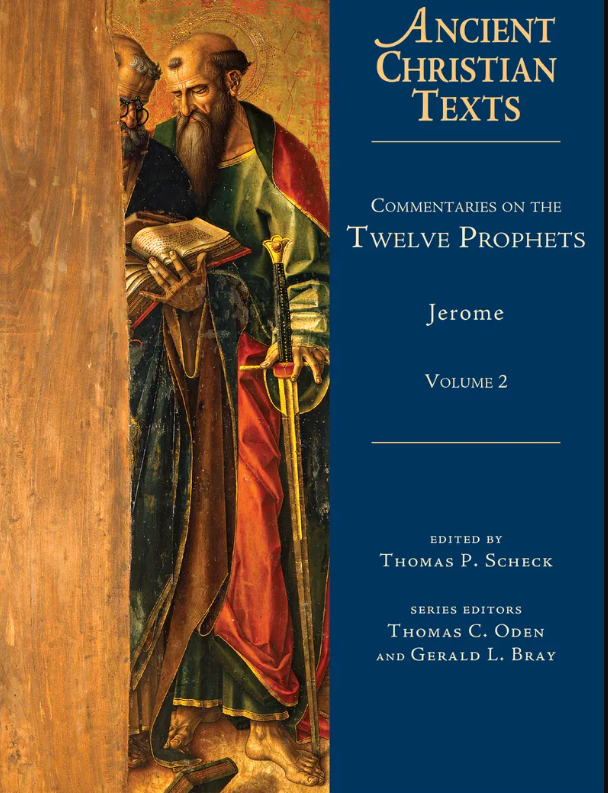
Learning from the earliest theologians in the church is something I think every Christian ought to do. InterVarsity Press’s excellent “Ancient Christian Texts” series is one I’ve explored occasionally, and I was excited to see Commentaries on Romans, 1-2 Corinthians, and Hebrews from Cyril of Alexandria pop up for review. Here, fragments of Cyril’s commentaries have been put together sequentially for readers to browse and learn from.
A general introduction and an introduction to this specific work help set the stage. Readers won’t find a simple verse-by-verse commentary here, but rather a pieced together group of comments from various fragments of Cyril of Alexandria. Though this may make it sound like there’s little of value here, the opposite is in fact the case. Reading ancient Christian commentary on scripture is often enlightening for a number of reasons, and Cyril’s comments are no different.
One of the best reasons to read commentaries like this is to find the twofold truth that ancient Christians often were discussing the same questions we have today and also often had their own questions that aren’t as wrapped up in today’s discourse. The latter is especially interesting to me, and examples of this abound throughout this work. One example is found in the discussion of angels and Hebrews 1:4. Here, Cyril only briefly addresses the question of angels before diving in to an argument that the Arians are mistaken about God the Son being “originate” due to their reading of this verse. The latter still has relevance to this day, but Cyril’s brief comment about angels being like servants was striking to me as well. Little insights like this come up throughout the book, even in the scattered fragments of comments that one finds strewn across the books in view.
Longer comments are found as well, with some lengthy discourse occurring–including in Hebrews. Reading what an ancient Christian commentator had to say about this book can also help readers highlight aspects of the text they may not have noticed before. Again, an example may help–in Romans 14:20-22 Cyril is quick to note that we should refrain from some things that are permissible for the sake of others but even more for ourselves, because permissible things could make us fleshly in luxurious passions. A kind of ascetic background looms here, but the broader point of being wary of luxurious excess is a good point to be made. Small comments like this can be found all over the book.
Commentaries on Romans, 1-2 Corinthians, and Hebrews is another excellent entry in the Ancient Christian Texts series. Recommended highly for readers interested in learning about ancient Christian commentary on Scripture.
All Links to Amazon are Affiliates links
Links
Be sure to check out the page for this site on Facebook and Twitter for discussion of posts, links to other pages of interest, random talk about theology/philosophy/apologetics/movies and more!
Book Reviews– There are plenty more book reviews to read! Read like crazy! (Scroll down for more, and click at bottom for even more!)
SDG.
——
The preceding post is the property of J.W. Wartick (apart from quotations, which are the property of their respective owners, and works of art as credited; images are often freely available to the public and J.W. Wartick makes no claims of owning rights to the images unless he makes that explicit) and should not be reproduced in part or in whole without the expressed consent of the author. All content on this site is the property of J.W. Wartick and is made available for individual and personal usage. If you cite from these documents, whether for personal or professional purposes, please give appropriate citation with both the name of the author (J.W. Wartick) and a link to the original URL. If you’d like to repost a post, you may do so, provided you show less than half of the original post on your own site and link to the original post for the rest. You must also appropriately cite the post as noted above. This blog is protected by Creative Commons licensing. By viewing any part of this site, you are agreeing to this usage policy.
The Shroud of Turin: An Apologetics Sinkhole?
I have noticed an increasing amount of interest in some apologetics circles about the Shroud of Turin. When I was in graduate school, there was a group of people studying apologetics I deemed “The Shroud Crowd” due to their especial interest in the topic. Increasingly, I have seen articles getting shared about the supposed authenticity of the Shroud of Turin. For those unfamiliar, the Shroud of Turin [wiki link] is alleged to be the burial shroud in which Jesus was wrapped or covered after the crucifixion. Yes, the actual thing. One could see why this would be of great apologetic interest if it could be shown to be genuine.
I’ve found is that apologetic arguments in favor of the authenticity of the Shroud often fall victim to some of the issues I’ve found in apologetics more broadly. One of these is the tendency to make major claims instead of modest ones. Apologists tend toward maximal conclusions when minimal ones might be easier to establish based upon argument. But because maximal conclusions are more exciting and easily seen as relevant, apologists tend to focus on those rather than more minimalistic arguments. For the specific scenario of the Shroud, I have seen multiple videos of apologists arguing for its authenticity explicitly stating that “It is the true burial Shroud of Christ” without any kind of hedging or contextualizing of that claim. Such a bold claim needs a massive amount of evidential support to carry the day. A more modest claim regarding the Shroud might be more defensible[1]. By claiming not only that this is a burial shroud of someone in the first century, or someone who was crucified, or some other more modest claim, the apologist is taking on the burden of proof a number of degrees of certainty higher. After all, supposing the Shroud is from the first century and is from Palestine and is an actual burial shroud of someone who was crucified. None of that yet makes it the burial shroud or cloth of Jesus Christ!
Now, the apologists arguing in favor of that latter claim would likely counter by saying the miraculous nature of the image itself and how it was formed point to it being the shroud of Christ, but my point is that that claim itself needs a much more significant defense than a mere claim that it is a burial shroud of a crucified person. But of course that more modest claim doesn’t have the theological and apologetic import that making it the shroud of Christ would provide. It would be much less interesting if it were just an anonymous burial covering of a crucified man from the first century[2]. And for the apologist, the apologetic value of the shroud would be greatly undermined if it weren’t directly pointing at Christ.[3]
Another common mistake apologists make is to throw every possible argument at a question instead of focusing on the best arguments. Videos, lectures, and presentations I’ve watched about the Shroud of Turin are generally excellent examples of this very problem. Rather than focusing upon a select few extremely powerful evidences–or at least developing one or two arguments more fully–the apologist throws every possibly related argument in favor of their position out there. The seeming conclusion is then sometimes that this constitutes a great deal of evidence for the apologist’s claim. But simply making arguments is not the same as finding evidence. Conflating argument and evidence is a major problem in apologetics generally. Additionally, a bunch of speculative phrases or hypothetical scenarios thrown out alongside a few pieces of actually compelling arguments doesn’t bolster the strength of the latter, but can rather distract or even undermine them. Examples of this very situation regarding arguments related to the Shroud of Turin will be a primary focus of my future post(s) on this topic.
Apologists arguing for the authenticity of the Shroud also tend to make a number of seemingly outlandish claims related to it. For example, more than once I’ve seen arguments made that the Shroud’s image could only have been made by radiation coming from a body being miraculously resuscitated. While it is perfectly acceptable to hold such a belief, it is to me apparent that we can’t do much to evaluate such a claim. After all, how are we even supposed to begin testing it? We have no way to resuscitate a dead body, and no way to induce a miracle, so a claim that that is exactly the one and only possible explanation is either unable to be grounded in reality or may only be held as a pillar of faith. That’s fine, but claims like this are being presented at times as if they are themselves evidence!
So, where are we going from here? My plan is to look at a few apologetics videos related to the Shroud of Turin and analyze the arguments therein. I’ll be using the video(s) to show how apologists are arguing in favor of its authenticity and then offering my own counters to and problems found with several of these arguments.
I am by no means an expert in several of the related topics. I take some comfort in the fact that, so far as I have been able to determine, those apologists making arguments in favor of the Shroud are also people without expertise in any related field (eg. radiometric dating). That said, I want to make it clear that I’m not claiming any special authority in this area. I’m just an interested observer who believes there are severe problems in many of the most popular arguments in favor of the authenticity of the Shroud of Turin. I also want to be clear that I am a faithful Christian. It would certainly be wonderful if we could have such a wonderful piece of evidence for the resurrection, but I do not want to have people staking their belief in Christianity on what I believe are poorly constructed arguments.
[1] I say “might be more defensible” because while it would be easier to defend a more modest claim, I’m not convinced the endeavor would be worthwhile, nor am I convinced that a more modest claim could be carried on the evidence.
[2] Though, to be fair, any extant burial shroud from the first century of anyone, let alone someone who was crucified, would be of major archaeological interest, I would assume.
[3] And again, in this case, a more modest claim would still have apologetic value. After all, such an extant shroud could tell us a lot about how crucifixion occurred, the way it impacted the body, etc., etc., all of which would have apologetic import to some degree.
Links
What’s Wrong with Apologetics? – I raise a number of pitfalls apologists ought to avoid.
Be sure to check out the page for this site on Facebook and Twitter for discussion of posts, links to other pages of interest, random talk about theology/philosophy/apologetics/movies and more!
SDG.
——
The preceding post is the property of J.W. Wartick (apart from quotations, which are the property of their respective owners, and works of art as credited; images are often freely available to the public and J.W. Wartick makes no claims of owning rights to the images unless he makes that explicit) and should not be reproduced in part or in whole without the expressed consent of the author. All content on this site is the property of J.W. Wartick and is made available for individual and personal usage. If you cite from these documents, whether for personal or professional purposes, please give appropriate citation with both the name of the author (J.W. Wartick) and a link to the original URL. If you’d like to repost a post, you may do so, provided you show less than half of the original post on your own site and link to the original post for the rest. You must also appropriately cite the post as noted above. This blog is protected by Creative Commons licensing. By viewing any part of this site, you are agreeing to this usage policy.
Book Review: “Flame of Love: A Theology of the Holy Spirit” by Clark H. Hinnock (Second Edition)

Flame of Love: A Theology of the Holy Spirit is a deep look at pneumatology- the theology of the Spirit.
Pinnock starts off noting the importance of the Spirit as a Person of the Trinity as well as the oft-neglected study of the same. Then, over the course of seven chapters, he outlines theological questions and answers related to the spirit: the Trinity, Spirit in Creation, Spirit and Christology, Spirit and Church, Spirit and Union, Spirit and Universality, and Spirit and Truth.
These chapters provide broad outlines of the titular topics, while also challenging Christians to think more deeply about them. For example, in the chapter about the Spirit and Universality, Pinnock presses the point that the Spirit is truly work in all things. He draws from C.S. Lewis’s depiction of Aslan in The Last Battle to note that Christian thinkers have not inconsistently pointed out that God can even work through and in other religions. And how else to consider this than to think of the activity of the Spirit in drawing all towards God? Elsewhere, Pinnock considers the question of the filioque clause in the Nicene Creed, arguing that it seems to him to subordinate the Spirit to the Son. He also touches on a number of other potentially controversial topics. At more than one point, Pinnock notes that he considered using feminine pronouns for the Spirit due to the use of feminine imagery as well as feminine words for the Spirit in Scripture, but opted out. His reasoning here seems somewhat confusing, and largely amounts to that he wasn’t sure evangelicals would be ready for that yet (see esp. page 277).
The second edition features a foreword and commentary by Daniel Castelo. I found these additional notes to be helpful, and enjoyed his summaries at the end of each chapter. I was actually a bit disappointed that the frequency of notes went down a bit towards the end of the book. Whenever they appeared, Castelo’s comments were insightful and helped elucidate the text in some way.
Flame of Love is a fascinating read that explores issues in which Christians, unfortunately, are not often well-versed. Pinnock not only brings the focus to the Holy Spirit, but also challenges some potential preconceived notions about the same. Readers, whether they agree or disagree, will be challenged by his work.
All Links to Amazon are Affiliates links
Links
Be sure to check out the page for this site on Facebook and Twitter for discussion of posts, links to other pages of interest, random talk about theology/philosophy/apologetics/movies and more!
Book Reviews– There are plenty more book reviews to read! Read like crazy! (Scroll down for more, and click at bottom for even more!)
SDG.
——
The preceding post is the property of J.W. Wartick (apart from quotations, which are the property of their respective owners, and works of art as credited; images are often freely available to the public and J.W. Wartick makes no claims of owning rights to the images unless he makes that explicit) and should not be reproduced in part or in whole without the expressed consent of the author. All content on this site is the property of J.W. Wartick and is made available for individual and personal usage. If you cite from these documents, whether for personal or professional purposes, please give appropriate citation with both the name of the author (J.W. Wartick) and a link to the original URL. If you’d like to repost a post, you may do so, provided you show less than half of the original post on your own site and link to the original post for the rest. You must also appropriately cite the post as noted above. This blog is protected by Creative Commons licensing. By viewing any part of this site, you are agreeing to this usage policy.

 J.W. Wartick - Reconstructing Faith