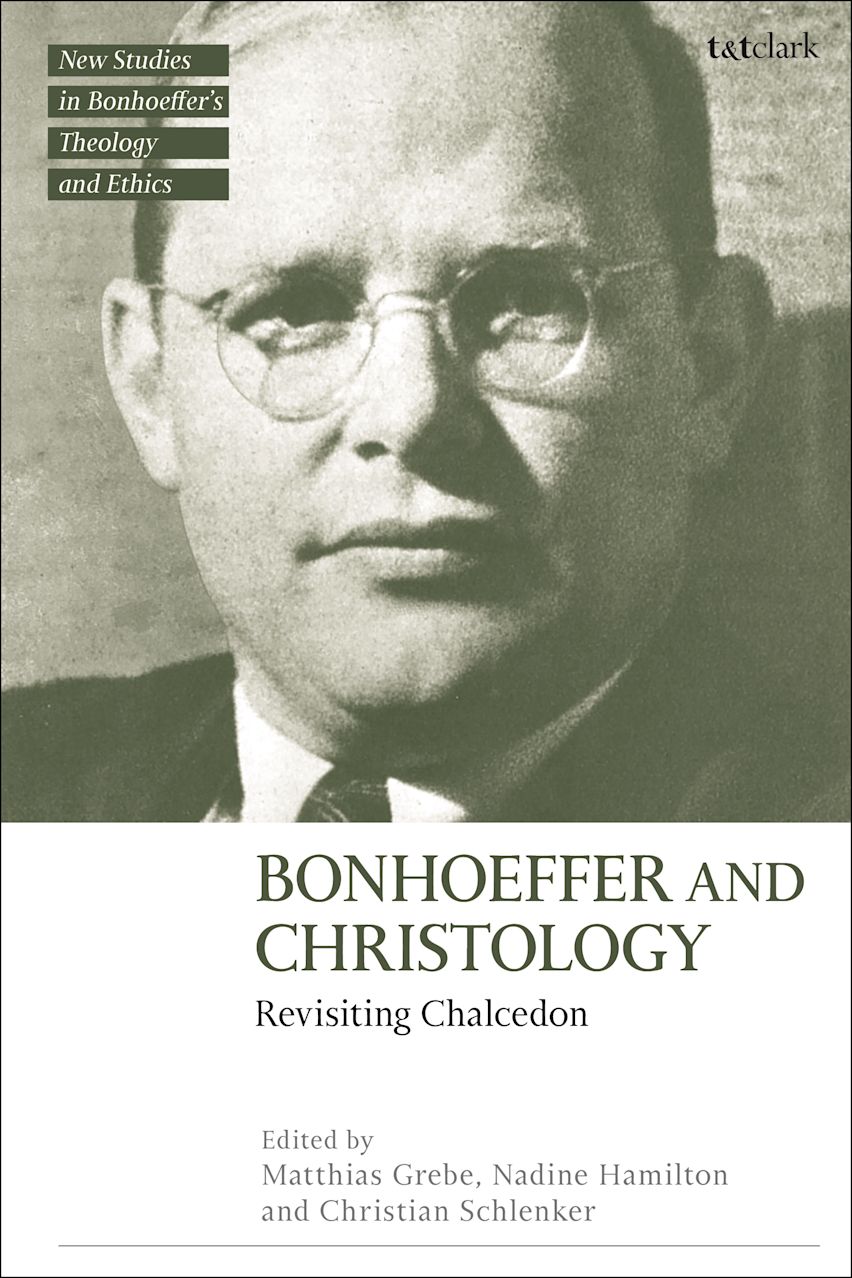
“Only the suffering God can help”- Dietrich Bonhoeffer
The quote from Bonhoeffer is one of the most beloved and cited quotes of Bonhoeffer’s works. Bonhoeffer’s conceptualizing of God as a God who suffers is central to his Christology. But what does that mean related to the concept in classical theism of divine impassibility? Matthew Grebe’s essay, “The Suffering God: Bonhoeffer and Chalcedonian Christology” seeks to provide at least some way forward in this discussion.
Grebe’s essay centralizes the question: Is it theologically or biblically “correct to speak of the suffering God”? (138). Before diving into it, he outlines the notion of divine impassibility, with a look at church fathers and the Greek language behind impassibility. Classically, for example, Cyril of Alexandria notes that the suffering of Christ was only in regards to the human body, not to God, because God does not have a physical body. There is a kind of paradoxical theology present here, as the divine impassible is passible in the incarnate Word (141). Divine impassibility held that “God is not (negatively) affected by anything which transpires in God’s creation” (142).
Martin Luther’s concept of the communicatio idiomatum (the communication of attributes) contained in it a “protest” against divine impassibility (143). Thus, the attributes of the human are impacted by the divine and vice versa. However, Luther’s theology might be seen, in the abstract, to agree with patristic theology on the question of passibility (144)*. Bonhoeffer follows Luther in developing his concept of the humiliation of Christ and the suffering God (147). The Lutheran concept of condescension–God choosing to take on suffering and human attributes–is adopted by Bonhoeffer to discuss the notion of the suffering God. God’s suffering recontextualizes human suffering by having a “God who in Christ enters into suffering… [God] has changed sides to be in the place of those who are suffering, alongside those show suffer” (150). Because of this, human concepts of religiosity are challenged–“the religious person seeks an all-powerful God to help in [their] need… the cross shows that it is not possible to ‘appeal to an almighty God to intervene in our circumstances like a deus ex machina from the outside'” (151).
Thus, for Bonhoeffer, a truly “impassible god cannot really help humanity, as this god would be conceived of as distant and as a counter model to the world” (151). Therefore, God’s suffering “helps humanity” by forcing “human beings to take initiative, and stand autonomously and self reliantly. In a ‘world come of age’ Bonhoeffer suggests that we have to live… ‘as if there were not God.’ This means that instead of fleeing from the world, the individual is called to independent, responsible living before God, and with God, and yet simultaneously also without God. This independence brings about growth and development as she must live as one who manages her life without God… we need to learn to lie without the god of metaphysics, without the ‘working hypothesis of God’ who is omnipotent and always intervenes, knowing that the God of the Bible is with us… and guides us by his divine love.”
I especially found this last passage deeply edifying, as it presents the idea of religionless Christianity with much greater accuracy than I have often seen it. It’s not a rejection of God, but rather an invitation into responsibility before God, a God who suffers.
*Grebe notes that Luther himself would have objected to the focus on the concept of the abstract.


 J.W. Wartick - Reconstructing Faith
A Forensic Deconstruction of the “Authority Gambit”
Hi J.W., I appreciate your consistent defense of Bonhoeffer’s intellectual depth. However, have we considered the possibility that his ‘multidimensional thinking’ isn’t a sign of theological profundity, but a deliberate ‘hermeneutic smoke screen’?
I’ve just published a forensic analysis (using the N.N. Kitaev method) where I argue that Bonhoeffer functioned as an ‘intellectual Chekist in a cassock.’ My thesis is that he used his Abwehr-grade operational planning to systematically deport the objective Logos and replace it with a situational Kairos, effectively installing a virus of relativism into the heart of the Church.
I’d be curious to see how your ‘Reconstructing Faith’ project holds up against this ‘Anti-Logos’ methodology. You can find the full breakdown here: bonhoeffertheantilogos.substack.com
Posted by Anthony Deryabin | March 4, 2026, 6:21 PM