J.W. Wartick
Book Review: “The Way of Dante: Going Through Hell, Purgatory, and Heaven with C.S. Lewis, Dorothy L. Sayers, and Charles Williams” by Richard Hughes Gibson
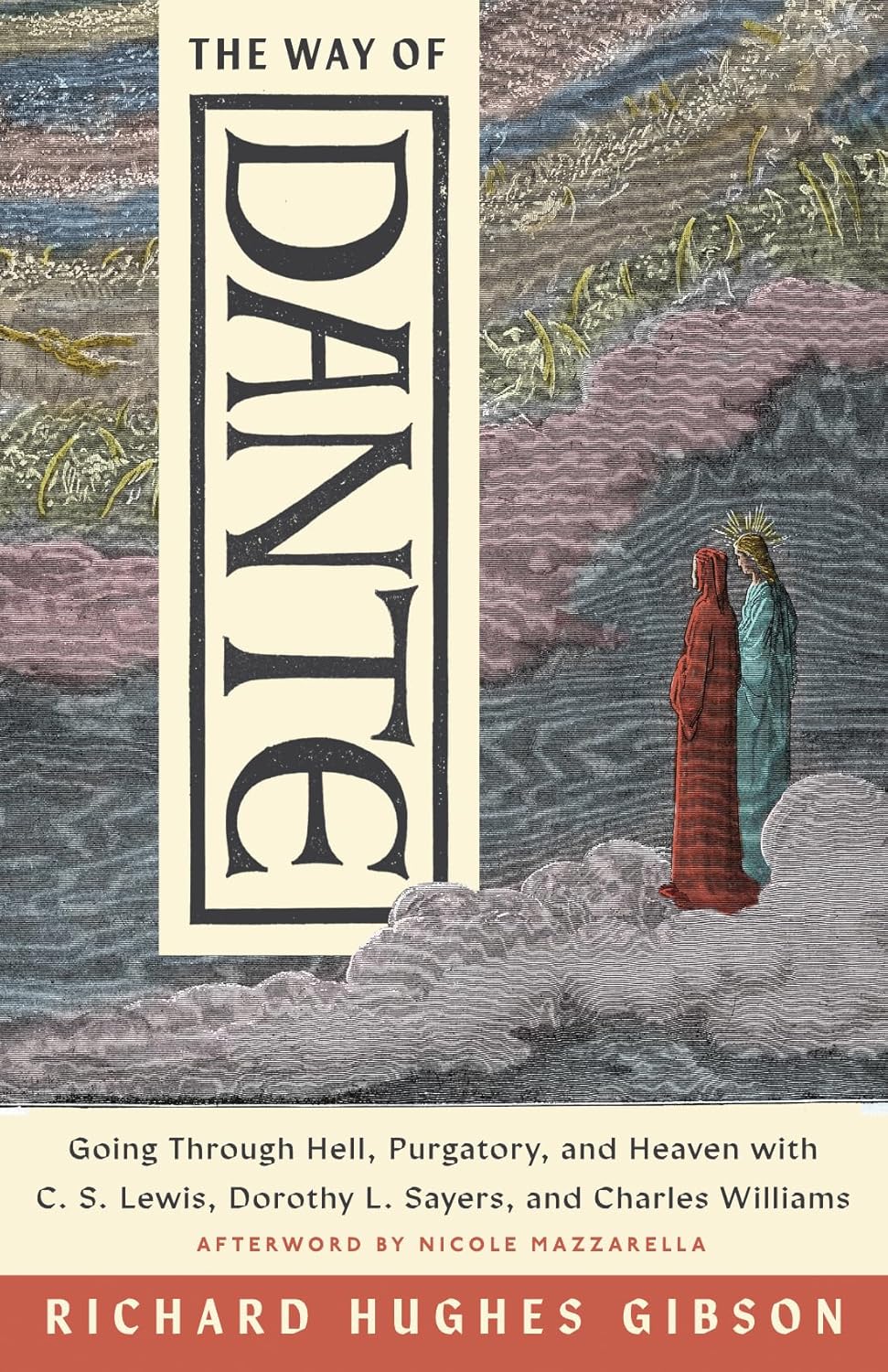
The Way of Dante explores how Dante’s works influenced C.S. Lewis, Dorothy L. Sayers, and Charles Williams. Richard Hughes Gibson leads readers through an introduction to these thinkers, followed by a number of chapters highlighting each and how Dante inspired them.
Gibson leads readers across a wide array of topics related to these authors. The topics relate directly to the notions of hell, purgatory, and heaven (as noted in the book’s subtitle). Readers are presented with the writers’ wide array of thoughts and interactions on these topics, from reflections on the concept of hell to how a concept of the glory of heaven might be most adequately described.
By way of critique, I would note that I think the book is a bit in search of its audience. Gibson seems to assume at least some amount of background knowledge not just of Dante’s works but also of scholarship related to all of the authors mentioned. This assumption of background knowledge allows Gibson to dive into deeper themes more quickly, but can leave the reader feeling a bit lost without guidance. For example, a whole chapter dedicated to allegory notes not just the use of allegory in Dante, but also interplay between authors Sayers and Lewis on the topic of allegory. But readers are mostly left to their own devices to know the finer points of what the debate is even about. Also, because the book is exploring the interactions between three major Christian thinkers and Dante, there’s a necessary brevity to the points Gibson makes. But this brevity surely makes the book less useful to the scholar (the one with all the relevant background necessary to understand or know all the references being made) who may be looking for deeper insights. In short, the book leaves readers to dive into the deep end, sink or swim.
The Way of Dante touches on a lot of interesting themes. Readers will find quite a bit to digest here, though it can feel disorienting at times with the way the information is presented.
SDG.
Book Review: “Worth Doing: Fallenness, Finitude, and Work in the Real World” by W. David Buschart & Ryan Tafilowski
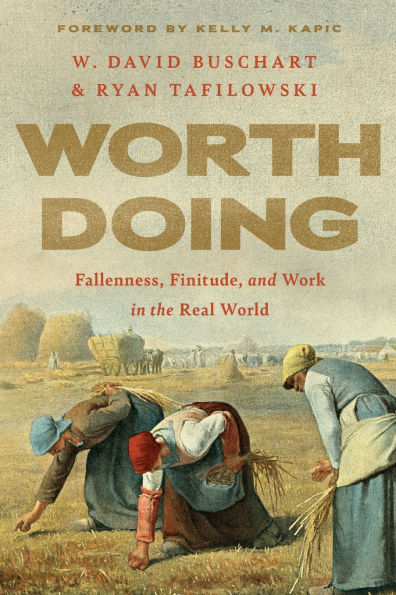
Worth Doing by W. David Buschart and Ryan Tafilowski explores the concept of “work in the real world” through a lens of fallenness and finitude.
The authors first introduce the concepts of finitude and fallenness, noting that their goal is to provide a theology of work for the “real world.” They use a few intriguing examples of how perspective can change attitudes related to workers. One is a comparison of the thoughts of both construction workers and office workers about the other–wishing they had what the other had not.
There are a few things that are notable for their absence. For example, there is little-to-no linkage of the concept of work to the capitalist system, nor are there critiques of unfettered capitalism and the exploitation of the worker. This, despite how neatly such a topic fits into the exploration. What could be more fallen than turning finite workers into mere numbers or cogs in the machine? The subject index, for example, doesn’t even have capitalism as a reference, while far more general terms (economics) or hyper-specific concepts (gig economy) get entries. Is it because there’s an avoidance of what could be a controversial critique of capitalism from a theological standpoint? I don’t know. What I do know is that the whole book seems to have such a topic looming in the background. When questions about how certain theologies of work might lead to the oppression of workers are right there and even being asked, the conspicuous absence of how capitalism can set up such an exploitation is all the more alarming.
The section on the goodness of work is another area where the critique of exploitative systems is notably so subtle as to be absent. Despite commenting on the goodness of work, it does so alongside the insights form Qoheleth (the teacher of Ecclesiastes). Even as discussing how everything is meaningless under the sun, the need for and even goodness of the harvest can be emphasized. Turning to the very end of the book, the authors urge readers to “still make hay while the sun rises” for creation is growning in need of redemption and renewal, but we must “come to terms with the kinds of creatures we are…” and that work, while “constrained… by finitude and haunted as it is by the curse, work is nonetheless a good gift from the good God and therefore worth doing” (195). I appreciate this ending note, though linked as it is with some of the discussion on vocation (see below) and the lack of critique of exploitative systems, it can feel a little empty or trite.
One section (190-193) has a scintillating discussion of the concept of “vocation” and how such a concept could be “easily put to exploitative use” through the notion of “doing what you love” (190). The authors call this a kind of “work mythology” that can use an “agency-dignity-power narrative” that “works well for those whose work is creative and satisfying” but perhaps not so much for those whose work is “degrading or unfulfilling” (190-192). Many scholars are referenced here–but one of the major thinkers on the concept of vocation, Martin Luther, is not. While the authors turn back on the concept of vocation and find some benefits, they do so in an explicitly theological framework that essentially sidelines the concept of work rather than integrating it into the concept of work. Here, Luther’s insights on the topic of vocation feel almost painfully absent. While the authors simply say that people were made for communion and union in Jesus Christ (193) and that “it is this; it is not a job or career or even a vocation” as the one thing we should be passionate about (ibid). Yet closing the discussion of vocation with this, moments after noting the lack of fulfillment that might be found in “degrading or unfulfilling” work reads almost as if the entire foregoing discussion on work and the “mythologies” involved in it is solved by a kind of “thoughts and prayers” response. Well, it’s one thing to have a job that we might feel is degrading; but worry not, our true fulfillment is found in union with Christ! Saying this is one thing; living it is another. And living it requires, ironically (based on the emphasis on “real world” in the subtitle), a more real world approach that has God entering into the world, entering into our suffering, and entering into our vocations.
The concepts of finitude and fallenness work well alongside discussions of work, and Buschart and Tafilowski are to be commended for bringing these insights alongside the concept of work. They do this alongside also finding the goodness of work. It’s a fine balance that the authors mostly navigate well (though, see above). Readers looking to start a theological exploration of work will certainly find plenty of depth to think on here.
Worth Doing is, well, worth reading if you’re interested exploring the intersection of theology and work. Readers of this review will, perhaps, think my thoughts are largely negative. But where I’m offering critique, I’m seeking more. There’s a wealth of information and topics to mine here, I just wish that some of them were turned to more incisive points made against what seems to be invisible problems lurking in the background. The book provoked quite a bit of thinking for me, and I believe it will for other readers, as well.
SDG.
Sensationalism through banality in Apologetics and Counter-Apologetics- Be skeptical (with examples)
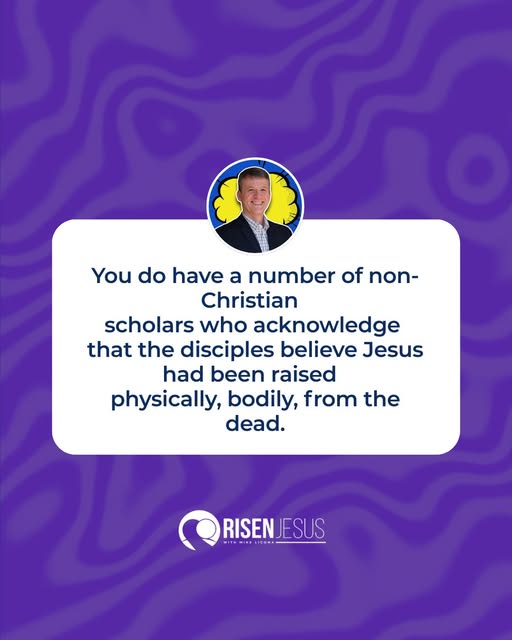
Sensationalism sells. We know this in basically every field. But when it comes to faith, unfaith, apologetics, and counter-apologetics, we need to be especially aware of this. Confirmation bias is a major thing and we often want to jump on or share things with which we agree. What’s especially surprising to me is how often apologists and counter-apologists sensationalize points that are actually extremely banal to anyone who has read almost anything in the related field. I wanted to share two recent examples of this, with some commentary on why it matters.
First, Christian apologist Michael Licona shared the image that I put leading this post. He writes, “You do have a number of non-Christian scholars who acknowledge that the disciples believe Jesus had been raised physically, bodily, from the dead.” Conversational tone aside (“you do…”), the point is mundane and would be obvious to just about anyone with any awareness of anything in the field. Licona doesn’t necessarily “sensationalize” this one, but the fact that it’s being shared in a block quote as if it’s some kind of revolutionary point in apologists’ favor is disturbing to me. With any such point, whether it’s pro- or anti-Christianity, there will be someone coming along to disagree, of course. The point I’m making isn’t that such naysayers don’t exist; it’s that they’re fairly obvious in their extreme bias against what are basically indisputable facts. That there were some disciples who believed Jesus was raised bodily from the dead is a pretty easily established thing in the Gospel narratives and coming from early church history as well. It’s not just unsurprising but obvious that even some who aren’t Christian would grant this.
Licona–whether intentionally or not–seems to be setting this quote up to imply a bigger point, though. Something like “and this supports the notion that Jesus actually did bodily raise from the dead” is an inference any apologist would want someone to make. And of course, in the narrowest sense, this is true. If Jesus did, in fact, raise from the dead, then having disciples who believed that would be a likely outcome. And having those beliefs demonstrated in at least one disciple provides some very minimal support to the notion that it might have actually happened (else where did that belief come from?). I’m not intending to start a debate over that here, what I’m trying to say is that it seems this fairly banal point is intended to make some bigger implication, and leaving it unstated disturbs me. I’d much rather an apologist just come out and make the argument. And, to be fair, this is just the style Licona has on his page: share a rather mundane quote from his works somewhere and let people infer and argue as much as they want about it in the comments. I think that’s a potentially misleading way of interacting, especially as an apologist.
An example from a counter-apologist standpoint was a recent video put up by Paulogia, who markets himself as “A former Christian takes a look at the claims of Christians, wherever science is being denied in the name of ancient books.” Paulogia, as Licona, makes some good points occasionally. But he’s also prone to sensationalizing points as if they’re something major, when they absolutely are not.
The recent video was entitled “Paul Wasn’t a Christian — The Shocking Truth From a Scholar.” With such a title, I was expecting… a shocking truth. Instead, the point made in the video is that [I paraphrase] “Paul wasn’t a Christian, because there was no Christianity to convert to. So he didn’t convert, he instead saw his beliefs as making Jesus part of his already existing Jewish faith.” I mean, of course that’s true. Anyone who has done even the slightest amount of studying the formation of Christianity would know this. Reading the Bible alone would fill one in on Paul being Jewish. It’s not some revelatory point.
But Paulogia stresses this numerous times in the video. When introducing the issue with the scholar he’s featuring (Dr. Paula Fredriksen), he even says that when he was a Christian this kind of point would have made his formerly Christian self “very uncomfortable.” Dr. Fredriksen chuckles and says “Oh dear, I don’t want to alarm anybody.” She’s just there sharing some great insights into the development of the early church, but Paulogia keeps pushing to make her points sensational. I think this is intentional in this case due to the “shocking truth” tagline. He wants to make it seem like these relatively obvious points about the early church are somehow “shocking” to Christians in a way that might make them deeply “uncomfortable.”
Now, I don’t want to deny that some Christians would likely find it uncomfortable to acknowledge that Paul wasn’t a Christian in the historical sense. But that point is… obvious. There was no Christianity in the broad sense to convert to, so having him build upon his Jewish foundation with a Jewish Messiah is completely unsurprising. Paulogia in the description even says the interview is “explosive” and that while apologists “have built entire arguments on Paul’s story” it’s possible that “their foundation is completely wrong.” I mean, come on. This is absurd to the extreme, and I’m kind of surprised that someone who’s as careful a thinker as Paulogia often seems to be would even frame this discussion in this way.[1]
So we have here two simple points being framed in ways that make them seem more than they are. I think we should not do that. Banality isn’t necessarily a bad thing. Making obvious points can be helpful to those who don’t already know them. But to then sensationalize the banal as if it is some major point that can shift a paradigm, that’s something that I think we need to be very careful about and quite skeptical of.
[1] I think Paulogia’s critique of Habermas’s work counting scholars, for example, is a somewhat crucial and destructive takedown. Also, Paulogia and Fredriksen discuss other points which may be deeply uncomfortable for very conservative Christians, such as how the Gospels differ (to the extent where Fredriksen says we might categorize some of it as historical fiction if written today) and the like. But even here Fredriksen answers Paulogia’s question about whether there’s anything we can take as reliable in the Gospels with a more positive review–we have to take some of it as a real basis for things that historically happened. Paulogia seemed briefly defalted by Fredriksen’s (I’ll use the word again) banal point. But come on, this is silly to even deny.
SDG.
“The Journey of Modern Theology: From Reconstruction to Deconstruction” by Roger E. Olson – An epochal work of theological history
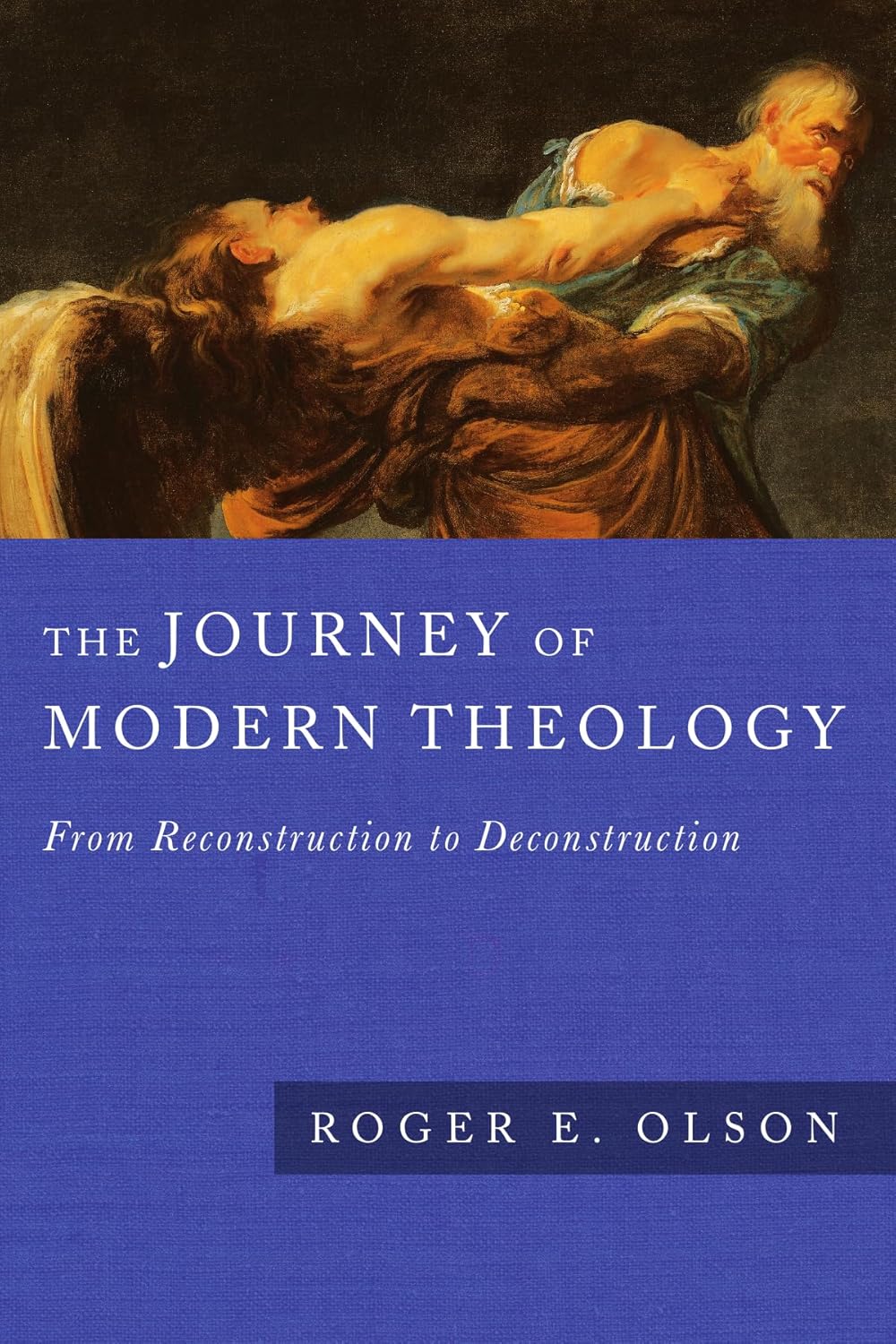
The Journey of Modern Theology: From Resconstruction to Deconstruction by Roger E. Olson is a monumental achievement of theological analysis and history.
The book is focused around modernity and the theology inspired from it, opposed to it, and moving with, against, and towards it. It is roughly divided chronologically and topically, with each chapter denoting an era of theological development and highlighting various theologians involved in that development. Olson’s accounting is largely neutral and fact-based reportage–he is informing readers on what the various theologians taught and believed rather than providing an analysis thereof. However, many of the major thinkers’ sections include a small section on contemporaneous critiques and responses.
Olson starts off with a brief overview of modernism and modernity, showing the scientific and cultural revolutions often associated with it. Then, he moves to various chapters analyzing modernist theologians and thinkers. Theologians given overviews include (but are not limited to): Friedrich Schleiermacher, Albrecht Ritschl, Karl Barth, Horace Bushnell, Paul Tillich, Jurgen Moltmann, Dietrich Bonhoeffer, Hans Kung, Hans Urs von Balthasar, Charles Hodge, Stanley Hauerwas, Reinhold Niebuhr, Ernst Troeltsch, and many, many more. Chapters include: “Liberal Theologies Reconstruct Christianity in Light of Modernity,” Mediating Theologies Build Bridges Between Orthodoxy and Liberalism,” Theologians Look to the Future with Hope,” etc.
The chapter headings give broad brush introductions to the topics at hand. As I said above, these chapters are roughly chronologically based, though there is plenty of overlap. Olson organizes these around movements, showing the warp and weft movement of theology throughout the modernist period into the postmodern one. Again almost all of the analysis is fact based reportage–here’s what Schleiermacher wrote and believed–sometimes accompanied by a section of “here’s what Schleiermacher’s critics said.” Olson only really tips his hand in the conclusion, showing where his own views lie. As such, that makes the book an incredibly valuable work to simply learn about modernist theologians and theological movements. There were many times I found myself pursuing a thread of thought outside the bounds of the book, getting an interlibrary loan from an author I hadn’t read before, or researching more online.
The value of a book like this can’t really be understated. It is a must have for readers interested in theological history and knowing where and how a lot of current theology came from. Additionally, students of theology can find within it many guidelines for further research and avenues to explore. Are you interested in a theology of liberation? There’s a brief summary here that names names and shows where the thought process is going. Want to know about conservative development related to modernist thought? Those thinkers are here, too. Whether orthodox or not; intentionally or not; Olson does an incredible job across the board giving readers much to learn and contemplate.
The Journey of Modern Theology is a fantastic read that will give readers many, many avenues of further research alongside a baseline understanding of the origins and development of theology alongside and against modernism. Highly recommended.
All Links to Amazon are Affiliates
Links
Be sure to check out the page for this site on Facebook!
Book Reviews– There are plenty more book reviews to read! Read like crazy! (Scroll down for more, and click at bottom for even more!)
SDG.
——
The preceding post is the property of J.W. Wartick (apart from quotations, which are the property of their respective owners, and works of art as credited; images are often freely available to the public and J.W. Wartick makes no claims of owning rights to the images unless he makes that explicit) and should not be reproduced in part or in whole without the expressed consent of the author. All content on this site is the property of J.W. Wartick and is made available for individual and personal usage. If you cite from these documents, whether for personal or professional purposes, please give appropriate citation with both the name of the author (J.W. Wartick) and a link to the original URL. If you’d like to repost a post, you may do so, provided you show less than half of the original post on your own site and link to the original post for the rest. You must also appropriately cite the post as noted above. This blog is protected by Creative Commons licensing. By viewing any part of this site, you are agreeing to this usage policy.
The Suffering God and Impassibility in Bonhoeffer
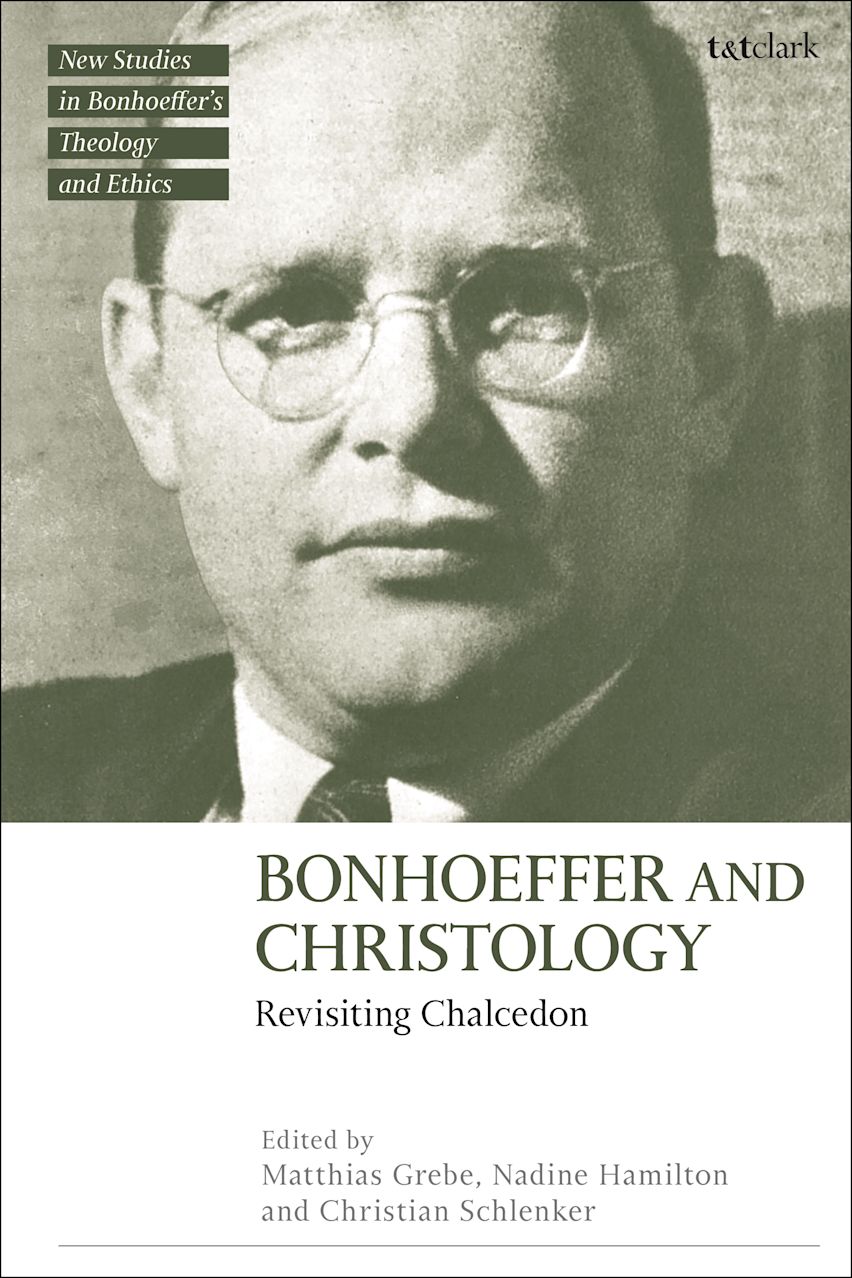
“Only the suffering God can help”- Dietrich Bonhoeffer
The quote from Bonhoeffer is one of the most beloved and cited quotes of Bonhoeffer’s works. Bonhoeffer’s conceptualizing of God as a God who suffers is central to his Christology. But what does that mean related to the concept in classical theism of divine impassibility? Matthew Grebe’s essay, “The Suffering God: Bonhoeffer and Chalcedonian Christology” seeks to provide at least some way forward in this discussion.
Grebe’s essay centralizes the question: Is it theologically or biblically “correct to speak of the suffering God”? (138). Before diving into it, he outlines the notion of divine impassibility, with a look at church fathers and the Greek language behind impassibility. Classically, for example, Cyril of Alexandria notes that the suffering of Christ was only in regards to the human body, not to God, because God does not have a physical body. There is a kind of paradoxical theology present here, as the divine impassible is passible in the incarnate Word (141). Divine impassibility held that “God is not (negatively) affected by anything which transpires in God’s creation” (142).
Martin Luther’s concept of the communicatio idiomatum (the communication of attributes) contained in it a “protest” against divine impassibility (143). Thus, the attributes of the human are impacted by the divine and vice versa. However, Luther’s theology might be seen, in the abstract, to agree with patristic theology on the question of passibility (144)*. Bonhoeffer follows Luther in developing his concept of the humiliation of Christ and the suffering God (147). The Lutheran concept of condescension–God choosing to take on suffering and human attributes–is adopted by Bonhoeffer to discuss the notion of the suffering God. God’s suffering recontextualizes human suffering by having a “God who in Christ enters into suffering… [God] has changed sides to be in the place of those who are suffering, alongside those show suffer” (150). Because of this, human concepts of religiosity are challenged–“the religious person seeks an all-powerful God to help in [their] need… the cross shows that it is not possible to ‘appeal to an almighty God to intervene in our circumstances like a deus ex machina from the outside'” (151).
Thus, for Bonhoeffer, a truly “impassible god cannot really help humanity, as this god would be conceived of as distant and as a counter model to the world” (151). Therefore, God’s suffering “helps humanity” by forcing “human beings to take initiative, and stand autonomously and self reliantly. In a ‘world come of age’ Bonhoeffer suggests that we have to live… ‘as if there were not God.’ This means that instead of fleeing from the world, the individual is called to independent, responsible living before God, and with God, and yet simultaneously also without God. This independence brings about growth and development as she must live as one who manages her life without God… we need to learn to lie without the god of metaphysics, without the ‘working hypothesis of God’ who is omnipotent and always intervenes, knowing that the God of the Bible is with us… and guides us by his divine love.”
I especially found this last passage deeply edifying, as it presents the idea of religionless Christianity with much greater accuracy than I have often seen it. It’s not a rejection of God, but rather an invitation into responsibility before God, a God who suffers.
*Grebe notes that Luther himself would have objected to the focus on the concept of the abstract.
James Barr- Inerrancy dominates all other doctrines of the Bible to their detriment

James Barr (1924-2006) was a renowned biblical scholar who, in part, made some of his life’s work pushing back against fundamentalist readings of Scripture and Christianity. I have found his work to be deeply insightful, even reading it 40 or more years after the original publications. His most controversial and perhaps best-known work was Fundamentalism (1977), in which he offered a survey and critique of fundamentalism, which applies incredibly strongly to Evangelicalism and conservative Christianity to this day. I have already written some about this book, and will likely continue to do so as I read more.
Barr notes, in his chapter on the Bible in Fundamentalism, that inerrancy doesn’t actually yield or submit to a “literal reading” of the texts, despite what fundamentalists like to assert. Instead, inerrancy makes all other things about the Bible subordinate to itself. Because inerrancy is of first order importance–it is a doctrine that, for fundamentalists, cannot be abandoned–it cannot be yielded for any reason whatsoever. This includes the attempt by people who hold to inerrancy to read the Bible. They must constantly seek to defend inerrancy above all other things, even changing how the read the Bible in order to keep the doctrine of inerrancy possible in their minds.
Barr writes, “The point of conflict between fundamentalists and others is not over literality but over inerrancy. Even if fundamentalists sometimes say they take the Bible literally, the facts of fundamentalist interpretation show that this is not so. What fundamentalists insist is not that the Bible must be taken literally but that it must be so interpreted as to avoid any admission that it contains any kind of error. In order to avoid imputing error to the Bible, fundamentalists twist and turn back and forward between literal and non-literal interpretation… In order to expound the Bible as thus inerrant, the fundamentalist interpreter varies back and forward between literal and non-literal understandings, indeed he has to do so in order to obtain a Bible that is error-free” (40).
Several examples of this are provided by Barr which were and remain of interest to interpreters today–how to interpret Genesis 1, how to read the ages of Adam, Methuselah, and others, what to do with genealogies, and more. Now, Barr could not and did not anticipate the rise of Young Earth Creationism (YEC) and its attempt to read the Bible literally and continue to ignore or dismiss mountains of scientific evidence against it. But for modern readers, one could point out that even YECs rarely, if ever, read the Bible literally when it tells us about the dome over the Earth or the shape of the Earth and its being flat. Whether it’s God being above the circle of the Earth (Isaiah 40:22) or winds from the four corners of the Earth (Revelation 7:1), YECs do not read these literally, proving Barr’s point about even the most committed literalists oscillating between readings of the text in order to desperately try to preserve inerrancy.
The conclusion is clear: “Inerrancy is maintained only by constantly altering the mode of interpretation, and in particular by abandoning the literal sense as soon as it would be an embarrassment to the view of inerrancy held” (46). Inerrantists can only hold to their position by constantly shifting their interpretive style to suit whatever needs they have in order to maintain inerrancy. This can be seen in many modern debates among inerrantists, such as whether the Gospel authors invented details such as people walking out of their tombs (Matthew 27:53) or if morality itself vitiates against a literal reading of the genocidal commands and actions of Joshua (not to mention the lack of archaeological evidence for this conquest). It is never inerrancy itself that is questioned; rather, the literalists are suddenly non-literal whenever it suits them so as to protect inerrancy.
Obviously inerrantists are aware of this difficulty. Having been a longtime defender of inerrancy myself, and one with a degree and deep interest in apologetics, I had no small series of justifications for why the interpretation changed. It wasn’t the interpretation style changing; it was that different verses or sections of the Bible needed a different approach; some where obviously non-literal. But those that were non-literal just happened to align with whatever challenged the literal reading of the text. Flat earth? The answer- obviously the author is being metaphorical there. Moral challenge from Joshua? The conquest was not genocidal but merely a “normal” conquest with hyperbolic language. &c. &c. forever. But of course, it absolutely was the interpretation style that was changing in these examples, all at the behest of inerrancy, a doctrine that was only invented in answer to modernist questions about the Bible!
I’ll continue writing about Barr’s seminal work, Fundamentalism. I have found it deeply insightful on many points.
SDG.
Inerrancy Undermines Interpretive Method?
James Barr’s work, Fundamentalism (1977) remains incredibly relevant to this day. I have been reading through it and offering up thoughts as I go. I’m reading the chapter about the Bible and Barr has enormous insight into the Fundamentalist (and here it is okay to substitute in “Evangelical”) reading of the Bible.
I’ve already written about how Barr notes that fundamentalists do not have a consistent hermeneutic of the Bible because their adherence to inerrancy forces them to read passages in light of their own understanding of truth. Barr isn’t done firing his salvoes at this issue, though he also notes that many people misread fundamentalists on their use of literalism:
“It is thus certainly wrong to say… that for fundamentalists the literal is the only sense of truth. Conservative apologists are right in repudiating this allegation. Unfortunately, the truth is much worse than the allegation that they rightly reject. Literality, though it might well be deserving of criticism, would at least be a somewhat consistent interpretative principle, and the carrying out of it would deserve some attention as a significant achievement. What fundamentalists do pursue is a completely unprincipled – in the strict sense unprincipled, because guided by no principle of interpretation – approach, in which the only guiding criterion is that the Bible should, by the sorts of truth that fundamentalists respect and follow, be true and not in any sort of error” (49).
Here Barr notes first that fundamentalists/evangelicals are right to push back against the accusation that they simply see literalism as the only way to read the Bible. However, he goes on to point out that their approach is significantly more problematic, because they eschew all principles of interpretation other than the one that the Bible should not be found to be in error on any point.
Who determines how to interpret any given passage, then, and how? Pontius Pilate asked “what is truth?” and has been lampooned time and again–but the question could be posed to conservative readers of Scripture, who, in their attempts to define truth, go to extraordinary lengths to massage the word into what they need it to mean to preserve the Bible (the Chicago Statement on Biblical Inerrancy is full of this). Who determines what is an error?
In my own life, I experienced this unprincipled–again, using the word technically as meaning literally without principle–approach to reading the Bible. At a Lutheran Church – Missouri Synod college, I was taught that we needed to use certain principles of interpretation, specifically those following a supposed “historical grammatical” method of interpretation. This method, among other things, aims at attempting to find the authors’ original intent in meaning in the Biblical text. Yet, when I pointed out that our knowledge of the thinking of the Ancient Near Eastern world meant that interpreting the passages which depict a flat earth with four corners seem to be the right interpretation, I was told that we suddenly didn’t follow a method that went to the authors’ original meaning. Another pastor told me very specifically that we couldn’t know the authors’ original intent in writing the words of Scripture, but the same pastor later countered my doubting of young earth creationism by claiming that the author of Genesis knew the Earth was young–and so intended us to believe so as well.
The shifting sand of interpretation would seem entirely odd if it wasn’t placed in the context of inerrancy, which is the tail that wags the dog. All conservative interpretation now centers itself around this new doctrine. Reading books about the Canaanite conquest from conservative scholars is telling in this regard, as are questions about exactly what happened with certain miraculous events in the Bible. The debates often center around just how far one can push inerrancy without it breaking. Can one say that the walls of Jericho didn’t literally fall to pieces after being marched around and shouted at a certain number of times and still hold to inerrancy? It seems silly, but this is a real debate that is happening in literature right now. The same question is asked, time and again, for any number of things–whether Jonah was really swallowed by a fish (or a whale?)–whether one has to affirm Job was a real person to affirm inerrancy. The questions in evangelical and conservative scholarship related to the Bible are so often not about what the text is actually teaching us but rather on what exactly is allowed to be said in the context of inerrancy. And when someone does do some serious hermeneutical work that pushes at a supposed boundary of inerrancy, they are inevitably called to account in conservative academic journals.
Inerrancy controls the narrative, it controls the hermeneutic, and it strangles the interpretation of the Bible. It ought to be abandoned.
Fundamentalism continues to provide fruit for thought, almost 50 years after its initial publication. I highly recommend it to readers.
SDG.
Bonhoeffer and Universalism?
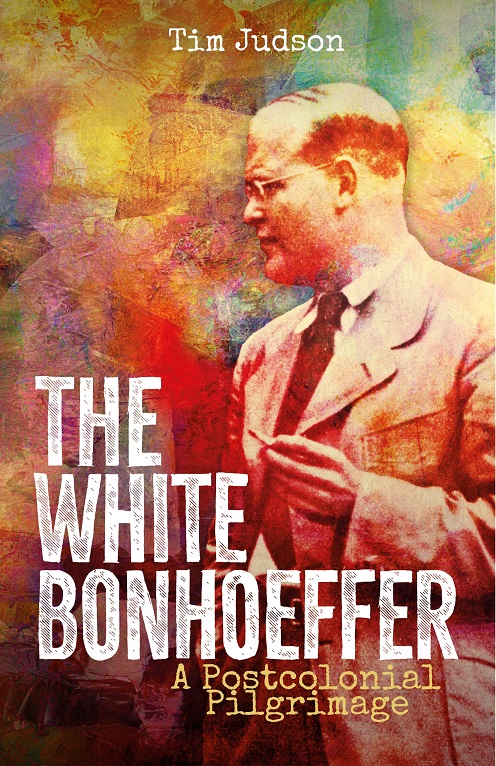
Dietrich Bonhoeffer’s theology is hotly debated to this day, from his views on pacifism to his stance on various ethical issues that face us now. One area that I haven’t seen discussed as much in Bonhoeffer scholarship is his view of universalism. Tim Judson’s recent work, The White Bonhoeffer: A Postcolonial Pilgrimage addresses Bonhoeffer’s stance on this doctrine in a short section. Judson’s insights are illuminating, showing that this is a topic fruitful for further discussion.
Judson notes, first, that the topic is grounded in Bonhoeffer’s theology of the cross and its universality. Second, Bonhoeffer’s thinking seems to be tied up in the ultimate stance of creation rather than individual salvation. Indeed he saw the hyper-focus on individual salvation as entirely the wrong starting point. Individual salvation isn’t the starting point, but rather something caught up in God’s working both through sacrament and the Cross. Third, this focus on the eschaton–the final end of creation–lead Bonhoeffer to brief defenses of the view of apokatastasis: the notion that all creation will have ultimate restoration. He defends this in Sanctorum Communio, for example, noting that “The strongest reason for accepting the idea of apocatastasis [alternate spelling of the Greek word] would seem to me that all Christians must be aware of having brought sin into the world, and thus aware of being bound together with the whole of humanity in sin, aware of having the sins of humanity on their conscience…” (DBWE 1, 286-287, cited in The White Bonhoeffer, 56). The universality of the sinfulness of humanity is, paradoxically, linked therefore to the hope for all humanity’s salvation in Christ. Bonhoeffer concedes this can only be a hope, not a certainty (ibid), but it seems his stance is in favor of the concept.
There are many things of interest in this brief analysis of Bonhoeffer’s universalism. The first is that there seems to be a connection between Lutheran soteriology and universalism, though that is not what Luther himself held. Lutherans explicitly hold to the cross as universally applicable. On the cross, God reconciled the whole world to Godself. If that’s true, then sin as the barrier between humans and God has been removed. As such, what can there be a reason for not having such reconciliation? A second point of interest is that Bonhoeffer sees soteriology as much more corporate- than individual-focused. This is something that is often difficult for theologians who come from backgrounds focused on individual salvation to understand, but it is a stance that I think is correct. The focus on individual soteriology has displaced the focus in Scripture which is on God’s work in Christ, not on an individual. None of this is to say that the individual is unimportant or not discussed in Scripture, but rather that the focus is mistaken when it is on the individual rather than the whole. Finally, Bonhoeffer’s view that we can have hope for final reconciliation, despite his own questions and affirmation of reprobation, lends itself to a very Lutheran stance of merely affirming what one finds in Scripture without trying to always reconcile potential paradoxes. (I have argued that a Lutheran non-rational stance can be taken for universalism in a post here.)
The White Bonhoeffer is a thought-provoking work overall. I am thankful to Judson for shedding light on so many intriguing topics. The book is recommended.
Links
Dietrich Bonhoeffer– read all my posts related to Bonhoeffer and his theology.
SDG.
——
The preceding post is the property of J.W. Wartick (apart from quotations, which are the property of their respective owners, and works of art as credited; images are often freely available to the public and J.W. Wartick makes no claims of owning rights to the images unless he makes that explicit) and should not be reproduced in part or in whole without the expressed consent of the author. All content on this site is the property of J.W. Wartick and is made available for individual and personal usage. If you cite from these documents, whether for personal or professional purposes, please give appropriate citation with both the name of the author (J.W. Wartick) and a link to the original URL. If you’d like to repost a post, you may do so, provided you show less than half of the original post on your own site and link to the original post for the rest. You must also appropriately cite the post as noted above. This blog is protected by Creative Commons licensing. By viewing any part of this site, you are agreeing to this usage policy.
When the Bigots Came for Us: the LCMS Youth Gathering, Protests, and Bigotry

The Lutheran Church – Missouri Synod Youth Gathering took place from July 19-23, 2025 in New Orleans, LA. Apparently Westboro Baptist Church–the one that is infamous for its hateful rhetoric, signs, and general awfulness–protested at the gathering. An LCMS pastor, reacting to this, added “Hate Has No Home Here” to official LCMS Youth Gathering imagery, apparently trying to point out that Westboro was in the wrong here for varied reasons.
I was once in the LCMS myself, and attended a youth gathering. If I had had such a protest at my gathering, I suspect I would have been, like the few reactions I saw from current LCMS youth, mostly confused. Why is this radically fundamentalist group showing up to protest the LCMS, itself a conservative organization? Apparently, according to Westboro’s own release about the protest (quoted by an LCMS person reacting to it here), it is in part because the LCMS isn’t pure enough: “This organization is filled with creepy, “voluntary humility” (Colossians 2:18) about the less popular sins of sodomy and transgenderism, while you whitewash fornication, adultery and idolatry.” So, according to Westboro, the LCMS basically condemns LGBTQ+ but doesn’t do so regarding “fornication, adultery, and idolatry.”
What to make of this odd protest? First, I wonder if this can be leveraged to have discussions with LCMS persons about how awful it was to have this nonsense at their youth gathering, literally targeting children. I saw some comments on Facebook like “but we agree with them on LGBTQ+ issues” from LCMS people. Not only is that awful–since the WBC preaches that God quite seriously hates queer people [God manifestly does not hate queer people, btw] and anyone saying they agree with that is agreeing with their god-forsaken stance–but it also opens a door for discussion: Purity tests for doctrinal or moral excellence can always get more stringent, and someone will always be left out.
Here, we had the LCMS Youth getting left out by the WBC. Not just left out, but seen as actively sinful to the point of needing to be protested, shouted at, and condemned publicly as much as possible. To the WBC, the LCMS is enabling “fornication” and divorce, among other things. It was probably quite shocking for LCMS members to be on the “wrong” side of such a protest. But, imagine discovering that you’re left on the outside of heaven or outside of God’s love because of something you believe or who you are! This is time for reflection. These LCMS youths now see that a purity test for doctrine/morality can get more and more extreme. The narrower and narrower one gets with God’s love and inclusion, the narrower the gates of heaven, and the more limits we place on God’s mercy and love. Hopefully this will lead some to question their stance.
Second, the addition of “hate has no home here” to the LCMS youth gathering logo was controversial in the limited comments I saw. It should spur -some- reflection that simply saying “hate has no home here” is controversial. Do you want hate to have a home amongst your church, amongst your youth? Hopefully the obvious answer is “no.” Now, I do understand making it look like it was official if it wasn’t released officially could be an issue, but that’s a different discussion.
Third, and finally, I hope it spurs some within the LCMS to think on their reaction of “but we agree with you” regarding WBC’s stance on queer people. Look at the vitriolic hate being spewed at you because you don’t fully come into line with everything they believe! Do you really believe it is Christlike to have that same thing done to LGBTQIA+ people? Is that the standard you want for your Christianity? I pray others would come to see God’s love as open and inclusive for all people, not just for whatever narrowing of the path we prefer.
Disclaimer: I am not endorsing any of the words of LCMS persons or Westboro Baptist in this post. LGBTQIA+ persons are fully loved by God and should be fully included in the activity and work of the church.
Was Bonhoeffer “Lutheran or Lutherish” – a look at Michael Mawson’s essay
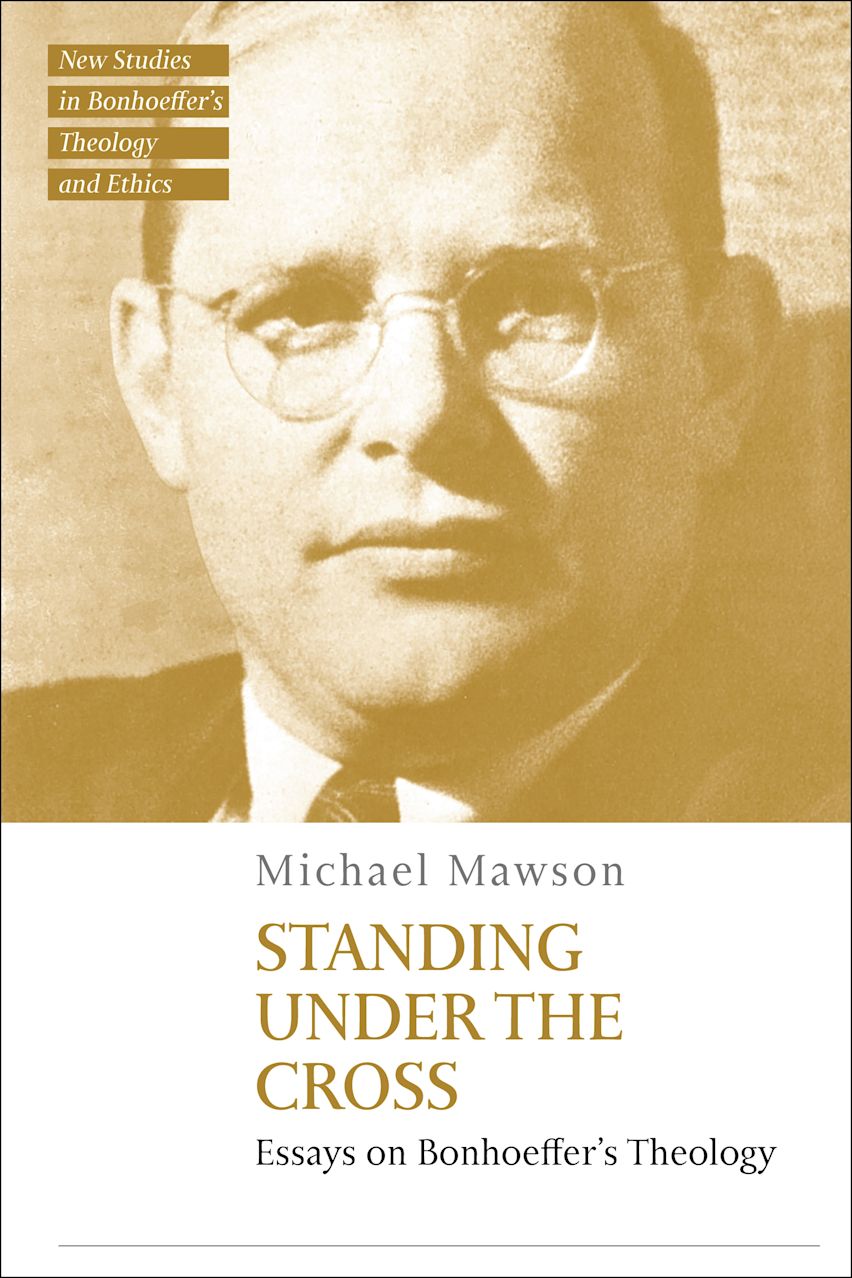
Michael Mawson’s Standing Under the Cross features several essays about Dietrich Bonhoeffer’s theology. It’s been a fascinating read. I was struck, however, by one essay that reads like an outlier. “Lutheran or Lutherish: Engaging Michael DeJonge on Bonhoeffer’s Reception of Luther” seeks to engage with Michael DeJonge’s Bonhoeffer’s Reception of Luther (reviewed by me here) and argue, at least in part, that there needs to be more complexity regarding Bonhoeffer’s relationship with Lutheranism than DeJonge presents. I found this essay an outlier–and perplexing–because Mawson himself cites Luther in conjunction with Bonhoeffer more than 20 times outside of this essay, which certainly lends itself to the interpretation of seeing Bonhoeffer as consciously Lutheran.
At the outset, I must note it is possible there is some subtlety to Mawson’s argument I’m missing. Following DeJonge, Mawson engages with Alasdair MacIntyre’s definitions of tradition, and draws from that a different conclusion–that Bonhoeffer should be approached to see “whether there are other, less determinate and more fluid ways of attending to this presence, of framing Bonhoeffer’s complex reception of Luther” (70). Interpreting this conclusion is difficult. Is Mawson saying that we need to view Bonhoeffer more along “Lutherish” lines than “Lutheran” ones–the latter being DeJonge’s claim? Or is he merely saying we ought to allow for broader influence on Bonhoeffer than Lutheranism?
If the latter, the point doesn’t actually seem to be outside of DeJonge’s purview either. While DeJonge certainly argues that Bonhoeffer is “consciously” Lutheran, that doesn’t preclude other influences. One can be Lutheran and still be influenced by and interacting with other authors of your own time. Mawson notes Hegel and Nietzsche as others with whom Bonhoeffer interacts (68). But again, this is hardly precluded by saying Bonhoeffer was Lutheran.
Mawson also makes some slight points about how Bonhoeffer refers to himself as Evangelical first, rather than Lutheran (67)–but the German Lutheran church referred to itself as Evangelical, anyway. Additionally, Mawson criticizes DeJonge for framing the debate as between Lutheran and Reformed positions. DeJonge’s complaint about scholars not paying enough attention to Bonhoeffer as Lutheran leading to misinterpretations of Bonhoeffer is counted by Mawson’s question: “does… the very existence of such diverse readings (and misreadings) itself complicate attempts to organize and stabilize Bonhoeffer theology as straightforwardly inside of ‘the Lutheran tradition’?” (69). I would argue that such diverse readings and misreadings does not do that at all. The fact that death of God theologians glommed onto Bonhoeffer’s works to extract “religionless Christianity” as meaning the same as “God is dead” hardly means we have to take as seriously the idea that Bonhoeffer might have believed God is dead as we do his stance on the theologia crucis (theology of the cross) which he consistently taught through his life. Diversity of opinion or interpretation does not entail diversity of the thing itself.
I already noted some confusion as well about Mawson’s own writings related to Bonhoeffer and Luther. Right before this essay, Mawson offered up two essays on Bonhoeffer’s view of Scripture and Bonhoeffer on discipleship, respectively, which heavily cite Luther in context of Bonhoeffer’s own view. Indeed, in the latter essay Mawson himself concludes by linking the theologia crucis with Bonhoeffer and Lutheranism specifically, not even bothering to distinguish between the Lutheran view and Bonhoeffer’s (see 58). Apart from all of this, though, looking at Bonhoeffer’s own works it becomes incredibly difficult to take seriously the notion that Bonhoeffer was anything but Lutheran. That doesn’t preclude him having other influences, advancing ideas that critiqued some parts of Lutheranism, or anything of the sort. But it does mean that reading Bonhoeffer correctly means reading him as a Lutheran pastor, which he was.
Just a few examples can serve to demonstrate Bonhoeffer’s deep commitment to Lutheranism. Bonhoeffer actively sought to catechize students within Lutheran traditions, including writing a catechism for students which closely followed Luther’s own catechism. Bonhoeffer’s discussion of the extra Calvinisticum includes a critique of Lutheran attempts to ground the counter to Calvinistic/Reformed doctrine in the concept of ubiquity precisely because Bonhoeffer argues that attempting to answer the Calvinist critique abandons the Lutheran answer which can simply be that Christ promised His presence and to leave it at that. Bonhoeffer defends infant baptism in more than one place in his works (for example in DBWE 14:829-830). He grounds the church on word and sacrament–the very way that Luther speaks of the church (again DBWE 14:829). He cites Luther more than any other theologian or scholar, and does so many, many times simply to settle the answer to a question such as saying [I paraphrase here] “Luther wrote [x]” and letting that settle the matter. He rarely critiques anything of Luther, rather citing Luther almost always in supporting a point or merely to cite something only to elucidate it afterwards. Mawson himself notes Bonhoeffer’s incredibly close interpretations of the theologia crucis–the very concept Luther wielded to differentiate himself from other theologians. Again, this isn’t a broader Christian concept but one that was explicitly and repeatedly taught and used by Martin Luther himself and one that Bonhoeffer cites again and again throughout his work such that it became the grounding for his notion that “only the suffering God can help.” Bonhoeffer doesn’t cite the Lutheran confessions as often as Luther, but when he does it is always done positively. For example, Bonhoeffer, after quoting the Formula of Concord, wrote: “The ‘expediency’ of any given church regulation is thus to be gauged solely by its accordance with the confessions. Only such accordance with the confessions is expedient for the church-community” (DBWE 14:704). How can one possibly read this passage, in which Bonhoeffer explicitly states that the way to judge a church regulation must be only in accordance to the Lutheran confessions–and he must mean Lutheran specifically because he just cited the Formula of Concord!
Examples could be multiplied ad nauseum, and DeJonge has done good work doing so, along with a handful of other authors who have put in the legwork to show that reading Bonhoeffer correctly means reading him as a Lutheran. I add my voice to this chorus, and as much as I enjoy Mawson’s work, I have to strongly question this specific essay. It is impossible to rightly interpret Bonhoeffer apart from realizing that he is Lutheran. And doing so does damage to his theology. None of this is to say other influences are impossible; it simply means that Bonhoeffer himself followed the Lutheran Confessions and Luther, even while engaging with them in a constructive way.
Standing Under the Cross continues to be a thought-provoking work that has led me to much reflection on Bonhoeffer’s theology–and my own. I recommend it.
Links
Dietrich Bonhoeffer– read all my posts related to Bonhoeffer and his theology.
SDG.
——
The preceding post is the property of J.W. Wartick (apart from quotations, which are the property of their respective owners, and works of art as credited; images are often freely available to the public and J.W. Wartick makes no claims of owning rights to the images unless he makes that explicit) and should not be reproduced in part or in whole without the expressed consent of the author. All content on this site is the property of J.W. Wartick and is made available for individual and personal usage. If you cite from these documents, whether for personal or professional purposes, please give appropriate citation with both the name of the author (J.W. Wartick) and a link to the original URL. If you’d like to repost a post, you may do so, provided you show less than half of the original post on your own site and link to the original post for the rest. You must also appropriately cite the post as noted above. This blog is protected by Creative Commons licensing. By viewing any part of this site, you are agreeing to this usage policy.

 J.W. Wartick - Reconstructing Faith