J.W. Wartick
Why I left the Lutheran Church – Missouri Synod: Points of Fracture: “On the Other Side”

The reasons I left the Lutheran Church – Missouri Synod were complex. Whether it was the science I was taught as a child not aligning with reality or the misogynistic and racist actions of pastors and those training to be the same, or any of a number of other issues I had, these all were contributing factors. Now, I am going to spend some time on perhaps the biggest reason I am no longer part of the LCMS, which is their views on women in the church and home. This is a deeply personal subject for me, and I have numerous personal stories related to it. Names and other details may be modified for privacy. Links to the series can be found here.
Points of Fracture: “On the Other Side”
I’ve written extensively about my moving away from various doctrines the LCMS deems especially important, even while still maintaining my commitment to core Lutheran doctrines (such as the Sacraments). What I didn’t realize as I shifted my doctrinal positions was the amount of pushback on a personal level that I would receive. I knew I’d have some arguments about the facts of the matter(s), but I didn’t realize how deeply, intensely personal the attacks would get. I should note I’m not sharing many because trying to remove identifiers would be too difficult. Instead, in this post I’m just sharing a broad view with some examples of what it felt to be on the “other side” of some of these issues, and why it spurred me to leave the LCMS.
Conflicts while Leaving
Whether it was for Christianity and science, women in the ministry, or several other topics, I experienced multiple, personal attacks on myself or those around me due to my differing in viewpoints from the LCMS. When it came to science and Christianity, the oft-repeated phrase was that I’d compromised with “man’s wisdom” instead of following “God’s word.” I trusted scientists to teach me about the world instead of the Genesis Creation accounts. Never mind that the creation accounts do nothing to set a date for creation, nor do they at any point hint that the purpose was to help date the earth, etc. Instead, the refrain was that I’d abandoned Scripture in folly. My turn from young earth creationism led to me being denied communion at different points, despite churches not listing this as a reason to do so. (See more of my discussion of close/closed communion here.) Several different pastors and LCMS resources I looked up suggested a denial of young earth creationism was capitulating to “the world” and led directly to a denial of the Bible and therefore of Christ Himself.
Even worse were the many experiences related to my change of position on women pastors. For one, there’s the knee jerk reaction many LCMS leaders and even laity have when they hear about me being married to a woman pastor. I have experienced ostracization for this position in the form of having conversations immediately end, having them devolve into arguments, ghosting, etc. More concretely, as my view on this topic shifted, I was warned there would be financial consequences. It was alleged I would need to pay back scholarships because I didn’t end up as an LCMS pastor or teacher after all. I want to state this plainly: this did not happen, nor did any official in any capacity suggest it would. However, I found this threat especially astonishing given that it came from a church and people who talk about how financial considerations cannot come between one’s faith and their profession of that faith. Those same people then turned around and threatened me with financial consequences if I didn’t change my belief. The suggestion was insulting, because it implied my beliefs could be bought. It was also nonsensical, because belief formation doesn’t happen that way.
Other attempts to get me to change my beliefs were similarly misplaced. Very few LCMS individuals were willing to engage me on the level of actually going to scripture. One exception was an LCMS pastor who genuinely wanted to know why I’d changed my views. When we talked about things like Junia being an apostle in Romans 16:7, he acknowledged that was a serious problem for his position. Other verses I raised were similarly given consideration, and he acknowledged it was more complex than he’d thought. Much more common, however, was a blithe dismissal of any Scriptural case and even a total ignoring of the reasons why women were excluded from the ministry in the LCMS. Instead, people refused to go to church with me, made false claims about my then-fiancée, used the pulpit to decry women in leadership, made insulting remarks about my lack of masculinity, made insulting remarks to my then-fiancée about church history and women, and more.
These supposed arguments are much more aligned with spiritually abusive practices than they are with reality. For example, assuming you, dear reader, are a Christian, suppose someone close to you took a dearly held belief of yours (let’s say your belief about whether babies should be baptized) and said that they would refuse to visit your church or refuse to go to church with you until you changed your belief about baptism. Would you think that’s a good reason? And if you did, would you really be able to change this deeply held belief just because of someone not going to church with you? Would you be able to change that belief just because you might have to pay some extra money for a debt? What if that person insulted you a bunch–would that change your belief?
This is the kind of argument raised against women pastors in my experience from within the LCMS, including from pastors.
Hate the sin, love the sinner
I was taught this concept and felt it was pretty much correct, especially in relation to some of the more controversial topics. What I’ve found time and again, however, is that hatred of the sin often turns into hatred of the sinner. It’s easy to say a trite phrase like this, but I’ve observed that it leads to a “holier than thou” attitude in which the one who is “loving the sinner” still has a lower view of that sinner. I experienced this myself within the LCMS when we talked about LGBTQ+ issues, and I know personal stories from others about the same thing. It’s one thing to say you “love the sinner”; but when that “sinner” experiences versions of “love” that include things like being denied communion, being called a sinner, being told they need to change their life/lifestyle, and other related things, the experience feels much less like love than it does like hate. For my own part, I had an LCMS pastor say that due to my embrace of women being pastors, they were “hating the sin” of women being pastors and “loving the sinner,” me. Even this somewhat mild comment felt like a stern rebuke from the mouth of a pastor, and certainly did not reflect the alleged “love” I was being given.
“The Holy Spirit Shut Your Mouth”
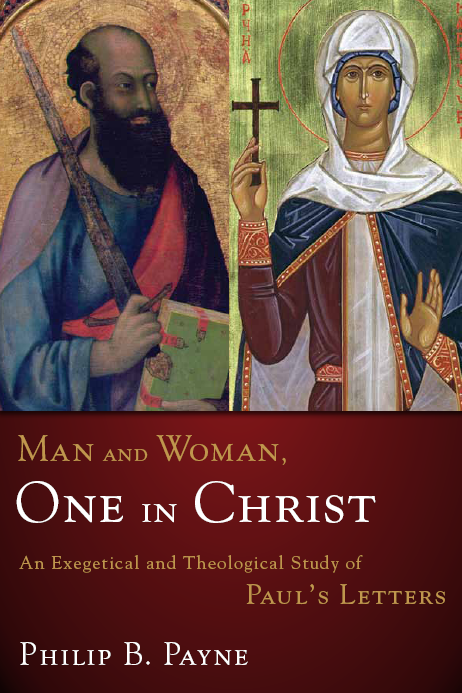
One of the most angry attacks I received was completely out of the blue. I began receiving messages on Facebook from someone who had attended the same university I had. I’d never spoken with them. The man was an LCMS pastor by this point, having graduated ahead of me by some years. He began by asking me about why I believed women could be pastors. It quickly became apparent that he was not at all interested in my responses. He quickly became aggressive, saying my arguments were obviously mistaken and wrong. When I directed him to further reading, suggesting he read Man and Woman, One in Christ to find deeper answers to some of his questions, he claimed to have read the book already. A few exchanges later, he then admitted he had never read it or even heard of it.
I asked him why he felt comfortable lying about that. He denied that he’d lied, saying he was caught up in the moment. When I pointed out that him being “caught up in the moment” didn’t somehow change lies to truths, he got more upset. I was wrong on every level, and no book could possibly change his mind or have any other impact on him or anyone who didn’t already want to ignore God’s “clear word” [according to him]. It was so clear, apparently, that even questioning it meant that I was likely already trying to follow the temptations of Satan. When I pointed out his misuse of Greek in multiple points he was trying to make, he became even more agitated and proceeded to insult my wife, heaping name-calling and vile phrases upon both her and myself.
At this point, I knew I wouldn’t engage this horrid person any more. I told him I was done talking with him because he had insulted myself and my wife personally. He changed tactic, saying that his wife told him that meant the “Holy Spirit had shut your mouth” so I could no longer type up “heresies” about women in leadership in the church. He said he agreed wholeheartedly–the reason I wouldn’t respond, despite me specifically stating it was because he was attacking my family personally–is because the Holy Spirit had shut me up and made it so I could no longer interact with him. I had already made the decision not to continue interacting with this person who had quickly moved to disgusting tactics to try to clobber me over the head with his position. It was extremely difficult for me to not fire off retorts or responses, because I knew he would take it as proof that the Holy Spirit had indeed silenced me. But I also knew for my own mental well-being, I could not continue interacting with such an awful excuse for a pastor.
I’ll not mince words: this was spiritual abuse. It was an attempt to coerce me using religious trappings and invoking God to try to say that I was in the wrong. This LCMS pastor, with whom I’d never interacted before and never have since, took it upon himself to personally insult my wife and then declared himself the “winner” of a discussion by claiming the Holy Spirit was on his side and even actively preventing me from typing a response to him. This is a man who was an LCMS pastor at the time who, despite whatever training he received to be a pastor, apparently believed these were both appropriate ways of interacting with other people. And someone–someone I know personally–gave my name and contact information to this LCMS pastor so that they could attack me and my family in this fashion. Unconscionable.
Is it really that bad?
People who’ve read this series–multiple people in different contexts–have responses like “Well we’ve never experienced that in an LCMS church” or “I haven’t seen that happen” or “is it really that bad?” One response I’d have to that is that maybe they haven’t been looking hard enough. For example, maybe their pastor or members in their church haven’t shown homophobia because there hasn’t been an opportunity to do so. After all, as I shared in an earlier post, gay men (and others) are leaving the LCMS due, in part, to their treatment therein. Maybe the LGBTQ+ people have already quietly left their church, so they don’t experience the comments about gay men that I observed. Moreover, the ubiquity of these comments when you start asking others about them is undeniable. It may be true that, in isolation, some LCMS congregations have pastors who aren’t homophobic, or who aren’t spiritually abuse, or whatever. I’d be surprised if that weren’t the case. But my series has shown time and again, citing multiple instances of pastors and those training to be pastors or teachers in the LCMS, that these things are happening and that they are perpetrated at levels of leadership within that church body.
I experienced real, religious trauma within the LCMS. That’s certainly not the case for everyone therein, but I know many, many people who have been “on the other side” can share similar stories. And I suspect many of these stories will never be told. If you’re out there reading this–please know you’re not alone. It’s okay to be “on the other side.”
Links
Formerly Lutheran Church – Missouri Synod (LCMS) or Wisconsin Synod (WELS)– A Facebook group I’ve created for people who are former members of either of these church bodies to share stories, support each other, and try to bring change. Note: Anything you post on the internet has the potential to be public and shared anywhere, so if you join and post, be aware of that.
Leaving the LCMS/WELS– Not sure about whether to leave or thinking about leaving? Do you want to others who are thinking along the same lines? I created a group for those who are contemplating leaving these denominations, as well.
Why I left the Lutheran Church – Missouri Synod Links Hub– Want to follow the whole series? Here’s a hub post with links to all the posts as well as related topics.
Be sure to check out the page for this site on Facebook and Twitter for discussion of posts, links to other pages of interest, random talk about theology/philosophy/apologetics/movies and more!
SDG.
——
The preceding post is the property of J.W. Wartick (apart from quotations, which are the property of their respective owners, and works of art as credited; images are often freely available to the public and J.W. Wartick makes no claims of owning rights to the images unless he makes that explicit) and should not be reproduced in part or in whole without the expressed consent of the author. All content on this site is the property of J.W. Wartick and is made available for individual and personal usage. If you cite from these documents, whether for personal or professional purposes, please give appropriate citation with both the name of the author (J.W. Wartick) and a link to the original URL. If you’d like to repost a post, you may do so, provided you show less than half of the original post on your own site and link to the original post for the rest. You must also appropriately cite the post as noted above. This blog is protected by Creative Commons licensing. By viewing any part of this site, you are agreeing to this usage policy.
Book Review: “The Medieval Mind of C.S. Lewis” by Jason M. Baxter
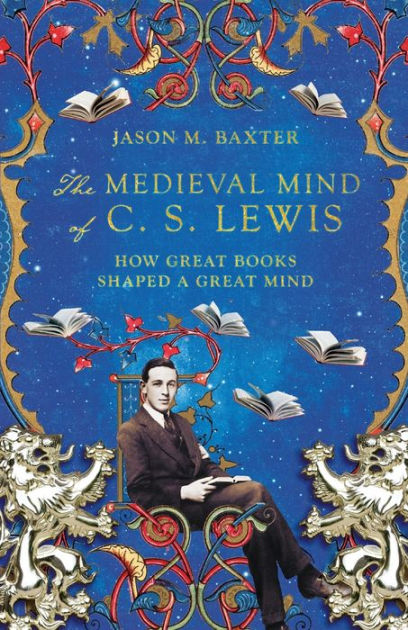
C.S. Lewis was a man deeply influenced by myth. In The Medieval Mind of C.S. Lewis, Jason M. Baxter shows how Medieval thought and “great books” shaped C.S. Lewis’s mind and thought.
The book’s short length (165 pages of text) belies the deep insights found throughout. Baxter is clearly well-versed with medieval thought, and he brings this knowledge to bear on the life, thought, and works of C.S. Lewis. Whence some of Lewis’s insights about mysticism, death, and apologetics? The answer is medieval thought. Baxter traces medieval influence on C.S. Lewis’s life, but also highlights how influential this same thought was on his works, both theological, apologetical, and more. It is beyond clear, having read the book, that Lewis was deeply committed to medieval thinking, and used that thought to critique his modern world.
I especially enjoyed how Baxter made the insights in each chapter feel somewhat applicable to today. Rather than just outlining a one-to-one correspondence of Lewis with Medieval thought, he also highlights how that thought could have impact on our own lives. For example, in the chapter on prayer, much discussion is spent on the numinous experience, ultimately bringing it home with the analogy of Lucy from Narnia as an example of how to pray. Insights like this can be found throughout the book.
The Medieval Mind of C.S. Lewis is useful both to those interested in exploring the background to Lewis’s thought and to those who wish to learn more about Medieval Christianity and thought. It’s an intriguing look at deep topics.
Disclaimer: I was provided with a copy of the book for review by the publisher. I was not required to give any specific kind of feedback whatsoever.
All Links to Amazon are Affiliates links
Links
Be sure to check out the page for this site on Facebook and Twitter for discussion of posts, links to other pages of interest, random talk about theology/philosophy/apologetics/movies and more!
Book Reviews– There are plenty more book reviews to read! Read like crazy! (Scroll down for more, and click at bottom for even more!)
SDG.
——
The preceding post is the property of J.W. Wartick (apart from quotations, which are the property of their respective owners, and works of art as credited; images are often freely available to the public and J.W. Wartick makes no claims of owning rights to the images unless he makes that explicit) and should not be reproduced in part or in whole without the expressed consent of the author. All content on this site is the property of J.W. Wartick and is made available for individual and personal usage. If you cite from these documents, whether for personal or professional purposes, please give appropriate citation with both the name of the author (J.W. Wartick) and a link to the original URL. If you’d like to repost a post, you may do so, provided you show less than half of the original post on your own site and link to the original post for the rest. You must also appropriately cite the post as noted above. This blog is protected by Creative Commons licensing. By viewing any part of this site, you are agreeing to this usage policy.
Book Review: “Faithful Anti-Racism” by Christina Barland Edmondson and Chad Brennan

Anti-Racism is a hot-button topic right now. Too many have a knee-jerk response to it instead of actually learning about it. Christina Barland Edmondson & Chad Brennan’s Faithful Anti-Racism introduces Christians to anti-racism and how to apply it in their lives.
After the introduction, 11 chapters introduce Christians to a number of topics related to anti-racism. These call on faithful Christians to apply the Bible, stand for justice, understand our past, and more. Several chapters directly address topics that frequently yield seemingly fruitless debates on social media. The authors do a great job delving into such divisive topics in a winsome way that focuses on bringing Christian living to the forefront.
The book consistently brings applicable knowledge to the table. There are even chapters looking at how Christians can measure progress and help change society. Regarding the former, for example, the authors argue that we have to move past simplistic numbers and into real change in order to measure progress. They offer a number of ways of doing so that will challenge individuals and organizations.
Every chapter has discussion questions and a prayer.
Faithful Anti-Racism is an excellent read for individuals or groups looking to actively oppose racism in society. Recommended.
Disclaimer: I was provided with a copy of the book for review by the publisher. I was not required to give any specific kind of feedback whatsoever.
All Links to Amazon are Affiliates links
Links
Be sure to check out the page for this site on Facebook and Twitter for discussion of posts, links to other pages of interest, random talk about theology/philosophy/apologetics/movies and more!
Book Reviews– There are plenty more book reviews to read! Read like crazy! (Scroll down for more, and click at bottom for even more!)
SDG.
——
The preceding post is the property of J.W. Wartick (apart from quotations, which are the property of their respective owners, and works of art as credited; images are often freely available to the public and J.W. Wartick makes no claims of owning rights to the images unless he makes that explicit) and should not be reproduced in part or in whole without the expressed consent of the author. All content on this site is the property of J.W. Wartick and is made available for individual and personal usage. If you cite from these documents, whether for personal or professional purposes, please give appropriate citation with both the name of the author (J.W. Wartick) and a link to the original URL. If you’d like to repost a post, you may do so, provided you show less than half of the original post on your own site and link to the original post for the rest. You must also appropriately cite the post as noted above. This blog is protected by Creative Commons licensing. By viewing any part of this site, you are agreeing to this usage policy.
Book Review: “Reformation Commentary on Scripture: Matthew” Edited by Jason K. Lee and William M. Marsh

The Reformation Commentary on Scripture series continues to deliver excellent insight into how the Reformers read and talked about Scripture. New Testament Volume I: Matthew is no different in that regard.
The editors have again selected a huge swathe of Reformers from whom to draw commentary. The major names are all there, along with many Reformers ranging from less well-known to those that only dedicated students of the Reformation will know about. The bibliographical sketches of the Reformers included in the series so far alone makes for fascinating reading, as one can browse through hundreds of mini-biographies and learn more about the Reformation and links between Reformers than one can in many other books.
The commentary itself is arranged verse-by-verse, allowing for commentary on Matthew section-by-section. Each pause in the text allows for a number of Reformers to be cited, and the editors do an excellent job balancing selection of hot topics of today with topics the Reformers themselves debated heatedly over. Sometimes these overlap, but some of the questions included may be surprising to modern readers. For example, regarding the slaughter of the innocents (Matthew 2:16-18), commentary includes Joseph Hall providing a kind of poetic condemnation of Herod’s cruelty; John Calvin comparing it to the slaughter of the Benjaminites in Jeremiah, Juan de Maldonado stating that the Babylonian Captivity was a kind of slaughter, and John Lightfoot reflecting more deeply on the Jeremiah quote.
Time and again, on verse after verse, the editors bring many different perspectives–sometimes in conflict–to the fore, giving readers a rich background of Reformation commentary as well as a deeper understanding of the texts themselves. Topics like baptism (ex: Matthew 3) receive notable commentary from major Reformers (Luther, Calvin, etc.) while also bringing in lesser-known voices to weigh in on more specific topics (eg. Phillip Melanchthon).
The book serves equally well if someone is trying to just open up to study a specific passage or if one is interested in reading front-to-back to read alongside the Reformers. It’s a marvelous commentary if people have an even passing interest in knowing about how people during the Reformation period read Scripture.
Matthew is another excellent entry in a fabulous series of commentaries. Those especially interested in Reformation thinking and debates should consider it a must-buy, but the book will serve very well as a standalone commentary as well. The broadness of views presented and enormous number of topics touched upon make the book incredibly valuable. Recommended.
Disclaimer: I was provided with a copy of the book for review by the publisher. I was not required to give any specific kind of feedback whatsoever.
All Links to Amazon are Affiliates links
Links
Be sure to check out the page for this site on Facebook and Twitter for discussion of posts, links to other pages of interest, random talk about theology/philosophy/apologetics/movies and more!
Book Reviews– There are plenty more book reviews to read! Read like crazy! (Scroll down for more, and click at bottom for even more!)
SDG.
——
The preceding post is the property of J.W. Wartick (apart from quotations, which are the property of their respective owners, and works of art as credited; images are often freely available to the public and J.W. Wartick makes no claims of owning rights to the images unless he makes that explicit) and should not be reproduced in part or in whole without the expressed consent of the author. All content on this site is the property of J.W. Wartick and is made available for individual and personal usage. If you cite from these documents, whether for personal or professional purposes, please give appropriate citation with both the name of the author (J.W. Wartick) and a link to the original URL. If you’d like to repost a post, you may do so, provided you show less than half of the original post on your own site and link to the original post for the rest. You must also appropriately cite the post as noted above. This blog is protected by Creative Commons licensing. By viewing any part of this site, you are agreeing to this usage policy.
Book Review: “The Samaritan Woman’s Story: Reconsidering John 4 After #ChurchToo” by Caryn A. Reeder

The Samaritan Woman’s Story by Caryn A. Reeder engages the story of the Samaritan woman in John 4 both in interpretive history and in light of modern questions.
The book is split into two parts. The first part surveys the history of interpretation of this passage, all the way up to the modern day. The second part puts the story in context, looking at the meaning of the text and the people involved in their own day.
The history of interpretation of John 4 is fascinating, and Reeder offers numerous highlights throughout these early chapters. Several of the earliest readers of the Samaritan woman saw it straightforwardly as her being in some kind of sexual sin or as a prostitute, and engaged the story on a level that operated with those assumptions. Often, these interpreters also carried misogynist baggage from their cultural context. Intriguingly, one exception was Origen, whose reading completely avoids casting the Samaritan woman in a poor light not because he was enlightened on women’s issues but because he held to an allegorical reading of the story (34-40). In each chapter, Reeder surveys specific interpreters, and boxes in the text highlight specific contextual or historical points of interest related to the main text. After looking at the early church, Reeder advances through John Calvin, Dwight Moody, and others into the present day. Here, she draws attention to the #ChurchToo movement and its highlighting of the abuses done to women within the church. The interpreters and interpretations she focuses on in this latter section are still diverse, and highlight a number of ways people within the church have re-centered the story to discuss modern problems.
The second part provides readers with a number of tools to look at the text, whether it’s the background of what women’s lives were like in Jesus’s time or how marriage worked in the ancient world. Reeder finishes with a reimagination of the story that puts her forward as a model of Christian discipleship, among other things. The reading she provides is in context and grounded in historical reality and the text.
The book has discussion questions at the end and could be used for a group study.
The Samaritan Woman’s Story is a timely text that will engage readers with John 4 in highly relevant ways. But it’s more than that, it also provides a broad look at a much-interpreted and much-misunderstood text. I highly recommend it.
Disclaimer: I was provided with a copy of the book for review by the publisher. I was not required to give any specific kind of feedback whatsoever.
All Links to Amazon are Affiliates links
Links
Be sure to check out the page for this site on Facebook and Twitter for discussion of posts, links to other pages of interest, random talk about theology/philosophy/apologetics/movies and more!
Book Reviews– There are plenty more book reviews to read! Read like crazy! (Scroll down for more, and click at bottom for even more!)
SDG.
——
The preceding post is the property of J.W. Wartick (apart from quotations, which are the property of their respective owners, and works of art as credited; images are often freely available to the public and J.W. Wartick makes no claims of owning rights to the images unless he makes that explicit) and should not be reproduced in part or in whole without the expressed consent of the author. All content on this site is the property of J.W. Wartick and is made available for individual and personal usage. If you cite from these documents, whether for personal or professional purposes, please give appropriate citation with both the name of the author (J.W. Wartick) and a link to the original URL. If you’d like to repost a post, you may do so, provided you show less than half of the original post on your own site and link to the original post for the rest. You must also appropriately cite the post as noted above. This blog is protected by Creative Commons licensing. By viewing any part of this site, you are agreeing to this usage policy.
“The Shape of the Past” by John Warwick Montgomery- A Christian Historiography?
John Warwick Montgomery is a Christian apologist who is perhaps best-known for his defense of the method of evidentialism and attacks on presuppositionalism. The Shape of the Past is a work that outlines a Christian historiography–a Christian way of reporting history. I first read it maybe a decade ago or so and remembered it being fairly impactful to my own development. I read it again recently and was struck by how my perceptions of it changed. While I still believe it to be useful book in some ways, I also found difficulties in others. Montgomery’s central theses developing a supposed Christian philosophy of history are problematic.
The first four chapters of the book focus on definitions of history and historiography, an intriguing look at history as time travel, classical conceptions of historiography, and modern histography [modern at the time- 1975]. These present a survey of some major approaches to history and historiography, while highlighting a few problems Montgomery identifies without what he’s going to build up as a central development of historical writing and research. For example, early on Montgomry notes that historians at some point must make decisions about motivations, acts, etc. such that they are making decisions about what is “humanly possible” or probable. But whither the criteria for “humanly possible”? Ultimately, he argues, “the historian’s conception of human nature stems from his general philosophy of life…” (14). Historians, on this problem, must have a sound philosophy of life in order to make sound judgments about historical events.
Montgomery here is clearly on to something, but he fails to take seriously enough his own noted problem. If, as he says, historians are dependent upon their philosophy and background beliefs in order to make determinations about history, how is objectivity in history possible? While it can largely be agreed that historical events did happen, the exacting details of how they happened are much harder to pin down. And if an historian states that, say, a specific soldier on the battlefield at Gettysburg turned right when he in fact turned left, what does this mean for the “objectivity” of history and the truth thereof? Does this undercut the rest of the historian’s narrative? How much of it is discredited by “minor” details being wrong? And if historical evaluation depends so much upon one’s philosophy of life, how does one even begin to judge said evaluations? Most of these questions don’t get answered (and some aren’t even asked) in the book.
To be fair, Montgomery isn’t trying to answer questions he didn’t ask. I bring them up because they seem a logical extension of the problems he himself points out with history, and it would be interesting to see his answers to them. He does, however, turn to objectivity in history. How are Christians different in this regard?
“The Christian Answer” is the title of Chapter Five, which purports to offer a Christian solution to this difficulty. To get there, Montgomery insists that Christianity can provide the valid interpretation of history because its truth is “‘accessible to science’ and rests upon an objective foundation”; namely, he argues that the Christian worldview rests upon “the objective, historical truth of the resurrection of Jesus from the dead” (138). However, to get to the point that resurrection is an “objective, historical truth,” he uses a very brief evidentialist style argument: that the Gospels “are found to be trustworthy historical documents”; that they report Jesus “exercis[ing] divine prerogatives”; that they describe Christ’s bodily resurrection “in minute detail”*; that the resurrection “cannot be discounted on a priori grounds” [emphasis removed]; that Christ spoke the truth regarding the OT and confirms the NT; and that “It follows from the preceding that all Biblical assertions bearing on philosophy of history are to be regarded as revealed truth” (138-139).
Examining each of these steps in detail is beyond my scope here. Instead, I want to reflect on the reasoning. The problem at hand is: how do we find objectivity in Christianity to give us a valid interpretation of history? The answer is a purported historical fact. But how do we validly interpret that question of the resurrection? So far as I can tell, Montgomery is insisting that it is an historical fact. But the question he’s seeking to answer is whether Christianity can provide an objective basis for historical interpretation, and then he answers that with an historical interpretation: that the resurrection is objective fact. It’s a circle, and I’m not sure how it is supposed to escape that circle. I don’t see a way out of this circle. Even if one introduced some hidden premises about historical reasoning to get to the historicity of the resurrection, that would undercut his argument that Christianity is the objective arbiter of historical interpretation by introducing some external mechanism for that same evaluation. It seems hopeless to me.[1]
Now, it is possible to simply state that Montgomery’s argument here has failed, but that Christianity is valuable in historiography because it can give an objective (or at least “better” by some measure) way of interpreting history. While that would undermine much of his argument, it would leave one free to delve into the questions of what Christianity brings to the table as an evaluative tool. Montgomery does list several “principles of Christian historical interpretation,” and some of these are indeed valuable. For example, under metaphysical principles, he notes that Christianity gives the possibility to historical intepretation that history is inherently meaningful due to “God’s… activity” (145). This would take some effort to hash out, but it seems a potentially fruitful path to pursue.
Other principles he gives seem almost hopelessly naïve, in my opinion. For example, he argues that “human nature is constant” on Christianity, and so “the Christian historian has the assurance that a common ground exists between himself and the [people] of past ages whom he studies…” (148). So, he lists Louis XVI as one possibility for the Christian historian to be able to “confidently interpret motives” due to this constancy of human nature (ibid). Even conceding that human nature is constant, one would wonder how that alone would make it possible to determine the motives of Louis XVI with such confidence, especially if purely based upon that premise. After all, the vast chasm between my own experience and that of Louis XVI makes even the smallest decisions we have to make entirely different. Because I have made so few decisions that even resemble decisions with which Louis XVI was presented, that should give me at least some caution in drawing out his motivations for specific tasks. Other criteria Montgomery presents are helpful, but some need additional caveats.
Ultimately, The Shape of the Past is a frustratingly tantalizing read. Montgomery’s writing style is winsome and matter-of-fact. He writes in an easy manner about all sorts of scholarly topics. The central theses, however, remain unproven and possibly viciously circular. His criteria for Christian historians are a mixed bag. It’s unclear to this reader that Montgomery truly provides a reason to suppose Christianity is superior to other historiographic methods when it comes to objectivity in history. A specifically Christian historiography might be possible and even desirable, but it will need to be heavily supplemented from here.
*Interestingly, Mark does not do this unless one accepts the longer ending as genuine.
[1] Montgomery does note several potential objections to his view, but none of them hint at the circularity inherent in this reasoning: 1. We need an objective standard for historical evaluation; 2. historical evaluation shows that the resurrection is objectively true; 3. therefore, Christianity can be the objective standard for historical evaluation.
All Links to Amazon are Affiliates links
Links
Be sure to check out the page for this site on Facebook and Twitter for discussion of posts, links to other pages of interest, random talk about theology/philosophy/apologetics/movies and more!
Book Reviews– There are plenty more book reviews to read! Read like crazy! (Scroll down for more, and click at bottom for even more!)
SDG.
——
The preceding post is the property of J.W. Wartick (apart from quotations, which are the property of their respective owners, and works of art as credited; images are often freely available to the public and J.W. Wartick makes no claims of owning rights to the images unless he makes that explicit) and should not be reproduced in part or in whole without the expressed consent of the author. All content on this site is the property of J.W. Wartick and is made available for individual and personal usage. If you cite from these documents, whether for personal or professional purposes, please give appropriate citation with both the name of the author (J.W. Wartick) and a link to the original URL. If you’d like to repost a post, you may do so, provided you show less than half of the original post on your own site and link to the original post for the rest. You must also appropriately cite the post as noted above. This blog is protected by Creative Commons licensing. By viewing any part of this site, you are agreeing to this usage policy.
“The Towers of Midnight” by Brandon Sanderson and Robert Jordan- A Christian (re)reads the Wheel of Time
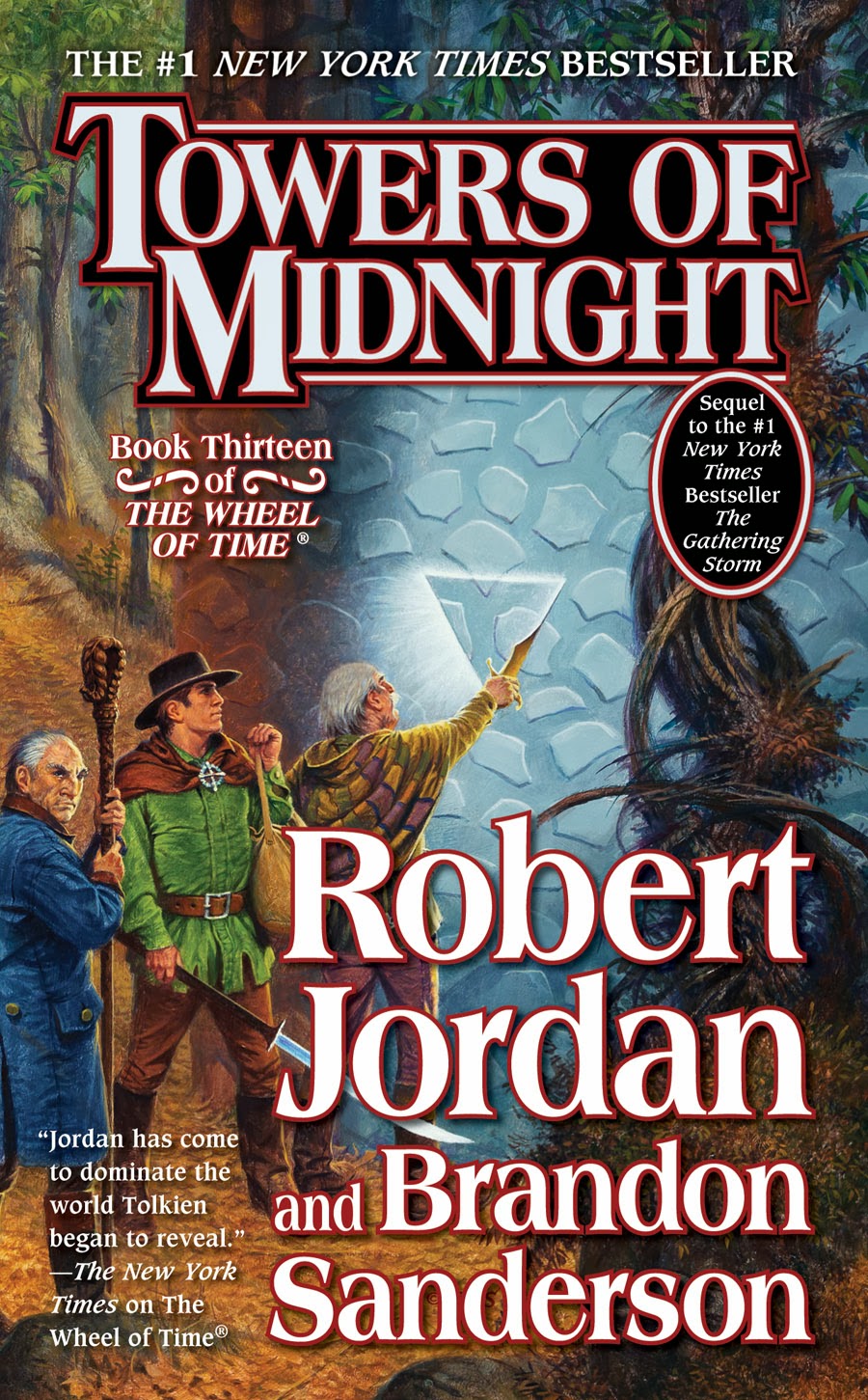
“The Wheel of Time” is a massive fantasy series by Robert Jordan (and, later, Brandon Sanderson) that is being developed into a television show for Amazon Prime. It’s cultural impact is huge, the series having sold more than 44 million copies. Here, I continue my series exploring the books from a Christian worldview perspective. There will be SPOILERS in this post for the series.
The Towers of Midnight by Robert Jordan and Brandon Sanderson
The penultimate book in the Wheel of Time series is a doorstopper. It’s got plenty to discuss, and I’ve only picked a few themes out. Let me know what you think in the comments!
Renewing of Creation
There are several times in the book in which Rand shows up and makes a kind of renewal of creation. In chapter 1, we see a town relying on their apple harvest to prevent them from starving, only to have it corrupted and destroyed. Rand shows up, and after a brief discussion with a farmer, the apples are blooming and ready for harvest again. I think of Isaiah 35:1: “The desert and the parched land will be glad; the wilderness will rejoice and blossom” (NIV). But this isn’t the only thematic parallel to the renewing and refreshing of creation. Later, Rand tells a group to open their sacks of grain (chapter 25). All they’ve opened so far has shriveled grain mixed with pests. But they follow Rand’s direction and find abundance of good grain. It’s like Jesus telling the disciples to fish on the other side of the boat, or turning water into wine. Rand’s parallels with the Messiah here are strong, though in the world of the novels it seems more like he’s bringing balance than making all things new.
Subterfuge Over
Rand, as he continues to step into the memories of Lews Therin, decides the time for subterfuge is over (chapter 13). “Today is a day of reunion, not of death,” Rand says as he sends Darkfriends out of his camp. I felt this was a kind of Narnia-esque moment, where evil is made plain but not completely destroyed–all things must happen in their times. Whether the parallel is Aslan willingly giving himself up, or allowing servants of the White Witch to flee, I was strongly reminded of similar feelings and scenes.
Malice or Ignorance?
It’s easy to assign the label “darkfriend” to others, just as we today can easily assign labels like “heretic,” or “apostate” to those with whom we disagree. When Maradon is opened at last to Ituralde’s army (chapter 24), it is only because someone took the initiative to overrule its governor. The question is raised over whether he was a darkfriend, and it is somewhat ambiguous whether he is or not. But the question arises in how we assign malice so often when it might be ignorance or cowardice instead. We need to be careful to assign labels to those who don’t deserve them and be willing to try to convince others of seeing things our way instead of so quickly other-ing them and rejecting them.
Prophecy
Prophecy is a recurring theme throughout the series, and questions of how to interpret prophecy abound. Late in The Towers of Midnight, there’s a discussion of how prophecy works in the world (chapter 51). Rand points out that if he’d been just a bit earlier in meeting up with the borderlanders, he’d have destroyed them for daring to slap him. They took something as a prophecy and a test, but he took it as a “foolish gamble.” While Paitar claims his family analyzed the prophecy “a hundred times over,” he says the words “seemed clear.” Rand points out that some prophecies are “not like the others”–they’re a “declaration of what might happen, not advice.”
Often, Christians see verses they take as prophecies in Scripture and then assume they can discern clear meanings. After all, one’s family or theological forebears analyzing a prophecy a “hundred times over” cannot be wrong, right? But if we choose to act or not act based upon how we take a prophecy which we may or may not be interpreting correctly, is that truly what the verses are there to tell us? Christians all too frequently ignore prophetic utterances warning against greed, accumulation of wealth, and injustice at the expense of seeking headline-grabbing events that they take to tell us about end times. Instead, perhaps those actions are “foolish gambles,” working to try to discern hidden meanings in prophecies rather than acting on ethical demands.
Conclusion
The Towers of Midnight is another excellent entry that somehow manages to stay action-packed and intense despite its absurdly long length. What worldview-level questions did you find in the novel?
(All Amazon Links are Amazon Affiliates Links.)
Links
The Wheel of Time: A Worldview Hub– All my Wheel of Time-related posts can be found here. Let me know what you think!
Be sure to check out the page for this site on Facebook and Twitter for discussion of posts, links to other pages of interest, random talk about theology/philosophy/apologetics/movies and more!
Book Reviews– There are plenty more book reviews to read! Read like crazy! (Scroll down for more, and click at bottom for even more!)
SDG.
——
The preceding post is the property of J.W. Wartick (apart from quotations, which are the property of their respective owners, and works of art as credited; images are often freely available to the public and J.W. Wartick makes no claims of owning rights to the images unless he makes that explicit) and should not be reproduced in part or in whole without the expressed consent of the author. All content on this site is the property of J.W. Wartick and is made available for individual and personal usage. If you cite from these documents, whether for personal or professional purposes, please give appropriate citation with both the name of the author (J.W. Wartick) and a link to the original URL. If you’d like to repost a post, you may do so, provided you show less than half of the original post on your own site and link to the original post for the rest. You must also appropriately cite the post as noted above. This blog is protected by Creative Commons licensing. By viewing any part of this site, you are agreeing to this usage policy.
Book Review: “Enjoying the Old Testament” by Eric A. Seibert
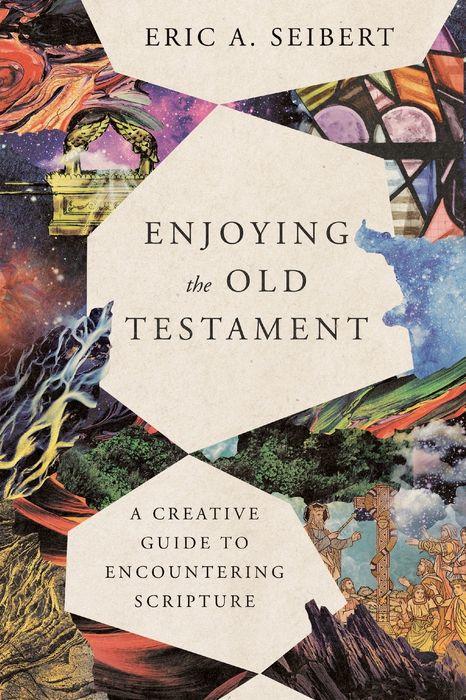
Enjoying the Old Testament by Eric A. Seibert is an invitation to Christians to read and love the Old Testament.
I admit this reader was shocked when I realized the ultimate purpose of the book. When I saw the subtitle: “A Creative Guide to Encountering Scripture,” I assumed the book was some kind of work introducing the OT. It is that… kind of. What the book is really trying to do is encourage Christians who are hesitant about reading the OT to actually do so and even enjoy doing so. I was shocked because I, personally, love the OT and spend as much time as I can therein. However, Seibert’s careful and sometimes cheeky writing drew me in nonetheless as he encouraged fellow Christians to read and understand.
The book is arranged around three parts: Preparing to Read the Neglected Testament; Having Fun with the Old Testament; and Encountering the Old Testament in New Ways. The first part exhorts and even cajoles Christians to read the OT, while helping set expectation and discuss a mindset that might be needed to do so. The second part helps, among other things, highlight how even the “boring” parts can be found meaningful. The third part offers some ways to read the OT that might help readers, both hesitant and not, encounter the OT in new ways.
Enjoying the Old Testament will hopefully accomplish the goal it sets out to do: bring Christians to read and encounter more Scripture. Seibert’s style and chapters will certainly help any reader who is hesitant to understand and draw out the reasons for doing so. The book accomplishes the task set before it.
Disclaimer: I was provided with a copy of the book for review by the publisher. I was not required to give any specific kind of feedback whatsoever.
All Links to Amazon are Affiliates links
Links
Be sure to check out the page for this site on Facebook and Twitter for discussion of posts, links to other pages of interest, random talk about theology/philosophy/apologetics/movies and more!
Book Reviews– There are plenty more book reviews to read! Read like crazy! (Scroll down for more, and click at bottom for even more!)
SDG.
——
The preceding post is the property of J.W. Wartick (apart from quotations, which are the property of their respective owners, and works of art as credited; images are often freely available to the public and J.W. Wartick makes no claims of owning rights to the images unless he makes that explicit) and should not be reproduced in part or in whole without the expressed consent of the author. All content on this site is the property of J.W. Wartick and is made available for individual and personal usage. If you cite from these documents, whether for personal or professional purposes, please give appropriate citation with both the name of the author (J.W. Wartick) and a link to the original URL. If you’d like to repost a post, you may do so, provided you show less than half of the original post on your own site and link to the original post for the rest. You must also appropriately cite the post as noted above. This blog is protected by Creative Commons licensing. By viewing any part of this site, you are agreeing to this usage policy.
Why I Left the Lutheran Church – Missouri Synod: Points of Fracture: Women in the Church Part 2
The reasons I left the Lutheran Church – Missouri Synod were complex. Whether it was the science I was taught as a child not aligning with reality or the misogynistic and racist actions of pastors and those training to be the same, or any of a number of other issues I had, these all were contributing factors. Now, I am going to spend some time on perhaps the biggest reason I am no longer part of the LCMS, which is their views on women in the church and home. This is a deeply personal subject for me, and I have numerous personal stories related to it. Names and other details may be modified for privacy.
Points of Fracture: Women in the Church, Part 2
I wrote before about being confronted about the possibility of women being pastors when I was in college and dated a woman who wanted to be a pastor. I went straight to texts approved by the LCMS to try to prove that women could not be pastors. For a while, I was in a comfortable space thinking I was right, despite a few hiccups here and there. But one question that I’d never thought of before continued to plague me: why couldn’t women be pastors? It was one thing to read the texts a certain way and believe they excluded women from the ministry, but why would that be?
The answers I received when I asked LCMS pastors–who were plentiful at my school and the churches I attended in college–were unsatisfactory. With few exceptions, they boiled down to “Because God said so.” I could accept that. There were plenty of things I believed God had done or determined that I either couldn’t understand or hadn’t the information to even begin trying to comprehend them. But what bothered me more is that this didn’t seem to be the reason given until very recently. When I looked into why women were excluded from the ministry in older LCMS works or in church history, the answer continually came up that women had less ability to pastor. That is, they weren’t as smart, or they had some inferiority in them. Or, because of the curse from the fall, women had to submit to men. Another answer was a reading of 1 Timothy 2:14 (“Adam was not the one deceived; it was the woman who was deceived and became a sinner”) that claimed women were inherently more prone to being deceived.
These reasons, while they didn’t align with reality I observed, at least were reasons apart from “God said so.” As someone who was becoming increasingly interested in Christian Apologetics (a branch of theology in which people work to defend the Christian faith against objections and provide positive reasons for belief), I was especially sensitive to the “God did it” type of reasoning which many non-Christians accused Christians of appealing to when it came to questions of how the universe works. To me, having a reason why women shouldn’t be pastors, even if it was a poor and transparently misogynistic one, was better than having no reason other than a bare appeal to authority. But this reason didn’t stand up when I raised it to others. At one point, I recall even foolishly raising it to the young woman I was dating who wanted to be a pastor. She shot the reasoning down with all the scorn it deserved. After all, did I really, truly believe that men were any less inclined than women towards sinfulness? And didn’t the Lutheran confessions themselves teach that all people–men and women alike–are inherently sinful? How did men somehow get a free pass on this?
I realized that the reason I’d found didn’t work pretty quickly. Not only did it not match reality, but it also was blatantly misogynistic on a level with which I was uncomfortable despite the misogyny in my own background (see, for example, here). This left me adrift. I thought the Bible taught women couldn’t be pastors, but I could find no adequate as to why that should be the case. Then, one day, I walked into a Christian bookstore and came upon a book: Man and Woman, One in Christ by Philip Payne.
The first few pages of the book had the author talking about how he affirmed inerrancy but believed that men and women were equally gifted to serve and lead in the church. Here was someone who claimed to believe as I did about the authority of the Bible while still affirming women in leadership. I bought the book and over the course of the vacation I was on I read it, underlining copiously, looking up Bible passages (“Does it really say that!?”), looking at my Greek New Testament, and more. Payne focused on the Pauline corpus related to women in the church, but as that’s where the most significant “clobber passages” were drawn from in my own tradition, that made it a nearly comprehensive study of the topic. And what I found is what I’d begun to suspect: the reading I had been taught was mistaken. Not only did it ignore the cultural context of the text, which I’d been taught was important for understanding the true meaning of the words, but the readings were simplistic on the highest level. They relied, often, on English translations by people already inclined to exclude women from ministry in order to make their points. Payne’s analysis was insightful and absolutely cut the core out of my own view.
I still wasn’t ready to accept women as pastors, but I realized I had massively oversimplified the biblical debate. Then, one day, push came to shove.
My girlfriend had changed her career path because of my objections to her chosen field. She’d decided to study psychology and possibly do some kind of family counseling. But then she came to me telling me that her sense of call from the Holy Spirit into the pastoral ministry hadn’t gone away. Indeed, in some ways it had strengthened. Could I accept what she felt called to do?
I prayed fervently that God would show me the way. I believed–and believe–that God answers prayer, and I dedicated most of my free time for over a week to ask God to guide me. Finally, I prayed one night something like, “God, I know I should not test you, but even your servant Gideon asked for a sign[1]. Please, show me a sign.” I set my Bible on my bed, and flipped it open.[2] It landed on 1 Corinthians 12. I started reading, and became greatly agitated. There it was, about as plain as it seemed it could be, 1 Corinthians 12:28: “And God has appointed in the church first apostles, second prophets, third teachers, then miracles, then gifts of healing, helping, administrating, and various kinds of tongues.” The verse showed that God put an order in the church. That order seemed to be a kind of authoritative or hierarchal order. First were the apostles, second the prophets, third the teachers, and then other gifts. But those first 3 were numbered in an order form first through third. And every understanding I’d seen of pastors in the Bible would say the word “teachers” could be applied to pastors. And, while Junia was an apostle in the Bible, I hadn’t yet read enough on that topic to realize how important she was or even acknowledge that fact. No, what mattered is that women were prophets in the Bible. Absolutely no one could deny that. But if that was the case, then women prophets were set above teachers in the church by God Himself.
It can’t be emphasized enough how much this verse shifted my understanding of the topic. I had been taught that men were suppose to have more authority than women. Indeed, the word “authority” was absolutely essential to an understanding of the topic of women in the ministry. Women just weren’t supposed to have authority over men, they were supposed to submit to them in everything. But here was a verse that plain as day stated that prophets ranked above teachers–the word I’d been assured was one of the biblical words for pastors. And because women prophets existed and no one denies that, that meant that women could be above pastors in whatever sense the verse meant.[3]
It was a revelation, and one that had struck me at the very moment I’d been most fervently praying for a sign from God. There it was. What more could I do than acknowledge it? My mind had been changed, and not because I wanted it to be changed for the sake of my relationship. It hadn’t been changed by “the culture,” whatever that’s supposed to mean. It had instead been changed by prayerful consideration of the text and a strong adherence to carefully reading the same. My mind had been changed. Women could be pastors. I realized this was going to be a major life-changing event for me in a way that people outside some obscure theological debates might not be fully able to grasp. It truly was a paradigm-shifting moment in my life, and one about which I’d not yet realized the full implications and consequences that would follow.
[1] The book of Judges has been a longtime favorite of mine, ever since I was enthralled by the illustrated kids’ Bible in which the action hero nature of this book made it jump off the page. Gideon’s story can be found in Judges 6 and following. The part I was referencing was Judges 6:37-40.
[2] I realize some readers might be uncomfortable about thinking God works this way. So am I. I don’t think God typically works in such a fashion. I can only report what I experienced and my belief that, in the moment, God used a broken, mistaken understanding about how God works to bring me to a better understanding of the Bible.
[3] Obviously much more nuance is needed here, and I’ve since thought and read quite a bit about this issue. However, I’ve yet to see a complementarian answer about this specific verse that is able to read the words on the page without somehow subverting the order in the church as stated here.
Next: Women in the Church Part 3- I write about my experience within the LCMS on the other side of the issue of women in the church.
Links
Formerly Lutheran Church – Missouri Synod (LCMS) or Wisconsin Synod (WELS)– A Facebook group I’ve created for people who are former members of either of these church bodies to share stories, support each other, and try to bring change. Note: Anything you post on the internet has the potential to be public and shared anywhere, so if you join and post, be aware of that.
Leaving the LCMS/WELS– Not sure about whether to leave or thinking about leaving? Do you want to others who are thinking along the same lines? I created a group for those who are contemplating leaving these denominations, as well.
Why I left the Lutheran Church – Missouri Synod Links Hub– Want to follow the whole series? Here’s a hub post with links to all the posts as well as related topics.
Be sure to check out the page for this site on Facebook and Twitter for discussion of posts, links to other pages of interest, random talk about theology/philosophy/apologetics/movies and more!
SDG.
——
The preceding post is the property of J.W. Wartick (apart from quotations, which are the property of their respective owners, and works of art as credited; images are often freely available to the public and J.W. Wartick makes no claims of owning rights to the images unless he makes that explicit) and should not be reproduced in part or in whole without the expressed consent of the author. All content on this site is the property of J.W. Wartick and is made available for individual and personal usage. If you cite from these documents, whether for personal or professional purposes, please give appropriate citation with both the name of the author (J.W. Wartick) and a link to the original URL. If you’d like to repost a post, you may do so, provided you show less than half of the original post on your own site and link to the original post for the rest. You must also appropriately cite the post as noted above. This blog is protected by Creative Commons licensing. By viewing any part of this site, you are agreeing to this usage policy.
Book Review: “Jonathan Edwards and Deification” by James R. Salladin

Jonathan Edwards and Deification deeply dives into Edwards’s theology to discover what he taught about theosis and whether that can be reconciled with the Reformed tradition.
It must be stated from the outset that this is a dense book on a topic that is itself highly complex. Theosis, the doctrine that humans may be undergoing a kind of transformation into the divine, has many streams of thought within Christianity, but is also among the more easily misunderstood and hotly debated (when it comes up) doctrines therein.
Salladin does an admirable job of outlining the way Edwards himself thought and wrote about theosis–sometimes without making it clear he was doing so. A careful analysis of many of Edwards’s works yields a fairly consistent picture that Edwards did hold to a kind of theosis while merging it with Reformed belief. This is a kind of shocking juxtaposition, given the belief of total depravity within Reformed circles. It is difficult to square that with the notion that humans might be becoming divine, in some fashion. Salladin is careful in drawing out the distinctions Edwards himself made, and supplements that with his own analysis of what theosis could mean within that tradition.
I must admit one piece of skepticism about this project, which is my own belief that people like Jonathan Edwards don’t deserve the attention they get. Jonathan Edwards was an enslaver. While no one is perfect, I tend to believe we need to find better heroes and theological interlocutors than people who enslaved others. Unfortunately, due to Edwards’s immense influence on American religion, even outside of Reformed circles, some study of his work at times is, if not necessary, then understandable.
Jonathan Edwards and Deification is a fascinating read on a niche topic. If you are part of a niche that is adjacent to the topic (eg. interested in theosis and Protestantism, for example), it’s a must-read. If not, it may be too esoteric to consider.
Disclaimer: I was provided with a copy of the book for review by the publisher. I was not required to give any specific kind of feedback whatsoever.
All Links to Amazon are Affiliates links
Links
Be sure to check out the page for this site on Facebook and Twitter for discussion of posts, links to other pages of interest, random talk about theology/philosophy/apologetics/movies and more!
Book Reviews– There are plenty more book reviews to read! Read like crazy! (Scroll down for more, and click at bottom for even more!)
SDG.
——
The preceding post is the property of J.W. Wartick (apart from quotations, which are the property of their respective owners, and works of art as credited; images are often freely available to the public and J.W. Wartick makes no claims of owning rights to the images unless he makes that explicit) and should not be reproduced in part or in whole without the expressed consent of the author. All content on this site is the property of J.W. Wartick and is made available for individual and personal usage. If you cite from these documents, whether for personal or professional purposes, please give appropriate citation with both the name of the author (J.W. Wartick) and a link to the original URL. If you’d like to repost a post, you may do so, provided you show less than half of the original post on your own site and link to the original post for the rest. You must also appropriately cite the post as noted above. This blog is protected by Creative Commons licensing. By viewing any part of this site, you are agreeing to this usage policy.

 J.W. Wartick - Reconstructing Faith