J.W. Wartick
The Wheel of Time – Episode 4 “The Dragon Reborn” – A Christian Worldview Review
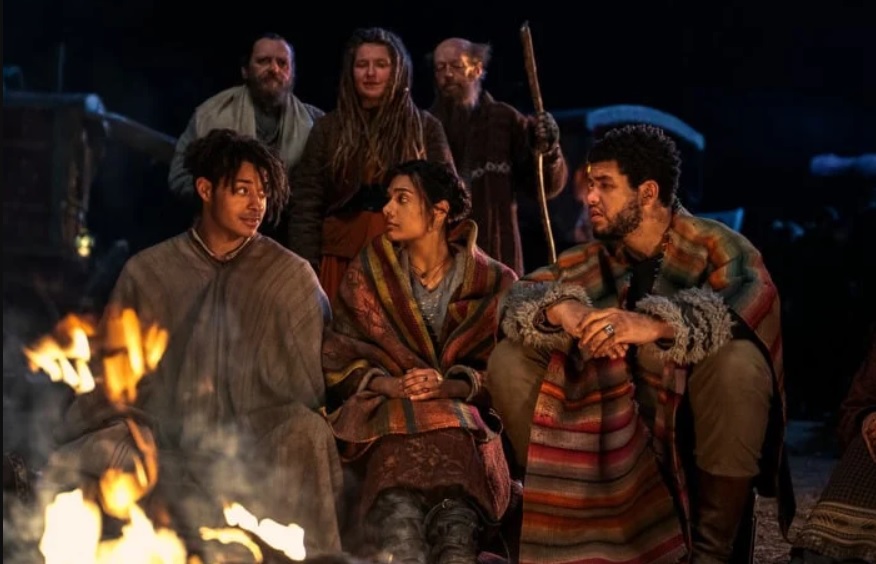
The Wheel of Time is one of the biggest fantasy blockbusters of all time, and I have read and loved the fantasy novels for decades. I was beyond thrilled to see that an adaptation was coming to Prime TV, and now that it’s here, I thought it was worth looking at the show from a Christian worldview perspective. I will have reviews of the series on my other site, Eclectic Theist.
“The Dragon Reborn”
The Way of the Leaf
The Tinkers were one of the (many) highlights of this episode, and their worldview of “The Way of the Leaf” challenged Perrin and Egwene at multiple points. The Way of the Leaf was explained by Ila, a leader among the Tinkers, as a worldview. In response to questions about what they do if they are violently attacked, she described the Way of the Leaf–the leaf must fall to the ground, die, and then it gets absorbed again into the soil to grow again. This is another reference to the way the world works in The Wheel of Time, with reincarnation and “another turn of the Wheel” being part of the basic background of the worldbuilding. But it goes beyond that as well; the Way of the Leaf is a kind of fatalism that is both compelling and off-putting by turns.
On the one hand, the Way of the Leaf is compelling because who doesn’t see the appeal of a truly pacifist world? If, as Ila states, we could each convert two people to that Way, and each of them two, and so on, then the whole world would gradually become more and more peaceful as more sought nonviolence. Indeed, one of the strongest lines of the whole show so far is found when Ila asks Perrin whether he’s been happier or not since he picked up an axe–an especially terrible question since we as viewers are the only others who know what happened when he accidentally killed his wife during the Trolloc attack.
The Way is also off-putting in some ways, though. Intuitively, the objections Perrin and Egwene each raise make sense. What do you do if violence comes for you? It’s small comfort to think that falling over and dying as the leaf does might bring a better world when you’re the one dying. One also wonders if a robust view of sin would go against this thinking. For example, if one sees original sin or depravity in the world, a hopeful Way seems less attainable without the ultimate reconciliation from outside: Christ entering the world and bringing peace through Himself. Another aspect that is off-putting is that the Way of the Leaf doesn’t really offer much hope in the here-and-now. It’s a long-term look at the world that is, yes, hopeful, but also frustratingly vague. Perhaps one day more peace will exist than does now. That seems hollow comfort in a world in which Trollocs are stalking the land. In our own world, I think we all ought to hope for peace, and certainly work for it in every possible instance. However, we also must be realistic in the here and now in that some threats must be confronted.
Christians have offered many different ethical stances, including several which are similar to the Way of the Leaf. I believe that Dietrich Bonhoeffer’s ethics that acknowledge the reality of both peace and violence is a great way forward (see, for example, my look at a book exploring Bonhoeffer’s ethic).
History and Truth-making
Thom continues to be a hugely entertaining character. He also delivers a fairly wise line here: “Nothing is more dangerous than a man who knows the past.” We live in a time in which people are making war against knowing the past. People are trying to outlaw things like teaching about Civil Rights in schools. The connection of nationalism and Christianity is pernicious, and looking to the past of the United States and other countries helps highlight the dangers we face.
Only by acknowledging the past and confronting it in a realistic way–only then can we truly begin to heal and make rational, good changes for all. If people continue to try to run from the past or even insist that it doesn’t get taught, that is an effort in re-making the past that will only make those who know the past even more dangerous. Christians must stand against these efforts to silence calls for justice and righteous examination of the origins of many societal ills.
False Dragons
The Dragon Reborn is a prophecy from of old, and it is clear that many false Dragons have come before the time of this show. This makes for some interesting reflection, because Logain is so well-spoken and even preaches a message of good news, wanting to bind the world rather than to break it. We also must be wary of false Messiahs and false teachers–and of anything that would turn us away from Christ.
Conclusion
I have hugely been enjoying this adaptation of one of my all-time favorite series of books for television. I hope you are, too! Let me know what you think in the comments.
Links
The Wheel of Time– Read all my posts on the series, both the books and the TV show.
Be sure to check out the page for this site on Facebook and Twitter for discussion of posts, links to other pages of interest, random talk about theology/philosophy/apologetics/movies and more!
Book Reviews– There are plenty more book reviews to read! Read like crazy! (Scroll down for more, and click at bottom for even more!)
SDG.
——
The preceding post is the property of J.W. Wartick (apart from quotations, which are the property of their respective owners, and works of art as credited; images are often freely available to the public and J.W. Wartick makes no claims of owning rights to the images unless he makes that explicit) and should not be reproduced in part or in whole without the expressed consent of the author. All content on this site is the property of J.W. Wartick and is made available for individual and personal usage. If you cite from these documents, whether for personal or professional purposes, please give appropriate citation with both the name of the author (J.W. Wartick) and a link to the original URL. If you’d like to repost a post, you may do so, provided you show less than half of the original post on your own site and link to the original post for the rest. You must also appropriately cite the post as noted above. This blog is protected by Creative Commons licensing. By viewing any part of this site, you are agreeing to this usage policy.
Book Review: “The Coming Race Wars: Expanded Edition” by William Pannell
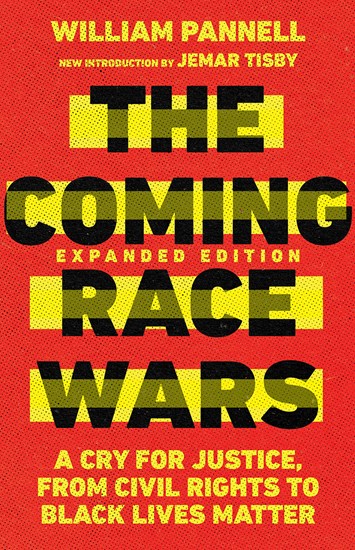
The Coming Race Wars is a work from William Pannell that was originally written after the 1992 Los Angeles Riots. The expanded edition reviewed here is largely the same, but has an extra Afterword that discusses the state of race and the church today.
What is immediately apparent as one reads through the book is how clearly false the narrative is that lumps any criticism of the church or state on race into allegations of bowing to critical race theory or some other bogeyman. Pannell is direct and firm in his critique of the church and its failure related to race relations.
Pannell addresses many of the stereotypes that linger into today, whether it is the notion that simply being a black male is enough to be dangerous or the double standards when it comes to violent acts. The book closes with a brief afterword that notes that the rise of nationalism is just symptomatic of its racist past. He also highlights the problems with economic disparity and political ideology driving segregation of churches and people more generally (171ff).
The Coming Race Wars is a good read for those interested in evangelicalism and race. It can also serve as a stark reminder that the issues of today have often been addressed in the past.
Disclaimer: I was provided with a copy of the book for review by the publisher. I was not required to give any specific kind of feedback whatsoever.
All Links to Amazon are Affiliates links
Links
Be sure to check out the page for this site on Facebook and Twitter for discussion of posts, links to other pages of interest, random talk about theology/philosophy/apologetics/movies and more!
Book Reviews– There are plenty more book reviews to read! Read like crazy! (Scroll down for more, and click at bottom for even more!)
SDG.
——
The preceding post is the property of J.W. Wartick (apart from quotations, which are the property of their respective owners, and works of art as credited; images are often freely available to the public and J.W. Wartick makes no claims of owning rights to the images unless he makes that explicit) and should not be reproduced in part or in whole without the expressed consent of the author. All content on this site is the property of J.W. Wartick and is made available for individual and personal usage. If you cite from these documents, whether for personal or professional purposes, please give appropriate citation with both the name of the author (J.W. Wartick) and a link to the original URL. If you’d like to repost a post, you may do so, provided you show less than half of the original post on your own site and link to the original post for the rest. You must also appropriately cite the post as noted above. This blog is protected by Creative Commons licensing. By viewing any part of this site, you are agreeing to this usage policy.
The Wheel of Time – A Worldview Hub
I’ve written a bunch about the series “The Wheel of Time,” to the point where I realized it was becoming unwieldy trying to inter-link all of them. Here, I present a list of all my links for posts related to The Wheel of Time from a Christian worldview perspective, as well as links to my other site that looks at sci-fi and fantasy books, baseball, TV, and more!
TV Show
“The Wheel of Time” – Episodes 1-3 “Leavetaking,” “Shadow’s Waiting,” and “A Place of Safety” – A Christian review– reincarnation and prophecy highlight the worldview issues in the first three episodes of The Wheel of Time.
Looks at Individual Books
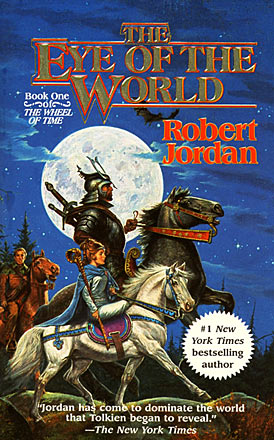
“The Eye of the World” by Robert Jordan– the first book has us asking questions about the cost of evil, men and women, and more as we dive into this fantasy epic.
“The Great Hunt” by Robert Jordan– reincarnation, the destructive attraction of evil, and more questions arise in book 2.
“The Dragon Reborn” by Robert Jordan– we finally get some more background on the Creator, the Dark One, and prophecy in this 3rd book of the Wheel of Time.
“The Shadow Rising” by Robert Jordan– our trust in the security of the state and the allure of evil are found in the 4th book.
“The Fires of Heaven” by Robert Jordan– the notion that power corrupts, questions of sacrifice, and other issues arise in book 5.
“Lord of Chaos” by Robert Jordan– destruction of life, allowing the advance of the shadow, and more are found in this exciting (and massive) 6th book.
“A Crown of Swords” by Robert Jordan– it’s easy to just dismiss evil as easily recognized, but it comes in many forms, as we discover in this 7th book.
“Path of Daggers” by Robert Jordan– systems of power and Ezekiel arise in my look at the 8th book.
“Winter’s Heart” by Robert Jordan– is peace the same as having security? Is security necessary for peace? I highlight Dietrich Bonhoeffer in this look at the 9th book in the series.
“Crossroads of Twilight” by Robert Jordan– some theology of the world, fatalism, and more come up in the 10th book in the series.
“Knife of Dreams” by Robert Jordan– how we act can become our reality, and the question of toxic masculinity arises in this 11th book.
“The Gathering Storm” by Brandon Sanderson and Robert Jordan- A Christian (re)-reads The Wheel of Time– peace, warfare, and action highlight the series as Brandon Sanderson takes over.
Links for First Series
My original series of posts on The Wheel of Time books. I have changed my views from some of these, as can be seen in the more recent posts I linked above.
“The Wheel of Time”: A Christian reflection on Books 1-5 of Robert Jordan’s epic saga–
“Lord of Chaos” – Robert Jordan’s “The Wheel of Time,” Book 6 and Christianity
“A Crown of Swords” and “The Path of Daggers”–
The Wheel of Time “Winter’s Heart” and “Crossroads of Twilight” – A Christian Reflection
The Wheel of Time: “Knife of Dreams” and “The Gathering Storm” – A Christian Perspective
The Wheel of Time “Towers of Midnight” and “A Memory of Light” – Reflection from a Christian
“The Wheel of Time” – Episodes 1-3 “Leavetaking,” “Shadow’s Waiting,” and “A Place of Safety” – A Christian review

The Wheel of Time is one of the biggest fantasy blockbusters of all time, and I have read and loved the fantasy novels for decades. I was beyond thrilled to see that an adaptation was coming to Prime TV, and now that it’s here, I thought it was worth looking at the show from a Christian worldview perspective. I will have reviews of the series on my other site, Eclectic Theist.
Worldview Perspective Review
First, I want to note what I’m doing in these reviews before diving in. I am not planning on this being a review of the content of the show. There’s violence, at least partial nudity, implied sex (possibly more in later episodes, I write this having seen episodes 1-3), and some language. I am not at all interested in the debate of what people should or should not be watching. I’m not interested in debating whether certain shows can or should be watched, nor will I engage in such. Beyond that, I’ll not comment further on content unless I find it especially bothersome.
Instead, these reviews are intended to be used with the assumption the show is being watched, and engaging it from a worldview perspective. What I mean to do, then, is see where the connections–and disconnections–can be made from that view. I will be posting reviews of the episodes, again, on my other site, Eclectic Theist.
“Leavetaking,” “Shadow’s Waiting,” and, “A Place of Safety”
I’m lumping these episodes together because they released the same day and I just sat and watched them all together so separating them in my mind is going to be too difficult. Besides, I suspect many others did the same! So here goes. Obviously, SPOILERS follow.
Reincarnation
Reincarnation is a theme found in the series of novels, and I remember it being somewhat explicit. In the first episode, “Leavetaking,” Rand al’Thor and his father, Tham, discuss a couple times the notion of reincarnation. It’s clearly seen by Tham as a basis for his ethics, as he says that all people can do with this life we have is the best that we can do. The central driver of the plot of the whole series involves the notion of reincarnation, as the prophecy Moiraine Sedai is seeking is the rebirth of the Dragon, the most powerful magical user in history.
Reincarnation is one of the major ways religions worldwide view life after death. Christian theology does not hold to reincarnation, and teaches a linear view of human embodiment: birth, life, death, judgment, afterlife. Obviously, there’s some debate over each of these stages and what is involved/when it might happen, but there doesn’t seem to be space for a cyclical view of time or things like reincarnation there. Not really surprising.
What makes this discussion interesting from The Wheel of Time, though, is how the show played off the ethics built into the system. Ethics for Tham, for example, are constructed because of reincarnation, not in spite of them. You are to do what you can with what you’re given. It’s a kind of fatalistic view of the world which veers away from some kinds of absolute imperatives. I’m wondering if this will be developed more in the series.
Prophecy
Another central theme of the series and these episodes is that of prophecy. Prophecy in The Wheel of Time is often difficult to discern, and we don’t get a lot of explanation in these episodes. Similarly, prophecies found in the Bible have led to much debate among Christians. Prophecy in the show seems ensured through the cyclical view of time. Someone, writing thousands of years ago in a different cycle, could essentially write about current events, and another person could read that and predict that certain major events would occur again, thus making a kind of prophecy. For a Christian worldview, prophecy is not bound to a specific way time works. Rather, it is inspired by God, a kind of direct revelation through mediation.
The Pattern
The series of books makes much of The Pattern–the way time flows, the way it is woven, etc. There are a few mentions of the Pattern so far, but it’s unclear exactly what they mean or how they come into play so far. I’ll be interested to see if the Pattern acts as a kind of way that some vague deity interacts in the world, as hints are found in the books.
War and Peace
A few comments were made about war throughout these episodes discuss war. The Tinkers show up at the end of the third episode, and they’re well known as pacifists from the books. I wonder if they will be again here. Another several comments about the uselessness of war are found here and there throughout. War and peace are major themes in the books, and I suspect we’ll find some of that here, too. Christians look forward to the day when there will be no more war, and all weapons will be beaten into plowshares, as they are no longer needed.
Conclusion
There is plenty more we could discuss from these episodes, and I look forward to reading your own thoughts in the comments below!
Links
The Wheel of Time– Read all my posts on The Wheel of Time (scroll for more).
Be sure to check out the page for this site on Facebook and Twitter for discussion of posts, links to other pages of interest, random talk about theology/philosophy/apologetics/movies and more!
Book Reviews– There are plenty more book reviews to read! Read like crazy! (Scroll down for more, and click at bottom for even more!)
SDG.
——
The preceding post is the property of J.W. Wartick (apart from quotations, which are the property of their respective owners, and works of art as credited; images are often freely available to the public and J.W. Wartick makes no claims of owning rights to the images unless he makes that explicit) and should not be reproduced in part or in whole without the expressed consent of the author. All content on this site is the property of J.W. Wartick and is made available for individual and personal usage. If you cite from these documents, whether for personal or professional purposes, please give appropriate citation with both the name of the author (J.W. Wartick) and a link to the original URL. If you’d like to repost a post, you may do so, provided you show less than half of the original post on your own site and link to the original post for the rest. You must also appropriately cite the post as noted above. This blog is protected by Creative Commons licensing. By viewing any part of this site, you are agreeing to this usage policy.
“The Gathering Storm” by Brandon Sanderson and Robert Jordan- A Christian (re)-reads The Wheel of Time
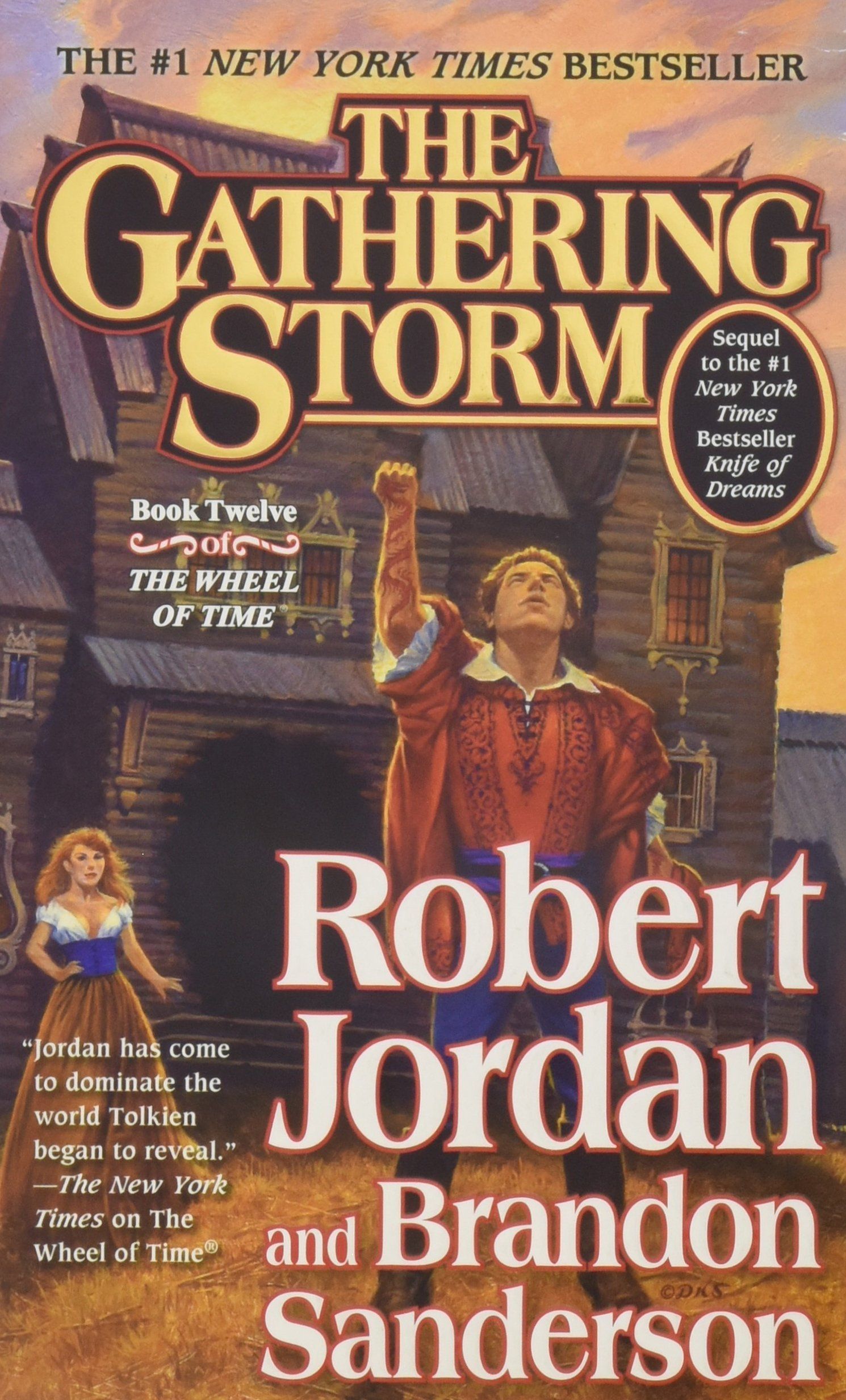
“The Wheel of Time” is a massive fantasy series by Robert Jordan (and, later, Brandon Sanderson) that is being developed into a television show for Amazon Prime. It’s cultural impact is huge, the series having sold more than 44 million copies. Here, I continue my series exploring the books from a Christian worldview perspective. There will be SPOILERS in this post for the series.
The Gathering Storm by Robert Jordan and Brandon Sanderson
The twelfth book in the Wheel of Time, The Gathering Storm is the first that was written by Brandon Sanderson after Robert Jordan’s death. The series is fully in gear here, as Sanderson pushes towards the Last Battle. Almost every scene reads like it adds hugely to the overall plot, and while there is still some filler, it feels more like breathing room in between nearly relentless action scenes rather than all fluff.
Plowshares into Swords?
In The Gathering Storm, we find a dramatic reversal of the biblical theme of coming peace (found in passages like Isaiah 2:4) which speaks of a day when swords will be beaten into plowshares. Instead, the people of the Wheel of Time must prepare for a day of chaos and war:
“take your best scythes and turn them into polearms…” [advises one farmer to another]
“What do I know about making a sword? Or about using a sword, for that matter?” [the other replied]
“You can learn… Everyone will be needed.” [The first responded] (page 8)
The Last Battle is a day in which the nations will unite, but they will unite for war. Contrast that with the biblical theme of coming judgment and peace. Christ will come to bring peace for eternity, and the need for weapons and warfare will be no more.
Fighting Evil from Within
[Huge spoilers here for the series]
I think this book might have my all-time favorite scene in any fantasy novel when we discover that Verin Sedai is, in fact, of the Black Ajah. It has such intensity to it, shows how Verin manipulated even the Dark One, and asks some big moral questions. Verin Sedai’s clever operation within the vows she made as a Black Ajah sister are impressive–in the hour of her death, she could betray the Dark One. Verin delved perhaps a bit too deeply in her explorations of the Black Ajah, getting captured and forced to pledge or die. She took a pragmatic approach from within her beliefs as a Brown sister–one dedicated to learning:
[Verin said:] “You see, one rarely has a chance as this, to study a beast from inside… They [darkfriends] have many agents among us… Well, I thought it time that we had at least one of us among them. This is worth one woman’s life.” (836, 839)
Verin had sworn herself to evil, but did so in order to bring about great good. Her life was forfeit in order to expose wickedness within the ranks of the Aes Sedai. Her sacrifice forestalled a major weapon of the Dark One. The moral quandary of this is largely passed over through this book and the rest of the series. Though Verin acknowledges doing great evil, Egwene and others make her fully into a martyr. Verin’s repentance for the evils she committed isn’t drawn out; instead, it seems to be found in her actions. Her repentance is found in working to expose evil and bring it to justice.
Conclusion
The Gathering Storm is a remarkable entry in the Wheel of Time series. It features one of my all-time favorite scenes in any fantasy novel ever with the revelations regarding Verin Sedai. It has action all the way through, and it sets up even more exciting events to come. I can’t wait to dive in to the next book!
(All Amazon Links are Amazon Affiliates Links.)
Links
The Wheel of Time– Read all my posts on The Wheel of Time (scroll for more).
Be sure to check out the page for this site on Facebook and Twitter for discussion of posts, links to other pages of interest, random talk about theology/philosophy/apologetics/movies and more!
Book Reviews– There are plenty more book reviews to read! Read like crazy! (Scroll down for more, and click at bottom for even more!)
SDG.
——
The preceding post is the property of J.W. Wartick (apart from quotations, which are the property of their respective owners, and works of art as credited; images are often freely available to the public and J.W. Wartick makes no claims of owning rights to the images unless he makes that explicit) and should not be reproduced in part or in whole without the expressed consent of the author. All content on this site is the property of J.W. Wartick and is made available for individual and personal usage. If you cite from these documents, whether for personal or professional purposes, please give appropriate citation with both the name of the author (J.W. Wartick) and a link to the original URL. If you’d like to repost a post, you may do so, provided you show less than half of the original post on your own site and link to the original post for the rest. You must also appropriately cite the post as noted above. This blog is protected by Creative Commons licensing. By viewing any part of this site, you are agreeing to this usage policy.
Book Review: “Does God Exist? A History of Answers to the Question” by W. David Beck
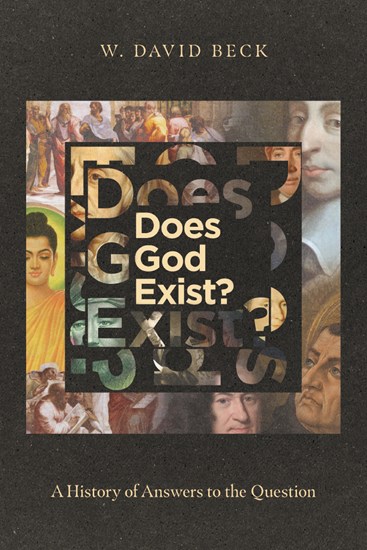
W. David Beck’s Does God Exist? A History of Answers to the Question is a remarkable historical survey of some of the best-known arguments for the existence of God. In a crowded field of books about the existence of God, Beck’s work sets itself apart by providing both an historical survey of the ways these arguments developed and working explanations and analyses of the arguments into today.
The first chapter introduces readers to the origins of theistic arguments, providing a broad background for the rest of the book. After that, the chapters act as a kind of typology of theistic arguments, dividing them into chapters on cosmological arguments, teleological arguments, moral arguments, and ontological arguments, respectively. A final chapter closes the book with a look ahead at the prospects and possibilities for theistic arguments and conclusions based upon the same.
Each chapter on a type of argument traces the argument from its earliest clear example into the modern day. It is important to note that these chapters are necessarily broad and plural. What I mean is that the chapters end with the plural “arguments” rather than “argument” for a reason–each type of theistic argument has numerous ways of presenting the argument and several different proponents and detractors through history and into today. Thus, for example, the cosmological argument can be traced back to the earliest known writings on philosophy both East and West and into today with sophisticated arguments based (in some cases) upon modern cosmology or physics.
I especially enjoyed the chapter on ontological arguments, which are surely the more opaque but hotly debated theistic arguments today. As with every other chapter, Beck doesn’t shy away from showing both theistic and atheistic takes on the argument. He gives the atheist philosopher Graham Oppy quite a bit of space and somewhat amusingly quotes Oppy to the effect of saying ontological arguments may work but it’s difficult to know whether they succeed. That is, due to the amazingly confusing nature of the multifarious questions any ontological argument raises (such as “is existence a property?”), it is possible the arguments work but don’t succeed–they don’t convince people due to the many trails and red herrings they raise. As someone deeply interested in the ontological argument, I found this a great way to end a thoroughly thought-provoking chapter.
Each chapter has its own issues raised. It’s already been mentioned, but bears repeating that Beck includes both theists and atheists in his survey of arguments. Many objections are noted, for example, in a lengthy section on the analysis of Aquinas’s version of a cosmological argument from the philosopher Paul Edwards (1923-2004). Over the course of several pages, Edwards’s objections to cosmological arguments are noted, but Beck also shows how several of these objections fail, even by Edwards’s own admission. Such introduction of modern debates, often featuring back-and-forth discussion edited for succinctness by Beck, make the book highly readable despite often heady subject matter. Again, each section must be brief, so the book provides more of an overview than it does anything in depth, but it’s clear how easily readers could pursue additional reading based on extensive, annotated bibliographies Beck provides section-by-section.
Does God Exist? is a fascinating read, even for readers like myself who are veterans of apologetics training or who have read hundreds of books on the subject. It could easily be used as a springboard for more discussion, as a reference with bibliographical data, or a grab bag of discussion. Beck has provided an invaluable resource to help spur additional discussion, and doesn’t shy away from highlighting powerful objections to theistic arguments even as he concludes it is reasonable and justifiable to believe God exists. Recommended.
Disclaimer: I was provided with a copy of the book for review by the publisher. I was not required to give any specific kind of feedback whatsoever.
All Links to Amazon are Affiliates links
Links
Be sure to check out the page for this site on Facebook and Twitter for discussion of posts, links to other pages of interest, random talk about theology/philosophy/apologetics/movies and more!
Book Reviews– There are plenty more book reviews to read! Read like crazy! (Scroll down for more, and click at bottom for even more!)
SDG.
——
The preceding post is the property of J.W. Wartick (apart from quotations, which are the property of their respective owners, and works of art as credited; images are often freely available to the public and J.W. Wartick makes no claims of owning rights to the images unless he makes that explicit) and should not be reproduced in part or in whole without the expressed consent of the author. All content on this site is the property of J.W. Wartick and is made available for individual and personal usage. If you cite from these documents, whether for personal or professional purposes, please give appropriate citation with both the name of the author (J.W. Wartick) and a link to the original URL. If you’d like to repost a post, you may do so, provided you show less than half of the original post on your own site and link to the original post for the rest. You must also appropriately cite the post as noted above. This blog is protected by Creative Commons licensing. By viewing any part of this site, you are agreeing to this usage policy.
Book Review: ” Letters for the Church: Reading James, 1-2 Peter, 1-3 John, and Jude as Canon” by Darian R. Lockett
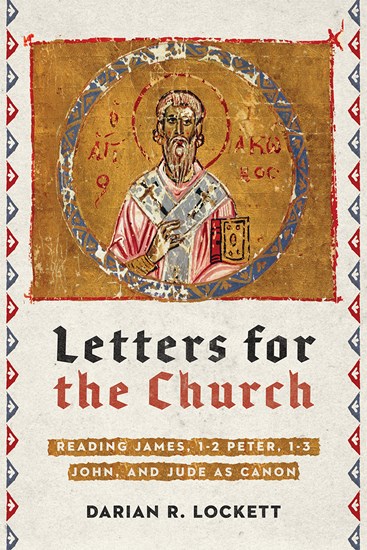
Darian R. Lockett provides an introduction to numerous books of the Bible in Letters for the Church: Reading James, 1-2 Peter, 1-3 John, and Jude as Canon. These books of the Bible are often entirely overlooked or skimmed through simply for the sake of proof texts or quotes, but Lockett makes a case for reading them canonically–that is, set within the whole of Scriptures. To that end, he provides summaries of each book along with discussion of major themes, specific points of instruction and other interest, and more.
Lockett tackles several of the more difficult issues related to these books of the Bible throughout. Authorship is a major question, and he largely presents the evidence for who is thought to have authored the book, what evidence we may have for that, and his own conclusions. Another example of Lockett dealing with a more difficult issue is with Jude’s use of non-canonical works to make points in its own text. Jude clearly uses 1 Enoch in Jude 9, and this raises the question of whether Jude saw 1 Enoch as an authoritative or inspired work. Lockett notes that it has been a thorny issue through much of church history before outlining a few major points. Ultimately, this reader wonders whether the specific interest in whether Jude lends to making 1 Enoch inspired or canonical is a kind of anachronistic concern with reading over our ideas onto the text. Lockett’s own analysis could yield that, as he notes that what we can ultimately say is that 1 Enoch was “an important part of [the author of Jude’s] argument and [that author] does not distinguish it from other prophetic texts from the Old Testament–beyond this we can only speculate” (205).
Lockett also doesn’t shy from some of the more hotly debated texts within the books he’s writing about. For example, the question of wives submitting to husbands in 1 Peter 3 is discussed at some length (77-80). Lockett notes the context regarding doing so for the sake of Christ, and ultimately aims at the notion that such submission could potentially win non-Christian spouses over, which makes more sense of other parts of the book as well. Reading 1 Peter 3 as an intentional way to tell all wives to submit to all husbands in all circumstances, as is often done, is therefore a mistaken reading of the text.
Letters for the Church is a strong introduction to numerous books of the Bible that are often skimmed over. No matter where readers come from theologically, it is an enlightening, challenging read. Recommended.
Disclaimer: I was provided with a copy of the book for review by the publisher. I was not required to give any specific kind of feedback whatsoever.
All Links to Amazon are Affiliates links
Links
Be sure to check out the page for this site on Facebook and Twitter for discussion of posts, links to other pages of interest, random talk about theology/philosophy/apologetics/movies and more!
Book Reviews– There are plenty more book reviews to read! Read like crazy! (Scroll down for more, and click at bottom for even more!)
SDG.
——
The preceding post is the property of J.W. Wartick (apart from quotations, which are the property of their respective owners, and works of art as credited; images are often freely available to the public and J.W. Wartick makes no claims of owning rights to the images unless he makes that explicit) and should not be reproduced in part or in whole without the expressed consent of the author. All content on this site is the property of J.W. Wartick and is made available for individual and personal usage. If you cite from these documents, whether for personal or professional purposes, please give appropriate citation with both the name of the author (J.W. Wartick) and a link to the original URL. If you’d like to repost a post, you may do so, provided you show less than half of the original post on your own site and link to the original post for the rest. You must also appropriately cite the post as noted above. This blog is protected by Creative Commons licensing. By viewing any part of this site, you are agreeing to this usage policy.
“Knife of Dreams” by Robert Jordan- a Christian (re)Reads “A Wheel of Time”
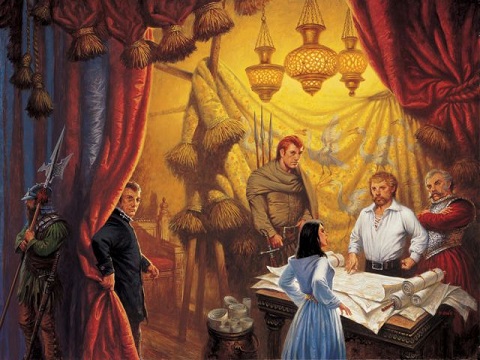
“The Wheel of Time” is a massive fantasy series by Robert Jordan (and, later, Brandon Sanderson) that is being developed into a television show for Amazon Prime. It’s cultural impact is huge, the series having sold more than 44 million copies. Here, I continue my series exploring the books from a Christian worldview perspective. There will be SPOILERS in this post for the series.
Knife of Dreams by Robert Jordan
Action Becomes Reality
In Knife of Dreams, Faile and her companions are being held captive by the Shaido Aiel. In the process, they are forced into servitude and beaten at the whims of their overlords. Faile soon realized the best strategy would be to fain timidity, but also realized the dangers of this:
“[Faile] hoped that Sevanna [one of the Aiel] thought her tamed… She hoped that she was not being tamed. Pretend something too long, and it could become truth… She had to escape before [her husband] got himself killed in the attempt [to rescue her]. Before she stopped pretending.” (167)
Blaise Pascal, after outlining his famous wager (which I defend here), noted that one may align oneself towards belief. That is, when someone begins to act as though one believes a certain way, it can turn into a reality that one believes a certain way. From a worldview perspective, then, we should always be wary of how we live our lives and what we surround ourselves with. However, it is possible to become over-zealous in this regard. After all, Faile herself knew that she wasn’t “tamed” in any way, merely acting the part. In a way, the reluctance or even opposition to role-playing games (eg. Dungeons & Dragons) or other forms of imaginative play in some Christian circles is ignorance of the human capacity for objectivity. We are capable of discerning reality from pretend, and to claim it is inherently dangerous to do the latter is to lose some of what it means to be human–to be image bearers of God by creating anew.
Toxic Masculinity
It finally clicked for me as I was listening to the early parts of this novel that the Children of the Light are, in many ways, an analogue for toxic masculinity. I don’t know if this was intentional on Jordan’s part, so don’t read intent into what I’m saying here. But what is clear is the many parallels. The Children’s extreme dislike of the Aes Sedai bleeds over into distrust of women generally. But more than that, the reasons for their distrust of Aes Sedai ultimately can be peeled away as little more than a thin veneer of misogyny. After all, they have to admit the Aes Sedai will be on the “right side” when it comes to the Last Battle, and even admitting that is nearly impossible. Why? Because it seems as though women are rising above their “place” or the limits of power that the male-dominated Children of the Light seem to think they should have. I’m honestly kind of embarrassed I didn’t notice this thematically before.
The name of the group can easily be read as a not-so-subtle riff on New Testament language referring to followers of Christ (1 Thessalonians 5:5). Unfortunately, too many Christians have bought into cultural disdain for women, whether in the earliest days of the church as Gnosticism and Greek philosophy bled into the early church’s writings about women or into today as Christian leaders continue to be at the forefront of saying women ought not to preach, despite the Bible itself saying both sons and daughters will prophesy (Joel 2:28/Acts 2:17). Too often, overzealousness like that of the Children of the Light leads to oppression.
Conclusion
Knife of Dreams is one of my favorite books in the series. In many ways, it is a major turning point not just as the series gets turned over to Brandon Sanderson after Robert Jordan’s death, but also because the plot is turned at last towards the Last Battle and the events that will bring all of the series into completion.
(All Amazon Links are Amazon Affiliates Links.)
Links
The Wheel of Time– Read all my posts on The Wheel of Time (scroll for more).
Be sure to check out the page for this site on Facebook and Twitter for discussion of posts, links to other pages of interest, random talk about theology/philosophy/apologetics/movies and more!
Book Reviews– There are plenty more book reviews to read! Read like crazy! (Scroll down for more, and click at bottom for even more!)
SDG.
——
The preceding post is the property of J.W. Wartick (apart from quotations, which are the property of their respective owners, and works of art as credited; images are often freely available to the public and J.W. Wartick makes no claims of owning rights to the images unless he makes that explicit) and should not be reproduced in part or in whole without the expressed consent of the author. All content on this site is the property of J.W. Wartick and is made available for individual and personal usage. If you cite from these documents, whether for personal or professional purposes, please give appropriate citation with both the name of the author (J.W. Wartick) and a link to the original URL. If you’d like to repost a post, you may do so, provided you show less than half of the original post on your own site and link to the original post for the rest. You must also appropriately cite the post as noted above. This blog is protected by Creative Commons licensing. By viewing any part of this site, you are agreeing to this usage policy.
Book Review: “Spiritual Practices of Jesus: Learning Simplicity, Humility, and Prayer with Luke’s Earliest Readers” by Catherine J. Wright
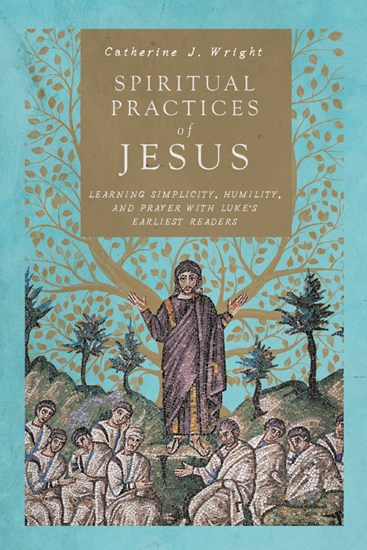
It is rare to read a book that is not just insightful, but also formative and challenging. Catherine J. Wright’s Spiritual Practices of Jesus: Learning Simplicity, Humility, and Prayer with Luke’s Earliest Readers is one such book. Each part of the subtitle is deeply important to the contents of the book. Wright introduces readers to a number of early readers of the Gospel of Luke and provides their insights into how to read the texts. These insights often challenge modern readings and spiritualization of the text.
Each section–on Simplicity, Humility, and Prayer–features a chapter that highlights how the early church read the Gospel of Luke on these issues. That means readers will see how Augustine, Chrysostom, and many others read Luke on questions related to those topics. It’s deeply important to read about that, because those early readers have a different cultural context than we do. Their readings can therefore offer correctives that highlight the importance of the texts in ways that we may not think of otherwise.
The sections start with a chapter in which Wright goes through Luke highlighting where verses or stories reflect the theme at hand. For example, in the section on simplicity, Wright shows how frequently Jesus speaks about giving to the poor and highlights the plight of the poor and the difficulties and sinfulness in wealth. Pairing this with the second chapter in the section on how the early church read these verses shows how many modern readings that try to spiritualize these texts do not align with both the earliest readings and probably the intended meaning of the text. A second chapter in each section highlights the first-century context of the passages and how understanding the challenges of that time can lead to correcting our readings of the text as well.
Some of the content with simplicity has been highlighted, but each section has numerous parts worth interacting with. Whether it’s the challenge to live humble lives or how to read Jesus’s prayers and pray ourselves, Wright constantly brings applicable insights to the table throughout the book.
Wright’s Spiritual Practices of Jesus is a phenomenal read that could even change how readers live their lives. By reading the early church on Jesus, readers are exposed to challenges to our own culture that can cause use to rethink our reading of the text and the ways we live. Highly recommended.
Disclaimer: I was provided with a copy of the book for review by the publisher. I was not required to give any specific kind of feedback whatsoever.
All Links to Amazon are Affiliates links
Links
Be sure to check out the page for this site on Facebook and Twitter for discussion of posts, links to other pages of interest, random talk about theology/philosophy/apologetics/movies and more!
Book Reviews– There are plenty more book reviews to read! Read like crazy! (Scroll down for more, and click at bottom for even more!)
SDG.
——
The preceding post is the property of J.W. Wartick (apart from quotations, which are the property of their respective owners, and works of art as credited; images are often freely available to the public and J.W. Wartick makes no claims of owning rights to the images unless he makes that explicit) and should not be reproduced in part or in whole without the expressed consent of the author. All content on this site is the property of J.W. Wartick and is made available for individual and personal usage. If you cite from these documents, whether for personal or professional purposes, please give appropriate citation with both the name of the author (J.W. Wartick) and a link to the original URL. If you’d like to repost a post, you may do so, provided you show less than half of the original post on your own site and link to the original post for the rest. You must also appropriately cite the post as noted above. This blog is protected by Creative Commons licensing. By viewing any part of this site, you are agreeing to this usage policy.
Book Review: “Majority World Theology: Christian Doctrine in Global Context”

Christianity is a global religion, yet many discussions of theology are dominated by American or European voices. In Majority World Theology: Christian Doctrine in Global Context, the editors Gene L. Green, Stephen T. Pardue, and K. K. Yeo seek to provide a partial remedy to this problem.
The Majority World is sometimes called the Global South. It’s the part of Earth in which the majority of humans reside and includes Africa, Asia, and Latin America, among other places. The editors have focused on giving theologians from these places voices addressing several major topics in theology. The book is organized around six parts with multiple essays in each part. These parts are: The Trinity Among the Nations: The Doctrine of God in the Majority World, Jesus Without Borders: Christology in the Majority World, The Spirit Over the Earth: Pneumatology in the Majority World, So Great a Salvation: Soteriology in the Majority World, The Church from Every Tribe and Tongue: Ecclesiology in the Majority World, and All Things New: Eschatology in the Majority World.
The essays are each of interest. This reader read the book front-to-back, but it is clear that it could be read in parts, used for classes with individual essays, or in any number of other ways. One thing that readers ought to keep in mind is that each of these essays is just that–a single essay introducing one perspective on a huge topic. Thus, for example, the fascinating essay “The Trinity in Africa: Trends and Trajectories” by Samuel Waje Kunhiyop shows readers some ways in which African theologians are exploring the doctrine of the Trinity. Readers should not come away thinking that these are the only trends or that all African theologians are thinking along these lines. That said, Kunhiyop brings readers to engage with numerous lines of African theology. Each of the essays included in this collection is like that: it provides a way forward for additional exploration.
One example of an essay that provides many avenues for additional reading is “Asian Reformulations of the Trinity: An Evaluation” by Natee Tanchanpongs. Tanchanpongs Highlights several Asian theologians and the way they have discussed or reformulated the doctrine of the Trinity within their own contexts. It’s a fascinating read and one that allows Tanchanpongs to analyze numerous ways to take the Trinity in exploratory theology.
Majority World Theology is an excellent introduction to global theology. Readers can treat it as a reference book, read it front-to-back, or sample as they see fit. Most importantly, readers will be exposed to global perspectives on Christianity that they otherwise may not have ever experienced.
Disclaimer: I was provided with a copy of the book for review by the publisher. I was not required to give any specific kind of feedback whatsoever.
All Links to Amazon are Affiliates links
Links
Be sure to check out the page for this site on Facebook and Twitter for discussion of posts, links to other pages of interest, random talk about theology/philosophy/apologetics/movies and more!
Book Reviews– There are plenty more book reviews to read! Read like crazy! (Scroll down for more, and click at bottom for even more!)
SDG.
——
The preceding post is the property of J.W. Wartick (apart from quotations, which are the property of their respective owners, and works of art as credited; images are often freely available to the public and J.W. Wartick makes no claims of owning rights to the images unless he makes that explicit) and should not be reproduced in part or in whole without the expressed consent of the author. All content on this site is the property of J.W. Wartick and is made available for individual and personal usage. If you cite from these documents, whether for personal or professional purposes, please give appropriate citation with both the name of the author (J.W. Wartick) and a link to the original URL. If you’d like to repost a post, you may do so, provided you show less than half of the original post on your own site and link to the original post for the rest. You must also appropriately cite the post as noted above. This blog is protected by Creative Commons licensing. By viewing any part of this site, you are agreeing to this usage policy.

 J.W. Wartick - Reconstructing Faith