J.W. Wartick
Finding Humor and Delight in Reading Dietrich Bonhoeffer
 I was reading Dietrich Bonhoeffer: Conspiracy and Imprisonment 1940-1945 and came upon, again, a moment that gave startling insight into Bonhoeffer’s character. It also raised questions. The passage was from a letter he wrote to his dear friend, Eberhard Bethge on Jaunaury 25, 1941:
The Schiller film [a reference to Friedrich Schiller, directed by Herbert Maisch (1940)] that I recently saw, was terrible: pathetic, clichéd, phony, unreal, unhistorical, badly acted, kitsch! Go see it yourself. [DBWE16:128]
I laughed out loud reading this passage. After a string of invective against this film (about which I know nothing), Bonhoeffer tells his friend to “Go see it yourself.” It made me sit back and wonder–why is it that Bonhoeffer thinks the film is still worth seeing? He doesn’t explain further; merely writes “This is the way I imagined Schiller as a junior in high school” (ibid). But it’s clear something about it struck him as an aspect of the film that his friend would enjoy. It’s a private, shared moment that we as readers get insight into.
It also made me think of how much humor and delight–and speculation!–there is in reading the collected works of Dietrich Bonhoeffer. Moments like this are found in abundance. They’re insights into private, shared ideas, funny asides, and stirring insights that can be appreciated more the more one reads Bonhoeffer (and about him). Another example that has had long term impact on me is the realization that Bonhoeffer was dedicated to reading the Moravian Daily Texts and discussing them. This is an insight that I came upon reading Laura Fabrycky’s excellent Keys to Bonhoeffer’s Haus (my review here).
But only by reading these lengthy volumes in detail will one stumble upon these wonderful morsels of wisdom, humor, and delight. Readers will also come upon so many more questions, like the one I mentioned above–why does Bonhoeffer want his friend to watch a movie he clearly hated? But it is this kind of thing that spurs scholarship, and indeed curiosity, forward.
So let me encourage you–if you’re interested in Dietrich Bonhoeffer, go get the collected works. Pick a volume that strikes your interest, pore over its text and notes, and join me in a journey of delight, humor, questions, and insights.
Links
Dietrich Bonhoeffer– read all my posts related to Bonhoeffer and his theology.
Be sure to check out the page for this site on Facebook and Twitter for discussion of posts, links to other pages of interest, random talk about theology/philosophy/apologetics/movies and more!
SDG.
——
The preceding post is the property of J.W. Wartick (apart from quotations, which are the property of their respective owners, and works of art as credited; images are often freely available to the public and J.W. Wartick makes no claims of owning rights to the images unless he makes that explicit) and should not be reproduced in part or in whole without the expressed consent of the author. All content on this site is the property of J.W. Wartick and is made available for individual and personal usage. If you cite from these documents, whether for personal or professional purposes, please give appropriate citation with both the name of the author (J.W. Wartick) and a link to the original URL. If you’d like to repost a post, you may do so, provided you show less than half of the original post on your own site and link to the original post for the rest. You must also appropriately cite the post as noted above. This blog is protected by Creative Commons licensing. By viewing any part of this site, you are agreeing to this usage policy.
Ravi Zacharias and Problems with Apologetics
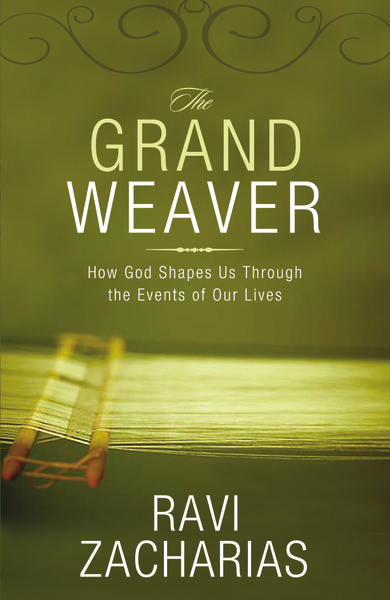
Ravi Zacharias was one of my early introductions to Christian apologetics. He was formative in how I approached some ideas, and his way of turning a phrase still sticks in my mind. Ravi Zacharias was also a fraud and a repeat sexual abuser. Christians need to deal with this. Apologists like me need to with this. We need to do it in a way that does not excuse but rather acknowledges this and works to ensure systems are in place to prevent it from happening in the future.
Early on, I was a bit off put by some of his examples. I cannot recall the exact book–it may have been Jesus Among Other Gods–but he used a story of a man propositioning a woman who sat next to him on a flight for a large sum of money. Eventually he admits he doesn’t have a lot of money, and the woman, horrified, asks what kind of woman he thinks she is. He cynically responds that she already established that by accepting his larger offer. It’s an off color story, but one that targeted women in a way that made me pretty uncomfortable. I wish I’d paid more attention then. I continued to buy and read his books until I started to move on to more intensive apologetics training and hone in on topics that moved beyond what he wrote about.
It came out some years ago that Ravi Zacharias inflated his credentials. There’s not really any way around this. He claimed to be a professor at Oxford. He claimed to be a visiting scholar at Cambridge University. These and several other claims which were false and admitted in writing to be false by him at various points demonstrated a clear and substantial case that he had inflated his credentials on purpose to lend himself credibility. This was enough for me at the time to immediately stop citing and recommending his works. I didn’t do enough. I should have done more to warn others about the problems then, because even this was a severe problem for someone at the front lines of apologetics–defending the truth while deceiving.
More recently, severe allegations of sexual misconduct and abuse were leveled against Ravi Zacharias. And, in the last few weeks, the independent firm hired by Ravi Zacharias International Ministries to investigate these claims confirmed that they are, in fact, credible. It was more than once, a pattern of planned and sustained abuse across multiple victims. It’s horrifying and unimaginable the damage that Zacharias did. It must be condemned in the strongest of terms, and it must lead to broad change across apologetics organizations and individuals.
There are some things Christians can and even must do to in order to prevent things like this happening again. Unfortunately, too few Christians and especially apologists are stepping up to do so. I remember being told time and again when I was taking graduate level courses on apologetics that “the Gospel is offensive enough.” The point was that, as Paul wrote, the Cross seems like foolishness to those who don’t believe. It’s enough for apologists to contend for the faith. To put up additional barriers, like backing unconditionally those celebrity Christians accused of wrongdoing, is to make the Gospel offensive. By our works we will be known, and too many Christians and even–perhaps at times especially–apologists have sullied the name of Christ with covering wrongdoing and siding with the oppressor, the abuser, and the wealthy over the oppressed, those harmed, and the needy.
The first thing Christian apologetics organizations must do is have outside accountability. I do not know all the details of Ravi Zacharias International Ministries, but from those who have spoken out, it sounds as though there was very little accountability within the organization. Christians must do things openly and with all willingness to show accountability, paper trails, and willingness to change when needed.
A second thing that can be done is to stop lionizing individual apologists. Too many Christian apologists make their name into a selling point. I have long observed and tried to focus efforts into encouraging apologists to work to be experts in a few select areas and rely upon each other when other issues come up. This helps avoid the pressure to “know everything,” to inflate credentials, and perhaps most importantly, to make apologists into celebrities. When we decide that a single name–like Ravi Zacharias–is worth hitching our wagons to, it becomes much more difficult psychologically to acknowledge any possibility of that name being wrong. I’ve seen it with other apologists as well. Too often, we apologists are willing to defend the person and even the errors of that person because of their name, whether it’s Christological errors, inflating credentials, or even, horrifyingly, abuse. I use my name on my blog, and I have to confess it was in part because of my own aspirations to be one of those names. I hope that my efforts in the past few years to reconstruct my faith have shown that is not my goal going forward.
Third, we need to listen to those outside our circles. I am in a lot of apologetics groups, and I often see the same topic over and over again with the same people and web sites cited. When someone comes along with an outside voice, our tendency is to circle the wagons and shout them down rather than listen to and acknowledge their concerns. This applies to arguments related to the existence of God, but it also applies to broader theological topics, ethics, and, unfortunately, to covering up mistakes made. The latter easily turns into being willing to be apologists for abusers. We cannot let that happen. It must never happen.
Finally, we need to act swiftly and decisively in the face of credible accusations. It’s easy to appeal to court language like “innocent until proven guilty,” but that is not how the body of Christ ought to work. We need to work to protect victims as quickly as possible and speak up for those who are silenced. This is a fine line, and one that I myself am still figuring out, but we are far, far too often on the wrong side of this line. We, again, circle the wagons rather than listening to critique of someone we have lionized. We need to stop. I stated above that I stopped citing Ravi after I came upon evidence he had inflated his credentials. This evidence was put forward by an atheist, and simply because of that too many Christians dismissed it and my own concerns. A better approach would be to investigate and act upon that evidence. Going alongside this, with Zacharias specifically, we ought to immediately stop citing his works, using his examples, sharing any videos of him, or recommending him in any way whatsoever. To do so damages our witness going forward.
I hope this post will be taken to heart and start some discussion. We need to change. As Christians, and as apologists, we need to change.
SDG.
Links
What’s Wrong with Apologetics? – I ask questions and offer answers regarding what I believe is wrong with apologetics generally.
——
The preceding post is the property of J.W. Wartick (apart from quotations, which are the property of their respective owners, and works of art as credited; images are often freely available to the public and J.W. Wartick makes no claims of owning rights to the images unless he makes that explicit) and should not be reproduced in part or in whole without the expressed consent of the author. All content on this site is the property of J.W. Wartick and is made available for individual and personal usage. If you cite from these documents, whether for personal or professional purposes, please give appropriate citation with both the name of the author (J.W. Wartick) and a link to the original URL. If you’d like to repost a post, you may do so, provided you show less than half of the original post on your own site and link to the original post for the rest. You must also appropriately cite the post as noted above. This blog is protected by Creative Commons licensing. By viewing any part of this site, you are agreeing to this usage policy.
Book Review: “Reimagining Apologetics: The Beauty of Faith in a Secular Age” by Justin Ariel Bailey

Reimagining Apologetics: The Beauty of Faith in a Secular Age is not the book I expected it to be. When I saw the title, I expected the book to be a kind of ground rules work for reinventing the wheel with apologetics and seeing arguments and the like in new ways. Instead, Justin Ariel Bailey seeks with the book to re-imagine apologetics. That is, he’s seeking to re-enchant apologetics with the human imagination and capture minds for Christ.
The first part of the book discusses apologetics and the imagination. Bailey notes the alleged crisis of doubt in an increasingly secular England alongside the “authenticity” demanded by Schleiermacher’s vision of Christianity. These chapters are very strong and provide enormous insight into the problems contemporary apologetics has in reaching people. Primarily, Bailey notes that this is due to a problem with enchantment, failing the imagination, and not providing a robust way to engage people beyond mere argumentation.
The second part of the book outlines models for reimagining apologetics through George MacDonald and Marilynne Robinson. These two thinkers have been hugely influential, and Bailey argues that they offer a different way of doing apologetics by capturing the imagination instead of having specific argumentation.
I do wish that Bailey had included some more examples in the models for re-imagining apologetics. Or, failing that, perhaps examples that haven’t been used as frequently in the literature. George MacDonald and Marilynne Robinson serve as fine examples for using the imagination in apologetics, but they’ve also received quite a bit of attention. It would be interesting to see a book like this explore, for example, the strands of faith found in the wildly imaginative worlds of someone like Gene Wolfe. I’m not saying that specifically we need Wolfe or anyone else, but it would be helpful to have explorations of figures whom we may not have seen as frequently in apologetics literature. That said, Bailey’s examination of the two he chose as emblematic for his project is insightful and robust.
Reimagining Apologetics seeks to encourage readers to think of apologetics in ways that may win people for Christ in ways that don’t conform to what is usually thought of as “apologetics” today. Part of that means a return to the way apologetics was done in the past. Another part means reimagining the future of apologetics–a future in which we use both heart and mind to conform others and ourselves to Christ. Recommended.
(All Amazon links are associates.)
Disclaimer: I was provided with a copy of the book for review by the publisher. I was not required to give any specific kind of feedback whatsoever.
Links
Be sure to check out the page for this site on Facebook and Twitter for discussion of posts, links to other pages of interest, random talk about theology/philosophy/apologetics/movies and more!
Book Reviews– There are plenty more book reviews to read! Read like crazy! (Scroll down for more, and click at bottom for even more!)
SDG.
——
The preceding post is the property of J.W. Wartick (apart from quotations, which are the property of their respective owners, and works of art as credited; images are often freely available to the public and J.W. Wartick makes no claims of owning rights to the images unless he makes that explicit) and should not be reproduced in part or in whole without the expressed consent of the author. All content on this site is the property of J.W. Wartick and is made available for individual and personal usage. If you cite from these documents, whether for personal or professional purposes, please give appropriate citation with both the name of the author (J.W. Wartick) and a link to the original URL. If you’d like to repost a post, you may do so, provided you show less than half of the original post on your own site and link to the original post for the rest. You must also appropriately cite the post as noted above. This blog is protected by Creative Commons licensing. By viewing any part of this site, you are agreeing to this usage policy.
“Winter’s Heart” by Robert Jordan- A Christian (re)reads The Wheel of Time

“The Wheel of Time” is a massive fantasy series by Robert Jordan (and, later, Brandon Sanderson) that is being developed into a television show for Amazon Prime. It’s cultural impact is huge, the series having sold more than 44 million copies. Here, I continue my series exploring the books from a Christian worldview perspective. There will be SPOILERS in this post for the series.
I’m reading this novel for the third time, and this time I listened to it. It’s amazing to me to see how differently I approach different issues it raises 5 years after I first wrote about it on this blog, and nearly 15 years since I first read the book. For one thing, I remember friends at the time I first read it saying it was a rather tedious read. But I have quite enjoyed the novel the three times I read it. But this third time did highlight some of the problems with Jordan’s later books in the series. There’s so much fluff in this novel. It could have been edited down to be about half the length and still gotten all the major points across. I don’t know if this is a result of me reading much more speculative fiction since even 5 years ago or what, but I just noticed some of the problems more than I did the first and second go-rounds.
Another difference is in myself, and that is explored more thoroughly below, in the section titled “Peace and Security?” It is fascinating to me that my own growth as a person can be measured against my reaction over time to this fantasy series. The intense strength of the imagination on formation should not be underplayed.
Self-Image
The concept of self looms large throughout the whole series, but perhaps especially so in Winter’s Heart. Whether it’s Rand still making sense of his own powers and authority as the Dragon Reborn or the women who are in love with him trying to navigate their own feelings about him and each other–the notion of self is critical throughout the novel. But self-image is part of this, too. Characters throughout the book are obsessed with how others view them. did their demeanor give something away? Did they dress properly? Or, “No, I won’t be dressing that way.”
Is this obsession with self-image a product of Jordan’s fluffing the novel and including so many additional details? I’m not sure, but it was something that stuck with me.
Peace and Security?
When I wrote about Winter’s Heart on this blog last time, I centered in on the situation in Far Madding, where weapons were highly restricted from being carried around openly. I noted the following passage:
“No need for any man to defend himself in Far Madding… The Street Guards take care of that. Let any man as wants start carrying a sword, and soon we’d be as bad as everyplace else…” (538)
I focused, as Jordan seemed to, on the fact that violence still continued wherever the guards were not. The implication, though I didn’t spell it out, is that Far Madding is foolish to prevent people from bringing weapons of all sorts into their city. It didn’t prevent violence, after all!
But now, looking back on what I wrote, and thinking about Christian responses to violence, I think that I, like Jordan and the naysayers of Far Madding and controls on weapons, confused Peace with Security. Dietrich Bonhoeffer, a German Lutheran pastor who was killed by the Nazis, wrote about the fact that “Peace must be Dared.” He wrote:
There is no way to peace along the way of safety. For peace must be dared. It is the great venture. It can never be made safe. Peace is the opposite of security. To demand guarantees is to mistrust, and this mistrust in turn brings forth war.
(DBWE 13, 308-309)
Placing trust in weapons and feeling secure means that we have essentially traded security for peace. Instead of peace, we have sought safety. Peace means daring to thwart war by daring the great venture–calling peace down on our neighbors.
Conclusion
Winter’s Heart is maybe the “fluffiest” entry in the series so far, with plenty of length conversations and descriptions of clothes and locales to make it feel bloated. That said, readers who enjoy verbose descriptions of a fantasy setting we’ve grown to love–and if you’ve come this far, I hope you love The Wheel of Time–will glean quite a bit to love from this novel. Those most interested in worldview and the main plot will have to wade through quite a bit to get there, but Jordan’s series remains thoughtful and compelling.
(All Amazon Links are Amazon Affiliates Links.)
Links
The Wheel of Time– Read all my posts on The Wheel of Time (scroll for more).
Be sure to check out the page for this site on Facebook and Twitter for discussion of posts, links to other pages of interest, random talk about theology/philosophy/apologetics/movies and more!
Book Reviews– There are plenty more book reviews to read! Read like crazy! (Scroll down for more, and click at bottom for even more!)
SDG.
——
The preceding post is the property of J.W. Wartick (apart from quotations, which are the property of their respective owners, and works of art as credited; images are often freely available to the public and J.W. Wartick makes no claims of owning rights to the images unless he makes that explicit) and should not be reproduced in part or in whole without the expressed consent of the author. All content on this site is the property of J.W. Wartick and is made available for individual and personal usage. If you cite from these documents, whether for personal or professional purposes, please give appropriate citation with both the name of the author (J.W. Wartick) and a link to the original URL. If you’d like to repost a post, you may do so, provided you show less than half of the original post on your own site and link to the original post for the rest. You must also appropriately cite the post as noted above. This blog is protected by Creative Commons licensing. By viewing any part of this site, you are agreeing to this usage policy.
Book Review: “Rebels and Exiles: A Biblical Theology of Sin and Restoration” by Matthew S. Harmon

The theme of rebellion against God and being exiled from God’s presence or the land looms large throughout the Bible. In Rebels and Exiles: A Biblical Theology of Sin and Restoration by Matthew S. Harmon introduces that theme, traces it throughout the Bible, and directs readers to a deeper understanding of Scripture.
The book is part of the series “Essential Studies in Biblical Theology” which is intended to show the “fundamental or ‘essential’ broad themes of the grand story line of the Bible” (ix). This book clearly meets that pattern, as Harmon shows the theme of exile and rebellion–and the possibility of restoration–throughout the Bible from the fall through Israel and into the life of the church. The introductory chapter, “Sin and Exile in Contemporary Experience” sets the stage as it shows that these themes can still resonate with people today.
The book, while short, provides an expansive look at the titular theme. Harmon first shows the theme in humanity’s rebellion in the Garden of Eden, then shows how the threat of exile was given to Israel through God’s word. Then, it turns to the reality of exile when Israel rebels (chapter 3) and the return from exile through repentance (chapter 4). Jesus’s life and ministry show the inauguration of a new era in which exile is ended through the restoration of Jesus’s life, death, resurrection, and ascension (chapters 5-6). Harmon then touches on how we are to live “as exiles in a Fallen World” (chapter 7) and the end of exile in the New Creation (chapter 8). Finally, Harmon turns to practical implications of the whole study (chapter 9) and provides recommendations on further reading.
Rebels and Exiles is a good introduction to a complex, deep topic found throughout Scripture. Harmon provides the basic outlines and major strands of the theme while pointing readers in directions to do further reading. Recommended.
(All Amazon links are associates.)
Disclaimer: I was provided with a copy of the book for review by the publisher. I was not required to give any specific kind of feedback whatsoever.
Links
Be sure to check out the page for this site on Facebook and Twitter for discussion of posts, links to other pages of interest, random talk about theology/philosophy/apologetics/movies and more!
Book Reviews– There are plenty more book reviews to read! Read like crazy! (Scroll down for more, and click at bottom for even more!)
SDG.
——
The preceding post is the property of J.W. Wartick (apart from quotations, which are the property of their respective owners, and works of art as credited; images are often freely available to the public and J.W. Wartick makes no claims of owning rights to the images unless he makes that explicit) and should not be reproduced in part or in whole without the expressed consent of the author. All content on this site is the property of J.W. Wartick and is made available for individual and personal usage. If you cite from these documents, whether for personal or professional purposes, please give appropriate citation with both the name of the author (J.W. Wartick) and a link to the original URL. If you’d like to repost a post, you may do so, provided you show less than half of the original post on your own site and link to the original post for the rest. You must also appropriately cite the post as noted above. This blog is protected by Creative Commons licensing. By viewing any part of this site, you are agreeing to this usage policy.
Androids overthrow their god- “Tower of Glass” by Robert Silverberg
 The best fiction makes us think about the real world in new and challenging ways. Robert Silverberg’s Tower of Glass is one book that has made me think quite a bit. Silverberg is one of the greats of New Wave science fiction that had its heyday in the 1960s and 1970s. In Tower of Glass, originally published in 1970, Silverberg offers up a plot that has echoes of the Tower of Babel, as well as Christian theology and other questions being raised. There will be SPOILERS in what follows. There are sexually explicit scenes in the novel.
The core of Tower of Glass‘s plot is that an alleged alien communication has been received on Earth and the wealthiest man in the world is trying to build an immense tower that will allow him to communicate via tachyons with these purported aliens. The man, Krug, was made wealthy by his inventions, the androids. The androids are separated in a kind of caste system by their abilities. They’re not robots, because they’re made of organic material, but they’re effectively a kind of specialized clone, so far as I can tell. These androids and their interactions with humans are the other major part of the plot.
The central question of the narrative, on a surface level, is whether androids and humans are equal. There is a political party dedicated to android equality. The androids themselves have developed a religion. It directly parallels Christianity in many ways, with its own symbology, liturgy, and hymns. It also has a distinctly trinitarian quality in which Krug is seen as a Christ figure for them, while they also worship a transcendent Krug. At one point in the novel, we’re told humans have cast off religions as a kind of relic of the past, but the plot itself leads to asking whether that is truly a way for humanity to transcend its roots or abandon reason.
Manuel, Krug’s son, is having an affair with one of the “Alpha” (highest functioning) androids, Lilith. The name is intentionally a reference to the woman from Jewish mythology, and the parallels between her manipulation of Manuel and the Talmudic Lilith are certainly a thread to pursue. After one scene in which Manuel has sex with her as he’s trying to reassure himself that he believes androids are equal with humans, she convinces him to go to his father to speak with him about android equality. Manuel brings one of the android holy books to his father, showing Krug that he is the center of their religion and hope for equality. Krug utterly rejects this, essentially undercutting himself as the androids’ god. The androids revolt, going on a mass rampage that will change the Earth forever. Krug kills his most loyal android, Thor Watchman, after he discovers Thor has caused the great Tower of Glass to topple. Krug then rushes to the spaceship he’s been building to try to get to the aliens for whom he’s building the tower. A few loyal–or perhaps nostalgic–androids aid him, and send him to the stars in the final scene of the book.
There are layers upon layers of meaning in this novel. I’ll start at the end. The Tower of Babel was described in the Bible as an attempt by humanity to reach the heavens–the realm of the gods. The Tower of Glass was an attempt by Krug to reach out to possibly mythic aliens, an obsession that he becomes increasingly enamored by as the novel goes on. The collapse of the Tower of Glass happens as worldwide rebellion strikes, sowing confusion, chaos, and fire. Babel’s construction was halted by confusion caused by the scrambling of languages in the biblical story. Krug takes it one step farther, finally escaping Earth in a real and symbolic rise into the heavens, the realm of the gods, as he pursues his own ends. We don’t know how his journey will end, but the possibility that he will simply be burned to a crisp by the star on the other end of the voyage is very real. The symbolism of the event in the novel is ambiguous. Accompanied by the fall of the Tower of Glass, it certainly resonates with the story of Babel, but in what way? Is the Glass like Babel–its own attempt to reach the gods in space and try to claim their arcane knowledge? I don’t know, but it’s this kind of science fiction that I love. It’s the kind that keeps us thinking.
The android equality movement and the question of the humanity of androids also looms large. The resonance of their clearly false religion with Christianity begs the question of what Silverberg is trying to say about human religion. Again, at one point Manuel notes that humans have essentially left religion behind. And with the religion of the androids being clearly false, one wonders what is being implied by this. The very object of the androids’ faith ends up a false god, fleeing from the planet during its greatest crisis, pursuing his vain dream of communicating with aliens. Yet the inherent need for a faith remains in the androids, as they send their theologians scrambling to make sense of the world events. And we also have to wonder about what humanity has done with the freedom granted by the androids. We don’t see much of broader society outside the narrow path Silverberg leads us on in the novel. But it seems that the humans we do encounter are self-obsessed, lazy, and even jealous of each other in some ways. They care little about anything except their own pleasure. Which people more closely reflect humanity in the novel? Is it the androids, with their faith seeking understanding, or the humans, who rely, essentially, on slave labor for all of their accomplishments?
Silverberg’s novel is clearly not a defense of religion. Indeed, it may be seen as an attack on religion. It could be argued either way. But what is clear is that we often make our own “towers” that we worship, creating idolatrous visions of what humanity can become if we simply try hard enough–or exploit enough resources and others–to do so. Tower of Glass is the kind of science fiction that makes us think more about our own lives and actions, and that’s the kind I love most.
Links
Science Fiction Hub– I have scores of reviews of Hugo nominees, Vintage Sci-Fi, modern sci-fi, TV series, and more! Check out my science fiction related writings here. This is a link to my other site that focuses on my non-theology or apologetics related interests.
Be sure to check out the page for this site on Facebook and Twitter for discussion of posts, links to other pages of interest, random talk about theology/philosophy/apologetics/movies and more!
Popular Books– Check out my other posts on popular books, including several other science fiction works. (Scroll down for more.)
SDG.
——
The preceding post is the property of J.W. Wartick (apart from citations, which are the property of their respective owners, and works of art as credited) and should not be reproduced in part or in whole without the expressed consent of the author. All content on this site is the property of J.W. Wartick and is made available for individual and personal usage. If you cite from these documents, whether for personal or professional purposes, please give appropriate citation with both the name of the author (J.W. Wartick) and a link to the original URL. If you’d like to repost a post, you may do so, provided you show less than half of the original post on your own site and link to the original post for the rest. You must also appropriately cite the post as noted above. This blog is protected by Creative Commons licensing. By viewing any part of this site, you are agreeing to this usage policy.
SDG.
Book Review: “The Other Side of the Wall” by Munther Isaac

The question of Israel and Palestine looms large in contemporary politics, but it also looms large theologically for many people around the globe. Munther Isaac’s The Other Side of the Wall gives a firsthand account of the land, along with a theological exploration of Israel, Palestine, and lament and hope.
Isaac starts the book with “An Invitation” in which he calls on readers to realize that the situation is probably far more complex than they’ve heard or been taught. So many factors–cultural, political, theological–are competing for attention in regards to the Israeli-Palestinian conflict that it makes it difficult to sort them all out. Additionally, a simplistic portrayal of the conflict in the United States, particularly among certain theological traditions, effectively erases Palestinian Christian voices from the narrative.
Next, Isaac leads readers on a journey of, as the subtitle says, lament and hope. There’s much to lose heart about when it comes to relationships in Israel and Palestine. But there’s also reason to hope. Too many global Christians ignore the plight of Palestinian Christians, whose rights are often trampled. Additionally, the voices of Palestinian Christians are ignored or even specifically excluded (see, for example, the story Isaac shares on 29ff about his letter to the editor). When people don’t fit neatly into the boxes that Christians have set up related to the conflict, it is easier to ignore them than to engage with them.
Christian Zionism is then analyzed by Isaac, and he notes that it has essentially become a kind of imperialism imposing the will of (largely American) Christians outside the land onto the people of the land. Simplistic readings of the biblical text yield results that exclude Palestinian Christians from the conversation and turn people into instruments. Isaac explores the promises of the land made in the Bible and notes the conditions given related to them in multiple places. He also highlights the problematic language and interpretations of the Bible put forward by many Christians related to Israel and the people living there. The notion that Jews need to rebuild the temple, only to be excluded from the Kingdom of God, is particularly nefarious. Yet this view is extremely common in American Evangelicalism, as people argue that prophecies demand the Temple return to Israel, while simultaneously arguing that Jews will be condemned for not believing in Christ. This turns people into instruments of theological systems in an alarming fashion.
Isaac argues this last point especially forcefully on 125ff, where he notes the teaching of a “prophecy expert” who argued that those Jews who did not believe in Jesus would be massacred, according to the Bible, and the remaining third would embrace Jesus as Messiah during a millennial reign. Isaac also noted that this has created tension in Jewish-Christian relations, as so many “prophecy experts” and evangelical Christians support the state of Israel abstractly while also holding views that treat Jews as objects in their eschatological narratives (126-127).
Isaac constantly challenges assumptions made about Israel and Palestine, noting how easy it is to move from “Arab” to “Muslim” and “not one of us” or an excluded voice (108). This also highlights the knee-jerk reaction of many American Christians to Muslims in general, which is far from reflecting the love of Christ for all our neighbors. He writes, “If You Hate Muslims, You Hate Jesus, Too. If We Love Jesus, We Will Love Hindus” (120, emphasis his).
Isaac wraps up the book with reasons for hope and ways to find love of neighbor and share in that hope going forward.
The Other Side of the Wall is an enlightening read. Isaac provides personal accounts while incisively critiquing (primarily American) Christianity for ignoring the plight of Palestinian Christians and mischaracterizing events in Israel in order to play games with Scripture. It’s a powerful critique, while also providing reasons for hope and a call to follow Christ by truly loving our neighbor. Highly recommended.
(All Amazon links are associates.)
Disclaimer: I was provided with a copy of the book for review by the publisher. I was not required to give any specific kind of feedback whatsoever.
Links
Be sure to check out the page for this site on Facebook and Twitter for discussion of posts, links to other pages of interest, random talk about theology/philosophy/apologetics/movies and more!
Book Reviews– There are plenty more book reviews to read! Read like crazy! (Scroll down for more, and click at bottom for even more!)
SDG.
——
The preceding post is the property of J.W. Wartick (apart from quotations, which are the property of their respective owners, and works of art as credited; images are often freely available to the public and J.W. Wartick makes no claims of owning rights to the images unless he makes that explicit) and should not be reproduced in part or in whole without the expressed consent of the author. All content on this site is the property of J.W. Wartick and is made available for individual and personal usage. If you cite from these documents, whether for personal or professional purposes, please give appropriate citation with both the name of the author (J.W. Wartick) and a link to the original URL. If you’d like to repost a post, you may do so, provided you show less than half of the original post on your own site and link to the original post for the rest. You must also appropriately cite the post as noted above. This blog is protected by Creative Commons licensing. By viewing any part of this site, you are agreeing to this usage policy.
Book Review: “How to Read Daniel” by Tremper Longman III

How to Read Daniel by Tremper Longman III is an introduction not just to the text of the book of Daniel but also its world. Though it is clearly marketed and intended as an introductory text, I was surprised by how much depth the pithy work had.
Longman III splits the book into three parts. The first part is “Reading Daniel in its Original Setting.” Here, he notes the genre, structure, and language of the book while also providing historical context and thematic details about the book of Daniel. Daniel is something of an enigmatic book, with some clear seeming narratives combined with rather baffling visions and prophetic literature. This first part helps decipher some of these difficulties. The second part is “Reading Daniel as Six Stories and Four Visions,” which is about as straightforward as it sounds in outline. However, Longman III gives much insight in each chapter about the various visions and narratives in the book.
The third part is “Reading Daniel as a Twenty-First-Century Christian,” and I was surprised by how very insightful I found it. It’s clear that Longman III rejects approaches that treat Daniel as a newspaper, trying to pick storylines out of it to match up with modern day events. Instead, he argues that Christians can and should see it as a guide for living their lives and seeing the hope of God’s ultimate victory.
An appendix gives Longman III’s annotated recommendations on some commentaries for deeper readings. The indices are surprisingly robust. Each chapter features discussion questions, which would make the book excellent for a small group study.
How to Read Daniel is an invaluable tool for those wanting to approach the biblical text with knowledge and insight. It would benefit readers hoping to read the text either individually or in groups. I recommend it highly.
(All Amazon links are affiliates links.)
Disclaimer: I was provided with a copy of the book for review by the publisher. I was not required to give any specific kind of feedback whatsoever.
Links
Be sure to check out the page for this site on Facebook and Twitter for discussion of posts, links to other pages of interest, random talk about theology/philosophy/apologetics/movies and more!
Book Reviews– There are plenty more book reviews to read! Read like crazy! (Scroll down for more, and click at bottom for even more!)
SDG.
——
The preceding post is the property of J.W. Wartick (apart from quotations, which are the property of their respective owners, and works of art as credited; images are often freely available to the public and J.W. Wartick makes no claims of owning rights to the images unless he makes that explicit) and should not be reproduced in part or in whole without the expressed consent of the author. All content on this site is the property of J.W. Wartick and is made available for individual and personal usage. If you cite from these documents, whether for personal or professional purposes, please give appropriate citation with both the name of the author (J.W. Wartick) and a link to the original URL. If you’d like to repost a post, you may do so, provided you show less than half of the original post on your own site and link to the original post for the rest. You must also appropriately cite the post as noted above. This blog is protected by Creative Commons licensing. By viewing any part of this site, you are agreeing to this usage policy.
Book Review: “Discerning Ethics: Diverse Christian Responses to Divisive Moral Issues” edited by Hak Joon Lee and Tim Dearborn
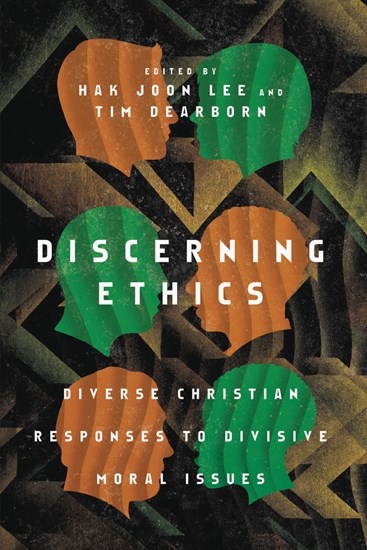
Discerning Ethics: Diverse Christian Responses to Divisive Moral Issues introduces numerous moral topics to Christians while providing insight into various approaches Christians have had to those same moral questions. Each chapter of the book introduces the moral topic at hand by providing a “real life” and “real world” example of how that moral question has arisen in the world and in real life. Then, different positions (in every chapter but one, three of them) are presented on that topic. Finally, each author gives a brief outline and defense of their own position on the question. The main text of the chapter is followed by discussion questions and recommendations for further reading.
The topics addressed in the book are broad and divided into four parts: ethics of the globe (climate change, poverty and income inequality, urban degradation, and immigration); of the body (access to health care, abortion, transgender, homosexuality and sexual identity); of violence (violence against women, war/nonviolence/just peacemaking, gun violence, and mass incarceration); and of formation (racism, disability, social and entertainment media, and public education).
The way the book is formatted allows for a surprising amount of depth despite the relatively short chapter length on each topic. For example, in the chapter on Access to Health Care by Brian White, the “real life” story reads, in part:
On April 8, 2016, the director of Uganda’s cancer institute at the Mulago Hospital announced that the country’s only radiotherapy machine, used for the treatment of a broad range of cancer patients, had finally broken down beyond repair. This machine typically treated around one hundred patients every day, and the hospital received nearly forty-four thousand new referrals each year, not only from Uganda but also from the neighboring countries of Rwanda, Burundi, and South Sudan… (91).
The story becomes my heartbreaking as Brian White notes that Victoria Akware, a woman who had cervical cancer, got the news just after having “sold her land to help pay for the long trip to the Uganda Cancer Institute to receive treatment…” (ibid). Clearly, this is a travesty on a major scale, as people’s lives are at risk due to inaccessible health care. The approaches to these topics White outlines are universal–everyone gets health care with a single-payer system; two tier, in which everyone gets a minimum level of care as a human right but can pay for higher levels of care; and private, in which health care is a commodity. As with the other chapters in the book, each of these positions has a specific thinker (or thinkers) the author draws from to expound their position. Ultimately, White argues for a position that he sees as a kind of middle way among these positions that provides for equality, need, and merit (see esp. 104-105).
Each chapter is outlined like this, and no matter what one’s own position is on the topic at hand, it will likely be challenged by having other positions presented fairly and own their own merits. Possibly the author’s perspective will provide its own challenge as well. Each chapter was excellent in its own ways, and several chapters provided surprising perspectives that I didn’t necessarily expect.
One example of the latter was the chapter on homosexuality and sexual identity by Matthew Jones. The author of this chapter is a gay man who is celibate because he believes that his conscience is bound to not act on his sexuality. His own “real life” story includes being removed from a pastoral internship for even admitting to his sexual identity (144-145). Jones’s analysis of the varied positions is insightful and should give a challenge to readers from any position. For example, he notes that the position that holds to a kind of sexual essentialism often fails to provide any context for people to live out their lives in a way that can comport to the expectations of their beliefs (154). On the far other end, Jones argues that Christians who hold to full biblical acceptance of differing sexual identities do not do justice to the texts involved (155). Again, wherever one falls on this spectrum, one will likely find their position challenged to do better by both real people involved and by their own work to live out Christ’s commands in the world.
The one caution this reader would give for the book is that readers should try to see it for what it is–an introduction to the topics it discusses. There is no way to fully engage with all of these topics in the length given, but the editors and authors set up a way to at least get an idea for why people, and Christians specifically, may think differently on these important issues. The book would serve as an excellent guide for one’s own exploration of contentious topics, a superb book to read in a study group, or as a textbook for a class on ethics.
Discerning Ethics is a fantastic introduction to numerous moral topics. It affords Christians access to diverse voices on important moral topics that are challenging in our own time. I recommend it highly.
(All Amazon links are affiliates links.)
Disclaimer: I was provided with a copy of the book for review by the publisher. I was not required to give any specific kind of feedback whatsoever.
Links
Be sure to check out the page for this site on Facebook and Twitter for discussion of posts, links to other pages of interest, random talk about theology/philosophy/apologetics/movies and more!
Book Reviews– There are plenty more book reviews to read! Read like crazy! (Scroll down for more, and click at bottom for even more!)
SDG.
——
The preceding post is the property of J.W. Wartick (apart from quotations, which are the property of their respective owners, and works of art as credited; images are often freely available to the public and J.W. Wartick makes no claims of owning rights to the images unless he makes that explicit) and should not be reproduced in part or in whole without the expressed consent of the author. All content on this site is the property of J.W. Wartick and is made available for individual and personal usage. If you cite from these documents, whether for personal or professional purposes, please give appropriate citation with both the name of the author (J.W. Wartick) and a link to the original URL. If you’d like to repost a post, you may do so, provided you show less than half of the original post on your own site and link to the original post for the rest. You must also appropriately cite the post as noted above. This blog is protected by Creative Commons licensing. By viewing any part of this site, you are agreeing to this usage policy.
Dietrich Bonhoeffer’s Succinct Question on American Nationalism

Living in the United States today, one may wonder about what seems to be a rising surge of national pushback against anything that seems to be “Unpatriotic.” The most obvious example is the outrage against Colin Kaepernick’s taking a knee during the national anthem at games played by the National Football League.
Dietrich Bonhoeffer was in New York City at Union Theological Seminary in 1930-1931. He saw his own version of nationalism rising in the United States. As he took notes during his class “Ethical Interpretation of Current Events,” he jotted down “Nationalism militant + economic.” Those words certainly ring true for the United States now. But what are we to do about it? Right after that brief line, Bonhoeffer wrote a question that still somehow answers what we ought to do. And with six words he undermined all attempts to unite nationalism and Christianity together:
What is the flag to God?
DBWE 10:429
And we must ask ourselves the same question. If we are enraged by those kneeling to the flag, we must reset. “What is the flag to God?” It is nothing. And we ought not to elevate it–or our nation–more than we ought.
Moreover, if we turn our hopes and trust towards the flag–towards the nation–we replace God with the flag and the nation. It becomes idolatrous. Our hope is not in the nation, which rises and falls. God stands forever. God is our hope. In God we trust, but we cannot say that while truly meaning “our country.”
What is the flag to God?
Links
Dietrich Bonhoeffer– Come read all of my posts about Dietrich Bonhoeffer.
Reconstructing Faith– Read other posts as I search for truth and navigate the messiness that is faith.
Be sure to check out the page for this site on Facebook and Twitter for discussion of posts, links to other pages of interest, random talk about theology/philosophy/apologetics/movies and more!
SDG.
——
The preceding post is the property of J.W. Wartick (apart from quotations, which are the property of their respective owners, and works of art as credited; images are often freely available to the public and J.W. Wartick makes no claims of owning rights to the images unless he makes that explicit) and should not be reproduced in part or in whole without the expressed consent of the author. All content on this site is the property of J.W. Wartick and is made available for individual and personal usage. If you cite from these documents, whether for personal or professional purposes, please give appropriate citation with both the name of the author (J.W. Wartick) and a link to the original URL. If you’d like to repost a post, you may do so, provided you show less than half of the original post on your own site and link to the original post for the rest. You must also appropriately cite the post as noted above. This blog is protected by Creative Commons licensing. By viewing any part of this site, you are agreeing to this usage policy.


