J.W. Wartick
Book Review: “Dietrich Bonhoeffer and the Ethical Self: Christology, Ethics, and Formation” by Clark J. Elliston
 Clark J. Elliston’s Dietrich Bonhoeffer and the Ethical Self is a fascinating look at Dietrich Bonhoeffer in conversation regarding the concept of oneself in relation to the other, as well as one’s commitments to oneself. It is also an exposure to some writings and engagement with them that I suspect most readers of Bonhoeffer have yet to engage. As complex as Bonhoeffer’s philosophical writings were, Elliston manages to connect them to the reader in ways that make sense and holistically bring together Bonhoeffer’s thoughts on the self.
Before diving into this deep work, it is worth asking the question of why it is important. Most simply put, it is nearly impossible to accurately interpret Dietrich Bonhoeffer without coming to some understanding of his concept of the self and how one relates to the “other.” To do so, however, requires engagement with the deepest and most difficult of Bonhoeffer’s writings. Elliston’s book is just such an endeavor.
Clark J. Elliston engages the topic of the “ethical self” in Dietrich Bonhoeffer’s body of work through the lens of Emmanuel Levinas and Simone Weil. Who? Yeah, that’s what I thought, too. But Elliston introduces these thinkers and summarizes their thoughts to the extent that it not only makes sense for them to be the dialogue partners with Bonhoeffer but that I as a reader enjoyed the engagement. With Levinas and Weil, Elliston is able to approach Bonhoeffer’s thought from a two-pronged approach.
Levinas’s approach to the self is largely focused on the self in relation to the other. Elliston notes that this may present a “challenge for both theology and philosophy” by noting the interplay between self-other and the way responsibility forms. Bonhoeffer, however, Elliston argues, is able to meet the challenge and provide a holistic self in ethical relations to the other, allowing for theology to remain coherent as well. While Levinas believes that theology neutralizes the “other,” Bonhoeffer provides a corrective that preserves “otherness” without reducing it to the self.
Weil’s perspective is interesting becuase it is so other-oriented. The self exists “for” the other (Kindle location 2568). Weil’s thought included the concept of “decreation” which sees people as obstacles to God’s becoming. Creation is a kind of “renunciation” for God to provide other “selves” outside of himself. Decreation, though, is the act of total orientation of the self towards God. Attention is another central theme for Weil, and the attention towards the other is a way to engage with decreation and God. While Levinas and Bonhoeffer would surely be at odds regarding theology, he and Weil would be much closer. Many points of intersection exist between the two on the self. They share the notion that the self must limit its ego in order to better engage with the other.
I was particularly surprised when I saw that Elliston had utilized Adolf Eichmann as an example in the last chapter. Yes, that Eichmann. But it made sense in that Eichmann was a contemporary of Bonhoeffer’s and Elliston makes it quite clear that Eichmann is not being used positively. Instead, Eichmann is, Elliston argues, a good example of irresponsibility regarding the personal self. Eichmann demonstrated a defective view of the self and this undercut greatly his capacity to engage in proper ethics.
From all of this, it should be clear Elliston’s work is deeply philosophical. Much like reading Bonhoeffer’s Act and Being, reading Elliston here is a deep engagement on tough issues which demand much reflection.
On a side note, it would be remiss to not mention how excellent Elliston’s notes are throughout the book. Often paragraph-length themselves, these notes direct the reader to many different and intriguing topics, as well as providing insight into the details of Elliston’s theses.
Elliston’s Dietrich Bonhoeffer and the Ethical Self is a deep, thoughtful, and sometimes surprising book. It takes a careful reading to fully engage with the topics here, and it warrants re-reading several sections. I recommend the book for those who are looking to go more deeply into their study of Dietrich Bonhoeffer.
Disclaimer: I was provided with a copy of the book for review by the publisher. I was not required to give any specific kind of feedback whatsoever.
Links
Be sure to check out the page for this site on Facebook and Twitter for discussion of posts, links to other pages of interest, random talk about theology/philosophy/apologetics/movies and more!
Book Reviews– There are plenty more book reviews to read! Read like crazy! (Scroll down for more, and click at bottom for even more!)
SDG.
——
The preceding post is the property of J.W. Wartick (apart from quotations, which are the property of their respective owners, and works of art as credited; images are often freely available to the public and J.W. Wartick makes no claims of owning rights to the images unless he makes that explicit) and should not be reproduced in part or in whole without the expressed consent of the author. All content on this site is the property of J.W. Wartick and is made available for individual and personal usage. If you cite from these documents, whether for personal or professional purposes, please give appropriate citation with both the name of the author (J.W. Wartick) and a link to the original URL. If you’d like to repost a post, you may do so, provided you show less than half of the original post on your own site and link to the original post for the rest. You must also appropriately cite the post as noted above. This blog is protected by Creative Commons licensing. By viewing any part of this site, you are agreeing to this usage policy.
Book Review: “Scars Across Humanity: Understanding and Overcoming Violence Against Women” by Elaine Storkey
 Warning: Some statistics related to domestic violence and sexual violence are discussed in this post.
[T]he… acts of violence to women aged between 15 and 44 across the globe produce more death, disability and mutilation than cancer, malaria, and traffic accidents combined (2).
Every three seconds a girl under the age of 18 is married somewhere across the world-usually without her consent and sometimes to a much older man (49).
Nearly 200 million women and girls worldwide are living with the traumatic consequences of female genital mutilation (30).
It is an alarming picture of mass termination: prenatal offspring, aborted for no other reason than they happen to be female (19).
There are some nonfiction books that have made me sit back upon finishing reading them, wondering about the world we live in, because the book has given me new eyes to see. Scars Across Humanity has become one of those books. Though I was aware of, broadly, some of the statistics of violence against women, I had no idea how completely pervasive it is at all stages of life. Nor did I fully comprehend or appreciate how totally violence against women has penetrated every level of nearly every society on Earth. Though the #MeToo and #ChurchToo movements have highlighted some of these issues, Storkey gets to the meat of the issue, giving enormous amounts of statistics and serious analysis of the totality of this horrific situation.
The bulk of Scars Across Humanity focuses on statistics and specifics. First, Storkey shows that violence against women is a “global pandemic.” There is no part of the world that is untouched by this blight upon humanity. Then, several chapters go over specific instances of violence against women. Abortion is the first level of violence against women. Sex-selective abortions are almost entirely chosen to kill unborn girls. This, in turn, fuels human trafficking as women are moved into those parts of the world where a serious imbalance of adult men and women exists, largely due to sex-selective abortions. Female genital mutilation is opposed by leaders of all major faiths, yet it continues across the world and cases of it in places like England and the United States are on the rise. Early and forced marriage is another global problem. Indeed, in the United States, very few restrictions exist on girls being married off to men–indeed, 20 states have no minimum age of marriage.
The misnomer of “honor” killings continue in some parts of the world and, where it is outlawed, enforcement is incredibly lax. Women are murdered or disfigured for the sake of male notions of “honor.” Domestic violence exists in the home and a stigma surrounds it such that it is underreported. Women are at the highest risk when they attempt to leave an abuser, and as many, many instances have shown, they are often not believed when accusations of abuse are made. To help stop the wave of violence in the home, we must work to end stigmas surrounding those who have been harmed by domestic partners, work with law enforcement agencies, and change laws as needed to provide for the greatest possible protection of those towards whom violence is directed. Human trafficking and prostitution are closely tied together and even in those areas where prostitution is made into “just another job,” evidence suggests that massive increases in trafficking occur. Rape is a worldwide epidemic and Storkey shows clear instances of how “rape culture” is a real thing that women must deal with when they report this sexual violence. A huge part of ending rape is to educate men and punish them where they perpetrate these vicious acts. War almost inevitably leads to sexual violence, as can be seen in the historical record as well as into today. Rape is sometimes even used as a weapon of genocide in cultural warfare. Women, time and again, are seen as pawns in conflicts and power dynamics of men.
By the end of Storkey’s analysis, I was left wondering whether there was any room for hope. Storkey does offer a few points, sometimes highlighting how laws have changed to help fight violence against women (though often noting alongside this the serious lack of enforcement of those same laws). However, it is in the last few chapters that Storkey offers her broader vision of overcoming violence against women. Largely, this includes working both internationally and locally (with specific guidelines and stories of how this has worked) to create and enforce laws and to spread and teach the Christian theology of the equality of all humanity.
From before women are born to their all-too-often violent deaths, women across the planet are attacked in often brutal ways. Scars Across Humanity shines a light upon this darkness and issues a serious, empowering call to end this horror of violence against women. If we are truly serious about men and women being made in the image of God, we must fight this gender-based violence on a global level. Storkey’s book is highly recommended.
Links
Be sure to check out the page for this site on Facebook and Twitter for discussion of posts, links to other pages of interest, random talk about theology/philosophy/apologetics/movies and more!
Book Reviews– There are plenty more book reviews to read! Read like crazy! (Scroll down for more, and click at bottom for even more!)
SDG.
——
The preceding post is the property of J.W. Wartick (apart from quotations, which are the property of their respective owners, and works of art as credited; images are often freely available to the public and J.W. Wartick makes no claims of owning rights to the images unless he makes that explicit) and should not be reproduced in part or in whole without the expressed consent of the author. All content on this site is the property of J.W. Wartick and is made available for individual and personal usage. If you cite from these documents, whether for personal or professional purposes, please give appropriate citation with both the name of the author (J.W. Wartick) and a link to the original URL. If you’d like to repost a post, you may do so, provided you show less than half of the original post on your own site and link to the original post for the rest. You must also appropriately cite the post as noted above. This blog is protected by Creative Commons licensing. By viewing any part of this site, you are agreeing to this usage policy.
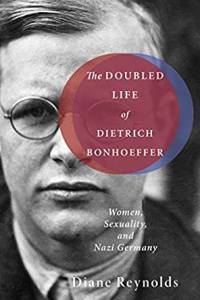
Book Review: “The Doubled Life of Dietrich Bonhoeffer: Women, Sexuality, and Nazi Germany” by Diane Reynolds
 …Bonhoeffer reflects a prewar–what we might call a pre-postmodern–consciousness, a consciousness that no longer fully exists. We view him anachronistically, through our different set of lenses, and thus he shatters or refracts, like an abstract painting, into a dozen disparate images because he doesn’t fit conventional postwar paradigms. He remains, in some sense, untranslatable. (3)
Diane Reynolds’ The Doubled Life of Dietrich Bonhoeffer offers a unique take on the life of that great German WW2 theologian, Dietrich Bonhoeffer. Her biography focuses largely on two topics: the women in Bonhoeffer’s life and questions of sexuality in both his theology and life. The book is a biography, then, that fills in a number of holes that are left by other biographies. It doesn’t provide an exhaustive look at where Bonhoeffer was at any given time in his life like Bethge’s biography, nor does it provide a broad overview while filling in theological details like the excellent work by Ferdinand Schlingensiepen. Its focus is even narrower than the interesting Strange Glory by Charles Marsh. Yet it is that narrowness of focus that allows Reynolds’ biography to stand out from among these other excellent works and show he areas that they missed.
Reynolds’ controversial theories about Bonhoeffer’s sexuality (see below) would likely be the biggest takeaway many have from the book, which is unfortunate because it is quite excellent in several other regards as well, no matter what one thinks of her arguments over his sexuality. Specifically, her emphasis on bringing women’s voices in Bonhoeffer’s life to the forefront offsets a rather lengthy time in which women have largely been ignored or set to the side when considering his theology and life. Reynolds aptly demonstrates women were absolutely central to his way of thinking and clearly shaped his thought and direction of his theology in a number of ways. Indeed, his inner circle towards the time of his death was made up of women (Sabine, his twin sister; Ruth von Kleist-Retzlow; and his fiancée, Maria von Wedemeyer) and Bethge. Though Bonhoeffer was raised with somewhat traditional German values, he rebelled against the Nazi insistence on ideals of women and men in utterly separate spheres of thought and took advice from several women regarding his theology. It would be impossible to paint Bonhoeffer as entirely egalitarian, but not outside of reality to see the way that he lived in an effectively egalitarian understanding while remaining in his traditions.
The most controversial aspect of Reynolds’ biography is that she takes Marsh’s hints about Bonhoeffer’s sexuality and states “I will openly argue… that Bonhoeffer went beyond emotional friendship with Bethge and was in love with him–and that Bonhoeffer’s fiancee knew it” (7). Indeed, Reynolds even goes so far as to argue that there are “seeds of a nascent queer theology in Bonhoeffer’s writing” (7). Regarding Bonhoeffer’s being in love with Bethge, it is true that Bethge himself left open the question of Bonhoeffer’s sexuality. Reynolds’ evidence for her strong claim starts with that, but continues by noting the specific language Bonhoeffer used of and to Bethge, which parallels some of that used by homosexuals in Germany at the time. Moreover, a mutual acquaintance of Bethge and Bonhoeffer (Gerhard Vibrans) used words for their special relationship that were “codes used for gay relationships in Weimar Germany” (141). Maria von Wedemeyer, Dietrich’s fiancée, seemed to question his feelings for her at multiple points in their letters back and forth, forcing the latter to reassure her that his feelings were genuine on multiple occasions. A final piece of evidence Reynolds notes is absences or excisions from letters to and from Bonhoeffer that seem to cluster around questions of sexuality. As she puts it, “We also have unexplained ellipses in at least one [of] the letters to Eberhard [Bethge], a censoring of texts deemed too ‘intimate’ to share” (429). Bonhoeffer’s engagement to von Wedemeyer is explained, in Reynolds view, by both an attempt to thwart Nazi suspicion (Bonhoeffer would have been seen as more “normal” if he were married) and as a kind of cover for Bonhoeffer’s sexuality.
If all of this seems a bit circumstantial, that would be because at least some of it is. Certainly, when taken altogether, the evidence rings of the possibility of Bonhoeffer having an attraction that goes beyond friendship for Bethge. The intimacy of his letters and exhortations to his friend to spend more time with him, the latter’s apparent moves to thwart the same intimacy, the excision of letters, the language used by mutual acquaintances, and the tepid relationship between Bonhoeffer and his fiancée may all be taken as evidence for Reynolds’ thesis. But her claim is quite strong, not just that there may have been something going on, but that their relationship went beyond friendship and that Bonhoeffer was explicitly in love with Bethge, with von Wedemeyer’s knowledge (7). Alternative explanations could be given for each of these lines of evidence Reynolds’ presents. Bonhoeffer’s apparently cold feelings towards von Wedemeyer could be explained simply by his seeing their relationship as a way to thwart the Nazi investigation; excisions in the letters could simply be quite personal rather than anything related to sexuality; a friend’s knowing taunts could be reduced to jealous teasing at being excluded from the same fraternal intimacy; and the like. The question, of course, is whether such explanations are better than those offered by Reynolds. As it stands, readers must judge for themselves. I do not think Reynolds’ strong thesis can be carried by the weight of her evidence. Insinuations are there, but nothing strong enough to conclude as she does with such certainty.
Regarding Reynolds’ claims for a “nascent queer theology,” I do not find the evidence convincing. Essentially, she turns his writings on friendship into thoughts on how homosexual relationships could be viewed with the same legitimacy as those of male-female ones. For example, she writes, “Both Bonhoeffer and Bethge acknowledged struggles due to the lack of formal recognition of their close companionship… Both men felt the frustration of the military’s indifference to their friendship. These sorts of assertions against invisibility have become the mainstay of the gay marriage movement… insisting on the beauty, necessity, and value of same-sex friendship existing as a cornflower between the rigid rows of more formal social organization offered a beginning vision” 419-420. But there seems to me a vast difference between two friends frustrated over not being able to communicate as they wished to and insisting that that is the formation of a theology of same-sex relationships that affirms marriage. We must be careful not to subsume same-sex friendship into same-sex attraction, and close friendships ought not to lead necessarily to speculations about sexuality. It seems to me that Reynolds’ thesis is once again stronger than the evidence supports.
None of these comments should be taken to suggest Reynolds is not careful in her survey of the evidence. Indeed, she provides correctives to some aspects of Bonhoeffer’s life as well, including on some things that could be seen to support her thesis had she let them stand. For example, she offers a brief comment in which she criticizes Charles Marsh for his “effete” Bonhoeffer, arguing that his style of dress was “from pride in his appearance rather than a ‘flamboyant abbot’ quality” (17). By contrast, Reynolds notes that Bonhoeffer would have been considered “masculine” in his own time. Reynolds here demonstrates that she is not grasping at straws to try to push a pet theory. Rather, her analysis of Bonhoeffer’s life is balanced and challenging.
Another aspect of this biography worth noting is its own. Reynolds’ writing style captures the reader and draws one into the narrative of Bonhoeffer’s life in a way that few biographies are able to grasp. The biography, again, necessarily misses large portions of Bonhoeffer’s life because of its different focus. But in having its focus upon aspects of his life that have been overlooked, Reynolds manages to make a compelling narrative that challenges readers to interact with it, possibly re-evaluating assumptions about Bonhoeffer’s life and theology in the process.
The Doubled Life of Dietrich Bonhoeffer is a fascinating work. It explores aspects of Bonhoeffer’s life that have largely received little treatment in the works on his life. Though I believe some of Reynolds’ theses are stronger than she was able to support with the evidence, it certainly got me thinking about the life of Bonhoeffer more deeply than I had before. Her demonstration of the impact of women on his life is a refreshing breath of air, showing the influence women had on his life and theology. Those interested in a deep exploration of Bonhoeffer’s life would do well to read this book, whether they agree or disagree with Reynolds’ ultimate conclusions. I recommend it.
Disclaimer: I was provided with a copy of the book for review by the publisher. I was not required to give any specific kind of feedback whatsoever.
Links
Be sure to check out the page for this site on Facebook and Twitter for discussion of posts, links to other pages of interest, random talk about theology/philosophy/apologetics/movies and more!
Book Reviews– There are plenty more book reviews to read! Read like crazy! (Scroll down for more, and click at bottom for even more!)
SDG.
——
The preceding post is the property of J.W. Wartick (apart from quotations, which are the property of their respective owners, and works of art as credited; images are often freely available to the public and J.W. Wartick makes no claims of owning rights to the images unless he makes that explicit) and should not be reproduced in part or in whole without the expressed consent of the author. All content on this site is the property of J.W. Wartick and is made available for individual and personal usage. If you cite from these documents, whether for personal or professional purposes, please give appropriate citation with both the name of the author (J.W. Wartick) and a link to the original URL. If you’d like to repost a post, you may do so, provided you show less than half of the original post on your own site and link to the original post for the rest. You must also appropriately cite the post as noted above. This blog is protected by Creative Commons licensing. By viewing any part of this site, you are agreeing to this usage policy.
Book Review: “Come, Let Us Eat Together: Sacraments and Christian Unity” edited by George Kalantzis and Marc Cortez
 Come, Let Us Eat Together: Sacraments and Christian Unity provides something not often seen in the polemics of our day: a call for Christian unity even over those things which are of most import. Here, the issue of the sacraments is evaluated regarding what they may have to do with Christian unity. A number of from scholars in various denominations (from what I can tell, included are Roman Catholic, Baptist, Reformed, Methodist, Eastern Orthodox, and Lutheran writers, though there may have been more represented) present essays reflecting on ecumenism and the sacraments.
Topics in these various essays go across a wide range. Whether it is ecumenism presented through the arts or the notion of closed communion in some Baptist churches (something I didn’t realize existed anywhere in the Baptist tradition), any reader will find something of interest to them related to the Sacraments.
I found a few essays of particular interest. First, “A Way Forward: A Catholic-Anabaptist Ecclesiology” by D. Stephen Long caught my eye simply for the title. Few theological systems could be more at odds than that of the Roman Catholic and that of the Anabaptist. In the essay, we find a few broad steps that can be taken to see some areas of agreement between these divergent strands of theology. Second, “Visual Ecumenism: The Coy Communion of Art” by Matthew J. Milliner invites readers to see the Lutheran view of Law-Gospel distinction in other denominational perspectives as well. Multiple essays that focused more exclusively on ecumenism as a possibility were quite interesting. I already mentioned in passing Marc Cortez’s “Who Invited the Baptist?” for its introducing me to the idea that some Baptists practice closed communion. I’m still trying to figure out exactly why a Baptist would do so, but had I not read this book I’m not sure when I would have been exposed to this differing and unexpected practice in the Baptist community.
As a Lutheran in the Evangelical Lutheran Church in America, a body that practices open communion while also affirming baptismal regeneration and Christ’s “real presence” in the bread and wine of the Lord’s Supper, I found a number of points of agreement and disagreement here. That is, of course, exactly what this collection of essays (originally lectures) is all about: finding those points of division and seeking to heal–or at least address–them. It’s a fascinating work.
Disclaimer: I was provided with a copy of the book for review by the publisher. I was not required to give any specific kind of feedback whatsoever.
Links
Be sure to check out the page for this site on Facebook and Twitter for discussion of posts, links to other pages of interest, random talk about theology/philosophy/apologetics/movies and more!
Book Reviews– There are plenty more book reviews to read! Read like crazy! (Scroll down for more, and click at bottom for even more!)
SDG.
——
The preceding post is the property of J.W. Wartick (apart from quotations, which are the property of their respective owners, and works of art as credited; images are often freely available to the public and J.W. Wartick makes no claims of owning rights to the images unless he makes that explicit) and should not be reproduced in part or in whole without the expressed consent of the author. All content on this site is the property of J.W. Wartick and is made available for individual and personal usage. If you cite from these documents, whether for personal or professional purposes, please give appropriate citation with both the name of the author (J.W. Wartick) and a link to the original URL. If you’d like to repost a post, you may do so, provided you show less than half of the original post on your own site and link to the original post for the rest. You must also appropriately cite the post as noted above. This blog is protected by Creative Commons licensing. By viewing any part of this site, you are agreeing to this usage policy.
Book Review: “Lewis on the Christian Life” by Joe Rigney
 Lewis on the Christian Life is another installment in the “Theologians on the Christian Life” series from Crossway. This time, the subject is the extremely popular Christian thinker, C.S. Lewis.
It is clear from the start that Rigney has a monumental task. Lewis wrote a lot and clearly had development in his thought throughout his life. Some of this is briefly touched upon by Rigney, but other aspects of it are skipped over (especially Lewis’s development of thought on men and women). Rigney makes it clear early on that he intentionally draws from many of Lewis’s lesser known works in order to try to bring some balance on people’s thoughts regarding Lewis. Rigney divides his look at Lewis’s theology of Christian living up topically, including such things as Prayer, Christian Hedonics, Healthy Introspection, “The Choice,” “The Gospel,” and more (17 different topics worth!).
Of particular interest to me were the sections on prayer and choice. Lewis’s theology is worked through with the idea of choice for the Christian and the person–whether it is heaven or hell. As Rigney puts it, “This is the Choice: God or self. Happiness or misery. Heaven or hell” (Kindle Location 468). People’s choices lead to right (or wrong) living and play out into eternity. This idea of choosing doesn’t meld very well with some forms of theology, particularly a more Reformed or Calvinist one–which is typically what the publisher Crossway leans towards. Rigney touches on some parts of this notion showing how he thinks Lewis’s thought may be compatible with Reformed thought, while also offering some critique. Rigney draws heavily from The Screwtape Letters to discuss many aspects of Lewis’s theology of Christian living, including prayer. I find this work fascinating, and was edified by Rigney’s many looks at aspects of it.
One area I thought was odd was how much time Rigney spent on Lewis’s doctrine of atonement. Lewis was no systematic theologian, but RIgney seems quite concerned to make Lewis one when it comes to the doctrine of the atonement. Particularly, he is keen to show Lewis affirmed penal substitutionary atonement. I’ve been surprised by how frequently this view of the atonement is seen by its adherents as almost equivalent to the Gospel, and this is no exception. I’ve always seen the scene with Aslan in The Lion, The Witch, and the Wardrobe as more of a ransom theory notion of atonement, but Rigney takes it penal substitutionary, with a slight nod to how it could be seen as ransom theory. For myself, I don’t see a huge gap between the two, and also honestly don’t understand much of the debate. It seems clear to me penal substitution is found in the Bible, but so are many, many other aspects of the various theories put forward. Is not a holistic view more preferable because it easily integrates everything? Why must we be mutually exclusive? More relevant for this book, why must Lewis become one who endorses penal substitution when it doesn’t actually seem that clear from his writings? Such questions remain unanswered.
Lewis’s idea of Christian living also allowed for pretty much anything not forbidden. This doesn’t go well with more Puritan-like aspects of thought, but it is, I think, generally correct. Rigney, oddly, takes this as a chance to try to explore what is allowed or forbidden in worship services (kindle loc 4612ff). I didn’t really get how this was relevant or why it mattered, but that might be my own theological background showing through (as a Lutheran, I believe much of this is adiaphora).
Lewis’s views of male and female are certainly a product of his time, and Rigney, apparently endorsing complementarian doctrine, seems to delight in some of the frankly silly things Lewis said in some of his works. Particularly silly was the idea of the oh-so-manly Mars in the Space Trilogy. Why is it manly? Because it has Mountains ‘n’ stuff! Yep, no distorted cultural expectations of masculinity and femininity reflected there, right? Wrong. Rigney seems particularly affirming of these aspects of Lewis’s theology, which frankly seem like the strangest aspects to affirm. Moreover, there is debate over whether Lewis actually maintained this kind of strong complementarian doctrine throughout his life. For example, Mary Stewart Van Leeuwan dedicated an entire book to the topic.
Perhaps my biggest complaint with the book, which I’ve already touched on, is how much space is dedicated to correcting Lewis’s theology, which most frequently means moving him more in line with the kind of Reformed Baptist theology that Crossway promotes. I’ve read numerous books in this series of theologians on the Christian life (see more here by scrolling down), and there are some (like the one on Luther) that seem to fulfill the series’ mission of expositing the various theologians’ views on the Christian Life. This one offers much more by way of analysis than some of the others, and I think I have gotten more out of those that focus almost entirely on showing what the titular thinker had to say than what the author wanted to correct.
Lewis on the Christian Life is an uneven but interesting look at the breadth of C.S. Lewis’s theology of Christian living. Rigney opens up whole fields of investigation into Lewis’s thought, but spends a bit too much time on analysis relative to other books on the series. I recommend it for those interested in investigating what Lewis has to teach us about living life in Christ.
Disclaimer: I was provided with a copy of the book for review by the publisher. I was not required to give any specific kind of feedback whatsoever.
Links
Be sure to check out the page for this site on Facebook and Twitter for discussion of posts, links to other pages of interest, random talk about theology/philosophy/apologetics/movies and more!
Book Reviews– There are plenty more book reviews to read! Read like crazy! (Scroll down for more, and click at bottom for even more!)
SDG.
——
The preceding post is the property of J.W. Wartick (apart from quotations, which are the property of their respective owners, and works of art as credited; images are often freely available to the public and J.W. Wartick makes no claims of owning rights to the images unless he makes that explicit) and should not be reproduced in part or in whole without the expressed consent of the author. All content on this site is the property of J.W. Wartick and is made available for individual and personal usage. If you cite from these documents, whether for personal or professional purposes, please give appropriate citation with both the name of the author (J.W. Wartick) and a link to the original URL. If you’d like to repost a post, you may do so, provided you show less than half of the original post on your own site and link to the original post for the rest. You must also appropriately cite the post as noted above. This blog is protected by Creative Commons licensing. By viewing any part of this site, you are agreeing to this usage policy.
“Didaskolos” by Bertil Gärtner, Part 2, in “Women Pastors?” edited by Matthew C. Harrison and John T. Pless
 I grew up as a member of the Lutheran Church-Missouri Synod, a church body which rejects the ordination of women to the role of pastor. The publishing branch of that denomination, Concordia Publishing House, put out a book entitled Women Pastors? The Ordination of Women in Biblical Lutheran Perspective edited by Matthew C. Harrison (who is the current President of the LCMS) and John T. Pless. I have decided to take the book on, chapter-by-chapter, for two reasons. 1) I am frequently asked why I support women pastors by friends, family, and people online who do not share my position, and I hope to show that the best arguments my former denomination can bring forward against women pastors fail. 2) I believe the position of the LCMS and other groups like it is deeply mistaken on this, and so it warrants interaction to show that they are wrong. I will, as I said, be tackling this book chapter-by-chapter, sometimes dividing chapters into multiple posts. Finally, I should note I am reviewing the first edition published in 2008. I have been informed that at least some changes were made shortly thereafter, including in particular the section on the Trinity which is, in the edition I own, disturbingly mistaken. I will continue with the edition I have at hand because, frankly, I don’t have a lot of money to use to get another edition. Yes, I’m aware the picture I used is for the third edition.
Didaskolos: The Office, Man and Woman in the New Testament Part 2
We analyzed Gärtner’s arguments about the context for women in the New Testament. Now we turn to his notion of “The Basic Concept of Saint Paul in First Corinthians.” First, he notes that 1 Corinthians 12 provides “a distribution, a division… of services and gifts of grace in the congregation.” The point here is quite well taken because it is true that 1 Corinthians 12, especially verse 28 makes explicit a listing of gifts in the church which ranks prophets above that gift of teachers. Yet it is very clear in the New Testament that women may be prophets, and so they may, according to Paul, outrank the role of teacher, which is typically taken as the pastoral role (see my exposition of this argument, below, and more explicitly, with Alice Guinther, here ). (I should note that Gärtner himself maintains that “teacher” is equivalent to pastor on page 37.) This order, Gärtner maintains, remains in the church despite the unity in Christ as seen in Galatians. Once again, I agree, though it is interesting that Galatians 3:28, which he alludes to, explicitly makes it clear that in Christ there is “no male and female,” as the Greek states. Thus, Gärtner’s interpretation has the difficulty of trying to separate what Christ has united, dividing male and female from each other and plugging them into different levels and roles in the church. A better interpretation, and one that does not require one to maintain that 1 Corinthians 12:28 can work against Galatians 3:28, is that the roles of 1 Corinthians 12:28 remain in place, but the artificial divisions that we so often make–Jew-Gentile; slave-free; male-female–are not the basis for those roles.
Second, Gärtner turns to 1 Corinthians 14. He appeals to the notion of order of creation to say that women may not be pastors (33). Yet it is unclear exactly how this connection is made. The notion of “order of creation” is left rather abstractly, and, as we have seen, seems to be confusing on Gärtner’s own account because he inconsistently applies it in different contexts. He then goes on to state that “What women’s duties are in the congregation is not described in detail” (34), though he apparently is certain one of the duties cannot be administration of the Eucharist or some other aspect of the “office” (still undefined). He argues that women being silent is “not a crass command to forbid women from taking part in the service” but rather, like being silent instead of speaking in tongues without an interpreter, is qualified (38). What that qualification is is not derived from the text–for the text does not say anything about the “office” or “ministry” related to silence. Instead, Gärtner assumes that’s what the silences is meant to apply to. He goes so far as to say that it would be “absurd to say that the apostle meant to speak about women who sat and whispered, disturbing the service…” (38). “Absurd”! Yet he himself has already granted that the text must be qualified in its silencing. Why is it then absurd to think that it is about women disturbing the service? I don’t know, and Gärtner doesn’t give any insight into that except for saying that such an interpretation “cannot be drawn from either text or context” (ibid). Why not? Gärtner doesn’t say. But throughout the entirety of 1 Corinthians, we find Paul is interested in order of worship. Over and over again, Gärtner appeals to order of creation, as Paul appeals to order in worship, giving us insight into the roles and spiritual gifts found in the church (1 Corinthians 12) as well how to pray (1 Corinthians 11), etc. So why would it be absurd to think that Paul, in 1 Corinthians 14, is continuing his thought process, instructing the specific church of Corinth in maintaining order in church by not having women asking questions and disrupting the service, especially when it is followed by an instruction for women to learn from their husbands at home (eg. perhaps saving their questions for a more appropriate time)? I can’t say, but Gärtner seems intent on dismissing it. Nevertheless, it seems clear that rather than being absurd, such an interpretation would be directly in line with the rest of Paul’s purpose in the letter! Gärtner’s thesis about what Paul means in 35 by a “law of the Lord” could just as easily align with order in worship.
Finally, Gärtner ends with a section on the subordination of women. He alleges that “the Christian idea of man and woman signifies something completely new, that is not at all the same as that found in the Jewish conception of woman and marriage” (41). Not at all the same? So when the Jewish conception of woman and marriage included things like… monogamy… the Christian conception is “not at all the same”? Really? I certainly hope not, because that would mean that there is a radical disconnect on the doctrine of humanity between Christian and Jew at the time of Christ, yet most of the early followers of Christ were Jewish. Yes, I agree with Gärtner that life in Christ changes things and leads to a new creation, but to suggest that Christianity is somehow a complete overthrow of the faith of the Jews at the time–that of the Hebrew Scriptures–seems clearly mistaken. As we have already seen, Gärtner continues to overstate his case.
Once again, to 1 Corinthians 12:28, Gärtner as almost any interpreter I have read, maintains that “teacher” in 1 Corinthians 12:28 is the role we would take to mean “pastor.” Moreover, he grants that 1 Corinthians 12:28 is a list of roles being differentiated, specifically as an “order” given by God (35). From that, all we have to do is show that women may be in one of the roles above that of teacher. And because women are explicitly stated in both the Old and New Testaments as being prophets, which explicitly rank above teachers in 1 Corinthians 12:28, we find that women may have–and have had–more authority than pastors. Thus, to exclude women from the pastoral ministry due to some notion of “authority” is nonsensical. Nevertheless, Gärtner makes the effort, without apparently being aware of the inherent contradiction in his position.
Now that we’ve finished our look at Gärtner’s arguments, we can return to the thesis he presented at the beginning of the chapter, as we outlined in Part 1. He wrote, “Does the New Testament contain any direct teaching about the relationship between man and woman in the office of the ministry? The answer to this question is an unequivocal yes” (27). Did Gärtner prove this thesis? In the first part, we saw that the only thing Gärtner did was look at the context of the passages, none of which provides a definitive or “unequivocal” verse that has direct teaching about the relationship between man and woman in the office of the ministry. Indeed, the very fact that he spends so long merely on context makes one wonder about his thesis. In the analysis here, Gärtner finally does try to present 1 Corinthians 14:34-35 as a kind of proof text, but even there he merely alludes to the order of creation to try to make his point. There is no direct verse that Gärtner presents anywhere, and the one time he finally attempts to site a verse, he doesn’t claim it fulfills his thesis but instead appeals to a completely different context (Genesis) and the assumption that this ties back into women pastors. Gärtner’s thesis does not carry. He has presented nothing to show that the NT contains “direct teaching about the relationship between man and woman in the office of the ministry,” let alone done so “unequivocally.” Yet he claims that is exactly what is there. His claim fails on his own grounds, and, as we have shown throughout these two posts, the few claims he does make have serious issues as well.
Links
Be sure to check out the page for this site on Facebook and Twitter for discussion of posts, links to other pages of interest, random talk about theology/philosophy/apologetics/movies and more!
Book Reviews– There are plenty more book reviews to read! Read like crazy! (Scroll down for more, and click at bottom for even more!)
SDG.
——
The preceding post is the property of J.W. Wartick (apart from quotations, which are the property of their respective owners, and works of art as credited; images are often freely available to the public and J.W. Wartick makes no claims of owning rights to the images unless he makes that explicit) and should not be reproduced in part or in whole without the expressed consent of the author. All content on this site is the property of J.W. Wartick and is made available for individual and personal usage. If you cite from these documents, whether for personal or professional purposes, please give appropriate citation with both the name of the author (J.W. Wartick) and a link to the original URL. If you’d like to repost a post, you may do so, provided you show less than half of the original post on your own site and link to the original post for the rest. You must also appropriately cite the post as noted above. This blog is protected by Creative Commons licensing. By viewing any part of this site, you are agreeing to this usage policy.
“The Rocks Don’t Lie” by David Montgomery: Chapters 8-10
 After a 5 year hiatus, I decided to continue my look at David Montgomery’s work, The Rocks Don’t Lie. For a refresher, the book is from the perspective of a geologist as he looks at Noah’s flood in light of geology, but he also includes material on contemporary accounts and some reflections on faith.
Chapters 8-10
There is no question that there are flood stories across many times and cultures. Indeed, some young earth creationists cite this as the single best evidence for a global flood. What is most interesting, however, is the total similarity between some earlier flood stories from the same Ancient Near Eastern time and place as what the Noahic deluge story would later originate. Montgomery surveys this early history, noting the amazing discovery of more ancient flood myths in Sumerian writings. At least 3 different flood stories were discovered in these ancient fragments, and they yielded many similarities with the biblical flood account (153ff). Alongside discoveries like this, the rise of deism threatened Christianity and led to some reactionary responses to both the discoveries and the age. On the other hand, many Christian theologians moved to see Genesis as “a synopsized or allegrical explanation of how the world came to be rather than a comprehensive history of everything that ever existed” (167).
Other issues with the Genesis flood account as history began to be realized by other Christian theologians. The question of how to fit all the animals on the ark became a major issue (169). Some began to abandon both the idea of a local flood as well as the idea of a global flood, seeing the story as a theological point rather than literal history, though the idea failed to gain much steam (170). Another response was more reactionary and came with it the rejection of much of the evidence against a global flood–the birth of the creationist movement.
Montgomery interacts with modern creationism by pointing to the Creation Museum from Answers in Genesis, noting how much of the alleged evidence presented there is in stark contrast to what we can learn from geology now. After a brief look at the museum, he looks at the history of modern creationism, noting, as many others have, its roots in Seventh Day Adventism and reactionary fundamentalism. Time and again in the history of creationism, Montgomery notes how science has been misrepresented or ignored. For example, he uses a graph showing radiocarbon dating and its correlation with known samples, demonstrating the reliability of the method for certain ages (192-193).
These chapters once again show the range of Montgomery’s book and the importance of looking into many different angles of investigating the flood and other biblical accounts. It isn’t enough to just do what so many creationists insist upon and just read the accounts at a surface level, importing our own assumptions about what the text should mean and say as we go. The fact that many flood stories predate the biblical story and share details must lead one to account for that in their worldview. Similarly, a reactionary approach will not do.
Links
“The Rocks Don’t Lie” by David Montgomery: Preface and Chapter 1– Montgomery surveys the intent of the book and how his own investigation of the flood led him to some surprising results. He expected a straightforward refutation of creationism, but found the interplay with science and faith to be more complex than he thought.
“The Rocks Don’t Lie” by David Montgomery: Chapters 2-3– First, Montgomery gives a survey of the basics of geology. Then he notes some serious problems with young earth paradigms related to the Grand Canyon and fossils in the Americas as well as on mountains.
“The Rocks Don’t Lie” by David Montgomery: Chapter 4– Montgomery surveys a number of early flood geological theories and shows how theological interpretations continued to change as evidence was discovered through time.
“The Rocks Don’t Lie” by David Montgomery: Chapters 5-7– A brief early history of the study of geology and paleontology is provided, and early theories about the flood begin to form alongside them.
Be sure to check out the page for this site on Facebook and Twitter for discussion of posts, links to other pages of interest, random talk about theology/philosophy/apologetics/movies and more!
Book Reviews– There are plenty more book reviews to read! Read like crazy! (Scroll down for more, and click at bottom for even more!)
SDG.
——
The preceding post is the property of J.W. Wartick (apart from quotations, which are the property of their respective owners, and works of art as credited; images are often freely available to the public and J.W. Wartick makes no claims of owning rights to the images unless he makes that explicit) and should not be reproduced in part or in whole without the expressed consent of the author. All content on this site is the property of J.W. Wartick and is made available for individual and personal usage. If you cite from these documents, whether for personal or professional purposes, please give appropriate citation with both the name of the author (J.W. Wartick) and a link to the original URL. If you’d like to repost a post, you may do so, provided you show less than half of the original post on your own site and link to the original post for the rest. You must also appropriately cite the post as noted above. This blog is protected by Creative Commons licensing. By viewing any part of this site, you are agreeing to this usage policy.
“Didaskolos” by Bertil Gärtner, Part 1, in “Women Pastors?”edited by Matthew C. Harrison and John T. Pless
I grew up as a member of the Lutheran Church-Missouri Synod, a church body which rejects the ordination of women to the role of pastor. The publishing branch of that denomination, Concordia Publishing House, put out a book entitled Women Pastors? The Ordination of Women in Biblical Lutheran Perspective edited by Matthew C. Harrison (who is the current President of the LCMS) and John T. Pless. I have decided to take the book on, chapter-by-chapter, for two reasons. 1) I am frequently asked why I support women pastors by friends, family, and people online who do not share my position, and I hope to show that the best arguments my former denomination can bring forward against women pastors fail. 2) I believe the position of the LCMS and other groups like it is deeply mistaken on this, and so it warrants interaction to show that they are wrong. I will, as I said, be tackling this book chapter-by-chapter, sometimes dividing chapters into multiple posts. Finally, I should note I am reviewing the first edition published in 2008. I have been informed that at least some changes were made shortly thereafter, including in particular the section on the Trinity which is, in the edition I own, disturbingly mistaken. I will continue with the edition I have at hand because, frankly, I don’t have a lot of money to use to get another edition. Yes, I’m aware the picture I used is for the third edition.
Didaskolos: The Office, Man and Woman in the New Testament
Gärtner’s chapter begins by asking and answering a question “Does the New Testament contain any direct teaching about the relationship between man and woman in the office of the ministry? The answer to this question is an unequivocal yes” (27). Such a statement suggests that he will demonstrate that there is a verse, somewhere, that specifically teaches about the relationship between man and woman in the office of the ministry. After all, his claim is that one can unequivocally say that yes, the New Testament does contain such direct teaching. As we explore this chapter, we will return to this question a few times and ask whether Gärtner’s claim is correct.
Gärtner states that the ministry must be set into a larger New Testament context. Addressing 1 Corinthians 14:34 and 1 Timothy 2:12, intriguingly again pointed to as the apparent proof against women pastors, he states that a view that teaches that those verses are “intended to correct some irregularities” at the time of the writings of the letters “does not correspond with the material Paul presents” (27). To prove this, he notes that in 1 Corinthians, Paul “deals with a number of questions which have been put to him by the congregation” (ibid). He uses the example of eating meat sacrificed to idols and says that Paul “places the question in the larger context” because it “is considered in relation to the doctrine of God as the only God…” (27-28).
Expanding on the context, Gärtner appeals to the choosing of the apostles, Jesus’ conception of marriage and creation, the Christian as new creation, and heresy in Corinth in order to make his argument that women are excluded from the ministry. We’ll briefly sketch out his argument. Jesus’ apostles, Gärtner argues, are all men (29). He notes that these apostles are “leaders of the new people of God,” something important we will consider below. He also states that “although the most esteemed women… who were part of the closest circle of disciples, were present in Jerusalem during the Passover festival, it was only the apostles themselves who were invited to be present at the Last Supper… By immemorial custom both women and children shared in this dinner fellowship. Yet, this is the time that Jesus breaks that tradition and gathers only the twelve around Him” (ibid). Regarding Jesus’ concept of marriage and creation, Gärtner walks through Matthew 19:3ff in which Jesus discusses marriage (30-31). The Christian as new creation Gärtner states, after pointing to texts talking about the Christian as new creation, that “in the life of the church, the true relationship between male and female can take place” (31). Regarding Heresy in Corinth, Gärtner paints an image of the Corinthians as seeing themselves getting direct revelation from God and having everything spiritualized such that people could set above “the fundamental command of fellowship and love to the neighbor.” Then, he states that Paul teaches that “salvation rests upon creation” and that the “office” (he doesn’t, on p. 33, specify which one or the definition thereof) “is related to the order of creation; and according to the order of creation, the human race is divided into man and woman” (32-34).
There are already a number of interesting issues to explore in Gärtner’s essay. First, the question of what “office” he is referencing throughout is quite relevant. Though it is possible to divert conversation in important issues by constantly punting to definitions, the notion of “office” is a central aspect of Gärtner’s argument so far, yet it remains undefined. We do not find him providing his own definition of ordination, as Hamann did, and so are left to simply guess exactly what he means by the word throughout the essay. As Hamann found in trying to define ordination and the ministry, it is extremely difficult to find the modern idea of what a pastor is in the New Testament (Hamann ultimately admitted his own definition could not be found therein). But because Gärtner is so focused on showing that women may not hold the “office,” one must ask what that office itself is. One would not find the answer in Gärtner’s essay. The closest he comes is by stating it is the “office of the ministry” (27). Second, Gärtner’s admission that the apostles are leaders of the new people of God is particularly on point because one of the arguments against using Junia (Romans 16:7) as an example of a woman leading is that apostles are merely ones sent by God (turning the Greek literal than using it as it is throughout the NT, as an office. Gärtner here concedes this point, and so the fact that Junia was a woman apostle overthrows his entire position.
Third, Gärtner’s argument about only the Twelve being at the Last Supper is not part of the biblical text. Indeed, he even says that women were not invited to it, specifically (31). Yet in the accounts of the Last Supper, there is no such clear exclusion. Gärtner’s point relies upon an argument from silence, excluding those who were not explicitly mentioned. Yet if we used the exact same kind of argumentation, all kinds of contradictions in the NT occur. For example, Mark 16:5 mentions only one young man (angel) at the tomb of Jesus. Gärtner’s methodology would insist that this would entail there was only one angel. Yet Luke 24:4 and John 20:12 each state there were two. But if we use the lack of explicit mention to exclude those not mentioned, as Gärtner does in relation to the Last Supper, we have a direct contradiction in the Bible. Of course that is a poor argument for a contradiction, because having two angels means that at least one was present. The silence regarding the second angel does not exclude his presence in the tomb. Similarly, just because no women or children or other followers of Jesus are explicitly mentioned in the accounts of the Last Supper (though Matthew and Mark both use the generic term “disciples” and then mention specifically the Twelve as for sure being there, thus making it rather clearly open to others being there as “disciples” who had helped prepare for the Passover), one cannot exclude them any more than one could seriously charge Mark and Luke with a contradiction. Another way to think about it is this way: All of the Twelve were Jewish. Does this mean that pastors must be Jewish? After all, it is quite clear that no Gentiles were among the Twelve. So Jesus only invited Jews to dine with him at the Last Supper, suggesting that no Gentiles may be pastors, right? No. Gärtner wouldn’t agree, I’m sure, but then his point about the Twelve being men must also be conceded as incidental.
Fourth, Gärtner’s point about the new creation is to merely assert his point: that male and female are most exactly expressed in the church. But of course verses like Galatians 3:28, also Pauline, point to the reality that such distinctions as male and female in the body of Christ are not germane. Yet even if one disagrees with me on that point, Gärtner does nothing to make this aspect of his argument anything more than an assertion. Fifth, Gärtner does little to demonstrate that the heresy in Corinth is that which he asserts, and even less to show that even if he is correct that it all goes back to an kind of charismatic overthrow of the order of creation, that that has anything to do with women pastors. He simply assumes his readers will make a connection for him. But there doesn’t seem to be any relevant connection between his notion of the alleged heretical teaching at Corinth and that of women pastors. He doesn’t even argue for it. Sixth, allowing for the heresy in Corinth to be part of the interpretation actually works against him, because, as has been argued, it certainly seems possible that 1 Corinthians 14:34-35 is part of that heresy that Paul then argues against.
Thus far, context has done little for Gärtner.
Links
Be sure to check out the page for this site on Facebook and Twitter for discussion of posts, links to other pages of interest, random talk about theology/philosophy/apologetics/movies and more!
Book Reviews– There are plenty more book reviews to read! Read like crazy! (Scroll down for more, and click at bottom for even more!)
SDG.
——
The preceding post is the property of J.W. Wartick (apart from quotations, which are the property of their respective owners, and works of art as credited; images are often freely available to the public and J.W. Wartick makes no claims of owning rights to the images unless he makes that explicit) and should not be reproduced in part or in whole without the expressed consent of the author. All content on this site is the property of J.W. Wartick and is made available for individual and personal usage. If you cite from these documents, whether for personal or professional purposes, please give appropriate citation with both the name of the author (J.W. Wartick) and a link to the original URL. If you’d like to repost a post, you may do so, provided you show less than half of the original post on your own site and link to the original post for the rest. You must also appropriately cite the post as noted above. This blog is protected by Creative Commons licensing. By viewing any part of this site, you are agreeing to this usage policy.
Book Review: “The Messiah Comes to Middle Earth” by Philip Ryken
 The Messiah Comes to Middle Earth by Philip Ryken is a collection of lectures given by Ryken that explore the notions of prophet, priest, and king in The Lord of the Rings trilogy.
In the first lecture, Ryken explains the notion of the threefold office of Christ found in Lord of the Rings as an amalgam of different characters therein. Then, he goes over the notion of the threefold office in the early church and Scripture. Gandalf the Grey is seen as the prophet. This doesn’t necessarily mean what we often think–foretelling the future–but rather the sharing of wisdom. Gandalf “sees the present in true perspective” (15). After going over ways Gandalf may be seen as prophet, he looks at some applications that can be made. A response is offered by Sandra Richter.
The office of priest is found, Ryken outlines, in the priesthood of all believers reflected in Sam, Frodo, and others. He ties this doctrine into the Reformation and draws out the notions of priesthood as bearing burden and sacrifice unto death. A response is offered by Jennifer Powell McNutt.
Regarding the office of king, Aragorn is the plain choice, though Ryken has already alluded to how some of these roles intertwine in other characters in the previous lectures. Prophecy is one aspect of a king fulfilled, and Ryken relates that in LOTR to that in the Bible. William Struthers offers a response here.
The Messiah Comes to Middle Earth is a practice of literary apologetic and intertwining myth with our reality. It’s brief, to the point, and applicable.
Disclaimer: I was provided with a copy of the book for review by the publisher. I was not required to give any specific kind of feedback whatsoever.
Links
Be sure to check out the page for this site on Facebook and Twitter for discussion of posts, links to other pages of interest, random talk about theology/philosophy/apologetics/movies and more!
Book Reviews– There are plenty more book reviews to read! Read like crazy! (Scroll down for more, and click at bottom for even more!)
SDG.
——
The preceding post is the property of J.W. Wartick (apart from quotations, which are the property of their respective owners, and works of art as credited; images are often freely available to the public and J.W. Wartick makes no claims of owning rights to the images unless he makes that explicit) and should not be reproduced in part or in whole without the expressed consent of the author. All content on this site is the property of J.W. Wartick and is made available for individual and personal usage. If you cite from these documents, whether for personal or professional purposes, please give appropriate citation with both the name of the author (J.W. Wartick) and a link to the original URL. If you’d like to repost a post, you may do so, provided you show less than half of the original post on your own site and link to the original post for the rest. You must also appropriately cite the post as noted above. This blog is protected by Creative Commons licensing. By viewing any part of this site, you are agreeing to this usage policy.
“The New Testament and the Ordination of Women” by Henry P. Hamann, part 2 in “Women Pastors?” edited by Matthew C. Harrison and John T. Pless
I grew up as a member of the Lutheran Church-Missouri Synod, a church body which rejects the ordination of women to the role of pastor. The publishing branch of that denomination, Concordia Publishing House, put out a book entitled Women Pastors? The Ordination of Women in Biblical Lutheran Perspective edited by Matthew C. Harrison (who is the current President of the LCMS) and John T. Pless. I have decided to take the book on, chapter-by-chapter, for two reasons. 1) I am frequently asked why I support women pastors by friends, family, and people online who do not share my position, and I hope to show that the best arguments my former denomination can bring forward against women pastors fail. 2) I believe the position of the LCMS and other groups like it is deeply mistaken on this, and so it warrants interaction to show that they are wrong. I will, as I said, be tackling this book chapter-by-chapter, sometimes dividing chapters into multiple posts. Finally, I should note I am reviewing the first edition published in 2008. I have been informed that at least some changes were made shortly thereafter, including in particular the section on the Trinity which is, in the edition I own, disturbingly mistaken. I will continue with the edition I have at hand because, frankly, I don’t have a lot of money to use to get another edition. Yes, I’m aware the picture I used is for the third edition.
See Part 1 of this chapter here.
The New Testament and the Ordination of Women by Henry P. Hamann Part 2
Section III
Hamann notes that “One might get the impression that the prohibition of female leadership in the church is something of an arbitrary opinion of the apostle…” (21). He argues that, instead, “Paul’s views on this matter [women in the church] are embedded in his theology of creation, the fall of man, and the redemption through Jesus Christ” (ibid).
First, I would note that I believe Hamann is deeply mistaken here in adding the issue of gender roles into the basics of the Gospel. By placing gender roles on the same level as creation, the fall, and redemption, Hamann is dangerously close to adding to the Gospel and taking away from the Lutheran doctrine of Christ alone. He is confounding the Gospel by making it equivalent to the demand that women stay silent (however qualified) in the church.
Second, how does Hamann justify this claim? He does so by arguing that 1 Corinthians has a whole theology of “the place of woman,” borrowing heavily from Peter Brunner. Effectively, by weaving together 1 Corinthians 11, Genesis 2, and Ephesians 5 with Paul’s thought, he argues that “head” must mean some kind of structure of authority (21, 22). Interestingly, Hamann’s own reading seems to undercut this interpretation because he goes on to say that “woman is ‘from’ man” (21), an interpretation that fits better with the typical egalitarian reading of “head” as “source.” Genesis 3 is taken to show that woman is to submit to man because the fall of humanity didn’t occur until “it also became the sin of Adam.” Yet in Genesis 3, we see that each of the players is held accountable, despite trying to shift responsibility. Hamann’s analysis here does little to support the notion that head = authority, and a clearer reading of the account would be source. After all, in Genesis 2, which Hamann seems to take to support his position, woman is taken from man, as Hamann himself states. But that would make man a source of woman, would it not? Moreover, multiple studies of the Greek seem to suggest that “source” is a more natural reading of the text. See here, here, or here for example. Thus, Hamann’s exegesis is critically mistaken on the meaning of the term kephale.
Section IV
Hamann provides responses to two objections in this section. First, the objection that “the church is inconsistent in prohibiting the ordination of women while allowing women a whole host of other activities which are just as contrary to the apostolic directive as the pastorate” (24). His counter-argument is to say that the things like singing or speaking “would not fall under Paul’s rule” (ibid). But of course this is to simply make an assertion. He nowhere provides any reason for narrowing the prohibitions to ordination, and as noted in part 1 of this review, he himself admits his definition of “ordination” is nowhere found in the New Testament. Thus, Hamann has simply made an invented definition that he then asserts is Paul’s true meaning, without providing any exegetical reason for limiting the scope of his reading of the Pauline prohibitions. I believe this objection carries for a number of reasons, most simply because Hamann fails to provide any reason to narrow the meaning of 1 Corinthians 14:34-35 and thus makes it a verse he cannot consistently read literally. And, as noted, Hamann simply asserts the contrary without argument.
The second objection Hamann notes is that some would argue complementarians ought to expand the scope of their prohibitions by “protest[ing] against women taking up positions of authority in non-ecclesiastical spheres, in society and in politics” (24). Remarkably, Hamann’s response to this argument is to say that “if anywhere, then at least in the church Christians should insist on the role of women which fits the created order. Not every development in the world can be changed or even challenged by the church, but a witness to the proper state of affairs can be given by what goes on in the church. And the complaint of the prophet may not be so far off the mark: ‘My people–children are their oppressors and women rule over them’ (Isaiah 3:12)” (24-25). That’s right, Hamann simply states that the church can’t stop everything, and his clear implication is that women ought not hold such positions of authority. This certainly allows for a more consistent position, but it is one that means, apparently, no woman can hold authority over men. It is the enshrinement of patriarchy in the church and the world at large. That is what Hamann explicitly affirms.
Hamann then notes various roles women may have in the church. Interestingly, one of these includes the “baptizing those who have been approved by the pastor… and the dispensing of the cup at the Lord’s Supper” (25), despite Hamann explicitly having “the administration of the sacraments of Baptism and the Lord’s Supper” as part of his invented definition of ordination (14). Inconsistency looms time and again, and Hamann is not the only one guilty of it in this volume, as we shall see in posts to come.
Links
Be sure to check out the page for this site on Facebook and Twitter for discussion of posts, links to other pages of interest, random talk about theology/philosophy/apologetics/movies and more!
Book Reviews– There are plenty more book reviews to read! Read like crazy! (Scroll down for more, and click at bottom for even more!)
SDG.
——
The preceding post is the property of J.W. Wartick (apart from quotations, which are the property of their respective owners, and works of art as credited; images are often freely available to the public and J.W. Wartick makes no claims of owning rights to the images unless he makes that explicit) and should not be reproduced in part or in whole without the expressed consent of the author. All content on this site is the property of J.W. Wartick and is made available for individual and personal usage. If you cite from these documents, whether for personal or professional purposes, please give appropriate citation with both the name of the author (J.W. Wartick) and a link to the original URL. If you’d like to repost a post, you may do so, provided you show less than half of the original post on your own site and link to the original post for the rest. You must also appropriately cite the post as noted above. This blog is protected by Creative Commons licensing. By viewing any part of this site, you are agreeing to this usage policy.

 J.W. Wartick - Reconstructing Faith