J.W. Wartick
“Zeroboxer” by Fonda Lee- Bioethics in the Future, oh, and boxing
 Fonda Lee’s Zeroboxer is a science fiction work about the sport of zero-gravity boxing. See my review for more details on the work. Here, I’ll be highlighting aspects of the book that deal with bioethics, and offering some philosophical and theological comments on them.
The basics of the book are that Carr “The Raptor” Luka has been rising in the ranks as a great zeroboxer (one who boxes in zero-gravity). As his star rises, so does his fame, and possibly his infamy. There will be SPOILERS in what follows.
Genetic Therapy vs. Enhancement
The first question is simple: What is the difference between genetic therapy or genetic enhancement? I wrote about this distinction elsewhere:
Gene therapy is the use of genetic research and information to cure illness. Speaking very hypothetically, suppose that we were able to discover the exact genetic code for illnesses like sickle cell anemia, isolate it, and replace it with a non-anemic code before a person was even born; that would be gene therapy. Genetic enhancement takes this a step further. It allows for modifying people genetically to enhance certain features such as physical strength, endurance, mental aptitude, and the like. It would, in a sense, create “super humans.”
In the world of Zeroboxer, genetic therapy is standard, and enhancement is regulated, but normalized.
The main character, Luka Carr, unbeknownst to himself, has “illegal” levels of enhancement. His mother allowed a criminal to modify him and make him some kind of superhuman. But it is hard to see why he should be faulted for it–after all, as he says, he’s still himself. It isn’t his fault that others made such choices around his life.
Enhancement is more common on Mars than on Earth. The latter, so-called “Terrans,” stage protests on Mars and about Martians as they seek to go against their “freakish” ways of enhancing. It’s not hard to imagine just this would happen. Who are we to play God, after all? But that kind of argument leads to questions about what it means to play God. Is it playing God to prevent illnesses through modern medicine? How far a step is it from surgery to correct vision to enhancing vision genetically? These questions defy easy answers.
Poverty and Enhancement/Therapy
Lee also raised the issue of poverty and the enormous inequalities that could be created by furthering genetic enhancement. Luka remarks on the state of a friend, Enzo, who’s just shown up wearing glasses:
“Why don’t you get your eyes fixed, then?”
[Luka] guessed the answer before Enzo lowered his face in embarassment. “My mom doesn’t have the money right now. She said maybe in a few months…”
A surge of anger brought heat to Carr[ Luka]’s scalp. It was bad enough that the kid had an asthmatic wheeze and carried around an inhaler. Now he was half-blind too? What next, a peg leg? Didn’t Enzo’s mother care that her son walked around with genetic poverty written all over him? (117)
The phrase “genetic poverty” is forward-thinking and possibly prophetic on the part of Lee. What happens if and when genetic therapy and enhancement become norms? It seems to me that therapy is potentially very valuable and a great good. But what kind of greater inequalities would come to be from it? We must try to anticipate these and work to prevent further inequalities. As Christians, we need to care for the impoverished, and that includes what might be considered “genetic poverty.”
Supposing diseases begin to be cured on a broader scale through genetic therapy, it seems that Christians ought to support these changes with every effort. After all, curing illness and helping those in need is what we are called to do. But what does this mean for enhancement?
That question is much more complex. Enhancement, it seems to me, would necessarily increase the inequity between the haves and have-nots. After all, those who have the money to get super-sight or super-strength or predispositions to being great musicians could simply cash in to do so. Those who don’t, cannot. But does this mean it is wrong? It’s a very difficult question, and one that I don’t have a firm answer on. I lean towards saying that such things are permissible, but regulation seems a wise choice given we have little idea what impact modifying genes might have on the broader person. Again, I’ve written more on these questions here. What are your thoughts on answers to these questions?
Conclusion
Zeroboxer is an unexpectedly thoughtful book. Though it has some flaws, it is a worthy read. Just be aware of the violent and explicit content. See my review for more details on that. Exploring these issues related to genetics is very important. I see this as a field that will be expanding rapidly over the next decades. Christians need to engage with it and think about it ahead of time.
Links
Genetics and Bioethics: Enhancement or Therapy?– I delve into deeper questions about genetic enhancement vs. therapy. I also provide some further reading on the topic.
Be sure to check out the page for this site on Facebook and Twitter for discussion of posts, links to other pages of interest, random talk about theology/philosophy/apologetics/movies and more!
Popular Books– Read through my other posts on popular books–science fiction, fantasy, and more! (Scroll down for more.)
SDG.
——
The preceding post is the property of J.W. Wartick (apart from quotations, which are the property of their respective owners, and works of art as credited; images are often freely available to the public and J.W. Wartick makes no claims of owning rights to the images unless he makes that explicit) and should not be reproduced in part or in whole without the expressed consent of the author. All content on this site is the property of J.W. Wartick and is made available for individual and personal usage. If you cite from these documents, whether for personal or professional purposes, please give appropriate citation with both the name of the author (J.W. Wartick) and a link to the original URL. If you’d like to repost a post, you may do so, provided you show less than half of the original post on your own site and link to the original post for the rest. You must also appropriately cite the post as noted above. This blog is protected by Creative Commons licensing. By viewing any part of this site, you are agreeing to this usage policy.
Really Recommended Posts 12/9/16- Jack Chick, Modesty, movies, and more!
 I’ve been feeling pretty gross this week, but thankfully had already scoured the internet for some good reads for you to peruse this weekend. Check them out, and be sure to let me know what you think. It’s a snowy owl edition because it’s actually feeling and looking a bit like winter now.
Jack Chick’s Vision of the World was a Fear-Filled Caricature– The passing of the famous (infamous?) writer of so many tracts presenting a vision of Christianity has led to various reflections. Here is one that I think is fairly accurate to what many experienced.
Christian Thinkers 101- A Crash Course on Justin Martyr– Justin Martyr is one of the earliest Christian apologists, but also remains vastly important reading.
Nietzche and the New Atheists– An interesting read about the intellectual background of some atheistic discussions now and the difficulty putting forward a philosophical vision of atheism as has occurred in the past.
Modesty and Respect for Women- Do they fit together in your worldview?– The “modesty movement” has taken hold of some forms of Christianity today. The debate over the meaning of modesty has led some to look to the Bible for answers, but they often provide over-simplified readings of the Bible that don’t actually match what it says.
John Ray in 1965: The Flood, Fossils, and Extinction– John Ray was one of the geologists who participated in the debate over whether fossils were vestiges of living things or whether they were simply tricks of the rock. Here’s an interesting look at some aspects of his life and work.
Book Review: “Cold-Case Christianity For Kids” by J.Warner Wallace and Susie Wallace
J. Warner Wallace and Susie Wallace have teamed up to bring introductory apologetics to a level that can be understood and digested for kids in Cold-Case Christianity for Kids. How does it fare?
The book is set up as though readers are entering into a school for police cadets with an emphasis on detective work. Each chapter is centered around exploring another aspect of evidence related to a case related to a skateboard (how did it get to where it was and who does it belong to?) and gets tied into discussion of Christian apologetics.
Chapter by chapter, readers learn how to think. Yes, many facts about the New Testament and Jesus are presented, but they are presented alongside critical insight into how to think and conduct investigation into such facts. These investigations include testing witnesses, learning about what kinds of evidence might be important, learning how to infer, separating artifacts from evidence, and more. I was impressed with how the authors conveyed some really complex elements of reasoning in ways that would, I think, be understandable for children.
The book is set in a kind of storybook format as the reader continues this cadet school, learning more about how to investigate a case while also having a story told about the investigation related to the skateboard. It’s an engaging way to present to readers without being overbearing.
I think the target audience for this book would be about ages 8-12. Some older students might find the way it includes the reader in the text a little cheesy, but younger students might not as easily follow the lines of evidence. Speaking of target audience, I was a little disappointed that the study guides included in the text rely quite a bit on fill-in-the-blank questions. Though some questions were more open-ended and allowed for more reflection, the majority were effectively filling in the blank, which I have found to be more akin to busy work than something that helps to learn.
Another great aspect of the book is the tie-in website which features chapter-by-chapter videos lead by J. Warner Wallace helping explain the core of the chapter. He’s an engaging speaker and the videos could easily be integrated by an adult leader. The site also has more study tools and a guide for adults to lead study. It’s a solid tie-in website.
Overall, Cold-Case Christianity for Kids is a good introduction to apologetics that will help teach kids to think critically. I recommend it.
The Good
+Hands-on examples with real applications
+Teaches how to think in many cases
+Great tie-ins on the website
The Bad
-Over-reliance on fill in the blanks for study guides
Book Review: “Ministering in Honor-Shame Cultures” by Jayson Georges and Mark D. Baker
 Understanding the context to which we are ministering is one of the most important aspects of mission–and other–work. Jayson Georges and Mark D. Baker have provided, in Ministering in Honor-Shame Cultures, a way to understand cultural practices that are far from what many in the West experience. I found it to be enlightening, and a little alarming, because it showed many times where I may have given offense without even realizing it.
Georges and Baker utilized a number of stories to illustrate some of the difficulties in understanding honor-shame cultures when one’s background is not in that culture. For those, like me, with a limited grasp of the topic, honor-shame cultures ought to be defined, but that itself is difficult. Basically, these cultures have a system where the community is valued more highly than the individual, and shame, rather than guilt, is the result of violations of the strictures of society. Such a perspective means that, for example, the core problem with one’s violation of the codes of society is not that we make mistakes (as in our individualistic societies) but rather that our very being has been corrupted. Thus, rather than trying to justify or apologize for our mistake, it is more important to cover that mistake (see especially the table on page 38).
We often see honor-shame cultures as silly or backwards–possibly even morally wrong or bankrupt–because our very understanding of human interaction is built upon a different system. Why should we have to highlight someone else’s importance in order to get what we deserve? Just as easily, the other could ask why we refuse to honor them with the standing in society that they possess? These stories help highlight both the strangeness of the “other” in the honor-shame culture and the way that we may be equally seen as brusque at best to people of other cultures. The early chapters, in particular, highlight these points.
Even more importantly–and the above is certainly vital–we may be misreading the Bible due to our misunderstanding of honor-shame cultures. For example, the many rules about purity and what makes someone unclean are almost impossible to understand without some grasp of honor-shame culture. The chapters on biblical background for understanding this and other aspects of Christianity that can really only be fully understood in honor-shame contexts.
Finally, Georges and Baker provide a number of practical applications for what they highlighted in the first 100 or so pages. These applications range across spirituality, relationships, evangelism, conversion, ethics, and community. Three appendices provide (lots of) key scripture passages on honor-shame, biblical stories that address honor-shame cultures, and resources for further reading.
Throughout the book, smart use of tables and graphs helps readers visualize the differences in cultures that lead to many misunderstandings. If there is one complaint I have the book it is that I desired more exegetical considerations, which is basically to say that I’d love a follow-up work that focuses on understanding critical biblical passages. In other words, there’s little to complain about here. It is a book full of insights that are both practical and engaging.
Ministering in Honor-Shame Cultures is one of those rare books that makes you sit back and think–really think–about how you understand the “other.” For that alone, it is worth the read. Set that alongside a good helping of practical applications and biblical theology, and the book is a must-read. It comes highly recommended.
The Good
+Provides numerous examples to help think through the issues
+Use of graphics smartly done
+Highlights very important, but often misunderstood topics
+Encourages critical interaction
The Bad
-More exegesis of some key passages would be helpful
Disclaimer: I received a copy of the book from the publisher for review. I was not obligated to provide any specific kind of feedback whatsoever.
Links
Be sure to check out the page for this site on Facebook and Twitter for discussion of posts, links to other pages of interest, random talk about theology/philosophy/apologetics/movies and more!
Book Reviews– There are plenty more book reviews to read! Read like crazy! (Scroll down for more, and click at bottom for even more!)
Eclectic Theist– Check out my other blog for my writings on science fiction, history, fantasy movies, and more!
SDG.
——
The preceding post is the property of J.W. Wartick (apart from quotations, which are the property of their respective owners, and works of art as credited; images are often freely available to the public and J.W. Wartick makes no claims of owning rights to the images unless he makes that explicit) and should not be reproduced in part or in whole without the expressed consent of the author. All content on this site is the property of J.W. Wartick and is made available for individual and personal usage. If you cite from these documents, whether for personal or professional purposes, please give appropriate citation with both the name of the author (J.W. Wartick) and a link to the original URL. If you’d like to repost a post, you may do so, provided you show less than half of the original post on your own site and link to the original post for the rest. You must also appropriately cite the post as noted above. This blog is protected by Creative Commons licensing. By viewing any part of this site, you are agreeing to this usage policy.
Book Review: “Critical Theology: Introducing an Agenda for an Age of Global Crisis” by Carl A. Raschke
 Carl Raschke’s Critical Theology: Introducing an Agenda for an Age of Global Crisis is a brief look at the integration of critical theology into global theology. Now that I’ve basically just restated the title in different terms, what does it actually mean? Raschke states it as: “The thesis… is that the new era of global crisis demands a whole new theological formulary that is unprecedented both in the content of the challenges it faces and in the conceptual resources or ‘intellectual capital’ on which it must draw” (10). Essentially, the idea is that there is a global crisis–a kind of intermingling of ideas that makes it difficult to sort out what is what–and in order to deal with that, Christian theology must utilize a new set of tools for thinking and conceptualizing ideas.
After a chapter outlining this “Age of Crisis” in greater depth (along with a very brief history of critical theory), Raschke draws upon many lines of critical theory to show how it might be used to communicate Christianity effectively on a global scale. Mostly, this plays along the lines of highlighting several important critical thinkers (Jurgen Habermas, Martin Heidegger, Immanuel Kant, and the like) and showing how their thought may be applied to broader theological trends. Of course, none of this is done naively, as some of the pitfalls of critical theory are also acknowledged. But the focus is almost entirely on what critical theory brings to the table as far as the “global crisis” is concerned. It is worth noting here that the book assumes a general working knowledge of many of these important thinkers.
One question which it seems to me Raschke did not adequately deal with is the question of whether “new” theology is a good thing. As many have said in various ways, “new theology” tends to be heresy. There’s a reason that the historic church made confessions and creeds–in order to establish boundaries for orthodoxy. Thus, some may argue there is a danger to trying to make a truly new theology, for it may just be a rehashing of old errors, as so many modern heresies are. I didn’t see any specific place where Raschke dealt with this objection at length. I suspect his answer would be that yes, new theology in a sense is a dangerous endeavor, but when genuinely new challenges arise (i.e. globalization/globalism and how to make sense of Christianity in a somewhat universal fashion), it calls for new evaluations. Yes, there is truly nothing new under the sun in some sense, because what Raschke calls for is a critical look at existing theology and sources thereof so that we do not get too attached to cultural expressions of Christianity as just being orthodoxy. On these proposed responses, I believe Raschke to be correct. But he doesn’t make this or any other specific defense at length, so far as I can tell.
Critical Theology is a needed work that will get readers to look, well, critically at ideas they may have taken for granted before. It’s a deep work, despite its brevity.
The Good
+Brings critical theory to bear in theology
+Challenges perspectives
+Encourages further study
The Bad
-At times may leave those unfamiliar with the topic befuddled
-Little defense of the notion of “new theology”
Disclaimer: I received a copy of the book from the publisher. I was not obligated to provide any specific kind of feedback whatsoever.
Links
Be sure to check out the page for this site on Facebook and Twitter for discussion of posts, links to other pages of interest, random talk about theology/philosophy/apologetics/movies and more!
Book Reviews– There are plenty more book reviews to read! Read like crazy! (Scroll down for more, and click at bottom for even more!)
Eclectic Theist– Check out my other blog for my writings on science fiction, history, fantasy movies, and more!
SDG.
——
The preceding post is the property of J.W. Wartick (apart from quotations, which are the property of their respective owners, and works of art as credited; images are often freely available to the public and J.W. Wartick makes no claims of owning rights to the images unless he makes that explicit) and should not be reproduced in part or in whole without the expressed consent of the author. All content on this site is the property of J.W. Wartick and is made available for individual and personal usage. If you cite from these documents, whether for personal or professional purposes, please give appropriate citation with both the name of the author (J.W. Wartick) and a link to the original URL. If you’d like to repost a post, you may do so, provided you show less than half of the original post on your own site and link to the original post for the rest. You must also appropriately cite the post as noted above. This blog is protected by Creative Commons licensing. By viewing any part of this site, you are agreeing to this usage policy.
“Man of Steel” – A Christian look at themes in the film
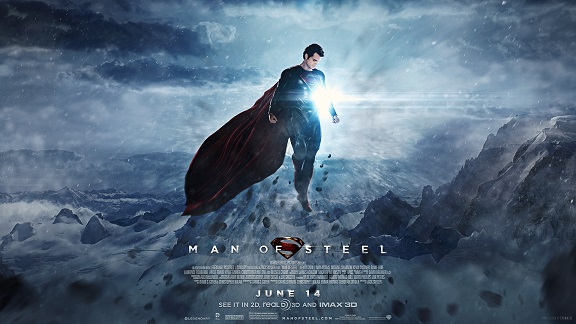 Every movie has a worldview. “Man of Steel,” the latest iteration of Superman, is no different. In fact, many explicit questions of worldview come up. Here, we’ll take a look at some major themes found in the movie. There will, of course, be SPOILERS below.
Morality
The question of morality looms large throughout the film. What does it mean to seek to do good in our world? At one point, Faora Ul, a commander in General Zod’s army, discusses how the fact that they have moved beyond morality has become an “evolutionary advantage” and that “evolution” always wins. I was struck by this brief aside for a few reasons. First, would moving apart from morality really be an advantage? Surely, it may lead to no self-sacrifice, but that self-sacrifice itself is something which preserves a race. In fact, the whole thrust of the film centered around the notion of self-sacrifice by Superman giving up those things which he liked or wanted in order to save others. The fact that Superman overcomes the moral nihilist is significant.
Second, does evolution always win? This is a question to consider for a different time and place, but surely I think one must wonder whether it is the case that having an advantage would guarantee victory in the race to survive. Any kind of random fluke could happen to eliminate a better-suited creature. Again, these are questions for another time, but in context of the movie, the whole notion was again overthrown, because Superman, with a stringent morality, overcame.
But at what cost? The climactic scene in which Superman confronts General Zod ends with Superman snapping Zod’s neck to prevent him from killing even more people. Superman’s self-made (but unmentioned in the movie) ethos of avoiding killing is thus itself overthrown. What does this say about objective morality? Is such a killing ever justified? Or, might it mean that Superman abandoned morality in order to confront the moral nihilist? Perhaps, instead, there are shades of virtue ethics found throughout, which confront Superman with a choice and allow him to carve out his own moral sphere?
These are questions suitable for reflection, and I think the movie does a great job asking the questions without spoon-feeding any answers.
Shades of a Savior?
Superman is, of course, readily seen as a savior-stand in. Superman is 33 years old, which is also the generally accepted age of Jesus at death. One scene depicts Superman in a church, and his face is set against a backdrop of a stained-glass depiction of Jesus in the Garden of Gethsemane. The scenery is surely intentional–Superman is seeking to give himself up for the sake of humanity, just as Jesus did. But the way in which they go about this self-giving are radically different. Superman’s ultimate sacrifice is compromising his moral code in order to save people, while Jesus’ was the ultimate sacrifice–taking on death and becoming sin for our sake.
The question which all of this begs, then, is whether Superman might be envisioned as an interesting Jesus-parallel, a kind of allegory to be utilized to discuss the real Savior, or whether Superman is instead a kind of rival savior figure intentionally subverting the narrative of an incarnate deity. Support for the latter might be drawn from the notion that Superman would be “viewed as a god” simply because he came from a different world and the atmosphere/sun of Earth strengthened him to superhuman (groaner, I know) levels. Is this a subversive way to describe Christ? Well, really only if one wants to accept that Jesus of Nazareth was some sort of alien and that a radical deception has gone on for two millenia. Of course, some people would like to suggest just that, but how grounded in truth might it be?
Conclusion
It seems to me that the film, then, is a useful way to juxtapose saviors. What does it mean to be a savior? How does one bring that about? There are parallels between Jesus and the story of Superman, but the most important things are perhaps the contradictions in their stories and lives. Many interesting questions about morality are raised in the film as well, and it would be hard to argue that the story of the movie is not compelling. “Man of Steel,” it seems, is another way to integrate the Christian worldview into every aspect of life. What are your thoughts on the movie? What other themes might be discussed (like this post on Platonic thought)? Let me know in the comments below.
Links
Be sure to check out the page for this site on Facebook and Twitter for discussion of posts, links to other pages of interest, random talk about theology/philosophy/apologetics/movies and more.
Book Review: “Hollywood Worldviews” by Brian Godawa– Speaking of worldviews in the movies, why not check out my review of this book which seeks to provide a method for analyzing film from a worldview perspective? Let me know what you think.
Engaging Culture: A brief guide for movies– I outline my approach to evaluating movies from a worldview perspective.
I have a number of ways in which I have critically engaged with culture in movies, books, and other arts in my posts on current events (scroll down for more posts).
Virtue Ethics and the Man of Steel– Check out this interesting post on the Platonic thought found throughout the movie.
SDG.
——
The preceding post is the property of J.W. Wartick (apart from quotations, which are the property of their respective owners, and works of art as credited; images are often freely available to the public and J.W. Wartick makes no claims of owning rights to the images unless he makes that explicit) and should not be reproduced in part or in whole without the expressed consent of the author. All content on this site is the property of J.W. Wartick and is made available for individual and personal usage. If you cite from these documents, whether for personal or professional purposes, please give appropriate citation with both the name of the author (J.W. Wartick) and a link to the original URL. If you’d like to repost a post, you may do so, provided you show less than half of the original post on your own site and link to the original post for the rest. You must also appropriately cite the post as noted above. This blog is protected by Creative Commons licensing. By viewing any part of this site, you are agreeing to this usage policy.
Book Review: “Theology and Science Fiction” by James F. McGrath
One of my favorite pastimes is to read and write science fiction. One of my others is to read and write theology. Thus, the intersection of the two is sure to catch my interest, and James F. McGrath’s book, Theology and Science Fiction serves as an excellent way to show how intertwined the two are. McGrath’s central thrust is to show how people may think of science fiction and theology as a cultural interchange. He does this by showing several parallels with science fiction and theology, and then outlining various views of science fiction and theology (science fiction against/as theology; theology as/against science fiction; etc.).
McGrath ably utilizes key source material while avoiding the pitfall of assuming readers of the book will be familiar with the entire field of science fiction. Rather than a survey of the who’s who in science fiction, then, the book serves as a kind of primer on how to reflect theologically upon science fiction, as well as how to perhaps integrate the two in meaningful, forward-moving ways.
The book is therefore full of broad points that trace themes such as “robots as gods” or “aliens as saviors,” reminiscent of the excellent Scientific Mythologies. The key with McGrath’s book, however, is a less negative assessment of science fiction overall. Yes, he acknowledges that often science fiction can be written against theology, but also draws out key areas in which the two overlap and even where theology can be written as science fiction and vice versa. These make for great ways to reflect on one’s own reading and writing in these areas and open avenues for research.
Gnosticism, Daoism, and many other views of the world are surveyed alongside science fiction as McGrath ably shows the wideness of the field.
Overall, Theology and Science Fiction is a worthy, exciting read. It would serve equally well as a textbook for a kind of cultural-integration theology course or as reading for those interested in either science fiction or theology (and certainly both). It comes highly recommended.
The Good
+Avoids potential pitfalls of being too negative or too positive
+Surveys wide range of views and possibilities
+Provides fruitful discussion points that may lead readers to more exploration
The Bad
-A tad short
-Perhaps too few examples
Disclaimer: I received a copy of the book from the publisher. I was not obligated to provide any specific kind of feedback whatsoever.
Links
Be sure to check out the page for this site on Facebook and Twitter for discussion of posts, links to other pages of interest, random talk about theology/philosophy/apologetics/movies and more!
Book Reviews– There are plenty more book reviews to read! Read like crazy! (Scroll down for more, and click at bottom for even more!)
Eclectic Theist– Check out my other blog for my writings on science fiction, history, fantasy movies, and more!
SDG.
——
The preceding post is the property of J.W. Wartick (apart from quotations, which are the property of their respective owners, and works of art as credited; images are often freely available to the public and J.W. Wartick makes no claims of owning rights to the images unless he makes that explicit) and should not be reproduced in part or in whole without the expressed consent of the author. All content on this site is the property of J.W. Wartick and is made available for individual and personal usage. If you cite from these documents, whether for personal or professional purposes, please give appropriate citation with both the name of the author (J.W. Wartick) and a link to the original URL. If you’d like to repost a post, you may do so, provided you show less than half of the original post on your own site and link to the original post for the rest. You must also appropriately cite the post as noted above. This blog is protected by Creative Commons licensing. By viewing any part of this site, you are agreeing to this usage policy.
Book Review: “A Shared Mercy: Karl Barth on Forgiveness and the Church” by Jon Coutts
 Jon Coutts’ A Shared Mercy explores the doctrine of forgiveness from the perspective of Karl Barth. Because it is the perspective of Karl Barth, it also reflects on doctrine of the church, as this was central to Barth’s thought. However, Coutts argues we must be careful not to subordinate all doctrines Barth taught under his doctrine of the church.
The book is organized into 6 chapters that largely center on two parts: Barth’s doctrine of forgiveness and what a full doctrine of forgiveness based on Barth might look like in application. Throughout the book there is a kind of unity between these topics as Coutts takes what Barth taught on forgiveness and applies it.
First, Coutts notes that because Christ taught that forgiveness is central to the lives of his followers, it follows that forgiveness is central to the church (1). Thus, exploring Barth’s Church Dogmatics, we ought to expect to find forgiveness as a central, not tertiary teaching. Coutts argues throughout the book that this is, indeed, what we find, though little has been studied in regards to Barth on forgiveness in the church in contemporary theology.
Readers may be concerned that a book so focused on a somewhat obscure topic may lack applicable insights, but Coutts does a great job not merely reporting Barth’s beliefs but also deriving thoughts therefrom that have application to the contemporary Christian. One example is the question of whether forgiveness first requires one to wait for repentance:
A legitimate practical concern… [is] the perpetuation of victimhood that seems to be implied when the imperative [to forgive] is self-giving and forgiving love. But this is founded on a misconception of the call to cruciform discipleship… Even if the abusive party is unrepentant, the result is not unforgiveness, but an acknowledgement of nonreconciliation… Forgiving the abuser is not the perpetuation of victimhood but the free offer of further reconciliation. (154-155)
This and many other passages provide direct application to the lives of believers. At several points, then, Coutts ably demonstrates the way to bring scholarship to the person in the pew, something that is too-often lacking in scholarly works.
As a Lutheran, I appreciated the highlighting of the importance of baptism and the Lord’s Supper for Christian community, though I think Barth’s teaching on these sacraments falls short of the biblical teaching. Yes, baptism is a sign of community, but Barth and Coutts each seem to err in seeing baptism as a kind of political action of the church rather than a gracious action of God. Similarly, the view of the Lord’s Supper as being primarily a work of the church rather than a gracious gift of God takes away the greatness of the gift.
Because the book is so focused on a specific aspect of Barth’s teaching, it does at times read a bit too much like a journal article–engaging with very specific opponents with little context. However, these moments are thankfully few and far between.
A Shared Mercy is an interesting, surprisingly applicable study on forgiveness in Barth’s doctrine. More importantly, it shares information that can be applied directly to the broader church. The importance of a doctrine of forgiveness ought never to be understated, as it is so central to Christian teaching. As such, this book is an important contribution to understanding what we as Christians, and the church, are called to do.
The Good
+Insights into Barth’s theology of the church, in balanced perspective
+Background for modern discussions of forgiveness
+More applicable material than me be expected
The Bad
-Sometimes reads a bit more like a journal article than a book
-Reduces both baptism and the Lord’s Supper to human act
Disclaimer: I received a copy of the book from the publisher for review. I was not obligated to provide any specific kind of feedback whatsoever.
Links
Be sure to check out the page for this site on Facebook and Twitter for discussion of posts, links to other pages of interest, random talk about theology/philosophy/apologetics/movies and more!
Book Reviews– There are plenty more book reviews to read! Read like crazy! (Scroll down for more, and click at bottom for even more!)
Eclectic Theist– Check out my other blog for my writings on science fiction, history, fantasy movies, and more!
SDG.
——
The preceding post is the property of J.W. Wartick (apart from quotations, which are the property of their respective owners, and works of art as credited; images are often freely available to the public and J.W. Wartick makes no claims of owning rights to the images unless he makes that explicit) and should not be reproduced in part or in whole without the expressed consent of the author. All content on this site is the property of J.W. Wartick and is made available for individual and personal usage. If you cite from these documents, whether for personal or professional purposes, please give appropriate citation with both the name of the author (J.W. Wartick) and a link to the original URL. If you’d like to repost a post, you may do so, provided you show less than half of the original post on your own site and link to the original post for the rest. You must also appropriately cite the post as noted above. This blog is protected by Creative Commons licensing. By viewing any part of this site, you are agreeing to this usage policy.
Really Recommended Posts 11/18/16- Star Trek, historical apologetics, creationism, and more!
 I have gone all over the internet to bring you these Really Recommended Posts for your weekend reading. As always, be sure to let the authors know what you think, and let me know as well.
Wyoming Fossils: Coming to Grips with the Absurdity of the Flood Geology Model of Fossil Origins– The sheer amount of fossils we can observe and their arrangement leads to some serious difficulties with young earth creationism and its scenarios of the Flood. (The picture of fossils here is from my private collection. The pictured fossils were found in Kansas, not Wyoming.)
Why the ESV’s “contrary to” in Genesis 3:16 matters– A decision to change the translation in Genesis 3:16 has wide ramifications.
Beyond the Final Frontier: A Christ and Pop Culture Tribute to Star Trek– Yep, the title pretty much says it all. Don’t forget to check out my own tribute to Star Trek’s 50th anniversary.
The Two Guys to Blame for the Myth of Constant Warfare Between Religion and Science– Some historical perspective on the idea that science and religion are at war with each other.
Dalrymple Responds to Gibbon Concerning the Spread of Christianity– “The History of the Decline and Fall of the Roman Empire” is one of the best known works of history in the West. Edward Gibbon, the author, was an urbane skeptic who used the work to aim skeptical arguments at Christianity. One of his contemporaries fired back.
Give to the Max Day 2016
Today is “Give to the Max” day for Minnesota, which means that you can double your gift’s effectiveness. Please take the time to go support biblical equality by donating to Christians for Biblical Equality today. Every 10$ you give will turn into 20$! This is a near and dear cause in my heart. Please help support it if you are able.
Christians for Biblical Equality is a phenomenal organization that provides biblically sound resources supporting women’s equality in the church and home. I would challenge any who disagree with this position to take the time to browse their website and learn more about the topic. I have written extensively on egalitarianism myself.
Thank you, and God bless!

 J.W. Wartick - Reconstructing Faith