J.W. Wartick
Sunday Quote!- Richard Davidson’s Moderate Egalitarianism
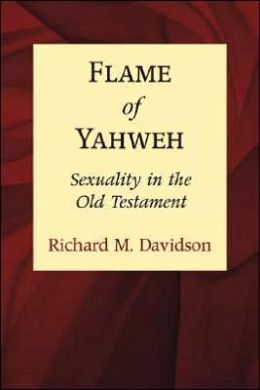
Every Sunday, I will share a quote from something I’ve been reading. The hope is for you, dear reader, to share your thoughts on the quote and related issues and perhaps pick up some reading material along the way!
Richard Davidson’s Moderate Egalitarianism
I’ve still been working my way through Richard Davidson’s mammoth study of sexuality in the Old Testament, Flame of Yahweh. The book is magisterial; there are not enough superlatives for it in my reading so far. His arguments are well thought out and he deals with the other side in great depth both in the text’s body and in footnotes. Davidson’s ultimate position is summed up about halfway through the book:
Jesus and NT writers began the task of cutting through all the then-current dualistic misogynist interpretations of the OT and the denigration of women, and ancient Jewish sources and practices likewise reveal a trend toward a higher view of women. It remains for the church and the synagogue to complete this task of restoration back to Eden. Divine grace is available to restore the home to the original egalitarian model, while allowing for servant leadership of the husband as may be temporarily necessary along the way to preserve unity and harmony in the family; divine grace will empower the covenant community to utilize and officially recognize the Spirit-endowed leadership gifts of women in the church and synagogue. May the day of complete restoration come soon. (295, cited below)
Davidson’s position is effectively the same as the egalitarian one until you read the middle section in which he advocates that the “servant leadership of the husband” could be a temporary necessity. His position, as argued earlier in the book, is that God mandated this kind of leadership post-fall because of the need for having leadership in the home now that sin has split it. However, even in this case he advocates working towards the Edenic ideal of a truly egalitarian marriage.
Such a position demonstrates, I think, the inadequacy of the current definitions of the egalitarian/complementarian debate. Because we have reduced it down to just two positions, some people who walk the line between the two don’t find a solid fit in either camp. I would characterize Davidson as an egalitarian, particularly due to his advocacy of working towards egalitarian marriage despite his view that a male-headship model of marriage might be a temporary necessity. Yet I wonder if we need to re-categorize the debate in order to more accurately allow for middle positions.
I’ve been greatly enjoying Davidson’s monumental work, Flame of Yahweh, and recommend it to you, dear readers.
Links
Be sure to check out the page for this site on Facebook and Twitter for discussion of posts, links to other pages of interest, random talk about theology/philosophy/apologetics/movies and more!
Sunday Quote– If you want to read more Sunday Quotes and join the discussion, check them out! (Scroll down for more)
Source
Richard M. Davidson, Flame of Yahweh (Peabody, MA: Hendrickson Publishers, 2007).
SDG.
Really Recommended Posts 11/27/15- Purity, Final Fantasy, and more!

Screenshot from Final Fantasy X. I do not claim rights to this image.
I’m getting this round up a little late because I was traveling. I hope you all had safe travels (if you traveled) and some time to reflect on the blessings God gives us over this holiday weekend. I’m on a bit of a time crunch so I’ll let you just get to the posts!
7 Lies Purity Culture Teaches Women– The “purity culture” movement seems to be filled with misconceptions about men and women. Here are some difficulties with what has come to be known as “purity” teaches women.
Revelations of Suffering in Final Fantasy X and Shusaku Endo’s Silence– Look, if you follow this blog you know I’m a big nerd. Is it any surprise that I love Japanese Role-Playing Games? Final Fantasy X was one of my favorites, though I found some difficulties with its worldview. Here’s a great post comparing the game to what sounds like a wonderful novel, particularly on the notion of suffering.
Christianity: The World’s Most Falsifiable Religion– Christianity stands on an historical claim. That claim is the resurrection of Jesus. Does that make Christianity unique? This post argues that the falsifiable nature of Christianity makes it worth considering.
The 10 Least Popular Books of the Bible (Infographic)– I rediscovered this one a little while back and I just love it. It helps us to think about those books we may not be reading as much–and gives us the opportunity to learn more about them.
Are Pro-Lifers Hypocrites?– A common charge against pro-life groups is that they are hypocritical, for various reasons. Here is a post answering one popular meme/comedian on the topic.
Book Review: “The Analogy of Faith” by Archie J. Spencer
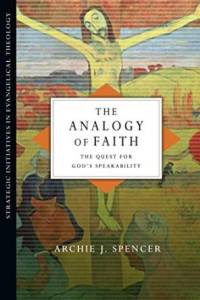
A question which we don’t often stop to think about in theological discussions is whether or not it is, in principle, possible to speak of the divine. Archie Spencer’s book, The Analogy of Faith, asks just this question and offers an in-depth analysis of various approaches alongside proposing a model for speaking about God.
The book is split, roughly, between analysis of various proposed models for speaking about God and a development of a Christocentric model for speaking of the divine.
The analysis of Aristotle’s analogy of being in the first chapter is particularly interesting. Spencer notes that because Aristotle’s analogy depends upon the interrelatedness of things through cause, and because God is the ultimate relation of causation as the unmoved mover, his concept of analogy is ultimately almost useless. The reason is because it becomes too broad: effectively anything can be related to anything else through an analogy of relation, and then this tells us nothing about the things being related themselves. Yet even here Spencer argues that Aristotle’s concept of analogy–itself reliant upon Plato in many relevant ways–can be useful in that it relates causality and the divine ideas, thus preparing the way for Neoplatonist thinking.
Following on the heals of this analysis are some fantastic insights into Augustinian and Thomistic thought about analogy as well. Thomas Aquinas is perhaps the most important thinker regarding the use of analogy in speaking about God of all time. As Spencer notes, it is impossible to adequately deal with the topic without spending significant time on Aquinas’s view of analogy. However, Spencer’s ultimate analysis is that Aquinas did not have a well-developed theory of analogy of his own. Instead, he asserts, it has been the followers and interpreters of Aquinas who made a “Thomistic” theory of analogy, based around the analogy of being. Because these theories ultimately depend on an Aristotelian foundation, they, too, are found to be ultimately inadequate. After all, if we are unable to reference God’s being in any direct way, then it is difficult to see how creatures totally unlike the divine can have an analogue of that divine. Spencer’s analysis in this section is thorough and fairly convincing.
Karl Barth and Eberhard Jungel are the next thinkers addressed, and they provide a basis for Spencer’s own theory of analogy, which is Christological. I’m summarizing an extraordinarily detailed theory here, so I’m sure I’m not adequately outlining it, but the basic thought is that because God has come to us, that allows us through divine revelation of Christ to refer to God. Thus, analogy is the analogy of faith rather than an analogy of being–one in which God has condescended to allow reference to the divine being in human language, rather than one in which we are able to, by our own thinking, come to language which speaks of God.
Upon reading Spencer’s analysis and arguments, I am fairly convinced that he is correct in his notion that the analogy of being is insufficient to capture the possibility of talk about God. What I do wonder, however, is whether Spencer (and most others) too quickly dismiss the possibility of univocal language about God. It seems to me that if we are to say “God is love” then we must have some sense in which that actually relates to God. To be fair, Spencer could respond by pointing to such a statement as exactly in concord with his theory, which would assert that it does relate to God because God has revealed the divine nature to us in Christ and God’s Word, thus allowing us to rightly say “God is love.” However, I think that a deeper treatment of the possibility of univocal language related to God talk would have been appreciated in a book like this. Though, admittedly, the book is already lengthy and is specifically focused on analogy, not the possibility of univocity or equivocal language.
One minor complaint I have is that in the thoroughness of the book, it seems that Spencer is sometimes repetitive. He hits the same point from several different angles in the same chapter, to the point that the book can become quite dry at times. However, the subject matter itself is deeply intriguing, and his full treatment of the topic makes it hard to fault him for stating a few things more than once.
Those interested in reading a dense book of philosophical theology should look no further than The Analogy of Faith by Archie Spencer. It is a deep work that demands much reflection and consideration. It is the kind of seminal writing to which one will constantly return as one thinks about the topic discussed. I can say that I learned a great deal from the book, and had my mind stretched as it hasn’t been stretched in some time. I recommend it highly.
The Good
+Deep analysis of key concepts related to analogy
+Many avenues for further research
+Workable theory which offers some resolution
The Bad
-A bit too verbose at times
-Dismisses univocity a bit too quickly
Disclaimer: I received a review copy of the book from the publisher. I was not required to provide any specific kind of feedback whatsoever.
Links
Be sure to check out the page for this site on Facebook and Twitter for discussion of posts, links to other pages of interest, random talk about theology/philosophy/apologetics/movies and more!
Book Reviews– There are plenty more book reviews to read! Read like crazy! (Scroll down for more, and click at bottom for even more!)
Source
Archie Spencer, The Analogy of Faith(Downers Grove, IL: InterVarsity, 2015).
SDG.
——
The preceding post is the property of J.W. Wartick (apart from quotations, which are the property of their respective owners, and works of art as credited; images are often freely available to the public and J.W. Wartick makes no claims of owning rights to the images unless he makes that explicit) and should not be reproduced in part or in whole without the expressed consent of the author. All content on this site is the property of J.W. Wartick and is made available for individual and personal usage. If you cite from these documents, whether for personal or professional purposes, please give appropriate citation with both the name of the author (J.W. Wartick) and a link to the original URL. If you’d like to repost a post, you may do so, provided you show less than half of the original post on your own site and link to the original post for the rest. You must also appropriately cite the post as noted above. This blog is protected by Creative Commons licensing. By viewing any part of this site, you are agreeing to this usage policy.
Problems with the “Slippery Slope” argument for Inerrancy
 I believe the Bible is true in all that it teaches, and that this is what is meant by inerrancy. The Bible teaches no error. There is much debate over the meaning of inerrancy, and I’m not going to enter into that debate now (though I have written on it, if you’d like to see my opinion). What is important is that I want to start by saying that I affirm inerrancy, but I think one common argument in favor of the doctrine is mistaken.
The Slippery Slope Argument for Inerrancy
The argument I’m referring to is what I shall dub the “Slippery Slope” argument. Basically, it asserts that if someone doubts that one part of the Bible is true, doubt about the rest of the Bible unerringly follows [see what I did there?]. One example of this can be found in a recent webcomic from Adam Ford. We might write out the argument in syllogistic form as something like:
1. If one part of the Bible is in thought to be an error, other parts are thrown into doubt
2. Person A believes the Bible has an error.
3. Therefore, person A has reason to believe other parts are thrown into doubt.
The syllogism as I have written it is surely not the only way to put this argument. I am providing it largely as an illustration of how the argument might be stated. The core of the argument, however, is that if one thinks part of the Bible is an error, the rest of it is made at least possibly dubious.
Analyzing the Argument
There are several difficulties that immediately come up, ranging from concrete to obscure. On the obscure end, we might question what is meant by “an error” and whether that error is said to be theological, scientific, medical, or something else. We could then debate whether an alleged scientific error in the Bible is grounds for stating that there is “an error” in the Bible to begin with, by debating different views Christians hold about the Bible’s relationship with science (or medicine, or whatever). I’m not going to delve into obscurities here, however interesting they may be (and, in my opinion, they are very interesting).
Instead, I want to focus on some major difficulties with the argument. For one, it assumes that the interlocutor, person A, views the entirety of the Bible as on the same evidential plain. That is, for the argument to hold any weight, person A would have to believe that the Bible is linked together so intricately that a belief that Genesis 34:17 [I arbitrarily chose this verse] is an error (however defined) would entail that John 3:16 is possibly an error as well. Clearly, for the argument to be sound, Premise 1 must be correct, and it seems to be obviously false.
The reason I say this is because the possible errancy of John 3:16 does not follow from belief that there is an error in Genesis 34:17. Suppose you are reading a history textbook and you see that it states the date of General Lee’s surrender at Appomattox to be April 9, 1864. You, being a proud history buff, know that the date was actually April 9, 1865. However, the year is only off by one. You may proceed more carefully through the rest of the book, but you would not have any reason to think that the book was mistaken when it said that General Patton was a United States general in World War II.
The argument therefore assumes a unity of the text such that the entire Bible stands or falls together. Now, that might be a perfectly correct position to hold–and I do hold to the unity of Scripture myself–but that is not an obligatory or necessary view. That is, someone might deny that the Bible is a unified text and therefore need not ascribe to the view that if one part is in error, another must be.
But this is not the only difficulty with the argument. Another problem is that it assumes person A has no more reason to believe the portions of the Bible they believe are true than they do for the portions they believe might be errors. Yet this is mistaken, and demonstrably so. Person A may believe there is overwhelming evidence for the truth of the resurrection of Jesus Christ, such that they affirm that without question, while also thinking that the evidence against Israel having been in Egypt is quite weighty as well. Thus, they believe the Bible is perhaps mistaken on the status of Israel in relation to Egypt in Exodus, but they also affirm that it is clearly correct on Jesus’ resurrection. But the slippery slope argument presumes that they cannot hold these beliefs together without at least significant tension. But why? Again, the reason appears to be because the slippery slope argument relies on the assumption that the evidence for one part of the Bible must be exactly on par with the evidence for another. However, that in itself is clearly wrong.
Conclusion
Again, I affirm the doctrine of inerrancy. I just think we should not rely on this as one of our arguments. I have used the slippery slope argument myself in the past, but I believe the above analysis shows I was mistaken to do so. I think that others should avoid the argument as well so that we can present the best possible arguments for the truth of the Bible without error.
I suspect many will take issue with the analysis above. I’m not saying that I believe any portion of the Bible is an error. Nor am I denying the unity of Scripture. What I am saying is that it is not logically fallacious to deny that unity. I’m saying that I believe it is logically consistent to believe that the Bible may have an error while still affirming, for example, the death and resurrection of Jesus Christ. Is that something I would recommend? No, but neither is it something I would say is necessarily contradictory. Those who do want to take issue with my analysis must demonstrate how it is mistaken, and thus provide reason to think that the assumptions the slippery slope argument is based upon are sound.
Again, a final note is that I have taken the place of the interlocutor in several instances in this post. My point is simply that someone who did deny these things could come up with effective counters to the slippery-slope argument for inerrancy. Therefore, it seems to me that the argument is ineffective at best and faulty or fallacious at worst. It relies on presupposing that the opponent operates in the same sphere of presuppositions as the one offering the argument, but they need not do so.
Links
Be sure to check out the page for this site on Facebook and Twitter for discussion of posts, links to other pages of interest, random talk about theology/philosophy/apologetics/movies and more!
On the “Fuzzification” of Inerrancy– I argue that we have qualified the term “inerrancy” unnecessarily and to the extent that it has become difficult to pin down its actual meaning. I advocate a return to a simple definition of the term.
SDG.
——
The preceding post is the property of J.W. Wartick (apart from citations, which are the property of their respective owners, and works of art as credited) and should not be reproduced in part or in whole without the expressed consent of the author. All content on this site is the property of J.W. Wartick and is made available for individual and personal usage. If you cite from these documents, whether for personal or professional purposes, please give appropriate citation with both the name of the author (J.W. Wartick) and a link to the original URL. If you’d like to repost a post, you may do so, provided you show less than half of the original post on your own site and link to the original post for the rest. You must also appropriately cite the post as noted above. This blog is protected by Creative Commons licensing. By viewing any part of this site, you are agreeing to this usage policy.
Sunday Quote!- Nation or Kingdom?
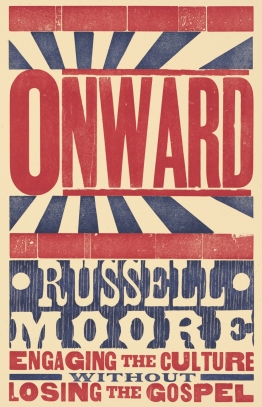 Every Sunday, I will share a quote from something I’ve been reading. The hope is for you, dear reader, to share your thoughts on the quote and related issues and perhaps pick up some reading material along the way!
Nation or Kingdom?
Russell Moore, in his latest book, Onward: Engaging the Culture Without Losing the Gospel counters the notion that passages like 2 Chronicles 7:14 should be read as a kind of “God and Country” text for civil religion in America:
The problem is that the application of this, and other passages, to the United States–or to any other nation, for that matter–is a confusion of the question of who “we” are. The United States, or any other modern nation, is not in a covenant with God… We too often see America as somehow more “real” than the kingdom [of God], and our country as more important than the church. (75, 76 cited below)
Moore has more to say about the use of this and other passages, but this sums up his argument. We too often make our identity with our nation rather than with the Kingdom.
I have found Russell Moore’s Onward to be a very rewarding read thus far.
Links
Be sure to check out the page for this site on Facebook and Twitter for discussion of posts, links to other pages of interest, random talk about theology/philosophy/apologetics/movies and more!
Sunday Quote– If you want to read more Sunday Quotes and join the discussion, check them out! (Scroll down for more)
Source
Russell Moore, Onward: Engaging the Culture Without Losing the Gospel (Nashville, TN: B&H Publishing, 2015).
SDG.
Really Recommended Posts 11/20/15- Anti-Trinitarian theology, the Bible without God, and more!
 I’ve got another round up of reads for you, dear readers! This week, there are some posts I’m pretty excited about. Thinking about attacking the doctrine of the Trinity? Our first post tells you how not to defend one prominent anti-Trinitarian theology. Why are there books in my Bible that don’t mention God? Found a post for ya! Other posts include Star Trek and theology, the death of the apostles, and standing up for women at a men’s retreat. Let me know what you think, and be sure to let the authors know as well!
How Not to Defend Jehovah’s Witness Theology– An excellent post analyzing the way that non-Trinitarians attempt to attack the doctrine of the Trinity. It’s not enough to poke holes in another theory. This is a piece well worth your time!
The 2 Books of the Bible that Don’t Mention God– Here’s an interesting post looking at the book of Esther and the Song of Songs, 2 books which don’t mention God. Why are they in the Bible. Disclaimer: I have been convinced that YHWH–the divine name–is mentioned in Song of Songs, but I think this post is still excellent.
5 Reasons to Reunite with Reunion- Star Trek: The Next Generation Retrospective– I love Star Trek. I love when I get to think about theology and Star Trek. If you have those loves, you’ll enjoy this post.
What Makes the Death of the Apostles Unique?– All kinds of people are willing to die for their faith. Here is a post showing why the Disciples’ willingness to die sets them apart. I have written on this topic myself: “Dying for Belief: Analysis of a Confused Objection to one of the evidences for the Resurrection“, so check out my post on it as well!
Standing up for our Sisters at a Men’s Retreat– Men have privilege. It’s true. Here is a post about how we should stand up for those who do not have the same advantages, even in man-to-man talks.
Book Review: “Aborting Aristotle” by Dave Sterrett
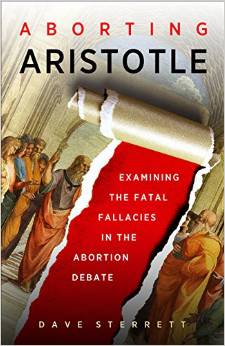 Aborting Aristotle by Dave Sterrett explores some of the metaphysical background needed to discuss the morality of abortion. It is a brief book best seen as a primer on issues related to abortion in philosophy.
The book proceeds in a logical fashion from showing that inconsistency doesn’t undermine the good things that people like Aristotle or Thomas Jefferson said, then arguing that metaphysics is necessary, and moving on through examination of some of the primary grounds for believing abortion is permissible: uncertainty and materialism. Then, arguments are put forward showing that natural law can be a basis for rule of law, that distinctions related to substance are important to the debate, that all humans are persons, and that we are persons not based on what we do but rather on who we are. The book ends wit ha chapter showing some ares of agreement or disagreement between pro-life and pro-choice advocates.
Weighing in at 120 pages, the book is quite brief on these various topics. Again, it functions as a primer, not an exhaustive overview of any of these issues. That limits its usefulness in some ways, as there are other books which provide groundwork on philosophy before diving into the abortion debate with greater depth. Where Sterrett’s work excels is in its focus on the concept of “substance” and its importance for understanding personhood. He demonstrates that much of the debate boils down to one’s philosophical background, and advocates one which sees humans as substances.
Aborting Aristotle is a great read for someone looking to ground themselves in the abortion debate. It is the kind of book that one should read before delving into some of the meatier works on ethics and bioethics related to abortion.
The Good
+Provides much-needed background knowledge of the abortion debate
+Builds a framework for discussing various arguments about abortion
The Bad
-Extremely brief
-Relies a bit too much on quotes
Book Review: “Who Was Adam?” – 10-Year Update by Fazale Rana with Hugh Ross
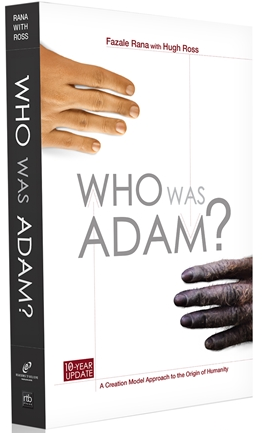
Who Was Adam? by Fazale Rana with Hugh Ross is a major work on human origins from the group Reasons to Believe, an Old-Earth Creationist think-tank. This edition, the 10-Year Update, features over 100 pages of additional material analyzing recent discoveries.
The book is organized in such a way that the first two parts are the original book, while the third part is all new material and analysis. Rana and Ross do an admirable job surveying an immense amount of scientific material related to human origins. They present what they argue is a scientific, creationist model (called the Reasons to Believe model [hereafter referred to as the RTB model]) on human origins. This model includes predictions and testable hypotheses. For example, one of the main predictions is that humans–homo sapiens sapiens–are utterly unique and that their cultural capacity will turn out to be unmatched. Thus, any alleged ancestors of humans will not demonstrate continuity of culture and the like.
They take as confirmation of this prediction the notion that biologists have not managed to put together a solid order in which to place the fossils that are alleged to be human ancestors. Without any such family tree that can be confirmed, the notion that humans evolved, Rana and Ross argue, remains a theory and the question of human evolution is not a fact. They conclude this after having looked at a number of major fossil finds while identifying difficulties with dating them, difficulties with taxonomy and identification, and more.
The updated portion of the book is significant. Those wondering if it is worth getting for this update should know the answer is in the affirmative. There are over 100 additional pages filled with analysis of more recent discoveries and how they impact the RTB model of human origins. To their credit, the authors frankly admit areas in which their predictions were mistaken or their model is challenged. Perhaps the most interesting section is that in which Rana and Ross analyze various behaviors thought to be evidence of early culture among hominids and the like (chapter 23). They show that these behaviors might be anthropomorphism of animal behavior. The chapter on junk DNA shows how scientific discovery has confirmed one of the predictions of the RTB model, and the concluding pair of chapters analyze arguments for and against the RTB model and its viability.
One critique I have is particularly evident in the original work (not in the expanded materials, though), is the occasional use of pure rhetoric to try to make a point. For example, in discussing hominid and homo fossils, Rana and Ross argue that the connections between these fossils has not been established. They therefore conclude that “Without these connections, human evolution cannot be declared a fact but remains a theory” (42). I find this type of wording unfortunate.
Some of the other reasoning behind the RTB model seems possible to go either way (i.e. towards evolutionary theory or the RTB model). For example, Chapter 6 outlines a number of conditions which are to demonstrate humans arrived at the just-right timing for human civilization to flourish–something the RTB model would predict. On the other hand, the authors state the evolutionary model would not necessarily predict this. However, it seems that–from my admittedly limited understanding of biology–the evolutionary model would also predict something similar because life adapts so well that if there was a “just right” circumstance for a type of life, that life would be selected for. Whether this is accurate or not is a different question (and whether I have it right), but it doesn’t seem like this is necessarily evidence for RTB over and against evolution.
The difficulty of evidence that could go either way is one of the biggest difficulties throughout the book. Arguments are often made that because the RTB model allows for a specific piece of evidence, that means that the RTB model is still viable. But there is a difference between confirmation of a model and lack of disconfirmation. It would be more reassuring to have more specific scientific evidence in favor of the model rather than simply being able to be subsumed into it.
At times I also wondered whether certain aspects of the RTB model were necessary for them to defend. For example, the insistence on reading the ages of early humans in the Bible as literal periods in which humans lived for 900+ years. They acknowledge in the expanded section that there has yet to be confirmation of this and that findings so far challenge this idea, yet they continue to hold it as part of the model. I can’t help but think it is a superfluous part that doesn’t actually contribute much to the overall workings of their model.
Who Was Adam? is a significant work worthy of a careful reading by any interested in Christian perspectives on human origins. It provides Christians insight into an Old Earth Creationist perspective on human origins, while also providing enough raw information for readers to draw their own conclusions and formulate their own ideas. It will challenge Christians on their thinking and perhaps force people to re-evaluate their own theories. It is a valuable resource despite having what I see as some difficulties throughout. It is recommended.
The Good
+Frank evaluation of own model after 10 years
+Offers much insight into research of hominids
+Plenty of data means readers can form their own conclusions
+Genuinely valuable update with much new material
The Bad
-Some unfortunate reliance on rhetoric
-Methodological concerns
Disclaimer: I received a copy of the book for review from the publisher. I was not required to give any specific kind of feedback whatsoever.
Links
Be sure to check out the page for this site on Facebook and Twitter for discussion of posts, links to other pages of interest, random talk about theology/philosophy/apologetics/movies and more!
Book Reviews– There are plenty more book reviews to read! Read like crazy! (Scroll down for more, and click at bottom for even more!)
Source
Fazale Rana with Hugh Ross, Who Was Adam? (Covina, CA: Reasons to Believe Press, 2015).
SDG.
——
The preceding post is the property of J.W. Wartick (apart from quotations, which are the property of their respective owners, and works of art as credited; images are often freely available to the public and J.W. Wartick makes no claims of owning rights to the images unless he makes that explicit) and should not be reproduced in part or in whole without the expressed consent of the author. All content on this site is the property of J.W. Wartick and is made available for individual and personal usage. If you cite from these documents, whether for personal or professional purposes, please give appropriate citation with both the name of the author (J.W. Wartick) and a link to the original URL. If you’d like to repost a post, you may do so, provided you show less than half of the original post on your own site and link to the original post for the rest. You must also appropriately cite the post as noted above. This blog is protected by Creative Commons licensing. By viewing any part of this site, you are agreeing to this usage policy.
Was the Three-Tiered Universe Merely Phenomenological?
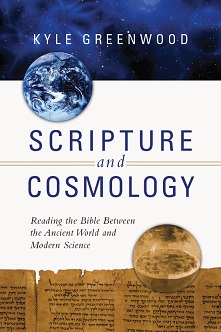 Was the Three-Tiered Universe Merely Phenomenological?
There are many passages throughout the Bible which appear to show that the authors believed in a three-tiered universe in which there were the heavens, the earth, and the underworld/waters. Some Christians argue that these descriptions were merely phenomenological: that is, the authors were writing as observers rather than attempting to report anything about the actual world. It is like when we say the sun rises, we aren’t actually intending to say the sun is orbiting the Earth, but rather just reporting something we experience: our perspective shows the sun rising.
Kyle Greenwood, in Scripture and Cosmology, argues that the biblical authors did, in fact hold to a three-tiered cosmology, and so the language should not be reduced to being merely phenomenological. He cites four strands of evidence for this conclusion:
First, whenever we find physical descriptions of the cosmos, it is described as three-tiered. Second, whenever we find… images or drawings of the cosmos, they are three-tiered. Third, nowhere… do we find the authors explaining their cosmology in any other terms besides the three-tiered system. Finally, we know that ancients thought of the cosmos in terms of the heavens, earth, and seas because eventually these ideas were challenged by Aristotle and Ptolemy, whose ideas were later challenged by Copernicus, Galileo, and Kepler. (69, cited below)
Greenwood’s argument seems to me to be quite convincing. If we want to hold that the Bible’s cosmology is phenomenological, we should have some textual evidence that demonstrates a different perspective was in mind. We don’t. Thus, when an author in the Bible speaks of the skies being “hard” (Job 37:18, for example), this reflects an ancient cosmology.
None of this does anything to undermine the authority or inerrancy of the Bible. Inerrancy, I believe, should properly be understood as meaning “The Bible is true in whatever it teaches.” (See my article on the term “inerrancy” and its usage.) The authors aren’t trying to teach us about cosmology, that’s just a background belief. They must describe the heavens somehow, and they used the understanding they had of the cosmos.
What do you think? Can we reduce the language of the Bible to being phenomenological? What reasons might we have for doing so? How might we best understand the Bible’s cosmology in light of other Ancient Near Eastern cosmology, and how could that help us understand what the Bible teaches?
Links
Be sure to check out the page for this site on Facebook and Twitter for discussion of posts, links to other pages of interest, random talk about theology/philosophy/apologetics/movies and more!
Sunday Quote– If you want to read more Sunday Quotes and join the discussion, check them out! (Scroll down for more)
Source
Kyle Greenwood, Scripture and Cosmology (Downers Grove, IL: InterVarsity, 2015).
SDG.
Really Recommended Posts 11/13/15- Homo Naledi, Dean Koontz, and more!
I have scoured the ‘net and some of my favorite blogs to provide you with another round of excellent reads through your weekend and into next week! I hope you’ll enjoy them! Let me know what you think, and be sure to tell the authors you enjoyed their posts as well! The topics we have this week include Dean Koontz’s Innocence, the homo naledi fossil find, apologetics and atheism, and whether you can be pro-life as a man.
Responding to the Astute Observation that I am a Man– Are men allowed to be involved in discussions about abortion? Here, Josh Brahm discusses the common accusation that men cannot talk about pro-life/pro-choice issues.
Dean Koontz’s Innocence– I read this book about two weeks ago and loved it. Here is a fantastic look at some of the worldview-level issues the book raises. Dean Koontz is a Christian author who is one of the highest-selling authors in our time.
Bones of Contention: ICR Claims Homo naledi fossils of “imaginary creature”– ICR is the Institute for Creation Research, a Young Earth Creationist organization.
Repressed knowledge of God?– Thomistic philosopher Edward Feser questions whether it is accurate to say atheists have repressed knowledge of God. Specifically, he enters into a critique of apologist Greg Koukl. What are your thoughts on this discussion?
Women and Church Politics: Living Outside the Bubble– Politics in church? Surely not! Okay, yeah they’re there. Here’s a post that discusses how church politics can impact women.

 J.W. Wartick - Reconstructing Faith