J.W. Wartick
“Jurassic World”- A Christian Perspective: Gender, Dinosaurs, and Genetic Engineering

See this? This is what would have happened if we’d lived with dinosaurs.
I had the chance to watch “Jurassic World” this weekend. It was pretty cool to see the dinosaurs back in action on the big screen. I enjoyed the tie-ins to the previous movies as well. Here, I will reflect on some of the worldview issues the movie raised. There will be SPOILERS in what follows.
Genetic Engineering
I’ve reflected on genetic engineering of humans in the past, but Jurassic World brings up some other difficulties that would perhaps be brought about by such a practice. Unintended side-effects were part of what created the Indominus Rex, a truly terrifying beast that had aspects of all kinds of different dinosaurs mixed into it to make it scarier.
I am by no means an expert on genetic engineering, but I do wonder whether tampering with the human genetic code could lead to some unintended side effects as well. Is it possible that our messing around with certain factors could deeply impact others? If so, what might that suggest about the moral status of genetic engineering?
Dinosaurs Would Kill People!
Jurassic World is not a friendly place for humans. Carnivorous dinosaurs–and even herbivorous dinosaurs–would be extremely dangerous to humans to say the least. Sure, the Velociraptors would have been smaller, and there is no Indominus Rex, but there were Ultraraptors and Giganotosaurous and the like. Why care about this from a worldview perspective? Well, most simply, because it seems that any worldview which would suggest that humans and dinosaurs managed to survive alongside each other has some serious difficulties with which to deal if it is to be believed. The young earth creationist position does hold to this exact view: that humans and dinosaurs at one point lived alongside each other.
Perhaps the young earth creationist would simply argue that the really powerful and dangerous dinosaurs did not exist alongside humans. The Earth is indeed a massive place–perhaps God simply ordered things such that the T-Rex and the human were not living in the same area. This counter-argument has some power to it, but then we must consider the very foundation of the young earth perspective: that this view is allegedly based on the Bible. Yet the authors of the Bible are allegedly aware of dinosaurs, according to some young earth creationists, and used words like behemoth to describe them [I do not think this is a legitimate interpretation; the behemoth is not a dinosaur]. In that case, it seems that such dinosaurs did indeed live alongside humans.
Moreover, the question would have to be asked of what biblical evidence there is for such convenient ecological sorting that would keep dinosaurs from utterly obliterating humanity.
Men and Women
There are a number of issues with statements or assumptions about gender that come up in the movie without being addressed. Why does Claire keep her high-heels on the whole time and how do they not break? Is it for the sake of the viewer? What about Zach’s continual lusting after the young women his age when he has a seemingly loyal girlfriend back home?
Interestingly, it is Claire who ultimately saves the day, despite Owen seeming to be the hero throughout. Her quick action to grab T-Rex to fight Indominus was a good turnabout on the expectations the movie built up regarding men and women.
Are You Not Entertained?
The investors in Jurassic World were worried that the profit margins weren’t as high as they had hoped. The answer was, as argued by Claire, was to genetically modify the dinosaurs to make them more fearsome and interesting. There was something deeply ironic about this because the movie almost seemed to be referencing itself: perhaps people have gotten bored by seeing T-Rex doing stuff: they need INDOMINUS!
I was thinking about how this might reflect on our culture and our insatiable need for newer, bigger, and better. But is this a true need or is it something that we are using to fill the voids in our world? I think too often we try to fill the holes in our view of reality with the wrong things, and the ironic commentary here–intended or not–was well-taken.
Conclusion
Jurassic World is not a movie made for deep reflection on the various issues it raises. But the fact that it does raise this issues is, in itself, interesting and worth thinking about. What are your thoughts on the movie? What of genetic engineering, gender issues, or humans living with dinosaurs?
Links
Be sure to check out the page for this site on Facebook and Twitter for discussion of posts, links to other pages of interest, random talk about theology/philosophy/apologetics/movies and more!
Movies– Read other posts on this site about movies written from a worldview perspective. (Scroll down for more.)
SDG.
——
The preceding post is the property of J.W. Wartick (apart from quotations, which are the property of their respective owners, and works of art as credited; images are often freely available to the public and J.W. Wartick makes no claims of owning rights to the images unless he makes that explicit) and should not be reproduced in part or in whole without the expressed consent of the author. All content on this site is the property of J.W. Wartick and is made available for individual and personal usage. If you cite from these documents, whether for personal or professional purposes, please give appropriate citation with both the name of the author (J.W. Wartick) and a link to the original URL. If you’d like to repost a post, you may do so, provided you show less than half of the original post on your own site and link to the original post for the rest. You must also appropriately cite the post as noted above. This blog is protected by Creative Commons licensing. By viewing any part of this site, you are agreeing to this usage policy.
Really Recommended Posts 6/26/15- Genetic engineering, parenting, evolution, and more!
 I hope you will enjoy the latest round of the Really Recommended Posts, dear readers! I have taken some time out of a super busy schedule this week–preparing to move to a different state!–to scour the net for great reads to pass on to you. The topics we have include evolution, genetic engineering, parenting, historical apologetics, and racism. Let me know what you think, and, as always, be sure to let the authors know you enjoyed their posts as well!
Learning to Co-Parent– What does it mean to believe in the equality of the genders when it comes to parenting? How do we submit to each other out of love for the Lord through parenting? Here’s a great post on the topic with some practical insights.
Tears, Change, and Trust– A sermon on the Charleston shootings from a friend, Timothy Siburg. There are some good challenges against racism brought up in this post, and I urge you to check it out.
4 Key Points Christian Kids Need to Understand About Evolution– How should we be critical thinkers when it comes to evolution? Here’s a pretty even-keeled post on teaching kids about evolution. The post doesn’t fall into the pitfalls of assuming the absolute validity of any specific viewpoint or oversimplifying the topic. I enjoyed it.
Why You Should Genetically Engineer Your Children– Here’s an interesting argument from a Christian perspective for genetic engineering. I have reflected on the topic in the past and come down on a somewhat more negative perspective, though this post has challenged some of my positions. Check out my own post on genetic therapy and engineering, which I recently revised and updated.
Conrad Emil Lindberg on God and Revelation– Doug Geivett shares some insights on apologetics from the Lutheran theologian Conrad Emil Lindberg in his continuing series on historical apologetics. Be sure to read teh whole series, because it is excellent.
Book Review: “Bound for the Promised Land” by Oren Martin
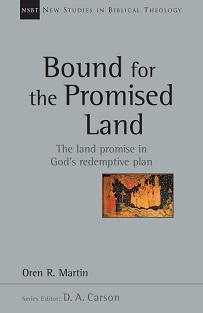
Oren Martin’s Bound for the Promised Land
The book advances a broad argument for this thesis by surveying what the Bible has to say about the land promise and its fulfillment. Martin does not offer a comprehensive look at every verse in the Bible that deals with the land promise, but rather puts forward a canonical view in which he surveys what various books of the Bible say about the promise and puts them in perspective alongside each other. He thus develops the promise from Eden in Genesis through Abraham, into Canaan, exile, through prophetic hope of return, the ushering in through Christ, and the ultimate consummation in the New Creation.
The book isn’t going to blow readers away with stunning insights. Frankly, that can be a good thing when it comes to theology texts. Martin’s exegesis is sound, based on firm principles and clearly drawn from the texts themselves. By connecting these verses to wider canonical strands, he demonstrates that his position is capable of dealing with the whole teaching of the Bible on the land promise rather than isolating it and trying to trump these threads with individual out-of-context verses.
Though not stunning or necessarily new, the insights Martin puts forward provide a great resource for those interested in eschatology and the issues raised by dispensationalists regarding the land promise. Martin does not support the dispensational view and argues cogently that it cannot be supported by the texts that teach on the land promise. The notion that we must take the land promise “literally” does not do full justice to the texts themselves and cannot account for the broadness of teaching on the topic.
Bound for the Promised Land
The Good
+Clearly outlines presuppositions the author maintains throughout the study
+Solid exegesis
+Canonical view gives picture of whole teaching of Bible on topic
+Applicable insights put forward
The Bad
-Skims over arguments very briefly at points
Disclaimer: InterVarsity Press provided me with a copy of the book for review. I was not obligated to provide any specific kind of feedback whatsoever, nor did they request changes or edit this review in any way.
Source
Oren Martin, Bound for the Promised Land
Links
Be sure to check out the page for this site on Facebook and Twitter for discussion of posts, links to other pages of interest, random talk about theology/philosophy/apologetics/movies and more!
Book Reviews– There are plenty more book reviews to read! Read like crazy! (Scroll down for more, and click at bottom for even more!)
SDG.
——
The preceding post is the property of J.W. Wartick (apart from quotations, which are the property of their respective owners, and works of art as credited; images are often freely available to the public and J.W. Wartick makes no claims of owning rights to the images unless he makes that explicit) and should not be reproduced in part or in whole without the expressed consent of the author. All content on this site is the property of J.W. Wartick and is made available for individual and personal usage. If you cite from these documents, whether for personal or professional purposes, please give appropriate citation with both the name of the author (J.W. Wartick) and a link to the original URL. If you’d like to repost a post, you may do so, provided you show less than half of the original post on your own site and link to the original post for the rest. You must also appropriately cite the post as noted above. This blog is protected by Creative Commons licensing. By viewing any part of this site, you are agreeing to this usage policy.
“The Giver”- Hope, Freedom, and Suffering
 I recently got “The Giver” from the library. I remember quite enjoying the book but admit I haven’t read it in… well over a decade so I didn’t remember it hardly at all as I watched the film. I enjoyed the movie and have taken the time to reflect on it here. There will be SPOILERS for the movie in what follows.
Freedom
One thing that humanity in this apparently post-apocalyptic world lacks is freedom. They take drugs to prevent emotions, demand “precision of language” that eliminates the use of words like “love” from the vocabulary, and live under a set of rules in which sameness is not only encouraged but enforced. It is only “The Giver” and “Receiver” who know what humanity used to be like, with all the joys and sorrows that accompanied it.
Perhaps the most prevalent theme throughout the movie is the notion that this loss of human freedom, though it apparently ensures survival of the species and eliminates much evil, is itself doing great harm to humanity. People commit infanticide and euthanasia without even having knowledge of what they are doing. A kind of blissful ignorance surrounds acts that would be considered morally barbaric. But the people’s ignorance means that it is more sad than appalling at first.
The film asks us to reflect on our own nature and think what we have done with our freedom. How have we used our freedom of choice to bring about good or evil? Is it worth sacrificing this freedom in order to have a facade of civility and “ending” of suffering.
Suffering
A theme that is extremely prominent in the movie is the notion that freedom leads to suffering. This is not because freedom is inherently evil or painful, but rather because humanity so often uses freedom to bring about suffering. As noted above, the society in which people live seems to be free from evil, but has real atrocities being committed even without knowledge of the magnitude of the actions.
The movie itself is a kind of exploration of the problem of evil and the “free will defense” to this problem. Supposing that our world was created by a benevolent being, why is there evil? The answer in “The Giver” seems to be that we have used our given freedom to bring about great wrongs. Even when we attempt to create our own perfect society, that society remains inherently corrupt. We have squandered our freedom.
Hope
What “The Giver” paints is a picture of humanity as being inherently good; not in the moral sense in which we are perfect, but in the sense that humanity as created–along with the freedom of the will to use for good or ill–is a good thing. At once this hearkens back to the notion of a “very good” creation by God in the beginning and also looks forward to a day of hope.
Jonas’ actions to bring back emotions and memories to humanity is a quest of salvation. It is salvation from a kind of hell that humanity built for itself, putting up walls around the very things that could be used for good. The answer to the problem of evil is a solution from the “outside.” From beyond the capacity of the humans themselves, salvation was brought to them in the restoration of their free will. Yet the ultimate hope remains fleeting: the hope for a world in which suffering can be brought to a final end.
Conclusion
“The Giver” has a kind of eschatological scope in its study: a human-made utopia has failed. Can there be better waiting for us? With questions of free will, the problem of evil, and more in view, it is a worthy movie to watch and discuss.
The image in this post is an official movie poster and is used under fair use.
Links
Be sure to check out the page for this site on Facebook and Twitter for discussion of posts, links to other pages of interest, random talk about theology/philosophy/apologetics/movies and more!
Movies– Read other posts on this site about movies written from a worldview perspective. (Scroll down for more.)
The Hunger Games (category)– Like Dystopia? Check out my posts on the Hunger Games series of books and movies.
SDG.
——
The preceding post is the property of J.W. Wartick (apart from quotations, which are the property of their respective owners, and works of art as credited; images are often freely available to the public and J.W. Wartick makes no claims of owning rights to the images unless he makes that explicit) and should not be reproduced in part or in whole without the expressed consent of the author. All content on this site is the property of J.W. Wartick and is made available for individual and personal usage. If you cite from these documents, whether for personal or professional purposes, please give appropriate citation with both the name of the author (J.W. Wartick) and a link to the original URL. If you’d like to repost a post, you may do so, provided you show less than half of the original post on your own site and link to the original post for the rest. You must also appropriately cite the post as noted above. This blog is protected by Creative Commons licensing. By viewing any part of this site, you are agreeing to this usage policy.
Sunday Quote!- Intelligent Design: Seeing is Believing
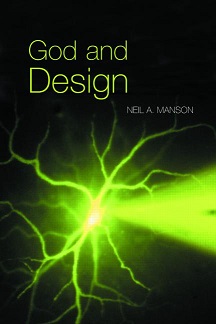 Every Sunday, I will share a quote from something I’ve been reading. The hope is for you, dear reader, to share your thoughts on the quote and related issues and perhaps pick up some reading material along the way!
Intelligent Design: Seeing is Believing
Del Ratzsch, in his essay “Perceiving Design,” argues that the intelligent design movement and its detractors might both be pursuing misguided notions of trying to show that detecting design might be a chain of inference (or not) and then engaging in debate over analogies or things that are conceived as specific empirical examples of design. The reason this is a misguided quest is because, he argues, design is not something that is an inference, but rather perceived. We recognize something is designed by seeing it. After arguing that this is indeed the case, he notes that the strategy of the current intelligent design project should probably change:
The most effective strategy may be… simply to situate a person in experientially favorable circumstances, and hope that any scales will fall from his or her eyes. (137, cited below)
I found Ratzsch’s argument to be interesting, though I’m not sure how it is supposed to impact arguments over design being present in biology. His essay is short and focused on the question of design-as-perception, but he never provides a mechanism for how, exactly, one is supposed to develop that concept into something like a biological design argument. It is very difficult to determine how one might proceed along those lines. I’m sure Ratzsch has some ideas of how it might work, but without any hint, we are left to wonder what such a design argument might look like. Would it really come down to an appeal to someone to sit down, look at something as intricate as the cell, and hope that the “scales will fall from his or her eyes”? It seems that is the direction Ratzsch’s insight would take us.
However, elsewhere in the same paper (132-134) it seems he suggests there can be some relation between inference and perception, but that perception is the “base level” experience of design. One might argue that a reduction to design-as-perception would be a step back for those trying to make empirical arguments for biological design. Perhaps, however, it could be something added back into broader design arguments. Surely, we as Christians believe that the “heavens declare [God’s] handiwork” (Psalm 19). Maybe it is time to allow nature to do some of that declaring; even alongside empirical arguments.
What do you think? How might the notion of design-as-perception help us develop design arguments? Is it helpful at all? Should we reduce design arguments to perceptual arguments?
Links
Be sure to check out the page for this site on Facebook and Twitter for discussion of posts, links to other pages of interest, random talk about theology/philosophy/apologetics/movies and more!
Sunday Quote– If you want to read more Sunday Quotes and join the discussion, check them out! (Scroll down for more)
Source
Del Ratzsch, “Perceiving Design” in God and Design ed. Neil Manson (New York: Routledge, 2003).
SDG.

Really Recommended Posts 6/19/15- Creationism, memes, masculinity, and more!
Another week, another round of excellent reading from around the web for you, dear readers. We have analysis of creationist scholarship, a look at an exciting new book, historical apologetics, pro-life method, and analysis of a meme that attacks Christianity. As always let me know what you think, and let the authors know you enjoyed their posts as well!
The Dangers of Poor Scholarship: A Creationist’s Take on Feathered Dinosaurs– How do Young Earth Creationists often interact with science stories? Is there method consistent? Here, there is an analysis of creationist methodology when it comes not only to feathered dinosaurs but also to how the evaluate faulty arguments and lack consistency.
Malestrom: Swept up in the Currents of a Changing World (Review)– Color me delighted to see a book like this coming out. Our perceptions of what it means to be masculine are deeply embedded in our cultural norms. I have often engaged with complementarians who inform me of exactly what they think men ought to do or what men are “at their core.” But this they do without even acknowledging that even today there are cultures with differing understandings of what is masculine. How might we separate the good from the bad when it comes to talking about masculinity? This book seems to offer a way forward.
William Warburton’s 18th Century Defense of Christianity– It’s amazing how many historical defenses of Christianity are effectively lost in our time. The study of historical apologists is a continually fruitful one that yields great rewards for those who pursue it. Here, Doug Geivett highlights how even arguments that seem tied to their own time periods may provide us with new insights into controversies of our day.
John Reasnor Fails to Show that Incrementalism is Unbiblical– Clinton Wilcox engages in a debate over method when it comes to pro-life reasoning. Some have been arguing that we must do pro-life activism in such a way that only those laws or methods that ban all abortion may be supported. Is this reasonable? Wilcox analyzes the argument. I have provided a lengthy overview of and review of a debate on the same topic.
Will Your Murderer Be In Heaven?– Nick Peters offers an analysis of a meme floating around recently that attacks the goodness of Christianity because one’s own murderer might be in heaven. How does this attack hold up under scrutiny?
Bible Note: Judges 15:1-3 and the right for vengeance
 As I’m working through the Bible writing a kind of running commentary on it as I go, I continually encounter depths of the material I hadn’t encountered before. One such place is the Samson narrative–one of my favorite stories in the entire Bible. The following is an extended version of one of the notes I put in my running commentary:
In Judges 15:3, having discovered his wife was given to someone else, Samson notes that “this time” he has the right to take vengeance. What does this mean? Is Samson saying that he has a right ‘this time’ as opposed to last (when he took vengeance because of the Philistines getting the answer to his riddle through his wife)? Or does he mean that he has a right ‘this time’ in addition to the last time?
Added dimension: In 14:19 when he strikes down 30 Philistines he does so in the power of the Spirit of the LORD. Further dimension: 14:4 speaks of how the LORD was seeking to confront the Philistines.
It seems to me this must imply that God, in sovereignty, is guiding the events towards an end God desires. Given this, we may be tempted to say Samson’s right is indeed a right to vengeance–a divinely given one. But it is possible God is also using this (clearly) sinful man in spite of the sinfulness of his behavior, including his desire for vengeance (which belongs to God alone).
Which interpretation do you think is correct? Why?
Book Review: “Interpreting the Prophets” by Aaron Chalmers
 Aaron Chalmers’ Interpreting the Prophets
The book is laid across 6 chapters, each with a focus on a central aspect of interpreting and applying biblical prophecy. These are: (1) What is a prophet and what is a prophetic book?; (2) The historical world of the prophets; (3) The theological world of the prophets; (4) The rhetorical world of the prophets; (5) From prophecy to apocalyptic; and (6) Guidelines for preaching from the prophets.
There are many insights which will be valuable for both those wishing to engage with the prophets as laity and those interested in drawing out deep exegetical insights from the text. Chalmers’ work serves as a guide for reading without telling readers exactly what various passages are supposed to mean. It is the kind of text that encourages readers to move to the Word and explore it for themselves, laying a solid foundation for interpretation beforehand.
One example of the insights Chalmers provides is his critique of those who would see the prophetic literature as speaking primarily to our time. He notes that this approach of trying to match up biblical prophecies one-to-one with newspaper headlines is mistaken for a number of reasons, including making the texts largely irrelevant to its contemporary hearers. Throughout the book, there are a number of insets that highlight various additional details, like the Ancient Near Eastern background of the text or specific views about things like the dating of a book.
Interpreting the Prophets
The Good
+Excellent insets provide background information into the world of the Bible
+Incisive critique of some popular approaches to reading the prophets
+Practical advice for readers of the Scripture, pastors, and professionals alike
The Bad
-Very brief on several important points
Disclaimer: I was provided with a review copy of the book by InterVarsity Press. I was not required to provide any specific kind of feedback whatsoever, nor was the publisher involved in this review in any way.
Links
Be sure to check out the page for this site on Facebook and Twitter for discussion of posts, links to other pages of interest, random talk about theology/philosophy/apologetics/movies and more!
Book Reviews– There are plenty more book reviews to read! Read like crazy! (Scroll down for more, and click at bottom for even more!)
Source
Aaron Chalmers, Interpreting the Prophets
SDG.
——
The preceding post is the property of J.W. Wartick (apart from quotations, which are the property of their respective owners, and works of art as credited; images are often freely available to the public and J.W. Wartick makes no claims of owning rights to the images unless he makes that explicit) and should not be reproduced in part or in whole without the expressed consent of the author. All content on this site is the property of J.W. Wartick and is made available for individual and personal usage. If you cite from these documents, whether for personal or professional purposes, please give appropriate citation with both the name of the author (J.W. Wartick) and a link to the original URL. If you’d like to repost a post, you may do so, provided you show less than half of the original post on your own site and link to the original post for the rest. You must also appropriately cite the post as noted above. This blog is protected by Creative Commons licensing. By viewing any part of this site, you are agreeing to this usage policy.
Sunday Quote!- Sanctification and Vocation
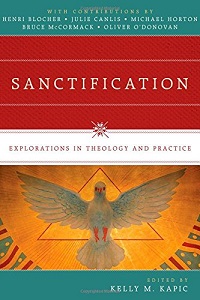 Every Sunday, I will share a quote from something I’ve been reading. The hope is for you, dear reader, to share your thoughts on the quote and related issues and perhaps pick up some reading material along the way!
Sanctification and Vocation
I’ll admit at the outset that I have read very little on the topic of sanctification. Thus, Sanctification: Explorations in Theology and Practice
Sanctification understood biographically has given encouragement to a belief in progressive and incremental moral improvement, to be attained with maturity and age… The map [of constant progression towards final sanctification over one’s life] was indeed wrong. It confused the work of God, who sanctifies old age as he sanctifies childhood, youth, and maturity, with the more attractive features that may decorate the progress of years through unaided nature… why, one wonders, has indulgence been accorded to the doctrine that the elect commit only venial sins after the age of fifty? (155)
I think this question is spot-on. The notion that we as Christians simply are automatically on a linear path to complete sanctification does not match reality and indeed can be extremely damaging to the life of faith. We are sinner-saints who struggle with sins throughout our lives and we must cast our cares on God, ever trusting in the blood of Christ and work of the Spirit to cleanses us from sin and unrighteousness.
What thoughts do you have on sanctification in the life of the believer? How might we be sanctified?
Whatever your views, Sanctification: Explorations in Theology and Practice
Links
Be sure to check out the page for this site on Facebook and Twitter for discussion of posts, links to other pages of interest, random talk about theology/philosophy/apologetics/movies and more!
Sunday Quote– If you want to read more Sunday Quotes and join the discussion, check them out! (Scroll down for more)
Source
“Sanctification and Ethics” by Oliver O’Donovan in Sanctification: Explorations in Theology and Practice
SDG.
Really Recommended Posts 6/12/15- Luther, Treecats [what!?], and more!
 Sorry I’m a bit late today folks. I was on vacation and still catching up to some stuff after a beautiful cruise in Alaska! Anyway, this week I still got some diverse reads for you, dear friends! We have reads ranging from Luther on the Lord’s Supper to science fiction creatures, from Paley to Thomism, and even a comic! Check them out and let me know what you think!
The Lord’s Supper – Martin Luther’s Journey to the Bible– Martin Luther’s theology of the sacraments is central to his view of Christianity and the Christian life. Here’s an extended blog post looking at how he developed his doctrine of the Lord’s Supper.
I’m a Theology Nerd (Comic)- Yep, pretty much this. I am a huge theology nerd, in case anyone didn’t notice. This comic captures some of the reasoning behind that pretty well: if you really think there is a transcendent, loving, creator of the universe, how could we not love to learn more and more about that being?
Crossing the Heath with William Paley (1743-1805)– Doug Geivett continues his fascinating series on historical Christian apologists with one of the most famous to have ever lived: William Paley. He especially emphasizes Paley’s design argument, with a nod towards his historical arguments as well. I have written on Paley myself, and interested readers should check out my posts in the linked text.
Neo-Scholastic Essays– Edward Feser has a new book out that collects many of his essays together for your reading pleasure. Why care about Edward Feser? He is, in my opinion, the clearest thinker on Thomistic philosophy writing today. And he writes a lot. Check out his blog and be sure to look into his books as well. I’ve written on some things from Feser before.
Treecats Climb Into Children’s Hearts– David Weber is my favorite science fiction author. He’s got all kinds of awesome military sci-fi out there that you should read! Here’s a post that should warm your hearts too about his going to classrooms to share the love of literature with kids! I had the chance to meet Weber not too long ago, and I’ve written on his portrayal of women and religion in science fiction as well.

 J.W. Wartick - Reconstructing Faith