J.W. Wartick
Book Review: “Reading the Bible Around the World: A Student’s Guide to Global Hermeneutics”
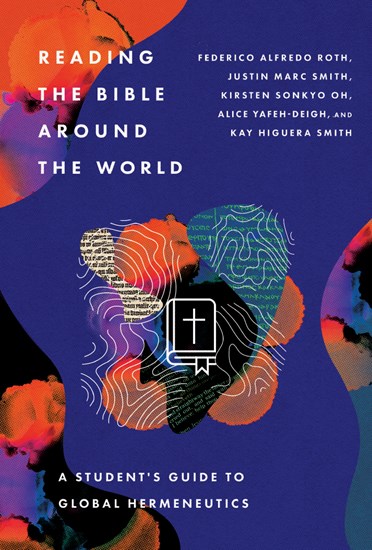
Reading the Bible Around the World introduces readers to seeing global perspectives on the Bible.
The book is clearly meant to be, as the subtitle suggests, “A Student’s Guide to Global Hermeneutics.” It’s a pithy volume, but each chapter packs a punch. The authors go through Latin America, Africa, Europe/Euro-American, Asian, and Diasporic approaches to reading scripture, dedicating one chapter to each topic. Each chapter is about 20 pages, but stuffed with information. Each chapter highlights the main names in hermeneutics in each area, and gives a couple specific looks at how things like the Parable of the Loving Neighbor (Luke 10), the story of Ruth, or other passages. These latter parts of the chapters help readers to understand the context provided in the earlier parts.
Reading the Bible Around the World is a brief, interesting look into global readings of the Bible. Recommended for those looking to expand perspectives beyond American-centric readings of Scripture.
All Links to Amazon are Affiliates links
Links
Be sure to check out the page for this site on Facebook and Twitter for discussion of posts, links to other pages of interest, random talk about theology/philosophy/apologetics/movies and more!
Book Reviews– There are plenty more book reviews to read! Read like crazy! (Scroll down for more, and click at bottom for even more!)
SDG.
——
The preceding post is the property of J.W. Wartick (apart from quotations, which are the property of their respective owners, and works of art as credited; images are often freely available to the public and J.W. Wartick makes no claims of owning rights to the images unless he makes that explicit) and should not be reproduced in part or in whole without the expressed consent of the author. All content on this site is the property of J.W. Wartick and is made available for individual and personal usage. If you cite from these documents, whether for personal or professional purposes, please give appropriate citation with both the name of the author (J.W. Wartick) and a link to the original URL. If you’d like to repost a post, you may do so, provided you show less than half of the original post on your own site and link to the original post for the rest. You must also appropriately cite the post as noted above. This blog is protected by Creative Commons licensing. By viewing any part of this site, you are agreeing to this usage policy.
“Camp Damascus” by Chuck Tingle- A surprising look at faith, hope, and bigotry

CW: Conversion therapy, demonology, horror fiction, discussion of sexuality
Camp Damascus by Chuck Tingle
I just read this novel by Chuck Tingle (more on author below). The story follows a young woman who’s part of an insular evangelical group that basically owns the town she’s in. The religious group is internationally famous for its Camp Damascus, a gay conversion camp that boasts a 100% success rate.
Fairly early on, some elements of horror crop up, and the main character seeks to figure out what’s going on. It becomes more and more clear that Camp Damascus is the center of something quite insidious. Just how did they get the 100% success rate, and how does it tie into the horrifying things experienced throughout town?
I wanted to bring the novel to this blog because it is a remarkably strong look at deconstruction from within a cult-like group, along with several other deep looks at Christianity. There are scenes in which characters fire verses back and forth at each other to try to discredit the other. There is discussion of science/faith and a logical/evidence vs. spiritual/faith based approaches to reality that is incredibly nuanced for genre fiction. Tingle asks readers how far is too far to go when it comes to one’s beliefs.
The book is horror, so it has several gruesome moments and isn’t probably the best pre-sleeping reading at times. It definitely tugs at the heartstrings and should engage readers to consider their opposition to LGBTQ+ rights.
I honestly grabbed it because I know the author will cause a stir, but was blown away by the content. I was shocked to see such frank and honest discussion of difficulties with faith and finding middle ground and even finding one’s way back when one’s been harmed by that faith.
I can’t in good conscience share without noting broader context of the author. Chuck Tingle is (in)famous for some extremely raunchy and intentionally ridiculous stories (search Amazon for his author name and you’ll see- NSFW titles FYI). A glance at his Wikipedia shows a strange history. The intent appears to be satirizing more than anything, but having not read these other works I can’t comment more upon them. Anyway, I am glad curiosity led me to read this book because it is such a thought-provoking look at faith and doubt.
Camp Damascus has me thinking. I was not expecting it to get me thinking. I don’t really know what I was expecting, but I thought it was worth writing more about. What happens when we make our own narratives; when we are willing to do what it takes to get results? And what of faith? How do we balance it and logic or evidence? I recommend the book, but only so long as readers are comfortable.
SDG.
Book Review: “The Trinity in the Book of Revelation” by Brandon D. Smith
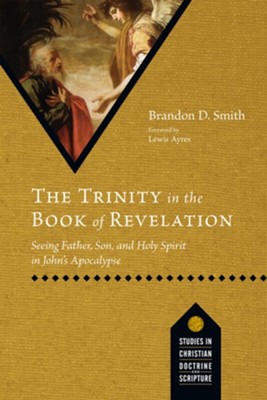
The Trinity in the Book of Revelation: Seeing Father, Son, and Holy Spirit in John’s Apocalypse by Brandon D. Smith starts with the charge from Gregory of Nazianzus to take theology as a serious task. And the book does exactly that, sifting through the book of Revelation to highlight the Trinitarian theology found therein.
Smith repeatedly notes that Revelation is a confusing book and this has lead to a wide and wild assortment of theories about its genre, its meaning, and its conclusions (7-8). Smith approaches the book from a patristic perspective (11ff) and this leads to some of his differentiation from other recent authors. After laying the groundwork for reading the Revelation in light of the Trinity, Smith launches into three chapters, one each on Father, Son, and Holy Spirit.
The latter chapter highlights again Smith’s commitment to patristic theology. He notes that the Church Fathers did not always agree, even in regards to the focus on the Holy Spirit (144). Smith notes that Basil took a hardline response against any who downplayed the Holy Spirit’s work or divinity.
After these three chapters on Persons of the Trinity, Smith wraps up the arguments of his book by noting not only problems with missing the Trinitarian power of the book of Revelation but also some issues with modern readings of the book.
The Trinity in the Book of Revelation not only highlights the Trinity as a major theme in Revelation, but also manages to eliminate some of the perceived need for some wild-eyed theories about the book. I recommend it.
All Links to Amazon are Affiliates links
Links
Be sure to check out the page for this site on Facebook and Twitter for discussion of posts, links to other pages of interest, random talk about theology/philosophy/apologetics/movies and more!
Book Reviews– There are plenty more book reviews to read! Read like crazy! (Scroll down for more, and click at bottom for even more!)
SDG.
——
The preceding post is the property of J.W. Wartick (apart from quotations, which are the property of their respective owners, and works of art as credited; images are often freely available to the public and J.W. Wartick makes no claims of owning rights to the images unless he makes that explicit) and should not be reproduced in part or in whole without the expressed consent of the author. All content on this site is the property of J.W. Wartick and is made available for individual and personal usage. If you cite from these documents, whether for personal or professional purposes, please give appropriate citation with both the name of the author (J.W. Wartick) and a link to the original URL. If you’d like to repost a post, you may do so, provided you show less than half of the original post on your own site and link to the original post for the rest. You must also appropriately cite the post as noted above. This blog is protected by Creative Commons licensing. By viewing any part of this site, you are agreeing to this usage policy.
Book Review: “Touch the Earth: Poems on the Way” by Drew Jackson

Touch the Earth is the second part of a poetic reflections on the Gospel of Luke through poems. Before going farther, I can attest that it is well worth reading on its own, even if one hasn’t read the first (as I had not).
Jackson’s lyrically rich poems reach into the Gospel of Luke and ask us as readers to dive into the text, to feel the words flow, and to reimagine what the world might be if we experienced the Gospel as such beauty. The book is part dramatic reimagining, part reinterpreting. Jackson calls us to envision the truths of the Gospel and draws them out in a beautiful form.
One of my favorite portions of Luke is the section from Luke 10 and following in which Jesus repeatedly establishes himself as a masterful teacher and prophetic voice. Drew Jackson’s words draw that out as well. One section, which examines Luke 10:17-19, includes such phrases as:
“This is a tactic
used by men who sit in Caesar’s seat:
convince the people they are weak,
impotent and wholly reliant
on those in high places…
Power to the people
This is the work:
to realize what is already ours
and not be surprised
when the demons tremble.”
Page after page, Jackson shatters expectations and creates a beautifully alluring collection that frankly reinvigorated me as a reader. I loved it.
Touch the Earth is, frankly, a thing of beauty. I recommend it very very highly.
All Links to Amazon are Affiliates links
Links
Be sure to check out the page for this site on Facebook and Twitter for discussion of posts, links to other pages of interest, random talk about theology/philosophy/apologetics/movies and more!
Book Reviews– There are plenty more book reviews to read! Read like crazy! (Scroll down for more, and click at bottom for even more!)
SDG.
——
The preceding post is the property of J.W. Wartick (apart from quotations, which are the property of their respective owners, and works of art as credited; images are often freely available to the public and J.W. Wartick makes no claims of owning rights to the images unless he makes that explicit) and should not be reproduced in part or in whole without the expressed consent of the author. All content on this site is the property of J.W. Wartick and is made available for individual and personal usage. If you cite from these documents, whether for personal or professional purposes, please give appropriate citation with both the name of the author (J.W. Wartick) and a link to the original URL. If you’d like to repost a post, you may do so, provided you show less than half of the original post on your own site and link to the original post for the rest. You must also appropriately cite the post as noted above. This blog is protected by Creative Commons licensing. By viewing any part of this site, you are agreeing to this usage policy.
Book Review: “The Wonders of Creation: Learning Stewardship from Narnia and Middle-Earth” by Kristen Page et al.
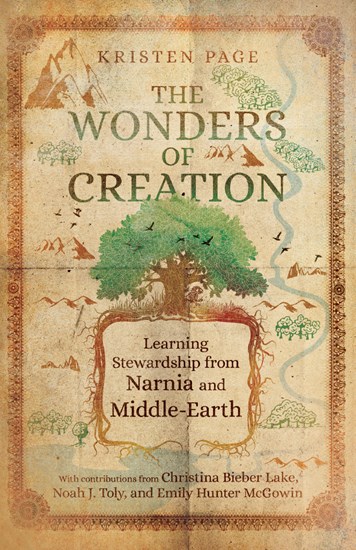
Both The Chronicles of Narnia and The Lord of the Rings are cemented into our cultural background. Even people who have never read them or seen any of the movies tend to at least know some of the basics of what each involves. Kristen Page, in The Wonders of Creation: Learning Stewardship from Narnia and Middle-Earth digs more deeply into each of these worlds in order to see how that wondrous landscape could inform our own concept of creation care.
The book is divided into three lectures with responses from various contributors. The first section is about finding insights into the real world in fictional landscapes. The second lecture is about responding to creation’s groaning and applying some of these insights into the real world. The third lecture is about renewal of wonder in regards to creation.
Fans of both Narnia and Middle Earth will be delighted to see these worlds explored with an eye towards the real world. Some of these reflections can be delightful, while others can be severe. For example, the question about the Clean Air act and how the U.S. stopped enforcing it for the sake of the economy set alongside the wonder of Edmund on the stirring of spring in Narnia is a stirring juxtaposition (50-52). Particularly lovely is the call to reinvigorate a love of creation and nature, found both in these fantastical worlds and in rediscovering myth and wonder for ourselves as adults (see, for example, the discussion on page 89 in which the enjoyment of landscapes stirs wonder in a childlike, Narnian way).
The Wonders of Creation is an exciting delve into two beloved fantasy worlds, applying the insights from the richness of each of their authors to our modern situation. I recommend it.
All Links to Amazon are Affiliates links
Links
Be sure to check out the page for this site on Facebook and Twitter for discussion of posts, links to other pages of interest, random talk about theology/philosophy/apologetics/movies and more!
Book Reviews– There are plenty more book reviews to read! Read like crazy! (Scroll down for more, and click at bottom for even more!)
SDG.
——
The preceding post is the property of J.W. Wartick (apart from quotations, which are the property of their respective owners, and works of art as credited; images are often freely available to the public and J.W. Wartick makes no claims of owning rights to the images unless he makes that explicit) and should not be reproduced in part or in whole without the expressed consent of the author. All content on this site is the property of J.W. Wartick and is made available for individual and personal usage. If you cite from these documents, whether for personal or professional purposes, please give appropriate citation with both the name of the author (J.W. Wartick) and a link to the original URL. If you’d like to repost a post, you may do so, provided you show less than half of the original post on your own site and link to the original post for the rest. You must also appropriately cite the post as noted above. This blog is protected by Creative Commons licensing. By viewing any part of this site, you are agreeing to this usage policy.
Biblical Archaeology: Does the Mt. Ebal Tablet Prove the Bible?
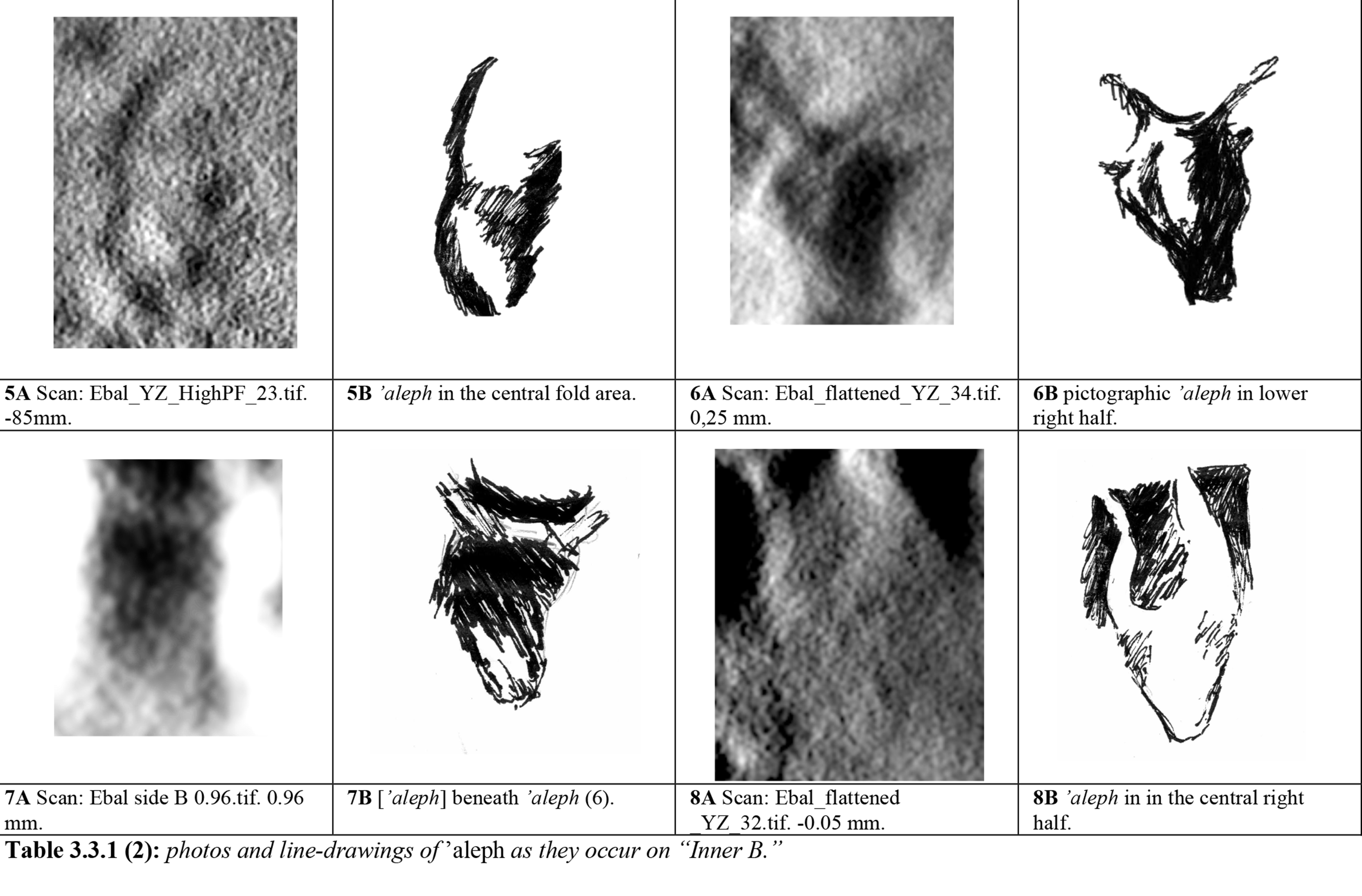
The “Mt. Ebal Curse Tablet” has created something of a stir in some circles, especially those interested in Christian apologetics. The find itself could be extraordinary, assuming it passes additional review. While published in a peer reviewed journal, the publication of the findings is not published in an archaeology journal, leading to some skepticism about the ability to stand up to archaeological peer review. Others have pointed out additional problems with the journal publication, some of which are summarized in an article from the Biblical Archaeology Society.
What I want to hone in on, though, are the fantastical claims made about the fine by Scott Stirpling, one of the archaeologists involved in the find and interpretation thereof, in a video he made with Sean McDowell. The video is on YouTube and entitled, “Oldest Hebrew Writing? Mt. Ebal Curse Tablet (Revisited).” Stirpling makes a number of claims in this video, and I think some of these are emblematic of the way the apologetics community unfortunately over-inflates the evidence for Christianity. This, I believe, is detrimental to the aims of Christian apologetics, because if we make claims that cannot be adequately backed by evidence, it makes people more likely to doubt other claims which may have a better evidentiary grounds for belief.
I won’t be reviewing the whole video, nor do I personally have expertise in archaeology. Any time I write about the “curse tablet” it should be understood that is meant as an “alleged” due to the highly controversial nature of the find. What I want to point out instead are problems with what I do have expertise in: apologetics.
Stirpling claims, among other things:
1. the curse tablet provides evidence for the notion that Moses and Joshua were literate (Starting around 20:00 into the video)
2. The curse tablet is directly tied to Deuteronomy 27 and Joshua 8 as a real find that really backs up those specific chapters of the Bible (21:20 and following)
3. The curse tablet undermines the documentary hypothesis (35:00 and following)
4. The curse tablet summarizes Deuteronomic curses and therefore provides evidence for them as historical events (9:20)
1. Curse Tablet and Literacy
The argument here has a number of hidden assumptions. First, that having a single inscribed tablet suggests widespread literacy. Second, it appears Stirpling is actually at least skirting the claim of suggesting this tablet just was written by Joshua and/or Moses. That’s a huge assumption and claim that I don’t think anyone could take as anything beyond invention. Would it be great to have? Of course! But this tablet is not that proof. It’s not like it’s signed “-Moses” or “-Joshua.” I don’t get it. Even assuming the tablet has writing, and that that writing is earlier than the earliest Proto-Hebrew we have, one has to ask the question: how does this prove that Moses and/or Joshua were literate/wrote this tablet? So far as I can tell, there is no evidence to suggest this is correct.
2. and 4. Curse Tablet and Bible verses
I couldn’t find the exact time stamp for one of the claims I heard from Stirpling as I listened to the video a couple times, but not only does he claim that the curse tablet is tied to Deuteronomy 27 and 28 and Joshua 8, he also claims that Job 19:24, in which the author exclaims desire to have their words inscribed by iron implement(s) on lead shows that this curse tablet is the exact kind of thing being referenced there. If a reader happens to watch the video and can find that reference again, I’d appreciate it.
Anyway, this claim is incredible to me. Not only does Stirpling acknowledge immediately after making it that he has to presuppose the exacting historical nature of the references in the Bible in order to make the argument (thus making it a kind of loop: Dt. 27 and Jsh. 8 and Job 19 all tie together to show a lead curse tablet; the lead curse tablet proves the veracity of those references), but the claim itself is so much stronger than the evidence at hand suggests we ought to make. Assuming Stirpling is right about the date of the tablet, its location[1], it actually having text, that text actually being “Proto-Hebrew,” and that text actually reading as Stirpling et al. suggest it does, how does a tablet that reads [quoting directly from their paper]:
“A.You are cursed by the god yhw—cursed. B. You will die, C. Cursed – C’. Cursed, B’. you will surely die. A’.Cursed you are by yhw—cursed.”
…how does that text actually support the claim that this is a summary of Deuteronomy 27 and 28’s curses? What exactly is there here to tie this tablet so explicitly to the exact curses of Deuteronomy, as Stirpling directly claims it is? Other than it using the word “cursed” and a possible version of the divine name, YHWH, what connection is there between this tablet and the verses it’s supposed to confirm? There doesn’t seem to be any other than in the imagination of those who want to connect the two, and that’s highly problematic for evidential value.
3. Documentary Hypothesis
The Documentary Hypothesis itself is a bit of a misnomer, as its splintered off into a number of different theories, and more recent works I’ve read (extreme caveat–I’m not an expert, so I may very well be behind the times here) seem to suggest that the overarching hypothesis has fallen somewhat out of favor due to its somewhat pedantic way of reading the Bible. Anyway, it’s really not clear to me how this find, if genuine, is supposed to undermine the Documentary Hypothesis (DH hereafter). We know that worship of YHWH was more ancient than most or all of the Bible, and that YHWH was worshiped in other lands possibly or probably prior to the ancient Israelites coming into the region. So having an ancient inscription using the name YHWH does nothing to the DH so far as I can tell. It’s not that no one ever used the name YHWH before the Yahwist came and edited the Bible. Instead, the DH, to my knowledge, suggests that a Yahwistic worshiper came through later and edited the Bible to insert YHWH’s name into portions somewhat haphazardly to ensure worship was properly being directed to YHWH instead of just or merely Elohim/El. But nothing about the date of the use of the divine tetragrammaton would somehow disprove or distort the DH. I’m willing to be corrected here, of course, but I just don’t see the relevance.
Conclusion
More study of the Mt. Ebal curse tablet is needed. I personally hope it turns out to be something genuine that might have value. The limited scope of the supposed text on the tablet, however, along with the already highly contested nature of the text itself makes me urge caution. We should not set up apologetics claims that are so grandiose that it’s easy to knock them down.
Additional Notes
[1] Stirpling admits at several points that his group is relying upon the earlier excavators’ accuracy in reporting exactly where the debris that they sifted through came from. Allowing for human error, it’s possible the tablet didn’t even come from an altar as the report claims. Moreover, the location of Mt. Ebal is, according to Stirpling himself, only known through the Bible. So while that doesn’t mean it’s wrong, one does wonder how one can tie this exact find to this exact mountain as the exact one in the Bible and on the exact altar of Joshua, as Stirpling claims in one of the claims I’m not covering at more length. He really does say that he thinks that the rounded altar this tablet supposedly came from due to notes from another archaeologist about where the debris came from that they sifted to find the tablet just is the altar Joshua used in Joshua 8. Why? It seems mostly because that would be of the most apologetic significance.
SDG.
Book Review: “Martin Luther and the Rule of Faith” by Todd R. Hains

Martin Luther and the Rule of Faith by Todd R. Hains explores Martin Luther’s reading of scripture. It’s a topic that has occupied theologians for hundreds of years, but Hains presents it in a way that allows readers to see Luther’s reading of scripture contextually.
Hains notes Luther’s words against reason and notes how it has been misunderstood. Then, he turns to the questions that arose in reading scripture, including the question of when scripture might be read against itself. This led Luther, Hains argues, to reading scripture in much the same way as others in church history had–reading it as a book of faith that speaks with the power of the Spirit (11).
The rule of faith, however, is to be understood not abstractly but as reading through ancient catechesis- the use of the Ten Commandments, the Apostle’s Creed, and the Lord’s Prayer. By understanding this as the foundation of Luther’s reading of scripture, the notion of sola scriptura as well as his reading in certain places becomes more evident. Not only does Luther follow the ancient catechesis in his own catechism (57ff), but it also helps illuminate how Luther read the Law (89ff especially). Here, Hains notes, that Luther argued that the Torah would be seen by reason as a “jumble of stories and random laws” while the rule of faith leads to seeing the Torah as books that “teach faith and its fruits” (93).
Martin Luther and the Rule of Faith is an intriguing look at Luther’s reading of scripture. Readers interested in what Luther may have meant by sola scriptura and how he practiced it will find it insightful.
All Links to Amazon are Affiliates links
Links
Be sure to check out the page for this site on Facebook and Twitter for discussion of posts, links to other pages of interest, random talk about theology/philosophy/apologetics/movies and more!
Book Reviews– There are plenty more book reviews to read! Read like crazy! (Scroll down for more, and click at bottom for even more!)
SDG.
——
The preceding post is the property of J.W. Wartick (apart from quotations, which are the property of their respective owners, and works of art as credited; images are often freely available to the public and J.W. Wartick makes no claims of owning rights to the images unless he makes that explicit) and should not be reproduced in part or in whole without the expressed consent of the author. All content on this site is the property of J.W. Wartick and is made available for individual and personal usage. If you cite from these documents, whether for personal or professional purposes, please give appropriate citation with both the name of the author (J.W. Wartick) and a link to the original URL. If you’d like to repost a post, you may do so, provided you show less than half of the original post on your own site and link to the original post for the rest. You must also appropriately cite the post as noted above. This blog is protected by Creative Commons licensing. By viewing any part of this site, you are agreeing to this usage policy.
Book Review: “Humble Confidence: A Model for Interfaith Apologetics” by Benno van den Toren & Kang-San Tan
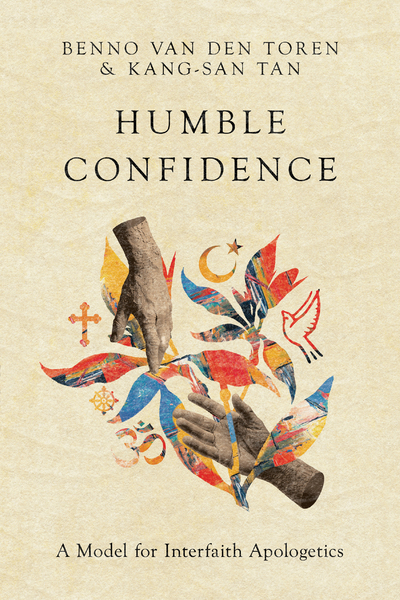
Humble Confidence: A Model for Interfaith Apologetics seeks to provide a way forward in interfaith discussions from a Christian perspective. The book is divided into two parts: Reimagining Interfaith Apologetics and Contextual Apologetic Witness to Particular Audiences.
The first part focuses on the model for interfaith apologetics. Here, the authors note several great points. These include the fact that beliefs are embedded rather than held on a surface level. Too often, Christians interested in apologetics treat religious belief as one of a set of beliefs, each of which can simply be jettisoned and replaced with a new belief, as if people’s intellectual lives are a kind of salad bar from which we select and replace things on our plate. The authors rightly note that this is mistaken and that beliefs are formed contextually and often formed in an interconnected web in which removing one is not simple. The authors also note the way that one approaches other beliefs often involves cultural aspects and questions of integration, which is often unfortunately read as syncretism. While the book’s subtitle suggests a model will be presented, the authors present less of a one-size fits all model than a way of looking at beliefs and religions more broadly. This is probably more accurate and useful than any attempt at a singular model would be.
The second part of the book moves to apply insights from the first part of the book to specific religions. I found this part of the book less successful. For example, discussing Buddhism includes the notion that Buddhism must be confronted with “reality,” as if Buddhists themselves are somehow unaware of aspects of “reality” that might be challenging for their beliefs. Buddhism seeks reality in its own sense (179) and the attempt to move towards detachment from the world due to suffering is seen by the authors as a potential challenge to Christianity (187). Nevertheless, the answers provided reads as oversimplified and fail to take seriously the core beliefs of Buddhism.
Indeed, my overall impression of the book is that it is quite simple in its assessment of world religions. The authors are in an unenviable position of trying to both engage with world religions in limited space and attempting to show that such a simplistic interaction is undesirable and even unhelpful. Perhaps the book’s scope is wider than it should have been–more space dedicated to the “modeling” portion of the book may have helped differentiate it more from other broad apologetics books, and avoided the ill-fated attempt to summarize, engage with winsomely, and try to convert other religions.
Ultimately, Humble Confidence is a mixed bag. While I admire the authors’ attempts to show that interfaith dialogue must not always be adversarial, the actual apologetic aspects of the work left me wondering what made it different from standard approaches. It is a decent starting off point for reading about interfaith dialogue, but will leave readers wanting more.
All Links to Amazon are Affiliates links
Links
Be sure to check out the page for this site on Facebook and Twitter for discussion of posts, links to other pages of interest, random talk about theology/philosophy/apologetics/movies and more!
Book Reviews– There are plenty more book reviews to read! Read like crazy! (Scroll down for more, and click at bottom for even more!)
SDG.
——
The preceding post is the property of J.W. Wartick (apart from quotations, which are the property of their respective owners, and works of art as credited; images are often freely available to the public and J.W. Wartick makes no claims of owning rights to the images unless he makes that explicit) and should not be reproduced in part or in whole without the expressed consent of the author. All content on this site is the property of J.W. Wartick and is made available for individual and personal usage. If you cite from these documents, whether for personal or professional purposes, please give appropriate citation with both the name of the author (J.W. Wartick) and a link to the original URL. If you’d like to repost a post, you may do so, provided you show less than half of the original post on your own site and link to the original post for the rest. You must also appropriately cite the post as noted above. This blog is protected by Creative Commons licensing. By viewing any part of this site, you are agreeing to this usage policy.
“Resisting the Bonhoeffer Brand: A Life Reconsidered” by Charles Marsh

Charles Marsh’s biography of Dietrich Bonhoeffer, Strange Glory, sparked quite a bit of discussion when it was released. What many readers might not have realized, however, is that it also led to quite heated debate in scholarly circles related to Bonhoeffer studies. With Resisting the Bonhoeffer Brand: A Life Reconsidered, Marsh responds to scholarly critique of his biography, highlights some of the difficulties and joys of writing biographies, and calls readers to push to better understanding of the life and theology of Bonhoeffer.
The book’s short length should not deter readers looking for deep exploration of Bonhoeffer’s life. It’s essentially an extended essay on writing Strange Glory, writing biographies generally, how to evaluate the accuracy and impact of history, and, most extensively, a response to another Bonhoeffer scholar’s persistent critiques of Marsh’s biography. That other scholar is Ferdinand Schlingensiepen, whose own biography of Bonhoeffer, Dietrich Bonhoeffer 1906-1945: Martyr, Thinker, Man of Resistance remains a book I recommend to readers as well. But Schlingensiepen took great issue with Marsh’s exploratory directions in the latter’s life of Bonhoeffer, ultimately going a bit off the rails at points, not just criticizing Marsh for the kind of small mistakes all biographers make (eg. geographical, a few temporal, etc.) but also arguing that Marsh’s biography is entirely useless because it doesn’t focus on Schlingensiepen’s own preferred trajectory of reading Bonhoeffer.
Specifically, Schlingensiepen takes a nearly obsessive interest in critiquing Marsh for not focusing on minutiae of the church struggle in Germany and upbraids him for not following Bethge’s biography of Bonhoeffer more closely. Marsh, in turn, notes the errors with such a critique, both for pigeonholing Bonhoeffer’s own life into less impactful and radical than it was and in failing to allow for new avenues of research into Bonhoeffer. It appears that, for Schlingensiepen, the Confessing Church must be entirely without error, while narratives of Bonhoeffer’s life must never depart from prior research.
Marsh effectively answers Schlingensiepen’s critiques time and again, all while pushing for a resistance to a kind of “Bonhoeffer Brand” that would limit exploration of his life and theology to only that which is approved or has been done before.
Resisting the Bonhoeffer Brand is a book I would consider essential reading for those interested in studying Dietrich Bonhoeffer. It also is a great look at the challenges and delights of writing biographies more generally. Highly recommended.
All Links to Amazon are Affiliates links
Links
Dietrich Bonhoeffer– read all my posts related to Bonhoeffer and his theology.
Be sure to check out the page for this site on Facebook and Twitter for discussion of posts, links to other pages of interest, random talk about theology/philosophy/apologetics/movies and more!
Book Reviews– There are plenty more book reviews to read! Read like crazy! (Scroll down for more, and click at bottom for even more!)
SDG.
——
The preceding post is the property of J.W. Wartick (apart from quotations, which are the property of their respective owners, and works of art as credited; images are often freely available to the public and J.W. Wartick makes no claims of owning rights to the images unless he makes that explicit) and should not be reproduced in part or in whole without the expressed consent of the author. All content on this site is the property of J.W. Wartick and is made available for individual and personal usage. If you cite from these documents, whether for personal or professional purposes, please give appropriate citation with both the name of the author (J.W. Wartick) and a link to the original URL. If you’d like to repost a post, you may do so, provided you show less than half of the original post on your own site and link to the original post for the rest. You must also appropriately cite the post as noted above. This blog is protected by Creative Commons licensing. By viewing any part of this site, you are agreeing to this usage policy.
Book Review: “Renewal Worship: A Theology of Pentecostal Doxology” by Steven Félix-Jäger
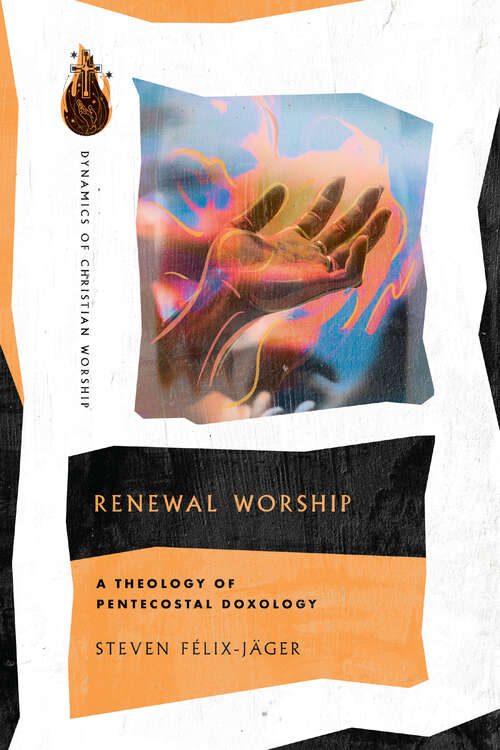
Renewal Worship: A Theology of Pentecostal Doxology provides a broad overview/theology of Pentecostal worship.
The first thing that immediately came to my mind on starting this book is the discussions and debates I’ve engaged in over Pentecostal theology. As a Lutheran, there are some quite large differences in theology and practice. However, Lutheranism also doesn’t have a fully-fledged view of gifts of the spirit, a stance on continuationism vs. not, or really much interest in those debates. Knowing that some of these discussions quickly turn sour (such as having been told I’m unsaved because I held to a different consideration of what it meant to be baptized), I was cautious on cracking the cover here. I’m pleased to report that Félix-Jäger does not engage in such frivolous dismissal of other Christians. Instead, he’s provided here a substantive look at Pentecostal worship that includes enough in it to be useful and informative to Christians of broad backgrounds and interests.
The book is divided into two parts. The first is a profile of renewal worship, and the second places renewal worship in context. Félix-Jäger uses the term “renewal worship” interchangeably with Pentecostal worship. In the introduction, he points out that many books on theology of worship are prescriptive–that is, they tell readers how they’re supposed to be worshiping. He notes that there are severe problems with claiming to have one single unified approach as “the biblical approach to worship” (8). Rather than attempting to provide stout arguments for why one must worship as he suggests, he instead offers the theology of worship in this book as a case study of how a Pentecostal community can worship, why it matters, and how it can be seen as exegetically satisfying.
The first chapter has Félix-Jäger going into what renewal worship is. Here, his concern for not offering prescription is evident, though he provides a contrast between evangelical (largely based upon scripture as the primary driver in worship), sacramental (based upon rituals as means for bringing grace and Christ to believers), and Pentecostal (focused on the Spirit’s involvement in worship). Admittedly, the constant use of “symbol” language for sacramental theology is grating from a Lutheran perspective, but his effort to delineate different styles of worship is of interest.
Renewal worship, he argues, can be integrated into eschatological expectation–worship as a foretaste of the feast to come (39ff). The sacraments themselves are not rejected by Pentecostal theology but integrated into a broad sense of Spirit-filled worship (44ff). Of course, there are controversial aspects in Pentecostal worship, such as the notion of healing or miraculous signs and wonders as integration of worship. Félix-Jäger again puts this into an eschatological framework, seeing healing as a sign of the coming renewal (49). He does not debate whether healings occur or how they do so. Instead, the concept of healings occurring is a given for renewal worship and not part of the scope of this book.
Félix-Jäger acknowledges some of the difficulties that have led to renewal worship getting linked to prosperity gospel (72-81). He uses lyrics from various songs to illustrate aspects of what he means by renewal worship (eg. 27-28; 137). He carefully draws lines about what is meant by speaking in tongues in worship, not falling into the trap of insisting one must do so to demonstrate salvation (as this reviewer has encountered before in argument) (87ff). The arts are integrated into worship in renewal worship, whether its music or other forms of art (106ff). Renewal worship is less structured and often depends upon a sense of flowing with the Spirit (139ff). Renewal worship is a global movement and has advantages when it comes to integration and contextualization, he argues (200ff).
Renewal Worship is of interest to anyone who seeks understanding of worship practice or is exploring more about what it means to be Pentecostal. As someone who’s not Pentecostal, I still found the book quite engaging, sometimes challenging, and certainly enlightening. Recommended.
All Links to Amazon are Affiliates links
Links
Be sure to check out the page for this site on Facebook and Twitter for discussion of posts, links to other pages of interest, random talk about theology/philosophy/apologetics/movies and more!
Book Reviews– There are plenty more book reviews to read! Read like crazy! (Scroll down for more, and click at bottom for even more!)
SDG.
——
The preceding post is the property of J.W. Wartick (apart from quotations, which are the property of their respective owners, and works of art as credited; images are often freely available to the public and J.W. Wartick makes no claims of owning rights to the images unless he makes that explicit) and should not be reproduced in part or in whole without the expressed consent of the author. All content on this site is the property of J.W. Wartick and is made available for individual and personal usage. If you cite from these documents, whether for personal or professional purposes, please give appropriate citation with both the name of the author (J.W. Wartick) and a link to the original URL. If you’d like to repost a post, you may do so, provided you show less than half of the original post on your own site and link to the original post for the rest. You must also appropriately cite the post as noted above. This blog is protected by Creative Commons licensing. By viewing any part of this site, you are agreeing to this usage policy.

 J.W. Wartick - Reconstructing Faith