J.W. Wartick
Sunday Quote!- The New Atheist Mythology
 Every Sunday, I will share a quote from something I’ve been reading. The hope is for you, dear reader, to share your thoughts on the quote and related issues and perhaps pick up some reading material along the way!
The New Atheist Mythology
I recently finished reading The New Atheist Novel: Fiction, Philosophy and Polemic after 9/11. The book was simply phenomenal as it applied critical theory to four novelists in order to draw out various themes in their works and parallels with the writings of the “New Atheists.” I’ll write up a review at some point, but for now I want to highlight the central theme of the book:
[I]t is possible to detect an obscure… reason for the massive popular appeal of the New Atheism: it constitutes a new and powerful creation mythology that–like all mythologies–performs an implicit anthropological service… For Dawkins… it has become de rigueur to wax lyrical about, say, the ‘breathtaking poetry of modern cosmology’ (whatever that means) even amidst attacks on the ‘fairy story’ that is monotheism. (7, 9, cited below)
The book analyzes various novels in light of this theme: that the New Atheists are, in a sense, creating a rival mythology to the monotheism they denigrate, and this expands into literature in various and interesting ways. In a sense, this mythologizing about the power of the human mind, the wonders of the cosmos, or the beauty of poetry is a project to create transcendence in a worldview which, by definition, rails against the transcendent. It is a kind of creation myth which allows for meaning to seep into the meaningless.
What do you think? Can humans live without a mythology? Is wonder a necessary part of the human condition? Why do you think that even the “New Atheists” have put forward such lyrical and mythological language in their writings?
As I said, I’ll try to get a review of this book up ASAP.
Links
Be sure to check out the page for this site on Facebook and Twitter for discussion of posts, links to other pages of interest, random talk about theology/philosophy/apologetics/movies and more!
Sunday Quote– If you want to read more Sunday Quotes and join the discussion, check them out! (Scroll down for more)
Source
Arthur Bradley and Andrew Tate, The New Atheist Novel: Fiction, Philosophy and Polemic after 9/11 
SDG.
Question of the Week: Favorite Name in the Bible
 Each Week on Saturday, I’ll be asking a “Question of the Week.” I’d love your input and discussion! Ask a good question in the comments and it may show up as the next week’s question! I may answer the questions in the comments myself.
Favorite Bible Name
My wife and I are eagerly anticipating our firstborn, and part of that, of course, is picking out names. Because of this, I have had names on my mind, and I thought I’d ask you, dear reader, for your own thoughts:
What’s your favorite name in the Bible? I’m not asking for your favorite person, but rather the name you enjoy the most. Why is that one your favorite?
I look forward to reading your answers!
Links
Be sure to check out the page for this site on Facebook and Twitter for discussion of posts, links to other pages of interest, random talk about theology/philosophy/apologetics/movies and more.
Question of the Week– Check out other questions and give me some answers!
SDG.
Really Recommended Posts 6/13/14- Defining Faith, Bible Popularity, Aquinas, and more!
 Check out these posts from all over the web, collected for your own viewing pleasure by yours truly. If you enjoyed the posts, drop them a comment! Let me know what you think here. Thanks for stopping by, now go read!
The Least Popular Book in the Bible– I found this to be one of the most fun posts I have read in a long time. I really encourage you to check it out. But Don’t Cheat! Leave a guess as to which Bible book is least popular before you head over and find out! The post also gives reasons to read the book, so you may get some good reading in.
Is the Bible’s Definition of Faith Opposed to Logic and Evidence?– In light of the recent debate between Boghossian and McGrew on “Is Faith a False Epistemology?” (see my summary and analysis here), I found this post extremely insightful. What does the Bible say about faith? What kind of definitions does it give? Check out this great post on these questions.
Aquinas’ First Way (image)– Be sure to zoom in on this one! It’s a pictorial way to look at the “First Way” of Aquinas to reason to the existence of God. I think there are a couple problems with the exposition, particularly in speaking of water as only potentially cooling, but it is a good, basic introduction. Check it out.
Did Jesus Ride Two Animals Into Jerusalem?– How might we reconcile apparent differences in reports over how Jesus rode into Jerusalem? Check out this post to read up on a few ways, alongside some analysis. It’s well worth the time spent!
Book Review: The New Perspective on Mary and Martha– Drawing from Luke 10:38-42, Mary and Martha are often seen as quintessential examples of how to focus on Christ. But what message do we often get about/from them? Is there a corrective for some of the wrong pictures we may have? This review gives some insight into these and other questions.
Raise Up a Child: My father-to-be Father’s Day Reflection
Start children off on the way they should go,
and even when they are old they will not turn from it. (Proverbs 22:3, NIV)
I am going to be a father in September, provided baby isn’t born a week earlier in August. The anticipation of this joyous day has been building for some time as we await our firstborn child. We aren’t finding out if the child is a boy or girl, which increases the anticipation as we look forward to seeing our son or daughter’s face! I have been able to feel baby kicking several times now, and the wonder of the child growing is incredible.
As an avid reader, of course, I have turned to some books to say what it is like to be a father, but more importantly, I have looked to the Scriptures to see what it has to say about raising children. The verse above is one which I hope to emulate in my own life as a father. Of course, the natural question to follow, then, is “What is the way they should go?” There are a number of answers throughout the Bible provided for this, but at their core is this: follow God, bring forth justice. I hope I am able to instill a desire for these things in my child(ren).
There are so many voices providing insight into raising children. Do this, don’t do that, don’t worry about it, ignore all advice [except this!], etc…. The dissonant voices are helpful, but they bring with them much concern: there is so much to know, and I know that I will blunder at times. At those times, I will seek forgiveness, hoping that they will become moments where my child will see the way he or she should go.
We’ve also been looking at names, going through name books to see which we like the sound of, what kind of references they may make, how they may shape the person we will be caring for for many years. It’s an exciting adventure, but I also realize it is only one of many moments of excitement to which I look forward.
But then, I think of something else: a child is not born into a single family. The child is born into a community. They will be born again through baptism into a community of believers. So you, fellow believers, I ask for your prayers. Help me to raise up a child. Pray, praise, and give thanks with me!
Raise up a child…
What does it mean now? In this day and age, how do we “start [our] children” on the right path? We will seek to teach them God’s word, to teach them the ways to walk in. But we also have other concerns: we don’t want to limit them to one way of thinking, or one way of being. How do we allow the freedom for these things, while correcting where needed?
So as Father’s Day approaches, I look forward to my firstborn child. My wife and I are considering questions like these, and many more. But there’s one thing I do know: God will guide us.
Book Review: “To the Ends of the Earth” by Michael Haykin and C. Jeffrey Robinson Sr.
 The question of “Why evangelize?” is one which is often leveled against Calvinism. After all, it is reasoned, if people are fore-ordained to be elect or one of the damned, then why bother to go out and evangelize them? Interestingly, this is a charge which I think may be leveled against virtually any view of foreknowledge, so the Calvinist answers given in To the Ends of the Earth: Calvin’s Missional Vision and Legacy
Contents
The book begins with a survey of the arguments made to suggest that Calvinism would not endorse evangelism or makes evangelism pointless. Clearly, the charge has come from many fronts throughout the history of the church. Then, Haykin and Robinson introduce the primary reason for others’ concerns about Calvinism’s evangelical prospects: that Calvin believed God had ordained some to be elect, and others to be damned, before the foundations of the world.
The authors defend the doctrine, taking on many of the key “all” passages which some argue make explicit the openness of salvation to all individual people. Calvin is brought to his own defense alongside a number of modern Calvinist theologians, ably presenting the Calvinist case for exegesis of these key passages, which basically is that when “all” or “world” is used, it is referring to the breaking open of salvation for all tribes and nations as opposed to merely the chosen people of Israel. The book goes beyond these basics and also outlines how other passages might be understood in this context.
Next, the authors turn to an exposition of Calvin’s theology of missions. Part of this theology was the notion that a Christian life lived was a profound witness to the Gospel. Word and deed were central to Calvin’s missions theology. This missional activity was to be for all people (Kindle location 993). Prayer was also central to Calvin’s theology, as he believed that it might be used by God to bring about change in persons (rather than change in God).
Historical Reformed missions are surveyed in the next sections. Calvin taught many going into France and certain torture and death if discovered, and even made significant efforts towards (ultimately failing) missions into Brazil. These efforts showed that through his actions, Calvin himself valued global missions.
Later Calvinist traditions and persons also demonstrated the urge to missions that the Reformer’s theology compelled. The Puritans sought to evangelize and frequently prayed for the same, though they may not have had the success of other contemporaries. Calvinist Baptists in England feverishly evangelized and planted churches, while also demonstrating concern for global evangelism (Kindle loc. 1420ff). Jonathan Edwards, contrary to some opinions, was also focused on missions by developing his own missional theology and also going on a mission to Native Americans himself.
The book closes with thoughts on “developing missional passion” through observations about Samuel Pearce, a theologian known in his time for fervent prayer and love of missions. Central to Pearce’s theology was the cross; Christ crucified was “his darling theme from first to last”; while the other primary theme of his life was a “passion for the salvation of his fellow human beings” (Kindle loc. 1978).
Evaluation
To the Ends of the Earth is a great, pithy read on a topic that should be of interest to many from a diverse array of backgrounds. It has appeal which goes beyond Calvinism in the way it demonstrates missions ought to be of central importance and also in its justification of missions even in light of the notion that there really do exist an elect people. Of course, the thrust of the book is to demonstrate that Calvinist theology does not undermine the need or motivation for missions. Those interested in that topic will find the most to benefit from the book. Regardless of one’s level of interest, however, the book generates its own avenues for exploration by introducing several little-known figures and historical events for further reading. It is short enough to enjoy in a single afternoon (as I did), yet deep enough to keep one’s mind occupied for some time afterwards.
Perhaps the greatest weakness of the book, however, is its length in that there is little ultimate exposition of the counter-arguments to those who would fault Calvinism with lack of evangelical fervor. That is, readers are often left to tie the arguments off themselves instead of having them drawn out and defended. This, however, is a minor fault in what is an otherwise excellent book, regardless of one’s position on the arguments made therein. It was well worth the read, in my humble opinion.
Links
Be sure to check out the page for this site on Facebook and Twitter for discussion of posts, links to other pages of interest, random talk about theology/philosophy/apologetics/movies and more!
Source
Michael Haykin and C. Jeffrey Robinson, Sr., To the Ends of the Earth: Calvin’s Missional Vision and Legacy
Disclaimer: I received a review copy of the book through Crossway. I was not obligated by the publisher to give any specific type of feedback whatsoever.
SDG.
——
The preceding post is the property of J.W. Wartick (apart from quotations, which are the property of their respective owners, and works of art as credited; images are often freely available to the public and J.W. Wartick makes no claims of owning rights to the images unless he makes that explicit) and should not be reproduced in part or in whole without the expressed consent of the author. All content on this site is the property of J.W. Wartick and is made available for individual and personal usage. If you cite from these documents, whether for personal or professional purposes, please give appropriate citation with both the name of the author (J.W. Wartick) and a link to the original URL. If you’d like to repost a post, you may do so, provided you show less than half of the original post on your own site and link to the original post for the rest. You must also appropriately cite the post as noted above. This blog is protected by Creative Commons licensing. By viewing any part of this site, you are agreeing to this usage policy.
On the Feminization of Christianity
Christianity is being feminized–men just don’t go to church anymore!
Worship is so feminine now, with all of its appeals to emotions.
Christianity has a “masculine” feel to it.

I had a conversation recently in which several men were bemoaning the “feminization of Christianity,” particularly worship. I asked them what they meant by this and one man illustrated it with a story: he was at a church one time and this guy was up front singing this lovey-dovey song he had written about how Jesus loved him and wanted to hold him or something and he–the one telling the story–thought it was ridiculous. This, he said, was an example of the feminization of worship. It makes men leave the church.
I pointed out that his example was about a man singing a song written by a man–himself–leading worship in a church in which (the man had told me) the only leaders were men. He nodded and reiterated his point. …This, it seems, is the result of feminizing the church.
I thought that was rather odd, to be frank, but the conversation has stuck with me for its message. I’ve had many like it over the past year or two. I’ve seen fellow bloggers post on this apparently insidious trend of the “feminization of Christianity.” A prominent apologist recently issued a similar complaint, noting that worship has gotten more “emotional” and therefore more “feminine.” Some theologians and books I’ve read have had similar concerns about this “feminine” aspect being brought into churches. Apparently, from my reading of these sources and the conversations I’ve had, the message is that this is A Bad Thing.
Do you really think that Christianity is masculine? What does that even mean?
What does it mean to say worship is “feminine” or “masculine”? Does that mean that if I, a man, worship, then my praise is somehow “manly,” while my wife’s praise is “womanly”?
I want to focus on this notion that “feminization of Christianity” is A Bad Thing. What does this say about men and women?
It seems to me that if feminizing Christianity inherently makes it somehow deficient, then that means females are also deficient. If “feminized” worship is bad, or at least not as good as “masculine” worship–whatever either one of those things means–then that means that what are identified as male patterns of worship have higher value. But can such patterns really even be identified? If “feminization of the Church” is to be avoided, while making it more “masculine” is to be lauded, then what does that say about our position, male and female, as the image of God? On the one hand, humanity, male and female, were each created in God’s likeness, in the image of God. On the other, we are told that “feminine” themes within Christianity are to be avoided and downplayed, while “masculine” themes are to be pursued and emphasized.
The most common answer I’ve gotten to questions about the nature of masculine or feminine worship is that that which is feminine is emotional or passive, while masculine is rational or active. I would like to ask: how is this reflected in God’s Word? Recall that God gets angry (Psalm 7:11) or grieved by sin (Genesis 6:6), takes pleasure in obedience (Psalm 147:111), delights (Zephaniah 3:17), etc. God is a God with emotions and whether we set this aside as anthropomorphism or not, it seems clear that Scripture understands God not rejecting emotions but rather, in some sense, taking part in them. But if God’s Word does not denigrate emotions and even attributes them to God, why should we not worship in emotional ways? And why are emotions treated as something to be avoided, as necessarily feminine and somehow not good, or at least not as good as that which is identified as masculine?
I’m not trying to advocate for one side or the other in the so-called “worship wars.” Instead, my point is that the narrative of complaints about the “feminization of Christianity” is misguided and far from the truth. Being female is not bad, nor is it somehow less perfect than being male. Similarly, having a “feminine” Christianity is not an imperfection. To be honest, I’d like to call my Christian brothers and sisters to a more complete understanding of God and God’s word.
There is hope for us that applies to us all as people:
There is neither Jew nor Gentile, neither slave nor free, nor is there male and female, for you are all one in Christ Jesus. – Galatians 3:28
These are words of hope, words of reconciliation. But they are also words which cut against the notion that in our church there is masculine worship vs. feminine worship; masculine music vs. feminine music; masculine sermons vs. feminine ones. “Nor is there male and female… you are all one in Christ Jesus.” My heart leaps at these words. These words tell me I need have no fear, for our God–a great God–has reconciled us in our Lord Jesus Christ.
Links
Be sure to check out the page for this site on Facebook and Twitter for discussion of posts, links to other pages of interest, random talk about theology/philosophy/apologetics/movies and more!
Check out my posts on egalitarianism – the belief that men and women are equally qualified and called in the church and home (scroll down for more).
I found the image on Bing searching for images of worshipers in church and I claim no rights to it and saw no claims to rights upon it.
SDG.
——
The preceding post is the property of J.W. Wartick (apart from quotations, which are the property of their respective owners, and works of art as credited; images are often freely available to the public and J.W. Wartick makes no claims of owning rights to the images unless he makes that explicit) and should not be reproduced in part or in whole without the expressed consent of the author. All content on this site is the property of J.W. Wartick and is made available for individual and personal usage. If you cite from these documents, whether for personal or professional purposes, please give appropriate citation with both the name of the author (J.W. Wartick) and a link to the original URL. If you’d like to repost a post, you may do so, provided you show less than half of the original post on your own site and link to the original post for the rest. You must also appropriately cite the post as noted above. This blog is protected by Creative Commons licensing. By viewing any part of this site, you are agreeing to this usage policy.
Sunday Quote!- Reframe the Origins Debate?
 Every Sunday, I will share a quote from something I’ve been reading. The hope is for you, dear reader, to share your thoughts on the quote and related issues and perhaps pick up some reading material along the way!
Reframe the Origins Debate?
I have been going through a number of books in the Zondervan Counterpoints series and completed Three Views on Creation and Evolution
Is the creation’s formational economy sufficiently robust (that is to say, is it equipped with all the necessary capabilities) to make it possible for the creation to organize and transform itself from elementary forms of matter into the full array of physical structures and life-forms that have existed in the course of time? (Van Till 185-186, cited below)
Howard J. Van Till is a theistic evolutionist (he does not like the term–or at least did not at the publication of this book), and he views that position as a “fully gifted creation”–one in which God, on creating, imbued creation with the capacities to develop naturally over the course of time. This is the “economy of creation” in which–according to Van Till–God created without the need for continual intervention.
Now, so far as this reframing is concerned, it seems to me that Van Till, in attempting to avoid the either/or dichotomy between creation and evolution, went a bit to the other extreme. Putting a word like “robust” in there suggests that anyone who would disagree is clearly questioning the capacity of the Creator in creating. However, I do think there is something to the notion that we do need to rethink exactly where the lines form in the origins debate. I have written on the various options for Christian origins positions and I think that we need to be aware of the fact there is more to it than even “three views” could begin to outline.
Regarding the question itself: what do you think? Do we need to outline the origins debate with different terms so that we can avoid a false dichotomy? Moreover, do you think that creation is indeed set up in such a way?
Links
Be sure to check out the page for this site on Facebook and Twitter for discussion of posts, links to other pages of interest, random talk about theology/philosophy/apologetics/movies and more!
What options are there in the origins debate? – A Taxonomy of Christian Origins Positions– I clarify the breadth of options available for Christians who want to interact on various levels with models of origins. I think this post is extremely important because it gives readers a chance to see the various positions explained briefly.
Sunday Quote– If you want to read more Sunday Quotes and join the discussion, check them out! (Scroll down for more)
Source
Howard J. Van Till, “The Fully Gifted Creation: ‘Theistic Evolution'” in Three Views on Creation and Evolution
SDG.
Question of the Week: What’s your favorite “worldview” movie?
 Each Week on Saturday, I’ll be asking a “Question of the Week.” I’d love your input and discussion! Ask a good question in the comments and it may show up as the next week’s question! I may answer the questions in the comments myself.
Worldview Movie
One of my favorite activities is to go to the movies and evaluate a film from a Christian worldview perspective. In light of that, I wanted to ask you, dear reader:
What’s your favorite movie in regards to the way it portrays a worldview? Why?
When we watch a movie, we must always realize it has a “worldview” in it. What movie has impacted you most in the way it portrays a worldview? Let’s hear it, in the comments.
Links
Be sure to check out the page for this site on Facebook and Twitter for discussion of posts, links to other pages of interest, random talk about theology/philosophy/apologetics/movies and more.
Book Review: “Hollywood Worldviews” by Brian Godawa– Speaking of worldviews in the movies, why not check out my review of this book which seeks to provide a method for analyzing film from a worldview perspective? Let me know what you think.
Engaging Culture: A brief guide for movies– I outline my approach to evaluating movies from a worldview perspective.
I have a number of ways in which I have critically engaged with culture in movies, books, and other arts in my posts on current events (scroll down for more posts).
SDG.
Really Recommended Posts 6/6/14- Hell, Pterosaurs, cessationism, and more!
I have once more found a number of excellent reads from all over the web before you, dear reader! Check out the list of topics: the continuation (or lack thereof) of spiritual gifts, a famous paleontologist–Mary Anning, gender and theology, wonder of God, and Hell. Oh yes, how’s that for a broad list? Anyway, be sure to drop a comment to let me know what you thought!
Does Cessationism Still Stand?– Cessationism is the view that spiritual gifts like prophecy, healing, and the like “ceased” after the apostolic period. Here, one author responds to a cessationist critique.
Mary Anning, Plesiosaurs, Pterosaurs, and the Age of Reptiles– Google recently had a celebration of Mary Anning on the search page. What’s the big deal? Here, Joel Duff explores some of the implications of Mary Anning’s discoveries about the “Age of Reptiles.” Want to read more on big lizards and time scales? Check out my post about dinosaurs, Noah’s Flood, and creationism.
Power, Gender, and Evangelicals: Ideas Have Consequences– What does it mean to say that “ideas have consequences”? Should women rely entirely upon men to shape their identity in Christ? Check out this excellent post exploring some if these and related issues.
Stars, sand, and God (Comic)- How important are you in the grand scheme of things? What does the massive scale of our universe say about God? In this comic, we are invited to bask in God’s glory.
Book Plunge: Rethinking Hell– The book Rethinking Hell asks us to do just that; consider hell as not eternal torment or punishment but rather annihilation. Check out this insightful review of the book.
Book Review: “Chance and the Sovereignty of God” by Vern Poythress
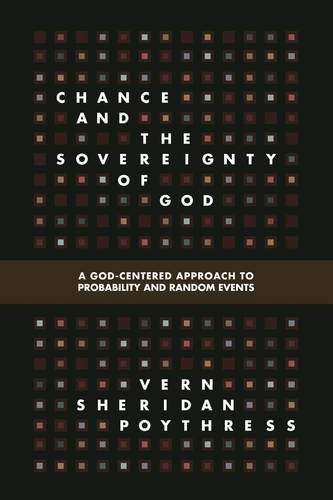 When I saw the title Chance and the Sovereignty of God: A God-Centered Approach to Probability and Random Events, I pounced on the opportunity to review it. This is a topic I’ve been considering for doctoral work so I was extremely excited to dive in.
The book starts off well, with discussions on the nature of chance and exploration of the biblical material for anything dealing with seemingly random events. Poythress ably shows that the Bible clearly presents God as in control of all these events. Numerous verses suggest that God is in control over “all” events, while verses which explicitly mention seemingly random or chance occurrences also attribute such events to divine knowledge and control. Poythress’ look into these topics is detailed and broad. He addresses the weather, random events like the toss of a die, human free choices, the life and death of the smallest creature or plant, and even gambling! These things are all argued to be ultimately, biblically under the sovereignty of God.
Another area the book excels in is the discussion of chance in rival worldviews. Any view which denies the centrality of God is one which suppresses the knowledge of God (Romans 1). Poythress notes that this means that “chance” may become a God-substitute. Chance is seen as being not only the explanation of events but their actual cause:
People are implying that [Chance] has the power to bring about events… The word chance first gets associated with events that we as humans cannot predict or explain… Then, in a second step… [Chance] becomes a label that we offer as the new explanation for the unpredictable event… We say “Chance brought it about”… (Kindle Location 1707)
Chance as an explanation, Poythress argues, is ultimately empty. For chance is substituted to become whatever we cannot predict or explain, and is then used itself as the explanation. I found Poythress’ comments here interesting and very insightful. His application of this concept to other worldviews later in the book makes it worth the read for these sections alone.
One difficulty with the book is the question of audience. At times, the discussion of probability theory becomes complex and very scholarly, but the earlier sections of the book speak broadly and with words that seem aimed more at a general readership. This mixture of technical and general writing makes it hard to pinpoint the audience. Who is supposed to read this book? What is it supposed to be used for?
Another problem I saw in the book is the lack of thorough argumentation for many points. No complaint of this nature may be lodged against the book’s discussion of probability theory, which is well fleshed-out. But on God’s relation to probability theory and how that relates back to sovereignty, there are often only a few sentences at a time to make a claim about the nature of the interrelationship. For example, throughout Section IV on “Probability and Mathematics,” there are lengthy discussions of probability theory with passages on how it relates back to God seemingly tacked on throughout. Near the beginning of this section, one sample is representative:
Both of these [mathematical] principles [discussed above] have their foundations in God… The separations within this world have their ultimate foundation in the distinction among the persons of the Trinity… The unity and diversity in outcomes rest… on the original pattern of unity and diversity in God. God has caused the creation to reflect his glory and wisdom. (Kindle Location 3346)
Poythress does make some earlier references to this argument, but it just never seems to be fully established and surely a statement about mathematical separations for probability in the world being a reflection of distinction among persons in the Trinity may cause some skepticism. It is a point which begs for more argumentation than was dedicated to it here. Where Poythress does address it (Chapter 11), we find more detail to the arguments, but even more questions left unanswered. For example, granting that God is revealed in all things which are made, why think that a sequence of flipping coins is explicitly a revelation of the Trinity instead of simply a revelation of God’s imbuing the universe with order and regularity so that seemingly random events are possible? But Poythress takes it as the former–a revelation of the Trinity–without so much as a comment on alternative possibilities.
Perhaps more problematic is that Poythress never seems to tackle the broader implications of his biblical argumentation. Yes, he put much work into showing God is sovereign over the weather, chance events, free will, and the like. But I kept thinking, “And now what?” What does it mean to say God is in control over natural disasters? What does it mean to say that the roll of dice I make in a game of Risk, for example, is controlled by God? What are the implications of the biblical data Poythress has set before me? Topics like these are taken up at points, only to be quickly set aside by a paragraph or even just a sentence or two.
Overall, Chance and the Sovereignty of God is an interesting look at an oft-neglected topic, but its scope is too broad and its argumentation at times too vague to be helpful. On biblical issues Poythress has offered much to consider. His outline of probability theory is helpful but technical. What I found after reading the book is that I continued to hope for a more detailed discussion on how sovereignty would interlink with chance. Yes, the book makes it plain that God has sovereignty over seemingly random events, but exactly how does that work? What does that mean for everyday life? At times these topics are taken up, only to be set down after but a few sentences. At times helpful and stunningly insightful, at other times frustratingly vague and broad, it’s a book that will leave you longing for more.
Links
Be sure to check out the page for this site on Facebook and Twitter for discussion of posts, links to other pages of interest, random talk about theology/philosophy/apologetics/movies and more!
Source
Vern Poythress, Chance and the Sovereignty of God: A God-Centered Approach to Probability and Random Events (Wheaton, IL: Crossway, 2014).

Disclaimer: I received a review copy of the book through Crossway. I was not obligated by the publisher to give any specific type of feedback whatsoever.
SDG.
——
The preceding post is the property of J.W. Wartick (apart from quotations, which are the property of their respective owners, and works of art as credited; images are often freely available to the public and J.W. Wartick makes no claims of owning rights to the images unless he makes that explicit) and should not be reproduced in part or in whole without the expressed consent of the author. All content on this site is the property of J.W. Wartick and is made available for individual and personal usage. If you cite from these documents, whether for personal or professional purposes, please give appropriate citation with both the name of the author (J.W. Wartick) and a link to the original URL. If you’d like to repost a post, you may do so, provided you show less than half of the original post on your own site and link to the original post for the rest. You must also appropriately cite the post as noted above. This blog is protected by Creative Commons licensing. By viewing any part of this site, you are agreeing to this usage policy.

 J.W. Wartick - Reconstructing Faith
