apologetics
“Fitzpatrick’s War”- Religion, truth, and forgiveness in Theodore Judson’s epic steampunk tale
The roar of our guns was more than my ears could hear. The slaughter in the two rivers was more than one man’s mind could absorb… A sort of madness over came us; we had an infinity of bullets and an infinity of Chinese before us. Every one of our men felt he was killing thousands… Death ran wild. How terrible it is, I thought, that the Yukons should be so good at this. (Judson, 319-320)
Fitzpatrick’s War
Brief Overview of the Plot
Fitzpatrick’s War is written as an autobiographic tell-all from the perspective of Sir Robert Mayfair Bruce. He is writing about Lord Isaac Prophet Fitzpatrick, a man who, like Alexander the Great, had conquered the world at a young age and also died young. Bruce was a close friend of Fitzpatrick (whom he calls Fitz) and so reveals a number of less-than-flattering aspects of his personality in his account of the life of the former ruler. It describes Fitzpatrick’s rise to power, his preparations for war during behind his father’s back, and his post-war rule.
Fitzpatrick is revealed as a man who lusted for power and ruled ruthlessly. He participated in assassinations, set up deaths, and mercilessly slaughtered his enemies. He used biological and chemical weapons and burned his enemies to the ground, all simply because of a desire to conquer the world. He had delusions of grandeur, envisioning himself as a kind of modern Alexander who would outdo the other man in every way.
The Timermen are another major player throughout the book. They are mysterious in their motivations and have supreme power over all space travel and most communications. Bruce reveals a number of unflattering details about these people as well.
The book has been edited by Doctor Professor Roland Modesty Van Buren, who is hostile to Bruce’s recounting of the events. Van Buren does not believe that Bruce is telling the truth about the great Fitzpatrick and believes he is instead attempting to make his own name live on through his lies. Thus, the book is footnoted throughout with Van Buren’s corrections to Bruce’s “lies.”
Religion
Religion is pervasive throughout Judson’s work. The characters constantly quote from the Bible to justify their positions which frequently seem unbiblical and evil. Although the society at large seems to think highly of the Bible, the United Yukon Church itself seeks to take over all religion and has repressed other expressions of religion for quite some time.
Yet Bruce is fully aware of how the Christian faith is being abused throughout the work for evil ends. In one scene, he is speaking privately with Fitzpatrick, who asks Bruce whether God can love someone who will wreak such evil on the world. Specifically, he asks about King David in the Bible. Fitzpatrick wants to know whether he himself is like King David and why God would love someone who so frequently strayed from righteousness. Bruce realizes that it is here that he could have influenced Fitzpatrick to turn from the great evils he would perpetuate. Yet, coveting power, Bruce makes the decision he would regret for the rest of his life and backs Fitzpatrick’s notions of glory and God. He writes:
I would today give up my soul if I could go back to that moment and tell Fitz he could still turn back from his awful destiny. I grant that he had at this date already committed murder. It was equally true that he had not yet made his oceans of blood… The world could have still been saved from his wrath… (204)
Instead, Bruce caves into his own lust for power and desire to please Fitzpatrick. He tells Fitzpatrick:
God loves you… There are a few special men… who, like David, walk through History as Angels walk through thunderstorms. Those about them become wet with sin, while they remain untouched. They may seem to be bad men, these special ones. If we judge them by the standards we hold ordinary men to, they are the worst of men. Ordinary standards do not apply to them. They are doing God’s work here on earth, and as we do not know God’s motives or His ends we cannot judge His servants… You [Fitzpatrick] will be said to be God’s beloved. (204-205)
Bruce regrets this discussion with Fitzpatrick for the rest of his life and struggles with the notion that he can be redeemed.
Fitzpatrick himself seeks a kind of syncretism of all religions, but realizes that it will not ultimately work. He keeps his old tutor, Dr. Flag, around mostly to feel superior about himself. But he had initially attempted Dr. Flag’s project of making all faiths equally valid. One discussion in the book is particularly revealing. Dr. Flag is expounding upon the notion that all religions are essentially the same, but Marshal Jeremiah Truth Hood challenges him on this notion:
“Sir, am I to understand you believe all major religions profess the same core beliefs?” [Hood Asked]
“Yes…” [replied Flag]
“Then that would mean, let us say, that the Chinese and the Arabs share the same beliefs on marriage and family?” asked Hood… “Can we say,” asked Hood, “that Arabs and the Chinese value life to the same degree? Or is human life another secondary question?”
“I mean specific, general matters. You see, such as treating others well.” [Responded Flag]
“You say cultures are essentially the same,” continued Hood. “How would you explain, sir, the different Histories of North and South America? Both continents are inhabited by Christians. The majority in both continents are of European descent…” (364-366)
Hood’s point is well taken. The fact of the matter is that all religions are not the same and to say otherwise devalues the religious persons themselves. The way that Judson presents this dialogue allows for some real insight into the issue: how is it possible to say that, at their core, all cultures or religions are the same when they are so radically different?
Evil, Repentance, and forgiveness
There is great evil in the world, and Bruce’s world is no different. Much of the evil is caused by Fitzpatrick and the war which he created in his lust for power.
Ultimately, Fitzpatrick is reduced to a broken, suspicious man who becomes incapable of even doing the simplest tasks on his own. Marshal Hood is greatly distressed over his own incapacity to make amends for the evils he had done during the War. Hood is sitting with Fitzpatrick and several other Lords when they watch a video from an aerial shot of China and see the destruction their war had done to the country. The bodies were strewn about and death was everywhere. Bruce, too, feels the need for repentance: “There were no words in my vocabulary I could utter that could justify this abomination, no act of contrition that could ever take away what I had done” (410). Hood himself begins quoting from the Bible, Joel chapter 1. He relates the evils they have done to the crimes that Joel cries out against. Later, Hood is found among the Chinese, trying to help them by growing food and feeding them. It was his way of making amends.
Bruce himself finds forgiveness only through his wife, who speaks with clarity on God’s will and his grace. It seems to me that this theme of forgiveness is grounded thoroughly in the Christian notion wherein people are to forgive each other. We act as God’s agents here on earth, and so we are called to repentance and forgiveness.
Charlotte
Bruce’s wife, Charlotte, is a paradigm example of a powerful, spiritual, loving woman. Van Buren, the hostile editor of the book, has several choice words to describe Charlotte, whom he believes is overstepping her bounds by attempting to be equal to Bruce. She often seems overbearing, but ultimately she strives to be equal to Bruce, and to temper the poor qualities of Bruce’s character. Charlotte is Roman Catholic, a religion which is violently oppressed in Yukon, until Fitzpatrick allows for religious freedom to endorse his own pluralism. Charlotte’s character is important throughout the work as one who provides the positive example of womanhood and the equality of men and women.
History and Doing History
History (always with a capital “H”) is an area of extreme interest in the world of Fitzpatrick’s War. Fitzpatrick himself continues to utter a recurring theme: History is written by the winners. Above, there was a discussion of King David. Fitzpatrick in that same conversation presses the notion that King David rewrote the history books in order to paint him in the most positive light. Later, in his own life, Fitzpatrick would do the same thing. He had the greatest poets and historians of his age come and write histories about him which were highly favorable in their portrayals of himself.
There is active repression of historical knowledge due to the fact that the culture at the time the book is set in believes that the “Electronic Age” (20th and 21st centuries) was a blight upon all History. During one scene, Bruce is being questioned about the Electronic Age and readers discover that only one history exists from that period. The reason is because “[A]ll other Histories of that era were perverted by the strange ideologies of the day…” (35).
As one who has studied historiography (and written on the method regarding Jesus), I can’t help but think of all the issues these discussions raise throughout the book. Interested readers should check out the post linked in the parentheses for one brief account of historiographic method.
Conclusion
I have read few books which have had such a great depth of knowledge about so many subjects as is demonstrated in Fitzpatrick’s War. The book is just phenomenal, and it touches upon so many areas of great importance for Christians and non-Christians alike. As with all great fiction, it does this without becoming overbearing, but instead focuses upon the story. Judson develops wonderful characters whom the reader can relate to, love, or loathe. He explores heady themes with wit and precision. I highly recommend this book to my readers.
Links
Religious Dialogue: A case study in science fiction with Bova and Weber– I explore two excellent science fiction books alongside each other to see how they speak to religious dialogue.
The Presumption of Pluralism: How religious pluralism devalues all religious persons– I discuss religious pluralism, a topic which is brought up throughout Fitzpatrick’s War and show how it fails.
Check out more of my looks at popular level books. (Just scroll down to see more!)
Hieropraxis is an excellent site which focuses upon a number of cultural issues and how they relate to Christianity. I really cannot recommend this site highly enough.
Empires and Mangers– Another phenomenal site which looks at many popular level works from a Christian perspective. The posts are consistently fantastic. I encourage you to follow this site closely.
SDG.
——
The preceding post is the property of J.W. Wartick (apart from citations, which are the property of their respective owners, and works of art as credited) and should not be reproduced in part or in whole without the expressed consent of the author. All content on this site is the property of J.W. Wartick and is made available for individual and personal usage. If you cite from these documents, whether for personal or professional purposes, please give appropriate citation with both the name of the author (J.W. Wartick) and a link to the original URL. If you’d like to repost a post, you may do so, provided you show less than half of the original post on your own site and link to the original post for the rest. You must also appropriately cite the post as noted above. This blog is protected by Creative Commons licensing. By viewing any part of this site, you are agreeing to this usage policy.
Guest Post: Rev. Kent Wartick on “The Virgin Birth”
“Behold, the virgin shall conceive and bear a son,
and they shall call his name Immanuel”
(which means, God with us). Matthew 1:28 ESV.
Familiar words to most Christians, aren’t they? Along with His Death and Resurrection, the virgin birth of Jesus is among the most celebrated and unifying events in all of Christianity. Nativity scenes can be found in front of Roman Catholic, Lutheran, Baptist, Methodist, and all sorts of churches of all denominations. The virgin birth is counted as among the fundamental doctrines of Christianity, and was important enough to be counted as one of the twelve articles of the Apostolic Creed. For centuries, the account that Jesus Christ was born of a virgin woman, Mary of Nazareth, was undisputed, at least as far as any known challenges can be documented.
But, then, along came the Enlightenment. With it came the idea that science and reason were the test of Scripture and all truth, and not the reverse. Therefore, if Scripture says that Jesus was born of a virgin, and that is not logical nor scientifically provable, then it must be rejected. Thus, the Jefferson “Bible” excludes any reference to the virgin birth as well as Jesus’ miracles, Deity, resurrection, etc. As time went on, through the historical critical method and other destructive methods of using reason not to teach but to judge Scripture, the Enlightenment principle of reason and science over Scripture slowly infiltrated the thinking of many churches. Surveys confirm this infiltration.
1998: A poll of 7,441 Protestant clergy in the U.S. showed a wide variation in belief. The following ministers did not believe in the virgin birth:
- American Lutherans- 19%
- American Baptists- 34%
- Episcopalians- 44%
- Presbyterians- 49%
- Methodists- 60%
2007-DEC: The Barna Group sampled 1,005 adults and found that 75% believed that Jesus was born to a virgin. 53% of the unchurched, and 15% of Agnostics and Atheists believe as well. Even among those who describe themselves as mostly liberal on political and social issues, 60% believe in the virgin birth. (Source for surveys.)
It is a great travesty in the Church today that many clergy find themselves looking at their positions only as a job, and will say what they must to preserve their positions. From the source of the polls previously cited comes this quote:
“…one Hampshire vicar was typical: ‘There was nothing special about his birth or his childhood – it was his adult life that was extraordinary….I have a very traditional bishop and this is one of those topics I do not go public on. I need to keep the job I have got.’
Such hypocrisy and blatant deceit is unworthy of anyone, let alone one who claims to proclaim the Word of God and represent Him to the people. yet such is the state of much of the clergy, as indicated by the above polling figures. No wonder the Church is in such disarray, and seems so powerless in the world today!
If Christianity is only a “nice” way of life that is only about love and compassion, then I suppose the virgin birth is not so essential, But if Christianity is an intimate and personal relationship by faith with the Creator of the Universe, then Who that Creator is makes all the difference. And if being born of a virgin is something He says about himself, even once, in His Book, then it might be best if we believe it. After all, wouldn’t you like to know a bit about, say, the pedigree of a dog or horse that you were to buy, or even more so, wouldn’t you like to know all about a future spouse that you profess to love before marriage? (Please forgive the analogy, which is not meant to cheapen God, spouses, dogs, or horses).
The virgin birth of Christ—and I would say, the historical fact that Jesus was conceived by a miracle like unto creation itself—does not travel alone. It ties intimately into other doctrines-the Holy Trinity, the Deity of Christ, the substitutionary atonement, the inspiration, inerrancy, and infallibility of Scripture, and more. “Scripture cannot be broken”, Jesus said in John 10:35. Even so, the most basic teachings of the Christian faith cannot be broken off and accepted like items on a buffet table. They are all one. Accept all of them-or none of them. That is the challenge that the catechumen, the seeker, the growing disciple of Christ is faced with. Finally, you see, the importance of the virgin birth is found, like all things, bound in the Person and Work of Jesus Christ.
As far as the prophecy quoted by Matthew, namely Isaiah 7:14, much ink has been spilled on this by scholars with more degrees than I have. Some modern Bible translations, notably the NRSV, CEB, TEV and others use “young woman” to translate the Hebrew word almah. Others, such as the NASB, ESV, NKJB, TNIV (=NIV 2011), use the more traditional “virgin.” The LXX also translates the word “virgin.” While the matter is not as simple as some might make it, certainly I would think that the Septuagint scholars would have known Hebrew and Greek well enough to have chosen a different word besides the Greek word for “virgin” if “young woman” would have been indicated. They had no agenda to support a virgin birth or not. The same cannot be said of some modern translators. The sainted Dr. William Beck wrote a study on this subject, available at www.wlsessays.net/.
Human reason helps us put all of these things together systematically from Scripture; but human reason cannot accept and believe them itself. That, too, is a special creative work of the Holy Spirit. What a delight to know that God wants everyone to know Him as He reveals Himself in Scripture. It is through the very words of Scripture that God creates faith. Through those Holy Spirit given and empowered words He keeps one in the faith. As I stand in awe that God chose this supernatural way to join our human race, so I stand in awe that He created faith in my heart, and has kept that faith to this day. All glory and praise to Him forever!
Finally, though, the virgin birth is a matter of faith. For the individual, it is a matter of personal faith whether one accepts what Scripture says about the miraculous conception and birth of Jesus or not. But the virgin birth is also a matter of THE Faith; that is to say, it is an article of Christian doctrine that is beyond dispute. To accept it is to accept a fundamental, essential doctrine of all Christianity. To reject it is to put one outside the bounds of the Christian faith. I pray that this Advent and Christmas season you will join with me, and with all the Christian world, in celebrating the supernatural way that God chose to enter our human race to bear our sin and be our savior.
Rev. Kent Wartick is the pastor of Faith Lutheran Church in Kent, Ohio. He has been preaching for over 26 years in the Lutheran Church – Missouri Synod. He’s my dad, and an inspiration for the faithful.
Book Review: “Cold Case Christianity” by J. Warner Wallace
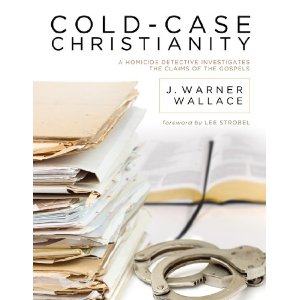 I’ll forego the preliminaries here and just say it: this is the best introductory apologetics book in regards to the historicity of the Gospels I have ever read. If you are looking for a book in that area, get it now. If you are not looking for a book in that area, get it anyway because it is that good. Now, on to the details.
Cold-Case Christianity
He begins the work with a section on method. He argues that we must learn to acknowledge our presuppositions and be aware of them when we begin an investigation. Like the detective who walks into a crime scene with a preconceived notion of how the murder played out, we can easily fall into the trap of using our expectations about a truth claim to color our investigation of the evidence for that claim. Learning to infer is another vastly important piece of the investigation. People must learn to distinguish between the “possible” and the “reasonable” (34ff). This introduction to “abductive reasoning” is presented in such a way as to make it understandable for those unfamiliar with even the term, while also serving as great training on how to teach others to reason for those involved in apologetics.
Chapter 3, “Think Circumstantially” is perhaps the central chapter for the whole book. Wallace notes that what is necessary in order to provide evidence “beyond a reasonable doubt” is not necessarily “direct evidence.” That is, direct evidence–the type of evidence which can prove something all by itself (i.e. seeing it rain outside as proof for it actually raining)–is often thought of to be the standard for truth. Yet if this were the standard for truth, then we would hardly be able to believe anything. The key is to notice that a number of indirect evidences can add up to make the case. For example, if a suspected murderer is known to have had the victim’s key, spot cleaned pants (suspected blood stains), matches the height and weight a witness saw leaving the scene of the crime, has boots that matched the description, was nervous during the interview and changed his story, has a baseball bat (a bat was the murder weapon) which has also been bleached and is dented, and the like, these can add up to a very compelling case (57ff). Any one of these evidences would not lead one to say they could reasonably conclude the man was the murderer, but added together they provide a case which pushes the case beyond a reasonable doubt–the man was the murderer.
In a similar way, the evidences for the existence of God can add up to a compelling case for the God of classical theism. Wallace then turns to examining a number of these arguments, including the moral, cosmological, fine-tuning, and design arguments. These are each touched on briefly, as a kind of preliminary to consider when turning to the case for the Gospels. Furthermore, the notion of “circumstantial” or cumulative case arguments hints towards the capacity to examine the Bible and the Gospels to see if they are true.
Wallace then turns to examining the Gospels–Mathew, Mark, Luke, and John–in light of what he has learned as a detective. He utilizes forensic statement analysis as well as a number of other means by which to investigate witnesses and eyewitness reports to determine whether the Gospels can be trusted. He first turns to Mark and makes an argument that Mark had firsthand contact with Peter, one of the Disciples and an Apostle. He shows how we can search for and find “artifacts”–textual additions that were late into the accounts of the Gospels. None of these are surprises, because we know about them by investigating the evidence we have from the manuscript tradition. By piecing together the puzzle of the evidences for the Gospels, we form a complete picture of Christ (106ff).
It is easy to get caught up in “conspiracy theory” types of explanations for the events in the Bible. People argue that all kinds of alternative explanations are possible. Yet Wallace notes again that there is a difference between possible and reasonable. Simply throwing out possible scenarios does nothing to undermine the truth claims of the Gospels if the Gospels’ own account is more reasonable. Furthermore, drawing on his own knowledge from investigating conspiracy theories, Wallace notes that the Gospels and their authors do not display signs of a conspiracy.
A very important part of Cold-Case Christianity is the notion that we can trace back the “chain of custody” for the Gospels. By arguing that we are able to see how the New Testament was passed authoritatively from one eyewitness to disciple to disciple and so on, Wallace argues that conspiracy theories which argue the Gospel stories were made up have a much less reasonable explanation than that they are firsthand accounts of what happened. Much of the information in these chapters is compelling and draws on knowledge of the Apostles’ and their disciples. It therefore provides a great introduction to church history. Furthermore, Wallace notes that a number of things that we learn from the Gospels are corroborated not just by other Christians, but also by hostile witnesses (182ff). He also argues that we can know that the people who wrote the Gospels were contemporaries of the events they purported to report by noting the difficulties with placing the authors at a later date (159ff). This case is extremely compelling and this reviewer hasn’t seen a better presentation of this type of argument anywhere.
There are many other evidences that Wallace provides for the historicity of the Gospels. These include undesigned coincidences which interlink the Gospel accounts through incidental cross-confirmations in their accounts. I have written on this argument from undesigned coincidences before. Archaeology also provides confirmation of a number of the details noted in the Gospel accounts. The use of names in the Gospels place them within their first century Semitic context.
Again, the individual evidences for these claims may each be challenged individually, but such a case is built upon missing the forest for the trees. On its own, any individual piece of evidence may not prove that the Gospels were written by eyewitnesses, but the force of the evidence must be viewed as a complete whole–pieces of a puzzle which fit together in such a way that the best explanation for them is a total-picture view of the Gospels as history (129ff).
All of these examples are highlighted by real-world stories from Wallace’s work as a detective. These stories highlight the importance of the various features of an investigator’s toolkit that Wallace outlined above. They play out from various viewpoints as well: some show the perspective of a juror, while others are from the detectives stance. Every one of them is used masterfully by Wallace to illustrate how certain principles play out in practice. Not only that, but they are all riveting. Readers–even those who are hostile to Christianity–will be drawn in by these examples. It makes reading the book similar to reading a suspense novel, such that readers will not want to put it down. For example, when looking at distinguishing between possible/reasonable, he uses a lengthy illustration of finding a dead body and eliminating various explanations for the cause of death through observations like “having a knife in the back” as making it much less probable that accidental death is a reasonable explanation, despite being possible.
Throughout the book there are also sidebars with extremely pertinent information. These include quotations from legal handbooks which describe how evidence is to be viewed, explanations of key points within the text, and definitions of terms with which people may be unfamiliar. Again, these add to the usefulness of the book for both a beginner and for the expert in apologetics because it can serve either as a way to introduce the material or as helpful guides for using the book to teach others.
Overall, Cold-Case Christianity
Links
View J. Warner Wallace’s site, Please Convince Me, for a number of free and excellent resources. I highly recommend the blog and podcast.
I would strongly endorse reading this book alongside On Guard
Source
J. Warner Wallace, Cold-Case Christianity
Disclosure: I received a copy of the book for review from the publisher. I was not asked to endorse it, nor was I in any way influenced in my opinion by the publisher. My thanks to the publisher for the book.
SDG.
——
The preceding post is the property of J.W. Wartick (apart from citations, which are the property of their respective owners, and works of art as credited) and should not be reproduced in part or in whole without the expressed consent of the author. All content on this site is the property of J.W. Wartick and is made available for individual and personal usage. If you cite from these documents, whether for personal or professional purposes, please give appropriate citation with both the name of the author (J.W. Wartick) and a link to the original URL. If you’d like to repost a post, you may do so, provided you show less than half of the original post on your own site and link to the original post for the rest. You must also appropriately cite the post as noted above. This blog is protected by Creative Commons licensing. By viewing any part of this site, you are agreeing to this usage policy.
Jesus’ Birth: How undesigned coincidences give evidence for the truth of the Gospel accounts
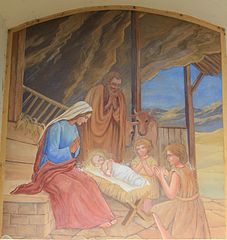 There are many charges raised against the historicity of the birth narratives of Jesus Christ. These run the gamut from objections based upon alleged contradictions to inconsistencies in the genealogies to incredulity over the possibility of a virgin birth. Rather than make a case to rebut each of these objections in turn, here I will focus upon using undesigned coincidences to note how these birth narratives of Christ have the ring of truth. How exactly do undesigned coincidences work? Simply put, they are incidental details that confirm historical details of stories across reports. I have written more extensively on how these can be used as an argument for the historicity of the Gospels: Undesigned Coincidences- The Argument Stated. It should be noted that the birth narrative occurs only in Matthew and Luke. John begins with a direct link of Christ to God, while Mark characteristically skips ahead to the action. Thus, there are only a few places to compare these stories across different reports. However, both Mark and John have incidental details which hint at the birth account. These incidental details lend power to the notion that the birth narratives of Jesus are historical events.
Joseph
First, there is one undesigned coincidence that is such a gaping hole and such a part of these narratives most people will probably miss it. Namely, what in the world was Joseph thinking in Luke!? Do not take my word for this–look up Luke chapters 1-2. Read them. See anything missing? That’s right! Joseph, who is pledged to a virgin named Mary (1:27) doesn’t say anything at all about the fact that his bride-to-be is suddenly pregnant. There is no mention of him worrying at all about it.
So far as we can tell from Luke, Joseph, who we only know as a descendant of David here, is going to be wed to a virgin and then finds out that she’s pregnant. He’s not the father? What’s his reaction? We don’t find out until Luke 2, where Joseph simply takes Mary with him to be counted in the census, dutifully takes Jesus to the Temple, and that’s about it. Isn’t he wondering anything about this child? It’s not his! What happened?
Only by turning to Matthew 1:18ff do we find out that Joseph did have his second thoughts, but that God sent an angel explaining that Mary had not been unfaithful, and that the baby was a gift of the Holy Spirit. So we have an explanation for why Joseph acted as he did in Luke. Now these are independent accounts, and it would be hard to say that Luke just decided to leave out the portion about Joseph just because he wanted to have Matthew explain his account.
The genealogies of Jesus that Matthew and Luke include are different, but they reflect the meta-narratives going on within each Gospel. Luke’s narrative generally points out the women throughout in a positive light, and it is often argued that his genealogy traces the line of Mary. Matthew, writing to a Jewish audience, traces through Jesus’ legal father, Joseph. Now it could be argued that these are simply reflections of the authors’ imaginations within their fictional accounts, but surely including names with descendants tracing all the way back to Abraham and beyond is not a good way to construct a fictional account. No, Matthew and Luke include the genealogies because their accounts are grounded in history.
Incidental Details
Interestingly, the birth narratives of Jesus also help explain the events reported in Mark and John, which do not report His birth. What of the apparent familiarity John had with Jesus in Mark 1:3ff and John 1:19ff? It seems a bit odd for John to go around talking about someone else “out there” who will be better in every way than he himself is without knowing who this other person is. Well, looking back at Matthew and Luke, we find that Mary and Elizabeth (John’s mother) knew each other and had visited each other during their pregnancy. It seems a foregone conclusion that they continued to interact with each other after the births of their sons, which would explain John’s apparent familiarity with Jesus in Mark and John.
Strangely, Mark never mentions Joseph as Jesus’ father. If all we had was Mark’s Gospel, we would be very confused about who Jesus’ father is. The oddness is compounded by the fact that Mary is mentioned a number of times. Well okay, that still seems pretty incidental. But what about the fact that Mark explicitly has a verse where he lists Mary as well as Jesus’ siblings?
Is not this the carpenter, the son of Mary and brother of James and Joses and Judas and Simon? And are not his sisters here with us?” And they took offense at him. (Mark 6:3, ESV)
This verse seems extremely weird. After all, Joseph was a carpenter (well, a more accurate translation is probably “craftsman”) and yet despite Mark explicitly using that word for Jesus, as well as listing Mary and Jesus’ siblings, we still see nothing but silence regarding Jesus’ father. Well, of course! After all, when we turn to the birth narratives in Matthew and Luke, we find that Jesus was born of a virgin. Jesus had no human father. Thus, Mark, ever the concise master of words, simply omits Joseph from details about Jesus’ life. But to not mention Jesus’ father in a largely patriarchal society alongside his mother and siblings seems extremely strange. It is only explained by the fact of the virgin birth, with which Mark would have been familiar. However, Mark didn’t see the birth narrative as important in his “action Gospel.” Only by turning to Matthew and Luke do we find an explanation for the strange omission of Joseph from Mark’s Gospel.
Conclusion
I have listed just a few undesigned coincidences to be gleaned from the birth narratives of Jesus. The fact of the matter is that these can be multiplied almost indefinitely if one looks at the whole of the Gospels, and even moreso if one investigates the whole Bible. These incidental details fit together in such a way as to give the Gospels the ring of truth. The way that Matthew fills in details of Luke, Mark demonstrates his familiarity with the birth narratives, and the intimate connections of Jesus and John are all cross-confirmed is both incidental and amazing. The claim is not that based upon these incidences alone the Gospel accounts are true. No, the claim is that those who challenge the truth of these accounts must account for these incidences in a way that is more plausible than that they simply occur when people relate history. It seems that the only way to do that would be to resort to outlandish narratives that involve the four authors sitting together and discussing which portions of stories to leave out so the others can fill them in. No, instead it seems much more likely that these four authors were writing what they had witnessed–or received from eyewitness testimony, and just as we do when recounting events (think of 9/11, for example, and the different things people remember) they wrote specific details they felt were important or part of the narrative, while the others found other things more important or had other incidental knowledge related to the events they recorded.
SDG.
——
The preceding post is the property of J.W. Wartick (apart from citations, which are the property of their respective owners, and works of art as credited) and should not be reproduced in part or in whole without the expressed consent of the author. All content on this site is the property of J.W. Wartick and is made available for individual and personal usage. If you cite from these documents, whether for personal or professional purposes, please give appropriate citation with both the name of the author (J.W. Wartick) and a link to the original URL. If you’d like to repost a post, you may do so, provided you show less than half of the original post on your own site and link to the original post for the rest. You must also appropriately cite the post as noted above. This blog is protected by Creative Commons licensing. By viewing any part of this site, you are agreeing to this usage policy.
Forgotten Arguments for Christianity: Undesigned Coincidences- The argument stated
 The argument from undesigned coincidences is one of the forgotten arguments for Christianity. It has seen a very recent resurgence through the work of some Christian apologists, such as the philosopher Timothy McGrew. The core of the argument is an investigation of the Bible. When one examines the Scriptures, one finds a number of historical, factual claims which either overlap and confirm others made independently or fill in gaps that authors familiar with current events at the time of the writings would have assumed their readers knew about. These coincidences are therefore undesigned–they are unintentional–but they show that the authors who wrote the books which contain them were telling historical truths.
The Argument Outlined
The argument from undesigned coincinces is not an argument which can be contemplated and accepted or dismissed within minutes or even a few hours of study. The argument must be analyzed by investigating individual instances of the undesigned coincidences for oneself and feeling the weight of the evidence begin to burden the mind.
The argument is an inductive argument. Basically, it argues for the conclusion that the Bible is historically accurate. However, it can be used to argue more specifically towards the conclusion that the miraculous accounts in the Bible did in fact happen.
John James Blunt, an early (1794-1855) proponent of the argument from undesigned coincidences, uses the argument as a challenge:
In our argument we defy people to sit down together, or transmit their writings one to another, and produce the like [undesigned coincidences]. Truths known independently to each of them, must at the bottom of documents having such discrepancies and such agreements as these in question. (J.J. Blunt, kindle location 89, cited below)
It would be hard to make the argument more succinct than this. The argument is built from an ever-growing number of independently observed statements throughout the Bible which coincidentally prove, confirm, or fill in historical gaps of other passages. Therefore, it can feature a huge number of steps, each one an additional piece of evidence. Because of this, it is most easily stated as a challenge. Once you have considered the massive weight of the evidence from untold numbers of undesigned coincidences, can you really maintain your skepticism of the historicity of the Bible?
The argument is used not just to establish the credibility of the Gospels but can be used for a number of other claims about the historicity of Christianity: “The argument deduced from coincidence without design has further claims, because… it establishes the authors of several books of Scripture as independent witnesses to the facts they relate; and this, whether they consulted each other’s writings or not; for the coincidences, if good for anything, are such as could not result from combination, mutual understanding, or arrangement” (Blunt, Kindle Location 78).
Undesigned Coincidences- What are they?
Tim McGrew explains the notion of an undesigned coincidence:
How can we say, no, really there are marks of authenticity [in the Bible]… We should look not for parallel passages in the same words but for what are called undesigned coincidences… Sometimes two works written by different authors incidentally touch on the same point in a manner that cannot be written off as copying or having a copy made from some third source… The two records interlock like the pieces of a jigsaw puzzle. [McGrew, cited below]
Undesigned coincidences overlap and interlock with each other. It is perhaps easiest to explain the concept through an example [I owe this example to Jonathan McLatchie in his post “Undesigned Coincidences: The Ring of Truth”:
Luke 23:1-4:
Then their whole assembly rose up and brought Him before Pilate. They began to accuse Him, saying, “We found this man subverting our nation, opposing payment of taxes to Caesar, and saying that He Himself is the Messiah, a King.”
So Pilate asked Him, “Are You the King of the Jews?”
He answered him, “You have said it.”
Pilate then told the chief priests and the crowds, “I find no grounds for charging this man.”
Wait, what? Isn’t it Pilate’s job to make sure the Jews do not revolt against Caesar? This guy just basically said he was king!
But then compare that to John 18:33-38:
Then Pilate went back into the headquarters, summoned Jesus, and said to Him, “Are You the King of the Jews?”
Jesus answered, “Are you asking this on your own, or have others told you about Me?”
“I’m not a Jew, am I?” Pilate replied. “Your own nation and the chief priests handed You over to me. What have You done?”
“My kingdom is not of this world,” said Jesus. “If My kingdom were of this world, My servants would fight, so that I wouldn’t be handed over to the Jews. As it is, My kingdom does not have its origin here.”
“You are a king then?” Pilate asked.
“You say that I’m a king,” Jesus replied. “I was born for this, and I have come into the world for this: to testify to the truth. Everyone who is of the truth listens to My voice.”
“What is truth?” said Pilate.
After he had said this, he went out to the Jews again and told them, “I find no grounds for charging Him.
John’s telling of the story therefore fills in the gap in Luke’s story. In Luke, there is no reason Pilate would not find grounds for charging Jesus. Only by reading the story in John does one discover that Pilate wanted to let Jesus go because Jesus had explained that his Kingdom was not an earthly kingdom.
If one looks again at these texts in context, one will find that in John, there is no explanation for why Pilate would think Jesus claimed to be a king anyway–it is just out of left field. But turning back to Luke, there is a scene in which the Jews accuse Jesus of claiming to be a king to Pilate. So there is, in these passages, a back-and-forth confirmation. You have to read them both to get the whole picture, and these kinds of details are not the types of things people could plan for.
This is just one example, but they can be multiplied almost beyond comprehension. The way they work is, as McGrew said, like interlocking pieces of a puzzle.
What about Miracles?
The argument can even be used to make a stronger claim. Again, see Blunt, “[I]n several instances the probable truth of a miracle is involved in the coincidences… [W]hen we see the writers of Scriptures clearly telling the truth in those cases where we have the means of checking their accounts… it is reasonable to believe that they are telling the truth in those cases where we have not the means of checking them…” (Kindle Location 89).
Thus, the argument from undesigned coincidences is not a religiously neutral argument. It can also be used to support the truths of miracles. The way this argument works is very subtle. It is not reducible to only the claim that because the Scriptures seem reliable on historical matters due to the undesigned coincidences, we should trust them on the miraculous. Rather, the fact is that the “probable truth of the miracle is involved in the coincidences” (Blunt, 89). “[W]here the natural and supernatural are in close combination, the truth of the former must at least be thought to add to the credibility of the latter” (ibid, 531). The miraculous is sometimes so intertwined with the historical that the confirmation of the historical cannot help but be evidence for the miraculous. Thus, the argument from undesigned coincidences provides a direct argument for the truth of the miraculous.
Conclusion: There’s more where that came from
I have written this post with the intended purpose only to show what the argument from undesigned coincidences looks like. We have seen that it is an inductive argument that is based upon a vast number of examples of varying weight. Furthermore, unlike many historical arguments for Christianity, the argument from undesigned coincidences offers a direct argument for the truth of miracles. I have not addressed possible objections to these arguments. Instead, I leave those for a later post. The next post in this series will outline a few principles of undesigned coincidences.
In closing, it is perhaps best to close with the words of another pre-1900 proponent of the argument:
[S]ince we decide many important worldly matters upon the mere preponderance of evidence and arguments, why should we not adopt the same principles here? It is not necessary in order to recommend the Gospel story for our adoption to insist that it be proved to a mathematical demonstration, and beyond the cavils of every doubter, or of every unreasonable skeptic. Why not adopt that conclusion which has the higher degree of probability rather than the opposite? [Bennett, Kindle Location 59, cited below]
Links
If you want to learn more about forgotten arguments for Christianity, check out my post “On the Shoulders of Giants: Rediscovering the lost defenses of Christianity.”
Tim McGrew has offered a number of other talks on the topic. Please check them out for more discussion of this argument. McGrew on Evidence4Faith. Another lecture by McGrew on undesigned coincidences. Check out McGrew’s interview with Apologetics 315.
Another great post on “undesigned coincidences” can be found at the Christian Apologetics Alliance blog: “The Ring of Truth.”
Cross Examined has a number of coincidences to examine in their post on undesigned coincidences.
Sources
The image is public domain. {{PD-1923}}
John James Blunt, Undesigned Coincidences in the Writings of both the Old and New Testament, New York, 1847.
Edmund Bennett, The Four Gospels from a Lawyer’s Standpoint, New York, 1893.
Timothy McGrew, “Undesigned Coincidences”- this talk can be accessed free of charge here.
William Paley, Evidences of Christianity, New York, 1794; 1865.
SDG.
——
The preceding post is the property of J.W. Wartick (apart from citations, which are the property of their respective owners, and works of art as credited) and should not be reproduced in part or in whole without the expressed consent of the author. All content on this site is the property of J.W. Wartick and is made available for individual and personal usage. If you cite from these documents, whether for personal or professional purposes, please give appropriate citation with both the name of the author (J.W. Wartick) and a link to the original URL. If you’d like to repost a post, you may do so, provided you show less than half of the original post on your own site and link to the original post for the rest. You must also appropriately cite the post as noted above. This blog is protected by Creative Commons licensing. By viewing any part of this site, you are agreeing to this usage policy.
Book Review: “Always Ready” by Greg Bahnsen – Presuppositional Apologetics
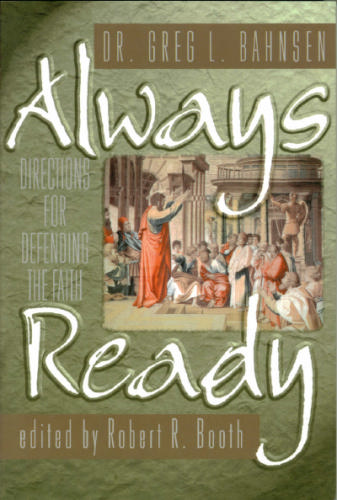 Greg Bahnsen is well-known within the community of presuppositional apologetics (with good reason–see his debate with prominent atheist Gordon Stein). But what is presuppositional apologetics? How is it distinctive from other approaches to defending the faith? Bahnsen seeks to answer those questions (and more) in his work, Always Ready
In section one, Bahnsen introduces one of the most important aspects of the presuppositional approach: the focus upon the impossibility of epistemic neutral ground. Often, in debates over the verifiability of the faith, the believer is encouraged to set aside their neutrality. Bahnsen argues forcefully that to do so is not just to give up a great weapon in the defense of the faith; it actually damages one’s defense irreparably (3ff). Because of the impossibility of neutral ground, Bahnsen urges apologists to begin not with any supposed neutral ground, but rather with “fear of the Lord” (5). What does he mean by this? Simply put, “the Christian presupposes the truthful word o f God as his standard of truth and direction” (19, emphasis his). The Bible, in other words, is the epistemological starting point for the presuppositional apologist. Rather than starting with a defense of the Bible, the apologist is to start with the Bible as given.
Bahnsen realizes that this point is the one which will likely be most contentious for those who oppose the presuppositionalist approach and thus he turns to a defense of the use of the Bible as an epistemological foundation. He argues that “God’s word has… absolute epistemic authority and it is the necessary presupposition of all knowledge which man possesses” (29). One argument against this presupposition is that it is dogmatic. The argument is made that one cannot simply presuppose their own position to take on all comers. Against this, Bahnsen argues that the presuppositional approach is in fact dogmatic because any approach is dogmatic. On a Christian perspective, knowledge without God’s Word is impossible. Therefore, a Christian cannot set that aside as though one could become “neutral”; in doing so, one has in fact rejected the Christian worldview (31, 7-9, 34, 36). Others may object that this seems to make any knowledge of non-Christians impossible. Again, Bahnsen corrects such a view, arguing that unbelievers “cannot but have them [knowledge of God as a presupposition for knowledge] as a creature made as God’s image and living in God’s created world” (38). In other words, he holds that the unbeliever unwittingly holds to Christian presuppositions in order to have any kind of knowledge. In principle, the unbeliever can have no knowledge; in practice, by borrowing from the Christian worldview, unbelievers have knowledge (ibid). Bahnsen does present several more arguments in favor of the presuppostional perspective, including an examination of the Christian perspective of the knowledge of unbelievers and the rebellion of those without God.
Part of the distinctiveness of the presuppositional approach is that rather than approaching the defense of the faith as a cumulative case, it presents Christianity as a worldview to line up against other worldviews in conflict. The importance of this is emphasized by Bahnsen.”The Christian,” he argues, “can never be satisfied to defend [the faith]… by merely stringing together isolated evidences…. [which] will be evaluated… by the unbeliver’s tacit assumptions; his general world-and-life view will provide the context in which the evidential claim is understood and weighted. What one presupposes as to possibility will even determine how he rates ‘probability'” (67). Thus, if one offers an argument for the existence of God, that argument will be evaluated by the unbeliever within their own assumptions. According to Bahnsen, only by destroying those assumptions–only by pitting whole worldviews side-by-side and showing how they rate on coherence with reality–can one adequately do apologetics. Bahnsen then turns to an evaluation of the conditions necessary for successful apologetics (81-106). Largely, this includes God’s soverein control over all things and fleeing from sin.
Perhaps the most illuminating portion of Always Ready is its presentation of various apologetic issues and the way that presuppositional apologetics provides answers to these arguments. For example, regarding the problem of evil, the presuppositionalist approach rests upon its usefulness as a paradigm of “worldviews in conflict.” Rather than trying to provide varied theodicies, the presuppositionalist argues, as does Bahnsen, “If the Christian presupposes that God is perfectly and completely good… then he is committed to evaluating everything within his experience in light of that presupposition” (171, emphasis his). Thus, on a presuppositional approach, the premise that “God has a morally sufficient reason for the evil which exists” is a given (172). For every evil, on the Christian worldview, God has a morally sufficient reason. Only by assuming that Christianity is false can one argue that the problem of evil is truly a problem. Thus, Bahnsen reevaluates the problem of evil as a psychological problem rather than a logical problem. It is a problem of trusting in God that God has good reasons for allowing evil (173).
Challenges to miracles are also assessed in light of presuppositionalism. At the core of the presuppositianalist response is again the centralization of the conflict of worldviews. Only by assuming that miracles do not occur can one exclude them a priori from investigation. Thus, the unbeliever has begged the question and their argument is undermined (225). Bahnsen answers a number of other arguments from a presuppositional perspective, including challenges from the possibility of metaphysics, religious language, faith, and the like.
The work ends with an extended investigation of Paul’s apologetic approach in Acts 17. Bahnsen argues that Paul’s approach was thoroughly presuppositional and that it acts as a model for the presuppositional approach to apologetics.
The strengths of Always Ready are immediately apparent. Bahnsen provides a thorough look at presuppositional apologetics which presents not just the outline of the approach but also several case studies in order to help people put it into practice. The distinctiveness of presuppositional apologetics shines throughout the book
There are a few flaws in the work, however. First, as is often the case, the presuppositionalism presented in this work is thoroughly Calvinistic. Simply being Calvinistic is not a flaw, but the way that Calvinism is presented by many defenders of presuppositionalism (Bahnsen, Van Til, Frame, and the like) is essentially as the one true faith. It is Calvinism or it isn’t Christianity. Frankly, that’s a huge problem. Setting that aside, the weakest point of the work is also its most important one: namely, the presupposition of the Bible as necessary for apologetics. There are a great many who are extremely skeptical of this approach. First, there is the charge of circularity, which presuppositionalists actually accept. Their response is that all worldviews are ultimately circular.The debate remains largely unsettled, but as for this reviewer, it is hard to accept that the entire Bible is a necessary presupposition for the defense of the faith. Finally, the dim view of individual evidences as useful for defense of the faith remains a problem within the presuppositional approach.
That said, even if one rejects the possibility of presupposing the Christian worldview wholesale, one can still utilize the presuppositional approach in their apologetic. By focusing squarely upon defense of the faith as a clash of worldviews, Bahnsen has highlighted the extreme usefulness of pointing out how presuppositions can color one’s outlook on the interpretation of evidences and the investigation of other positions. Although readers may not be ready to embrace the whole of presuppositionalism, after reading Always Ready, they may be ready to integrate a number of presuppositional approaches into their apologetic.
Source
Greg Bahnsen, Always Ready
SDG.
——
The preceding post is the property of J.W. Wartick (apart from citations, which are the property of their respective owners, and works of art as credited) and should not be reproduced in part or in whole without the expressed consent of the author. All content on this site is the property of J.W. Wartick and is made available for individual and personal usage. If you cite from these documents, whether for personal or professional purposes, please give appropriate citation with both the name of the author (J.W. Wartick) and a link to the original URL. If you’d like to repost a post, you may do so, provided you show less than half of the original post on your own site and link to the original post for the rest. You must also appropriately cite the post as noted above. This blog is protected by Creative Commons licensing. By viewing any part of this site, you are agreeing to this usage policy.
Jesus’ wife? A survey of responses.
SEE UPDATE: It has become revealed that this fragment is almost certainly a fraud. But, if you’re still bothered by it, check out the links below.
UPDATE 2 (4/17/2014): The case has been reopened as some alleged new evidence has shown that the document might not be a forgery after all, which now makes the links below relevant again! I’ve also added a comedic video I found via Tim McGrew.
There has been a bit of an uproar about a 4th Century Coptic Manuscript which purportedly provides evidence that Jesus had a wife. Apart from the fact that it is 4th century and therefore a few hundred years after the events and during primetime for Gnostics making up facts about Jesus to undergird their own theological leanings, many seem to think this is somehow evidence against Christianity. Well, here are some great responses to the discovery.
Reality Check: The “Jesus’ Wife” Coptic Fragment– Daniel Wallace, an influential NT scholar, comments on the discovery. He really gets into some great textual-critical details here. I would say this is one of the more important responses. I highly recommend this response.
Durham University professor calls the “Jesus had a wife” manuscript fragment a forgery– Yep, folks, we might be cutting this one off pretty quickly. Some analyses are suggesting fragment is actually a hoax, and the arguments seem pretty decisive. See the next post:
The Gospel of Jesus’ Wife: How a Fake Gospel-Fragment Was Composed– This is a very interesting post which you can find Francis Watson, a professor of religion and theology at Durham University making a concise argument in a PDF which argues that the fragment is a fake. It’s a fascinating article, and perhaps destroys the whole controversy at the start. (To be fair, the late purported date of the fragment does little for me, anyway.)
New Coptic Fragment Says Jesus Was Married– A summary of skeptics’ attitudes towards historicity.
The Gospel of Jesus’ Wife?– Glenn Andrew Peoples has a simply fantastic discussion of the implications of this discovery. One of my favorite lines: “Prepare yourself. Suddenly, people are going to read a sensational article about a tiny scrap of parchment and become experts on early church history.”
Did Jesus Have a Wife?– A post which focuses on the authenticity of the document and the implications if it is indeed authentic. Another great response.
SHOCKING New Evidence Reveals 4th-Century Coptic Christians WONDERED If Jesus Was MARRIED!– What is the historical significance of the discovery, assuming it is genuine? A few very good, concise points.
So What if Jesus did Have a Wife?– Definitely an alternative approach. John Byron notes that Christians could grant that Jesus was married without somehow undermining the core doctrines of Christianity. This one is really interesting and I’m sure will be controversial. While not a response to this article, Aggie Catholics has a very different view of the implications of the discovery, while denying that it has historical import other than as showing the beliefs of Gnosticism: Proof That Jesus Was Married?
The Wife of Christ and the Bride of Christ– This post looks at the discovery from a more presuppositional type approach. We know the Bible is reliable, so what should we make of this discovery?
Stop the presses! Jesus was married! Oh no!– Carl Olson at the Catholic World Report comments on a number of issues with jumping to conclusions about the text. I found this one particularly insightful about how the discovery is being portrayed in the media.
Quick Thoughts on the New Jesus Wife Text– Darrell Bock, a prominent NT scholar, shares his thoughts on the implications of the text. It’s highly informative and concise.
Was Jesus Married?– A reflection on the way the media portrays stories like this along with an examination of the importance of the document and apologetics.
Get Ready for A Wave of Gnostic Looniness Again– James White notes that the discovery was made by a woman who loves to sensationalize gnosticism.
Shock! Horror! Jesus’ Wife! (Video)– a satirical video about the discovery and its alleged implications for Christian faith.
The Presumption of Pluralism: How religious pluralism devalues all religious persons
Everyone has their own truth.
What’s true for you is true for you, what’s true for me is true for me.
All religious backgrounds have a piece of the puzzle.
All roads lead to the same goal.

Pluralism is rampant in our society. People want to affirm everyone’s belief. Tolerance is the buzzword. Few want to talk about the differences in worldviews. It’s easier to affirm everyone’s beliefs as having a place in the interchange of ideas.
Pluralism is the position that all religions are true. This can be qualified in a number of ways. Often, the views are not well-thought out and amount to little more than saying that all ways get to heaven. However, there are thoughtful pluralists with highly developed structures for affirming their professed pluralism. For example, John Hick, a well known proponent of pluralism, writes:
[T]he Transcendent in ‘its’ inner nature is beyond human description or comprehension… it is ineffable or, as I would rather say, transcategorical, beyond the scope of our human concepts. It is to this ultimate transcategorical reality that the religions are oriented and to which they are human responses. (Hick, 163, cited below)
Thus, for Hick and most other pluralists, all religions are oriented towards some kind of Ultimate or Transcendent, from which they derive all of their beliefs. Thus, these pluralists can affirm the notion that all religions are “true” in a qualified sense.
The problem with pluralistic claims is that in their gusto to affirm all religions as true, what they’ve actually done is said that all religions are false. Again, Hick realizes a problem inherent in qualifying religions–and specifically Christianity–such that they can all be true. The problem is that some claim to have stated actual truths about transcendent reality. In other words, when a theologian claims that God is Triune, they are making a claim about objective reality. But Hick’s proposed solution is to simply place such theological claims into the reports of experiences about the “Real”: “according to our hypothesis, the different traditions are not reporting experiences of the Real in itself, but of its different manifestations within human consciousness” (171, cited below). Unfortunately for pluralists, what this has done is create what I find to be the real problem for pluralists.
The problem is that the pluralist is the only one whose claims about the Real/Transcendent are true.
The presumption of pluralism is that it assumes the invalidity of all religious claims. Only the pluralist can see that all religious claims to exclusivity are false. The exclusive claims of individual religions are dismissed offhand. After all, if all ways are true, then none can be exclusive.
Again, look at the reasoning from Hick: the claims of theologians are not actually claims about the Real itself. Rather, the claims of the theologian apply only to the Real-as-experienced in human consciousness. In other words, those making truth claims about individual religions are only expressing claims about their own subjective experience of an objective reality: the Real.
Thus, the pluralist undermines the truth claims of all religions, while simultaneously trying to affirm them. Only the pluralist is able to look beyond the truth claims of religion and see that when the Muslim claims that Allah is the only God, he is mistakenly reporting his experience as opposed to a claim about reality. Only the pluralist can see that the Christian who claims that Jesus is the only savior, she is only reporting her conscious experience of the Real. The Buddhist who says there is no God is similarly mistaken: perhaps there is? Who knows? Only the pluralist can see that all of these contradictory claims about religious reality are in fact merely the reports of conscious experience of a supra-reality: one which stands above all religions and is the true religion.
The bottom line is that the pluralist has become the exclusivist. Only the pluralist knows the true way. Thus, their system must collapse in on itself. It either relegates all religious claims to become mere reports of human consciousness and thus affirms itself as the only true religion, or it must affirm blatantly contradictory claims like “God exists” and “There is no God” or “Shiva is a god, Vishnu is a god, etc.” and “There is no God but Allah.” The pluralist has presumed much.
If all ways are true, then none are. Pluralism has failed.
Links
Can we evaluate worldviews?– I discuss how to evaluate rival worldviews and outline some criteria by which to do it.
A Vision for Christian Apologetics to World Religions– I outline a vision for Christians interacting with believers of other faiths. Integral to this approach is understanding others’ beliefs.
Source
John Hick, The New Frontier of Science and Religion (New York: Palgrave Macmillan, 2010).
SDG.
——
The preceding post is the property of J.W. Wartick (apart from citations, which are the property of their respective owners, and works of art as credited) and should not be reproduced in part or in whole without the expressed consent of the author. All content on this site is the property of J.W. Wartick and is made available for individual and personal usage. If you cite from these documents, whether for personal or professional purposes, please give appropriate citation with both the name of the author (J.W. Wartick) and a link to the original URL. If you’d like to repost a post, you may do so, provided you show less than half of the original post on your own site and link to the original post for the rest. You must also appropriately cite the post as noted above. This blog is protected by Creative Commons licensing. By viewing any part of this site, you are agreeing to this usage policy.
Religious Dialogue: A case study in science fiction with Bova and Weber
I love science fiction. One of the main reasons is because it provides a medium for authors to share their philosophical outlook for the world. Some authors portray their vision of what the world would like like if…. and what fills in that “if” is that which the author would like readers to be wary of our condemn. For example, distopian fiction often takes some aspect of society and shows how if we allow it to run rampant, we will create a world wherein we would not want to dwell. Other authors use science fiction to portray an ideal (or nearly ideal) society and show how the things they are promoting or believe fit into that ideal society.
Ben Bova and David Weber are two of my favorite science fiction authors. Bova blends hard science fiction (sci-fi which is largely focuses upon the applications of science that is at least seemingly possible) with great storytelling. His “Grand Tour” series of books is the story of humanity spreading across our solar system and even finding life on mars and founding a colony on the moon. David Weber writes military science fiction on an epic scale, complete with amazing battles in space (and who doesn’t like some big explosions in space?). I was fascinated to see both authors interact with Christianity, particularly on a fundamentalist level, and see how they took that discussion.
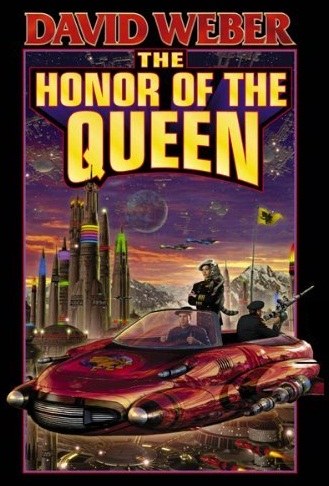 David Weber
David Weber’s book, The Honor of the Queen
What really struck me is that David Weber fairly presented firm believers as a spectrum. He showed that believers can be reasoned with and even persuaded to believe differently based upon evidence. Furthermore, he showed that even those who may line up on the side with which he disagrees [presumably–I don’t know where he stands on the issue] are not all (or even mostly) blinded by faith or foolishness. Rather, although there are some truly evil and disillusioned people, Weber shows that many are capable of changing their position or at least acknowledging that rival views are worth consideration.
The most vivid portrayal of this theme is found in a conversation between Admiral Courvosier and Admiral Yakanov. Courvosier is from the same nation as Honor Harrington and wholly endorses his female officer in a position of command. They discuss Captain Honor Harrington:
[Yanakov responds to Courvosier’s question about his society’s reaction to Honor]: “If Captain Harrington is as outstanding an officer as you believe–asI believe–she invalidates all our concepts of womanhood. She means we’re wrong, that our religion is wrong. She means we’ve spent nine centuries being wrong… I think we can admit our error, in time. Not easily… but I believe we can do it.”
“Yet if we do[” Yanakov continues, “]what happens to Grayson [their world]? You’ve met two of my wives. I love all three of them dearly… but your Captain Harrington, just by existing, tells me I’ve made them less than they could have been… Less capable of her independence, her ability to accept responsibility and risk… How do I know where my doubts over their capability stop being genuine love and concern?”
The exchange is characteristic of the way Grayson’s people are treated throughout the book. They are real people, capable of interacting with other views in honest ways. They feel challenged by a view contrary to their own. Some react poorly, and there are extremists who are blinded by hatred and anger. Yet all of them are treated as people with real concerns shaped by their upbringing and backgrounds.
Honor Harrington ends up saving Grayson, and at the end of the book, she is commended by the rulers of that planet. She talks to the “Protector” [read: king/president]:
“You see,” [said the Protector] “we need you.”
“Need me, Sir?” [Responded Honor]
“Yes, Grayson faces tremendous changes… You’ll be the first woman in our history to hold land… and we need you as a model–and a challenge–as we bring our women fully into our society.”
Weber thus allows for even ardent supporters of specific religious backgrounds to respond to reasoned argument and to change. They are capable of interacting on a human level and deserve every bit of respect as those who disagree with them. Again, there are those who are radicals and will not be reasoned with, but they are the minority and they do not win out.
Weber therefore presents religious dialogue in The Honor of the Queen as a genuine interaction between real people from differing backgrounds. Those who are “fundamentalist” are capable of changing their views when challenged with a rival view which out-reasons their own. Religious dialogue is possible and fruitful.
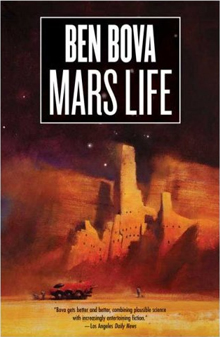 Ben Bova
Ben Bova’s whole “Grand Tour” series has a number of dealings with “fundamentalists.” He never really defines the term to be specifically Christian but one can tell when reading the books that it is pretty clear he is referencing hardcore fundamentalist evangelical Christianity.
I recently finished reading Mars Life
Bova’s treatment of extremist positions in religion is somewhat disingenuous in my opinion, particularly when one compares his portrayal with that of Weber. Bova tends to illustrate religious fundamentalists as a black and white issue. Basically, if you are a hardcore believer, you’re in it for power and control, you are willing to incite violence to achieve your ends, and you are incapable of reasoning. Again, note the contrasts with Weber’s depiction above. A few examples will help to draw this out.
On page 142 and following there is a discussion about putting together a panel to discuss the finding of a fossil on Mars. The interaction shows that no matter what, fundamentalists cannot accept scientific findings:
“Look,” said the bureau chief… “everybody’s calling it a fossil…. …”Call it an alleged fossil, then,” insisted the consultant (from the fundamentalists)… [The group then continues to suggest terms for the fossil:] “A probable fossil?” …”A possible fossil”… [Then, finally] “Say that the scientists believe it’s a fossil and until proven otherwise that’s what we’re going to call it.”
Here one can see that fundamentalism is intrinsically tied to an anti-science mentality. The key for them is to use words which deny absolutes, essentially skirting issues rather than discussing the truth. But that’s not all there is to it. Later on, one of the fundamentalists is engaged in a discussion about “requesting” that some lyrics in music they view as morally reprehensible be changed. The musician flat out refuses, angering the fundamentalist in the process. The section closes as follows:
[The musician] was shot to death at a Dog Dirt concert three months later. His killer surrendered easily to the police, smilingly explaining that he was doing God’s work.
What is interesting about this example is that it is illustrative of a number of such examples throughout the book. These are completely unrelated to the main plot. Rather, it seems what Bova is doing is very explicitly showing that fundamentalists are unafraid to use immoral tactics, censoring, and even incite violence in order to get their way. Theirs is an unquestioned and unquestionable faith. Those in power in fundamentalism are inherently evil and devious. They only want to control. Again, these asides are in no way tied to the plot of the book. It’s almost as though Bova is preaching a different worldview, one which views religiosity as inherently dangerous and violent, with few exceptions.
There is one positive example, however. A Roman Catholic, Monsignor Fulvio DiNardo, who is also a world-renowned geologist decides he wants to go to Mars to find the answer to a question about faith which is pressing on him. Namely, why God would exterminate an entire intelligent species. His thread in the story seems to show two things: first, that fundamentalism is inherently incapable of responding to reason; second, that it is possible to have reasoned faith and science together. The second point is illustrated very well when DiNardo is finally on Mars. He suffers from a likely stroke and is dying and begins a dialog with God:
Why did you kill them, Lord? They were intelligent. They must have worshipped You in some form or other. Why kill them? How could you–
And then DiNardo understood. Like a calming wave of love and peace, comprehension flowed through his soul at last… God had taken the Martians to Him! Of course. It was so simple, so pure. I should have seen it earlier. I should have known. My faith should have revealed the truth to me.
The good Lord took the Martians to Him. He ended their trial of tears in this world and brought them to eternal paradise. They must have fulfilled their mission. They must have shown their Creator the love and faith that He demands from us all. So He gave them their eternal reward…
The light was getting so bright… Glaring. Brilliant… Like staring into the sun. Like looking upon the face of… (297-298)
So Bova does offer a counterbalance to fundamentalism, and I appreciate that portrayal. Although DiNardo’s death and his revelation receives very little further comment (and no further comment at all on the revelation), it seems as though it is positively portrayed.
A reason for criticism is that Bova is uncompromising with fundamentalists. I’ve already drawn out his portrayal of them, and it seems to me to be a bit disingenuous. Although there are plenty on the “religious right” who would be all too happy to be able to legislate all morality, control the media, and deny well-attested scientific findings, I have hardly found that to be the majority. And certainly, fundamentalism is not a homogeneous entity filled with people who are trying to control everyone else. I’ll grant that this is a work of fiction, but in light of how Weber was able to handle a fairly similar issue with respectful portrayals of the ‘other side,’ I had hoped for more from Bova, whose work I enjoy greatly. For Bova, it seems, religious dialogue is not a real possibility, with few exceptions. Fundamentalists are incapable of reasoning and are barely even convinced believers; rather they are using their positions of authority within their organizations to consolidate power and execute their own prerogatives on their witless followers.
Fair Discussion
It seems pretty clear to me that David Weber provided a better model for utilizing science fiction in religious dialogue than Ben Bova did. The people representing the ‘bad guys’ in Weber’s book did have some who were truly evil and/or beyond reason, but also had many with whom reason resonated. When confronted with rival views, they were thoughtful and even receptive. On the other hand, the characters with whom Bova disagreed were a true black/white dichotomy with the “good guys.” Fundamentalists were bad. Period. He portrayed them as power-hungry, censor-happy maniacs. Although there was one notable exception (the Catholic priest, DiNardo), who showed a bright spot for “believers” at large, he was by far the exception.
It seems clear this study has applications for real-world dialogue about religion. When we interact with other worldviews, we should be capable of treating the other side with the same kind of dignity we would like to be treated. Although other worldviews may have their extremists who will not respond to reason, our attitude should be that of the humble friend trying to explore the beliefs of the “other.” The “other” is not that which must be demonized, but rather understood and with which to interact.
More Reading
I explore the theological implications of life on other planets.
I discuss a book which will change the way you think about about the notion that religion is violent. It also deals with the notion of the religious “other” as a construct.- William Cavanaugh’s The Myth of Religious Violence.
Sources
Ben Bova, Mars Life
David Weber, The Honor of the Queen
SDG.
——
The preceding post is the property of J.W. Wartick (apart from citations, which are the property of their respective owners, and works of art as credited) and should not be reproduced in part or in whole without the expressed consent of the author. All content on this site is the property of J.W. Wartick and is made available for individual and personal usage. If you cite from these documents, whether for personal or professional purposes, please give appropriate citation with both the name of the author (J.W. Wartick) and a link to the original URL. If you’d like to repost a post, you may do so, provided you show less than half of the original post on your own site and link to the original post for the rest. You must also appropriately cite the post as noted above. This blog is protected by Creative Commons licensing. By viewing any part of this site, you are agreeing to this usage policy.
Christianity, Hope, and Art- An Interview with Lisa Guinther
 Recently, I had the opportunity to talk to Lisa Guinther. Lisa is a late-in-life college student who has been accepted as a philosophy major (undergraduate) at CU Boulder (2014 expected graduation) She had been a student at Colorado Christian (College of Adult Studies) since 2009 with an undergraduate Certificate in Biblical Studies.
She is the owner/designer of Woman of Wisdom Creations and is an illustrator who was published in a national Christian magazine, and is illustrating a children’s book scheduled to be in book stores summer 2013.
J.W.: Describe for me your journey as an artist.
Lisa: I started being involved in art in high school. I was a freshman in an art department and surrounded by art majors. I was surrounded by people starting to experiment in art. I learned from some sessions and took some classes. So I’ve always fiddled around with art, a lot of classes in oil painting, water colors, and acrylics. It never really was encouraged, but I never let it go.
I never considered how my art could affect my Christian walk until recently.
I was apostate for almost 12 years. Within a year or two of my “coming back”, so to speak, I went to the Denver Museum of Art. They had a featured handwritten Bibles and they just caught my attention and wouldn’t let me turn away. They were pre-Gutenberg press, handwritten Bibles, and the care that it took to write out and draw out the words and frame each passage clicked with me. I began thinking what if I could make the Bible art? That was when I started Illuminated Texts [Lisa’s Blog].
I was making presents… eventually I was done with that and decided to express Bible verses in a painting.
J.W.: How has your Christian worldview influenced your art?
Lisa: Something I noticed with art in the Christian tradition: I find when I visit the Lutheran churches that they still have a tradition of promoting art. But in a lot of other evangelical-type churches, there is little promotion of art. There’s not a lot of art. It’s gotten really short shrift.
An artist friend who used to be involved in the Abstract-Expressionism movement explained to me that the whole ideology of abstract impressionism is actually idol making. About the time of impressionism, which started with Monet, at that point people thought art was dead. Paintings were seen as a framed window. But with the camera, artists had to see art in a different way. They began to put themselves onto canvas and put themselves on the wall. Artists kept trying to outdo each other—this is a truncated explanation—but it became creating idols. It became the artist’s impression of nature, and then it became the artist emotional expression.
If you’re creating art that’s just that—the inner expression of a moment—then you can put anything on a canvas. Now is that really art? I don’t know! What is the nature of art? Nicholas Wolterstorff gave a lecture on this topic—is art an intrinsic good or an instrumental good? It may be both, I don’t know.
Is there a part of this that we could get possibly back to a definition of art as representing God’s creation and the beauty within that creation that’s there because beauty is a part of God’s nature? …[T]here is just so much gratuitous beauty in the created world. I think that’s one way to do natural theology, a way to point to God. Is there a way to get back to a representation of beauty in art that would point us back to God?
We can be authentically Christian and authentically artists. You have to engage… [some kinds of] art to begin to see its beauty. The Bible is kind of like that. You can surface read it and you learn things and this is good, but you don’t really get the deep level of beauty in Scripture until you really dig in and study it.
At times when I’m painting or drawing, it’s almost as though I’m praying. There is a mystical aspect—I feel like there are times when I’m thinking about prayers or meditating on Scripture or just thinking about God as I’m painting or drawing and I know these are God’s gifts that He gives me, but I feel like in some tangible way I’m showing what I feel. It’s a tangible way to express other than in writing—it’s the way abstract impressionism should be.
I think we need a better working definition of art. A paperclip… might be under the definition of instrumental art, but we need to bring back representational art but we can also see abstract art that can draw us into a deeper understanding just like the way we read Scripture.
J.W.: What are some ways for the Church to promote art and artists?
Lisa: Look at the history of art in the church. You needed people for stained glass, for alter decorations, and there was a whole system in place that would support artists. But we haven’t been doing that since the Reformation.
People don’t understand what a painting costs. A 30×40 canvas is 100$, along with the palette of colors, and the other costs—tubes of paint as 4-12$—and I have a full palette of colors. It’s expensive.
J.W.: How could the church support artists more effectively, in light of that?
Lisa: In a larger church, there could be an art show. Some churches do this every quarter or even every month. You generally find that within every church there are artists. They’re there. You just need to put up a sign up sheet and people will come out of the wordworks. Remind parents that if you really want to stimulate imagination—the same skills you need in math are important in art and music—to promote kids to do artwork is to promote their reading skills, creativity, and math skills.
We want creative expression in how we worship. Worship is creativity and if you’re worshiping you generally have some spark in you of artistic talent. If we could encourage art as a form of worship, we can’t lose that.
I’d like to share a quote from Hans Urs von Balthasar [The Glory of the Lord: A theological aesthetics 1967 as “Herrichkeit: Eine theologische Asthetic, I: Schau der Gestalt” Ignatius Press, San Francisco Translated to English in 1982]:
Beauty is the last thing which the thinking intellect dares to approach, since only it dances as an uncontained splendor around the double constellation of the true and the good and their inseparable relation to one another. Beauty is the disinterested one, without which the ancient world refused to understand itself, a word which the ancient world refused to understand itself, a word which both imperceptibly and yet unmistakably has bid farewell to our new world, a world of interests, leaving it to its own avarice and sadness. Now longer loved or fostered by religion, beauty is lifted from its face as a mask, and its absence exposes features on that face with threaten to become incomprehensible to man. We no longer dare to believe in beauty and we make of it a mere appearance in order the more easily to dispose of it. Our situation today shows that beauty demands for itself at least as much courage and decision as do truth and goodness, and she will not allow herself to be separated and banned from her two sisters without taking them along with herself in an act of mysterious vengeance. We can be sure that whoever sneers at her name as if she were the ornament of a bourgeois past—whether he admits it or not—can no longer pray and soon will no longer be able to love. (p. 18)
Within Roman Catholicism there always was a theology of beauty as an attribute of God.
J.W.: What can you tell us about the “Bold Girls of the Bible” and your illustrations?

(c) Lisa Guinther 2012
Lisa: One of the points I’d like to make is that I’ve tried to keep the illustrations as real as possible. I think it is important that we not present Biblical stories in some kind of airbrushed, phony way. I’ve always been a history buff. I’d like to present these characters in a way that people see them as real—the kids can see them as real. I don’t think that beautiful pristine white robes is historically accurate.
Can I present characters that illustrate the stories in as real way as possible so that kids can relate? Can I make it real for the kids reading it so they can relate to the people? When I was growing up I saw the Bible as something not really real. Can I, in artwork, make it real for us? And that’s what my friend Mary [the author of Bold Girls of the Bible] tries to do in her writing.
Can we make the characters in the Bible real enough that little girls can relate to them? Everyone knows about David and Goliath, but I never had a Bible hero.
J.W.: How are you composing the art?
Lisa: I pose kids, take a photograph, print out the picture, and do an outline sketch. Then I put the backers on it, drape the clothing, create the character, and create the image from the sketch.
J.W.: Do you have a Bible hero now?
Lisa: Hands down, St. Paul. I often try though, if I had to pick a character that I could write a story around or draw a picture of, I wonder a lot about Deborah and what she had to go through.
J.W.: You mentioned natural theology, how would you look to integrate your art with apologetics?
Lisa: We all have a sense of beauty in art and in nature and in music even though it may be amorphous. Everyone has a universal sense called “beauty” and the only way there can be a [Platonic] universal is if there is a creator. It’s why we have the idea of good, beauty, truth.
I agree with the idea that we know good because God is the exemplar of that. We know beauty because it is a part of God’s very nature. I think we know beauty and we can see it in the world around us because we are created in the image of God. We also want to, in our own way, create. That creative spark within us is really a part of the image of God in man.
——————-
My thanks to Lisa for this wonderful interview. I think we both had a lot of fun talking about God, apologetics, and art.
You can view some of Lisa’s art at Illuminated Text…. by Lisa.
Lisa has her own apologetics site, Insights from the Furnace, which integrates the arts with apologetics.
SDG.
——
The preceding post is the property of J.W. Wartick (apart from citations, which are the property of their respective owners, and works of art as credited) and should not be reproduced in part or in whole without the expressed consent of the author. All content on this site is the property of J.W. Wartick and is made available for individual and personal usage. If you cite from these documents, whether for personal or professional purposes, please give appropriate citation with both the name of the author (J.W. Wartick) and a link to the original URL. If you’d like to repost a post, you may do so, provided you show less than half of the original post on your own site and link to the original post for the rest. You must also appropriately cite the post as noted above. This blog is protected by Creative Commons licensing. By viewing any part of this site, you are agreeing to this usage policy.

 J.W. Wartick - Reconstructing Faith
