Book Reviews
Book Review: “The Religion of American Greatness” by Paul D. Miller

Paul D. Miller’s The Religion of American Greatness is a conservative pushback against Christian Nationalism. Miller is a professor at Georgetown, was on staff for the National Security Council, served in the Army, and has background in a number of related topics. He’s written for The Gospel Coalition, The Washington Post, and others.
Miller’s perspective is valuable because he’s a sympathetic reader. He clearly understands and has read the material related to Christian nationalism, but as a conservative he doesn’t just remain unconvinced, but rather clearly believes that Christian nationalism is fatally flawed on a number of levels.
Chapters in the book explore cases for and against Christian nationalism, look into the Bible and nationalism, and even explore more current events like the Trump phenomenon. Miller’s views on things like identity politics reflect his more conservative starting point, which may make him more sympathetic to readers already starting on the right end of the political spectrum. Yet even for readers of a more liberal bent, this book serves up a number of excellent analyses and insights into Christian nationalism that will provide them with discussion points that may resonate with those with whom they disagree.
There are numerous excellent insights found throughout the book. For example, Miller notes repeatedly that one issue with nationalism is that it tends to define nation states by shared cultural heritage, but this does not reflect the actual composition of nations that exist. That means that Christian nationalism must either advocate for a kind of voluntary or force dividing of people along preconceived cultural lineages or modify its proposals related to nationalism (see, for example, page 33ff). Some readers may wish Miller would drill down into that argument further–after all, the Christian nationalist definition of nations seems to almost demand a kind of ethnocentric division of humanity and, combining that with its belief that Christian culture would be some kind of inherent feature of some nations, would inevitably yield ethnic hierarchy–but Miller’s argument is more focused than that, and, as noted above, is directed in such a way as to convince some who might not listen to those arguments from implication. Miller does, however, note many of the difficulties inherent in such definitions, such as the existence of people who cannot be placed neatly within any of the broad cultural categories nationalists use. Of course, on this latter point, one again may wish for some kind of note that nationalists then almost have to be forced to a kind of kin-ism, in which only people from certain ethno-cultural groups should interact or, at the least, have children together. But what Miller does is place the arguments of nationalists on the table, where the implications can be drawn out. He nails them down with words from their own writings, and notes the problems even from within their own perspectives. Miller’s analysis thus avoids the head on [and, in my opinion, accurate] accusations of racism and related problems that may drive off some readers while still showing the implications are there.
Another excellent section is Miller’s chapter on the Bible and nationalism. Here, for example, he analyzes the claims of nationalists related to the nation of Israel, often seen as a kind of model for what Christian nationalism ought to be. The Bible itself vitiates against Christian nationalism, for it undercuts the very definitions nationalists attempt to use in order to construct their perspectives. Israel, the Bible teaches us, was a mixed multitude from the time it emerged from Egypt (121). This directly contradicts nationalist tendencies to demand shared cultural background for the formation of nation states and identity. Going on, Israel intermingled languages (Hebrew and Aramaic, among others), mixed familial bonds, and more. The thing that set it apart was merely its relationship to its God; not any kind of shared cultural background (121-122). Insights like this can be found throughout the chapter, and, indeed, the book.
The Religion of American Greatness is a needed response to Nationalism from a background that at least some people within that movement will listen to. It’s the kind of book well-worth reading for people of any background, and certainly could be recommended or bought and given to people who are interested in the topic. I recommend those interested in the topic have a copy on their shelf for reference or lending whenever possible.
All Links to Amazon are Affiliates links
Links
Be sure to check out the page for this site on Facebook and Twitter for discussion of posts, links to other pages of interest, random talk about theology/philosophy/apologetics/movies and more!
Book Reviews– There are plenty more book reviews to read! Read like crazy! (Scroll down for more, and click at bottom for even more!)
SDG.
——
The preceding post is the property of J.W. Wartick (apart from quotations, which are the property of their respective owners, and works of art as credited; images are often freely available to the public and J.W. Wartick makes no claims of owning rights to the images unless he makes that explicit) and should not be reproduced in part or in whole without the expressed consent of the author. All content on this site is the property of J.W. Wartick and is made available for individual and personal usage. If you cite from these documents, whether for personal or professional purposes, please give appropriate citation with both the name of the author (J.W. Wartick) and a link to the original URL. If you’d like to repost a post, you may do so, provided you show less than half of the original post on your own site and link to the original post for the rest. You must also appropriately cite the post as noted above. This blog is protected by Creative Commons licensing. By viewing any part of this site, you are agreeing to this usage policy.
Book Review: “Ancient Christian Texts- Cyril of Alexandria Commentaries on Romans, 1-2 Corinthians, and Hebrews”
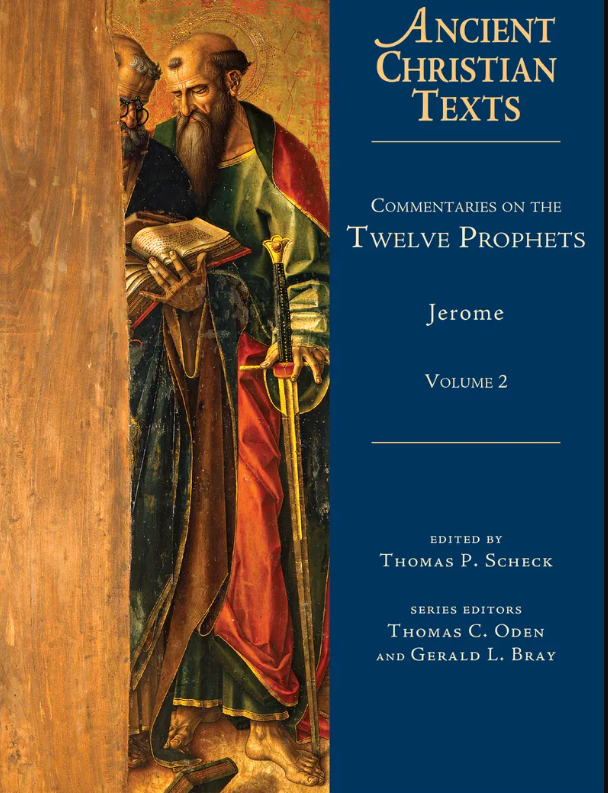
Learning from the earliest theologians in the church is something I think every Christian ought to do. InterVarsity Press’s excellent “Ancient Christian Texts” series is one I’ve explored occasionally, and I was excited to see Commentaries on Romans, 1-2 Corinthians, and Hebrews from Cyril of Alexandria pop up for review. Here, fragments of Cyril’s commentaries have been put together sequentially for readers to browse and learn from.
A general introduction and an introduction to this specific work help set the stage. Readers won’t find a simple verse-by-verse commentary here, but rather a pieced together group of comments from various fragments of Cyril of Alexandria. Though this may make it sound like there’s little of value here, the opposite is in fact the case. Reading ancient Christian commentary on scripture is often enlightening for a number of reasons, and Cyril’s comments are no different.
One of the best reasons to read commentaries like this is to find the twofold truth that ancient Christians often were discussing the same questions we have today and also often had their own questions that aren’t as wrapped up in today’s discourse. The latter is especially interesting to me, and examples of this abound throughout this work. One example is found in the discussion of angels and Hebrews 1:4. Here, Cyril only briefly addresses the question of angels before diving in to an argument that the Arians are mistaken about God the Son being “originate” due to their reading of this verse. The latter still has relevance to this day, but Cyril’s brief comment about angels being like servants was striking to me as well. Little insights like this come up throughout the book, even in the scattered fragments of comments that one finds strewn across the books in view.
Longer comments are found as well, with some lengthy discourse occurring–including in Hebrews. Reading what an ancient Christian commentator had to say about this book can also help readers highlight aspects of the text they may not have noticed before. Again, an example may help–in Romans 14:20-22 Cyril is quick to note that we should refrain from some things that are permissible for the sake of others but even more for ourselves, because permissible things could make us fleshly in luxurious passions. A kind of ascetic background looms here, but the broader point of being wary of luxurious excess is a good point to be made. Small comments like this can be found all over the book.
Commentaries on Romans, 1-2 Corinthians, and Hebrews is another excellent entry in the Ancient Christian Texts series. Recommended highly for readers interested in learning about ancient Christian commentary on Scripture.
All Links to Amazon are Affiliates links
Links
Be sure to check out the page for this site on Facebook and Twitter for discussion of posts, links to other pages of interest, random talk about theology/philosophy/apologetics/movies and more!
Book Reviews– There are plenty more book reviews to read! Read like crazy! (Scroll down for more, and click at bottom for even more!)
SDG.
——
The preceding post is the property of J.W. Wartick (apart from quotations, which are the property of their respective owners, and works of art as credited; images are often freely available to the public and J.W. Wartick makes no claims of owning rights to the images unless he makes that explicit) and should not be reproduced in part or in whole without the expressed consent of the author. All content on this site is the property of J.W. Wartick and is made available for individual and personal usage. If you cite from these documents, whether for personal or professional purposes, please give appropriate citation with both the name of the author (J.W. Wartick) and a link to the original URL. If you’d like to repost a post, you may do so, provided you show less than half of the original post on your own site and link to the original post for the rest. You must also appropriately cite the post as noted above. This blog is protected by Creative Commons licensing. By viewing any part of this site, you are agreeing to this usage policy.
Book Review: “Flame of Love: A Theology of the Holy Spirit” by Clark H. Hinnock (Second Edition)
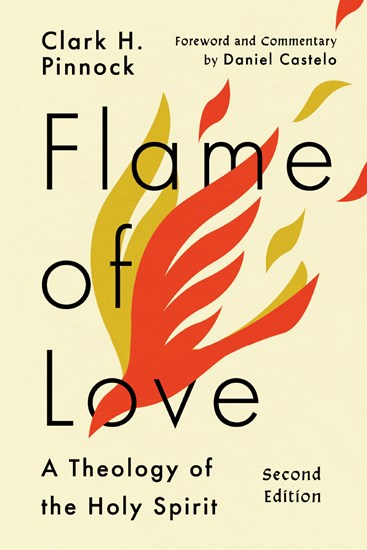
Flame of Love: A Theology of the Holy Spirit is a deep look at pneumatology- the theology of the Spirit.
Pinnock starts off noting the importance of the Spirit as a Person of the Trinity as well as the oft-neglected study of the same. Then, over the course of seven chapters, he outlines theological questions and answers related to the spirit: the Trinity, Spirit in Creation, Spirit and Christology, Spirit and Church, Spirit and Union, Spirit and Universality, and Spirit and Truth.
These chapters provide broad outlines of the titular topics, while also challenging Christians to think more deeply about them. For example, in the chapter about the Spirit and Universality, Pinnock presses the point that the Spirit is truly work in all things. He draws from C.S. Lewis’s depiction of Aslan in The Last Battle to note that Christian thinkers have not inconsistently pointed out that God can even work through and in other religions. And how else to consider this than to think of the activity of the Spirit in drawing all towards God? Elsewhere, Pinnock considers the question of the filioque clause in the Nicene Creed, arguing that it seems to him to subordinate the Spirit to the Son. He also touches on a number of other potentially controversial topics. At more than one point, Pinnock notes that he considered using feminine pronouns for the Spirit due to the use of feminine imagery as well as feminine words for the Spirit in Scripture, but opted out. His reasoning here seems somewhat confusing, and largely amounts to that he wasn’t sure evangelicals would be ready for that yet (see esp. page 277).
The second edition features a foreword and commentary by Daniel Castelo. I found these additional notes to be helpful, and enjoyed his summaries at the end of each chapter. I was actually a bit disappointed that the frequency of notes went down a bit towards the end of the book. Whenever they appeared, Castelo’s comments were insightful and helped elucidate the text in some way.
Flame of Love is a fascinating read that explores issues in which Christians, unfortunately, are not often well-versed. Pinnock not only brings the focus to the Holy Spirit, but also challenges some potential preconceived notions about the same. Readers, whether they agree or disagree, will be challenged by his work.
All Links to Amazon are Affiliates links
Links
Be sure to check out the page for this site on Facebook and Twitter for discussion of posts, links to other pages of interest, random talk about theology/philosophy/apologetics/movies and more!
Book Reviews– There are plenty more book reviews to read! Read like crazy! (Scroll down for more, and click at bottom for even more!)
SDG.
——
The preceding post is the property of J.W. Wartick (apart from quotations, which are the property of their respective owners, and works of art as credited; images are often freely available to the public and J.W. Wartick makes no claims of owning rights to the images unless he makes that explicit) and should not be reproduced in part or in whole without the expressed consent of the author. All content on this site is the property of J.W. Wartick and is made available for individual and personal usage. If you cite from these documents, whether for personal or professional purposes, please give appropriate citation with both the name of the author (J.W. Wartick) and a link to the original URL. If you’d like to repost a post, you may do so, provided you show less than half of the original post on your own site and link to the original post for the rest. You must also appropriately cite the post as noted above. This blog is protected by Creative Commons licensing. By viewing any part of this site, you are agreeing to this usage policy.
Book Review: “The Rise of Evangelicalism” by Mark A. Noll

The Rise of Evangelicalism is a broad look at the early history of the movement called “evangelicalism” in global (though largely American/British) perspective.
Mark A. Noll is one of the major names that comes up when discussing modern church history, and for good reason. Here, he alternates between sweeping across the ocean(s), traversing countries, and magnifying small moments that lead to the birth of evangelicalism as movement. Noll splits the rise of evangelicalism into several moments and movements, eventually acknowledging that it becomes too broad to even envision it as a connected movement anymore, showing readers the global spread.
Readers also will get background of the driving forces behind evangelicalism and its growth, reasons that it may have spawned in specific times and places, and the way it grew. The book is, at its core, a big picture overview, however. It will serve as a springboard for additional reading as people can travel down one of the many hundreds of avenues for further research Noll’s research opens up or serve as a standalone look at how this movement came to span the globe.
The Rise of Evangelicalism is a great reference for readers wanting to know about the history of that movement. Recommended.
All Links to Amazon are Affiliates links
Links
Be sure to check out the page for this site on Facebook and Twitter for discussion of posts, links to other pages of interest, random talk about theology/philosophy/apologetics/movies and more!
Book Reviews– There are plenty more book reviews to read! Read like crazy! (Scroll down for more, and click at bottom for even more!)
SDG.
——
The preceding post is the property of J.W. Wartick (apart from quotations, which are the property of their respective owners, and works of art as credited; images are often freely available to the public and J.W. Wartick makes no claims of owning rights to the images unless he makes that explicit) and should not be reproduced in part or in whole without the expressed consent of the author. All content on this site is the property of J.W. Wartick and is made available for individual and personal usage. If you cite from these documents, whether for personal or professional purposes, please give appropriate citation with both the name of the author (J.W. Wartick) and a link to the original URL. If you’d like to repost a post, you may do so, provided you show less than half of the original post on your own site and link to the original post for the rest. You must also appropriately cite the post as noted above. This blog is protected by Creative Commons licensing. By viewing any part of this site, you are agreeing to this usage policy.
Book Review: “Learning from Henri Nouwen and Vincent van Gogh” by Carol A. Berry
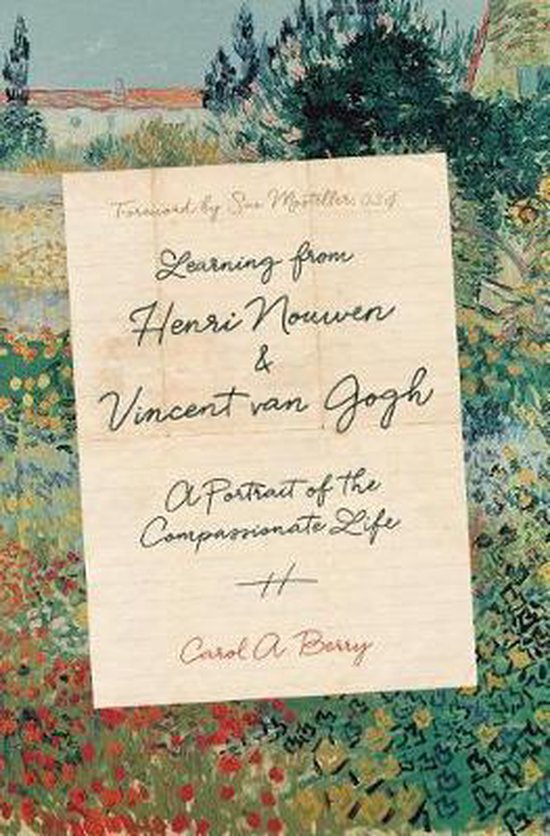
Learning from Henry Nouwen and Vincent van Gogh is a meditative work looking at insights from Nouwen and the faith background of van Gogh’s canon of work.
Carol A. Berry attended lectures from Nouwen on van Gogh, and she uses the notes from those lectures along with her own personal knowledge of the topic to highlight aspects of van Gogh’s life, struggle, and journey from a compassionate perspective. Van Gogh was a complex man with an extremely interesting life who poured his heart and soul into his works. Nouwen drew upon this to show how van Gogh gave glimpses of hope even in the hardest circumstances.
The book is lavishly illustrated with van Gogh’s works in full color, and Berry draws attention to the details and the background of the works while allowing his touch to speak for itself. The chapters alternate between Berry’s own story, and reflections from Nouwen and on van Gogh. The format makes the book one that’s easy to pick up and read off and on, contemplating each sentence as one sees where art and faith may take one’s life.
Learning from Henry Nouwen and Vincent van Gogh will enthrall readers interested in art and faith or in contemplative faith life.
Disclaimer: I was provided with a copy of the book for review by the publisher. I was not required to give any specific kind of feedback whatsoever.
All Links to Amazon are Affiliates links
Links
Be sure to check out the page for this site on Facebook and Twitter for discussion of posts, links to other pages of interest, random talk about theology/philosophy/apologetics/movies and more!
Book Reviews– There are plenty more book reviews to read! Read like crazy! (Scroll down for more, and click at bottom for even more!)
SDG.
——
The preceding post is the property of J.W. Wartick (apart from quotations, which are the property of their respective owners, and works of art as credited; images are often freely available to the public and J.W. Wartick makes no claims of owning rights to the images unless he makes that explicit) and should not be reproduced in part or in whole without the expressed consent of the author. All content on this site is the property of J.W. Wartick and is made available for individual and personal usage. If you cite from these documents, whether for personal or professional purposes, please give appropriate citation with both the name of the author (J.W. Wartick) and a link to the original URL. If you’d like to repost a post, you may do so, provided you show less than half of the original post on your own site and link to the original post for the rest. You must also appropriately cite the post as noted above. This blog is protected by Creative Commons licensing. By viewing any part of this site, you are agreeing to this usage policy.
Book Review: “Gender Identity & Faith” by Mark A. Yarhouse and Julia A. Sadusky

Gender Identity & Faith: Clinical Postures, Tools, and Case Studies for Client-Centered Care is one of those books that tells you exactly what it is with the title and subtitle. Or does it? As a non-professional, I didn’t realize exactly how focused on the subtitle the book would be. Nevertheless, I found quite a bit of interest as I read the book.
Mark A. Yarhouse and Juila A. Sadusky explore questions of gender identity in a clinical setting, offering specific, concrete advice and even exact examples for how to go about having these discussions. Thus, there are specific examples of people who came in seeking therapy for a variety of gender identity related issues, and the authors share these examples from a wide array of backgrounds. Some were supported by family, others were not. Some had favored pronouns, others hadn’t contemplated that. The variety of specific examples show just how complex these topics are, going far beyond the yes-or-no that is often offered in faith settings.
The authors also offer concrete advice for therapists and others, along with worksheets that can be used to discuss topics of gender identity. I am not trained in this field, so I can’t comment much on how useful they are, but I did find them of interest as a lay person in the setting.
Some reviews of the book have attacked it for not taking an entirely negative stance towards anyone who questions gender identity. Such attacks are short-sighted and scientifically uninformed. While Yarhouse and Sadusky don’t really dive into any of this, the fact is that strict binaries of gender identity (eg. boys wear blue/girls wear pink) are obviously constructed by humans rather than being objective aspects of reality. Additionally, the existence of intersex persons, whose numbers are far higher than most people know, is a direct challenge for such binaries. So far as this reader could tell (without any relevant degree–only an interest in the topic), the authors take a neutral stance regarding the questions, seeking instead to bring help and healing to people wherever they are on their journey.
Gender Identity and Faith is a useful book for Christians (and non-Christians who want to know more about faith and gender identity) wishing to discuss gender identity in clinical settings. That’s the book’s purpose. Readers who aren’t involved in that field–such as myself–will still find it of interest to see how these topics can be approached.
Disclaimer: I was provided with a copy of the book for review by the publisher. I was not required to give any specific kind of feedback whatsoever.
All Links to Amazon are Affiliates links
Links
Be sure to check out the page for this site on Facebook and Twitter for discussion of posts, links to other pages of interest, random talk about theology/philosophy/apologetics/movies and more!
Book Reviews– There are plenty more book reviews to read! Read like crazy! (Scroll down for more, and click at bottom for even more!)
SDG.
——
The preceding post is the property of J.W. Wartick (apart from quotations, which are the property of their respective owners, and works of art as credited; images are often freely available to the public and J.W. Wartick makes no claims of owning rights to the images unless he makes that explicit) and should not be reproduced in part or in whole without the expressed consent of the author. All content on this site is the property of J.W. Wartick and is made available for individual and personal usage. If you cite from these documents, whether for personal or professional purposes, please give appropriate citation with both the name of the author (J.W. Wartick) and a link to the original URL. If you’d like to repost a post, you may do so, provided you show less than half of the original post on your own site and link to the original post for the rest. You must also appropriately cite the post as noted above. This blog is protected by Creative Commons licensing. By viewing any part of this site, you are agreeing to this usage policy.
Book Review: “The Medieval Mind of C.S. Lewis” by Jason M. Baxter
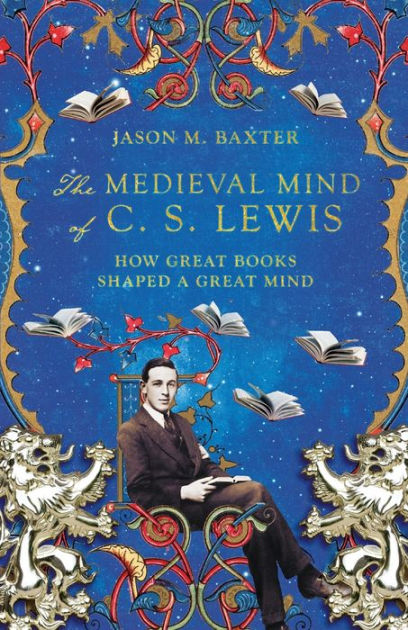
C.S. Lewis was a man deeply influenced by myth. In The Medieval Mind of C.S. Lewis, Jason M. Baxter shows how Medieval thought and “great books” shaped C.S. Lewis’s mind and thought.
The book’s short length (165 pages of text) belies the deep insights found throughout. Baxter is clearly well-versed with medieval thought, and he brings this knowledge to bear on the life, thought, and works of C.S. Lewis. Whence some of Lewis’s insights about mysticism, death, and apologetics? The answer is medieval thought. Baxter traces medieval influence on C.S. Lewis’s life, but also highlights how influential this same thought was on his works, both theological, apologetical, and more. It is beyond clear, having read the book, that Lewis was deeply committed to medieval thinking, and used that thought to critique his modern world.
I especially enjoyed how Baxter made the insights in each chapter feel somewhat applicable to today. Rather than just outlining a one-to-one correspondence of Lewis with Medieval thought, he also highlights how that thought could have impact on our own lives. For example, in the chapter on prayer, much discussion is spent on the numinous experience, ultimately bringing it home with the analogy of Lucy from Narnia as an example of how to pray. Insights like this can be found throughout the book.
The Medieval Mind of C.S. Lewis is useful both to those interested in exploring the background to Lewis’s thought and to those who wish to learn more about Medieval Christianity and thought. It’s an intriguing look at deep topics.
Disclaimer: I was provided with a copy of the book for review by the publisher. I was not required to give any specific kind of feedback whatsoever.
All Links to Amazon are Affiliates links
Links
Be sure to check out the page for this site on Facebook and Twitter for discussion of posts, links to other pages of interest, random talk about theology/philosophy/apologetics/movies and more!
Book Reviews– There are plenty more book reviews to read! Read like crazy! (Scroll down for more, and click at bottom for even more!)
SDG.
——
The preceding post is the property of J.W. Wartick (apart from quotations, which are the property of their respective owners, and works of art as credited; images are often freely available to the public and J.W. Wartick makes no claims of owning rights to the images unless he makes that explicit) and should not be reproduced in part or in whole without the expressed consent of the author. All content on this site is the property of J.W. Wartick and is made available for individual and personal usage. If you cite from these documents, whether for personal or professional purposes, please give appropriate citation with both the name of the author (J.W. Wartick) and a link to the original URL. If you’d like to repost a post, you may do so, provided you show less than half of the original post on your own site and link to the original post for the rest. You must also appropriately cite the post as noted above. This blog is protected by Creative Commons licensing. By viewing any part of this site, you are agreeing to this usage policy.
Book Review: “Faithful Anti-Racism” by Christina Barland Edmondson and Chad Brennan

Anti-Racism is a hot-button topic right now. Too many have a knee-jerk response to it instead of actually learning about it. Christina Barland Edmondson & Chad Brennan’s Faithful Anti-Racism introduces Christians to anti-racism and how to apply it in their lives.
After the introduction, 11 chapters introduce Christians to a number of topics related to anti-racism. These call on faithful Christians to apply the Bible, stand for justice, understand our past, and more. Several chapters directly address topics that frequently yield seemingly fruitless debates on social media. The authors do a great job delving into such divisive topics in a winsome way that focuses on bringing Christian living to the forefront.
The book consistently brings applicable knowledge to the table. There are even chapters looking at how Christians can measure progress and help change society. Regarding the former, for example, the authors argue that we have to move past simplistic numbers and into real change in order to measure progress. They offer a number of ways of doing so that will challenge individuals and organizations.
Every chapter has discussion questions and a prayer.
Faithful Anti-Racism is an excellent read for individuals or groups looking to actively oppose racism in society. Recommended.
Disclaimer: I was provided with a copy of the book for review by the publisher. I was not required to give any specific kind of feedback whatsoever.
All Links to Amazon are Affiliates links
Links
Be sure to check out the page for this site on Facebook and Twitter for discussion of posts, links to other pages of interest, random talk about theology/philosophy/apologetics/movies and more!
Book Reviews– There are plenty more book reviews to read! Read like crazy! (Scroll down for more, and click at bottom for even more!)
SDG.
——
The preceding post is the property of J.W. Wartick (apart from quotations, which are the property of their respective owners, and works of art as credited; images are often freely available to the public and J.W. Wartick makes no claims of owning rights to the images unless he makes that explicit) and should not be reproduced in part or in whole without the expressed consent of the author. All content on this site is the property of J.W. Wartick and is made available for individual and personal usage. If you cite from these documents, whether for personal or professional purposes, please give appropriate citation with both the name of the author (J.W. Wartick) and a link to the original URL. If you’d like to repost a post, you may do so, provided you show less than half of the original post on your own site and link to the original post for the rest. You must also appropriately cite the post as noted above. This blog is protected by Creative Commons licensing. By viewing any part of this site, you are agreeing to this usage policy.
Book Review: “Reformation Commentary on Scripture: Matthew” Edited by Jason K. Lee and William M. Marsh

The Reformation Commentary on Scripture series continues to deliver excellent insight into how the Reformers read and talked about Scripture. New Testament Volume I: Matthew is no different in that regard.
The editors have again selected a huge swathe of Reformers from whom to draw commentary. The major names are all there, along with many Reformers ranging from less well-known to those that only dedicated students of the Reformation will know about. The bibliographical sketches of the Reformers included in the series so far alone makes for fascinating reading, as one can browse through hundreds of mini-biographies and learn more about the Reformation and links between Reformers than one can in many other books.
The commentary itself is arranged verse-by-verse, allowing for commentary on Matthew section-by-section. Each pause in the text allows for a number of Reformers to be cited, and the editors do an excellent job balancing selection of hot topics of today with topics the Reformers themselves debated heatedly over. Sometimes these overlap, but some of the questions included may be surprising to modern readers. For example, regarding the slaughter of the innocents (Matthew 2:16-18), commentary includes Joseph Hall providing a kind of poetic condemnation of Herod’s cruelty; John Calvin comparing it to the slaughter of the Benjaminites in Jeremiah, Juan de Maldonado stating that the Babylonian Captivity was a kind of slaughter, and John Lightfoot reflecting more deeply on the Jeremiah quote.
Time and again, on verse after verse, the editors bring many different perspectives–sometimes in conflict–to the fore, giving readers a rich background of Reformation commentary as well as a deeper understanding of the texts themselves. Topics like baptism (ex: Matthew 3) receive notable commentary from major Reformers (Luther, Calvin, etc.) while also bringing in lesser-known voices to weigh in on more specific topics (eg. Phillip Melanchthon).
The book serves equally well if someone is trying to just open up to study a specific passage or if one is interested in reading front-to-back to read alongside the Reformers. It’s a marvelous commentary if people have an even passing interest in knowing about how people during the Reformation period read Scripture.
Matthew is another excellent entry in a fabulous series of commentaries. Those especially interested in Reformation thinking and debates should consider it a must-buy, but the book will serve very well as a standalone commentary as well. The broadness of views presented and enormous number of topics touched upon make the book incredibly valuable. Recommended.
Disclaimer: I was provided with a copy of the book for review by the publisher. I was not required to give any specific kind of feedback whatsoever.
All Links to Amazon are Affiliates links
Links
Be sure to check out the page for this site on Facebook and Twitter for discussion of posts, links to other pages of interest, random talk about theology/philosophy/apologetics/movies and more!
Book Reviews– There are plenty more book reviews to read! Read like crazy! (Scroll down for more, and click at bottom for even more!)
SDG.
——
The preceding post is the property of J.W. Wartick (apart from quotations, which are the property of their respective owners, and works of art as credited; images are often freely available to the public and J.W. Wartick makes no claims of owning rights to the images unless he makes that explicit) and should not be reproduced in part or in whole without the expressed consent of the author. All content on this site is the property of J.W. Wartick and is made available for individual and personal usage. If you cite from these documents, whether for personal or professional purposes, please give appropriate citation with both the name of the author (J.W. Wartick) and a link to the original URL. If you’d like to repost a post, you may do so, provided you show less than half of the original post on your own site and link to the original post for the rest. You must also appropriately cite the post as noted above. This blog is protected by Creative Commons licensing. By viewing any part of this site, you are agreeing to this usage policy.
Book Review: “The Samaritan Woman’s Story: Reconsidering John 4 After #ChurchToo” by Caryn A. Reeder

The Samaritan Woman’s Story by Caryn A. Reeder engages the story of the Samaritan woman in John 4 both in interpretive history and in light of modern questions.
The book is split into two parts. The first part surveys the history of interpretation of this passage, all the way up to the modern day. The second part puts the story in context, looking at the meaning of the text and the people involved in their own day.
The history of interpretation of John 4 is fascinating, and Reeder offers numerous highlights throughout these early chapters. Several of the earliest readers of the Samaritan woman saw it straightforwardly as her being in some kind of sexual sin or as a prostitute, and engaged the story on a level that operated with those assumptions. Often, these interpreters also carried misogynist baggage from their cultural context. Intriguingly, one exception was Origen, whose reading completely avoids casting the Samaritan woman in a poor light not because he was enlightened on women’s issues but because he held to an allegorical reading of the story (34-40). In each chapter, Reeder surveys specific interpreters, and boxes in the text highlight specific contextual or historical points of interest related to the main text. After looking at the early church, Reeder advances through John Calvin, Dwight Moody, and others into the present day. Here, she draws attention to the #ChurchToo movement and its highlighting of the abuses done to women within the church. The interpreters and interpretations she focuses on in this latter section are still diverse, and highlight a number of ways people within the church have re-centered the story to discuss modern problems.
The second part provides readers with a number of tools to look at the text, whether it’s the background of what women’s lives were like in Jesus’s time or how marriage worked in the ancient world. Reeder finishes with a reimagination of the story that puts her forward as a model of Christian discipleship, among other things. The reading she provides is in context and grounded in historical reality and the text.
The book has discussion questions at the end and could be used for a group study.
The Samaritan Woman’s Story is a timely text that will engage readers with John 4 in highly relevant ways. But it’s more than that, it also provides a broad look at a much-interpreted and much-misunderstood text. I highly recommend it.
Disclaimer: I was provided with a copy of the book for review by the publisher. I was not required to give any specific kind of feedback whatsoever.
All Links to Amazon are Affiliates links
Links
Be sure to check out the page for this site on Facebook and Twitter for discussion of posts, links to other pages of interest, random talk about theology/philosophy/apologetics/movies and more!
Book Reviews– There are plenty more book reviews to read! Read like crazy! (Scroll down for more, and click at bottom for even more!)
SDG.
——
The preceding post is the property of J.W. Wartick (apart from quotations, which are the property of their respective owners, and works of art as credited; images are often freely available to the public and J.W. Wartick makes no claims of owning rights to the images unless he makes that explicit) and should not be reproduced in part or in whole without the expressed consent of the author. All content on this site is the property of J.W. Wartick and is made available for individual and personal usage. If you cite from these documents, whether for personal or professional purposes, please give appropriate citation with both the name of the author (J.W. Wartick) and a link to the original URL. If you’d like to repost a post, you may do so, provided you show less than half of the original post on your own site and link to the original post for the rest. You must also appropriately cite the post as noted above. This blog is protected by Creative Commons licensing. By viewing any part of this site, you are agreeing to this usage policy.

 J.W. Wartick - Reconstructing Faith