Movies
The Hunger Games Movie: A Christian Perspective
 I saw The Hunger Games
I’ve already written about the whole trilogy and my thoughts on talking points a Christian can take away from it, and the movie really brought to light a number of the things that I wrote about there. I’m not going to bother to summarize the movie here. Rather, I’m going to provide what I found to be some talking points that Christians can take away from the movie along with my general observations. At the end I include a brief note for parents who might be concerned with their children seeing the film. See also my look at “Catching Fire.”
Christian Talking Points
The movie portrays a world in which there is a stark contrast between those in power and those without it. District 12, whence Katniss Everdeen hails, is a bleak place. The imagery seen on screen evokes mental images of the Great Depression and the photography from that era. There are sad faces looking out the windows, people marching to the coal mines, and children playing with sticks in the mud because they have nothing else with which to play.
That contrasts starkly with the decadence of the Capitol. At the Capitol, the people spend their time on frivolity. They decorate themselves as much as they decorate the places around them. Their showers cover them with the scent of the day; they can bring up whatever pleasant imagery they would like on their screens; their food is the best; they do whatever they want.
The imagery throughout the movie portrays this stark contrast. The children themselves are called upon to battle to the death, yet everyone is congratulating them as though this is some great honor and opportunity. They are required to dress their best for the “reaping” in which the Capitol personnel select contestants who will fight in the arena. The people of the Capitol pack the stands to watch the introductions and interviews of the contestants; they cheer wildly for their favorites and root for those they choose. Yet the whole time the movie makes it clear there is something deeply wrong happening. How can these people be so excited, so utterly out-of-touch with reality, when children’s lives are at stake?
 The world of the Hunger Games is a commentary on our own. The world in which we live is one in which our greatest goal is comfort, yet their are children dying in our streets from starvation. This is not just far away, it is right in our own country. This is just one talking point for Christians and the Hunger Games: what is it that we should be doing to curb our own “capitol”-like tendencies?
Yet it seems like that alone doesn’t take it far enough. The film also portrays clearly the level to which people deceive themselves about right and wrong. There is a struggle in the movie (and the books) that goes beyond the strangeness of the contrast between the districts and the Capitol. The struggle is a fight over what is right and wrong. The society of the Capitol has relativized morality. They have decided that might makes right and that their comfort is the greatest good. Yet the entire movie gives imagery to that view and one can’t help but notice the feeling that something is just wrong throughout the film. How is it these people who are living lives of such great comfort are so oblivious? The meaning is subtle, but it is throughout the whole movie: there simply is something wrong, and it is the dismissive attitude with which people treat right and wrong when it comes to their own comfort and desires.
It is telling that President Snow comments on the reason the Hunger Games have a winner is in order to give hope, but “too much hope” is a bad thing. As the leader of the Capitol, Snow realizes the power of hope and how it can work even better than fear to control the masses. As long as he provides the districts with hope, he has them in control. But if they get too much hope, they will break, and the cracks start to show near the end of the movie.
The Hunger Games, I think, provide a stunning critique of our society. We live in the Capitol; we exist in a society which relativizes morality for its own convenience. And when we are presented with it in our face, when the imagery of a film like The Hunger Games shows us the very kind of decadence and futility which we so often celebrate, we are repulsed. The wrongness of the situation comes to the forefront and we must act.
Christians, I think, have much to take away from the movie (and books). We know that there is wrong in the world, and we know the dangers of comfort and futility–we are warned of these things in our Scriptures. The Christian path is one which fights against this futility and points to the one true Hope: that of our savior.
A Word to Parents
This is not a film for children. It is rated PG-13 and I think could very easily have been R. Children are killing each other. The film is, however, I think appropriate for teenagers, and parents who keep in mind some of the talking points listed above could utilize the film as a way to discuss some of the very real world issues it hints at.
Links
Check out the Christianity Today review of the movie.
For those concerned with whether Christians can/should use movies like this to interact with the culture, check out my post on “Engaging Culture” with movies.
SDG.
——
The preceding post is the property of J.W. Wartick (apart from citations, which are the property of their respective owners) and should not be reproduced in part or in whole without the expressed consent of the author. All content on this site is the property of J.W. Wartick and is made available for individual and personal usage. If you cite from these documents, whether for personal or professional purposes, please give appropriate citation with both the name of the author (J.W. Wartick) and a link to the original URL. If you’d like to repost a post, you may do so, provided you show less than half of the original post on your own site and link to the original post for the rest. You must also appropriately cite the post as noted above. This blog is protected by Creative Commons licensing. By viewing any part of this site, you are agreeing to this usage policy.
Really Recommended Posts 02/03/12
 Says the Madman, “Humanity is Dead, and We Are Its Murderers”– An insightful post which argues that naturalism has undermined the worth and value of humans.
Zombies of Christianity– I really enjoyed this discussion of the diversity of doctrine in Christianity and how to approach it.
My latest post on abortion generated some controversy, but I’d like to point out that scientifically, the unborn simply is a human being. One can find this not only in numerous medical textbooks on embryology, but also in the words of abortions-rights advocates themselves. Check out this phenomenal post which outlines the fact that the unborn are human beings, period- Medical Testimony.
C.S. Lewis is one of the greatest Christian Apologists of all time. Check out this post which brings us Beyond Mere Christianity. Interested in literary apologetics? Check out Holly Ordway’s guest post on my blog here.
A Response to the Problem of an ‘Evil God’ as Raised by Stephen Law.– An excellent article, which I don’t fully agree with (I think Edward Feser answers the challenge correctly, for example), but which provides a thorough critique of Law’s position.
The Artist: A Film Review and Reflection- Holly Ordway shares her thoughts on “The Artist.”
How Many Atheists in America? Fewer than You Might Think– Pretty self explanatory.
Harry Potter and the Deathly Hallows, Part 2: A Christian’s View, Redux
 I’ve made no secret of the fact that I’m a huge Harry Potter fan. I think the books are phenomenal, and the movies have often been just as great. What interests me, as usual, is how the Christian can relate to this extraordinarily popular series.
Harry Potter and the Deathly Hallows, Part 2 released on Blu-Ray and DVD today. I was at the midnight showing with my wife (then fiancee) when the movie came out in theaters. The best description I can give of our feelings when it ended is this: bittersweet. The series is over. The books and movies are no longer coming. This is the end! Or is it?
THERE ARE MAJOR PLOT SPOILERS BELOW
That is the feeling I got throughout the movie. Is death the end? The movie takes little time to get going. Soon, viewers are thrust into the epic final conflict in which Harry Potter rushes to destroy all the horcruxes (pieces of the evil Lord Voldemort’s soul) in order to finally defeat his enemy. Things get going fairly well. Harry shows up at Hogwarts again with resounding support. He quickly uses his allies to take back the school and set it up for a final showdown with evil. As his friends battle the forces of darkness closing in around them, Harry searches frantically for another horcrux while Hermione and Ron locate a basilisk fang–one of the only things capable of destroying these pieces of soul.
But once both Harry and Hermione/Ron have achieved their missions, the goal is still only close at hand. They must destroy Nagini, Voldemort’s snake (and another horcrux). They immediately set off to find the snake and witness the murder of Professor Snape–who turns out to be a double-agent after all. The fact that he killed Dumbledore turns out to not show his final betrayal, but the depth of his loyalty. But from Snape’s dying memories, Harry gleans the truth: Harry himself is an unintentional horcrux. When Voldemort killed Harry’s parents, he sealed part of his soul inside Harry. So Harry must die if evil is to be defeated.
Harry goes willingly to his death. He meets Voldemort among his followers, and allows himself to be killed. But it turns out that this is not the end. Dumbledore had sealed the Resurrection Stone inside a gift to Harry. This stone allows Harry to speak with his dead friends and family. Harry, once dead, is made alive once more after a discussion with Dumbledore. Harry awakens in a pivotal scene in which Voldemort is announcing his victory over all wizards, and he and Voldemort battle in a final, epic showdown in which Harry overcomes evil once and for all.
Christians reading this should be sensing some interesting underlying themes here. Harry Potter is innocent–he’s thrust into the events upon him. He willingly goes to his death, knowing it is literally the only way to defeat evil. And, once he’s died, he is resurrected, back to finally bring about his victory over Voldemort. Yeah, it seems Rowling might have borrowed a bit from the story of Jesus.
What explains the astounding popularity of the Harry Potter series? J.K. Rowling has weaved a series of books which tie together in sometimes amazing ways. What seem like random details and “fluff” in one book turn out to be of immense importance later in the series. Each book, mostly self-contained, features a different thrust. Yet they are all tied through broad overarching themes. But could it be that there is another theme, oft-ignored in discussions of Harry Potter? It seems so. The climax of the series occurs in the death and resurrection of Potter. The Christian story culminates in the same. Potter is fiction, but his tale, so wonderfully complex, leads us to the story of Christ. He had to die for the sake of all–Voldemort would have overcome. Jesus, similarly, had to die for the sake of all–lest sin and the devil overcome.
This parallelism with Christianity was not revealed until the final book, yet perhaps it can explain how Rowling was able to make the conclusion to her epic so satisfying. She was telling a story we all knew. She was telling us, in a very different way, what must happen for evil to be overcome. Her story is fiction, Christianity’s story is real. What we want to believe in (Harry Potter) is what many of us do believe (Christianity). Whether intentional or not (and I think it was intentional), Rowling wrote a story which resonates deeply with Christianity’s own. And her fiction points us towards the greater reality.
Christians, I encourage you to read and watch Harry Potter. The books and movies are just phenomenal pieces of literature and filmography. Think of the themes that are woven throughout the books. Think of the final showdown between good and evil. And think of Jesus while you do so. You’ll find that within Potter, we discover hidden truths of our own faith.
But hey, you don’t really have to think of all these themes. And it’s highly questionable whether these parallels are intentional or not. It’s okay to just enjoy the movies anyway. My point is that, as a Christian, I saw these themes. And I found it thrilling.
Links
I discuss a number of other popular movies and books. If you liked Harry Potter, check out The Hunger Games and John Carter.
SDG.
——
The preceding post is the property of J.W. Wartick (apart from citations, which are the property of their respective owners) and should not be reproduced in part or in whole without the expressed consent of the author. All content on this site is the property of J.W. Wartick and is made available for individual and personal usage. If you cite from these documents, whether for personal or professional purposes, please give appropriate citation with both the name of the author (J.W. Wartick) and a link to the original URL. This blog is protected by Creative Commons licensing. By viewing any part of this site, you are agreeing to this usage policy.
Can we evaluate worldviews? How to navigate the sea of ideas.
Think about it this way: worldviews are supposed to be reality. If a worldview does not match reality, how can it be reality?

I recently began a series on the truth claims of Mormonism. In that post, I asserted that there is positive evidence against the truth of the Book of Mormon. However, there is an important step to take before offering arguments against other religions. Namely, one must establish that evidence against the truth claims of a religion should rationally lead one to abandon that religion. (A related but similar point would be the positive evidence for religion leading to rational belief.)
Thus, before I continue to offer critiques of other religions, I offer some epistemic groundwork.
Truth Claims and Worldviews
First, it must be noted that worldviews are not mere matters of feeling, regardless of what the supporters of the varied views claim. For example, if one says “You can’t analyze what I believe, it’s just a matter of faith” they are making a claim about reality–that their faith cannot be analyzed. Similarly, if one claims “Israelites sailed to the Americas from the Middle East,” [Mormonism] or “There is no God” [atheism] they have made a claim about reality.
Such truth claims are capable of analysis, by definition. Statements are true or false. All worldviews make claims about reality, which are therefore true or false. Simply stating that one’s belief is “just faith” or “obvious” does not exclude it from making claims.
 How Do We Evaluate The Claims of Worldviews?
One’s beliefs should conform to reality, if one seeks to be rational. Certainly, one could say “To heck with the evidence, I’m going to believe x, y, and z! I don’t care if I can’t support the belief and that there is strong evidence against x, y, and z.” But if one were to say this, one would abandon their reason. Their heart could believe, but their mind could not. Ultimately, all truth claims can and should be put to the test.
Testing the claims of varied worldviews is no easy task. There must be objective criteria, otherwise one view will be favored over another. One cannot simply make their own view the default and argue that only by filtering truth claims through their position can truth be attained. Atheism, by no means, provides a neutral basis for evaluating religions, as I’ve argued elsewhere. In fact, atheism must past the standards for truth claims, just as any religion must. If one remains an atheist despite positive evidence to the contrary (or despite reasons to disbelieve the claims of varied atheistic worldviews like materialism), one abandons reason just as if one clung to a false faith.
Testing Worldviews as Hypotheses
In his monumental work,Christian Apologetics, Douglas Groothuis argues that worldviews can be proposed as hypotheses. Worldviews present themselves as answers to explain the phenomena we experience (Groothuis, Christian Apologetics, 49). Groothuis therefore presents criteria for evaluating worldviews as though they were hypotheses about the world. Kenneth Samples similarly draws out nine tests which can be used to determine whether the claims of a worldview are true in his book A World of Difference (page numbers from that text, citation below). From these proposed methods, we can derive tests to evaluate competing worldviews:
1) Coherence– if a religion is contradictory, it simply cannot be true. For example, if a religion claimed that “Person Z is god, and person Z is not god,” that religion would be incoherent (Samples, 33). Furthermore, “If a worldview’s essential propositions are coherent… it is more likely to be true than if its essential propositions are not related in this way” (Groothuis, 55).
2) Balance– “A valid worldview will be ‘neither too simple nor too complex.’ All things being equal, the simplest worldview that does justice to all aspects of reality deserves preference (Samples, 33-34).
3) Explanatory Power and Scope– Does the worldview explain what we experience in enough detail? If a worldview does not explain our world, or it cannot account for certain phenomena, then it is lacks explanatory power (Samples, 34). Worldviews which make propositions which they cannot account for lose credibility (Groothuis, 53).
 4) Correspondence– Does the worldview match the facts we know about the world to our experience of the world? If we know that the worldview in question promotes claims we know are false, it does not match reality (Samples, 34-35). Think about it this way: worldviews are supposed to be reality. If a worldview does not match reality, how can it be reality? We are able to test factual claims through empirical and scientific methods, so if a worldview continually is able to establish its essential claims by means of these methods, it is more likely to be true (Groothuis, 55).
5) Verification– Can this worldview be falsified? Worldviews which cannot be found to be false cannot be found to be true either.
6) Pragmatic Test– Can we live by this worldview? This test is less important, but still has credibility–we must be able to live out the worldview in question (Samples, 35-36). But worldviews should also be fruitful in the development of greater intellectual and cultural discoveries (Groothuis, 57).
7) Existential Test– Like the pragmatic test, this one is not as important as whether the view is factual, but it is still helpful. If worldviews do not account for inherent human needs, it is possible the view is false (Samples, 36). Again, this is not necessary for a worldview, but it helps measure a view’s completeness.
8 ) Cumulative Test– Does the worldview gain support from all the previous criteria? If a worldview is able to satisfy all the criteria, it gains credibility (Samples, 36-37).
9) Competitive Competence Test– If the worldview satisfies the previous criteria with more evidential power than other worldviews, it gains credibility over and against them (Samples, 37).
10) Radical ad hoc readjustment– Groothuis presents this as a negative test for worldviews. “When a worldview is faced with potentially defeating counterevidence, an adherent may readjust its core claims to accommodate the evidence against it. Various theories and worldviews can legitimately refine their beliefs over time, but radical ad hoc readjustment reveals a deep problem…” (Groothuis, 57). There is, as Groothuis pointed out, a line between refining belief and simply readjusting belief in an ad hoc way. If, for example, it were discovered that Jesus did not rise from the dead, then Christianity would be false (more on that below). If, however, one simply adjusted Christianity to say “Jesus spiritually rose from the dead,” that would constitute a desperate, ad hoc measure to preserve the worldview and count as discrediting Christianity.
These tests present objective criteria for testing worldviews. If, for example, one wished to deny their worldview had to be coherent, they’d have to affirm that which they denied, for in denying that criterion, they were attempting to make their view more coherent. The testing of worldviews is a legitimate task, and indeed one in which people should engage. Some things, if falsely believed, are harmless (for example, if one believed it rained yesterday when it did not). Worldviews, however, if falsely believed, are damaging on any number of levels. If one believed God didn’t exist when, in fact, He did, then one would be doing a great evil by not acting upon the truth of God’s existence (and the contrary). Thus, the testing of worldviews is no task to be skimmed over, but one which should be approached with fear and trembling. The criteria outlined above allow people to engage in this task and evaluate the realm of ideas.
Christianity Encourages Exploration of Reality
What I find extremely interesting is that Christianity, unlike many world religions, doesn’t discourage the discovery of truth, nor does it evade evidence by claiming that it is merely a faith or feeling. Rather, the founders of Christianity explicitly stated that it is based upon certain truth claims, and that if those claims are false, then Christianity is worthless. Paul, for example, wrote “And if Christ has not been raised, your faith is futile; you are still in your sins” (1 Corinthians 15:17). The truth of Christianity rests exactly upon a testable claim: Jesus rose from the dead. If He did not, Christianity is false. Christianity’s scope and explanatory power are superior- it can account for the existence of contingent objects, persons, consciousness, life, and the like. Christianity corresponds to reality, satisfies existential and pragmatic needs, is simpler than many other explanations, its coherent, and it matches all the criteria. Christianity expects its adherents–and outsiders–to test the faith and discover whether it is true. I have found, personally, that it pasts these tests over and over.
Conclusion
Whether one agrees or not, it is simply the case that religions make claims about reality. These claims are, in turn, true or false. Not only that, but they must match with reality in several important ways. Christianity not only adheres to these tests, but it encourages them. It also passes these tests. Does your worldview?
Sources
Douglas Groothuis, Christian Apologetics (Downers Grove, IL: InterVarsity, 2011).
Kenneth Samples, A World of Difference (Grand Rapids, MI: Baker, 2007).
Image Credit
I took this picture at Waldo Canyon near Manitou Springs, Colorado on my honeymoon. Use of this image is subject to the terms stated at the bottom of this post. The other image is the book cover from Samples’ book.
SDG.
——
The preceding post is the property of J.W. Wartick (apart from citations, which are the property of their respective owners) and should not be reproduced in part or in whole without the expressed consent of the author. All content on this site is the property of J.W. Wartick and is made available for individual and personal usage. If you cite from these documents, whether for personal or professional purposes, please give appropriate citation with both the name of the author (J.W. Wartick) and a link to the original URL. This blog is protected by Creative Commons licensing. By viewing any part of this site, you are agreeing to this usage policy.
Movie Review: Courageous

I have a new post coming up on this movie in which I reflect on the movie again and point out many of the flaws I missed in writing this review. For now, I hope readers will be satisfied with this link (PDF) that shows some of the issues I have with the movie.
I loved this movie. That said, Courageous is a movie that many people will dislike. First of all, it has a strong Christian message. That alone will alienate many viewers. It also tugs at the heartstrings in very intentional ways. It’s a thriller with a heart. Again, some people will groan about this. There are no big name stars, no extensive CG, no 3D effects.
So why do I say I love this movie? Mostly because of those very things. The movie pulls no punches. People struggle with various sins, they struggle with reconciling their faith and lack of success. They struggle with sorrow. These are people in real lives, living real experiences, real trauma.
The film starts off with a bang, a man fills up his pickup’s tank at a gas station. He steps away for a moment and another man jumps in his truck and drives off. The man chases, leaps into the driver side window, and holds onto the wheel. They fly down the road, the owner of the vehicle clinging on for his life. Finally, he’s thrown from the side, they crash, and the thief runs away, leaving the man and his car. Why did he give chase, risking his life to save a car? Turns out his baby is in the back seat. After the police get the story–and it turns out the man is, himself, a police officer–they drive off. One officer, Adam Mitchell, asks the other, Shane Fuller, whether he would have held onto the wheel. Their answers set the stage for the rest of the movie.
What does it take to be a man? What makes a good father? Is being “good enough” good enough? These are the questions Courageous deals with, among others. The film has several different story paths. There are essentially 5 main characters, and each has a story to tell. None of their stories feel rushed or incomplete.
The acting is also phenomenal. The characters feel very believable, and there are several scenes which highlight each actors’ abilities. The movie is very, very serious. The themes explored are uncomfortable in many ways, and challenging. But the film does a great job breaking up the tension with humor. Several scenes are scattered throughout that ease off the gas pedal enough to let viewers relax and just enjoy the film. It’s action packed, but it won’t keep you from getting the message of the movie.
And ultimately, that is what Courageous is about: a message. Whether viewers respond to the message or not will largely impact their enjoyment of the film. But one thing that all viewers will be able to take a way is that it does take real courage to step up and be a man. Rather than hiding from challenges, we–and here I mean men and women–need to face them. And again, the film doesn’t leave us with just that plea. Rather, it frankly says there is no way to do this without God. Viewers are therefore challenged in numerous ways after viewing Courageous. They’re challenged to be better fathers, to be better Christians, to seek out those in need, to admit their faults, confess them, and turn to God.
I encourage anyone to see this movie, whether fathers, mothers, sons or daughters. It’s not only a movie with a message, it’s just plain good film. The action is fast, the characters are enjoyable, and viewers can’t helped but get sucked in. See this movie!
“…choose for yourselves this day whom you will serve… But as for me and my household, we will serve the LORD.” – Joshua 24:15a, c.
SDG.
——
The preceding post is the property of J.W. Wartick (apart from citations, which are the property of their respective owners) and should not be reproduced in part or in whole without the expressed consent of the author. All content on this site is the property of J.W. Wartick and is made available for individual and personal usage. If you cite from these documents, whether for personal or professional purposes, please give appropriate citation with both the name of the author (J.W. Wartick) and a link to the original URL. This blog is protected by Creative Commons licensing. By viewing any part of this site, you are agreeing to this usage policy.
Really Recommended Posts 9/23
 The World’s First Talking Chair Shows Up in the UK– one of my favorite websites, No Apologies Allowed, has recently featured a comic on Dawkins’ failure to man up and meet William Lane Craig in a debate on the existence of God. Given the absolute trouncing Craig gave to Dawkins’ buddy, Sam Harris, it’s not surprising Dawkins is hiding as far from this debate as possible.
Thinking Christian is another site I follow closely, and he recently had two fantastic posts. The first is a review of the Intelligent Design movie, “Metamorphosis.” I recently purchased the film but have yet to watch it. I anticipate it greatly. The second post points out some pretty interesting aspects about how the “person” status of slaves was revoked–just as people now revoke the unborn’s “person” status. Check out his post, “Non-Persons Yesterday and Today.”
Holly Ordway over at Hieropraxis has another interesting post which reflects on why we should be “Reclaiming Story for Christ.” Holly has a ton of awesome posts, and I highly recommend her site.
“God is Still Holy and What You Learned in Sunday School Is Still True: A Review of ‘Love Wins'” by Kevin DeYoung. I think the title says it all.
Randy Everist over at “Possible Worlds” has a fun post reflecting on the “Worst Objection to the Kalam Cosmological Argument.” For some reason I can’t get a direct link, so simply go to his site http://randyeverist.com/ and scroll down.
Readers should recognize that I’ve also been focusing on the Kalam recently, and can check out my more recent posts on the topic: Dawkins and Oppy vs. Theism: Defending the Kalam Cosmological Argument; “The Multiverse Created Itself” and “Who Made God after all?”- The Kalam Cosmological Argument
Do you like Biblical Archaeology? I do! Jason Dulle over at Theo-sophical Ruminations has featured another post in his series on the topic. This one features the ossuary of Caiaphas.
Image Credit:
Harry Potter and the Deathly Hallows: Part 2, A Christian’s thoughts
 I’ve made no secret of the fact that I’m a huge Harry Potter fan. I think the books are phenomenal, and the movies have often been just as great. What interests me, as usual, is how the Christian can relate to this extraordinarily popular series.
Harry Potter and the Deathly Hallows, Part 2 released over the weekend. I was at the midnight showing with my fiancee. The best description I can give of our feelings when it ended is this: bittersweet. The series is over. The books and movies are no longer coming. This is the end! Or is it?
THERE ARE MAJOR PLOT SPOILERS BELOW
And that is the feeling I got throughout the movie. Is death the end? The movie takes little time to get going. Soon, viewers are thrust into the epic final conflict in which Harry Potter rushes to destroy all the horcruxes (pieces of the evil Lord Voldemort’s soul) in order to finally defeat his enemy. Things get going fairly well. Harry shows up at Hogwarts again with resounding support. He quickly uses his allies to take back the school and set it up for a final showdown with evil. As his friends battle the forces of darkness closing in around them, Harry searches frantically for another horcrux while Hermione and Ron locate a basilisk fang–one of the only things capable of destroying these pieces of soul.
But once both Harry and Hermione/Ron have achieved their missions, the goal is still only close at hand. They must destroy Nagini, Voldemort’s snake (and another horcrux). They immediately set off to find the snake and witness the murder of Professor Snape–who turns out to be a double-agent after all. The fact that he killed Dumbledore turns out to not show his final betrayal, but the depth of his loyalty. But from Snape’s dying memories, Harry gleans the truth: Harry himself is an unintentional horcrux. When Voldemort killed Harry’s parents, he sealed part of his soul inside Harry. So Harry must die if evil is to be defeated.
Harry goes willingly to his death. He meets Voldemort among his followers, and allows himself to be killed. But it turns out that this is not the end. Dumbledore had sealed the Resurrection Stone inside a gift to Harry. This stone allows Harry to speak with his dead friends and family. Harry, once dead, is made alive once more after a discussion with Dumbledore [thanks to an astute reader for making this point more clear]. Harry awakens in a pivotal scene in which Voldemort is announcing his victory over all wizards, and he and Voldemort battle in a final, epic showdown in which Harry overcomes evil once and for all.
Christians reading this should be sensing some interesting underlying themes here. Harry Potter is innocent–he’s thrust into the events upon him. He willingly goes to his death, knowing it is literally the only way to defeat evil. And, once he’s died, he is resurrected, back to finally bring about his victory over Voldemort. Yeah, it seems Rowling might have borrowed a bit from the story of Jesus.
What explains the astounding popularity of the Harry Potter series? J.K. Rowling has weaved a series of books which tie together in sometimes amazing ways. What seem like random details and “fluff” in one book turn out to be of immense importance later in the series. Each book, mostly self-contained, features a different thrust. Yet they are all tied through broad overarching themes. But could it be that there is another theme, oft-ignored in discussions of Harry Potter? It seems so. The climax of the series occurs in the death and resurrection of Potter. The Christian story culminates in the same. Potter is fiction, but his tale, so wonderfully complex, leads us to the story of Christ. He had to die for the sake of all–Voldemort would have overcome. Jesus, similarly, had to die for the sake of all–lest sin and the devil overcome.
This parallelism with Christianity was not revealed until the final book, yet perhaps it can explain how Rowling was able to make the conclusion to her epic so satisfying. She was telling a story we all knew. She was telling us, in a very different way, what must happen for evil to be overcome. Her story is fiction, Christianity’s story is real. What we want to believe in (Harry Potter) is what many of us do believe (Christianity). Whether intentional or not (and I think it was intentional), Rowling wrote a story which resonates deeply with Christianity’s own. And her fiction points us towards the greater reality.
Christians, I encourage you to read and watch Harry Potter. The books and movies are just phenomenal pieces of literature and filmography. Think of the themes that are woven throughout the books. Think of the final showdown between good and evil. And think of Jesus while you do so. You’ll find that within Potter, we discover hidden truths of our own faith.
But hey, you don’t really have to think of all these themes. And it’s highly questionable whether these parallels are intentional or not. It’s okay to just enjoy the movies anyway. My point is that, as a Christian, I saw these themes. And I found it thrilling.
SDG.
——
The preceding post is the property of J.W. Wartick (apart from citations, which are the property of their respective owners) and should not be reproduced in part or in whole without the expressed consent of the author. All content on this site is the property of J.W. Wartick and is made available for individual and personal usage. If you cite from these documents, whether for personal or professional purposes, please give appropriate citation with both the name of the author (J.W. Wartick) and a link to the original URL. This blog is protected by Creative Commons licensing. By viewing any part of this site, you are agreeing to this usage policy.
“Black Swan”: A Christian Analysis
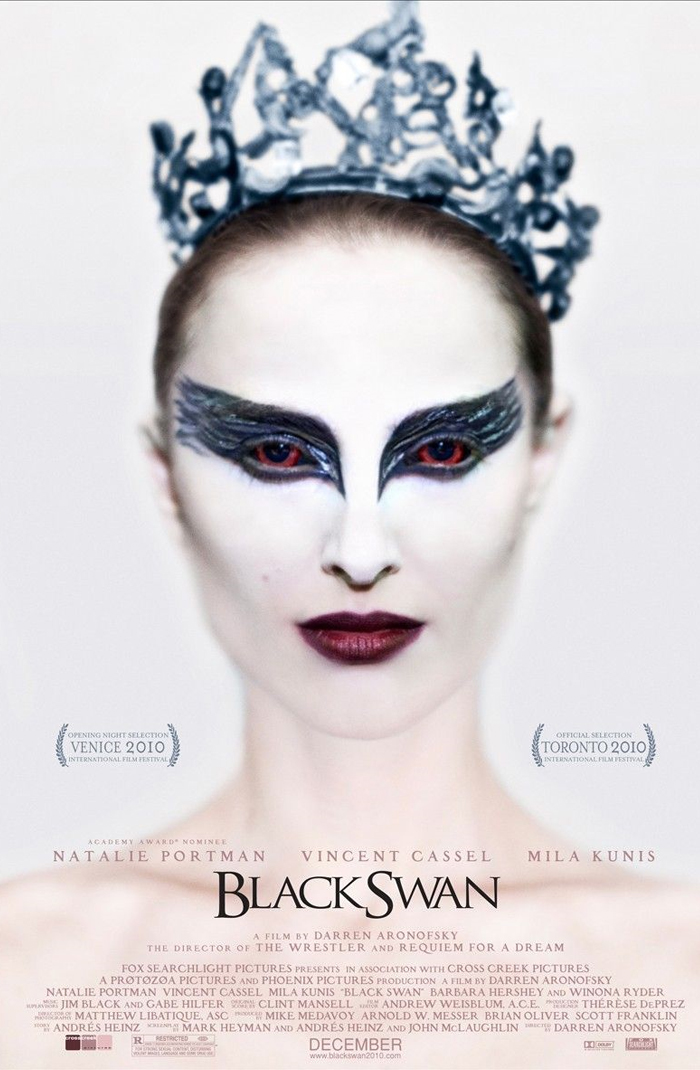 “Black Swan” is, in a word, “disturbing.” There is no doubt that the film is well made, and that Natalie Portman pulls off a stunning performance. Rather than reviewing it as a movie worth seeing, I thought I’d comment on it from a Christian perspective. In what follows, there will be spoilers.
What kind of thoughts can the Christian take away from a movie like “Black Swan”? I think the most obvious point is that the Christian can reflect on the nature of sin. What will things of this world drive us to? In her pursuit of perfection, Nina (Natalie Portman) is driven to the depths of her soul’s darkness. She is lead to violent fantasies (it’s unclear as to whether much of the violence is real or not) and to sexual depravity. It all culminates in her self-destruction, sacrificing her life for the “perfect” performance of “Swan Lake.”
I think we can see similar themes in our own lives as Christians. We often pursue worldly passions–among them a well-paying career; a sexual sin; an addiction; or the like–rather than focusing on that which matters: our Lord. Yet Christians even have this very idea built into the fabric of their belief system: we are sinners, with the capacity for great evil within us. Indeed, we are “originally sinful” and “totally depraved”, by nature we are sinful and unclean. “Black Swan” poignantly portrays this. An innocent girl is driven to the depths of hell in her pursuit of the world. It’s maddening, it’s horrifying, it’s disturbing. Despite this, in a way, the story draws us in. We can relate to the obsession with the world in ways that should scare us. Perhaps that’s why I found “Black Swan” so frightening. It wasn’t a horror movie by any means–it has its thrills and chills–but mostly, the fear is of the reality that could be. Could we become the “Black Swan” ourselves?
Now, I’m not suggesting “Black Swan” is a Christian film. It has sin of almost every imaginable kind portrayed, sometimes graphically. My point is that Christians can take away a message from the movie. The pursuit of the world will lead only to darkness… a “perfection” which can only destroy.
———
The preceding post is the property of J.W. Wartick (apart from citations, which are the property of their respective owners) and should not be reproduced in part or in whole without the expressed consent of the author. All content on this site is the property of J.W. Wartick and is made available for individual and personal usage. If you cite from these documents, whether for personal or professional purposes, please give appropriate citation and provide a link to the original URL. By viewing any part of this site, you are agreeing to this usage policy.
To Save a Life: Movie Review
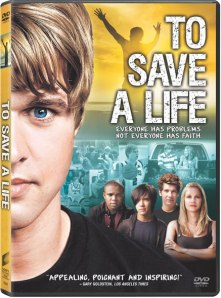
“To Save a Life” is a Christian movie (I imagine some fleeing already, but read the full review!) about some tough issues: teen suicide, self-harm, bullying, and more (no spoilers) come up in this film.
The movie starts with Jake Taylor attending the funeral of a friend from his younger years–a friend with whom he has lost touch. The friend committed suicide, and this leads Jake to seek answers to a number of questions and “Could I have done something?” is paramount among them.
The movie also explores the themes of faith as Jake interacts with a youth pastor while exploring questions about Christianity.
What makes this movie resonate with me is how accurately it portrays a number of aspects of teenage life. I’m very serious here. I knew people like Jake and his friends, and I also knew people who resembled those in the youth group scenes. The movie doesn’t hold punches, there are teens out to sleep with as many people as possible, there are those who have left the faith and are hostile to any mention of it, there is a persistent caricature of Christian belief which the teenagers think they have figured out, even within the Christian youth group there are “pretenders”–only there because they have to be (or want to hang out with friends).
The issues the film covers are, as mentioned, not easy. Teen suicide, cutting/self-harm, and the like are all portrayed. There are answers found, but they are not easy. They provide challenges to viewers to step out of their comfort zone and realize there are more important things in life than the mundane. Viewers will reflect on the movie for some time afterwards, wondering what it is that I should or could be doing.
Now, I mentioned before it is a Christian movie. Often, unfortunately, this means the acting is terrible. Not so with “To Save a Life.” I was engrossed in the film from the first minute. Jake (played by Randy Wayne) is perfectly cast. He poignantly portrays a troubled teenager reaching out for answers. The acting is not overdone. In scenes in which people are fighting, it is realistically uncomfortable; it feels too real. Watchers will have to fight not to pick out people they knew in the characters throughout the film. And this leads me to my next point:
It was stunning to me to watch the movie and realize how close I have been to being any number of these people. I was very close to being a youth who left the faith because of unanswered questions. I thank God that He provided people with answers around me–and people who were willing to say they didn’t know the answers, and point me in a direction to find them.
I watched the movie with my parents this week. My dad is a pastor and he wanted me to evaluate it for its use in a youth group setting. I can say that without a doubt I think this movie should be viewed by youth groups, but it should also be watched by concerned parents with their children. It will provide a springboard for discussion on some difficult issues.
I very highly recommend “To Save a Life.” It will resonate with some viewers in ways that simple lectures or discussions cannot. It presents a strong Christian message, calling youths to strengthen their faith and be willing to reach out to those who are hurting–a message we would do well to take to heart in a hurting world.
——
The preceding post is the property of J.W. Wartick (apart from citations, which are the property of their respective owners) and should not be reproduced in part or in whole without the expressed consent of the author. All content on this site is the property of J.W. Wartick and is made available for individual and personal usage. If you cite from these documents, whether for personal or professional purposes, please give appropriate citation and provide a link to the original URL. By viewing any part of this site, you are agreeing to this usage policy.

 J.W. Wartick - Reconstructing Faith
