Current Events
Engaging Culture: A brief guide for movies
There has been much furor recently over the release of the Hunger Games movie. My own discussion of that movie has drawn a number of comments from Christian visitors, both good and bad (and I appreciate the candor!). One theme that has reverberated throughout the discussion is the appropriateness of Christians watching violent movies or even considering using them to try to engage with the culture at large. There are no easy answers to these questions, but in this post I seek to provide a brief guide for Christians who hope to use movies to engage with the culture at large.
Appropriate?
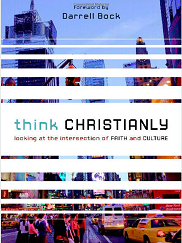 Perhaps the most contentious issue that was brought up in my own discussions of the Hunger Games was the appropriateness of viewing violent movies and even using them to engage with others. Jonathan Morrow, in his important book Think Christianly, provides an excellent discussion of the topic at hand. He prefaces his remarks with the comment that “the Bible would probably get… an NC-17 rating in [some areas like the end of Judges]…” Yet it is important to note that “The Bible does not use evil for exploitation” but rather “always records evil and sinful behavior and the consequences that come with them” (193). Violence in a work does not necessarily exclude it from the Christians’ sphere of engagement.
Morrow provides a number of useful questions for Christians to consider when looking at a movie. Here are a few samples (see p. 194):
- Does it endorse evil…?
- Does it incite us to evil acts?
- Is the evil gratuitous?
These are the types of questions Christians must ask as they consider a movie. Now, it is clear that Christians won’t always agree on the answers to these questions. What some consider gratuitous might be something someone else considers necessary for a plot. But violence of itself does not mean a Christian cannot engage with a movie. In particular, some movies use violence in order to point out the horrors which follow from it. This is, in fact, Biblical. Throughout the Bible, violence is depicted along with its consequences, yet it is clear that in all God is in control (see, for example, the Joseph narrative). As Christians interact with movies that have violence, they can focus the discussion on the consequences of humanity’s sinfulness and the need for a savior.
Engaging With the Movies
Morrow suggests a three-layered approach to movies: examine the form of the film (this involves engaging with the artistic elements such as music, cinematography, and the like); observe the content of the film (what is the message the director is putting forward? who is the hero/villain [these characters generally convey that which the director wants to show as good or bad]); note the function of the film (what is the film’s purpose? does it portray sinful behavior in a positive light?) [191].
These questions allow one to proceed to the level of engagement with the culture. If a film is inappropriate, it is not enough to simply dismiss it as a horrible, immoral movie. Rather, one can engage thoughtfully with those who want to discuss the movie. “Why did you enjoy the movie?”; “What kind of message do you think the movie tried to put forward?”; “Do you agree with the central theme of the film?”–these are the types of questions Christians can ask in order to engage with the culture. Note that none of these questions comes across as antagonistic or angry. Rather, they come across as interested and thoughtful. Whether one has seen a movie or not, one can easily engage in a dialog which can lead to some interesting discussions.
The brief overview I’ve given here is merely a guide. Interested readers should check out Morrow’s book (linked below).
A Case Study: The Hunger Games
 I’ve already discussed The Hunger Games at length in both the film and book versions, so I won’t repeat that discussion. Here, let me just apply what we see above. There are a few minor spoilers below.
What is the form of the film? -Generally, it seems to be a blockbuster movie with grandiose special effects and stirring musical scores. The visuals often dazzle with bright colors in the capitol but they are very subdued in some parts, particularly in the districts which are under the oppressive rule of the capitol.
What is the film’s content? -In my post on the movie, I argued that the content largely serves to direct the audience’s attention inward: we are, in a sense, the capitol. We are the ones who actively participate in activities to give ourselves comfort while there is great suffering around us. The violence in the movie is there, but it is portrayed in a way which does not glorify it. It is the people of the capitol who glorify the violence, and it is the people of the capitol who are the confused villains.
What is the function of the film? -Again, it seems to be a social commentary on the evils we bring about here. The decadence of the capitol is our own indulgence; the violence going on in the Games are the evils of the world. I see the film as a stirring commentary on social injustice.
But what if you think the violence is too much? What if you think I’m just wrong about this particular film? Should you jettison it altogether? I think not. Instead, I suggest you turn to the questions above. Ask: “Why did you like the Hunger Games?”; “Do you think the film glorifies violence, why or why not?”; “What current problems do you think relate to the film?”
Conclusion
Christians are called to engage the culture around them in a transforming fashion (1 Cor 9:19-23). Engaging with popular films is just one way to engage with the culture. As popular movies come out, it is important for Christians to know the relevant issues they raise and be ready to comment on them as they come up. If we can more effectively open discussions with people about these highly relevant topics, we can help show Christianity is an extremely powerful worldview that touches upon every aspect of our lives in a positive way.
Source
Jonathan Morrow, Think Christianly: Looking at the Intersection of Faith and Culture
The Hunger Games Movie: A Christian Perspective
 I saw The Hunger Games
I’ve already written about the whole trilogy and my thoughts on talking points a Christian can take away from it, and the movie really brought to light a number of the things that I wrote about there. I’m not going to bother to summarize the movie here. Rather, I’m going to provide what I found to be some talking points that Christians can take away from the movie along with my general observations. At the end I include a brief note for parents who might be concerned with their children seeing the film. See also my look at “Catching Fire.”
Christian Talking Points
The movie portrays a world in which there is a stark contrast between those in power and those without it. District 12, whence Katniss Everdeen hails, is a bleak place. The imagery seen on screen evokes mental images of the Great Depression and the photography from that era. There are sad faces looking out the windows, people marching to the coal mines, and children playing with sticks in the mud because they have nothing else with which to play.
That contrasts starkly with the decadence of the Capitol. At the Capitol, the people spend their time on frivolity. They decorate themselves as much as they decorate the places around them. Their showers cover them with the scent of the day; they can bring up whatever pleasant imagery they would like on their screens; their food is the best; they do whatever they want.
The imagery throughout the movie portrays this stark contrast. The children themselves are called upon to battle to the death, yet everyone is congratulating them as though this is some great honor and opportunity. They are required to dress their best for the “reaping” in which the Capitol personnel select contestants who will fight in the arena. The people of the Capitol pack the stands to watch the introductions and interviews of the contestants; they cheer wildly for their favorites and root for those they choose. Yet the whole time the movie makes it clear there is something deeply wrong happening. How can these people be so excited, so utterly out-of-touch with reality, when children’s lives are at stake?
 The world of the Hunger Games is a commentary on our own. The world in which we live is one in which our greatest goal is comfort, yet their are children dying in our streets from starvation. This is not just far away, it is right in our own country. This is just one talking point for Christians and the Hunger Games: what is it that we should be doing to curb our own “capitol”-like tendencies?
Yet it seems like that alone doesn’t take it far enough. The film also portrays clearly the level to which people deceive themselves about right and wrong. There is a struggle in the movie (and the books) that goes beyond the strangeness of the contrast between the districts and the Capitol. The struggle is a fight over what is right and wrong. The society of the Capitol has relativized morality. They have decided that might makes right and that their comfort is the greatest good. Yet the entire movie gives imagery to that view and one can’t help but notice the feeling that something is just wrong throughout the film. How is it these people who are living lives of such great comfort are so oblivious? The meaning is subtle, but it is throughout the whole movie: there simply is something wrong, and it is the dismissive attitude with which people treat right and wrong when it comes to their own comfort and desires.
It is telling that President Snow comments on the reason the Hunger Games have a winner is in order to give hope, but “too much hope” is a bad thing. As the leader of the Capitol, Snow realizes the power of hope and how it can work even better than fear to control the masses. As long as he provides the districts with hope, he has them in control. But if they get too much hope, they will break, and the cracks start to show near the end of the movie.
The Hunger Games, I think, provide a stunning critique of our society. We live in the Capitol; we exist in a society which relativizes morality for its own convenience. And when we are presented with it in our face, when the imagery of a film like The Hunger Games shows us the very kind of decadence and futility which we so often celebrate, we are repulsed. The wrongness of the situation comes to the forefront and we must act.
Christians, I think, have much to take away from the movie (and books). We know that there is wrong in the world, and we know the dangers of comfort and futility–we are warned of these things in our Scriptures. The Christian path is one which fights against this futility and points to the one true Hope: that of our savior.
A Word to Parents
This is not a film for children. It is rated PG-13 and I think could very easily have been R. Children are killing each other. The film is, however, I think appropriate for teenagers, and parents who keep in mind some of the talking points listed above could utilize the film as a way to discuss some of the very real world issues it hints at.
Links
Check out the Christianity Today review of the movie.
For those concerned with whether Christians can/should use movies like this to interact with the culture, check out my post on “Engaging Culture” with movies.
SDG.
——
The preceding post is the property of J.W. Wartick (apart from citations, which are the property of their respective owners) and should not be reproduced in part or in whole without the expressed consent of the author. All content on this site is the property of J.W. Wartick and is made available for individual and personal usage. If you cite from these documents, whether for personal or professional purposes, please give appropriate citation with both the name of the author (J.W. Wartick) and a link to the original URL. If you’d like to repost a post, you may do so, provided you show less than half of the original post on your own site and link to the original post for the rest. You must also appropriately cite the post as noted above. This blog is protected by Creative Commons licensing. By viewing any part of this site, you are agreeing to this usage policy.
Christian Reflection on The Hunger Games Trilogy
 I devoured the entire Hunger Games Trilogy
I’ll give my thoughts on the overall plot and what I take as the meaning in the books, from my own Christian perspective. I provide a brief look at things Christians can take from the books, as well as a discussion of the ethical theory one could see in the books.
This post focuses first on the reflections, and readers who don’t know the plot should read my summary before reading that section. Next, I briefly outline some content for parents. Third is my summary of the trilogy. Finally, I share a few interesting links, including one which I think will be very useful for Christian parents wondering if these are appropriate for their children.
WARNING: MAJOR SPOILERS INCLUDED BELOW
I’ll first present my reflections, and follow it with a brief note for parents. Those who haven’t read the books and aren’t planning to do so can read 3. Summary for a broad summary of the plot. There are spoilers in the reflections section, so readers who don’t want to have anything spoiled should abstain from reading this post and perhaps just read the one linked above.
1. Reflections
[I have had the wonderful pleasure of interacting with many thoughtful Christian on this trilogy and found that there is so much more to the books than I could delve into here. Please see the links at the end for more reflections.] Initially, as I reflected on The Hunger Games Trilogy, I felt that the biggest issue was that there didn’t seem to be a major point to it beyond entertainment. I asked to be corrected, and I was. Many people commenting on this post have shared incredible insights. For the Christian reflecting on the Hunger Games, one can see it as a commentary on the horrors done to children in our time (Audra Franz below brings up this excellent point), a stunning condemnation of relativistic ethical theories (see A.T. Ross’s link), a narrative of Christian martyrdom, a critique of poor moral decisions, a horrible look at a nihilistic worldview, and more. In other words, there are any number of things Christians reflecting on the Hunger Games Trilogy can take away from the series. As such, I’ve lengthened this post a bit to take more of this into account.
I’ve been perplexed by Katniss’ decision to vote to hold a Hunger Games for the children of the leaders of the Capitol. Now, upon further consideration, I have to agree with the astute reader whose idea I put forward below, but I’ve left my original view untouched here [see the last few sentences two paragraphs down]. Consider the following passage in which they are voting on this very issue (p. 370 of Mockingjay):
Was it like this then? Seventy-five years ago? Did a group of people sit around and cast their votes on initiating the Hunger Games? Was there dissent? Did someone make a case for mercy that was beaten down by the calls for the deaths of the districts’ children? …All those people I loved, dead, and we are discussing the next Hunger Games in an attempt to avoid wasting life. Nothing has changed. Nothing will ever change now…. I say, “I vote yes… for Prim.”
I’m just honestly confused by this passage and Katniss’ decision. The vote was, according to her and Coin, a way to avoid losing more life. Some want to kill everyone in the Capitol, while others think they should just integrate with them in order to help stabilize the population. These last Hunger Games were proposed as a solution–a middle ground. But it seems to me they don’t serve a middle ground, just another atrocity. And Katniss seemed to realize that, but voted yes anyway. It is unclear that these Hunger Games ever take place, however, because shortly after making this decision, Coin is killed by Katniss and it’s uncertain as to whether an announcement is ever made. One reader gave me an interest comment on this–that it seems Katniss’ vote for the Hunger Games was, in fact, a ruse to lure Coin into the open so she could take her down. This gains credence when one considers that she says “for Prim”–even though she knew it was not Capitol people, but rather Coin, who killed Prim. On such a view, her utterance of “for Prim” is ironic, and indeed may have been intended to show Haymitch what Katkniss was planning. This makes more sense to me. My thanks to the astute reader!
The world in the Hunger games is stark. It is real, and one can’t help but be drawn into it while simultaneously feeling repulsed. Perhaps that was Suzanne Collins’ point, however. There isn’t always a triumph. Sometimes it’s just bitter reality. The trilogy ends on a happy note, but the overall scheme is one which forces the reader to reflect.
So what do I take from the Hunger Games trilogy? I readily admit my worldview does permeate my thought, and the main thing I took from the trilogy is the sinful condition of humanity. Katniss acknowledges it, noting that it could be better to allow some less sadistic species take over. As I already said, there is a fairly happy ending, but looking at the state of Panem and the world–there has been war after war, there’s no clear idea that the totalitarian government hasn’t just been replaced by another under the guise of democracy, children are killed, and a “compromise” to prevent more death is to send the Capitol’s children to fight to the death once more. The sinfulness of the human race, it seems, is at the forefront. And I think that’s why I long for more in the Hunger Games–I long for that comfort of the Redeemer. There seems to be no hope in the books that things will be made right, only that eventually, the nightmares may get better. Having the comfort of redemption and hope, I can’t help but wish for that in the world of Panem–a Redeemer to come and wash away the tears. And so, because there is no such Redeemer, I see the stories as a reflection of the brutal reality of a world without God. In such a world the best that can be hoped for is that the nightmares may one day end; that children may have a better life than their parents. But ultimately, it is a hard reality, one in which there is no true hope, no way to atone for past wrongs. Perhaps that is the central message of the books, or perhaps I am reading my own worldview onto it. Either way, I find this central message compelling.
Some have expressed concern that the Hunger Games express moral relativism. A.T. Ross has an excellent discussion of this on his site. The books themselves never present a moral theory–obviously that is not their intent–but they certainly do not seem to espouse moral relativism. It is clear throughout that the government’s actions are quite evil and that killing, sexual exploitation, and the like are all wrong. Ross notes that some have complained that it seems all the actions are up to chance. The phrase used in Panem is “May the odds be ever in your favor.” But Ross has astutely pointed out that no fictional character ever survives by chance. There is an Author who guides and directs their destinies. As Ross says, “The world operates on grace whether we like it or not; what we see as luck is nothing more than a tiny slice of divine grace offered in the form of survival and the tensions of the story resolving.”
But the Hunger Games, as noted below in the comments, can also be seen as a critique of our own world and our abuse of our children. In our world, children are sold for sex, they are forced to fight, they are fearful for their next meal, just as they are in the Hunger Games. Collins has poignantly potrayed the reality of our own world in the fictional realm of Panem.
A final thought is that Christians can definitely see parallels between the Hunger Games and the plight of the first Christians as they were forced to battle wild animals in Rome. There are a great many parallels here, and I can’t help but think some of this may be intentional. I’m not suggesting Collins is Christian–indeed, I don’t know what faith (if any) she professes. But I do think that the Hunger Games trilogy brings in many concepts from Christianity–the hopelessness of life without God, the objective wrongness of certain actions (and one’s requirements to act against them [provided the alternative reading of Katkniss’ vote]), and even an allusion to the Christian’s martyrdom in the arena. These all provide significant talking points for Christians throughout the series. The books are not overtly Christian, but they can open up conversations about these topics, and that, in itself, makes them worth reading in my opinion.
Thus, it can be seen that even though the Hunger Games Trilogy is not explicitly Christian, Christians who are interested can take all kinds of talking points away from it. Parents will find much to discuss with their children, and readers who are simply interested in the series will be unable to keep themselves from earnestly reflecting on the series afterwards. My own thoughts have been wonderfully shaped by readers who have shared their comments, so please keep them coming. It is clear that the Hunger Games can captivate Christians and have us look at the world through the eyes of faith–observing what is wrong and praying for God’s aid as we turn to those problems highlighted in the series. Most of all, we have the message of redemption, which is notably absent in the series–a message which is necessary to avoid the nihilistic collapse of Panem.
2. Brief note for Parents
Parents interested in the Hunger Games should know the series is very violent and depicts the death of children in sometimes graphic detail. While not explicit, there is some sexual exploitation involved as well (again, it is never explicit, but it can easily be drawn out from the text that is there). These are not books for young children. Please see 3. Summary for more details about the plot itself to hopefully help decide whether it is for your children.
 3. Summary
Katniss Everdeen narrates the series from a first-person perspective. The Hunger Games is an annual tournament in which the Capitol collects 2 children from the 12 districts of Panem–the mini-country that has risen from the dust of several wars–and makes them battle to the death. Only one of the 24 children will survive. Why does the Capitol do this? Because about 74 years ago, the districts revolted against the Capitol. The Capitol won and the Hunger Games serve as an annual reminder of the Capitol’s might. The Hunger Games are aired on national television and everyone in Panem is required to watch their children die. There are interviews and extensive coverage of the event.
In the first book, The Hunger Games, Primrose, Katniss’ sister, is selected to compete in the Hunger Games. Katkniss almost immediately volunteers to take her place–she can’t watch her sister die. Gale, her friend and hunting partner for years, agrees to take care of her family. Peeta, a boy who had saved Katkniss’ life by giving her food some years ago, is the male selected from District 12, their home. They get shipped to the Capitol, where they begin to gain popularity due to their stylist, Cinna, and their story of hopeless lovers. Peeta told everyone at an interview that he loved Katniss and she plays that up in order to get gifts from “sponsors”–people who like certain children and pay to send food, weapons, medicine, and the like to them while they’re in the Hunger Games arena. As children die and are killed (including Katniss’ ally, Rue), it becomes apparent that Peeta and Katniss may be among the last few. The Capitol changes the rules to allow two to survive if they are the last ones and from the same district. Katniss finds Peeta and nurses him back to health, pretending to love him the whole time (and occasionally feeling very real about it). They end up barely surviving, but then the Capitol decides to change the rules back so they must fight to the death. They are about to kill themselves when the Capitol stops them and allows them both to win.
It turns out Peeta wasn’t pretending about his love, but Katniss was. The Capitol is furious that they were outwitted by the attempted suicide, and Peeta and Katniss are in danger. The book ends with Katniss in confusion about her interests in Peeta, and Peeta totally disappointed.
Catching Fire picks up a few months later and highlights the political drama playing out as President Snow and the Capitol are still furious that Peeta and Katniss both survived. The year is the 75th Hunger Games and in it, they select victors. Peeta and Katniss once more go to the Games. There is more to the Games than meets the eye, however, and Katniss and Peeta are part of a bigger scheme now to overthrow the Capitol. Katniss is confused about her feelings for Peeta and Gale. During the Games, Katniss is rescued and transported to the previously thought-destroyed District 13. District 12, her home, has been bombed to rubble. There are revolts happening across Panem.
In Mockingjay, Katniss must decide whether to help District 13 unite the Districts against the Capitol. Eventually she does and the revolution begins to take over district-by-district. District 13’s own motivations are unclear and it’s not certain they are any better than the Capitol in some ways. Their leader, Coin, is particularly unforgiving. Peeta has been tortured and tries to kill Katniss due to brainwashing, but through the course of the book he is rehabilitated and begins sorting his false memories from his true ones. It becomes apparent Coin doesn’t like the political clout Katkniss has as the “Mockingjay”–honorary leader of the rebellion. Katniss continues to go after President Snow, determined to kill him for his atrocities. Eventually, she reaches his estate and witnesses the killing of dozens of children with a secret weapon that only the Rebellion knows about. Snow is captured.
Katniss votes to put the Capitol’s leaders’ children in one final Hunger Games as retribution[? see more on this in my reflection] for their crimes. She and Coin had agreed to allow Katniss to kill Snow, and she is about to when she shoots Coin instead, due to Coin’s involvement in murdering other children. Katniss is pardoned for temporary insanity, and goes home to District 12. Eventually she and Peeta get together and the book ends with them having children despite Katniss’ fear that some great evil will come upon them.
4. Links
“Catching Fire”– A Christian reflection on the film. I review a number of themes found in the movie “Catching Fire” and tie them back to the message of Christianity and social justice.
Please check out my other writings on movies and books. For starters, if you liked The Hunger Games you may want to check out John Carter.
Christian Children’s Book Review- Check out this review of the series to get more specific information parents may want to consider as they think about getting these books for their children.
The Hunger Games, Ethics, and Christianity– A very interesting look at moral relativism and realism in The Hunger Games.
The Hunger Games: Focus on the Family– Essentially a book review of the first book, The Hunger Games, with an emphasis on issues Christian parents might have with it. I don’t agree withe everything here, but I think the talking points they’ve provided for parents are pretty interesting.
Hungering for Satisfaction– a poignant look into the Hunger games. “Real or unreal?”
Deeper Hungers and Darker Games– The Hunger Games reflects a world without God. What does it mean?
The Hunger Games: The Atheist’s Utopia– No God: Utopia?
SDG.
——
The preceding post is the property of J.W. Wartick (apart from citations, which are the property of their respective owners) and should not be reproduced in part or in whole without the expressed consent of the author. All content on this site is the property of J.W. Wartick and is made available for individual and personal usage. If you cite from these documents, whether for personal or professional purposes, please give appropriate citation with both the name of the author (J.W. Wartick) and a link to the original URL. If you’d like to repost a post, you may do so, provided you show less than half of the original post on your own site and link to the original post for the rest. You must also appropriately cite the post as noted above. This blog is protected by Creative Commons licensing. By viewing any part of this site, you are agreeing to this usage policy.
Really Recommended Posts 02/03/12
 Says the Madman, “Humanity is Dead, and We Are Its Murderers”– An insightful post which argues that naturalism has undermined the worth and value of humans.
Zombies of Christianity– I really enjoyed this discussion of the diversity of doctrine in Christianity and how to approach it.
My latest post on abortion generated some controversy, but I’d like to point out that scientifically, the unborn simply is a human being. One can find this not only in numerous medical textbooks on embryology, but also in the words of abortions-rights advocates themselves. Check out this phenomenal post which outlines the fact that the unborn are human beings, period- Medical Testimony.
C.S. Lewis is one of the greatest Christian Apologists of all time. Check out this post which brings us Beyond Mere Christianity. Interested in literary apologetics? Check out Holly Ordway’s guest post on my blog here.
A Response to the Problem of an ‘Evil God’ as Raised by Stephen Law.– An excellent article, which I don’t fully agree with (I think Edward Feser answers the challenge correctly, for example), but which provides a thorough critique of Law’s position.
The Artist: A Film Review and Reflection- Holly Ordway shares her thoughts on “The Artist.”
How Many Atheists in America? Fewer than You Might Think– Pretty self explanatory.
Christian Apologetics/Philosophy Book Gift List Christmas 2011
 Brian Auten over at Apologetics 315 has an excellent post which outlines some great gift choices for Christian apologists. I thought it was an great idea and wanted to expand on it. Thus, welcome to the inaugural, annual Christmas Christian Apologetics and Philosophy Book Gift List! That is a mouthful!
The following list suggests several books for beginner and intermediate readers, a couple for advanced readers, and 2 books I think that anyone interested in apologetics or philosophy of religion will enjoy.
Beginner/Intermediate
Hugh Ross, Hidden Treasures in the Book of Job– A phenomenal book about the scientific intelligence of the book of Job, the oldest book in the Bible. See my review here.
Komoszewski, Sawyer, and Wallace, Reinventing Jesus– This book is, in my opinion, the best introductory work on apologetic issues related to the historicity of the New Testament. I can’t recommend it highly enough–it covers gnosticism, the canon, the Gospels, etc. It’s simply phenomenal.
Gary Habermas, The Case for the Resurrection of Jesus– Habermas’ defense of the historicity of the resurrection is top-notch, easy to understand, and, I’ve found, irrefutable. The best part about it is that it focuses on three easy-to-remember facts about Jesus.
William Lane Craig, Reasonable Faith– An intermediate-level book on natural theology, Craig here presents a convincing, reasoned defense of theism generally and Christianity specifically. This was the book which got me into apologetics. I highly recommend it. Beginners will be happy to know Craig has distilled his work here into his readable On Guard.
Paul Copan, True for You But Not For Me– I read this book for a class and admit I went into it with some skepticism, but it quickly astonished me with how well Copan explains all kinds of issues related to Christian apologetics. The
Greg Koukl, Tactics– This book provides a background for apologetic method. Koukl’s insight will quickly train readers to analyze arguments, find fallacies, and point them out, all with a kind of gentleness and respect which is fitting for the Christian Apologist. I recommend this book very highly. No collection is complete without it.
Advanced
Stephen Parrish, God and Necessity– Parrish’s phenomenal work of philosophy of religion surveys the notions of contingency and necessity. He analyzes various theistic arguments, offers an ontological argument, and finds that only in the necessity of deity can we explain the existence of all things. The scope of this work is immense–it covers a broad array of metaphysical issues. I recommend it highly.
Linda Zagzebski, Divine Motivation Theory– Zagzebski explores a range of issues regarding metaethical systems and finds that divine command theory needs modification. She offers her own theory for the grounding of morality in the divine, which is backed by motivations, not commands. There’s a reason Zagzebski is getting recognition and causing stirs in the world of philosophy of religion. Check out my review of the book.
The Top 2
Douglas Groothuis, Christian Apologetics– I believe this book will quickly become the definitive work on Christian Apologetics. It’s comprehensive, eminently readable, and convincing. Beginners might be scared off by the sheer size of the book, but it provides enough background to appeal to any reader. The succinct nature of the arguments, the reasoned defenses of the premises, and the immense ground the book covers will make it appealing to all.
Edgar Andrews, Who Made God?– I have to agree with Brian Auten (see the article linked above)–this book is simply phenomenal. Readers at any level will find new ideas of great interest. Andrews covers a wide range of issues, all of which are of interest to Christian apologists and philosophers. See my review.
Harry Potter and the Deathly Hallows, Part 2: A Christian’s View, Redux
 I’ve made no secret of the fact that I’m a huge Harry Potter fan. I think the books are phenomenal, and the movies have often been just as great. What interests me, as usual, is how the Christian can relate to this extraordinarily popular series.
Harry Potter and the Deathly Hallows, Part 2 released on Blu-Ray and DVD today. I was at the midnight showing with my wife (then fiancee) when the movie came out in theaters. The best description I can give of our feelings when it ended is this: bittersweet. The series is over. The books and movies are no longer coming. This is the end! Or is it?
THERE ARE MAJOR PLOT SPOILERS BELOW
That is the feeling I got throughout the movie. Is death the end? The movie takes little time to get going. Soon, viewers are thrust into the epic final conflict in which Harry Potter rushes to destroy all the horcruxes (pieces of the evil Lord Voldemort’s soul) in order to finally defeat his enemy. Things get going fairly well. Harry shows up at Hogwarts again with resounding support. He quickly uses his allies to take back the school and set it up for a final showdown with evil. As his friends battle the forces of darkness closing in around them, Harry searches frantically for another horcrux while Hermione and Ron locate a basilisk fang–one of the only things capable of destroying these pieces of soul.
But once both Harry and Hermione/Ron have achieved their missions, the goal is still only close at hand. They must destroy Nagini, Voldemort’s snake (and another horcrux). They immediately set off to find the snake and witness the murder of Professor Snape–who turns out to be a double-agent after all. The fact that he killed Dumbledore turns out to not show his final betrayal, but the depth of his loyalty. But from Snape’s dying memories, Harry gleans the truth: Harry himself is an unintentional horcrux. When Voldemort killed Harry’s parents, he sealed part of his soul inside Harry. So Harry must die if evil is to be defeated.
Harry goes willingly to his death. He meets Voldemort among his followers, and allows himself to be killed. But it turns out that this is not the end. Dumbledore had sealed the Resurrection Stone inside a gift to Harry. This stone allows Harry to speak with his dead friends and family. Harry, once dead, is made alive once more after a discussion with Dumbledore. Harry awakens in a pivotal scene in which Voldemort is announcing his victory over all wizards, and he and Voldemort battle in a final, epic showdown in which Harry overcomes evil once and for all.
Christians reading this should be sensing some interesting underlying themes here. Harry Potter is innocent–he’s thrust into the events upon him. He willingly goes to his death, knowing it is literally the only way to defeat evil. And, once he’s died, he is resurrected, back to finally bring about his victory over Voldemort. Yeah, it seems Rowling might have borrowed a bit from the story of Jesus.
What explains the astounding popularity of the Harry Potter series? J.K. Rowling has weaved a series of books which tie together in sometimes amazing ways. What seem like random details and “fluff” in one book turn out to be of immense importance later in the series. Each book, mostly self-contained, features a different thrust. Yet they are all tied through broad overarching themes. But could it be that there is another theme, oft-ignored in discussions of Harry Potter? It seems so. The climax of the series occurs in the death and resurrection of Potter. The Christian story culminates in the same. Potter is fiction, but his tale, so wonderfully complex, leads us to the story of Christ. He had to die for the sake of all–Voldemort would have overcome. Jesus, similarly, had to die for the sake of all–lest sin and the devil overcome.
This parallelism with Christianity was not revealed until the final book, yet perhaps it can explain how Rowling was able to make the conclusion to her epic so satisfying. She was telling a story we all knew. She was telling us, in a very different way, what must happen for evil to be overcome. Her story is fiction, Christianity’s story is real. What we want to believe in (Harry Potter) is what many of us do believe (Christianity). Whether intentional or not (and I think it was intentional), Rowling wrote a story which resonates deeply with Christianity’s own. And her fiction points us towards the greater reality.
Christians, I encourage you to read and watch Harry Potter. The books and movies are just phenomenal pieces of literature and filmography. Think of the themes that are woven throughout the books. Think of the final showdown between good and evil. And think of Jesus while you do so. You’ll find that within Potter, we discover hidden truths of our own faith.
But hey, you don’t really have to think of all these themes. And it’s highly questionable whether these parallels are intentional or not. It’s okay to just enjoy the movies anyway. My point is that, as a Christian, I saw these themes. And I found it thrilling.
Links
I discuss a number of other popular movies and books. If you liked Harry Potter, check out The Hunger Games and John Carter.
SDG.
——
The preceding post is the property of J.W. Wartick (apart from citations, which are the property of their respective owners) and should not be reproduced in part or in whole without the expressed consent of the author. All content on this site is the property of J.W. Wartick and is made available for individual and personal usage. If you cite from these documents, whether for personal or professional purposes, please give appropriate citation with both the name of the author (J.W. Wartick) and a link to the original URL. This blog is protected by Creative Commons licensing. By viewing any part of this site, you are agreeing to this usage policy.
Really Recommended Posts 11/5/11
 Over at Hope’s Reason, Steve Bedard wrote a succinct post on the “Roots of Religion.”
A debate between Paul Copan and Norman Bacrac on “Is God a Moral Monster?”
Josiah Concept ministries has been featuring a series on “True Christianity.” Great stuff. Check out Part 3.
Philochristos has a great section on Mormon Epistemology that has a number of posts worth checking out.
Why do people hate Tim Tebow so much? Is it a reflection of Christophobia? Check out what First Things has to say on the topic. See also Erik Manning’s discussion.
What do you mean by literal? N.T. Wright makes some great points about interpretation of Scripture.
A serious challenge to Stephen Law’s “evil god” theory is brought up by Edward Feser. For a quick explanation of the challenge, see his posts on the topic.
Many people have been wishing that William Lane Craig had used the ontological argument in the debate with Stephen Law. Why? Well, because it would have really undermined his ‘evil god’ challenge. See Doug Geivett’s thoughts.
Can we evaluate worldviews? How to navigate the sea of ideas.
Think about it this way: worldviews are supposed to be reality. If a worldview does not match reality, how can it be reality?

I recently began a series on the truth claims of Mormonism. In that post, I asserted that there is positive evidence against the truth of the Book of Mormon. However, there is an important step to take before offering arguments against other religions. Namely, one must establish that evidence against the truth claims of a religion should rationally lead one to abandon that religion. (A related but similar point would be the positive evidence for religion leading to rational belief.)
Thus, before I continue to offer critiques of other religions, I offer some epistemic groundwork.
Truth Claims and Worldviews
First, it must be noted that worldviews are not mere matters of feeling, regardless of what the supporters of the varied views claim. For example, if one says “You can’t analyze what I believe, it’s just a matter of faith” they are making a claim about reality–that their faith cannot be analyzed. Similarly, if one claims “Israelites sailed to the Americas from the Middle East,” [Mormonism] or “There is no God” [atheism] they have made a claim about reality.
Such truth claims are capable of analysis, by definition. Statements are true or false. All worldviews make claims about reality, which are therefore true or false. Simply stating that one’s belief is “just faith” or “obvious” does not exclude it from making claims.
 How Do We Evaluate The Claims of Worldviews?
One’s beliefs should conform to reality, if one seeks to be rational. Certainly, one could say “To heck with the evidence, I’m going to believe x, y, and z! I don’t care if I can’t support the belief and that there is strong evidence against x, y, and z.” But if one were to say this, one would abandon their reason. Their heart could believe, but their mind could not. Ultimately, all truth claims can and should be put to the test.
Testing the claims of varied worldviews is no easy task. There must be objective criteria, otherwise one view will be favored over another. One cannot simply make their own view the default and argue that only by filtering truth claims through their position can truth be attained. Atheism, by no means, provides a neutral basis for evaluating religions, as I’ve argued elsewhere. In fact, atheism must past the standards for truth claims, just as any religion must. If one remains an atheist despite positive evidence to the contrary (or despite reasons to disbelieve the claims of varied atheistic worldviews like materialism), one abandons reason just as if one clung to a false faith.
Testing Worldviews as Hypotheses
In his monumental work,Christian Apologetics, Douglas Groothuis argues that worldviews can be proposed as hypotheses. Worldviews present themselves as answers to explain the phenomena we experience (Groothuis, Christian Apologetics, 49). Groothuis therefore presents criteria for evaluating worldviews as though they were hypotheses about the world. Kenneth Samples similarly draws out nine tests which can be used to determine whether the claims of a worldview are true in his book A World of Difference (page numbers from that text, citation below). From these proposed methods, we can derive tests to evaluate competing worldviews:
1) Coherence– if a religion is contradictory, it simply cannot be true. For example, if a religion claimed that “Person Z is god, and person Z is not god,” that religion would be incoherent (Samples, 33). Furthermore, “If a worldview’s essential propositions are coherent… it is more likely to be true than if its essential propositions are not related in this way” (Groothuis, 55).
2) Balance– “A valid worldview will be ‘neither too simple nor too complex.’ All things being equal, the simplest worldview that does justice to all aspects of reality deserves preference (Samples, 33-34).
3) Explanatory Power and Scope– Does the worldview explain what we experience in enough detail? If a worldview does not explain our world, or it cannot account for certain phenomena, then it is lacks explanatory power (Samples, 34). Worldviews which make propositions which they cannot account for lose credibility (Groothuis, 53).
 4) Correspondence– Does the worldview match the facts we know about the world to our experience of the world? If we know that the worldview in question promotes claims we know are false, it does not match reality (Samples, 34-35). Think about it this way: worldviews are supposed to be reality. If a worldview does not match reality, how can it be reality? We are able to test factual claims through empirical and scientific methods, so if a worldview continually is able to establish its essential claims by means of these methods, it is more likely to be true (Groothuis, 55).
5) Verification– Can this worldview be falsified? Worldviews which cannot be found to be false cannot be found to be true either.
6) Pragmatic Test– Can we live by this worldview? This test is less important, but still has credibility–we must be able to live out the worldview in question (Samples, 35-36). But worldviews should also be fruitful in the development of greater intellectual and cultural discoveries (Groothuis, 57).
7) Existential Test– Like the pragmatic test, this one is not as important as whether the view is factual, but it is still helpful. If worldviews do not account for inherent human needs, it is possible the view is false (Samples, 36). Again, this is not necessary for a worldview, but it helps measure a view’s completeness.
8 ) Cumulative Test– Does the worldview gain support from all the previous criteria? If a worldview is able to satisfy all the criteria, it gains credibility (Samples, 36-37).
9) Competitive Competence Test– If the worldview satisfies the previous criteria with more evidential power than other worldviews, it gains credibility over and against them (Samples, 37).
10) Radical ad hoc readjustment– Groothuis presents this as a negative test for worldviews. “When a worldview is faced with potentially defeating counterevidence, an adherent may readjust its core claims to accommodate the evidence against it. Various theories and worldviews can legitimately refine their beliefs over time, but radical ad hoc readjustment reveals a deep problem…” (Groothuis, 57). There is, as Groothuis pointed out, a line between refining belief and simply readjusting belief in an ad hoc way. If, for example, it were discovered that Jesus did not rise from the dead, then Christianity would be false (more on that below). If, however, one simply adjusted Christianity to say “Jesus spiritually rose from the dead,” that would constitute a desperate, ad hoc measure to preserve the worldview and count as discrediting Christianity.
These tests present objective criteria for testing worldviews. If, for example, one wished to deny their worldview had to be coherent, they’d have to affirm that which they denied, for in denying that criterion, they were attempting to make their view more coherent. The testing of worldviews is a legitimate task, and indeed one in which people should engage. Some things, if falsely believed, are harmless (for example, if one believed it rained yesterday when it did not). Worldviews, however, if falsely believed, are damaging on any number of levels. If one believed God didn’t exist when, in fact, He did, then one would be doing a great evil by not acting upon the truth of God’s existence (and the contrary). Thus, the testing of worldviews is no task to be skimmed over, but one which should be approached with fear and trembling. The criteria outlined above allow people to engage in this task and evaluate the realm of ideas.
Christianity Encourages Exploration of Reality
What I find extremely interesting is that Christianity, unlike many world religions, doesn’t discourage the discovery of truth, nor does it evade evidence by claiming that it is merely a faith or feeling. Rather, the founders of Christianity explicitly stated that it is based upon certain truth claims, and that if those claims are false, then Christianity is worthless. Paul, for example, wrote “And if Christ has not been raised, your faith is futile; you are still in your sins” (1 Corinthians 15:17). The truth of Christianity rests exactly upon a testable claim: Jesus rose from the dead. If He did not, Christianity is false. Christianity’s scope and explanatory power are superior- it can account for the existence of contingent objects, persons, consciousness, life, and the like. Christianity corresponds to reality, satisfies existential and pragmatic needs, is simpler than many other explanations, its coherent, and it matches all the criteria. Christianity expects its adherents–and outsiders–to test the faith and discover whether it is true. I have found, personally, that it pasts these tests over and over.
Conclusion
Whether one agrees or not, it is simply the case that religions make claims about reality. These claims are, in turn, true or false. Not only that, but they must match with reality in several important ways. Christianity not only adheres to these tests, but it encourages them. It also passes these tests. Does your worldview?
Sources
Douglas Groothuis, Christian Apologetics (Downers Grove, IL: InterVarsity, 2011).
Kenneth Samples, A World of Difference (Grand Rapids, MI: Baker, 2007).
Image Credit
I took this picture at Waldo Canyon near Manitou Springs, Colorado on my honeymoon. Use of this image is subject to the terms stated at the bottom of this post. The other image is the book cover from Samples’ book.
SDG.
——
The preceding post is the property of J.W. Wartick (apart from citations, which are the property of their respective owners) and should not be reproduced in part or in whole without the expressed consent of the author. All content on this site is the property of J.W. Wartick and is made available for individual and personal usage. If you cite from these documents, whether for personal or professional purposes, please give appropriate citation with both the name of the author (J.W. Wartick) and a link to the original URL. This blog is protected by Creative Commons licensing. By viewing any part of this site, you are agreeing to this usage policy.
Really Recommended Posts 10/22
 Why Do Atheists Talk So Much About Religion?– A short, interesting post with a self-explanatory title. Check it out.
Ah, Richard Dawkins, when will he learn that attacking people doesn’t make their views wrong? His buddy PZ Myers has actually attacked me personally as well, but that’s beside the point. Check out Max Andrews’ thoughts on Dawkins refusing to debate Craig. Dawkins, of course, enlists the help of his yes man Myers.
Undesigned Coincidences and the Historicity of the New Testament– This is a great apologetics video making the rounds. The “undesigned coincidences” argument is one which is slowly seeing a revival–in part due to Dr. Tim McGrew, a friend of mine and a phenomenal philosopher. Check it out.
A Review of “The Magic of Reality”– Dawkins has been adamant that we should not indoctrinate our children. Yet his new book is intended to do just that: indoctrinate children with atheism. Check out this timely review over at Deeper Waters.
Sharing the Gospel – 10 Surprisingly Simple Tips for Talking with Cult Members (part 1)– it is what it says… some great hints for witnessing when the cults come a-knockin’.
The Book of Mormon, 1/18– part one of a series in which an apologist reads through the Book of Mormon. Great stuff.
The Book of Mormon: Introduction and Importance
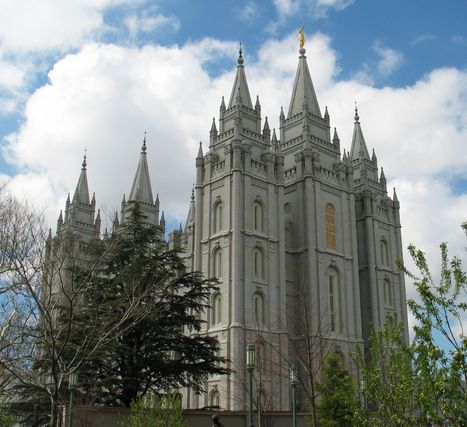 Mormonism is growing with great speed. There are few, however, who understand the limits of Mormonism’s truth claims. Mormon apologists have frequently made assertions which are either false or ungrounded. I have therefore decided to write a series of posts on the Book of Mormon, followed by a critique of Mormonism’s philosophical stances. This post will introduce the book of Mormon.
A man was born on December 23, 1805 in Vermont. He was known for digging for imagined buried treasure with his father and others.[1] He was also known for being a mystic,[2] for his conviction for disorderly conduct in a scam in which he tried to convince locals he had found treasure underground,[3] and for being the translator of golden plates: The Book of Mormon.[4] The man was Joseph Smith, Jr., the founder of the Mormon faith, “The Prophet.”[5] The Book of Mormon, according to the Church of Jesus Christ of Latter Day Saints (the official name of the Mormon Church), is “another witness that Jesus Christ… was and is God’s Son… It supports and verifies the Bible.”[6] If this is true, then the Book of Mormon is as much the Word of God as the Bible. However, the Book of Mormon’s validity as the Word of God is strongly undercut by scientific and historical evidence which contradicts its claims.
The Mormon Articles of Faith describe the Book of Mormon as “a volume of sacred scripture which, like the Bible, embodies the word of God.”[7] The Book of Mormon is supposed to record other prophecies about Jesus.[8] Perhaps the most striking enunciation of the contents of the Book of Mormon is found later in the Articles:
The Book of Mormon is a divinely inspired record, made by the prophets of the ancient peoples who inhabited the American continent for centuries before and after the time of Christ, which record has been translated in the present generation through the gift of God and by His special appointment. The authorized and inspired translator of these sacred scriptures… is Joseph Smith.[9]
Furthermore, the arguments for the authenticity of the Book of Mormon often parallel those arguments used to justify the Bible: it is said to be “internally consistent,”[10] prophetically fulfilled,[11] and supported by archaeology.[12] Yet there are also arguments unique to the Book: it was certified as genuine by three men who signed a statement confirming they witnessed the translation of the Book,[13] eight other witnesses claimed to have seen the gold plates from which the Book was purportedly translated,[14] and the ethnic background of Native Americans is said to be Israelite, which would demonstrate the Book’s truth.[15] It is clear that the Book of Mormon is the absolute bedrock of Mormon faith. If the evidences for the Book do not hold the evidential weight required to confirm its truth, then Mormon faith is undone.
The Book of Mormon’s veracity hinges on the claim that the lost tribes of Israel came to America, settled there, and wrote their history on gold plates which Joseph Smith later translated. Such claims at the time of Joseph Smith seemed irrefutable; they simply couldn’t conceive of technology which could test such ideas. Today, however, such technology is available. Unfortunately for Joseph Smith and the Mormon Church, the evidence runs contrary to what the Book of Mormon claims.
Over the coming weeks, I’ll investigate each of these claims in turn, while finding them wanting. The next post will demonstrate that the Book of Mormon cannot be true based upon a genetic analysis of Native Americans. Future posts will argue that the Book of Mormon does not reflect ancient near eastern writing and that the Mormon concept of God is philosophically untenable.
[1] Walter Martin. The Kingdom of the Cults (Bloomington, MN: Bethany, 2003), 197; Jerald and Sandra Tanner, Mormonism: Shadow or Reality? (Salt Lake City, UT: Modern Microfilm Company, 1972), 32.
[2] Martin, Kingdom, 197
[3] Wayne L. Cowdrey, Howard A. Davis, and Arthur Vanick, Who Really Wrote the Book of Mormon: The Spalding Enigma (St. Louis: Concordia, 2005), 395f.
[4] Martin, Kingdom, 201.
[5] Ibid., 197f.
[6] The Mormon Church, “Frequently Asked Questions,” The Church of Jesus Christ of Latter Day Saints, http://www.mormon.org/faq/#Book+of+Mormon|question=/faq/what-is-book-of-mormon/ (accessed October 14, 2010).
[7] James Talmage. A Study of the Articles of Faith (Salt Lake City, UT: The Church of Jesus Christ of Latter-day Saints, 1976), 251.
[8] Talmage, Articles of Faith, 252.
[9] Talmage, Articles of Faith, 255.
[10] Ibid, 278-279.
[11] Ibid, 274-275.
[12] Ibid, 283-293.
[13] Ibid, 270.
[14] Ibid, 271.
[15] Ibid, 283.
Image Credit: http://commons.wikimedia.org/wiki/File:Slc_mormon_tempel.jpg
SDG.
——
The preceding post is the property of J.W. Wartick (apart from citations, which are the property of their respective owners) and should not be reproduced in part or in whole without the expressed consent of the author. All content on this site is the property of J.W. Wartick and is made available for individual and personal usage. If you cite from these documents, whether for personal or professional purposes, please give appropriate citation with both the name of the author (J.W. Wartick) and a link to the original URL. This blog is protected by Creative Commons licensing. By viewing any part of this site, you are agreeing to this usage policy.

 J.W. Wartick - Reconstructing Faith
