Current Events
Movie Review: Courageous

I have a new post coming up on this movie in which I reflect on the movie again and point out many of the flaws I missed in writing this review. For now, I hope readers will be satisfied with this link (PDF) that shows some of the issues I have with the movie.
I loved this movie. That said, Courageous is a movie that many people will dislike. First of all, it has a strong Christian message. That alone will alienate many viewers. It also tugs at the heartstrings in very intentional ways. It’s a thriller with a heart. Again, some people will groan about this. There are no big name stars, no extensive CG, no 3D effects.
So why do I say I love this movie? Mostly because of those very things. The movie pulls no punches. People struggle with various sins, they struggle with reconciling their faith and lack of success. They struggle with sorrow. These are people in real lives, living real experiences, real trauma.
The film starts off with a bang, a man fills up his pickup’s tank at a gas station. He steps away for a moment and another man jumps in his truck and drives off. The man chases, leaps into the driver side window, and holds onto the wheel. They fly down the road, the owner of the vehicle clinging on for his life. Finally, he’s thrown from the side, they crash, and the thief runs away, leaving the man and his car. Why did he give chase, risking his life to save a car? Turns out his baby is in the back seat. After the police get the story–and it turns out the man is, himself, a police officer–they drive off. One officer, Adam Mitchell, asks the other, Shane Fuller, whether he would have held onto the wheel. Their answers set the stage for the rest of the movie.
What does it take to be a man? What makes a good father? Is being “good enough” good enough? These are the questions Courageous deals with, among others. The film has several different story paths. There are essentially 5 main characters, and each has a story to tell. None of their stories feel rushed or incomplete.
The acting is also phenomenal. The characters feel very believable, and there are several scenes which highlight each actors’ abilities. The movie is very, very serious. The themes explored are uncomfortable in many ways, and challenging. But the film does a great job breaking up the tension with humor. Several scenes are scattered throughout that ease off the gas pedal enough to let viewers relax and just enjoy the film. It’s action packed, but it won’t keep you from getting the message of the movie.
And ultimately, that is what Courageous is about: a message. Whether viewers respond to the message or not will largely impact their enjoyment of the film. But one thing that all viewers will be able to take a way is that it does take real courage to step up and be a man. Rather than hiding from challenges, we–and here I mean men and women–need to face them. And again, the film doesn’t leave us with just that plea. Rather, it frankly says there is no way to do this without God. Viewers are therefore challenged in numerous ways after viewing Courageous. They’re challenged to be better fathers, to be better Christians, to seek out those in need, to admit their faults, confess them, and turn to God.
I encourage anyone to see this movie, whether fathers, mothers, sons or daughters. It’s not only a movie with a message, it’s just plain good film. The action is fast, the characters are enjoyable, and viewers can’t helped but get sucked in. See this movie!
“…choose for yourselves this day whom you will serve… But as for me and my household, we will serve the LORD.” – Joshua 24:15a, c.
SDG.
——
The preceding post is the property of J.W. Wartick (apart from citations, which are the property of their respective owners) and should not be reproduced in part or in whole without the expressed consent of the author. All content on this site is the property of J.W. Wartick and is made available for individual and personal usage. If you cite from these documents, whether for personal or professional purposes, please give appropriate citation with both the name of the author (J.W. Wartick) and a link to the original URL. This blog is protected by Creative Commons licensing. By viewing any part of this site, you are agreeing to this usage policy.
Really Recommended Posts 9/23
 The World’s First Talking Chair Shows Up in the UK– one of my favorite websites, No Apologies Allowed, has recently featured a comic on Dawkins’ failure to man up and meet William Lane Craig in a debate on the existence of God. Given the absolute trouncing Craig gave to Dawkins’ buddy, Sam Harris, it’s not surprising Dawkins is hiding as far from this debate as possible.
Thinking Christian is another site I follow closely, and he recently had two fantastic posts. The first is a review of the Intelligent Design movie, “Metamorphosis.” I recently purchased the film but have yet to watch it. I anticipate it greatly. The second post points out some pretty interesting aspects about how the “person” status of slaves was revoked–just as people now revoke the unborn’s “person” status. Check out his post, “Non-Persons Yesterday and Today.”
Holly Ordway over at Hieropraxis has another interesting post which reflects on why we should be “Reclaiming Story for Christ.” Holly has a ton of awesome posts, and I highly recommend her site.
“God is Still Holy and What You Learned in Sunday School Is Still True: A Review of ‘Love Wins'” by Kevin DeYoung. I think the title says it all.
Randy Everist over at “Possible Worlds” has a fun post reflecting on the “Worst Objection to the Kalam Cosmological Argument.” For some reason I can’t get a direct link, so simply go to his site http://randyeverist.com/ and scroll down.
Readers should recognize that I’ve also been focusing on the Kalam recently, and can check out my more recent posts on the topic: Dawkins and Oppy vs. Theism: Defending the Kalam Cosmological Argument; “The Multiverse Created Itself” and “Who Made God after all?”- The Kalam Cosmological Argument
Do you like Biblical Archaeology? I do! Jason Dulle over at Theo-sophical Ruminations has featured another post in his series on the topic. This one features the ossuary of Caiaphas.
Image Credit:
On September 11th, 2001, harmless things became fearful
 There is a day that is burned into the memory of a generation–a day in which so many things we thought were harmless were turned against us. On September 11th, 2001, the United States was attacked by terrorists who flew planes into our buildings. The World Trade Center collapsed as we watched. We listened with pride about the men and women on United Airlines Flight 93 who died in order to prevent another attack.
We found out later box cutters were used to take over the airplanes. It was airplanes–a mere form of transportation–which were used to cause so much destruction. Harmless things became weapons.
But what does it all mean? How are we to come away from such an event unscathed? Something as simple as a box cutter was used against us. Can we trust anything? Is the person who invented the box cutter to blame? What about the manufacturer? What of the airplanes? Should we never fly again?
I can’t help but think about the ultimate when I am faced with the immediate. And the ultimate leads me to think of God. God created our universe, and as He created, He called each new creation “good” (see Genesis 1:4ff). But bad things started happening fairly quickly. Sin entered the world, and it wasn’t long before we had genocides, racism, hatred, terrorism, hunger, and you name it. The evils perpetuated by man would take too long to enumerate, and we can easily think of more.
Ultimately, God created the world as “good.” It was we who turned these good things against each other, it is we who actively seek to hurt, harm, and destroy each other. It is our free will that has turned things which are good into things used for evil.
On this 10th anniversary of 9/11… I sit back and ponder such things. It’s easy to throw blame around when we think about evil. It would be easiest to blame God. “Why don’t you prevent these evils, God?” But then we forget about the kinds of things God made, and how He only made them good.
The question is not: “Why did God create these things [free will, among others]?” The question is “Why have we used these things for evil?”
Links
“Are We All Moral Monsters?” Clay Jones looks at how 9/11 has awakened us to mortality in new ways.
Simply Incoherent– Christopher Hitchens argues that 9/11 is evil. But on his ontology, evil makes no sense.
9/11 ‘Full cognitive meltdown’ and its fallout
From Ground Zero to 10 Years Later–September 11, 2011– a reflection on 9/11
Did God Allow the Attacks on 9/11 for a “Greater Good”?– A post writing against ‘greater good’ theodicies. Not sure I agree entirely, but I think there are some great difficulties with the ‘greater good’ theodicy which Erik Manning draw out.
Where was God on 9/11?– A reflection on 9/11 along with a point-by-point critique of Rabbi Kushner’s response to 9/11.
Do all roads (and flights) lead to God?– A critique of religious pluralism.
Two Ground Zeros– From the horrors of 9/11 to the hope of Christ.
Suffering and the Cross of Christ– Christ helps us explain suffering.
America After 9/11, Is Religion Evil?– Is it?
Atheism, Evil, and Ultimate Justice– God will provide ultimate justice.
Ground Zero: Why truth matters more than preventing another 9/11 style attack
SDG.
——
The preceding post is the property of J.W. Wartick (apart from citations, which are the property of their respective owners) and should not be reproduced in part or in whole without the expressed consent of the author. All content on this site is the property of J.W. Wartick and is made available for individual and personal usage. If you cite from these documents, whether for personal or professional purposes, please give appropriate citation with both the name of the author (J.W. Wartick) and a link to the original URL. This blog is protected by Creative Commons licensing. By viewing any part of this site, you are agreeing to this usage policy.
Really Recommended Posts 9/4
“An Open Letter to Young Christian Apologists” over at “Thomistic Bent.” It is pretty self-explanatory: the post says many things to us youngsters!
http://humblesmith.wordpress.com/2011/08/30/an-open-letter-to-young-christian-apologists/
Geocreationism–a site about old earth creationism, theistic evolution, and refutations of young earth creationism. This site recently had a major, major makeover and you must check it out.
http://www.geocreationism.com/index.html
“You Skim, You Lose!” at InChristus by Paul D. Adams–this post briefly discusses our society’s tendency to blow through things without really reading them and then draws the discussion to the book of Proverbs.
http://inchristus.wordpress.com/2011/08/31/you-skim-you-lose/
From Jewish Worldview- A Plea to Atheists: Pedophilia is next on the Slippery Slope; Let us turn back before it’s too late–a post which talks about atheism as bereft of ontology for values.
http://www.jewishworldreview.com/0811/atheists_pedophilia.php3
Isn’t it arrogant and immoral for Christians to evangelize? Isn’t it? Find out:
“Diamonds in the Dust” –an upcoming novel about a woman’s life torn apart in South Africa. It looks quite promising. I’ve been promised a review copy and I’m looking forward to reading it!
Was Jesus Real? -Arthur over at Cold and Lonely Truth writes about this common objection to the existence of Jesus with lucidity and, more importantly, sources. Check it out:
Harry Potter and the Deathly Hallows: Part 2, A Christian’s thoughts
 I’ve made no secret of the fact that I’m a huge Harry Potter fan. I think the books are phenomenal, and the movies have often been just as great. What interests me, as usual, is how the Christian can relate to this extraordinarily popular series.
Harry Potter and the Deathly Hallows, Part 2 released over the weekend. I was at the midnight showing with my fiancee. The best description I can give of our feelings when it ended is this: bittersweet. The series is over. The books and movies are no longer coming. This is the end! Or is it?
THERE ARE MAJOR PLOT SPOILERS BELOW
And that is the feeling I got throughout the movie. Is death the end? The movie takes little time to get going. Soon, viewers are thrust into the epic final conflict in which Harry Potter rushes to destroy all the horcruxes (pieces of the evil Lord Voldemort’s soul) in order to finally defeat his enemy. Things get going fairly well. Harry shows up at Hogwarts again with resounding support. He quickly uses his allies to take back the school and set it up for a final showdown with evil. As his friends battle the forces of darkness closing in around them, Harry searches frantically for another horcrux while Hermione and Ron locate a basilisk fang–one of the only things capable of destroying these pieces of soul.
But once both Harry and Hermione/Ron have achieved their missions, the goal is still only close at hand. They must destroy Nagini, Voldemort’s snake (and another horcrux). They immediately set off to find the snake and witness the murder of Professor Snape–who turns out to be a double-agent after all. The fact that he killed Dumbledore turns out to not show his final betrayal, but the depth of his loyalty. But from Snape’s dying memories, Harry gleans the truth: Harry himself is an unintentional horcrux. When Voldemort killed Harry’s parents, he sealed part of his soul inside Harry. So Harry must die if evil is to be defeated.
Harry goes willingly to his death. He meets Voldemort among his followers, and allows himself to be killed. But it turns out that this is not the end. Dumbledore had sealed the Resurrection Stone inside a gift to Harry. This stone allows Harry to speak with his dead friends and family. Harry, once dead, is made alive once more after a discussion with Dumbledore [thanks to an astute reader for making this point more clear]. Harry awakens in a pivotal scene in which Voldemort is announcing his victory over all wizards, and he and Voldemort battle in a final, epic showdown in which Harry overcomes evil once and for all.
Christians reading this should be sensing some interesting underlying themes here. Harry Potter is innocent–he’s thrust into the events upon him. He willingly goes to his death, knowing it is literally the only way to defeat evil. And, once he’s died, he is resurrected, back to finally bring about his victory over Voldemort. Yeah, it seems Rowling might have borrowed a bit from the story of Jesus.
What explains the astounding popularity of the Harry Potter series? J.K. Rowling has weaved a series of books which tie together in sometimes amazing ways. What seem like random details and “fluff” in one book turn out to be of immense importance later in the series. Each book, mostly self-contained, features a different thrust. Yet they are all tied through broad overarching themes. But could it be that there is another theme, oft-ignored in discussions of Harry Potter? It seems so. The climax of the series occurs in the death and resurrection of Potter. The Christian story culminates in the same. Potter is fiction, but his tale, so wonderfully complex, leads us to the story of Christ. He had to die for the sake of all–Voldemort would have overcome. Jesus, similarly, had to die for the sake of all–lest sin and the devil overcome.
This parallelism with Christianity was not revealed until the final book, yet perhaps it can explain how Rowling was able to make the conclusion to her epic so satisfying. She was telling a story we all knew. She was telling us, in a very different way, what must happen for evil to be overcome. Her story is fiction, Christianity’s story is real. What we want to believe in (Harry Potter) is what many of us do believe (Christianity). Whether intentional or not (and I think it was intentional), Rowling wrote a story which resonates deeply with Christianity’s own. And her fiction points us towards the greater reality.
Christians, I encourage you to read and watch Harry Potter. The books and movies are just phenomenal pieces of literature and filmography. Think of the themes that are woven throughout the books. Think of the final showdown between good and evil. And think of Jesus while you do so. You’ll find that within Potter, we discover hidden truths of our own faith.
But hey, you don’t really have to think of all these themes. And it’s highly questionable whether these parallels are intentional or not. It’s okay to just enjoy the movies anyway. My point is that, as a Christian, I saw these themes. And I found it thrilling.
SDG.
——
The preceding post is the property of J.W. Wartick (apart from citations, which are the property of their respective owners) and should not be reproduced in part or in whole without the expressed consent of the author. All content on this site is the property of J.W. Wartick and is made available for individual and personal usage. If you cite from these documents, whether for personal or professional purposes, please give appropriate citation with both the name of the author (J.W. Wartick) and a link to the original URL. This blog is protected by Creative Commons licensing. By viewing any part of this site, you are agreeing to this usage policy.
Refutation of Zeitgeist the Movie/farce.
One popular atheistic movie is “Zeitgeist,” a movie which purports (basically) to show that Christianity is made up , among other things.
As Peter Van Inwagen once said, it’s better to be right than original (irony? he wrote this in An Essay on Free Will), so I suggest anyone interested in refuting this farce of a “documentary” should go listen to Glenn Peoples’ podcast on the topic, found: HERE. Also, check out this great article which breaks Zeitgeist down point-by-point: HERE.
Those interested enough to check it out, I recommend watching the documentary, then listening to the podcast. Peoples really does an excellent job taking it down.
Do I reject secular government?
Recently, Austine Cline, of the about.com breed of atheists, has offered this critique of my position on Christian voting/acts in government. My own post on the topic can be found here. I would like to clear up a few things about the position I hold. These clarifications will be found in numbered italics throughout the post below.
1) I accept the authority and respect the secular government.
Cline started his caricature of my position immediately with his title. The title of his entry is “J.W. Wartick: Christians Should Reject Secular Government.”
Let me make this clear. That is a position I deny, and in fact oppose. The Apostle Paul wrote in Romans 13:5-7 that “it is necessary to submit to the authorities, not only because of possible punishment but also as a matter of conscience. This is also why you pay taxes, for the authorities are God’s servants, who give their full time to governing. Give to everyone what you owe them: If you owe taxes, pay taxes; if revenue, then revenue; if respect, then respect; if honor, then honor.” Being a Christian who views the Bible as a source of authority, I agree wholeheartedly.
2) My previous post on the government was intended as a wake-up call to Christians who are lax when voting on moral issues.
One who reads my previous post on this topic should be able to discern that I was not advocating a theocracy, but rather a theo-centric approach to voting. I was arguing that Christians should vote their beliefs, not what they think is most “neutral.” Cline took that and ran with it, and, whether intentionally or not, used his post to try to portray me as some kind of fanatic advocating the overthrow of government in favor of a theocracy. Again, such a position may exist somewhere, but it is not the position I hold.
3) The authority of government comes from God.
Again, Paul makes this clear in Romans 13:1 “Let everyone be subject to the governing authorities, for there is no authority except that which God has established. The authorities that exist have been established by God.”
Obviously, this won’t be convincing to the atheist. But this is intended to rebut a critique from Cline, who wrote, “[Wartick’s argument] presumes that the government has any authority to prevent ‘unrepentant sin’ and ‘unbelief’ in the first place.”
Clearly, if the government gets its authority from God, then it would have the authority to do this. Cline is an atheist, so he rejects such a structure of authority. However, being a Christian, I don’t see any reason to reject it. Yet the focus of Cline’s critique was based upon this premise (in fact, he restates it later “On what basis does Wartick think he has the right to enlist the government to help him prevent other Christians from doing things which he thinks is sinful but they don’t?” and then again in regards to other religions).
My answer to these questions is simple: the government gets its authority from God, so it does have the authority to do these things. Cline presented no argument to the contrary, nor did he offer a positive argument for secular government, other than a brief note that Christians established it to begin with so they would stop killing each other (according to Cline). So Cline’s counter-argument merely begs the question by assuming a secular authority structure. If there were no God or if the authority of the government were not from God, then he would have a valid critique. But criticizing my argument in this manner does not serve to do anything but beg the question against the Christian theist, particularly because my original post was written to fellow Christians (hence the closing line, “Christians, why are you politically atheists?”).
4) Cline misrepresented my argument.
As I’ve already hinted at, Cline cherry-picked portions of my post, and then made a title which seems to aim more towards sensationalism than any kind of respectful debate. I never argued Christians should reject secular government; I did argue that Christians should not be atheists themselves when it comes to politics. This kind of fear-mongering about Christians in politics doesn’t serve anyone but those who are already fanatics themselves–to the other extreme.
SDG.
The end of it all…
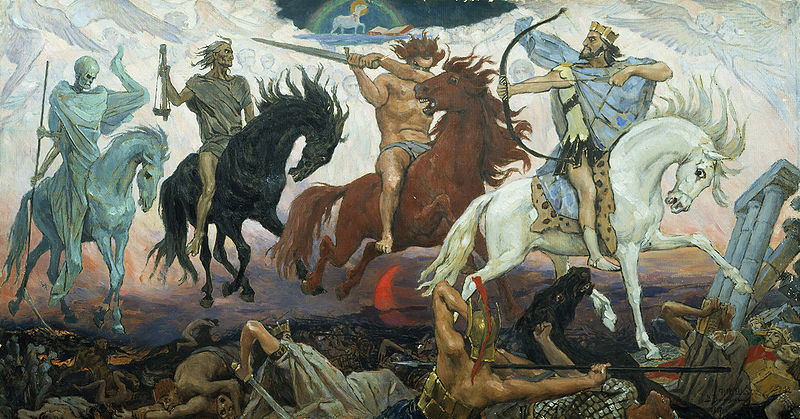 There’s a lot of confusion about endtimes in our world. It isn’t helped by the fact that there are false prophets springing up all around us, trying to tell us that which is to come. The recent controversy over Harold Camping’s prediction that the world would end on May 21st has me thinking about the study of end times (eschatology).
It’s an area I admit I haven’t studied much. The subject is confusing. There is a staggering array of views about what will happen in the end. The book of Revelation, from which we draw much of our knowledge over what will happen in the end times, can be greatly confusing to both the uninitiated and the scholar.
There are two major themes upon which I’d like to focus: knowledge of the end and our behavior at the end.
1) Knowledge of the end
Thinking about the apocalypse–the end of the world–is a tough issue. Like I said, there is a lot of diversity on the subject. As such, it is important for Christians to look to the Bible to see what we can know about the end. The key is to remember that must always go back to the Bible to see what it says about a subject before we believe what someone tells us it may say.
We are warned by Jesus in Matthew that there will arise false prophets (Matthew 24:24). Harold Camping is one such false prophet. He has distorted the truth of Scripture to gain followers.
Perhaps the most telling verse in the Bible which speaks against us being able to know when the end will come is Matthew 24:36, in which Jesus Himself says “But about that day or hour no one knows, not even the angels in heaven, nor the Son, but only the Father.” If that’s true, then how would any other human know? Not even Christ, in his state of humiliation, could tell us when the last day would come!
The bottom line is that we can’t know and we won’t know when the last days have arrived–not until Jesus Himself is here.
2) Behavior at the end
Suppose for a moment we are at the last days; what should our attitude be? The resounding chorus in Scripture is that we should be diligent and ready, but we should continue to spread God’s Kingdom. Looking back at the Matthew 24 passage, Jesus tells us, ““Therefore keep watch, because you do not know on what day your Lord will come… Who then is the faithful and wise servant, whom the master has put in charge of the servants in his household to give them their food at the proper time? It will be good for that servant whose master finds him doing so when he returns” (24:42, 45-46).
So our attitude should be one of the watchful servant: ready for Christ to come, but not letting that distract us from the work He has given us. Rather than put up billboards and go around telling everyone the end is nigh, our task is to continue what should be our “business as usual”–spreading the Word, taking care of the needy, and living our lives as Christians.
Conclusion
It is easy to get caught up in the “end times” controversies. I admit that often when I hear of such predictions, I am more diligent than usual in remembering to repent of my sins. But what does that tell me? It tells me that I need to be more diligent about that at all times. For we need to be ready when Christ does come. A life of readiness for Christ means a life of spreading the Good News about Him to all people. It means living a life of repentance and reconciliation to God. We may not know when the end will come, but it is coming–and we will experience it either in this life or the next.
SDG.
Links
Check out this blog post by Austin which discusses the Camping controversy: here.
News article discussing Camping’s befuddlement about his failure: here.
Image: “Four Horsemen of the Apocalypse” by Viktor Vasnetsov, 1887.
——
The preceding post is the property of J.W. Wartick (apart from citations, which are the property of their respective owners) and should not be reproduced in part or in whole without the expressed consent of the author. All content on this site is the property of J.W. Wartick and is made available for individual and personal usage. If you cite from these documents, whether for personal or professional purposes, please give appropriate citation with both the name of the author (J.W. Wartick) and a link to the original URL. This blog is protected by Creative Commons licensing. By viewing any part of this site, you are agreeing to this usage policy.
The Life Dialogue: Information and the Cell
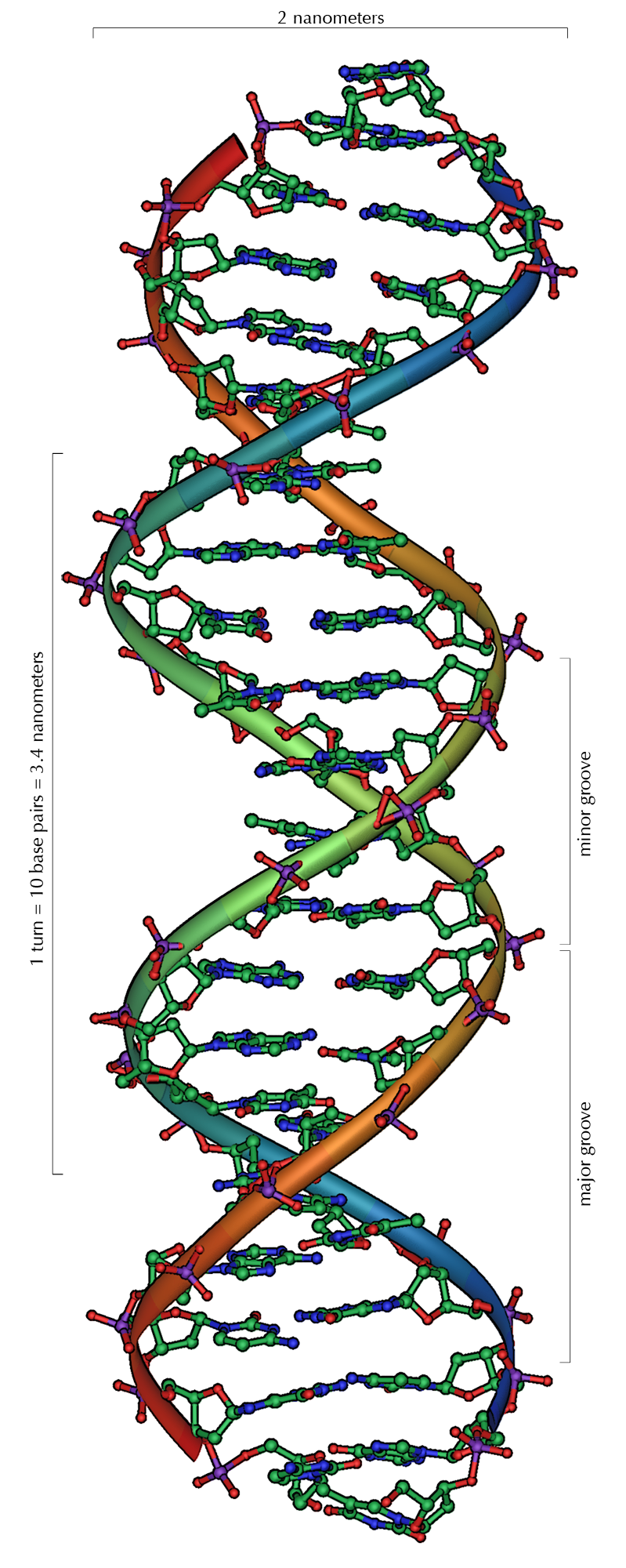 This is part of a series of posts on the “Life Dialogue” within Christianity. Check out other posts in the series here.
It is hard to underestimate the importance of the question: “Are we designed?” I’ve really started to realize the question’s reverberations even within the Christian community. Creationists definitely believe we are designed, as we were brought out of nothing by God into being. But theistic evolutionists often argue that the only design inherent in God’s creation was His plan to bring about sentience through evolution. Yet this evolution is blind and unguided. So on theistic evolutionism, we are not designed. Is there a middle ground? Can we say evolution mostly correct, but we are still designed?
Stephen Meyer argues that there is such a middle ground. In his enormously successful book, Signature in the Cell, he argues cogently for the position that there is more to life than “just matter and energy.” There is also information (85). If that is the case, then whence the information?
Essentially the argument goes as follows:
1) If there is information in our cells, its origin must be explained.
2) There is information in our cells.
3) Therefore, the origin of the information must be explained.
4) There are three possible explanations for information: chance, necessity, or design.
5) Chance and necessity are not sufficient explanations for information.
6) Therefore, the information is in our cell due to design.
In defense of premise 2, Meyer argues that there is information in the cell that we can detect because DNA isn’t simply random amalgamations of enzymes, rather, they are put in specific order so that they can regulate the production of proteins and RNA. Thus, they act as information which regulates activity of the cell.
3 follows from 1 and 2.
Chance doesn’t seem a sufficient explanation because not only is the generation of information highly improbable, it is also specified (it is information set in a certain way). Necessity won’t work because it presupposes information is already present. Therefore, the cell is designed.
To those Christians interested in the Intelligent Design, Theistic Evolution, Creationism debate, I highly recommend Stephen Meyer’s Signature in the Cell.
A response to an attack on this post found here (search “On Intelligent Design”)
SDG.
——
The preceding post is the property of J.W. Wartick (apart from citations, which are the property of their respective owners) and should not be reproduced in part or in whole without the expressed consent of the author. All content on this site is the property of J.W. Wartick and is made available for individual and personal usage. If you cite from these documents, whether for personal or professional purposes, please give appropriate citation with both the name of the author (J.W. Wartick) and a link to the original URL. This blog is protected by Creative Commons licensing. By viewing any part of this site, you are agreeing to this usage policy.
Why are Christians politically atheistic?
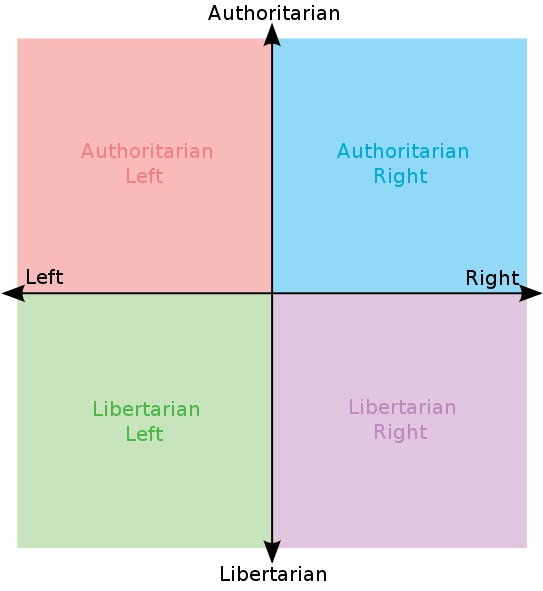 Of note: Atheist Austin Cline has recently linked to my post with his own. He caricatures my argument as saying “Christians should reject secular government.” In fact, I explicitly deny this in my post, as anyone who reads it could see.
I take issue with 3 parts of Cline’s critique. First, he attacks my view that the government can have authority to restrict unrepentant sin. Yet the authority for that restriction is based upon my assumption granted for the sake of this post; that the government gets its authority from God (Romans 13:1). Cline, being an atheist, obviously will reject that basis for authority. He did not outline his own position on the authority of government, so I cannot comment upon it, but it begs the question to assume that government should be secular, and then use that to critique a theo-centric government I explicate below. Second, he caricatures my argument as being a theocracy, which I deny explicitly, see below. Finally, he frames his post in a way that is clearly meant to induce panic, by calling it “J.W. Wartick: Christians should reject secular government.” There is nowhere that I have advocated that extreme position. In fact, that is also something I deny explicitly, agreeing with the apostle Paul in Romans, who said “Therefore, it is necessary to submit to the authorities, not only because of possible punishment but also as a matter of conscience. This is also why you pay taxes, for the authorities are God’s servants, who give their full time to governing. Give to everyone what you owe them: If you owe taxes, pay taxes; if revenue, then revenue; if respect, then respect; if honor, then honor” (Romans 13:5-7).
Recently, I was discussing the death of Osama bin Laden and the topic came up about whether he deserved to die, what role it played, and the like. Interestingly, the conversation opened up a discussion I’ve been contemplating. Namely, Why are so many Christians politically atheists?
Consider the death penalty. It was agreed upon that people can deserve the death penalty. Bin Laden, for example, was said to deserve such a penalty, along with serial killers and many murderers. But then the discussion turned to whether the government should deal out such punishment.
The friend offered following principle as normative for Christians:
1) If (some position such as the death penalty) cannot be justified by purely secular means, then it should not be forced onto others.
My immediate and somewhat snarky rejoinder to this argument was/is “Why?”
Why should I be a Christian in every aspect of my life, but when it comes to politics, be secular? Several answers are possible. For example, it could be asserted that “We (Christians) should not force our views onto others.” I think this is a fairly good response. But whence the principle? Perhaps it comes from the idea of living a Christlike life. But I don’t see anything in the example of Christ which said we had to conform to secularism or take religion out of politics. It would take an interesting argument to say that Christ advocated secularism in the realm of politics.
Or take Paul, for example, who states clearly that the government is God’s servant and doesn’t carry the sword “for nothing” (Romans 13:4). Not only that, but the reason the government carries the sword is in case “you do wrong.”
And what, exactly, is wrong? I think it would have to be obvious that, for a Christian, that which is wrong is defined by that which goes against God’s nature and/or commands. But then it seems as though Paul is charging the government to follow that same standard, not some supposedly neutral standard. I’ve argued elsewhere against the plausibility of atheism as a neutral ground. I think it should be clear that atheism is not neutral in regards to religion; rather, it is against religion.
Therefore, it seems strange to me that secularism is chosen as the grounds for determining politics. Why should I, a theist, choose to be atheistic in my politics? I suppose the accusation could then fly that I advocate a theocracy. But what exactly is a theocracy? It’s a political system in which God rules and the laws are divine commands. I never argued that’s what I would like the United States to turn into. My view is simply that Christians should cast their votes for those positions which are favored by Biblical teaching and against those which are condemned. I don’t see any reason to divorce that which I hold most dear (Christian theism) as something from which I must be divorced when it comes to the ballot box.
Consider the following argument, which is admittedly somewhat consequentialist:
A) A life of unrepentant sin often leads to unbelief. (w=>y)
B) Unbelief is the only sin which condemns people to hell. (If y, then z)
C) Advocating some policy, x, permits or encourages lives of unrepentant sin. (x=>w)
D) Therefore, advocating x by extension opens the way for more unbelief and condemnation to hell. (1-3)
E) Therefore, Christians should not advocate x.
So I’m advocating a theo-centric view of politics, not a theocracy. On this view, one’s theism takes center stage. Sincere belief in everlasting life and death leads Christians to take steps within the law to prohibit behaviors which would lead to lives of unrepentant sin.
How would this cash out? Would we have to be prohibitionists or go around making lying illegal? I think that the answer to this second question is pretty clear. Within Scripture there is no prohibition of drinking alcohol (quite the opposite, in some cases). Rather, drunkenness is prohibited and/or discouraged. With the damage alcoholism has done to our society, I doubt that laws which took measures to prevent drunkenness would be a bad thing. I think the laws which would go into effect based upon the argument above would look mostly like what we have now. Now take the case of lying. While lying is clearly discouraged in the Bible, I don’t see any precedent therein for making it illegal in a broad sense. To be perfectly clear, lying already is illegal in some senses: take perjury, for example, or slander. I think these are derivative of a Christian worldview anyway, and laws against libel, slander, and perjury seem to fulfill the requirements of the above argument.
Reflecting on the ideas about bin Laden, above, it would appear there is another principle as well: that of honoring the image of God in man. Osama bin Laden did not honor that image, and for the blood he spilled, his blood was forfeit. Therefore, in addition to E), I would suggest:
2) The intrinsic value of humans (which only makes sense on theism anyway) is such that we should vote for issues which place honor of this value first.
To nuance it for Christians,
2′) The image of God in humans should be respected, and Christians should vote for issues which respect this image.
Finally, a note on Biblical ethics. It is extremely important for Christians to realize the distinctions between Law and Gospel and practice correct exegesis when it comes to these issues. I favor a Lutheran view with some theonomic tilt, but it is important to note that almost no Biblical scholars believe the Levitical and most of the other laws within the Old Testament are applicable today in any literal sense. But the question for this post is not which laws apply and which do not; rather it is a challenge to my fellow Christians.
So my question remains: Christians, why are you politically atheists?
SDG.
——
The preceding post is the property of J.W. Wartick (apart from citations, which are the property of their respective owners) and should not be reproduced in part or in whole without the expressed consent of the author. All content on this site is the property of J.W. Wartick and is made available for individual and personal usage. If you cite from these documents, whether for personal or professional purposes, please give appropriate citation with both the name of the author (J.W. Wartick) and a link to the original URL. This blog is protected by Creative Commons licensing. By viewing any part of this site, you are agreeing to this usage policy.

 J.W. Wartick - Reconstructing Faith
