Current Events
Harry Potter: A Christian Youth Perspective
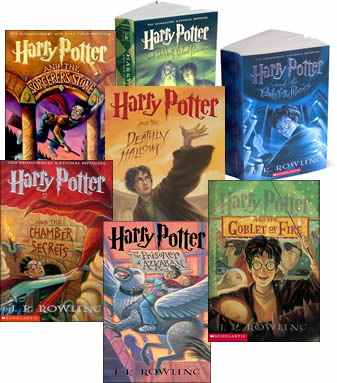 There Will be Spoilers Throughout This Post for the Harry Potter Series.
Alright, maybe I’m stretching it when I call myself a “youth” (I’m 23 now), but I grew up with Harry Potter. Harry was my age when the books came out, and I’ve followed them throughout.
The popularity of the Harry Potter books is undeniable. Few in my generation don’t at least know about the series. The movies are consistently blockbusters, and surprisingly well made.
Christian parents rightly wonder whether these books–which are filled with sorcery, witchcraft, curses, hexes, and the like–are suitable for their children. Let me preface the rest of my discussion with my conclusion: the Harry Potter books are enjoyable literature which will build vocabulary, expand minds, and get children excited about reading.
Synopsis
The series follows Harry Potter through 7 years of his life, starting when he is 11. It is set in modern day England. There are two worlds in the series: the world of “muggles”–those who can’t use magic–and the world of wizards. The wizards go to great lengths to keep their world a secret from any “muggles” who are unrelated to wizards (or in important positions like the Prime Minister). Thus, when the series starts, Harry Potter knows nothing of his wizarding past, having been raised by his aunt and uncle, who hate everything having to do with wizards.
Despite his lack of knowledge about the world of wizards, Harry Potter is himself hugely famous to wizards. He is known as the “Boy Who Lived” because when he was but a baby, an evil wizard known as Lord Voldemort (frequently referred to as “You-Know-Who” or “He-Who-Must-Not-Be-Named”) attempted to kill him and failed. Harry’s parents were killed in the scuffle, but when Voldemort tried to kill Harry, the killing curse rebounded and killed Voldemort instead. Thus, Harry is seen by many as the defeater of the greatest evil wizard of all time. Everyone knows his name; there is a monument to him at his old home; he has a lightning-bolt shaped scar which clearly identifies him, and he knows nothing about this.
Then his life changes when, at age 11, he is invited to attend Hogwarts, a school for wizards. Thereafter, the books follow Harry’s growth as a wizard with his friends, as well as the rumors of and eventual rise to power of Voldemort. It culminates in the final book, The Deathly Hallows, when Harry races against time with his friends to destroy Voldemort. (For a more in-depth synopsis, check out the page here. Check out the links for each book’s plot synopsis on the same page.)
Analysis
The question which has been asked repeatedly within the Christian community is “Are these books appropriate for my children?”
I started reading Harry Potter when I was 11 years old. As each book came out, I devoured it immediately (except for a brief hiatus before book 5). The books do have very scary, and even disturbing, moments. Voldemort is an evil wizard, and he is portrayed as such. He orchestrates murders and he and his cohorts murder with an attitude of nonchalance. The books also have many scenes of “kids being kids”. Harry and his best friend, Ron, often cheat off their mutual friend Hermione in order to complete their homework. Ron’s older brothers are pranksters of the highest level, whose very lives are dedicated to perfecting their antics. Rivalry between youths is also portrayed, as Hogwarts features four “Houses” which compete for top honors at the end of each year. The books also pull no punches in the realm of “magic”; the children are engaged in hexes, curses, charms, astrology, and the like.
Suggestions for Parents
So what should a Christian parent do with this series? It is impossible to issue a blanket statement that will apply to all parents. Instead, I want to offer several suggestions and comments.
First, there are few books which will keep children and youths reading as well as the Harry Potter Series. It has helped to increase literacy in a generation from which appreciation for books seems to be disappearing. (See the interesting article here for some insight on this phenomenon.)
Second, the Harry Potter books distinguish between good and evil to an extent that much other literature does not. There is no doubt that Voldemort is evil and that Harry and friends are the “good guys.” However, this leads me to the third point: the series acknowledges that no human is perfect. Everyone, from Harry’s father to Dumbledore (headmaster of Hogwarts) has things in their past they regret. I don’t think this is a fault of the series (though some people do–arguing that this diminishes the distinction between good and evil); rather, it brings to light something we–as Christian in particular–acknowledge is true: all people are sinners in need of salvation (this is not a theme developed in the books).
Fourth, despite the use of magic of all kinds, there remains a clear distinction between acceptable practice and unacceptable practice. Some have feared that Harry Potter would increase the interest in witchcraft and wizardry in youths. I personally think this is ludicrous. But that leads me to the fifth point.
Fifth, you as parents are responsible for teaching your children the difference between reality and fiction. My parents did a fantastic job on this. Reading Harry Potter never made me want to explore witchcraft, alchemy, or astrology. I knew such things were to be avoided. That is, I could distinguish between reality and unreality. I think that too often, Christian parents in particular underestimate the power of youths to make this distinction. Yet few parents would object to their children reading Star Wars. Perhaps it is the use of “witch” and “wizard” which makes parents leery. But, in my opinion as a Christian who grew up reading Harry Potter, there is no need to fear… unless children have not been taught to realize a difference between fact and fiction.
Sixth, parents need to be informed. When their children are interested in something like Harry Potter, it is too often that parents read only the negative sources. What better way to judge whether something is appropriate for your children than by reading the book yourself?
Questions
Kenneth Samples (cited below) argues that there are three major questions for parents to ask about Harry Potter (and other books). First: “How can Christian parents test their decisions in terms of Scripture, conscience, and reason?” Christian parents should always turn to these sources to figure out whether something is appropriate for their children.
Second: “Is it appropriate to use dark and occult images in fantasy literature to convey a narrative in fantasy literature?” Samples notes that C.S. Lewis and J.R.R. Tolkien both use these images to convey their message. Are these appropriate usages? (I think yes, but the key here is that there is no quick and easy answer for everyone.)
Third: “Does the book use these images at literary devices to propel the broader story, or, rather to promote occult involvement?” Samples argues this is a critical question. If the Harry Potter books simply use the occult images as a literary device, then it seems like there is no problem. The Harry Potter books do seem to be in the former category rather than the latter.
Fourth, “What is the overarching worldview reflected in the books and how does it compare or contrast with the Christian worldview?” This can spur discussion on books and series that aren’t even intended to convey the Christian worldview.
Conclusion
I said earlier that there is no fast and easy way to say “yea” or “nay” for all parents to a series like Harry Potter. I hope that my comments will help concerned parents figure out where to stand on the series. I want to make my own view absolutely clear, here at the close. I think the Harry Potter books are fantastic. They feature memorable characters and exciting plots. Not only that, but they get kids interested in reading. They build vocabulary (I remember personally grabbing a dictionary once in a while when I was younger and reading Harry Potter). The books distinguish between good and evil while maintaining the reality no one is perfect. They will spur discussion. Ultimately, I recommend Harry Potter to parents, but with the qualifier that parents have taught their children about fact and fiction and that they are willing to engage their children in discussion, which may (probably does) require reading the books themselves.
Source
Samples, Kenneth. “To Read or Not to Read: Harry Potter and the Philosopher’s Response.” Straight Thinking Podcast. 10/20/2009.
———
The preceding post is the property of J.W. Wartick (apart from citations, which are the property of their respective owners) and should not be reproduced in part or in whole without the expressed consent of the author. All content on this site is the property of J.W. Wartick and is made available for individual and personal usage. If you cite from these documents, whether for personal or professional purposes, please give appropriate citation and provide a link to the original URL. By viewing any part of this site, you are agreeing to this usage policy.
Kamal Saleem: A Muslim Cries Out to Jesus
Check out this awesome video of a former Muslim’s religious experience of Christ our Lord:
“Black Swan”: A Christian Analysis
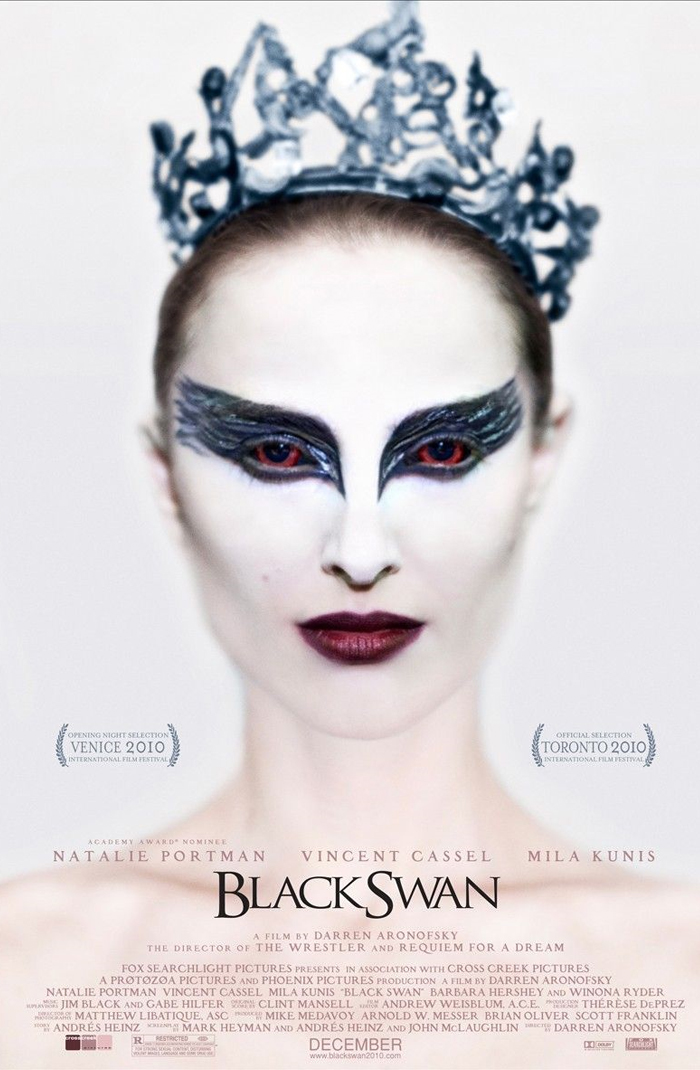 “Black Swan” is, in a word, “disturbing.” There is no doubt that the film is well made, and that Natalie Portman pulls off a stunning performance. Rather than reviewing it as a movie worth seeing, I thought I’d comment on it from a Christian perspective. In what follows, there will be spoilers.
What kind of thoughts can the Christian take away from a movie like “Black Swan”? I think the most obvious point is that the Christian can reflect on the nature of sin. What will things of this world drive us to? In her pursuit of perfection, Nina (Natalie Portman) is driven to the depths of her soul’s darkness. She is lead to violent fantasies (it’s unclear as to whether much of the violence is real or not) and to sexual depravity. It all culminates in her self-destruction, sacrificing her life for the “perfect” performance of “Swan Lake.”
I think we can see similar themes in our own lives as Christians. We often pursue worldly passions–among them a well-paying career; a sexual sin; an addiction; or the like–rather than focusing on that which matters: our Lord. Yet Christians even have this very idea built into the fabric of their belief system: we are sinners, with the capacity for great evil within us. Indeed, we are “originally sinful” and “totally depraved”, by nature we are sinful and unclean. “Black Swan” poignantly portrays this. An innocent girl is driven to the depths of hell in her pursuit of the world. It’s maddening, it’s horrifying, it’s disturbing. Despite this, in a way, the story draws us in. We can relate to the obsession with the world in ways that should scare us. Perhaps that’s why I found “Black Swan” so frightening. It wasn’t a horror movie by any means–it has its thrills and chills–but mostly, the fear is of the reality that could be. Could we become the “Black Swan” ourselves?
Now, I’m not suggesting “Black Swan” is a Christian film. It has sin of almost every imaginable kind portrayed, sometimes graphically. My point is that Christians can take away a message from the movie. The pursuit of the world will lead only to darkness… a “perfection” which can only destroy.
———
The preceding post is the property of J.W. Wartick (apart from citations, which are the property of their respective owners) and should not be reproduced in part or in whole without the expressed consent of the author. All content on this site is the property of J.W. Wartick and is made available for individual and personal usage. If you cite from these documents, whether for personal or professional purposes, please give appropriate citation and provide a link to the original URL. By viewing any part of this site, you are agreeing to this usage policy.
To Save a Life: Movie Review
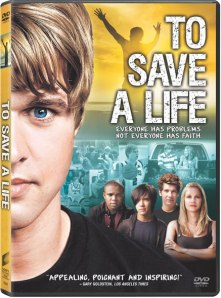
“To Save a Life” is a Christian movie (I imagine some fleeing already, but read the full review!) about some tough issues: teen suicide, self-harm, bullying, and more (no spoilers) come up in this film.
The movie starts with Jake Taylor attending the funeral of a friend from his younger years–a friend with whom he has lost touch. The friend committed suicide, and this leads Jake to seek answers to a number of questions and “Could I have done something?” is paramount among them.
The movie also explores the themes of faith as Jake interacts with a youth pastor while exploring questions about Christianity.
What makes this movie resonate with me is how accurately it portrays a number of aspects of teenage life. I’m very serious here. I knew people like Jake and his friends, and I also knew people who resembled those in the youth group scenes. The movie doesn’t hold punches, there are teens out to sleep with as many people as possible, there are those who have left the faith and are hostile to any mention of it, there is a persistent caricature of Christian belief which the teenagers think they have figured out, even within the Christian youth group there are “pretenders”–only there because they have to be (or want to hang out with friends).
The issues the film covers are, as mentioned, not easy. Teen suicide, cutting/self-harm, and the like are all portrayed. There are answers found, but they are not easy. They provide challenges to viewers to step out of their comfort zone and realize there are more important things in life than the mundane. Viewers will reflect on the movie for some time afterwards, wondering what it is that I should or could be doing.
Now, I mentioned before it is a Christian movie. Often, unfortunately, this means the acting is terrible. Not so with “To Save a Life.” I was engrossed in the film from the first minute. Jake (played by Randy Wayne) is perfectly cast. He poignantly portrays a troubled teenager reaching out for answers. The acting is not overdone. In scenes in which people are fighting, it is realistically uncomfortable; it feels too real. Watchers will have to fight not to pick out people they knew in the characters throughout the film. And this leads me to my next point:
It was stunning to me to watch the movie and realize how close I have been to being any number of these people. I was very close to being a youth who left the faith because of unanswered questions. I thank God that He provided people with answers around me–and people who were willing to say they didn’t know the answers, and point me in a direction to find them.
I watched the movie with my parents this week. My dad is a pastor and he wanted me to evaluate it for its use in a youth group setting. I can say that without a doubt I think this movie should be viewed by youth groups, but it should also be watched by concerned parents with their children. It will provide a springboard for discussion on some difficult issues.
I very highly recommend “To Save a Life.” It will resonate with some viewers in ways that simple lectures or discussions cannot. It presents a strong Christian message, calling youths to strengthen their faith and be willing to reach out to those who are hurting–a message we would do well to take to heart in a hurting world.
——
The preceding post is the property of J.W. Wartick (apart from citations, which are the property of their respective owners) and should not be reproduced in part or in whole without the expressed consent of the author. All content on this site is the property of J.W. Wartick and is made available for individual and personal usage. If you cite from these documents, whether for personal or professional purposes, please give appropriate citation and provide a link to the original URL. By viewing any part of this site, you are agreeing to this usage policy.
Dawkins vs. Craig: Deaf, or blatantly misrepresenting theism?
I stumbled on this video from the recent debate between William Lane Craig et. al and Richard Dawkins et al. which occurred in Mexico. It was via Doug Geivett’s blog (he was another participant in the debate). The video is cut to show Craig’s comments alongside Dawkins’ rebuttals. It seems as though Dawkins either completely missed what Craig was saying, or he is blatantly misrepresenting the case on the other side. I tend to suspect it is the latter, as in the writings of Dawkins which I have read, he doesn’t strike me as the most intellectually honest fellow. Judge for yourself:
The whole debate can be found here.
Thoughts on “The Blind Side”
I recently watched “The Blind Side” in a local dollar theatre. I know, it’s out on DVD/Blu-Ray. I am slow to see movies sometimes!
Anyway, I thought it was an absolutely wonderful movie. It raised some questions in my mind:
1) What can we do as Christians to change the situation of inner city violence, drugs, and other crime?
2) How are Christians to live in society? How can we step up and become leaders in our communities for change and reform?
3) What can I (specifically, but anyone can apply this to him/herself) do to help the poor and downtrodden in our society?
It was a very powerful movie, with Christian undertones. It has lead me to seek answers to these questions. I’d appreciate any feedback/suggestions. What do you think we can do?
What a Surprise! Christianity defamed, Islam respected. And, guess what, the Bible likely older than the “experts” thought
Alright, school has started again. I managed to crank out at least a few things over break, and I have a number of 1/4-1/2 completed articles that I’ll hopefully finish some time, but for now back to easy posts, like random news stories.
Before we get into that though, go to Google (or your Google search bar) and [note: some curse words and offensive language will show if you follow these instructions, if you would not like to be subjected to that, simply read my article as I’ll describe it] type in “Christianity is…” and check out the suggested searches. Wow, those are some strong terms! “Christianity is b*******” is the first suggestion. Others include “Christianity is not a religion” [what?] and “Christianity is a lie.” That’s some strong stuff. Not very respectful of Christianity, obviously. But now try that same thing for “Islam is” and look at the suggestions. Oh wait, there are none. It’s perfectly fine to defame, attack, insult, and otherwise attack Christianity, but try to talk about Islam and you’ll come up empty. We should certainly not insult Islam. We wouldn’t dare to insult the religion of “peace.”
Google, of course, says it’s a database problem. How convenient. Check out this news story for more annoying facts (and a proof pic, if they ever “fix” the “database problem”).
So, as usual, insulting and attacking Christianity is accepted, but we dare not attack or insult Islam. Why is that?
But I digress. Another news story I found interesting was the discovery of some shards of pottery that suggest the Bible was perhaps written earlier than the “experts” thought! What a surprise! Current “scholarship” attempts to suggest the Hebrew Scriptures were not as old as tradition holds (usually dating them around 6th or 7th century B.C. (that’s Before Christ, by the way), but this evidence shows that, shock of all shocks, Hebrew writing existed longer before than was thought possible (this is, of course, not to mention that it is likely the Hebrew Scriptures were written in an even more ancient form of Hebrew script, but the “experts” are so “spot on” at all times it’s hard not to trust them [massive sarcasm]). The archaeological, historical, philosophical, experiential, and other evidences for theism and Christianity continue to increase in number and veracity. Not that this is surprising to anyone but the so-called experts (note that I’m not trying to insult genuine Biblical scholarship, only the radical, relativistic, super-critical scholarship that the media and anti-theists tend to try to cling to).
Well, back to school work.
Edit 1/17- Another news story on the Bible being older (same thing).

 J.W. Wartick - Reconstructing Faith