Dietrich Bonhoeffer
Bonhoeffer and the Challenge of Ecumenism

Ecumenism–the work of bringing unity to worldwide Christianity–is a constantly challenging work throughout the history of the church. Dietrich Bonhoeffer was deeply involved in ecumenical movements in his own time. One fascinating aspect of this is that while Bonhoeffer worked for ecumenism, he also was quite clear that the German Christian Church, which had been taken over by the Nazis, was no longer a Christian church and could not be designated as such. In calling out the German Christians, Bonhoeffer presented one of the great challenges of ecumenism: how to define “in” or “out” when it comes to Christianity.
The obvious and immediate objection here, of course, is that the German Christian church was actually being run by Nazis. Historical retrospect with 20/20 vision allows us to say that clearly, such a church had indeed lost the Gospel of our Lord Jesus Christ. However, at the time, such historical vision did not exist. Instead, we can see some of the challenges inherent in ecumenical work in a fascinating exchange Bonhoeffer had with Canon Leonard Hodgson[1]. The exchange can be found in Dietrich Bonhoeffer’s Works in English, Volume 14: Theological Education at Finkenwalede: 1935-1937. Bonhoeffer was invited by Hodgson in 1935 to come to the World Council of Churches as a visitor to the meeting of the Continuation Committee. Bonhoeffer declined, writing, “I should very much like to attend the meeting. But there is first of all the question if representativies of the Reichskirchenregierung [Reich Church Government (of the Nazi-sanctioned German Christian Church)] will be present, which would make it impossible for me to come” (DBWE 14, 68). Hodgson wrote back, imploring Bonhoeffer to attend. After noting that representatives of the German Christian church would be attending, Hodgson wrote, “I think you will understand our position when I say that we cannot, as a Movement [the World Council of Churches and the ecumenical movement], exclude the representatives of any Church which ‘accepts our Lord Jesus Christ as God and Saviour.’ Right from the start, there has been a general invitation to all such churches, and we cannot arrogate to ourselves the right to discriminate between them…” (Ibid, 69).
Defining a Christian church as one which “accepts our Lord Jesus Christ as God and Savior” seems like a reasonable step, especially within an ecumenical movement. But is it enough? That must always be the lingering question, and I’m not sure it is one I can answer. Bonhoeffer, however, answered Hodgson directly. After thanking Hodgson for the repeated invitation to attend, he wrote, “Can there be anything finer and more promising to a Christian pastor and teacher than to co-operate in the preparation for a great oecumenical[2] synod…?” But, then he went on to note that the Confessional Church in Germany did not believe the German Christian church did in fact believe that Jesus Christ is God and Savior. Wrote Bonhoeffer, “There may be single representatives…. who propound a theology which is to be called a Christian theology… But the teaching as well as the action of the responsible leaders of the Reich Church has clearly proved that this church does no longer serve Christ but that it serves the Antichrist… The Reich Church…. continues to betray the one Lord Jesus Christ, for no man can serve two masters…” (DBWE 14, 71-72).
It is hardly possible to issue a more direct and explicit statement than Bonhoeffer did regarding the status of the German Christian Church. He simply asserted: it serves the Antichrist. He went on to note the Confessional Church’s condemnation of the German Christian Church and some specific points thereof.
Hodgson, however, persisted. And his letter is one that highlights so many difficulties with ecumenism. Before diving in further, it is worth noting I am in favor of ecumenism, generally. Just as Bonhoeffer quoted Jesus’s words in John 17:21 to note that Christ wishes all of His followers to be one; so we should also wish for that and work towards it. However, where do lines get drawn, if at all? And surely, a church being taken over by a Nazi state is enough to draw the line? But even so, the historical difficulty of doing so, reflected in the words of Hodgson, should give us some fuel for thought in our own time.
Hodgson countered first by noting the 400+ years of the Ecumenical Movement, always seeking to unite the churches that had been separated. The Movement itself, Hodgson argued, must never act in behalf of individual church bodies; instead it worked as a kind of outside guiding body to bring those individual churches together. Hodgson highlighted that acceptance of Jesus Christ as God and Savior is the “one and only qualification” for a Christian church and that “the Movement has never taken upon itself to decide which churches conform to this definition and which do not” (DBWE 14, 78). He raised a neutral example of a Czechoslovakian National Church and internal debates with others over whether that church was Trinitarian or Unitarian. Turning to the Confessional and Reich church in Germany, Hodgson noted that the former appeared to have stated that the latter no longer accepted the sole criterion required by ecumenism. However, he also argued that the Reich church did not seem to see itself as outside the bounds of that confession; and who is the Ecumenical Movement to arbitrate such disagreements (Ibid)? After all, if they took up the question of the Confessional vs. Reich Church, where does it end? Could not various American churches raise charges against each other that, even while denying such a denial existed, one church does not really believe in Jesus Christ as God and Savior? Wrote Hodgson, “If we once begin doing this kind of thing, would there be any end to it?” (Ibid, 79). Finally, Hodgson wrote that the Movement doesn’t necessitate setting aside all differences. Instead, it allowed for people from different churches to stand side-by-side and even highlight differences; not with the goal of eliminating or washing them over, but with the goal of understanding and to “speak the truth in love” (Ibid, 80).
Bonhoeffer wouldn’t attend the conference, and while he would reach out to Hodgson four years later in 1939, Bonhoeffer would again be met with the kind of “open to interpretation” answer Hodgson gave in the letters of 1935.
This fascinating historical insight into arguing over the inclusion (or not) of a church literally overtaken by Nazis should serve as at least a partial warning to those interested in ecumenism. And, again, I am largely favorable to the idea. But is it possible that the definition defended by Hodgson is too broad? Or, is it possible that Bonhoeffer’s own certainty was too strong? I don’t think the latter is true. It should be possible for someone to look at a church body and say “the teaching as well as the action” of some church body, Christian leader, or whatever can be defined as no longer reflecting Christ as God and Savior. But how does one go about doing that? And how much should a body like the World Council of Churches stand back from seemingly intramural conflict?
Surely in today’s era, there are American churches that would label others as outside the bounds of Christianity or serving the Antichrist. Anti-LGBTQ+ church bodies might say that affirming church bodies are un- or anti-Christian and vice versa. The rise of Christian Nationalism begs the question of how one can serve two masters–the Nation State and Christ. The prominent sacrifices of orthopraxy for the sake of purported orthodoxy could yield countless other difficulties even as those who claim orthodoxy for themselves argue the contrary.
All of this is to highlight what is a very frustrating situation in which we find ourselves. It is one in which we cannot easily navigate our Lord’s wishes that we might truly be one. One temptation is to give it all up and say we may just have to wait for the eschatological future in which Christ will be all in all before any of this happens. But is it worth just giving up? I don’t think that’s the case, either. Instead, I think it is worth seeing this back-and-forth between Bonhoeffer and Hodgson about a church literally overrun by Nazis as a warning. What is confessed with lips must also be done in deed. What that means for ecumenism is something we must work out with fear and trembling.
[1] Fun fact- Hodgson unsuccessfully proposed to Dorothy L. Sayers. I couldn’t see that on Wikipedia and not share it.
[2] Simply an alternate spelling of ecumenical.
All Links to Amazon are Affiliates links
Links
Dietrich Bonhoeffer– read all my posts related to Bonhoeffer and his theology.
Be sure to check out the page for this site on Facebook and Twitter for discussion of posts, links to other pages of interest, random talk about theology/philosophy/apologetics/movies and more!
SDG.
——
The preceding post is the property of J.W. Wartick (apart from quotations, which are the property of their respective owners, and works of art as credited; images are often freely available to the public and J.W. Wartick makes no claims of owning rights to the images unless he makes that explicit) and should not be reproduced in part or in whole without the expressed consent of the author. All content on this site is the property of J.W. Wartick and is made available for individual and personal usage. If you cite from these documents, whether for personal or professional purposes, please give appropriate citation with both the name of the author (J.W. Wartick) and a link to the original URL. If you’d like to repost a post, you may do so, provided you show less than half of the original post on your own site and link to the original post for the rest. You must also appropriately cite the post as noted above. This blog is protected by Creative Commons licensing. By viewing any part of this site, you are agreeing to this usage policy.
“Bearing Sin as Church Community: Bonhoeffer’s Harmartiology” by Hyun Joo Kim- A fascinating look at the doctrine of sin through Bonhoeffer’s theology
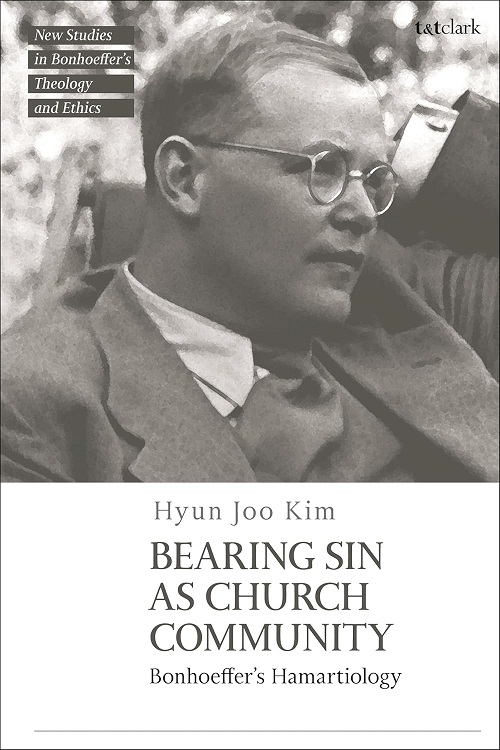
Dietrich Bonhoeffer’s theology continues to contribute enormously to discussions of theology today. What is especially rewarding about the work being done on Bonhoeffer’s corpus is finding topics that haven’t been explored as deeply as others. Hyun Joo Kim’s Bearing Sin as Church Community: Bonhoeffer’s Harmartiology specifically explores Bonhoeffer’s theology for the doctrine of sin, and the book richly rewards careful reading.
One of the central beliefs of Lutheranism, Catholicism, Calvinism, and several other branches of Christianity is that of original sin. For my own part, I find it an incredibly fruitful doctrine when contemplating the state of the world. Humans are incredible adept and finding imaginative ways to bring harm to each other. The horrors of the world are immense, and for me, one way to explain humanity’s awfulness to itself is to hold to a notion of original sin. Bonhoeffer’s views, by Kim, also make the position of original sin less incredible to believe, particularly in regards to explaining how it works. Instead of being linked to a (likely non-extant) original human couple, or being passed along through intercourse, Bonhoeffer’s view makes original sin and the Fall linked to human community and brings it into his ecclesiology. It all helps lend itself to his broader ethical stance, while still preserving the Lutheran view of original sin and guilt.
Before diving into Bonhoeffer’s doctrine of sin (harmartiology), Kim dives into the Augustinian doctrine of original sin. Augustine’s doctrine of original sin is closely linked with the notion of concupiscence–original sin as being transferred through the act of intercourse. Obviously, there is much more to it, but for Augustine, explaining original sin eventually boiled down to a kind of generational passing down through the act of intercourse itself. This saddled the doctrine of original sin with quite a bit of theological and other baggage. Kim then outlines Luther’s move from Augustinian original sin to a shift of seeing original sin integrated within Luther’s Christocentric theology. In essence, Luther’s focus on Christocentrism leads to a holistic theology that, while maintaining several aspects of Augustine’s view of original sin, centers Christ even in the doctrine of original sin. Luther’s view already started driving a wedge between concupiscence and original sin because while he apparently viewed the former as an essential aspect of transmitting the latter, he also held that original sin is forgiven in Baptism but that concupiscence remains a powerful influence on humankind (43).
Next, Kim turns to Bonhoeffer’s view of original sin. This includes a rejection of concupiscence as the basis for original sin. Rather than framing original sin in the “the biological and involuntary transmission of culpability…” Bonhoeffer frames original sin in “the relational and ethical bearing of the sin of others” (71). One of the main aspects of Bonhoeffer’s ethic is that the Christian has freedom for the other, and in this case, his doctrine of sin echoes that but in the bearing of sin for the other; it remains an alien guilt imputed, but a guilt nonetheless. Bonhoeffer’s reflection on original sin moves the alien culpability of Augustine’s doctrine of original sin from the sovereignty of God and to the church community. For Bonhoeffer, “the culpability of Adam is not biologically inherited; however, it is inseprably related to all human beings individually and corporately by the universal sinfulness after the fall” (72). This has some relation to Orthodox understandings of the fall [so far as I know from thinkers like Richard Swinburne–I admit very little direct knowledge of Orthodox teaching on the topic]. Bonhoeffer’s move, however, neither requires an original couple from whom all humanity is descended, such that the culpability can be passed down from one to another like a genetic lineage; nor does it need a specific means by which the original sin can be passed along. By sidestepping these two issues, essentially assigning guilt not to the individual through inheritance but rather through the very nature of humanity as sinful beings, he avoids many of the modern challenges to original sin, such as the question of human evolution–despite this clearly not being in Bonhoeffer’s mind as he wrote about the doctrine.[1]
Kim does draw some distinctions between Bonhoeffer’s earlier thinking on the doctrine of sin and his later theology, but to me these largely seem to be things that could be reconciled together as a continuum of the same theology. And of course the whole story is not told simply through Bonhoeffer’s views on original sin. Quite a bit more is featured on Bonhoeffer’s thoughts on sin and Christian life and ethics. Kim pays careful attention to Bonhoeffer’s book Creation and Fall and his exegesis of the Genesis narratives here. Kim’s argument is that Creation and Fall exists in the same sphere as his other works, Sanctorum Communio and Act and Being, and as such, it focuses on communal personalism and still integrates aspects of Lutheran and Augustinian notions into the reading.
Bearing Sin as Church Community is an absolutely essential read for those wishing to dive deeply into Bonhoeffer’s theology. It also is an exceptionally powerful theological work that demands close and careful reading. It provides new ways forward in understanding some of the core doctrines of some branches of Christianity, and new challenges to those that do not hold those doctrines. Highly recommended.
Notes
[1] It seems fairly clear in reading Bonhoeffer’s corpus both that he was largely aware of scientific consensus on his day on various topics, which would have included the evolutionary lineage of humankind, and also that he was supremely unconcerned with scientific truths related to theology. For him, it seems, there was no conflict between Christianity and science unless Christians themselves decided to make such a conflict by purposely moving theology into the sphere of science (or vice versa) when that is an utterly inappropriate move. See, for example, his brief comments about science near the beginning of Creation and Fall.
All Links to Amazon are Affiliates links
Links
Dietrich Bonhoeffer– read all my posts related to Bonhoeffer and his theology.
Be sure to check out the page for this site on Facebook and Twitter for discussion of posts, links to other pages of interest, random talk about theology/philosophy/apologetics/movies and more!
SDG.
——
The preceding post is the property of J.W. Wartick (apart from quotations, which are the property of their respective owners, and works of art as credited; images are often freely available to the public and J.W. Wartick makes no claims of owning rights to the images unless he makes that explicit) and should not be reproduced in part or in whole without the expressed consent of the author. All content on this site is the property of J.W. Wartick and is made available for individual and personal usage. If you cite from these documents, whether for personal or professional purposes, please give appropriate citation with both the name of the author (J.W. Wartick) and a link to the original URL. If you’d like to repost a post, you may do so, provided you show less than half of the original post on your own site and link to the original post for the rest. You must also appropriately cite the post as noted above. This blog is protected by Creative Commons licensing. By viewing any part of this site, you are agreeing to this usage policy.
The Inescapable Reality of Our Era
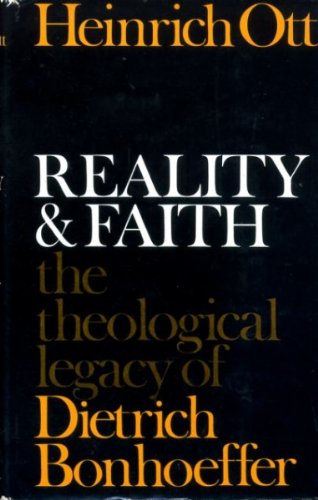
Heinrich Ott’s Reality and Faith: The Theological Legacy of Dietrich Bonhoeffer is a book I picked up because of how oft-cited (favorably or not) I found it in the literature. I have just begun reading it and already found it to be insightful. Early on, Ott writes about Bonhoeffer’s confrontation with his own life and the era in which he lived with the rise of the Third Reich in Germany and awaiting its overthrow, expecting God to act:
“The reality of our life, the reality of our experiences, is inescapable. We cannot flee from it, we cannot flee from the era in which we are placed, from the convictions of this era or from its historical entanglements. On one thing Bonhoeffer was quite clear, that he must stand firm through a demonic age, but he found his place in this very age and did not hanker after living in any other…
“But if God lives and if Jesus Christ is his final word, then this might be as inescapable as life itself…. If God lives everywhere, Bonhoeffer deduced, he lives here” (19-20).
God lives with us even in our inescapable moments. Even as we know we are entangled with our own history and caught up in the convictions and shifting whims of our times. Even if we believe our own era has its great evils and may even be “demonic” in whatever way we believe. There God is and remains.
May we, too, find ourselves living such that we realize that even in our own time, in our inescapable reality, God is here.
All Links to Amazon are Affiliates links
Links
Dietrich Bonhoeffer– read all my posts related to Bonhoeffer and his theology.
Be sure to check out the page for this site on Facebook and Twitter for discussion of posts, links to other pages of interest, random talk about theology/philosophy/apologetics/movies and more!
SDG.
——
The preceding post is the property of J.W. Wartick (apart from quotations, which are the property of their respective owners, and works of art as credited; images are often freely available to the public and J.W. Wartick makes no claims of owning rights to the images unless he makes that explicit) and should not be reproduced in part or in whole without the expressed consent of the author. All content on this site is the property of J.W. Wartick and is made available for individual and personal usage. If you cite from these documents, whether for personal or professional purposes, please give appropriate citation with both the name of the author (J.W. Wartick) and a link to the original URL. If you’d like to repost a post, you may do so, provided you show less than half of the original post on your own site and link to the original post for the rest. You must also appropriately cite the post as noted above. This blog is protected by Creative Commons licensing. By viewing any part of this site, you are agreeing to this usage policy.
Bonhoeffer on an infallible (or inerrant) church, book, or doctrine

Dietrich Bonhoeffer, a German Lutheran pastor who was executed by the Nazis, continues to rise in fame and prominence in American theology. Many conservatives have been working to co-opt his theology for Evangelicalism, but Bonhoeffer remained thoroughly Lutheran throughout his life. What is especially interesting is that, while Bonhoeffer was seen as fairly conservative in his own setting, his views on Scripture would be seen as wildly liberal by most American Evangelicals.
For example, from student notes on a lecture Bonhoeffer gave on Karl Barth’s theology: “Be it an infallible church, Book or Doctrine, all these assume that there is a spot in the world which is not fallen and thus exempt from sinfulness. But the only part of the world free from Sin and its positive correlative is Christ Jesus… and He alone is the ultimate authority…” (DBWE 13:315 [Dietrich Bonhoeffer: London, 1933-1935]).
While brief, Bonhoeffer’s point could not be more anathema to those who claim that inerrancy is a necessary doctrine for Christianity. Bonhoeffer notes that any claims to infallibility (which is often seen as even less powerful a word than inerrancy, though Bonhoeffer could not have referred to inerrancy as the doctrine had not even been developed yet) of church, book (including the Bible!), or doctrine (including inerrancy!) is necessarily part of the fallen world and so not exempt from sinfulness. In other words, no book–even the Bible–can be seen as free from the corrupting influence of sin. Bonhoeffer instead sees Christ alone as the ultimate authority on God.
While inerrantists might attempt to counter this argument by saying things like “but how do we know about Christ?”–the implication being that we can only know about Christ through the Bible–this not only discounts the power of the Holy Spirit, but it also merely reaffirms the point that we do not need an inerrant Scripture to know about God. God instead enters into our world as the ultimate authority in Christ, coming as a human being in a way that is seen as foolishness to the world–including the inerrantists who try to raise Scripture to the level of Christ.
Bonhoeffer’s last words recorded in the lecture notes reflect this: “…God’s will crosses out all human will and effort. Hence the cross is a judgement. Thus the word of the cross which is foolishness and a stumbling block is the ultimate authority” (ibid).
Bonhoeffer’s argument thus directly answers and even chastises the inerrantist rejoinder, noting that they have raised that which is human will and effort–whether church, Book, or Doctrine–to the level of God and that the cross pronounces judgement upon that idea through Christ as ultimate authority.
Now, these words come from student notes on his lectures, but they by no means go against what Bonhoeffer says elsewhere about the doctrine of Scripture and Christology. For Bonhoeffer, and indeed for traditional Lutheranism that has not been co-opted by Evangelical thinking points, inerrancy was a moot point because God alone is without error and has already revealed Godself to us in Christ.
What so many American Evangelical fans of Bonhoeffer continue to misunderstand–and even, sadly, distort–is that Bonhoeffer was through and through a German Lutheran, not an American Evangelical. I am hopeful that as more continue to explore Bonhoeffer’s life and works, they find in Bonhoeffer not an enemy, but perhaps a challenge or correction to their theology and ethics as well.
All Links to Amazon are Affiliates links
Links
Dietrich Bonhoeffer– read all my posts related to Bonhoeffer and his theology.
Be sure to check out the page for this site on Facebook and Twitter for discussion of posts, links to other pages of interest, random talk about theology/philosophy/apologetics/movies and more!
SDG.
——
The preceding post is the property of J.W. Wartick (apart from quotations, which are the property of their respective owners, and works of art as credited; images are often freely available to the public and J.W. Wartick makes no claims of owning rights to the images unless he makes that explicit) and should not be reproduced in part or in whole without the expressed consent of the author. All content on this site is the property of J.W. Wartick and is made available for individual and personal usage. If you cite from these documents, whether for personal or professional purposes, please give appropriate citation with both the name of the author (J.W. Wartick) and a link to the original URL. If you’d like to repost a post, you may do so, provided you show less than half of the original post on your own site and link to the original post for the rest. You must also appropriately cite the post as noted above. This blog is protected by Creative Commons licensing. By viewing any part of this site, you are agreeing to this usage policy.
Biographies of Dietrich Bonhoeffer: An Ongoing Review and Guide
There is an ever-growing collection of biographies of Dietrich Bonhoeffer, the German pastor who was executed by the Nazis in 1945. This means that when people are looking to learn about Bonhoeffer, it can be difficult to know where to dive in. While I believe there’s no single strong answer to that question, I do think different biographies do different things well. This post will be a catch-all specifically for biographies about Bonhoeffer. I’ll highlight strengths and weaknesses of each one, in the hopes that this will let readers best choose from among the growing field of Bonhoeffer studies. This post will continue to be updated as I encounter additional biographies, and may be expanded to include related works.
Why am I qualified to do this post? I am not a Bonhoeffer scholar by any traditional means, and I think it is incredibly important to read those scholars. That said, I have read over 100 books by or about Bonhoeffer, his life, and his theology. By no means does this make me an expert, but I think I could at least offer some insights into questions about what biography to read.

Strange Glory: A Life of Dietrich Bonhoeffer by Charles Marsh
Marsh’s biography, published in 2014, presents Bonhoeffer’s life in a compelling fashion backed by scholarship. It is highly readable but doesn’t skip over details and controversies about Bonhoeffer’s life.
Advantages
-Written to effectively introduce readers to scholarship about Bonhoeffer while also telling his life’s story.
-Turns into a page-turner at times with Marsh’s effective writing style.
-Introduces readers to many topics related to Bonhoeffer’s life and theology in ways that can guide further reflection and study.
Disadvantage(s)
-Somewhat long for a reader attempting to get the basics of Bonhoeffer’s life, at more than 400 pages of text.
It’s For You If…
You want a one stop shop for Bonhoeffer’s biography. This is probably the single best biography in terms of combining scholarly insight, readability, and accuracy about Bonhoeffer’s life without being too dry.

The Faithful Spy: Dietrich Bonhoeffer and the Plot to Kill Hitler by John Hendrix
A graphic novel as a Bonhoeffer biography that caught me unawares in 2020. The art style is engaging, and the panels manage to tell the story without being too cluttered with text.
Advantages
-Extremely readable, with language that is easy to understand, even in sections on theology.
-It’s a graphic novel, I mean… come on. But really, this will appeal to adults who like graphic novels and can also be good reading for teens or tweens who want to engage with deeper topics.
-Probably the most unique biography in presentation.
Disadvantage(s)
-Doesn’t have a complete picture of Bonhoeffer’s life due to the focus on Bonhoeffer’s struggle with Nazism. While this is definitely a large part of his life, it doesn’t fully explain his theology or ethics. It’s a graphic novel, so expecting it to do so might be absurd, but it is worth noting that there is some hot debate in Bonhoeffer scholarship about just how involved he was in the plot to kill Hitler, or even whether he was involved at all. All nuance on this and related topics is basically lost with the format here.
-Relies a bit on Metaxas’s apocryphal work (see below).
It’s for you if…
You want a quick, easy read on Bonhoeffer that gives you at least a surface familiarity with his life and work. Or, you want something you could hand to someone who’s not interested in large tomes.

Bonhoeffer: Pastor, Martyr, Prophet, Spy by Eric Metaxas
This is by far the most popular biography of Bonhoeffer. There’s no doubt that Metaxas’s biography helped the burgeoning interest in Bonhoeffer along. That said, there are serious defects in this biography which lead me to strongly not recommend it as a work for anyone looking into Bonhoeffer’s life.
Advantages
-Popularity- popularity is not a bad thing. It’s great that Metaxas manage to shine a light on Bonhoeffer and encourage so many to read more about him.
-Great subtitle- Bonhoeffer’s life begs to be a major Hollywood blockbuster according to this subtitle.
Disadvantages
-Inaccuracy- I won’t nitpick various tiny facts that Metaxas got wrong. Any biographer can mess up geography or days. It happens. What is at issue is that Metaxas actually undermines much of Bonhoeffer’s own positions by substituting Bonhoeffer’s theology–that of a Lutheran theologian from Germany–with Metaxas’s preferred theology–that of right-leaning American Evangelicalism. For example, Metaxas doesn’t write anything about Bonhoeffer’s views on baptism or the Lord’s Supper, despite Bonhoeffer himself saying the Sacraments are necessary for the church. Why does Metaxas avoid it? Either he’s unaware of Bonhoeffer’s theology here–a major blunder given that Bonhoeffer is a Lutheran pastor–or he’s explicitly leaving it out to avoid offending the Evangelical-Baptist tendencies of his targeted audience, who would strongly disagree with Bonhoeffer’s sacramental theology. Bonhoeffer’s work in the resistance is not given the nuance the evidence requires. Bonhoeffer’s theology is devoid of challenging the reader in Metaxas’s reading. Bonhoeffer is made to be a biblical inerrantist, with Metaxas emphasizing his care for studying the Bible, despite Bonhoeffer’s own words noting that “the theory of verbal inspiration will not do” (DBWE 3:51). In short, Bonhoeffer’s life, theological views, and motivations are all slanted in Metaxas’s representation. Indeed, it shouldn’t escape most readers that Bonhoeffer’s viewpoints begin to seem eerily similar to those of Metaxas’s.
-Distorts the view of Bonhoeffer for many- due to the book’s popularity and its major inaccuracies, it has led to a distorted view of Bonhoeffer’s legacy. One example is the “silence” quote attributed to Bonhoeffer on the inside flap of the book. “Silence in the face of evil is itself evil. God will not hold us guiltless. Not to act is to act.” It’s a great quote, and sounds possibly like something Bonhoeffer would say. The problem is that he didn’t say it. The quote simply is not from Bonhoeffer. And yet it’s in the congressional record as something he said because of the popularity of this book. Now quote misattribution isn’t the end of the world, especially when the quote itself doesn’t necessarily run contrary to the person it’s attributed to. The problem is that Metaxas does things like this constantly. He presents Bonhoeffer as wholly alien to the context in which he operated.
-Somehow still too long for an introductory biography, weighing in at over 600 pages.
It’s for you if…
You’ve gotten a grounding in Bonhoeffer’s life and theology and want to see what the fuss is about. Or, you love writing critical reviews.
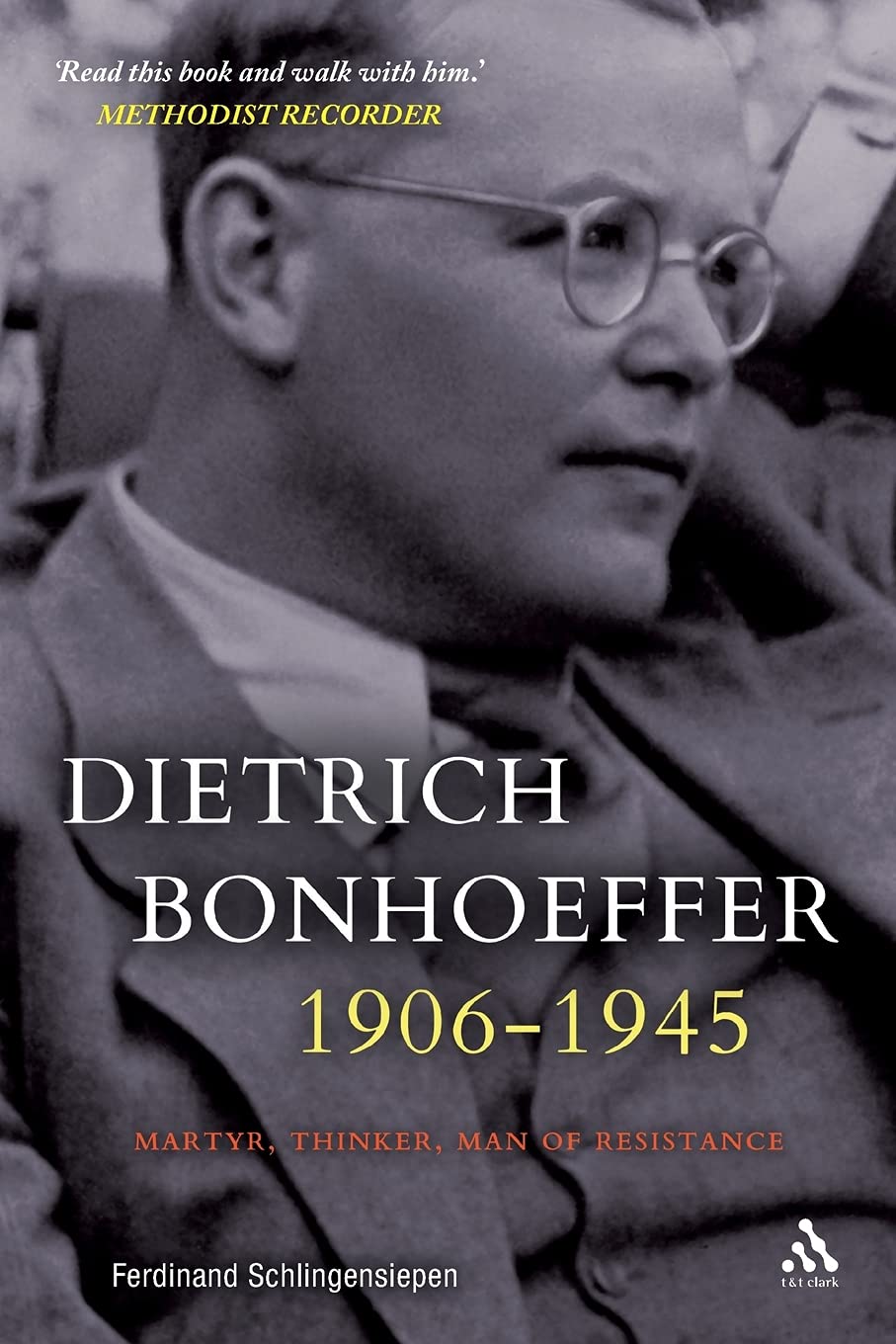
Dietrich Bonhoeffer 1906-1945: Martyr, Thinker, Man of Resistance by Ferdinand Schlingensiepen
Schlingensiepen’s biography is broad and intently focused upon Bonhoeffer’s intellectual development and production. It is an excellent work of Bonhoeffer scholarship but perhaps a bit less accessible for the lay reader.
Advantages
-Schlingensiepen’s academic experience and interpersonal connections make him imminently positioned to present an accurate accounting of Bonhoeffer’s life.
-The biography is not American-centric, as even the Marsh biography is in some ways. This biography is more historically based than it is theologically driven.
Disadvantage(s)
-The writing was originally German and the translation, while excellent, retains the dry tone and feel of the work.
-Schlingensiepen seems almost allergic to confronting modern concerns about theological questions that might arise from Bonhoeffer’s thought, making the biography more of a “just the facts, ma’am” approach than an attempt at relevance. This could also be seen as an advantage, depending on the reader.
It’s for you if…
You prefer a factual account of one’s biography to speculation about lesser grounded facts. Or, you would like to see a more modern German take on Bonhoeffer’s life. Or, you prefer to read one of the best scholarly treatments of Bonhoeffer’s life to anything more generalized.

The Doubled Life of Dietrich Bonhoeffer: Women, Sexuality, and Nazi Germany by Diane Reynolds
Bonhoeffer scholarship continues to broaden, and one great advantage of that is that scholars are driven to exploring corners of his life that would not otherwise have been explored. Reynolds here focuses specifically on Bonhoeffer’s life regarding the three subjects noted in the subtitle: women, sexuality, and Nazi Germany. (Full Review Here)
Advantages
-Insightful Commentary- Whether you agree or disagree with Reynolds’s conclusions, she makes a strong case in defense of her points. Truly, I think this biography deserves to be read by anyone who’s serious about engaging with Bonhoeffer’s life.
-Highlights lesser-discussed points- Women are constantly removed from history, but Reynolds puts women back into the narrative of Bonhoeffer’s life. She manages to show how influential many women were on Bonhoeffer’s life, leading to additional questions and avenues for exploration about Bonhoeffer. Additionally, the questions raised about Bonhoeffer’s sexuality elsewhere are highlighted here, with Reynolds deeply analyzing Bonhoeffer’s letters and life to make compelling, challenging arguments.
Disadvantages
-Primary focus is on the topics in the subtitle. Readers will get a fascinating look at Bonhoeffer’s interactions with women, interplay with Nazi Germany, and one of the deepest arguments about his sexuality found anywhere, but won’t have a full picture of his life.
-Highly controversial view of Bonhoeffer’s sexuality, which can be an advantage as it introduces readers to some of the best scholarly arguments on the topic.
It’s For You If…
You’ve read some about Bonhoeffer’s life and are interested in delving deeper into the background of some of his beliefs. You are curious about some of the hubbub surrounding Bonhoeffer’s sexuality in scholarly circles.
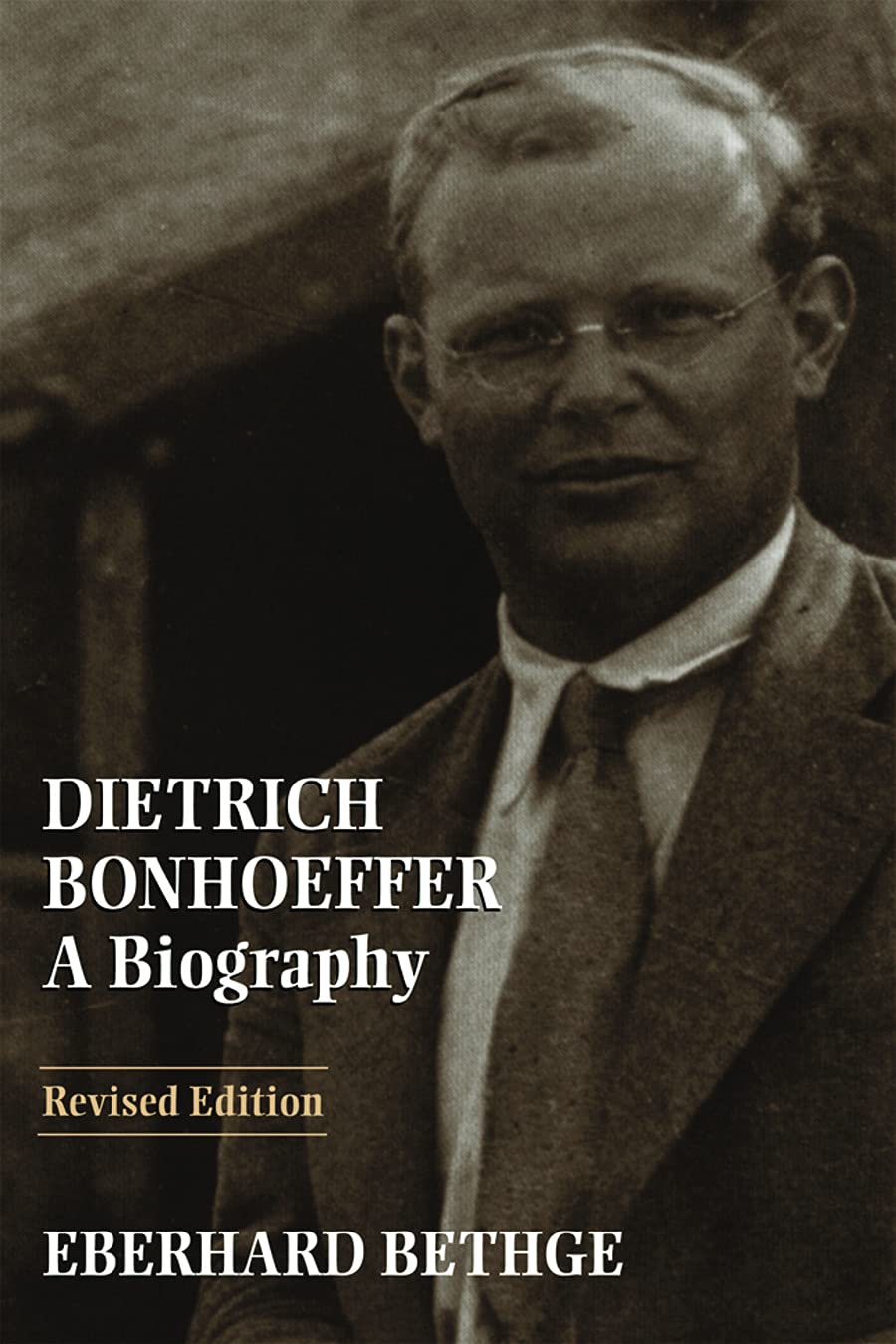
Dietrich Bonhoeffer: A Biography by Eberhard Bethge
Long seen as the definitive biography of Dietrich Bonhoeffer, this one is written by Bethge, Bonhoeffer’s great friend and confidant. It is voluminous in both content and commentary, providing key insights into Bonhoeffer’s thought from someone who knew him intimately.
Advantages
-The book feels absolutely comprehensive in its look at Bonhoeffer’s life.
-Bethge knew the subject well, personally, and this shows on basically every page.
-Bethge gives many insights into the “why” behind what Bonhoeffer was thinking, leading readers to deeper exploration and understanding of Bonhoeffer’s thought.
Disadvantage(s)
-It’s absolutely massive, weighting in at over 1000 pages (including notes/indices).
-There is some necessary bias from a friend of Bonhoeffer (Bethge) writing in a time in which Bonhoeffer wasn’t nearly as popular as he’s become now.
It’s for you if…
Want to feel like you know Bonhoeffer like a friend. Or, you’d like to see what serves as perhaps the baseline study for any student of Bonhoeffer’s life.
All Links to Amazon are Affiliates links
Links
Dietrich Bonhoeffer– read all my posts related to Bonhoeffer and his theology.
Be sure to check out the page for this site on Facebook and Twitter for discussion of posts, links to other pages of interest, random talk about theology/philosophy/apologetics/movies and more!
SDG.
——
The preceding post is the property of J.W. Wartick (apart from quotations, which are the property of their respective owners, and works of art as credited; images are often freely available to the public and J.W. Wartick makes no claims of owning rights to the images unless he makes that explicit) and should not be reproduced in part or in whole without the expressed consent of the author. All content on this site is the property of J.W. Wartick and is made available for individual and personal usage. If you cite from these documents, whether for personal or professional purposes, please give appropriate citation with both the name of the author (J.W. Wartick) and a link to the original URL. If you’d like to repost a post, you may do so, provided you show less than half of the original post on your own site and link to the original post for the rest. You must also appropriately cite the post as noted above. This blog is protected by Creative Commons licensing. By viewing any part of this site, you are agreeing to this usage policy.
Bonhoeffer on the “Social Gospel” and Reconstructing Faith
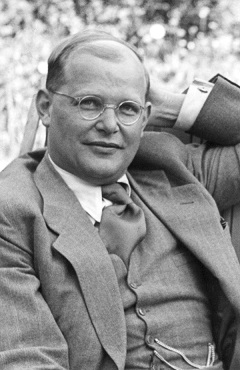
I have been labeled by some as a Progressive Christian, and even sometimes think of myself that way. That said, my primary identity remains Lutheran, and one of the reasons for that is that I believe that while the work for social justice is profoundly important, it cannot supplant the primary focus of my faith, which is Christ. It’s hard to put my finger on the what difference that makes, but I think a concrete example from the past can help shine some light on the topic.
Dietrich Bonhoeffer, a German Lutheran who was murdered by the Nazis in 1945, visited the United States and encountered what was then a growing movement towards the Social Gospel. Now, Bonhoeffer cannot be seen as some kind of pro-capitalist, anti-Communist, fundamentalist [1]. Bonhoeffer’s visit to the United States enlightened him on a number of things, and as he traveled the States, he condemned their treatment of minorities (especially African Americans). Bonhoeffer’s own writings repeatedly emphasize the need to feed the hungry and care for the poor and oppressed. But Bonhoeffer never allowed those concerns about social justice to supplant the Gospel. In one enlightening writing, “Memorandum: The ‘Social Gospel,'” Bonhoeffer writes a balanced perspective on the notion of social justice and the Gospel.
The work appears in the Dietrich Bonhoeffer Works in English: Volume 12. He writes, first that the social gospel adherents are the people who are “most interested and participate most in international Christian work,” which gives the impression that it is the majority Christianity of the United States. This, he states, is “mistaken.” But the opposition and majority church of the time, one Bonhoeffer describes as fundamentalist, is highly problematic: “strong financial support from capitalist circles… and adherents of individualistic revival Christianity” (236). Anyone familiar with Bonhoeffer would know each of these was seen by him as deep condemnation. The church situation generally in the United States was seen by Bonhoeffer as having some problems rooted in its organization. While not having state support of the schools was likely seen by him as a major boon given what was happening to the German Christian movement back home, he rightly points out that “Because the church depends completely on the activity of the congregation, there is strong general interest in the church and a close fusion of public with church interests, with all the consequences for the dominance of the pew over the pulpit” (237).
Moving on to the social gospel’s teachings, Bonhoeffer notes that it makes the “gospel entirely relate[d] to the human being in his current situation…” It sees the problem for humans as the “materialistic, atomistic, individualistic, capitalistic” tenor of the age and proscribes the church as the solution; an ethical solution that reduces and conceals the “real Christ” to instead be the “religion of Christ” and makes the teachings of the church merely about “Christ’s teaching,” thus converting Christianity into “an ethical religion (or even only an ethic)” in which “the Decalogue and the Sermon on the Mount form its center.” The kingdom of God is seen as an ushering in of an age in which there is true brotherhood among human beings, and this makes God immanent in the world rather than transcendent. The resurrection is seen as a sign and total affirmation of Christ’s teaching of love of neighbor. Social gospel is a religion of action, seeking to bring that version of the Kingdom of God into the world now as the highest goal. Theology is reduced to being a concern only to those who are fundamentalist in their outlook (239-240).
These outlines of the social gospel ring surprisingly true for much modern Progressive theology. I say this as someone who is typically categorized as a Progressive Christian. Bonhoeffer’s words about the social gospel above are so close to so much Progressive theology I have seen. And there’s nothing wrong with seeking to bring the Kingdom of God now, or to usher in an era of inclusion, equality, and love for all people.
Bonhoeffer’s section following this outline of the social gospel is “Appreciation and critique,” and is worth noting at length. First, he states “The unrelenting seriousness with which the practical social problems are shown here, and with which Christians are called to serve, is the decisive contribution of American Christians [involved in the social gospel movement] to the understanding of the Christian message in the entire world… Taking seriously the kingdom of God as a kingdom on earth is biblically sound and is justified…” Clearly, Bonhoeffer resonates with the message of the social gospel over and against the “individualistic” and “capitalistic” concerns of fundamentalist Christianity.
However, the social gospel also caused problems by supplanting theology with Christ-as-ethic. Bonhoeffer writes, “The eschatological understanding of the kingdom, as one that God can create and brings in contrast to the world, has disappeared… Sin is not an unpleasant side effect of human existence; rather it corrupts the innermost core of human beings… Christ is the mediator who reconciles the human being with God and forgives his sins. Cross and resurrection as acts of God are therefore the center of history… God is not the immanent progressive ethical principle of history; God is the Lord who judges the human being and his work, he is the absolute sovereign… The optimism, the ideology of progress does not take God’s commandment seriously (Luke 17:10 [2]). It is modern enthusiasm. It fails to recognize human limits; it ignores the fundamental difference between a kingdom of the world and God’s Kingdom” (241).
Finally, he critiques the social gospel for being an Enlightenment philosophy containing a self-contradictory desire for international and collectivist/individualistic harmony. While such harmony is itself a better ideology than most, it misses the strength of the gospel message when it centers Christ’s resurrection and the coming kingdom of God.
Bonhoeffer’s critique of the social gospel, then, is important to me to understand because it shows how we can resonate and even encourage the goals of the social gospel, or in our own time, social justice while still arguing that to reduce Christianity to the message of human unity actually destroys the very message of the Gospel itself. Yes, we want unity of humanity. Yes, we want peace. Yes, we want to resist the “materialistic, atomistic, individualistic, capitalistic” trend we see in our own times. But no, we must not reduce the message of Christianity to the Sermon on the Mount or see Christ merely as another ethicist.
So much Lutheran theology walks the middle line between views seen to be an opposition. It is neither Arminian nor Calvinist; neither transubstantiation nor merely symbolic in the Eucharist; neither double predestination nor individualized choice of salvation. For our time, perhaps another middle line Lutherans walk is that line affirming both the necessity of theology and yes, even orthodoxy, while also working to bring justice to the world. It’s a line walking the acknowledgement that humanity is sinful and even corrupted by sin–something easier to do outside of our positions of privilege in suburban or urban homes in the United States; when children are made into soldiers, or violence is a day-to-day experience, it is easier to see the corruption of human nature–while also hoping that the God who entered the world in Christ can enter once more and bring healing and holism to humanity. I think it’s worth walking those lines.
Notes
[1]Ironically, his views on Scripture were seen as fairly conservative in his own setting but would be seen by American Evangelicals as wildly liberal today.
[2] “So you also, when you have done everything you were told to do, should say, ‘We are unworthy servants; we have only done our duty.’’]'” NIV
All Links to Amazon are Affiliates links
Links
Dietrich Bonhoeffer– read all my posts related to Bonhoeffer and his theology.
Be sure to check out the page for this site on Facebook and Twitter for discussion of posts, links to other pages of interest, random talk about theology/philosophy/apologetics/movies and more!
SDG.
——
The preceding post is the property of J.W. Wartick (apart from quotations, which are the property of their respective owners, and works of art as credited; images are often freely available to the public and J.W. Wartick makes no claims of owning rights to the images unless he makes that explicit) and should not be reproduced in part or in whole without the expressed consent of the author. All content on this site is the property of J.W. Wartick and is made available for individual and personal usage. If you cite from these documents, whether for personal or professional purposes, please give appropriate citation with both the name of the author (J.W. Wartick) and a link to the original URL. If you’d like to repost a post, you may do so, provided you show less than half of the original post on your own site and link to the original post for the rest. You must also appropriately cite the post as noted above. This blog is protected by Creative Commons licensing. By viewing any part of this site, you are agreeing to this usage policy.
Dietrich Bonhoeffer’s Paper “The Character and Ethical Consequences of Religious Determinism” and Theodicy
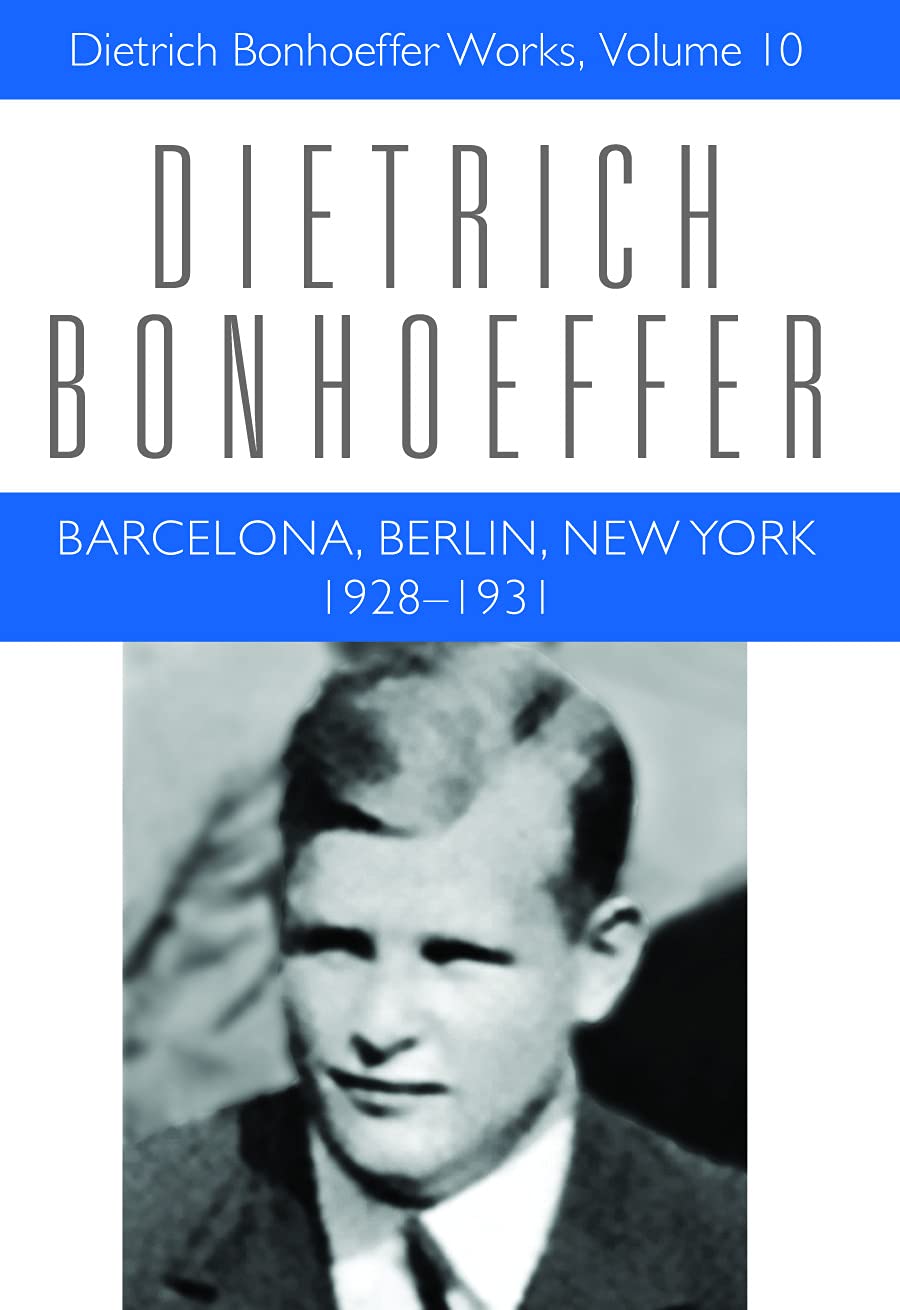
I’ve been thinking quite a bit about divine action in the world, theological determinism, and related topics. It’s honestly been a tough part of my reconstructing faith journey–trying to figure out how it all fits together. Questions about God’s action and evil have been particularly vexing. And the trite answers I received and even argued through my apologetics training just don’t seem to work for me as well as they once did. Dietrich Bonhoeffer has been a major–indeed the major–figure in my theological journey. I was shocked to come yesterday upon a paper I know I’d read before but that hadn’t registered as I read all of his works. That paper was about the very topic I’ve been agonizing over of late. It is entitled “The Character and Ethical Consequences of Religious Determinism.” The paper is found in print in Volume 10 of Dietrich Bonhoeffer’s Works in English, Barcelona, Berlin, New York 1928-1931.
First, I should note that Bonhoeffer is not concerned in this paper with theodicy as a primary or perhaps even secondary concern. Bonhoeffer tends to treat evil as a fact of the world rather than attempting to downplay or explain it away. That said, I think the points he makes in this paper are highly relevant to those who are wondering about divine control and theodicy.
Bonhoeffer argues that there is a threefold way to think about determinism in the world. He doesn’t say this is totally expansive of every option. Rather, this is how he divides the possibilities. First, there is philosophical determinism. This largely relates to causal determinism of events in nature. Because of this, he states that this kind of determinism is irrelevant to the question of ethical consequences. While I don’t fully agree with him here–natural evil is a category that is often discussed–I get the point he is getting at. He says it is irrelevant because his next two categories encompass what would be the case if God is involved in such evils.
Thus, his second category is religious determinism. Here, God determines all. A consequence of this view is that evil is good, actually. Bonhoeffer goes on to note the problems with such a view. If one holds this, then “I always know that evil has already been overcome; it follows from my concept of God, which I always have at my disposal in order to explain ‘rightly’ all misfortune in the world…” This, Bonhoeffer says, makes evil and good a “synthesis of nondifference… evil is merely a paradoxical means of actualizing the good” (DBWE10 441-442) Another problem is that it conflates “Creator” with “world cause.” God is the former, not the latter, so God isn’t causing all the evil. To say God causes such is not “Christian determinism.” Here Bonhoeffer gets at the heart of my difficulty with more traditional views of God, because so many of them either bite the bullet on this or try some other means to make it so that while God determines every event that happens, God is still not the cause or direct actor of evil. Bonhoeffer undercuts those claims by noting that they destroy the differences between good and evil, making good and evil ultimately the same. On such a view, as Bonhoeffer states, evil is just a “paradoxical means” of doing good.
It is important, too, to reflect on Bonhoeffer’s brief point about the conflation of God as “Creator” and God as “world cause.” Bonhoeffer only briefly touches on this topic, but he is quite clear that he believes the two are actually opposed to each other. “God is conceived as the world cause, rather than as Creator. The two are completely distinct so that the one excludes the other, something rarely taken into account even though everything follows from this premise.” God, instead, is Creator–the one who brought the world into existence–rather than the one who is causing every event in the world.
From this, Bonhoeffer gets, finally, to what he calls Christian determinism. Here, he argues that Christian determinism merely holds that justification–salvation, if you prefer the term–is the act of God alone. Human beings aren’t capable of doing this act, so God must do it–as “God’s free and sole act” this makes “huma beings… completely in God’s omnipotence” (DBWE 443). The question of human freedom and lack of freedom, says Bonhoeffer, ultimately relates only to… “the ultimate, to salvation” (ibid). Bonhoeffer, a Lutheran, also comments briefly that he thinks this is the point of Luther’s Bondage of the Will; not that all things are determined by God, but that human beings cannot act on their own related to salvation. Bonhoeffer admits Luther goes beyond this, but attributes it instead to Luther’s propensity to “not always clearly distinguish this idea [that of freedom in salvation] from others of a more speculative of cosmically interpretive nature” (ibid).
The ethical consequences of this view of determinism, Bonhoeffer argues, are that evil is actually evil against God. “Good does not stand behind every evil” in contrast to the notion that God intends for evil to happen. Instead, “God wants the good” (ibid). The good that God brings about in salvation is one that “makes human beings free… for God” (444). He turns again to Luther’s assertion that “God brings about both evil and good,” calling it the “ultimate speculative insight that should not itself be used to interpret other circumstances.” This view leads to an antinomy–back to the paradox of religious determinism. Bonhoeffer says this question may remain open, but it seems clear that his Creator vs. world cause (and the opposition here–the vs.–is intentional in Bonhoeffer’s writing) would allow for some interesting spaces to explore here. Bonhoeffer himself notes that the notion “That God as the Creator hates evil and that nonetheless nothing can occur in the world that God does not want is an insoluble antinomy…” However, he goes on to say it is “no longer antinomy… as soon as one believes oneself able to draw conclusions from it for a Christian devaluation of evil” (ibid). He essentially leaves it at that, later saying that the God of guidance is derived from the God of justification, not the reverse. The point here seems to be that the God of determinism in salvation is only arrived at through a God of guidance–eg, non-omni-determinism.
Ultimately, Bonhoeffer’s view remains largely within Lutheran thinking on the issue. He gives credence to Luther’s views of God as ultimate cause of even evil, while arguing that this is mere speculation. His point seems to be that Luther and others who draw that thinking from Luther’s basic positions on justification are doing the reverse of what they should be doing–drawing the God of world cause from the God as Creator. Does Bonhoeffer ultimately appeal to antinomy or mystery? No, he doesn’t. But his position is left somewhat vague, then. What do his final lines about antinomy being defeated by conclusions “for a Christian devaluation of evil” mean? I am not clear on this. However, I think the distinctions between Creator/world cause and his differences between Christian and religious determinism are on the right track of where I’d like to go. Lutheran theology allows for paradox and mystery at times, and I admit that makes me uncomfortable. But Bonhoeffer’s positions in this paper may make it easier to wade into those waters while living in a kind of happy space between speculation and antinomy.
All Links to Amazon are Affiliates links
Links
Dietrich Bonhoeffer– read all my posts related to Bonhoeffer and his theology.
Be sure to check out the page for this site on Facebook and Twitter for discussion of posts, links to other pages of interest, random talk about theology/philosophy/apologetics/movies and more!
Book Reviews– There are plenty more book reviews to read! Read like crazy! (Scroll down for more, and click at bottom for even more!)
SDG.
——
The preceding post is the property of J.W. Wartick (apart from quotations, which are the property of their respective owners, and works of art as credited; images are often freely available to the public and J.W. Wartick makes no claims of owning rights to the images unless he makes that explicit) and should not be reproduced in part or in whole without the expressed consent of the author. All content on this site is the property of J.W. Wartick and is made available for individual and personal usage. If you cite from these documents, whether for personal or professional purposes, please give appropriate citation with both the name of the author (J.W. Wartick) and a link to the original URL. If you’d like to repost a post, you may do so, provided you show less than half of the original post on your own site and link to the original post for the rest. You must also appropriately cite the post as noted above. This blog is protected by Creative Commons licensing. By viewing any part of this site, you are agreeing to this usage policy.
“Discipleship in a World Full of Nazis: Recovering the True Legacy of Dietrich Bonhoeffer” by Mark Thiessen Nation
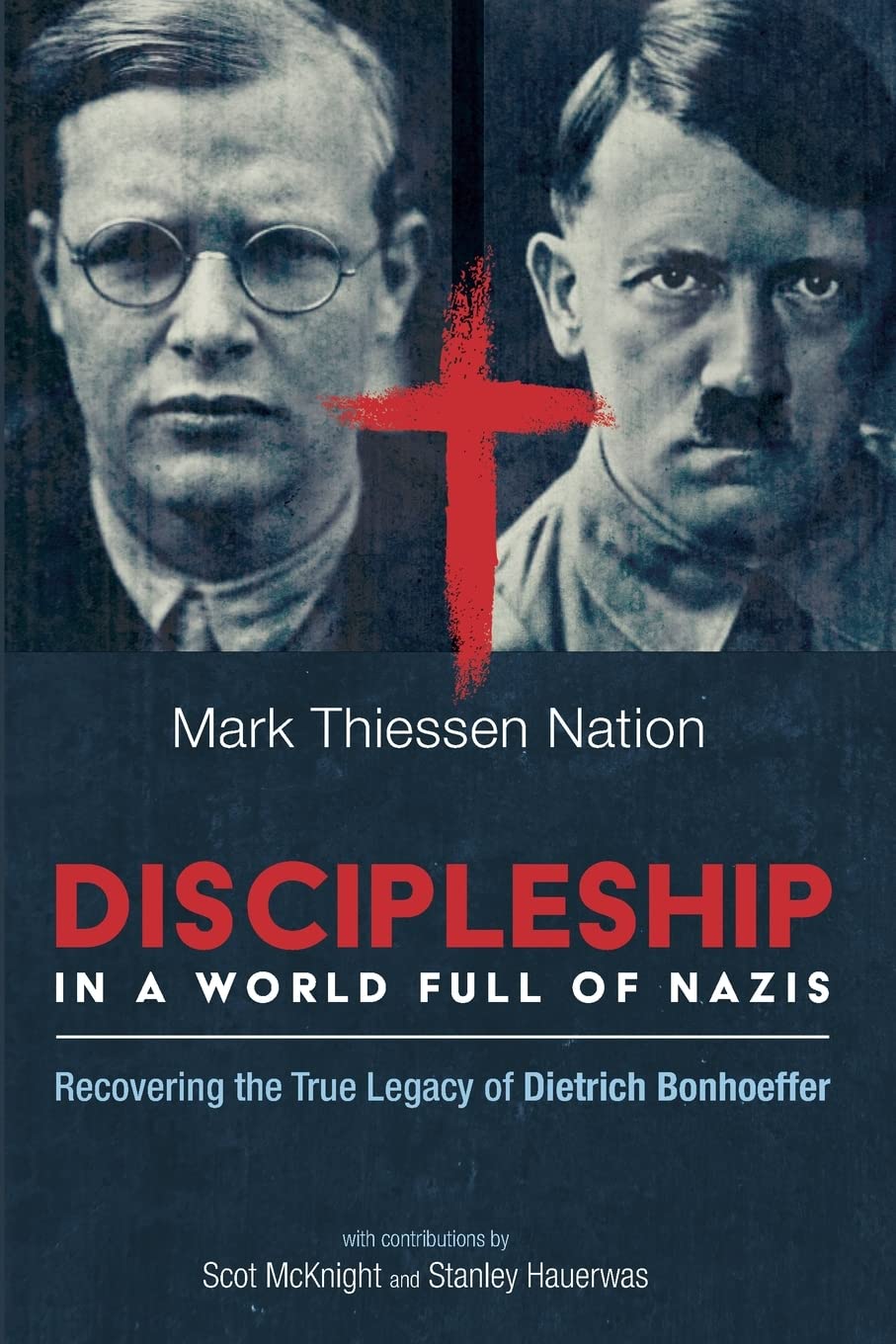
Discipleship in a World Full of Nazis: Recovering the True Legacy of Dietrich Bonhoeffer is an alluring title that promises to push at scholarly boundaries. Any time a book seeks to “recover” a “true legacy,” there are a number of ways it could go on the subject. It could be a sensationalist look at the topic, or a more measured look at something that has, heretofore, been sensationalized. Mark Thiessen Nation seeks here to rethink Bonhoeffer’s alleged participation in the plot to kill Hitler, among other things.
Mark Thiessen Nation’s thesis is fairly straightforward: consensus scholarship regarding Bonhoeffer’s involvement in the plot to assassinate Hitler is grounded upon shaky historical ground and should be rejected in light of his apparent and actual pacifism. In order to argue for this end, he makes three early points in favor of that thesis- Eberhard Bethge leaves the impression that Bonhoeffer was involved in the plot to kill Hitler; the evidence for why Bonhoeffer was arrested point in another direction; and, finally, the starting point for evaluation of Bonhoeffer’s life, legacy, and theology ought to be located in a place other than as a resisting pastor involved in the plot to kill Hitler (3).
What is interesting is that I doubt many Bonhoeffer scholars would dispute almost any of these theses. Eberhard Bethge clearly gives the impression Bonhoeffer was involved. There’s no reasonable way to dispute that. The evidence for Bonhoeffer’s being arrested does not suggest it was due to a plot to kill Hitler. No Bonhoeffer scholar I am aware of actually suggests that Bonhoeffer’s involvement in a plot to kill Hitler is the lens through which his whole life should be read. What this means is that Mark Thiessen nation, in picking these theses early on, essentially gives himself an easy hit, teeing it up so that he can knock it out of the park. By doing so, it gives the arguments that follow a veneer of support. After all, his earliest theses were proven to be at least mostly correct! One could be forgiven for thinking the rest of the argument would flow from these points, but one would be mistaken.
An important aside about these early theses is warranted. The evidence regarding Bonhoeffer’s arrest not being related to a plot to kill Hitler does not help Thiessen Nation’s narrative, because none of those arrested around the same time as Bonhoeffer were arrested for that reason either! If Hitler had known of a plot to assassinate him, does anyone actually think he would have let those would-be assassins sit in prison rather than torturing and murdering them immediately (as he did once he discovered the plot)? The reasons for the arrests of these others is a matter of historical record, but by emphasizing that Bonhoeffer, uniquely, was not arrested due to a plot to assassinate Hitler, Thiessen Nation makes it seem as though this is some major point against historical arguments for his involvement. But that’s an unwarranted leap, again, given that the plot had not yet been discovered. No one could have been arrested for a plot that those doing the arresting didn’t know about yet! Unless Thiessen Nation is aware of some historical data that says they were aware of that plot contemporaneous with Bonhoeffer’s arrest (having read much literature on this, I don’t know of any, but I can hardly claim to have universal knowledge of the topic), this point is superfluous at best, disingenuous at worst, because it sets up readers to doubt Bonhoeffer’s involvement based on this lack of reason for the arrest.
Another salient historical point that Thiessen Nation only raises occasionally is that there is no evidence directly linking Bonhoeffer to the plot to kill Hitler. While this seems possibly correct in regards to a paper trail, it seems incorrect regarding those who knew Bonhoeffer personally. Again, this would include Eberhard Bethge. Time and again, our author here notes that there is little to no evidence for Bonhoeffer’s involvement; yet testimonial evidence is evidence, and we have that. Additionally, nothing is made of the relevant point that those involved in a plot to assassinate a brutal dictator would hardly keep everything on paper for posterity. It shouldn’t be that surprising in this case to hold to the dictum that absence of evidence is not evidence of absence. Still more, Thiessen Nation does not acknowledge that, after World War II in Germany, those who had worked against the Third Reich were still viewed with suspicion for many years. Bonhoeffer was not exempted from this, and it would surely be a point in favor of additional secrecy regarding those involved in any plot to kill Hitler. It’s not a particularly delightful thing to acknowledge, but all of these are facts of history that are borne out in research of the time period.
Thiessen Nation goes on to argue that various points are in favor of reading Bonhoeffer as a committed pacifist. While noting some difficulties with earlier writings, he finds great support in Discipleship and argues for this as a core point of Bonhoeffer’s ethics (see chapter 4). Then, he turns to Ethics and this is where I think the argument starts to come apart. First, he sees Bonhoeffer’s rejection of Kantian absolutism and even applauds it (125-126). This is a point often missed in examination of Bonhoeffer’s–and Lutheran–ethics generally. This ethic rejects a kind of totalitarian deontology in favor of a more situational ethic. This point would actually obviate against a reading of Bonhoeffer as purely pacifistic, as this would require a kind of Kantian commitment to pacifism, but the topic is not explored further.
Thiessen Nation next hones in on the quote from Bonhoeffer that “everyone who acts responsibly becomes guilty.” He suggests that this quote should not be read contextually related to a background of a plot to assassinate Hitler, but rather as a way of understanding the broader context of the war. This certainly resonates with me, and I think that it would make sense. Indeed, I would not personally limit that quote or the general discussion of Bonhoeffer’s thought on responsibility to his involvement (or not) in the plot to kill Hitler. If he was involved, his reasoning on responsibility certainly makes sense of how it would work within his ethical system. Taking away this involvement, Thiessen Nation casts about for another motivation for the reflection on responsibility. He lands on it coming from Bonhoeffer’s reading of letter(s) from his student(s) regarding their own involvement in the Third Reich (129-130). Such is a fascinating thesis, and allows for additional areas of research regarding Bonhoeffer’s life. However, Thiessen Nation pushes it farther, tying Bonhoeffer’s reflection on responsibility to the awful acts of his students, including “cold-blooded murder of civilians and surrendered soldiers” (129, see also 129n21). This is, in my opinion, one of the worst re-readings of Bonhoeffer I’ve read. Bonhoeffer’s entire discussion of responsibility is set against the background of becoming guilty not for oneself but for the sake of the other. To read that as a justification of “cold-blooded murder” simply because Bonhoeffer was somehow struggling to justify his students’ actions makes this a horribly motivated and specious justification for, well, cold-blooded murder! And it doesn’t make any sense of Bonhoeffer’s own words, as he wrote this all in context of taking on guilt for one’s neighbor! How could one do that if one is too busy murdering them?
I would almost second-guess my reading of Thiessen Nation here, because it seems such an off-base reading of Bonhoeffer, but he makes it quite clear that it is his intent to suggest Bonhoeffer was somehow justifying this cold-blooded murder: “Might [Bonhoeffer] have been thinking of [his students’] letters when he wrote that it worse to be evil than to do an act of evil? …in the midst of extremely difficult circumstances, Bonhoeffer is quite sensitive toward his former students who either were not convinced by his teaching on nonviolence or who couldn’t face the consequences of formally claiming to be a conscientious objector, which was a capital offense” (130). He goes on to say that “my hypothesis is more likely than any notion that he is writing reflections to justify his ‘involvement’ in any attempts on Hitler’s life” (ibid). This removes any doubt of this reading: Thiessen Nation is genuinely suggesting that Bonhoeffer wrote this section on responsibility to justify his students’ and friends’ actions of choosing to murder civilians instead of die as a conscientious objector. If he’s right in this reading, he has turned one of my favorite sections of Bonhoeffer’s work into a heinous justification of evil.
Bonhoeffer’s words themselves appear to obviate against this reading, however, because in the section on responsibility in Ethics, he explicitly states that human beings must become guilty not for the sake of themselves or their own attempts to be guiltless, but “entering into community with the guilty of other human beings for their sake. Because of Jesus Christ, the essence of responsible action intrinsically involves the sinless, those who act out of selfless love, becoming guilty” (Ethics, DBWE: 276). Where can one truly justify murder of innocent others for the sake of preserving one’s own life in this text? Where could one read it at as Thiessen Nation does? It is an utterly nonsensical reading of Bonhoeffer to read him as justifying murder to avoid capital offense.
Mark Thiessen Nation himself, according to this profile, was a conscientious objector to Vietnam. I hesitate to speculate, but is it possible that he is looking at his own situation, likely knowing others who committed awful acts in Vietnam, and trying to provide some kind of a posteriori justification for those acts, roping Bonhoeffer into such a defense?* The reading seems radically American and individualistic, putting one’s own well-being as such a high good that becoming guilty of “cold blooded murder” to avoid one’s own capital punishment is seen as good for the sake of the other. Again, none of this makes sense in light of Bonhoeffer’s own work. Thiessen Nation concludes this section acknowledging we can’t know the exact reason for Bonhoeffer’s deliberations on guilt, which would have been a better overall point (though still hotly disputed) (130). Yet this last minute broadening of scope does little to overcome the fact that he asserted earlier that his reading of Bonhoeffer justifying mass murder for the sake of one’s own life is somehow more likely than Bonhoeffer justifying tyrannicide for the sake of the other. Again, it is ludicrous to the point of the absurd to read Bonhoeffer this way in the context in which these words were set.
Belaboring the point even a little more, Chistine Schliesser, in the aptly titled Everyone Who Acts Responsibly Becomes Guilty, argues that one can see this thread of guilt for the sake of the other throughout Bonhoeffer’s entire works. It’s more complicated than that, of course, but that book offers an excellent overview of the concept of guilt in Bonhoeffer.
Another problem with Thiessen Nation’s overall theses related to Bonhoeffer’s pacifism is that he is only capable of reading Bonhoeffer as wholly pacifistic through revisionism (see the discussion above); through arguing against some early biographers and friends of Bonhoeffer (eg. Bethge- who would almost have to be accused of lying if Bonhoeffer were not involved in the plot against Hitler in any way); or through arguing that Bonhoeffer changed his mind not infrequently, only settling on pacifism after a number of other ethical stances were attempted. The former two points have been spoken for already, but I think the latter point is worth a very slight reflection. Thiessen Nation, while critiquing other authors who seek to place Bonhoeffer in his Lutheran perspective (eg. Michael DeJonge), fails to take Bonhoeffer’s Lutheranism seriously. Bonhoeffer quoted Luther more than any other theologian, and it is not difficult to trace many aspects of Bonhoeffer’s theology directly to Luther. This includes his ethics. Thiessen Nation was right earlier to note the rejection of Kantian ethics in Bonhoeffer. Bonhoeffer (and Luther) rejected deontology. This rejection allowed for a more dynamic or situational ethic that could be adjusted to current contexts rather than delivering principles that would last for eternity. It seems to me that a better reading of Bonhoeffer that doesn’t require re-interpreting or rejecting parts of his ethic would simply be to take it as a development of Lutheran ethics, in which sometimes pacifism is the right response and even perhaps a broad ideal, but at others, taking on guilt for the sake of the other is required.
Discipleship in a World Full of Nazis is a provocative look at Bonhoeffer’s alleged pacifism. I believe it largely misses the mark, and misses it badly in some cases. The author’s [with others] earlier Bonhoeffer the Assassin? (my review here) made a more limited argument. It is clear to me, having read this work, that trying to double down on reading Bonhoeffer as a pacifist will only work if one shoehorns his ethics into corners that don’t make sense contextually. Overall, I think this book does not succeed in its argument.
*Rev. Beth Wartick made this point to me in conversation.
All Links to Amazon are Affiliates links
Links
Dietrich Bonhoeffer– read all my posts related to Bonhoeffer and his theology.
Be sure to check out the page for this site on Facebook and Twitter for discussion of posts, links to other pages of interest, random talk about theology/philosophy/apologetics/movies and more!
Book Reviews– There are plenty more book reviews to read! Read like crazy! (Scroll down for more, and click at bottom for even more!)
SDG.
——
The preceding post is the property of J.W. Wartick (apart from quotations, which are the property of their respective owners, and works of art as credited; images are often freely available to the public and J.W. Wartick makes no claims of owning rights to the images unless he makes that explicit) and should not be reproduced in part or in whole without the expressed consent of the author. All content on this site is the property of J.W. Wartick and is made available for individual and personal usage. If you cite from these documents, whether for personal or professional purposes, please give appropriate citation with both the name of the author (J.W. Wartick) and a link to the original URL. If you’d like to repost a post, you may do so, provided you show less than half of the original post on your own site and link to the original post for the rest. You must also appropriately cite the post as noted above. This blog is protected by Creative Commons licensing. By viewing any part of this site, you are agreeing to this usage policy.
“Resisting the Bonhoeffer Brand: A Life Reconsidered” by Charles Marsh

Charles Marsh’s biography of Dietrich Bonhoeffer, Strange Glory, sparked quite a bit of discussion when it was released. What many readers might not have realized, however, is that it also led to quite heated debate in scholarly circles related to Bonhoeffer studies. With Resisting the Bonhoeffer Brand: A Life Reconsidered, Marsh responds to scholarly critique of his biography, highlights some of the difficulties and joys of writing biographies, and calls readers to push to better understanding of the life and theology of Bonhoeffer.
The book’s short length should not deter readers looking for deep exploration of Bonhoeffer’s life. It’s essentially an extended essay on writing Strange Glory, writing biographies generally, how to evaluate the accuracy and impact of history, and, most extensively, a response to another Bonhoeffer scholar’s persistent critiques of Marsh’s biography. That other scholar is Ferdinand Schlingensiepen, whose own biography of Bonhoeffer, Dietrich Bonhoeffer 1906-1945: Martyr, Thinker, Man of Resistance remains a book I recommend to readers as well. But Schlingensiepen took great issue with Marsh’s exploratory directions in the latter’s life of Bonhoeffer, ultimately going a bit off the rails at points, not just criticizing Marsh for the kind of small mistakes all biographers make (eg. geographical, a few temporal, etc.) but also arguing that Marsh’s biography is entirely useless because it doesn’t focus on Schlingensiepen’s own preferred trajectory of reading Bonhoeffer.
Specifically, Schlingensiepen takes a nearly obsessive interest in critiquing Marsh for not focusing on minutiae of the church struggle in Germany and upbraids him for not following Bethge’s biography of Bonhoeffer more closely. Marsh, in turn, notes the errors with such a critique, both for pigeonholing Bonhoeffer’s own life into less impactful and radical than it was and in failing to allow for new avenues of research into Bonhoeffer. It appears that, for Schlingensiepen, the Confessing Church must be entirely without error, while narratives of Bonhoeffer’s life must never depart from prior research.
Marsh effectively answers Schlingensiepen’s critiques time and again, all while pushing for a resistance to a kind of “Bonhoeffer Brand” that would limit exploration of his life and theology to only that which is approved or has been done before.
Resisting the Bonhoeffer Brand is a book I would consider essential reading for those interested in studying Dietrich Bonhoeffer. It also is a great look at the challenges and delights of writing biographies more generally. Highly recommended.
All Links to Amazon are Affiliates links
Links
Dietrich Bonhoeffer– read all my posts related to Bonhoeffer and his theology.
Be sure to check out the page for this site on Facebook and Twitter for discussion of posts, links to other pages of interest, random talk about theology/philosophy/apologetics/movies and more!
Book Reviews– There are plenty more book reviews to read! Read like crazy! (Scroll down for more, and click at bottom for even more!)
SDG.
——
The preceding post is the property of J.W. Wartick (apart from quotations, which are the property of their respective owners, and works of art as credited; images are often freely available to the public and J.W. Wartick makes no claims of owning rights to the images unless he makes that explicit) and should not be reproduced in part or in whole without the expressed consent of the author. All content on this site is the property of J.W. Wartick and is made available for individual and personal usage. If you cite from these documents, whether for personal or professional purposes, please give appropriate citation with both the name of the author (J.W. Wartick) and a link to the original URL. If you’d like to repost a post, you may do so, provided you show less than half of the original post on your own site and link to the original post for the rest. You must also appropriately cite the post as noted above. This blog is protected by Creative Commons licensing. By viewing any part of this site, you are agreeing to this usage policy.
Today in (Theological) History: Dietrich Bonhoeffer is Murdered by Nazis
When Christ calls a man, he bids him come and die.
Dietrich Bonhoeffer, Discipleship.
April 9th, 1945: Dietrich Bonhoeffer is Murdered by the Nazis
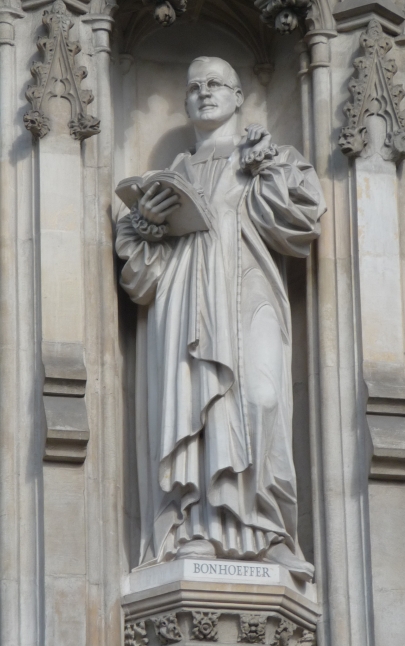
Dietrich Bonhoeffer was a German Lutheran pastor and theologian who resisted the Nazi regime. Although he was offered the opportunity to accept a position teaching in the United States, he suffered mental anguish at leaving Germany’s struggle behind and decided to return despite the potential threat to his life. The Nazis banned him from publishing and from teaching in Berlin. He spoke against Nazism and was deeply involved in the Confessing Church–the church that opposed Nazification of the church.
Bonhoeffer is remembered in part for his resistance to the Nazi regime, and in part for his stunningly insightful theological writings.
He became involved in a conspiracy to overthrow Hitler and was arrested by the Gestapo, but not for a specific conspiracy. When the conspiracy was finally discovered more fully, his execution was directly ordered from the highest levels of Nazi leadership.
On April 9th, 1945, guards at Flossenbürg concentration camp came to gather him for execution. He reportedly turned to another prisoner and said “This is the end… for me, the beginning of life.” He was killed by hanging from piano wire. His remains were either burned or buried in a mass grave by Allied soldiers when Flossenbürg was liberated.
Bonhoeffer’s theological legacy is difficult to overstate. His Lutheran theology is remarkable in how clearly he draws distinctions. He gained worldwide fame for his Letters and Papers from Prison, which outlines a religionless Christianity in which he pushed back against faith lives lived without action. His theology has been deeply influential on myself, as well. To read more, check out my posts on Dietrich Bonhoeffer (scroll down for more).

 J.W. Wartick - Reconstructing Faith