philosophy
Really Recommended Posts 3/25/12
 The recommended posts this week feature some extremely important topics. I can’t emphasize how much I recommend each one. As always, check out my brief description, browse as you want. Let me know of any other great links! Topics this week feature atheistic hermeneutics, after-birth abortions, the Reason Rally, Harold Camping’s admission of sin, Mormon scriptures, and apologetic methods. Like I said, a great array!
What Happens When Atheists Don’t Care About Hermeneutics?– A really excellent post highlighting the importance of intellectual honesty and humility in dialog.
“If there is no difference between a fetus in the womb and a new born baby, it should follow that neither should be killed. But, granting the scientific evidence demonstrating the continuity of life, some “ethicists” and pro-abortion fanatics are coming to a different conclusions: Since we can abort fetuses, we should also be able to “abort” new-born infants. So says an article in one of the most influential journals in medical ethics…” Check out the article and a brief evaluation here.
Atheistic fundamentalism? Is it a contradiction? No, not at all. The Reason Rally is full of it.
Harold Camping, who infamously failed in a number of doomsday predictions has confessed his sin. I’m honestly quite touched by this level of academic honesty and what seems like a sincere confession and repentance from another Christian brother.
Often, Mormons will tell you that if you just read the Book of Mormon and pray you’ll know it’s true. I’ve done so and not been convinced, but so have others. Sean McDowell points out some of the difficulties he found in the Mormon scriptures.
Holly Ordway has a simply fantastic series on effective communication in apologetics. Check out the first post here.
Finally, I couldn’t resist a plug for my favorite band. Check out this interview with the Christian Metal band, Demon Hunter.
A Vision for Christian Apologetics to World Religions
 Christian Apologists seem to only rarely focus upon world religions. Perhaps that is because many Christian apologists feel uncomfortable interacting with other religions. It is easy to be weighed down by fears that one might say something wrong and be deemed either ignorant or bigoted. It may also be simply that Christian apologists don’t feel they have the expertise do operate in this area. It is my goal in this post to paint in broad strokes and provide areas of development for Christian apologetics and theology regarding world religions. Because I’m painting in broad strokes, I’ll be raising many questions I’ll leave unanswered for now. I’ve included links at the end of the post for those interested in reading more.
A Vision for Christian Apologetics and World Religions
It has been said that evangelicalism needs a theology of religions. What does the existence of other religions mean? Do they have truths? How do we interact with them? These questions must be addressed by Christians who desire to explore the reality of their faith. Christian apologists, in particular, must be learned enough to know what position they take on these issues before they seek to defend their faith.
The study of another religion should not be done superficially. It is a good start to have a general volume on “world religions” and then read each religion’s respective section, but it is not nearly enough for the Christian apologist to do if the apologist desires to interact with believers from these other religions. A study of another religion, particularly for those interested in witnessing to them, must be more in-depth. The holy book(s) of the other religion is(are) necessary reading. But one cannot stop there. Few religions are based upon one book. Christians can readily acknowledge this, having had much thought and belief defined through tradition, apostolic and patristic. Similarly, when a Christian studies another religion, he or she must be willing to delve into the religion, to understand it from an insider’s perspective.
It is not enough for the apologist to read books about other religions, seeking to find fast and easy ways to refute them. Rather, the Christian apologist must engage with believers of other faith, acknowledging shared truths where they exist and seeking to understand the differences. Certainly, apologists must know the areas of weakness in other religions so that they can point these out as they debate and dialog on the religions. What I’m suggesting is that this cannot be the only thing Christians know about other religions. They must not be satisfied merely by knowing a series of arguments against those from other religions. Rather, they must be willing and able to engage with those in other religions.
Thus, this vision for Christian Apologetics to World Religions is a vision not just of debate but of dialog; a vision of give-and-take. The Gospel will not be heard where it is beat into people. It will not be heard where the only avenues for its witness are arguments. Paul wrote,
Although I am a free man and not anyone’s slave, I have made myself a slave to everyone, in order to win more people. (1 Corinthians 9:19)
The attitude of the apologist is a servant’s heart–one that seeks to understand. In understanding, he or she will win many. Thus, when apologists approach another religion, they must understand that religion enough to engage with those who believe it and who live it. The Christian apologist must not deceive, but rather seek to understand. In understanding, Christians will understand more about their own faith, and be better able to spread it to those of other faiths.
There are five major things to keep in mind when doing apologetics regarding world religions:
- Know what the other believes. Never assume you know their faith as much as they do.
- Read their book. Nothing will open up avenues for discussion as much as the knowledge that you have read the books they find holy.
- Know Christianity. If you don’t know what you yourself believe, how are you to share that with others? As you engage with people of other faiths, you must continue to learn about your own faith and its answers to the questions others pose.
- Preach the Gospel. The goal should not only be to rebut the others assertions and beliefs. It should be to guide the other towards Christ crucified and the salvation provided for by God.
- Build a Genuine Relationship. It isn’t enough to simply engage in dialog; one must show they are interested in what the other has to say and what they believe. They must also be more than an occasional debate partner; they must build a relationship and become a friend. I’m not suggesting deception here, the relationship must be genuine. By showing a Christlike life to others, we can show them the intimate joys of Christianity.
Going forward, it is time to turn to a method for Christian Apologists to learn about other religions.
 Studying a Religion: A Method of Learning for Christian Apologists
- Read general discussions about the religion. A book on world religions is a good place to start, but be aware that these are, by necessity, generalized.
- Read what other Christians have said about the religion. Neighboring Faiths by Winfried Corduan is a simply phenomenal resource which surveys the world religions from a Christian perspective.
- Read the holy books of the religion with which you are going to interact. If you wish to engage a Muslim, read the Quran. If you want to interact with a Taoist, read the Tao Te Ching. As you read these books, keep in mind that you will find truths in other religions due to God’s natural revelation to all people.
- Seek out believers from the religion, and engage with them in discussion. Ask them what they believe, but don’t allow your questions to be that general. Instead, focus on specifics. For example, “If I were seeking to learn more about your religion and beliefs, how would I go about doing so?”; “What is[are] your favorite passage[s] from your holy book, and why?” Questions like these will show them you’re not seeking to attack but to understand.
- Read web sites dedicated to explaining other religions to those seeking. In this way, you will get a basic introduction to the religion while also viewing it from an insider’s perspective.
- Read other Christians who have engaged these religions in dialog and mission work.
- Consider responses from scholars within the religion to Christians working in that field. Be familiar with arguments for and against the positions you seek to put forward.
- Above all, read God’s word. Only by being familiar with the Bible will one become an effective apologist and missionary. Jesus’ words will draw people from all backgrounds, and the Bible’s richness and truth will gain a hearing from all nations.
This list is, of course, not comprehensive. It merely provides avenues for research.
What to do with the knowledge?
Christians must engage with those of other faiths. Seek out those who are willing to discuss their faith with you. You will find that many interesting discussions will follow and you will learn much about yourself and Christianity in the process. Never stop seeking truth. All truth is from God. If someone from another faith says something which challenges you, seek the answer. There are thousands of years of Christian writing out there just waiting to be tapped. Not only that, but simple searches online will turn up innumerable apologetic resources. Do not let the discussions turn into debates only. Debates are good when there is an audience of people who may be swayed one way or the other, but in individual conversation, your goal should be to spread the Gospel, not to win an argument.
Become a prayer warrior. Do not let a day go by where you do not pray for those with whom you are engaged in discussions about the faith.
Tap your fellow resources. There are many other Christians working in the areas of religions, and they are willing to help. Do not be afraid to ask for it when needed.
Conclusion
The vision for Christian apologetics and world religions I’ve put forth here is admittedly vague, but I hope it will provide a way forward for those interested in dialog with those of other faiths. This vision has followed five primary thoughts: know the other’s faith, read their book, know Christianity, preach the Gospel, and build a genuine relationship. The most important thing to remember is that as a Christian it is your duty to spread the Gospel. Do not let yourself come in its way.
Resources
Some argue that there is no real way to tell whether any religions are true. That is not the case. There are some very real ways to determine truth in a religious paradigm. Check out this post: “Can we evaluate worldviews? How to navigate the sea of ideas.”
What about the truth found in other religion? How do we relate that to Christianity? Kenneth Samples is an amazing writer in this area. Check out this post in which he provides a way forward for thinking about other religions from a Biblical perspective: “Thinking Biblically About the World’s Religions.”
I highly recommend Winfried Corduan’s book Neighboring Faiths.
What about some of those unanswered questions–what about the unevangelized? This is matter of considerable debate and there are numerous books on the topic. I would recommend “What About Those Who Have Never Heard?” for an introduction to these views. For those wanting to explore inclusivism further, see No Other Name by John Sanders. Those interested in exclusivism/particularlism, see Is Jesus the Only Savior? by Ronald Nash.
SDG.
——
The preceding post is the property of J.W. Wartick (apart from citations, which are the property of their respective owners) and should not be reproduced in part or in whole without the expressed consent of the author. All content on this site is the property of J.W. Wartick and is made available for individual and personal usage. If you cite from these documents, whether for personal or professional purposes, please give appropriate citation with both the name of the author (J.W. Wartick) and a link to the original URL. If you’d like to repost a post, you may do so, provided you show less than half of the original post on your own site and link to the original post for the rest. You must also appropriately cite the post as noted above. This blog is protected by Creative Commons licensing. By viewing any part of this site, you are agreeing to this usage policy.
Abortions rates are lower in countries where it is legal- some thoughts on recent pro-choice comments
Highly restrictive abortion laws are not associated with lower abortion rates. For example, the abortion rate is high, at 29 and 32 abortions per 1,000 women of childbearing age in Africa and Latin America, respectively—regions where abortion is illegal under most circumstances in the majority of countries. In Western Europe, where abortion is generally permitted on broad grounds, the abortion rate is 12 per 1,000. ( Sedgh G et al. cited below)

There it is in black and white. Countries in which abortion is illegal have higher rates of abortion in most cases. What does this mean for the pro-life argument? Some have argued that pro-life advocates should work to make abortion legal. For example, Margot Magawan writes, “It’s clear that top Republican candidates are being short-sighted and ineffective, rushing off in precisely the wrong direction if their goal truly is to reduce abortions.” The argument seems to be quite simple. After all, if the goal of the pro-life advocates is to reduce the number of abortions, then if making it legal reduces them, they should argue to legalize abortions.
There are a number of problems with this argument, however, and I’ll briefly list them before examining them in turn.
1. Those making this argument seek to compare countries unilaterally based on a situation with all kinds of factors which cannot possibly be weighed fairly.
2. The argument reduces the goal of the pro-life movement to reducing abortions only; but the movement has a broader range than that. The argument is susceptible to a reductio ad absurdum which shows that the premise on which it is based is absurd.
3. The argument begs the question against the pro-life position by assuming the position itself is false.
3. The argument assumes consequentialism as a metaethical theory without argument.
1. Comparing Countries Unilaterally
It seems strange to me to compare the situations of different countries unilaterally on an issue like this. For example, it seems to have been shown that many things cannot be compared in this way. Installing democracy into random countries does not have a stabilizing effect. Comparing the economic situation of Rwanda with that of the United States seems almost grotesque. I’m not disputing the results of the study cited above; rather, I’m disputing the application of those results to a moral sphere. Think of all the factors which must be weighed: economic status, education, career choices, etc. To then take the raw data and apply it to a moral sentiment is quite a stretch. After all, it doesn’t take into consideration all the factors that those countries in which abortion is legal may have.
I do not want to make this the focus of my rebuttal, however, because I think the next 3 points are much stronger. To those we shall now turn.
2. Is Pro-Life About Reducing Abortions?
Another problem with the argument is that it assumes the pro-life position is dedicated to reducing abortions. That sentence may seem strange on a first reading, but read it this way instead: “the pro-life position is dedicated to reducing abortions only.” That is where one of the major difficulties arises for those making this argument. The pro-life position is not only about reducing abortions. In fact, while reducing the number of abortions is a goal of the pro-life movement, that is not the only goal or even, perhaps, the highest goal.
Suppose that reducing abortions was the only goal of the pro-life candidate. In that case, one way to reduce abortions would be by eliminating all human beings. If, after all, not a single human being were alive, there would be no abortions! This is, of course, patently absurd. Why? Not just because it seems obviously wrong to murder everyone on earth (or to murder anyone) in order to reduce the number of abortions, but also because this is a gross reduction of the pro-life position.
The pro-life position isn’t just about reducing the number of abortions. It is about advocating for life. In other words, those in the movement are making a factual and a moral claim: the entities aborted are human persons and it is wrong to kill them. But those who want to make the argument that pro-life advocates should legalize abortions in order to reduce them are, on a pro-life view, essentially arguing something similar to this:
Suppose that making murder legal reduced the number of murders. If you are against murder, you should then legalize murder.
The absurdity of this argument becomes clear because no one but a psychopath wants to legalize murder. But then it becomes clear that those pro-choice people making this argument have begged the question against the pro-life person. Let’s turn to that.
3. The Argument Begs the Question
If the pro-life position is correct, then it makes a mockery of this argument. Suppose, for the sake of argument, that the advocate of the pro-life position is right: the unborn are not merely embryos (and other stages of development) but are rather human persons who deserve the same rights as people outside of wombs. Now, granting these assumptions, suppose one finds that legalizing abortions reduces them. To then argue that “we should legalize abortions to reduce their number” is exactly equivalent to arguing that we should legalize murder to reduce the number of murders. Note here that I’m not saying legalizing murder does reduce the number of murders; I’m arguing that if the pro-life position is correct, these arguments are exactly analogous. One who argues we should legalize abortions would be the same as one who argues we should legalize murders, if the pro-life position is correct.
Thus, it becomes clear that those who make an argument like that of Margot Magawan have begged the question against the pro-life position. They simply assume that it is morally permissible to have an abortion, and combine that with the false position that the pro-life position is only about reducing abortions. Thus, the argument fails because it begs the question. Without argument, the pro-choice advocate has caricatured its opposition and argued against this false image.
4. It assumes consequentialism.
The last rebuttal is more technical, but I want to keep it brief. Consequentialism is, basically, the position that it is not the status of actions themselves which are judged as moral but rather the consequences. If one takes an action which has morally good consequences, that action is deemed good.
Now consider once more the argument, “If your goal is to reduce abortions, you should legalize them [because if abortion is legal, the number is reduced].”
This argument doesn’t take into consideration the moral status of an abortion [again, see above: they’ve already begged the question]. Rather, it assumes that because the consequences (fewer abortions) are considered by pro-life advocates as morally good, they should take the action (legalizing abortions) which open the door for these consequences.
Without too much strain, it becomes clear that most pro-life advocates do not hold to consequentialism as a metaethical theory. There are many alternative metaethical theories which are preferable for any number of reasons. If a pro-life advocate holds to a deontological theory of ethics, for example, he will argue that the wrongness of abortion is outweighed by the benefits of reducing the number. Such examples could be multiplied almost beyond comprehension. Thus, the pro-choice advocate has assumed, again without argument, a controversial position and then utilized that position to argue against pro-life advocates. Therefore, the argument fails.
Conclusion
The argument which has been considered here is that “if the goal of the pro-life advocates is to reduce the number of abortions, then if making it legal reduces them, they should argue to legalize abortions.” I have rebutted this argument in four ways. First, it seems to trivialize the enormous amount of factors which must go into consideration of comparing abortion rates across countries. Second, it reduces the pro-life position almost beyond recognition and is susceptible to a reductio ad absurdem. Third, it begs the question. Fourth, it utilizes a controversial metaethical theory to justify its premise. For these four reasons, I conclude that the argument is unsound.
Source
Sedgh G et al., “Induced abortion: incidence and trends worldwide from 1995 to 2008,” Lancet, 2012. (accessible: http://www.thelancet.com/journals/lancet/article/PIIS0140-6736%2811%2961786-8/fulltext); summary: http://www.guttmacher.org/media/presskits/abortion-WW/statsandfacts.html.
Image Credit: http://commons.wikimedia.org/wiki/File:Prolife-DC.jpg
SDG.
——
The preceding post is the property of J.W. Wartick (apart from citations, which are the property of their respective owners) and should not be reproduced in part or in whole without the expressed consent of the author. All content on this site is the property of J.W. Wartick and is made available for individual and personal usage. If you cite from these documents, whether for personal or professional purposes, please give appropriate citation with both the name of the author (J.W. Wartick) and a link to the original URL. If you’d like to repost a post, you may do so, provided you show less than half of the original post on your own site and link to the original post for the rest. You must also appropriately cite the post as noted above. This blog is protected by Creative Commons licensing. By viewing any part of this site, you are agreeing to this usage policy.
Really Recommended Posts 3/3/12
 The really recommended posts this go-round feature Richard Dawkins, bioethics, philosopher’s opinions, women in the ministry, and more!
Arguments about Jesus’ resurrection are fascinating, and can be extremely useful in the question of theism. See this great article which features rigorous application of probability theory to the arguments from the resurrection.
Richard Dawkins’ book, The Greatest Show On Earth claims to show the undeniable evidence for evolution. Does it succeed? Jonathan Mclatchie does not think so and has written an excellent, lengthy review to show how Dawkins fails.
Philip Payne, the author of “Man and Woman, One in Christ” (which I reviewed here) has an excellent web site which responds to many criticisms of his positions. Those interested in the issue of women in the ministry should look into it.
No peer reviewed papers advocating intelligent design? False! Check out this list.
After birth abortions? Basically the logical conclusions of the general pro-choice position. Read more.
Prosblogion conducted a survey about philosopher’s opinions on theistic arguments. The results are mostly unsurprising, but interesting nevertheless. Check it out.
The Ontology of Morality: Some Problems for Humanists and their friends

Louise Anthony did indeed present the case for secular metaethics. The problem is that this case is utterly vacuous.
It will be my purpose in the following arguments to show that secular humanistic theories which try to ground moral ontology fail–and fail miserably.
Recently, I listened [again] to the debate between William Lane Craig and Louise Anthony. Some have lauded this debate as a stirring victory for secular ethics. (See, for example, the comments here–one comment even goes so far as to say “I swoon when someone evokes the Euthyphro Dilemma and frown at the impotent, goal-post-moving, ‘Divine nature’ appeal.”) In reality, I think Louise Anthony did indeed present the case for secular metaethics. The problem is that this case is utterly vacuous.
I’ll break down why this is the case by focusing upon three areas of development in secular and theistic ethics: objective moral truths, suffering, and moral facts.
Objective Moral Truths
Louise Anthony and William Lane Craig agree that there are objective moral truths. Now, this is important because many theists take the existence of objective morality to demonstrate–or at least strongly suggest–the existence of God. Interestingly, other humanist/secular scholars have agreed with Anthony, claiming there are objective truths (another example is Sam Harris–see my analysis of his position contrasted with theism here). The question, of course, is “How?” Consider the following:
Louise Anthony seems to be just confused about the nature of objective morality. She says in response to a question from the audience, “The universe has no purpose, but I do… I have lots of purposes…. It makes a lot of difference to a lot of people and to me what I do. That gives my life significance… The only thing that would make it [sacrificing her own life] insignificant would be if my children’s lives were insignificant. And, boy you better not say that!”
Craig responded, “But Louise, on atheism, their lives are insignificant.” Anthony interjected, “Not to me!”
But then she goes on to make this confused statement, “It’s an objective fact that they [her children] are significant to me.”
Note how Anthony has confused the terms here. Yes, it is an objective fact that according to Louise Anthony, her children matter to her. We can’t question Anthony’s own beliefs–we must trust what she tells us unless we have reason to think otherwise. But that’s not enough. What Craig and other theists are trying to press is that that simple fact has nothing to do with whether her children are actually valuable. Sure, people may go around complaining that “Well, it matters to me, so it does matter!” But that doesn’t make it true. All kinds of things can matter to people, that doesn’t mean that they are ontologically objective facts.
It matters to me whether the Cubs [an American baseball team] win the World Series. That hasn’t happened in 104 years, so it looks like it doesn’t matter in the overall scheme of the universe after all. But suppose I were to, like Anthony, retort, “But the Cubs matter to me! It’s an objective fact that them winning the World Series is significant to me!” Fine! But all the Cardinals [a rival team] fans would just laugh at me and say “SO WHAT!?”
Similarly, one can look at Anthony with incredulity and retort, “Who cares!?” Sure, if you can get enough people around Anthony who care about her children’s moral significance, you can develop a socially derived morality. But that’s not enough to ground objective morality. Why should we think that her values matter to the universe at large? On atheism, what reason is there for saying that her desires and purposes for her children are any better than my desires and purposes for the Cubs?
Another devastating objection can be found with a simple thought experiment. Let’s say Anthony didn’t exist. In such a world, there can be no one complaining that her children matter “to me!” Instead, her children just exist as brute facts. How then can we ground their significance? Well, it seems the answer for people like Anthony would be to point to the children’s other family say “Those children matter to them!” We could continue this process almost endlessly. As we eliminate the children’s family, friends, etc. and literally make them just exist on their own, we find Anthony’s answer about allegedly objective morality supervenes on fewer and fewer alleged moral facts. Suddenly “Those children matter to themselves!” is the answer. But then what if we eliminate them? Do humans still have value? The whole time, Anthony has grounded the significance of her children and other humans in the beliefs, goals, and purposes of humans. But without humans, suddenly there is no significance. That’s what is meant by objective morality. If those children matter even without humans, then objective morality is the case. But Anthony has done nothing to make this the case; she’s merely complained that her children matter to her.
Now, some atheists–Anthony and Sam Harris included–seem to think they have answers to these questions. They seem to think that they can ground objective morality. We’ll turn to those next.
Suffering
One of the linchpins of humanists’ claims (like Anthony and Sam Harris) is suffering. The claim is that we can know what causes suffering, and that this, in turn, can lead us to discover what is wrong. We should not cause suffering.
But why not?
Most often the response I’ve received to this question is simply that because we do not wish to suffer, we should not wish to have others suffer or cause suffering for others. But why should that be the case? Why should I care about others’ suffering, on atheism? That’s exactly the question humanism must answer in order to show that objective morality can exist in conjunction with secularism. But I have yet to see a satisfactory answer to this question.
Anthony was presented with a similar question in the Q&A segment of her debate with William Lane Craig. One person asked (paraphrased), “Why shouldn’t I base morality as ‘whatever benefits me the most’?” Anthony responded simply by simply arguing essentially that it’s not right to seek pleasure at the expense of others, because they may also want pleasure.
But of course this is exactly the point! Why in the world should we think that that isn’t right!?
The bottom line is that, other than simply asserting as a brute fact that certain things are right and wrong, atheism provides absolutely no answer to the question of moral objectivity. People like Anthony try to smuggle it in by saying it’s objectively wrong to cause suffering [usually with some extra clauses], but then when asked why that is wrong, they either throw it back in the face of the one asking the question (i.e. “Well don’t you think it’s wrong?”) or just assert it as though it is obviously true.
And it is obviously true! But what is not so obvious is why it is obviously true, given atheism. We could have simply evolved herd morality which leads us to think it is obviously true, or perhaps we’re culturally conditioned by our close proximity to theists to think it is obviously true, etc. But there still is no reason that tells us why it is, in fact, true.
Moral Facts
Anthony (and Harris, and others with whom I’ve had personal interactions) centralize “moral facts” in their metaethical account. As a side note, what is meant by “moral fact” is a bit confusing but I don’t wish to argue against their position through semantics alone. They claim that we can figure out objective morals on the basis of moral facts. Sam Harris, for example, argues that there is a “continuum of such [moral] facts” and that “we know” we can “move along this continuum” and “We know, we know that there are right and wrong answers about how to move in this space [along the moral continuum]” (see video here).
Now it is all well and good to just talk about “facts” and make it sound all wonderful and carefully packaged, but Anthony and Harris specifically trip up when they get asked questions like, “How do we figure out what moral facts are?”
Anthony was asked “How do you determine what the objective moral facts are”, and responded by saying, “We do it by, um, testing our reactions to certain kinds of possibilities, um, thinking about the principles that those reactions might entail; testing those principles against new cases. Pretty much the way we find out about anything” (approximately 2 hours into the recorded debate).
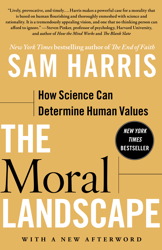 One must just sit aghast when one hears a response like that. Really? That is the way we discover moral truths? And that is the way we “find out about anything”? Now I guess I can’t speak for Anthony herself, but when I’m trying to find out about something, I don’t test my reaction to possibilities and then try to figure out what my reaction “might entail.” That is radical subjectivism. Such a view is utterly devastating for not just morality but also science, history, and the like. If I were to try to conduct scientific inquiry in this manner, science would be some kind of hodgepodge of my “reactions” to various phenomenon. Unwittingly, perhaps, Anthony has grounded the ontology of her morality in the reactions of people. But this error isn’t restricted to Anthony. Harris also makes this confounding mistake. His basic argument in the talk linked above is simply, “Science can tell us what people think about things, so it can tell us about morality.” This is, of course patently absurd. Suppose I tried to test these humanists’ theories on groups of people by sticking them in a room and having them watch all kinds of things from murder to the rape of children to images of laughter and joy. Now suppose I randomly sifted my sample among the population of the world, but somehow, by pure chance, got a room full of child molesters. As I observe their reactions, I see they are quite joyful when they observe certain detestable images. Now, going by Anthony/Harris’ way to “find out about anything” and thinking about what these people’s reaction entails, I conclude that pedophilia is a great good. But then I get a room full of parents with young children, who react in horror at these same images. Then, as I reflect on their reactions, I discover that pedophilia is a great evil. And I repeat this process over and over. Eventually, I discover that the one group was an aberration, but it was a group nonetheless.
What does this mean?
Quite simply, it means that both Harris and Anthony haven’t made any groundbreaking theory of ethics. Rather, they’ve just made a pseudo-humanistic utilitarianism. They ground moral ontology in our “reactions” to various moral situations. The only way for them to say something is morally wrong if people have different reactions is either to go with the majority (utilitarianism) or choose one side or the other, which essentially turns into a kind of Euthyphro dilemma against atheists. Either things are wrong because enough people think they’re wrong (in which case morality is arbitrary) or things are wrong because they simply are wrong, period (in which case the humanist has yet to provide an answer for moral ontology).
Conclusion
Given the discussion herein, one can see that those atheists, humanists, and/or secularists who desire to ground objective morality still have a lot of work to do. Louise Anthony’s best attempt to ground morality boils down into radical subjectivism. Sam Harris’ account fares no better. Those who are trying to ground objective morality within an atheistic universe will just have to keep searching. The solutions Anthony and Harris have attempted to offer are vacuous.
Image Source:
http://commons.wikimedia.org/wiki/File:SecularHumanismLogo3DGoldCropped.png
SDG.
——
The preceding post is the property of J.W. Wartick (apart from citations, which are the property of their respective owners) and should not be reproduced in part or in whole without the expressed consent of the author. All content on this site is the property of J.W. Wartick and is made available for individual and personal usage. If you cite from these documents, whether for personal or professional purposes, please give appropriate citation with both the name of the author (J.W. Wartick) and a link to the original URL. If you’d like to repost a post, you may do so, provided you show less than half of the original post on your own site and link to the original post for the rest. You must also appropriately cite the post as noted above. This blog is protected by Creative Commons licensing. By viewing any part of this site, you are agreeing to this usage policy.
Really Recommended Posts 02/03/12
 Says the Madman, “Humanity is Dead, and We Are Its Murderers”– An insightful post which argues that naturalism has undermined the worth and value of humans.
Zombies of Christianity– I really enjoyed this discussion of the diversity of doctrine in Christianity and how to approach it.
My latest post on abortion generated some controversy, but I’d like to point out that scientifically, the unborn simply is a human being. One can find this not only in numerous medical textbooks on embryology, but also in the words of abortions-rights advocates themselves. Check out this phenomenal post which outlines the fact that the unborn are human beings, period- Medical Testimony.
C.S. Lewis is one of the greatest Christian Apologists of all time. Check out this post which brings us Beyond Mere Christianity. Interested in literary apologetics? Check out Holly Ordway’s guest post on my blog here.
A Response to the Problem of an ‘Evil God’ as Raised by Stephen Law.– An excellent article, which I don’t fully agree with (I think Edward Feser answers the challenge correctly, for example), but which provides a thorough critique of Law’s position.
The Artist: A Film Review and Reflection- Holly Ordway shares her thoughts on “The Artist.”
How Many Atheists in America? Fewer than You Might Think– Pretty self explanatory.
The Issue at the Heart of the Abortion Debate
 I’m going to make what may initially seem to be contentious statements, so read the post to contextualize:
If the unborn is not a person, then abortion is morally permissible, and it doesn’t matter what you do with the unborn.
If the unborn is a person, then abortion is morally impermissible, and the unborn must be protected.
Note that these statements are conditional, marked by the word, “If.”
Why would I make these statements? Simply because I want to clarify the issue that is at the heart of the abortion debate. Namely, the status of the unborn.
Consider the following arguments in favor of the pro-choice position:
We shouldn’t bring unwanted fetuses into the world. It’s better to abort fetuses than force a woman to have an unwanted child.
If a mother can’t afford to have a child, she shouldn’t be forced to continue her pregnancy.
Women’s rights are at stake: it is a woman’s body we’re talking about!
Now, let’s contextualize them. Rather than debating the viability of these arguments, suppose we plug in the case in which we all agree there is a “person” involved. Suppose in place of the “unborn” or “fetus” we put “toddler” into the argument. In that case, the arguments would be:
We should kill unwanted toddlers. It’s better to kill them than to have them live in homes where they are unwanted.
If a woman can’t afford to feed her toddler, we should kill it.
Women’s rights are at stake! Think of the drain toddlers place upon their mothers!
These arguments are clearly absurd. Why? Because we all know that we can’t just go around killing children because their families don’t want them. We can’t kill toddlers because their families can’t afford to feed them. But that’s exactly the question these types of arguments beg: what is the unborn?
And so we return to the statements at the beginning of this post. Suppose the unborn is, in fact, just a cluster of cells, no different from a wart or growth. In that case, I would agree it is perfectly permissible to discard of the unborn whenever a woman desires.
But then, what if the unborn is, in fact, a “person”? What if the unborn is a baby after all? Well, in that case, it is certainly not permissible to discard of the baby.
The fact is, many arguments raised in favor of the pro-choice position are made from a position where one simply assumes that the fetus is no more than a clump of cells. But that’s exactly what the debate is supposed to be about! If the fetus is no more then a clump of cells, the debate is over. But if the fetus is indeed a person, then the arguments raised in favor of the pro-choice position are just as shoddy as those arguments with “toddler” substituted in for “unborn” or “fetus.”
Thus, arguments like this must always be contextualized. The heart of the abortion debate is the status of the unborn. Once that question is answered, the answer to the question: “Is abortion permissible?” becomes crystal clear.
For arguments against abortion, check out my Pro-Life Page. Specifically, one can find my arguments for the personhood of the fetus here.
Scott Klusendorf does a simply phenomenal job of centralizing this issue and pointing out how most of the issues which cloud the debate can simply be dropped in favor of debating the status of the unborn. The arguments presented here are based upon his tactic “trot out the toddler” which one can find in his book, The Case for Life or in his lectures in Ethics at the Edge of Life (found in the links here).
SDG.
——
The preceding post is the property of J.W. Wartick (apart from citations, which are the property of their respective owners) and should not be reproduced in part or in whole without the expressed consent of the author. All content on this site is the property of J.W. Wartick and is made available for individual and personal usage. If you cite from these documents, whether for personal or professional purposes, please give appropriate citation with both the name of the author (J.W. Wartick) and a link to the original URL. If you’d like to repost a post, you may do so, provided you show less than half of the original post on your own site and link to the original post for the rest. You must also appropriately cite the post as noted above. This blog is protected by Creative Commons licensing. By viewing any part of this site, you are agreeing to this usage policy.
The Moral Argument: Mistakes to Avoid and Practical Advice
 The moral argument has experienced a resurgence of discussion and popularity of late. Some of this may be due to the increased popularity of apologetics. Philosophical discussions about metaethics also seem to have contributed to the discussions about the moral argument. Regardless, the argument, in its many and varied forms, has regained some of the spotlight in the arena of argumentation between theism and atheism. [See Glenn Peoples’ post on the topic for more historical background.]
That said, it is an unfortunate truth that many misunderstandings of the argument are perpetuated. Before turning to these, however, I’ll lay out a basic version of the argument:
P1: If there are objective moral values, then God exists.
P2: There are objective moral values.
Conclusion: Therefore, God exists.
It is not my purpose here to offer a comprehensive defense of the argument. Instead, I seek to lay out some objections to it along with some responses. I also hope to caution my fellow theists against making certain errors as they put the argument forward.
Objections
Objection 1: Objective moral values can’t exist, because there are possible worlds in which there are no agents.
The objection has been raised by comments on my site (see the comment from “SERIOUSLY?” here), but I’ve also heard it in person. Basically, the objection goes: Imagine a world in which all that existed was a rock. There would clearly be no morality in such a universe, which means that P2 must be false. Why? Because in order for there to be objective moral values, those values must be true in all possible worlds. But the world we just imagined has no morality, therefore there are no objective moral values!
The objection as outlined in italics above is just a more nuanced form of this type of argument. What is wrong with it? At the most basic level, the theist could object to the thought experiment. According to classical theism, God is a necessary being, so in every possible world, God exists. Thus, for any possible world, God exists. Thus, to say “imagine a world in which just a rock exists” begs the question against theism from the start.
But there is a more fundamental problem with this objection. Namely, the one making this objection has confused the existence of objective morals with their obtaining in a universe. In other words, it may be true that moral truths are never “activated” or never used as a judgment in a world in which only a rock exists, but that doesn’t mean such truths do not exist in that universe.
To see how this is true, consider a parallel situation. The statement “2+2=4” is a paradigm statement for a necessary truth. Whether in this world or in any other world, it will be the case that when we add two and two, we get four. Now consider again a world in which all that exists is a rock. In fact, take it back a step further and say that all that exists is the most basic particle possible–it is indivisible and as simple as physically possible. In this universe, just one thing exists. The truth, “2+2=4” therefore never will obtain in such a world. But does that mean “2+2=4” is false or doesn’t exist in this world? Absolutely not. The truth is a necessary truth, and so regardless of whether there are enough objects in existence to allow it to obtain does not effect its truth value.
Similarly, if objective moral values exist, then it does not matter whether or not they obtain. They are true in every possible world, regardless of whether or not there are agents.
Objection 2: Euthyphro Dilemma- If things are good because God commands them, ‘morality’ is arbitrary. If God commands things because they are good, the standard of good is outside of God. This undermines the moral argument because it calls into question P1.
Here my response to the objection would be more like a deflection. This objection only serves as an attack on divine command theory mixed with a view of God which is not like that of classical theism. Thus, there are two immediate responses the theist can offer.
First, the theist can ascribe to a metaethical theory other than divine command ethics. For example, one might adhere to a modified virtue theory or perhaps something like divine motivation theory. Further, one could integrate divine command ethics into a different metaethic in order to preserve the driving force of divine commands in theistic metaethics while removing the difficulties of basing one’s whole system upon commands. In this way, one could simply defeat the dilemma head-on, by showing there is a third option the theist can consistently embrace.
Second, one could point out that the dilemma doesn’t actually challenge P1 at all. All it challenges is the grounds for objective morals. Certainly, if the theist embraced the horn of the dilemma in which that which is “good” is grounded outside of God, there would be a problem, but very few theists do this (and for them it seems unlikely the moral argument would be convincing). If the theist embraces the other horn–that what God commands is good/arbitrary–then that would not defeat objective morals anyway, because one could hold that even were God’s decisions arbitrary, they were still binding in all possible worlds. While this would be a bit unorthodox, it would undermine the concern that the Euthyphro dilemma serves to defeat P1. Combined with the first point, it seems this dilemma offers little to concern the theist.
All morality is relative
I prefer Greg Koukl’s tongue-in-cheek response to this type of argument: steal their stereo! If someone really argues that there is no such thing as right and wrong, test them on it! Don’t literally steal their things, but do point out inconsistencies. Everyone thinks there are things that are wrong in the world and should be prevented. If someone continues to press that these are merely illusory ideas–that things like rape, domestic abuse, murder, slavery, genocide are in fact amoral (without any moral status)–then one may simply point out the next time they complain about a moral situation. Such is the thrust of Koukl’s remark–everyone will object if you steal their stereo. Why? Because it is wrong, and we know it.
Advice to other Christians
The moral argument brings up some extremely complex metaethical discourse. While it is, in my opinion, one of the best tools in the apologist’s kit for talking to the average nonbeliever/believer to share reasons to believe, one should familiarize oneself with the complexities facing a fuller defense of the argument so they do not come up empty on a question or objection someone might raise. As always, do not be afraid to acknowledge a great question. For example, one might reply to something one hasn’t researched enough to feel comfortable answering by saying: “Great question! That’s one I haven’t thought about. Could I get back to you in a few days?”
As with any philosophical topic, the more one researches, the more questions will arise, the more interesting branches in the path one will approach, and the more one realizes that philosophy is an astoundingly complex topic. For those theists who wish to use the moral argument, I suggest doing so with a courteous, humble manner. The argument is an attempt to answer some of the hardest questions facing anyone: does God exist? is God good? what does it mean for something to be good? do objective morals exist?
Thus, theists using this argument should be prepared for some serious study. Be ready to answer some hard questions. Be open to great discussion. Above all, always have a reason.
SDG.
——
The preceding post is the property of J.W. Wartick (apart from citations, which are the property of their respective owners) and should not be reproduced in part or in whole without the expressed consent of the author. All content on this site is the property of J.W. Wartick and is made available for individual and personal usage. If you cite from these documents, whether for personal or professional purposes, please give appropriate citation with both the name of the author (J.W. Wartick) and a link to the original URL. If you’d like to repost a post, you may do so, provided you show less than half of the original post on your own site and link to the original post for the rest. You must also appropriately cite the post as noted above. This blog is protected by Creative Commons licensing. By viewing any part of this site, you are agreeing to this usage policy.
Book Review: “Material Beings” by Peter van Inwagen
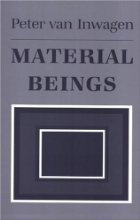 Peter van Inwagen presents a discussion of composition in his work, Material Beings
there are no tables or chairs or any other visible objects except living organisms (1).
This sounds odd to a great many people, and he acknowledges this. The thesis, however, solves many of the standard problems of composition. Specifically, van Inwagen seeks to answer, specifically, the special composition question: “In what circumstances is a thing a (proper) part of something?” (21). He surveys traditional answers to this question and finds them wanting. Some have argued simply that “contact” is enough to deduce when an object is composed of other objects, but van Inwagen utilizes a series of thought experiments to show this cannot be right (33ff). Specific types of physical bonding fair no better (61ff) while nihilism (there are no composite objects) and universalism (one can’t compose something, because if there are disjoint xs they compose something [74]) fall victim to a number of difficulties (72ff).
Van Inwagen therefore suggests that one way to show that things are composed is:
(there is a y such that the xs composes y) iff the activity of the xs constitutes a life (or there is only one of the xs) (82).
He goes on to define what he means by life (87ff). Against those who argue that his answer violates ordinary beliefs, van Inwagen proposes various linguistic fixes to allow for everyday language to still be “correct” without violating his suggested answer to the composition question. Thought experiments about artifacts (constructs of people/other living things) help bolster his points (124ff).
After these sections, van Inwagen turns to questions over how to identify life as well as offering attempts to deal with various dilemmas presented to materialists. This composes most of the rest of his work, but more on that shortly.
Van Inwagen’s analysis of the problem of composition seems quite sound, and while his proposed modifications of everyday language to fit into the philosophical answer he has proposed may seem a bit odd to many, they seem to answer the charges his opponent may level against him regarding such questions. Furthermore, his proposed answer gets past the difficulties of the other answers which have been proposed. The most intuitive answer, “contact,” van Inwagen shows is at least fraught with difficulties.
That said, there are some significant problems with van Inwagan’s approach, most of which stem from those which he, being a materialist, has presented to himself and other materialists.
First, he takes life as the basic indicator for when things are composed. But van Inwagen does little to clearly define life, only briefly touching on what it means to be “alive.” Although he devotes several chapters towards various problems about life, his basis for seeing something as alive or not is fairly weak. There is significant debate in scientific literature on what it means for something to be living (or indeed if “living” is a category at all separate from “nonliving”). While one can hardly fault van Inwagen for not dealing directly with these heavy issues in biology and philosophy of science, it is hard to feel comfortable accepting his thesis without a better understanding of what he means by “life.”
Second, van Inwagen has to resort to some extremely implausible positions regarding life. The reason van Inwagen must deal with such problems, I charge, is exactly because he is a materialist. [Astute readers will note that van Inwagen is a theistic materialist, but the problems I raise here go against any materialists who wish to hold to his analysis.]
One place to identify van Inwagen’s problematic approach is in section 12. He writes, “…the fact that I am a thinking being shows that there is at least one composite material object…” (120). He continues, “What is the ground of my unity? …It seems to me to be plausible to say that what binds [the simples which compose me] together is that their activites constitute a life…” (121).
These thoughts start to reveal the serious cracks in his view. He holds that he himself is a material object, which he takes to be demonstrated by the fact that he is thinking. Yet then he argues that what binds him together is the fact that he’s alive. But this is exactly what he is seeking to demonstrate via his observation that he is thinking. But what is “he”? He is a material object. Thus, we have the argument, tied to his thesis:
1) Only those things which are living are composite objects
2) I think
3) Thinking things must be alive [implicit premise given his conclusion on p. 120]
4) Therefore, I am alive
5) Therefore, I am a composite object
Now, wholly apart from whether or not “simples” can be thinking objects, this argument seems unsound. For, on materialism, what justifies 3? Why think that whatever thinks is alive? I’ve already noted that there are philosophers of science and biologists who seem to think there isn’t such a distinction as alive/nonliving (see, for example, Iris Fry’s work, The Emergence of Life on Earth). This therefore reflects the problem I’ve noted already: without a clearer definition of “life,” it is hard to analyze van Inwagen’s thesis.
Yet one may also question the second premise. Why suppose that “I think?” Materialists cannot be substance dualists and must therefore justify personhood in purely materialistic ways. As I’ve argued elsewhere, it seems that materialists almost must deny that there are such things as subjects. Yet van Inwagen just makes the assumption that “I think.” What is “I” on his view? Finally, why think that 1 is true?
One can see the great difficulties with his position illustrated when he turns to thought experiments about when human life begins. Van Inwagen argues that we cannot be the same as the zygote which was our intial state because it splits from A into B and C, neither of which is identical to A (152ff). He argues that the zygote ceases to exist. One instantly wonders how it is that “I” am therefore the same person as I was yesterday, or years ago when all the material which composes me is different. Van Inwagen’s answer is his thesis (above) with the supposition that life actively continues itself. But then one wonders why he doesn’t consider a zygote alive, because it clearly self-organizes, continues itself, etc. In fact, when one examines van Inwagen’s definitions of life, one sees that a zygote meets every criteria. They maintain themselves, they are individuating events, they are “jealous events,” etc. (see his brief discussion 87-90). So why suppose that the zygote isn’t alive?
Again one can observe van Inwagen’s frustrations with brain transplants (section 15). Eventually, he resorts to a mock discourse in which he uses question-and-answer format to try to deal with some extremely illogical consequences of his own naturalism (196ff).
Similar confounding issues arise with the “vagueness of composition,” unity and thought, and the identity of material objects. One can see that van Inwagen’s materialistic bias truly undermines his position in each of these problems. If one holds to substance dualism, one can easily answer any of these problems. Not only that, but his “proposed answer” makes much more sense conjoined with substance dualism, which allows one to make sense of the persistence of persons, living things, etc. without any of the counter-intuitive solutions to which van Inwagen must adhere.
Thus, it seems to me that Material Beings is an excellent book which will provoke much thought, but that its author is, unfortunately, trapped within his own materialism. If he’d think outside the [brain] box, the seemingly insurmountable problems he honestly faces find solutions.
Source:
Peter van Inwagen, Material Beings
SDG.
——
The preceding post is the property of J.W. Wartick (apart from citations, which are the property of their respective owners) and should not be reproduced in part or in whole without the expressed consent of the author. All content on this site is the property of J.W. Wartick and is made available for individual and personal usage. If you cite from these documents, whether for personal or professional purposes, please give appropriate citation with both the name of the author (J.W. Wartick) and a link to the original URL. If you’d like to repost a post, you may do so, provided you show less than half of the original post on your own site and link to the original post for the rest. You must also appropriately cite the post as noted above. This blog is protected by Creative Commons licensing. By viewing any part of this site, you are agreeing to this usage policy.
A Dilemma for Open Theists
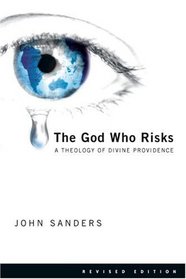 John Sanders writes in his treatise arguing for open theism, The God Who Risks, “Following Plato, Calvin declares that any change in God would imply imperfection in the divine being” (74). He proceeds to argue merely that God does change His mind. The problem is that, in arguing thus, Sanders has perhaps unknowingly presented a powerful dilemma for open theism to solve.
If God literally changes His mind, as Sanders desires to demonstrate, then:
1) If God changes His mind, and this brings about a better state of affairs, then it reveals that God was previously operating under a flawed or imperfect plan. [By implication, there are parts of God’s plan which could use improvement, but which God either chooses not to improve or doesn’t know how to improve.]
or
2) If God’s changing His mind brings about a worse state of affairs, then God has made a mistake, which perfect beings cannot do.
Now an immediate response could be that perhaps neither state of affairs is best. In that case, then, there would be no reason for God to change His mind in the first place and is therefore acting arbitrarily.
A response to this rebuttal may be that the change of mind is not arbitrary, but rather demonstrates God’s responsive, interpersonal nature. By changing His plan, God is responding to prayers and altering the course of history. If that is true, though, we have the first horn of the dilemma: God’s changing His mind is an improvement. And then that would mean God increased in perfection.
One may object with a tu quoque response: “Doesn’t anyone who hold that God becomes incarnate imply that God changes, and therefore wouldn’t they equally be skewered by this dilemma?”
A response to this could be simply that, assuming God has comprehensive foreknowledge, God has planned the incarnation from before the dawn of time, and so there is no changing of the divine plan.
It is interesting to see that Open Theists don’t necessarily hold that the crucifixion was God’s way of bringing about salvation in history. Sanders writes, “Though the incarnation and human suffering and death which would accompany it may have been in God’s plan all along, the cross as the specific means of death may not have been” (102). He concludes this because of his alignment with open theism, and the assertion that, given the free will of those involved, the crucifixion was not predestined (105). Not only that, but Sanders also holds that the suffering and death of Jesus were required by the atonement. Wholly apart from criticizing this theological point of interest, one can see that in this quotation, the open theist is entirely open to the dilemma. Suppose Jesus were to be assassinated, stabbed like Julius Caesar, instead of dying on a cross. Clearly, this wouldn’t suit to fill the prophecies in the Bible which were taken to reference the crucifixion (see Sanders’ discussion 102ff). Thus, it seems that this fulfillment of the divine purpose would have been less perfect than the crucifixion. Perhaps there are ways to improve on the atoning sacrifice of Christ. It seems ludicrous to type such a sentence, but if the crucifixion was unnecessary, it seems at least logically possible that a better way to provide for atonement may have been accomplished.
Finally, one may object that the dilemma could work for any who hold that God created the world. One could adapt the dilemma for the creation of the universe and say that God could have brought about a better world and didn’t (and hence is imperfect). Now there are several ways in which this argument is disanalogous to the dilemma presented above, but one could simply answer it by saying that there are specific reasons for bringing about our world over others’ which are “better” or argue that there seems to be no such thing as a way to measure worlds against each other (for some discussion of this see here).
It seems to me that only versions of theism which imply that God does not know [comprehensively] the future will be susceptible to this dilemma. While some versions of theism hold both that God knows the future and that God changes, these versions will [almost all] fail to be susceptible to the dilemma because they’ll have an account for God’s plan which is unchanging.
SDG.
——
The preceding post is the property of J.W. Wartick (apart from citations, which are the property of their respective owners) and should not be reproduced in part or in whole without the expressed consent of the author. All content on this site is the property of J.W. Wartick and is made available for individual and personal usage. If you cite from these documents, whether for personal or professional purposes, please give appropriate citation with both the name of the author (J.W. Wartick) and a link to the original URL. If you’d like to repost a post, you may do so, provided you show less than half of the original post on your own site and link to the original post for the rest. You must also appropriately cite the post as noted above. This blog is protected by Creative Commons licensing. By viewing any part of this site, you are agreeing to this usage policy.

 J.W. Wartick - Reconstructing Faith

