Christianity and Science
Book Review: “The Biblical Flood” by Davis Young
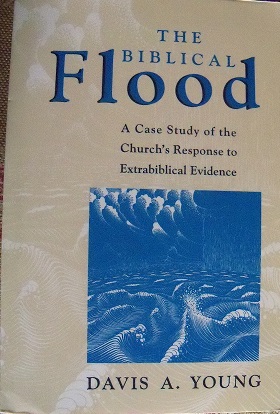 Davis Young seeks in his work, The Biblical Flood
Overview
Young, a Christian geologist, provides a detailed overview of the Church’s theological and scientific musings on the Flood. He develops this overview chronologically, beginning with early Jewish thought. The focus within the entirety of his book is directly centered upon how extrabiblical evidence was used to shape theology and vice versa. The relation should not be understood as binary. Throughout history, there was a spectrum of approaches to the extrabiblical evidence which included resistance (not infrequently forged by ignorance) as well as integration. Here, I will survey only the broadest outline of Young’s discussion.
Early Flood Views
Early Christians were aware of Pagan stories of floods but made little or no appeal to them as evidence for a universal flood, and in fact some argued that these other stories were clearly differentiated from the Biblical account because they were local as opposed to global. There was much speculation over the location of the Ark as well as the notion that fossils were the result of this universal deluge.
Middle Ages and Renaissance
Medieval thought regarding the Flood was steeped in the “ahistorical view of creation” found at the time. That is, the science of the time thought of creation as deductible from the character and nature of God. However, the discovery of the New World brought up many challenges to a universal deluge theory, which challenges began to get recognition. These included the vast number of species which would have had to fit onto the Ark and the discovery of people across the world. During this period, the discovery of flood stories in various cultures began to be viewed as evidence for a universal deluge (37).
New World
The New World continued to present challenges to the universal deluge theory. One of the foremost among these was animal migration. Entirely new and distinct species were discovered in the New World which did not exist in Europe. How did these animals get to these distant lands? More importantly, how did they get there without leaving any traces of themselves behind if they all only came from one location: the Ark? These challenges continue to vex those who hold to a universal deluge (60ff).
Geology’s Origins
The notion of a universal flood has contributed much to the development of geology as a science. The Christian worldview finally presented a picture of the universe which humans could explore in order to learn truths about reality. The Flood itself presented a theory about how to account for the geological features of the earth (65ff). Various features of the natural world were attributed to the flood, including the discovery of marine fossils on mountains and geological features like valleys. These early geologists were committed to an following the evidence where it led.
Diluvialism and Catastrophism
Various theories were put forward to explain the features of the earth. These included varied catastrophic notions, wherein the geological features were explained by a global, catastrophic flood. Such theories are repeated into today.
Geological Evidence Mounts into the Twentieth Century
Young establishes that the evidence against catastrophic diluvialism became weighty fairly early into the investigations of geologists (109ff). New discoveries related to mammoths and the way they died (over a period of time by a variety of causes rather than all at once) were greatly important, as the issue of these mammoths was found throughout the speculation about the flood. New dating methods were developed which were more accurate. Archaeological finds showed floods in areas of the Mesopotamia, but they were dated at different times. The discovery that humanity was widely spread over the earth and that there was no major extinction event throughout this spread raises a significant challenge for Flood Geologists (233). Other major challenges to Flood Geology include (but are by no means limited to): the dating of igneous formations, the cooling of the earth, metamorphism, and continental drift.
Theological Reflections
Throughout this period of discovery, theologians were not inert. Indeed, many theologians were at the front lines, actually participating in the discoveries themselves. Near Eastern Studies have revealed parallels with the Flood account which some have suggested show derivation. Others, however, argue these other flood stories merely show the perpetuity of such events and how ingrained they became on the human consciousness (236ff).
More recently, Flood Geologists have come into being once more. Their arguments parallel almost exactly those found spread in the early days of geology. Yet these arguments have been refuted by the evidence from the earth itself. Some continue to make false statements about the mammoths’ deaths, the formation of sedimentation, dating methods, and more. Young argues that this is largely due to the specialization of studies found within various fields like theology and geology. Theologians are rarely acquainted with the geological evidence, while geologists are rarely versed in theological language.
Theologians who were versed in geology began to see how interpretations of the text, rather than the text itself, had shaped the Christian response to geological evidence. People like Hugh Miller appealed to extrabiblical data in support of their intepretations of the Flood narrative (147ff).
Miller professed puzzlement that learned, respectable theologians would accept “any amount of unrecorded miracle” rather than admit a partial deluge. Could they not see that the controversy was not between Moses and the naturalists but between the readings of different theologians? (151)
More recently, many and varied theories of the flood as local have been developed and defended. The reaction from Flood Geologists has been vigorous, but theories of a global flood include a multitude of quotes from various scientists which would support competing theories of rock formation, sedimentation, and more. That is, Catastrophic Flood views present mutually exclusive theories for how the geological (and other) evidence came to be.
Appendix: Arkeology
The book is capped off with a discussion of “arkeology”: the search for Noah’s Ark. Young notes the array of locations which have been given as well as the mutually contradictory accounts of those who claim to have seen the Ark or evidence of the Ark. He warns Christians to remain cautious of any such claims.
Challenge
I believe that a good way to summarize the content of the book would be to view it as a challenge Young is issuing to those who allege that catastrophic theories are the only possible way to interpret the text and geological evidence. He himself writes, “If conservative and orthodox theology is to remain vital and relevant to a world in need of the Christian gospel… theologians will have to abandon their flirtation with flood geology and other forms of pseudo-science, reacquaint themselves with genuine scientific knowledge, and incorporate that knowledge into their thinking, secure in the realization that genuine insight into God’s creation… is still a gift of God to be treasured” (215).
Young’s book can be viewed through this lens. He shows how scientific knowledge challenged traditional readings of the text, but also how many theologians and Christian geologists alike interacted with this in order to gain “genuine insight” into God’s word and creation.
Conclusion
The Biblical Flood
I do not claim to have touched upon even all the major points found in Young’s work. The book is full of voluminous amounts of historical details which reveal interesting scientific and theological notions. The theory of a global flood was the one of the first major proposals for how the earth’s geological history was formed. As geological discoveries mounted, this theory was falsified. Moreover, theologians who interacted with the extrabiblical evidence had a wide array of responses, from downright rejection of the evidence or reinterpretation of it to attempt to fit a global flood to concordist views in which the extrabiblical evidence informed interpretation of the text. Which direction should we go? Young has presented a major challenge to those wishing to maintain a notion of the global flood. He presents mountains of evidence to challenge catastrophism, while also showing how, historically, thought on the Noahic Flood has comfortably incorporated the extrabiblical evidence without any necessary compromise of the text or faith. I commend the book to the reader without reservation.
Links
Like this page on Facebook: J.W. Wartick – “Always Have a Reason.” I often ask questions for readers and give links related to interests on this site.
Be sure to check out my posts on the “origins debate” which feature a wide range of posts on issues related to varying Christian views on evolution, creation, and more.
Davis Young, The Biblical Flood
SDG.
——
The preceding post is the property of J.W. Wartick (apart from citations, which are the property of their respective owners, and works of art as credited) and should not be reproduced in part or in whole without the expressed consent of the author. All content on this site is the property of J.W. Wartick and is made available for individual and personal usage. If you cite from these documents, whether for personal or professional purposes, please give appropriate citation with both the name of the author (J.W. Wartick) and a link to the original URL. If you’d like to repost a post, you may do so, provided you show less than half of the original post on your own site and link to the original post for the rest. You must also appropriately cite the post as noted above. This blog is protected by Creative Commons licensing. By viewing any part of this site, you are agreeing to this usage policy.
Genetics and Bioethics: Enhancement or Therapy?

[Note: Revised and expanded 6/15/2015.]
Bioethics is an expanding field with direct implications for our lives. Here, we’ll reflect on the possibility and implications of gene therapy and enhancement. While I was at the Evangelical Philosophical/Theological Society Conference in 2012, I had the pleasure of sitting in on a talk about this very topic, and that will be the focus of this post. Unfortunately, the speaker had been switched around and was not listed in the booklet that I have. Furthermore, I never caught the speaker’s actual name (I tried to write it down when he was introduced, and got Gary Alkins, though I have tried searching online for that and haven’t come up with it), so if someone knows what it is, please let me know. I’ll reference the speaker as “speaker” throughout this post.
The central relevant moral question under discussion was: “Should genetic technology be used to not only heal but also to enhance the human condition?”
A Vital Distinction
An important aspect of this discussion is the distinction between gene enhancement and therapy. Gene therapy is the use of genetic research and information to cure illness. Speaking very hypothetically, suppose that we were able to discover the exact genetic code for illnesses like sickle cell anemia, isolate it, and replace it with a non-anemic code before a person was even born; that would be gene therapy. Genetic enhancement takes this a step further. It allows for modifying people genetically to enhance certain features such as physical strength, endurance, mental aptitude, and the like. It would, in a sense, create “super humans.”
Therapy
Using our knowledge of genetics for therapy, the speaker argued, is perfectly justified. We are called by Christ’s example to treat illnesses, and gene therapy can be seen as an extension of this. There was little time spent defending the moral permissiveness of gene therapy, as the primary question was whether genetic enhancement is morally permissible.
Enhancement
There are several arguments for genetic enhancement. These include:
1) The “natural lottery” argument: if we have the capacity to genetically enhance humans but do not, that means we are, effectively, just playing a genetic lottery to see if our children turn out well. Parents have a moral duty to act against the natural lottery.
2) We encourage environmental enhancement (i.e. seeking better education, putting children in brain-stimulating environments, encouraging sports for their physical well-being, etc.), why is genetic enhancement any different?
3) We already manipulate chemicals (caffeine, vitamins, etc.) for our well-being, why not genetics? In the end, what matters is human well being.
4) Genetic enhancement is simply the next logical step for humanity. If we agree that therapy is good because it stops genetic defects, should we not also hold that enhancement is good because it pushes people to fill their greatest potential.
Against these arguments, the speaker argued [updated section 6/15/15 with some counter-responses]:
A) Genetic enhancement could never match the ideal outlined in these arguments, wherein every human being is enhanced on a number of levels. Instead, it would very likely increase the split between the haves and have-nots by allowing those who have much to increase their dominance over society. The haves could afford to continue enhancing and remain a kind of super-human society while the have-nots would never be able to catch up.
However, a possible counter-argument to this reasoning would be to note that there will always be people who are advantaged and people who are disadvantaged. It’s unclear as to how this should serve to undermine the moral base for genetic enhancement.
B) There is a great good in letting humans accomplish things which stretch their skill set. Think about the steroids controversy in sports. We intuitively know that those who used performance enhancing drugs had an unfair advantage over those who did not. Similarly, those who would be genetically enhanced would have an unfair advantage over those who were not enhanced in almost any conceivable area of human achievement.
It is unclear, though, whether genetic enhancement would undermine the good of accomplishment and human achievement. Indeed, one could argue that genetic enhancement, in fact, bolsters human achievement by widening the scope of possibility for humans. From a pragmatic perspective, though, it sure would make it hard to keep on top of sports records and the like! We’d have to build bigger baseball parks to make home runs harder to hit! But seriously, the argument from human achievement does not seem sound to me.
C) What of bodily autonomy? Who’s to say that it is a good for parents to meddle with their children’s genes. What if a child does not want to be extremely strong, or what of their parents choose to give them giftedness in music, but they simply don’t like to do music? What if the children hate what their parents chose for them: hair color, eye color, etc.? Unlike the “natural lottery,” such attributes related to enhancement actually do have blame to assign to someone. Is there no bodily autonomy involved?
However, as Elijah argues, parents violate “autonomy” of their children all the time. This means there is some difficulty with determining how genetic enhancement would be a qualitative, rather than quantitative difference for this violation of autonomy. The opponent of genetic enhancement must establish that there is an objective difference between enhancement and other forms of violating autonomy, and must also show this difference is enough to ground a rejection of enhancement.
Enhancement and Theology
There are numerous theological issues involved in the debate over genetic enhancement. First, what might it mean for the image of God? Humans were created as “very good” and in the “image of God.” What does it mean to be in that “image of God” and does enhancement change that in any way?
For Christians, the ultimate fulfillment of God’s plan comes in the New Creation. The notion that humanity needs a genetic upgrade reflects the worldview of naturalism. Christians do not hope in their own ingenuity but rather in God’s plan for creation. That does not mean we cannot get actively involved in healing, but it does mean that we do not need to violate persons’ humanity by enhancement. One might argue that the assumption involved in enhancement is that our bodies are not good enough and that we need to improve them. However, such an assumption is not the only possible basis for enhancement. One could argue, instead, that enhancement is based on the notion that we are to keep fighting against the impact of sin in the world and one way to do this is to become stronger, smarter, and the like through the tools God has given us through scientific research.
Although we are fallen creatures, that does not imply that we are creatures capable of getting out of our own fallenness. No enhancement we can do can bring us ultimate salvation.
Evaluation
It seems to me that the arguments against enhancement may seem initially sound, but each one has its own problems.
It seems that if parents select for certain attributes, then parents can be held morally culpable for the genes their children develop. Thus, if the child dislikes an attribute, they could feasibly hold their parents responsible for that selected attribute. Interestingly, this may work both ways too: a child could hold their parents responsible for not changing an attribute. Yet this latter argument seems to make a mockery of parenthood, holding parents responsible for nature. I’m not sure, though, that this culpability is enough of an argument against genetic enhancement.
In the theological sphere, one may wonder whether someone could just as easily argue that because we were created initially “very good,” a pursuit of bodily perfection could be viewed as a fight against the Fall and the curse. I tried to ask this as a question, but there wasn’t time at the end to get to all the questions. The speaker did an excellent job noting possible counter-arguments to their points, and I thought gave a very fair presentation overall. It seems that the best argument against genetic enhancement may be the bodily autonomy argument, but this one has its own significant problems.
I’d like to know what your thoughts are on this topic: Do you think enhancement is moral? Why or why not?
Links
I have written on a number of other talks I went to at the ETS/EPS Conference. I discuss every single session I attended in my post on the ETS/EPS Conference 2012. I also discuss a panel discussion on Caring for Creation, and a debate between a young earth and old earth proponent.
SDG.
——
The preceding post is the property of J.W. Wartick (apart from citations, which are the property of their respective owners, and works of art as credited) and should not be reproduced in part or in whole without the expressed consent of the author. All content on this site is the property of J.W. Wartick and is made available for individual and personal usage. If you cite from these documents, whether for personal or professional purposes, please give appropriate citation with both the name of the author (J.W. Wartick) and a link to the original URL. If you’d like to repost a post, you may do so, provided you show less than half of the original post on your own site and link to the original post for the rest. You must also appropriately cite the post as noted above. This blog is protected by Creative Commons licensing. By viewing any part of this site, you are agreeing to this usage policy.
Young Earth Creationism and Presuppositionalism: An Analysis
 Young Earth Creationism stands or falls based upon the specific use of presuppositionalism as an epistemological groundwork. Here, I will challenge the very core of the young earth paradigm: I will charge that it is an invalid presuppositionalist approach to viewing science and theology.
Young Earth Creationism (YEC will be used hereafter for “young earth creationism,” “young earth creationist” and other forms of those words as needed), is, of course, the position that the Genesis account of the creation of the universe took place over the course of seven literal 24-hour days about 6-12,000 years ago. I have extensively explored various aspects of young earth creationism and other positions, and my posts can be found under the “Origins Debate” page.
Presuppositionalism is a type of apologetics (defense of the faith) which relies upon presupposing the truth of the Christian worldview in order to defend it. I have analyzed presuppositional apologetics a number of times. For an introduction into this position, check out “The Presuppositional Apologetic of Cornelius Van Til.”
Epistemology is the study of how we come to know things. Essentially, it asks questions like “How do we know that we know?”
Before proceeding, it is worth noting that many debates between YECs and people who believe in an ‘old earth’ perspective turn on the YEC use of presuppositionalism. A common theme for mocking YECs is to say they just refuse to hear evidence or shout over evidence, yet it seems that this is an unfair portrayal. As we evaluate the young earth position, it will become clear that the YEC perspective operates from within a presuppositional framework that explains much of the way YECs reason. It will also become clear, however, that the YEC use of this framework is invalid.
Thus, it is my contention that YEC is directly dependent upon a presuppositional approach to how we know things. For support of this contention, I note the fact that many YECs see this connection themselves. For example, Answers in Genesis has a number of posts on the topic, including a post outlining the meaning of and need for presuppositional apologetics. Or again, Nathaniel Jeanson of ICR presented a presuppositional case for YEC (analyzed by the Geochristian). However, this is not the only evidence. YECs tend to argue exclusively within a presuppositional framework.
Consider this argument:
The Bible clearly states that the earth was made in seven days. There is no room to interpret the text in any way other than as a literal week of creation.
Such an argument is extremely typical within the YEC community. However, it is also clearly a presuppositionalist approach to the question of the age of the earth. YECs will argue that science must be interpreted in such away as to line up with the creation account. A common theme is that “The data is the same, it is the interpretations of that data that differ,” another notion is that people are rejecting the “plain and obvious meaning of the text” when they offer an old earth interpretation. Such a position is often united with the notion that only by using “man’s fallible ideas” can one come up with a date of millions or billions of years.
The thought process goes in this order: we presuppose the truth of the Bible => the Bible teaches that the earth is 6-12,000 years old => all scientific evidence for the age of the earth must line up with the truth of the Bible. The Bible is the infallible word of God, and so it cannot be in error. Because, according to the YEC paradigm, the only possible interpretation for the Biblical account of creation is the young earth perspective, it therefore becomes clear that all science and truth must line up with YEC.
We are thus left with two possible ways to challenge YEC. Evidence simply is not the problem. Any evidence, if the YEC use of presuppositionalism is valid, simply must line up with YEC. Thus, to challenge YEC, one must confront directly its presuppositions. First, one can challenge the position by attacking the premise that the YEC paradigm is the only possible interpretation of the Genesis creation account. Second, one can challenge the position by directly attacking the presuppositional epistemological groundwork that the arguments are built upon. Rather than focus upon the first challenge, we will here explore whether or not the YECs have validly made use of the presuppositional approach.
 Assuming a Young Earth
It is important to note that the way the YEC argument works is to begin by simply assuming the truth of young earth creationism. I know this may sound radical, but it plays out time and again when discussing the various positions on the age of the earth. The young earth paradigm brokers no alternatives; only the young earth perspective is even possibly correct. How is it that YECs are so confident in their approach?
Simply put, the confidence is gained from the very way that they defend the young earth. YEC is not defended based upon evidence. It is not as though scientists are examining the earth and coming to the conclusion that the earth was formed only some thousands of years ago. Indeed, several prominent YECs assert that the very notion of finding the age of the earth from investigation of the geologic past is impossible or hampered by sin and fallible ideas. For just one example, Whitcomb and Morris, in their highly influential work, The Genesis Flood
[I]f He [God] did this [created a universe full-grown], there would be no way by which any of His creatures could deduce the age or manner of Creation by study of the laws of maintenance of His Creation. (238, emphasis theirs, cited below)
Such a notion persists throughout much YEC literature. In principle, the only way to conclude a young earth is to abandon supposed “uniformintarianism” (hold that the processes in place today continue at the same rate they did in the past–see an evaluation of one YEC’s use of this notion here) and view all of the history of the earth through the lens of God’s word. Now, whether or not it is valid to assume that the Genesis text is a scientific account, the argument here should be fairly clear. Namely, the young earth position is assumed. It is not something demonstrated by science, but rather a given before any scientific investigation takes place. Similarly, the position is assumed to be true before any exegesis has occurred. All scientific evidence and any exegetical hints at a different position are subsumed into the YEC position because it is assumed from the outset as correct. Because YEC is correct, all evidence must line up with it.
Some may object by arguing that frequently YECs offer evidence for their position. They may cite various catastrophic theories or flood geology as alternative explanations of Earth’s geologic past. However, even the authors of books like these (such as Whitcomb and Morris, or Walter Brown in his In the Beginning) admit that the key is to presuppose Scripture, which is of course, on their view, to presuppose a young earth.
The Validity of the Young Earth Assumption
It is clear that YEC turns upon presupposing its truth. YEC is assumed to be true, and all alternative views are simply wrong by default. Unfortunately, this is an abuse of presuppositional apologetics.
It is important to contrast the specifically YEC use of presuppositionalism with the wider use of presuppositional apologetics. Presuppositional apologetics in general is the method of engaging entire worldviews by granting their core assumptions and lining them up against reality in a competition of best explanation. The YEC use of presuppostionalism is to defend a single contention–a young earth–against all comers. There are very significant disanalogies here. What the YEC has done is use presuppositionalism not to enter into the square of debate over whole worldviews, but rather to insulate their interpretation against any possible counter-evidence.
There is a distinct difference between the use of presuppositional apologetics, and the use of YEC in presuppositionalism. The latter tends to simply reject outright any challenge as either against the “clear word of God” or as “assuming uniformitarianism.” By placing their own view beyond the realm of rational inquiry, they have undermined their own potential to know that it is true.
 The Faulty Grounds of the YEC Presuppositionalist
The foregoing evaluation leads us to the greatest difficulty facing the YEC approach: a faulty epistemology. Unfortunately, the way that the defense of YEC has been shown to work introduces a paradigm of knowledge which is impossible to sustain. Essentially, the YEC must assume what they think they know. Such an assumption seems to be viciously circular. The YEC must reason thus: “The Bible teaches a young earth=> The Bible is True=> the earth is young.” When presented with counter evidence, rather than engaging with the evidence, the YEC generally falls back to this same argument and reinterprets the evidence. That is where the whole system breaks down: the YEC has not made the right use of presuppositionalism, which allows for entire worldviews to be falsified. Instead, the YEC has misused presuppostionalism to put a young earth interpretation beyond falsification.
The objection will be made that everyone has core beliefs that must be assumed without evidence. Although such an assertion is itself hotly debated, I think it is possible to sidestep such a difficult discussion. Instead, one can note that even if one grants that core beliefs are necessarily assumed, the burden of proof is squarely placed upon the YEC to show how holding to a young earth is necessary for knowledge. Why is this the case? The simplest explanation is that if one assumes the epistemology needed for presuppositionalism is correct, then one has essentially a framework that involves the assumption of core beliefs that are necessary to allow for any knowledge. Thus, for example, the existence of God might be argued as necessary for knowledge (a la Alvin Plantinga, Cornelius Van Til, Greg Bahnsen, and the like) because without God to make us rational, there is no basis for thinking that our beliefs have any actual relationship to reality. Whether or not this is the case, it seems that a young earth is not one of these core beliefs.
Thus, we have finally come to the ultimate failing of the presuppositional defense of YEC: it abuses its epistemological framework to the point of breaking. The YEC has utilized an epistemological approach that allows for core beliefs to be assumed, but has done so in such a way that essentially any belief could be assumed with equal validity. An old earth creationist or theistic evoloutionist could equally argue that their position is based upon a core belief that must be assumed, in which case YEC is undermined. In turn, they could assume their reading of Scripture and make all others wrong by default.
Presuppositionalism must walk a fine line to determine which presuppositions are genuinely those which must be assumed for knowledge. When challenged, the presuppositionalist must make arguments to show that the presuppositions are indeed necessary for knowledge. Unless and until a YEC makes a case that by abandoning the notion of a young earth, one necessarily undermines all knowledge–a case which I must admit seems impossible–the YEC use of presuppositionalism is undermined. Rather than making a valid use of that apologetic approach, YECs have undermined its very principles, and have thus eliminated their own possibility of knowledge. They have relativized all truth by introducing as “first principles” things which are not necessary for knowledge.
A Final Defense
The YEC may object, saying that they have indeed established that YEC is necessary for knowledge. After all, if one denies YEC, which is the clear teaching of Scripture, one has denied God’s word, which is the basis for the entire presuppositional approach.
Setting aside a critique of presuppositionalism as the notion that one must assume the entirety of Scripture to have any knowledge, I would respond by simply noting that this argument does nothing to rebut my charge. I have argued that believing the notion that the earth is merely thousands of years old is not necessary for knowledge. The burden of proof rests squarely on the YEC to show how it is. By merely asserting that denying YEC undermines all of Scripture, one has begged the question. They have engaged in a presuppositional defense of something for which it has been charged that such an approach is epistemologically impossible. In order to defend it, one cannot simply assume that the other side is wrong, one must show how they are wrong.
Objective Knowledge
We have seen that YEC misuses presuppositionalism. A final point worth noting is that the YEC approach to apologetics actually undermines the possibility of objective knowledge. For, as we have noted, the YEC simply assumes their interpretation of the text without argument and then evaluates all science and theology through that lens. However, the YEC offers no reason for rejecting the notion that others could do exactly the same thing with their interpreatations of the text. The YEC has essentially made all truth relative. Anyone can simply assume their position is correct without argument, and then reinterpret all counter-evidence based on that approach. It therefore becomes clear that the YEC use of presuppositionalism must be rejected.
Unfortunately for YECs, the young earth position itself stands upon the bedrock of its faulty use of presuppositionalism. It remains to be seen whether it can adapt itself for a solid evidential base.
A Way Forward in the Age of the Earth Dialogue
It has become clear that YEC is based upon a faulty use of presuppositionalism and that its use of the presuppositional approach undermines the very possibility of objective knowledge.
How, then, can one proceed? It seems that the best way to proceed is to simply throw off the bindings of the misuse of presuppositionalism (taking note that presuppositionalism in general is not necessarily invalid if used properly–see discussion here) and engage in an honest debate over the evidence for either position. Rather than throwing out rote accusations at the other side (“You’re denying Scripture”; “That’s just because you’re assuming ‘uniformitarianism'”; etc, etc), let us engage in dialogue on the evidence at hand. Let’s look at the text in its cultural and linguistic context. Let’s examine the geological evidence of the earth and see where the evidence leads us. Let us not cut off the discussion before it has even begun by simply assuming we’re right and the others are wrong. We are called to always have a reason (1 Peter 3:15). By abandoning the necessity of reasoning when it comes to an issue such as young earth creationism, YECs have undermined the very possibility of a consistent apologetic.
Links
I examine a number of common young earth creationist arguments. Also check out my extensive writings on the origins debate.
Naturalis Historia is a phenomenal site which largely focuses upon investigating claims about a young earth. Some great starting places would be the series on the amount of salt in the oceans (Part 1 here) or some of the thoughts on baraminology.
Geocreationism is another site that examines evidence for the age of the earth with a theological approach. I highly recommend it.
Finally, the GeoChristian offers a number of critiques of the young earth theological and scientific perspectives.
Sources
John Whitcomb and Henry Morris, The Genesis Flood 50th Anniversary Edition
The last image is from NASA. The other images were personal photographs and protected by the copyright on this site.
SDG.
——
The preceding post is the property of J.W. Wartick (apart from citations, which are the property of their respective owners, and works of art as credited) and should not be reproduced in part or in whole without the expressed consent of the author. All content on this site is the property of J.W. Wartick and is made available for individual and personal usage. If you cite from these documents, whether for personal or professional purposes, please give appropriate citation with both the name of the author (J.W. Wartick) and a link to the original URL. If you’d like to repost a post, you may do so, provided you show less than half of the original post on your own site and link to the original post for the rest. You must also appropriately cite the post as noted above. This blog is protected by Creative Commons licensing. By viewing any part of this site, you are agreeing to this usage policy.
Resource Review: “In the Days of Noah: A Deeper Look at the Genesis Flood”
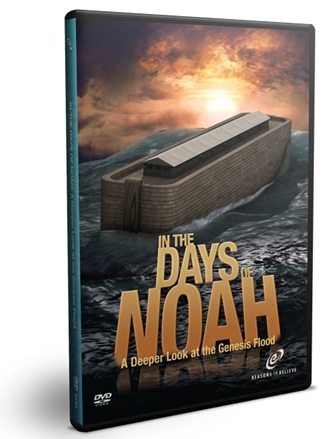 Reasons to Believe is a science faith think-tank dedicated to showing that Christianity is true. Recently, I had the opportunity to view their resource, “In the Days of Noah.” The video features a lecture by Hugh Ross regarding the extent, location, and timing of the Noahic (Biblical) Flood.
One of the central points of Ross’ argument is that people must take an integrative approach to the question of the Genesis Flood. It is not enough to look at just one verse or one chapter or even one book of the Bible and declare the question closed. Instead, Ross argues, one must take the entirety of the Scriptural data and see what it tells readers about the Flood. Not only that, but the relevant scientific findings must be taken into account as well.
For many Christians, the extent of the Flood is taken as a test for orthodoxy. Ross argues convincingly, however, that the Biblical account does not necessitate that the Flood covered the entire surface of the planet. He goes over a wide range of texts that discuss events that are said to be “world wide” or to “cover the whole earth” or that are supposed to bring “every nation” to a certain place and shows how the usage of the term was relative to the author. Ross cites a number of texts to back up this claim and shows how in many places–the Joseph narrative, writings about Solomon, etc.–the words taken as universals generally (“whole earth,” “all nations,” etc.) are used specifically to mean the whole immediate/relevant world.
There are a number of texts describing creation that go into greater detail about specific aspects of the Genesis account. Ross outlines his argument via these texts by specifically noting a number which discuss the limits set for the waters. For example, Proverbs 8:29 states quite explicitly that God gave the sea its boundary. Ross continues through the Bible and cites numerous examples wherein it talks about God setting boundaries for the waters. From there, he makes the argument that these verses give us a principle: God has set the oceans in their boundaries from Creation. He then utilizes this as an argument for a local flood as opposed to a global flood.
I think that this may be the weakest part of Ross’ argument, because it is possible to counter this reasoning by saying that just because there are a number of texts talking about the boundaries set for the water, it does not mean that the water can never cross these boundaries. In fact, one might counter by noting that Ross’ view entails a kind of uncertainty over what exactly is meant when the Bible discusses the boundaries or limits for the oceans. After all, even on Ross’ view, some body of water covered a vast expanse of land–indeed, the whole inhabited world at the time. In fact, one may argue that due to what we know about plate tectonics, the oceans have not, in fact, had clear boundaries from the beginning but have instead been shifting as the continental plates drift.
Of course, Ross could counter by noting that those continental plates themselves act as boundaries for the oceans. Even though these plates shift, they remain ‘fixed’ in the sense of constant. Regardless, it seems that the rebuttal given above must be given at least some weight in considering Ross’ overall argument. However, even if one denies the force of his argument for the Scriptural notion of fixed boundaries as being a limit for a global flood, one must still contend with his argument to open up the possibility of a local flood by noting the difference between general and specific uses of the notion of a “worldwide” event.
That said, Ross turns to the scientific evidence and notes a number of evidences against a global flood. First, there are such things as unambiguous signs of a flood. He points out the possibility of checking ice cores and sediment cores for the continuous record of the last several hundred thousand years, so if there was a global flood there should be a signal in the ice layers evidence for a global flood. These layers are annual and we know this by looking for volcanic eruptions lined up in the layers at the correct times. These can therefore be calibrated by lining them up with volcanic eruptions that we know of historically. Moreover, the ice layers line up with the ellipticity of the earth, so there are multiple independent ways to test these ice layers. However, in these layers there are none of the telltale signs for a global flood.
So where was the flood? Ross notes a number of verses in the Bible to narrow in on the location of Eden, and then extrapolates from that where civilization would flourish. Due to some geological evidence for there having been a blockage on the end of the Persian Gulf which would have, combined with the melting of ice and the extreme amount of rain noted in the Biblical account, flooded a huge portion of the Mesopotamian Plain. The region is surrounded by mountains which would have blocked in the water for the flood. Such a flood would have wiped out the extent of known humanity at the time, argues Ross.
 There are a number of arguments that young earth creationists, who often rely upon “Flood Geology” to explain a number of features of the geological past to maintain their view of the history of the earth, would raise to Ross’ presentation. For example, the image on the right was created by Answers in Genesis to parody the notion that a flood can be local when the Bible says that even the mountain-tops were covered (Genesis 7:18-20) [all credit for the image to Answers in Genesis, I make no claim to having produced it in any way]. Ross answers this argument by noting that the word can also mean hills and that with the extent of the flood he proposed, there would be no visible hills or mountains from the Ark. Thus, Ross’ argument is much along the lines of his integrative approach: that we must take into account all the relevant Biblical texts as well as noting the scientific evidence.
It would be remiss to have a review of a video without looking into the visuals. The video is a lecture divided into chapters, so a decent portion of it is spent watching Hugh Ross talk. However, there are also a number of very useful images and slides presented which will provide viewers in groups with opportunity for discussion and individual viewers with valuable resources to discuss the Biblical Flood.
“In the Days of Noah” is a great resource for those interested in the Noahic Flood. Hugh Ross is a lucid thinker and clearly lays out his perspective on the flood in terms that listeners will easily comprehend. Ross’ case is based off a holistic approach to natural and special revelation. Although Ross does not answer every counter-argument which those opposed to his view may present, the video can act as a valuable way to open discussions and perhaps come to a better understanding of God’s truth.
Source
“In the Days of Noah: A Deeper Look at the Genesis Flood” (Reasons to Believe), 2010.
Image Credit for the second image goes to Answers in Genesis.
SDG.
——
The preceding post is the property of J.W. Wartick (apart from citations, which are the property of their respective owners, and works of art as credited) and should not be reproduced in part or in whole without the expressed consent of the author. All content on this site is the property of J.W. Wartick and is made available for individual and personal usage. If you cite from these documents, whether for personal or professional purposes, please give appropriate citation with both the name of the author (J.W. Wartick) and a link to the original URL. If you’d like to repost a post, you may do so, provided you show less than half of the original post on your own site and link to the original post for the rest. You must also appropriately cite the post as noted above. This blog is protected by Creative Commons licensing. By viewing any part of this site, you are agreeing to this usage policy.
Gregg Davidson vs. Andrew Snelling on the Age of the Earth
 I was recently at the Evangelical Philosophical Society conference (see my thoughts on every talk I attended) and one of the sessions was a debate between Gregg Davidson of Solid Rock Lectures and Andrew Snelling of Answers in Genesis on “Scripture, Geology & the Age of the Earth.” A number of readers requested more information on this talk, and I found it very interesting myself. Here, I’ll touch on the highlights of this dialogue as well as my own thoughts.
Davidson- A Biblical Worldview and an Ancient Earth
Gregg Davidson, a geologist who authored When Faith and Science Collide
Another problem is that YECs fail to recognize that their position itself is an interpretation of Scripture. Their view is not Scripture itself. There is a tendency in debates about theology to view one’s own position as what the Bible teaches, but that fails to take into account the possibility of fallible human interpretation.
Davidson argued for an approach to Scripture that takes note of the fact that God often deigns to make use of “the knowledge of the day to communicate truths about the nature of God.” As an example, he referenced Jesus saying that the mustard seed is the smallest seed of all the plants on earth, despite the fact that it is not (Mark 4:30-32). The point was not the size of the seed, but rather the power of faith. Thus,we must be careful not to make Scripture teaching something it does not claim for itself. He pressed that to read into the Genesis text specific dates and time periods is to make the text teach something that it is not claiming.
Turning to the science, Davidson noted that there are any number of evidences for an ancient earth, but that he chose to focus upon just one area from a number of evidences in order to show how interdisciplinary and cross-confirmed the age of the earth is. He focused upon the Hawaiian Islands and their formation and age. There are multiple, independent ways to investigate the age of these islands. The islands were formed by a hot spot–a place where magma shoots up from underneath the crust and bubbles to the surface. This eventually would form islands when enough of the lava cooled and hardened. The islands are on a moving continental plate and so as they move away from the hot spot, the expectation is the islands get progressively older. Thus, in a series of 3 islands arranged thusly: 3-2-1-0 (0 being the hot spot), 3 would be the oldest island.
Davidson first noted the ages that were found by testing the age of the volcanic rock with radiometric dating. These ages yielded millions of years. Now of course most young earth creationists hold that radiometric dating methods are deeply flawed, but Davidson noted that this procedure can be tested for accuracy with independent methods. Before turning to that, he showed a picture of what the estimate for the movement per year of the plate over the hot spot would be based solely upon the radiometric dating. Basically, this works by just taking the distance of 3-2-1 and measuring how far each is from the hot spot, then dividing the radiometric date by that distance to see how far the islands move per year. The estimate yielded movement of 2.6-3.6 inches per year.
Recent technology has allowed us to utilize Global Positioning Systems (GPS) to actually measure the rate that the islands are moving. These measurements yield approximately 3.1 inches per year, which is exactly in the middle of the estimate given by the radiometric dating. Given the measured rate, scientists can extrapolate how many millions of years old the islands are based upon their distance from the hot spot. It’s kind of an inverse way to get the date. They simply divide the measured distance of the islands from the hot spot by the measured rate of movement per year. Of course, this way of measuring is not dependent in any way upon radiometric dating. Thus, there are two independent sources showing the date in millions of years for the Hawaiian Islands.
The coral growth around the Islands was a third confirmation of the ancient age of these formations. This argument was more complex than the first two. Basically, it seemed the argument was that because different corals form closer to the surface, we can look at the coral reefs formed around the islands as they are farther out and see how much the coral has moved up the island as it subducted (moved under the water with the continental plate). Thus, as the islands move farther away, and therefore sink into the water, the coral that can only survive at certain depths is submerged too far for it to get adequate sunlight, and it dies. One can then measure radiometrically the age of rings of corals. When one measures the coral on the islands, they can correlate that with the ages of the corals and the islands themselves. This measurement also lined up with the previous two.
Davidson concluded that the problem with the YEC paradigm is that they will often focus upon rebutting multiple, independent claims. While this may work for each claim individually, the problem is that all of these types of evidence add up to form one cohesive picture. When they are cross-referenced and they all hit on the same age or date range, they all show the same predictions of distance, and the like, it becomes extremely implausible to say that every single way to find the age of the earth is faulty. They form a full picture. Furthermore, Davidson critiqued YECs for often presenting a selective picture of the evidence–only showing the evidence which favors their position.
Snelling- A Biblical and Geological Defense of a Young Earth and the Global Flood
Andrew Snelling is a well-known proponent of YEC, the author of Earth’s Catastrophic Past
Snelling began by offering the common argument that Jesus taught the global flood and young earth creationism. He argued that the Hebrew word used in Genesis 7:17 is only used for this event, which hints at the incredible devastation.
 Furthermore, the language in Genesis states that the mountains were covered. Snelling’s slideshow had the image shown here on the right, which is becoming pervasive in discussions about the extent of the Flood. The argument is that if the Flood were local, it makes a mockery of the Biblical text. (See a different perspective on this issue with Hugh Ross’ “In the Days of Noah.”)
Snelling outlined several things we should look for if there was a global flood. Among these expectations are:
1) Marine fossils in strata for terrestrial creatures- Snelling named a number of places these could be found. This is an expectation because the Flood covered the whole earth, so the creatures should all be mixed together.
2) Rapid burial of creatures and plants- Snelling noted a number of places where fossils show rapid burial. This is expected because the Flood would have suddenly come upon these creatures.
3) Fossil graveyards- The Flood would have killed huge numbers of animals, so we should expect to find huge fossil graveyards, which we do.
4) Evidence that the ocean flooded the continents- if the Flood were global, we would expect to find its sedimentation upon the continents, and we do.
He argued that these are all evidenced in Earth’s catastrophic past, and he pointed to the Grand Canyon as evidence for a number of these evidences.
Snelling also looked at various geological features he said were evidences for a global flood and a young earth. Among these were several layers of sedimentary rock which are bent. He argued that this can only occur when the rock is liquefied like cement–otherwise it cracks–so this sedimentation had to happen during the Flood.
Discussion- Q+A
Next, there was a dialogue between Snelling and Davidson in the form of them asking each other questions. The highlights were a few specific questions:
Davidson asked Snelling about the Grand Canyon: specifically, he noted that the terrestrial fossils were found in similar strata, but never in the same layers, which instead suggests an ebbing and flowing of the water; not a global flood. Furthermore, he pointed out the lack of any pollinating plants in an entire mile of sediment. He asked how Snelling’s account lines up with this data. Snelling responded by arguing that the fossils are indeed mixed together and that we even find footprints in the wrong layers. He argued that due to “devastating tsunamis” which would have swept the earth, some of this could be undone and/or specific types of creatures/plants might have been swept out of the layers.
Snelling gave a brief outline of problems with radiometric dating giving divergent ages and asked Davidson to comment on the difficulties he pointed out with radiometric dating. He argued that often, old earth proponents and “secularists” simply assume an age for the rock and interpret the tests to get that age. Davidson responded noting that he worked with radiometric labs for quite some time and that there is mixing in the chemicals which can be accounted for. He showed a picture showing how some of this can work and how labs have to account for certain elements contaminating the rocks. However, he pointed out there is a margin of error to account for some of these difficulties.
 Davidson then brought up a slide with images of bent rocks. One was a “bench” at a graveyard in which the middle had sagged despite being made of stone. He argued that with enough pressure/time rock can sag under its own weight or (as the picture showed) even no weight at all. Given this evidence, he asked why bent rocks should count in favor of YEC. Snelling responded by saying that hard rock can be bent by pressure but that if the pressure is sufficient the rock will crack. He continued to emphasize that in the Grand Canyon one can observe rocks bending without fracture.
Evaluation
I have to say I was struck by how much this interaction turned on the scientific aspects of the debate. I had thought that Snelling would focus more upon an attack of Davidson’s interpretation of Scripture, and while he did some of that, the majority of his responses were related to scientific arguments. Davidson followed suit and kept hammering examples that showed how the YEC interpretations Snelling gave of various natural phenomena failed.
Davidson’s scientific presentation in his paper was extremely strong. It would be very hard to explain away the fact that three completely independent methods for dating the islands lined up so clearly to point towards an ancient earth. If I had been on the border between young earth or old earth going in, I would have come out as convinced of an old earth. I actually did go in as one who holds to an old earth, having been convinced by the evidence a few years ago, and I came away utterly convinced that YEC is false.
Snelling’s talk was a great defense of the YEC position, but it demonstrated the flaws that Davidson was quick to capitalize on. I was really impressed by the fact that Davidson had a number of slides ready to respond to both Snelling’s presentation and his questions. Davidson’s critique of the “bent rocks” was particularly devastating.
Davidson’s critique of YEC: that they focus upon independently repudiating various dating methods, came to fruition in this discussion. He really showed how the YEC paradigm is utterly dependent upon a selective presentation of data at the exclusion of pieces that do not fit.
One thing I would have liked to see was more debate over the Flood and the Bible passages in general. I was surprised by how much the talk focused on the science–though that was extremely interesting.
Let me know your thoughts on the topic. Have you any insights on any of these issues?
Links
I have written on other talks that I attended at the ETS/EPS Conference in 2012. Specifically, check out my post on Caring for Creation: A discussion among evangelicals. I have also written briefly on every talk I attended. See my post on the ETS/EPS Conference 2012.
There are a great many posts on creation issues on my site. You can access them by checking out my page on the Origins Debate.
Naturalis Historia is a site that focuses primarily on the scientific evidence for an old earth. I highly recommend it.
For the theological aspects of the debate (and also more of the scientific discussion), check out The GeoChristian as well as Geocreationism, two fantastic sites.
Finally, for a comprehensive Biblical and scientific old earth view, see Reasons to Believe.
SDG.
——
The preceding post is the property of J.W. Wartick (apart from citations, which are the property of their respective owners, and works of art as credited) and should not be reproduced in part or in whole without the expressed consent of the author. All content on this site is the property of J.W. Wartick and is made available for individual and personal usage. If you cite from these documents, whether for personal or professional purposes, please give appropriate citation with both the name of the author (J.W. Wartick) and a link to the original URL. If you’d like to repost a post, you may do so, provided you show less than half of the original post on your own site and link to the original post for the rest. You must also appropriately cite the post as noted above. This blog is protected by Creative Commons licensing. By viewing any part of this site, you are agreeing to this usage policy.
Caring for Creation: A discussion among evangelicals
I recently had the wonderful opportunity to attend the Evangelical Philosophical Society annual meeting (check out my thoughts on the whole thing). The theme of the meeting was “Caring for Creation” and although I generally went to other talks with topics that interested me more, I did get the chance to listen to a talk by Douglas Moo, “Biblical Theology and Creation Care” followed by a panel discussion on caring for creation. The talk by Moo was one of the best papers I attended, and the panel discussion afterwards was both informative and contentious. Readers, I hope you’ll look through the whole thing and engage in some dialogue here. This is an extremely interesting topic and I’d love to read your thoughts on it. I’ll start here by summarizing the highlights of Moo’s paper. Then I’ll look at the panel discussion.
Douglas Moo- “Biblical Theology and Creation Care”
The thrust of Moo’s argument was twofold: first, to outline a “Biblical Theology” and apply that to the notion of stewardship; second, to hint at a strategy going forward for evangelicals interacting with creation care.
There are three ways to look at the texts in regards to creation care: resistance (a pattern which allows one specific interpretation or approach to trump all others and therefore forces all texts into a certain paradigm); recovery (look at different texts and incorporate a broad view that supports an ecological interpretation); and revisionism (adopt a constructive and creative approach that makes meaning from the text while recognizing broad continuity with the text). Moo noted difficulties with all three of these and endorsed a kind of recovery/revisionist approach which “sees the ‘Green'” in the texts while also not forcing texts to be about environmentalism in every case. Furthermore, a sparseness of texts does not necessarily entail that no theology can be drawn from a topic. Instead, there are enough verses which can address creation care to paint in broad strokes.
From this approach, Moo argued that there is a pattern of fulfillment in the New Testament which does not abrogate the Old Testament teachings on creation care but rather incorporates them into the whole world. We are called, Moo argued, to see our authority over the earth as not our own but as Christ’s as Creator.
Moo argued that we must not ignore God’s broad interpretation of “neighbor.” God’s view of neighbor includes not just your friends and your enemies but also those yet unborn. Our culture can be a positive influence in some ways by informing how we can prioritize our work in caring for creation. Furthermore, the concerns of our surrounding culture can inform the directions theology must take. For example, he noted that it was no accident that theologians turned to investigating texts in light of personhood debates in the 1970s with the abortion movement: culture can inform the direction that theology needs to explore, thus giving a more robust theology for coming generations. “When faced with challenges or large scale movements, the church rightly turns to the Bible to see what it may say on that issue.”
Moo then turned to the created world. We are able to learn truths about the world through scientific research. Moo argued that “truth discovered by scientists in the natural world” can inform our worldview because they are viewing the evidence left behind from Creation. It is not scientific theory vs. scientific fact or science vs. the Bible. Instead, Christians must see truth as both interpretations of the science as well as interpretations of the Bible. “We cannot dictate Scripture by science but… current scientific data should not be dismissed unless there is an extremely solid Biblical ground that contradicts this data.” Yes, science changes, but so do interpretations. Sometimes science can inform us of a faulty interpretation of the text. It can cause us to turn to the text to look for a better understanding of both special and natural revelation.
 Moo argued that there is a broad scientific consensus regarding climate change. It is happening and it is at least partially caused by humans. Not all scientists are saying the exact same thing in regards to climate change, but the broad consensus is that it is at least partially anthropogenic.–caused by humans.
Thus, Moo argued, “Biblical theologians have no basis as laity in science to reject what science is telling us on this topic [global warming].” The Bible informs us of the disastrous effects humans can have on the earth, from the fall to Israel’s continued rebellions, which brought harm to the earth itself. Similarly, our own modern rebellions can lead to horrifying effects on the earth.
Moo concluded with a call to Christian philosophers and theologians–and more generally, to Christians at large. “We should be at the forefront of confronting” climate change. We must be concerned with caring for creation.
Panel Discussion
The panel discussion after Moo’s talk quickly became contentious. E. Calvin Beisner began by arguing that we must not lose the distinction between scientific models and reality. He noted that a scientific consensus does not necessarily mean reality, and that dissenting scientists were often those whose careers couldn’t be threatened by loss of livelihood. He generally expressed skepticism over the extent of humanity’s causing climate change.
After Beisner’s general response, the moderator began a Q+A session in which all the panelists- Moo, Beisner, Russell Moore, and Richard Bauckham would be allowed to respond to each question. The first question asked about the political nature of the discussion. All the panelists generally agreed that the discussion goes beyond politics and into interdisciplinary studies of geology, climatology, philosophy, theology, and beyond.
Next, “What can churches do to enhance creation care?” Moo argued that it needs to become an agenda item that churches regularly touch upon. He also said there are a number of easy ways to reduce one’s climate impact that can be incorporated in one’s daily routines. Bauckham expressed a desire for every church to have a ‘care of creation’ group which would inform their church on issues involved in creation care. Beisner also advocated easy things that can be incorporated into one’s life to take care of creation. Moore was concerned with a tangible connection to creation–he advocated getting people out into nature for walks and camping and a fuller understanding of God’s creation.
The next question related to the facts that each would say are agreed upon by all panelists despite their some contradictory opinions. It seemed that across the board they agreed that some climate change is happening. Moo noted that it is easy to find someone to disagree with any fact, but that doesn’t undermine truth.
Another question that came up was where the panelists thought creation care should rank in regards to a priority for Christians. The general view expressed across the board was that there is no easy way to say this should be a number one concern or where it fell in line with other major concerns like abortion, evangelism, and the like. Instead, all the scholars seemed to say that it is people’s duty to be informed on this topic and to do what they can.
 Interestingly, the question: “What are areas of agreement with the other panelists?” was the one that generated the most controversy. It started off well enough with the panelists noting actual areas of agreement. However, once the moderator (whose name I didn’t catch) noted the problem of the West’s excessive consumption, the discussion became heated. Beisner followed this comment with a rather lengthy argument that we need to move past the current scenario of reducing CO2 as a brute cure to the problem. He argued that this could be disastrous to the developing world. The developing world often is still using wood for fuel and to try to prevent them from using coal and other carbon-dioxide producing fuels would not only slow their development but also possibly cause deaths now due to inadequate heating, poor quality water, and the like. He made note of a few studies to this effect and argued that we can’t reduce climate change at the cost of humans who are here now struggling to get enough food and water to survive. He noted one study which showed that the more money spent on reducing climate change, the less the per capita income in the developing world becomes. Thus, he expressed concern for the people on earth now who might suffer from these measures.
Moo then noted truth in what Beisner was saying–we need to be aware of the harm we can cause and see if certain methods of prevention have a cost too high–but dissented from Beisner in arguing that we must also take into account sustainability and future generations, even if that may not make for the ideal “now” for everyone.
Bauckham really turned up the heat when he started his response by saying “Remember Galileo.” He noted that Galileo was initally condemned due to Scripture, but his example shows how trying to “predict from Scripture what science must observe is extremely dangerous.” He said that we need to stop playing “silly games with pseudoscience” [clearly aimed at Beisner’s use of arguments against the consensus Moo and the others argued was in place] and step outside of the Amero-centric view of the world. Regarding the developing world, he responded to Beisner by saying that whole nations are afraid of being consumed by the oceans, which is of course of utmost concern. He expressed worry that Christians in other countries saw Christians in the U.S. as disregarding the ecological crises of our time. Finally, he made a jab at Beisner saying that denying anthropogenic climate change is to the scientific community like denying the existence of Jesus would be to the panel.
Beisner immediately responded, saying that Bauckham had been disingenuous and that he felt the language used was troubling. He argued that the supposed consensus is not a true consensus and that there is debate among experts related to the extent of anthropogenic climate change.
Moore closed this part of the discussion by noting that it is easy to attack each other but that there is a general agreement: things need to change. He advocated change on a local level, with everyone trying to carry a bit of the load for a “full reform of culture.”
Conclusion
There were a number of themes I took away from this discussion. First, I think Moo is spot on when he notes that Biblical theologians have no right to tell scientists what their data is. Moo’s presentation has reverberations for other issues, such as the age of the earth. Not only that, but his general notion of culture driving theology and vice versa was a very interesting concept of which people should take note. Finally, his call to Christians to be at the forefront of confronting climate change and being good stewards of Creation must be taken to heart.
Despite the generally contentious nature of the panel discussion, it remains the case that all the panelists advocated a need to care for creation. The debate was over how that must take place. Clearly, the notion of anthropogenic global warming was a hot topic, but again all the panelists agreed that we need to be doing better than we are now.
What do you think of all these discussions? What can we do? What should we do? Let’s hear it!
Image
The third image is credited to: http://commons.wikimedia.org/wiki/File:Forest_in_Yakushima_30.jpg.
SDG.
——
The preceding post is the property of J.W. Wartick (apart from citations, which are the property of their respective owners, and works of art as credited) and should not be reproduced in part or in whole without the expressed consent of the author. All content on this site is the property of J.W. Wartick and is made available for individual and personal usage. If you cite from these documents, whether for personal or professional purposes, please give appropriate citation with both the name of the author (J.W. Wartick) and a link to the original URL. If you’d like to repost a post, you may do so, provided you show less than half of the original post on your own site and link to the original post for the rest. You must also appropriately cite the post as noted above. This blog is protected by Creative Commons licensing. By viewing any part of this site, you are agreeing to this usage policy.
Really Recommended Posts 9/1/12
 I am constantly delighted by the great quality of posts by my brothers and sisters in Christ. This week, I have provided a choice selection. The topics range from politics (the doctrine of peace through strength) to young earth creationism to presuppositional apologetics and Islam and beyond. I even linked to three of my favorite songs, to give a slightly different feel this go-round.
As always, please let me know what you liked!
———
The Natural Historian writes about Isaac Newton’s thoughts on the Mosaic account of creation. Check out this excellent quote:
Attempts to bring explanations for the physical origins of the geographic features of the earth into conformity with a six day creation and a universal flood has never yielded a unified view of how to interpret the data… [T]he application of that traditional view [young earth creationism] to an understanding of the physical creation and the origin of the earth has never accomplished a satisfying nor widely accepted result.
Refuting Islam: Philosophical Analysis– Mike Robinson uses presuppositional apologetics to evaluate Islam and argues that Islam is founded upon a logical fallacy.
Of Jesus, the Woman Caught in Adultery, Public Morality, The Law…– A fantastic and lengthy post on Christianity in the public square, legislating morality, and some specific moral issues. Recommended if you enjoy political discussion and the interaction of faith with politics.
What is the Doctrine of Peace Through Strength?– Wintery Knight weighs in on a national defense policy of peace through strength. This isn’t directly related to Christian apologetics, but I found it interesting, and Wintery Knight is a master of discussing Christianity in the public square. Check out the rest of his site. A choice quote from the article on peace through strength:
The way to stop most wars is to make dictators believe that you have the means and the will to stop their aggression.
The Ring Makes All the Difference: A Word to the Wise on Cohabitation– Does marriage make a difference? Should we do trial runs of living together first? What does sociology say about these issues? Check out this informative article.
Some of My Favorite Music– Here are some links to songs by three of my favorite artists. Yes, they range wildly in genre. I like some Christian rap- like Lecrae; I like Christian Metal like Demon Hunter (my favorite band) and I love some Christian Blues too, check out the Glenn Kaiser Band.
Alien Life: Theological reflections on life on other planets
 I have two general beliefs/feelings when it comes to life on other planets which are in conflict. Part of me is extremely skeptical. The probability of their being life on other planets given the extremely precise conditions needed to sustain life is exceedingly, vanishingly, absurdly low. Sure, there are unimaginably numerous planets in our universe, any number of which may be earthlike, but I just do not see why we should think that life is inevitable or even likely. On the other hand another part of me thinks that God could just as easily have brought life forth in various places throughout the universe, utilizing it much like an artist uses a tapestry. Our universe could be teeming with life, just waiting to be discovered.
Reading a couple books recently, along with the recent exploration of Mars, have turned me to reflect on the implications of life on other planets for Christian theology. One book, Vast Universe [link at bottom of post], was on Christian theology of life on other planets. Here, I shall be setting aside my extreme skepticism about life “out there.” Instead, I shall consider the following statement: “If there is other life in the universe, what does that mean for Christian theology?”
Science and Christianity
The topic is so oft-discussed that I will not dedicate too much time to it. What would the discovery of life ‘out there’ do for science and Christianity?
I think that Christian theology already has the resources built in it to adapt itself to life on other planets. Although some would be disturbed by such a possibility or reality, I do not see how such a discovery would be damaging to Christianity as a whole. The real problem would lie with those willing to abuse the text of the Bible in order to try to make it say there is no possibility of life outside of Earth or that our planet is the focal point of all creation. Theologies which take such a path those would indeed suffer greatly.
Humanity’s Place in the Universe
The discovery of life on other planets would almost certainly remove the notion that humanity is some kind of privileged being in this universe. It was not all created by God for us. What would that mean for Christian theology?
Again, I do not think this would be very damaging. Although the notion that humanity has a special place in the universe has a traceable line throughout the history of Christian theology, it is hardly a necessary component. In fact, life on other planets would be a great illustration of another thread of Christian theology: the notion of God as a cosmic artist who delights in creation. On this view, God takes such pleasure in the creation of and interaction with various living species that He caused them to arise across the universe. Furthermore, our discovery of these other living creatures could be a reflection of His providence, having set up the world in such a way that we could discover other life and marvel at His creation.
Salvation
What about salvation on other planets? Did Jesus go to other planets in His incarnate form and save them as a human? Was there more than one crucifixion? Thomas O’Meara, in the book I mentioned above, reflects upon questions just like these. He argues that “All three persons can become incarnate because incarnation is one aspect of boundless divine power… The divine motive for fashioning a universe of galaxies is God’s goodness; the same motive brings incarnation” (47, cited below). He establishes the notion of more than one incarnation as a live option throughout Christian history (63ff).
It therefore seems as though other life in the universe would not destroy God’s salvation plan. The Bible tells us about God’s salvation history for humanity. We know God is good, and we therefore know that God would providentially interact with other beings at their own levels and needs.
Finally, one thoughtful reader pointed out to me one area I had forgotten to add in here. There is the possibility that if there are aliens, then they have not fallen. Perhaps they have lived in communion with God instead of in rebellion against God. The possibility is very real, and must be considered in this kind of speculative theology. Such aliens would possibly be corrupted by meeting humanity; but they may also have much to teach us. As O’Meara notes, they may be some kind of “Star Mentors” with spiritual insights we may miss in our fallen state.
 The Sentient Alien and other faiths
What kind of challenge would a sentient alien present to Christianity? What of their faith, their religion?
As far as other sentient species’ religions, I think that Christianity could interact with them in the same way that Christian theology has considered other human faiths. Seek truth where truth exists, and critique where it is untrue. (For my fuller vision of world religions, check out my post on A Vision for Christian Apologetics to World Religions.)
Some could even argue that a Christian interaction with other sentient races should be open to their own incarnations and truth in their religion as revealed by God. What of an alien Bible? Again, it seems that a good God, as we know God is, would interact with all life in a way that reflects His omnibenevolent nature. God’s providence would extend to life across the whole universe.
Alleged Disproofs
Would life on other planets somehow discredit Christianity? What of panspermia? How should we treat the discovery of life in the universe, were it to happen?
The Bible does not seem to make any kind of statement about life outside of our planet. However, it does make it clear that there is a spiritual realm of angels and demons. Thus, there is at least life outside of our easily accessible realm. No verse in the Bible states that there is no life elsewhere in the universe. It seems that the possibility is certainly open.
Furthermore, I don’t see any reason to think that life on other planets would somehow justify belief in panspermia or some other pseudo-scientific explanation of the spread and origins of life. We would have to deal with the same questions about life on other planets that we must deal with on our own.
Created life and the universe
Overall, I think that as a purely rational standpoint there is reason for immense skepticism about life on other planets. Although many express optimism and point to the sheer volume of planets in our universe as somehow necessitating life elsewhere, I am not convinced that sheer numbers somehow increase the likelihood of life on other planets. To put it plainly, it is my opinion that the only rational way to hope for life elsewhere in our universe is to conjoin that hope with belief in a God who loves creating and interacting with created life.
A final disclaimer
I realize that many of the points I wrote about in this post are likely to be extremely contentious. What I want to say is that this has been an exercise in speculative theology. I have been writing about something which is a mere possibility and offering possible answers to a number of questions from a perspective which takes this possibility seriously. I am quite possibly wrong on any of these. What I have tried to do here is offer a number of things for Christians to think about when they consider life on other planets. For a great post on the possibility of life on other planets, check out this guest post by Greg Reeves on that very topic.
Source
Thomas O’Meara, Vast Universe
SDG.
——
The preceding post is the property of J.W. Wartick (apart from citations, which are the property of their respective owners, and works of art as credited) and should not be reproduced in part or in whole without the expressed consent of the author. All content on this site is the property of J.W. Wartick and is made available for individual and personal usage. If you cite from these documents, whether for personal or professional purposes, please give appropriate citation with both the name of the author (J.W. Wartick) and a link to the original URL. If you’d like to repost a post, you may do so, provided you show less than half of the original post on your own site and link to the original post for the rest. You must also appropriately cite the post as noted above. This blog is protected by Creative Commons licensing. By viewing any part of this site, you are agreeing to this usage policy.
Really Recommended Posts 8/17/12
Another really diverse round of posts this time. Politics, reading the Bible, and creationism are just a few of the featured topics. Check them out. If you like them, let me know!
Why don’t we read the Bible?– An exhortation to reading the Bible. We need to set aside the time for real Bible study. Why don’t we?
Who is Paul Ryan? What are his political views and motivations?– Frequent readers will know that I very, very rarely discuss politics. However, I can’t help but be excited about Mitt Romney’s nomination of Paul Ryan for his running mate. Why? Well Paul Ryan’s track record as far as pro-life politics are concerned is nearly spotless. His fiscal policy also seems spot-on to me. I highly recommend checking this post out to those of my readers interested in U.S. Politics.
“What Books Are a Good Investment for Scholars?”– Doug Geivett outlines which types of books will make good investments for scholars.
Debating Tips for Atheists– Want to have genuine discussion with Christians, atheists? Here are some tips.
The Correct View of Creation?– A survey of views on creation (old, young earth) along with some discussion over how to determine which is correct.
Ehrman’s Problem 16: Cosmic Issues He Doesn’t Understand– Bart Ehrman has a lot of problems. One is that he completely misunderstands the book of Job and the cosmic issues therein.
Answering Common Young Earth Creationist Arguments
 The debate over the age of the universe is a hot issue for some Christians, and this unfortunately leads to a number of faulty arguments and even some name-calling. This post is not going to argue against young earth creationism specifically. Rather, I hope that it can be a resource for both young earth and old earth proponents in order to avoid faulty reasoning. Each argument’s topic will be in bold with the problem outlined and a response. [Image at head of post credit here.]
Please see the end of the post for a response to an article linking back to this one.
Perspicuity of Scripture–
The Argument
Some young earth creationists (hereafter YEC or YECs) argue that old earth positions undermine the perspicuity of Scripture. Perspicuity of Scripture is the notion that the central teachings of Scripture can be understood by any who come to the Gospel. The charge YECs make is that because it seems, on a surface level reading of the text, that Genesis 1 implies creation over the period of 6 literal 24 hour days, those who deny this undermine the Perspicuity/Clarity of Scripture.
Response
The Perspicuity of Scripture does not apply to all areas of Biblical doctrine. Rather, it is the notion that anyone can understand the plan of salvation as laid out in Scripture and come to right knowledge for faith.
Think of it this way: read the book of Revelation. Do you understand everything in this book, or is the apocalyptic literature hard to discern? Throughout much of Christian history, there has been debate over the meaning of Revelation. There are a number of views, like preterism, idealism, dispensationalism, etc. But this doesn’t mean that what Scripture teaches in general is unclear. The clarity of Scripture in regards to salvific issues is absolute. Any reader can read and understand God’s plan for salvation.
Addendum
If the argument is pressed, again ask the YEC whether they are claiming they understand every single doctrine that the Bible teaches. Do you understand perfectly the Trinity, the atonement, the incarnation, the Lord’s Supper, the proper relation of Law and Gospel, etc.? If someone claims they do, they are essentially equating their understanding to God, rather than adhering to Scriptural teaching (1 Corinthians 13:12).
The Meaning of Day
The Argument
The Hebrew word used in Genesis one, yom, means day. It literally means a 24 hour period.
Often this argument is presented in a fairly demeaning and/or ad hominem way to the opponent: “Why do you insist on reading man’s fallible ideas into the text? It says day, it means day. I trust the Bible.”
Response
Actually, the Hebrew word yom has several different literal meanings. For example, according to Brown-Driver-Briggs’ Hebrew Lexicon, yom can mean “day, time, or year”; day as opposed to night; a 24 hour day; a time or period of time; a year; an age. Thus, if someone reads the text and argues that in Genesis 1 the days mean “ages”, they are still reading the text literally.
Evening and Morning
The Argument
When the Genesis 1 text refers to the days, it applies the terms “evening and morning” to each one of days 1-6, which means that each day is indeed a 24 hour period. That’s what evening and morning means.
Response
The delineation of time periods for days was not possible until the fourth day. As it is written, “Let there be lights in the vault of the sky to separate the day from the night, and let them serve as signs to mark sacred times, and days and years, and let them be lights in the vault of the sky to give light on the earth” (Genesis 1:14-15, I italicized “days”). Thus, the text itself tells us that the sun did not serve as a specific indicator of the length of days until the fourth “day.”
The repetition of evening and morning is an indication of the metaphor for the work week used throughout Genesis 1. Notice that evening and morning are reversed from the order in which they occur in a 24 hour day.
Day is not a long period of time
The Argument
Sure, there are other literal meanings of “yom” and in poetic literature it says that a day is like a thousand years for the LORD, but Genesis is a narrative and so the days mean literal 24 hour periods.
Response
Actually, in the very same account the word day is used in order to refer to the whole time of creation. As it is written, “These are the generations of the heavens and the earth when they were created, in the day that the Lord God made the earth and the heavens” (Genesis 2:4). I used the ESV translation here because the NIV translation translates yom as “when” here. In this text, the word “day” refers to the entirety of God’s creative work. Thus, the text itself utilizes the same word, yom, to mean a longer period of time than a 24 hour period in the same context of creation. And because this is “narrative” it can’t be dismissed as “mere poetry.” Speaking of which…
That’s Just Poetry
The Argument
Many of the verses that old earth proponents use are from places like the Psalms. For example, the verse about a day being like a thousand years is from Psalm 90:4. These verses are poetry and therefore not relevant to the actual age of the earth.
Response
Poetic literature still makes truth claims. Are you suggesting that nothing in the Psalms is true? To dismiss a text that is brought up in order to counter your position by saying “that’s just poetry” is tantamount to throwing God’s word out the window. One might wonder why it is that the YEC interpretation of Genesis 1 trumps every other passage in the Bible.
Appearance of Age
The Argument
Sure, some scientific evidence may make it seem as though the earth is old, but it is not actually old. Instead, God made it in such a way that it would support life, and in order to do so, it had to look old. He created light already on its way to earth and the Flood explains sedimentation.
Response
Nature tells us about reality, though we cannot infallibly search it (Psalm 19); God does not lie; therefore, God would not make something which by all appearances would look old, but is not in fact old.
Rebuttal
But Adam looked old. He was created about 30 years [or some adult age] old! Similarly, the plants in the garden, etc. would have looked old, but been new.
Response
The text doesn’t actually say how old Adam was when he was created. But that’s a side issue. More importantly, we would be able to tell how old Adam was by looking at evidences like his teeth, his bones, and the like. All of these would show signs of age.
Regarding the plants, this argument really just begs the question for YEC. As it is written, “And the LORD God planted a garden in Eden, in the east, and there he put the man whom he had formed. And out of the ground the LORD God made to spring up every tree that is pleasant to the sight and good for food…” (Genesis 2:8-9a).
The text clearly says that God planted a garden. While it says that God made plants spring up, it is prefaced by the notion of planting. The notion of planting implies growth over time.
And suppose this is wrong; suppose the plants were grown instantly: we’d still be able to test them and see how old they actually were by looking at things like cell division and tree rings.
Rebuttal
Your response assumes uniformitarianism.
Response
See section on uniformitarianism.
Presuppose Naturalism
The Argument
This one is extremely common when one listens to/watches debates between YEC and old earth proponents. Essentially, the argument goes like this: “You are presupposing naturalism in order to come up with an old earth. I presuppose the Bible is true instead. The difference is I [the YEC] am aware of my presupposition.”
Response
Strictly speaking this argument is actually completely false. Naturalism is the philosophical position that only the natural world exists. The debates in which this argument is often brought up are very often between Christians of opposing views. Therefore, because they are both Christians, neither one is operating under the presupposition of naturalism.
Rebuttal
The YEC may press this objection, however, and say what they mean is that one is presupposing a naturalistic methodology as opposed to the entire worldview.
Response
Define “naturalistic methodology.”
1) If you mean assuming “uniformitarianism”: see the argument and response below.
2) If by “naturalistic methodology” you mean something else, show how that is the case.
Uniformitarianism
The Argument
The only way to come up with an old earth is by assuming that everything has been uniform forever; in other words, the processes in place now are operating at the same speed they always have.
Response
Let’s apply this argument to one field: geology. Geology does come up with ages around 4.5 billion years old for the age of the earth. Now, the problem is that this is not due to uniformitarianism. Rather, geologists must take into account the fact that catastrophes do happen. For example, a huge meteor hitting the earth would change the geological landscape. Modern geology is neither catastrophist nor uniformitarian; rather, it must take both into account. And it still comes up with an “ancient” earth. The problem is that YECs go to the opposite extreme and actually assume that a catastrophe (or numerous catastrophes) can account for all geologic evidence. By citing specific examples of catastrophism, they then apply a catastrophic geology to the rest of the earth. It’s exactly the methodology YECs critique, but then they do it themselves. This is simply naive.
Furthermore, the burden of proof here is upon the YEC to show that the rates could increase at such a monumental rate on such a monumental scale that everything we observe that looks ancient is, in fact, ‘young.’ They must make the argument.
Rebuttal
You’re just starting with man’s fallible ideas. I just use the text for my guide.
Response
See “Look, it’s what the Bible says” and “Man’s Fallible Ideas” sections below.
Look, it’s what the Bible says
The Argument
I just read the Bible and agree with it. It says days, I say days; it gives genealogies, I add them together. All I do is take Genesis literally. You use man’s fallible ideas to distort the text.
Response
It has already been shown that the word “day” has several literal meanings. It has already been shown that “day” is used for a longer period than a “day” in the context of creation in Genesis. Thus, one could respond by saying “I just read the text literally too. On the first ‘age’, God created…. on the second age, God created…., etc.”
Furthermore, the genealogies are incomplete. It can be demonstrated that a number of genealogies in the Bible skip people or operate in an inexact fashion. By assuming the genealogies are linear, one has read anachronistically a 21st century notion of a genealogy back onto the text. That would be one of man’s fallible ideas.
Furthermore, the notion of an old earth proponent importing ‘man’s fallible ideas’ into the text can be equally applied to YEC. Who says that YECs are infallible? Would you claim you read the Bible perfectly and discern everything correctly?
You weren’t there!
The Argument
You weren’t there at creation. Neither were these “scientists” you cite in your “evidence.” How do you know what happened?
Response
You weren’t there either, my friend. However, when we look at the stars, we are looking at the past. Furthermore, we can measure things like cosmic background radiation, sedimentation rates, volcanic activity, and the like in order to discern how old the earth is. Again, God tells us that nature gives us a record (Psalm 19), so one wonders why we are being told to doubt that record.
 Very Good
The Argument
God says that his creation was “very good”; how could there then be animal death, thorns, cancer, and the like. The world would have been beautiful, without death, and without any kind of evils. Think about it, you’re saying that God was calling cancer eating away at dinosaurs and the like a “very good” thing! [Image credit here.]
Response
First, it seems very often that when YECs use the phrase “very good” what they mean is “perfect” in their own eyes. Why think that animal death is necessarily bad? If animals didn’t die, ecosystems would collapse: all the plant-eaters would starve, insects would take over and eat all plant life, and any number of other “bad” things would happen. Animal death is part of a beautiful system of maintaining order in the world.
Using the cancer example to try to argue that it couldn’t be “very good” is importing human emotions into creatures which are not moral agents. Simply put, an animal is not a moral agent. This doesn’t mean it is good to kill them, but it isn’t bad either. The harm comes when a moral agent intentionally brings unnecessary harm to an animal.
I would like to see an argument for what “very good” means to YECs. Why should it mean absolute perfection?
Finally, one must wonder about the fact that God planted the garden in Eden and it is that creation which is “very good”. God planted this Garden, and it was the localized area in which Adam and Eve were placed. That’s what the text says. Nowhere does it say the whole earth was like the Garden.
Compromise
The Argument
Unfortunately, this is one of the less subtle ad hominem types of arguments YECs employ. It basically goes like this: use a scare word like “evolution,” put in in context with an old earth proponent, and then call them compromisers. For example, “Wartick, who believes in a form of old earth creationism–really just a variety of theistic evolutionism–chooses to compromise the text to fit secular science.”
Response
Unfortunately, this very type of argument is used to discredit many fellow Christians. Rather than focusing on the issues at hand, it is indeed easier to just bash the opposition. For the record, I am not a theistic evolutionist. The point is that others who hold views similar to my own suffer from arguments like this against them. It’s dishonest.
The most unfortunate thing to take from this type of argument is that the average Christian on the street is very affected by it. Recently, I recommended an article from an extremely prominent Christian philosopher to another Christian. Their response was that if this other believer thought evolution might be true, they were too biased and they would not read the article.
That’s right, the effect of this type of argument is that it brings about a situation in which people won’t even read what other believers have to say about a topic. One must wonder, at least a little bit, about a position which discourages adherents to read the works of the opposition. Why not read and consider other viewpoints and take what is true?
Plain and Obvious Meaning- or “I don’t need to twist the text.”
The Argument
Basically, the way this one goes is as follows:
I just read the text for what it says. You have to do all kinds of things to interpret it. Why do you twist the text to fit your views?
Response
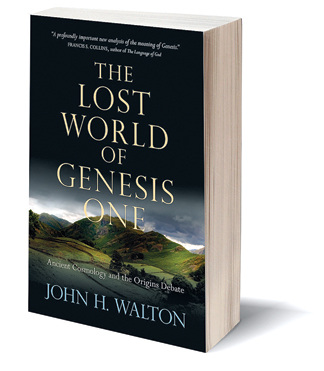 Actually, YEC is also an interpretation of the Biblical text. It is an inference from the textual data. You are also interpreting the text, and need to justify your hermeneutic. Given the mounting evidence against it in books like The Lost World of Genesis One
You’re Using Science to Change the Meaning of Scripture
The Argument
Old earth proponents may have a viable exegetical position, but why on earth would they pick old earth over young earth? It seems the only reason is because they are caving in to science.
Response
Science can give us a record of reality. When the church lines itself up with views that do not accord with reality, it is discredited. Consider the controversy over heliocentrism vs. geocentrism. This controversy resulted because the church lined itself up with a philosophical position that it thought was taught by the text of the Bible. Similarly, the young earth position is an interpretation of Scripture and its advocates must contend with the scientific evidence.
Augustine issued a strong warning related to this objection [Literal Meaning of Genesis, Chapter 19, Volume 1]:
“If they find a Christian mistaken in a field which they themselves know well and hear him maintaining his foolish opinions about our books, how are they going to believe those books in matters concerning the resurrection of the dead, the hope of eternal life, and the kingdom of heaven, when they think their pages are full of falsehoods and on facts which they themselves have learnt from experience and the light of reason?”
The Bible says it, I believe it, that settles it
The Argument
This argument has a few varieties:
1) The Bible says the earth is not millions or billions of years. Why do you insist on changing God’s word for man’s fallible ideas?
2)The Biblical text entails a young earth. Why do you read it as a long period of time?
Response
1) Where in the Bible does it say “the earth is not millions or billions of years old”? Where in the Bible does it tell me the date of creation?
2) Please show me: where in the Bible does it tell me the date of creation? Where does in the Bible does it specifically say YEC is true? If you can’t, then you’re using an inference. See “Plain and Obvious Meaning” above.
Man’s Fallible Ideas
The Argument
Perhaps the most frequently used argument is of this variety. Too often, when threatened by exegetical or extra-biblical evidence that contradicts their position, YECs will fall back to this type of argument:
“That’s just using man’s fallible ideas to interpret the text.”
or
“That’s using man’s fallible [geology, astronomy, physics, insert discipline] to alter the meaning of God’s word.”
Response
The Young Earth position is an interpretation of the text as much as any other. Thus, the argument could just as easily be turned around:
“You’re just using man’s fallible interpretation to read a young earth onto the text.”
But, to be honest, this argument just amounts to a subtle ad hominem, even if the one using the argument doesn’t realize it. Why? Because it suggests that the other side is a) wrong; and b) not thinking Biblically.
A better response, therefore, would be to simply point out that the YEC position is also interpreting the text and that old earth proponents are looking at the whole body of evidence God has provided instead of just trusting what others tell them about the text.
Response to article against this one:
Over at “fortress maximus” the author offered a response to this article. I’ll not go point by point, but rather I listed a few areas of major contention. The most contentious point for me is that the author says I reject inerrancy, which is false. When I say “you” after this, I’m referencing his article. As of this point in time (January, 2013), he has not amended his article to remove the false claims made about me therein. Anyway, response:
Thanks for your thoughtful response. I have a few comments, but I won’t be too lengthy because I don’t have time.
1) You wrote “the author fails his own claims by only outing the YEC arguments as faulty and then offering the OEC arguments as an unchallenged substitute.”
The title of the post is “answering common YEC arguments.” I think that pretty much makes my intention clear. The stated purpose is that I’m not arguing specifically against the YEC position, which I don’t. I only answer many arguments. It’s a bit disingenuous to claim I’m doing otherwise.
2) You wrote, “Poetry in the Bible certainly is relevant, but only in revealing spiritual truths, not historic ones.”
No historic truths in the Psalms, eh? I guess the Psalms by David when he was fleeing from his enemies don’t tell us anything about his situation? I would like to see an argument for this claim.
3) Regarding appearance of age, you wrote “I’ve never heard any serious YECer use these arguments. Old appearance has nothing to do with God’s creation and how it may appear. This stance is also unsupported scripturally, hence it is blatantly flawed. So, if you are a YECer and you used this argument, stop it!”
I was once YEC and unfortunately used this argument myself, because almost every other YEC I knew used it as well. Thus, it’s an argument used by YECs, and I answered it. I agree, though: stop it!
4) You wrote “We’re finally getting to the greatest point of contention – this argument states that the Bible is inaccurate and as such flawed (“the genealogies are incomplete”). This goes against the premise that the Bible is the holy, inspired, infallible, written Word of God.”
Wrong, absolutely wrong. Unfortunately, YECs tend to do this to me all the time: put words in my mouth. Please show me in a quote where I said the Bible is inaccurate and flawed. Show me. You literally say it right there: “this argument states that the Bible is inaccurate and as such flawed”
But wait, the quote is actually: “the genealogies are incomplete” which we can demonstrate from the Bible. It’s not that they are inaccurate; it is that the modern notion of a genealogy stating one generation after another with no gaps is just that: a modern notion. I never stated the Bible is inaccurate, nor do I state it is flawed. I have been a staunch defender of inerrancy. Your statement here is extremely ad hominem; it is, in fact, so wrong and unsubstantiated by my blog that if I weren’t giving you the benefit of the doubt I’d think you’re just lying about me. I therefore ask you to retract it.
5) regarding dating methods: I hate to say it but anyone who reads non-YEC literature on this topic will not be convinced by these arguments. Yes, there are aberrations in the dating which are not covered up by secular or other scientists whatsoever: they state them in their works; no, they do not undermine the whole system.
Resources
Here is a list of resources for old earth perspectives. I will annotate it at some point. For now it’s just a list of amazon links.


SDG.
——
The preceding post is the property of J.W. Wartick (apart from citations, which are the property of their respective owners) and should not be reproduced in part or in whole without the expressed consent of the author. All content on this site is the property of J.W. Wartick and is made available for individual and personal usage. If you cite from these documents, whether for personal or professional purposes, please give appropriate citation with both the name of the author (J.W. Wartick) and a link to the original URL. If you’d like to repost a post, you may do so, provided you show less than half of the original post on your own site and link to the original post for the rest. You must also appropriately cite the post as noted above. This blog is protected by Creative Commons licensing. By viewing any part of this site, you are agreeing to this usage policy.

 J.W. Wartick - Reconstructing Faith
