Sunday Quote
Sunday Quote!- Questioning Exegesis Through Discovery?
Every Sunday, I will share a quote from something I’ve been reading. The hope is for you, dear reader, to share your thoughts on the quote and related issues and perhaps pick up some reading material along the way!
Questioning Exegesis Through Discovery?
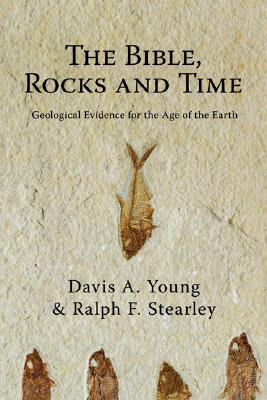
One area that evangelical theologians must weigh is the notion that exegesis should line up with reality. Thus, how might one balance an interpretation between some apparent readings and the findings of certain scientific discoveries? Must they even be balanced at all? Davis Young and Ralph Stearley’s magisterial work on the age of the Earth, The Bible, Rocks and Time, provides an interesting historical background for how discoveries led to the questioning of exegesis of certain texts:
[In the 17th Century…] foundations were gradually being laid for questioning the accepted opinion about the age of the Earth [that being a few thousand years]. Advances in the study of fossils and rock strata were both necessary before such questioning would come about… (47, cited below)
Thus, historically, there has been an interplay between scientific discovery and exegesis of key texts of Scripture. Without certain scientific advances, received opinion on certain features of the natural world remain unquestioned. However, once scientific advances made it possible, these opinions were challenged and often abandoned in the face of extrabiblical evidence. The book provides a great overview for how the interplay between discovery and exegesis played out.
What are your thoughts? Should new discoveries be allowed to challenge received interpretations? How might we best deal with discoveries in the natural world which apparently clash with our reading of the text?
Links
Be sure to check out the page for this site on Facebook and Twitter for discussion of posts, links to other pages of interest, random talk about theology/philosophy/apologetics/movies and more!
Sunday Quote– If you want to read more Sunday Quotes and join the discussion, check them out! (Scroll down for more)
Source
Davis A. Young and Ralph F. Stearley, The Bible, Rocks and Time (Downers Grove, IL: InterVarsity Press, 2008).
Sunday Quote!- The Gullibility of Religious Experience?
 Every Sunday, I will share a quote from something I’ve been reading. The hope is for you, dear reader, to share your thoughts on the quote and related issues and perhaps pick up some reading material along the way!
The Gullibility of Religious Experience?
My discussions of the Argument from Religious Experience here have led to any number of challenges, many of which center around the notion that if we were to accept religious experience as a way to discern reality, why not also accept UFOs, Bigfoot sightings, and the like? In other words, the charge is that if we accept REs, we are somehow made gullible regarding other, non-desirable situations. Caroline Franks Davis, in her tour de force work on the argument from religious experience, The Evidential Force of Religious Experience, confronts this charge head on:
[T]he challenges to certain types of experience (e.g. dreams) and to experience of certain types of entities and phenomena (e.g. elves, ‘auras’) are so widely successful and so well-known that claims based on such experiences have come to be regarded by adults initially with suspicion rather than with credulity. (101, cited below).
The point is that in cases like those she lists, and others like UFOs, Bigfoot, etc., the challenges to such observations are indeed successful (i.e. an airplane light interpreted as a UFO) and well-known that we have an a priori reason to treat them with suspicion. However, it remains to be shown whether there are such successful and well-known rebuttals for the case of religious experience. Indeed, the majority of Caroline Franks Davis’ work is dedicated to showing that this is, in fact, not the case. Moreover, her argument in this section is more complex, and should not be reduced merely to this quote (which I have only done for the sake of this post!).
What are your thoughts? Do you think this is a successful rebuttal? How might we distinguish between credible cases and non-credible cases?
Links
Be sure to check out the page for this site on Facebook and Twitter for discussion of posts, links to other pages of interest, random talk about theology/philosophy/apologetics/movies and more!
Sunday Quote– If you want to read more Sunday Quotes and join the discussion, check them out! (Scroll down for more)
Source
Caroline Franks Davis, The Evidential Force of Religious Experience
SDG.
Sunday Quote!- Is God in Control of Disasters?
 Every Sunday, I will share a quote from something I’ve been reading. The hope is for you, dear reader, to share your thoughts on the quote and related issues and perhaps pick up some reading material along the way!
Is God in Control of Disasters?
I’ve been reading through Chance and the Sovereignty of God
The main alternative is to say that God is not thoroughly in control. It says that some disasters “just happen,” apart from God’s control. This alternative is superficially attractive, because it appears to protect the goodness of God… further reflection shows that it is not satisfying–in fact it is spiritually devastating… If God is in control… we have a consolation such as the Bible provides… that God is able to bring good out of evil.
…[W]hat if we say that God is not in control of the disaster? God might still do something good in the response. But the disaster itself is still out of control, and inherently unredeemable. There is no comfort to be had for it. We are left with fear for the future. (Kindle location 738, cited below)
What do you think? When a disaster strikes, like Hurricane Katrina, it is inevitable that some will stand up and say it was God’s judgment on a town. Others quote Jesus’ words in Luke 13:1-5 and say that these disasters come seemingly at random. Are these mutually exclusive claims? What are your thoughts on Poythress’ comments: do they show that it is better to say God is in control than not?
Links
Be sure to check out the page for this site on Facebook and Twitter for discussion of posts, links to other pages of interest, random talk about theology/philosophy/apologetics/movies and more!
Sunday Quote– If you want to read more Sunday Quotes and join the discussion, check them out! (Scroll down for more)
Book Review: “Chance and the Sovereignty of God” by Vern Poythress– Check out my review of this interesting book about chance and God’s control over all events.
Source
Vern Poythress, Chance and the Sovereignty of God: A God-Centered Approach to Probability and Random Events (Wheaton, IL: Crossway, 2014).
SDG.
Sunday Quote!- Creationism and Foundationalism
 Every Sunday, I will share a quote from something I’ve been reading. The hope is for you, dear reader, to share your thoughts on the quote and related issues and perhaps pick up some reading material along the way!
Creationism and Foundationalism
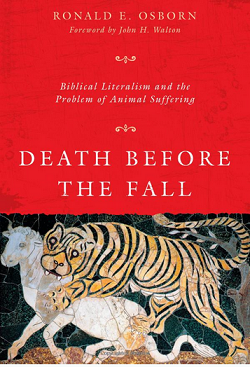
Creationism (particularly the young earth variety) is a topic I’m very interested in, so I read Osborn’s book Death Before the Fall: Biblical Literalism and the Problem of Animal Suffering with great eagerness. I recently reviewed the book, so you can check that out for my thought on the work as a whole. Here, Osborn is arguing that creationism relies upon modernist notions of epistemic foundationalism (essentially, a view that our knowledge must be based upon some irrefutable or simply necessarily assumed bedrock belief)*:
Creationists have posited a… source of absolute certainty… the firm foundation or base of universal and infallible knowledge on which all truth is said to rest is a “plain” reading of Scripture alone, with particular emphasis on the first verses of the book of Genesis…
Creationism is… not merely indubitable. It is incorrigible–it canot be undermined or altered by any new information… It is impervious to the weight of empirical and historical evidence. (44, 46, cited below)
Here is one of the great insights of Osborn’s book: that Creationism is an epistemology. That is, it is a way of knowing as opposed to simply a position on what is to be known. I have found this to be the case in many discussions with young earth creationists. There simply is no such thing as evidence which can challenge the position. Rather, all things which purport to be said challenges are often seen as either deceptions of secular scientists or results of anti-Bible presuppositions. I think this is a very problematic position.
What are your thoughts? Is YEC falsifiable–is it possible for it to be false? Does YEC turn into a way of knowing?
Links
Be sure to check out the page for this site on Facebook and Twitter for discussion of posts, links to other pages of interest, random talk about theology/philosophy/apologetics/movies and more!
Sunday Quote– If you want to read more Sunday Quotes and join the discussion, check them out! (Scroll down for more)
Book Review: “Death Before the Fall” by Ronald Osborn– I review Osborn’s book, outlining its contents while also providing some comments on its value.
Source
Ronald Osborn, Death Before the Fall: Biblical Literalism and the Problem of Animal Suffering (Downers Grove, IL: InterVarsit, 2014).
*Yes, this is simplified. Want to dig in? Check out this article on the topic.
SDG.
Sunday Quote!- The Measure of Art
Every Sunday, I will share a quote from something I’ve been reading. The hope is for you, dear reader, to share your thoughts on the quote and related issues and perhaps pick up some reading material along the way!
The Measure of Art
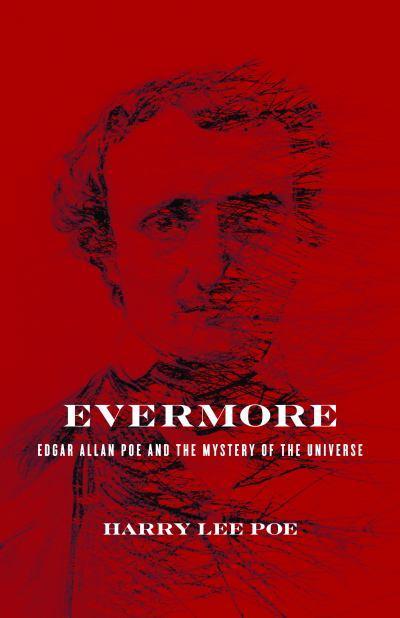
I’m a fan of Edgar Allan Poe, but I can fairly say I never understood him until I read Evermore: Edgar Allan Poe and the Mystery of the Universe by Harry Lee Poe (yes, a cousin of Edgar’s). I was rereading this delightful book when I came upon an interesting quote about Edgar Allan Poe’s view of what makes art worthwhile:
[Poe] insisted on measuring a work of art, not by its size or by the effort it took to produce it, but “by the object it fulfills, by the impression it makes”… [not] “by the time it took to fulfill the object, or by the extent of ‘sustained effort’ which becomes necessary to produce the impression.” Poe believed that every story succeeded as a story to the extent that it created an effect upon the reader. (62)
For Poe, the measure of art was the impression it left upon the viewer (or reader, or hearer, or…). What do you think of this notion? What do you think qualifies as “the measure of art”? Have you read Poe? If so, how does his work “measure” for you?
Be sure to check out the review of this book.
Links
Be sure to check out the page for this site on Facebook and Twitter for discussion of posts, links to other pages of interest, random talk about theology/philosophy/apologetics/movies and more!
Evermore: Edgar Allan Poe and the Mystery of the Universe by Harry Lee Poe– I reviewed this fascinating book at this link. Check it out to see what other insights you can get from this work.
Sunday Quote– If you want to read more Sunday Quotes and join the discussion, check them out! (Scroll down for more)
Source
Harry Lee Poe, Evermore: Edgar Allan Poe and the Mystery of the Universe
SDG.
Sunday Quote!- Can Randomness have Purpose?
 Every Sunday, I will share a quote from something I’ve been reading. The hope is for you, dear reader, to share your thoughts on the quote and related issues and perhaps pick up some reading material along the way!
Can Randomness have Purpose?
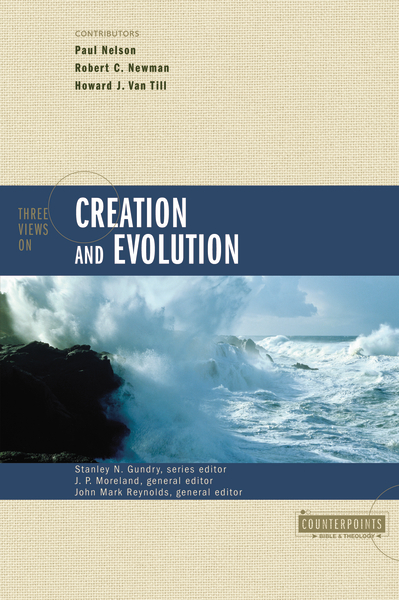
The concept of chance or randomness and its relation to God’s purpose and sovereignty is one which is very interesting to me. It has applications all kinds of direct theological applications. While reading Three Views on Creation and Evolution
While we’re on the issue of purpose, let’s look briefly at a common misunderstanding–that randomness rules out purpose. It is often claimed that randomness [which]… prevail[s] in the fundamental processes and events of biotic evolution rules out the possibility… [of] any preestablished purpose… Suppose there were a perfectly honest gambling casino in which no game was rigged–every[thing]… was authentically random. Does that rule out the possibility that the outcome of the casino operation cannot possibly be the expression of some preestablished purchase? Clearly not. In fact, the operators of the casino depend on that very randomness in their computation of the payout rates to insure that they will have gained a handsome profit… (168, cited below).
Apart from the strangely worded question he asked, Van Till’s point is that there may be purpose even with randomness: a truly random casino can still be oriented toward the purpose of making money. Thus, Van Till reasons, God could have done the same thing with the entirety of creation.
Now, I think this is an interesting claim, and I also think there is some plausibility to it. However, there does seem to be a significant disanalogy as well: the casino operators don’t care about the outcome of the random games, because their overall outcome is to have monetary gain. Presumably, however, God would care about the outcome of the randomness. Just having any creatures come from evolutionary processes would not seem to fit God’s plan as established in Genesis (creation, fall, redemption, consummation). Instead, there would have to be creatures capable of participating in that plan. Of course, Van Till might simply reply by saying that God would have known the outcome ahead of time and so that’s not at issue (or some similar response).
What do you think of the notion that chance or randomness may have purpose? If not, why not? If so, do you think this may be applied to evolution as Van Till does? What other applications do you think this may have?
Links
Be sure to check out the page for this site on Facebook and Twitter for discussion of posts, links to other pages of interest, random talk about theology/philosophy/apologetics/movies and more!
Sunday Quote– If you want to read more Sunday Quotes and join the discussion, check them out! (Scroll down for more)
Source
Howard J. Van Till, “The Fully Gifted Creation: ‘Theistic Evolution'” in Three Views on Creation and Evolution
SDG.
Sunday Quote!- Heresy as the Historical Loser?
 Every Sunday, I will share a quote from something I’ve been reading. The hope is for you, dear reader, to share your thoughts on the quote and related issues and perhaps pick up some reading material along the way!
Heresy as the Historical Loser?
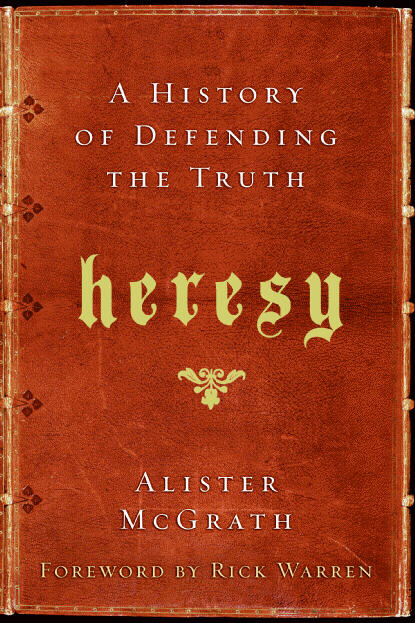
Alister McGrath’s book, Heresy: A History of Defending the Truth was a great read when I read it around two years ago, so I decided to reread it and get my notes in computer form. Almost immediately I began to discover reasons I enjoyed it so much. For example, McGrath notes that heresy has garnered much excitement and interest of late. Many see ancient heresies as something worth reconsidering, perhaps in light of losing by chance. He writes:
In this view, the distinction between heresy and orthodoxy is arbitrary, a matter of historical accident. Orthodoxy designates ideas that won, heresy those that lost. (3, cited below)
The rest of the book is dedicated to the history of heresy and how it interacted with orthodoxy. What do you think, though, of this notion that the distinction between heresy and orthodoxy is arbitrary? Could it be that orthodoxy is merely a historical accident? McGrath, of course, argues that it is not.
Links
Be sure to check out the page for this site on Facebook and Twitter for discussion of posts, links to other pages of interest, random talk about theology/philosophy/apologetics/movies and more!
Sunday Quote– If you want to read more Sunday Quotes and join the discussion, check them out! (Scroll down for more)
Book Review: “Heresy: A History of Defending the Truth” by Alister McGrath– Check out my review of McGrath’s book.
Source
Alister McGrath, Heresy: A History of Defending the Truth
SDG.
Sunday Quote!- A Biblical Answer to Economic Woes?
 Every Sunday, I will share a quote from something I’ve been reading. The hope is for you, dear reader, to share your thoughts on the quote and related issues and perhaps pick up some reading material along the way!
A Biblical Answer to Economic Woes?
I’m reading The Poverty of Nations: A Sustainable Solution
The goal of this book is to provide a sustainable solution to poverty in the poor nations of the world, a solution based on both economic history and the teachings of the Bible.
The introduction sounds great, but I admit that I’m a bit skeptical about its scope. Is it really the case that the Bible may be treated as an economics textbook? Or perhaps the point is, instead, that we are to care for the poor and the rest is all economic theory. Anyway, it raises two primary concerns for me:
1. Does the Bible actually propose any sort of economic policy or am I going to get a bunch of verses pulled out of context to make the Bible into an econ textbook?
2. Is there such a thing as a list of 78 factors (the authors identified this many factors as essential to economic growth and stability) that could be applied to all countries everywhere and somehow solve all economic problems?
Now, I’m not at all far into the book (about 9% based on my Kindle), so it may blow me away. Perhaps the Bible will be used contextually and instead simply note how we are to care for the poor, etc. Perhaps the economic approach will make quite a bit of sense and be very adaptable. That said, I can’t wait to dive in and read more to see whether it may convince me. For now, what are your thoughts? Is there a “Biblical” Answer to Economic woes?
Links
Be sure to check out the page for this site on Facebook and Twitter for discussion of posts, links to other pages of interest, random talk about theology/philosophy/apologetics/movies and more!
Sunday Quote– If you want to read more Sunday Quotes and join the discussion, check them out! (Scroll down for more)
Source
Wayne Grudem and Barry Asmus, The Poverty of Nations: A Sustainable Solution
SDG.
Sunday Quote!- The New Atheist Mythology
 Every Sunday, I will share a quote from something I’ve been reading. The hope is for you, dear reader, to share your thoughts on the quote and related issues and perhaps pick up some reading material along the way!
The New Atheist Mythology
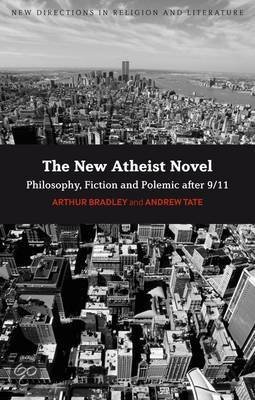
I recently finished reading The New Atheist Novel: Fiction, Philosophy and Polemic after 9/11. The book was simply phenomenal as it applied critical theory to four novelists in order to draw out various themes in their works and parallels with the writings of the “New Atheists.” I’ll write up a review at some point, but for now I want to highlight the central theme of the book:
[I]t is possible to detect an obscure… reason for the massive popular appeal of the New Atheism: it constitutes a new and powerful creation mythology that–like all mythologies–performs an implicit anthropological service… For Dawkins… it has become de rigueur to wax lyrical about, say, the ‘breathtaking poetry of modern cosmology’ (whatever that means) even amidst attacks on the ‘fairy story’ that is monotheism. (7, 9, cited below)
The book analyzes various novels in light of this theme: that the New Atheists are, in a sense, creating a rival mythology to the monotheism they denigrate, and this expands into literature in various and interesting ways. In a sense, this mythologizing about the power of the human mind, the wonders of the cosmos, or the beauty of poetry is a project to create transcendence in a worldview which, by definition, rails against the transcendent. It is a kind of creation myth which allows for meaning to seep into the meaningless.
What do you think? Can humans live without a mythology? Is wonder a necessary part of the human condition? Why do you think that even the “New Atheists” have put forward such lyrical and mythological language in their writings?
As I said, I’ll try to get a review of this book up ASAP.
Links
Be sure to check out the page for this site on Facebook and Twitter for discussion of posts, links to other pages of interest, random talk about theology/philosophy/apologetics/movies and more!
Sunday Quote– If you want to read more Sunday Quotes and join the discussion, check them out! (Scroll down for more)
Source
Arthur Bradley and Andrew Tate, The New Atheist Novel: Fiction, Philosophy and Polemic after 9/11 
SDG.
Sunday Quote!- Reframe the Origins Debate?
Every Sunday, I will share a quote from something I’ve been reading. The hope is for you, dear reader, to share your thoughts on the quote and related issues and perhaps pick up some reading material along the way!
Reframe the Origins Debate?
I have been going through a number of books in the Zondervan Counterpoints series and completed Three Views on Creation and Evolution
Is the creation’s formational economy sufficiently robust (that is to say, is it equipped with all the necessary capabilities) to make it possible for the creation to organize and transform itself from elementary forms of matter into the full array of physical structures and life-forms that have existed in the course of time? (Van Till 185-186, cited below)
Howard J. Van Till is a theistic evolutionist (he does not like the term–or at least did not at the publication of this book), and he views that position as a “fully gifted creation”–one in which God, on creating, imbued creation with the capacities to develop naturally over the course of time. This is the “economy of creation” in which–according to Van Till–God created without the need for continual intervention.
Now, so far as this reframing is concerned, it seems to me that Van Till, in attempting to avoid the either/or dichotomy between creation and evolution, went a bit to the other extreme. Putting a word like “robust” in there suggests that anyone who would disagree is clearly questioning the capacity of the Creator in creating. However, I do think there is something to the notion that we do need to rethink exactly where the lines form in the origins debate. I have written on the various options for Christian origins positions and I think that we need to be aware of the fact there is more to it than even “three views” could begin to outline.
Regarding the question itself: what do you think? Do we need to outline the origins debate with different terms so that we can avoid a false dichotomy? Moreover, do you think that creation is indeed set up in such a way?
Links
Be sure to check out the page for this site on Facebook and Twitter for discussion of posts, links to other pages of interest, random talk about theology/philosophy/apologetics/movies and more!
What options are there in the origins debate? – A Taxonomy of Christian Origins Positions– I clarify the breadth of options available for Christians who want to interact on various levels with models of origins. I think this post is extremely important because it gives readers a chance to see the various positions explained briefly.
Sunday Quote– If you want to read more Sunday Quotes and join the discussion, check them out! (Scroll down for more)
Source
Howard J. Van Till, “The Fully Gifted Creation: ‘Theistic Evolution'” in Three Views on Creation and Evolution
SDG.

 J.W. Wartick - Reconstructing Faith