Sunday Quote
Sunday Quote!- Scripture Reports Things that Didn’t Happen?
 Every Sunday, I will share a quote from something I’ve been reading. The hope is for you, dear reader, to share your thoughts on the quote and related issues and perhaps pick up some reading material along the way!
Scripture Reports Things that Didn’t Happen?
I finished reading Four Views on The Historical Adam recently, and it gave me a lot of food for thought. The only view which categorically denied the existence of an historical Adam was written by Denis Lamoureux. Regarding the reports of the natural world found in the Bible, he wrote:
God’s very words… in the [Bible] do not align with the physical reality in the Book of [Nature]. To state the problem more incisively, Holy Scripture makes statements about how God created the heavens that in fact never happened. (54, cited below)
I think it is pretty clear this is a highly contentious claim. Interested readers should read the book to get the full context, but basically Lamoureux was saying that some aspects of the physical world found recorded in Scripture do not line up with reality. What did he do with this statement? Immediately after this text, Lamoureux wrote:
So, to ask the question once more, “Did God lie in the Bible?” Again, my answer is “No! The Lord accommodated in the Bible.” (54)
In other words, his answer was that God accommodated to the scientific beliefs of the people in their time in order to convey spiritual truths.
It seems to me that this way out is questionable, and each of the other authors commented on it. Three quick issues I have are that the reading of the various texts Lamoureux cites do not support his claim; that the notion that God intentionally brought about recording of falsehoods in God’s Word requires a stronger answer than accommodation; and that although accommodation is a valid category, the linking of theological truths to specific claims about natural history makes the reading of accommodation in regards to Adam problematic.
What are your thoughts? Do you think there is accommodation in the Bible? Is accommodation a strong enough answer for the claim that God may have allowed false statements recorded in God’s Word? Are there other alternatives you prefer?
Links
Be sure to check out the page for this site on Facebook and Twitter for discussion of posts, links to other pages of interest, random talk about theology/philosophy/apologetics/movies and more!
Source
Denis Lamoureux, “No Historical Adam: Evolutionary Creation View” in Four Views on The Historical Adam eds. Matthew Barrett and Ardel Caneday (Grand Rapids, MI: Zondervan, 2013).
Book Review: “Hollywood Worldviews” by Brian Godawa
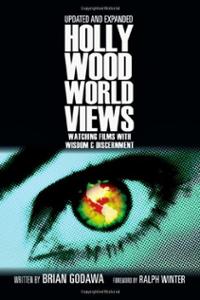 I often say that every movie has a worldview. The same is true for any story. Brian Godawa’s book, Hollywood Worldviews: Watching Films with Wisdom & Discernment
First, Godawa introduces the concepts of a “cultural glutton” as opposed to a “cultural anorexic.” The point is that Christians are to be in the world not of it. It is one thing to say that violence in a movie is bad; but what of the context of the violence? The Bible also has many scenes which, if filmed, could even rate NC-17. The question is: what’s the point? When looking at film, Christians should look into the way the narrative shapes what happens in the movies.
In order to look into this theme, Christians must be equipped to seek out the context of stories as well as the explicit (and implicit) things they teach. In order to equip people to watch film critically, Godawa approaches this task is divided among several chapters by topics related to film and worldview. Each chapter begins with a summary of the topic of the chapter and how one might discover this theme in film. For example, in the chapter on “Postmodernism,” he begins with a definition and explanation of the concept. Then, he utilizes a slew of examples from various movies to show how postmodernism is found in them in either positive or negative light.
The chapters all cover interesting topics, and Godawa’s use of specific examples from movies are fantastic case studies for showing how critical engagement with worldviews can play out. Even better, Godawa’s explanations and applications could easily be used to apply outside of film and in areas like literature. Frankly, some of Godawa’s evaluation of popular films–including some I’ve enjoyed greatly–have forced me to rethink how I thought of the storyline. Movies which may appear to be fairly neutral or simply entertainment alone do indeed have their own way of approaching reality. Some of the movies which were brought to new light for me included “Gladiator,” “The Truman Show,” and “Groundhog Day.” Dozens of movies are treated throughout this book, and Godawa’s analysis is always interesting and thought provoking, encouraging the critical engagement he seeks.
Another great aspect of the book are the activities Godawa proposes for each chapter to apply what one has learned. These are frequently interesting and provide ways forward to put into practice the art of discernment when it comes to watching film.
One difficulty with a book like this is there is some necessary oversimplification. For example, Godawa, in his discussion of existentialism, writes: “Existentialism accepts the Enlightenment notion of an eternally existing materialistic universe with no underlying meaning or purpose” (95). Oddly, Godawa seems to downplay Kierkegaard’s very explicit Christian faith in light of his existential views, and Kierkegaard seems to become a kind of pariah through this analysis. Kierkegaard, for Godawa, is strangely aberrant from his general picture of existentialism as necessarily godless and without purpose.
At other points, films receive short shrift are are discussed in ways which seem a bit odd. Of course, engagement with these points actually encourages the sort of critical interaction Godawa is pursuing. Some offhand comments are a bit awkward and out of place (for example the bare assertion that “men are the leaders in home and public roles” in Christianity without qualification–in contrast with the declared equality of genders in Galatians 3:28 and the apostleship of a woman in Romans 16:7), but overall these negative points are outweighed by the service Godawa has done to provide critical perspective on worldviews in film.
Hollywood Worldviews is a great book which will encourage much discussion. It would serve as a good resource for those who wish to meaningfully engage the culture. People who read it will be equipped to have thoughtful conversations on the way movies put forth worldviews. The book should come with a warning, though, some of your favorite movies may not be what they seem!
Links
Be sure to check out the page for this site on Facebook and Twitter for discussion of posts, links to other pages of interest, random talk about theology/philosophy/apologetics/movies and more!
Engaging Culture: A brief guide for movies– I outline my approach to evaluating movies from a worldview perspective.
I have a number of ways in which I have critically engaged with culture in movies, books, and other arts in my posts on current events (scroll down for more posts).
Source
Brian Godawa, Hollywood Worldviews: Watching Films with Wisdom & Discernment
SDG.
——
The preceding post is the property of J.W. Wartick (apart from quotations, which are the property of their respective owners, and works of art as credited; images are often freely available to the public and J.W. Wartick makes no claims of owning rights to the images unless he makes that explicit) and should not be reproduced in part or in whole without the expressed consent of the author. All content on this site is the property of J.W. Wartick and is made available for individual and personal usage. If you cite from these documents, whether for personal or professional purposes, please give appropriate citation with both the name of the author (J.W. Wartick) and a link to the original URL. If you’d like to repost a post, you may do so, provided you show less than half of the original post on your own site and link to the original post for the rest. You must also appropriately cite the post as noted above. This blog is protected by Creative Commons licensing. By viewing any part of this site, you are agreeing to this usage policy.
Sunday Quote!- Critical Theory and… everything?
 Every Sunday, I will share a quote from something I’ve been reading. The hope is for you, dear reader, to share your thoughts on the quote and related issues and perhaps pick up some reading material along the way!
Critical Theory and… everything?
I finished reading Theology and Contemporary Critical Theory by Graham Ward recently, and I found it extremely interesting. Critical theory is not a united movement or even way of doing things; rather, it simply refers to the practice of drawing out motivations, means, sources, and the like from anything. Does that sound broad? Well, it is:
There is no conceivable limit to what critical theory cannot comment upon, nor what form that comment can take. Every discipline and cultural phenomenon is swept into its purview… (xviii)
Critical theory touches on every aspect of reality, because people who engage in it can search any work, any words, any statements for things to draw out. The book itself has made me more self-aware of how my own ways of thinking may be directed by things beyond what I would desire. Sometimes, we may import aspects of our culture into our reading of the Bible, for example. Although it is impossible to avoid that, when we become aware of it in certain areas, we should work to correct it. Critical theory allows us to become self-aware of these importations and seek to excise them where needed. The book was a short, good read, but not without fault. I’ll have a review coming in a week or three.
What do you think? In what areas could you be more self aware? If you could apply critical theory to any one study or discipline, what would it be? Leave a comment below!
Links
Be sure to check out the page for this site on Facebook and Twitter for discussion of posts, links to other pages of interest, random talk about theology/philosophy/apologetics/movies and more!
Source
Graham Ward, Theology and Contemporary Critical Theory (New York: St. Martin’s Press, 2000).
Sunday Quote!- What does “head” mean?
 Every Sunday, I will share a quote from something I’ve been reading. The hope is for you, dear reader, to share your thoughts on the quote and related issues and perhaps pick up some reading material along the way!
What does “head” mean?
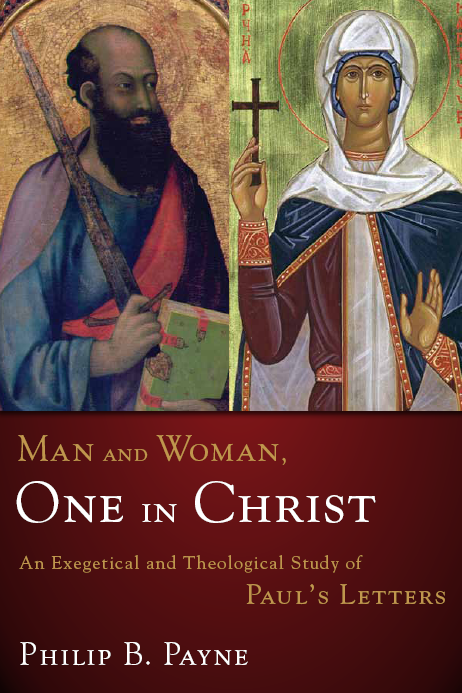
I’ve been rereading Philip Payne’s monumental study of Paul’s letters in relation to the roles of men and women in the church and home, Man and Woman, One in Christ. There is so much in this book to discuss I feel as though every single page deserves its own post. For now, I wanted to highlight his discussion of the meaning of “head” in the much-discussed 1 Corinthians 11:2-16. Payne writes:
The majority view in recent scholarship has shifted to understand “head”… in this passage to mean “source” rather than “authority”… One reason for the popularity of [interpreting it as “authority”] is that in English, German, and Hebrew… the most common metaphorical meaning of “head” is “leader”… Interpreters who in their native tongue associate metaphorical uses of “head” with “leader” naturally make this association when reading this passage. (117-118, cited below)
In the book, Payne goes on to demonstrate why it is that the majority view has turned to viewing “head” as “source.” He provides 15 reasons to think this is the case. A few highlights include contemporary 1st-3rd century usage of the term, lexical support for “source” and lack thereof for “authority,” other usage within the Pauline epistles, difficulties raised by reading it as “authority,” and support for the meaning as “source” from a number of contemporary authors and Church Fathers. In the passage above, I think it’s interesting to see that one’s native language often imports meaning into the text. I’m sure this happens in many places, and I’ve caught myself on some.
If you have any interest at all in the debate over women’s roles in the church and home and do not have this book, you must amend the situation immediately. It doesn’t matter if you are egalitarian or complementarin; you must deal with the arguments raised by Payne, who interacts with top scholars from both sides of the debate (including Piper, Grudem, Wright, and more).
What are your thoughts? How do you read this difficult passage? Does your native tongue perhaps change your perception of the meaning of some parts of the Bible?
Links
Be sure to check out the page for this site on Facebook and Twitter for discussion of posts, links to other pages of interest, random talk about theology/philosophy/apologetics/movies and more!
Sunday Quote– If you want to read more Sunday Quotes and join the discussion, check them out! (Scroll down for more)
Check out my posts on egalitarianism (scroll down for more).
Source
Philip B. Payne, Man and Woman, One in Christ
SDG.
Sunday Quote!- Beauty of Creation?
 Every Sunday, I will share a quote from something I’ve been reading. The hope is for you, dear reader, to share your thoughts on the quote and related issues and perhaps pick up some reading material along the way!
The Beauty of Creation?
I’ve finished rereading The Open Secret by Alister McGrath. It presents a powerful picture of natural theology as touching every aspect of life.
One of the branches of evidence for the argument from design is the notion that the world in which we live is beautiful. However, many have rightly noted that there seems to be a disconnect between this picture of the world as beautiful and loving and the reality that nature is “red in tooth and claw.” Yet Christian natural theology has a more complete view of the world:
…[N]ature as presently observed, cannot be assumed to be nature, as orginally created… The creation stands in need of renewal from a God who will create all things anew… There is a profoundly eschatological dimension to an authentically Christian natural theology… The fading beauty and goodness of the world are to be interpreted in light of the hope of their restoration and renewal. (208; 206, cited below)
Christianity does acknowledge the notion that creation is “groaning” and that nature may show much disorder and vileness alongside beauty and transcendence. The former attributes are results of the fall, but as McGrath noted, Christian natural theology is eschatological: it looks ahead to a future where all things will be renewed and consummated God’s divine plan.
It seems to me this vision of the future is something which gives natural theology within Christianity a broader explanatory scope which may not be matched by other systems. By orienting this world as it is in between a broader historical scheme of creation, fall, redemption, consummation, this vision of natural theology allows for and even expects many of the observed phenomena.
What do you think? What is your view of how the beauty of creation may be balanced with some of its ugliness?
Links
Be sure to check out the page for this site on Facebook and Twitter for discussion of posts, links to other pages of interest, random talk about theology/philosophy/apologetics/movies and more!
Sunday Quote– If you want to read more Sunday Quotes and join the discussion, check them out! (Scroll down for more)
“A New Vision for Natural Theology” A Book Review of “The Open Secret” by Alister McGrath– I review the book discussed in this post. It presents a vision for natural theology and apologetics.
Sunday Quote!- Does Science Limit Exegesis?
 Every Sunday, I will share a quote from something I’ve been reading. The hope is for you, dear reader, to share your thoughts on the quote and related issues and perhaps pick up some reading material along the way!
Does Science Limit Exegesis?
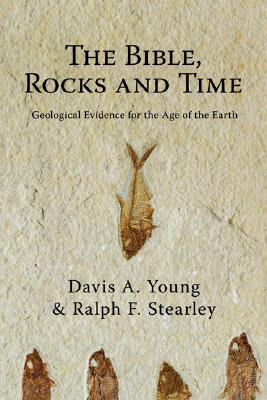
I’ve been rereading The Bible, Rocks and Time: Geological Evidence for the Age of the Earth
[T]he claims advanced in favor of a young Earth or Flood geology remain unacceptable to the scientific community. Thus their claims should also be unacceptable within the church, which… ought to be committed to truth and reality–for the simple reason that the young-Earth creationist claims lack scientific credibility. (161)
Now I think this is a pretty obviously controversial claim for a few reasons. First, the immediate question is how broad Davis and Stearley are intending this to be. After all, one might say that God creating the universe is “unacceptable” depending how one defines the scientific community. Of course, they do qualify the statement by noting that what they mean is that the evidence young earth creationists put forward can often, in principle, be tested for; and when tested, it fails muster. In this sense, I think that one might say the statement is acceptable.
Second, one may object to this noting that science often changes consensus, so what is “unacceptable” today becomes in vogue tomorrow. A problem with this claim is that it flies in the face of the real, overwhelming evidence for an ancient Earth. I’ve examined this and many other arguments YECs put forth in my post on YEC arguments.
Third, one might wonder exactly how Davis and Stearley think science and exegesis are supposed to interact. Though this is a far cry from the purpose of their book, statements like these beg the question of whether science really does limit exegesis.
What are your thoughts?
Links
Be sure to check out the page for this site on Facebook and Twitter for discussion of posts, links to other pages of interest, random talk about theology/philosophy/apologetics/movies and more!
Answering Common Young Earth Creationist Arguments– I evaluate a number of arguments for young earth creationism. There are a large number of biblical, philosophical, and scientific arguments briefly answered here.
What options are there in the origins debate? – A Taxonomy of Christian Origins Positions– I clarify the breadth of options available for Christians who want to interact on various levels with models of origins. I think this post is extremely important because it gives readers a chance to see the various positions explained briefly.
Source
Davis A. Young and Ralph F. Stearley, The Bible, Rocks and Time: Geological Evidence for the Age of the Earth
Sunday Quote!- The Invention of Religion
 Every Sunday, I will share a quote from something I’ve been reading. The hope is for you, dear reader, to share your thoughts on the quote and related issues and perhaps pick up some reading material along the way!
The Invention of Religion
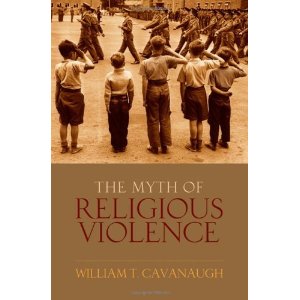
One book which has influenced my thought quite a bit was The Myth of Religious Violence. I recently reread the book and thought I’d share a rather poignant quote:
There was a time when religion, as modern people use the term, was not, and then it was invented. (81)
The notion that religion is a socially constructed concept is essential to Cavanaugh’s work, and he argues meticulously towards this end. His point is not that all so-called “religions” are false. Rather, his point is that the notion that there is such a thing as a secular/religious dichotomy is itself a construct with a historical development. Moreover, this construct, he argues, has been useful for creating an “Other” who is then deemed “religious” in order to separate this Other from spheres of influence. It’s a highly interesting book, and one I recommend strongly. I have reviewed it here.
What do you think? How might you define “religion”? If Cavanaugh is right, how might this notion influence your thought?
Links
The Myth of “Religion”: Constructing the Other as an enemy– Here, I draw out more of Cavanaugh’s claims regarding the usage of the term “religious” and how it is used at times to create an “Other” to repudiate.
Book Review: “The Myth of Religious Violence” by William T. Cavanaugh– I review the book which has led me to discuss the ways the category of religion is used to stigmatize the other and also forced me to rethink a number of issues. I highly recommend this book.
Source
William T. Cavanaugh, The Myth of Religious Violence
SDG.
Sunday Quote!- Every Story has a Worldview
Every Sunday, I will share a quote from something I’ve been reading. The hope is for you, dear reader, to share your thoughts on the quote and related issues and perhaps pick up some reading material along the way!
Every Story Has a Worldview
I finished reading Hollywood Worldviews: Watching Films with Wisdom & Discernment
Every story is informed by a worldview. And so every movie, being a dramatic story, is also informed by a worldview. There is no such thing as a neutral story in which events and characters are presented objectively apart from interpretation. Every choice an author makes… is determined by the author’s worldview. (60)
Godawa’s point is similar to what I say quite often, with almost the exact words: every movie has a worldview. The same, as Godawa states, is true for any story. Every time someone tells a story, whether it is one they made up or one they picked up somewhere, it is slanted with worldview. We should be aware of this fact and be ready to critically engage with any story–fictional or non–so that we can bring into light the truths and falsehoods each story may contain.
What’s your best technique for critically engaging worldview in film? What other arts have you critically interacted with? How have you approached these?
Links
Be sure to check out the page for this site on Facebook and Twitter for discussion of posts, links to other pages of interest, random talk about theology/philosophy/apologetics/movies and more!
Engaging Culture: A brief guide for movies– I outline my approach to evaluating movies from a worldview perspective.
Source
Brian Godawa, Hollywood Worldviews: Watching Films with Wisdom & Discernment
Sunday Quote!- The War Between Science and Religion
 Every Sunday, I will share a quote from something I’ve been reading. The hope is for you, dear reader, to share your thoughts on the quote and related issues and perhaps pick up some reading material along the way!
The War Between Science and Religion
I recently finished reading Imaginative Apologetics: Theology, Philosophy, and the Catholic Tradition. I have a review of the book coming in some time, but for now I’ll say it was an uneven experience. Lots of high points; many low points. One high point was Alister McGrath’s discussion of science and religion and the alleged war between the two:
This conflict is often expressed more generally in terms of the phrase ‘science and religion’, which unhelpfully reifies both notions, attributing concrete identity to abstractions. Science and religion are not well-delimited entities, whose essence can be defined; they are shaped by the interaction of social, cultural and intellectual factors, so that both notions are shaped by factors that vary from one cultural location to another… the historical evidence suggests that it was actually [two 19th century works not by Darwin] which crystallized a growing public perception of tension and hostility between science and religion. (144, 145)
I think this quote is particularly thought-provoking due to its two pronged approach to the “science vs. religion” mentality. First, I think McGrath is certainly correct to note that the reification of the terms is unhelpful, to say the least. People often say things like “science says ___” or “religion says ___.” Such statements turn either science or religion into separately existing, distinct entities which somehow make proclamations. In other words, they remove either concept from the people putting for the concepts under the umbrella terms “science” or “religion.” I find this unhelpful, and as McGrath later notes, only use the terms out of convention.
Second, exploring the historical origins of an idea like the “war” thesis between science and religion often has astonishing results. One finds, often, that one’s assumptions are challenged and even overthrown by the evidence.
What do you think? What other concepts might we unintentionally reify through our use of terms? How might we seek to avoid doing this?
Links
Be sure to check out the page for this site on Facebook and Twitter for discussion of posts, links to other pages of interest, random talk about theology/philosophy/apologetics/movies and more!
Source
Alister McGrath, “The Natural Sciences and Apologetics” in Imaginative Apologetics: Theology, Philosophy, and the Catholic Tradition
Sunday Quote: Do we need to agree with past thinkers?
 Every Sunday, I will share a quote from something I’ve been reading. The hope is for you, dear reader, to share your thoughts on the quote and related issues and perhaps pick up some reading material along the way!
Do we need to agree with past thinkers?
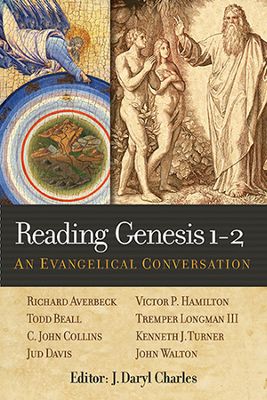
I recently read through Reading Genesis 1-2: An Evangelical Conversation, which has given me a lot to reflect upon. One quote that struck me was from Jud Davis:
A beloved teacher once said, “If you cannot find at least one ancient, one medieval, and one modern commentator who shares your view, it probably means you are wrong.” Over the years, I have thought long and hard about this statement, and I believe it is exactly right because if you could not find such examples, you would be forced to say, “Everyone before missed it until me.” (215)
I thought this was an interesting quote because it says much about how one approaches theological issues. First, there is some concern regarding this passage for me because it seems that some truths are indeed missed by everyone until someone discovers (or rediscovers) them. Second, there is a real concern for whether one innovates in doctrine and thus becomes a heretic. That is, innovation in theology is often divergence from established truths. These established truths are often established exactly because they follow from the text. Thus, an innovation which says, for example, that Jesus is not God is rightly denounced as heretical.
Based upon these conflicting concerns, I think it is permissible to say there is some tension within the practice of historical theology and exegesis. We must be careful to avoid the pitfalls of either ignoring the voices of the past or being too cautious to reconsider the evidence for certain positions. Going to either extreme would be dangerous. The most prominent danger, in my opinion, is the danger of using a passage like this to squelch debate or exploration. Ultimately, the text is the arbiter of truth, not established interpretations. If someone comes up with a “new” look at a text, it is important to consider it on its own terms rather than reject it because it is new. The weight of unanimity in the past should be seen to increase the standard of proof for those who disagree, but it should not be used to silence those who seek truth.
What are your thoughts on the balance between historical scholarship and new interpretations?
Links
Be sure to check out the page for this site on Facebook and Twitter for discussion of posts, links to other pages of interest, random talk about theology/philosophy/apologetics/movies and more!
Source
Jud Davis, “Unresolved Major Questions: Evangelicals and Genesis1-2” in Reading Genesis 1-2: An Evangelical Conversation

 J.W. Wartick - Reconstructing Faith