Sunday Quote
Sunday Quote!- Perspicuity of Scripture and your Study Bible
Every Sunday, I will share a quote from something I’ve been reading. The hope is for you, dear reader, to share your thoughts on the quote and related issues and perhaps pick up some reading material along the way!
Perspicuity of Scripture and your Study Bible
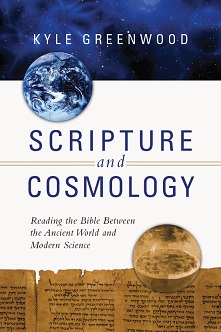
I just started reading through Kyle Greenwood’s Scripture and Cosmology, a book that looks at the ancient concepts of cosmology found in the Bible, and came across a wonderful discussion of the perspicuity of Scripture:
The doctrine of the perspicuity of Scripture states that Scripture is clear and unambiguous on matters pertinent to salvation. It does not, however, apply to all matters. This should be an obvious conclusion, based on the overwhelming number of biblical commentaries and the voluminous sales of study Bibles. (10, cited below)
You see, many who disagree about science and Christianity in particular argue that the perspicuity of Scripture somehow solves the problem. Other times, Christians with disagreements about other issues also raise this doctrine as a kind of trump card. But Greenwood’s quote puts this usage in stark relief: if the Bible were so clear about things like the age of the Earth or other hotly-debated issues, there wouldn’t easily be so much debate, would there? Now, his point shouldn’t be overstated: simply having disagreement doesn’t automatically mean something is unclear. The point, however, is that the sheer amount of time and energy Christians have put into understanding some of these other issues demonstrates the depths of insight the Bible has for us.
Scripture and Cosmology is shaping up to be an interesting read. I’ll share a review once I’ve finished it.
Links
Be sure to check out the page for this site on Facebook and Twitter for discussion of posts, links to other pages of interest, random talk about theology/philosophy/apologetics/movies and more!
Sunday Quote– If you want to read more Sunday Quotes and join the discussion, check them out! (Scroll down for more)
Source
Kyle Greenwood, Scripture and Cosmology (Downers Grove, IL: InterVarsity, 2015).
SDG.
Sunday Quote!- Setting aside Luther?
 Every Sunday, I will share a quote from something I’ve been reading. The hope is for you, dear reader, to share your thoughts on the quote and related issues and perhaps pick up some reading material along the way!
Setting aside Luther?
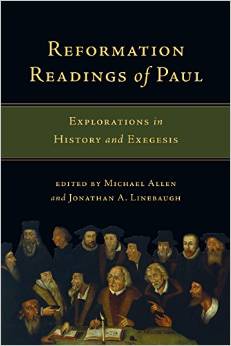
During October each year, I read some books about the Reformation to inform myself about that vastly important time in church history. October 31st is Reformation Day, of course, and so I thought I’d share a quote this Reformation Sunday from one of the books I’ve been reading. This year, Reformation Readings of Paul was high on my list, and I received a review copy from InterVarsity Press to devour.
There is a danger in the Protestant Church to enshrine the interpretations and methods of the Reformers such that the way they read the Bible becomes a new authority or at least lens through which Scripture must be read in order to be rightly understood. There is a fine line between referencing, respecting, and gleaning insight those who have come before as opposed to mechanically sticking to them. David C. Fink points out that even Reformers like Luther would have advised against this:
Luther showed no hesitation in setting aside the views of Jerome, Erasmus, or even Augustine. If we take him at his word, there is no reason to think he would not expect the same handling from modern exegetes today. (33-34, cited below)
Luther referenced these church fathers but did not see them as the authority on exegesis or interpretation of the biblical text. Similarly, Fink notes, we should not be afraid to set aside Luther if we should find that his interpretation of a passage is mistaken.
Links
Be sure to check out the page for this site on Facebook and Twitter for discussion of posts, links to other pages of interest, random talk about theology/philosophy/apologetics/movies and more!
Sunday Quote– If you want to read more Sunday Quotes and join the discussion, check them out! (Scroll down for more)
Reformation Theology- Check out my other posts on the Reformation and its theology (scroll down for more)
Source
David C. Fink “Martin Luther’s Reading of Galatians” in Reformation Readings of Paul eds. Michael Allen and Jonathan A. Linebaugh (Downers Grove, IL: InterVarsity, 2015).
SDG.
Sunday Quote!- Methodological Naturalism Makes a Farce of Empirical Investigation?
Every Sunday, I will share a quote from something I’ve been reading. The hope is for you, dear reader, to share your thoughts on the quote and related issues and perhaps pick up some reading material along the way!
Methodological Naturalism Makes a Farce of Empirical Investigation?
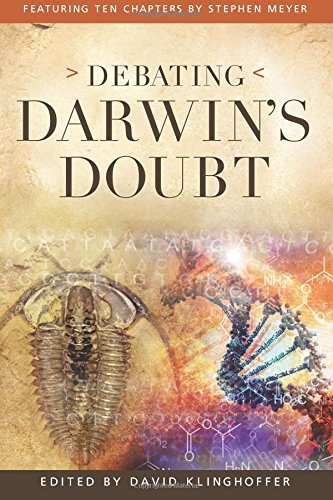
I’ve been reading through Debating Darwin’s Doubt, which is a collection of essays responding to various critics of Stephen Meyer’s major work arguing for intelligent design within biology, Darwin’s Doubt. In one of the essays, Paul Nelson, a philosopher of biology, directly addresses whether methodological naturalism–the notion that science must offer always and only physical, material causes as explanations–is a viable restriction on scientific inquiry:
[Methodological naturalism] “…makes a farce of empirical investigation, because the outcome of any research could never be in doubt: some material or physical cause must be affirmed as the explanation. If you don’t find one, try harder; just keep looking until you do. (288, cited below)
The point that is being made is that methodological naturalism is itself a limiting factor imposed upon scientific inquiry, rather than something that is required for scientific inquiry. I sympathize with this critique, to be frank. Whatever one thinks of the merits (or lack thereof) of the notion of intelligent design, I think that the sheer possibility of using inference to best explanation to detect intelligent agency is not itself anything to undermine scientific inquiry. Indeed, why should said inquiry be limited unnecessarily? Reject those theories which do not have the evidence to support them; but I don’t think we should do so simply by ruling out some varieties of theory a priori.
Debating Darwin’s Doubt has been an intriguing read so far.
Links
Be sure to check out the page for this site on Facebook and Twitter for discussion of posts, links to other pages of interest, random talk about theology/philosophy/apologetics/movies and more!
Sunday Quote– If you want to read more Sunday Quotes and join the discussion, check them out! (Scroll down for more)
Source
Paul Nelson, “Methodological Naturalism: A Rule That No One Needs or Obeys” in Debating Darwin’s Doubt edited David Klinghoffer (Seattle, WA: Discovery Institute Press, 2015).
SDG.
Sunday Quote!- Sarah the Matriarch as Equal to Abraham
Every Sunday, I will share a quote from something I’ve been reading. The hope is for you, dear reader, to share your thoughts on the quote and related issues and perhaps pick up some reading material along the way!
Sarah the Matriarch as Equal to Abraham
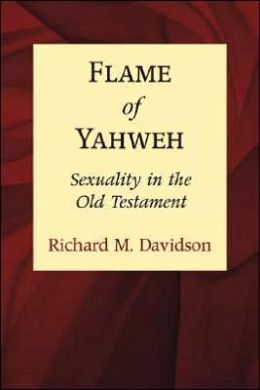
I’ve been reading through Richard Davidson’s tome, Flame of Yahweh: Sexuality in the Old Testament, a huge study of, well, sexuality in the Old Testament. One portion focuses on the narratives in the Pentateuch and the women discussed therein. Sarah, Abraham’s wife, is shown to be the equal of Abraham, argues Davidson:
Details of Sarah’s life in the Genesis narratives reveal the high valuation of this matriarch, as she and her husband are portrayed as equal partners… given their social context, Sarah and Abraham are amazingly equal… (226, 227)
Davidson’s argument lists a number of reasons to believe this is the case. Here I will quote just a couple:
Sarah is regarded as just as critical to the divine covenant as Abraham himself… ([Genesis] 17:18-19; 21:12)… Sarah’s name is changed from Sarai, just as Abraham’s is from Abram… (17:16)… (227)
These are among the total of 10 main reasons Davidson cites to demonstrate that Sarah was “no wallflower.” The high valuation of women in the Old Testament is something Davidson demonstrates, in my opinion.
Links
Be sure to check out the page for this site on Facebook and Twitter for discussion of posts, links to other pages of interest, random talk about theology/philosophy/apologetics/movies and more!
Sunday Quote– If you want to read more Sunday Quotes and join the discussion, check them out! (Scroll down for more)
Source
Richard M. Davidson, Flame of Yahweh (Peabody, MA: Hendrickson Publishers, 2007).
SDG.
Sunday Quote!- Mormonism and Breaking the Ninth Commandment
Every Sunday, I will share a quote from something I’ve been reading. The hope is for you, dear reader, to share your thoughts on the quote and related issues and perhaps pick up some reading material along the way!
Mormonism and Breaking the Ninth Commandment
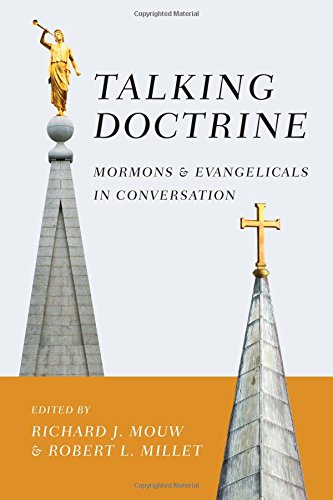
Talking Doctrine: Mormons & Evangelicals in Conversation is an intriguing collection of essays from evangelical and Mormon scholars (see my review). In one essay, Cory B. Willson briefly comments on something that an evangelical, Richard Mouw, said in an address at the Mormon Tabernacle in 2004:
The common habit of telling Mormons what they believe without bothering to ask them, Mouw noted, has often led to misrepresenting and even demonizing their beliefs and practices–a form of bearing false witness against our Latter-day Saint neighbors. (80, cited below)
Mouw’s point should be well-taken. Too often in interfaith dialogue there is a tendency to jump on assumed beliefs rather than getting to know the religious “other.” Instead, we should focus on what those religious “others” are actually telling us they believe, so that we do not give false testimony against them. I wrote a post about a vision for Christian apologetics to world religions that focuses more on this topic.
What do you think? How might we map ways forward in interfaith dialogue that does not misrepresent the other side? How could this be better applied to evangelical-Mormon discussions?
[Note: there are some different ways of numbering the commandments. The Commandment Referred to here is “Do not give false testimony against your neighbor” which is commonly known as the 8th or 9th Commandment, depending on how a tradition breaks them up. I stuck with it as the 9th commandment because that’s how the quote had them numbered.]
Links
Be sure to check out the page for this site on Facebook and Twitter for discussion of posts, links to other pages of interest, random talk about theology/philosophy/apologetics/movies and more!
Sunday Quote– If you want to read more Sunday Quotes and join the discussion, check them out! (Scroll down for more)
Book Review: Talking Doctrine: Mormons and Evangelicals in Conversation edited by Mouw and Millet– I review the book from which this quote came.
Source
Talking Doctrine: Mormons and Evangelicals in Conversation edited Mouw and Millet (Downers Grove, IL: InterVarsity, 2015).
SDG.
Sunday Quote!- Making a Composite Jesus
 Every Sunday, I will share a quote from something I’ve been reading. The hope is for you, dear reader, to share your thoughts on the quote and related issues and perhaps pick up some reading material along the way!
Making a Composite Jesus
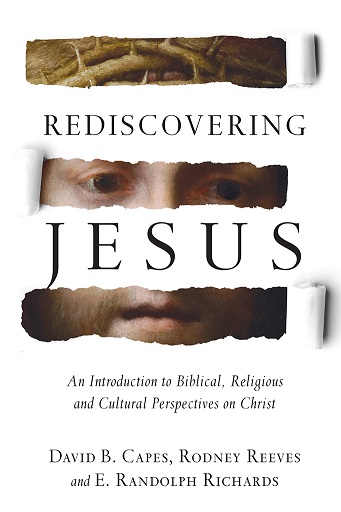
I finished reading through Rediscovering Jesus not too long ago and I was struck by something fairly early on: the authors challenged readers to come to the realization that we are often operating under a kind of composite portrait of Jesus:
My Jesus is often a smorgasbord Jesus, a Jesus who doesn’t look like the one in the Bible. Just like a buffet in the cafeteria, where I go through the line and pick out what I want, I read through the Gospels, pulling out stories I like. (17, cited below)
The authors go on to note that our view of Jesus is not only formed buffet-like from imagery found in the Bible, but also through various ways the culture has influenced us to think about Jesus. What are some of the ways that your picture of Jesus may have been shaped by extra-biblical imagery? How might we find the composite Jesus we have created that often stands alongside us as we try to read about Jesus in the scriptures?
Rediscovering Jesus is full of insights like this, and I highly commend it to you, dear readers.
Source
David B. Capes, Rodney Reeves, and E. Randolph Richards, Rediscovering Jesus (Downers Grove, IL: InterVarsity, 2015).
Links
Be sure to check out the page for this site on Facebook and Twitter for discussion of posts, links to other pages of interest, random talk about theology/philosophy/apologetics/movies and more!
Sunday Quote– If you want to read more Sunday Quotes and join the discussion, check them out! (Scroll down for more)
SDG.
Sunday Quote!- On Theological Controversies from John Newton
Every Sunday, I will share a quote from something I’ve been reading. The hope is for you, dear reader, to share your thoughts on the quote and related issues and perhaps pick up some reading material along the way!
On Theological Controversies- From John Newton
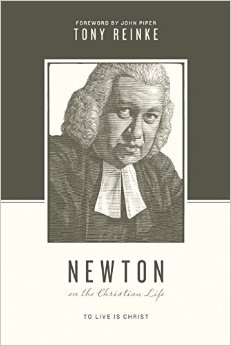
I recently finished reading Newton on the Christian Life (see my review here), a book about John Newton’s pastoral theology. John Newton worked on slave ships but after his conversion worked to help end slavery in the British Empire. His pastoral theology had great depth, as evidenced in this quote on theological controversies, published in a newspaper during a particularly bitter debate between Arminians and Calvinists:
[B]efore you engage in debate, you must take heed of your opponent. He is an eternal creature. If he is not a Christian… he warrants your deepest pity, kindness, and prayers… If, however, your theological opponent is a genuine Christian, think about your future together in heaven.” (Kindle Location 5460, cited below)
Think about that for a moment. Your “debate opponent” will be together with you in heaven forever. This isn’t someone you can hide comfortably from behind a keyboard. You’ll meet one way or another. How do you think you should treat this child of God?
But that’s not all. Newton’s advice applies even moreso if the debate is against someone who is not a Christian, for they “warrant… your deepest pity, kindness, and prayers.” What kind of Christians are we if our theological debates drive people away from Christ (another theme in Newton’s pastoral theology)?
We should keep in mind Newton’s advice as we engage others; all of whom bear the image of God.
Links
Be sure to check out the page for this site on Facebook and Twitter for discussion of posts, links to other pages of interest, random talk about theology/philosophy/apologetics/movies and more!
Sunday Quote– If you want to read more Sunday Quotes and join the discussion, check them out! (Scroll down for more)
Source
Tony Reinke, Newton on the Christian Life (Downers Grove, IL: Crossway, 2015).
SDG.
Sunday Quote!- Our Cultural Concepts of Christianity
 Every Sunday, I will share a quote from something I’ve been reading. The hope is for you, dear reader, to share your thoughts on the quote and related issues and perhaps pick up some reading material along the way!
Our Cultural Concepts of Christianity
I recently finished Rescuing the Gospel from the Cowboys by Richard Twiss. It was a phenomenal, thought-provoking read that I highly recommend. In one section, Twiss argues that:
If self-revelation is the work of Creator and Creator’s engagement with people and nations, then crosscultural communication never occurs in isolation, in a cultural vacuum, but by definition occurs in a crosscultural context. Human messengers are never free from the prevailing cultural influences of their upbringing, worldview values, and sociocultural/political attitudes of their day. (61, cited below)
The point he is making is that humans are tied to their cultural background in such a way that any time we speak to someone from a different context, that becomes a cross-cultural context, no matter how neutral we attempt to be in our understanding. Thus, when applied to missions, it is important to keep in mind one’s own cultural influences and try to avoid imposing those cultural standards onto other cultures. We must not turn Christianity into Christianity + our own cultural understanding and practice of Christianity. Much of the book focuses on how Western culture has been imposed upon Native culture in Christianity as well as how we might break that cycle.
Rescuing the Gospel from the Cowboys is an excellent read that will challenge most readers’ expectations and presuppositions. I highly recommend it.
Links
Be sure to check out the page for this site on Facebook and Twitter for discussion of posts, links to other pages of interest, random talk about theology/philosophy/apologetics/movies and more!
Sunday Quote– If you want to read more Sunday Quotes and join the discussion, check them out! (Scroll down for more)
Source
Richard Twiss, Rescuing the Gospel from the Cowboys (Downers Grove, IL: InterVarsity, 2015).
SDG.
Sunday Quote!- Martin Luther on the Eighth Commandment

Every Sunday, I will share a quote from something I’ve been reading. The hope is for you, dear reader, to share your thoughts on the quote and related issues and perhaps pick up some reading material along the way!
Martin Luther on the Eighth Commandment
I’ve always thought Martin Luther’s thoughts on the Eighth Commandment are an excellent guide for Christian living. Here’s his very brief comments from the Small Catechism:
The Eighth Commandment.
Thou shalt not bear false witness against thy neighbor.
What does this mean?–Answer:
We should fear and love God that we may not deceitfully belie, betray, slander, or defame our neighbor, but defend him, [think and] speak well of him, and put the best construction on everything.
Note that it is not enough simply to not lie to our neighbors. We must also defend the neighbor and also think and speak well of them. In the Large Catechism, Luther expands on these thoughts quite a bit. We should be generous in our interpretations of others’ intentions and acts.
Too often, even in Christian circles, I see people labeling others as “compromiser” or “fundy” or “liberal” without any consideration of the actual motivations, arguments, and positions of those with whom disagreement exists. Doing this is breaking the Eighth Commandment. Even in disagreement, we should think and speak well of our neighbor.
I pray that I may take this to heart and adapt it to my life.
Links
Be sure to check out the page for this site on Facebook and Twitter for discussion of posts, links to other pages of interest, random talk about theology/philosophy/apologetics/movies and more!
Sunday Quote– If you want to read more Sunday Quotes and join the discussion, check them out! (Scroll down for more)
SDG.
Sunday Quote!- We Influence Toward… or Away From Christ
Every Sunday, I will share a quote from something I’ve been reading. The hope is for you, dear reader, to share your thoughts on the quote and related issues and perhaps pick up some reading material along the way!
We Influence Toward… or Away From Christ
I read through Newton on the Christian Life by Tony Reinke recently (see my review). Before I go any further, I would note this is John Newton and not Isaac Newton. John Newton is the man who wrote Amazing Grace, but his life and influence go well beyond that. Reinke notes that, according to John Newton, we have vast influence even in our everyday interactions with others:
Every day we influence others in one of two directions: (1) toward faith in Christ and eternal glory, or (2) toward rejection of Christ and eternal judgment. (Kindle Location 2801, cited below)
Newton has some insights of his own on how we might best lead towards Christ, and this largely centers around the maturing life of a Christian and trying to live as Christ, for “to live is Christ.”
How is it that our actions are influencing others toward or away from Christ? How might we best live our lives in ways that lead to Christ rather than driving people away from Him? In what ways can we, through the Spirit, live as Christ to the world?
Links
Be sure to check out the page for this site on Facebook and Twitter for discussion of posts, links to other pages of interest, random talk about theology/philosophy/apologetics/movies and more!
Sunday Quote– If you want to read more Sunday Quotes and join the discussion, check them out! (Scroll down for more)
Source
Tony Reinke, Newton on the Christian Life (Downers Grove, IL: Crossway, 2015).
SDG.

 J.W. Wartick - Reconstructing Faith