Sunday Quote
Sunday Quote!- Adam and Eve had different names?
 Every Sunday, I will share a quote from something I’ve been reading. The hope is for you, dear reader, to share your thoughts on the quote and related issues and perhaps pick up some reading material along the way!
Hidden Science in the Bible?
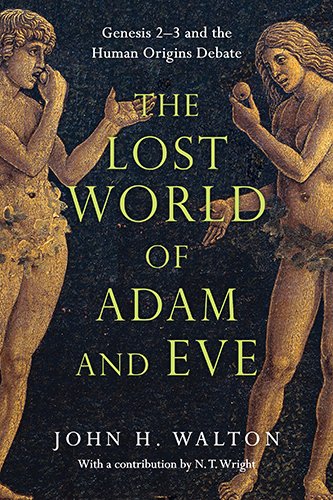
John Walton’s The Lost World of Adam and Eve
Although I believe that Adam and Eve are historical personages–real people in a real past–these cannot be their historical names. The names are Hebrew, and there is no Hebrew at the point in time when Adam and Eve lived.
If these are not historical names, then they must be assigned names, intended by the Hebrew-speaking users to convey a particular meaning… In English, if we read that someon’s name is “Human” and his partner’s name is “Life,” we quickly develop an impression of what is being communicated… These characters, by virtue of their assigned names, are larger than the historical characters to whom they refer. (58-59)
What do you think? Is Walton right to assert these were not the historical names of this couple because Hebrew didn’t exist at that time? What might we derive from this conclusion?
Check out my review of Walton’s book, and see what other insights are offered therein.
Links
Be sure to check out the page for this site on Facebook and Twitter for discussion of posts, links to other pages of interest, random talk about theology/philosophy/apologetics/movies and more!
Sunday Quote– If you want to read more Sunday Quotes and join the discussion, check them out! (Scroll down for more)
Source
John Walton, The Lost World of Adam and Eve
SDG.
Sunday Quote!- Sanctification by Faith Alone?
 Every Sunday, I will share a quote from something I’ve been reading. The hope is for you, dear reader, to share your thoughts on the quote and related issues and perhaps pick up some reading material along the way!
Sanctification by Faith Alone?
Sanctification: Explorations in Theology and Practice
One of the chapters, Richard Lints argues that sanctification is something that we receive by faith alone–in contrast to views which argue that it is some later co-operation between the Spirit and the believer to do good works. I hope I’m not misrepresenting his view, as I admit I have read very little on the topic. Thus, I’ll let him make his argument for himself:
The gospel is received rather than achieved by believers, and thus all the benefits given in the gospel are received by faith. The gift of the Holy Spirit is one of those “benefits” and no less than other gifts given in the gospel, so the Holy Spirit is received by faith… And therefore sanctifying faith is not different in its orientation than justifying faith. (44)
What do you think? Is this a good argument for the view that sanctification comes through faith alone? If so, how are works involved in sanctification? What is your view of sanctification overall?
Sanctification: Explorations in Theology and Practice
Links
Be sure to check out the page for this site on Facebook and Twitter for discussion of posts, links to other pages of interest, random talk about theology/philosophy/apologetics/movies and more!
Sunday Quote– If you want to read more Sunday Quotes and join the discussion, check them out! (Scroll down for more)
Source
“Living by Faith–Alone?: Reformed Responses to Antinomianism” by Richard Lints in Sanctification: Explorations in Theology and Practice
Sunday Quote!- The Creative Church Changes the World
 Every Sunday, I will share a quote from something I’ve been reading. The hope is for you, dear reader, to share your thoughts on the quote and related issues and perhaps pick up some reading material along the way!
The Creative Church Changes the World
J. Scott McElroy’s Creative Church Handbook is a deeply insightful look into how we might integrate the visual arts into our churches in meaningful ways. But, one may ask, why should we bother to do so? McElroy’s words are worth considering:
When we choose to inspire, disciple and empower the artists in our churches, guiding them into a collaborative relationship with God, they will help the rest of the congregation on the path to unlocking our inherent creativity. The result–a creative church–can change the world. (60 [cited from a pre-release edition])
Put most simply, when we open our doors to creativity in the church, we engage the world on a completely different level than we do if we lack such creative insights. I think McElroy is completely correct here, and we know it is correct because we’ve seen how art like the Mona Lisa, The Last Supper, and other works have changed the world. If we, the church, can continue to engage on this level, how much more change for the Kingdom can we bring into the world?
I highly recommend the Creative Church Handbook. It is one of the best reads I’ve had all year.
Links
Be sure to check out the page for this site on Facebook and Twitter for discussion of posts, links to other pages of interest, random talk about theology/philosophy/apologetics/movies and more!
Sunday Quote– If you want to read more Sunday Quotes and join the discussion, check them out! (Scroll down for more)
Source
J. Scott McElroy Creative Church Handbook
SDG.
Sunday Quote!- Darwin and Design
 Every Sunday, I will share a quote from something I’ve been reading. The hope is for you, dear reader, to share your thoughts on the quote and related issues and perhaps pick up some reading material along the way!
Darwin and Design
I’ve recently started reading God and Design
It should be possible to define a biological system such that, if it were to exist, its existence could not be explained in Darwinian fashion. If it is impossible to define such a biological system, then it will be impossible to formulate an empirical test that might disconfirm Darwin’s theory. Darwinism’s claim to be a genuine scientific theory would suffer a serious… blow. (11)
The reason Manson argues that the bare possibility of such a definition is required is because of the notion of “falsifiability” in science. While it is debated as to whether falsifiability is an actual criterion for “true” science (at least in the philosophy of science I have read), it has become largely assumed that, in some sense, a theory must be at least in principle falsifiable in order to avoid being question begging or too broadly defined.
Granting that, Manson’s point seems to be a valid one: in order for Darwinism to be viable, it must also be falsifiable. If we can’t even imagine a system that would falsify it, then that may have extremely broad implications. Whether we have imagined such systems–and whether we have discovered them–is a matter of no small amount of debate.
What do you think? Is falsifiability a required criterion for science? Are we able to such a defined biological system to challenge Darwinian evolution? Do such systems actually exist?
God and Design
Links
Be sure to check out the page for this site on Facebook and Twitter for discussion of posts, links to other pages of interest, random talk about theology/philosophy/apologetics/movies and more!
Sunday Quote– If you want to read more Sunday Quotes and join the discussion, check them out! (Scroll down for more)
Source
Neil Manson, “Introduction,” in God and Design ed. Neil Manson (New York: Routledge, 2003).
SDG.
Sunday Quote!- Hidden Science in the Bible?
Every Sunday, I will share a quote from something I’ve been reading. The hope is for you, dear reader, to share your thoughts on the quote and related issues and perhaps pick up some reading material along the way!
Hidden Science in the Bible?
Some see the Bible as a source of all knowledge. When we come to the very beginning of the Bible, what is it trying to teach us? Might it tell us what to believe about evolution? Could it reveal truths about science that no one knew until they were discovered later? These types of questions come to us very frequently in this age of science in which we invest so much into questions of a material nature.
John Walton, in his latest book, The Lost World of Adam and Eve, argues that these questions are largely misguided:
[God] did not hide information of that sort [scientific] in the text for later readers to be discovered. An assumption on our part that he did would have no reliable controls. For example, in the days when people believed in a steady-state universe, people could easily have gone to the Bible to find confirmation of that science. But today we do not believe the steady-state theory to be true… Such approaches cannot be adopted within an authority framework. (18, cited below)
Walton’s argument is compelling. The notion that the Bible necessarily has hidden throughout scientific insight just waiting to be found can never be arbitrated. Thus, it makes the Bible the tool of one generation and the laughing stock of the next. As we attempt to use the Bible to support various scientific notions, we may do much damage to the text.
How might we best approach the text in a way that does not leave us open to this uncontrollable theorizing? Is it possible to maintain the notion that the Bible does teach us about science? If not, why not? If so, to what extent?
Links
Be sure to check out the page for this site on Facebook and Twitter for discussion of posts, links to other pages of interest, random talk about theology/philosophy/apologetics/movies and more!
Sunday Quote– If you want to read more Sunday Quotes and join the discussion, check them out! (Scroll down for more)
Source
John Walton, The Lost World of Adam and Eve
SDG.
Sunday Quote!- Cessationism and Defining Miracles

Every Sunday, I will share a quote from something I’ve been reading. The hope is for you, dear reader, to share your thoughts on the quote and related issues and perhaps pick up some reading material along the way!
Cessationism and Defining Miracles
Jon Mark Ruthven’s On the Cessation of the Charismata
The validity of cessationism depends upon a clearly discernible and internally consistent model of miracle which can be applied transparently and uniformly to all candidate cases as they appear throughout history, both in the biblical accounts and afterward. (44, cited below)
Then, he argues–I think rightly–that the cessationist has yet to provide just such a model. It seems instead that there is a kind of arbitrary cut-off point at which miracles are said to be untrustworthy occurrences. Ruthven spends a lengthy portion of the book arguing that the cessationist models have failed this consistency test.
What do you think? Have you seen a model that can consistently affirm the miracles in the Bible but then uniformly and without qualification deny those which are extrabiblical and/or modern? What stance do you take on the issue of miraculous gifts?
Links
Be sure to check out the page for this site on Facebook and Twitter for discussion of posts, links to other pages of interest, random talk about theology/philosophy/apologetics/movies and more!
“Are Miraculous Gifts for Today?”- A look at four views in Christian Theology– I provide a look at four positions on miraculous/spiritual gifts in contemporary theology.
Sunday Quote– If you want to read more Sunday Quotes and join the discussion, check them out! (Scroll down for more)
Source
Jon Mark Ruthven, On the Cessation of the Charismata
SDG.
Sunday Quote!- Ecological Ignorance
 Every Sunday, I will share a quote from something I’ve been reading. The hope is for you, dear reader, to share your thoughts on the quote and related issues and perhaps pick up some reading material along the way!
Ecological Ignorance
In For the Beauty of the Earth
After asking the questions, he poses this challenge:
If the answer to these questions is “no,” then we really do not know where we are. Despite our education we remain ecologically illiterate. (3, cited below)
Now of course we cannot be experts on every aspect of the place in which we live, but we must acknowledge our general ignorance about it. I couldn’t name most of the native flora in the area I live. How might this impact the way in which we view our place in the world? What of our charge to care for God’s creation? How might we better increase our ecological awareness so that we may not do more harm then good?
For the Beauty of the Earth
Links
Be sure to check out the page for this site on Facebook and Twitter for discussion of posts, links to other pages of interest, random talk about theology/philosophy/apologetics/movies and more!
Sunday Quote– If you want to read more Sunday Quotes and join the discussion, check them out! (Scroll down for more)
Book Review: “For the Beauty of the Earth” by Steven Bouma-Prediger– Bouma-Prediger’s book is a fountain of insight into issues of creation care, ecological apologetics, and more. Check out my review to learn more.
Source
Steven Bouma-Prediger, For the Beauty of the Earth
SDG.
Is Natural Theology Excluded for Apologetics? – Sunday Quote!+
 Here’s a special edition Sunday Quote which features a more extended discussion. Let me know what you think in the comments.
Is Natural Theology Excluded for Apologetics?
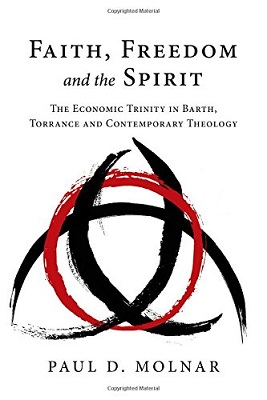
Paul Molnar’s Faith, Freedom and the Spirit 
If contemporary theologians were to make explicit the role of the Holy Spirit in enabling our knowledge of the triune God, then there could be wide agreement that natural theology of whatever stripe is not only unhelpful but is directly excluded from any serious understanding of theological epistemology. (82)
Now, “natural theology” is, according to Justo Gonzalez’s Essential Theological Terms, “A theology that claims to be based on the natural gifts of the human mind, and on the ‘general revelation’ granted to all… rather than on a ‘special revelation’ in Scripture or Jesus Christ” (118). Natural theology, that is, is the attempt to show that God exists and certain other truths through looking at the world. From this quote, it seems that Molnar is arguing that if we had a better notion of the role of the Holy Spirit, we would basically think that natural theology is worthless related to knowledge of God.
Molnar develops this notion further throughout the next 50 pages or so. His argument basically is that if we acknowledge that it is the Holy Spirit who enables faith and knowledge of God, then any “knowledge” of God which is not directly through faith (i.e. through something like a cosmological argument) is not objective knowledge of God.
Although some of what Molnar argues resonates with me–particularly the notion that the Holy Spirit is the one who imparts faith rather than it being some kind of choice we make–I think that his dismissal of natural theology is unnecessary and mistaken. First, the most obvious question to be asked is whether the Spirit can use natural theology to create faith. If it is the case that the Holy Spirit can work through natural theology–something which seems to be clearly correct to me–then the objection that natural theology ignores the role of the Spirit is mistaken.
Second, Molnar’s argument seems to rely on a concept of natural theology which is entirely about trying to impart knowledge of God to those who do not have faith. This, however, ignores the use of apologetics in strengthening the faith of believers. Natural theology can be a valuable tool for those who have faith to pursue the call of 1 Peter 3:15 and have a reason for the hope within them. Whatever one’s view of whether natural theology can bring people to the true God, it seems that it can and should be used for believers to explore the natural world and bolster their faith.
Third and finally, it seems to me that Romans 1 in particular demonstrates that natural theology is not a worthless project. If God’s invisible attributes are capable of being discovered in the things God has made, then surely natural theology has some value in tracing God’s handiwork.
Should we think that natural theology is a failed project? Can it have other uses like those I listed? Is it possible to go from God to Christ? What of the role of the Spirit in apologetics?
Faith, Freedom and the Spirit
Links
Be sure to check out the page for this site on Facebook and Twitter for discussion of posts, links to other pages of interest, random talk about theology/philosophy/apologetics/movies and more!
Sunday Quote– If you want to read more Sunday Quotes and join the discussion, check them out! (Scroll down for more)
Source
Paul D. Molnar, Faith, Freedom and the Spirit (Downers Grove, IL: InterVarsity, 2015).
SDG.
——
The preceding post is the property of J.W. Wartick (apart from quotations, which are the property of their respective owners, and works of art as credited; images are often freely available to the public and J.W. Wartick makes no claims of owning rights to the images unless he makes that explicit) and should not be reproduced in part or in whole without the expressed consent of the author. All content on this site is the property of J.W. Wartick and is made available for individual and personal usage. If you cite from these documents, whether for personal or professional purposes, please give appropriate citation with both the name of the author (J.W. Wartick) and a link to the original URL. If you’d like to repost a post, you may do so, provided you show less than half of the original post on your own site and link to the original post for the rest. You must also appropriately cite the post as noted above. This blog is protected by Creative Commons licensing. By viewing any part of this site, you are agreeing to this usage policy.
Sunday Quote!- Adam and Eve and Inerrancy
Every Sunday, I will share a quote from something I’ve been reading. The hope is for you, dear reader, to share your thoughts on the quote and related issues and perhaps pick up some reading material along the way!
Adam and Eve and Inerrancy
Is it possible to deny the historicity of Adam and Eve and affirm biblical inerrancy? I’ve explored the issue of whether the historical Adam is a “gospel issue” before and concluded that it depends what is meant by the term. I was reading through John Walton’s The Lost World of Adam and Eve
…make the case that historical Adam is part of the authoritative message that the text provides… If someone were to contend that belief in a historical Adam was cultural… part of the framework of communication, then inerrancy would not apply… (201-202)
It is worth noting that Walton believes that Adam and Eve are indeed historical persons, though he believes they were archetypes rather than the only humans alive at the time or the first humans ever.
What do you think? Need we affirm a historical Adam in order to affirm inerrancy? Is there a burden of proof upon those who claim the two are necessarily linked? What is your view of the historical Adam?
Whatever your thoughts, The Lost World of Adam and Eve
Links
Be sure to check out the page for this site on Facebook and Twitter for discussion of posts, links to other pages of interest, random talk about theology/philosophy/apologetics/movies and more!
Sunday Quote– If you want to read more Sunday Quotes and join the discussion, check them out! (Scroll down for more)
Is the historical Adam a Gospel Issue?– What happens to the Christian faith should it turn out to be the case that there is no historic Adam? Can one remain Christian and not believe in an historic Adam?
Source
John Walton, The Lost World of Adam and Eve
SDG.
Sunday Quote!- Does 1 Corinthians 15 teach a Millennial Gap?
 Every Sunday, I will share a quote from something I’ve been reading. The hope is for you, dear reader, to share your thoughts on the quote and related issues and perhaps pick up some reading material along the way!
Does 1 Corinthians 15 teach a Millennial Gap?
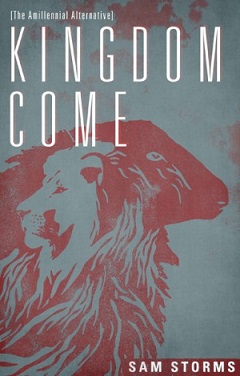
Sam Storms’ Kingdom Come: The Amillennial Alternative
Sam Storms analyzes this argument in extended fashion. Here’s a snippet of his discussion:
The premillennialist argues that the “end” [in verse 24] is the end or close of the millennial age, 1000 years after Christ has returned to earth. The amillennialist argues that the “end” is the end or close of the present church age… all one need do is demonstrate which of these two options is correct… So, does Paul tell us when death dies? …As I read 1 Corinthians 15:50-58, the defeat of death occurs at the second coming of Christ… (145, cited below)
If it is the case that Christ’s second coming is indeed the “end,” then it follows that the premillennial interpretation is mistaken and indeed, Storms argues, the whole system mostly collapses on itself. Storms concludes that 1 Corinthians 15 cannot be used to support the notion of a millennial gap.
What do you think? Does 1 Corinthians allow for such a lengthy gap in between parts of the text? What eschatological position do you hold to? How damaging is this text–if at all–for various eschatological positions?
No matter what you think, Kingdom Come: The Amillennial Alternative
Links
Be sure to check out the page for this site on Facebook and Twitter for discussion of posts, links to other pages of interest, random talk about theology/philosophy/apologetics/movies and more!
Sunday Quote– If you want to read more Sunday Quotes and join the discussion, check them out! (Scroll down for more)
Source
Sam Storms, Kingdom Come: The Amillennial Alternative
SDG.

 J.W. Wartick - Reconstructing Faith