Sunday Quote
Sunday Quote!- Forgiveness in Islam and Christianity
 Every Sunday, I will share a quote from something I’ve been reading. The hope is for you, dear reader, to share your thoughts on the quote and related issues and perhaps pick up some reading material along the way!
Forgiveness in Islam and Christianity
James White’s book, What Every Christian Needs to Know About the Qur’an
Here Allah not only forgives the man of horrendous sin but also does so without the slightest reference to the fulfillment of the divine law against murder. The key issue is not God’s mercy or even God’s desire to forgive. The issue is how forgiveness can be obtained without violating His holiness and justice. From the perspective of this hadith, forgiveness flows not from God’s actions in providing a basis for salvation, but from His power alone. (158, cited below)
The distinction White discusses here is crucial. The basis for forgiveness in Christianity flows along with God’s holiness and justice: God provides for justice through the atonement provided by Christ. In Islam, however, Allah may choose to forgive whomever, whenever, merely because Allah is all-powerful–and this in the radical sense that Allah may do whatever Allah wishes, even violate divine law against murder and the like without any intercession and mediation.
It seems to me that this provides another reason to think of the reasonableness of Christianity: it provides a basis for God’s forgiveness apart from mere divine fiat.
What do you think? How important is this distinction? Does James White accurately portray this difference?
Links
Be sure to check out the page for this site on Facebook and Twitter for discussion of posts, links to other pages of interest, random talk about theology/philosophy/apologetics/movies and more!
Sunday Quote– If you want to read more Sunday Quotes and join the discussion, check them out! (Scroll down for more)
Source
James White, What Every Christian Needs to Know About the Qur’an
SDG.
Sunday Quote!- Tourism, Borders, and the “Other”
 Every Sunday, I will share a quote from something I’ve been reading. The hope is for you, dear reader, to share your thoughts on the quote and related issues and perhaps pick up some reading material along the way!
Tourism, Borders, and the “Other”
William Cavanaugh is a favorite of mine due to his fantastic book, The Myth of Religious Violence. I had the chance to snag a more recent book of his, Migrations of the Holy
The artificial preservation of local identities is essential to tourism. In other words, the tourist represents both the attempt to transcend all borders and identities and the simultaneous attempt to fix the identities of non-Western subjects within its gaze. (79, cited below)
Cavanaugh’s point is in context of a broader discussion on migrant, tourist, pilgrim, and monk, and he acknowledges complexity to each of these categories. His point is that, in a sense, the very act of tourism both attempts to break down barriers (by going to the “other”) and also necessitates barriers (by upholding and even romanticizing or denigrating the concept of the “other”). It’s an interesting thought which makes one wonder about how we should live our lives in an increasingly “global” world.
How might we live our lives in the world in such a way as to avoid making the “other” into an object for our observation? How can we become “pilgrims” in a world which increasingly demands tourism? How can we sanctify a world which seeks to build barriers?
Links
Be sure to check out the page for this site on Facebook and Twitter for discussion of posts, links to other pages of interest, random talk about theology/philosophy/apologetics/movies and more!
Sunday Quote– If you want to read more Sunday Quotes and join the discussion, check them out! (Scroll down for more)
Book Review: “The Myth of Religious Violence” by William T. Cavanaugh– I review the book which has led me to discuss the ways the category of religion is used to stigmatize the other and also forced me to rethink a number of issues. I highly recommend this book.
Source
William Cavanaugh, Migrations of the Holy
SDG.
Sunday Quote!- Historical Criticism and What Prophets Would Have Done
 Every Sunday, I will share a quote from something I’ve been reading. The hope is for you, dear reader, to share your thoughts on the quote and related issues and perhaps pick up some reading material along the way!
Historical Criticism and What Prophets Would Have Done
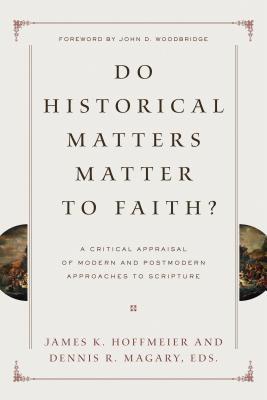
Do Historical Matters Matter to Faith?
[R]edactional analysis is, of course, based on a number of presuppositions about Old Testament prophets and prophecy that cannot be proved, or disproved: (1) that a prophet/editor would not use the same concept or theme in more than one way… (2) that a prophet would not reuse, allude to, or elaborate upon his own (earlier) oracles… and (3) that a prophet would not proclaim anything that was not clearly relevant and perspicuous for his contemporaries ( Schultz 256, cited below)
There is great difficulty with each of these assumptions, as should be clear simply from reading through them. Although each is not necessarily without some merit–surely, for example, it is not an error to think that very often concepts are used in the same ways–the difficulty is when rather than becoming guides for interpretation, these points become areas around which to base limits on the possible meaning of various texts.
The book is full of insights like this throughout, and though I’m still reading through it, I would say I recommend it for the amount of information contained in it, along with the variety of its contents.
What do you think? Are these assumptions valid? How might historical critical methods impact how one reads the text? What presuppositions might be better suited to Christian scholarship regarding prophecy, if any?
Links
Be sure to check out the page for this site on Facebook and Twitter for discussion of posts, links to other pages of interest, random talk about theology/philosophy/apologetics/movies and more!
Sunday Quote– If you want to read more Sunday Quotes and join the discussion, check them out! (Scroll down for more)
Source
Richard Schultz, “Isaiah, Isaiahs, and Current Scholarship” in Do Historical Matters Matter to Faith?
SDG.
Sunday Quote!- Pragmatic Use of Arguments for God
 Every Sunday, I will share a quote from something I’ve been reading. The hope is for you, dear reader, to share your thoughts on the quote and related issues and perhaps pick up some reading material along the way!
Pragmatic Use of Arguments for God
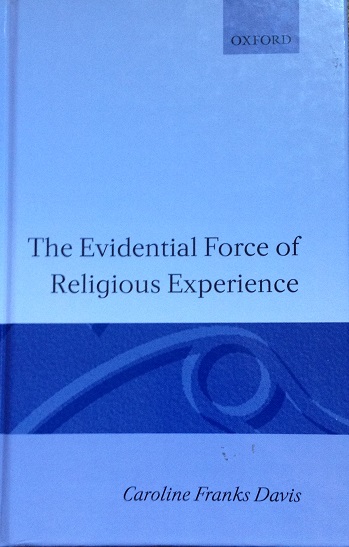
One of my favorite books on any argument for the existence of God is Caroline Franks Davis’ The Evidential Force of Religious Experience. I re-read it recently and came upon a number of awesome insights I hadn’t even marked the first time (how’s that as a case for re-reading books?)! One pertained to the notion that some theistic arguments might be successful, but not useful when it comes to trying to provide evidence to a skeptic:
Some arguments which have been proposed in favor of theism… suffer so many defects or are so controversial that they do not contribute a great deal to the theistic case. (242-243, cited below)
The point is not that all the arguments which may fall into this category are in fact irrational or mistaken (though some may be!), but rather that the usefulness of the arguments are hampered, in particular, by the controversy surrounding said arguments. The central thrust of her passage here is that some arguments may inspire so much objection (even if reasonable), that bringing them up may not contribute to a dialogue. I think this point is fascinating, though the philosophical side of me cries out saying “But if the argument is sound, why not use it!?” I wonder, however, whether this is the right approach.
Are there some theistic arguments which–apart from their soundness–are simply not useful in the case of presenting an apologetic? Should we base our use of these arguments on their utility in that case, or simply upon the logical soundness of the arguments? Which arguments might fall into this category?
Links
Be sure to check out the page for this site on Facebook and Twitter for discussion of posts, links to other pages of interest, random talk about theology/philosophy/apologetics/movies and more!
Sunday Quote– If you want to read more Sunday Quotes and join the discussion, check them out! (Scroll down for more)
Source
Caroline Franks Davis, The Evidential Force of Religious Experience
SDG.
Sunday Quote: Aliens and Paganism?
 Every Sunday, I will share a quote from something I’ve been reading. The hope is for you, dear reader, to share your thoughts on the quote and related issues and perhaps pick up some reading material along the way!
Aliens and Paganism?
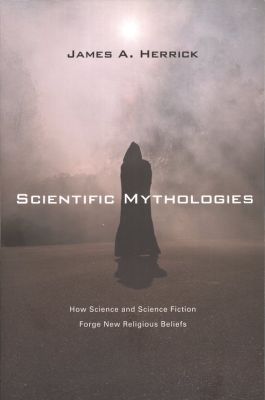
I’ve been entering notes into my computer and because of that I’ve been rereading a bunch of books. Scientific Mythologies: How Science and Science Fiction Forge New Religious Beliefs
[W]e are witnessing nothing less than the emergence of new transcendent narratives–new myths–to answer our deepest questions. We appear to have entered a second pagan era, complete with a new mythology in which minor deities once again descend from the stars, seek intimate involvement in our lives, direct our course into the future… Our mythologies… have a way of shaping who we are and what we are becoming. (17, cited below)
Have you witnessed any kind of “new mythologies” being followed or created through science or science fiction? I think that sci-fi is a great way to convey a worldview, and I’ve commented often on various ways people have used it for just that purpose. What ways might new scientific mythologies shape our perceptions of ourselves and others? Do you think Herrick’s point is to be well taken, or is he wrong? Why/not? I encourage you to check out the fascinating book. Thanks to my friend Josh over at No Apologies Allowed for so long ago introducing me to it.
Links
Be sure to check out the page for this site on Facebook and Twitter for discussion of posts, links to other pages of interest, random talk about theology/philosophy/apologetics/movies and more!
Sunday Quote– If you want to read more Sunday Quotes and join the discussion, check them out! (Scroll down for more)
Materialists: Where is hope? Look to the stars!– I analyze one aspect of materialism: the way that some look to hope in the “beyond” of the outer limits of the universe. Hope, for materialists, may come from the stars. Our salvation may lay beyond our solar system, in benevolent aliens who will bring great change and advances to us.
Source
James Herrick, Scientific Mythologies: How Science and Science Fiction Forge New Religious Beliefs
Sunday Quote!- The Heartbeat and Delight of Christianity
 Every Sunday, I will share a quote from something I’ve been reading. The hope is for you, dear reader, to share your thoughts on the quote and related issues and perhaps pick up some reading material along the way!
The Heartbeat and Delight of Christianity
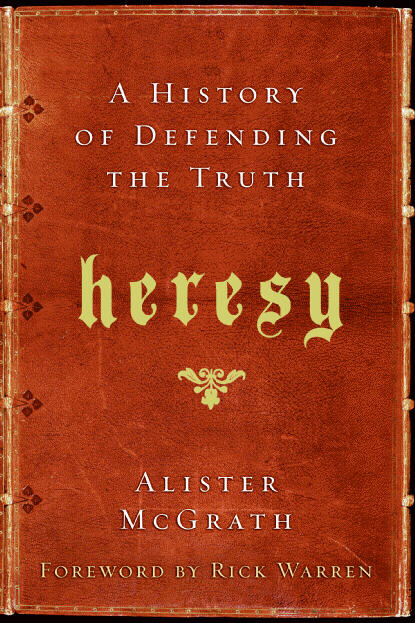
I re-read Alister McGrath’s Heresy: A History of Defending the Truth
If there is a heartbeat of the Christian faith, it lies in the sheer intellectual delight and excitement caused by the person of Jesus of Nazareth. Here is the one whom the church finds to be intellectually luminous, spiritually persuasive, and infinitely satisfying, both communally and individually. (17, cited below)
I found this passage quite powerful. Jesus is the heartbeat of Christianity, and our delight. Without Christ, there is no faith. Without our Lord, there is no salvation. But McGrath goes beyond that: Jesus of Nazareth is an intellectually compelling person, which drives us to seek out formulations to explain who He is; Christ is satisfaction and communal unity.
Have you thought about Jesus in these ways? How has Jesus spurred your intellect? In what ways have you recently delighted in the person of Jesus Christ?
Links
Be sure to check out the page for this site on Facebook and Twitter for discussion of posts, links to other pages of interest, random talk about theology/philosophy/apologetics/movies and more!
Sunday Quote– If you want to read more Sunday Quotes and join the discussion, check them out! (Scroll down for more)
Book Review: “Heresy: A History of Defending the Truth” by Alister McGrath– Check out my review of McGrath’s book.
Source
Alister McGrath, Heresy: A History of Defending the Truth
SDG.
Sunday Quote!- Building the Argument from Undesigned Coincidences
 Every Sunday, I will share a quote from something I’ve been reading. The hope is for you, dear reader, to share your thoughts on the quote and related issues and perhaps pick up some reading material along the way!
Build the Argument
J.J. Blunt (1794-1855) wrote what I consider to be one of the strongest pieces of apologetics literature ever written, Undesigned Coincidences in the Writings Both of the Old and New Testaments. The book focuses, clearly enough, on the argument from undesigned coincidences. I’ll not explain the argument here, as I have done so already. But Blunt operated under no false hopes of having comprehensively covered this extremely broad argument:
Much, however, of the same kind of testimony I have no doubt has escaped all of us; and still remains to be detected by future writers on the Evidences. (v, cited below)
Blunt’s words are a call to action for the Christian apologist. The argument from undesigned coincidences is extremely powerful, but it also has massive depths to explore throughout the totality of the Bible which have not even begun to be explored. Moreover, Blunt began the work of relating these “coincidences” to contemporary literature by relating the Gospels and Acts to Josephus, but surely there is much more work to be done by exploring other literature outside of the Bible and seeing how these might be cross-confirmed.
So, fellow Christian apologists, let’s get to work!
Links
Be sure to check out the page for this site on Facebook and Twitter for discussion of posts, links to other pages of interest, random talk about theology/philosophy/apologetics/movies and more!
Forgotten Arguments for Christianity: Undesigned Coincidences- the argument stated– I outline the basics of the argument from undesigned coincidences. I also provide an example of the argument in practice.
Sunday Quote– If you want to read more Sunday Quotes and join the discussion, check them out! (Scroll down for more)
Source
John James Blunt, Undesigned Coincidences in the Writings of both the Old and New Testament, New York, 1847.
SDG.
Sunday Quote!- Mythical Wars in the Bible?
 Every Sunday, I will share a quote from something I’ve been reading. The hope is for you, dear reader, to share your thoughts on the quote and related issues and perhaps pick up some reading material along the way!
Mythical Wars in the Bible?
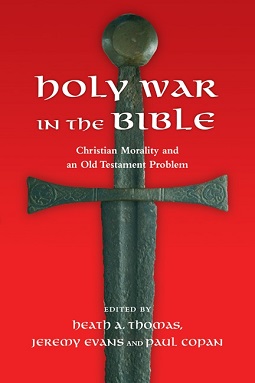
I was reading through Holy War in the Bible: Christian Morality and an Old Testament Problem and was surprised to come upon an essay which essentially argues that the narratives in Joshua were mythical retellings of the entry into Israel:
…Deuteronomy 7:1-5 is incoherent if read literally, for the command to kill all the inhabitants of the land is followed by an exhortation against intermarriage with them. In other words, in a “mythological” sense, Deuteronomy 7 itself encourages not so much annihilation of Canaanites as radical separation from them and their idolatrous practices–exactly as Joshua 23-24 exhorts. (163, cited below)
The essay was by Douglas Edwards, whose argument is essentially that Joshua does not recount actual events but rather a mythology with a specific purpose to show that God’s goal of placing Israel in the promised land was fulfilled. It’s an interesting perspective which helps make sense of some pointers in the narratives (and the fact that Judges follows Joshua with discussion of people who were allegedly exterminated in the prior canonical book).
However, I’m not convinced we may categorize the narrative as being a mythology, for it seems to have some clear historical claims about how, when, and where Israel entered into Canaan. Indeed, there are other essays in the same book which do not dehistoricize the text while also not putting forward genocide in the Bible.
What do you think? How do you interpret the texts which some take to mean genocide occurred in the Bible? How might one maintain Earl’s view and inerrancy, or can one not do so?
Links
Be sure to check out the page for this site on Facebook and Twitter for discussion of posts, links to other pages of interest, random talk about theology/philosophy/apologetics/movies and more!
Sunday Quote– If you want to read more Sunday Quotes and join the discussion, check them out! (Scroll down for more)
Book Review: “The Myth of Religious Violence” by William T. Cavanaugh– I review the book which has led me to discuss the ways the category of religion is used to stigmatize the other and also forced me to rethink a number of issues. I highly recommend this book.
Source
Douglas Earl, “Holy War and Hesed” in Holy War in the Bible: Christian Morality and an Old Testament Problem
SDG.
Sunday Quote!- Is Natural Revelation Infallible?
 Every Sunday, I will share a quote from something I’ve been reading. The hope is for you, dear reader, to share your thoughts on the quote and related issues and perhaps pick up some reading material along the way!
Is Natural Revelation Infallible?
I’ve been reading through the free ebook A Reformed Approach to Science and Scripture by Keith Mathison, and I came upon some interesting passages discussing natural revelation in the Reformed tradition (I’m Lutheran, so this is from an outsider). Mathison is keen to show that natural revelation–that is, that which God demonstrates through the created order–is capable of conveying truth. But his claim goes well beyond that modest level:
God’s revelation in creation is equally as infallible as His revelation in Scripture, because in both cases, it is God who is doing the revealing, and God is always infallible. (Kindle Location 208-212)
Mathison’s point, I think, well-taken. The fact is that natural revelation, if we assume is something God does, would be by definition infallible. After all, God cannot err. Thus, Mathison is correct. What I think is often missed in discussions about this and other topics related to creation is that although it is perhaps easier for humans to make mistakes when it comes to the natural world, it is quite possible (and obvious) that mistakes are made in interpretation of special revelation–Scripture–as well.
What do you think? Is natural revelation infallible? If so, what does this say about how we should interact on science-faith issues? If not, how does error creep in? Let me know your thoughts in the comments below!
Links
Be sure to check out the page for this site on Facebook and Twitter for discussion of posts, links to other pages of interest, random talk about theology/philosophy/apologetics/movies and more!
Sunday Quote– If you want to read more Sunday Quotes and join the discussion, check them out! (Scroll down for more)
Source
Keith Mathison, A Reformed Approach to Science and Scripture (Ligonier Ministries, 2013).
SDG.
Sunday Quote!- Modern Warfare and the Power of God
Every Sunday, I will share a quote from something I’ve been reading. The hope is for you, dear reader, to share your thoughts on the quote and related issues and perhaps pick up some reading material along the way!
Modern Warfare and the Power of God
I’ve been reading through Holy War in the Bible: Christian Morality and an Old Testament Problem
Modernity is arguably no less brutal than the ancient world for conducting a secularized, technologized, indiscriminate form of war that excludes God from the kill zone on principle, thereby seducing the strong into believing that they are masters of their own destiny. Indeed, the biblical witness unblinkingly confronts modernity most sharply right at this point: “Assyria will not save us; we will not ride upon horses; we will say no more, ‘Our God’ to the work of our hands'” (Hosea 14:3) (66, cited below)
The so-called secularization of war has not somehow cleansed it of evil, but rather made the work of our hands the sole credit and often reason for war. Salvation comes not from others, but we turn to the work of our hands–cruise missiles, drone strikes, and the like–to wage war for resources, land, money, and the like. Has war become more or less justified? Is it somehow sanctified through “secularization”? I think this quote speaks powerfully to these notions. I’m about 1/3 of the way through the book now and I really have enjoyed it. It hasn’t quite been about the topics I expected, but it’s been more challenging and expanding in its vision for that reason.
Links
Be sure to check out the page for this site on Facebook and Twitter for discussion of posts, links to other pages of interest, random talk about theology/philosophy/apologetics/movies and more!
Sunday Quote– If you want to read more Sunday Quotes and join the discussion, check them out! (Scroll down for more)
Source
Stephen Chapman, “Martial Memory, Peaceable Vision: Divine War in the OT” in Holy War in the Bible: Christian Morality and an Old Testament Problem
SDG.

 J.W. Wartick - Reconstructing Faith