Religions
Genetic Evidence and the Book of Mormon: Did any Native Americans come from the Middle East?
 The Book of Mormon’s veracity hinges on the claim that the lost tribes of Israel came to America, settled there, and wrote their history on gold plates which Joseph Smith later translated. Such claims at the time of Joseph Smith seemed irrefutable; they simply couldn’t conceive of technology which could test these propositions. Today, however, such technology is available. Unfortunately for Joseph Smith and the Mormon Church, the evidence runs contrary to what the Book of Mormon claims.
Archaeological evidence has long favored the hypothesis that Native Americans crossed into the Americas during the Ice Age from Siberia across a frozen Bering Strait.[1] The Book of Mormon, by contrast, asserts that “…Israelites accomplished at least two marathon oceanic voyages to the New World in approximately 600 B.C… By about AD 400, the descendants of these lost Israelites had multiplied into million-strong civilizations and spawned other migratory groups that went on to colonize additional territory in the Americas…”[2] The Latter Day Saints’ introduction to the Book of Mormon states that:
[t]he record [in the Book of Mormon] gives an account of two great civilizations. One came from Jerusalem in 600 B.C., and afterward separated into two nations, known as the Nephites and the Lamanites. The other came much earlier when the Lord confounded the tongues at the Tower of Babel. This group is known as the Jaredites. After thousands of years, all were destroyed except the Lamanites, and they are among the ancestors of the American Indians.[3]
These claims can now be analyzed utilizing DNA evidence. Contrary to the claims of the Book of Mormon, this evidence has shown that there are four major genetic lineages for the peoples of the Americas which are of Eastern Asiatic origin, along with a fifth that is possibly Caucasian.[4]
In order to support the claim that Israelites came to America, the DNA evidence would have to reflect their Israeli genetic lineage, which “resemble[s that] of Europeans.”[5] The only European genetic heritage in America, however, came with Columbus and the European settlers who followed him.[6] Furthermore, Mormons frequently assert that it was the Mayans and Olmecs who parallel the civilizations of Nephi and the Jaredites.[7] This evidence simply doesn’t match the genetic history, which demonstrates that traces of European (and therefore possibly Israelite) origins have been found in the North American peoples and not with the Mesoamerican Olmecs and Mayans—as would be necessary to support this Mormon theory.[8] The assertion that Native Americans descended from the lost tribes of Israel is groundless. The Smithsonian Institute wrote that “The physical type of the Native Americans is basically Mongoloid, being most closely related to that of the peoples of eastern, central and northeastern Asia.”[9] This evidence leads Simon Southerton to conclude that “The ancestors of Native Americans were Asians who unknowingly became the first Americans as they walked across Beringia over 14,000 years ago… Regardless of coincidental cultural, linguistic, or morphological parallels with the Old World, the peoples of the Pacific Rim who met Columbus and Cook were not Israelites.”[10] Native Americans descend from Asia, not Israel. Therefore, the Book of Mormon is strongly undercut by prevailing scientific evidence and genetic data.
Mormonism’s response to this DNA evidence has been threefold. The Mormon apologist counters by arguing that Christianity is undercut by scientific evidence,[11] that science can’t disprove the Book of Mormon anyway,[12] or that the conclusions drawn from the DNA evidence are stronger than such studies warrant.[13] There is little need to argue against the first rebuttal, as it amounts to little more than a tu quoque. It serves only to try to push the burden of proof off the Mormon apologist. Furthermore, it seems very strange, considering the lengths to which many have gone to argue that Mormons are Christians.[14] The second response also has little to recommend it. In an article curiously titled “BYU professor refutes Book of Mormon DNA Claims,”[15] Mark Nolte writes “[Michael] Whiting [a BYU scientist] said the Book of Mormon was not written as a scientific book, and therefore cannot be wholly proved or disproved using scientific methods… it is no surprise that DNA analysis could not find a genetic marker that links American Indians to a Middle-Eastern population. [Whiting said,]‘I would be skeptical of someone standing up and saying, ‘I have DNA evidence that the Book of Mormon is true.’”[16] The assertion seems to be that the Book of Mormon is theology, not science, and therefore cannot be evaluated scientifically. Examining such claims fully is beyond the scope of this work, but it seems like this whole response is glaringly dismissive. The Book of Mormon does claim that the Native Americans are descendants of the Israelites, as Whiting acknowledges,[17] so evidence which demonstrates they are not disconfirms the Book of Mormon.
 The third claim warrants further examination. Essentially, Mormon apologists argue that we simply can’t know enough to determine whether or not Israelite DNA is present in Native Americans.[18] The problem with this claim is that the evidence is not at all inconclusive. In fact, the evidence demonstrates that 99.6% of Native Americans are of Asian descent. The .4% of non-Asian Native American lineage is found in those genetic pools which interacted with the early colonizers.[19] Not only that, but even if the .4% of non-Asian genetic lineage could be Israelite (which it is not), the Book of Mormon claims that the Israelites in America were huge civilizations.[20] Why, then, would their genetic footprint be so small? Furthermore, the claims that such methodology is problematic or that we have limited data[21] is also demonstrably false. The genetic data is conclusive, and studies which utilize other methods for determining heritage (such as dental, osteological [study of bones], and molecular studies) confirm that the descent of the Native American is Asian, not Israelite.[22] According to Stephen Whittington, “Archaeologists and physical anthropologists have not found any evidence of Hebrew origins for the people of North, South and Central America.”[23] Genetic evidence therefore provides a strong defeater for the veracity of the Book of Mormon.
We have seen that the Book of Mormon is integral to the faith of Mormonism. If this book is factually incorrect, then there is no reason to suppose its theological message is true. Joseph Smith once said, “One of the grand fundamental principles of ‘Mormonism’ is to receive truth, let it come from whence it may.” I hope that Mormons will indeed receive the truths found in genetic and archaeological evidence.
[1] Simon Southerton, Losing a Lost Tribe: Native Americans, DNA, and the Mormon Church, (Salt Lake City, UT: Signature, 2004), 73.
[2] Southerton, Losing a Lost Tribe, 117-118.
[3] The Mormon Church, “Introduction to the Book of Mormon”, The Church of Jesus Christ of Latter Day Saints. http://lds.org/scriptures/bofm/introduction?lang=eng (accessed February 1, 2011).
[4] Southerton, Losing a Lost Tribe, 89-90.
[5] Ibid, 129.
[6] Ibid, 129.
[7] Ibid, 83.
[8] Ibid, 129.
[9] Quoted in Martin, Kingdom of the Cults, 215 and Jerald and Sandra Tanner, Mormonism: Shadow or Reality? 97.
[10] Southerton, Losing a Lost Tribe, 130.
[11] David Stewart, “DNA and the Book of Mormon.” The Latter-Day Saints Foundation for Apologetics Information and Research. http://www.fairlds.org/Book_of_Mormon/DNA_and_the_Book_of_Mormon_2.html (accessed October 29, 2010.
[12] Mark Nolte, “BYU Professor refutes Book of Mormon DNA claims.” Brigham Young University. http://newsnet.byu.edu/story.cfm/41852/ (accessed October 29, 2010).
[13] Stewart, “DNA and the Book of Mormon”; see also, Southerton, Losing a Lost Tribe, 184f.
[14] A simple search on google for “Are Mormons Christians” turns up 610,000 results (at the time of this writing), many of which argue the affirmative, from a Mormon perspective.
[15] Emphasis mine.
[16] Nolte, “BYU Professor…”
[17] Ibid.
[18] Stewart, “DNA and the Book of Mormon”; see also Southerton, Losing a Lost Tribe, 188.
[19] Southerton, Losing a Lost Tribe, 187, 192.
[20] Ibid, 117-118. For just one example within the Book of Mormon itself, see the Book of Alma [one of the books in the Book of Mormon] 51:27, which states “And thus had the Lamanites obtained, by the cunning of Amalickiah, so many cities, by their numberless hosts, all of which were strongly fortified after the manner of the fortifications of Moroni; all of which afforded strongholds for the Lamanites.” The language suggests huge civilizations: “many cities”; “numberless hosts”.
[21] Stewart, “DNA and the Book of Mormon.”
[22] Southerton, Losing a Lost Tribe, 191.
[23] Quoted in Ibid, 191.
This post was derived from an essay I wrote for my graduate studies at Biola University.
SDG.
——
The preceding post is the property of J.W. Wartick (apart from citations, which are the property of their respective owners) and should not be reproduced in part or in whole without the expressed consent of the author. All content on this site is the property of J.W. Wartick and is made available for individual and personal usage. If you cite from these documents, whether for personal or professional purposes, please give appropriate citation with both the name of the author (J.W. Wartick) and a link to the original URL. This blog is protected by Creative Commons licensing. By viewing any part of this site, you are agreeing to this usage policy.
Can we evaluate worldviews? How to navigate the sea of ideas.
Think about it this way: worldviews are supposed to be reality. If a worldview does not match reality, how can it be reality?

I recently began a series on the truth claims of Mormonism. In that post, I asserted that there is positive evidence against the truth of the Book of Mormon. However, there is an important step to take before offering arguments against other religions. Namely, one must establish that evidence against the truth claims of a religion should rationally lead one to abandon that religion. (A related but similar point would be the positive evidence for religion leading to rational belief.)
Thus, before I continue to offer critiques of other religions, I offer some epistemic groundwork.
Truth Claims and Worldviews
First, it must be noted that worldviews are not mere matters of feeling, regardless of what the supporters of the varied views claim. For example, if one says “You can’t analyze what I believe, it’s just a matter of faith” they are making a claim about reality–that their faith cannot be analyzed. Similarly, if one claims “Israelites sailed to the Americas from the Middle East,” [Mormonism] or “There is no God” [atheism] they have made a claim about reality.
Such truth claims are capable of analysis, by definition. Statements are true or false. All worldviews make claims about reality, which are therefore true or false. Simply stating that one’s belief is “just faith” or “obvious” does not exclude it from making claims.
 How Do We Evaluate The Claims of Worldviews?
One’s beliefs should conform to reality, if one seeks to be rational. Certainly, one could say “To heck with the evidence, I’m going to believe x, y, and z! I don’t care if I can’t support the belief and that there is strong evidence against x, y, and z.” But if one were to say this, one would abandon their reason. Their heart could believe, but their mind could not. Ultimately, all truth claims can and should be put to the test.
Testing the claims of varied worldviews is no easy task. There must be objective criteria, otherwise one view will be favored over another. One cannot simply make their own view the default and argue that only by filtering truth claims through their position can truth be attained. Atheism, by no means, provides a neutral basis for evaluating religions, as I’ve argued elsewhere. In fact, atheism must past the standards for truth claims, just as any religion must. If one remains an atheist despite positive evidence to the contrary (or despite reasons to disbelieve the claims of varied atheistic worldviews like materialism), one abandons reason just as if one clung to a false faith.
Testing Worldviews as Hypotheses
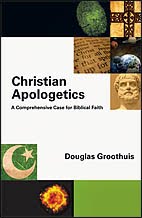
In his monumental work,Christian Apologetics, Douglas Groothuis argues that worldviews can be proposed as hypotheses. Worldviews present themselves as answers to explain the phenomena we experience (Groothuis, Christian Apologetics, 49). Groothuis therefore presents criteria for evaluating worldviews as though they were hypotheses about the world. Kenneth Samples similarly draws out nine tests which can be used to determine whether the claims of a worldview are true in his book A World of Difference (page numbers from that text, citation below). From these proposed methods, we can derive tests to evaluate competing worldviews:
1) Coherence– if a religion is contradictory, it simply cannot be true. For example, if a religion claimed that “Person Z is god, and person Z is not god,” that religion would be incoherent (Samples, 33). Furthermore, “If a worldview’s essential propositions are coherent… it is more likely to be true than if its essential propositions are not related in this way” (Groothuis, 55).
2) Balance– “A valid worldview will be ‘neither too simple nor too complex.’ All things being equal, the simplest worldview that does justice to all aspects of reality deserves preference (Samples, 33-34).
3) Explanatory Power and Scope– Does the worldview explain what we experience in enough detail? If a worldview does not explain our world, or it cannot account for certain phenomena, then it is lacks explanatory power (Samples, 34). Worldviews which make propositions which they cannot account for lose credibility (Groothuis, 53).
 4) Correspondence– Does the worldview match the facts we know about the world to our experience of the world? If we know that the worldview in question promotes claims we know are false, it does not match reality (Samples, 34-35). Think about it this way: worldviews are supposed to be reality. If a worldview does not match reality, how can it be reality? We are able to test factual claims through empirical and scientific methods, so if a worldview continually is able to establish its essential claims by means of these methods, it is more likely to be true (Groothuis, 55).
5) Verification– Can this worldview be falsified? Worldviews which cannot be found to be false cannot be found to be true either.
6) Pragmatic Test– Can we live by this worldview? This test is less important, but still has credibility–we must be able to live out the worldview in question (Samples, 35-36). But worldviews should also be fruitful in the development of greater intellectual and cultural discoveries (Groothuis, 57).
7) Existential Test– Like the pragmatic test, this one is not as important as whether the view is factual, but it is still helpful. If worldviews do not account for inherent human needs, it is possible the view is false (Samples, 36). Again, this is not necessary for a worldview, but it helps measure a view’s completeness.
8 ) Cumulative Test– Does the worldview gain support from all the previous criteria? If a worldview is able to satisfy all the criteria, it gains credibility (Samples, 36-37).
9) Competitive Competence Test– If the worldview satisfies the previous criteria with more evidential power than other worldviews, it gains credibility over and against them (Samples, 37).
10) Radical ad hoc readjustment– Groothuis presents this as a negative test for worldviews. “When a worldview is faced with potentially defeating counterevidence, an adherent may readjust its core claims to accommodate the evidence against it. Various theories and worldviews can legitimately refine their beliefs over time, but radical ad hoc readjustment reveals a deep problem…” (Groothuis, 57). There is, as Groothuis pointed out, a line between refining belief and simply readjusting belief in an ad hoc way. If, for example, it were discovered that Jesus did not rise from the dead, then Christianity would be false (more on that below). If, however, one simply adjusted Christianity to say “Jesus spiritually rose from the dead,” that would constitute a desperate, ad hoc measure to preserve the worldview and count as discrediting Christianity.
These tests present objective criteria for testing worldviews. If, for example, one wished to deny their worldview had to be coherent, they’d have to affirm that which they denied, for in denying that criterion, they were attempting to make their view more coherent. The testing of worldviews is a legitimate task, and indeed one in which people should engage. Some things, if falsely believed, are harmless (for example, if one believed it rained yesterday when it did not). Worldviews, however, if falsely believed, are damaging on any number of levels. If one believed God didn’t exist when, in fact, He did, then one would be doing a great evil by not acting upon the truth of God’s existence (and the contrary). Thus, the testing of worldviews is no task to be skimmed over, but one which should be approached with fear and trembling. The criteria outlined above allow people to engage in this task and evaluate the realm of ideas.
Christianity Encourages Exploration of Reality
What I find extremely interesting is that Christianity, unlike many world religions, doesn’t discourage the discovery of truth, nor does it evade evidence by claiming that it is merely a faith or feeling. Rather, the founders of Christianity explicitly stated that it is based upon certain truth claims, and that if those claims are false, then Christianity is worthless. Paul, for example, wrote “And if Christ has not been raised, your faith is futile; you are still in your sins” (1 Corinthians 15:17). The truth of Christianity rests exactly upon a testable claim: Jesus rose from the dead. If He did not, Christianity is false. Christianity’s scope and explanatory power are superior- it can account for the existence of contingent objects, persons, consciousness, life, and the like. Christianity corresponds to reality, satisfies existential and pragmatic needs, is simpler than many other explanations, its coherent, and it matches all the criteria. Christianity expects its adherents–and outsiders–to test the faith and discover whether it is true. I have found, personally, that it pasts these tests over and over.
Conclusion
Whether one agrees or not, it is simply the case that religions make claims about reality. These claims are, in turn, true or false. Not only that, but they must match with reality in several important ways. Christianity not only adheres to these tests, but it encourages them. It also passes these tests. Does your worldview?
Sources
Douglas Groothuis, Christian Apologetics (Downers Grove, IL: InterVarsity, 2011).
Kenneth Samples, A World of Difference (Grand Rapids, MI: Baker, 2007).
Image Credit
I took this picture at Waldo Canyon near Manitou Springs, Colorado on my honeymoon. Use of this image is subject to the terms stated at the bottom of this post. The other image is the book cover from Samples’ book.
SDG.
——
The preceding post is the property of J.W. Wartick (apart from citations, which are the property of their respective owners) and should not be reproduced in part or in whole without the expressed consent of the author. All content on this site is the property of J.W. Wartick and is made available for individual and personal usage. If you cite from these documents, whether for personal or professional purposes, please give appropriate citation with both the name of the author (J.W. Wartick) and a link to the original URL. This blog is protected by Creative Commons licensing. By viewing any part of this site, you are agreeing to this usage policy.
The Book of Mormon: Introduction and Importance
 Mormonism is growing with great speed. There are few, however, who understand the limits of Mormonism’s truth claims. Mormon apologists have frequently made assertions which are either false or ungrounded. I have therefore decided to write a series of posts on the Book of Mormon, followed by a critique of Mormonism’s philosophical stances. This post will introduce the book of Mormon.
A man was born on December 23, 1805 in Vermont. He was known for digging for imagined buried treasure with his father and others.[1] He was also known for being a mystic,[2] for his conviction for disorderly conduct in a scam in which he tried to convince locals he had found treasure underground,[3] and for being the translator of golden plates: The Book of Mormon.[4] The man was Joseph Smith, Jr., the founder of the Mormon faith, “The Prophet.”[5] The Book of Mormon, according to the Church of Jesus Christ of Latter Day Saints (the official name of the Mormon Church), is “another witness that Jesus Christ… was and is God’s Son… It supports and verifies the Bible.”[6] If this is true, then the Book of Mormon is as much the Word of God as the Bible. However, the Book of Mormon’s validity as the Word of God is strongly undercut by scientific and historical evidence which contradicts its claims.
The Mormon Articles of Faith describe the Book of Mormon as “a volume of sacred scripture which, like the Bible, embodies the word of God.”[7] The Book of Mormon is supposed to record other prophecies about Jesus.[8] Perhaps the most striking enunciation of the contents of the Book of Mormon is found later in the Articles:
The Book of Mormon is a divinely inspired record, made by the prophets of the ancient peoples who inhabited the American continent for centuries before and after the time of Christ, which record has been translated in the present generation through the gift of God and by His special appointment. The authorized and inspired translator of these sacred scriptures… is Joseph Smith.[9]
Furthermore, the arguments for the authenticity of the Book of Mormon often parallel those arguments used to justify the Bible: it is said to be “internally consistent,”[10] prophetically fulfilled,[11] and supported by archaeology.[12] Yet there are also arguments unique to the Book: it was certified as genuine by three men who signed a statement confirming they witnessed the translation of the Book,[13] eight other witnesses claimed to have seen the gold plates from which the Book was purportedly translated,[14] and the ethnic background of Native Americans is said to be Israelite, which would demonstrate the Book’s truth.[15] It is clear that the Book of Mormon is the absolute bedrock of Mormon faith. If the evidences for the Book do not hold the evidential weight required to confirm its truth, then Mormon faith is undone.
The Book of Mormon’s veracity hinges on the claim that the lost tribes of Israel came to America, settled there, and wrote their history on gold plates which Joseph Smith later translated. Such claims at the time of Joseph Smith seemed irrefutable; they simply couldn’t conceive of technology which could test such ideas. Today, however, such technology is available. Unfortunately for Joseph Smith and the Mormon Church, the evidence runs contrary to what the Book of Mormon claims.
Over the coming weeks, I’ll investigate each of these claims in turn, while finding them wanting. The next post will demonstrate that the Book of Mormon cannot be true based upon a genetic analysis of Native Americans. Future posts will argue that the Book of Mormon does not reflect ancient near eastern writing and that the Mormon concept of God is philosophically untenable.
[1] Walter Martin. The Kingdom of the Cults (Bloomington, MN: Bethany, 2003), 197; Jerald and Sandra Tanner, Mormonism: Shadow or Reality? (Salt Lake City, UT: Modern Microfilm Company, 1972), 32.
[2] Martin, Kingdom, 197
[3] Wayne L. Cowdrey, Howard A. Davis, and Arthur Vanick, Who Really Wrote the Book of Mormon: The Spalding Enigma (St. Louis: Concordia, 2005), 395f.
[4] Martin, Kingdom, 201.
[5] Ibid., 197f.
[6] The Mormon Church, “Frequently Asked Questions,” The Church of Jesus Christ of Latter Day Saints, http://www.mormon.org/faq/#Book+of+Mormon|question=/faq/what-is-book-of-mormon/ (accessed October 14, 2010).
[7] James Talmage. A Study of the Articles of Faith (Salt Lake City, UT: The Church of Jesus Christ of Latter-day Saints, 1976), 251.
[8] Talmage, Articles of Faith, 252.
[9] Talmage, Articles of Faith, 255.
[10] Ibid, 278-279.
[11] Ibid, 274-275.
[12] Ibid, 283-293.
[13] Ibid, 270.
[14] Ibid, 271.
[15] Ibid, 283.
Image Credit: http://commons.wikimedia.org/wiki/File:Slc_mormon_tempel.jpg
SDG.
——
The preceding post is the property of J.W. Wartick (apart from citations, which are the property of their respective owners) and should not be reproduced in part or in whole without the expressed consent of the author. All content on this site is the property of J.W. Wartick and is made available for individual and personal usage. If you cite from these documents, whether for personal or professional purposes, please give appropriate citation with both the name of the author (J.W. Wartick) and a link to the original URL. This blog is protected by Creative Commons licensing. By viewing any part of this site, you are agreeing to this usage policy.
Religious Pluralism: The Argument Assessed
 “If you were born in India, you’d probably be a Hindu.” “What of those sincere believers in other faiths, are you suggesting they are wrong?” “Jesus is just one of the many ways towards salvation/bliss/righteousness/etc.”
These are the types of “bumper sticker” quotes Christians often get in our pluralistic society. I’ll be focusing on only one of the many problems with views such as these:
The argument against theism from religious pluralism rests on the implicit assumption that all religions are equally veridical.
The religious pluralist (or the objector to religious belief) who uses arguments like these unjustifiably makes the assumption that all religions are on equal ground (epistemically–on equal footing in the realm of knowledge). That this assumption is made is fairly evident, but we can illustrate it with a thought experiment (ignore some of the disanalogies–this is for example only):
Suppose Bob believes that he is reading a book, An Introduction to Philosophy. Now, suppose Steve else comes along and says “You can’t be sure that you’re right in your belief that you are reading An Introduction to Philosophy–after all, there are billions of people who read books which are not An Introduction to Philosophy. And they think they know what they are reading. How can you be sure that you are reading An Introduction to Philosophy? You may be reading a book on psychology, or a novel!”
Bob responds by saying, “Well, I can look at the cover and see the title. I can open it up and see the ISBN and confirm by searching for the ISBN online that it is only tied to An Introduction to Philosophy. The contents certainly seem as though they would match a book of that title. Also, I know the authors name is Jane Doe and this is the only book she’s ever written.”
The key point is that Bob has some very good reasons for thinking that he is reading An Introduction to Philosophy. Steve’s objection assumed that there was no way to determine what book Bob was reading.
Religious pluralists often do the same thing. They ask “How can you know you are right?” or “How do you know yours is the only true religion?” The assumption seems to be that there are no criteria for determining whether one religion is to be favored over another (again, using these terms in an epistemic sense–the sense having to do with knowledge). SO, let’s revisit the scenario:
Bob is sitting contemplating the universe. He’s a Christian, and Steve knows it. Steve comes along and says “Bob, how do you know you’re right? The Hindu, the Buddhist, and the Muslim all think they are just as right as you.”
Bob responds, “Well, I think there are very good reasons to think Christianity is true. There are cosmological, teleogical, and ontological arguments which I believe are quite successful. If they are successful, Buddhism and Hinduism are wrong. And I think the Gospels are quite reliable due to the standard historical criteria such as the principle of embarrassment and multiple attestation. But if the Gospels are reliable (and Jesus died and rose again), then Islam is wrong too. So I don’t think those other religions are on equal footing with my own faith. Christianity seems to me to have the most explanatory power.”
The assumption that all religions are on equal footing seems patently false. Why should we think that Hinduism = Buddhism = Islam = Christianity = Jainism (etc.) when it comes to whether or not we can evaluate their truth? The religious pluralist simply assumes we cannot. However, in light of the evidence for Christianity, it seems the world religions are not all on equal epistemic ground.
Finally, the pluralist objection assumes that it is, itself, on a higher epistemic ground than its rivals. The pluralist believes that, while all religions are equally veridical, pluralism itself is true. Yet pluralism’s truth entails the falsehood of large portions of theistic, pantheistic, and atheistic belief. Pluralism must chop away the incompatible components in the world’s religions in order to make way for a distorted view of reality. What reason do we have for holding on to pluralism when we have much better reasons to think Christianity is true?
SDG
———
The preceding post is the property of J.W. Wartick (apart from citations, which are the property of their respective owners) and should not be reproduced in part or in whole without the expressed consent of the author. All content on this site is the property of J.W. Wartick and is made available for individual and personal usage. If you cite from these documents, whether for personal or professional purposes, please give appropriate citation and provide a link to the original URL. By viewing any part of this site, you are agreeing to this usage policy.
Religious Diversity: What’s the Problem?
Religious diversity is one of the greatest challenges found by people of any faith in our pluralistic society. There are so many things to consider about this subject that there is no way to adequately cover it in one post.
First we must ask ‘what exactly is the problem of religious diversity?’ Is there really any logical problem to their being more than one religion in existence? I think the answer to this objection, if it is any objection at all, is simply to answer that, as in other areas of life, the fact that there is a broad array of beliefs about a subject does not mean that all are false or that the subject is unknowable.
Is the problem, then, instead specific to religions which claim exclusivism? Is it true that all religions have truth in some way, and that those which claim to have the truth are fundamentally flawed in some way? This, again, doesn’t seem to follow from anything. The fact that there is a plurality of opinions over the Divine (or whether there is a Divine-thing-being) alone does not justify the assertion that all religions are somehow about the same thing or that none are true. Nor does it imply that religions which claim to have the only way are incorrect. Again, there doesn’t seem to be any kind of structured argument here.
Often, this problem is focused around a specific religion; namely, Christianity. The problem is posed in the following way: If [traditional] Christianity is true, then Jesus is the only way of salvation. What then, of those “good people” who are not Christians? What of the faithful Buddhist, Hindu, or Zoroastrian? Would the loving God of Christianity condemn these to hell?
This is the problem posed in its most powerful form, in my opinion. Religious diversity doesn’t itself function as a defeater for theistic belief. Instead, it can pose a problem to exclusivist Christian belief. This is the problem upon which my next posts will focus. Broadly, I will address the other attempted defeaters above throughout my posts on religious diversity, but it is the exclusivist Christian position around which I will focus. This is the position to which the problem of religious diversity poses the greatest problem (note that any religion which features exclusivism will also face this problem).
Let me briefly offer the outline of what will be my expanded response:
1) Jesus is indeed the only way to salvation (John 14:6)
2) Jesus’ death and resurrection provided the possibility of salvation to all people, on the condition of faith (Romasn 3:21ff)
3) People are judged by the knowledge they have (Romans 2:12ff)-This is the key point. The distinction between ontological (availability of) and epistemological (knowledge of the means of) salvation must be drawn.
4) The salvation provided by Christ is ontologically necessary. The key issue is of its epistemic necessity.

 J.W. Wartick - Reconstructing Faith
