Uncategorized
Unchristian Nonsense: A microcosm study of what’s wrong in conservative Lutheranism
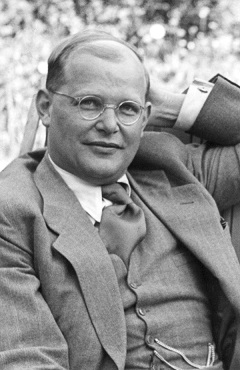
“A word too about the German churches [in America]… The pastors generally are not well trained; to the extent they come from Concordia Seminary (which I saw in St. Louis), that is, from the Missouri Synod, their exclusive orthodoxy is unbearable…”
Dietrich Bonhoeffer, Barcelona, Berlin, New York: 1928-1931 (DBWE 10), 315
Not much has changed since Bonhoeffer’s day. If a single word could sum up the attitude of some conservative Lutherans in the Missouri Synod, it would be “unbearable.” Bonhoeffer didn’t elaborate exactly on what made them unbearable in his own time, but the words “exclusive orthodoxy” certainly seem to point at his meaning. The total focus on insular orthodoxy, often at the cost of, say, orthopraxy, made them unbearable to a man whose theology, ethics, and life were so committed to Christ crucified.
Concordia University Wisconsin is a Lutheran Church – Missouri Synod university which is affiliated with Concordia University Ann Arbor, from which I graduated. It’s looking for a new president. That search has inspired no small amount of pushback, largely in the form of various screeds online. It’s not because the university has opted to search for a non-Lutheran, nor because they haven’t insisted upon impeccable LCMS credentials (such as being a member in good standing of an LCMS church).
No, conservative Lutherans have once again decided to toe the line for the culture war rather than, say, their own Lutheran tradition and confessions. Like the many times I’ve observed LCMS churches partnering with the anti-infant-baptism organization Answers in Genesis for things like Vacation Bible School because of a hot topic like the age of the earth (no really), we find people within this same organization who pay lip service to being exclusively Lutheran while they find their real battlefields and efforts based in the latest conservative talking points. As if reading from a teleprompter on Fox News, places like the misnamed “Christian News” are spouting off about the alleged “wokeness” of Concordia University Wisconsin’s search for a president.
Why? Well, to put in the words of Gregory P. Schulz, writing at Christian News: “Regents have been publicly announcing their determination to have a president who exhibits a ‘demonstrated belief in and commitment to equity and inclusion’ and who promotes racialized ‘diversity in all its myriad forms.'” Yes, that’s right, the problem with this search for the President of Concordia University Wisconsin is because it *checks notes* wants someone who is committed to equity and inclusion *blinks.* What, exactly, makes that problematic? Well, Schulz, apparently an ordained pastor in the LCMS and Professor of Philosophy at Concordia University Wisconsin (this is important), unleashes a lengthy string of meaningless invective of “woke-ness” and its alleged pervasiveness at Concordia University Wisconsin. Readers would be forgiven for thinking that rather than being written by an ordained pastor, this article was submitted, or perhaps edited by someone’s QAnon-guzzling aunt.
Any reader who reads Schulz’s article is treated to a firehose of terms thrown about without even the slightest care for definition. Schulz writes, “My Concordia university is experiencing dysphoria because it is coming under the influence of Woke-ism (that is, a potent cocktail of Progressivism, Neo-Pragmatism, and Marxism).” Schulz, being a professor of philosophy, has either cooked the books to make Woke-ness self-referentially incoherent or simply is staggeringly unaware of the strangeness of his own definition. Given that nowhere else does he actually address what he means by “Woke-ism,” the most likely reason for this is because Schulz is entirely aware of just how easy it is to throw out the term “woke” in order to trigger his fellow conservatives into fits of nearly rabid apoplexy simply from reading it. Of course, ask those same readers to define, say “Neo-Pragmatism,” and the closest many would come would be a Wikipedia article. Again, one can only assume that Schulz is aware of this, which suggests that his article is less intelligent commentary than it is mustering the troops to get behind whatever agenda he’s pushing.
Despite all of Schulz’s raving and incoherent definitions, he does eventually get to some points. For one, he apparently thinks that the “woke-ism” which is allegedly invading Concordia University Wisconsin because of a hope for “equity” is misguided. Why? Well, in his own words, “While there is no systemic racism at Concordia because we are committed to Christ incarnate and His universal justification of all human beings without exception, there certainly is systemic Woke-ism” (emphasis his). Ah yes, as we all know, it is impossible for people to be racist if they’re “committed to Christ incarnate.” Yes, tell that to the many enslavers of Antebellum America. Oh, I’m sorry, are literal facts of history now considered “Woke-ism”? (Spoiler: for Schulz, they are). But for those who actually have any interest in the truth, the myriad and clear examples of white enslavers who nevertheless were totally committed to Christ and, indeed, defended the institution (oops–is that a “systemic” [read: woke] issue?) of slavery through the use of the Bible can be easily accessed by a simple search online. The primary sources are absolutely filled to the gills with examples of this. But Schulz is convinced that this is impossible. But what is possible? Apparently, while the evil of racism can’t coexist with a Christ-centered institution, it is fully possible for the evil (in his mind) of Marxism to do so. Which is it, Schulz? Does commitment to Christ prevent it or not?

But again, Schulz, being a trained philosopher, absolutely has to be aware of this. While I’m hesitant to assign mental states to others because we can’t know their mental life, it seems impossible that someone could be a professor of philosophy and be unaware of such an obvious contradiction. The only other explanation is that, again, Schulz is far more committed to the talking points of whatever he heard on Joe Rogan’s latest podcast than he is to ethical or philosophical consistency. What’s especially disturbing here is that Schulz’s own diatribe reinforces the very thing he’s alleging doesn’t exist. By his insistence that racism is impossible and systemic issues are to be dismissed as woke Marxist communist propaganda, he makes it not only possible but also entirely likely that any such issues that actually do exist are ignored and even reinforced. That is, racism cannot exist somewhere like Concordia University Wisconsin, so any attempt to say it does exist is either blatantly false or “Woke-ism” coming to roost. It’s an awfully convenient way to deal with dissent. As I’ve seen others say online, “Sounds about white.” Er… right.
Schulz, in fact, mentions Bonhoeffer’s Ethics in his post. While I’m convinced that if one printed off Schulz’s post and wrapped a copy of Bonhoeffer’s work in it, one would find a hole burned through the side in the morning a la the Ark of the Covenant in Raiders of the Lost Ark, one wonders whether Schulz might be bothered to go back through Bonhoeffer’s works at length. One wonders if he’s aware of how he has now blatantly turned himself into a stooge for the anti-woke propagandists. One wonders if he’s aware of how he’s perpetuated the “unbearable” nature of the Missouri Synod for anyone even marginally interested in orthopraxy rather than the barest nod towards orthodoxy.
It’s telling Schulz doesn’t bother to quote Bonhoeffer in any length. Perhaps Bonhoeffer’s words about how the gospel was found in the black church in America, not in the white churches, and certainly not in the “unbearable” Missouri Synod are also written off by him as “woke-ism.” Maybe they strike too close to home, so they must be equally dismissed. Perhaps Bonhoeffer’s words about how Christ comes for the marginalized and suffers alongside them strike Schulz as Marxist.
So, is Concordia University Wisconsin pandering to woke-ism? It’s impossible to tell. Schulz’s rag doesn’t bother with such things as careful definitions, seeking to understand the other side, presenting one’s interlocutors in terms they themselves can recognize, or anything of the sort. What I can say though, is Schulz and people like him are why the Missouri Synod remains, as Bonhoeffer said, unbearable.
SDG.
Book Review: ” Letters for the Church: Reading James, 1-2 Peter, 1-3 John, and Jude as Canon” by Darian R. Lockett
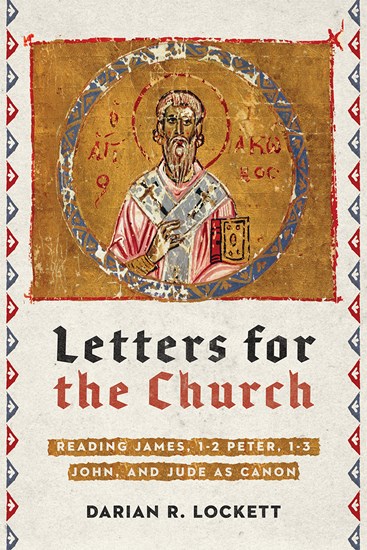
Darian R. Lockett provides an introduction to numerous books of the Bible in Letters for the Church: Reading James, 1-2 Peter, 1-3 John, and Jude as Canon. These books of the Bible are often entirely overlooked or skimmed through simply for the sake of proof texts or quotes, but Lockett makes a case for reading them canonically–that is, set within the whole of Scriptures. To that end, he provides summaries of each book along with discussion of major themes, specific points of instruction and other interest, and more.
Lockett tackles several of the more difficult issues related to these books of the Bible throughout. Authorship is a major question, and he largely presents the evidence for who is thought to have authored the book, what evidence we may have for that, and his own conclusions. Another example of Lockett dealing with a more difficult issue is with Jude’s use of non-canonical works to make points in its own text. Jude clearly uses 1 Enoch in Jude 9, and this raises the question of whether Jude saw 1 Enoch as an authoritative or inspired work. Lockett notes that it has been a thorny issue through much of church history before outlining a few major points. Ultimately, this reader wonders whether the specific interest in whether Jude lends to making 1 Enoch inspired or canonical is a kind of anachronistic concern with reading over our ideas onto the text. Lockett’s own analysis could yield that, as he notes that what we can ultimately say is that 1 Enoch was “an important part of [the author of Jude’s] argument and [that author] does not distinguish it from other prophetic texts from the Old Testament–beyond this we can only speculate” (205).
Lockett also doesn’t shy from some of the more hotly debated texts within the books he’s writing about. For example, the question of wives submitting to husbands in 1 Peter 3 is discussed at some length (77-80). Lockett notes the context regarding doing so for the sake of Christ, and ultimately aims at the notion that such submission could potentially win non-Christian spouses over, which makes more sense of other parts of the book as well. Reading 1 Peter 3 as an intentional way to tell all wives to submit to all husbands in all circumstances, as is often done, is therefore a mistaken reading of the text.
Letters for the Church is a strong introduction to numerous books of the Bible that are often skimmed over. No matter where readers come from theologically, it is an enlightening, challenging read. Recommended.
Disclaimer: I was provided with a copy of the book for review by the publisher. I was not required to give any specific kind of feedback whatsoever.
All Links to Amazon are Affiliates links
Links
Be sure to check out the page for this site on Facebook and Twitter for discussion of posts, links to other pages of interest, random talk about theology/philosophy/apologetics/movies and more!
Book Reviews– There are plenty more book reviews to read! Read like crazy! (Scroll down for more, and click at bottom for even more!)
SDG.
——
The preceding post is the property of J.W. Wartick (apart from quotations, which are the property of their respective owners, and works of art as credited; images are often freely available to the public and J.W. Wartick makes no claims of owning rights to the images unless he makes that explicit) and should not be reproduced in part or in whole without the expressed consent of the author. All content on this site is the property of J.W. Wartick and is made available for individual and personal usage. If you cite from these documents, whether for personal or professional purposes, please give appropriate citation with both the name of the author (J.W. Wartick) and a link to the original URL. If you’d like to repost a post, you may do so, provided you show less than half of the original post on your own site and link to the original post for the rest. You must also appropriately cite the post as noted above. This blog is protected by Creative Commons licensing. By viewing any part of this site, you are agreeing to this usage policy.
Book Review: “A Week in the Life of a Greco-Roman Woman” by Holly Beers
 A Week in the Life of a Greco-Roman Woman by Holly Beers is a part-historical fiction, part-nonfiction fusion that explores what the life of a Greco-Roman woman who was encountering Christianity may have looked like. It’s part of the “A Week in the Life of…” series from InterVarsity Press (See reviews of other entries in this series here–scroll down for more), and it’s another success. Each of these books is a standalone, providing unique historical background and individual narratives.
Beers writes the fictional portions about Anthia, a young woman and wife who encounters in just one week many of the struggles of people in the ancient world. Beers’s narrative is deeper than one might expect for a kind of slice-of-life narrative. Anthia’s story immediately drew me in as a reader due to the compelling, sympathetic way she is portrayed. She’s not simply a foil for background information; no, she reads as someone who lives and breathes in the ancient world, and who experienced everyday tragedy. Fears of childbirth and its dangers, navigating the strictures of society, and the simple pleasures of warm water are just some of the insightful character-building Beers weaves throughout the narrative.
The historical information included throughout is just as fascinating as in other entries in the series. These are usually presented in boxes throughout the text, which highlight numerous aspects of ancient society and life. One of the most fascinating of these for this reader was the look at associations in the Greco-Roman world and how that was also integrated into the plot. The text box on p. 23 shows the importance of associations and how membership was usually gained. Other information about “urban sanitation” (read: toilets), living in apartments, and perfume were also highlights.
A Week in the Life of a Greco-Roman Woman is a deep look at what the lives of women would have been like in ancient Rome. It provides readers with a compelling main character to go along with a number of important insights into the day-to-day lives of people of the time that will enrich readers who are interested in the history of Christianity or of the ancient world. Recommended.
Disclaimer: I was provided with a copy of the book for review by the publisher. I was not required to give any specific kind of feedback whatsoever.
Links
Be sure to check out the page for this site on Facebook and Twitter for discussion of posts, links to other pages of interest, random talk about theology/philosophy/apologetics/movies and more!
Book Reviews– There are plenty more book reviews to read! Read like crazy! (Scroll down for more, and click at bottom for even more!)
SDG.
——
The preceding post is the property of J.W. Wartick (apart from quotations, which are the property of their respective owners, and works of art as credited; images are often freely available to the public and J.W. Wartick makes no claims of owning rights to the images unless he makes that explicit) and should not be reproduced in part or in whole without the expressed consent of the author. All content on this site is the property of J.W. Wartick and is made available for individual and personal usage. If you cite from these documents, whether for personal or professional purposes, please give appropriate citation with both the name of the author (J.W. Wartick) and a link to the original URL. If you’d like to repost a post, you may do so, provided you show less than half of the original post on your own site and link to the original post for the rest. You must also appropriately cite the post as noted above. This blog is protected by Creative Commons licensing. By viewing any part of this site, you are agreeing to this usage policy.
Craig Keener on Women in the Ministry (Video and Discussion)
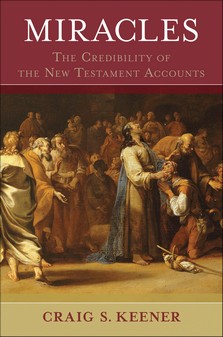
Craig Keener is a renowned New Testament scholar. In some of the circles I run in–circles with Christian apologetics at the forefront–he is well-known for his work on miracles in the New Testament and defense of their possibility and actually having happened. Other circles appreciate the depth of his work on Acts and commentaries on the New Testament more generally. But many of these same people reject the notion of having women in the ministry. In particular, many of these same people assert that one cannot take the Bible seriously and advocate for women pastors. But those people either don’t know or are inconsistent about the scholars they cite so favorably for biblical scholarship also affirming women pastors. Craig Keener is but one example.
His recent talk, Women in Ministry, was posted on Youtube recently. In it, Keener provides a detailed introduction to the biblical egalitarian position. I encourage you–whether you agree or disagree with Keener’s position–to watch the video. Let’s have some discussion about it, if we can! I’ve set out some things to think about with the video:
Keener notes some of the common objections to women in the ministry and shows how they would be ridiculous when applied the other way. For example, arguing against women who are named to positions in the church throughout the NT, some complementarians say that no women are actually named as pulpit preachers. But of course no male is named in that role anywhere in the Bible, either. So for the argument to work, no one would be allowed to be a pastor.
Can one seriously claim, watching this video, that egalitarians simply reject what the Bible has to say? Keener demonstrates time and again that careful interpretation favors the egalitarian position. What do you think?
Links
Women in the Ministry– Keener’s talk about women in the ministry in the Bible.
Be sure to check out the page for this site on Facebook and Twitter for discussion of posts, links to other pages of interest, random talk about theology/philosophy/apologetics/movies and more!
Book Reviews– There are plenty more book reviews to read! Read like crazy! (Scroll down for more, and click at bottom for even more!)
SDG.
——
The preceding post is the property of J.W. Wartick (apart from quotations, which are the property of their respective owners, and works of art as credited; images are often freely available to the public and J.W. Wartick makes no claims of owning rights to the images unless he makes that explicit) and should not be reproduced in part or in whole without the expressed consent of the author. All content on this site is the property of J.W. Wartick and is made available for individual and personal usage. If you cite from these documents, whether for personal or professional purposes, please give appropriate citation with both the name of the author (J.W. Wartick) and a link to the original URL. If you’d like to repost a post, you may do so, provided you show less than half of the original post on your own site and link to the original post for the rest. You must also appropriately cite the post as noted above. This blog is protected by Creative Commons licensing. By viewing any part of this site, you are agreeing to this usage policy.
Really Recommended Posts 1/20/17- deism, geology, and more!
 Hello dear readers! Sorry for the long absence from Really Recommended Posts. It’s been insanely busy, and with a baby due any day now, I may not have another of these for a bit. So enjoy the posts I have compiled here!
Young Earth Creationists arguing in circles– I’ve seen the claim made time and again: the fossils date the rocks, and the rocks date the fossils–it’s a circle! Young Earth Creationists frequently make this claim. Here is a look at one such instance of the claim and the facts behind the tools of geology.
Lies about Relics– An interesting look at the proliferation of relics in the Middle Ages, what Martin Luther had to say about them, and the meaning and usage of the term. I highly recommend readers subscribe to the Christian History magazine. It is free (donations encouraged) and excellent.
John Leland– John Leland was a pastor who wrote extensively on the deist controversy in the 17th and 18th centuries. He wrote a two-volume work that surveys the entire field, offering both exposition and refutation of the works of basically every major player in the controversy. Read more about him and his work here.
Herodotus, Osiris, Dionysus, and the Jesus Myth– A brief look at the historical method of those who claim Jesus is a myth, with a specific look at Herodotus and his discussion of Osiris and Dionysus.
Give to the Max Day 2016
Today is “Give to the Max” day for Minnesota, which means that you can double your gift’s effectiveness. Please take the time to go support biblical equality by donating to Christians for Biblical Equality today. Every 10$ you give will turn into 20$! This is a near and dear cause in my heart. Please help support it if you are able.
Christians for Biblical Equality is a phenomenal organization that provides biblically sound resources supporting women’s equality in the church and home. I would challenge any who disagree with this position to take the time to browse their website and learn more about the topic. I have written extensively on egalitarianism myself.
Thank you, and God bless!
Really Recommended Posts 9/16/16- Jesus as false prophet?, Irenaeus, ESV, and more!
 The latest round of Really Recommended Posts is in, dear readers, and is it a good batch, or what? We have a few posts on Crossway’s announcement of the “Permanent Text” of the ESV, a post addressing the claim that Jesus was a false prophet, insight into one of the earliest Christian apologists, and controversy over a citation of a scientist in regards to creationism. As always, let me know your thoughts.
The ESV: The New Inspired Version– A tongue-in-cheek look at the announcement of the “Permanent” ESV and the kind of reasoning it seems like is behind it.
A Permanent Text of the ESV Bible? They Must Be Joking– A more straightforward critique noting several difficulties with the concept of a permanent text or a “literal word-for-word” translation.
The New Stealth Translation: ESV– A post with some more in-depth look at specific aspects of the ESV changed in this “Permanent” text.
Was Jesus Really a False Prophet?– Thorough analysis of the argument that some have made that Jesus was, in fact, a false prophet.
A Crash Course on Irenaeus– Irenaeus offered one of the earliest defenses of the Christian faith. Check out this post with a wonderful infographic to learn the basics on Irenaeus.
Patterson Misquoted: A Tale of Two “Cites”– Some young earth creationists have been using a quote from Dr. Colin Patterson, a paleontologist, to support their claims. Here is a detailed background of the quote and why it does not support young earth creationism.
Really Recommended Posts 6/10/16- Patrick Stewart, evidence for God, and more!

A picture of a goldfinch I took. All rights reserved.
Thanks for coming by and checking out this week’s “Really Recommended Posts!” This time around, we have a look at what we should expect in evidence for God’s existence, a response to the “9 Marks of Complementarianism,” Patrick Stewart on domestic violence, the “hyperbole” argument regarding the Canaanites, and Aquinas’s metaphysics and arguments for God. Let me know what you think in the comments!
A Look at God’s Existence: Evidence We Want vs. Evidence We Should Expect– We often ear or read about there not being enough evidence for God. How much of that is set up by expectations about what kind of evidence God should provide?
Kevin DeYoung’s 9 Marks of Complementarianism– Recently, Kevin DeYoung posted about what ought to be the 9 marks of complementarianism. Scot McKnight offered a response to these marks from a different perspective.
Patrick Stewart on what he is most proud of– Patrick Stewart is perhaps best known for playing Captain Picard on Star Trek: The Next Generation. A fan at a recent conference asked him what he was most proud of outside of acting, and his response was powerful- working against domestic violence. This is a beautiful video worth watching. Ignore the clickbait title (which I amended here).
Misunderstanding the Canaanite Hyperbole Argument– Clay Jones, a professor at Biola University, notes that there are several misconceptions about what exactly is answered regarding the argument that the “genocide” of the Canaanites is hyperbolic.
Four Causes and Five Ways– Edward Feser outlines a brief look at Aquinas’s metaphysics and its link to his Five Ways (six arguments).
Really Recommended Posts 5/27/16- Jesus and Horus, to faith and back, and more!
Hello all! Thanks for waiting it out as I skipped last week because I was on vacation in Kansas. This week I provide you with some very deep reading in three lengthy posts that are each well-worth your time. I hope you’ll take that time to read them and engage with them.
A Pilgrim’s Regress: George John Romanes and the Search for Rational Faith– The story of how a deep 19th century thinker and contemporary of Charles Darwin fell away from faith only to find it again as he searched for the rationality of faith.
Is Jesus like a copy of Horus?– An extensive, expandable examination of the idea that Jesus is a myth based upon Horus. This is a very valuable resource with many cited sources and many avenues for further reading.
A Very Challenging Task: Answering Jewish Objections to Jesus– A serious look at a number of objections to Jesus as the Messiah from Jewish scholars and thinkers.
Really Recommended Posts 5/6/16- creationism and the Grand Canyon, Deborah, and more!
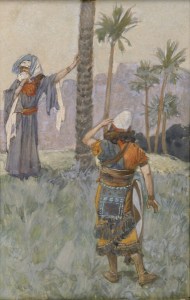
Deborah judging in Israel
It’s another week and I’m here to bring you some more great reading for your weekend. Be sure to let the authors know what you think, and let me know here as well. Topics for this week include the Grand Canyon and the biblical Flood, Deborah as leader, Jehovah’s Witnesses, and more!
Deborah and the “no available men” argument– A refutation of the notion that Deborah was only chosen to lead Israel because there were “no available men” who could or would do so. Unfortunately, this argument is fairly common among those who do not wish to affirm the Bible’s teaching on women’s equal leadership.
The Grand Canyon’s Magnificent Witness to Earth’s History– Often, young earth creationists argue that the Grand Canyon can only be explained (or at least is better explained) by the biblical Flood as a global flood. A new book is challenging that perception. Check out this post to learn more.
7 Things to Know about Jehovah’s Witnesses– It is important to understand others’ beliefs. Here is a post outlining 7 points of belief for Jehovah’s Witnesses.
Calamity (The Reckoners)– Superheroes and villains face off with those who seek vengeance against those villains who destroyed their world. Check out this look at worldview issues in Brandon Sanderson’s latest Young Adult novel, Calamity. Also check out my own reflection on the book.

 J.W. Wartick - Reconstructing Faith