apologetics
Book Review: “Mapping Apologetics” by Brian Morley
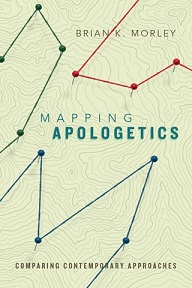 Although there is widespread agreement over the need to have a defense of the faith (a biblical charge–1 Peter 3:15-16), there is much disagreement over exactly how that defense should proceed. Brian Morley’s Mapping Apologetics
There are few books that deal exclusively with apologetic methodology by outlining various approaches. Perhaps the most comprehensive is Faith Has Its Reasons
After a couple introductory chapters on apologetics in the Bible and history, the following chapters each highlight individuals who are major contemporary proponents of different apologetics methods. Included are such people as Cornelius Van Til, Alvin Plantinga, E.J. Carnell, Richard Swinburne, William Lane Craig, and John Warwick Montgomery, just to name a few.
Each of these chapters presents an extended overview of the apologist’s method of defending the faith along with several quotes and often detailed analysis of their primary arguments with examples. Thus, readers are given the resources to compare and contrast the various approaches on the level of the actual arguments and counter-arguments presented.
The people chosen are each major contributors to their specific variety of apologetics, so both those who are well-versed in apologetics and those who are just beginning will get insights from top defenders of the faith. I personally have an MA in Christian Apologetics, and I was familiar with each author, but the way that each was presented gave me a good refresher on their method and primary arguments–and sent me scampering to re-read some of my favorites!
The book includes some great follow-up questions after each chapter to help readers review the material in the chapter, along with useful further reading sections for those interested in learning more about specific defenders. Each chapter also includes criticisms of the specific type of apologetic the individual puts forward. These are often only about 1 1/2 to 2 pages, though, and it would have been nice to have a bit more space dedicated to the critiques and rebuttals to each approach. Morley also very quickly dismisses the fideistic approach as being “unbiblical” with only a brief argument. Although I am not at all a fideist, I do think that the approach has at least some merit and the aforementioned work by Boa and Bowman has some great insights into how it might also offer some insights into apologetics.
Mapping Apologetics
The Good
+Great summaries of top apologists from multiple methodological approaches
+Invaluable insight into different apologetics methodologies
+Helpful review questions and resource lists
The Bad
-Dismisses fideism too quickly
-Could stand to have more reflection on criticisms of each position
Disclaimer: InterVarsity Press provided me with a copy of the book for review. I was not obligated to provide any specific kind of feedback whatsoever, nor did they request changes or edit this review in any way.
Links
Be sure to check out the page for this site on Facebook and Twitter for discussion of posts, links to other pages of interest, random talk about theology/philosophy/apologetics/movies and more!
Book Reviews– There are plenty more book reviews to read! Read like crazy! (Scroll down for more, and click at bottom for even more!)
Source
Brian Morley, Mapping Apologetics
SDG.
——
The preceding post is the property of J.W. Wartick (apart from quotations, which are the property of their respective owners, and works of art as credited; images are often freely available to the public and J.W. Wartick makes no claims of owning rights to the images unless he makes that explicit) and should not be reproduced in part or in whole without the expressed consent of the author. All content on this site is the property of J.W. Wartick and is made available for individual and personal usage. If you cite from these documents, whether for personal or professional purposes, please give appropriate citation with both the name of the author (J.W. Wartick) and a link to the original URL. If you’d like to repost a post, you may do so, provided you show less than half of the original post on your own site and link to the original post for the rest. You must also appropriately cite the post as noted above. This blog is protected by Creative Commons licensing. By viewing any part of this site, you are agreeing to this usage policy.
Really Recommended Posts 5/8/15- Sola Scriptura, National Day of Prayer, and more!
 I’m pretty excited to offer you, dear readers, another round of Really Recommended Posts this week. These should give you some nice diverse topics to explore! As usual, be sure to let me know your thoughts on the links, and let the authors of the posts know themselves!
A Short Defense of Sola Scriptura– Here is some insight into the defense of the doctrine of sola scriptura against those who would allege that there needs to be some authenticating authority for the books that make up Scripture. What do you think of this argument?
“I can’t help you” – What Should Never Be Heard at Church– The way we invite (or don’t) others into the life of the church matters. What ways might we best provide an environment that welcomes others into our community? Here’s an example of how not to do it.
Beware of Prayer–New Apostles and Prophets on the National Day of Prayer– Some insight into the documents that are being passed around by leadership for the National Day of Prayer. I think this is pretty unfortunate. However, I don’t think this needs to interrupt your own participation in said day. For some insight into spiritual warfare (including the view of “warfare prayer” and the like), see my review of Understanding Spiritual Warfare: 4 Views (and the book itself, of course!).
5 Changes Elementary Sunday Schools Need to Make ASAP– How might we better equip our children to engage with the challenges they will face against Christianity? Here are 5 important points for changing Sunday School to set children up for success.
LOL Interwebz: Putin the Memes Away– Here’s a challenging post on the use of memes, what they do for us (and to us) and the relation of free speech and Christianity.
Really Recommended Posts 5/1/15- Abortion, Earthquake, and Apologetics!
Another week, another round of great reading that I bring to you, dear readers! This week, we have a discussion of the Bible and abortion, the notion of “soul vultures” and the Nepalese Earthquake, Free Comic Book Day, the apologist E.J. Carnell, and some apologetics books!
Does Revelation 9:21 Prohibit Abortion?– Is it possible that there is a reference to drugs that caused abortions in the Bible? If so, what does the Bible say about abortion?
Twitter Attack on #SoulVultures and the Nepalese Earthquake– There has been a lot of pushback against Christians who have stated that Nepal needs the Gospel. It’s not as if Christians are not sending aid, but some people have incredibly and viciously attacked Christians for, well, being Christians. Here’s an insightful post on this. The site also has several more posts on the same topic.
Free Comic Book Day!– My friend over at No Apologies Allowed has made a comic encouraging people to get involved in apologetics for Free Comic Book Day. Check it out, and download a free comic!
Remembering E.J. Carnell: Some Reflections of a Great Apologist– I’m not well versed in the works of Carnell, but I have recently had a number of sources I trust cite his work favorably. Here’s a post giving some brief insights into his stance and thought.
Top 10 Apologetics Books– It’s always fun to put together “top ten” lists of favorites. Here, there is a top ten list of apologetics books. I have read almost all of them, and have been edified by many. What are your top ten?
Really Recommended Posts 4/24/15- abortion and evangelicals, apologetics, and more!
 Winter is back, apparently, here in Minnesota. It’s COLD! And it snowed on Monday and Tuesday. Anyway, here we have some reading to keep you entertained on chilly nights. The topics are abortion and evangelicals, raising kids, apologetic methods, science fiction, and a debate over the Reformation.
Evangelicals Opposed Abortion Much Earlier than You Think– It has been said that evangelicalism wasn’t originally pro-life or oriented against abortion. Is that true? Moreover, does it even matter? Here’s an article examining the historical claim. My own thoughts are that it doesn’t matter when evangelicals began working against abortion. The question is whether abortion is morally permissible (or not). Whether a group historically opposed it or not doesn’t do much to the current debate other than provide a rhetorical flair. This post takes away some of that rhetorical flair.
4 Reasons the Internet May Influence Your Kids’ Faith More Than You– What influence does the internet have on kids exploring questions about the faith? How might awareness of this influence help us to confront worldview issues?
Comparing Apologetics Systems: Methodology and Practice– How should we do apologetics? Here is a post outlining some different approaches to apologetics and how they might be applied.
Spec[ulative]-Fic[tion] Subgenres: Superheroes & Fairy Tales– Christian publisher (of science fiction and fantasy) Enclave has an interesting post comparing the genres of superhero writing to fairy tales. They’re the same publisher who is re-releasing Kathy Tyers’ works. I had an interview with this awesome sci-fi author regarding worldview questions and science fiction here.
Revelation TV Debate: Church would have been better off without the Reformation?– Here’s an interesting debate about whether the Reformation was a good development in church history. The debaters are James White and Rev. Dr. Thomas Norris.
Book Review: “Total Church” by Tim Chester and Steve Timmis
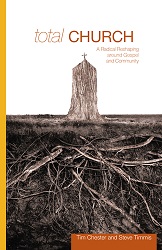 Tim Chester and Steve Timmis aim to present a gospel-centered vision of the local church as a fellowship community oriented towards missions in Total Church: A Radical Reshaping around Gospel and Community.
The notion that the church must be community- and gospel- oriented is absolutely central to the whole book. Time and again examples are put forward towards how the house church can make a huge impact on individuals. The authors rightly emphasize the notion that sometimes measuring success by pure numbers is misleading and, yes, misguided. Throughout the book, a commendable call is issued to seek using the gospel of Christ and making missions a priority in church.
Many stories are provided throughout the book to help make these insights into a practical application. They are appreciated because it gives readers some hands-on ways to deal with situations. I also enjoyed much of the discussion on youth groups and “children’s church.” Basically, it was argued that we cannot simply make the kids a separate unit from the rest of the church. Youth groups cannot just be a game night, because once the youths get past that, “real, adult” church is so vastly different. We need to emphasize the truths of Christianity throughout our children’s lives from the very earliest stages.
The book, however, has some deeply problematic elements. First, the view put forward of counseling and psychology was, frankly, disturbing. There’s a lot going on in this chapter, but it really seems to come down to the authors saying that “secular” psychological treatment doesn’t help, only the gospel can. We just need to embrace the truths of the gospel and all will be well. One representative quote: “The Bible addresses the entire range of problems we experience in living in this world… It addresses all the basic and essential issues of what it means to be human, both in our sin and in our salvation” (Kindle location 1802; all references are to Kindle locations hereafter). Later, this is made into an application that if we just focus on Christ, our sufferings won’t seem significant. At the end of all of this, there is a vague reference to how some kind of counseling outside of church might also be needed, but it is too little, too late, too vaguely stated.
I think this is a deeply misguided attempt to describe a “Christian” view of counseling which simply is–ironically–not outlined in the Bible. Choosing a couple quotes about how our present suffering can be alleviated or overcome by God does not mean that going to “secular” [whatever that means–and in exclusion of the reality of Christian] psychologists and therapists is a poor decision. Yes, we should try to deal with and help with these issues in the context of a community of faith. But God forbid that we approach someone who self-harms [one example they used] and just tell them that their problem is reducible to a spiritual problem, as the authors do: “The term ‘spiritual’ is not simply another category alongside biological, physical, environmental, upbringing, or relationships. Each of those forms of suffering, passive or active, is always and at some point a spiritual and theological issue” (1881). This seems clearly reductionistic and potentially damaging. I felt this whole section was quite disturbing.
Second, there is a very dim view of academic theology put forward. The authors complain that academic theology is often just for academics and compare the probably legendary story of medieval debates over the number of angels on the head of a pin to modern evangelical theological journals as “no less obscure” (2159)! This is another huge difficulty in the book because it ignores the wide implications of “obscure” theology being done in academia for the church at large. By reducing theology to the task merely of the local church (2148), it seems there is something of a denial of the Holy Spirit’s work in guiding the church at large, and, yes, a danger of local churches simply deciding that soul-destroying heresy is sound theology without any support from those “obscure” academics. A blithe dismissal of this enterprise relegates authors like Augustine, Aquinas, Calvin, and more into the scrap heap of obscurity.
Third, the book largely dismisses the enterprise of apologetics as dealing with issues of the mind and instead argues that “The problem is not that we cannot know God. The problem is that we will not know God. It is a problem of the heart rather than the head” (2344). Later, this leads the authors to the claim that the goal of apologetics must be to “demonstrate that unbelief is a problem of the heart rather than a problem with the head” (2419). Apologetics is envisioned as not being intellectually engage but rather engaged with trying to show people the relational problems they have with God (2467). Not only does this reduce apologetics quite a bit in scope, but it also performs some serious psychoanalysis of those who do not believe by saying that the ultimate problem with every non-Christian is that they somehow have some passionate anger against God.
Now, unless we are to assume that all of these people are lying to us, plenty of atheists throughout history have grounded their rejection quite clearly in intellectual issues. Numerous modern studies have shown that the people leaving the church often do so because of perceived anti-intellectualism or a failure to engage the mind. The task of apologetics can not, and dare not do this, be reduced to vague exploration of the heart rather than the mind. We must engage with the intellectual attacks on Christianity and put forward our position in a winsome manner.
Fourth, the Chester and Timmis often say they are not saying their position is the only way to do something, but then continually pound the notion that their way is the only biblical or gospel-oriented way so often that one wonders whether they do believe other approaches might work. The discussion of the biblical warrant for house churches is but one example, where, after asserting that there is nothing inherently wrong with larger churches, the authors compares them to pagan temples founded due to Constantine’s making Christianity the civil religion of the Roman Empire [a historical reality that should be questioned, as it was not the official or exclusive religion until Theodosius I, though this is a complex topic not worth getting deeply into here] (1255). If one approach is “biblical” and other other is merely capitulation to replicate paganism, which one is acceptable? Speaking inclusive approaches but following up with things like this makes me wonder whether there is much generosity happening towards those with whom the authors disagree.
The kindle edition of the book also has some typos, such as replacing “initially” with “Initial” (yes, capitalized in the middle of sentences) at several places in the text. Another one is this portion: “I have used the Initial person, but not to trumpet my experience… I have used the Initial person to show that what I am describing is not impossible rhetoric or unrealistic idealism… At Initial they expressed concern that we did not have an accountability structure over and outside us…” (2782). Looking at the print edition on Amazon, I find that it says “first” in all these places. I don’t know if this is the same with all Kindle editions or just the one I received for review.
The Good
+Several good insights into how we might build communities in church
+Emphasis on holistic approach to youths and children
The Bad
-Extremely problematic discussion of counseling
-Often paints an inclusive picture, but then contradicts it with exclusion
-Some questionable exegesis
-Largely dismisses academic theology
-Largely undermines the majority of Christian apologetics
Conclusion
Total Church: A Radical Reshaping around Gospel and Community was, unfortunately, not what I had hoped for. Will readers get insights into founding house churches and making communities therefrom? Yes. But unfortunately there is an awful lot of baggage to go along with those insights, including, but not limited to, rejection of massive amounts of Christian academic theology, undercutting Christian apologetics, distorting a Christian view of therapy and psychological treatment, sometimes questionable exegesis, and more.
Crossway provided me with a copy of the book for review purposes. I was not obligated by the publisher to write any kind of review whatsoever.
Links
Be sure to check out the page for this site on Facebook and Twitter for discussion of posts, links to other pages of interest, random talk about theology/philosophy/apologetics/movies and more!
Book Reviews– There are plenty more book reviews to read! Read like crazy! (Scroll down for more, and click at bottom for even more!)
Source
Tim Chester and Steve Timmis, Total Church: A Radical Reshaping around Gospel and Community (Wheaton, IL: Crossway).
SDG.
——
The preceding post is the property of J.W. Wartick (apart from quotations, which are the property of their respective owners, and works of art as credited; images are often freely available to the public and J.W. Wartick makes no claims of owning rights to the images unless he makes that explicit) and should not be reproduced in part or in whole without the expressed consent of the author. All content on this site is the property of J.W. Wartick and is made available for individual and personal usage. If you cite from these documents, whether for personal or professional purposes, please give appropriate citation with both the name of the author (J.W. Wartick) and a link to the original URL. If you’d like to repost a post, you may do so, provided you show less than half of the original post on your own site and link to the original post for the rest. You must also appropriately cite the post as noted above. This blog is protected by Creative Commons licensing. By viewing any part of this site, you are agreeing to this usage policy.
Is Natural Theology Excluded for Apologetics? – Sunday Quote!+
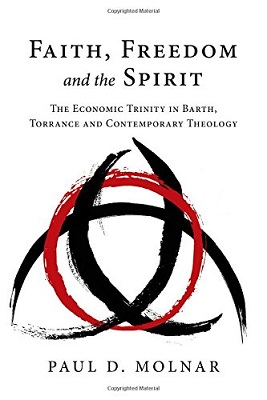 Here’s a special edition Sunday Quote which features a more extended discussion. Let me know what you think in the comments.
Is Natural Theology Excluded for Apologetics?
Paul Molnar’s Faith, Freedom and the Spirit 
If contemporary theologians were to make explicit the role of the Holy Spirit in enabling our knowledge of the triune God, then there could be wide agreement that natural theology of whatever stripe is not only unhelpful but is directly excluded from any serious understanding of theological epistemology. (82)
Now, “natural theology” is, according to Justo Gonzalez’s Essential Theological Terms, “A theology that claims to be based on the natural gifts of the human mind, and on the ‘general revelation’ granted to all… rather than on a ‘special revelation’ in Scripture or Jesus Christ” (118). Natural theology, that is, is the attempt to show that God exists and certain other truths through looking at the world. From this quote, it seems that Molnar is arguing that if we had a better notion of the role of the Holy Spirit, we would basically think that natural theology is worthless related to knowledge of God.
Molnar develops this notion further throughout the next 50 pages or so. His argument basically is that if we acknowledge that it is the Holy Spirit who enables faith and knowledge of God, then any “knowledge” of God which is not directly through faith (i.e. through something like a cosmological argument) is not objective knowledge of God.
Although some of what Molnar argues resonates with me–particularly the notion that the Holy Spirit is the one who imparts faith rather than it being some kind of choice we make–I think that his dismissal of natural theology is unnecessary and mistaken. First, the most obvious question to be asked is whether the Spirit can use natural theology to create faith. If it is the case that the Holy Spirit can work through natural theology–something which seems to be clearly correct to me–then the objection that natural theology ignores the role of the Spirit is mistaken.
Second, Molnar’s argument seems to rely on a concept of natural theology which is entirely about trying to impart knowledge of God to those who do not have faith. This, however, ignores the use of apologetics in strengthening the faith of believers. Natural theology can be a valuable tool for those who have faith to pursue the call of 1 Peter 3:15 and have a reason for the hope within them. Whatever one’s view of whether natural theology can bring people to the true God, it seems that it can and should be used for believers to explore the natural world and bolster their faith.
Third and finally, it seems to me that Romans 1 in particular demonstrates that natural theology is not a worthless project. If God’s invisible attributes are capable of being discovered in the things God has made, then surely natural theology has some value in tracing God’s handiwork.
Should we think that natural theology is a failed project? Can it have other uses like those I listed? Is it possible to go from God to Christ? What of the role of the Spirit in apologetics?
Faith, Freedom and the Spirit
Links
Be sure to check out the page for this site on Facebook and Twitter for discussion of posts, links to other pages of interest, random talk about theology/philosophy/apologetics/movies and more!
Sunday Quote– If you want to read more Sunday Quotes and join the discussion, check them out! (Scroll down for more)
Source
Paul D. Molnar, Faith, Freedom and the Spirit (Downers Grove, IL: InterVarsity, 2015).
SDG.
——
The preceding post is the property of J.W. Wartick (apart from quotations, which are the property of their respective owners, and works of art as credited; images are often freely available to the public and J.W. Wartick makes no claims of owning rights to the images unless he makes that explicit) and should not be reproduced in part or in whole without the expressed consent of the author. All content on this site is the property of J.W. Wartick and is made available for individual and personal usage. If you cite from these documents, whether for personal or professional purposes, please give appropriate citation with both the name of the author (J.W. Wartick) and a link to the original URL. If you’d like to repost a post, you may do so, provided you show less than half of the original post on your own site and link to the original post for the rest. You must also appropriately cite the post as noted above. This blog is protected by Creative Commons licensing. By viewing any part of this site, you are agreeing to this usage policy.
Really Recommended Posts 4/10/15- raising a son, tropical islands, self-harm, and more!
Another round of awesome posts for you, dear readers. Please keep me in your prayers as I have a kidney stone. Sad me. But happy you, because you have some great reading ahead! Self-harm, Easter, raising a son, tropical islands and creationism are all featured topics this week. Let me know your thoughts in the comments here, and be sure to let the authors of the posts know as well.
My Depression and Self Harm vs. Jesus Passion and Sacrifice– Christianity can speak to people in all walks of life and circumstances. Here is a beautiful post that compares the struggles of someone dealing with self-harm to the hope found in the sufferings and death of Christ.
Thoughts on Raising a Son– What is it like to raise a son in our day and world? My wife shares some thoughts on raising a son and the difficulties we face as parents. How can we teach him to not give in to a culture of inequalities?
My Favorite Atheist Easter Memes of 2015– Here, Jason Wisdom shares and analyzes a number of Easter memes atheists put out to “celebrate” this most holy day–the resurrection of God Incarnate. He provides some thoughtful insights into the mindset behind them.
Origins of a Tropical Island – The long road from lava to colonization– Do the formation of islands and their ecology fit into a young earth paradigm? Short answer: no. Check out this post for some reasons why.
The Greatest Risk of All– It is often noted that women were the first evangelists. Does this have any implications for our faith?
Really Recommended Posts 4/3/15- Golden Son, Tyndale, Judaism, and more!
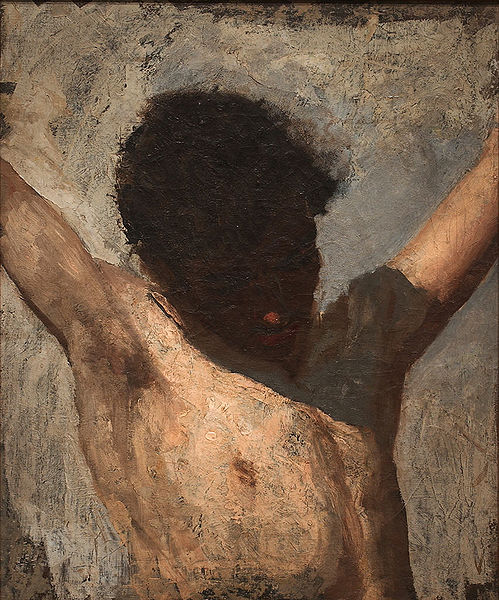
Sketch for the Crucifixion by Thomas Eakins
Today is Good Friday. Let us reflect upon the greatness of God and the power of the Son for our salvation. Amen!
Now, be sure you also dive into this reading material as I have collected it from all corners of the internet for you, dear readers. A broad array of topics is here for your reading pleasure.
Golden Son (Red Rising)– Golden Son is book two of a trilogy by Pierce Brown which is quite interesting. I reviewed the first book myself here. Anthony Weber’s look at the second book provides some solid insights into this YA novel and human nature.
Reject Jesus for Judaism?– A great question and answer about whether it is more reasonable to reject Jesus and embrace Judaism.
“Feminist” is not a Dirty Word– Too often, we see the word “feminist” and react against it with a whole slew of beliefs about what the word must mean before we ask the person who self-identifies as such what it does mean. Here’s a good read to get some insight into the matter.
Tyndale (Comic)- Who was Tyndale and why does he matter? Here’s a neat little comic that answers these and other questions.
Evaluating RC Sproul’s Objection to Presuppositional Apologetics at the Inerrancy Summit– Apologetic method is a debate I try to avoid generally because I think that we need to realize that different approaches will work better for different people and situations. I favor an integrated approach with different methods meshed together. Here’s a look at one objection to the presuppositional method and a response from a presuppositional apologist. What are your thoughts on the matter?
Really Recommended Posts 3/27/15- Star Wars, Aesthetics, Feminism, and more!
Another Friday, another dose of great reading for the weekend. Check out this week’s Really Recommended Posts which include aesthetics, Star Wars, feminism, science and Christianity, and David Hume.
How Modern Art Led Me To God– Can we derive anything objective from aesthetics? What might beauty tell us about the nature of reality? Here’s an interesting exploration of these and related topics. I’d like your thoughts on this one!
Star Wars: This Is Madness– How about some Star Wars themed March Madness? I’m in! Star Wars is hosting a battle royale to crown this year’s tourney champion among Star Wars characters. Now get over there and vote against anyone not in the original trilogy!
Second Wave [feminism]– Here’s an evaluation of Second Wave feminism from an evangelical viewpoint. Check out the Junia Project for all kinds of awesome posts!
Hume on Skepticism– Some brief insights into Hume’s evaluative tools for reason and whether they can stand up to his own skepticism.
Suggested Readings on the Relationship between Science and Theology/Religion– Here’s an interesting list of some recommended books to read on this issue. My own list would have some similarities but many differences as well. Maybe I’ll make one! Would you enjoy that? Oh! And I could annotate it! Well anyway, for now check out Eric Chabot’s list!
Really Recommended Posts 3/20/15- Blood Moons, Jupiter Ascending, and more!
What’s this!? Weather that is above freezing? I cracked my windows last week when it hit 33 degrees Fahrenheit because I was warm. Then it hit 65! SCORCHING! I think maybe I’ve adapted to life in Minnesota. Anyway, I also took the time out of this beautiful week to provide you, my dear readers, with what I hope will be some most edifying material. Here we have posts on Blood Moons, women’s church history, creationism, Jupiter Ascending, and (!) a great apologetics resource.
Jupiter Ascending– A worldview-minded look at the flick “Jupiter Ascending.” Largely blasted by critics, the film is an attempt at a science fiction fairy tale. What does this “fairy tale” about the future teach us?
Trillions of Stone Artifacts: A Young Earth Anthropology Paradox– Are there more human artifacts than there should be, if we grant young earth creationist assumptions about the age of the Earth? Check out this post for an interesting challenge to this paradigm from the perspective of anthropology.
Blood Moons: An End-Times Sign?– Should we view the fact that there are Four Blood Moons happening as a sign of the end-times? Here’s an examination of the claim that we should.
Women’s History Month: The Early Church– Here are some women in the early church who had profound impacts on the faith.
Apologetics 315– Here’s a site to follow if you don’t already. It features interviews with top apologists, book reviews, resource links, and more! It is one of the first sites I ever followed and it still pays dividends.

 J.W. Wartick - Reconstructing Faith