apologetics
Sunday Quote!- Ancient Apologetics and the Disinterest of the Modern Age
 Every Sunday, I will share a quote from something I’ve been reading. The hope is for you, dear reader, to share your thoughts on the quote and related issues and perhaps pick up some reading material along the way!
Ancient Apologetics and the Disinterest of the Modern Age
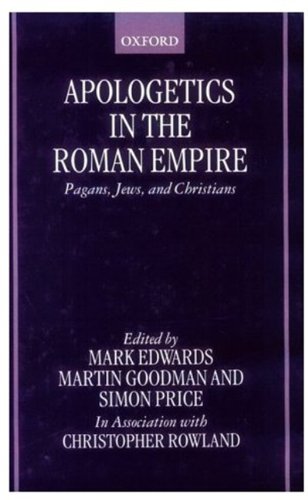
After getting a recommendation from… I don’t remember whom/which book, I picked up Apologetics in the Roman Empire
[T]he style of the ancient apologists has estranged them further from practical apologetic than their contents did in any previous century… The only modern scholars, therefore, to whom the [ancient] apologists [like Justin Martyr, Josephus, Tatian, and the like] mean anything are those who take a sympathetic interest in the culture and the interplay of religious traditions in the Roman Empire… (13, cited below)
Thus, according to the editors of this volume, the “only” reason that anyone would be interested in these works in the modern era is because they wish to explore the cultural understanding of the religious traditions in Ancient Rome.
That makes me quite sad, to be honest! As one who is deeply interested in the study of historical apologetics, it seems clear that much of what is discussed in this volume is actually of interest to modern apologists, those interested in church history, and many others. Of course the editors are perhaps merely speaking only of the interest which they have found for their subject, which speaks of the sorry state of how we modern apologists have abandoned our historic roots. Perhaps these words can serve as a rallying cry to raise us from our stupor of historical ignorance and realize the vast, untapped wealth of historical apologetics.
I have written to that end in a post in which I discuss the lost defenses of Christianity. Explore, take, and read!
The book itself has much appeal for those interested in historical apologetics. I’m about halfway through right now and have found it to be quite excellent.
Links
Be sure to check out the page for this site on Facebook and Twitter for discussion of posts, links to other pages of interest, random talk about theology/philosophy/apologetics/movies and more!
Sunday Quote– If you want to read more Sunday Quotes and join the discussion, check them out! (Scroll down for more)
On the Shoulders of Giants: Rediscovering the lost defenses of Christianity– I have written on how we may discover these enormous resources historical apologists have left behind for us. Take and read!
Source
Mark Edwards, Martin Goodman, and Simon Price, eds., Apologetics in the Roman Empire
SDG.
Really Recommended Posts 10/24/14- Reconciling in Christ, Walking Dead, and more!
 Hello friends! I have another set of links for you to peruse. As always, let me know what you think of the links and if you enjoyed them, leave a comment on those blogs! Thanks for stopping in and reading!
Ambassadors for Reconciliation– There has been much ire flying around over the director of the theistic evolutionist group Biologos’ invitation to creationists like Ken Ham to have dinner and talk over the issues. Here, Hugh Ross reflects upon the extreme reactions of some and the ways we can work towards reconciliation. One quote in particular is helpful:
Enough is enough. There are mission fields still to be reached. How can we ask nonbelievers to dialogue with us if we cannot graciously dialogue with one another, if we treat one another as enemies? Unless we make some progress in reconciling our differences, how can we expect to help reconcile a skeptical world to Christ? We are commissioned by God to be His ambassadors. It’s time for us to start behaving as ambassadors.
I think this is spot on. I have personally been accused by a number of those who disagree with me of being a vile compromiser, someone who is actively leading people away from Christ, etc. If this is how we treat fellow believers, why should those who do not yet believe think that we will be capable of honest dialogue with them? Let’s stop the insults and start genuine dialogue. Let us show one another charity.
When Humans Lose their Humanity: “No Sanctuary” and the real Horror of Terminus– What happens when humans are dehumanized? Here’s an interesting look at ‘The Walking Dead’ which explores this question in deeply insightful ways.
Do we really need to teach our kids apologetics when God is in control anyway?– Here’s an excellent post on the need to educate our children in the Christian faith. Unfortunately, some think that we shouldn’t bother because God is in control. How might we answer this?
Is the Shroud Evidence for God’s Existence?– I have a number of friends in apologetics who are convinced that the Shroud of Turin is genuinely the image of Christ. I am personally unconvinced, but I found this article on it interesting for analyzing what we should make of the Shroud, were it to prove genuine.
Intersections: Summit on Origins– I’m going to be at this conference hosted by Bethel University. It’s on the origins debate, a topic of great interest to me. If you’re able to make it, I’d love to see you there! Let me know!
Really Recommended Posts 10/17/14- the Flood, Acts, and Compromise?
 There is much to read on the internet (understatement of the century). Here, I’ve tracked down a number of posts that are now linked for your reading pleasure. There’s an amazing post on the historical reliability of the book of Acts, a few posts on creationism and the Flood, and a post on the way we should be doing apologetics.
The Reliability of the Book of Acts– A massive set of 84 points of evidence for the historical accuracy of the biblical book of Acts. I highly recommend you read through this and bookmark it.
The Genesis Flood– Was the biblical flood global? What does the text mean? Here is a biblical and scientific perspective on Noah’s Flood.
A Response to “Refuting Compromise”– A number of creationists continue to put Jonathan Safarti’s book Refuting Compromise forward as a must-read for those who would disagree with a young earth paradigm. Unfortunately, the book is largely a series of ad hominem attacks on Hugh Ross and anyone who would not step firmly into line of the young earth view. Here, Hugh Ross responds to the book.
Apologetics as Loving One’s Neighbor– How might we best do apologetics? Here, Pastor Matt argues that apologetics is a way of loving neighbor. We should operate in such a way that our apologetic reflects the gentleness and respect for others that we are to show.
No Room for a Dry Dead Sea in the Young Earth Timeline– The evidence for the Dead Sea having dried up in the past is discussed in this post alongside the question of whether a young earth creationist perspective can account for it.
Constantine’s Faith and the Myth of “Constantine’s Takeover”
 There is a narrative within some branches of Christianity (and some… “offshoots”) regarding church history. It is a narrative in which Constantine is seen as the great evil (whether intentionally or not) which corrupted Christianity. The narrative basically goes like this: Constantine rose to power, then everything went wrong in Christianity. He made Christianity the state religion, which introduced scores of nominal Christians into the church. He made service in the church a well-paying position, which corrupted the office of the ministry. He himself was probably not even a Christian!
So the story goes. Is it accurate?
From Narrative to History
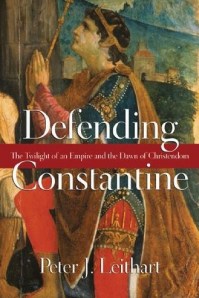
The question of Constantine is one of history. Too often, people have subjected Constantine to psychoanalysis, analyzing an ancient historical figure’s mental state to determine his motives. Historical study may indeed speculate about such things, but to suggest, as some do, that one may uncover some nefarious ancient plot to take over Christianity and lead it into heresy is to engage in writing historical fiction. So what may we actually learn from the historical accounts? Peter Leithart’s work, Defending Constantine: The Twilight of an Empire and the Dawn of Christendom 
Leithart notes that it seems clear that Constantine actually paid much deference to Christianity (Leithart, 93; 121ff; 128-129; 326-328, etc., cite below). He was keen to prevent major divisions within the Church which could have resulted, for example, from the Arian controversy. Hence, he called a council at Nicaea which would define Christian orthodoxy for centuries to come. Constantine himself likely favored the view of Arius, but when the Nicene Council ultimately came against Arianism, Constantine submitted to the defining of orthodoxy.
Constantine’s life appears to be one not of a plot to take Christianity over for political gain, but rather as a life lived struggling with newfound faith and attempting to integrate that faith into public policy. Alister McGrath notes that Constantine’s faith led him to legalize Christianity and sanction it, with some interesting and perhaps unforeseen side-effects:
The new imperial status of Christianity meant that its unity and polity were now matters of significance to the state. (McGrath, 139, cited below)
The much-discussed question of why, if Constatine’s faith were genuine, he would have waited until his deathbed to get baptized is easily answered by his belief that he should wait until the last possible moment to gain the purifying from sins which baptism would provide (Leithart, 299-300).
Frankly, the more one reads about Constantine, the more difficult it becomes to imagine him as someone whose faith was not genuine. Like any Christian, he had his faults–he was a sinner-saint–but he also worked through his position to try to spread and unite Christianity. Leithart notes that many of Constantine’s laws were “more often Christian in effect than in intent” (304). What he means by this is that many laws he made spring from a Christian worldview, though not being explicitly Christian themselves. For example, he outlawed gladiator shows–hardly something which can be said to be explicitly Christian–and this demonstrated Constantine’s genuine concern for human life and the “image of God” in humanity which was noted in yet another law he made (303-304).
In another work, a collection of essays on Apologetics in the Roman Empire
[The work] reveals an emperor who was able to give more substance to his faith than many clerics, and an apologist whose breadth of view and fertile innovations make it possible to mark him with the more eminent theologians of his age (275).
It’s time to set aside the notion that Constantine was somehow “faking it.”
 Constantine’s Takeover?
The “narrative” of Constantine has, unfortunately, often dipped into the notion that he was indeed a Pagan who overthrew traditional Christianity and condemned Christianity to political power-plays for centuries after his death. This notion simply does not line up with historical reality. Although Constantine’s enriching of the church’s coffers did lead to church positions becoming a political gain, it also provided a counter-balance to Imperial authority (Leithart, 304).
Moreover, Leithart argues that the notion that Constantine himself brought about so many wrongs to the church is historically fictitious: “[T]here was a brief, ambiguous ‘Constantinian moment’ in the early fourth century, and there have been many tragic ‘Constantinian moments’ since. There was no permanent, epochal ‘Constantinian shift'” (287). Indeed, the notion of church and state was something found seeded in Augustine’s writings (286) and although Constantine did bring about some monumental changes, the effects they had could only take place over vast amounts of time. It would be impossible to argue that the Catholic Church of the Medieval Period was directly the same or even the exact result of Constantine’s policy.
Finally, Constantine’s policies and actions “Baptized Rome” (Leithart, 301ff). He built churches, empowered bishops, called for unity, and deferred to church teaching. His laws, as noted above, were rooted in a genuinely Christian worldview and sprung from faith.
Conclusion: Defending Constantine
Was Constantine a perfect human? Obviously not. But was Constantine a Pagan who dramatically undermined Christianity; was he a usurper of the Church’s authority who did incalculable damage to Christianity? It does not seem so. Whatever your views on the matters, one must contend with strong historical evidence for the genuineness of Constantine’s faith. His policies indeed may have (and at points certainly did) damage the church, but was that his intent? Again, psychoanalysis of ancient figures is dubious, but the actions Constantine took were those of someone with genuine concern for the stability of Christianity. Most telling, perhaps, were his actions that were not explicitly stamped with Christianity but reflective of his background beliefs: by seeking to end violence, help alleviate poverty, and the like, he demonstrated his faith.
Links
Be sure to check out the page for this site on Facebook and Twitter for discussion of posts, links to other pages of interest, random talk about theology/philosophy/apologetics/movies and more!
Sources
Peter Leithart, Defending Constantine: The Twilight of an Empire and the Dawn of Christendom
Alister McGrath, Heresy: A History of Defending the Truth
Mark Edwards, Martin Goodman, and Simon Price, eds., Apologetics in the Roman Empire
SDG.
——
The preceding post is the property of J.W. Wartick (apart from quotations, which are the property of their respective owners, and works of art as credited; images are often freely available to the public and J.W. Wartick makes no claims of owning rights to the images unless he makes that explicit) and should not be reproduced in part or in whole without the expressed consent of the author. All content on this site is the property of J.W. Wartick and is made available for individual and personal usage. If you cite from these documents, whether for personal or professional purposes, please give appropriate citation with both the name of the author (J.W. Wartick) and a link to the original URL. If you’d like to repost a post, you may do so, provided you show less than half of the original post on your own site and link to the original post for the rest. You must also appropriately cite the post as noted above. This blog is protected by Creative Commons licensing. By viewing any part of this site, you are agreeing to this usage policy.
Really Recommended Posts 10/3/14- Profanity in the Bible, Earth’s Age, “Uglies” and more!
Here we have another round of links for your perusal, dear readers. The topics include the age of the Earth (you really must read this), interpreting the Bible, YA Literature, apologetics, and profanity in the Bible. Oh yeah, you read that last one correctly. Check the posts out, and if you liked them be sure to let the authors know. Let me know what you think in the comments here!
Smoking Gun Evidence of an Ancient Earth: GPS Data Confirms Radiometric Dating– People who deny that the Earth really is billions of years old often do so by trying to undercut radiometric dating. But what if we were able to independently confirm radiometric dating? That’s actually what scientists have been able to do, thus confirming the ancient age of the Earth. Check out this post to see the evidence.
What the Bleep does the Bible say about Profanity?– I found this to be a very thought-provoking post on how Christians should think about profanity. I don’t agree with everything here, but it certainly got my brain working. What are your thoughts on this issue? Be sure to read the post, as it gives some great insights.
Uglies, Pretties, and Specials: Scott Westerfield’s Brave New YA World– Young Adult Literature is one way to get our fingers on the pulse of the culture. Here, Anthony Weber (whose awesome site you should follow!) looks at Scott Westerfield’s look into a future in which physical beauty is even more important than it is now.
Are We “Standing Over” Scripture When We Interpret It?– Sometimes, people express concern with the need to read the Bible in its context and work with interpreting a passage. Shouldn’t it all just be clear? Are we placing ourselves over Scripture? Check out this brief post on this concern.
Christian apologetics: Is there, besides current popular approaches, another way to “take every thought captive”?– I have often thought of the need for an integrative approach to apologetics, which looks at the various methods holistically instead of atomistically. Here, someone who seems to favor the presuppositional method looks for the possibility of reconciling various apologetic methods.
The Need for Psychological Apologetics– It is important to realize that psychological issues impact people from all backgrounds. Here, Pastor Matt Rawlings argues that we need to awaken to the need for psychological apologetics.
Sunday Quote!- Pragmatic Use of Arguments for God
 Every Sunday, I will share a quote from something I’ve been reading. The hope is for you, dear reader, to share your thoughts on the quote and related issues and perhaps pick up some reading material along the way!
Pragmatic Use of Arguments for God
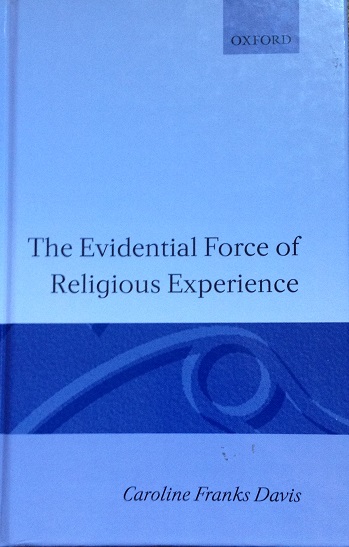
One of my favorite books on any argument for the existence of God is Caroline Franks Davis’ The Evidential Force of Religious Experience. I re-read it recently and came upon a number of awesome insights I hadn’t even marked the first time (how’s that as a case for re-reading books?)! One pertained to the notion that some theistic arguments might be successful, but not useful when it comes to trying to provide evidence to a skeptic:
Some arguments which have been proposed in favor of theism… suffer so many defects or are so controversial that they do not contribute a great deal to the theistic case. (242-243, cited below)
The point is not that all the arguments which may fall into this category are in fact irrational or mistaken (though some may be!), but rather that the usefulness of the arguments are hampered, in particular, by the controversy surrounding said arguments. The central thrust of her passage here is that some arguments may inspire so much objection (even if reasonable), that bringing them up may not contribute to a dialogue. I think this point is fascinating, though the philosophical side of me cries out saying “But if the argument is sound, why not use it!?” I wonder, however, whether this is the right approach.
Are there some theistic arguments which–apart from their soundness–are simply not useful in the case of presenting an apologetic? Should we base our use of these arguments on their utility in that case, or simply upon the logical soundness of the arguments? Which arguments might fall into this category?
Links
Be sure to check out the page for this site on Facebook and Twitter for discussion of posts, links to other pages of interest, random talk about theology/philosophy/apologetics/movies and more!
Sunday Quote– If you want to read more Sunday Quotes and join the discussion, check them out! (Scroll down for more)
Source
Caroline Franks Davis, The Evidential Force of Religious Experience
SDG.
An Apologist’s Insights on “God’s Not Dead”
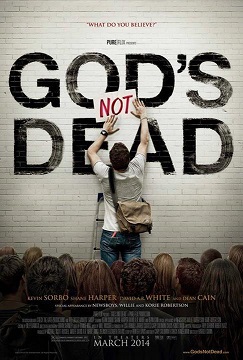 I recently had the chance to watch “God’s Not Dead,” a film which presents a story in which a college student decides to take a stand for his faith against the pressure of an atheistic philosophy professor. A summary of the plot may be found here. As an apologist with an MA in the field, I thought my comments might help provide some insight into the film. I’ll offer a look at some aspects of the film which I wanted to address. Feel free to chime in in the comments with your own thoughts.
Apologetics
The movie presents a clear picture of the need for apologetics. When challenged by attacks on the faith it is important to always have a reason for the hope within (1 Peter 3:15). Josh Wheaton–the protagonist–put together a decent presentation of various evidences for theism in the snippets that viewers get through the film. Of course, these are very simplified and don’t address several major issues with the arguments, but it gets the point across. It also, I have noted through conversations with others, spurred much interest in the area of apologetics. That’s awesome!
That said, I think there are some issues with even the arguments presented in the film. First, after Wheaton has presented the cosmological, design, and other arguments for theism, he is challenged by Professor Radisson on the notion that one just has to choose between atheism and theism. Wheaton acknowledges that yes, it is a choice. Now, there are a number of issues with this portrayal. First, it treats the balance of evidence as a kind of 50/50 proposition, which is, I would think, hardly the position of anyone. Second, it presents a view of belief in which we can just choose what we believe. This is called “doxastic voluntarism” which is a fancy way of saying that one can believe propositions at will. But that is a highly controversial position (just try to force yourself to believe that “Fairies fill my refrigerator every morning” and you’ll see the folly of it) and also flies in the face of biblical accounts of what faith is. Third, here I’ll tip my bias a bit and say I’m fairly well convinced that the balance of evidence is hardly 50/50 but actually compelling.
Another difficulty with the apologetic in the film is that it seems like the lynchpin argument offered was actually just a point of rhetoric. Wheaton presses Professor Radisson and asks “Why do you hate God?” and follows it up with [paraphrased]: “How can you hate someone who doesn’t exist?” This is the last straw and what prompts the class to vote by standing to say that “God’s not dead.” Although I think rhetoric has a clear place in the Christian apologetic (and has since the earliest times: see the apologetic works of Lactantius and Arnobius in the 200-300s AD), I thought it was an odd choice to make it the climactic argument for God. Perhaps it was because this added to the drama of the moment–and I suspect that’s right–but it did so at the cost of detracting from whatever apologetic the film could put forward.
I did, however, appreciate the interaction with some top scholars like Hawking and Lennox. I think it is very important for Christians interested in apologetics to read the top scholars in their fields in order to best get acquainted to the arguments.
Characters or Caricatures?
The way the Muslim father was portrayed was problematic. In the beginning of the film we see him dropping off his daughter and showing great concern for her. Later, he shares an intimate discussion of his faith and the importance of obedience in his background. But then, when it is revealed his daughter has converted to Christianity, he not only kicks her out of the house, but he also immediately hits her more than once. Now, I make no claims to being an expert on this, but I know from anecdotal evidence only that people are indeed kicked out of their homes for converting to Christianity (and sometimes for deconverting), and this is surely a bad thing. It’s not a bad thing to address this as an issue.
But the problem I saw was that the Muslim father’s immediate reaction was violence, without any explanation or any background for thinking this would be a reaction. The rest of the film up to this point had shown him as a caring father who was concerned for the faith and well-being of his daughter. To have him immediately turn to violence when she converted was jarring and I think it speaks to our cultural presuppositions about the religious “Other” to portray the “Other”–the Muslim–in that way. We need to move beyond such stereotypes and into genuine dialogue with those of other faiths, always looking to share the light and love of Christ with them.
On the positive side, the film did do a great job speaking to the importance of reaching out to others like the young man from China. It also emphasized missions in a number of ways, like centering some major plot points around a very amiable character as a missionary.
Pastoral Care
I appreciated the comments about the work of a pastor, in which Pastor Dave in the film was comparing his own work to that of a missionary friend’s and felt his own day-to-day tasks were mundane and trivial. The answer given by the missionary, however, was essentially that such work is part of the work of God as well and that we each occupy a place which God has put us in to make an impact on the world. I thought this was a great message and one that deserves further exploration.
On the other hand, I thought that the pastoral care at points in the movie presented some difficulties. For example, Pastor Dave’s conversation with Josh Wheaton before Wheaton decides to for sure stand up to his professor boiled down to a couple citations (not even quotations) of Bible verses to look up later and the comment that “It’s not easy, but it’s simple” [I may have the order in this quotation wrong]. I’ll be blunt: I think that this is actually a gross oversimplification. Quoting Matthew 10:33 (click for reference) does not actually make the issue facing Wheaton “simple.”
For example, would it be “denying” Christ to acknowledge that one might not have the resources available as a freshman student in a general studies philosophy class (and not a major) to take on a philosophy professor on the topic of God’s existence? I don’t think so. One could instead acknowledge that both the clearly adversarial tone taken in the environment and one’s own lack of knowledge or expertise in the area make it likely that one may actually harm the body of Christ by, well, looking like a freshman non-philosophy student outmatched by an atheistic philosophy professor. Wheaton, of course, has the benefits of film, so he is able to put together a beautiful powerpoint each week and manages to pound the books so hard that he can articulate the cosmological, design, and other arguments within a few days. But is this a realistic perspective? Moreover, is it a “simple” application of the passage to our lives?
Conclusion
“God’s Not Dead” awakens people to the need for apologetics. That is a great compliment, because it is a much-needed awakening. However, it has several issues (including those mentioned above) with the presentation of apologetics, its portrayal of the “Other,” and the oversimplification of several arguments, positions, and even pastoral care and reading of texts. In short, it’s a mixed bag.
Links
Be sure to check out the page for this site on Facebook and Twitter for discussion of posts, links to other pages of interest, random talk about theology/philosophy/apologetics/movies and more!
SDG.
——
The preceding post is the property of J.W. Wartick (apart from quotations, which are the property of their respective owners, and works of art as credited; images are often freely available to the public and J.W. Wartick makes no claims of owning rights to the images unless he makes that explicit) and should not be reproduced in part or in whole without the expressed consent of the author. All content on this site is the property of J.W. Wartick and is made available for individual and personal usage. If you cite from these documents, whether for personal or professional purposes, please give appropriate citation with both the name of the author (J.W. Wartick) and a link to the original URL. If you’d like to repost a post, you may do so, provided you show less than half of the original post on your own site and link to the original post for the rest. You must also appropriately cite the post as noted above. This blog is protected by Creative Commons licensing. By viewing any part of this site, you are agreeing to this usage policy.
Sunday Quote!- Building the Argument from Undesigned Coincidences
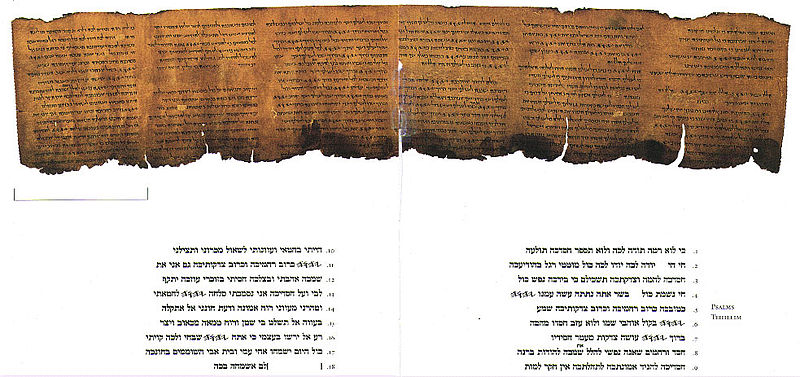 Every Sunday, I will share a quote from something I’ve been reading. The hope is for you, dear reader, to share your thoughts on the quote and related issues and perhaps pick up some reading material along the way!
Build the Argument
J.J. Blunt (1794-1855) wrote what I consider to be one of the strongest pieces of apologetics literature ever written, Undesigned Coincidences in the Writings Both of the Old and New Testaments. The book focuses, clearly enough, on the argument from undesigned coincidences. I’ll not explain the argument here, as I have done so already. But Blunt operated under no false hopes of having comprehensively covered this extremely broad argument:
Much, however, of the same kind of testimony I have no doubt has escaped all of us; and still remains to be detected by future writers on the Evidences. (v, cited below)
Blunt’s words are a call to action for the Christian apologist. The argument from undesigned coincidences is extremely powerful, but it also has massive depths to explore throughout the totality of the Bible which have not even begun to be explored. Moreover, Blunt began the work of relating these “coincidences” to contemporary literature by relating the Gospels and Acts to Josephus, but surely there is much more work to be done by exploring other literature outside of the Bible and seeing how these might be cross-confirmed.
So, fellow Christian apologists, let’s get to work!
Links
Be sure to check out the page for this site on Facebook and Twitter for discussion of posts, links to other pages of interest, random talk about theology/philosophy/apologetics/movies and more!
Forgotten Arguments for Christianity: Undesigned Coincidences- the argument stated– I outline the basics of the argument from undesigned coincidences. I also provide an example of the argument in practice.
Sunday Quote– If you want to read more Sunday Quotes and join the discussion, check them out! (Scroll down for more)
Source
John James Blunt, Undesigned Coincidences in the Writings of both the Old and New Testament, New York, 1847.
SDG.
Really Recommended Posts 9/5/14- Jesus’ resurrection, logical fallacies, and more!
Well depending on if my child comes on time, I may currently be in the hospital with my wife and a baby being born today, as it is our due date! Thus, I may not respond right away to any comments. On the other hand, I may just be hanging out waiting for the baby (or he or she may come early!). So long story short keep my family in your prayers, if you please. This week’s posts include Jesus’ resurrection, logical fallacies, “The Unbelievers” movie, Michael Behe’s design argument, and Rob Bell and Oprah Winfrey.
Prior Probability of the Resurrection– David Marshall presents a lengthy argument related to the prior probability of the resurrection of Jesus. This argument is very important, and Marshall’s approach is one of many leading ways to argue for the truth of Jesus’ resurrection. This article has much depth and is worth the read.
How Not to Argue: The Problem of “Folk Fallacies”– It is easy to fall into the trap of Googling random fallacies and charging others with committing these errors. Here, some difficulties with pointing out an alleged stream of fallacies are pointed out. It’s a good post for apologists to consider.
Are “The Unbelievers” Unbelievable?– Here, Saints and Skeptics addresses several issues of “The Unbelievers” film, including its method, arguments, and conclusions.
A Pretty Sharp Edge: Reflecting on Michael Behe’s Vindication– Michael Behe’s argument for intelligent designed is based upon the concept of irreducible complexity. Check out this post which argues that his argument has been vindicated.
Rob Bell, Oprah Winfrey, and the missing Jesus– What happens when Rob Bell meets Oprah Winfrey? Check out this post for some interesting thoughts on the missing Christ in the conversation. See my own series of posts on Rob Bell’s Love Wins for some more reading.
Book Review: “Questioning the Bible” by Jonathan Morrow
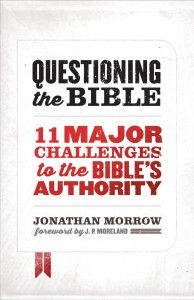 Questioning the Bible
Is the Bible Anti-Intellectual?
What can we really know about Jesus?
How do we Know what the earliest Christians believed?
Why were some Gospels banned from the Bible?
Did the Biblical writers lie about their identity?
Has the Biblical text been corrupted over the centuries?
Are the Gospels full of contradictions?
Is the Bible unscientific?
Is the Bible, sexist, racist, homophobic, and genocidal?
What do Christians believe about the Bible?
Which interpretation of the Bible is correct?
Each of these questions is addressed through a number of means, and Morrow utilizes the latest scholarship in providing answers to these tough questions. Moreover, critical scholars like Bart Ehrman and Richard Dawkins are quoted and interacted with, which opens up avenues for more applications of the work to conversations.
Really, that’s what Questioning the Bible is intended for: a way to start conversations. The book is written for an introductory audience, but it is not ultra-light or lacking in content. There is an enormous amount of information packed into a small space in each chapter here, and that information will be invaluable to the reader tackling the above questions. It is also useful for those wishing to have the everyday conversations about faith that may come up.
Representative of Morrow’s approach is the chapter titled “Did the Biblical Writers Lie About Their Identity?” In this chapter, Morrow first provides a challenge from critical scholar Bart Ehrman. He then provides definitions of key terms like pseudonymity and pseudepigraphy. After that, he provides a critique of Ehrman’s position methodologically, and discusses how forgeries came into being and were recognized in the ancient world and the early church. He provides criticism in a way which is readable yet robust:
[W]e need to clearly state that the earliest Christians held to the thoroughly Jewish conviction… that God does not lie and he hates deception… Lying–even in the name of an apostle, done in love and for the greater good–would not be tolerated. (83)
These kinds of insights are found throughout every chapter, and can be immediately applied to everyday conversations about the faith. Finally, Morrow ends the chapter with a discussion of whether we can identify the authors of the Gospels with their traditional names/authors. Each chapter follows a similar format in that it outlines the issue, provides definitions, and then offers correction and expansion where needed.
Morrow writes with a tone that maintains interest, while explaining sometimes technical arguments in ways that the average reader can understand. Another strength of the work is the way that Morrow balances different Christian viewpoints on issues like creation. Rather than assuming only one viewpoint is possible, he presents several major viewpoints in a way which favors none but allows for open dialogue about origins.
At the end of each chapter there is a helpful section which summarizes three major thinking points from the chapter, provides tips for having conversations on the topic of the chapter, and provides recommended reading on the topic of that chapter. These are invaluable sections and sometimes even have little homework assignments which will allow readers to practice what they have learned. Questioning the Bible is therefore made into a very valuable study tool which may be used by small groups like youth groups or Bible study groups to explore some of the most common questions leveled towards Christians.
Questioning the Bible: 11 Major Challenges to the Bible’s Authority
Disclaimer: I was provided with a review copy by the publisher. I was not obligated by the publisher to give any specific type of feedback whatsoever.
Source
Jonathan Morrow, Questioning the Bible: 11 Major Challenges to the Bible’s Authority
SDG.
——
The preceding post is the property of J.W. Wartick (apart from quotations, which are the property of their respective owners, and works of art as credited; images are often freely available to the public and J.W. Wartick makes no claims of owning rights to the images unless he makes that explicit) and should not be reproduced in part or in whole without the expressed consent of the author. All content on this site is the property of J.W. Wartick and is made available for individual and personal usage. If you cite from these documents, whether for personal or professional purposes, please give appropriate citation with both the name of the author (J.W. Wartick) and a link to the original URL. If you’d like to repost a post, you may do so, provided you show less than half of the original post on your own site and link to the original post for the rest. You must also appropriately cite the post as noted above. This blog is protected by Creative Commons licensing. By viewing any part of this site, you are agreeing to this usage policy.

 J.W. Wartick - Reconstructing Faith