apologetics
Dying for Belief: An analysis of a confused objection to one of the evidences for the resurrection
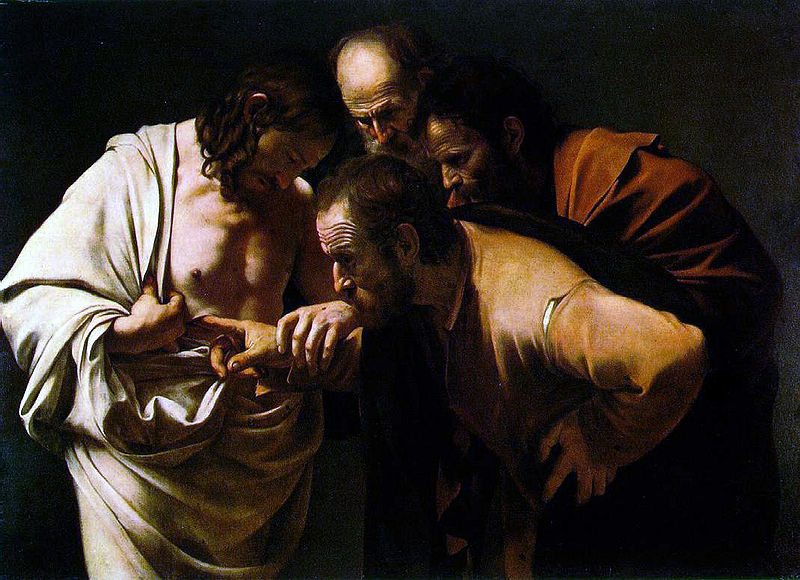 There is an objection to one of the evidences for the resurrection which is, frankly, terribly confused. I most recently ran into it on the discussion page for the radio show Unbelievable? Essentially, the objection goes like this: Christians say the fact that the disciples died for what they believe is evidence for its truth, but all kinds of religious people die for what they believe; are they all true?
The objector then often proceeds to note that some Muslims will die in suicide bombings due to their beliefs; they will note events like Thich Quang Duc burning himself to protest persecution; they will note other events in which religious people die for their beliefs. The implication, it is alleged, is that this cannot count for evidence for the truth of what they belief. People die for false things all the time; it doesn’t make what they believe true.
The objection seems compelling at first because it is, in fact, largely correct. The simple fact that people are willing to die for something does not make whatever they are wiling to die for true. However, this objection shows that the objector is badly misrepresenting the Christian apologetic argument.
The apologetic argument is intended to be used against those who would allege that the disciples made up or plotted for the notion of the resurrection for some reason. It therefore presents a major disanalogy with people of other faiths (or even later Christians) dying for what they believe. The major difference is that the Christian is claiming the disciples who went willingly to their deaths would have known what they were dying for is false, if it were.
Suppose you and a group of friends decided to make up a story to get some money. You decided that you were going to pretend that a buddy had died and risen again. You managed to set up circumstances in which your buddy appeared to die; then smuggled him off to Argentina–because that’s where everyone likes to hide, apparently. Later, you ran about the streets proclaiming that you’d seen your buddy walking around. He had been risen from the dead. And, you’d tell the story for the right price. To your delight, the story spreads like wildfire. But eventually it attracts attention of the wrong kind, and people are coming to kill you. Now, suppose that you could easily get out of it alive by simply confessing you’d made up the whole story. What would you do?
Alleged explanations for the evidence for the resurrection which appeal to purported conspiracies are much like this. The disciples would have known they were lying. Thus, the fact that they willingly went to their deaths does indeed count as evidence for the truth of what they were claiming. Otherwise, one would have to claim that these people quite seriously and willingly went to their deaths for something they knew was a lie they themselves had invented.
Thus, it is not enough for the objector to simply point out that other people die for faith not infrequently. That is not the core of the apologetic argument. Instead, they must argue for the implausible notion that the disciples willingly died for what they knew was a lie. It was not something they simply thought might be a lie; it would have been something that they were certain was false.
I do not think it is too far afield to suggest that the objection fails. It seems far more likely that they certainly believed what they professed were true, and they were in the unique position of knowing whether or not they were lying. Thus, the explanation of the resurrection is more credible than the explanation of a conspiracy. There are, of course, other attempts to explain away the historical argument for the resurrection, but those are arguments for a different time.
Links
Be sure to check out the page for this site on Facebook and Twitter for discussion of posts, links to other pages of interest, random talk about theology/philosophy/apologetics/movies and more!
SDG.
——
The preceding post is the property of J.W. Wartick (apart from quotations, which are the property of their respective owners, and works of art as credited; images are often freely available to the public and J.W. Wartick makes no claims of owning rights to the images unless he makes that explicit) and should not be reproduced in part or in whole without the expressed consent of the author. All content on this site is the property of J.W. Wartick and is made available for individual and personal usage. If you cite from these documents, whether for personal or professional purposes, please give appropriate citation with both the name of the author (J.W. Wartick) and a link to the original URL. If you’d like to repost a post, you may do so, provided you show less than half of the original post on your own site and link to the original post for the rest. You must also appropriately cite the post as noted above. This blog is protected by Creative Commons licensing. By viewing any part of this site, you are agreeing to this usage policy.
2013: The Year’s Best Books, Web, and More! An Apologist’s Year in Review
 Who doesn’t love to look back on the year and reflect on the things done and learned? I’m sure plenty of people don’t! But I do! So here’s my reflection on the year simply highlighting the “bests” that I’ve read/watched/etc. from an apologetic perspective throughout the year. I have not included all the books I read in 2013; rather, only books/movies/etc. which came out/were active/etc. in 2013 are eligible.
Best Books
Best Apologetics Book
J. Warner Wallace, Cold-Case Christianity. I think this book is, hands down, the most important introductory level book for the historical reliability of the New Testament. I reviewed this fantastic book here. Wallace does a fantastic job introducing hard topics in readable ways. His experience as a cold-case detective allows him to draw on his knowledge to make the “detective work” of history exciting and engaging. I highly recommend this book to any and all, whether they are interested in apologetics or not.
Best Advanced Apologetics Book
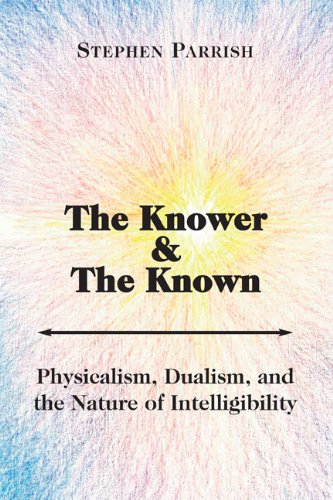
Stephen Parrish, The Knower and the Known. In this advanced work of epistemology and metaphysics, Parrish provides a comprehensive case against physicalism. However, not content with merely the via negativa, he also provides readers with an extensive positive case for substance dualism. I analyzed and reviewed this work in two parts: part 1 focused on the case against naturalism; part 2 focused on the case for dualism.
Best Movie for Discussing Worldview
 “Ender’s Game”- The movie “Ender’s Game” is one of the more philosophical movies to have come out this year. Although its core is a kind of race-against-time action movie, the film explores issues of just war, innocence, morality, and more. I reviewed it with a focus on worldview issues here; I also reviewed the award-winning science fiction book on which it is based.
Best Podcast- For the Best Overall Podcast
The Dividing Line– The podcast of the Calvinist theologian and apologist James White, “The Dividing Line” is consistently interesting and engaging–even when I disagree. White’s emphasis revolves around worldview issues, Calvinist theology, and apologetics–particularly those issues which deal with textual criticism. He is one of the few apologists I know of who consistently engages Muslims. “The Dividing Line” is one of the few podcasts which I listen to every single time. Whether or not you agree with White–and I find I do disagree on several points–you will find his level of engagement with primary materials high, and his critiques will force one to rethink their positions where they disagree.
Best Apologetics Site- For the Best Site focused upon Apologetics
The Poached Egg– I do, of course, mean “best” apart from this one! Okay, not really… I don’t actually think this is the best apologetics blog on the internet… not by a long shot. Anyway, “The Poached Egg” is a kind of apologetics-resource site which features a number of blog articles daily. Greg West runs it and he consistently has an excellent range of resources featured so that people interested in apologetics and related issues may continually interact with new articles of interest. I highly recommend that any readers of this site go and immediately begin following (or at least routinely checking) The Poached Egg.
Best Theological Topics Blog- For the Best Blog on topic(s) specifically related to Theology
Baker Book House Church Connection– Yep, this is a blog about books. That not only means it gets immediate bonus points from me, but it also means that the author, Louis McBride, has a whole slew of topics available. The posts on the blog are generally centered around works the McBride has browsed recently, with brief quotes and reflection upon the content. The broadness of the blog’s content is its greatest draw. I highly recommend following this blog and reading every post for thought-provoking and wide-ranging theological content.
Best Worldview Blog- For The Best Blog on a topic(s) related to the Christian Worldview
The CBE Scroll– The CBE Scroll is the official blog for Christians for Biblical Equality, a group which advocates for the full equality in the home and ministry for men and women. Whether one agrees or disagrees with this perspective, the blog raises a number of highly important arguments with which one must contend.
Best Creation Issues Blog
Naturalis Historia– The issue of the time and length of creation is a highly controversial one among evangelicals today. Here, “The Natural Historian” covers a wide range of topics related to the evidence for the age of the earth, as well as occasionally reflecting upon theological topics. Every single post on this site is worth reading and will inspire much thinking in related areas. I highly, highly recommend this site.
Best Non-Traditional Presentation Apologetics/Theology Blog- For the best blog that utilizes method other than pure text or video to convey its meaning
No Apologies Allowed– Who doesn’t like comics? That’s right, nobody. No Apologies Allowed is a site that uses comics as its primary means to get across apologetic and theological insights. The site is always entertaining and the conversation is quite interesting. Be sure to swing by.
My Current Projects and Graduation
Hello, dear readers!
I wanted to let you know how much I appreciate your coming and reading my blog, whether you are just a one-off who happened to stumble on this post, or a follower who has read it for years.
As a kind of thank you, I wanted to give you an update on what I’m currently working on behind the scenes. I am, as always, constantly writing blog posts. I try to give a pretty good spread of topics I’m interested and I hope you find them interesting too. I read a lot of books, so book reviews are a constant part of the process.
I graduate from Biola University with my MA in Christian Apologetics on December 20, 2013. I will be graduating in absentia. I don’t have the money to fly out to CA for it, so I’m a little bummed that I won’t be able to walk for my graduation, but I’m also very excited to be finishing. I have had an absolute blast with the courses and I have learned a lot. Anyway, I have actually had two readers contact me because they wanted to send a gift for graduation and/or Christmas. Wow. That is really, really awesome. Thanks so much! If you also want to consider such a thing, feel free to check out my constantly-updated Amazon wish list.
I’m honestly really looking forward to getting the MA hood. Perhaps I’ll wear it around the home. Okay, no I won’t. But it is a really awesome feeling to be right on the verge of my MA!
But now that I’m on the verge of graduating with my MA in Christian Apologetics, I have been thinking ahead and considering what projects I should work on. Here’s an idea of what I’ll be doing.
Writing Books:
Yes, I’m working on a couple books. I’m actively writing on two of them, with a couple others planned in the future. My hope is to get these published through a major Christian publishing house. So hey, if you have any connections or advice, please send them my way either through the comments here or through the “contact” form.
The books I’m working on right now are, I think, going to be both highly relevant and also very sellable. They’re the kind of books that, if I saw they had been written, I would snap them off Amazon instantly. So I hope that others will feel the same way. The first book is about 95 pages right now, but I hate to say that I’m going to keep the topic top secret. I’ll just say this: it is related to apologetics, and it is going to give a lot of unique insight. It will, I think, drive a whole lot of discussion and research going forward. I’m not trying to brag here, I just think that the outcome will be pretty significant.
The other book I’m working on is related to issues of creation and creationism. It’s going to be largely autobiographical and written in the first person as a kind of memoir of my explorations of the issues involved. I may not reflect it much on the blog, but I have a fairly dry sense of humor and that will be reflected in this book.
School
I am planning on continuing my education, hopefully by pursuing a PhD in theology next. I will be applying not for 2014 but for 2015, so I’m taking this year to study languages and the like while working on my books before I go into full time school work again.
Bible Commentary
I have been working on a commentary on the entire Bible. I’m writing this less as a book project than as a simple project for edification. I have been keeping a document in outline format with notes on the various books of the Bible as I read through them. The outline format allows for easily searchable notes, and I also use some paragraphs therein as well. I think it is pretty neat! I am currently going through Proverbs, Deuteronomy, and Luke.
The insights one gets from such a project are amazing. It is fascinating to see the way you find links between books that you never had before. I highly recommend that you also keep a kind of running commentary going as you read through the Word.
Onward!
Anyway, those are the projects I’m currently working on. I hope you enjoyed reading about them. Let me know what your thoughts are! What are you working on? Leave some comments.
Book Review: “Hardwired: Finding the God You Already Know” by James Miller
 Irreverent. That’s how I would describe Hardwired
Illustrative was his comment early on in the work. Miller was approached by a mother who was heartbroken over her son leaving the faith. She asked him, “‘How do I convince him there is a God?'” Miller’s answer is indicative of his apologetic method: “He already believes in God.” This startling statement forms the basis for the rest of the book. Miller’s approach revolved around showing people the God they “already know.”
How might one justify this outlandish claim? First, Miller argued that human beings are not “blank slates”–that is, the human mind is in fact shaping that which it observes even as it observes it: “You and I, witnessing events through the same pair of glasses, would not know the same thing, because your brain and my brain do different things with the knowledge” (42). All knowledge is filtered through the preconceptions one has that sorts it into different levels of experience. Miller provided several reasons for thinking that the notion of our minds as blank slates is wrong (42-44; see also 58-61).
The notion that we are not “blank slates” also means that we filter ideas through a number of pre-existing categories. It also means that a wholly objective approach to discovering truth is impossible; we simply cannot step entirely outside of our presuppositions about reality. Moreover, human beings seem to have a shared experience of certain affirmations, even though some may attempt to deny them. For example, “we assume that our perceptions of the world… are accurate… We assume that there are real moral rights and wrongs… We assume that life has a purpose… We assume that there can be meaningful communication in which two people accurately share what they are thinking” (26). These assumptions are not uncontroversial; indeed, many have sought to deny any or all of them. Hardwired featured concise arguments for the fact of each of these notions.
Apart from these seemingly universal human experiences, Miller also argued that the very position of agnosticism is one which does not cohere with reality. Agnosticism is fundamentally a witholding of belief, but that is itself based upon a supposed ignorance of all the available data. He compared it to a court case regarding evidence: “People are only off the hook when they can show both that they didn’t know and that there was no way they could have known.” It is not enough to plead ignorance: “they are still guilty if they didn’t know because they avoided finding out” (55). The Bible clearly states that all people are capable of knowing God, and stand without excuse (Romans 1). “The onus is on honest agnostics to produce a pretty substantial bibliography of failed research” (56).
The fact of God’s existence may be found throughout reality, argued Miller. First, there is the reality of religious experience, but Miller prefers to view these as “epiphanies” which are “a sudden piercing discovery…” which may “draw our attention to things we’ve previously taken for granted or ignored” (69). Second, the existence of moral absolutes is a universal experience. However, this is not to be taken as a proof for God; rather Miller suggested that it means we have “inclinations that cannot be filled by anything but the exisence of God” (91). Even the atheistic moral objection to the God of the Bible assumes objective morality, because it assumes that they are capable of discerning real right and wrong (91-92). The very fact of valuation hints at the Creator (108-111).
The Christian faith gives compelling reasons to believe because its story matches and exceeds the criterion of embarrassment: its “hero,” Jesus, is scorned and shamed, not glorified and given rule over all nations (121ff).
The existence of God, Miller argued, is not tied to arguments or debates, rather, “What convicts us of the existence of God [are]… the soft, subjective facts of an experience that resonates with human longing and confirms are deep suspicions” (156). Hardwired is Miller’s attempt to point to those experiential factors.
By way of analysis, I first note that I think Miller has done an excellent job summarizing a number of extremely complex and difficult issues in ways that the “person on the street” could pick up the book and understand. He is concise and clear. Moreover, I sympathize in many ways with his approach. It seems to me to be true that humans cannot approach a topic as though we are “blank slates” ready to take whatever input we are given without layers of interpretation. That, I think, is the greatest strength of Miller’s approach. He pointed out the deeply seeded assumptions we hold which influence the way we view reality and showed how these lead to God.
However, I wonder about the coherence to Miller’s approach. His critique of natural theology does not sit well with his appeal to some of the very types of arguments that natural theologians use. For example, his appeal to objective morality is essentially no different from the defense provided for the “moral argument” by natural theologians like William Lane Craig, whose approach Miller criticizes. His presuppositional argument itself depends upon some forms of evidentialism (and here I am intentionally wording this to avoid being accused of being unaware of the fact that presuppositional apologists do use evidence–it is manifestly true that even the staunchest presuppositional apologist uses evidence… my point is that the method Miller uses is often evidentialist in its approach). Ultimately, readers will be left with what essentially amounts to an existentialist evidentialism, which seems itself to rely upon natural theology in a number of traceable ways.
Another difficulty I had with Hardwired is that it seemed Miller sometimes overstated his case. Perhaps the most obvious example of this, in my opinion, is his discussion of evolution. He discussed natural selection and sought to evaluate it by looking at humans: “[I]f natural selection actually works, a few million years should make for some pretty shiny, strong, effective gladiators who have good teeth and rarely catch cold… Specifically, there are some traits of humanity that should by all means have been weeded out by now: sleep (which makes people vulnerable to predators for a third of their lives)… endoskeletons, appendices, wisdom teeth, birth defects, stupidity, and obesity” (94).
I’m not about to dive into biology, which is by no means an area of my expertise, but it seems to me that none of these are required expectations given Neo-Darwinism. Miller’s critique does not take into account the fact that humans have worked using their intelligence to circumvent many of these difficulties (i.e. we live in shelters which keep us safe while sleeping; appendices still have function; etc, etc.). The critique offered here also seems shamelessly teleological, which is the very thing Neo-Darwinists would deny within their system.
Hardwired is a brief missive which applies presuppositional apologetics in a straightforward, easy-to-understand fashion. Miller doesn’t fall into using terminology that will be difficult for the uninitiated to understand. Instead, he provides a coherent beginning-to-end approach in how to argue for faith from his presuppositional approach. It is a commendable work for its simplicity, and despite the areas of disagreement I noted above, I certainly think it is worth a read. Miller has a way of answering the difficulties that people raise against Christianity in concise but convincing fashion. It’s a mixed bag, but one well worth the time spent.
Source
James W. Miller, Hardwired: Finding the God you Already Know (Nashville, TN: Abingdon Press, 2013).
Disclaimer
I received a copy of Hardwired free of charge for review. I was only asked to give an honest review of the book.
SDG.
——
The preceding post is the property of J.W. Wartick (apart from quotations, which are the property of their respective owners, and works of art as credited; images are often freely available to the public and J.W. Wartick makes no claims of owning rights to the images unless he makes that explicit) and should not be reproduced in part or in whole without the expressed consent of the author. All content on this site is the property of J.W. Wartick and is made available for individual and personal usage. If you cite from these documents, whether for personal or professional purposes, please give appropriate citation with both the name of the author (J.W. Wartick) and a link to the original URL. If you’d like to repost a post, you may do so, provided you show less than half of the original post on your own site and link to the original post for the rest. You must also appropriately cite the post as noted above. This blog is protected by Creative Commons licensing. By viewing any part of this site, you are agreeing to this usage policy.
Really Recommended Posts 11/22/13- Miraculous Gifts, Concordism, Archaeology, and more!
 I have to admit, I think this is one of the most engaging “Really Recommended Posts” I’ve put together. There are multiple views presented on two of these posts, and the others give some good food for thought. Check out opposing views on charismatic/miraculous gifts; delve into the notion of concordism from different sides. Leave comments to share your own thoughts on these issues. Then, archaeology, abortion, the Noah movie, and Hume round out the discussion. I hope you’ll drop some comments to let me know your thoughts.
Debate: Have the New Testament Charismatic Gifts Ceased?– The “Strange Fire” book and conference have caused a huge amount of discussion to arise within evangelical circles regarding miraculous/charismatic gifts. Do these gifts continue past the New Testament times? Here, Michael Brown debates Sam Waldron on this topic. I have also written presenting four major views on this topic should you like to explore the topic more deeply. Which side do you think is correct? Why? Leave a comment!
Defending Concordism: Response to The Lost World of Genesis One– Concordism is the view that science will line up with biblical teaching about origins and other scientific aspects of reality. One major challenge to the position is the notion that the Bible simply doesn’t address such things. Here, Reasons to Believe, a major concordist group, answers several objections posed against concordism. William Lane Craig has recently answered a question about concordism himself, in which he raises a few objections to the position and explains why he is not a concordist. What are your thoughts on this debate? Leave a comment!
A Brief Sample of Old Testament Archaeological Corroboration– The Old Testament clearly makes a number of claims about the actual historical events of the Bible. Here, J. Warner Wallace addresses some of these claims and notes how we have archaeological research to back them up.
How the ADF kept nurses who wouldn’t perform abortions from being fired– The ADF–Alliance Defending Freedom–successfully reached a settlement regarding a hospital that was going to force nurses with moral objections to abortion to perform them. I find this a particularly stunning case, because so often the pro-choice side says things like “Don’t want an abortion, don’t get one!” But this is shown to be mere lip service, because now the attempt is being made to force even those with moral objections not to get abortions, but to actually carry them out. I am very pleased to see that sound reasoning prevailed and the nurses were not forced to do this or lose their jobs. It remains troubling to me that anyone would even think this could be okay. Check out the post.
How Should Christians Respond to Noah the Movie?– Greg West over at The Poached Egg (an amazing site you should follow if you don’t already!) found this gem of a post regarding the “Noah” movie. Check out my own thoughts on the trailer and upcoming film.
David Hume’s Genuine Theism– A provocative title, to be sure! In this brief post, the author argues that one of Hume’s aims was to restore “genuine theism” over and against rationalistic deism. It’s a quick read, but very thought-provoking.
Really Recommended Posts 11/15/13 The Quran, egalitarianism, the Dark ages, and more!
 I have searched the four corners of the internet to bring you, dear readers, these really recommended posts. This week, we explore the Quran, egalitarianism, evidence for the truth of the Bible, the Dark Ages, and more! Check them out. As always, drop a comment to let me know what you thought! Have a post you think I’d be interested in? Here’s your place to share it (but don’t just leave a link! Tell me why I’d like it).
Is the Quran the Book of God? Debate Transcript– This is a very lengthy written debate between a Muslim and Christian on the topic: “Is the Quran the Book of God?” It is well worth a read as it shows the methodology that Muslims frequently use in debates. The cross-examinations, in particular, are highly useful. Although it is lengthy, I do really recommend that you read through this to get a better understanding of the places Christians and Muslims differ. The Christian, I think, did a fantastic job of showing that the Quran claims the Old and New Testaments are inspired, while also showing that one cannot simply claim corruption. The Quran says the Bible is the word of God, but then contradicts the Bible.
Why I’m an Egalitarian– An excellent post in which Leslie Keeney gives the reasons she holds to an egalitarian view–that women should be allowed full participation in leadership in the church and home. She addresses several biblical and social arguments.
Undesigned Coincidences– Tim McGrew points out, in this phenomenal post, the evidences for the truth of the Bible we can find even in those portions we so often skim past. Paul’s greetings provide us with confirmation of the details of his travels as found in Acts, for example. This post is Part 4, but it is standalone in content. Check out my own posts on this argument.
The Dark Age Myth: An Atheist Reviews “God’s Philosophers”– Christianity really slowed down scientific progress during the Dark Ages, right? Wrong. Here, an atheist explains how ridiculous such claims are historically.
Bad– Another great comic post from Adam4d, this one poignantly shows the truths about human nature.
Ad hominems, Special Pleading, Straw Men & Red Herrings: John Loftus’ Response to MandM– John Loftus has written a number of works attacking Christian theism from multiple angles. Here, MandM respond to a critique he leveled against their satirical moral argument. In this post, they analyze Loftus’ arguments in a number of different lights.
Back-Alley Abortions, Apologetics, Male Hierarchy, and more! – Really Recommended Posts 10/18/13
 I have given you, dear reader, this edition of “Really Recommended Posts” which is simply bulging at the seams with great content. Herein, you shall discover the myth of the back alley abortion, an analysis of male rule, sociology and religion’s impact on society, Augustine and the creation/evolution debate, and more! Check ’em out. Let me know what you think!
Is Male Rule a Biblical Ideal?– Here, Mimi Haddad confronts some of the common arguments for male rule in the church and home. These arguments include the fact that Jesus was male, that the 12 disciples were male, etc.
Sociologist Rodney Stark discusses whether religion is good for society– A highly interesting post in which a sociologist takes on claims that religion could be bad for society. Looking into the actual statistics and facts of the matter makes an extraordinary difference to one’s perception.
Pro-Choice “Facts”: Illegal Abortion Deaths– One of the very common arguments for abortion is that we need to keep such things safe. After all, if women will get abortions anyway, we should try to keep them safe. This article examines the myth of the back-alley abortion and exposes it for what it is: a fraud.
The dangers of apologetics– My wife linked me to this article which I think makes some extremely valuable points regarding the nature and practice of apologetics. I particularly liked that the author did not throw apologetics out the window but rather offered pieces of advice for apologists and what to avoid as an apologist. What are your thoughts?
Augustine’s Origin of Species– Within the creation/evolution debate, many continue to allege that one cannot consistently be a Christian and hold to certain views of the age of the universe or the origin of species. Here, Alister McGrath analyzes these claims alongside the wonderful Christian theologian, Augustine.
Signs that the New Atheist Movement May be Collapsing– A post which examines the intellectual collapse of the New Atheism. I think the most fascinating point is the third, that New Atheists are suppressing intellectual dialogue.
John Loftus Exits in Infamy– Speaking of the New Atheists, David Marshall analyzes his own recent dialogue with John Loftus, a[n] [in]famous atheist. The way the dialogue proceeded is highly telling.
Really Recommended Posts 10/11/13- Worldview, Wilberforce, and World [Religions]! Plus some more!
Dear readers, this week I stumbled across a collection of posts I had prepared some months ago for your reading, but had forgotten to actually share! I have now rectified that error by placing the following posts before you for your reading pleasure. Check ’em out, and as always, leave a comment to let me know what you thought!
Dallas Willard – The Nature and Necessity of Worldviews (Video)– An hour-long presentation by the late Dallas Willard on worldviews. He provides some good insights into what makes up a worldview and the applications thereof.
William Wilberforce, Hannah More, and Their Legacy in Public Education– A wonderful but brief historical post reflecting on the impact of Wilberforce and the More sisters upon education today. Christian lives lived.
C.S. Lewis: A Life, by Alister McGrath – Book Review– I haven’t hard the opportunity to read this biography by Alister McGrath, but this review at least quenched some of my thirst by providing a great overview and discussion of the work.
Listening to Young Atheists: Lessons for a Stronger Christianity– What are young atheists saying? Whatever it is they are telling us about religion is quite instructive, because it allows Christians to shore up their defenses and counter the distortions atheists have about Christianity. Most importantly, it seems that Christians are viewed as insincere and unconcerned with the way their beliefs should inform their lives. Read this post and get some valuable takeaways.
Allah is not Jehovah– I found this post to be remarkably insightful. There are some who have been trying to synthesize Christianity and Islam. The fact is that these two faiths are mutually contradictory on a number of points. This post by the “Valley Girl Apologist” outlines 21 major differences between Islam and Christianity.
Really Recommended Posts 9/20/13- Apologetics, Textual Variants, Evil, and more!
One Year Ago, Apologetics Saved My Life– A simply wonderful, raw, existential post on the necessity of apologetics for the life of faith.
The Number of Textual Variants: An Evangelical Miscalculation– Humans are fallible, and as such we often get things wrong. Daniel Wallace has written an excellent article to correct a common miscalculation made in apologetics works regarding the number of textual variants. Thankfully, the response from many authors has been to request changes in their works and strive to correct the error. Even better, it is worth noting Wallace’s conclusion: “All this is to say: a variant is simply the difference in wording found in a single manuscript or a group of manuscripts (either way, it’s still only one variant) that disagrees with a base text.”
Why does God allow so much natural evil from phenomena like earthquakes?– Wintery Knight has gathered together a number of resources to present a sound response to the challenge of “natural” evil like earthquakes, tsunamis, and the like.
Natural Selection is Empty– A short but fairly technical write-up on a work by two atheists which argues that natural selection is incapable of being the lynchpin of the argument for the origin of species.
Book Plunge: There was no Jesus, There is no God– A lengthy critique (with great discussion afterwards) of a recent self-published work arguing that there was no Jesus and is no God.

Resource Review: “Flight: The Genius of Birds”
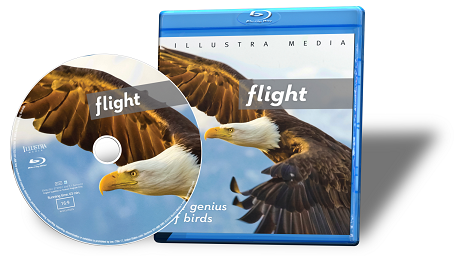 “Flight: The Genius of Birds
The Complexity of Birds
The film traces the incredible development of birds from single cells into babies and the way in which their bodies must work in order to achieve flight. One of the people interviewed in the film notes that flight is not an incremental phenomenon; the entire body must be set up in order to accomplish it. The way feet work, the shape of the wing, the structure of muscles, and the weight of bones are all factors which must come into play in order to make up an animal capable of flight.
Hummingbirds
“Flight” presents a number of different birds as case studies the complexity which the systems that make up a bird show. Hummingbirds’ flight muscles comprise, on average, 43% of the bird’s body mass. This allows the birds to have an enormous amount of precision in order to move in the ways that they can, such as hovering, moving backwards, laterally, etc. The hummingbird generates lift both on the back and the front strokes of their wings. This capability is grounded in the shoulder joints found in the bones which are at the bases of the wings. The hummingbird’s heart must beat at an enormous rate, which means that it also must eat quite a bit in order to sustain the energy level required for the bird’s metabolism and constant movement. The hummingbird’s tongue is particularly interesting, for it has a number of functions on it which allow it to draw up nectar far more efficiently than had been thought.
European Starlings
These starlings, sometimes flying in groups in the hundreds of thousands, move in a stirring, beautiful way, seeming to shift as if they comprised one organism. The way that these birds continue flying without running into each other is by monitoring those starlings which are closest to each other. Rather than monitoring the entire formation, they simply move when those around them move, which lends itself to the movement of a flock as one kind of organism. Their movements must take place within very minuscule spans of time in order to maintain the formation. They follow air flows to minimize the turbulence they encounter, and their formation also serves as a defense mechanism.
Arctic Terns
Arctic terns have the longest migration of any animal on earth. They cross the planet from pole-to-pole to seek out nesting and feeding grounds. From the North Atlantic, they head south, eventually splitting as half go along the African coast while the other half goes along the coast of Brazil. In the south, near Antartica, they feast upon small fish before heading back north. They must arrive back near Greenland and other areas in the north for a nesting period of about 8 weeks. Then, as winter sets in in the north, they head back south.
How did the complexity arise?
The film here presents an argument that a materialist must use Darwinian evolution to explain the unique functions of flight. No design may be invoked in order to explain these things in a materialistic worldview. Dinosaurs were the precursors of birds, and natural selection selected for those dinosaurs which began to develop better means by which to avoid predators and catch prey.
The Feather
One feather may contain around a million individual parts, from the shaft to the individual strands, barbs, which compose the feather, and each of these are made up of barbules. These are constructed in such a way as to interlock with each other. Yet the feather is but one of the many factors which must go into the mechanisms required for flight.
Other Mechanisms
Other than those already noted (muscles, bones, etc.), birds require a navigational system which allows them to migrate and follow food. They must have instincts to cue and direct their movements across continents and even oceans. One could see how these latter functions came into play in the case study of the Arctic Terns.
Natural Selection?
The film makes the argument that natural selection cannot account for the mechanisms required for flight. The primary problem presented by “Flight” is the “lack of foresight.” Natural selection cannot look ahead and select for various factors in order to put them together into an integrated whole. The argument is that the multiple and independent functions needed in order to get a functional bird which would have some chance at survival is impossible to get to by means of a process which is blind.
Evaluation
First, I have to say that there were moments I found myself with my mouth hanging open and the gorgeous imagery in “Flight.” This was particularly the case following the starlings’ movements, the icy regions the terns flew through, and the overall imagery related to the hummingbirds.
The use of particular case studies over the middle section of the film was particularly effective at showing the problems which may come up when trying to describe certain characteristics and behaviors which birds exemplify that cannot be explained so easily by naturalistic mechanisms.
The film also did a good job of noting that there are presuppositions when it comes to the scientific enterprise. Given naturalism, neo-Darwinism is the only game in town. However, as was asked repeatedly throughout the film, if one is capable of acknowledging design and intelligence when it comes to certain things, why should one preclude the possibility of an intelligent agent when it comes to higher orders?
One problem with the film can be found in the format. It is necessarily short, making only the briefest points and only touching upon those things which it discusses. I suspect that those who hold to a naturalistic worldview will be largely unimpressed, while those who hold to the possibility of intelligent agency in biology will see it as backing their own positions. However, those who may be on the fence will see that there are reasons to ask questions.
Overall, “Flight: The Genius of Birds
Disclosure
I was sent a copy of Flight: The Genius of Birds
SDG.
——
The preceding post is the property of J.W. Wartick (apart from citations, which are the property of their respective owners, and works of art as credited) and should not be reproduced in part or in whole without the expressed consent of the author. All content on this site is the property of J.W. Wartick and is made available for individual and personal usage. If you cite from these documents, whether for personal or professional purposes, please give appropriate citation with both the name of the author (J.W. Wartick) and a link to the original URL. If you’d like to repost a post, you may do so, provided you show less than half of the original post on your own site and link to the original post for the rest. You must also appropriately cite the post as noted above. This blog is protected by Creative Commons licensing. By viewing any part of this site, you are agreeing to this usage policy.

 J.W. Wartick - Reconstructing Faith