apologetics
Really Recommended Posts 8/29
Here’s another roundup of several posts I found worth reading:
The Apologetics of Love:
http://1peter315.wordpress.com/2011/08/18/apologetics-of-love/
William Lane Craig answers a question about genocides in Canaan:
http://www.reasonablefaith.org/site/News2?page=NewsArticle&id=8973
Review of the book “Clouds of Witnesses”:
http://greatcloud.wordpress.com/2011/07/24/book-review-clouds-of-witnesses/
A very brief discussion of the Euthyphro Dilemma:
http://josiahconcept.org/2011/08/11/on-the-euthyphro-dilemma/
Gay activist explains how same-sex marriage will change marriage:
I stumbled across this phenomenal outline of some of the issues dealing with God and the Problem of Evil:
What if? The “Job Answer” to the Problem of Evil
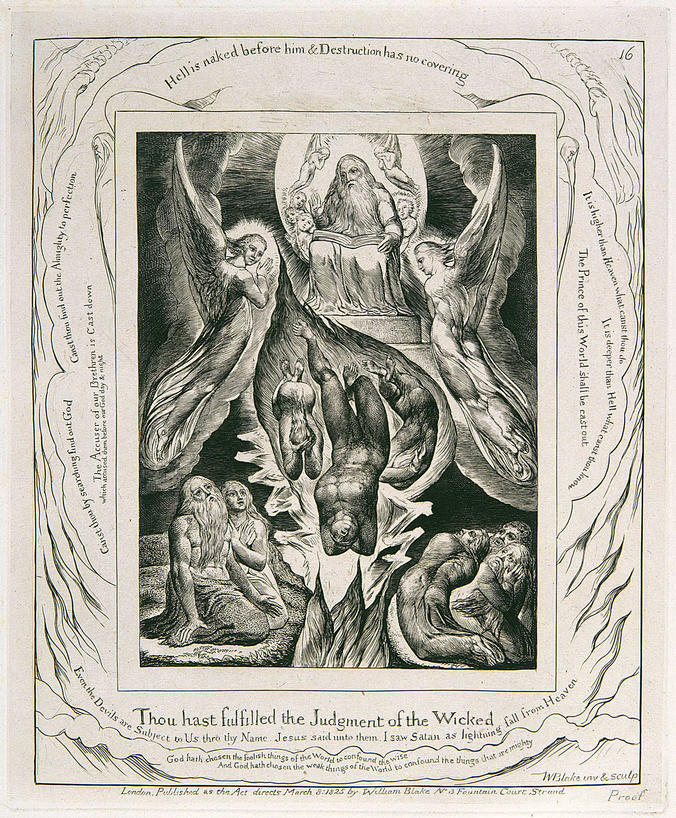 “Who has a claim against me that I must pay?
Everything under heaven belongs to me.” Job 41:11
There are many different kinds of theodicy or defenses to rebut the problem of evil. As I read the Bible I see a few different answers, but one extremely important theodicy in the Scriptures is what I shall deem the “Job Answer,” which is found in the book of Job, although a similar idea is touched upon by Paul in Romans.
Job was known as the most righteous of all the people on earth. Yet God allowed terrible things to happen to him, as part of a test to show Satan that Job was indeed as faithful and righteous as was thought.
But why? Why do bad things happen to good people? Why is it that Job, who God Himself called blameless and upright (1:8) has so many bad things happen to him?
Job’s friends gathered around him and offered various explanations. Job must have done something to deserve it, he must have erred in some way, etc, etc. Yet all of these, Job says, are wrong. He is indeed without blame, and he remains faithful. Yet despite this faith, he cannot help but complain to God. And in this defense of himself and appeal to God, he again points out that he is righteous (see Job 31).
God’s answer to this complaint is where I draw the “Job Answer.” God responds, basically, by saying “Job, you don’t know how I operate, but don’t you think it’s reasonable to conclude that I know what I’m doing?”
Is this a satisfactory answer? Can Job demand another answer? Should he?
That is often the route taken by atheists and even Christians when they investigate the problem of evil. They demand that God provide an answer they themselves find suitable. They act as though God owes them the answer, as if God cannot possibly be good unless the answer is found acceptable in their own eyes. But what does God say to that? In Job chapter 41, He says “Who has a claim against me that I must pay? Everything under heaven belongs to me.”
Is that easy? Is that the answer we Christians like to see? Not really. It would be so much easier if God just said “You know, I gave you guys freedom of will, so given your sinful nature (which you chose, by the way), wouldn’t you expect to see some pretty awful things happening?” That’s the kind of answer I find more appealing. That’s easy.
But that isn’t the answer God gave. He said “Everything belongs to me. Who must I repay?” Does that mean God is not good?
Francis Chan and Preston Sprinkle’s recent book Erasing Hell has had me reflecting on these very questions. Hell is a tough issue, and it has some serious implications for the problem of evil. In a particularly intriguing part of this book, the authors quote Scripture and follow it with a few questions. Specifically, they are reflecting on the idea that God knows who is going to hell before they themselves choose to do so. Check it out:
“What if God, desiring to show his wrath and to make known his power, has endured with much patience vessels of wrath prepared for destruction, in order to make known the riches of his glory for vessels of mercy, which he has prepared beforehand for glory?” (Rom. 9:22-23)
…What if God, as the sovereign Creator of the universe, decided to create ‘vessels of wrath prepared for destruction”? …And what if it’s His way of showing those He saves just how great His glory and mercy is? What would you do if He chose to do this? Refuse to believe in Him? Refuse to be a ‘vessel of mercy’? Does that make any sense? Would you refuse to follow him? Really? Is that wise? (p. 130, cited below)
The passage quoted is from Paul, writing to the Romans. Note how he phrases it: he starts it with what if. He’s not saying this is what God does, or that God does operate in this way, but he’s offering it as a possibility. Chan and Sprinkle continue this line of reasoning: What would we do if this is how God works? Would it make sense to rebel… to become a vessel of wrath just because we know they exist? Does it mean that God is doing wrong if this is how He operates?
Again, we turn back to Job to find the answer. God’s ways our not our own. God answers Job by listing things Job cannot do, and cannot even comprehend. ‘These things,’ God implies, ‘are outside of your comprehension… yet you expect to understand something even more incomprhensible?’ But that is not where God leaves it. He also tells us that ultimately, He will bring justice to all. Those who are now downtrodden will be lifted up, and justice will reign. How can Job respond? By repenting “in dust and ashes” (42:6).
So the “Job Answer” fits in a unique place among various defenses and theodicies for the problem of evil. Instead of using human nature and free will or a greater good to justify evil, the answer given to and by Job is that God, being good, has a reason, even if that reason is inscrutable for us. It is a response of faith.
But this does not mean the “Job Answer” is the only answer given in all of Scripture. Jesus is the ultimate answer to the problem of evil. He came and took our pain and suffering upon Himself, which in turn defeats evil ultimately and for all time. There are other Biblical answers to the problem of evil, but the answer Job gives is simple: Have faith. It does not promote an unphilosophical or unreflective faith, but points out the obvious: If we have good reasons to believe in God, and reasons which point to God as good, then we can simply trust that the apparent problem of evil is solved, ultimately, by God.
Thus, the “Job Answer” implies a second version of theodicy. Namely, that the evidence for the existence of God provides a rebutting defeater for the problem of evil. If we know that God exists and is good, then the problem of evil simply cannot be coherent.
In either case, the “Job Answer” provides a powerful, Biblical, answer to the problem of evil.
Source cited: Francis Chan and Preston Sprinkle Erasing Hell (Colorado Springs, CO: 2011, David C. Cook).
Response to an attack on this post found here (Search for “On Job.”)
SDG.
——
The preceding post is the property of J.W. Wartick (apart from citations, which are the property of their respective owners) and should not be reproduced in part or in whole without the expressed consent of the author. All content on this site is the property of J.W. Wartick and is made available for individual and personal usage. If you cite from these documents, whether for personal or professional purposes, please give appropriate citation with both the name of the author (J.W. Wartick) and a link to the original URL. This blog is protected by Creative Commons licensing. By viewing any part of this site, you are agreeing to this usage policy.
Really Recommended Posts 7/25
My Really Recommended Posts for the day are below:
What is a Free Thinker? over at “Cold and Lonely Truth.” This post discusses the term “free thinker” and its implications. Arthur comes to the conclusion that a “free thinker” isn’t so much free as they are dogmatic. I had some similar ideas I expressed in my “Letter to a Free Thinker.”
Science Sez So: Man Made God over at “The Gospel of Erik.” Erik discusses the recent argument by some atheistic neuroscientists that mankind made God.
Another Reason I Won’t Debate the Historicity of Jesus Christ over at “Josiah Concept Ministries.” Cory links to a video of skeptic Bart Ehrmann demolishing an atheist in a discussion over whether Jesus existed or not.
Is the Bible from God? 3 Signs of the Supernatural at “Apologetics Guy.” A great introductory apologetics read for those looking to defend the Bible as God’s Word.
Erasing Hell at “In Christ Jesus.” A brief look at Francis Chan and Preston Sprinkle’s book, Erasing Hell. I recently got the book and will be reading it shortly.
Quick Links: Craig on the Ontological Argument
A common objection to the ontological argument for the existence of God is that existence is not a property. People often misunderstand that modern versions of the argument don’t rely on making existence a property, but upon the idea that necessary existence is greater than contingent existence. William Lane Craig has some clarifying comments on the ontological argument in response to two questions regarding this confusion: here.
Reading “Miracle of Theism” by J.L. Mackie: Introduction
This post will serve as a base for links to the rest of the chapters as I read them:
One reader of my blog recently challenged me to take on the heady atheists. Rather than focusing on the kind of basic fallacies found in various atheistic objections to belief, he suggested I should devote some of my philosophical energy to rebutting the claims of atheists who should actually be taken seriously. I took the advice to heart, acquired copies of J.L. Mackie’s Miracle of Theism and Graham Oppy’s Arguing About Gods. I’ve started reading Mackie’s book. I will be posting thoughts as I continue to read through it, and tie it into an extended critique of his arguments. For today, I’ll discuss only the introduction.
I found a few areas of agreement. Mackie noted that a cumulative case would not point to certainty, but could overcome objections to individual arguments. I agree with him here. I tend to favor a “cumulative case” type of argument, though I think that some theistic arguments could easily stand on their own to prove general aspects of theism (like a first cause).
I find a bit of difficulty with Mackie’s rather dismissive attitude towards faith (p. 4-6). As tends to be the case when faith is discussed by non-theists, he just brought up arguments which he believes shows that reason must be the basis for belief, and then moved on. But I’m not totally convinced that faith can be tossed aside as it is so often. First, I think of Plantinga’s proper function account and I think that while it is ultimately based on reason, it allows for one to be justified in belief through faith. Second, I’m not persuaded that faith cannot work as a kind of reason or discovery of reality. Faith, as it were, seems to account for many of our beliefs (other minds, for example?). So I think while I tend to be an evidentialist when it comes to these things, I am skeptical of a simple dismissal of faith. If anyone could help me with these points, I’d appreciate it.
Mackie discussed the possibility of naturalistic explanations of religion. I’m continually perplexed by the pervasiveness of this idea.Why should the origin of a belief undermine its truth? This would only work if the origin would serve to discredit the belief itself (as in Plantinga’s Evolutionary Argument Against Naturalism).
And I’ve been similarly unconvinced when it comes to others who argue that an account of how religious came to be would undermine the belief. I know Plantinga gives the idea more credit than I: in Warranted Christian Belief, I think, I recall him arguing extensively against naturalistic accounts. But I don’t see them as much of a threat, and I admit I groaned a bit when Mackie started going in that direction. It always seems like the kind of “hidden weapon” atheists have: “We have an evolutionary account of religion!” Of course whether that is true or not, I don’t see it as very persuasive.
SDG.
——
The preceding post is the property of J.W. Wartick (apart from citations, which are the property of their respective owners) and should not be reproduced in part or in whole without the expressed consent of the author. All content on this site is the property of J.W. Wartick and is made available for individual and personal usage. If you cite from these documents, whether for personal or professional purposes, please give appropriate citation with both the name of the author (J.W. Wartick) and a link to the original URL. This blog is protected by Creative Commons licensing. By viewing any part of this site, you are agreeing to this usage policy.
Really Recommended Posts 7/11
Readers, as part of my mission with this blog, I’d like to try to raise awareness of how many awesome sites about Christianity and apologetics there are out there. As such, rather than just leaving it to a blogroll, I’m going to start featuring certain blogs and posts here on a semi-regular basis. I encourage you to check them out!
- “The Christian and the Euthyphro Dilemma” by Erik over at The Gospel of Erik. This post is simply phenomenal. Erik shows how the Euthyphro Dilemma fails to challenge the Christian concept of God because it makes assumption about God which are false. Erik uses Scripture to point out these areas of divergence.
- “Should Governments Decide Human Worth?” by Arthur at Cold and Lonely Truth. I can’t describe how much I like this post. Arthur points out some of the difficulties with allowing the government to determine human values. It also has a really sweet clip from The Twilight Zone which lead me to watching the whole episode. Check it out. Now!
- “Barbie Girl” by Dan and Tiffany O’Day at the aptly named Dan and Tiffany O’Day. Body image is an issue which Christians should address more. There’s a really awesome video here of how much work goes into a shot of a model. I really recommend this post.
- Book Review of “The Christian Delusion” edited by John Loftus by Matthew/Madeleine Flannagan at MandM. A review from Philosophia Christi of a book arguing against Christianity. Great comments.
Flannagan
Refutation of Zeitgeist the Movie/farce.
One popular atheistic movie is “Zeitgeist,” a movie which purports (basically) to show that Christianity is made up , among other things.
As Peter Van Inwagen once said, it’s better to be right than original (irony? he wrote this in An Essay on Free Will), so I suggest anyone interested in refuting this farce of a “documentary” should go listen to Glenn Peoples’ podcast on the topic, found: HERE. Also, check out this great article which breaks Zeitgeist down point-by-point: HERE.
Those interested enough to check it out, I recommend watching the documentary, then listening to the podcast. Peoples really does an excellent job taking it down.
Atheists and Unicorns: Emotional Appeal

 You may have heard it before. “I’m an a-unicornist, just like I’m an atheist.” “I don’t believe in unicorns, nor do I believe in God.” “There’s as much evidence for unicorns as for God.”
What are these statements supposed to show?
Whether intended or not, these kinds of statements are simply emotional appeals. The atheist is attempting to psychologically discredit Christianity without ever engaging any kind of logical reasoning.
Think about it, when you hear these phrases, what rational process goes on? There is no rational link between unicorns and theism. There is no reason to correlate the two.
Theists could just as easily use psychological appeals, but there is no need to do so. Such pejorative language doesn’t serve to foster discussion. It’s preaching to the choir. It is useful only for increasing dogmatism. So why do atheists use it so frequently?
Again, the key is to note that those who use this phrase are not doing so in the interest of academic honesty or discussion, but in the interest of psychologically weighting the discussion in their favor before it even begins. Rather than looking at the evidence, they dismiss it.
But what about another common use of the unicorn within atheism? Namely “I can’t prove there is no God, just like I can’t prove there are no unicorns.”
While this initially seems plausible, it only remains plausible if one assumes positivism. We can actually prove there is no God. If the Christian’s account of God was found to be incoherent, then God would not exist. It would, in fact, be impossible for God to exist were his nature contradictory.
So even in this use of the phrase we find that the atheist is committed to a dogmatic assumption of positivism. By assuming that God can only be disproven by empirical evidence, they uncritically advance a philosophical enterprise which has largely been abandoned within modern philosophy.
A word of advice: focus on the arguments at hand, not pejorative language.
SDG.
——
The preceding post is the property of J.W. Wartick (apart from citations, which are the property of their respective owners) and should not be reproduced in part or in whole without the expressed consent of the author. All content on this site is the property of J.W. Wartick and is made available for individual and personal usage. If you cite from these documents, whether for personal or professional purposes, please give appropriate citation with both the name of the author (J.W. Wartick) and a link to the original URL. This blog is protected by Creative Commons licensing. By viewing any part of this site, you are agreeing to this usage policy.
The Kalam Cosmological Argument
 One of the most frequently cited and debated arguments for the existence of God is the Kalam Cosmological Argument. I have not written on the argument before because there is simply so much good material on it out there that I don’t think I can add anything new. I have, however, run into numerous people with questions on the argument recently, and felt the need to finally get around to a post on the Kalam. Those interested in the argument are highly encouraged to read the links included at the end.
The argument
The argument itself is quite simple:
1) Everything that began to exist has a cause
2) The universe began to exist
3) Therefore, the universe has a cause
The argument is deductively valid, so the question is whether the premises are true. If true, the conclusion is certain.
Defense of Premise 1
Why should we think that whatever began to exist has a cause? First, it seems a denial of this principle would undermine science. Science is an investigation of causation. If the anti-theist wishes to deny this premise, she is committed to a fallacy similar to that which she calls the “goddidit” fallacy: dismissing explanation for an event. (Interestingly, saying “God did it” is not a dismissal of explanation: it is, itself, an explanation. It’s saying the explanation which best fits the evidence is theism.)
Suppose premise 1 were false. In that case, things could and would be coming into existence for no reason whatsoever out of nothing. We would observe a remarkably different universe than that which we do, in fact, observe. A tiger would miraculously materialize in my room and eat me.
Now, it must be noted that some appeal to quantum physics in order to say this premise is false. They hold that certain quantum events bring things into existence without reason. Such an interpretation seems misguided at best, however, for a few reasons. First, the event would seem to have an explanation, namely, that it is a quantum phenomena of type x. Second, even were one to deny that this is a form of explanation or causation, the fact remains that these quantum events don’t originate from nothing. They originate from the laws and systems present within our universe. Third, these quantum events, on an examination of quantum theory, are not uncaused; they are merely spheres of probability. Finally, an exclusion of causal chains seems to undermine quantum theory itself or at least make it difficult to correctly interpret (on this, see William Wharton’s paper “Causation with Quantum Mechanics”). Like Wharton, I think the main reason causation is sometimes excluded from interpretations of QM is because of an avoidance of “metaphysical first causes.” Obviously, if this is the motivation for avoiding causation, it is not spurred by a commitment to science, but a commitment to avoiding the metaphysical implications of science.
Finally, consider what Wintery Knight points out about QM and the Kalam:
First, quantum mechanics is not going to save the atheist here. In QM, virtual particles come into being in a vacuum. The vacuum is sparked by a scientist. The particles exist for a period of time inversely proportional to their mass. But in the case of the big bang, there is no vacuum – there’s nothing. There is no scientist – there’s nothing. And the universe is far too massive to last 14 billion years as a virtual particle. (Wintery Knight, “How to defend the kalam cosmological argument just like William Lane Craig” April 8th, 2009).
The quantum events observed are caused: by the scientist. Therefore, they don’t undermine premise 1.
To sum up, the reasons for thinking the first premise true are clear: 1) to deny it undercuts science; 2) we don’t observe a universe with uncaused events; 3) the only reason found to deny the premise is an a priori commitment to anti-theism.
Defense of Premise 2
Did the universe begin? There are many arguments to support the premise that the universe did, in fact, begin, but I’m going to focus on only two: the impossibility of an infinite past and the empirical evidence of a finite past.
Impossibility of an infinite past
If the past is infinite, then we will have had to cross an infinite number of moments of time in order to come to the present moment. However, for any finite number of moments in time, x, there will always be a moment such that x+1 does not equal infinity. There is no way to start at any arbitrary moment in the supposedly infinite past and then add enough successive moments to arrive at the present moment. As such, it would be impossible to experience the present moment. However, we are experiencing the present moment, therefore, the past is finite.
Empirical evidence for a finite past
Despite misgivings from some Christians about the Big Bang theory, it has proven to be eminently valuable for arguments like the Kalam. I would go so far as to say the Big Bang serves as powerful evidence for a creator.
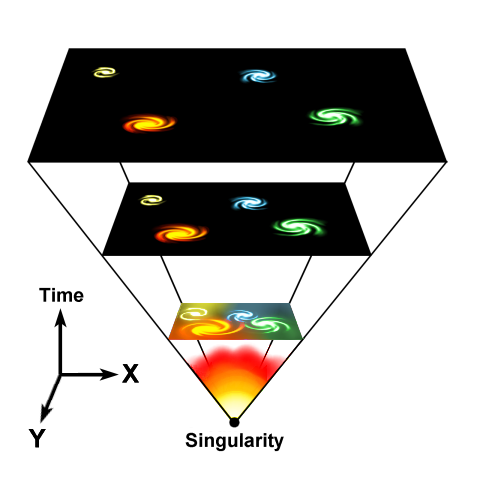
The reasoning behind this is that when we measure cosmic background radiation we can measure the expansion of the universe. Extrapolating backwards leads us to the conclusion that at some point in the finite past, the universe began to exist.
Therefore, it is reasonable to conclude that both premise 1 and 2 are true. However, because the argument is deductively valid, it follows that the universe has a cause.
Conclusions
Okay, so the universe has a cause. That doesn’t prove God exists! Well no, it doesn’t, but it does show that whatever caused the universe has many of the attributes classical theism has attributed to God, and therefore lends credence to the claim God exists. For whatever caused the universe must have extraordinary power (omnipotence); it must have made a choice to create the universe out of nothing (personal causation/agency); it must have been outside of time (the universe came into existence along with space and time); it must have been outside of space; and it must exist necessarily. As such, the Kalam doesn’t prove Christianity true instantly; it just proves theism is more plausible than atheism. Not only that, but it does show that whatever caused the universe is remarkably similar to the God Christians claim exists.
Appendix: Who made God?
Perhaps the most common objection to the argument outlined above is “Okay, well who made God?” This common retort can be answered after a minute of reflection. Classical theism holds that God exists necessarily, which means that God is eternal and beginningless. The first premise asserts that “whatever begins to exist…” therefore, it doesn’t apply to God. Is this a mere ad hoc fix on theism? No, because it isn’t saying God has no explanation for His existence (which reason is found in His necessary existence); it is saying that he did not begin, and is therefore uncaused. The detractor at this point would have to establish that “everything which exists is caused”–a much more difficult claim to defend than the claim that “everything which began to exist has a cause.” In fact, the anti-theistic claim seems necessarily false, for things which don’t begin are uncaused.
Links
Answers to objections towards the Kalam Cosmological Argument from Richard Dawkins and Graham Oppy
Did the multiverse create itself? Who made God?– more objections to the KCA are answered.
Sites
Wintery Knight “How to defend the kalam cosmological argument just like William Lane Craig”
Thinking Matters “The Kalam Cosmological Argument”
Wintery Knight, “The kalam cosmological argument defended in a peer-reviewed science journal”
Books
The Kalam Cosmological Argument by William Lane Craig
The Blackwell Companion to Natural Theology edited by Craig and J.P. Moreland
SDG.
——
The preceding post is the property of J.W. Wartick (apart from citations, which are the property of their respective owners) and should not be reproduced in part or in whole without the expressed consent of the author. All content on this site is the property of J.W. Wartick and is made available for individual and personal usage. If you cite from these documents, whether for personal or professional purposes, please give appropriate citation with both the name of the author (J.W. Wartick) and a link to the original URL. This blog is protected by Creative Commons licensing. By viewing any part of this site, you are agreeing to this usage policy.
Cruel Logic: “Ideas have Consequences”
“No Apologies Allowed” put a post up with a link to a YouTube video called “Cruel Logic.” In it, a serial killer debates a college professor about ethics and determinism in a materialistic universe. Check out the original post and discussion here. I recommend his site because it has tons of thought-provoking imagery and links to videos.
Watch the video below: WARNING: VIDEO CONTAINS DISTURBING IMAGERY.
What do you think? Are these the implications of materialism? Are we merely matter, determined in motion and emotion?

 J.W. Wartick - Reconstructing Faith