atheism
Is Christ Risen?
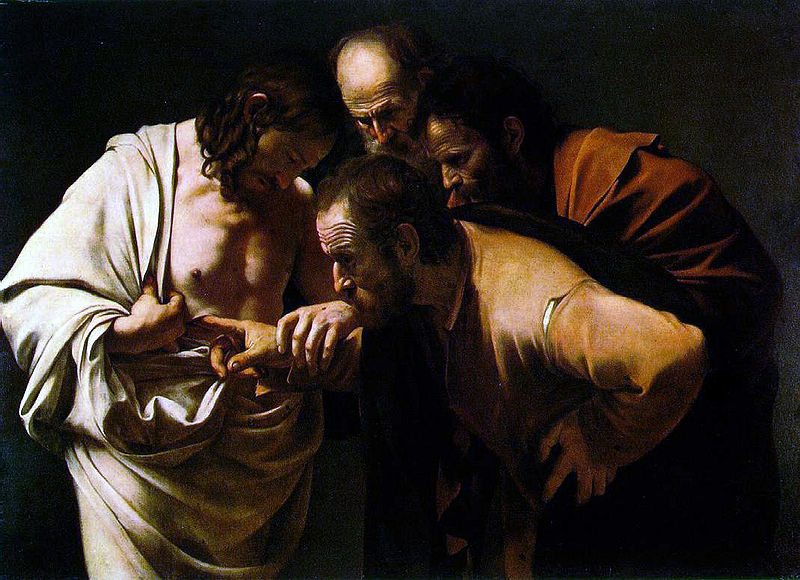 Did Jesus rise from the dead?
Now I want you to step back for a moment and think of your immediate response to that question.
Was it “Yes!” Well, why do you think so?
Was it “No!” Again, why?
I mean this very seriously. Read the question again, and now reflect on your answer. Does it come from a well-informed position or does it flow from your presuppositions or worldview? Why do you think Jesus rose or did not rise from the dead? Does your belief come from a careful study of the texts and the critical debate on the topic? Have you read sources from both sides of the debate, have you listened to top scholars in dialog about the topic?
Is it even important?
This one is for the atheists and skeptics out there: look at the picture I have posted on the top left. What feelings does it provoke within you? Disgust? Skepticism? Laughter? Joy?
Why do you think that is?
Christians, I ask you the same question.
What is the point of me taking this space to write all of this? I want everyone to be aware of the fact that when they consider the question I asked to start this post–“Did Jesus rise from the dead?”–they are influenced profoundly by their worldview and their starting point.
No, I want you to consider the evidence–both atheists and Christians. Christians, because it is your solemn duty to discern the truth of the resurrection (1 Corinthians 15:14-19); atheists, because you owe it to yourself to follow the evidence where it leads.
I’m not going to make a sustained argument here. Rather, I encourage you to investigate the topic yourself. A good starting point is this podcast, which argues from the “minimal facts” approach. A summary of the usage of this method can be found here.
Is Christ risen? That’s a question we all must answer, but let us not answer it based on dogma, on presuppositions, or on a dismissal of the evidence. Let us engage with the facts and formulate a hypothesis. Let us investigate the historicity of the event and follow the evidence where it leads.
I know that my redeemer lives,
and that in the end he will stand on the earth.
And after my skin has been destroyed,
yet in my flesh I will see God;
I myself will see him
with my own eyes—I, and not another.
How my heart yearns within me! (Job 19:25-27)
Really Recommended Posts 3/25/12
 The recommended posts this week feature some extremely important topics. I can’t emphasize how much I recommend each one. As always, check out my brief description, browse as you want. Let me know of any other great links! Topics this week feature atheistic hermeneutics, after-birth abortions, the Reason Rally, Harold Camping’s admission of sin, Mormon scriptures, and apologetic methods. Like I said, a great array!
What Happens When Atheists Don’t Care About Hermeneutics?– A really excellent post highlighting the importance of intellectual honesty and humility in dialog.
“If there is no difference between a fetus in the womb and a new born baby, it should follow that neither should be killed. But, granting the scientific evidence demonstrating the continuity of life, some “ethicists” and pro-abortion fanatics are coming to a different conclusions: Since we can abort fetuses, we should also be able to “abort” new-born infants. So says an article in one of the most influential journals in medical ethics…” Check out the article and a brief evaluation here.
Atheistic fundamentalism? Is it a contradiction? No, not at all. The Reason Rally is full of it.
Harold Camping, who infamously failed in a number of doomsday predictions has confessed his sin. I’m honestly quite touched by this level of academic honesty and what seems like a sincere confession and repentance from another Christian brother.
Often, Mormons will tell you that if you just read the Book of Mormon and pray you’ll know it’s true. I’ve done so and not been convinced, but so have others. Sean McDowell points out some of the difficulties he found in the Mormon scriptures.
Holly Ordway has a simply fantastic series on effective communication in apologetics. Check out the first post here.
Finally, I couldn’t resist a plug for my favorite band. Check out this interview with the Christian Metal band, Demon Hunter.
Really Recommended Posts 3/3/12
 The really recommended posts this go-round feature Richard Dawkins, bioethics, philosopher’s opinions, women in the ministry, and more!
Arguments about Jesus’ resurrection are fascinating, and can be extremely useful in the question of theism. See this great article which features rigorous application of probability theory to the arguments from the resurrection.
Richard Dawkins’ book, The Greatest Show On Earth claims to show the undeniable evidence for evolution. Does it succeed? Jonathan Mclatchie does not think so and has written an excellent, lengthy review to show how Dawkins fails.
Philip Payne, the author of “Man and Woman, One in Christ” (which I reviewed here) has an excellent web site which responds to many criticisms of his positions. Those interested in the issue of women in the ministry should look into it.
No peer reviewed papers advocating intelligent design? False! Check out this list.
After birth abortions? Basically the logical conclusions of the general pro-choice position. Read more.
Prosblogion conducted a survey about philosopher’s opinions on theistic arguments. The results are mostly unsurprising, but interesting nevertheless. Check it out.
The Ontology of Morality: Some Problems for Humanists and their friends

Louise Anthony did indeed present the case for secular metaethics. The problem is that this case is utterly vacuous.
It will be my purpose in the following arguments to show that secular humanistic theories which try to ground moral ontology fail–and fail miserably.
Recently, I listened [again] to the debate between William Lane Craig and Louise Anthony. Some have lauded this debate as a stirring victory for secular ethics. (See, for example, the comments here–one comment even goes so far as to say “I swoon when someone evokes the Euthyphro Dilemma and frown at the impotent, goal-post-moving, ‘Divine nature’ appeal.”) In reality, I think Louise Anthony did indeed present the case for secular metaethics. The problem is that this case is utterly vacuous.
I’ll break down why this is the case by focusing upon three areas of development in secular and theistic ethics: objective moral truths, suffering, and moral facts.
Objective Moral Truths
Louise Anthony and William Lane Craig agree that there are objective moral truths. Now, this is important because many theists take the existence of objective morality to demonstrate–or at least strongly suggest–the existence of God. Interestingly, other humanist/secular scholars have agreed with Anthony, claiming there are objective truths (another example is Sam Harris–see my analysis of his position contrasted with theism here). The question, of course, is “How?” Consider the following:
Louise Anthony seems to be just confused about the nature of objective morality. She says in response to a question from the audience, “The universe has no purpose, but I do… I have lots of purposes…. It makes a lot of difference to a lot of people and to me what I do. That gives my life significance… The only thing that would make it [sacrificing her own life] insignificant would be if my children’s lives were insignificant. And, boy you better not say that!”
Craig responded, “But Louise, on atheism, their lives are insignificant.” Anthony interjected, “Not to me!”
But then she goes on to make this confused statement, “It’s an objective fact that they [her children] are significant to me.”
Note how Anthony has confused the terms here. Yes, it is an objective fact that according to Louise Anthony, her children matter to her. We can’t question Anthony’s own beliefs–we must trust what she tells us unless we have reason to think otherwise. But that’s not enough. What Craig and other theists are trying to press is that that simple fact has nothing to do with whether her children are actually valuable. Sure, people may go around complaining that “Well, it matters to me, so it does matter!” But that doesn’t make it true. All kinds of things can matter to people, that doesn’t mean that they are ontologically objective facts.
It matters to me whether the Cubs [an American baseball team] win the World Series. That hasn’t happened in 104 years, so it looks like it doesn’t matter in the overall scheme of the universe after all. But suppose I were to, like Anthony, retort, “But the Cubs matter to me! It’s an objective fact that them winning the World Series is significant to me!” Fine! But all the Cardinals [a rival team] fans would just laugh at me and say “SO WHAT!?”
Similarly, one can look at Anthony with incredulity and retort, “Who cares!?” Sure, if you can get enough people around Anthony who care about her children’s moral significance, you can develop a socially derived morality. But that’s not enough to ground objective morality. Why should we think that her values matter to the universe at large? On atheism, what reason is there for saying that her desires and purposes for her children are any better than my desires and purposes for the Cubs?
Another devastating objection can be found with a simple thought experiment. Let’s say Anthony didn’t exist. In such a world, there can be no one complaining that her children matter “to me!” Instead, her children just exist as brute facts. How then can we ground their significance? Well, it seems the answer for people like Anthony would be to point to the children’s other family say “Those children matter to them!” We could continue this process almost endlessly. As we eliminate the children’s family, friends, etc. and literally make them just exist on their own, we find Anthony’s answer about allegedly objective morality supervenes on fewer and fewer alleged moral facts. Suddenly “Those children matter to themselves!” is the answer. But then what if we eliminate them? Do humans still have value? The whole time, Anthony has grounded the significance of her children and other humans in the beliefs, goals, and purposes of humans. But without humans, suddenly there is no significance. That’s what is meant by objective morality. If those children matter even without humans, then objective morality is the case. But Anthony has done nothing to make this the case; she’s merely complained that her children matter to her.
Now, some atheists–Anthony and Sam Harris included–seem to think they have answers to these questions. They seem to think that they can ground objective morality. We’ll turn to those next.
Suffering
One of the linchpins of humanists’ claims (like Anthony and Sam Harris) is suffering. The claim is that we can know what causes suffering, and that this, in turn, can lead us to discover what is wrong. We should not cause suffering.
But why not?
Most often the response I’ve received to this question is simply that because we do not wish to suffer, we should not wish to have others suffer or cause suffering for others. But why should that be the case? Why should I care about others’ suffering, on atheism? That’s exactly the question humanism must answer in order to show that objective morality can exist in conjunction with secularism. But I have yet to see a satisfactory answer to this question.
Anthony was presented with a similar question in the Q&A segment of her debate with William Lane Craig. One person asked (paraphrased), “Why shouldn’t I base morality as ‘whatever benefits me the most’?” Anthony responded simply by simply arguing essentially that it’s not right to seek pleasure at the expense of others, because they may also want pleasure.
But of course this is exactly the point! Why in the world should we think that that isn’t right!?
The bottom line is that, other than simply asserting as a brute fact that certain things are right and wrong, atheism provides absolutely no answer to the question of moral objectivity. People like Anthony try to smuggle it in by saying it’s objectively wrong to cause suffering [usually with some extra clauses], but then when asked why that is wrong, they either throw it back in the face of the one asking the question (i.e. “Well don’t you think it’s wrong?”) or just assert it as though it is obviously true.
And it is obviously true! But what is not so obvious is why it is obviously true, given atheism. We could have simply evolved herd morality which leads us to think it is obviously true, or perhaps we’re culturally conditioned by our close proximity to theists to think it is obviously true, etc. But there still is no reason that tells us why it is, in fact, true.
Moral Facts
Anthony (and Harris, and others with whom I’ve had personal interactions) centralize “moral facts” in their metaethical account. As a side note, what is meant by “moral fact” is a bit confusing but I don’t wish to argue against their position through semantics alone. They claim that we can figure out objective morals on the basis of moral facts. Sam Harris, for example, argues that there is a “continuum of such [moral] facts” and that “we know” we can “move along this continuum” and “We know, we know that there are right and wrong answers about how to move in this space [along the moral continuum]” (see video here).
Now it is all well and good to just talk about “facts” and make it sound all wonderful and carefully packaged, but Anthony and Harris specifically trip up when they get asked questions like, “How do we figure out what moral facts are?”
Anthony was asked “How do you determine what the objective moral facts are”, and responded by saying, “We do it by, um, testing our reactions to certain kinds of possibilities, um, thinking about the principles that those reactions might entail; testing those principles against new cases. Pretty much the way we find out about anything” (approximately 2 hours into the recorded debate).
 One must just sit aghast when one hears a response like that. Really? That is the way we discover moral truths? And that is the way we “find out about anything”? Now I guess I can’t speak for Anthony herself, but when I’m trying to find out about something, I don’t test my reaction to possibilities and then try to figure out what my reaction “might entail.” That is radical subjectivism. Such a view is utterly devastating for not just morality but also science, history, and the like. If I were to try to conduct scientific inquiry in this manner, science would be some kind of hodgepodge of my “reactions” to various phenomenon. Unwittingly, perhaps, Anthony has grounded the ontology of her morality in the reactions of people. But this error isn’t restricted to Anthony. Harris also makes this confounding mistake. His basic argument in the talk linked above is simply, “Science can tell us what people think about things, so it can tell us about morality.” This is, of course patently absurd. Suppose I tried to test these humanists’ theories on groups of people by sticking them in a room and having them watch all kinds of things from murder to the rape of children to images of laughter and joy. Now suppose I randomly sifted my sample among the population of the world, but somehow, by pure chance, got a room full of child molesters. As I observe their reactions, I see they are quite joyful when they observe certain detestable images. Now, going by Anthony/Harris’ way to “find out about anything” and thinking about what these people’s reaction entails, I conclude that pedophilia is a great good. But then I get a room full of parents with young children, who react in horror at these same images. Then, as I reflect on their reactions, I discover that pedophilia is a great evil. And I repeat this process over and over. Eventually, I discover that the one group was an aberration, but it was a group nonetheless.
What does this mean?
Quite simply, it means that both Harris and Anthony haven’t made any groundbreaking theory of ethics. Rather, they’ve just made a pseudo-humanistic utilitarianism. They ground moral ontology in our “reactions” to various moral situations. The only way for them to say something is morally wrong if people have different reactions is either to go with the majority (utilitarianism) or choose one side or the other, which essentially turns into a kind of Euthyphro dilemma against atheists. Either things are wrong because enough people think they’re wrong (in which case morality is arbitrary) or things are wrong because they simply are wrong, period (in which case the humanist has yet to provide an answer for moral ontology).
Conclusion
Given the discussion herein, one can see that those atheists, humanists, and/or secularists who desire to ground objective morality still have a lot of work to do. Louise Anthony’s best attempt to ground morality boils down into radical subjectivism. Sam Harris’ account fares no better. Those who are trying to ground objective morality within an atheistic universe will just have to keep searching. The solutions Anthony and Harris have attempted to offer are vacuous.
Image Source:
http://commons.wikimedia.org/wiki/File:SecularHumanismLogo3DGoldCropped.png
SDG.
——
The preceding post is the property of J.W. Wartick (apart from citations, which are the property of their respective owners) and should not be reproduced in part or in whole without the expressed consent of the author. All content on this site is the property of J.W. Wartick and is made available for individual and personal usage. If you cite from these documents, whether for personal or professional purposes, please give appropriate citation with both the name of the author (J.W. Wartick) and a link to the original URL. If you’d like to repost a post, you may do so, provided you show less than half of the original post on your own site and link to the original post for the rest. You must also appropriately cite the post as noted above. This blog is protected by Creative Commons licensing. By viewing any part of this site, you are agreeing to this usage policy.
The Moral Argument: Mistakes to Avoid and Practical Advice
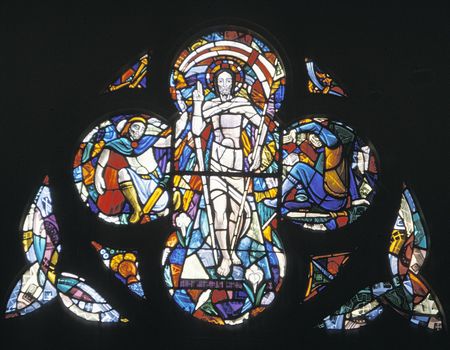 The moral argument has experienced a resurgence of discussion and popularity of late. Some of this may be due to the increased popularity of apologetics. Philosophical discussions about metaethics also seem to have contributed to the discussions about the moral argument. Regardless, the argument, in its many and varied forms, has regained some of the spotlight in the arena of argumentation between theism and atheism. [See Glenn Peoples’ post on the topic for more historical background.]
That said, it is an unfortunate truth that many misunderstandings of the argument are perpetuated. Before turning to these, however, I’ll lay out a basic version of the argument:
P1: If there are objective moral values, then God exists.
P2: There are objective moral values.
Conclusion: Therefore, God exists.
It is not my purpose here to offer a comprehensive defense of the argument. Instead, I seek to lay out some objections to it along with some responses. I also hope to caution my fellow theists against making certain errors as they put the argument forward.
Objections
Objection 1: Objective moral values can’t exist, because there are possible worlds in which there are no agents.
The objection has been raised by comments on my site (see the comment from “SERIOUSLY?” here), but I’ve also heard it in person. Basically, the objection goes: Imagine a world in which all that existed was a rock. There would clearly be no morality in such a universe, which means that P2 must be false. Why? Because in order for there to be objective moral values, those values must be true in all possible worlds. But the world we just imagined has no morality, therefore there are no objective moral values!
The objection as outlined in italics above is just a more nuanced form of this type of argument. What is wrong with it? At the most basic level, the theist could object to the thought experiment. According to classical theism, God is a necessary being, so in every possible world, God exists. Thus, for any possible world, God exists. Thus, to say “imagine a world in which just a rock exists” begs the question against theism from the start.
But there is a more fundamental problem with this objection. Namely, the one making this objection has confused the existence of objective morals with their obtaining in a universe. In other words, it may be true that moral truths are never “activated” or never used as a judgment in a world in which only a rock exists, but that doesn’t mean such truths do not exist in that universe.
To see how this is true, consider a parallel situation. The statement “2+2=4” is a paradigm statement for a necessary truth. Whether in this world or in any other world, it will be the case that when we add two and two, we get four. Now consider again a world in which all that exists is a rock. In fact, take it back a step further and say that all that exists is the most basic particle possible–it is indivisible and as simple as physically possible. In this universe, just one thing exists. The truth, “2+2=4” therefore never will obtain in such a world. But does that mean “2+2=4” is false or doesn’t exist in this world? Absolutely not. The truth is a necessary truth, and so regardless of whether there are enough objects in existence to allow it to obtain does not effect its truth value.
Similarly, if objective moral values exist, then it does not matter whether or not they obtain. They are true in every possible world, regardless of whether or not there are agents.
Objection 2: Euthyphro Dilemma- If things are good because God commands them, ‘morality’ is arbitrary. If God commands things because they are good, the standard of good is outside of God. This undermines the moral argument because it calls into question P1.
Here my response to the objection would be more like a deflection. This objection only serves as an attack on divine command theory mixed with a view of God which is not like that of classical theism. Thus, there are two immediate responses the theist can offer.
First, the theist can ascribe to a metaethical theory other than divine command ethics. For example, one might adhere to a modified virtue theory or perhaps something like divine motivation theory. Further, one could integrate divine command ethics into a different metaethic in order to preserve the driving force of divine commands in theistic metaethics while removing the difficulties of basing one’s whole system upon commands. In this way, one could simply defeat the dilemma head-on, by showing there is a third option the theist can consistently embrace.
Second, one could point out that the dilemma doesn’t actually challenge P1 at all. All it challenges is the grounds for objective morals. Certainly, if the theist embraced the horn of the dilemma in which that which is “good” is grounded outside of God, there would be a problem, but very few theists do this (and for them it seems unlikely the moral argument would be convincing). If the theist embraces the other horn–that what God commands is good/arbitrary–then that would not defeat objective morals anyway, because one could hold that even were God’s decisions arbitrary, they were still binding in all possible worlds. While this would be a bit unorthodox, it would undermine the concern that the Euthyphro dilemma serves to defeat P1. Combined with the first point, it seems this dilemma offers little to concern the theist.
All morality is relative
I prefer Greg Koukl’s tongue-in-cheek response to this type of argument: steal their stereo! If someone really argues that there is no such thing as right and wrong, test them on it! Don’t literally steal their things, but do point out inconsistencies. Everyone thinks there are things that are wrong in the world and should be prevented. If someone continues to press that these are merely illusory ideas–that things like rape, domestic abuse, murder, slavery, genocide are in fact amoral (without any moral status)–then one may simply point out the next time they complain about a moral situation. Such is the thrust of Koukl’s remark–everyone will object if you steal their stereo. Why? Because it is wrong, and we know it.
Advice to other Christians
The moral argument brings up some extremely complex metaethical discourse. While it is, in my opinion, one of the best tools in the apologist’s kit for talking to the average nonbeliever/believer to share reasons to believe, one should familiarize oneself with the complexities facing a fuller defense of the argument so they do not come up empty on a question or objection someone might raise. As always, do not be afraid to acknowledge a great question. For example, one might reply to something one hasn’t researched enough to feel comfortable answering by saying: “Great question! That’s one I haven’t thought about. Could I get back to you in a few days?”
As with any philosophical topic, the more one researches, the more questions will arise, the more interesting branches in the path one will approach, and the more one realizes that philosophy is an astoundingly complex topic. For those theists who wish to use the moral argument, I suggest doing so with a courteous, humble manner. The argument is an attempt to answer some of the hardest questions facing anyone: does God exist? is God good? what does it mean for something to be good? do objective morals exist?
Thus, theists using this argument should be prepared for some serious study. Be ready to answer some hard questions. Be open to great discussion. Above all, always have a reason.
SDG.
——
The preceding post is the property of J.W. Wartick (apart from citations, which are the property of their respective owners) and should not be reproduced in part or in whole without the expressed consent of the author. All content on this site is the property of J.W. Wartick and is made available for individual and personal usage. If you cite from these documents, whether for personal or professional purposes, please give appropriate citation with both the name of the author (J.W. Wartick) and a link to the original URL. If you’d like to repost a post, you may do so, provided you show less than half of the original post on your own site and link to the original post for the rest. You must also appropriately cite the post as noted above. This blog is protected by Creative Commons licensing. By viewing any part of this site, you are agreeing to this usage policy.
If materialism, are there subjects?
 In this post I seek to establish one premise: If materialism is true, there are no subjects.
There has been much extended discussion in my post on atheism’s universe, wherein (in the comments) I asserted that, on atheism, there are no subjects. It is high time I clarified my position and drew out its implications.
Materialism and Atheism
My argument is based upon a materialist or physicalist view of reality [I use the terms ‘materialism’ and ‘physicalism’ interchangeably here–I realize they are sometimes used to delineate differences between hard and soft materialists, but for the sake of this post one may assume that any time I mention “physicalism” I mean materialism at large]. I am asserting that: if physicalism is true, there are no such things as “subjects.” I’ve briefly argued elsewhere (see the post linked above) that the only consistent atheism is materialistic. For atheists who are not materialists, I leave it to them to show that their view consistently allows for immaterial entities.
The Nature of a “Subject”
One constant objection to my position is that I never defined what I meant by “subject.” One reason I did not seek to define the term is because I did not want the debate to boil down into a semantic war over the meaning of subject. There are some features of “subjects” which most parties agree upon, but how to lay out those features is hotly debated. Further, I did not wish to beg the question against the materialist by defining a subject in such a way that no materialist ontology could even attempt to approach it (suppose I defined a “subject” as a “wholly mental feature of reality which acts as the center of consciousness”; in such a case, I’ve added nothing to the discussion because I’ve excluded materialism from the debate without argument).
There is no easy way to define what is meant by “a subject.” I will seek now to define it as broadly as possible, so as to avoid any questions begged.
A Subject:
- Is the referent of the term, “I”
- Endures from moment-to-moment as one being. A subject would be the same subject at T2 as it was at T1.
- Accounts for any mental states–whether they are actually aphysical or physical.
Hopefully these terms are agreeable to both sides. I’m sure people on either side will want to flesh out the notion of “subject” more, but it seems to me that these points can be acknowledged by all. The first point seems to be fairly clearly true. It is “I” who experience x and not someone else. The second point is necessary for subjects because otherwise “I” would be a different “I” from T1 to T2, and in fact not be the same being at all. The third point, likewise, seems fairly obvious, because it seems mental life is what comprises a subject to begin with. Whether the image in my mind of a cat is a purely physical phenomenon or not, any theory of the mind must take it into account.
Materialism Fails to Account for One and Many
On materialism, what is it that is the referent of the term “I”? Is it my brain (only)? Is it my body? What am “I”? I will here offer a brief argument that no materialist account can take seriously the notion that “I” am distinct from other entities. It is, basically, an offshoot of the “one and the many” problem in philosophy.
Materialism holds that all which exists is matter. Thus, “I” am composed of matter. The problem is distinguishing between everything else and me, for ultimately “I” am just a rearrangement of matter. Suppose that all matter is referred to as (M), and I am referred to by (I). Ultimately, on materialism, (I) is reducible to (M), which is really just all real being on materialism. Why suppose there are separate entities, (I) and (I2) and (I3) when all are, ultimately, (M)? It is much simpler to just suppose that (M) is all and that (I), (I2), and (I3) are (M) in rearranged forms.
Now I don’t suppose for a moment this isn’t highly contentious. Some will come along and say that their own experience is enough to confirm that they are a different being from every other. But why suppose this? Ultimately, that conscious experience is reducible to the brain, which is reducible to matter, which is everything. On materialism, there really is just one “thing”: the material universe as a whole. The “parts” of this “thing” are ultimately reducible to smaller and smaller particles which comprise all the “things” themselves. Ultimately, all is matter, merely arranged in different ways at different times. I’m not suggesting that matter is some kind of single entity. It is particulate. But matter is also one kind of thing. Ultimately, on materialism, all things are just this kind of thing: material. The only way to differentiate between them is by time and place, but even then every individual thing is itself composed of particles of matter. All things are reducible to the same thing.
What can save materialists from this? Materialists would have to embrace a robust metaphysics in order to supply a way out for the problem of “the one and the many.” Yet it seems to me that no materialist can take seriously a robust metaphysics, because they would then have to posit distinctions between entities that are aphysical. Positing such entities or properties would be decidedly contrary to materialism. For example, one solution is that entities are distinct in that all share being itself, but they also have essences which distinguish them from other things (see Clarke, 72ff, cited below). For a materialist to embrace this, they would have to hold that each individual person has an immaterial essence which is such that it makes it distinct from other entities. But of course, that would fly in the face of materialism. It seems to me, therefore, that materialism has no way to answer the problem of “the one and the many.”
Materialism Fails to Provide Enduring Identity
On what basis can a materialist affirm that I, J.W., am the same subject now as I was 20 years ago? All my matter has been replaced. There is no material component of me which is the same as it was back then. Yet my experience tells me that I am the same subject.
How can materialists account for this?
One possibility is that they can simply point out that I am numerically identical to my past self. Although the individual pieces of matter which comprise me are not the same as they were 20 years ago, they were replaced only in portions, during which my body endured as a totality.
The difficulty with this scenario is that it only serves to underscore the problems with materialism. Imagine a mad scientist, who, over the course of a day, cuts my brain into 24 pieces. Each hour, he removes one piece of my brain and places it into another body, which has no brain. He simultaneously replaces the piece of brain with an exact molecular copy. After the day, there is a body which has my brain in it, and my body, which has a copy of my brain in it. Which is me? And, if that question can be answered on materialism (which I doubt), when did my body/brain cease being me and transfer to the other body/brain?
Materialism simply cannot answer these questions. The worldview is baffled by them. Yet in order for something to be a subject, it must endure through time. On materialism, I have not endured through time at all. My entire being–from my fingers to the hairs on my head to my brain–is material, and has been replaced by new material. Where am “I”?
 Materialism Cannot Account for Mental States
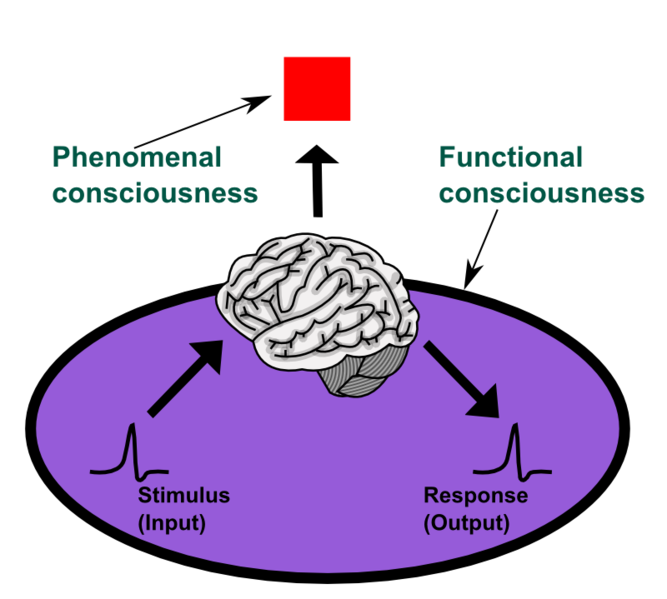
There are at least five features of mental states which materialism cannot take into account. They are:
- The feeling of “‘what-it-is-like’ to have a mental state such as a pain”
- Intentionality
- Inner, private, and immediate access to the subject
- Subjective ontology which is irreducible to the third person
- They lack spatial extension, location, etc. (Adapted from Moreland, 20, cited below)
While delving into these in great detail is beyond the reach of this post, I have already addressed a few of them in my post arguing for Substance Dualism against Monism. It seems that, on materialism, one must embrace supervenience and epiphenominalism in order to preserve mental states. Consider the following:
When I experience thought A’, it is because of a prior brain state, A. My mental states are either identical to, or supervenient upon, the physical state of my brain. The problem with this is that it relegates mental states to epiphenomenalism… This is because the mental state is entirely dependent upon (or identical to) the brain state. On physicalism, a mental state does not occur without a brain state occurring prior to, or in conjunction with, it.
…If it is always the case that Brain state A=> Mental state A’, then Brain state A causes whatever actions we take, for the brain state entails the mental state, which itself is identical to or supervenient upon the brain state to exist. But then, if we cut mental state A’ out of the equation, we would still have Brain state A and the action. Thus, consciousness is entirely superfluous. (Wartick, https://jwwartick.com/2010/11/10/against-monism/)
Reflection upon the supervenience of the mental on the physical leads materialist philosopher Jaegwon Kim to writes:
To think that one can be a serious physicalist and at the same time enjoy the company of things and phenomena that are nonphysical [by this he is referring to consciousness, the causal powers of thought, etc.], I believe, is an idle dream. (Kim, 120, cited below)
Objections
Objection 1: One of the most common objections I have encountered when I reason in this fashion is the common sense objection: “I think, therefore I am a subject!” or, as one commented on another post, “I’m an [atheist]. I have meaning. It’s possible.”
Such notions are scoffed at by materialist philosophers. Paul Churchland, the famed materialist and philosopher of mind, writes:
You came to this book assuming that the basic units of human cognition are states such as thoughts, beliefs, perceptions, desires, and preferences. That assumption is natural enough: it is built into the vocabulary of every natural language… These assumptions are central elements in our standard conception of human cognitive activity, a conception often called ‘Folk psychology’ to acknowledge if as the common property of folks generally. Their universality notwithstanding, these bedrock assumptions are probably mistaken.
In other words, the notion that “I’m a subject! I have meaning!” is nothing more than a philosophical dinosaur, a remnant of our ‘folk psychology’ which we should cast off now that we know the truth of materialism. Those who object in such a fashion as materialists seem to be blissfully unaware that they stand aligned against the vast majority of materialistic philosophy of mind. They must justify their position, but cannot, as they arguments above have shown.
Objection 2: Neuroscience has shown that the brain is the center of consciousness. When we think things, we can observe specific areas of activity in the brain.
This objection is clearly mistaken. The previous arguments have sought to establish the premise: On materialism, there are no subjects. I could easily grant Objection 2 without doing any damage to my arguments. Sure, when we “think thoughts” we may be able to observe effects in the brain. How does it then follow that “we” are subjects? All that this has done–assuming I grant it–is show that our consciousness is somehow related to our brains. It doesn’t demonstrate that mind is identical to brain, nor does it justify the position that “I am a subject.” In fact, it seems to undermine the notion that materialism can explain subjects, because it implies, once more, that “I” am reducible to “my brain” which is, of course, reducible to its component matter as well.
Conclusion: That There Are No Subjects on Materialism and the Implications Thereof
Any one of these problems provides insurmountable problems for materialists who believe they are, themselves, subjects. There is no way, on materialism, to distinguish the one from the many; there is no way for subjects to endure; mental states are reduced to causally inert epiphenomena; and there is no way to account for mental phenomena.
Thus, if atheism is committed to materialism, and materialism cannot account for subjects, it follows that, without question, there is no meaning on atheism. There cannot even be subjective meaning, for to reference something as a “subject” is, itself, illusory.
Sources
Jaegwon Kim, Mind in a Physical World (Cambridge, MA: MIT Press, 2000).
J.P. Moreland, The Recalcitrant Imago Dei (London, UK: SCM Press, 2009).
Paul Churchland,The Engine of Reason, The Seat of the Soul: A Philosophical Journey into the Brain, (Cambridge, MA: MIT Press, 1996).
W. Norris Clark, The One and the Many: A Contemporary Thomistic Metaphysics (South Bend, IN: Notre Dame, 2001).
SDG.
——
The preceding post is the property of J.W. Wartick (apart from citations, which are the property of their respective owners) and should not be reproduced in part or in whole without the expressed consent of the author. All content on this site is the property of J.W. Wartick and is made available for individual and personal usage. If you cite from these documents, whether for personal or professional purposes, please give appropriate citation with both the name of the author (J.W. Wartick) and a link to the original URL. If you’d like to repost a post, you may do so, provided you show less than half of the original post on your own site and link to the original post for the rest. You must also appropriately cite the post as noted above. This blog is protected by Creative Commons licensing. By viewing any part of this site, you are agreeing to this usage policy.
Quantum Indeterminacy, Materialism, and Free Will: Do our minds shape reality?
The idea is that “freedom” of the will is simply the fact that human behavior is unpredictable, and that this unpredictability is a consequence of the random character of “quantum processes” happening in the brain… To be subject to random mental disturbance is not freedom but a kind of slavery or even madness. (Professor of Theoretical Particle Physics at the University of Delaware, Stephen Barr, 178)

Can there be free will on materialism?
The question has been perpetuated throughout the history of modern science. For quite a while, it was thought that all things were deterministic, given materialism. Thus, the view of life was a bit fatalistic. However, with the advent of Quantum Mechanics, some have argued that quantum indeterminacy allows for freedom of the will. Is that the case?
First, it’s important to outline quantum indeterminacy. On the quantum level, events are probabilistic. What that means is that “given complete information about the state of a physical system at one time, its later behavior [cannot] be predited with certainty… [only] the relative probabilities of various future outcomes [can be predicted]” (Barr, 176, cited below).
It becomes immediately apparent how some might see this as salvation for a physicalist perspective on free will. If events are not determined on a quantum level, perhaps our choices are free in some sense as well. But difficulties with this interpretation arise immediately. First, quantum indeterminacy is not a reflection of our choices, but just that: indeterminacy. As quoted above, our supposed choices would (on physicalism) be merely probabilistic. Our actions would be unpredictable, but that is not freedom. Surely, if the actions we take are merely the reflections of probability curves on a quantum level, that is not the same as freedom. Rather, they would be actions taken due to a basically random process. If I have the “choice” between A and B, and the probability is 50/50 on a quantum level, then my “choice” for B instead of A is just the same as if I flipped a coin. The coin doesn’t choose which side to land on, its just probability.
So it seems that right off the bat, quantum indeterminacy cannot explain free will on materialism or physicalism. Rather than being “free will” it would boil down to random events. As Barr wrote, we would be subject to random mental disturbances, and this would entail slavery at best (178).
But can materialists circumvent this problem? One suggestion is that we have control of quantum events themselves, so we therefore would be in control of our choices. But note that this presupposes a kind of extra-quantum center of control from which we can observe and control quantum events. Let’s put it into a thought experiment. Suppose we granted materialism. In that case, our “selves” are our brains. The brain is a physical object, itself governed by quantum events. Now, the purported way out for materialism is that our brain, a physical thing governed by physical processes, itself monitors and controls physical processes such that they effect the brain in the way the brain has chosen. The difficulties with this position should be immediately apparent. The brain, as a physical object, is itself governed by quantum events. These quantum events are not just logically prior but also temporally prior to the brain. Therefore, those things the brain chooses have been determined by previous physical states of affairs. So ultimately, it’s all material, and it’s all probabilistic. The freedom does not enter into the equation.
The problems don’t end there for those who wish to rescue freedom of the will in materialism. Another issue is that of the observer in a quantum event. In order for quantum indeterminacy to be helpful in regards to free will, the observer of a quantum event would have to be outside of the system. “[T]he observer cannot be considered part of the system that is being physically described and remain the observer of it” (Barr, 238). If all there is were the physical world, then the system would include “me.” I could not be the observer who took action in the quantum events, because I would be part of the description of these events. As Barr puts it:
The mathematical descriptions of the physical world given to us by quantum theory presuppose the existence of observers who lie outside those mathematical descriptions (238).
If materialism were true, then quantum indeterminacy could not rescue free will. The agents who were suppoed to be free would be, themselves, part of the system which they were supposed to observe and determine.
So does quantum indeterminacy factor into free will at all? Here’s where things get really interesting. It seems that those who argue for its importance with free will are correct, in a qualified sense. The indeterminacy provides a necessary, but not sufficient, reason for free will. We’ve already seen that it can’t help out in a purely materialistic world–the brain states which supposedly select from various choices are themselves physically determined by prior choices and/or other physical aspects of reality. But what if there were an immaterial mind in the mix? This immaterial mind would not be determined by prior quantum events, and indeed it could take the place of observer for quantum events. Thus, the immaterial mind could serve as the observer of these quantum events.
Quantum indeterminacy, then, acts as a necessary but not sufficient reason for freedom of the will. While the discovery of quantum indeterminacy ushered in an era in which comprehensive physical determinism was tempered by probability, it allowed an opening for free will which can only be utilized by an extra-physical observer. Because our experience of the world includes an intuitive sense of freedom, the previous arguments therefore provide a strong reason to embrace substance dualism. If we experience the world as one in which we are free, and we cannot be free on materialism, then our experience provides us with evidence against materialism.
The world, it seems, is more than merely the physical.
Source:
Stephen Barr, Modern Physics and Ancient Faith (Notre Dame, Indiana: University of Notre Dame, 2003).
SDG.
——
The preceding post is the property of J.W. Wartick (apart from citations, which are the property of their respective owners) and should not be reproduced in part or in whole without the expressed consent of the author. All content on this site is the property of J.W. Wartick and is made available for individual and personal usage. If you cite from these documents, whether for personal or professional purposes, please give appropriate citation with both the name of the author (J.W. Wartick) and a link to the original URL. This blog is protected by Creative Commons licensing. By viewing any part of this site, you are agreeing to this usage policy.
William Lane Craig vs. Peter Millican- Thoughts and Links
 Theistic philosopher of religion William Lane Craig recently debated Atheistic Philosopher Peter Millican on the topic “Does God exist?” I daresay this was one of the most interesting debates I’ve heard. Millican came in with a clear strategy, and the debate covered an extreme range of topics. The friendly nature of the debate was also quite rewarding to hear. Clearly, we can have such discussions without attacking each other. Anyway, to the outline and analysis.
Craig Opening
Craig began by outlining the topic: Does God exist? The topic can be answered as yes or no. Craig argued for the former, and left the latter to Millican.
First, he argued philosophically against an infinite past. This argument would become quite important throughout the debate so I’ll outline it briefly. If we had an infinite number of coins, each with a number upon them, and took away ten, the number of coins would still be infinite. If we took away all the even coins, we’d have subtracted an infinite number of coins, and still, there would be an infinite number of coins. If, however, we subtracted all the coins above 3, we’d have subtracted infinite from infinite, and be left with 3 coins, not infinite coins. Craig argued that this is obviously a contradiction because despite subtracting the same amount (or different amounts) we can come up with two different answers (or the same answer). Therefore the past cannot be infinite.
Craig also argued scientifically that the universe began by bringing up the Borde, Guth, and Vilenkin theory which shows that irregardless of theories about the multiverse, bubble universes, and the like, the universe had a beginning.
He then presented the Kalam cosmological argument, though with a slight twist. He instead presented it as “The universe began to exist; if the universe began to exist, then it has a transcendent cause; therefore, the universe has a transcendent cause.”
He then argued the fine-tuning argument. There are a number of conditions of the universe which have been fine-tuned within a narrow range for the existence of life. Because of this, argued Craig, we can conclude the universe was designed.
Objective morality also necessitates the existence of God, argued Craig. The argument was based upon two major conditions: that objective morals exist, and that they cannot if there is no God. He quoted atheist philosopher Michael Ruse who said (in part): “morality is just an aid to survival” on naturalism.
Yet our moral experience leads us to believe that morality is indeed objective, and we know that, on naturalism, there is no ontological basis for morals. Thus, God exists.
Three facts must be explained by those who argue Jesus did not rise from the dead, and any theory must answer all of them: 1) the empty tomb; 2) on different occasions and settings to different people, Jesus appeared alive; 3) disciples showed a sudden belief that Jesus had risen, despite every predisposition to the contrary.
Craig noted that these three facts are agreed upon by New Testament scholars–both theists and non.
Finally, Craig argued for the experiential awareness of God.
Millican Opening
Millican used a different strategy here. Rather than immediately rebutting Craig’s arguments, as most have done in debates with Craig (although, notably, Stephen Law did not either in his debate with Craig), Millican argued against the method used first.
Christianity, he stated, is a hypothesis about reality. It makes a claim about what reality is. Therefore, the burden of proof lands squarely upon the theist.
He argued that people are primed for belief in gods. They have a “permiscuous teleology” which seeks for design. Furthermore, the dominant determinant of religious orientation is place of birth.
Before one could accuse Millican of the genetic fallacy (I actually wrote this on the side of my notes), he stated that he was not arguing these disprove God. Rather, he argued that if a method leads to variant beliefs, then it should discredit the method.
He then turned to rebutting Craig’s arguments. He said that quantum mechanics has shown that particles can come into existence out of nothing (note that he did indeed use the word “nothing” here). He furthermore argued that in our experience, we only see physical things being rearranged, not coming into existence ex nihilo. He argued that our experience must establish these truths.
He also cited Vilenkin, in a letter, stating that his theorem did not show the universe had a beginning.
Regarding the moral argument, he asked “what is objective?” He said that based upon how one defines this, one could have different answers about objective morality.
Craig First Rebuttal
Craig noted that Millican’s attempt to put all burden of proof on the theist didn’t work, because they also make a claim about reality: “There is no God.” This claim needs support as well, and Millican did not support it.
Regarding Millican’s claim about method, Craig responded that his method is logic, evidence, and personal experience–the same things which the scientific method relies upon. Thus, if the method yields God’s existence, it is not to be distrusted but embraced by those who value the latter method.
Not only that, but Millican’s argument seemed to suggest that religions all used the same methodology in reaching their truth claims, which is highly contentious and definitely untrue. Religions use a broad array of methods in how they discover truth.
Craig argued that absence of evidence is not evidence of absence. Only if we should expect more proof than there is should we be in doubt of the existence of something due to absence of evidence. Furthermore, argued Craig, he presented a great wealth of evidence already.
Craig then quoted Vilenkin’s letter in context. Vilenkin wrote that the beginning could be avoided only if one allowed for a contracting universe, but that this was highly unlikely and would have prevented the expansion of the universe. Thus, Vilenkin said, if he were to give a short answer to the question “Does your theory imply the beginning of the universe?” the answer would be yes. I should note that Millican dropped Vilenkin faster than Dawkins runs from Craig after this quote was read.
Craig then argued that the unembodied mind is hinted at our own experience. Furthermore, epiphenominalism simply cannot ground reality as we experience it.
Finally, regarding the moral argument, Craig asked why we should value humans and not chimps.
Millican First Rebuttal
Millican responded to the fine-tuning argument by saying that perhaps we may explain these evidences later. Further, we can’t base it all upon current physics, which may change. He also argued that there is difficulty with using the probability argument because our only sample is our current universe. God, argued Millican, would have been greatly inefficient if he made the universe as he did.
He briefly touched on the evil god thesis (as seen in the Law debate) and argued that the evidences could work for an evil deity.
Millican also suggested we should expect more evidence–why can’t there be more evidence for the existence of God?
Regarding the philosophical argument about the beginning of the universe, Millican noted that transfinite math does not allow for subtraction or addition because it yields diverse answers. Thus, he stated, Craig’s argument is confused.
He also conceded that the quantum vaccuum is not nothing, which was interesting considering he had literally used that word for it in his opening statement. He pressed his point, however, by stating that it is the closest we can come to nothing in our experience.
Unfortunately, Millican ran short on time and couldn’t respond to all Craig’s points.
Craig Second Rebuttal
Craig argued there are still no good reasons to support the contention “there is no God.” Furthermore, Millican’s response to the “absence of evidence” argument was just a personal opinion: ‘I think there should be more.’
God’s ‘inefficiency’ presupposes a God-as-engineer, argued Craig. One would have to be limited on time or resources in order to be compelled towards efficiency–limits God obviously does not have. God might be better compared to an artist or chef–enjoying the creation and beauty as he designed the universe.
The philosophical argument about infinites is problematic for Millican, argued Craig. The reason is because while we can slap the hand of a mathematician who tries to do so with abstract math, we can’t do the same thing in real life. If we literally had infinite coins, we couldn’t prevent someone from taking one away, and leading to the absurdities. In fact, Millican essentially demonstrated the point: such things are excluded in transfinite math because they are absurd, and so can’t happen in the real world.
Millican’s argument that the fine-tuning argument depends only on current physics illustrates Craig’s point exactly, countered Craig. Namely, that current physics supports the existence of God.
Millican Second Rebuttal
Millican argued that it doesn’t follow that if epiphenominalism is false, dualism is true. I think it’s really unfortunate the debate was so short–it would be interesting to see their views on this matter face off. He argued statistically that there are many moral realists who are not theists.
Why shouldn’t an atheist believe in objective moral values? asked Millican. There’s no good reason they can’t detect them and experience them. Further, we can value humans because they’re rational, and the same species.
Finally, he argued that scholars like Bart Ehrman had undermined the evidence for the resurrection by showing that the Gospels weren’t independent and unreliable.
Craig Conclusion
Craig noted there still was no good argument for atheism and that he’d presented good arguments for theism.
Bart Ehrman and the others Millican cited actually agree with the three facts Craig used to support the resurrection, so there was still no counter to that argument.
Craig noted that rationality doesn’t serve as an objective cut off point for morals. Sam Harris argued that sentience is. On atheism, argued Craig, there is no non-arbitrary line at which to base morality. Why should we value rationality? Why value humans more than chimps? Again, the line is arbitrary. The fact that many atheistic philosophers believe in realism of morality doesn’t show that it has grounds ontologically in atheism.
Millican Conclusion
Millican said there are many theories of how objective reality can be established on atheism.
He argued that physics may change and so we can’t base the existence of God upon current physics.
Finally, regarding evil, Millican said that our empirical evidence should lead us to doubt whether God exists. What should we see if there is a God? Certainly not this much suffering.
[Millican also argued throughout that there is no experiential evidence for things coming into being out of nothing, so that the causal premise of the Kalam is undermined. I forgot to write down where he started this argument, but wanted to make note of it here.]
Analysis
The debate was great. There were so many topics covered, it was a whirlwind.
Millican’s refutations of the Kalam were dramatically undercut by Craig. His citation of Vilenkin was just utterly demolished when Craig read the rest of the passage. His arguments about how we can’t add or subtract from infinity merely demonstrated Craig’s point: that it is absurd to suppose actual infinites exist. Regarding the causal premise, Craig argued in the debate that Millican would have to hold there was no essential or material cause for the universe, an argument to which Millican never had a response. To be fair, this may have been due to time.
I thought Millican’s response the fine-tuning argument was quite strange. Certainly, physics may change, but that doesn’t mean we can’t trust what we know now. As Craig argued, physicists today are quite convinced of the trustworthiness of physics. Further, Craig responded to the probabilistic argument by showing that we do indeed know the probability–despite the sample size. There is simply a life-permitting range for the values cited, so we can be justified in holding the fine-tuning argument to be true.
The moral argument was another point of contention. I don’t think Millican really undermined it. He merely referenced that atheists think they can have objective moral values, and questioned the meaning of the word “objective.” Interestingly, in the Q&A, Craig responded to Millican’s confusion: “That’s why I defined it.”
The resurrection definitely didn’t get defeated. Millican’s deferment to Ehrman and the like actually justified Craig’s 3 facts approach, because the scholars he cited affirmed the three facts.
Overall, I think Millican did much better than Law and definitely better than Harris or Krauss in those debates which I reviewed. That said, Craig still established the existence of God–at least as best can be done in under an hour to speak. Millican’s objections were interesting, but ultimately defeated by Craig. I think it’s fair to say that this debate showed, once more, that in the forum of rational inquiry, theism has an upper hand.
Links
Check out the audio of the debate at Apologetics 315. Also see their awesome feed which features tons of Craig’s debates.
See Wintery Knight’s summary of the debate.
SDG.
——
The preceding post is the property of J.W. Wartick (apart from citations, which are the property of their respective owners) and should not be reproduced in part or in whole without the expressed consent of the author. All content on this site is the property of J.W. Wartick and is made available for individual and personal usage. If you cite from these documents, whether for personal or professional purposes, please give appropriate citation with both the name of the author (J.W. Wartick) and a link to the original URL. This blog is protected by Creative Commons licensing. By viewing any part of this site, you are agreeing to this usage policy.
Can we evaluate worldviews? How to navigate the sea of ideas.
Think about it this way: worldviews are supposed to be reality. If a worldview does not match reality, how can it be reality?

I recently began a series on the truth claims of Mormonism. In that post, I asserted that there is positive evidence against the truth of the Book of Mormon. However, there is an important step to take before offering arguments against other religions. Namely, one must establish that evidence against the truth claims of a religion should rationally lead one to abandon that religion. (A related but similar point would be the positive evidence for religion leading to rational belief.)
Thus, before I continue to offer critiques of other religions, I offer some epistemic groundwork.
Truth Claims and Worldviews
First, it must be noted that worldviews are not mere matters of feeling, regardless of what the supporters of the varied views claim. For example, if one says “You can’t analyze what I believe, it’s just a matter of faith” they are making a claim about reality–that their faith cannot be analyzed. Similarly, if one claims “Israelites sailed to the Americas from the Middle East,” [Mormonism] or “There is no God” [atheism] they have made a claim about reality.
Such truth claims are capable of analysis, by definition. Statements are true or false. All worldviews make claims about reality, which are therefore true or false. Simply stating that one’s belief is “just faith” or “obvious” does not exclude it from making claims.
 How Do We Evaluate The Claims of Worldviews?
One’s beliefs should conform to reality, if one seeks to be rational. Certainly, one could say “To heck with the evidence, I’m going to believe x, y, and z! I don’t care if I can’t support the belief and that there is strong evidence against x, y, and z.” But if one were to say this, one would abandon their reason. Their heart could believe, but their mind could not. Ultimately, all truth claims can and should be put to the test.
Testing the claims of varied worldviews is no easy task. There must be objective criteria, otherwise one view will be favored over another. One cannot simply make their own view the default and argue that only by filtering truth claims through their position can truth be attained. Atheism, by no means, provides a neutral basis for evaluating religions, as I’ve argued elsewhere. In fact, atheism must past the standards for truth claims, just as any religion must. If one remains an atheist despite positive evidence to the contrary (or despite reasons to disbelieve the claims of varied atheistic worldviews like materialism), one abandons reason just as if one clung to a false faith.
Testing Worldviews as Hypotheses
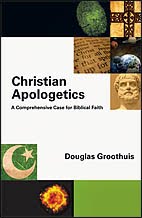
In his monumental work,Christian Apologetics, Douglas Groothuis argues that worldviews can be proposed as hypotheses. Worldviews present themselves as answers to explain the phenomena we experience (Groothuis, Christian Apologetics, 49). Groothuis therefore presents criteria for evaluating worldviews as though they were hypotheses about the world. Kenneth Samples similarly draws out nine tests which can be used to determine whether the claims of a worldview are true in his book A World of Difference (page numbers from that text, citation below). From these proposed methods, we can derive tests to evaluate competing worldviews:
1) Coherence– if a religion is contradictory, it simply cannot be true. For example, if a religion claimed that “Person Z is god, and person Z is not god,” that religion would be incoherent (Samples, 33). Furthermore, “If a worldview’s essential propositions are coherent… it is more likely to be true than if its essential propositions are not related in this way” (Groothuis, 55).
2) Balance– “A valid worldview will be ‘neither too simple nor too complex.’ All things being equal, the simplest worldview that does justice to all aspects of reality deserves preference (Samples, 33-34).
3) Explanatory Power and Scope– Does the worldview explain what we experience in enough detail? If a worldview does not explain our world, or it cannot account for certain phenomena, then it is lacks explanatory power (Samples, 34). Worldviews which make propositions which they cannot account for lose credibility (Groothuis, 53).
 4) Correspondence– Does the worldview match the facts we know about the world to our experience of the world? If we know that the worldview in question promotes claims we know are false, it does not match reality (Samples, 34-35). Think about it this way: worldviews are supposed to be reality. If a worldview does not match reality, how can it be reality? We are able to test factual claims through empirical and scientific methods, so if a worldview continually is able to establish its essential claims by means of these methods, it is more likely to be true (Groothuis, 55).
5) Verification– Can this worldview be falsified? Worldviews which cannot be found to be false cannot be found to be true either.
6) Pragmatic Test– Can we live by this worldview? This test is less important, but still has credibility–we must be able to live out the worldview in question (Samples, 35-36). But worldviews should also be fruitful in the development of greater intellectual and cultural discoveries (Groothuis, 57).
7) Existential Test– Like the pragmatic test, this one is not as important as whether the view is factual, but it is still helpful. If worldviews do not account for inherent human needs, it is possible the view is false (Samples, 36). Again, this is not necessary for a worldview, but it helps measure a view’s completeness.
8 ) Cumulative Test– Does the worldview gain support from all the previous criteria? If a worldview is able to satisfy all the criteria, it gains credibility (Samples, 36-37).
9) Competitive Competence Test– If the worldview satisfies the previous criteria with more evidential power than other worldviews, it gains credibility over and against them (Samples, 37).
10) Radical ad hoc readjustment– Groothuis presents this as a negative test for worldviews. “When a worldview is faced with potentially defeating counterevidence, an adherent may readjust its core claims to accommodate the evidence against it. Various theories and worldviews can legitimately refine their beliefs over time, but radical ad hoc readjustment reveals a deep problem…” (Groothuis, 57). There is, as Groothuis pointed out, a line between refining belief and simply readjusting belief in an ad hoc way. If, for example, it were discovered that Jesus did not rise from the dead, then Christianity would be false (more on that below). If, however, one simply adjusted Christianity to say “Jesus spiritually rose from the dead,” that would constitute a desperate, ad hoc measure to preserve the worldview and count as discrediting Christianity.
These tests present objective criteria for testing worldviews. If, for example, one wished to deny their worldview had to be coherent, they’d have to affirm that which they denied, for in denying that criterion, they were attempting to make their view more coherent. The testing of worldviews is a legitimate task, and indeed one in which people should engage. Some things, if falsely believed, are harmless (for example, if one believed it rained yesterday when it did not). Worldviews, however, if falsely believed, are damaging on any number of levels. If one believed God didn’t exist when, in fact, He did, then one would be doing a great evil by not acting upon the truth of God’s existence (and the contrary). Thus, the testing of worldviews is no task to be skimmed over, but one which should be approached with fear and trembling. The criteria outlined above allow people to engage in this task and evaluate the realm of ideas.
Christianity Encourages Exploration of Reality
What I find extremely interesting is that Christianity, unlike many world religions, doesn’t discourage the discovery of truth, nor does it evade evidence by claiming that it is merely a faith or feeling. Rather, the founders of Christianity explicitly stated that it is based upon certain truth claims, and that if those claims are false, then Christianity is worthless. Paul, for example, wrote “And if Christ has not been raised, your faith is futile; you are still in your sins” (1 Corinthians 15:17). The truth of Christianity rests exactly upon a testable claim: Jesus rose from the dead. If He did not, Christianity is false. Christianity’s scope and explanatory power are superior- it can account for the existence of contingent objects, persons, consciousness, life, and the like. Christianity corresponds to reality, satisfies existential and pragmatic needs, is simpler than many other explanations, its coherent, and it matches all the criteria. Christianity expects its adherents–and outsiders–to test the faith and discover whether it is true. I have found, personally, that it pasts these tests over and over.
Conclusion
Whether one agrees or not, it is simply the case that religions make claims about reality. These claims are, in turn, true or false. Not only that, but they must match with reality in several important ways. Christianity not only adheres to these tests, but it encourages them. It also passes these tests. Does your worldview?
Sources
Douglas Groothuis, Christian Apologetics (Downers Grove, IL: InterVarsity, 2011).
Kenneth Samples, A World of Difference (Grand Rapids, MI: Baker, 2007).
Image Credit
I took this picture at Waldo Canyon near Manitou Springs, Colorado on my honeymoon. Use of this image is subject to the terms stated at the bottom of this post. The other image is the book cover from Samples’ book.
SDG.
——
The preceding post is the property of J.W. Wartick (apart from citations, which are the property of their respective owners) and should not be reproduced in part or in whole without the expressed consent of the author. All content on this site is the property of J.W. Wartick and is made available for individual and personal usage. If you cite from these documents, whether for personal or professional purposes, please give appropriate citation with both the name of the author (J.W. Wartick) and a link to the original URL. This blog is protected by Creative Commons licensing. By viewing any part of this site, you are agreeing to this usage policy.
Really Recommended Posts 10/22
 Why Do Atheists Talk So Much About Religion?– A short, interesting post with a self-explanatory title. Check it out.
Ah, Richard Dawkins, when will he learn that attacking people doesn’t make their views wrong? His buddy PZ Myers has actually attacked me personally as well, but that’s beside the point. Check out Max Andrews’ thoughts on Dawkins refusing to debate Craig. Dawkins, of course, enlists the help of his yes man Myers.
Undesigned Coincidences and the Historicity of the New Testament– This is a great apologetics video making the rounds. The “undesigned coincidences” argument is one which is slowly seeing a revival–in part due to Dr. Tim McGrew, a friend of mine and a phenomenal philosopher. Check it out.
A Review of “The Magic of Reality”– Dawkins has been adamant that we should not indoctrinate our children. Yet his new book is intended to do just that: indoctrinate children with atheism. Check out this timely review over at Deeper Waters.
Sharing the Gospel – 10 Surprisingly Simple Tips for Talking with Cult Members (part 1)– it is what it says… some great hints for witnessing when the cults come a-knockin’.
The Book of Mormon, 1/18– part one of a series in which an apologist reads through the Book of Mormon. Great stuff.

 J.W. Wartick - Reconstructing Faith
