Avatar
“Avatar: The Way of Water” – A Christian worldview perspective
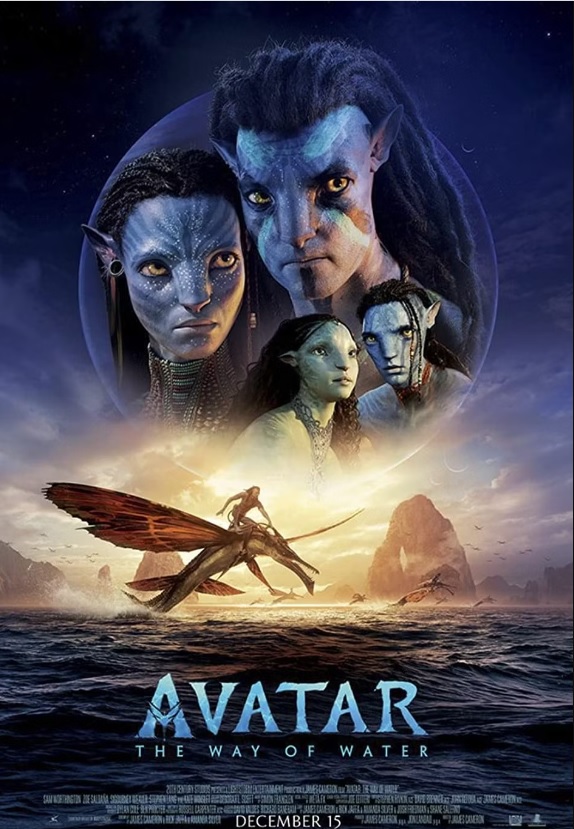
The immensely popular Avatar begged for a sequel nearly from release, and after 13 years, it’s finally arrived. “Avatar: The Way of Water” landed in theaters, and I won’t make a secret of being a huge fan of the franchise. But what might the movie have to say about worldview? Quite a bit, actually. Here, I’ll take a look at the movie from a worldview perspective. There will be SPOILERS throughout this post.
Family
It would be impossible to write about the film without reflecting on the way it discusses and represents family.
Jake seems obsessed with the notion of a father protecting his family. One of the later lines in the movie reflects this, and is a repeated comment: “A father protects his family.” The line, repeated near the end of the film, is somewhat ambiguous. Is James Cameron trying to put forward this line as a truism, or is he offering a subtle critique of Jake’s patriarchal tendencies, as with the critique of his militarism? I lean towards the latter. After all, Jake himself acknowledges his failure to protect his family, but still hangs together as a family and acknowledges the strength of that. Additionally, Neytiri did a huge amount of the protecting of family, especially in the final few scenes.
The importance of familial attachment is a major theme in the film. “Sullys stick together” is a recurring theme. But what does it mean? There are so many scenes that reflect on this. Neytiri tells Jake at one point that the family is not a squad–it’s not a military unit. It’s a unit based upon love, relationship, and bonds that go beyond those even of a squad. Jake’s attempted military style leadership isn’t working, and it is what causes some of the rifts in the family.
The loss of Neteyam was one of the most impactful scenes in the movie. When Jake and Neytiri bond with Eywa towards the end of the film, they see a younger Neteyam frolicking and playing with Jake years before. It’s both healing and unbelievably sad all at once. We know that we will see our loved ones again, but the time in between is one for healing and sorrow.
Colonialism and Peacemaking
The question of pacifism looms throughout the film. The people of the water aren’t involved in the conflict with the sky people (humans). They keep to themselves, living lives that remain tranquil despite conflict on the other parts of the planet. But can they ignore the plight of other peoples? Such a question must rank among the deepest in philosophy, and even the whale stand-ins, the tulkun. The tulkun shun even their own if they participate in a conflict, weighing the damage done by any conflict against those who decided to participate in it.
Colonialism from the sky people–the humans–is what drives the conflict. It’s impossible to miss the major themes here contrasting the peaceful nature of the people of Pandora with the militant, capital-driven humans. And as Christians, I wonder about lines like no one can serve God and money or what good is it to gain the world but lose one’s soul?
Seizures and Religious Experience
Kiri, the daughter of Dr. Grace Augustine’s Avatar, is imbued with unknown power and skills. She seems to commune with many aspects of Pandor’as natural world in ways no one else does–or even notices at times. Late in the film, she is able to bond with anemone-like things in the coral reefs and cause them to fight against a human incursion. Fish gather around her. Glowing sea creatures do her bidding even without a direct bond.
But in the midst of all this, she makes a bond with Eywa which leads to seizure-like symptoms no one else experiences. The human scientists are brought in to assess and help, but they are ultimately powerless to awaken the comatose Kiri. However, they do discern it was a seizure that caused her state and warn Jake that Kiri must not bond with Eywa in that fashion again, because she could have another seizure underwater and die. They also directly link seizures to the part of the brain that is active in religious experiences. I have an interest in religious experience and neuroscience, but certainly no expertise in it. With that caveat, I found this an extremely interesting and specific point for Cameron to raise in the film. As viewers, we have privileged access to Kiri that the scientists did not, and we also know there’s more going on than what seems a physicalist explanation. While it is true that activating certain parts of the brain can yield religious-like ecstasy and experience, that in itself does not demonstrate that no genuine religious experiences happen. Indeed, the later parts of the film with Kiri genuinely interacting with the world in seemingly unexplainable ways seems to show Cameron agrees here, and that something more will loom larger later. For now, though, we’re left not knowing where it’s going.
One last note on this, though. In the first film, we had the groundwork laid to see a kind of unity of science and religion. The “direct line to Eywa” of the tree, detected by scientific means in the roots and throughout Pandora and the clear way there is some kind of unifying intelligence on Pandora shows more is going on here. Is Eywa going to be depicted as deity? Or will there be some kind of unifying theory presented in the future? In our world, some try to unify science and religion quite a bit. There are many views about how to and even whether to do this (see my post on differing positions here). We know that God works in the world, but whether science can or even should detect that work is an open question.
The Way of Water and Eywa
The Way of Water itself is a central theme of the film, and certainly one of the driving aspects of its worldview.
“The way of water has no beginning, and no end.
“The sea is your home before your birth and after your death.
“The sea gives and the sea takes.
“Water connects all things. Life to death. Darkness to light.”
The way of water certainly seems connected to the previous film’s depictions of Eywa, the balance of all life, and the harmony and disharmony. It’s easy to contrast this with traditional Christianity, but parallels may also be found. Interestingly, the contrast can mostly be found with platonic views of the human soul, which hold that human souls are imbued with objective eternality after creation. In some Christian beliefs, all humans are eternal by virtue of creation, not by virtue of God granting immortality. The debate over this would go beyond what I’m trying to discuss here, but it’s interesting to see the parallels with eternality of the soul here. However, as depicted in both this film and the previous one, there’s not a sense of reincarnation or eternality of necessity here. The Way of Water, instead, is a kind of way of being, living in harmony with nature rather than attempting to dominate it. It’s acknowledgement that we all share commonalities. And that, I believe, is something Christians can embrace–the knowledge that we all, as God’s creation, share in the broader creation God has made. Thus, when we harm creation, we harm God’s good order and work against what God brought forth.
Interestingly, the humans who are hunting the tulkun are seeking immortality. A substance from the brain of the tulkun stops aging for humans, thus granting a kind of immortality that is seen as valued above all else. The disordered seeking of self-immortality is one aspect of humanity the film highlights very well.
Eywa is in the background throughout the movie, and I still wonder where James Cameron is going to go with this plotline. Above, I mentioned some more specific aspects of the religious and scientific aspects of the film. But we don’t learn much regarding where Cameron is taking this specific aspect of the plot beyond that. It will be interesting to see in the next several films what happens.
Conclusion
There is much more that could be discussed about “Avatar: The Way of Water.” I found it a deeply provocative film, reflecting the best science fiction which both enthralls with mesmerizing visuals and asks big questions about humanity. It feels to me like a kind of “Empire Strikes Back” middle movie, in which the “bad guys” have much more power than the “good guys,” and we’re left with a somewhat ambiguous ending. I cannot wait for the next one.
I’d love to read your own thoughts on the movie. Let me know what you think in the comments.
Links
“Avatar” – A Christian reflection on the film– 7 years ago I wrote about worldview level issues in the original movie. Note that some of my views may have changed.
Be sure to check out the page for this site on Facebook and Twitter for discussion of posts, links to other pages of interest, random talk about theology/philosophy/apologetics/movies and more!
Caring for Creation: A discussion among evangelicals– I write about creation care from a number of perspectives offered at a recent panel of prominent evangelical thinkers in this area.
Also see my other looks into movies (scroll down for more).
SDG.
——
The preceding post is the property of J.W. Wartick (apart from quotations, which are the property of their respective owners, and works of art as credited; images are often freely available to the public and J.W. Wartick makes no claims of owning rights to the images unless he makes that explicit) and should not be reproduced in part or in whole without the expressed consent of the author. All content on this site is the property of J.W. Wartick and is made available for individual and personal usage. If you cite from these documents, whether for personal or professional purposes, please give appropriate citation with both the name of the author (J.W. Wartick) and a link to the original URL. If you’d like to repost a post, you may do so, provided you show less than half of the original post on your own site and link to the original post for the rest. You must also appropriately cite the post as noted above. This blog is protected by Creative Commons licensing. By viewing any part of this site, you are agreeing to this usage policy.
“Avatar”- A Christian reflection on the film
 I’ll admit it up front: I love the movie “Avatar.” I know that admission will immediately garner scoffers and the like, but I’d like to take this opportunity to look over some of the themes in the film to show why I like it so much. There will be SPOILERS in what follows.
A Concern for Social Justice
First, it must be admitted that there is a strong concern for social justice throughout the film. This concern is borne out in three ways:
1) The disabled- Jake Sully is wheelchair-bound, and this leads to some overt thematic elements related to this. Other characters make offhand remarks over his state. “That’s just wrong”–presumably referring to sending someone with such a disability to Pandora; Jake refuses help from others and relies on his military background to keep himself motivated to do whatever anyone else can. In the extended edition of the film, Jake is also bodily thrown out of a bar early on, which highlights his feelings of injustice and helplessness, while also showing compassion demonstrated by his character. Jake’s veteran benefits can’t pay for a “new set” of legs, so he looks to Pandora for a fresh start.
From these portrayals, one may draw two primary areas of discussion. First, the ultimate solution to Jake’s status is transcendence into the Avatar body. His state is ultimately not one he can overcome himself but one which is ultimately reliant upon others–even deity (see next section). Second, there is some concern here for those with disabilities: we should neither treat them as deficient nor should we ignore the possibility of increasing the well-being of those in such situations.
2) The Environment- Some may not consider notions of concern for the environment a “social justice” issue. However, it should be clear that impact upon an environment definitely brings about societal change. If a group lives in a jungle, razing that jungle to the ground will have profound impact on that people group. Although the portrayal in the film is very straightforward (perhaps even simplistic), the concern for how destruction of an environment can lead to societal ills is certainly portrayed. In the Bible, we are given the command to care for creation. This should translate into a concern for societal well-being as well.
3) The “Other”- The Na’vi (interestingly similar to the Hebrew word for “prophet”) are the “other” in the film. From the human persepctive, they are a strange people. They have a seemingly paganistic nature worship along with inherent pantheism. They prefer to live in trees and tribal communities than building roads and buildings. The way in which the humans interact with the “Other” is ultimately a question of major concern and conflict. By downplaying the needs and disrespecting the culture of the “Other,” humans fail to learn from them and perhaps come to mutual understanding and a better relationship. Rather, the “Other” is seen as one to exploit for one’s own ends. For some discussion of how the “Other” is used in religious contexts, see my post on “The Myth of Religion.”
Deity- Or, Avatar is not Pantheistic
One aspect of the film I have heard other Christians complain about is that the religion of the Na’vi is pantheistic. However, it seems clear that Eywa is no friend to pantheism. Indeed, this “goddess” is far from the pantheistic all-in-all. Rather, it turns out in the climactic battle near the film’s end that Eywa “had heard” Jake’s prayer and in fact answers in rather extraordinary fashion. Eywa (again, interestingly similar to the name of the LORD in Hebrew) turns out to be not so much a pantheistic, monistic One as a theistic deity capable of activity within the natural realm.
Thus, the ultimate reality of the film is that there is such a thing as deity interfacing with the prayers of persons and with power to answer them. This is not to say the film is entirely friendly to Christian theism. For example, one line Jake Sully says to Eywa is that the inhabitants of Earth “killed their Earth-Mother.” Surely this is not an affirmation of theistic faith but rather hints at a kind of pantheon of deities for each planet! Well, not so fast: Jake says this before he even knows that Eywa is truly a deity capable of activity on the planet. He is trying to describe the situation in his doubt, and his prayer is that of a skeptic trying to make sure he’s covered all his bases. The answer of the extent of Eywa’s rule over Pandora (or beyond?) is left unanswered.
Again, I am not trying to suggest that Eywa should be identified with Christian theism. Rather, within the context of the film, it is clear that a deity exists and acts within the “real world.” I think it must be admitted that this is a far cry from the outlook of many films which are either anti-theistic or generally ignore the question of deity altogether.
Conclusion
“Avatar” is a film that’s worth talking about for more than its beauty. Although many mock it for its emulation of some story tropes (Pocahontas in space!), there are more thoughtful elements in the film worth discussing. In particular, the question of divine activity is poignantly brought to the forefront. Moreover, the themes of social justice brought forward call into question our own assumptions about what is the best way to address various needs and issues.
What I’ve written here is only the beginning of possible discussions. A whole slew of topics remained untouched (what of mind/body connections and the use of the Avatars themselves?; what of the use of mercenaries?; what kind of criminal justice system could one have in a corporate run entity like this?; etc.), so I’d love to read your own thoughts on the film.
Links
Be sure to check out the page for this site on Facebook and Twitter for discussion of posts, links to other pages of interest, random talk about theology/philosophy/apologetics/movies and more!
Escaping to Pandora– J. Warner Wallace notes other issues of apologetic importance of the movie “Avatar.” He specifically focuses on the real hope in heaven and the transcendent.
Caring for Creation: A discussion among evangelicals– I write about creation care from a number of perspectives offered at a recent panel of prominent evangelical thinkers in this area.
Also see my other looks into movies (scroll down for more).
SDG.
——
The preceding post is the property of J.W. Wartick (apart from quotations, which are the property of their respective owners, and works of art as credited; images are often freely available to the public and J.W. Wartick makes no claims of owning rights to the images unless he makes that explicit) and should not be reproduced in part or in whole without the expressed consent of the author. All content on this site is the property of J.W. Wartick and is made available for individual and personal usage. If you cite from these documents, whether for personal or professional purposes, please give appropriate citation with both the name of the author (J.W. Wartick) and a link to the original URL. If you’d like to repost a post, you may do so, provided you show less than half of the original post on your own site and link to the original post for the rest. You must also appropriately cite the post as noted above. This blog is protected by Creative Commons licensing. By viewing any part of this site, you are agreeing to this usage policy.
Really Recommended Posts 7/18/14- the Jesus Myth, Apologetics, Avatar, and more!
 I have here, on offer, some of the best from around the web. The topics included are the “Jesus Myth” theory, women in the church, apologetics, Avatar, and faith in Christian music. If you liked the posts, be sure to drop those authors a comment, as we love them! Let me know your own thoughts in the comments here!
Four Tactics of Jesus Mythers– Those who claim that Jesus never existed have a few tactics in common. Here, Eric Chabot draws out a few of these and shows how these tactics are faulty for the study of history.
Towards a Deeper Theology of Women– “Our theology of women and how the dynamics between men and women are played out in the life of the church deeply impacts Christian community, the effectiveness of ministry, and our witness of Christ to the world-at-large.” This post calls us to develop a theology of women which goes beyond the constraints normally placed upon such development.
The End of Apologetics (Part One)– William Lane Craig comments upon the recent book, The End of Apologetics. The book is a writing against
Ryan Clark Interview (Video)– Here, the lead singer of the heavy metal band “Demon Hunter” discusses how a song from their latest album reflects the life they live of faith and the challenges brought forward in their context. I have written on “Christian Music” elsewhere, and have also reflected upon how Demon Hunter’s latest album may serve as a cultural apologetic.
Escaping to Pandora– Here, J. Warner Wallace reflects on how the film “Avatar” shows our deeper longings. It’s a great post interacting with the culture in an apologetic fashion. Be sure to follow his very excellent blog.

 J.W. Wartick - Reconstructing Faith