bible
Sunday Quote!- The Reality of Adam and the Origins Debate
 Every Sunday, I will share a quote from something I’ve been reading. The hope is for you, dear reader, to share your thoughts on the quote and related issues and perhaps pick up some reading material along the way!
The Reality of Adam and the Origins Debate
Adam, the Fall, and Original Sin
The temptation in this debate [about the historicity of Adam] is to think that Adam is simply one piece in a puzzle in which the fall and evolution are separate pieces that we can rearrange and shuffle around the board. But… Adam and the fall do not float free in Scripture like rootless, atomistic, independent ideas. They are central nodes that hold together and are completely enmeshed in a much broader, organic, theological matrix. (ix, cited below)
What makes this quote so interesting is the way it speaks to the notion–a correct one, I think–that these doctrines are of such central concern. Whether or not these are “essential” doctrines to the Christian faith is hotly debated, but it seems clear that one’s view of original sin (and indeed whether it even exists) and Adam will inter-relate with all kinds of other doctrines, including soteriology, justification, sanctification, and beyond.
What do you think? What doctrines inter-relate most closely with these doctrines? Is it correct to think we can’t treat them in “atomized” form? Is it possible to speak of the notion of whether Adam and Eve were historical figures without also speaking of the implications it has for other doctrines?
Links
Be sure to check out the page for this site on Facebook and Twitter for discussion of posts, links to other pages of interest, random talk about theology/philosophy/apologetics/movies and more!
Sunday Quote– If you want to read more Sunday Quotes and join the discussion, check them out! (Scroll down for more)
Source
Michael Reeves and Hans Madueme, “Adam Under Siege” in Adam, the Fall, and Original Sin
SDG.
Adam, Fall, Original Sin ix
Really Recommended Posts 1/30/15- early Christianity, Neanderthals, and the church!
 Another week, another set of great reads for you, dear readers. As always, let me know what you think! Be sure to let the authors of the posts know as well.
They Say the Church is “Too Feminine”– People often complain about the alleged “feminization of the church.” Here is an excellent post looking into the notion that the church is “too feminine.” I have also written on the notion of the “feminization of Christianity.”
James White debates Adnan Rashid on trustworthiness of Bible vs. Qur’an– Very often, Muslim apologists charge that we no longer have the Gospel because it has become corrupted and that the Qur’an is more trustworthy. Check out this post summarizing a debate (with a link to the debate) between two apologists on either side of this debate.
Christian Responses to the Spiritual and Physical Status of Neanderthals– How do Christians analyze the evidence for the existence of Neanderthals and their genetic lineage? Here’s an excellent post on some Christian responses to the evidence with some insightful commentary.
Three Questions to Break the Ice– Here are some excellent ways to break the ice in church (and other) groups! Timothy Siburg is a bit of an expert on church relations and topics related to it, so I recommend you follow his blog if you’re interested in that topic.
One of the Clearest (and Earliest) Summaries of Early Christian Beliefs– Early summaries of Christian beliefs reveal a world in which Christianity developed fairly early on, not with the great difficulties some allege. Check out this post about one of the earliest summaries of Christian belief.
Really Recommended Posts 1/23/15- Creationism, Gender Jokes, and more!
Here’s a set of awesome posts for your to peruse, dear readers. We have topics that range from all over the board, including some new details on the fragment of Mark’s Gospel that was found a few years ago, a difficult challenge for young earth creationism, discussion of gender based jokes, and a parenting challenge. Let me know what you think in the comments here, and be sure to let the authors of the articles know your thoughts as well! Thanks for reading.
Earliest Fragment of Mark’s Gospel Apparently Found– Scholars who argue that the Gospels couldn’t be earlier than 200AD have already been shown to be wrong by discoveries of fragments from earlier dates. Now, a fragment of Mark’s Gospel has been found which apparently dates to pre-90AD. Frankly, this exposes the fraudulent argument about how the Gospels were apparently written so late no one could have known about the events. If this is but an early fragment, how many other copies were there, and how much earlier was the original? Wintery Knight also sums up some information from various sites about the find in his post on some new details.
The Lost World of South American Ungulates: A YEC Ungulate Problem– Can the YEC paradigm adequately account for the diversity of species? It may be easy to simply hypothesize God built in adaptability, but when it comes to examination of individual species, does it succeed?
5 Reasons Not to Use Gender-Based Jokes in the Pulpit– Here’s a fascinating post and it really applies to more than simply “from the pulpit.” I’d suggest this applies just in general to gender jokes. A follow up post shares some thoughts that the readers of this first post responded with.
How to Get your Christian Parenting Priorities Right– What do you think of when asked what you want for your kids? Here’s a challenging post to rethink our parenting priorities for our kids.
“Leave it to the Early Church”- A Young Earth challenge
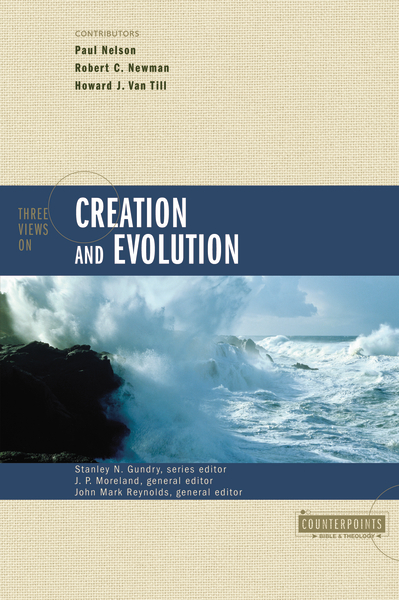 It’s no secret: I consume just about any book I can get my hands on related to the debate over the duration and means of creation within Christianity. Recently, I read through Three Views on Creation and Evolution, part of the Zondervan Counterpoints series. The young earth creationists (John Mark Reynolds and Paul Nelson) in this volume were more even than many I have read, and I appreciated their contribution in many ways and even found myself agreeing with portions of it. However, they did make a few remarkable claims, one of which will be my focus here. Namely, they suggested we leave interpretation of Genesis behind us and just assume the early church got it right.
Here is the quote:
Our advice, therefore, is to leave the issues of biblical chronology and history to a saner period. (100)
Why should we do that, you ask? Well, before offering this advice, Reynolds and Nelson argue:
Whatever the truth of the matter may be in regard to biblical history, we are… least likely to find it. Nothing about the education of most moderns leaves them disposed to be sympathetic to traditional readings of the biblical text… The almost overwhelming temptation is to “trim” [the portions of text which may be hard to swallow]. Suddenly, new ways of reading the text of Scripture are discovered, which to no one’s surprise allow for accommodation between at least some of the reigning paradigms and traditional religion. (99-100)
I find this simply astonishing! There are a number of reasons to reject this entire line of reasoning immediately. First, it is, in effect, poisoning the well. Second, it abandons any notion that new evidence can challenge established traditions. Third, it begs the question. Fourth, it undermines the need for the church to be semper reformanda – always reforming. We’ll examine these briefly in order.
Poisoned Well
The way Nelson and Reynolds present their argument poisons the well against any who would disagree with them. The insinuation is that the only reason anyone would come to a different conclusion is either because they don’t have an “educational” background which allows them to consider traditional readings or because they are in such a hurry to compromise the text to align with science. Although it is certainly possible that many readings come from these motivations, to suggest that we must put a ban on any future looks at the interpretation of Genesis shows the authors seem to think these motivations apply to all novel interpretations.
New Evidence
To put an interpretation of Genesis on an indisputable pedestal and say “that came from a ‘saner’ time and so we must follow it” undermines any possibility for new evidence to challenge established readings. Yet the fruit of research in many areas of biblical interpretation continues to yield great insight into the biblical text. Moreover, to make an interpretation like that indisputable is to perhaps set up stumbling blocks for future generations, who may in good faith find more evidence which challenges that interpretation.
Question Begged
By saying we need to leave the interpretation of Genesis to the past, Reynolds and Nelson have begged the question by assuming this interpretation is correct. In fact, they seem to assume it is so obviously correct that they don’t even bother to defend it. But of course this is not how theology ought to be done. We should not just relegate interpretations to the ecclesial past because we don’t want to face the challenges of today. Rather, we should explore the new evidence and new interpretations to see if they might in fact better match God’s revealed truths. By simply assuming we can leave an interpretation of Genesis as is, Reynolds and Nelson just assert their view is obviously correct without argument.
Semper Reformanda
The notion that the church needs to continually be reforming seems to be correct. When we find truths revealed in God’s natural revelation, we should be prepared to realize this may not align with our established paradigms. We need not reject these discoveries merely because the historical church didn’t know about them. Instead, we should realize that as an imperfect church waiting for our Lord’s return, we may get things wrong. We are always going to need to reform.
Conclusion
Thus, I think that any young earth creationist who simply asserts we must hold to the historic understanding of the text of Genesis is mistaken. Of course, I would also point out that the “historic” understanding is hardly what the modern young earth creationist would believe (such as the duration of the entire universe only lasting 6000 years in order to align with the creation days, etc.), but that is a matter for a different post. For now, it should be acknowledged that we should not just abandon attempts to understand God’s revelation in Genesis.
Links
Be sure to check out the page for this site on Facebook and Twitter for discussion of posts, links to other pages of interest, random talk about theology/philosophy/apologetics/movies and more!
Origins Debate– Check out all my posts on the discussion within Christianity over the duration and means of creation.
Source
Paul Nelson and John Mark Reynolds, “Conclusion” in Three Views on Creation and Evolution
SDG.
——
The preceding post is the property of J.W. Wartick (apart from quotations, which are the property of their respective owners, and works of art as credited; images are often freely available to the public and J.W. Wartick makes no claims of owning rights to the images unless he makes that explicit) and should not be reproduced in part or in whole without the expressed consent of the author. All content on this site is the property of J.W. Wartick and is made available for individual and personal usage. If you cite from these documents, whether for personal or professional purposes, please give appropriate citation with both the name of the author (J.W. Wartick) and a link to the original URL. If you’d like to repost a post, you may do so, provided you show less than half of the original post on your own site and link to the original post for the rest. You must also appropriately cite the post as noted above. This blog is protected by Creative Commons licensing. By viewing any part of this site, you are agreeing to this usage policy.
Really Recommended Posts 1/16/15- Abortion, Jesus, Science Fiction, and More!
 I am really proud of this lineup today, folks. I feel like it’s gotta be one of the broadest ranges of topics I’ve had in a while and they are all very interesting reads, at least in my opinion! Several of them are not just about what the title implies, but about something interesting related to that topic (like the one on pro-life being not just about the pro-life position but about how it might relate to evangelism). I’m pumped to share these posts. Let me know what you think in the comments here, and be sure to let the authors know you enjoyed their posts as well!
How Pro-Life Apologetics Helps Strengthen Your Evangelism– The case for the pro-life position is, in my opinion, absolutely philosophically and scientifically insurmountable. Here, Wintery Knight shares some thoughts on how learning the ins-and-outs of pro-life apologetics can also help evangelism.
Ehrmann Errors on Jesus’ Authority to Forgive– Noted skeptic Bart Ehrmann has argued that the notion that Jesus is divine was a later development in Christianity. What might the Bible itself–the earliest documents we have on the topic–reveal?
Observations About Commenting on Young Earth Creationist Facebook Pages– Let’s clear the water: commenting on Facebook pages is almost always going to get into some random fight about something… probably something completely unrelated to the original comment. The greater the importance of the topic, the more off the rail it often gets. That happens everywhere. However, here, the “Geochristian” shares some insights specific to discussing young earth creationism.
In the Image of Man they Created God; Male They Created Him– God is not male. God is Spirit. It is not inappropriate to use biblical pronouns for God like “He”; however, the danger is that we begin to think of God as a kind of Grandpa in the sky. Here’s some insight into the problems with assigning gender to God.
Scientific Mythologies: How Science and Science Fiction Forge New Religious Beliefs– Here, Anthony Weber shares a brief book review along with some insights related to this wonderful work by James Herrick. I do highly recommend the book to my readers. I shared a Sunday Quote about it some time ago.
Book Review: “Salvation Applied by the Spirit” by Robert Peterson
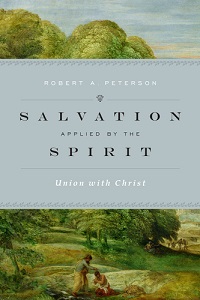 Robert Peterson’s Salvation Applied by the Spirit
The first part of the book is comprised of a comprehensive (to my knowledge) survey of texts related to the notion of being “in the Spirit.” Peterson goes across the whole of the biblical witness in order to draw several conclusions, including the notion that being “in Christ” simply is salvation and that this is brought about by union with Christ, which is the work of the Holy Spirit.
This first section brings up many intriguing points of inquiry alongside the central theme of union with Christ. Included among these are the meaning and application of the Sacraments (the Lord’s Supper and Baptism), the doctrine of justification and its application, and more.
The second part of the book draws broad theological conclusions from the exegetical work done in the first section. Broadly, Peterson uses this to explain the work of the Spirit in santification, justification, and salvation. Other primary theological topics that are necessary for understanding these concepts–such as the Incarnation–are also briefly discussed.
The exegetical portion of the book is fantastic and provides not only a solid understanding of the Bible’s understanding of the Spirit’s work in salvation (and particularly that of Paul), but also several insights of the applicability of these discussions to other areas.
The discussion of the Sacraments and the Holy Spirit’s work therein, along with the Incarnational perspective, was interesting and somewhat neutral. The notion that the indwelling of Christ may come through a Sacrament like the Lord’s Supper was wonderful to see (from my perspective as a Lutheran), though the somewhat dismissive language of “symbol” applied alongside this discussion gave it a sense of schizophrenia related to the Sacraments.
The theological threads of the second part of the book are interesting, as was the choice to spend some time covering topics like the Incarnation while spending lesser time on things like the specific view of justification of the author. The latter synthesis of both a covenantal perspective similar to N.T. Wright’s and the emphasis on imputation of righteousness was intriguing and deserving of deeper exploration.
Perhaps the greatest downside to the book is an amorphous sense of audience. It is written at a level which laity will find understandable, but its length will likely be off-putting. Similarly, those looking for a technical discussion will be edified by the quantity of exegetical insights, but perhaps disappointed by the lack of depth. It seems a book a bit caught in the middle between wanting to convey information to the general audience while also appealing to readers with academic interest. Unfortunately, it ultimately doesn’t quite hit its stride with either.
Overall, this is a good book looking at an interesting topic. It would just benefit from being either more or less technical. It will benefit greatly readers interested in the work of the Holy Spirit.
Disclaimer: I received a review copy of the book through Crossway. I was not obligated by the publisher to give any specific type of feedback whatsoever.
Source
Robert Peterson, Salvation Applied by the Spirit
Links
Be sure to check out the page for this site on Facebook and Twitter for discussion of posts, links to other pages of interest, random talk about theology/philosophy/apologetics/movies and more.
SDG.
——
The preceding post is the property of J.W. Wartick (apart from quotations, which are the property of their respective owners, and works of art as credited; images are often freely available to the public and J.W. Wartick makes no claims of owning rights to the images unless he makes that explicit) and should not be reproduced in part or in whole without the expressed consent of the author. All content on this site is the property of J.W. Wartick and is made available for individual and personal usage. If you cite from these documents, whether for personal or professional purposes, please give appropriate citation with both the name of the author (J.W. Wartick) and a link to the original URL. If you’d like to repost a post, you may do so, provided you show less than half of the original post on your own site and link to the original post for the rest. You must also appropriately cite the post as noted above. This blog is protected by Creative Commons licensing. By viewing any part of this site, you are agreeing to this usage policy.
Microview: “Understanding Spiritual Warfare: Four Views” edited by James Beilby and Paul Rhodes Eddy
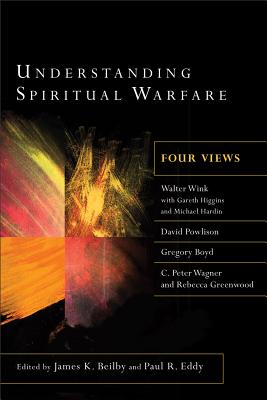 Understanding Spiritual Warfare: Four Views
The work starts with an introduction that does a great job introducing questions of primary importance in discussions of spiritual warfare. Walter Wink’s (alongside Gareth Higgins and Michael Hardin) view is presented first and might best be summarized as: Satan is equal to (and reducible to) human institutions of evil and suffering; he is neither personal nor is he the enemy of God but rather God’s servant–showing people their evil. We fight Satan by fighting institutionalized evil.
David Powlison’s “Classical” view is that spiritual warfare is essentially living like Christ and fighting temptation and sin. Satan is a real person and tempts us. Evils are combated through prayer and a call to repentance. Gregory Boyd’s “Ground-Level Deliverance model” argues for both a Christlike life but also for active warfare against demonic powers and Satan (who are personal and ontologically extant) on an individual level. C. Peter Wagner and Rebecca Greenwood’s “Strategic Level Deliverance model” is committed to finding and rooting out demonic activity in local and even national levels, including making “spiritual maps” to find where areas of demonic activity might be found and trying to identify the specific demons behind various activity.
From the above, it may seem like these views are radically diverse. You’d be correct to think so. James Beilby and Paul Rhodes Eddy did a fantastic job putting together this volume with such diverse views. Questions of orthodoxy at times arise (particularly in regard to Wink’s perspective), but this makes it clear how much divergence there is related to this specific issue. The responses to the different views are each insightful and provide more material of interest to pursue.
It’s rare that I’ve had a book be this interesting and engaging throughout. I highly recommend this volume for anyone with even a remote interest in the topic of spiritual warfare.
The Good
+Excellent diversity of views never feels like you’re reading rehashed material
+Clearly defines several key terms
+Superb introductory material prepares readers to understand some key questions on issue
+Author responses insightful and given just enough space to make serious points
+Cool cover
+Excellent indices
The Bad
-Could have given even more space to responses
-Not enough interaction on exegetical questions
-No rejoinders for authors to responses
Links
Be sure to check out the page for this site on Facebook and Twitter for discussion of posts, links to other pages of interest, random talk about theology/philosophy/apologetics/movies and more!
Book Reviews– There are plenty more book reviews to read! Read like crazy! (Scroll down for more, and click at bottom for even more!)
Source
James Beilby and Paul Rhodes Eddy, eds., Understanding Spiritual Warfare: Four Views
Really Recommended Posts 12/5/14- secular humanism, theology books, RPGs, and more!
 Yep, lots of diversity this go-round. We have a challenge for secular humanism, theology books, the atonement, Levitical Law, and a role-playing game. Think I didn’t get a good variety? Think again! Let me know what you think in the comments below, I’d love to read them! Be sure you let the others who wrote the posts know what you think.
The Secular Humanist’s Dilemma– An extremely brief but challenging post. How should secular humanists behave? Is this a compelling argument? I’d love to read your thoughts.
Why November Overwhelms Me (Books!)– A bookseller reflects on this past month and all the awesome looking books that come out in November. Lots of theology books this past month that are of interest.
Zack Hunt and Ken Ham walk into a House of Cards, on Yom Kippur– An interesting look at the doctrine of atonement and the interrelationship with sacrifice via a look at Ken Ham and Zack Hunt. Here’s a surprise- Ham and I agree largely on this point.
Why Wearing Clothes of Mixed Fabrics (Leviticus 19:19) Was Wrong– Sometimes it seems the laws in the Old Testament don’t make sense. Here’s an interesting post on critiques of the Hebrew Scriptures on these types of laws and points. I got this link from The Poached Egg, a site you should definitely follow!
Americana Dawn: Historical RPG– I don’t often share kickstarters, but when I do, you should take notice! Check out this awesome looking kickstarter for an RPG that is based on early American history. I’m pretty pumped for it!
Sunday Quote!- The Bible and Ancient Cosmology
 Every Sunday, I will share a quote from something I’ve been reading. The hope is for you, dear reader, to share your thoughts on the quote and related issues and perhaps pick up some reading material along the way!
The Bible and Ancient Cosmology
Often, people who are discussing the various positions in the Christian origins debate and lining up as young earth, old earth, theistic evolutionist, and the like on a continuum (see my post on different positions on Creation) do not take into account the way that God worked in the Ancient Near East to bring forth God’s revelation. John Walton has some perceptive words on this issue:
Yahweh did not reveal an alternative cosmic geography to Israel in the Old Testament. But there can be no discussion of creation or many other important issues without presupposing some sort of cosmic geography. With no alternative presented and no refutation of the traditional ancient Near Eastern elements, it is no surprise that much of Israel’s cosmic geography is at home in the ancient world rather than in the modern world. (175, cited below)
Of course, Walton does not suggest that this means we reduce all discussion of the OT into discussions of the ANE. There were important distinctions: “The difference was that the natural phenomena were emptied of deity… they were instruments for [God’s] purposes…” (175).
Nevertheless, we should be aware of the ANE cosmology and see how that impacts our reading of the text. Rather than settling for ignoring the context of the text and what it meant to those to whom it was revealed, we should take into account this background. Walton’s book is simply superb for this.
Links
Be sure to check out the page for this site on Facebook and Twitter for discussion of posts, links to other pages of interest, random talk about theology/philosophy/apologetics/movies and more!
Microview: “Ancient Near Eastern Thought and the Old Testament” by John Walton– I wrote a brief review of this book, which I consider one of the best books I’ve ever read.
Sunday Quote– If you want to read more Sunday Quotes and join the discussion, check them out! (Scroll down for more)
Source
Edward Feser, Scholastic Metaphysics: A Contemporary Introduction 
SDG.
Sunday Quote!- The Gospels and Contemporary Biography
 Every Sunday, I will share a quote from something I’ve been reading. The hope is for you, dear reader, to share your thoughts on the quote and related issues and perhaps pick up some reading material along the way!
The Gospels and Contemporary Biography
The question of the genre of the Gospels and whether they are to be considered to have historical content is clearly one which is central for Christians. One way we can explore this question is by looking at writings which are contemporary with the Gospels. Simon Swain, in his essay “Defending Hellenism,” which itself shows how various first century Pagans used apologetics against Christians, provides some interesting insight into this issue:
Philostratus has… a biographical aim. In the Roman imperial period, biographical records came to function as vehicles of belief systems, pagan and Christian. (180, cited below)
Swain is specifically discussing a work by Philostratus, In Honour of Apollonius. He notes that the aim of this work is to provide not so much a modern understanding of biography, but a “way of life of that individual…” The genre of Bioi, first century biographies, were both filled with historical teachings but also served a[n]–apologetic–purpose. This is not to say that the documents themselves are false or that anything contained therein is a fabrication. Instead, it is to acknowledge certain aspects of writing in the ancient world which differ from our own understanding of how biographies should work. For the study of the Gospels, then, it provides a way to avoid limiting them to wooden reports of what happened and allow us to see the theological thrust of the writers.
Links
Be sure to check out the page for this site on Facebook and Twitter for discussion of posts, links to other pages of interest, random talk about theology/philosophy/apologetics/movies and more!
Sunday Quote– If you want to read more Sunday Quotes and join the discussion, check them out! (Scroll down for more)
Source
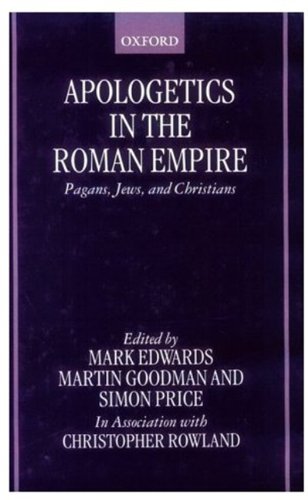
Simon Swain, “Defending Hellenism: Philostratus In Honour of Apollonius” in Mark Edwards, Martin Goodman, and Simon Price, eds., Apologetics in the Roman Empire
SDG.
——
The preceding post is the property of J.W. Wartick (apart from quotations, which are the property of their respective owners, and works of art as credited; images are often freely available to the public and J.W. Wartick makes no claims of owning rights to the images unless he makes that explicit) and should not be reproduced in part or in whole without the expressed consent of the author. All content on this site is the property of J.W. Wartick and is made available for individual and personal usage. If you cite from these documents, whether for personal or professional purposes, please give appropriate citation with both the name of the author (J.W. Wartick) and a link to the original URL. If you’d like to repost a post, you may do so, provided you show less than half of the original post on your own site and link to the original post for the rest. You must also appropriately cite the post as noted above. This blog is protected by Creative Commons licensing. By viewing any part of this site, you are agreeing to this usage policy.

 J.W. Wartick - Reconstructing Faith