bible
Microview: “Ancient Near Eastern Thought and the Old Testament” by John Walton
 John Walton’s Ancient Near Eastern Thought and the Old Testament
The book is chock full of quotations from various documents from the ANE set alongside each other with comparative insight from Walton. It is organized in such a way that ANE thought is analyzed in regards to religion, cosmos, and people, with subdivisions of each. Throughout the text there are sidebars comparing what is being studied to the Old Testament, thus revealing many insights into the meaning of key OT texts. Walton’s approach is even-handed and fair.
I’d honestly say this might be the most interesting scholarly book I’ve read. I cannot recommend it highly enough.
Links
Be sure to check out the page for this site on Facebook and Twitter for discussion of posts, links to other pages of interest, random talk about theology/philosophy/apologetics/movies and more!
Source
John Walton, Ancient Near Eastern Thought and the Old Testament
SDG.
——
The preceding post is the property of J.W. Wartick (apart from quotations, which are the property of their respective owners, and works of art as credited; images are often freely available to the public and J.W. Wartick makes no claims of owning rights to the images unless he makes that explicit) and should not be reproduced in part or in whole without the expressed consent of the author. All content on this site is the property of J.W. Wartick and is made available for individual and personal usage. If you cite from these documents, whether for personal or professional purposes, please give appropriate citation with both the name of the author (J.W. Wartick) and a link to the original URL. If you’d like to repost a post, you may do so, provided you show less than half of the original post on your own site and link to the original post for the rest. You must also appropriately cite the post as noted above. This blog is protected by Creative Commons licensing. By viewing any part of this site, you are agreeing to this usage policy.
Alvin Plantinga, the Compromiser?- A Call to Christian Charity in Disagreement
 The young earth creationist Ken Ham of Answers in Genesis recently wrote a blog post critiquing eminent Christian philosopher Alvin Plantinga on a number of levels. I’d like to offer a brief analysis of his comments.
Calvin College
Ken Ham doesn’t like Calvin College, where Plantinga once taught. About the school, he says:
Calvin College in Grand Rapids, Michigan, is one of the most ardently compromising Christian Colleges in the US that continues to lead so many young people astray in regards to the authority of Scripture beginning in Genesis.
Harsh words! Of course the reason that Calvin College is said to be a “compromising” college is because it doesn’t follow Ken Ham’s specific interpretation of Genesis as a necessity of Christian faith. By not holding to a position that the Earth is only about 6000 years old, Calvin College gets added to the blacklist of “compromisers.” This kind of name-calling is unbecoming Christians, but that unfortunately hasn’t stopped Ham and his followers.
Plantinga and Science
Ham takes issue with Plantinga’s words on whether science and Christianity may coexist. Following the link to read Plantinga’s own words, one reads:
[Those who believe in a conflict between science and faith] are thinking of evolution plus naturalism, which is the idea that there isn’t any such person as God or anything like God … evolution doesn’t say anything about whether there is such a person as God or not…It’s a metaphysical add-on they are importing into the scientific notion of evolution.
Ham believes that because of this, Plantinga is “equivocating” science and evolution. However, it can hardly be argued that evolution is not the reigning paradigm in biology. Thus, it is not so much equivocation as it is using terms as they are commonly understood. But that aside, the key point is that Plantinga surely seems to be correct. If one does not pair metaphysical naturalism with evolution, it poses no challenge to the existence of deity.
Charity
Now, the nuances of whether evolution may be reconciled with Genesis or not aside, the real question is the appropriateness of name-calling because other Christians believe in a different interpretation of Genesis. Ham wants to keep the focus on the alleged “utter contradiction” between evolution and Genesis, but he does so by elevating his specific interpretation of the Bible above any other view and even above Christian charity. For Ham, there is no need to engage with fellow Christians in a meaningful manner. Instead, he simply dismisses fellow Christians as compromisers and sees that as enough for his followers to ignore any complexities in the debate.
Of course, going back to the issue that Ham wants to frame: the alleged conflict between science and religion, I think that it is vitally important to allow charity in interpretations of Genesis. God’s word is infallible, but human interpreters are not infallible. Instead of lashing out at other Christians because they hold a different view than we do, perhaps we should work to reconcile with and learn from each other.
Ken Ham’s post is just a single example of the constant stream of vitriol spilled out by certain groups against those with whom they disagree. I myself have been called a compromiser, an unbeliever, a follower of Satan, someone who is working to undermine the faith, etc. by people who disagree with me. Why not start the discussion rather than pouring out insults? Why not seek to work together and, if necessary, debate the issues instead of using such nasty language about others?
Links
Be sure to check out the page for this site on Facebook and Twitter for discussion of posts, links to other pages of interest, random talk about theology/philosophy/apologetics/movies and more!
Christian Philosopher Says Science Doesn’t Oppose Faith– Read Ken Ham’s post for his own perspective and words on the topic.
I do not own rights to the image of Alvin Plantinga. I found it with an image search and could not find any original rights attribution. I am using it under fair use.
SDG.
——
The preceding post is the property of J.W. Wartick (apart from quotations, which are the property of their respective owners, and works of art as credited; images are often freely available to the public and J.W. Wartick makes no claims of owning rights to the images unless he makes that explicit) and should not be reproduced in part or in whole without the expressed consent of the author. All content on this site is the property of J.W. Wartick and is made available for individual and personal usage. If you cite from these documents, whether for personal or professional purposes, please give appropriate citation with both the name of the author (J.W. Wartick) and a link to the original URL. If you’d like to repost a post, you may do so, provided you show less than half of the original post on your own site and link to the original post for the rest. You must also appropriately cite the post as noted above. This blog is protected by Creative Commons licensing. By viewing any part of this site, you are agreeing to this usage policy
Really Recommended Posts 10/10/14- Game of Thrones, Abortion, Joshua, and more!
 Another week, another look at some of the most interesting posts on the web. Here we have posts on the Game of Thrones and Philosophy, Joshua 10 and the meaning of the sun standing still, creationist Ken Ham, abortion, and ways your kid might be learning an oversimplified faith. As always, I’d love to read what you think of the posts! Be sure you leave a comment when you go visit to let the authors know your own insights. We have an owl post edition today because it’s cold.
6 Ways You May Be Raising Your Kids with an Oversimplified Faith– We are charged with raising our children in the faith. That doesn’t apply only to parents, but to the entire Christian community. How might we combat the simplistic image of faith that many children have? Check out this great post (and site) from Natasha Crain, and be sure to follow the site for some awesome posts on Christian teaching for children.
Biblical Credibility and Joshua 10: What does the text really claim?– Joshua 10–the passage about the sun ‘standing still’ in the sky has long drawn criticism from non-Christians for various reasons, primarily scientific inaccuracy. Here, eminent scholar John Walton (seriously one of my favorites) explains the text of Joshua 10 in light of other Ancient Near Eastern literature and the way it would have been understood in its time.
Scott Klusendorf Defends the Pro-Life View on the Unbelievable? Radio Show– Recently, Scott Klusendorf–a wonderful pro-life teacher and advocate–debated Mara Clarke on the subject of abortion. It was interesting to listen to this debate and see how the sides played out their arguments. Check out this post to get summary and commentary on the debate.
“You Win or You Die” (from Game of Thrones and Philosophy)– Whatever your view of the appropriateness of “Game of Thrones” (and we must note there is much objectionable content in it), there is no denying its current popularity. Check out this post from Anthony Weber which discusses some issues related to the philosophy of the series.
The Never-ending Debate: Ken Ham’s Obsession with Bill Nye– Some time ago, Ken Ham debated Bill Nye on evolution, the age of the earth, and more (see my summary and commentary on the debate here). Ken Ham has not let this public debate sit, and continues to utilize it to produce creationist material and muster the troops, so to speak. Is this a bad thing? Is it helpful? Let’s here your thoughts. Here is a post analyzing some recent trends in his organization regarding Bill Nye.
Sunday Quote!- Historical Criticism and What Prophets Would Have Done
 Every Sunday, I will share a quote from something I’ve been reading. The hope is for you, dear reader, to share your thoughts on the quote and related issues and perhaps pick up some reading material along the way!
Historical Criticism and What Prophets Would Have Done
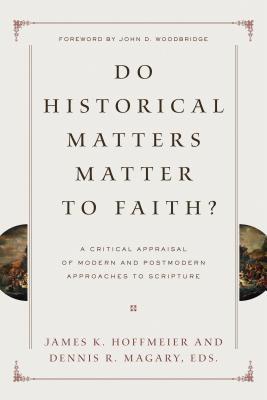
Do Historical Matters Matter to Faith?
[R]edactional analysis is, of course, based on a number of presuppositions about Old Testament prophets and prophecy that cannot be proved, or disproved: (1) that a prophet/editor would not use the same concept or theme in more than one way… (2) that a prophet would not reuse, allude to, or elaborate upon his own (earlier) oracles… and (3) that a prophet would not proclaim anything that was not clearly relevant and perspicuous for his contemporaries ( Schultz 256, cited below)
There is great difficulty with each of these assumptions, as should be clear simply from reading through them. Although each is not necessarily without some merit–surely, for example, it is not an error to think that very often concepts are used in the same ways–the difficulty is when rather than becoming guides for interpretation, these points become areas around which to base limits on the possible meaning of various texts.
The book is full of insights like this throughout, and though I’m still reading through it, I would say I recommend it for the amount of information contained in it, along with the variety of its contents.
What do you think? Are these assumptions valid? How might historical critical methods impact how one reads the text? What presuppositions might be better suited to Christian scholarship regarding prophecy, if any?
Links
Be sure to check out the page for this site on Facebook and Twitter for discussion of posts, links to other pages of interest, random talk about theology/philosophy/apologetics/movies and more!
Sunday Quote– If you want to read more Sunday Quotes and join the discussion, check them out! (Scroll down for more)
Source
Richard Schultz, “Isaiah, Isaiahs, and Current Scholarship” in Do Historical Matters Matter to Faith?
SDG.
Really Recommended Posts 10/3/14- Profanity in the Bible, Earth’s Age, “Uglies” and more!
 Here we have another round of links for your perusal, dear readers. The topics include the age of the Earth (you really must read this), interpreting the Bible, YA Literature, apologetics, and profanity in the Bible. Oh yeah, you read that last one correctly. Check the posts out, and if you liked them be sure to let the authors know. Let me know what you think in the comments here!
Smoking Gun Evidence of an Ancient Earth: GPS Data Confirms Radiometric Dating– People who deny that the Earth really is billions of years old often do so by trying to undercut radiometric dating. But what if we were able to independently confirm radiometric dating? That’s actually what scientists have been able to do, thus confirming the ancient age of the Earth. Check out this post to see the evidence.
What the Bleep does the Bible say about Profanity?– I found this to be a very thought-provoking post on how Christians should think about profanity. I don’t agree with everything here, but it certainly got my brain working. What are your thoughts on this issue? Be sure to read the post, as it gives some great insights.
Uglies, Pretties, and Specials: Scott Westerfield’s Brave New YA World– Young Adult Literature is one way to get our fingers on the pulse of the culture. Here, Anthony Weber (whose awesome site you should follow!) looks at Scott Westerfield’s look into a future in which physical beauty is even more important than it is now.
Are We “Standing Over” Scripture When We Interpret It?– Sometimes, people express concern with the need to read the Bible in its context and work with interpreting a passage. Shouldn’t it all just be clear? Are we placing ourselves over Scripture? Check out this brief post on this concern.
Christian apologetics: Is there, besides current popular approaches, another way to “take every thought captive”?– I have often thought of the need for an integrative approach to apologetics, which looks at the various methods holistically instead of atomistically. Here, someone who seems to favor the presuppositional method looks for the possibility of reconciling various apologetic methods.
The Need for Psychological Apologetics– It is important to realize that psychological issues impact people from all backgrounds. Here, Pastor Matt Rawlings argues that we need to awaken to the need for psychological apologetics.
Really Recommended Posts 9/19/14- Aquinas, the “Gospel” of Barnabas, Poverty, and More!
I’ll say it: I’m very pleased by this lineup of posts. Here, we have posts addressing metaphysics and cosmology, the Bible and poverty, Muslim Apologetics, Creationism, and Aquinas. How’s that for a diverse lineup? Let me know what you thought of the posts in the comments here.
Cosmology and Causation- Why Metaphysics Matters by Edward Feser– Edward Feser is one of the most brilliant philosophical minds I have encountered. He’s a Thomistic philosopher and whether or not I agree with what he writes, he always challenges me to think on the points he raises. Here, he writes on the importance of metaphysics in the realms of cosmology and causation. Check this out!
Wayne Grudem Debates Richard Glover on the Bible, Poverty, and Foreign Aid– What might the Bible say about foreign aid and poverty? Here, Wintery Knight offers an analysis of a recent debate between Christians on the topic. I have reviewed Wayne Grudem’s book “The Poverty of Nations” which will provide some background to the issues discussed here.
Creationist Influence on Biblical Study Tools– Always be aware that when we’re using any sort of study tool for reading the Bible, there will be interpretation happening. Here, one of my favorite sites takes a look at some ways young earth creationism has influenced some biblical study tools.
The Gospel of Barnabas– Unfortunately, the alleged Gospel of Barnabas is often trotted out in Muslim Apologetics as proof that various aspects of Christianity are false while Islam has them correct. Here’s a great analysis of the dating of this book and whether it should impact us at all in our interfaith discussions.
Did Thomas Aquinas Believe that Sin Affected the Intellect?– Yep. Okay, there is more to it! Check out this post on the topic of Aquinas and the noetic effects of sin.
Question of the Week: Least-Read Bible Book
 Each Week on Saturday, I’ll be asking a “Question of the Week.” I’d love your input and discussion! Ask a good question in the comments and it may show up as the next week’s question! I may answer the questions in the comments myself.
Least-Read Bible Book
Recently, I asked what your favorite book of the Bible is. But we all know there are some books of the Bible with which we have little familiarity beyond their names. Over at The Overview Bible, there is this fascinating post on the 10 least-read books of the Bible (at least according to Bible Gateway). In light of that:
What’s your least-read book of the Bible? Why do you think you haven’t read it as much? Was it on the linked list? How might you dedicate some time to getting into God’s Word more? How might you encourage others to read some of the least-accessible books?
I think these are all questions we should tackle as Christians. We should try to dive into God’s Word as much as possible. Each word is there for a reason, inspired by God. Thus, let’s share some confessions here and then seek to get into the Word more.
Links
Be sure to check out the page for this site on Facebook and Twitter for discussion of posts, links to other pages of interest, random talk about theology/philosophy/apologetics/movies and more.
Question of the Week– Check out other questions and give me some answers!
SDG.
Sunday Quote!- Building the Argument from Undesigned Coincidences
 Every Sunday, I will share a quote from something I’ve been reading. The hope is for you, dear reader, to share your thoughts on the quote and related issues and perhaps pick up some reading material along the way!
Build the Argument
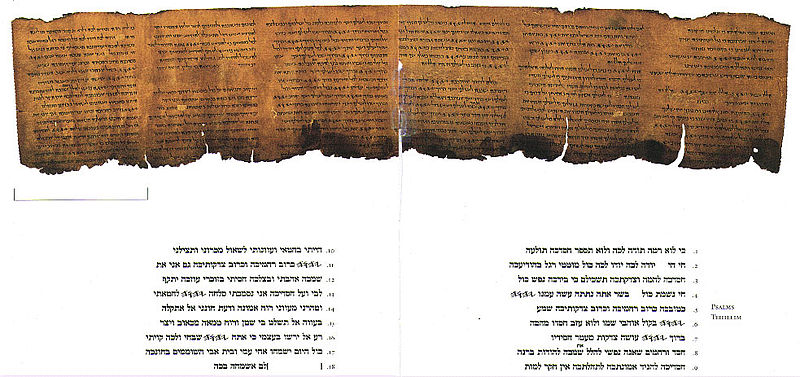
J.J. Blunt (1794-1855) wrote what I consider to be one of the strongest pieces of apologetics literature ever written, Undesigned Coincidences in the Writings Both of the Old and New Testaments. The book focuses, clearly enough, on the argument from undesigned coincidences. I’ll not explain the argument here, as I have done so already. But Blunt operated under no false hopes of having comprehensively covered this extremely broad argument:
Much, however, of the same kind of testimony I have no doubt has escaped all of us; and still remains to be detected by future writers on the Evidences. (v, cited below)
Blunt’s words are a call to action for the Christian apologist. The argument from undesigned coincidences is extremely powerful, but it also has massive depths to explore throughout the totality of the Bible which have not even begun to be explored. Moreover, Blunt began the work of relating these “coincidences” to contemporary literature by relating the Gospels and Acts to Josephus, but surely there is much more work to be done by exploring other literature outside of the Bible and seeing how these might be cross-confirmed.
So, fellow Christian apologists, let’s get to work!
Links
Be sure to check out the page for this site on Facebook and Twitter for discussion of posts, links to other pages of interest, random talk about theology/philosophy/apologetics/movies and more!
Forgotten Arguments for Christianity: Undesigned Coincidences- the argument stated– I outline the basics of the argument from undesigned coincidences. I also provide an example of the argument in practice.
Sunday Quote– If you want to read more Sunday Quotes and join the discussion, check them out! (Scroll down for more)
Source
John James Blunt, Undesigned Coincidences in the Writings of both the Old and New Testament, New York, 1847.
SDG.
Book Review: “Questioning the Bible” by Jonathan Morrow
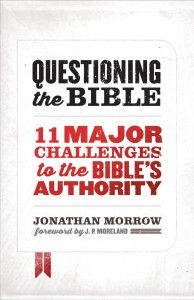 Questioning the Bible
Is the Bible Anti-Intellectual?
What can we really know about Jesus?
How do we Know what the earliest Christians believed?
Why were some Gospels banned from the Bible?
Did the Biblical writers lie about their identity?
Has the Biblical text been corrupted over the centuries?
Are the Gospels full of contradictions?
Is the Bible unscientific?
Is the Bible, sexist, racist, homophobic, and genocidal?
What do Christians believe about the Bible?
Which interpretation of the Bible is correct?
Each of these questions is addressed through a number of means, and Morrow utilizes the latest scholarship in providing answers to these tough questions. Moreover, critical scholars like Bart Ehrman and Richard Dawkins are quoted and interacted with, which opens up avenues for more applications of the work to conversations.
Really, that’s what Questioning the Bible is intended for: a way to start conversations. The book is written for an introductory audience, but it is not ultra-light or lacking in content. There is an enormous amount of information packed into a small space in each chapter here, and that information will be invaluable to the reader tackling the above questions. It is also useful for those wishing to have the everyday conversations about faith that may come up.
Representative of Morrow’s approach is the chapter titled “Did the Biblical Writers Lie About Their Identity?” In this chapter, Morrow first provides a challenge from critical scholar Bart Ehrman. He then provides definitions of key terms like pseudonymity and pseudepigraphy. After that, he provides a critique of Ehrman’s position methodologically, and discusses how forgeries came into being and were recognized in the ancient world and the early church. He provides criticism in a way which is readable yet robust:
[W]e need to clearly state that the earliest Christians held to the thoroughly Jewish conviction… that God does not lie and he hates deception… Lying–even in the name of an apostle, done in love and for the greater good–would not be tolerated. (83)
These kinds of insights are found throughout every chapter, and can be immediately applied to everyday conversations about the faith. Finally, Morrow ends the chapter with a discussion of whether we can identify the authors of the Gospels with their traditional names/authors. Each chapter follows a similar format in that it outlines the issue, provides definitions, and then offers correction and expansion where needed.
Morrow writes with a tone that maintains interest, while explaining sometimes technical arguments in ways that the average reader can understand. Another strength of the work is the way that Morrow balances different Christian viewpoints on issues like creation. Rather than assuming only one viewpoint is possible, he presents several major viewpoints in a way which favors none but allows for open dialogue about origins.
At the end of each chapter there is a helpful section which summarizes three major thinking points from the chapter, provides tips for having conversations on the topic of the chapter, and provides recommended reading on the topic of that chapter. These are invaluable sections and sometimes even have little homework assignments which will allow readers to practice what they have learned. Questioning the Bible is therefore made into a very valuable study tool which may be used by small groups like youth groups or Bible study groups to explore some of the most common questions leveled towards Christians.
Questioning the Bible: 11 Major Challenges to the Bible’s Authority
Disclaimer: I was provided with a review copy by the publisher. I was not obligated by the publisher to give any specific type of feedback whatsoever.
Source
Jonathan Morrow, Questioning the Bible: 11 Major Challenges to the Bible’s Authority
SDG.
——
The preceding post is the property of J.W. Wartick (apart from quotations, which are the property of their respective owners, and works of art as credited; images are often freely available to the public and J.W. Wartick makes no claims of owning rights to the images unless he makes that explicit) and should not be reproduced in part or in whole without the expressed consent of the author. All content on this site is the property of J.W. Wartick and is made available for individual and personal usage. If you cite from these documents, whether for personal or professional purposes, please give appropriate citation with both the name of the author (J.W. Wartick) and a link to the original URL. If you’d like to repost a post, you may do so, provided you show less than half of the original post on your own site and link to the original post for the rest. You must also appropriately cite the post as noted above. This blog is protected by Creative Commons licensing. By viewing any part of this site, you are agreeing to this usage policy.
Sunday Quote!- Mythical Wars in the Bible?
 Every Sunday, I will share a quote from something I’ve been reading. The hope is for you, dear reader, to share your thoughts on the quote and related issues and perhaps pick up some reading material along the way!
Mythical Wars in the Bible?
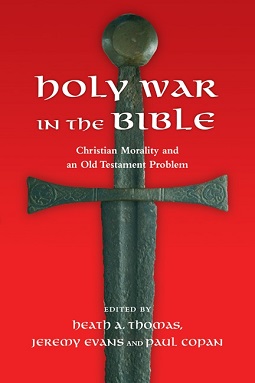
I was reading through Holy War in the Bible: Christian Morality and an Old Testament Problem and was surprised to come upon an essay which essentially argues that the narratives in Joshua were mythical retellings of the entry into Israel:
…Deuteronomy 7:1-5 is incoherent if read literally, for the command to kill all the inhabitants of the land is followed by an exhortation against intermarriage with them. In other words, in a “mythological” sense, Deuteronomy 7 itself encourages not so much annihilation of Canaanites as radical separation from them and their idolatrous practices–exactly as Joshua 23-24 exhorts. (163, cited below)
The essay was by Douglas Edwards, whose argument is essentially that Joshua does not recount actual events but rather a mythology with a specific purpose to show that God’s goal of placing Israel in the promised land was fulfilled. It’s an interesting perspective which helps make sense of some pointers in the narratives (and the fact that Judges follows Joshua with discussion of people who were allegedly exterminated in the prior canonical book).
However, I’m not convinced we may categorize the narrative as being a mythology, for it seems to have some clear historical claims about how, when, and where Israel entered into Canaan. Indeed, there are other essays in the same book which do not dehistoricize the text while also not putting forward genocide in the Bible.
What do you think? How do you interpret the texts which some take to mean genocide occurred in the Bible? How might one maintain Earl’s view and inerrancy, or can one not do so?
Links
Be sure to check out the page for this site on Facebook and Twitter for discussion of posts, links to other pages of interest, random talk about theology/philosophy/apologetics/movies and more!
Sunday Quote– If you want to read more Sunday Quotes and join the discussion, check them out! (Scroll down for more)
Book Review: “The Myth of Religious Violence” by William T. Cavanaugh– I review the book which has led me to discuss the ways the category of religion is used to stigmatize the other and also forced me to rethink a number of issues. I highly recommend this book.
Source
Douglas Earl, “Holy War and Hesed” in Holy War in the Bible: Christian Morality and an Old Testament Problem
SDG.

 J.W. Wartick - Reconstructing Faith