bible
Question of the Week: Favorite Bible Book
 Each Week on Saturday, I’ll be asking a “Question of the Week.” I’d love your input and discussion! Ask a good question in the comments and it may show up as the next week’s question! I may answer the questions in the comments myself.
Favorite Bible Book
There are some books of the Bible that we read fairly frequently. Others, we need to get more familiar with(check out this list of the “least read books of the Bible“. It’s a common question, but one that I’m curious about regarding my readers:
What’s your favorite book of the Bible? Bonus: Tell me why it’s your favorite.
Be sure to read the comments, as you might find a reason to read a book you don’t read frequently!
Links
Be sure to check out the page for this site on Facebook and Twitter for discussion of posts, links to other pages of interest, random talk about theology/philosophy/apologetics/movies and more.
Question of the Week– Check out other questions and give me some answers!
SDG.
Book Review: “The Illustrated Guide to the 12 Apostles”
 Let’s get this out of the way: it’s really hard to tell the disciples apart. They have similar names, they’re all lumped together usually, some are barely even mentioned, etc., etc. The Illustrated Guide to the 12 Apostles by Jeffrey Kranz and illustrated by Laura Converse Kranz is a free (!) e-book which seeks to solve some of these difficulties.
Each apostle has a pretty neat sketch drawing depicting them (which is largely conjecture), along with several icons and other images which help to distinguish between them. These are each individually helpful, and the icons and the like are based upon the few details mentioned about each apostle in the Bible.
The work surveys all the information we know for certain about the apostles as found in the Bible, while also noting other details we know from tradition and the like. For example, John is one of the most prolific writers of the Bible, as he authored Revelation, John, and 1-3 John as well. These details are extraordinarily helpful at distinguishing the various apostles from each other, and provide some sort of way to remember them as individuals rather than as a group.
The book is brief (55 pages) but packed with useful information. It’s a quick read that can also serve as a handy reference book related to the apostles. I highly recommend it, particularly at its (free) price. The book may be downloaded here. I would also very highly recommend you check out The Overview Bible, a web site dedicated to bringing general Bible knowledge to all. It’s very informative and the posts are all great reads.
Links
Be sure to check out the page for this site on Facebook and Twitter for discussion of posts, links to other pages of interest, random talk about theology/philosophy/apologetics/movies and more.
SDG.
Is the historical Adam a “Gospel” issue?
 [Adam] must be a real individual who rebels against a clear divine directive at a specific moment in real time in a real place. (Barrick, 221, cited below)
One of the many issues which comes up related to the debate over the historical existence of Adam and Eve is the relation of Adam to Christ. Specifically: does undermining of the reality of Adam’s historical person undermine the work of Christ? Here, we’ll explore that question.
To be clear: we are not here exploring whether or not Adam really existed or whether there really was a real pair, Adam and Eve, from whom all humanity sprang. Rather, the question is this: if one denies the historical Adam and Eve, does one undermine the Gospel of Christ? Whatever one thinks of the answer to the question of the historical persons, one should consider the answer to this question as well. There are many issues to be addressed, so this post will only touch on a few. Write a comment to let me know your own thoughts or other issues you think of.
“Gospel” Issue?
In order to ask whether the history of Adam is a “Gospel” issue, we must first consider exactly what is meant by a “Gospel” issue. Definitions are important, and my own search for the meaning of this term yielded a whole range of definitions. Thus, I’m going to focus on a kind of working definition: to say something is a “Gospel” issue is to say that a specific doctrine, if untrue, undermines the Gospel [here meaning the glorious truth of salvation through Jesus Christ] and possibly one’s salvation itself. In the definitions I’ve found, and the use I’ve seen of this term, I believe this is an accurate understanding.
The Historical Adam as a Gospel Issue- Two Perspectives
The book, Four Views on The Historical Adam
the biblical description of sin depends entirely on the historicity of Adam. He must be a real individual… in real time in a real place… [denial of the historical Adam] has serious implications for the doctrine of Scripture and the doctrine of Christ… [quoting John Mahoney]: “If the first man is not historical and the fall into sin is not historical, then one begins to wonder why there is a need for our Lord to come and undo the work of the first man.” That makes the historicity of Adam a gospel issue. (Barrick, 221-222)
Barrick’s argument seems pretty clear: if no historical Adam lived and acted in the Fall, then what reason is there for Christ to come as the second Adam and restore humanity to God? If Barrick’s argument is successful, it does seem to establish that the historical Adam is indeed vital to an understanding of the truths of salvation.
Denis Lamoureux takes up the challenge of restoring confidence in the possibility of the Gospel without an historical Adam. His argument is instead that when “behaviorally modern humans” showed up (about 50,000 years ago), they broke their relationship with God (he does not make explicit how this may have occurred). Moreover, he argues that Barrick’s argument is unsuccessful because it is a non sequitor–the conclusion simply doesn’t follow. Is it really the case, Lamoureux asks, that the reality of sin “depend[s] entirely” upon a historic Adam (Lamoureux, 229)? Barrick’s argument was simply to appeal to the requirement for sin to be an action against God (itself a disputable claim–does sin really require action or is it possible to have [actually] sinful inclination?–but we’ll set that aside). Lamoureux notes that saying there was no historical Adam does not undermine or remove the reality of sinful activity.
Moreover, Lamoureux argues that Barrick’s argument conflates the historicity of Adam with the historicity of the resurrection (ibid). Not only that, but:
The gospel is about Jesus Christ, not Adam. The gospel is about the reality of sin, not how sin entered the world. The gospel is about Jesus dying on the cross for our sins, not specifically Adam’s sin. (ibid, 229)
Adam and the Gospel
So is the historical Adam a “Gospel” issue? Returning to our definition, it seems to me fairly clear that one’s salvation is not determined by whether one believes in a historical Adam. The foundation of faith is Christ raised from the dead (1 Corinthians 15). Lamoureux is right to point out that the Gospel is ultimately the message of our salvation through Jesus Christ. The first part of our definition, however, asks whether the grounding for this salvation might be undermined. Romans 5:12-21 seems to demonstrate that Christ came to save humanity as the second Adam, and that a real person, Adam, really did sin and created the need for salvation.
Lamoureux’s counter to this is to argue that such statements are divine accommodation–that is, Paul did believe in a single, historical Adam, but that doesn’t mean there was one. The debate over this must wait for a different post, but for now I’ll just say that although I think there is divine accommodation in God’s revelation, I’m not convinced it involves allowing for very clearly false statements (such as the claim that Adam existed if Adam did not exist).
So if there is no historical Adam, it seems to me that this entails at least a denial of the specificity of the text in Romans 5. Thus, one could say that this undermines the basis for salvation. However, if one is willing to strip down to the bare bones of “Mere Christianity,” might one still preserve the Gospel? At this point I say yes. The basis for our salvation is belief in Jesus Christ, not belief in Adam. This does not mean that I think the historical Adam is unimportant or non-existent. Rather, I would say that anyone who does wish to say the historical Adam is necessary for salvation has yet to demonstrate that claim.
Links
Be sure to check out the page for this site on Facebook and Twitter for discussion of posts, links to other pages of interest, random talk about theology/philosophy/apologetics/movies and more!
What options are there in the origins debate? – A Taxonomy of Christian Origins Positions– I clarify the breadth of options available for Christians who want to interact on various levels with models of origins. I think this post is extremely important because it gives readers a chance to see the various positions explained briefly.
Check out other posts on the origins debate within Christianity.
Sources
William Barrick, “A Historical Adam: Young-Earth Creation View” in Four Views on The Historical Adam
Denis Lamoureux, “Response from the Evolutionary View” in Four Views on The Historical Adam
SDG.
——
The preceding post is the property of J.W. Wartick (apart from quotations, which are the property of their respective owners, and works of art as credited; images are often freely available to the public and J.W. Wartick makes no claims of owning rights to the images unless he makes that explicit) and should not be reproduced in part or in whole without the expressed consent of the author. All content on this site is the property of J.W. Wartick and is made available for individual and personal usage. If you cite from these documents, whether for personal or professional purposes, please give appropriate citation with both the name of the author (J.W. Wartick) and a link to the original URL. If you’d like to repost a post, you may do so, provided you show less than half of the original post on your own site and link to the original post for the rest. You must also appropriately cite the post as noted above. This blog is protected by Creative Commons licensing. By viewing any part of this site, you are agreeing to this usage policy.
Sunday Quote!- Is Natural Revelation Infallible?
 Every Sunday, I will share a quote from something I’ve been reading. The hope is for you, dear reader, to share your thoughts on the quote and related issues and perhaps pick up some reading material along the way!
Is Natural Revelation Infallible?
I’ve been reading through the free ebook A Reformed Approach to Science and Scripture by Keith Mathison, and I came upon some interesting passages discussing natural revelation in the Reformed tradition (I’m Lutheran, so this is from an outsider). Mathison is keen to show that natural revelation–that is, that which God demonstrates through the created order–is capable of conveying truth. But his claim goes well beyond that modest level:
God’s revelation in creation is equally as infallible as His revelation in Scripture, because in both cases, it is God who is doing the revealing, and God is always infallible. (Kindle Location 208-212)
Mathison’s point, I think, well-taken. The fact is that natural revelation, if we assume is something God does, would be by definition infallible. After all, God cannot err. Thus, Mathison is correct. What I think is often missed in discussions about this and other topics related to creation is that although it is perhaps easier for humans to make mistakes when it comes to the natural world, it is quite possible (and obvious) that mistakes are made in interpretation of special revelation–Scripture–as well.
What do you think? Is natural revelation infallible? If so, what does this say about how we should interact on science-faith issues? If not, how does error creep in? Let me know your thoughts in the comments below!
Links
Be sure to check out the page for this site on Facebook and Twitter for discussion of posts, links to other pages of interest, random talk about theology/philosophy/apologetics/movies and more!
Sunday Quote– If you want to read more Sunday Quotes and join the discussion, check them out! (Scroll down for more)
Source
Keith Mathison, A Reformed Approach to Science and Scripture (Ligonier Ministries, 2013).
SDG.
Really Recommended Posts 8/22/14- Osteen, apologetics, creationism, and more!
 I have put together what I consider a very strong list of topics for you this go-round. Here, we have Acts, Osteen, Creationism, apologetics (x2), and C.S. Lewis. Check out the posts, and let me know what you think in the comments below!
Finally: A simple timeline of Acts– This tremendously helpful post provides a timeline of acts which shows when different people were traveling together and where they were at various points throughout the book. It is a great way to keep track of the goings-on in the book. Be sure to follow The Overview Bible, as they constantly have fantastic posts.
A Diluvialist Response to Buckland’s Kirkdale Cave Hyena Den– Flood geology has been around for a little while, and here, Joel Duff describes how early diluvialists-young earth flood geologists-initially reacted to some major important finds.
The Guide to Online Decorum for Christian Apologists– How, then, shall we live? This is a question to ask yourself, no matter your situation. Here, Pastor Matt Rawlings discusses how Christian apologists should interact in online settings.
C.S. Lewis’ (really) 10 Best Books– From Christian philosopher David Marshall, we have this list of C.S. Lewis’ 10 best books. Some might be obvious, some might surprise you. Regardless, it’s time to get some extra reading!
Osteen and Peter (Comic)– A poignant pictorial contrast between prosperity “gospel” and Christian life.
5 Things I Hate about Apologetics– Doing apologetics does present some pitfalls regarding faith and life. Check out this post related to these possible difficulties.
Really Recommended Posts 8/15/14- Christians and Romans, Bible Measurements, Robin Williams, and more!
Here I have another go-round the web as we survey a posts on creationism, early Christianity, measurement in the Bible, interactions between men and women, and Robin Williams. Let me know what you thought of the posts in the comments, and be sure to leave a comment on those whose posts you enjoyed!
Book Plunge: “The Christians as the Romans Saw Them”– Nick Peters reviews a book which seems to be really interesting, because it is about how the Romans viewed the Christians in the early periods of Christian development. The topic should be of interest for those interested in apologetics, church history, history, and sociology.
All the biblical units of measurement– the “Overview Bible” has become one of my favorite sites. It’s value lies in both clear examples and posts but also in its generally denominationally neutral approach to the Bible. In other words, it’s a great site for general Bible knowledge. Here, there is a chart with every single biblical unit of measurement and a modern equivalent. It’s enormously helpful!
5 Ways Married Men Can Act Like Adults Around Women, Single or Not– This post has some satire in it as the author is responding to the notion that men are somehow incapable of controlling themselves around women.
NH Notes- Bent Rock on Display: The Sidelong Hill road cut– how might rocks bend? Must we attribute such bent rocks to the biblical Flood? Check out this post which has some great pictures and discussion of these topics. See my debate review between a young earth and old earth Christian in which this very topic came up.
Robin Williams, Matt Walsh, and Choice– Stephen Bedard offers some very good insight into Christianity and mental illness, along with a response to Matt Walsh’s comments about how Robin Williams’ suicide may be reduced to a choice.
On the Death of Robin Williams-A great reflection on Christianity, mental illness, and hope in the midst of suffering. Check out this thoughtful post.
Sunday Quote!- Questioning Exegesis Through Discovery?
Every Sunday, I will share a quote from something I’ve been reading. The hope is for you, dear reader, to share your thoughts on the quote and related issues and perhaps pick up some reading material along the way!
Questioning Exegesis Through Discovery?
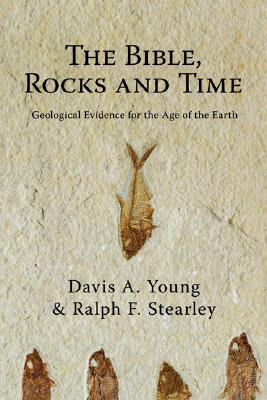
One area that evangelical theologians must weigh is the notion that exegesis should line up with reality. Thus, how might one balance an interpretation between some apparent readings and the findings of certain scientific discoveries? Must they even be balanced at all? Davis Young and Ralph Stearley’s magisterial work on the age of the Earth, The Bible, Rocks and Time, provides an interesting historical background for how discoveries led to the questioning of exegesis of certain texts:
[In the 17th Century…] foundations were gradually being laid for questioning the accepted opinion about the age of the Earth [that being a few thousand years]. Advances in the study of fossils and rock strata were both necessary before such questioning would come about… (47, cited below)
Thus, historically, there has been an interplay between scientific discovery and exegesis of key texts of Scripture. Without certain scientific advances, received opinion on certain features of the natural world remain unquestioned. However, once scientific advances made it possible, these opinions were challenged and often abandoned in the face of extrabiblical evidence. The book provides a great overview for how the interplay between discovery and exegesis played out.
What are your thoughts? Should new discoveries be allowed to challenge received interpretations? How might we best deal with discoveries in the natural world which apparently clash with our reading of the text?
Links
Be sure to check out the page for this site on Facebook and Twitter for discussion of posts, links to other pages of interest, random talk about theology/philosophy/apologetics/movies and more!
Sunday Quote– If you want to read more Sunday Quotes and join the discussion, check them out! (Scroll down for more)
Source
Davis A. Young and Ralph F. Stearley, The Bible, Rocks and Time (Downers Grove, IL: InterVarsity Press, 2008).
Really Recommended Posts 8/1/14- Marriage, Biblical Songs, Confucius, and More!
Here’s another go-round of great posts for your perusal, dear readers! As always, let me know what you thought, and be sure to drop a comment on those you enjoyed!
Co-Leadership in Marriage: Who’s in Authority?– A question which often comes up in discussions about egalitarianism–the view that men and women have equal authority in the church and home–is how one is supposed to determine who’s in charge in marriage. Here’s a solid post answering that question.
Man’s Fallible Ideas vs. God’s Infallible Word– It is often said that we should harbor some sort of distrust towards “Man’s Fallible Ideas.” Here, Luke Nix examines this claim and sees how it may be applied to issues like creationism.
The Two Most Overlooked Apologetics Verses in the Bible– There are many verses in the Bible which are commonly referenced when it comes to apologetics. Here, Tom Gilson brings up two which are not often referenced in terms of apologetics. I originally found this over at The Poached Egg, which is a site well worth you following!
All the Songs in the Bible [Infographic]– Here, there is an outline and explanation of every single song in the Bible. It’s pretty interesting to see them all written out and explained. Frankly, I find this to be one of the more interesting and helpful sites on the web related to general Bible knowledge. Be sure to follow it for some more excellent general Bible knowledge posts.
How Confucius proves Jesus– Did Jesus exist? How we approach this question should be consistent. How do we explore other historical questions? Check out this post, which explores the question.
Really Recommended Posts 7/25/14- Lewis, Jesus Myth, the Bible, and more!
Around the ‘net we go, where we stop, I guarantee a good read! Check out this latest round of recommended posts, on subjects like C.S. Lewis’ apologetics, the need to read the Bible, the Jesus myth, and more! Make sure to drop a comment at the sites of those whose posts you enjoyed, and let me know what you thought her!
The Telephone Game and Biblical Transmission– Is the “Telephone Game” really an analogue for how the Bible was transmitted over time? Short answer: no. Check out this post to find out many problems with this analogy.
C.S. Lewis and the Language of Apologetics– I cannot emphasize how great a read this post is. It discusses how Lewis’ apologetic is able to penetrate even secularized countries like the Czech Republic. It is imperative to realize that the Gospel is to be presented in different ways to different people. I discovered this post through The Poached Egg, which is a site well worth bookmarking for its constant stream of quality apologetics links.
How do you respond to Conquests in the Old Testament– The problem of “Holy War” in the Bible is one which many feel acutely. Here, some of the most interesting responses are briefly summarized. I found this to be a helpful introduction to the issues.
Why Mythicism Should Not Be Taken Seriously– Nick Peters looks into some of the issues with the “Jesus Myth” movement. In particular, he examines the historiographic approach of those who are trying to show that Jesus never existed. It’s a fascinating read about a strange topic.
Open the Book– Here is an exhortation: open the Bible and read it! This post is worth a read too, as it gives a brief history behind how we got the Bible in our hands today.
7 Things Christian Parents Can Learn from the Tim Lambesis Story– Here, some very good insights into the need for apologetics and solid grounding in theology are taken from the story of Tim Lambesis- the lead singer of a band who has recently said he rejected his Christian faith but kept the label in order to sell records. Check out these great insights. See also my post On Christian Music.
On the “Fuzzification” of Inerrancy
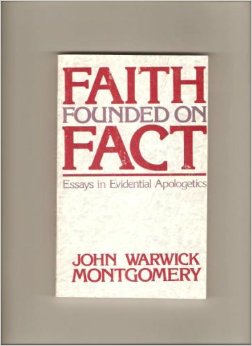 [Theological a]djustment is achieved through “interpretation”–in theological parlance, hermeneutics… [I]f the loss of the term “inerrancy”… is fraught with sufficiently dire consequences, there will be the strongest temptation to retain these expressions while giving the Bible such “adjustive interpretation” that negatively critical approaches to it can be employed anyway. (Montgomery, 217, cited below)
The definition of inerrancy has been hotly disputed as of late. The infamous Geisler-Licona controversy, which continues to boil over at points, serves as a poignant example of this (see here for a Christianity Today article on the controversy; see also links below for a few discussions of the same). What is meant by inerrancy? Are we in a new era of Bible wars? These are the questions being asked right now.
I remember reading an essay from a book–Faith Founded on Fact–by noted Christian apologist John Warwick Montgomery entitled “The Fuzzification of Inerrancy.” The quote above comes from the essay, and it has gotten me thinking. Have lines been crossed? Where do we draw the lines anyway?
Montgomery defined “fuzzification” following James Boren. It is the “presentation of a matter in terms that permit adjustive interpretation” (217, cited below). Turning back to the quote above, the term speaks of the need to retain a specific idea essentially at all costs. Thus, when a challenge is raised to that idea, the idea is broadened or changed to incorporate the data raised by the challenge. Montgomery, originally writing in 1978, seems at times prophetic. He spoke of a time when one might see a contradiction, source theory, or even possibly an error in the Bible and simply define it as “a question of hermeneutics, not of inspiration at all!” (218); he worried about a time when “the ‘inerrancy’ with which one is left is an inerrancy devoid of meaningful content”; and he warned of the dangers of “adjustive interpretation” (227).
I wonder, at times, whether his statements have come to fruition. When I survey various works from evangelicals on interpretation or hermeneutics I find a baffling array of ways we are to understand individual passages or how we are to interpret various passages. Turning to Church Fathers, I find a number of passages in which their readings would be unrecognizable today due to the heavy use of allegory in passages we take to be literal or explicitly historical in genre. Moreover, the question of the Chicago Statement on Biblical Inerrancy looms large. As with any document, questions are raised about what exactly is meant in each clause or in what way individual denials or affirmations might be meant.
It’s enough to make one wonder whether it is time to go back to a baseline understanding. “I believe the Bible is true in whatever it teaches.”*
The question that will be immediately raised, of course, is “What does the Bible teach?” The overriding desire to restrict exactly what it is the Bible teaches and prevent so-called “liberal” scholarship from finding ground to stand on in evangelicalism has led to an incessant narrowing of the definition of inerrancy, such that clause after clause is piled one atop the other to the point that it is hard to operate within such limits. Moreover, it seems some of these definitions actually prevent development within theology and squelch the impulse to question received traditions in light of new evidence.
The danger that some may think is posed by whittling the definition of inerrancy down to something like “The Bible is true in all that it teaches” may perhaps have some of the concern negated by the fact that it gets the dialogue going. If people return to this question: if someone genuinely, with open heart and mind, asks me “What does the Bible teach?” then I think that’s a glorious thing. Moreover, one may wonder at the purpose of inerrancy: is it a way to declare that the Bible is without error (as it seems to be based on the word itself); or is it a way to define how we go about reading the Bible? After all, if it is simply a declaration that the Bible is without error, should not simply declaring it as such be sufficient?
Perhaps it’s time to de-“fuzzify” inerrancy and get back to the basics. We may ask “What is the thrust of the doctrine of inerrancy?” instead of “What rival theological views may I exclude with the definition of inerrancy?”
Perhaps the danger of “fuzzification” from dehistoricizing texts, critical scholarship, and the like has in fact led to a fuzzification of the definition of inerrancy by making it over-determine the limits within which one may operate. I’m not claiming to offer all the answers, nor should it be thought that I am rejecting inerrancy. Far from it.** What I am instead rejecting is a “fuzzification” of the doctrine: when did declaring the Bible to be God’s Word and Truth become so complex that volumes of books were necessary simply to define what that means?
Let me know what you think in the comments below.
*This definition has suggested itself to me from a number of sources, including Nick Peters of Deeper Waters.
**I’m sure some people will take any questioning of current discussion about inerrancy to be denying the doctrine. However, this post is clearly written in order to defend the doctrine. What does inerrancy mean? That’s the thrust of this post, not “Inerrancy is false.” I believe the Bible is true in all it teaches.
Links
Be sure to check out the page for this site on Facebook and Twitter for discussion of posts, links to other pages of interest, random talk about theology/philosophy/apologetics/movies and more!
Book Review: “Faith Founded on Fact” by John Warwick Montgomery– I review Montgomery’s well-known book on apologetic methodology.
Inerrancy– Check out my other posts on this topic. (Scroll down for more posts.)
The Geisler/Licona Debate– Nick Peters has a number of posts on this controversy if you want to read up on the topic. This post summarizes the debate and offers a thoughtful critique, in my opinion.
The Geisler/Licona Controversy– A quick, easy read on the reasoning behind the controversy.
SDG.
——
The preceding post is the property of J.W. Wartick (apart from quotations, which are the property of their respective owners, and works of art as credited; images are often freely available to the public and J.W. Wartick makes no claims of owning rights to the images unless he makes that explicit) and should not be reproduced in part or in whole without the expressed consent of the author. All content on this site is the property of J.W. Wartick and is made available for individual and personal usage. If you cite from these documents, whether for personal or professional purposes, please give appropriate citation with both the name of the author (J.W. Wartick) and a link to the original URL. If you’d like to repost a post, you may do so, provided you show less than half of the original post on your own site and link to the original post for the rest. You must also appropriately cite the post as noted above. This blog is protected by Creative Commons licensing. By viewing any part of this site, you are agreeing to this usage policy.

 J.W. Wartick - Reconstructing Faith