bible
Sunday Quote!- What does “head” mean?
 Every Sunday, I will share a quote from something I’ve been reading. The hope is for you, dear reader, to share your thoughts on the quote and related issues and perhaps pick up some reading material along the way!
What does “head” mean?
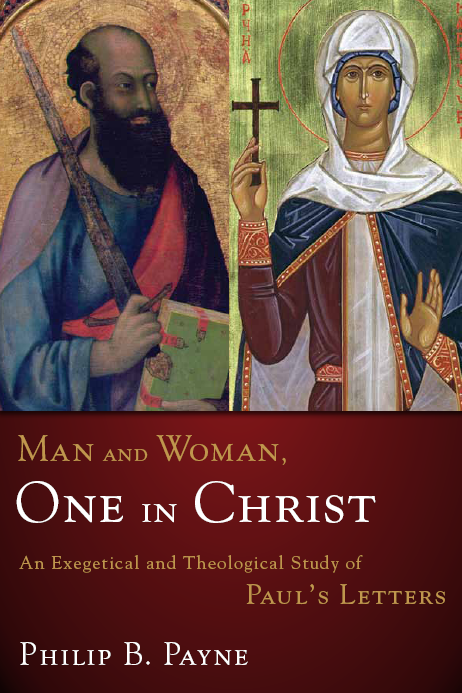
I’ve been rereading Philip Payne’s monumental study of Paul’s letters in relation to the roles of men and women in the church and home, Man and Woman, One in Christ. There is so much in this book to discuss I feel as though every single page deserves its own post. For now, I wanted to highlight his discussion of the meaning of “head” in the much-discussed 1 Corinthians 11:2-16. Payne writes:
The majority view in recent scholarship has shifted to understand “head”… in this passage to mean “source” rather than “authority”… One reason for the popularity of [interpreting it as “authority”] is that in English, German, and Hebrew… the most common metaphorical meaning of “head” is “leader”… Interpreters who in their native tongue associate metaphorical uses of “head” with “leader” naturally make this association when reading this passage. (117-118, cited below)
In the book, Payne goes on to demonstrate why it is that the majority view has turned to viewing “head” as “source.” He provides 15 reasons to think this is the case. A few highlights include contemporary 1st-3rd century usage of the term, lexical support for “source” and lack thereof for “authority,” other usage within the Pauline epistles, difficulties raised by reading it as “authority,” and support for the meaning as “source” from a number of contemporary authors and Church Fathers. In the passage above, I think it’s interesting to see that one’s native language often imports meaning into the text. I’m sure this happens in many places, and I’ve caught myself on some.
If you have any interest at all in the debate over women’s roles in the church and home and do not have this book, you must amend the situation immediately. It doesn’t matter if you are egalitarian or complementarin; you must deal with the arguments raised by Payne, who interacts with top scholars from both sides of the debate (including Piper, Grudem, Wright, and more).
What are your thoughts? How do you read this difficult passage? Does your native tongue perhaps change your perception of the meaning of some parts of the Bible?
Links
Be sure to check out the page for this site on Facebook and Twitter for discussion of posts, links to other pages of interest, random talk about theology/philosophy/apologetics/movies and more!
Sunday Quote– If you want to read more Sunday Quotes and join the discussion, check them out! (Scroll down for more)
Check out my posts on egalitarianism (scroll down for more).
Source
Philip B. Payne, Man and Woman, One in Christ
SDG.
Sunday Quote!- Does Science Limit Exegesis?
 Every Sunday, I will share a quote from something I’ve been reading. The hope is for you, dear reader, to share your thoughts on the quote and related issues and perhaps pick up some reading material along the way!
Does Science Limit Exegesis?
I’ve been rereading The Bible, Rocks and Time: Geological Evidence for the Age of the Earth
[T]he claims advanced in favor of a young Earth or Flood geology remain unacceptable to the scientific community. Thus their claims should also be unacceptable within the church, which… ought to be committed to truth and reality–for the simple reason that the young-Earth creationist claims lack scientific credibility. (161)
Now I think this is a pretty obviously controversial claim for a few reasons. First, the immediate question is how broad Davis and Stearley are intending this to be. After all, one might say that God creating the universe is “unacceptable” depending how one defines the scientific community. Of course, they do qualify the statement by noting that what they mean is that the evidence young earth creationists put forward can often, in principle, be tested for; and when tested, it fails muster. In this sense, I think that one might say the statement is acceptable.
Second, one may object to this noting that science often changes consensus, so what is “unacceptable” today becomes in vogue tomorrow. A problem with this claim is that it flies in the face of the real, overwhelming evidence for an ancient Earth. I’ve examined this and many other arguments YECs put forth in my post on YEC arguments.
Third, one might wonder exactly how Davis and Stearley think science and exegesis are supposed to interact. Though this is a far cry from the purpose of their book, statements like these beg the question of whether science really does limit exegesis.
What are your thoughts?
Links
Be sure to check out the page for this site on Facebook and Twitter for discussion of posts, links to other pages of interest, random talk about theology/philosophy/apologetics/movies and more!
Answering Common Young Earth Creationist Arguments– I evaluate a number of arguments for young earth creationism. There are a large number of biblical, philosophical, and scientific arguments briefly answered here.
What options are there in the origins debate? – A Taxonomy of Christian Origins Positions– I clarify the breadth of options available for Christians who want to interact on various levels with models of origins. I think this post is extremely important because it gives readers a chance to see the various positions explained briefly.
Source
Davis A. Young and Ralph F. Stearley, The Bible, Rocks and Time: Geological Evidence for the Age of the Earth
Book Review: “How God Became Jesus” edited by Michael Bird
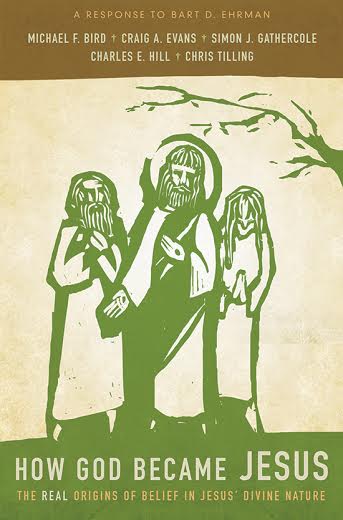 Bart Ehrman has made a name for himself through critical scholarship of Christianity. His latest challenge, a book called How Jesus Became God, contains an argument that the notion that Jesus is God was a later development in the church and not reflective of the earliest teaching. Interestingly, the book was published alongside a response book, How God Became Jesus, in which multiple scholars argue that, far from being a late development, high Christology was the belief of the church.
The book is a series of essays organized around responding to Ehrman’s book essentially point-by-point. Ehrman’s central thesis, that Jesus Christ was exalted from human to deity over the course of theological reflection and some centuries, is directly confronted in a number of ways. First, Michael Bird challenges the thesis by pointing out some major errors in the Ehrman’s use of angels and other exalted beings. Later, a kind of death blow is dealt to the thesis by pointing out that even within the earliest writings there is the alleged full “range” of development of the doctrine of Christ as divine (136ff). Simon gathercole provides interesting philosophical insight into the use of types of change in relation and actuality (114-115).
Other challenges brought against Ehrman include critical analysis of his methodology (Chris Tilling, 117ff), historical insight into the development of orthodoxy (Charles Hill, 151ff), and insight into Christ’s own claims of deity (Bird, 45ff). These present a broad-spectrum approach to analysis of Ehrman’s arguments and demonstrate the difficulty of maintaining his thesis. Readers are exposed to methodological, factual, exegetical, and other errors in Ehrman’s work.
However, the book should not be seen merely as a response to Ehrman. Although it is structured around just such a response, it is a worthy read in its own right because it provides background for exploration of the deity of Christ found throughout Scripture. It also helps readers place these writings in context by showing the cultural surroundings of the discussions over the deity of Christ. Moreover, by analyzing many of Ehrman’s skeptical claims, the authors provide responses to a broader range of objections to the Christian faith. For example, Craig Evans’ essay on the evidences for the burial traditions provides insight into how crucifixion worked in practice and, importantly, how the Biblical narratives line up with these practices.
Various excurses provide documentary evidence for things like 2nd and 3rd century belief in Christ’s deity. These help to break up the book, which can easily be read chapter-by-chapter or as individual essays.
How God Became Jesus is a great read. It provides insight not only for a response to Ehrman’s thesis but also for a number of other issues that come up when talking about the incarnate Lord Jesus Christ. Each essay has much to commend it, and the excurses found throughout provide ways forward to research various other topics. The book is a solid resource for those interested in the deity of Christ.
My thanks to Baker Book House for the book as a gift. Check out their awesome blog to read a number of theological posts a week.
Links
Be sure to check out the page for this site on Facebook and Twitter for discussion of posts, links to other pages of interest, random talk about theology/philosophy/apologetics/movies and more!
Source
How Jesus Became God edited by Michael Bird (Grand Rapids, MI: Zondervan, 2014).
SDG.
——
The preceding post is the property of J.W. Wartick (apart from quotations, which are the property of their respective owners, and works of art as credited; images are often freely available to the public and J.W. Wartick makes no claims of owning rights to the images unless he makes that explicit) and should not be reproduced in part or in whole without the expressed consent of the author. All content on this site is the property of J.W. Wartick and is made available for individual and personal usage. If you cite from these documents, whether for personal or professional purposes, please give appropriate citation with both the name of the author (J.W. Wartick) and a link to the original URL. If you’d like to repost a post, you may do so, provided you show less than half of the original post on your own site and link to the original post for the rest. You must also appropriately cite the post as noted above. This blog is protected by Creative Commons licensing. By viewing any part of this site, you are agreeing to this usage policy.
Jesus had a wife!? Special Really Recommended Posts Issue
 Today, I have changed the standard “Really Recommended Posts” to be all about the “Gospel” of Jesus’ Wife. Check out the updated list of links for responses to this discovery. Also, it snowed again here (yes, in mid/late April), so I made this an “owl post” edition.
SEE UPDATE: It has become revealed that this fragment is almost certainly a fraud. But, if you’re still bothered by it, check out the links below.
UPDATE 2 (4/17/2014): The case has been reopened as some alleged new evidence has shown that the document might not be a forgery after all, which now makes the links below relevant again! I’ve also added a comedic video I found via Tim McGrew.
UPDATE 3 (5/2/2014): It seems to actually be likely, after all, that it is a forgery! Which is it? Anyway, I added this link to a discussion of the evidence of forgery. (5/4/14): Another update with a post summarizing much of the evidence that the manuscript is a forgery.
There has been a bit of an uproar about a 4th Century Coptic Manuscript which purportedly provides evidence that Jesus had a wife. Apart from the fact that it is 4th century and therefore a few hundred years after the events and during primetime for Gnostics making up facts about Jesus to undergird their own theological leanings, many seem to think this is somehow evidence against Christianity. Well, here are some great responses to the discovery.
Reality Check: The “Jesus’ Wife” Coptic Fragment– Daniel Wallace, an influential NT scholar, comments on the discovery. He really gets into some great textual-critical details here. I would say this is one of the more important responses. I highly recommend this response.
Durham University professor calls the “Jesus had a wife” manuscript fragment a forgery– Yep, folks, we might be cutting this one off pretty quickly. Some analyses are suggesting fragment is actually a hoax, and the arguments seem pretty decisive. See the next post:
The Gospel of Jesus’ Wife: How a Fake Gospel-Fragment Was Composed– This is a very interesting post which you can find Francis Watson, a professor of religion and theology at Durham University making a concise argument in a PDF which argues that the fragment is a fake. It’s a fascinating article, and perhaps destroys the whole controversy at the start. (To be fair, the late purported date of the fragment does little for me, anyway.)
New Coptic Fragment Says Jesus Was Married– A summary of skeptics’ attitudes towards historicity.
The Gospel of Jesus’ Wife?– Glenn Andrew Peoples has a simply fantastic discussion of the implications of this discovery. One of my favorite lines: “Prepare yourself. Suddenly, people are going to read a sensational article about a tiny scrap of parchment and become experts on early church history.”
Did Jesus Have a Wife?– A post which focuses on the authenticity of the document and the implications if it is indeed authentic. Another great response.
SHOCKING New Evidence Reveals 4th-Century Coptic Christians WONDERED If Jesus Was MARRIED!– What is the historical significance of the discovery, assuming it is genuine? A few very good, concise points.
So What if Jesus did Have a Wife?– Definitely an alternative approach. John Byron notes that Christians could grant that Jesus was married without somehow undermining the core doctrines of Christianity. This one is really interesting and I’m sure will be controversial. While not a response to this article, Aggie Catholics has a very different view of the implications of the discovery, while denying that it has historical import other than as showing the beliefs of Gnosticism: Proof That Jesus Was Married?
The Wife of Christ and the Bride of Christ– This post looks at the discovery from a more presuppositional type approach. We know the Bible is reliable, so what should we make of this discovery?
Stop the presses! Jesus was married! Oh no!– Carl Olson at the Catholic World Report comments on a number of issues with jumping to conclusions about the text. I found this one particularly insightful about how the discovery is being portrayed in the media.
Quick Thoughts on the New Jesus Wife Text– Darrell Bock, a prominent NT scholar, shares his thoughts on the implications of the text. It’s highly informative and concise.
Was Jesus Married?– A reflection on the way the media portrays stories like this along with an examination of the importance of the document and apologetics.
Get Ready for A Wave of Gnostic Looniness Again– James White notes that the discovery was made by a woman who loves to sensationalize gnosticism.
Shock! Horror! Jesus’ Wife! (Video)– a satirical video about the discovery and its alleged implications for Christian faith.
Gospel of Jesus’ Wife– New evidence has come up (5/1/14) which may show that the Gospel of Jesus’ Wife is indeed a forgery. This additional analysis suggests the fragment is forged, though the material may be genuine. H/T Tim McGrew for the find.
Wall Street Journal: How the Jesus’ Wife Hoax Fell Apart (5/4/14)- A post summarizing much of the evidence that this “Gospel of Jesus’ Wife” is indeed a forgery. There are a few comments on the end which I think are a tad unnecessary about those who are interested in women’s roles in the church and the like–after all, what one chooses to study does not necessitate certain views–but the summary of the evidence is great.
Really Recommended Posts 3/21/14- egalitarian marriage, the Bible and murdering children, inerrancy, and more!
Well we got snow again here (about 3 inches). If it’s anything like last year, we’ll be seeing snow in May. Alas. Given that we’re stuck inside, I am pleased to present a number of excellent posts here for your perusal. The posts address the notion that egalitarian marriage is less satisfactory, apologetic interaction in social media, a recent meme about murdering children in the Bible, and more!
Gender Roles in Marriage (Part 1): Couples in Traditional Roles Have More Sex, Study Finds– I have seen several people sharing the results of a study in which it was found that couples in traditional roles have more sex. Some have trumpeted this as proof that traditional marriage is actually superior to egalitarian marriage. (Here, realize that “traditional marriage” is referring to a complementarian relationship wherein the man is in charge of the household.) However, apart from the problem that the number of instances of sex in a month is perhaps not the best indicator of marital stability and happiness, it seems there are other difficulties with this study and those drawing conclusions about the superiority of complementarianism. Check out this article on the topic.
How to Murder Children: Bible Style – Debunked– There’s a meme rolling around the internet about how the Bible has murdering children in it. It’s constructed without commentary and seems to be slanted towards the view that the Bible is evil. Check out this debunking of the meme (it includes the original). Very good work here, and I really think you should check it out!
What Christians can learn from skeptics– Certainly not an exhaustive list, this is actually more specifically looking at how skeptics are using Wikipedia to slant opinion on religious issues. How might Christians use this as a way to increase confidence in the faith?
Errors of Inerrancy– An interesting post on how to avoid some pitfalls when thinking of the doctrine of inerrancy. The list of errors includes both mistakes made by both critical scholarship and evangelicals regarding the text of Scripture.
One Christian Apologist’s Advice on Using (Anti-)Social Media– Some good advice here on how to become more effective via social media. Though I personally think Facebook is actually a better way to do apologetics than described in this post.
Sunday Quote! – Does reading Genesis Require a PhD?
 Every Sunday, I share a quote from something I’ve been reading. The hope is for you, dear reader, to share your thoughts on the quote and related issues and perhaps pick up some reading material along the way!
Does Reading Genesis Require a PhD?
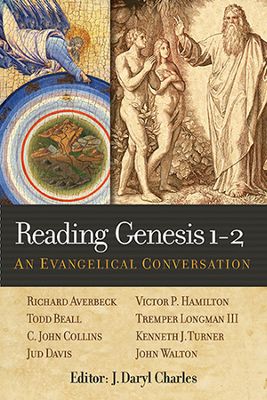
One of the topics of major interest to me is the debate within Christianity over the means and timing of creation. Recently, a friend sent me a copy of Reading Genesis 1-2: An Evangelical Conversation
Genesis 1 should be read… as historical narrative that is meant to be taken literally. This is the normal reading of the account… It does not require a person with a PhD to unlock the key to these chapters by appealing to A[ncient] N[ear] E[astern] literature or a special genre or some other special figurative approach. (48)
The quote is in context of Beall’s discussion of various evangelicals “coming out” as not reading the text literally for various reasons, such as ANE context, notions of genre, or the like. Basically, Beall’s point seems to be that we can (and should?) just read the text straightforwardly without having to study all kinds of topics to understand it. What do you think of this notion? What might this say about the cultural context of Genesis? Does that context matter? Should we be concerned with possibilities regarding such a context, differing genres, or the like?
Bonus Quote
Interestingly, a later author in the same work, Tremper Longman III, confronts Beall’s allegation regarding the PhD:
…isn’t the Bible equally clear to everyone, even those who have not studied the Bible and its cultural background? The simple answer to that question is no, it is not. After all, unless you have studied Hebrew, Greek, and Aramaic you cannot read the Bible at all without scholarly help. (121)
Links
Be sure to check out the page for this site on Facebook and Twitter for discussion of posts, links to other pages of interest, random talk about theology/philosophy/apologetics/movies and more!
Source
Todd S. Beall, “Reading Genesis 1-2: A Literal Approach” in Reading Genesis 1-2: An Evangelical Conversation edited J. Daryl Charles (Peabody, MA: Hendrickson Publishers, 2013).
Tremper Longman III, “What Genesis 1-2 Teaches (and What It Doesn’t)” in Reading Genesis 1-2: An Evangelical Conversation edited J. Daryl Charles (Peabody, MA: Hendrickson Publishers, 2013).
SDG.
Really Recommended Posts 1/17/14- Gospels, Abolish Human Abortion, the Kalam, and more!
 Here we have another round of really recommended posts. This one features a couple posts directed inwards at fellow Christians or people with whom we agree alongside a range of interesting topics. It is important to maintain a high standard, so sometimes it is necessary to give criticism where it is due. Drop a comment, let me know what you thought.
A Fundamental Flaw Behind Abolish Human Abortion– A group which I came out strongly in support of some time ago has really started to take a few turns with which I cannot agree. The group is known as Abolish Human Abortion. I think a lot of what they were doing is quite excellent, but I cannot abide by a few of their primary beliefs. Check out this great analysis of one of the major issues with the group.
The kalam cosmological argument defended in a peer-reviewed science journal– The title says it all, though the post does have some nice quotes and bits of information. The kalam cosmological argument is an extremely powerful argument for the existence of God. I have a few posts on it myself.
Dear Parents with Young Children– The importance of bringing your children to church is inestimable. Moreover, choosing a church where Law and Gospel are clearly proclaimed, and a basis for belief is preached is essential. Thank you to those parents who bring their children to church! Check out this great post about the topic.
The Case for the Eyewitness Status of the Gospel Authors– Are there any reasons to think those who wrote the Gospels knew what they were talking about? Here, J. Warner Wallace–who, as a homicide detective, has some experience with eyewitness accounts–argues that the Gospels show good evidence for thinking they are eyewitness accounts.
A Review of 5 Views of Biblical Inerrancy– I do not agree with everything Norman Geisler has to say, but I think portions of this review are of critical importance. I haven’t quite finished the whole article, and I’ve only just started reading the book, but I thought this post was worth passing along for others who find the topic of interest.
The Bible Is Not One Book
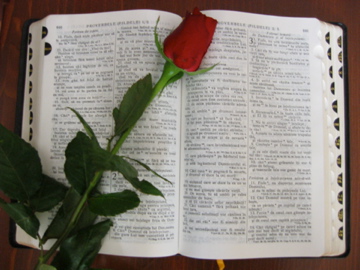 I was doing some research recently for a lengthy (book length!) project I am working on and was searching Amazon for some books on Bible prophecy. I came upon a work by John Walvoord called Every Prophecy of the Bible

I was perplexed by his (a male, judging by the picture) objection to confirming the Bible as true through prophecy. He wrote, “The book basically runs off a list of biblical prophecies that have supposedly been fulfilled. Amazingly pretty much all the evidence for these so called fulfilled prophecies comes from the same book making the prophecies in the first place ie the bible.” He then proceeded to ridicule Christians who do believe this as holding to an “infantile” belief.
The Objection
Unfortunately, this is not the first time I have seen an objection like this. Put simply, the objection is that the Bible can’t confirm itself, because that would be a circular argument. In other words, one can’t use material from one part of the Bible to confirm other parts of the Bible because then one is arguing for the truth of the Bible from the Bible.
The Problem
Most people should immediately see what the problem is. Although the Bible as we have it today is a single “book” in the sense that its contents share the same binding, it is really a collection of independent works written across over a thousand years by various authors in different parts of the world. In other words, the Bible is not “one book,” at least in the sense that one needs to maintain for this objection. Thus, if there is a prophecy found in one book which we know to be earlier than a book which is later that records its fulfillment, then there seems to be at least some evidence, prima facie, for the truth of the prophecy. (Of course this would be contingent upon the historical accuracy of the books, etc., etc. but the simple fact of an alleged prophecy’s existing before its fulfillment is an interesting facet to consider.)
A friend, Anthony Weber, made an analogy: think of the Bible as a library of books. Would it not be silly to think you couldn’t pull one book of the shelf and say that it confirmed another book? Suppose each book was about history, and one made a mere mention of a topic, while another featured a more detailed description. Would we not be surprised if someone came along and objected, saying “Well, they’re in the same library, so we can’t trust them!”
Inerrancy?
Christians need to realize that this has implications for doctrine as well. For example, those who maintain inerrancy–and I strongly believe that consistent Christians should do so (see my arguments to this end and defense of the doctrine here)–may be concerned that viewing the Bible in this fashion comes in danger of breaking it up piecemeal and pitting each segment against the others. But this is not what follows at all. Instead, it is simply an acknowledgment that the Bible is a collection of works in different genres written at different times in different places which, when put together, form a coherent whole.
Concluding call for intellectual honesty
In light of what I have explored, I want to first issue a call to the atheists out there: I know that you (atheists) do not all hold to objections like this and would find someone else using this objection a bit alarming. I call you to challenge your fellow atheists to a more honest interaction with positions of faith. If you want to criticize someone else’s position, fine. But do it without completely misrepresenting them. Call out your fellow atheists when they try to put forth this kind of drivel as a serious objection to Christianity. I try to call out fellow Christians when they do the same with other views.
To my fellow Christians: be aware that objections like these are not the backbone of atheism. Frankly, I think people like “gavin” are just grasping at anything to maintain unbelief and ridicule others they choose to look down on as “infantile.” Let’s engage with people who make these objections, but if they persist, dismiss the objection as the ridiculous notion it is. Finally, if you catch yourself treating the Bible like one book without any distinction in genre, time, place, etc., stop yourself. It is important to note the Bible is united in message, but God used different people as they were “carried along by the Holy Spirit.” It wasn’t delivered all by divine dictation.
Links
Be sure to check out the page for this site on Facebook and Twitter for discussion of posts, links to other pages of interest, random talk about theology/philosophy/apologetics/movies and more!
SDG.
——
The preceding post is the property of J.W. Wartick (apart from quotations, which are the property of their respective owners, and works of art as credited; images are often freely available to the public and J.W. Wartick makes no claims of owning rights to the images unless he makes that explicit) and should not be reproduced in part or in whole without the expressed consent of the author. All content on this site is the property of J.W. Wartick and is made available for individual and personal usage. If you cite from these documents, whether for personal or professional purposes, please give appropriate citation with both the name of the author (J.W. Wartick) and a link to the original URL. If you’d like to repost a post, you may do so, provided you show less than half of the original post on your own site and link to the original post for the rest. You must also appropriately cite the post as noted above. This blog is protected by Creative Commons licensing. By viewing any part of this site, you are agreeing to this usage policy.
My Current Projects and Graduation
Hello, dear readers!
I wanted to let you know how much I appreciate your coming and reading my blog, whether you are just a one-off who happened to stumble on this post, or a follower who has read it for years.
As a kind of thank you, I wanted to give you an update on what I’m currently working on behind the scenes. I am, as always, constantly writing blog posts. I try to give a pretty good spread of topics I’m interested and I hope you find them interesting too. I read a lot of books, so book reviews are a constant part of the process.
I graduate from Biola University with my MA in Christian Apologetics on December 20, 2013. I will be graduating in absentia. I don’t have the money to fly out to CA for it, so I’m a little bummed that I won’t be able to walk for my graduation, but I’m also very excited to be finishing. I have had an absolute blast with the courses and I have learned a lot. Anyway, I have actually had two readers contact me because they wanted to send a gift for graduation and/or Christmas. Wow. That is really, really awesome. Thanks so much! If you also want to consider such a thing, feel free to check out my constantly-updated Amazon wish list.
I’m honestly really looking forward to getting the MA hood. Perhaps I’ll wear it around the home. Okay, no I won’t. But it is a really awesome feeling to be right on the verge of my MA!
But now that I’m on the verge of graduating with my MA in Christian Apologetics, I have been thinking ahead and considering what projects I should work on. Here’s an idea of what I’ll be doing.
Writing Books:
Yes, I’m working on a couple books. I’m actively writing on two of them, with a couple others planned in the future. My hope is to get these published through a major Christian publishing house. So hey, if you have any connections or advice, please send them my way either through the comments here or through the “contact” form.
The books I’m working on right now are, I think, going to be both highly relevant and also very sellable. They’re the kind of books that, if I saw they had been written, I would snap them off Amazon instantly. So I hope that others will feel the same way. The first book is about 95 pages right now, but I hate to say that I’m going to keep the topic top secret. I’ll just say this: it is related to apologetics, and it is going to give a lot of unique insight. It will, I think, drive a whole lot of discussion and research going forward. I’m not trying to brag here, I just think that the outcome will be pretty significant.
The other book I’m working on is related to issues of creation and creationism. It’s going to be largely autobiographical and written in the first person as a kind of memoir of my explorations of the issues involved. I may not reflect it much on the blog, but I have a fairly dry sense of humor and that will be reflected in this book.
School
I am planning on continuing my education, hopefully by pursuing a PhD in theology next. I will be applying not for 2014 but for 2015, so I’m taking this year to study languages and the like while working on my books before I go into full time school work again.
Bible Commentary
I have been working on a commentary on the entire Bible. I’m writing this less as a book project than as a simple project for edification. I have been keeping a document in outline format with notes on the various books of the Bible as I read through them. The outline format allows for easily searchable notes, and I also use some paragraphs therein as well. I think it is pretty neat! I am currently going through Proverbs, Deuteronomy, and Luke.
The insights one gets from such a project are amazing. It is fascinating to see the way you find links between books that you never had before. I highly recommend that you also keep a kind of running commentary going as you read through the Word.
Onward!
Anyway, those are the projects I’m currently working on. I hope you enjoyed reading about them. Let me know what your thoughts are! What are you working on? Leave some comments.
Really Recommended Posts 11/15/13 The Quran, egalitarianism, the Dark ages, and more!
I have searched the four corners of the internet to bring you, dear readers, these really recommended posts. This week, we explore the Quran, egalitarianism, evidence for the truth of the Bible, the Dark Ages, and more! Check them out. As always, drop a comment to let me know what you thought! Have a post you think I’d be interested in? Here’s your place to share it (but don’t just leave a link! Tell me why I’d like it).
Is the Quran the Book of God? Debate Transcript– This is a very lengthy written debate between a Muslim and Christian on the topic: “Is the Quran the Book of God?” It is well worth a read as it shows the methodology that Muslims frequently use in debates. The cross-examinations, in particular, are highly useful. Although it is lengthy, I do really recommend that you read through this to get a better understanding of the places Christians and Muslims differ. The Christian, I think, did a fantastic job of showing that the Quran claims the Old and New Testaments are inspired, while also showing that one cannot simply claim corruption. The Quran says the Bible is the word of God, but then contradicts the Bible.
Why I’m an Egalitarian– An excellent post in which Leslie Keeney gives the reasons she holds to an egalitarian view–that women should be allowed full participation in leadership in the church and home. She addresses several biblical and social arguments.
Undesigned Coincidences– Tim McGrew points out, in this phenomenal post, the evidences for the truth of the Bible we can find even in those portions we so often skim past. Paul’s greetings provide us with confirmation of the details of his travels as found in Acts, for example. This post is Part 4, but it is standalone in content. Check out my own posts on this argument.
The Dark Age Myth: An Atheist Reviews “God’s Philosophers”– Christianity really slowed down scientific progress during the Dark Ages, right? Wrong. Here, an atheist explains how ridiculous such claims are historically.
Bad– Another great comic post from Adam4d, this one poignantly shows the truths about human nature.
Ad hominems, Special Pleading, Straw Men & Red Herrings: John Loftus’ Response to MandM– John Loftus has written a number of works attacking Christian theism from multiple angles. Here, MandM respond to a critique he leveled against their satirical moral argument. In this post, they analyze Loftus’ arguments in a number of different lights.

 J.W. Wartick - Reconstructing Faith