biography
Biographies of Dietrich Bonhoeffer: An Ongoing Review and Guide
There is an ever-growing collection of biographies of Dietrich Bonhoeffer, the German pastor who was executed by the Nazis in 1945. This means that when people are looking to learn about Bonhoeffer, it can be difficult to know where to dive in. While I believe there’s no single strong answer to that question, I do think different biographies do different things well. This post will be a catch-all specifically for biographies about Bonhoeffer. I’ll highlight strengths and weaknesses of each one, in the hopes that this will let readers best choose from among the growing field of Bonhoeffer studies. This post will continue to be updated as I encounter additional biographies, and may be expanded to include related works.
Why am I qualified to do this post? I am not a Bonhoeffer scholar by any traditional means, and I think it is incredibly important to read those scholars. That said, I have read over 100 books by or about Bonhoeffer, his life, and his theology. By no means does this make me an expert, but I think I could at least offer some insights into questions about what biography to read.

Strange Glory: A Life of Dietrich Bonhoeffer by Charles Marsh
Marsh’s biography, published in 2014, presents Bonhoeffer’s life in a compelling fashion backed by scholarship. It is highly readable but doesn’t skip over details and controversies about Bonhoeffer’s life.
Advantages
-Written to effectively introduce readers to scholarship about Bonhoeffer while also telling his life’s story.
-Turns into a page-turner at times with Marsh’s effective writing style.
-Introduces readers to many topics related to Bonhoeffer’s life and theology in ways that can guide further reflection and study.
Disadvantage(s)
-Somewhat long for a reader attempting to get the basics of Bonhoeffer’s life, at more than 400 pages of text.
It’s For You If…
You want a one stop shop for Bonhoeffer’s biography. This is probably the single best biography in terms of combining scholarly insight, readability, and accuracy about Bonhoeffer’s life without being too dry.

The Faithful Spy: Dietrich Bonhoeffer and the Plot to Kill Hitler by John Hendrix
A graphic novel as a Bonhoeffer biography that caught me unawares in 2020. The art style is engaging, and the panels manage to tell the story without being too cluttered with text.
Advantages
-Extremely readable, with language that is easy to understand, even in sections on theology.
-It’s a graphic novel, I mean… come on. But really, this will appeal to adults who like graphic novels and can also be good reading for teens or tweens who want to engage with deeper topics.
-Probably the most unique biography in presentation.
Disadvantage(s)
-Doesn’t have a complete picture of Bonhoeffer’s life due to the focus on Bonhoeffer’s struggle with Nazism. While this is definitely a large part of his life, it doesn’t fully explain his theology or ethics. It’s a graphic novel, so expecting it to do so might be absurd, but it is worth noting that there is some hot debate in Bonhoeffer scholarship about just how involved he was in the plot to kill Hitler, or even whether he was involved at all. All nuance on this and related topics is basically lost with the format here.
-Relies a bit on Metaxas’s apocryphal work (see below).
It’s for you if…
You want a quick, easy read on Bonhoeffer that gives you at least a surface familiarity with his life and work. Or, you want something you could hand to someone who’s not interested in large tomes.

Bonhoeffer: Pastor, Martyr, Prophet, Spy by Eric Metaxas
This is by far the most popular biography of Bonhoeffer. There’s no doubt that Metaxas’s biography helped the burgeoning interest in Bonhoeffer along. That said, there are serious defects in this biography which lead me to strongly not recommend it as a work for anyone looking into Bonhoeffer’s life.
Advantages
-Popularity- popularity is not a bad thing. It’s great that Metaxas manage to shine a light on Bonhoeffer and encourage so many to read more about him.
-Great subtitle- Bonhoeffer’s life begs to be a major Hollywood blockbuster according to this subtitle.
Disadvantages
-Inaccuracy- I won’t nitpick various tiny facts that Metaxas got wrong. Any biographer can mess up geography or days. It happens. What is at issue is that Metaxas actually undermines much of Bonhoeffer’s own positions by substituting Bonhoeffer’s theology–that of a Lutheran theologian from Germany–with Metaxas’s preferred theology–that of right-leaning American Evangelicalism. For example, Metaxas doesn’t write anything about Bonhoeffer’s views on baptism or the Lord’s Supper, despite Bonhoeffer himself saying the Sacraments are necessary for the church. Why does Metaxas avoid it? Either he’s unaware of Bonhoeffer’s theology here–a major blunder given that Bonhoeffer is a Lutheran pastor–or he’s explicitly leaving it out to avoid offending the Evangelical-Baptist tendencies of his targeted audience, who would strongly disagree with Bonhoeffer’s sacramental theology. Bonhoeffer’s work in the resistance is not given the nuance the evidence requires. Bonhoeffer’s theology is devoid of challenging the reader in Metaxas’s reading. Bonhoeffer is made to be a biblical inerrantist, with Metaxas emphasizing his care for studying the Bible, despite Bonhoeffer’s own words noting that “the theory of verbal inspiration will not do” (DBWE 3:51). In short, Bonhoeffer’s life, theological views, and motivations are all slanted in Metaxas’s representation. Indeed, it shouldn’t escape most readers that Bonhoeffer’s viewpoints begin to seem eerily similar to those of Metaxas’s.
-Distorts the view of Bonhoeffer for many- due to the book’s popularity and its major inaccuracies, it has led to a distorted view of Bonhoeffer’s legacy. One example is the “silence” quote attributed to Bonhoeffer on the inside flap of the book. “Silence in the face of evil is itself evil. God will not hold us guiltless. Not to act is to act.” It’s a great quote, and sounds possibly like something Bonhoeffer would say. The problem is that he didn’t say it. The quote simply is not from Bonhoeffer. And yet it’s in the congressional record as something he said because of the popularity of this book. Now quote misattribution isn’t the end of the world, especially when the quote itself doesn’t necessarily run contrary to the person it’s attributed to. The problem is that Metaxas does things like this constantly. He presents Bonhoeffer as wholly alien to the context in which he operated.
-Somehow still too long for an introductory biography, weighing in at over 600 pages.
It’s for you if…
You’ve gotten a grounding in Bonhoeffer’s life and theology and want to see what the fuss is about. Or, you love writing critical reviews.
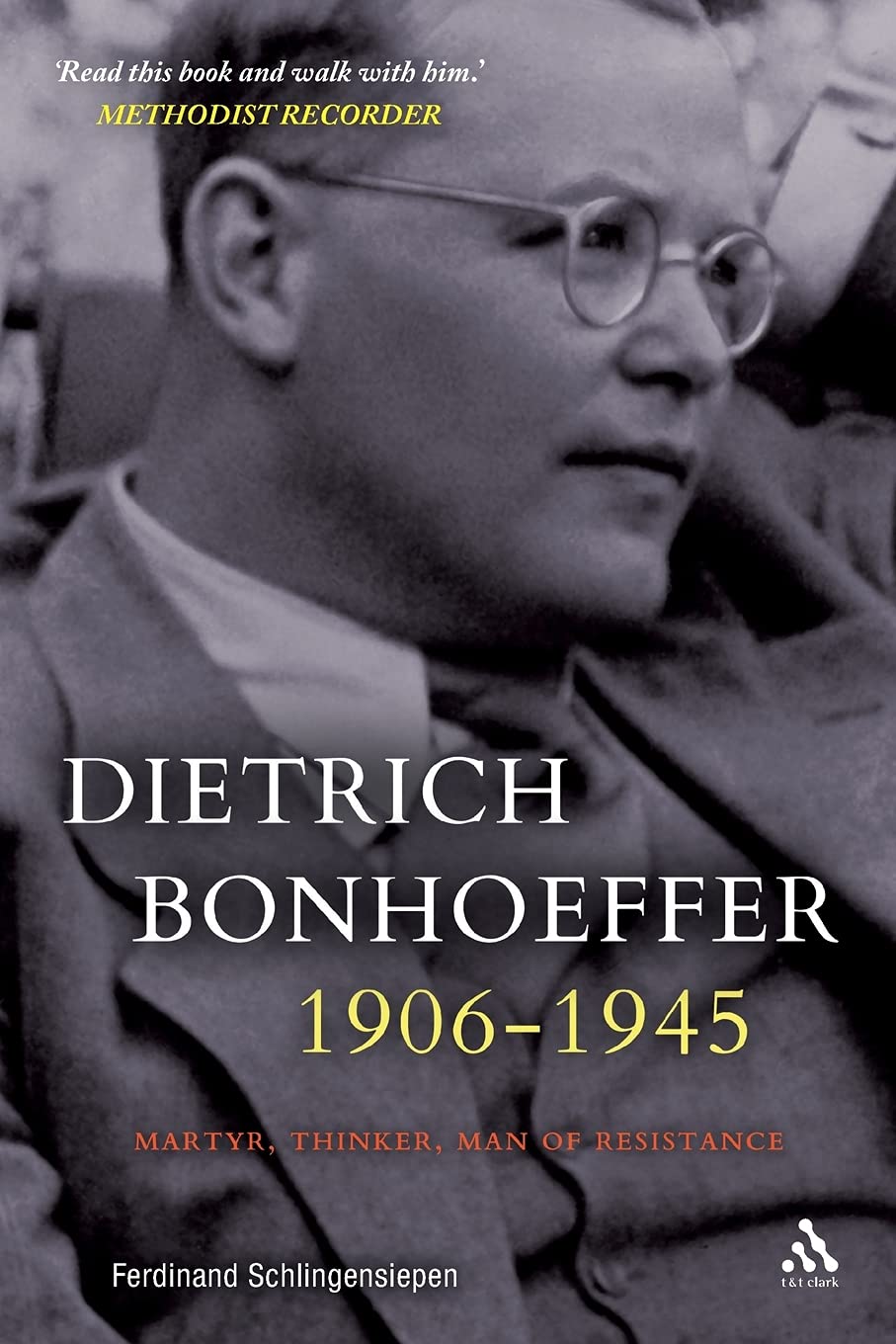
Dietrich Bonhoeffer 1906-1945: Martyr, Thinker, Man of Resistance by Ferdinand Schlingensiepen
Schlingensiepen’s biography is broad and intently focused upon Bonhoeffer’s intellectual development and production. It is an excellent work of Bonhoeffer scholarship but perhaps a bit less accessible for the lay reader.
Advantages
-Schlingensiepen’s academic experience and interpersonal connections make him imminently positioned to present an accurate accounting of Bonhoeffer’s life.
-The biography is not American-centric, as even the Marsh biography is in some ways. This biography is more historically based than it is theologically driven.
Disadvantage(s)
-The writing was originally German and the translation, while excellent, retains the dry tone and feel of the work.
-Schlingensiepen seems almost allergic to confronting modern concerns about theological questions that might arise from Bonhoeffer’s thought, making the biography more of a “just the facts, ma’am” approach than an attempt at relevance. This could also be seen as an advantage, depending on the reader.
It’s for you if…
You prefer a factual account of one’s biography to speculation about lesser grounded facts. Or, you would like to see a more modern German take on Bonhoeffer’s life. Or, you prefer to read one of the best scholarly treatments of Bonhoeffer’s life to anything more generalized.

The Doubled Life of Dietrich Bonhoeffer: Women, Sexuality, and Nazi Germany by Diane Reynolds
Bonhoeffer scholarship continues to broaden, and one great advantage of that is that scholars are driven to exploring corners of his life that would not otherwise have been explored. Reynolds here focuses specifically on Bonhoeffer’s life regarding the three subjects noted in the subtitle: women, sexuality, and Nazi Germany. (Full Review Here)
Advantages
-Insightful Commentary- Whether you agree or disagree with Reynolds’s conclusions, she makes a strong case in defense of her points. Truly, I think this biography deserves to be read by anyone who’s serious about engaging with Bonhoeffer’s life.
-Highlights lesser-discussed points- Women are constantly removed from history, but Reynolds puts women back into the narrative of Bonhoeffer’s life. She manages to show how influential many women were on Bonhoeffer’s life, leading to additional questions and avenues for exploration about Bonhoeffer. Additionally, the questions raised about Bonhoeffer’s sexuality elsewhere are highlighted here, with Reynolds deeply analyzing Bonhoeffer’s letters and life to make compelling, challenging arguments.
Disadvantages
-Primary focus is on the topics in the subtitle. Readers will get a fascinating look at Bonhoeffer’s interactions with women, interplay with Nazi Germany, and one of the deepest arguments about his sexuality found anywhere, but won’t have a full picture of his life.
-Highly controversial view of Bonhoeffer’s sexuality, which can be an advantage as it introduces readers to some of the best scholarly arguments on the topic.
It’s For You If…
You’ve read some about Bonhoeffer’s life and are interested in delving deeper into the background of some of his beliefs. You are curious about some of the hubbub surrounding Bonhoeffer’s sexuality in scholarly circles.
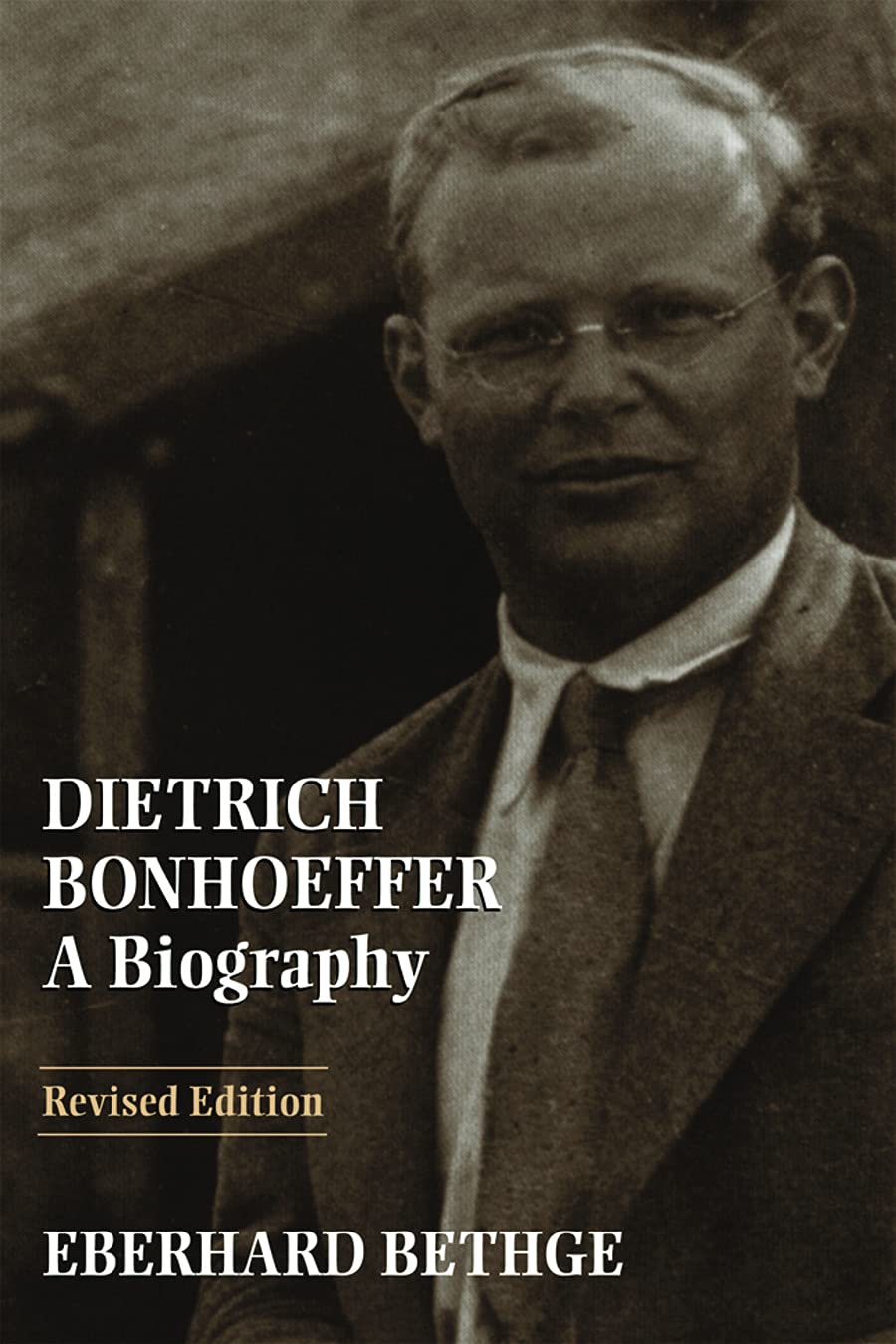
Dietrich Bonhoeffer: A Biography by Eberhard Bethge
Long seen as the definitive biography of Dietrich Bonhoeffer, this one is written by Bethge, Bonhoeffer’s great friend and confidant. It is voluminous in both content and commentary, providing key insights into Bonhoeffer’s thought from someone who knew him intimately.
Advantages
-The book feels absolutely comprehensive in its look at Bonhoeffer’s life.
-Bethge knew the subject well, personally, and this shows on basically every page.
-Bethge gives many insights into the “why” behind what Bonhoeffer was thinking, leading readers to deeper exploration and understanding of Bonhoeffer’s thought.
Disadvantage(s)
-It’s absolutely massive, weighting in at over 1000 pages (including notes/indices).
-There is some necessary bias from a friend of Bonhoeffer (Bethge) writing in a time in which Bonhoeffer wasn’t nearly as popular as he’s become now.
It’s for you if…
Want to feel like you know Bonhoeffer like a friend. Or, you’d like to see what serves as perhaps the baseline study for any student of Bonhoeffer’s life.
All Links to Amazon are Affiliates links
Links
Dietrich Bonhoeffer– read all my posts related to Bonhoeffer and his theology.
Be sure to check out the page for this site on Facebook and Twitter for discussion of posts, links to other pages of interest, random talk about theology/philosophy/apologetics/movies and more!
SDG.
——
The preceding post is the property of J.W. Wartick (apart from quotations, which are the property of their respective owners, and works of art as credited; images are often freely available to the public and J.W. Wartick makes no claims of owning rights to the images unless he makes that explicit) and should not be reproduced in part or in whole without the expressed consent of the author. All content on this site is the property of J.W. Wartick and is made available for individual and personal usage. If you cite from these documents, whether for personal or professional purposes, please give appropriate citation with both the name of the author (J.W. Wartick) and a link to the original URL. If you’d like to repost a post, you may do so, provided you show less than half of the original post on your own site and link to the original post for the rest. You must also appropriately cite the post as noted above. This blog is protected by Creative Commons licensing. By viewing any part of this site, you are agreeing to this usage policy.
Book Review: “J. I. Packer: His Life and Thought” by Alister McGrath
J. I. Packer was undoubtedly one of the most influential American theologians of the 20th Century. Alister McGrath offers a pithy look at the man’s legacy with J. I. Packer: His Life and Thought.
McGrath covers quite a bit of ground in the book, compressing a life’s story as well as an intellectual journey into 154 pages of text. He shows how Packer’s early life influenced his later thought, demonstrates shifts in Packer’s direction, and even offers some brief analysis of aspects of Packer’s theology. In doing so, McGrath can touch delicately on controversial topics.
For example, Packer was a vociferous opponent of women’s ordination, but McGrath attempts to moderate this opposition by couching it in concern for “conviction and process” related to tradition (134-135). This very brief discussion of Packer and women’s ordination led me to wonder if other less amenable aspects of Packer’s theology might have been toned down.
That said, there is quite a bit to appreciate about McGrath’s work introducing any reader to such a swathe of ideas from Packer as well as showing his life in toto in such a readable form.
It’s worth a brief note saying that the book has an absolutely superb index. I was easily able to browse topics and sections and used it a few times in writing this review, as well as as I was reading the book. I commend the editors for doing such a great job on this oft-overlooked aspect of the book.
J. I. Packer: His Life and Thought is a surprisingly deep look at Packer’s legacy in an easily digestable form. Recommended for those interested in learning about one of the more influential theologians of our time.
Disclaimer: I was provided with a copy of the book for review by the publisher. I was not required to give any specific kind of feedback whatsoever.
All Links to Amazon are Affiliates links
Links
Be sure to check out the page for this site on Facebook and Twitter for discussion of posts, links to other pages of interest, random talk about theology/philosophy/apologetics/movies and more!
Book Reviews– There are plenty more book reviews to read! Read like crazy! (Scroll down for more, and click at bottom for even more!)
SDG.
——
The preceding post is the property of J.W. Wartick (apart from quotations, which are the property of their respective owners, and works of art as credited; images are often freely available to the public and J.W. Wartick makes no claims of owning rights to the images unless he makes that explicit) and should not be reproduced in part or in whole without the expressed consent of the author. All content on this site is the property of J.W. Wartick and is made available for individual and personal usage. If you cite from these documents, whether for personal or professional purposes, please give appropriate citation with both the name of the author (J.W. Wartick) and a link to the original URL. If you’d like to repost a post, you may do so, provided you show less than half of the original post on your own site and link to the original post for the rest. You must also appropriately cite the post as noted above. This blog is protected by Creative Commons licensing. By viewing any part of this site, you are agreeing to this usage policy.
Book Review: “The Making of C. S. Lewis (1918-1945): From Atheist to Apologist” by Harry Lee Poe
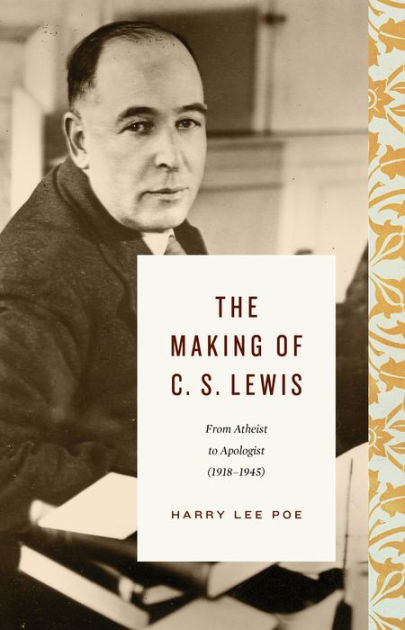
C. S. Lewis is one of the best known Christian thinkers of the 20th century. Harry Lee Poe has been working on a multivolume biography of the man, presenting a revealing and detailed portrait of his life and intellectual development. The first volume, Becoming C. S. Lewis: A Biogaphy of Young Jack Lewis covered 1898-1918 (my review). Here, in The Making of C. S. Lewis (1918-1945): From Atheist to Apologist, we see Lewis in adulthood as he moves from atheism to Christianity and, ultimately, to defending the faith. Readers could certainly read this as a standalone work and glean enormous insight into Lewis’s life, but the first biography is also well-worth the effort.
Harry Lee Poe documents extensively the life of Lewis, but he does so with a style that remains engaging throughout. The biography is divided into various periods of Lewis’s life, such as his return to Oxford, his academic work and war work, and more. Each chapter explores not just Lewis’s life, but also his intellectual development and work. Having recently read Splendour in the Dark: C. S. Lewis’s Dymer in His Life and Work by Jerry Root (review here), it was great to see Poe also highlighting several aspects of this lesser-known work of Lewis’s pre-Christian days. Lewis was pleased to be published, and it was one of the moments that his father also seemed to be pleased with. Perhaps more importantly, however, Lewis’s fascination with myth and enchantment of the world was already fully formed before his conversion. Poe notes the derision with which Lewis held several Christian influences on his life, but how he later changed his views as he encountered more devout believers. Poe balances this experience of Lewis with his intellectual development, showing how Lewis’s exploration of myth and legend led him to be fascinated by Christianity even as he was enthralled by the behavior of some of its adherents.
Lewis as a Christian continued to write and explore themes of myth, while also being pushed by several friends who influenced how and what he wrote. From such exploration, we received works like Miracles, as Lewis was encouraged to write a book defending the possibility of the titular events. Of course, Lewis’s fiction is also a much-beloved aspect of his writing, though the period covered in this book covers his Space Trilogy and not Narnia. Lewis clearly had apologetic intent in mind for these books, as he worked against some of the prevailing themes in science fiction at the time.
One difficulty with this biography is that, while Poe occasionally mentions some of Lewis’s failings, he seems to gloss over others and ignore or leave out some aspects of Lewis’s life that may not be as palatable to the presumably largely American Evangelical audience it is intended to reach. Regarding the latter, for example, no mention of Lewis’s interest in sadomasochism is made here, despite it being recently documented in other works. Additionally, Lewis is portrayed most frequently as a kind of “mere Christian,” a portrayal which makes some sense in light of his own writings. However, this also means that it leaves out some of his Anglicanism and unique beliefs. It’s possible some of this latter discussion will happen in the final volume of the biography, but it makes some of the discussion of C. S. Lewis’s intellectual Christianity seem milquetoast at times. Additionally, little analysis of Lewis’s thoughts are offered here. The style Poe has chosen is generally to simply report the events of Lewis’s life without commentary. Thus, when Lewis makes some alarming comments about women, they are noted with little comment.
Much discussion of Lewis’s personal life, financial situation, and work is included in the biography. Learning of Lewis’s work to philanthropize using the income from his writings even as he failed to make much on them was one of the more intriguing details about his life. Reading of his interactions with the inklings and others who influenced his thought makes him feel much more real and connected to the reader than he was before. Poe does a superb job of weaving all of this into his overall narrative of Lewis’s life.
The Making of C. S. Lewis is another deep dive into the life of a man who is a spiritual hero for many. Poe writes in a way that captures the reader and draws them deeply in to the life of a man whose ideas continue to shape the minds of millions of Christians to this day. It comes highly recommended.
Disclaimer: I was provided with a copy of the book for review by the publisher. I was not required to give any specific kind of feedback whatsoever.
All Links to Amazon are Affiliates Links.
Links
Be sure to check out the page for this site on Facebook and Twitter for discussion of posts, links to other pages of interest, random talk about theology/philosophy/apologetics/movies and more!
Book Reviews– There are plenty more book reviews to read! Read like crazy! (Scroll down for more, and click at bottom for even more!)
SDG.
——
The preceding post is the property of J.W. Wartick (apart from quotations, which are the property of their respective owners, and works of art as credited; images are often freely available to the public and J.W. Wartick makes no claims of owning rights to the images unless he makes that explicit) and should not be reproduced in part or in whole without the expressed consent of the author. All content on this site is the property of J.W. Wartick and is made available for individual and personal usage. If you cite from these documents, whether for personal or professional purposes, please give appropriate citation with both the name of the author (J.W. Wartick) and a link to the original URL. If you’d like to repost a post, you may do so, provided you show less than half of the original post on your own site and link to the original post for the rest. You must also appropriately cite the post as noted above. This blog is protected by Creative Commons licensing. By viewing any part of this site, you are agreeing to this usage policy.
Book Review: “Becoming C.S. Lewis: A Biography of Young Jack Lewis (1898-1918)” by Harry Lee Poe
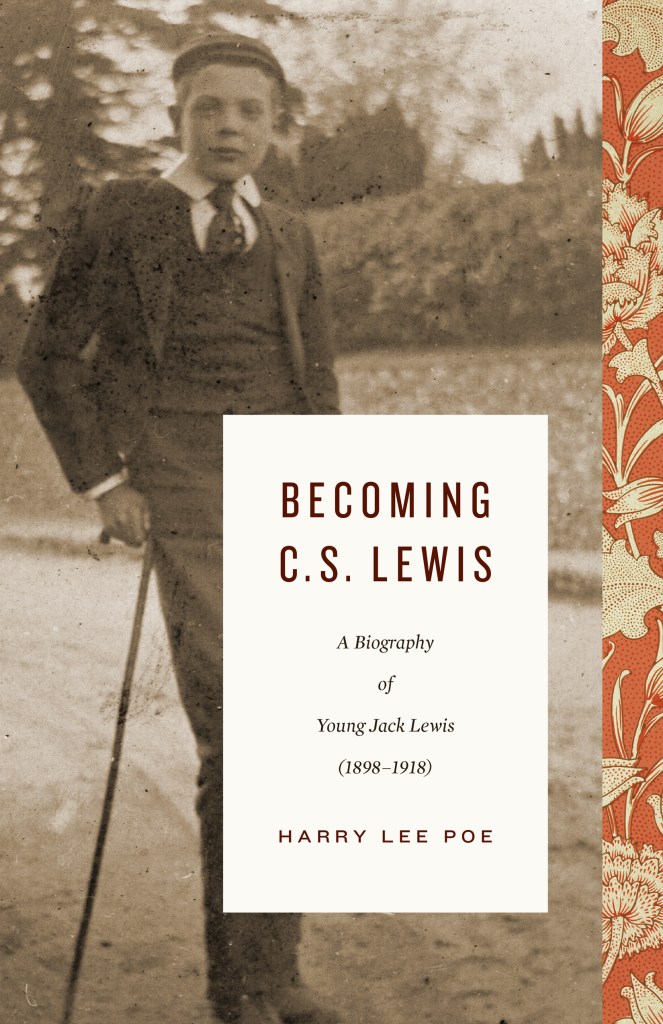
C.S. Lewis is a champion of the faith whose life story is familiar and oft-retold. Having read a couple biographies of Lewis, I was a bit skeptical of yet another biography of the man coming out–and a multi-volume one at that! What could be added? But then I saw that Harry Lee Poe wrote it, and having enjoyed some works from him in the past, I decided to give Becoming C.S. Lewis: A Biography of Young Jack Lewis (1898-1918) a try.
One thing that immediately sets the biography apart is that it is a look specifically at C.S. Lewis’s younger years. Harry Lee Poe argues persuasively that these early years of Lewis’s life were both incredibly formative and essential to understanding the man he would become. one major aspect of this book is showing Lewis’s own path of faith. The notion of Lewis going from an atheist to a Christian is well-known, but his move from being a Christian to an atheist is less commonly discussed. It’s clear from Poe’s work that Lewis essentially experienced a kind of milquetoast faith that did not appeal to him whatsoever, while eagerly pursuing certain vices as well. Some sordid details of his predilections are touched upon in this regard, and this helps readers understand Lewis more fully as well.
Another aspect of Lewis’s early life that Poe documents as being extremely important to the later man is his burgeoning interest in classics and myth. Whether it was in translating for himself some classic works or his own intense reading through various myths about King Arthur, Lewis’s interest in myth was found and nourished from an early age. There is little question that it stuck with him for the rest of his life and became essential to understanding the man he became. Lewis’s complex familial relations are also touched upon throughout this biography, as the influence of his brother and family on his life is drawn out by Poe in some detail.
Poe writes this biography in a voice that immediately grabs the reader. He is both sympathetic to the subject while also not excusing character flaws. His writing is well-suited to biography and as one reads Becoming C.S. Lewis, one feels as though one is engaged in a conversation with the author about the fascinating subject.
Becoming C.S. Lewis is a fascinating, detailed look at the earliest parts of C.S. Lewis’s life. Poe is a skilled author with a deep knowledge of the subject, and that makes this biography a must-read for those even remotely interested in the life, theology, or fiction of C.S. Lewis. Highly recommended.
Disclaimer: I was provided with a copy of the book for review by the publisher. I was not required to give any specific kind of feedback whatsoever.
Links
Be sure to check out the page for this site on Facebook and Twitter for discussion of posts, links to other pages of interest, random talk about theology/philosophy/apologetics/movies and more!
Book Reviews– There are plenty more book reviews to read! Read like crazy! (Scroll down for more, and click at bottom for even more!)
SDG.
——
The preceding post is the property of J.W. Wartick (apart from quotations, which are the property of their respective owners, and works of art as credited; images are often freely available to the public and J.W. Wartick makes no claims of owning rights to the images unless he makes that explicit) and should not be reproduced in part or in whole without the expressed consent of the author. All content on this site is the property of J.W. Wartick and is made available for individual and personal usage. If you cite from these documents, whether for personal or professional purposes, please give appropriate citation with both the name of the author (J.W. Wartick) and a link to the original URL. If you’d like to repost a post, you may do so, provided you show less than half of the original post on your own site and link to the original post for the rest. You must also appropriately cite the post as noted above. This blog is protected by Creative Commons licensing. By viewing any part of this site, you are agreeing to this usage policy.
Book Review: “The Doubled Life of Dietrich Bonhoeffer: Women, Sexuality, and Nazi Germany” by Diane Reynolds
 …Bonhoeffer reflects a prewar–what we might call a pre-postmodern–consciousness, a consciousness that no longer fully exists. We view him anachronistically, through our different set of lenses, and thus he shatters or refracts, like an abstract painting, into a dozen disparate images because he doesn’t fit conventional postwar paradigms. He remains, in some sense, untranslatable. (3)
Diane Reynolds’ The Doubled Life of Dietrich Bonhoeffer offers a unique take on the life of that great German WW2 theologian, Dietrich Bonhoeffer. Her biography focuses largely on two topics: the women in Bonhoeffer’s life and questions of sexuality in both his theology and life. The book is a biography, then, that fills in a number of holes that are left by other biographies. It doesn’t provide an exhaustive look at where Bonhoeffer was at any given time in his life like Bethge’s biography, nor does it provide a broad overview while filling in theological details like the excellent work by Ferdinand Schlingensiepen. Its focus is even narrower than the interesting Strange Glory by Charles Marsh. Yet it is that narrowness of focus that allows Reynolds’ biography to stand out from among these other excellent works and show he areas that they missed.
Reynolds’ controversial theories about Bonhoeffer’s sexuality (see below) would likely be the biggest takeaway many have from the book, which is unfortunate because it is quite excellent in several other regards as well, no matter what one thinks of her arguments over his sexuality. Specifically, her emphasis on bringing women’s voices in Bonhoeffer’s life to the forefront offsets a rather lengthy time in which women have largely been ignored or set to the side when considering his theology and life. Reynolds aptly demonstrates women were absolutely central to his way of thinking and clearly shaped his thought and direction of his theology in a number of ways. Indeed, his inner circle towards the time of his death was made up of women (Sabine, his twin sister; Ruth von Kleist-Retzlow; and his fiancée, Maria von Wedemeyer) and Bethge. Though Bonhoeffer was raised with somewhat traditional German values, he rebelled against the Nazi insistence on ideals of women and men in utterly separate spheres of thought and took advice from several women regarding his theology. It would be impossible to paint Bonhoeffer as entirely egalitarian, but not outside of reality to see the way that he lived in an effectively egalitarian understanding while remaining in his traditions.
The most controversial aspect of Reynolds’ biography is that she takes Marsh’s hints about Bonhoeffer’s sexuality and states “I will openly argue… that Bonhoeffer went beyond emotional friendship with Bethge and was in love with him–and that Bonhoeffer’s fiancee knew it” (7). Indeed, Reynolds even goes so far as to argue that there are “seeds of a nascent queer theology in Bonhoeffer’s writing” (7). Regarding Bonhoeffer’s being in love with Bethge, it is true that Bethge himself left open the question of Bonhoeffer’s sexuality. Reynolds’ evidence for her strong claim starts with that, but continues by noting the specific language Bonhoeffer used of and to Bethge, which parallels some of that used by homosexuals in Germany at the time. Moreover, a mutual acquaintance of Bethge and Bonhoeffer (Gerhard Vibrans) used words for their special relationship that were “codes used for gay relationships in Weimar Germany” (141). Maria von Wedemeyer, Dietrich’s fiancée, seemed to question his feelings for her at multiple points in their letters back and forth, forcing the latter to reassure her that his feelings were genuine on multiple occasions. A final piece of evidence Reynolds notes is absences or excisions from letters to and from Bonhoeffer that seem to cluster around questions of sexuality. As she puts it, “We also have unexplained ellipses in at least one [of] the letters to Eberhard [Bethge], a censoring of texts deemed too ‘intimate’ to share” (429). Bonhoeffer’s engagement to von Wedemeyer is explained, in Reynolds view, by both an attempt to thwart Nazi suspicion (Bonhoeffer would have been seen as more “normal” if he were married) and as a kind of cover for Bonhoeffer’s sexuality.
If all of this seems a bit circumstantial, that would be because at least some of it is. Certainly, when taken altogether, the evidence rings of the possibility of Bonhoeffer having an attraction that goes beyond friendship for Bethge. The intimacy of his letters and exhortations to his friend to spend more time with him, the latter’s apparent moves to thwart the same intimacy, the excision of letters, the language used by mutual acquaintances, and the tepid relationship between Bonhoeffer and his fiancée may all be taken as evidence for Reynolds’ thesis. But her claim is quite strong, not just that there may have been something going on, but that their relationship went beyond friendship and that Bonhoeffer was explicitly in love with Bethge, with von Wedemeyer’s knowledge (7). Alternative explanations could be given for each of these lines of evidence Reynolds’ presents. Bonhoeffer’s apparently cold feelings towards von Wedemeyer could be explained simply by his seeing their relationship as a way to thwart the Nazi investigation; excisions in the letters could simply be quite personal rather than anything related to sexuality; a friend’s knowing taunts could be reduced to jealous teasing at being excluded from the same fraternal intimacy; and the like. The question, of course, is whether such explanations are better than those offered by Reynolds. As it stands, readers must judge for themselves. I do not think Reynolds’ strong thesis can be carried by the weight of her evidence. Insinuations are there, but nothing strong enough to conclude as she does with such certainty.
Regarding Reynolds’ claims for a “nascent queer theology,” I do not find the evidence convincing. Essentially, she turns his writings on friendship into thoughts on how homosexual relationships could be viewed with the same legitimacy as those of male-female ones. For example, she writes, “Both Bonhoeffer and Bethge acknowledged struggles due to the lack of formal recognition of their close companionship… Both men felt the frustration of the military’s indifference to their friendship. These sorts of assertions against invisibility have become the mainstay of the gay marriage movement… insisting on the beauty, necessity, and value of same-sex friendship existing as a cornflower between the rigid rows of more formal social organization offered a beginning vision” 419-420. But there seems to me a vast difference between two friends frustrated over not being able to communicate as they wished to and insisting that that is the formation of a theology of same-sex relationships that affirms marriage. We must be careful not to subsume same-sex friendship into same-sex attraction, and close friendships ought not to lead necessarily to speculations about sexuality. It seems to me that Reynolds’ thesis is once again stronger than the evidence supports.
None of these comments should be taken to suggest Reynolds is not careful in her survey of the evidence. Indeed, she provides correctives to some aspects of Bonhoeffer’s life as well, including on some things that could be seen to support her thesis had she let them stand. For example, she offers a brief comment in which she criticizes Charles Marsh for his “effete” Bonhoeffer, arguing that his style of dress was “from pride in his appearance rather than a ‘flamboyant abbot’ quality” (17). By contrast, Reynolds notes that Bonhoeffer would have been considered “masculine” in his own time. Reynolds here demonstrates that she is not grasping at straws to try to push a pet theory. Rather, her analysis of Bonhoeffer’s life is balanced and challenging.
Another aspect of this biography worth noting is its own. Reynolds’ writing style captures the reader and draws one into the narrative of Bonhoeffer’s life in a way that few biographies are able to grasp. The biography, again, necessarily misses large portions of Bonhoeffer’s life because of its different focus. But in having its focus upon aspects of his life that have been overlooked, Reynolds manages to make a compelling narrative that challenges readers to interact with it, possibly re-evaluating assumptions about Bonhoeffer’s life and theology in the process.
The Doubled Life of Dietrich Bonhoeffer is a fascinating work. It explores aspects of Bonhoeffer’s life that have largely received little treatment in the works on his life. Though I believe some of Reynolds’ theses are stronger than she was able to support with the evidence, it certainly got me thinking about the life of Bonhoeffer more deeply than I had before. Her demonstration of the impact of women on his life is a refreshing breath of air, showing the influence women had on his life and theology. Those interested in a deep exploration of Bonhoeffer’s life would do well to read this book, whether they agree or disagree with Reynolds’ ultimate conclusions. I recommend it.
Disclaimer: I was provided with a copy of the book for review by the publisher. I was not required to give any specific kind of feedback whatsoever.
Links
Be sure to check out the page for this site on Facebook and Twitter for discussion of posts, links to other pages of interest, random talk about theology/philosophy/apologetics/movies and more!
Book Reviews– There are plenty more book reviews to read! Read like crazy! (Scroll down for more, and click at bottom for even more!)
SDG.
——
The preceding post is the property of J.W. Wartick (apart from quotations, which are the property of their respective owners, and works of art as credited; images are often freely available to the public and J.W. Wartick makes no claims of owning rights to the images unless he makes that explicit) and should not be reproduced in part or in whole without the expressed consent of the author. All content on this site is the property of J.W. Wartick and is made available for individual and personal usage. If you cite from these documents, whether for personal or professional purposes, please give appropriate citation with both the name of the author (J.W. Wartick) and a link to the original URL. If you’d like to repost a post, you may do so, provided you show less than half of the original post on your own site and link to the original post for the rest. You must also appropriately cite the post as noted above. This blog is protected by Creative Commons licensing. By viewing any part of this site, you are agreeing to this usage policy.

 J.W. Wartick - Reconstructing Faith