Book of Mormon
“The Book of Mormon” (The Musical) and Reconstructing Faith
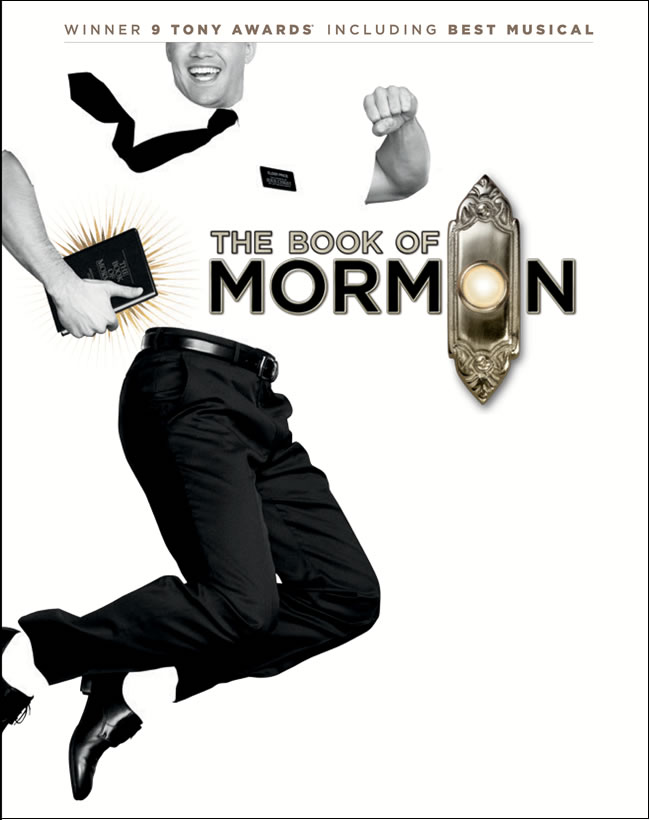
I recently saw the musical “The Book of Mormon” in person for the first time. Going in, I knew very little about the Broadway show, just that it featured Latter-Day Saints (LDS) as major characters and the Book of Mormon itself in a critical light. I wasn’t really prepared for just how over the top and wild it would be. For those interested, a good plot summary can be found on Wikipedia.
CONTENT WARNING: my reflection will discuss violence, explicit language, sexual violence, and other sensitive topics the musical talks about.
One major thought I had throughout the whole production is that it is almost entirely mocking of the faith of LDS believers. Satire is often useful, but at some point it definitely becomes mean-spirited. And I’m almost positive that is at least some of the intent behind the show. It starts to feel like beating a dead horse after a while.
One also wonders about the application writ large behind a lot of the musical. The point is ridicule of beliefs that are presented as absurd. And that is done in order to bring laughter, yes, but also to shift viewers’ minds about the subject matter. If we’re laughing at the beliefs of another worldview, it is much easier to dismiss the claims without any kind of argument or evidence. The scenes going back to “early America” with Jesus visiting New York and the burying and discovery of the Book of Mormon itself make this even more explicit. Here, the curtain is occasionally totally drawn back to reveal the point being made, with interjections like “or something” or “just because” [I don’t remember the exact phrases] added amidst the truncated telling of some of the history of the Book of Mormon and LDS history.
The type of argument isn’t subtle. Ridicule as dismissal of opposing views has a long history in not just public discourse but in philosophy. Any study of ancient rhetoric or readers of debates like the deistic controversies in England would easily find examples of the same. But when one wields the hammer of satirical mockery against beliefs with which one disagrees, any and every belief can start to look like a nail. After all, if it is hilariously ridiculous to believe that one is going to inherit one’s own planet to populate for oneself, is it all that much less ridiculous to believe that one man could die and take on the guilt/sin/etc. of all other humans past, present, and future? Or isn’t it absurd to think the universe oscillates between expansion and contraction, going from a Big Bang to a Big Crunch and back again into the infinite past and future? Or that all the matter and energy in the universe was once smashed into a teensy, infinitesimal point before it exploded to make everything we see now? Or… or… Eventually, any belief system could be subjected to the same satirical ridicule. One’s simply happening to believe the thing that is being mocked is largely what determines one’s reaction to that ridicule. It goes quickly from laughter to “Hey, it’s actually pretty reasonable to think that…”
But there are also plenty of things to reflect on with the musical aside from this point. First is the extremely explicit cursing at God found among the villagers of the fictional place the LDS missionaries went to in Uganda. A whole song is dedicated to singing “F you, God,” much to the horror of the newly arrived missionaries. While the explicit nature of the song and its totally in-your-face style is probably meant to needle audience members and make many uncomfortable, I was wondering personally about the imprecatory Psalms. In those Psalms, the writers cry out to God for justice in the midst of the horrors they’re witnessing on Earth. And “The Book of Mormon” makes clear some of those horrors. In this fictional village, the people live in terror of a local warlord who has threatened to come and forcibly circumcise all the women in the village. The villagers nearly all have AIDs (interesting to note that Uganda has been effectively working to reduce the spread of AIDs: see here). Others deal with other diseases. Poverty, hunger, drought, and more afflict the village, such that life is depicted as an attempt to survive every single day both physically and mentally.
The above situations highlight another aspect of the musical which challenges concepts from Christianity. When missionaries come to tell the people of Uganda about Jesus–they have other things on their mind. The immediate problems already discussed seem far more important than the possibility of an afterlife with no suffering. One character misinterprets the everlasting hope the missionaries intended to provide with a real here and now hope found in a mystical Salt Lake City where the missionaries can bring the people away from their troubles. Another of the missionaries embellishes the stories from the Book of Mormon with concepts from Star Trek, Star Wars, and other fantastical settings. In doing so, he makes a kind of new Book that answers the questions of the people in their real world situations. Later, we find that most of the people saw the words of the Book as metaphorical, giving some ambiguity to their beliefs.
Mission work though, one supposes, must encounter much of the same. What kind of real hope is being offered to people if their current problems aren’t addressed? And what kind of contextualization takes things beyond the text? And what kind of help is missionary work doing? I don’t know the answers to these and many related questions that come up, but the musical forcefully raises them.
“The Book of Mormon” pokes and prods at just about any religious bone in anyone’s body. I’ve noted some problems with it, but I think that it also can force people like me to think on some of the harder topics in ways we may not have before.
Links
Reconstructing Faith– Read other posts as I search for truth and navigate the messiness that is faith.
Be sure to check out the page for this site on Facebook and Twitter for discussion of posts, links to other pages of interest, random talk about theology/philosophy/apologetics/movies and more!
SDG.
——
The preceding post is the property of J.W. Wartick (apart from quotations, which are the property of their respective owners, and works of art as credited; images are often freely available to the public and J.W. Wartick makes no claims of owning rights to the images unless he makes that explicit) and should not be reproduced in part or in whole without the expressed consent of the author. All content on this site is the property of J.W. Wartick and is made available for individual and personal usage. If you cite from these documents, whether for personal or professional purposes, please give appropriate citation with both the name of the author (J.W. Wartick) and a link to the original URL. If you’d like to repost a post, you may do so, provided you show less than half of the original post on your own site and link to the original post for the rest. You must also appropriately cite the post as noted above. This blog is protected by Creative Commons licensing. By viewing any part of this site, you are agreeing to this usage policy.
Really Recommended Posts 8/23/13- Twain, Egypt, creationism, and more!
 I am excited to offer you, dear reader, a slew of fantastic posts for your perusal. The topics this go-round are diverse. We will look at Egypt and the media coverage there, Mark Twain and the Book of Mormon, Darwin’s Doubt, creationism, Stephen King’s Under the Dome, and Dietrich Bonhoeffer.
Mainstream media silent as Muslim Brotherhood targets Christians in Egypt– What is going on in Egypt? Violence against Christians has boiled over, but it seems we hear nothing about it here. Check out this article to read a refreshing perspective which will help inform you about what’s going on “over there.”
Mark Twain’s Review of the Book of Mormon– Mark Twain was a hilarious satirist and well deserves his place among the top American writers of his time. In this post, he turns his humorous pen to the Book of Mormon. It is worth noting a few errors with Twain’s account, however. I’m not sure if the Mormon account has changed, but Twain writes that the Book of Mormon was alleged to be translated from copper plates, when it is said to have been gold. More interestingly, Twain reveals his grounding in his own times when he writes “The Mormon Bible is rather stupid and tiresome to read, but there is nothing vicious in its teachings. Its code of morals is unobjectionable—it is ‘smouched’ from the New Testament and no credit given.” Take a gander at 2 Nephi 5:21ff (scroll down to verse 21 and following) and let me know if you see something which is similar to the New Testament’s statement in Galatians 3:28 and whether you object to the Book of Mormon’s writing in 2 Nephi.
Science, Reason, & Faith: Evaluation of Darwin’s Doubt by Stephen C. Meyer, part 1– With shouts of “pseudo-science” clamoring to drown out those who are even attempting to do research in the area of intelligent design, it is refreshing to sit back and look through some analyses which interact with the works rather than just spewing vitriol. I found this series of posts quite interesting and worth the read as I have been reading through the book myself.
Upset Creationist– Jay Wile is a young earth creationist whom I respect. His integrity is admirable. I disagree with his position strongly, but I admire him as person of character. This post is no different. He interacts with some comments the well-known creationist Ken Ham directed his way. Perhaps most thought-provoking was Wile’s comment that “Whether we are talking about the materials from Answers in Genesis or that particular exhibit in the museum, the message is crystal clear: the concept of millions of years has destroyed the church. I strongly disagree with that message.” Wile’s acknowledgement that we can be brothers and sisters in Christ despite disagreeing on this issue is refreshing.
Stephen King’s “Under the Dome”: A Mid-Season Perspective– one of my favorite blogs, Empires and Mangers, takes a look at the TV series based on the horror author’s work, “Under the Dome.”
Bonhoeffer, the Church, and the Consequence of Ideas– I’m a huge fan of Dietrich Bonhoeffer’s work. For those who don’t know, Bonhoeffer was a Lutheran who was executed by the Nazis during World War 2. In this article, his view of the Church and how that influenced his activism is briefly explored.
The Book of Mormon: Introduction and Importance
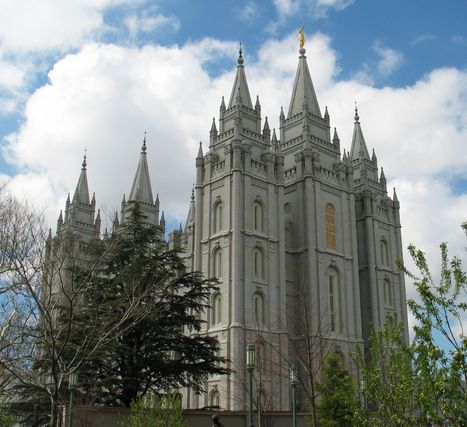 Mormonism is growing with great speed. There are few, however, who understand the limits of Mormonism’s truth claims. Mormon apologists have frequently made assertions which are either false or ungrounded. I have therefore decided to write a series of posts on the Book of Mormon, followed by a critique of Mormonism’s philosophical stances. This post will introduce the book of Mormon.
A man was born on December 23, 1805 in Vermont. He was known for digging for imagined buried treasure with his father and others.[1] He was also known for being a mystic,[2] for his conviction for disorderly conduct in a scam in which he tried to convince locals he had found treasure underground,[3] and for being the translator of golden plates: The Book of Mormon.[4] The man was Joseph Smith, Jr., the founder of the Mormon faith, “The Prophet.”[5] The Book of Mormon, according to the Church of Jesus Christ of Latter Day Saints (the official name of the Mormon Church), is “another witness that Jesus Christ… was and is God’s Son… It supports and verifies the Bible.”[6] If this is true, then the Book of Mormon is as much the Word of God as the Bible. However, the Book of Mormon’s validity as the Word of God is strongly undercut by scientific and historical evidence which contradicts its claims.
The Mormon Articles of Faith describe the Book of Mormon as “a volume of sacred scripture which, like the Bible, embodies the word of God.”[7] The Book of Mormon is supposed to record other prophecies about Jesus.[8] Perhaps the most striking enunciation of the contents of the Book of Mormon is found later in the Articles:
The Book of Mormon is a divinely inspired record, made by the prophets of the ancient peoples who inhabited the American continent for centuries before and after the time of Christ, which record has been translated in the present generation through the gift of God and by His special appointment. The authorized and inspired translator of these sacred scriptures… is Joseph Smith.[9]
Furthermore, the arguments for the authenticity of the Book of Mormon often parallel those arguments used to justify the Bible: it is said to be “internally consistent,”[10] prophetically fulfilled,[11] and supported by archaeology.[12] Yet there are also arguments unique to the Book: it was certified as genuine by three men who signed a statement confirming they witnessed the translation of the Book,[13] eight other witnesses claimed to have seen the gold plates from which the Book was purportedly translated,[14] and the ethnic background of Native Americans is said to be Israelite, which would demonstrate the Book’s truth.[15] It is clear that the Book of Mormon is the absolute bedrock of Mormon faith. If the evidences for the Book do not hold the evidential weight required to confirm its truth, then Mormon faith is undone.
The Book of Mormon’s veracity hinges on the claim that the lost tribes of Israel came to America, settled there, and wrote their history on gold plates which Joseph Smith later translated. Such claims at the time of Joseph Smith seemed irrefutable; they simply couldn’t conceive of technology which could test such ideas. Today, however, such technology is available. Unfortunately for Joseph Smith and the Mormon Church, the evidence runs contrary to what the Book of Mormon claims.
Over the coming weeks, I’ll investigate each of these claims in turn, while finding them wanting. The next post will demonstrate that the Book of Mormon cannot be true based upon a genetic analysis of Native Americans. Future posts will argue that the Book of Mormon does not reflect ancient near eastern writing and that the Mormon concept of God is philosophically untenable.
[1] Walter Martin. The Kingdom of the Cults (Bloomington, MN: Bethany, 2003), 197; Jerald and Sandra Tanner, Mormonism: Shadow or Reality? (Salt Lake City, UT: Modern Microfilm Company, 1972), 32.
[2] Martin, Kingdom, 197
[3] Wayne L. Cowdrey, Howard A. Davis, and Arthur Vanick, Who Really Wrote the Book of Mormon: The Spalding Enigma (St. Louis: Concordia, 2005), 395f.
[4] Martin, Kingdom, 201.
[5] Ibid., 197f.
[6] The Mormon Church, “Frequently Asked Questions,” The Church of Jesus Christ of Latter Day Saints, http://www.mormon.org/faq/#Book+of+Mormon|question=/faq/what-is-book-of-mormon/ (accessed October 14, 2010).
[7] James Talmage. A Study of the Articles of Faith (Salt Lake City, UT: The Church of Jesus Christ of Latter-day Saints, 1976), 251.
[8] Talmage, Articles of Faith, 252.
[9] Talmage, Articles of Faith, 255.
[10] Ibid, 278-279.
[11] Ibid, 274-275.
[12] Ibid, 283-293.
[13] Ibid, 270.
[14] Ibid, 271.
[15] Ibid, 283.
Image Credit: http://commons.wikimedia.org/wiki/File:Slc_mormon_tempel.jpg
SDG.
——
The preceding post is the property of J.W. Wartick (apart from citations, which are the property of their respective owners) and should not be reproduced in part or in whole without the expressed consent of the author. All content on this site is the property of J.W. Wartick and is made available for individual and personal usage. If you cite from these documents, whether for personal or professional purposes, please give appropriate citation with both the name of the author (J.W. Wartick) and a link to the original URL. This blog is protected by Creative Commons licensing. By viewing any part of this site, you are agreeing to this usage policy.

 J.W. Wartick - Reconstructing Faith
