book review
Biographies of Dietrich Bonhoeffer: An Ongoing Review and Guide
There is an ever-growing collection of biographies of Dietrich Bonhoeffer, the German pastor who was executed by the Nazis in 1945. This means that when people are looking to learn about Bonhoeffer, it can be difficult to know where to dive in. While I believe there’s no single strong answer to that question, I do think different biographies do different things well. This post will be a catch-all specifically for biographies about Bonhoeffer. I’ll highlight strengths and weaknesses of each one, in the hopes that this will let readers best choose from among the growing field of Bonhoeffer studies. This post will continue to be updated as I encounter additional biographies, and may be expanded to include related works.
Why am I qualified to do this post? I am not a Bonhoeffer scholar by any traditional means, and I think it is incredibly important to read those scholars. That said, I have read over 100 books by or about Bonhoeffer, his life, and his theology. By no means does this make me an expert, but I think I could at least offer some insights into questions about what biography to read.

Strange Glory: A Life of Dietrich Bonhoeffer by Charles Marsh
Marsh’s biography, published in 2014, presents Bonhoeffer’s life in a compelling fashion backed by scholarship. It is highly readable but doesn’t skip over details and controversies about Bonhoeffer’s life.
Advantages
-Written to effectively introduce readers to scholarship about Bonhoeffer while also telling his life’s story.
-Turns into a page-turner at times with Marsh’s effective writing style.
-Introduces readers to many topics related to Bonhoeffer’s life and theology in ways that can guide further reflection and study.
Disadvantage(s)
-Somewhat long for a reader attempting to get the basics of Bonhoeffer’s life, at more than 400 pages of text.
It’s For You If…
You want a one stop shop for Bonhoeffer’s biography. This is probably the single best biography in terms of combining scholarly insight, readability, and accuracy about Bonhoeffer’s life without being too dry.

The Faithful Spy: Dietrich Bonhoeffer and the Plot to Kill Hitler by John Hendrix
A graphic novel as a Bonhoeffer biography that caught me unawares in 2020. The art style is engaging, and the panels manage to tell the story without being too cluttered with text.
Advantages
-Extremely readable, with language that is easy to understand, even in sections on theology.
-It’s a graphic novel, I mean… come on. But really, this will appeal to adults who like graphic novels and can also be good reading for teens or tweens who want to engage with deeper topics.
-Probably the most unique biography in presentation.
Disadvantage(s)
-Doesn’t have a complete picture of Bonhoeffer’s life due to the focus on Bonhoeffer’s struggle with Nazism. While this is definitely a large part of his life, it doesn’t fully explain his theology or ethics. It’s a graphic novel, so expecting it to do so might be absurd, but it is worth noting that there is some hot debate in Bonhoeffer scholarship about just how involved he was in the plot to kill Hitler, or even whether he was involved at all. All nuance on this and related topics is basically lost with the format here.
-Relies a bit on Metaxas’s apocryphal work (see below).
It’s for you if…
You want a quick, easy read on Bonhoeffer that gives you at least a surface familiarity with his life and work. Or, you want something you could hand to someone who’s not interested in large tomes.

Bonhoeffer: Pastor, Martyr, Prophet, Spy by Eric Metaxas
This is by far the most popular biography of Bonhoeffer. There’s no doubt that Metaxas’s biography helped the burgeoning interest in Bonhoeffer along. That said, there are serious defects in this biography which lead me to strongly not recommend it as a work for anyone looking into Bonhoeffer’s life.
Advantages
-Popularity- popularity is not a bad thing. It’s great that Metaxas manage to shine a light on Bonhoeffer and encourage so many to read more about him.
-Great subtitle- Bonhoeffer’s life begs to be a major Hollywood blockbuster according to this subtitle.
Disadvantages
-Inaccuracy- I won’t nitpick various tiny facts that Metaxas got wrong. Any biographer can mess up geography or days. It happens. What is at issue is that Metaxas actually undermines much of Bonhoeffer’s own positions by substituting Bonhoeffer’s theology–that of a Lutheran theologian from Germany–with Metaxas’s preferred theology–that of right-leaning American Evangelicalism. For example, Metaxas doesn’t write anything about Bonhoeffer’s views on baptism or the Lord’s Supper, despite Bonhoeffer himself saying the Sacraments are necessary for the church. Why does Metaxas avoid it? Either he’s unaware of Bonhoeffer’s theology here–a major blunder given that Bonhoeffer is a Lutheran pastor–or he’s explicitly leaving it out to avoid offending the Evangelical-Baptist tendencies of his targeted audience, who would strongly disagree with Bonhoeffer’s sacramental theology. Bonhoeffer’s work in the resistance is not given the nuance the evidence requires. Bonhoeffer’s theology is devoid of challenging the reader in Metaxas’s reading. Bonhoeffer is made to be a biblical inerrantist, with Metaxas emphasizing his care for studying the Bible, despite Bonhoeffer’s own words noting that “the theory of verbal inspiration will not do” (DBWE 3:51). In short, Bonhoeffer’s life, theological views, and motivations are all slanted in Metaxas’s representation. Indeed, it shouldn’t escape most readers that Bonhoeffer’s viewpoints begin to seem eerily similar to those of Metaxas’s.
-Distorts the view of Bonhoeffer for many- due to the book’s popularity and its major inaccuracies, it has led to a distorted view of Bonhoeffer’s legacy. One example is the “silence” quote attributed to Bonhoeffer on the inside flap of the book. “Silence in the face of evil is itself evil. God will not hold us guiltless. Not to act is to act.” It’s a great quote, and sounds possibly like something Bonhoeffer would say. The problem is that he didn’t say it. The quote simply is not from Bonhoeffer. And yet it’s in the congressional record as something he said because of the popularity of this book. Now quote misattribution isn’t the end of the world, especially when the quote itself doesn’t necessarily run contrary to the person it’s attributed to. The problem is that Metaxas does things like this constantly. He presents Bonhoeffer as wholly alien to the context in which he operated.
-Somehow still too long for an introductory biography, weighing in at over 600 pages.
It’s for you if…
You’ve gotten a grounding in Bonhoeffer’s life and theology and want to see what the fuss is about. Or, you love writing critical reviews.
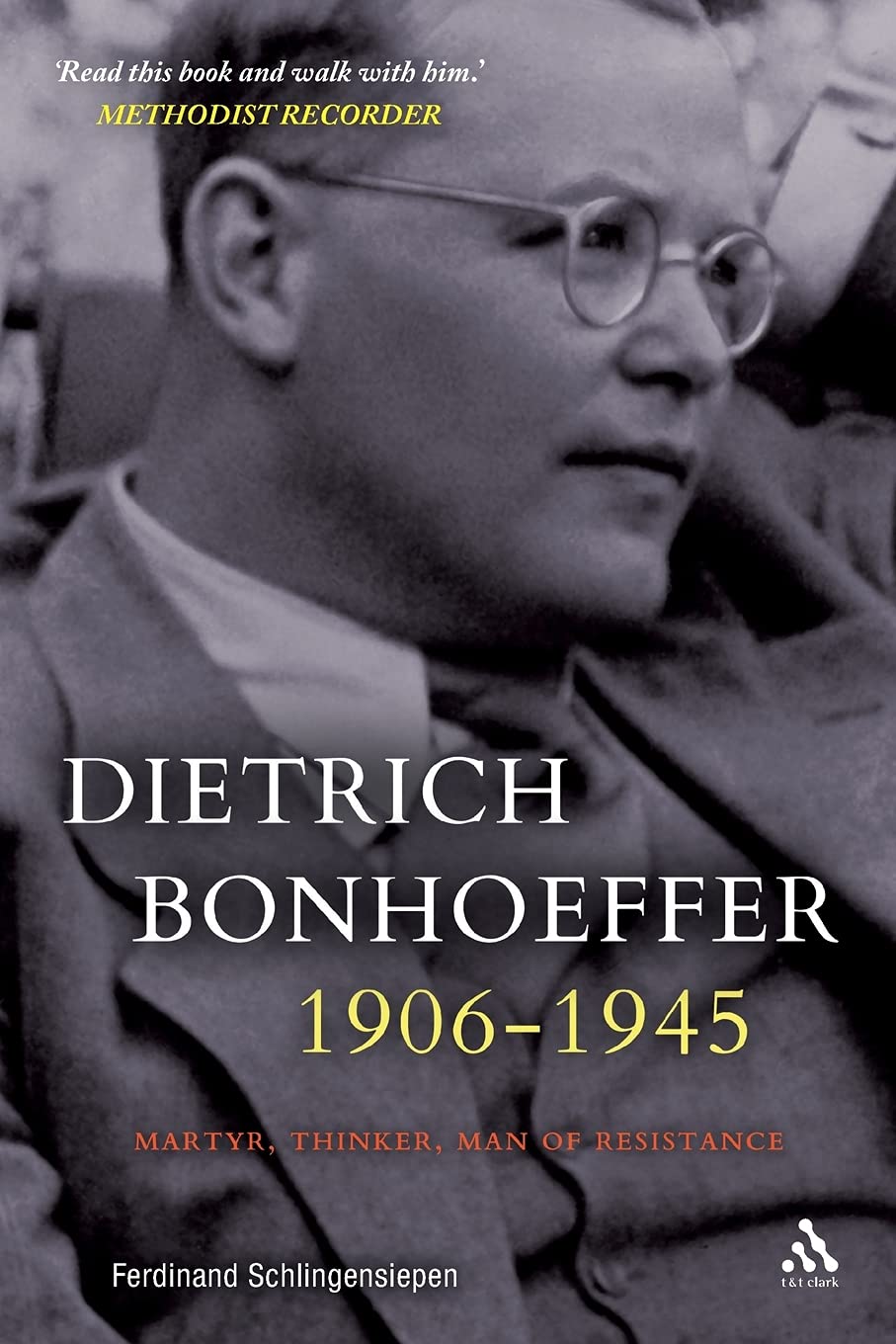
Dietrich Bonhoeffer 1906-1945: Martyr, Thinker, Man of Resistance by Ferdinand Schlingensiepen
Schlingensiepen’s biography is broad and intently focused upon Bonhoeffer’s intellectual development and production. It is an excellent work of Bonhoeffer scholarship but perhaps a bit less accessible for the lay reader.
Advantages
-Schlingensiepen’s academic experience and interpersonal connections make him imminently positioned to present an accurate accounting of Bonhoeffer’s life.
-The biography is not American-centric, as even the Marsh biography is in some ways. This biography is more historically based than it is theologically driven.
Disadvantage(s)
-The writing was originally German and the translation, while excellent, retains the dry tone and feel of the work.
-Schlingensiepen seems almost allergic to confronting modern concerns about theological questions that might arise from Bonhoeffer’s thought, making the biography more of a “just the facts, ma’am” approach than an attempt at relevance. This could also be seen as an advantage, depending on the reader.
It’s for you if…
You prefer a factual account of one’s biography to speculation about lesser grounded facts. Or, you would like to see a more modern German take on Bonhoeffer’s life. Or, you prefer to read one of the best scholarly treatments of Bonhoeffer’s life to anything more generalized.

The Doubled Life of Dietrich Bonhoeffer: Women, Sexuality, and Nazi Germany by Diane Reynolds
Bonhoeffer scholarship continues to broaden, and one great advantage of that is that scholars are driven to exploring corners of his life that would not otherwise have been explored. Reynolds here focuses specifically on Bonhoeffer’s life regarding the three subjects noted in the subtitle: women, sexuality, and Nazi Germany. (Full Review Here)
Advantages
-Insightful Commentary- Whether you agree or disagree with Reynolds’s conclusions, she makes a strong case in defense of her points. Truly, I think this biography deserves to be read by anyone who’s serious about engaging with Bonhoeffer’s life.
-Highlights lesser-discussed points- Women are constantly removed from history, but Reynolds puts women back into the narrative of Bonhoeffer’s life. She manages to show how influential many women were on Bonhoeffer’s life, leading to additional questions and avenues for exploration about Bonhoeffer. Additionally, the questions raised about Bonhoeffer’s sexuality elsewhere are highlighted here, with Reynolds deeply analyzing Bonhoeffer’s letters and life to make compelling, challenging arguments.
Disadvantages
-Primary focus is on the topics in the subtitle. Readers will get a fascinating look at Bonhoeffer’s interactions with women, interplay with Nazi Germany, and one of the deepest arguments about his sexuality found anywhere, but won’t have a full picture of his life.
-Highly controversial view of Bonhoeffer’s sexuality, which can be an advantage as it introduces readers to some of the best scholarly arguments on the topic.
It’s For You If…
You’ve read some about Bonhoeffer’s life and are interested in delving deeper into the background of some of his beliefs. You are curious about some of the hubbub surrounding Bonhoeffer’s sexuality in scholarly circles.
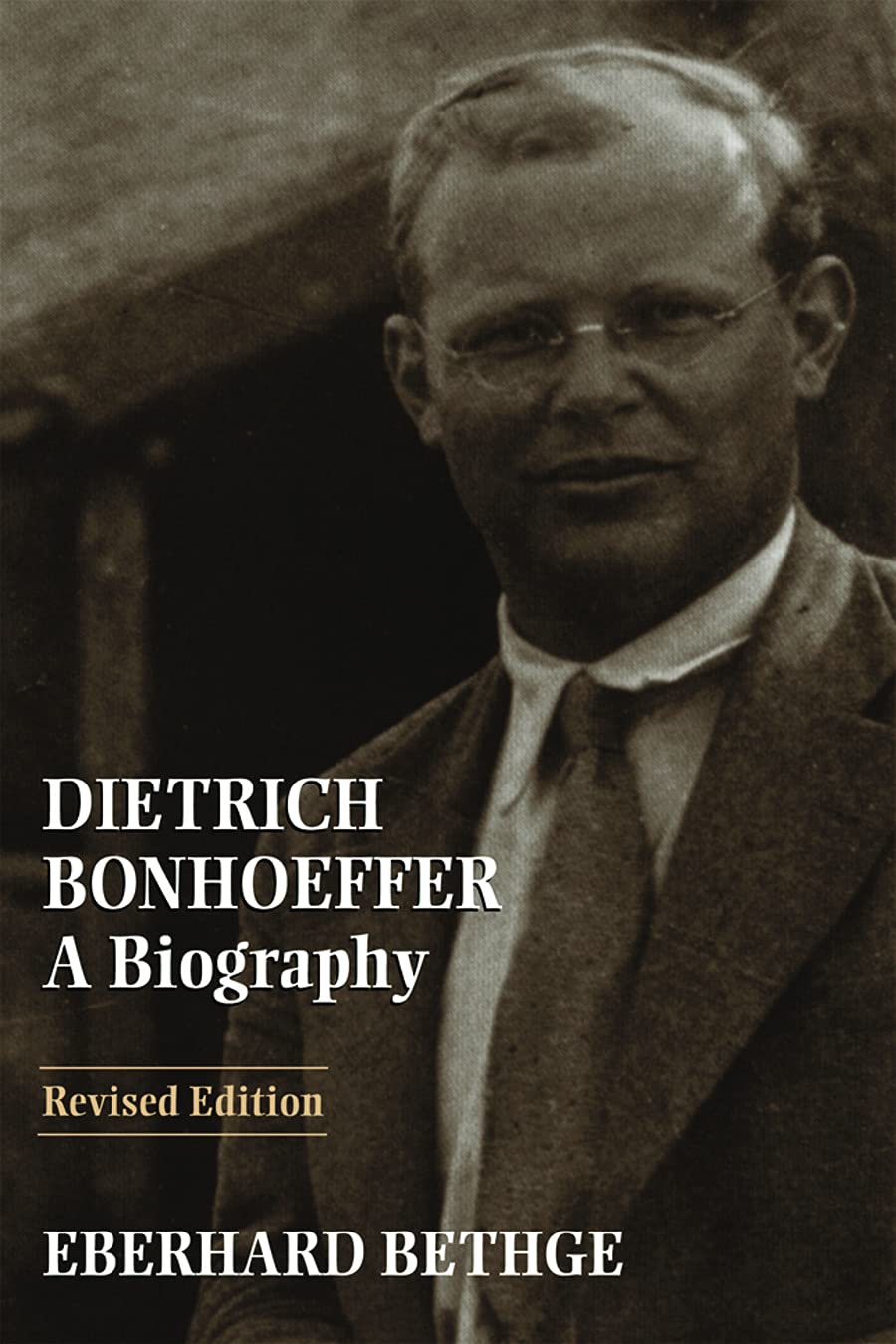
Dietrich Bonhoeffer: A Biography by Eberhard Bethge
Long seen as the definitive biography of Dietrich Bonhoeffer, this one is written by Bethge, Bonhoeffer’s great friend and confidant. It is voluminous in both content and commentary, providing key insights into Bonhoeffer’s thought from someone who knew him intimately.
Advantages
-The book feels absolutely comprehensive in its look at Bonhoeffer’s life.
-Bethge knew the subject well, personally, and this shows on basically every page.
-Bethge gives many insights into the “why” behind what Bonhoeffer was thinking, leading readers to deeper exploration and understanding of Bonhoeffer’s thought.
Disadvantage(s)
-It’s absolutely massive, weighting in at over 1000 pages (including notes/indices).
-There is some necessary bias from a friend of Bonhoeffer (Bethge) writing in a time in which Bonhoeffer wasn’t nearly as popular as he’s become now.
It’s for you if…
Want to feel like you know Bonhoeffer like a friend. Or, you’d like to see what serves as perhaps the baseline study for any student of Bonhoeffer’s life.
All Links to Amazon are Affiliates links
Links
Dietrich Bonhoeffer– read all my posts related to Bonhoeffer and his theology.
Be sure to check out the page for this site on Facebook and Twitter for discussion of posts, links to other pages of interest, random talk about theology/philosophy/apologetics/movies and more!
SDG.
——
The preceding post is the property of J.W. Wartick (apart from quotations, which are the property of their respective owners, and works of art as credited; images are often freely available to the public and J.W. Wartick makes no claims of owning rights to the images unless he makes that explicit) and should not be reproduced in part or in whole without the expressed consent of the author. All content on this site is the property of J.W. Wartick and is made available for individual and personal usage. If you cite from these documents, whether for personal or professional purposes, please give appropriate citation with both the name of the author (J.W. Wartick) and a link to the original URL. If you’d like to repost a post, you may do so, provided you show less than half of the original post on your own site and link to the original post for the rest. You must also appropriately cite the post as noted above. This blog is protected by Creative Commons licensing. By viewing any part of this site, you are agreeing to this usage policy.
Book Review: “The Practice of Remembering” by Casey Tygrett
The Practice of Remembering by Casey Tygrett explores the concept of memory and how memories can form us spiritually.
It seems obvious that memory forms us as who we are today, but how does it do so, and do we have any control over it? Do we have any ways to interact with our memories–whether good or bad–to bring additional growth? Tygrett addresses these topics in an easy-to-comprehend manner, often utilizing analogies or highlighting actual brain science research (such as information about neuroplasticity). Each chapter has either a “Practice” or a “Pause” to close it out, encouraging active interaction with the content of the book.
The book is, I think, most useful to use either alone or in a group as a kind of short study/daily devotion. We don’t really spend a lot of time thinking about our memories, despite often experiencing our memories. That is, we usually passively allow memories to float to the surface or actively cycle through them without thinking about that process itself. How is it that we selected these memories at this time? What might it mean for us as people to have memories? What does it mean to experience them?
Okay, now I realize that a lot of this review has just been me asking questions. Tygrett doesn’t just ask questions, but presents a number of ways to answer these questions and reflect on them from a Christian spiritual perspective.
The Practice of Remembering invites readers into a personal, spiritual reflection on their own life experience. I found it opened up new avenues of thought. I think it certainly warrants a reread, as well. Recommended.
All Links to Amazon are Affiliates links
Links
Be sure to check out the page for this site on Facebook and Twitter for discussion of posts, links to other pages of interest, random talk about theology/philosophy/apologetics/movies and more!
Book Reviews– There are plenty more book reviews to read! Read like crazy! (Scroll down for more, and click at bottom for even more!)
SDG.
——
The preceding post is the property of J.W. Wartick (apart from quotations, which are the property of their respective owners, and works of art as credited; images are often freely available to the public and J.W. Wartick makes no claims of owning rights to the images unless he makes that explicit) and should not be reproduced in part or in whole without the expressed consent of the author. All content on this site is the property of J.W. Wartick and is made available for individual and personal usage. If you cite from these documents, whether for personal or professional purposes, please give appropriate citation with both the name of the author (J.W. Wartick) and a link to the original URL. If you’d like to repost a post, you may do so, provided you show less than half of the original post on your own site and link to the original post for the rest. You must also appropriately cite the post as noted above. This blog is protected by Creative Commons licensing. By viewing any part of this site, you are agreeing to this usage policy.
Book Review: “What Hath Darwin to do with Scripture?” by Dru Johnson- A breath of fresh air in the science-Christianity discussion
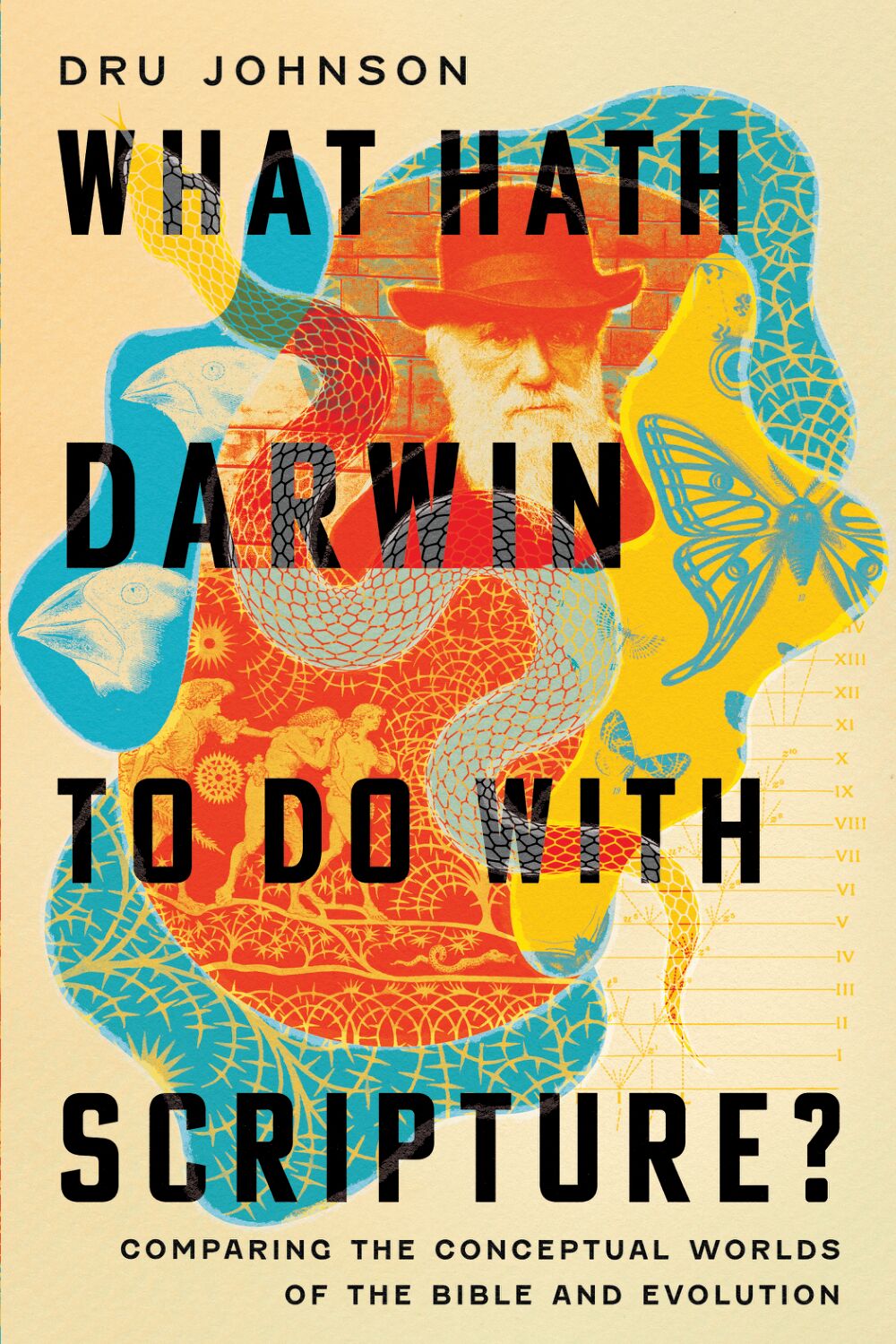
What Hath Darwin to do with Scripture? is a rarity in an overflowing market of books on Christianity and science. It brings something that feels fresh and new to the table. Having read it, I find myself sitting back and reflecting on the book, and wanting to discuss and share it with others. The first chapter puts the book’s thesis in perspective: “This is not the Creation-Evolution Debate You’re Looking For” (3). Indeed, it goes far beyond other works I’ve seen focused on interpretation of Scripture and evolution.
Dru Johnson’s work here presents a look not at debates about individualized texts and whether they can be reconciled with evolution. Instead, Johnson focuses on the conceptual worlds of evolution and the Bible to see if there is any overlap or conflict. Thus, instead of offering a text-by-text approach and asking whether this text over here precludes evolution or this one here hints at natural selection, he looks at overarching themes and stories in Scripture and how those might resonate (or not) with evolution. More specifically, Johnson argues the question shouldn’t be on pitting origin stories right next to each other in a verse-by-verse or thesis-by-thesis throwdown; instead, looking at how origin stories conceive of the world presents a more “apples to apples” approach (18-20).
There are three main themes Johnson focuses on in order to make comparisons between conceptual worlds. These themes are “scarcity,” “fit,” and “generation.”
“Scarcity” is clearly part of the Darwinian thesis and later evolutionary theory (25ff), and is often linked to violence. Johnson explores how the Bible also approaches language about scarcity and how it is also approached through violence at times (54ff). One aspect of his exploration is to point out that we have a skewed view of agrarian society and this entails a misunderstanding of the earliest parts of Genesis with its focus upon a life free of scarcity and threats emerging from the same (51ff, 56-57). The theme of scarcity doesn’t stay in Genesis, but can be found throughout the OT narratives and extends into the NT visions of a New Kingdom (83-84). The God-creation relation and covenants involved therein found in the Bible present, for Johnson, some of the places that it may be most at odds with evolutionary thinking (90). While this is the case, Johnson argues that biblical concepts related to scarcity have some resonance with evolutionary conceptualization of the world.
One of the most fascinating sections in the book is less about evolution than it is about the development of languages. In a lengthy section on the “fit” of people and creatures to their habitats, Johnson delves into the way that experts in linguistics have shown that the very geography of peoples’ regions shapes their language–complicated, high pitched noises being shouted through a rainforest, for example, doesn’t work as well as simple “e” or “a” sound. Differences between sounds used in languages can be identified and linked to geographic features (115ff). What has any of this got to do with the Bible? Johnson then turns around and examines concepts behind the story of Babel and the story of Pentecost, showing how each also shows the way geography and regional dialects could emerge (118-120).
“Generation” is the final aspect Johnson interrelates between Scripture and evolution. Sex and procreation are obvious hallmarks of both conceptual worlds, guiding the drive for selection and survival in one and becoming deeply important to the continuity of God’s promises in the other. Lengthy discussions of the seeming strangeness of monogamy from an evolutionary and even biblical perspective, discussion of norms related to sex, the natural bent towards violent sexual encounters, and more are discussed and related between the two conceptual worlds Johnson is exploring. Highlighting any number of fascinating points would be possible here. For example, discussing the prohibitions in Leviticus, Johnson points out that the focus seems to be upon aspects of generation, not on the inherent evil of whatever acts are being ruled out (162-165). Whether this could foster some additional discussion of morality and ethics is beyond Johnson’s point here, but certainly could be worth exploring.
Johnson is even in his messaging throughout the book, rarely claiming to have some grandiose answer to questions about science and Christianity. Instead, his modest conclusion is that he “retain[s] a healthy and hopeful agnostic curiosity about the integration of these two conceptual worlds–evolutionary and Hebraic–whether they can be reconciled and how so” (201). He goes on to express hope that the discussion here will lead to colleagues correcting, agreeing, discussing, opening dialogue, etc. on these topics. I wholeheartedly agree.
What Hath Darwin to do with Scripture? breathes new life into the interplay between Christianity and science. It’s a book that demands careful reading and reflection and, I hope, will spur discussion of the dialogue into new, unexplored directions. Highly recommended.
All Links to Amazon are Affiliates links
Links
Be sure to check out the page for this site on Facebook and Twitter for discussion of posts, links to other pages of interest, random talk about theology/philosophy/apologetics/movies and more!
Book Reviews– There are plenty more book reviews to read! Read like crazy! (Scroll down for more, and click at bottom for even more!)
SDG.
——
The preceding post is the property of J.W. Wartick (apart from quotations, which are the property of their respective owners, and works of art as credited; images are often freely available to the public and J.W. Wartick makes no claims of owning rights to the images unless he makes that explicit) and should not be reproduced in part or in whole without the expressed consent of the author. All content on this site is the property of J.W. Wartick and is made available for individual and personal usage. If you cite from these documents, whether for personal or professional purposes, please give appropriate citation with both the name of the author (J.W. Wartick) and a link to the original URL. If you’d like to repost a post, you may do so, provided you show less than half of the original post on your own site and link to the original post for the rest. You must also appropriately cite the post as noted above. This blog is protected by Creative Commons licensing. By viewing any part of this site, you are agreeing to this usage policy.
Book Review: “Kierkegaard and the Changelessness of God” by Craig A. Hefner
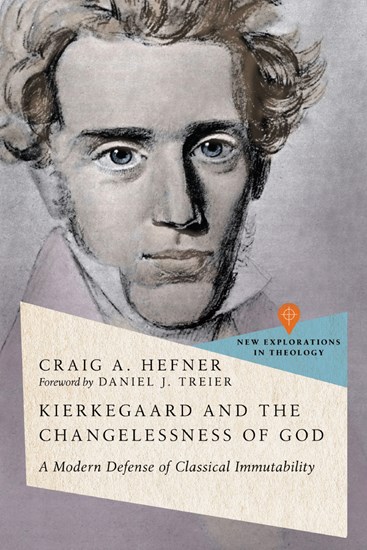
Kierkegaard and the Changelessness of God by Craig A. Hefner presents an unusual dynamic: Kierkegaard being used in defense of a core tenet of classical theology: divine immutability.
Hefner begins with a brief introduction to Kierkegaard and correction of misconceptions, including the notion that Kierkegaard was somehow out of tune with classical Christian theology. What Kierkegaard was reacting against was not Christian doctrine but rather than sleepy, comfortable way in which people were living in light of it. Kierkegaard united, rather than divided, traditional Christianity and existentialism.
Next, Hefner moves into four chapters that cover Kierkegaard and the doctrine of divine immutability or changelessness. What makes this defense of immutability unique is in part its focus on Kierkegaard’s existentialism as a defense of that changelessness. The two topics appear to be divergent, but Hefner argues the are in fact unified in Kierkegaard’s milieu. Kierkegaard’s existentialism provides a way to contrast God and humanity. The changing, “all flesh is grass” nature of humanity is contrasted with the immutable God.
Rather than simply relying on this contrast, however, Hefner with Kierkegaard argues that the Self can be reintegrated across change due to its relationship only with an immutable God. God, in other words, is the ground for the Self in a very real way. A whole chapter focuses on James 1:17 and Kierkegaard’s interpretation thereof. James 1:17 is often used as the core text for divine immutability, and Hefner draws on various interpreters to bring its insights to life.
Finally, Hefner argues that Kierkegaard’s conception of immutability doesn’t rely upon metaphysics but rather upon the concept of the self. I admit some of this section was a bit beyond me, because it seems to me that ultimately anything relies upon some kind of metaphysics. However, grounding the concept of immutability on the divine self was an interesting endeavor.
Kierkegaard and the Changelessness of God is an unexpected read. I found it refreshing despite being extremely dense. Recommended for readers looking for deep discussion of existential theology and its application to classical theism.
All Links to Amazon are Affiliates links
Links
Be sure to check out the page for this site on Facebook and Twitter for discussion of posts, links to other pages of interest, random talk about theology/philosophy/apologetics/movies and more!
Book Reviews– There are plenty more book reviews to read! Read like crazy! (Scroll down for more, and click at bottom for even more!)
SDG.
——
The preceding post is the property of J.W. Wartick (apart from quotations, which are the property of their respective owners, and works of art as credited; images are often freely available to the public and J.W. Wartick makes no claims of owning rights to the images unless he makes that explicit) and should not be reproduced in part or in whole without the expressed consent of the author. All content on this site is the property of J.W. Wartick and is made available for individual and personal usage. If you cite from these documents, whether for personal or professional purposes, please give appropriate citation with both the name of the author (J.W. Wartick) and a link to the original URL. If you’d like to repost a post, you may do so, provided you show less than half of the original post on your own site and link to the original post for the rest. You must also appropriately cite the post as noted above. This blog is protected by Creative Commons licensing. By viewing any part of this site, you are agreeing to this usage policy.
Book Review: “Reformation Commentary on Scripture: Old Testament IX- Proverbs, Ecclesiastes, Song of Songs”

The Reformation Commentary on Scripture series from InterVarsity Press is an impressive collection of commentaries that feature a wide range of voices from the Reformation period giving insight into biblical texts. The latest volume I got was Old Testament IX: Proverbs, Ecclesiastes, Song of Songs. I was particularly excited for this volume both because I quite enjoy the books of the Bible it is discussing and because commentary on these books often varies wildly depending upon one’s background beliefs and theological stances.
Proverbs- a book that is confusing for many commentators through history, especially given its sometimes contradictory advice (eg. whether to debate the fool in Proverbs 26:4-5). What are we supposed to do with the book? Reformation commentators varied in their thoughts on the book, too. For example, Peter Moffett, an English clergyman, states that the book is simply a collection of “certain general, short, and pithy sayings, used…. in every person’s mouth” (7). By contrast, Michael Cop, a Swiss Protestant pastor, argued that the book is indeed wisdom that teaches Christ (ibid). The “Proverbs 31 woman” is a popular trope taken by many Christians today to present the model woman. Reformation commentators varied on the meaning of Proverbs 31’s teachings about a woman, including praising women for being strong not just physically but also mentally (John Trapp, an Anglican exegete, 201), considering the passage as showing how rare it is to find a woman with such insight or properties as a kind of backhanded tribute (Michel Cop, 198-199) and, intriguingly, an admonishment against useless and foolish husbands (Cop again, 201). Still more insights include seeing the passage not as an ideal woman but an abstract praising of “womanly arts” that makes it more of an empowering passage than an ideal women must live up to (Lucrezia Marinella, a Venetian poet and writer). Indeed the whole section on this Proverbs 31 passage is worth close reading and consideration.
Ecclesiastes- I’ll not spend as much time reviewing this, but it is interesting to see what the various commentators say about individual passages. I don’t like rushing past this book, which is a favorite of mine, but with limited time for review, suffice to say that the insights are just as fascinating as those in Proverbs.
Song of Songs- one of the more uniquely interpreted books of the Bible both then and now. Reformation theologians saw the book in varied lights. Martin Luther, for example, saw the book as a celebration of the ideal political order (305-306). Others saw it as allegory for love of the Holy Spirit for the church (Francois Lambert, a French Reformed theologian, 304). Others saw it as even more figurative, such as Calvin’s reading of the book as “a figural representation of Christ’s reign” (207). Desiderius Erasmus, famous opponent of Luther and Catholic theologian, was keen to defend the Bible from any kind of sexual impropriety while also arguing the book is not an allegory of the Virgin Mary (304-305, 307). While the allegorical readings were very popular, some theologians still saw it simply as showing the “veiled intimacies of marriage” (eg. Hugo Grotius, a Dutch lawyer and humanist, 313-314). The rest of the discussion of the book is just as interesting, showing an intriguing line that the interpreters walked between attempting to find comfort from the blatant sexual language in allegory while also acknowledging it in their use of allegory. One interesting example is Henry Ainsworth (an English Puritan Hebraist) whose interpretation of Song of Songs 4:4-5 which explicitly praises the breasts of the woman writes that breasts are for “ornament and use” while immediately turning it to being about God and the Church–“So here the ‘breasts’ of Christ’s spouse are compared to ‘roes’ for pleasantness, to ‘fawns’… This signifies how the church is fruitful in good works and words of comfort…” (377). This kind of blunt speaking of the sexual language of the text and immediately re-interpreting it as allegory is common throughout the Reformation period, though there are a few exceptions.
Old Testament IX: Proverbs, Ecclesiastes, Song of Songs is an insightful, fascinating look at some of the books of the Bible with the most varied histories of interpretation. I recommend it for readers interested in Reformation theology but also for those who just want some insight into these fascinating, oft-contentious books of the Bible.
All Links to Amazon are Affiliates links
Links
Be sure to check out the page for this site on Facebook and Twitter for discussion of posts, links to other pages of interest, random talk about theology/philosophy/apologetics/movies and more!
Book Reviews– There are plenty more book reviews to read! Read like crazy! (Scroll down for more, and click at bottom for even more!)
SDG.
——
The preceding post is the property of J.W. Wartick (apart from quotations, which are the property of their respective owners, and works of art as credited; images are often freely available to the public and J.W. Wartick makes no claims of owning rights to the images unless he makes that explicit) and should not be reproduced in part or in whole without the expressed consent of the author. All content on this site is the property of J.W. Wartick and is made available for individual and personal usage. If you cite from these documents, whether for personal or professional purposes, please give appropriate citation with both the name of the author (J.W. Wartick) and a link to the original URL. If you’d like to repost a post, you may do so, provided you show less than half of the original post on your own site and link to the original post for the rest. You must also appropriately cite the post as noted above. This blog is protected by Creative Commons licensing. By viewing any part of this site, you are agreeing to this usage policy.
Book Review: “Nobody’s Mother: Artermis of the Ephesians in Antiquity and the New Testament” by Sandra L. Glahn
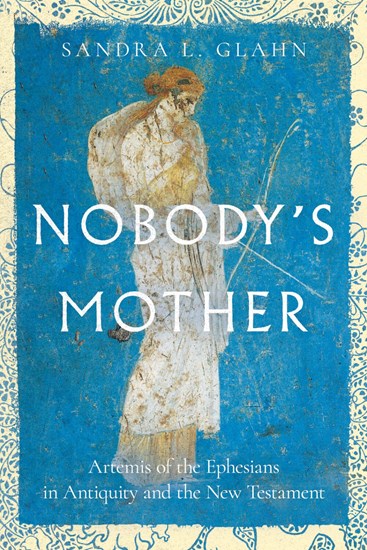
Nobody’s Mother by Sandra L. Glahn is a detailed look at questions about Artemis’s influence in Ephesians and the NT as well as specifically at 1 Timothy 2:11-15.
Glahn, after some discussion of why it’s worth taking a fresh look at Artemis in the NT, dives into Ephesus and Artemis across several chapters. For example, a common argument I’ve seen is that Artemis in Ephesus was associated with prostitution and that this should provide a background for how texts related to Artemis might play out. Glahn, however, argues that this is not the case and that the evidence for prostitution as a connection with Artemis is missing either Empire-wide or in the city of Ephesus specifically. Indeed, the opposite seems to be the case as Artermis is consistently associated with chastity and virginity. Artemis, one might say, is “Nobody’s Mother.”
Artemis was also associated with childbirth and midwifing, to the extent that she was seen as taking the pain of childbirth away. This, Glahn argues later, explains some of the complexities behind the 1 Timothy passage. One example of this is that the argument of being saved through or persevering through childbearing appears to be a reference to Artemis and has the author of 1 Timothy essentially giving readers the advice to set aside an idol–the Greek god Artemis–for Christ as Lord.
Glahn also applies some of these findings to how to read the rest of the text, noting that having Artemis in Ephesus and the related background provided in the foregoing chapters explains some of how Paul might have been arguing against false teaching and confronting the Artemis cult more directly.
Nobody’s Mother is a deep book that makes several well-informed arguments about topics related to NT interpretation. It is recommended highly.
All Links to Amazon are Affiliates links
Links
Be sure to check out the page for this site on Facebook and Twitter for discussion of posts, links to other pages of interest, random talk about theology/philosophy/apologetics/movies and more!
Book Reviews– There are plenty more book reviews to read! Read like crazy! (Scroll down for more, and click at bottom for even more!)
SDG.
——
The preceding post is the property of J.W. Wartick (apart from quotations, which are the property of their respective owners, and works of art as credited; images are often freely available to the public and J.W. Wartick makes no claims of owning rights to the images unless he makes that explicit) and should not be reproduced in part or in whole without the expressed consent of the author. All content on this site is the property of J.W. Wartick and is made available for individual and personal usage. If you cite from these documents, whether for personal or professional purposes, please give appropriate citation with both the name of the author (J.W. Wartick) and a link to the original URL. If you’d like to repost a post, you may do so, provided you show less than half of the original post on your own site and link to the original post for the rest. You must also appropriately cite the post as noted above. This blog is protected by Creative Commons licensing. By viewing any part of this site, you are agreeing to this usage policy.
Book Review: “C.S. Lewis in America” by Mark A. Noll
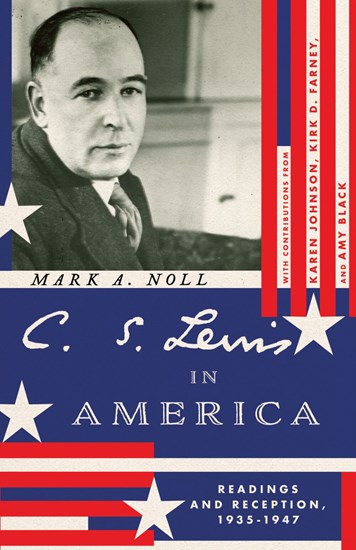
C.S. Lewis in America: Readings and Reception, 1935-1947 is a fascinating look at how C.S. Lewis was received in the United States as he published theological and other works. Mark Noll is one of the most prodigious and intriguing historians of the church in America writing today. The book is mostly focused on the question of how Lewis was received in America, but other contributors introduce a number of other topics that broadens the appeal even more.
Noll’s comments are centered around the initial, largely positive American Catholic response to Lewis, then on his reception among secular writers, and finally on Lewis’s reception among American evangelicals. Responses to these chapters focus on race and religion in America at the time of Lewis, the interplay of The Catholic Hour and The Lutheran Hour on American audiences, and the way Lewis helped foster ways of communication with Christian themes. These responses introduce a number of additional topics that are sometimes only tangentially related to C.S. Lewis, but are all well worth the time to read.
C.S. Lewis in America is a fascinating read, especially for those wanting to know more about C.S. Lewis’s reception. Noll and the other contributors introduce a number of topics that make the book quite readable and with broader appeal.
All Links to Amazon are Affiliates links
Links
Be sure to check out the page for this site on Facebook and Twitter for discussion of posts, links to other pages of interest, random talk about theology/philosophy/apologetics/movies and more!
Book Reviews– There are plenty more book reviews to read! Read like crazy! (Scroll down for more, and click at bottom for even more!)
SDG.
——
The preceding post is the property of J.W. Wartick (apart from quotations, which are the property of their respective owners, and works of art as credited; images are often freely available to the public and J.W. Wartick makes no claims of owning rights to the images unless he makes that explicit) and should not be reproduced in part or in whole without the expressed consent of the author. All content on this site is the property of J.W. Wartick and is made available for individual and personal usage. If you cite from these documents, whether for personal or professional purposes, please give appropriate citation with both the name of the author (J.W. Wartick) and a link to the original URL. If you’d like to repost a post, you may do so, provided you show less than half of the original post on your own site and link to the original post for the rest. You must also appropriately cite the post as noted above. This blog is protected by Creative Commons licensing. By viewing any part of this site, you are agreeing to this usage policy.
Book Review: “Non-Toxic Masculinity: Recovering Healthy Male Sexuality” by Zachary Wagner
Content Warning: Discussion of Sexuality and related topics throughout this review
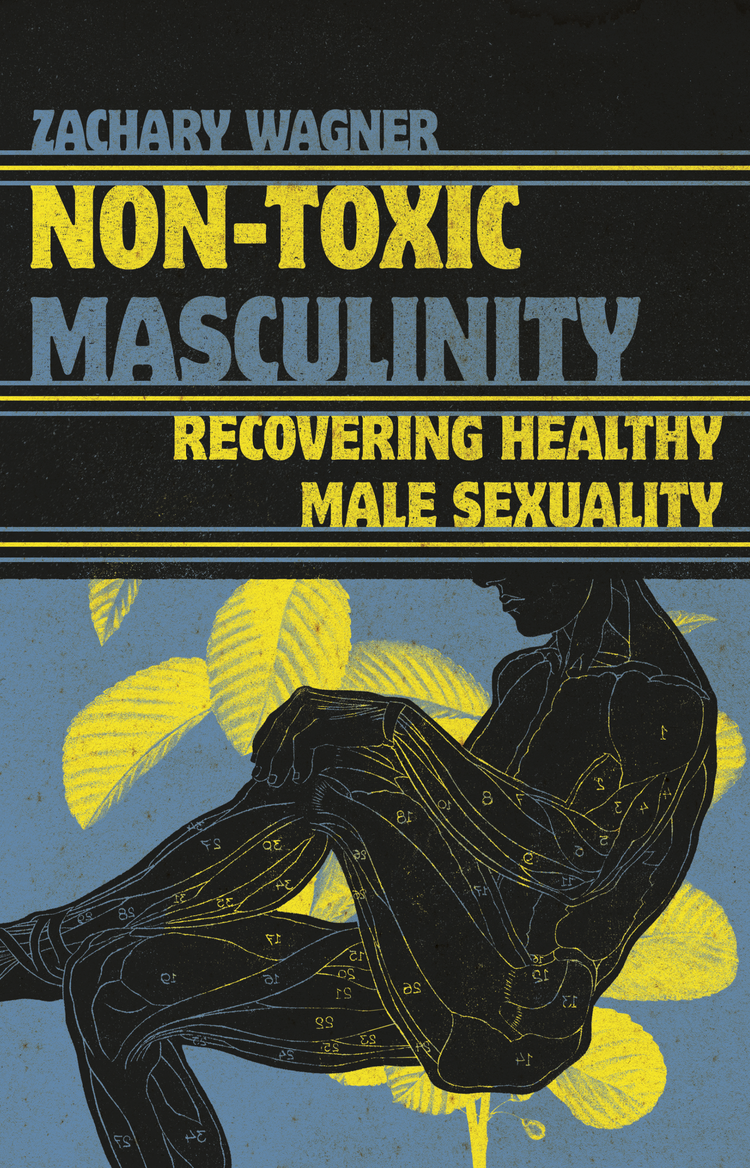
Toxic Masculinity is a hot-button topic. One question that often gets asked once someone acknowledges the problematic nature of a lot of masculinity-oriented ideas is “What does healthy masculinity look like?” Non-Toxic Masculinity: Recovering Healthy Male Sexuality by Zachary Wagner seeks to answer that question.
After an introduction discussing the ways in which people have been awakened to the problems of toxic masculinity (eg. through the #MeToo movement, Harvey Weinstein, and many others), Wagner dives into purity culture and how that movement helped create cultural norms that ended up causing damage not just to people harmed by men but harmed men as well. This is evident in Wagner’s discussion of the promises purity culture made to men, essentially claiming that if men behaved in certain ways it would guarantee satisfactory sexual activity, among other things (33ff). Included in this messaging was a mixed appeal to sexuality as a dangerous thing that was portrayed as nearly out of control in men while also selling it as an endgame or goal of male behavior. Indeed, this portrayal meant that both girls and boys were seen as inherently dangerous sexually, requiring girls to “cover up” while men were portrayed as potentially violent sexually at a moment’s notice.
Wagner does an excellent job of showing how toxic masculinity and purity culture are harmful to men qua males. That is, many forms of alleged masculine behavior or advice is harmful to men in ways that are quite insidious, selling essentially “prosperity sex” type mythos to men. Additionally, the way men were portrayed as inherently sexual meant that men with lower sex drives were seen as less than male or less masculine because of it. Obviously all of this ties into harmful views of women, such as the hypersexualization of women and objectification thereof.
Next, Wagner turns to a reforming of masculine portrayal, offering helpful ways to see masculinity that avoid the problematic nature of toxic masculinity.
There were a few issues I had with the book, however. First is that any discussion of reforming masculinity almost inevitably lends itself to a dichotomy of human nature that fails to see humanity as bell curve. Men and women aren’t opposite extremes–and to be clear, I’m not saying at all Wagner portrays them as such. Books that speak exclusively to femininity or masculinity almost require a dichotomy that doesn’t account for the wide range of human gender expression, even within traditional conceptions of male/female expression. I found this book to be no exception, and wondered what people from LGBTQ+ perspectives might think of it. Wagner does point out that many traditional comments about gay sexuality are off base and often show difficulties with traditional sexual ethical expectations as well (see, for example, the discussion of marriage on 40-41).
Another sort of strange note was the discussion of masturbation, in which Wagner suggests that it might necessarily include dehumanizaiton of others, interestingly because he argues that it includes lust and non-consensual sexual performance in a sense (127). After giving these nods to an anti-masturbation stance, Wagner says he “want[s] to allow for some nuance and disagreement around masturbation…” This nuance includes the fact that many who denounce it are doing so from cisgender heterosexual married people and thus from the easiest ground to do so. Additionally, he notes that we shouldn’t burden people with additional rules that aren’t easy to find or define biblically. I honestly thought this whole aside was strange, but thought-provoking. The concept of tying masturbation to nonconsensual sexual behavior was particularly provoking, but also made me wonder more along the lines of whether thoughts are inherently sinful/etc. And there seem to be things that would counter some of the arguments Wagner offered. What if, for example, a partner gives permission to the other to think of them sexually in such a way? That would seem to remove the problems regarding consent. Overall I admit some skepticism of the whole arguments in this section.
A final, tiny note is that there is no index in the book, and I think basically any book of this kind would benefit from indices.
Non-Toxic Masculinity has many helpful parts, though I wasn’t entirely sold on everything. It would serve as a good conversation starter that might help direct future discussion of the topic for many readers. The discussion of how men are harmed by masculinity-movements was especially helpful.
All Links to Amazon are Affiliates links
Links
Be sure to check out the page for this site on Facebook and Twitter for discussion of posts, links to other pages of interest, random talk about theology/philosophy/apologetics/movies and more!
Book Reviews– There are plenty more book reviews to read! Read like crazy! (Scroll down for more, and click at bottom for even more!)
SDG.
——
The preceding post is the property of J.W. Wartick (apart from quotations, which are the property of their respective owners, and works of art as credited; images are often freely available to the public and J.W. Wartick makes no claims of owning rights to the images unless he makes that explicit) and should not be reproduced in part or in whole without the expressed consent of the author. All content on this site is the property of J.W. Wartick and is made available for individual and personal usage. If you cite from these documents, whether for personal or professional purposes, please give appropriate citation with both the name of the author (J.W. Wartick) and a link to the original URL. If you’d like to repost a post, you may do so, provided you show less than half of the original post on your own site and link to the original post for the rest. You must also appropriately cite the post as noted above. This blog is protected by Creative Commons licensing. By viewing any part of this site, you are agreeing to this usage policy.
Book Review: “The God of Monkey Science” by Janet Kellogg Ray

The God of Monkey Science: People of Faith in a Modern Scientific World by Janet Kellogg Ray explores the interactions of Christians and science in a post-Covid world.
The book explores many topics related to Christianity and science. Kellog Ray includes historical notes about the ways Christians have interacted with science, examples from more recent events such as the rise of the Intelligent Design movement and associated anti-evolution arguments, and even the recent Covid-19 pandemic and Evangelicalism’s largescale embracing of anti-science positions in that time period as well.
A particularly fun aside- one of my blog posts is quoted in the book. Kellogg Ray quotes from one of my posts about leaving my former denomination and how science was a big part of that.
What is especially helpful in the book is how so many real examples of anti-science thinking are provided and then contrasted with context. Some of the examples are especially egregious, such as the attempts to portray Anthony Fauci as anti-mask because of an early video in which he talked about not needing to wear masks at the time but then later, following additional, substantial studies, switching the messaging. This is part of how sciience works–updating guidelines and expectations based on additional or new evidence.
The book is not at all a bash-fest on Christians, either. The author is unabashedly an evangelical Christian, but she writes the book as a kind of long form exhortation to Christians to do better, have humility, and perhaps listen to experts when it comes to science. It’s written in a winsome manner, and will hopefully make some rethink the way they approach science reporting and misinformation.
The God of Monkey Science is a refreshing look at the need for Christians to interact with science more honestly and fruitfully. It is recommended.
All Links to Amazon are Affiliates links
Links
Be sure to check out the page for this site on Facebook and Twitter for discussion of posts, links to other pages of interest, random talk about theology/philosophy/apologetics/movies and more!
Book Reviews– There are plenty more book reviews to read! Read like crazy! (Scroll down for more, and click at bottom for even more!)
SDG.
——
The preceding post is the property of J.W. Wartick (apart from quotations, which are the property of their respective owners, and works of art as credited; images are often freely available to the public and J.W. Wartick makes no claims of owning rights to the images unless he makes that explicit) and should not be reproduced in part or in whole without the expressed consent of the author. All content on this site is the property of J.W. Wartick and is made available for individual and personal usage. If you cite from these documents, whether for personal or professional purposes, please give appropriate citation with both the name of the author (J.W. Wartick) and a link to the original URL. If you’d like to repost a post, you may do so, provided you show less than half of the original post on your own site and link to the original post for the rest. You must also appropriately cite the post as noted above. This blog is protected by Creative Commons licensing. By viewing any part of this site, you are agreeing to this usage policy.
Book Review: “The Uncontrolling Love of God” by Thomas Jay Oord
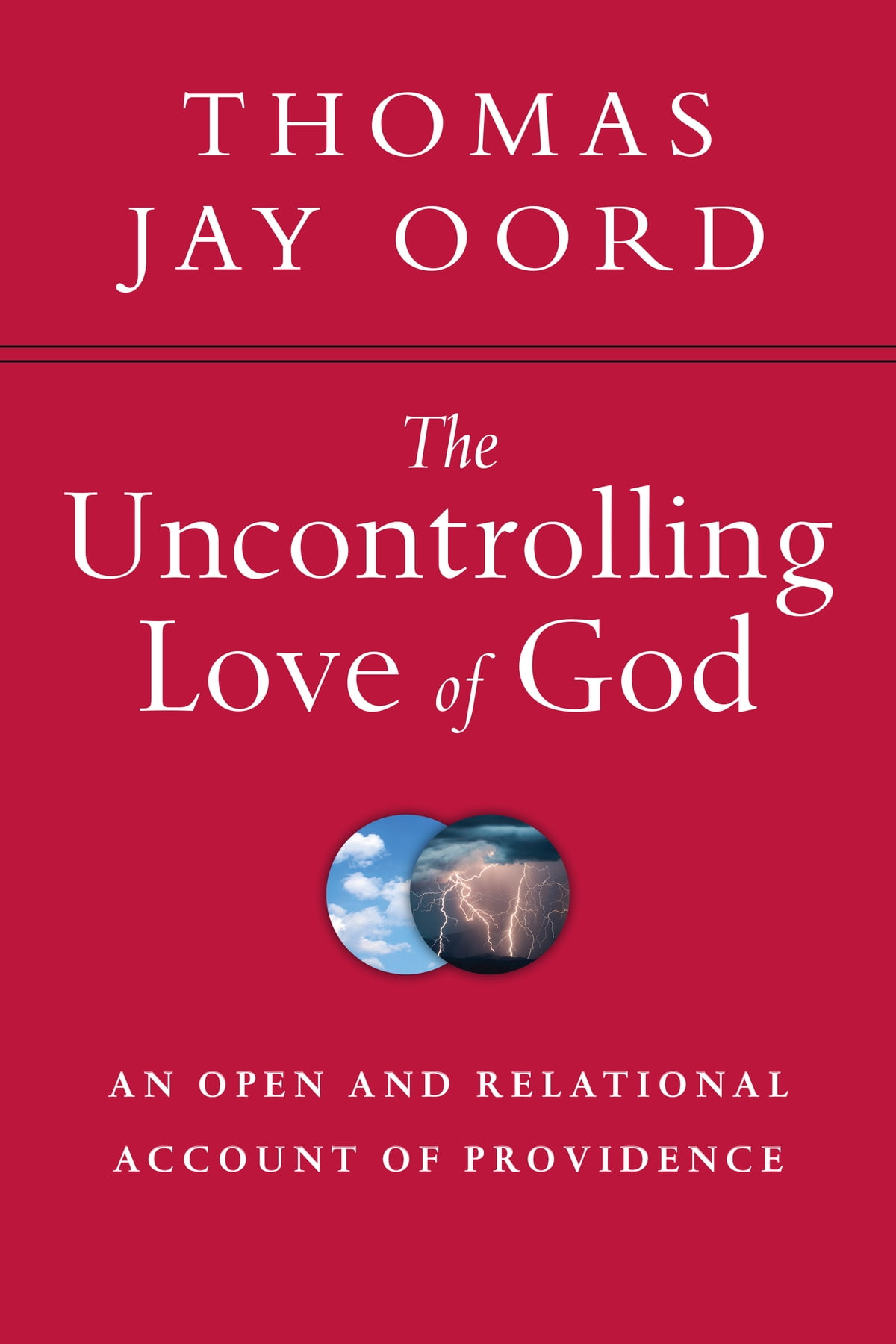
The Uncontrolling Love of God: An Open and Relational Account of Providence by Thomas Jay Oord is the kind of book that I would have either intentionally sought out to pick apart or steered clear of a few years ago. Why? Oord unabashedly challenges traditional conceptions of divine providence, especially digging at the wounds of evil to argue that such accounts are insufficient answers to the problem of evil that we face in the real world.
Before turning to evil, though, Oord argues for the establishment of actually random events. That is, events that are not predetermined by anything. This randomness is real, not apparent, and is balanced by laws of nature which are to be read as regularities, not as comprehensive explanations of reality in lawlike terms (43-44). Going along with this, non-predetermined free choice is another factor in the world which must be accounted for in accounts of providence.
A central concept of the book is the notion of “genuine evil.” Oord notes that philosophers tend to distinguish between necessary and gratuitous evils. He essentially labels gratuitous genuine evils. These evils are “events that, all things considered, make the world worse than it might have been” (65). That doesn’t mean there can’t be goods that might come from them; rather, they are events where the actors involved could have chosen something better instead (65-66). Most Christian theological positions are keen to prevent God from being the primary cause of evil or the one predetermining evil, and there are various attempts to avoid doing this. Oord presses the point though, arguing that even having God as a secondary cause for evil, or attempting to portray overriding goods or ultimate goods as somehow overcoming evil is insufficient to adequately respond to genuine evils (chapter 4 on Models of God’s Providence delves into this deeply).
Ultimately, Oord offers an alternate model of providence, which he calls the “essential kenosis model.” As the name implies, this focuses on the notion of kenosis–divine emptying of the divine self or power–for the sake of other. The model holds that God is essentially, not accidentally good. That is, God does not choose good, but rather is good. Along with this, Oord’s position, in contrast with almost every other position of providence, argues that “God cannot unilaterally prevent genuine evil” (167). Such a position, Oord argues, is aligned with views that God cannot do logically impossible actions. On this position, God preventing all genuine evil unilaterally is a logical and actual impossibility. Thus, Oord’s position avoids the difficulty of needing an overriding good for ultimate resolution of good and evil. The palatability of this will vary, but Oord makes a compelling case for his position.
The Uncontrolling Love of God presents a challenge to more traditional conceptions of divine providence. Oord takes the position to the logical extremes, which will likely alienate some readers. For those seeking an alternative to all-controlling views of God and evil, the book will resonate.
All Links to Amazon are Affiliates links
Links
Be sure to check out the page for this site on Facebook and Twitter for discussion of posts, links to other pages of interest, random talk about theology/philosophy/apologetics/movies and more!
Book Reviews– There are plenty more book reviews to read! Read like crazy! (Scroll down for more, and click at bottom for even more!)
SDG.
——
The preceding post is the property of J.W. Wartick (apart from quotations, which are the property of their respective owners, and works of art as credited; images are often freely available to the public and J.W. Wartick makes no claims of owning rights to the images unless he makes that explicit) and should not be reproduced in part or in whole without the expressed consent of the author. All content on this site is the property of J.W. Wartick and is made available for individual and personal usage. If you cite from these documents, whether for personal or professional purposes, please give appropriate citation with both the name of the author (J.W. Wartick) and a link to the original URL. If you’d like to repost a post, you may do so, provided you show less than half of the original post on your own site and link to the original post for the rest. You must also appropriately cite the post as noted above. This blog is protected by Creative Commons licensing. By viewing any part of this site, you are agreeing to this usage policy.

 J.W. Wartick - Reconstructing Faith