book review
Book Review: “A Matter of Days” by Hugh Ross, Second Expanded Edition
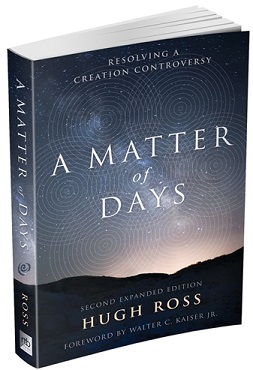
Hugh Ross is one of the most influential Old Earth Creationists alive. The founder of Reasons to Believe, he has had a profound influence on putting forth Old Earth Creationism from a concordist–that is, the notion that the Bible and science will agree where they overlap [often including the notion that the Bible explicitly speaks on scientific issues]–perspective. A Matter of Days
The book provides a huge amount of material for those wanting to interact with topics of creationism. Ross begins by surveying the contentious way the issue is often argued and noting that we as Christians ought to strive for more tolerant attitudes towards each other. Alongside this, he notes various statements by evangelicals allowing for some openness on the topic.
The book covers a massive range of arguments for and against young earth creationism, but the real meat of the text is dealing with various scientific arguments on either side. These are surveyed in a kind of question and answer or objection and rejoinder format in which Ross clearly explains a huge amount of scientific data for an ancient universe and deals with the major objections to such a position from the young earth creationist perspective.
Ross also confronts textual issues in a number of places, including much discussion on the concept of “day” and its meaning in Genesis 1. This, he covers from different perspectives including historic theology, exegesis, and science. He also puts forward a canonical view of how to see Creation in the Bible rather than limiting it simply to Genesis 1-2. There are a number of other texts that he argues also teach on creation.
Although he is an “Old Earth” believer, Ross is also clearly a creationist and puts forward several brief arguments about the faultiness of evolution. This is not a focus of the work, but through such arguments he establishes a clearer picture of his own position related to origins of both life and speciation.
One issue that might be raised with the book is whether the seemingly strict concordism Ross advocates is necessary. For example, rather than arguing that entropy and decay are spoken about in the Bible (100-102), could one not simply note that the human biblical author almost certainly had no concept of entropy and therefore was not addressing it? That is to say, a concept of divine condescension might be easier to hold to than one of future scientific knowledge revealed in the Bible.
The new edition is expanded and has noticeably featured references to some recent works as well as more arguments. It is a rather large re-write with much new information. Readers considering purchase should get this edition.
The Good
+Major point-by-point explorations of evidence for and against an old earth
+Strong defense of the Old Earth Creationist/Concordist position
+Many technical issues explained in understandable ways
+Charitable tone
+Excellent index
+Expanded arguments and new information for the new edition
+Really cool cover
The Bad
-Some questions about concordism remain
-Perhaps too brief on some objections
Conclusion
A Matter of Days
Disclaimer: I was provided with a review copy by the publisher. I was not required to write any sort of review whatsoever thereby.
Links
Be sure to check out the page for this site on Facebook and Twitter for discussion of posts, links to other pages of interest, random talk about theology/philosophy/apologetics/movies and more!
Origins Debate– Read a whole bunch more on different views within Christianity of the “origins debate.” Here I have posts on young and old earth creationism, intelligent design, theistic evolutionism, and more!
Source
Hugh Ross, A Matter of Days
SDG.
——
The preceding post is the property of J.W. Wartick (apart from quotations, which are the property of their respective owners, and works of art as credited; images are often freely available to the public and J.W. Wartick makes no claims of owning rights to the images unless he makes that explicit) and should not be reproduced in part or in whole without the expressed consent of the author. All content on this site is the property of J.W. Wartick and is made available for individual and personal usage. If you cite from these documents, whether for personal or professional purposes, please give appropriate citation with both the name of the author (J.W. Wartick) and a link to the original URL. If you’d like to repost a post, you may do so, provided you show less than half of the original post on your own site and link to the original post for the rest. You must also appropriately cite the post as noted above. This blog is protected by Creative Commons licensing. By viewing any part of this site, you are agreeing to this usage policy.
“Never to Live” by Just B. Jordan – Madness, Self-Loathing, and Hope?
 Never to Live
Madness and Self-Loathing
The main character, Elwyn, is at least apparently insane. Through the first part of the book she is tortured by her own memories into self-loathing madness and must be brought forward out of that same madness in order to be used by God.
The notion of going into and coming out of madness was a unique way to convey the notion of human sinfulness and our incapacity to bring ourselves out of it. Only when Elwyn is confronted by the notion that she could not herself right her wrongs was she able to move beyond them and out of madness.
Moreover, the concepts of madness and self-loathing themselves are things that I think we as Christians need to be more cognizant of as we consider how these can impact a life of faith and our own witness. As with Elwyn, we need to be messengers bringing hope to those who have no hope, and the realization that Jesus is the only way to get beyond our own sinful desires and the self-loathing that comes with the consequences of our sinful activities.
Open Theism and the nature of God?
It is unclear as to whether the character “Weaver” is a God stand-in in this book, but there are many hints that this is the case. If so, the concept of deity put forward in Never to Live is interesting, as Weaver is portrayed as not knowing the entirety of the future. This would be akin to the concept of open theism (which I have discussed at length in various posts). To see this concept translated into fiction was interesting because it meant that the God stand-in had to work with people in a closer way and hope that they accomplished what was needed.
Weaver, if indeed the God stand-in, was also female, which was an interesting choice by the author. The notion that God can be conveyed through female imagery is something with a basis in the Bible as God is portrayed as nursing, as a mother hen, etc.
Conclusion
Never to Live
Disclaimer: I received a review copy of this book from Enclave publishing. I was not influenced or required by the publisher to write any kind of review.
Source
Just B. Jordan, Never to Live (
SDG.
——
The preceding post is the property of J.W. Wartick (apart from quotations, which are the property of their respective owners, and works of art as credited; images are often freely available to the public and J.W. Wartick makes no claims of owning rights to the images unless he makes that explicit) and should not be reproduced in part or in whole without the expressed consent of the author. All content on this site is the property of J.W. Wartick and is made available for individual and personal usage. If you cite from these documents, whether for personal or professional purposes, please give appropriate citation with both the name of the author (J.W. Wartick) and a link to the original URL. If you’d like to repost a post, you may do so, provided you show less than half of the original post on your own site and link to the original post for the rest. You must also appropriately cite the post as noted above. This blog is protected by Creative Commons licensing. By viewing any part of this site, you are agreeing to this usage policy.
The Wheel of Time: “Knife of Dreams” and “The Gathering Storm” – A Christian Perspective
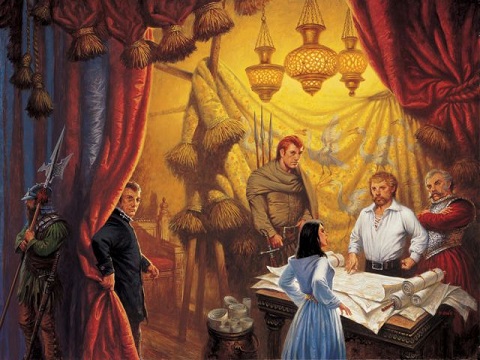 Robert Jordan’s epic fantasy series, “The Wheel of Time,” has much to reflect upon from a Christian perspective. Here, I’ll be examining books eleven and twelve, “Knife of Dreams” and “The Gathering Storm.” These fantasy books are masterworks and deserve to be read by any interested in the genre. There are SPOILERS from both books here. Please do not share spoilers from later books for the sake of readers.
Acting Becomes Reality
In Knife of Dreams, Faile and her companions are being held captive by the Shaido Aiel. In the process, they are forced into servitude and beaten at the whims of their overlords. Faile soon realized the best strategy would be to fain timidity, but also realized the dangers of this:
[Faile] hoped that Sevanna [one of the Aiel] thought her tamed… She hoped that she was not being tamed. Pretend something too long, and it could become truth… She had to escape before [her husband] got himself killed in the attempt [to rescue her]. Before she stopped pretending. (167, cited below)
There is a similar notion built into much discussion about Christianity. Pascal, for example, after outlining his famous wager (which I defend here), noted that one may align oneself towards belief. That is, when someone begins to act as though one believes a certain way, it can turn into a reality that one believes a certain way. From a worldview perspective, then, we should always be wary of how we live our lives and what we surround ourselves with. After all, it may be that our pretending becomes reality.
Preparing for War
The upcoming “Last Battle” is the primary theme of the entire series. In Knife of Dreams and The Gathering Storm, we get our first real experiences of that upcoming war. The series has built up towards this climax, and one can feel the coming “storm” in the books to come. For our world, we know that war is a constant reality. With the reality of terrorist organizations, civil unrest, deep-seated cultural hatred, and the like, war is a constant companion. The same is true in the Wheel of Time. There is an eschatological awareness in the series of this “Last Battle,” just as Christians have an awareness of the Second Coming. In one scene, a military man, one of the great captains, Bashere, reflected on the reality of war:
“Let’s hope it really is the Last Battle. If we live through that, I don’t think we’ll ever want to see another. We will, though. There’s always another battle. I suppose that will be the case until the whole world turns Tinker.” (459)
The awareness of the coming eschaton for the Wheel of Time comes with it a bitter awareness that people of all backgrounds continue to war with each other. Perhaps, it is said, the way of the Tinker–people who have sworn off violence–is best.
In The Gathering Storm, we find a dramatic reversal of the biblical theme of coming peace (found in passages like Isaiah 2:4) which speaks of a day when swords will be beaten into plowshares. Instead, the people of the Wheel of Time must prepare for a day of chaos and war:
“take your best scythes and turn them into polearms…” [advises one farmer to another]
“What do I know about making a sword? Or about using a sword, for that matter?” [the other replied]
“You can learn… Everyone will be needed.” [The first responded] (8, cited below)
The Last Battle is a day in which the nations will unite, but they will unite for war. Again, this is in contrast to the biblical theme of the abolition of war in the eschatological hope. It will be interesting to see how this plays out in the coming books.
Fighting the Darkness from Within
One of the most dramatic scenes in the entire series is found in The Gathering Storm as Verin, an Aes Sedai (female magic user in this series) who has seemed so loyal, reveals she is a darkfriend of the Black Ajah. However, it turns out that she is not wholly evil but rather did so, and did many evil things, in order to try to fight the Shadow from within its own ranks:
“You see, one rarely has a chance as this, to study a beast from inside… They [darkfriends] have many agents among us… Well, I thought it time that we had at least one of us among them. This is worth one woman’s life.” (836, 839)
Verin had sworn herself to evil, but did so in order to bring about great good. Her life was forfeit in order to expose wickedness within the ranks of the Aes Sedai. Her sacrifice forestalled a major weapon of the Dark One.
Thankfully, there is no need for we as Christians to go around swearing ourselves to evil. However, there is great need and sacrifice in going to communities in which Christians are persecuted and seeking to help in whatever ways we can.
Conclusion
The Wheel of Time continues to impress, both from the magisterial scope of its fiction and from the many issues of worldview it brings up. There are, of course, many, many more topics we could discuss related to the books and you may feel free to bring these up in the comments. There are many themes which resonate with the Christian worldview, but Jordan clearly borrowed from Eastern Mysticism as well as other religious traditions. This is a fantastic series to read and discuss at a worldview level.
Links
Be sure to check out the page for this site on Facebook and Twitter for discussion of posts, links to other pages of interest, random talk about theology/philosophy/apologetics/movies and more!
Sources
Robert Jordan, Knife of Dreams (New York: Tor, 2005).
Robert Jordan and Brandon Sanderson, Crossroads of Twilight (New York: Tor, 2009).
SDG.
——
The preceding post is the property of J.W. Wartick (apart from quotations, which are the property of their respective owners, and works of art as credited; images are often freely available to the public and J.W. Wartick makes no claims of owning rights to the images unless he makes that explicit) and should not be reproduced in part or in whole without the expressed consent of the author. All content on this site is the property of J.W. Wartick and is made available for individual and personal usage. If you cite from these documents, whether for personal or professional purposes, please give appropriate citation with both the name of the author (J.W. Wartick) and a link to the original URL. If you’d like to repost a post, you may do so, provided you show less than half of the original post on your own site and link to the original post for the rest. You must also appropriately cite the post as noted above. This blog is protected by Creative Commons licensing. By viewing any part of this site, you are agreeing to this usage policy.
Book Review: “Give Them Grace” by Jessica Thompson and Elyse Fitzpatrick
 Give Them Grace
The way this plays out throughout the book is through an emphasis not just on getting obedience but rather on raising children who are faithful and understand that Christianity is not about our works but about what God has done for us. The authors use several concrete examples of misbehavior or situations in which parental intervention might be required. These examples are then put through a filter of “giving grace,” often with lengthy example dialogues and advice on how to interact. How well does this seem to work out in the examples given? Well, it’s a bit uneven.
On the one hand, the example dialogues are solid ways to apply the notion that we should give our children “grace” rather than a constant stream of Law (and thus create little Pharisees). When one child says they hate another child, rather than shutting them down purely through application of discipline, the authors commend an approach which speaks to the love of Christ in the lives of children. Some may fear this means no discipline is given, but this is far from the case. The authors put forward a good balanced approach between correction and application of grace and thus also provide an example of how to avoid pure works-righteousness in the hearts and minds of our children. The system that is put forward is one in which management, nourishing, training, correction, and rehearsing of Gospel promises are all integrated into parenting.
On the other hand, there are some theological background beliefs which are distracting and sometimes even disturbing in this work. There is a constant refrain of wondering whether one’s child is “regenerated” or not. This lack of surety about the salvation of children not only is a bit terrifying for myself as a parent, but also unfortunately undermines the points the authors make at several points. As a Lutheran, I believe in infant baptism and trust in God to fulfill the promises our Lord made through baptism. I’m not trying to start a debate on that topic, but instead I say this to point out that from my perspective, this means large parts of the book are simply untenable.
Moreover, there is a frankly disturbing lack of trust in the faith of children despite the fact that Jesus Christ said to let the little children come to Him. For example, when discussing the prayers of children about faith: “Because we don’t know the state of our children’s souls and because they might simply want to please us by praying to be saved, we must continue to give them the law and encourage them to ask God for faith to believe that he is as good as he says he is” (Kindle location 814-815). This suggestion that we must essentially doubt the faith of a child, always wary as to whether they are trying to please us rather than being genuine in their calls for salvation is, I think, theologically deeply problematic.
Another difficulty with the book is a seemingly constant refrain of what mothers do, which is particularly off-putting in the discussion of how moms must always be praying for their kids. What about me as a father? It seems clear from the (pretty good!) chapter on prayer that fathers should be praying too, but then why all the emphasis on mothers in this and other regards? It makes it seem like mothers are viewed as more important, despite disavowals of that same notion.
Overall, Give Them Grace
The Good
+Focus on Christian parenting as distinctive
+Practical advice in many situations
+Questions which lead to more concrete applications
+Easy-to-read style which still captivates
+Fairly neutral about physical discipline with advice both to those who would like to engage in it and to those who would not [“fairly” because the authors do favor the former]
The Bad
-Doesn’t give enough credit to fathers
-Theological background beliefs about children’s salvation distracting and even disturbing
-Some advice hampered by said theological beliefs
Disclaimer: I received a review copy of the book through Crossway. I was not obligated by the publisher to give any specific type of feedback whatsoever.
Links
Be sure to check out the page for this site on Facebook and Twitter for discussion of posts, links to other pages of interest, random talk about theology/philosophy/apologetics/movies and more!
Book Reviews– There are plenty more book reviews to read! Read like crazy! (Scroll down for more, and click at bottom for even more!)
Source
Elyse Fitzpatrick and Jessica Thompson, Give Them Grace (Wheaton, IL: Crossway, 2011).
SDG.
——
The preceding post is the property of J.W. Wartick (apart from quotations, which are the property of their respective owners, and works of art as credited; images are often freely available to the public and J.W. Wartick makes no claims of owning rights to the images unless he makes that explicit) and should not be reproduced in part or in whole without the expressed consent of the author. All content on this site is the property of J.W. Wartick and is made available for individual and personal usage. If you cite from these documents, whether for personal or professional purposes, please give appropriate citation with both the name of the author (J.W. Wartick) and a link to the original URL. If you’d like to repost a post, you may do so, provided you show less than half of the original post on your own site and link to the original post for the rest. You must also appropriately cite the post as noted above. This blog is protected by Creative Commons licensing. By viewing any part of this site, you are agreeing to this usage policy.
Microview: “The Dominant Culture: Living in the Promised Land” by Martin Murphy
 Martin Murphy’s The Dominant Culture
Murphy’s book brings much of the book to life as he retells the stories with an eye for application in the present day. How do Israel’s stories point to truths in our own lives? The book proceeds effectively through the major stories of Judges, with a few comments on minor stories as well. The beauty of the way Murphy does this is that he doesn’t try to make a kind of direct correspondence between the nation of Israel as theocracy and our own world in a kind of one-to-one correspondence; rather, he draws from the stories of Judges to show how we live in a world in which each goes his/her own way, sin reigns, and we need repentance. These and other applications are drawn throughout the book with rather remarkable insight.
There are some downsides in the book, particularly with the marked reading of gender hierarchy into the narrative of Deborah. Here, it seems, Murphy goes off track of what is otherwise marvelous exegetical skill, as he must continually appeal to silence (by saying things like the Bible never says God approved of Deborah as a prophetess) rather than allowing the text itself to demonstrate that Deborah simply was a leader and prophet. The very fact that the author of Judges does not condemn a woman as a prophet and judge when they are quick to condemn other wicked practices (such as using the refrain of “everyone did as they pleased”) in fact seems to point in the opposite direction as that which Murphy goes regarding Deborah. This is, thankfully, just one unfortunate aberration of exegesis among what is otherwise a quite solid job navigating between the need to stay true to the text and draw out applications for today.
The Good
+Often shares insights that bring new light to familiar or unfamiliar texts
+Applicable interpretation rather than merely analytic
+Explains key terms in meaningful way
The Bad
-Unfortunate comments about Deborah and women in leadership
Conclusion
The Dominant Culture
I was provided with a copy of the book for review. I was not obligated by the publisher to write any type of review whatsoever.
Links
Be sure to check out the page for this site on Facebook and Twitter for discussion of posts, links to other pages of interest, random talk about theology/philosophy/apologetics/movies and more!
Book Reviews– There are plenty more book reviews to read! Read like crazy! (Scroll down for more, and click at bottom for even more!)
Source
Martin Murphy, The Dominant Culture
“Eternity Falls” by Kevin Outerbridge – Faith, Extremism, and Cyberpunk
 Eternity Falls
Faith and Redemption
One of the primary themes running throughout Eternity Falls is that of redemption. Rick Macey was once a Christian, but like many people in the future (and present), he starts off the book thinking that religion has been proven to be irrational–an ancient belief with little to recommend it in the present. However, he also realizes his own imperfections and regrets. When he is confronted by Virgil, a man with whom he had strong disagreements in the past, he is also brought face-to-face with faith that is still genuine.
However, it is not left at this. Virgil’s beliefs have become a bit unhinged (see below), and in a beautiful twist of storytelling, it is Macey who is brought back to faith and confronts Virgil’s own self-righteousness.
Outerbridge’s tale here demonstrates something that we should all take to heart–God can and will use anyone to wake us up to our own failures and call us home.
Religious Extremism- What Rationale?
Perhaps the most poignant aspect of Eternity Falls are the conversations between Macey and Virgil about religious extremism. They both have backgrounds in combating terrorism, but their past experience led them in opposite directions and Virgil has come to conclude that facing death is the only way for humans to possibly turn to God. Virgil seeks to destroy the “Miracle Treatment” and thus make it so that everyone will once again die natural deaths, confronted with that moment when “eternity falls.” Macey, however, points out that God has used the extended lives of many of these people to bring them to the faith through their own realization of the pointlessness of an endless life of leisure.
Their conversations play out in this way through the book, and Macey ultimately makes a compelling case that God may, in sovereignty, use even things which may be apparently sinful to bring about great good. The melding of the concepts of human free will and God’s omnipotent control over events is powerful, and in what is truly a reflection of Outerbridge’s talent, it meshes very well into the plot of the book.
Moreover, the book portrays the impetus behind religious extremism in many philosophically interesting ways. It is not at all promoting extremism, but the fact that motivations beyond the tired “religious = violent” rhetoric that too often plays out in commentary on terrorism are brought up adds even more solid worldview-level bites to chew on. The key issue is that quote-unquote “religious extremists” certainly themselves believe they are acting rationally, and to have the story play this out in a way in which multiple extremists are spoken to on a logical level rather than simply discounted was fantastic.
Conclusion
Eternity Falls
Links
Be sure to check out the page for this site on Facebook and Twitter for discussion of posts, links to other pages of interest, random talk about theology/philosophy/apologetics/movies and more!
Microview: “Eternity Falls” by Kirk Outerbridge– I reviewed the book, including giving some “good” and “bad” points along with a letter grade. Check out the review!
Popular Books– Check out my looks into other popular books (scroll down for more).
Source
Kirk Outerbridge, Eternity Falls
SDG.
——
The preceding post is the property of J.W. Wartick (apart from quotations, which are the property of their respective owners, and works of art as credited; images are often freely available to the public and J.W. Wartick makes no claims of owning rights to the images unless he makes that explicit) and should not be reproduced in part or in whole without the expressed consent of the author. All content on this site is the property of J.W. Wartick and is made available for individual and personal usage. If you cite from these documents, whether for personal or professional purposes, please give appropriate citation with both the name of the author (J.W. Wartick) and a link to the original URL. If you’d like to repost a post, you may do so, provided you show less than half of the original post on your own site and link to the original post for the rest. You must also appropriately cite the post as noted above. This blog is protected by Creative Commons licensing. By viewing any part of this site, you are agreeing to this usage policy.
Book Review: “Salvation Applied by the Spirit” by Robert Peterson
 Robert Peterson’s Salvation Applied by the Spirit
The first part of the book is comprised of a comprehensive (to my knowledge) survey of texts related to the notion of being “in the Spirit.” Peterson goes across the whole of the biblical witness in order to draw several conclusions, including the notion that being “in Christ” simply is salvation and that this is brought about by union with Christ, which is the work of the Holy Spirit.
This first section brings up many intriguing points of inquiry alongside the central theme of union with Christ. Included among these are the meaning and application of the Sacraments (the Lord’s Supper and Baptism), the doctrine of justification and its application, and more.
The second part of the book draws broad theological conclusions from the exegetical work done in the first section. Broadly, Peterson uses this to explain the work of the Spirit in santification, justification, and salvation. Other primary theological topics that are necessary for understanding these concepts–such as the Incarnation–are also briefly discussed.
The exegetical portion of the book is fantastic and provides not only a solid understanding of the Bible’s understanding of the Spirit’s work in salvation (and particularly that of Paul), but also several insights of the applicability of these discussions to other areas.
The discussion of the Sacraments and the Holy Spirit’s work therein, along with the Incarnational perspective, was interesting and somewhat neutral. The notion that the indwelling of Christ may come through a Sacrament like the Lord’s Supper was wonderful to see (from my perspective as a Lutheran), though the somewhat dismissive language of “symbol” applied alongside this discussion gave it a sense of schizophrenia related to the Sacraments.
The theological threads of the second part of the book are interesting, as was the choice to spend some time covering topics like the Incarnation while spending lesser time on things like the specific view of justification of the author. The latter synthesis of both a covenantal perspective similar to N.T. Wright’s and the emphasis on imputation of righteousness was intriguing and deserving of deeper exploration.
Perhaps the greatest downside to the book is an amorphous sense of audience. It is written at a level which laity will find understandable, but its length will likely be off-putting. Similarly, those looking for a technical discussion will be edified by the quantity of exegetical insights, but perhaps disappointed by the lack of depth. It seems a book a bit caught in the middle between wanting to convey information to the general audience while also appealing to readers with academic interest. Unfortunately, it ultimately doesn’t quite hit its stride with either.
Overall, this is a good book looking at an interesting topic. It would just benefit from being either more or less technical. It will benefit greatly readers interested in the work of the Holy Spirit.
Disclaimer: I received a review copy of the book through Crossway. I was not obligated by the publisher to give any specific type of feedback whatsoever.
Source
Robert Peterson, Salvation Applied by the Spirit
Links
Be sure to check out the page for this site on Facebook and Twitter for discussion of posts, links to other pages of interest, random talk about theology/philosophy/apologetics/movies and more.
SDG.
——
The preceding post is the property of J.W. Wartick (apart from quotations, which are the property of their respective owners, and works of art as credited; images are often freely available to the public and J.W. Wartick makes no claims of owning rights to the images unless he makes that explicit) and should not be reproduced in part or in whole without the expressed consent of the author. All content on this site is the property of J.W. Wartick and is made available for individual and personal usage. If you cite from these documents, whether for personal or professional purposes, please give appropriate citation with both the name of the author (J.W. Wartick) and a link to the original URL. If you’d like to repost a post, you may do so, provided you show less than half of the original post on your own site and link to the original post for the rest. You must also appropriately cite the post as noted above. This blog is protected by Creative Commons licensing. By viewing any part of this site, you are agreeing to this usage policy.
Book Review: “Mere Existentialism: A Primer” by Max Malikow
 Max Malikow’s Mere Existentialism: A Primer is an excellent introduction to existential thought.
This brief work offers brief (less than 10 pages a piece) introductions to Kierkegaard, Nietzsche, Karl Jaspers, Heidegger, Viktor Frankl, Sartre, Simone de Beauvoir, Albert Camus, and Irvin Yalom. These are exactly what they should be for being a primer on existential thought and encourage further reading.
At the end of the book is a brief single-question summary of the thought of each of these major existential thinkers. These are thought-provoking and fairly accurate (at least for those with whom I was already familiar).
The benefit of a book like this is that it allows readers to dive in and learn about major aspects of existential thought without a major time commitment. It is best seen as a way to introduce these thinkers rather than as a comprehensive look at existentialism.
There are a few typos in the work, with perhaps the most noticeable being that Simone de Beauvoir is referred to as “Simon” in the table of contents and the chapter title (though it is correct elsewhere).
Mere Existentialism would best be used as a way to briefly look at existential thought, whether for one’s own edification or in a classroom. It is a good read for an afternoon, provided the reader wants to sit back and think of their own place in the universe for a while afterwards.
Disclaimer: I was provided with a review copy of the book from Theocentric Publishing. I was not obligated to provide any kind of feedback whatsoever.
Links
Be sure to check out the page for this site on Facebook and Twitter for discussion of posts, links to other pages of interest, random talk about theology/philosophy/apologetics/movies and more!
Book Reviews– There are plenty more book reviews to read! Read like crazy! (Scroll down for more, and click at bottom for even more!)
Source
Max Malikow, Mere Existentialism: A Primer (Chipley, FL: Theocentric Publishing Group, 2014).
The Image in this post was a picture I took in the Rocky Mountains and shall not be used without expressed consent.
SDG.
——
The preceding post is the property of J.W. Wartick (apart from quotations, which are the property of their respective owners, and works of art as credited; images are often freely available to the public and J.W. Wartick makes no claims of owning rights to the images unless he makes that explicit) and should not be reproduced in part or in whole without the expressed consent of the author. All content on this site is the property of J.W. Wartick and is made available for individual and personal usage. If you cite from these documents, whether for personal or professional purposes, please give appropriate citation with both the name of the author (J.W. Wartick) and a link to the original URL. If you’d like to repost a post, you may do so, provided you show less than half of the original post on your own site and link to the original post for the rest. You must also appropriately cite the post as noted above. This blog is protected by Creative Commons licensing. By viewing any part of this site, you are agreeing to this usage policy.
Book Review: “Theology’s Epistemological Dilemma: How Karl Barth and Alvin Plantinga Provide a Unified Response” by Kevin Diller
 Kevin Diller’s Theology’s Epistemological Dilemma: How Karl Barth and Alvin Plantinga Provide a Unified Response
Diller first goes deeper into the epistemological problem, then analyzes Barth’s view of revelation and his theological epistemology, and wraps up the first part of the book with a deep look at Plantinga’s concept of warrant and how it may impact the question of theological epistemology. He puts forward a consistent interpretation that allows for a unified perspective of Barth’s and Plantinga’s thought. The second part focuses on this unified perspective and puts it forward in analysis of natural theology, human knowledge of God, and Scripture.
Such a brief summary of contents does not do justice to the broad scale of the book, which touches upon many different topics of importance, while always remaining centered on the question of knowledge in theology. Diller has thoughtfully brought forth key aspects of the thoughts of both Barth and Plantinga in such a way as to demand reflection from both philosophers and theologians.
Some of the most interesting insights come from Diller’s integration of Barth’s concept of revelation with Plantinga’s concept of warrant. By focusing on God as self-revealing and self-attesting (Barth), believers are able to maintain warrant in their knowledge of theology (Plantinga).
Another area of profound interest is the way that both Barth and Plantinga approach natural theology–they largely argue that it cannot succeed in its end goal–to demonstrate the existence of God. Barth’s thought reflects this because God will necessarily be hidden from unaided human reason, while Plantinga argues that the arguments of natural theology are part of but do not ground warrant for belief in God. This latter section has much to reflect upon for one who, like me, thinks natural theology can be largely successful.
Theology’s Epistemological Dilemma is a superb, worthwhile read for anyone with interest in the questions of how we may have knowledge within the worldview of Christianity. I highly commend it to my readers.
Disclaimer: I received a review copy of the book through InterVarsity Press. I was not obligated by the publisher to give any specific type of feedback whatsoever.
Source
Kevin Diller, Theology’s Epistemological Dilemma: How Karl Barth and Alvin Plantinga Provide a Unified Response
Links
Be sure to check out the page for this site on Facebook and Twitter for discussion of posts, links to other pages of interest, random talk about theology/philosophy/apologetics/movies and more.
SDG.
——
The preceding post is the property of J.W. Wartick (apart from quotations, which are the property of their respective owners, and works of art as credited; images are often freely available to the public and J.W. Wartick makes no claims of owning rights to the images unless he makes that explicit) and should not be reproduced in part or in whole without the expressed consent of the author. All content on this site is the property of J.W. Wartick and is made available for individual and personal usage. If you cite from these documents, whether for personal or professional purposes, please give appropriate citation with both the name of the author (J.W. Wartick) and a link to the original URL. If you’d like to repost a post, you may do so, provided you show less than half of the original post on your own site and link to the original post for the rest. You must also appropriately cite the post as noted above. This blog is protected by Creative Commons licensing. By viewing any part of this site, you are agreeing to this usage policy.
“Star Wars: Darth Plagueis” by James Luceno- Morality, Darkness, and Politic
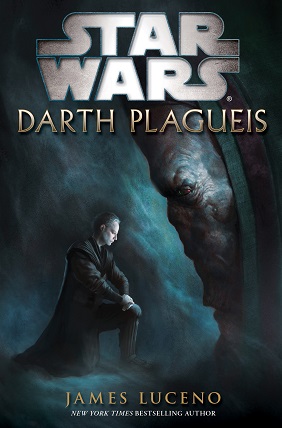
Science fiction is such an amazing genre for exploring issues of worldview. Here, I’m taking a look at Star Wars: Darth Plagueis, a book which explores the rise of Emperor Palpatine and his Sith Master before the events of the Prequel Trilogy. I’ll not summarize the plot, but interested readers can see the plot highlights along with my review of the book in my post on Eclectic Theist- Star Wars Expanded Universe Read-Through- Darth Plagueis.
Morality: What is it, really?
The Sith approach morality as something which is not evil, not divided as good vs. evil. One account of their approach to morality can be found poignantly stated in Darth Plagueis as Plagueis works to recruit Palpatine for the Sith:
Palpatine cut his eyes to Plagueis. “The Sith are considered to be evil.”
“Evil?” Plagueis repeated. “What is that? …Are you evil, or are you simply stronger and more awake than others? Who gives more shape to sentient history: the good, who adhere to the tried and true, or those who seek to rouse beings from their stupor and lead them to glory?” …
Palpatine’s lip curled in anger and menace. “Is this the wisdom you offer–the tenets of some arcane cult?”
“The test of its value is whether you can live by it, Palpatine” [Plagueis replied]. [179-180]
The exchange is chilling for a number of reasons. It is the kind of conversation which one can see play out in various discussions of ethics today. Relativists allow individuals to self-define what is right and wrong and would have no answer to the reasoning of the Sith. Pragmatists also fail to grasp the ultimate outcome of their moral system, which allows for the strong to dominate those whom they choose to dominate. The ends justify the means; or, perhaps more accurately, there need be no justification.
Only systems of morality which allow for objective good and evil have any answer for the reasoning of the Sith. Only with a strong sense of morality can their blurring of what is right and wrong be overcome.
Controlling the Others
There are many points throughout the book in which the concept of control is explored. The Sith believe that they have an imperative to rule and control others. After all, they are strong! One interesting element of this reasoning is the notion that those in charge should operate by one abiding principle: “We know what’s best for you” (204). The insidious nature of this teaching should be immediately obvious. Whenever people decide that they know better than others how those others should live/act/believe, suffering tends to follow. This is not to say that we should never work to change others, but rather that we should not rationalize it by means of thinking we are somehow inherently superior to the “Other.”
Conclusion
Darth Plagueis is a fantastic book in the Star Wars Expanded Universe, and it additionally has a number of philosophical questions ripe for exploration. Christians should work to engage with works of fiction because so often the allow for analysis of and interaction with the Christian worldview. Here, we find that the Christian’s basis for absolute morality is able to trump other moral systems which cannot provide a sound basis for critique of the Sith or others. Yet while acknowledging that one system has the truth, we should never seek to impose it on others because of some sense of superiority. Every story has a worldview.
Links
Be sure to check out the page for this site on Facebook and Twitter for discussion of posts, links to other pages of interest, random talk about theology/philosophy/apologetics/movies and more!
Star Wars: Fate of the Jedi- a Christian reflection on the most recently completed Star Wars series– I have written on another set of Star Wars books from a Christian perspective in this post, which features the Fate of the Jedi series. Discussions of world religions are prominent throughout the set.
Star Wars Expanded Universe Read-Through- Darth Plagueis– I review the book from the perspective of a huge Star Wars fan.
Source
James Luceno, Darth Plagueis (New York: Del Rey, 2012).
Disclaimer: The images in this post are copyright of the Star Wars universe and I use them under fair use. I make no claims to ownership of the images.
SDG.
——
The preceding post is the property of J.W. Wartick (apart from quotations, which are the property of their respective owners, and works of art as credited; images are often freely available to the public and J.W. Wartick makes no claims of owning rights to the images unless he makes that explicit) and should not be reproduced in part or in whole without the expressed consent of the author. All content on this site is the property of J.W. Wartick and is made available for individual and personal usage. If you cite from these documents, whether for personal or professional purposes, please give appropriate citation with both the name of the author (J.W. Wartick) and a link to the original URL. If you’d like to repost a post, you may do so, provided you show less than half of the original post on your own site and link to the original post for the rest. You must also appropriately cite the post as noted above. This blog is protected by Creative Commons licensing. By viewing any part of this site, you are agreeing to this usage policy.

 J.W. Wartick - Reconstructing Faith