book review
Book Review: “Postmortem Opportunity” by James Beilby
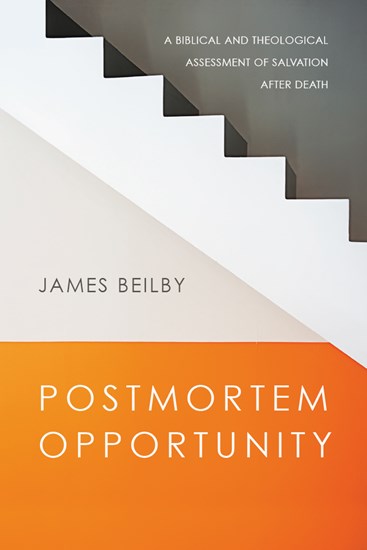
Questions about eternity abound, but one of the most complex is the question of what happens to people who never heard the Gospel. If, the question goes, people who don’t believe in Jesus Christ are condemned, what about people who never even had the chance to decide for themselves? James Beilby’s book, Postmortem Opportunity: A Biblical and Theological Assessment of Salvation After Death is, in part, an answer to that question.
Put simply, Beilby here defends Postmortem Opportunity (hereafter PO in my text), which has the core claim (using his terminology) that: “those who die without receiving a genuine opportunity to hear and respond to the gospel will receive a Postmortem Opportunity to do so” (35, emphasis removed). Of course, there’s quite a bit to unpack even in this claim, such as what constitutes a “genuine opportunity.” Beilby does a commendable job of drawing out definitions and carefully moving readers through each step of the argument.
Beilby starts with a chapter that goes over common views on the destiny of the unevangelized, whether it’s universal salvation, predestination, or any number of other possibilities. In the chapter in which he defines PO, he outlines ways his version may differ from others, such as when it will occur and to whom it will be given. Throughout this and other sections, he uses thought experiments to explain situations. One example was the very helpful and challenging thought experiment regarding the fate of believers who either were on the way to disbelief or non-believers who were very close to believing before they died. It was helpful to clarify that faith and belief is not a kind of black-and-white, all-or-nothing situation, and that robust soteriology must deal with that fact.
Next, Beilby goes over arguments for and against PO, surveying both biblical, historical, and theological arguments. Beilby musters numerous verses to support each aspect of affirmative points he affirms in his view of PO, while also raising some of the objections that immediately come up in any discussion of PO. Interestingly, Beilby has a chapter to explicitly reject inclusivism as a conjunction with his PO, noting that his version basically makes affirmations that would preclude inclusivism and perhaps even make it unnecessary.
Beilby’s argument is interesting and certainly presents the most robust case for PO I have ever encountered. Though, to be fair, some of that may be my own lack of research into the topic. Nevertheless, Beilby’s modest conclusions that PO is, minimally, a possibility based on Scripture and broader theological concerns seem supported by his arguments here.
There are a few critiques I want to point out, however. First, the way Beilby treats biblical texts as data points to be collated as pros and cons for theological argument may call into question some of his interpretations thereof. For example, in the chapter entitled “Scriptural Evidence for Postmortem Opportunity,” he supports one aspect of his PO theory, that people are only condemned for explicit rejection of Christ, by mustering John 3:18, Matthew 10:32-33, and more verses to show that it is a theme found in Scripture. I am tempted to read scripture this same way, as it is what appeals most to my analytical mind.* However, I’m not convinced that this is the best way to read and interpret Scripture. Instead, I believe that the verses cited have contexts that are pointing to entirely different purposes of the entire thought happening. That doesn’t preclude that some kind of tangential points can be found in individual verses, including what Beilby argues is there, but I think more caution regarding interpretation and appealing to broader contexts for these verses would make the argument much stronger. I’m not fully convinced proof texting is a necessarily mistaken way of reading the text, but I am convinced that using the text in that way can and does frequently significantly damage the text. Such a critique can hardly be limited to Beilby, but can certainly be applied to myself and many others.
Another critique is that Beilby unnecessarily limits the scope of his argument fairly early on by saying his version of PO “assumes an explicitly Arminian soteriology” (75). His reasoning behind this appears to be that PO assumes a kind of synergistic view of salvation (75ff). However, to this reader, who is Lutheran and so neither Calvinist or Arminian in soteriology, Beilby’s self-imposed limitation is premature. I suspect this limitation was on purpose for the sake of not having to adjust his PO model to account for other soteriological views. I, however, think that his view of PO could be adjusted without losing too much to match different theological systems. From my own Lutheran upbringing, while many I know would reject PO out of hand, the teaching and affirmation about Christ descending to Hell/the dead was always explicit and strong. From there, it’s not much of a stretch to ask what Christ was doing there, and a kind of PO could flow out from an historic/credal background.
Postmortem Opportunity is a fascinating read on a number of important topics. I admit it has challenged my own views on several topics, and certainly has me going to scripture to read it more fully. I recommend the book for any readers interested in soteriological positions, and those interested in challenging their views.
*My thanks to a friend for pointing out this aspect of reading verses out of context and as data points.
Disclaimer: I was provided with a copy of the book for review by the publisher. I was not required to give any specific kind of feedback whatsoever.
All Links to Amazon are Affiliates links
Links
Be sure to check out the page for this site on Facebook and Twitter for discussion of posts, links to other pages of interest, random talk about theology/philosophy/apologetics/movies and more!
Book Reviews– There are plenty more book reviews to read! Read like crazy! (Scroll down for more, and click at bottom for even more!)
SDG.
——
The preceding post is the property of J.W. Wartick (apart from quotations, which are the property of their respective owners, and works of art as credited; images are often freely available to the public and J.W. Wartick makes no claims of owning rights to the images unless he makes that explicit) and should not be reproduced in part or in whole without the expressed consent of the author. All content on this site is the property of J.W. Wartick and is made available for individual and personal usage. If you cite from these documents, whether for personal or professional purposes, please give appropriate citation with both the name of the author (J.W. Wartick) and a link to the original URL. If you’d like to repost a post, you may do so, provided you show less than half of the original post on your own site and link to the original post for the rest. You must also appropriately cite the post as noted above. This blog is protected by Creative Commons licensing. By viewing any part of this site, you are agreeing to this usage policy.
Book Review: “Discovering Biblical Equality” Third Edition edited by Ronald W . Pierce, Cynthia Long Westfall, and Christa L. McKirland
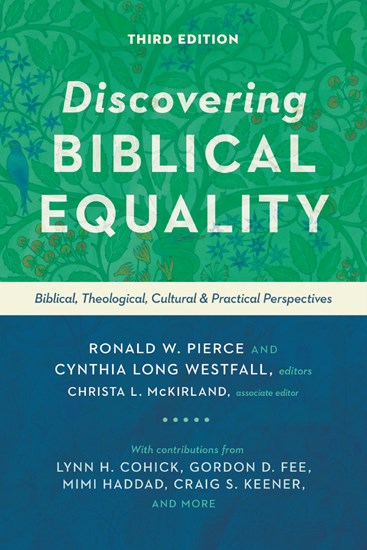
Discovering Biblical Equality: Biblical Theological, Cultural, & Practical Perspectives is a massive tome defending the equality of women in the church and home from a Christian standpoint.
The book is organized around 31 chapters plus an introduction and conclusion. The chapters are broken up into four parts: Looking to Scripture: The Biblical Texts; Thinking it Through: Theological and Logical Perspectives; Addressing the Issues: Interpretive and Cultural Perspectives; Living it Out: Practical Applications. There are highlights in each section, and each essays has its own strengths. Linda Belville’s “Women Leaders in the Bible” goes through many names readers might be familiar with, but also dives into details about some of the specifics, such as the background info we can see in the text for the importance of Huldah (p. 73) and some surprising examples readers might be unfamiliar with (74-75). The discussion of both marriage and singleness with regards to mutuality in Ronald W. Pierce and Elizabeth A. Kay’s chapter (“Mutuality in Marriage and Singleness: 1 Corinthians 7:1-40) is refreshing because so often the discussion centers entirely around marriage. The so-called “clobber passages” of 1 Timothy 2:11-15 and 1 Corinthians 14:34-35 each get their own passage, as do many other related passages.
Kevin Giles’s chapter on “The Trinity Argument for Women’s Subordination” shows the lengths to which some have gone to try to ground women’s inequality. Jeffrey D. Miller’s chapter on gender accurate Bible translation was fascinating and shows how the issues that are often dismissed regarding translation issues can have real, spiritual implications. Mimi Haddad’s chapter on global perspectives and why gender equality matters helps demonstrate the real-life applications of theology.
The book is the third edition of this collection. I own the second edition, which I read some years ago. I compared the table of contents for the two editions, and there is in the third edition a significant overhaul of the included essays. There are 31 chapters in the new edition vs. 29 in the previous one. Several chapters have been entirely replaced, and several new topics are introduced in the third edition. For example a chapter on “Gender Equality and Homosexuality” by William J. Webb in the second edition appears to have been replaced by “Biblical Equality and Same-Sex Marriage” by Ronald W. Pierce in this third edition. The third edition also addresses race and gender, a topic that I don’t recall or see a chapter dedicated to in the second edition. In other words, readers interested in knowing whether it’s worth re-purchasing should rest assured that it very much is. This new edition has a huge amount of new content. I cannot comment on whether essays that appear in each are revised in any way from the original.
The chapter on “Biblical Equality and Same-Sex Marriage” is written by Piece, who is non-affirming in his stance on same-sex marriage. The thrust of the chapter seems to be that one can be a fully committed egalitarian while not affirming same-sex marriage. Such a topic is certainly of interest to the many people who are caught in the middle on these issues. For my part, I’d have liked to see another chapter from an affirming perspective, though I wonder if it wasn’t included because that’s a less controversial pairing. The chapter on race and gender is fascinating and shows how these topics often intersect and overlap.
Discovering Biblical Equality is unquestionably the standard text for those wishing to explore the basics of egalitarian theology on a scholarly level that remains accessible. Every chapter has something to add to the discussion. The depth and breadth of some of the chapters is truly remarkable. I recommend it extremely highly as among the best books on the topic.
Disclaimer: I was provided with a copy of the book for review by the publisher. I was not required to give any specific kind of feedback whatsoever.
All Links to Amazon are Affiliates links
Links
Be sure to check out the page for this site on Facebook and Twitter for discussion of posts, links to other pages of interest, random talk about theology/philosophy/apologetics/movies and more!
Book Reviews– There are plenty more book reviews to read! Read like crazy! (Scroll down for more, and click at bottom for even more!)
SDG.
——
The preceding post is the property of J.W. Wartick (apart from quotations, which are the property of their respective owners, and works of art as credited; images are often freely available to the public and J.W. Wartick makes no claims of owning rights to the images unless he makes that explicit) and should not be reproduced in part or in whole without the expressed consent of the author. All content on this site is the property of J.W. Wartick and is made available for individual and personal usage. If you cite from these documents, whether for personal or professional purposes, please give appropriate citation with both the name of the author (J.W. Wartick) and a link to the original URL. If you’d like to repost a post, you may do so, provided you show less than half of the original post on your own site and link to the original post for the rest. You must also appropriately cite the post as noted above. This blog is protected by Creative Commons licensing. By viewing any part of this site, you are agreeing to this usage policy.
Book Review: “The Manifold Beauty of Genesis One” by Gregg Davidson and Kenneth J. Turner
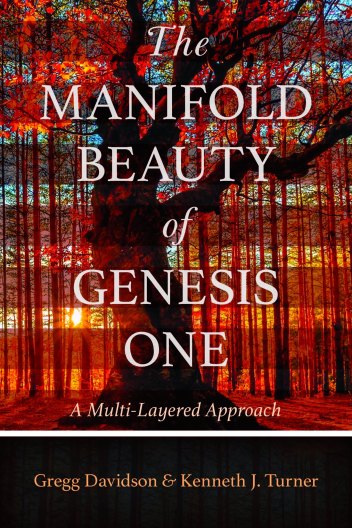
The Manifold Beauty of Genesis One navigates the first chapter of Genesis against the background of many different attempted readings. Gregg Davidson and Kenneth J. Turner argue that the best way to look at Genesis One is a “Multi-Layered approach” that acknowledges that there is more than meets the eye in the text.
The advantage of Davidson and Turner’s approach is that they take the text seriously enough to not try to reduce it to a simplistic reading. Rather than offering multiple views that contradict each other, the authors offer what they see as different yet complementary ways of reading the text that help show the depth of its meaning for both ancient readers/listeners and those to this day.
There are 7 layers that Davidson and Turner argue may be found in the text: song, analogy, polemic, covenant, temple, calendar, and land. Each of these is the subject of its own chapter in which the authors note how this layer may be found in Genesis. For example, the chapter on Genesis 1 as song notes the many ways the chapter has parallels and other forms that could suggest it as a song, while also showing that these features forestall a simplistic reading of shoehorning it into a specific genre from the outset. Each chapter answers objections, and in the chapter on song, they answer objections that the parallels fall apart (they don’t), and that such a reading is driven by an attempt to harmonize with science (it’s not).
I especially enjoyed the chapter on Genesis 1 as polemic. I have long seen the polemical strands in Genesis, and having recently read an argument that the polemic isn’t actually there, found their answers to objections helpful. They note that while polemic is not the primary function of the text, it would be remiss to not see polemic as part of the background of what’s happening in the text. This, of course, adds to the argument for seeing Genesis as multi-layered. The polemic is not the central message of Genesis 1, but it is a message.
While a lot of the authors’ central point (reading Genesis means we should see more than one layer happening) seems pretty basic and maybe even obvious on retrospect, there aren’t enough scholars out there saying this, and many double down on a specific chosen reading. Davidson and Turner’s approach allows readers to fully explore the depth and breadth of Genesis one without feeling shoehorned into any one way of reading the text.
The Manifold Beauty of Genesis One is a fantastic read, even for those who have long been invested in reading about the earliest chapters of Genesis. It would also make a great first read for those looking to get more from the text or explore the doctrine of creation more fully. I recommend it highly.
Disclaimer: I was provided with a copy of the book for review by the publisher. I was not required to give any specific kind of feedback whatsoever.
All Links to Amazon are Affiliates links
Links
Be sure to check out the page for this site on Facebook and Twitter for discussion of posts, links to other pages of interest, random talk about theology/philosophy/apologetics/movies and more!
Book Reviews– There are plenty more book reviews to read! Read like crazy! (Scroll down for more, and click at bottom for even more!)
SDG.
——
The preceding post is the property of J.W. Wartick (apart from quotations, which are the property of their respective owners, and works of art as credited; images are often freely available to the public and J.W. Wartick makes no claims of owning rights to the images unless he makes that explicit) and should not be reproduced in part or in whole without the expressed consent of the author. All content on this site is the property of J.W. Wartick and is made available for individual and personal usage. If you cite from these documents, whether for personal or professional purposes, please give appropriate citation with both the name of the author (J.W. Wartick) and a link to the original URL. If you’d like to repost a post, you may do so, provided you show less than half of the original post on your own site and link to the original post for the rest. You must also appropriately cite the post as noted above. This blog is protected by Creative Commons licensing. By viewing any part of this site, you are agreeing to this usage policy.
Book Review: “Forming Resilient Children: The Role of Spiritual Formation for Healthy Development” by Holly Catterton Allen

Forming Resilient Children by Holly Catterton Allen is not just a parenting book, though it is that. It also provides research-based insights into children’s spiritual formation and development.
The book has four parts. The first outlines foundational concepts, the second discusses families and children’s spirituality, the third looks at the role churches play, and the fourth takes a deeper look at resilience and trauma. Each chapter has anecdotes from real-life people about children’s resilience. Each chapter also has some data or research-based information about children and spirituality. For example, in a chapter about the way grandparents can help shape their grandchildren’s spirituality, research from Barna is provided showing how grandparents are often more intentional about spiritual interactions with children (71). The stories of real children coming through stressful or traumatic situations are touching, but also provide a basis for how to look at each chapter and things to think about.
Some readers may be surprised by the insights in this book. Research shows that children’s spirituality is revealed essentially from birth, as the connections we make are universal (17-19). I was one surprised by this, though I honestly shouldn’t have been, since it seems clear that God has made humans to be spiritual creatures. At many points, the author shares ways people can build children up not just to be resilient, but also to follow spiritual practices and establish a life of faith.
Forming Resilient Children is an excellent read that opens a number of insights into how to form connections between children and their faith. It also provides a basis for learning about resilience and bringing kids through difficult times. Recommended.
Disclaimer: I was provided with a copy of the book for review by the publisher. I was not required to give any specific kind of feedback whatsoever.
All Links to Amazon are Affiliates links
Links
Be sure to check out the page for this site on Facebook and Twitter for discussion of posts, links to other pages of interest, random talk about theology/philosophy/apologetics/movies and more!
Book Reviews– There are plenty more book reviews to read! Read like crazy! (Scroll down for more, and click at bottom for even more!)
SDG.
——
The preceding post is the property of J.W. Wartick (apart from quotations, which are the property of their respective owners, and works of art as credited; images are often freely available to the public and J.W. Wartick makes no claims of owning rights to the images unless he makes that explicit) and should not be reproduced in part or in whole without the expressed consent of the author. All content on this site is the property of J.W. Wartick and is made available for individual and personal usage. If you cite from these documents, whether for personal or professional purposes, please give appropriate citation with both the name of the author (J.W. Wartick) and a link to the original URL. If you’d like to repost a post, you may do so, provided you show less than half of the original post on your own site and link to the original post for the rest. You must also appropriately cite the post as noted above. This blog is protected by Creative Commons licensing. By viewing any part of this site, you are agreeing to this usage policy.
Book Review: “Does God Exist? A History of Answers to the Question” by W. David Beck
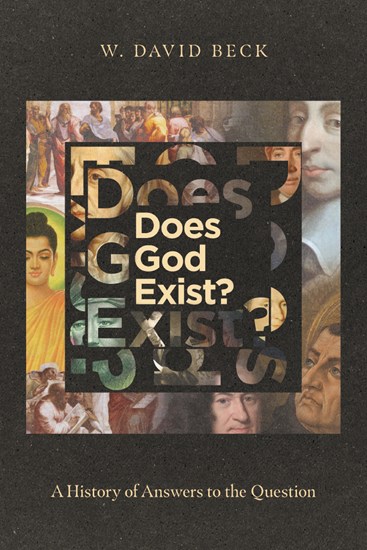
W. David Beck’s Does God Exist? A History of Answers to the Question is a remarkable historical survey of some of the best-known arguments for the existence of God. In a crowded field of books about the existence of God, Beck’s work sets itself apart by providing both an historical survey of the ways these arguments developed and working explanations and analyses of the arguments into today.
The first chapter introduces readers to the origins of theistic arguments, providing a broad background for the rest of the book. After that, the chapters act as a kind of typology of theistic arguments, dividing them into chapters on cosmological arguments, teleological arguments, moral arguments, and ontological arguments, respectively. A final chapter closes the book with a look ahead at the prospects and possibilities for theistic arguments and conclusions based upon the same.
Each chapter on a type of argument traces the argument from its earliest clear example into the modern day. It is important to note that these chapters are necessarily broad and plural. What I mean is that the chapters end with the plural “arguments” rather than “argument” for a reason–each type of theistic argument has numerous ways of presenting the argument and several different proponents and detractors through history and into today. Thus, for example, the cosmological argument can be traced back to the earliest known writings on philosophy both East and West and into today with sophisticated arguments based (in some cases) upon modern cosmology or physics.
I especially enjoyed the chapter on ontological arguments, which are surely the more opaque but hotly debated theistic arguments today. As with every other chapter, Beck doesn’t shy away from showing both theistic and atheistic takes on the argument. He gives the atheist philosopher Graham Oppy quite a bit of space and somewhat amusingly quotes Oppy to the effect of saying ontological arguments may work but it’s difficult to know whether they succeed. That is, due to the amazingly confusing nature of the multifarious questions any ontological argument raises (such as “is existence a property?”), it is possible the arguments work but don’t succeed–they don’t convince people due to the many trails and red herrings they raise. As someone deeply interested in the ontological argument, I found this a great way to end a thoroughly thought-provoking chapter.
Each chapter has its own issues raised. It’s already been mentioned, but bears repeating that Beck includes both theists and atheists in his survey of arguments. Many objections are noted, for example, in a lengthy section on the analysis of Aquinas’s version of a cosmological argument from the philosopher Paul Edwards (1923-2004). Over the course of several pages, Edwards’s objections to cosmological arguments are noted, but Beck also shows how several of these objections fail, even by Edwards’s own admission. Such introduction of modern debates, often featuring back-and-forth discussion edited for succinctness by Beck, make the book highly readable despite often heady subject matter. Again, each section must be brief, so the book provides more of an overview than it does anything in depth, but it’s clear how easily readers could pursue additional reading based on extensive, annotated bibliographies Beck provides section-by-section.
Does God Exist? is a fascinating read, even for readers like myself who are veterans of apologetics training or who have read hundreds of books on the subject. It could easily be used as a springboard for more discussion, as a reference with bibliographical data, or a grab bag of discussion. Beck has provided an invaluable resource to help spur additional discussion, and doesn’t shy away from highlighting powerful objections to theistic arguments even as he concludes it is reasonable and justifiable to believe God exists. Recommended.
Disclaimer: I was provided with a copy of the book for review by the publisher. I was not required to give any specific kind of feedback whatsoever.
All Links to Amazon are Affiliates links
Links
Be sure to check out the page for this site on Facebook and Twitter for discussion of posts, links to other pages of interest, random talk about theology/philosophy/apologetics/movies and more!
Book Reviews– There are plenty more book reviews to read! Read like crazy! (Scroll down for more, and click at bottom for even more!)
SDG.
——
The preceding post is the property of J.W. Wartick (apart from quotations, which are the property of their respective owners, and works of art as credited; images are often freely available to the public and J.W. Wartick makes no claims of owning rights to the images unless he makes that explicit) and should not be reproduced in part or in whole without the expressed consent of the author. All content on this site is the property of J.W. Wartick and is made available for individual and personal usage. If you cite from these documents, whether for personal or professional purposes, please give appropriate citation with both the name of the author (J.W. Wartick) and a link to the original URL. If you’d like to repost a post, you may do so, provided you show less than half of the original post on your own site and link to the original post for the rest. You must also appropriately cite the post as noted above. This blog is protected by Creative Commons licensing. By viewing any part of this site, you are agreeing to this usage policy.
Book Review: ” Letters for the Church: Reading James, 1-2 Peter, 1-3 John, and Jude as Canon” by Darian R. Lockett
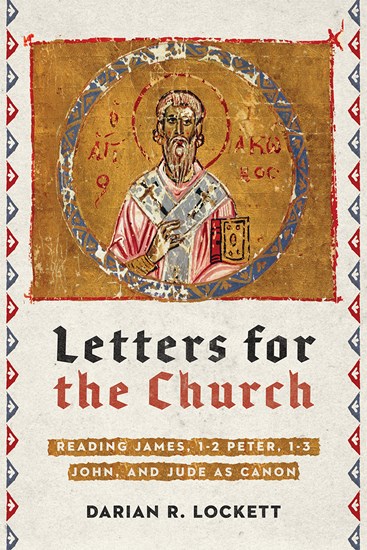
Darian R. Lockett provides an introduction to numerous books of the Bible in Letters for the Church: Reading James, 1-2 Peter, 1-3 John, and Jude as Canon. These books of the Bible are often entirely overlooked or skimmed through simply for the sake of proof texts or quotes, but Lockett makes a case for reading them canonically–that is, set within the whole of Scriptures. To that end, he provides summaries of each book along with discussion of major themes, specific points of instruction and other interest, and more.
Lockett tackles several of the more difficult issues related to these books of the Bible throughout. Authorship is a major question, and he largely presents the evidence for who is thought to have authored the book, what evidence we may have for that, and his own conclusions. Another example of Lockett dealing with a more difficult issue is with Jude’s use of non-canonical works to make points in its own text. Jude clearly uses 1 Enoch in Jude 9, and this raises the question of whether Jude saw 1 Enoch as an authoritative or inspired work. Lockett notes that it has been a thorny issue through much of church history before outlining a few major points. Ultimately, this reader wonders whether the specific interest in whether Jude lends to making 1 Enoch inspired or canonical is a kind of anachronistic concern with reading over our ideas onto the text. Lockett’s own analysis could yield that, as he notes that what we can ultimately say is that 1 Enoch was “an important part of [the author of Jude’s] argument and [that author] does not distinguish it from other prophetic texts from the Old Testament–beyond this we can only speculate” (205).
Lockett also doesn’t shy from some of the more hotly debated texts within the books he’s writing about. For example, the question of wives submitting to husbands in 1 Peter 3 is discussed at some length (77-80). Lockett notes the context regarding doing so for the sake of Christ, and ultimately aims at the notion that such submission could potentially win non-Christian spouses over, which makes more sense of other parts of the book as well. Reading 1 Peter 3 as an intentional way to tell all wives to submit to all husbands in all circumstances, as is often done, is therefore a mistaken reading of the text.
Letters for the Church is a strong introduction to numerous books of the Bible that are often skimmed over. No matter where readers come from theologically, it is an enlightening, challenging read. Recommended.
Disclaimer: I was provided with a copy of the book for review by the publisher. I was not required to give any specific kind of feedback whatsoever.
All Links to Amazon are Affiliates links
Links
Be sure to check out the page for this site on Facebook and Twitter for discussion of posts, links to other pages of interest, random talk about theology/philosophy/apologetics/movies and more!
Book Reviews– There are plenty more book reviews to read! Read like crazy! (Scroll down for more, and click at bottom for even more!)
SDG.
——
The preceding post is the property of J.W. Wartick (apart from quotations, which are the property of their respective owners, and works of art as credited; images are often freely available to the public and J.W. Wartick makes no claims of owning rights to the images unless he makes that explicit) and should not be reproduced in part or in whole without the expressed consent of the author. All content on this site is the property of J.W. Wartick and is made available for individual and personal usage. If you cite from these documents, whether for personal or professional purposes, please give appropriate citation with both the name of the author (J.W. Wartick) and a link to the original URL. If you’d like to repost a post, you may do so, provided you show less than half of the original post on your own site and link to the original post for the rest. You must also appropriately cite the post as noted above. This blog is protected by Creative Commons licensing. By viewing any part of this site, you are agreeing to this usage policy.
Book Review: “Spiritual Practices of Jesus: Learning Simplicity, Humility, and Prayer with Luke’s Earliest Readers” by Catherine J. Wright
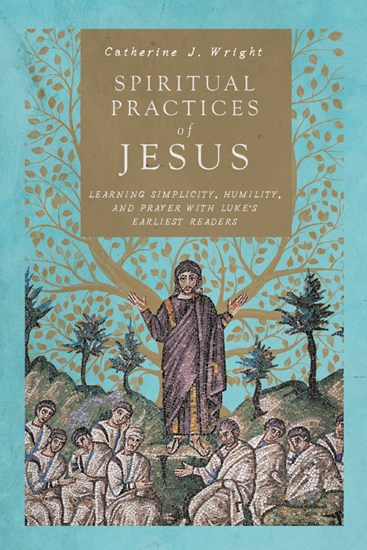
It is rare to read a book that is not just insightful, but also formative and challenging. Catherine J. Wright’s Spiritual Practices of Jesus: Learning Simplicity, Humility, and Prayer with Luke’s Earliest Readers is one such book. Each part of the subtitle is deeply important to the contents of the book. Wright introduces readers to a number of early readers of the Gospel of Luke and provides their insights into how to read the texts. These insights often challenge modern readings and spiritualization of the text.
Each section–on Simplicity, Humility, and Prayer–features a chapter that highlights how the early church read the Gospel of Luke on these issues. That means readers will see how Augustine, Chrysostom, and many others read Luke on questions related to those topics. It’s deeply important to read about that, because those early readers have a different cultural context than we do. Their readings can therefore offer correctives that highlight the importance of the texts in ways that we may not think of otherwise.
The sections start with a chapter in which Wright goes through Luke highlighting where verses or stories reflect the theme at hand. For example, in the section on simplicity, Wright shows how frequently Jesus speaks about giving to the poor and highlights the plight of the poor and the difficulties and sinfulness in wealth. Pairing this with the second chapter in the section on how the early church read these verses shows how many modern readings that try to spiritualize these texts do not align with both the earliest readings and probably the intended meaning of the text. A second chapter in each section highlights the first-century context of the passages and how understanding the challenges of that time can lead to correcting our readings of the text as well.
Some of the content with simplicity has been highlighted, but each section has numerous parts worth interacting with. Whether it’s the challenge to live humble lives or how to read Jesus’s prayers and pray ourselves, Wright constantly brings applicable insights to the table throughout the book.
Wright’s Spiritual Practices of Jesus is a phenomenal read that could even change how readers live their lives. By reading the early church on Jesus, readers are exposed to challenges to our own culture that can cause use to rethink our reading of the text and the ways we live. Highly recommended.
Disclaimer: I was provided with a copy of the book for review by the publisher. I was not required to give any specific kind of feedback whatsoever.
All Links to Amazon are Affiliates links
Links
Be sure to check out the page for this site on Facebook and Twitter for discussion of posts, links to other pages of interest, random talk about theology/philosophy/apologetics/movies and more!
Book Reviews– There are plenty more book reviews to read! Read like crazy! (Scroll down for more, and click at bottom for even more!)
SDG.
——
The preceding post is the property of J.W. Wartick (apart from quotations, which are the property of their respective owners, and works of art as credited; images are often freely available to the public and J.W. Wartick makes no claims of owning rights to the images unless he makes that explicit) and should not be reproduced in part or in whole without the expressed consent of the author. All content on this site is the property of J.W. Wartick and is made available for individual and personal usage. If you cite from these documents, whether for personal or professional purposes, please give appropriate citation with both the name of the author (J.W. Wartick) and a link to the original URL. If you’d like to repost a post, you may do so, provided you show less than half of the original post on your own site and link to the original post for the rest. You must also appropriately cite the post as noted above. This blog is protected by Creative Commons licensing. By viewing any part of this site, you are agreeing to this usage policy.
Book Review: “Majority World Theology: Christian Doctrine in Global Context”

Christianity is a global religion, yet many discussions of theology are dominated by American or European voices. In Majority World Theology: Christian Doctrine in Global Context, the editors Gene L. Green, Stephen T. Pardue, and K. K. Yeo seek to provide a partial remedy to this problem.
The Majority World is sometimes called the Global South. It’s the part of Earth in which the majority of humans reside and includes Africa, Asia, and Latin America, among other places. The editors have focused on giving theologians from these places voices addressing several major topics in theology. The book is organized around six parts with multiple essays in each part. These parts are: The Trinity Among the Nations: The Doctrine of God in the Majority World, Jesus Without Borders: Christology in the Majority World, The Spirit Over the Earth: Pneumatology in the Majority World, So Great a Salvation: Soteriology in the Majority World, The Church from Every Tribe and Tongue: Ecclesiology in the Majority World, and All Things New: Eschatology in the Majority World.
The essays are each of interest. This reader read the book front-to-back, but it is clear that it could be read in parts, used for classes with individual essays, or in any number of other ways. One thing that readers ought to keep in mind is that each of these essays is just that–a single essay introducing one perspective on a huge topic. Thus, for example, the fascinating essay “The Trinity in Africa: Trends and Trajectories” by Samuel Waje Kunhiyop shows readers some ways in which African theologians are exploring the doctrine of the Trinity. Readers should not come away thinking that these are the only trends or that all African theologians are thinking along these lines. That said, Kunhiyop brings readers to engage with numerous lines of African theology. Each of the essays included in this collection is like that: it provides a way forward for additional exploration.
One example of an essay that provides many avenues for additional reading is “Asian Reformulations of the Trinity: An Evaluation” by Natee Tanchanpongs. Tanchanpongs Highlights several Asian theologians and the way they have discussed or reformulated the doctrine of the Trinity within their own contexts. It’s a fascinating read and one that allows Tanchanpongs to analyze numerous ways to take the Trinity in exploratory theology.
Majority World Theology is an excellent introduction to global theology. Readers can treat it as a reference book, read it front-to-back, or sample as they see fit. Most importantly, readers will be exposed to global perspectives on Christianity that they otherwise may not have ever experienced.
Disclaimer: I was provided with a copy of the book for review by the publisher. I was not required to give any specific kind of feedback whatsoever.
All Links to Amazon are Affiliates links
Links
Be sure to check out the page for this site on Facebook and Twitter for discussion of posts, links to other pages of interest, random talk about theology/philosophy/apologetics/movies and more!
Book Reviews– There are plenty more book reviews to read! Read like crazy! (Scroll down for more, and click at bottom for even more!)
SDG.
——
The preceding post is the property of J.W. Wartick (apart from quotations, which are the property of their respective owners, and works of art as credited; images are often freely available to the public and J.W. Wartick makes no claims of owning rights to the images unless he makes that explicit) and should not be reproduced in part or in whole without the expressed consent of the author. All content on this site is the property of J.W. Wartick and is made available for individual and personal usage. If you cite from these documents, whether for personal or professional purposes, please give appropriate citation with both the name of the author (J.W. Wartick) and a link to the original URL. If you’d like to repost a post, you may do so, provided you show less than half of the original post on your own site and link to the original post for the rest. You must also appropriately cite the post as noted above. This blog is protected by Creative Commons licensing. By viewing any part of this site, you are agreeing to this usage policy.
Book Review: “The Doctrine of Creation: A Constructive Kuyperian Approach” by Bruce Riley Ashford and Craig G. Bartholomew
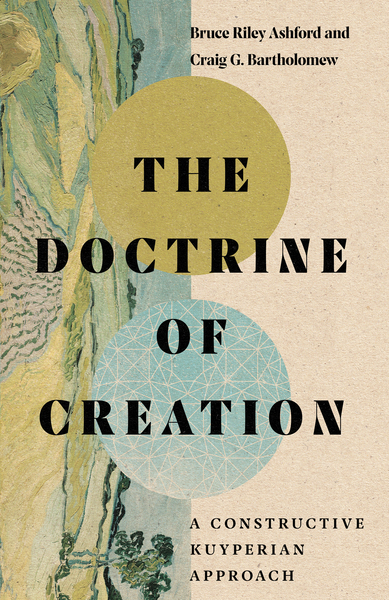
A systematic doctrine of creation is the core of Bruce Riley Ashford and Craig G. Bartholomew’s The Doctrine of Creation: A Constructive Kuyperian Approach. The subtitle begs questions about what is meant by this specific doctrine of creation. First, the authors follow the theology of Abraham Kuyper, a Dutch Reformed theologian of the late 19th and early 20th centuries. Second, the notion of being “constructive” means the doctrine builds upon itself, layer upon layer, making a truly systematic approach.
The authors pursue a broad approach, first discussing the historic Christian Creeds and their place in a construction of a doctrine of creation, then moving on to a broad historical overview of the doctrine itself. Next, they turn to God’s omnipotence and its bearing on creation, then move through biblical and theological discussion of creation to show a specific view of how Creation occurred and what relevance it has for today. Providence–God’s sustaining of the world–is a subject of its own chapter, followed by a chapter about Christ and the Holy Spirit in the New Creation, and the book ends with a application of the doctrine of creation to a few modern topics. There is a short appendix about missional neo-Calvinism at the end.
The way Ashford and Bartholomew build the doctrine of creation is infused with insight from Kuyper throughout, though it’s clear that calling it “Kuyperian” is more to designate it as along the Newo-Calvinist tradition than specifically or robotically following Kuyper. I am by no means an expert in Kuyper’s theology. My comment to this effect is based upon the extensive use of more modern citations as well as more generalized theological strands than simply adherence to Kuyper. Much as a Lutheran might call their approach Lutheran without explicitly following Luther in every regard, the authors are doing the same here.
It was interesting to see the first chapter begin with a discussion of the historic Christian Creeds and a defense of their use in helping construct a doctrine of creation. The book’s audience is clearly intended to be broader than Dutch Reformed readers, and this was perhaps included to show the authors have done their legwork regarding why we should see the Creeds as important to faith formation and theology today. As a Lutheran myself, it is just a given that the Creeds are of great import, and it was most interesting to see the authors engaging in such an extended defense of their use. Speaking of the book’s audience–this book is one that will largely yield fruits based on two things: the effort the reader puts into understanding and following the systemic theology therein; and one’s own theological biases. For example, the author’s discussion of the creation accounts (yes, the “s” is intentional) in Genesis was of great interest to this reader, but others might be inclined to see the accounts as a unified whole. More specifically on the doctrines of providence, omnipotence, and elsewhere, the authors’ Neo-Calvinist/Kuyperian view looms large and so will challenge readers who hold other positions.
I was somewhat surprised to see the focus in the chapter about God’s omnipotence to be so specifically focused on God the Father. Indeed, the chapter itself, following the language of the Apostle’s Creed, is titled “God, the Father Almighty.” But one gets a sense within the chapter that the other members of the Trinity are almost afterthoughts in this aspect of the doctrine of Creation. This is most clear when the authors use language that seems almost a concession in describing the role of the other divine Persons: “we know that the Son and the Spirit are also involved in the act of creation” (140). However, those Persons get little say until a later chapter discusses the New Creation (306ff). Many modern controversies are discussed, with views of omniscience and providence being at the center of a section about creatio continua (continued creation). Here, the authors wrestle with authors within their own tradition (eg. Barth’s resistance to philosophy p. 290-292 and elsewhere) as well as others like Molinists with competing views (they argue for an Augustinian view against the Molinist position, see p. 293-294, but also the discussion on 126).
Numerous intriguing insets are found throughout the text, such as an extended discussion of creation out of nothing (133-137) that includes some discussion of ancient Near Eastern literature. However, the authors focus much more upon Christian tradition and writings than on any attempt to understand the contemporary culture or meanings inherent in the text from an ANE perspective. Many other insets highlight important topics relevant to the issues at hand and present readers with more extensive looks at the authors’ arguments.
I was quite surprised in the final chapter to see the author’s application of their systematic theology to contemporary issues. I wasn’t surprised to see that application made–surely if a Christian doctrine of creation is true, it ought to be able to speak to many modern problems–but rather with the seeming lack of care given in this section to sources and argumentation. Specifically, the authors turn to the question of transgender individuals. They make a distinction between gender dysphoria and “transgender ideology” (360) and assert that “we must recognize transgenderism as deeply incoherent” (ibid). Beyond that, they agree with another writer that “it is a gnostic denigration of the material body that nonetheless insists that a trans person must transform his or her body in order to be whole…” among other things. Here we see the ugly aphorism that “If I don’t like a theological position, it must be Gnosticism” rearing its ugly head.
Beyond the utter historical nonsense that is the equivocation of modern transgender ideology to ancient Gnosticism without anything more than bald assertion, the authors themselves produce the very type of incoherent argument they accuse their interlocutors of performing. First, their definition of “transgender ideology” as the belief that “a person can be born into the body of the wrong sex and can be transformed into the other sex through gender reassignment surgery and/or hormone therapy” (ibid). This definition may reflect the beliefs of some people, but surely not a broad enough consensus as to lump all who go beyond mere acknowledgement of gender dysphoria into this category. Moreover, the authors themselves seem to totally miss one of the central aspects of an understanding of gender dysphoria–something they at least seem to acknowledge as a real difficulty–as they move quite swiftly from discussion of “sex” to discussion of gender. Just one page after their definition, they continue: “A person should not, and indeed cannot, change his or her gender” (361). This seems utterly confused, because the language they’re using reflects objectivity of gender standards which simply cannot be the case given how frequently throughout history those expectations have changed. Men in Elizabethan England were expected to wear ruffles and stockings, so according to these authors’ confused understanding, men today are either sinfully attempting to change their gender by not doing so, or the whole of societal expectations in that era and place were themselves mistaken and indeed impossible (referring to the language of “cannot”). Given the deep misunderstandings of the basic tenets and talking points of modern discussions of transgender topics (something I myself do not claim any expertise in), it seems the authors may have been better served if they’d let the topic lie instead of attempting a triumphant broadside that dissolves into silliness on the most superficial examination.
It is clear that readers of The Doctrine of Creation: A Constructive Kuyperian Approach will be challenged on many levels as they read the book. It is an impressive look at what it means to build a doctrine of creation within a specific theological tradition. There are some stumbles throughout the book, but readers–especially those interested in Reformed doctrine–will find much of interest. Unfortunately, I cannot recommend some of the discussion of modern topics.
Disclaimer: I was provided with a copy of the book for review by the publisher. I was not required to give any specific kind of feedback whatsoever.
All Links to Amazon are Affiliates links
Links
Be sure to check out the page for this site on Facebook and Twitter for discussion of posts, links to other pages of interest, random talk about theology/philosophy/apologetics/movies and more!
Book Reviews– There are plenty more book reviews to read! Read like crazy! (Scroll down for more, and click at bottom for even more!)
SDG.
——
The preceding post is the property of J.W. Wartick (apart from quotations, which are the property of their respective owners, and works of art as credited; images are often freely available to the public and J.W. Wartick makes no claims of owning rights to the images unless he makes that explicit) and should not be reproduced in part or in whole without the expressed consent of the author. All content on this site is the property of J.W. Wartick and is made available for individual and personal usage. If you cite from these documents, whether for personal or professional purposes, please give appropriate citation with both the name of the author (J.W. Wartick) and a link to the original URL. If you’d like to repost a post, you may do so, provided you show less than half of the original post on your own site and link to the original post for the rest. You must also appropriately cite the post as noted above. This blog is protected by Creative Commons licensing. By viewing any part of this site, you are agreeing to this usage policy.
“Bonhoeffer’s America: A Land Without Reformation” by Joel Looper
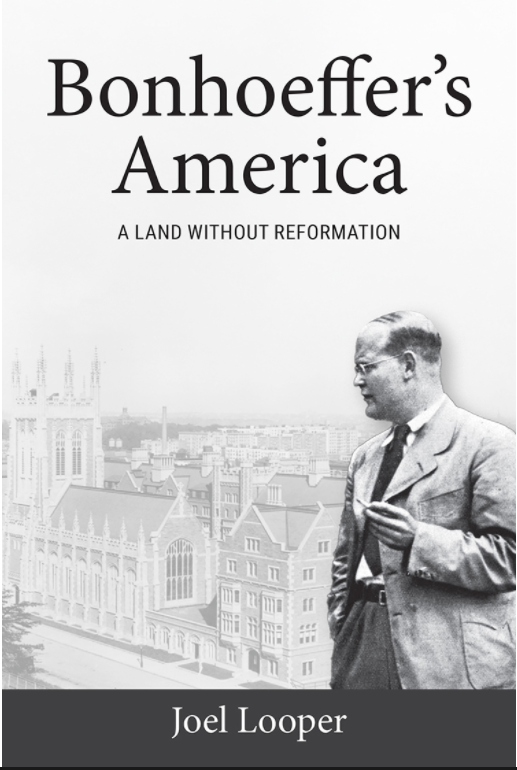
Dietrich Bonhoeffer’s time in America has been the subject of much scholarly discussion. It is clear it had enormous impact on his theology, but what hasn’t been as clear is exactly what kind of impact it may have had. Joel Looper’s phenomenal, challenging work, Bonhoeffer’s America: A Land Without Reformation not only seeks to answer definitively what kind of impact Bonhoeffer’s time in the United States had on the man and his theology, but also shows how extremely timely Bonhoeffer’s words and warnings about American theology can be for us today.
The book is divided into three parts. The first, “What Bonhoeffer Saw in America,” is Looper’s deep narration of Bonhoeffer’s life in America. Here, Looper delves deeply into Bonhoeffer’s coursework at Union Theological Seminary, who he interacted with, and what he himself reports about the situation with American theology. This part lays the foundation for the rest of the book. Here, Looper’s depth of knowledge and exploration of Bonhoeffer’s theology is on full display. It’s not just a report of Bonhoeffer’s time and words, but also an analysis that helps elucidate themes in Bonhoeffer’s writing from this time period that make much more clear what his issues were with American theology. Much of Bonhoeffer’s writing from his time in America is difficult to understand or comprehend without significant knowledge of contemporary issues, and Looper does an admirable job filling in those gaps, showing readers the background for understanding many of Bonhoeffer’s critiques. For example, some have utilized Bonhoeffer’s hard critiques of the social gospel to attempt to decry modern movements for social justice. However, Looper demonstrates that Bonhoeffer’s critique of the social gospel is not because it seeks to bring justice, but rather because it displaces the very gospel itself–that is, it doesn’t center revelation in Christ in the Christian message (see, for example pages 41, 46, and especially 48-49). The problem is not the ultimate efforts to feed the poor, stand with the oppressed, &c. The problem is, rather, the starting point of theology and its abandonment of revelation as the ultimate grounds.
The second part of the book focuses on Bonhoeffer’s analysis of American Protestantism specifically. American theology, as read by Bonhoeffer, had a primary problem in that it was “Protestantism without Reformation.” The meaning of this phrase is complex, but Looper notes that for Bonhoeffer, it can be traced back to Wycliffe and the Lollards. This sounds like an obscure point, but Looper, making Bonhoeffer’s own arguments clearer, shows how and why one might take this to be the case, particularly in the circles in which Bonhoeffer ran. It is clear, of course, that Bonhoeffer was not exposed to all of American theology, but what he saw ran in this vein, and the more conservative branches of theology he encountered were, in his opinion, little more than the most blunt and un-nuanced attempts to enforce orthodoxy. The Protestantism of the United States is so influenced by the strands Bonhoeffer mentioned that even Jonathan Edwards, cited by many as one of the greatest theologians America as produced, doesn’t even mention the church in his discussion of what one needs to be saved (75-76). American churches gave up any kind of confessional standard, only enforcing them after splitting again and again, and, in doing so, abandoned the Christian confession (86). American Protestants, for Bonhoeffer, no longer had something against which to protest, because they had severed themselves so distantly from the one true, holy, catholic church (86-87).
Even more damning is Bonhoeffer’s analysis of secularization in America. The pluralism enforced in America led to a kind of secularization of the church and idolization of the individual to the point that the allegiance was given to the nation state rather than to the church and God (102-103). This can be traced, again, to English dissenters who formed the backbone of colonial America. The secularization of the church is not due to some outside force acting upon it, but rather due to the church itself abandoning the word and being, again, a Protestantism without any kind of Reformation. In America, rather than having state churches, secularization came into play precisely because of the focus on freedom and independence–the church then becomes a mouthpiece for the alleged freedom the state provides (106-107).
Bonhoeffer’s own oft-misunderstood theology of the two kingdoms is, according to Looper, central to his understanding of the Gospel as well. Here is where Bonhoeffer’s Lutheranism is so central to his understanding of the problems with American theology and beyond. The call for “thy kingdom come” must include both church and state precisely because of the two kingdoms theology–the church and state are both necessary and linked to one another (113-114). Thus, the famous phrase from Bonhoeffer about “seizing the wheel” is not actually revolutionary but rather counter-revolutionary. Bonhoeffer saw the Nazis as the revolutionaries, and such an understanding fits well within the Two Kingdoms theology Bonhoeffer so ardently supported.
The third part of the book centers around objections to both Bonhoeffer’s view of the American church and objections that seek to counter this narrative. For example, much has been made of Bonhoeffer’s largely positive analysis of the Abyssinian Baptist Church in Harlem. Looper doesn’t downplay this positive theme in Bonhoeffer’s analysis of America, but he does contextualize it. The Abyssinian Baptist Church was, to our knowledge, the only African American church he encountered in the United States apart from perhaps one or two Sundays in the American south (131). Bonhoeffer has threads that sound like W.E.B. Du Bois in some of his analysis of the American situation, such as when he talks about what is “hidden behind the veil of words in the American constitution saying ‘all men are created free and equal'” (136). It’s clear this had a positive and even eye-opening impact on Bonhoeffer, and traces of this can be found in his theology. Bonhoeffer’s own discussion of Jews in Germany, such as in his “The Church and the Jewish Question” may have been somewhat influenced here. Looper analyzes Bonhoeffer’s discussion of the Jewish people and shows how, while at times it is couched in problematic language, it demonstrates a deeper understanding and concern than one could credit him merely given his background or upbringing. (The whole section on this is a fascinating read, showing clear analysis that’s well-worth reading. See p. 141-146 in particular.) Bonhoeffer’s theology, however, remained firmly German Lutheran, and his own life-risking efforts in behalf of the Jews were not traceable to some kind of vague Western morality of “equality of all” but rather, Looper asserts, clearly based upon his Christology (150). Thus, Bonhoeffer’s experience with the Abyssinian church demonstrates a caveat in his analysis of American theology. Rather than a total rejection of all American theology, Bonhoeffer’s words ought to be seen directed exactly as they were, against the overwhelmingly popular academic streams of thought in contemporary American theology.
Bonhoeffer’s imprisonment and his now famous Letters and Papers from Prison have led some to argue that he changed his views profoundly while in prison. Looper instead notes that his late-stage theology has continuity with that of his earlier life.
Looper’s work serves as a powerful challenge to many theologies of today. For those adhering to modern forms of the social gospel, Bonhoeffer’s warnings and critiques of that movement from his own time continue to apply: are these movements removing Christ from the center? For progressive Christians, Bonhoeffer’s critique of the social gospel can loom large–“Do such [progressive] theologies tend to respond to the critique of the word [revelation, Scripture] and think critically about their subjects in its wake? Or, rather, do they often begin with the (oppressed) self and work from the experience of that self and the non-ecclesial community with which it identifies? If the latter, are these theologies then only variants of ‘religious’ logic…?” (197-198). For conservatives, especially American evangelicals, Looper notes that the constant efforts to try to maintain a “seat at the table” in the larger world and their defense of their institutions, even to the point of, as many have said, voting while “holding their nose” for someone who, ethically, cannot be defended, would have been seen by Bonhoeffer as “Niebuhrian realism, pragmatism par excellence, and, in working from this script, evangelicals both brought the name of Christ into disrepute and forgot how the economy of God and of the church are supposed to work… Bonhoeffer would have called this evangelical struggle a cause of American secularization, not a buffer against it” (196). Bonhoeffer would see American theology today as a total abandonment of Protestant norms, exactly because of his theology of two kingdoms (joined with Luther’s) and because of the stark pragmatism of the right and the rush to de-center the Gospel on the left (198). Looper’s book thus serves as a blunt reminder of the dangers of our modern theological era and the need to offer correctives.
I have now read more than 70 books by or about Dietrich Bonhoeffer, his theology, and the world he inhabited in order to try to understand more about the man and his theology. Bonhoeffer’s America: A Land Without Reformation easily ranks in the top 10 of those books. Anyone who is interested in learning more about Bonhoeffer’s theology should consider it a must read. More importantly, though, those wishing to have an understanding of American theology and its problems to this day should seek out this fantastic book. I highly recommend it without reservation.
All Links to Amazon are Affiliates links
Links
Be sure to check out the page for this site on Facebook and Twitter for discussion of posts, links to other pages of interest, random talk about theology/philosophy/apologetics/movies and more!
Book Reviews– There are plenty more book reviews to read! Read like crazy! (Scroll down for more, and click at bottom for even more!)
SDG.
——
The preceding post is the property of J.W. Wartick (apart from quotations, which are the property of their respective owners, and works of art as credited; images are often freely available to the public and J.W. Wartick makes no claims of owning rights to the images unless he makes that explicit) and should not be reproduced in part or in whole without the expressed consent of the author. All content on this site is the property of J.W. Wartick and is made available for individual and personal usage. If you cite from these documents, whether for personal or professional purposes, please give appropriate citation with both the name of the author (J.W. Wartick) and a link to the original URL. If you’d like to repost a post, you may do so, provided you show less than half of the original post on your own site and link to the original post for the rest. You must also appropriately cite the post as noted above. This blog is protected by Creative Commons licensing. By viewing any part of this site, you are agreeing to this usage policy.

 J.W. Wartick - Reconstructing Faith