Calvinist
Book Review: “The Reformation Study Bible”
 A few months ago I was sent a review copy of The Reformation Study Bible. Given the title, I kind of expected there to be study notes from Luther, Calvin, Zwingli, and the like. I mean, it’s the “Reformation” Study Bible, right? What it actually is is a Reformed Study Bible. I’ll be reviewing it from that perspective as well as I can, but I wanted to be sure readers wouldn’t be confused, as I was.
The Bible is extremely robust, with notes often taking up half or more of the actual pages of the text. Each book has a brief introduction that does a good job outlining key details and theological themes. There are extensive maps and additional notes found throughout the text. Notes range from theological exposition to apologetics-oriented. At times they focus on a pastoral perspective or draw out inter-canonical readings of the texts. There is little that passes without comment.
I received the edition pictured here. The cover is beautiful and also very solid. The binding clearly will hold up quiet well under lengthy use. There are, of course, other bindings available including leather. The pages are extremely thin, however, and it is easy to see the text through the page. The font is small, though readable. As with most other modern study bibles, there is very little space in the margins for writing notes (apart from sections of biblical poetry).
The extent to which readers will enjoy this Bible is going to be almost entirely based on how much they align with Refromed theology. In some places (such as interpretation of Genesis 1), there is leeway granted in the notes for a spectrum of views. In others (such as the discussion over men and women in the church), a specific perspective (complementarianism) is heavily endorsed. Discussions of sacraments, foreknowledge, predestination, election, and the like are all explicitly Reformed in their perspective. This is not a strike against the study Bible–it is, after all, effectively a Reformed Study Bible–but readers must realize that they will get exactly that.
In order to write this review, I went through several books in their entirety, along with reading the notes and the like. These included Ruth, Genesis, John, and 1 Corinthians. In addition, I read selections from every other book. The tone and notes are consistent throughout. As already noted, the notes are also fairly extensive.
The bottom line is that you’re going to get out of The Reformation Study Bible exactly what you would expect from a conservative Reformed study Bible. It is excellent in that regard–and could even serve as a resource if you are interested in researching Reformed perspectives on various passages–but if that is not what you want, you should look elsewhere for a study Bible.
The Good
+Extensive notes with deep discussion of inter-related texts
+Good format
+Readable introductions with inter-canonical perspective noted
The Bad
-Confusing title
-Lots of notes will be largely disregarded if you have a different theological bent
Disclaimer: I was provided with a review copy of this book by the publisher. I was not obligated to write any specific kind of feedback whatsoever.
Who Interprets Scripture? Sola Scriptura, the Reformation, and the modern era: Reformation Review
 Theological debates raged throughout the period of the Reformation. These debates were about who had the right to interpret Scripture, what was the nature of salvation, who had authority in the church, and the like. Sound familiar? It should. Many of the debates that were central to the reformers are still in our purview today. Central to several of these debates focused upon the interpretation of Scripture.
Sola Scriptura: Two difficulties
The Reformers operated under the ideal of sola scriptura. The term literally means “scripture alone.” The notion seems simple enough: when it comes to doctrine, practice, and belief, the church universal is to be guided by Scripture alone. Yet it quickly became apparent during the Reformation era that things were not quite so simple.
First, sola scriptura was largely founded upon the notion that any Christian could read and understand Scripture. Yet, as became clear due to the fierce debates of the meaning of the Sacraments (i.e. the debate between Luther and Zwingli on the “real presence” in the Lord’s Supper), it seemed that on some things, Scripture wasn’t so simple (McGrath a, Reformation Thought: An Introduction
Second, Anabaptists and others argued that sola scriptura meant that every single individual Christian could read and understand the Bible for themselves. How was this problematic? Well, if every Christian could understand every part of the Bible, then there was no way to arbitrate between differing interpretations of soteriology (doctrine of salvation), eschatology (doctrine of the end times), and the like. Of course, not all of these interpretations could be correct, and if those who had argued for the individualism of Scriptural interpretation were correct, then they could all be right, in some sense. Furthermore, the issue was exacerbated in that because no one had the authority to proclaim what doctrines were correct, the church began to increasingly split to the point that “the radical Reformation was not a unified movement, but rather a chorus of protest against the clergy, secular authorities, and Reformers such as Luther and Zwingli. It was a reservoir for uncompromising protest that could well up in the most varied social circles… ‘Within the turmoiled flood of radical reform or restitution the fresh vitalities of the Reformation… were borne along swiftly to radical extremes'” (Carter Lindberg, The European Reformations
Limiting Perspicuity
The solution to the first problem was simply to concede that, on at least some issues, Scripture was not crystal clear. On at least certain points, the magisterial reformers “had conceded that Scripture is obscure” (McGrath a, 108). There was genuine disagreement over some issues. However, not all agreed with this conclusion, and some still pressed that all of Scripture was indeed clear. Such an argument tied into the second problem the Reformers had to confront in relation to sola scriptura: who has the right interpretation?
 Which Interpretation? Tradition’s Importance
Tradition played an important role in determining how the interpretation of Scripture was to be undertaken. During the Medieval period, a number of developments in hermeneutics laid the groundwork for the various interpretive methods utilized in the Reformation (McGrath b, 148ff). There were three primary views which emerged during the Reformation.
First, there was the position that “there is no place for tradition in the interpretation of the Bible. Every individual or community is free to interpret the Bible without reference to the Christian past” (McGrath a, 100). Such a position was part of the Radical Reformation and led to innumerable differing interpretations of Scripture. Of course, this was the group of reformers which applied sola scriptura most consistently. They took the principle literally and only allowed the Bible to be authoritative. However, with no way to arbitrate between differing doctrines, it seemed that such a position was incapable of standing up to scrutiny. All it could allow for was rampant individualism.
Second, there was the position that tradition was “an additional mode of divine revelation, in which information that was not committed to writing in the Bible was passed down…” (McGrath a, 100). The Roman Catholic church endorsed this position. However, it did not become popular with the reformers at all.
Instead, the Reformers developed a third position, one which stood as a middle way between the extremes of enshrining tradition and rejecting it outright. On this position, “Tradition designates a traditional way of interpreting a biblical text, which does not displace the text” (McGrath a, 100). Tradition therefore does not become an independent source of authority, but rather a way of interpreting the authority–Scripture–in an authoritative manner. By using tradition in this manner, the Reformers avoided the individualism of rejecting tradition, while also avoiding the error of raising tradition to the same level of importance as Scripture.
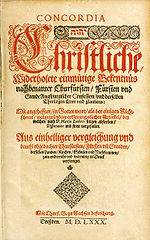
The third way was developed largely in the Reformed and Lutheran traditions, but it had its core in the historic Christian Creeds. Within the Lutheran tradition, the Apostles’; Nicene; and Athanasian Creeds were taken as theological foundations, and the Augsburg Confession and the later Book of Concord (which drew together several other confessions of the Lutheran faith) became the interpretive lens through which the Lutheran church would view Scripture and right doctrine.
Modern Theology, Reformation Problems
The discussions which occurred in the Reformation on the nature of sola scriptura, tradition, and the interpretation of Scripture had their origins in the past, and they continue into today. Some continue to insist that anyone can read the Bible and understand it in its entirety.
Against those who argue against their position, they insist that they themselves are just reading what the Bible says. This can be seen in a number of debates in Christian theology. It seems the best response to those who wield the ‘perspicuity of Scripture’ as a weapon against alternatives to their own doctrine have no alternative against those who disagree other than going back and forth claiming their own interpretation is correct and/or more clear.
The example I most often like to use is the book of Revelation and eschatology. Someone who claims the perspicuity of Scripture applies to the whole of Scriptural teaching must claim, in order to be consistent, that these doctrines are clear. Thus, such a person must maintain that every single verse in Revelation can simply be read by anyone and understood.
To be frank, I find this absurd. The extreme diversity of people’s interpretations of Revelation seem to undermine the notion that every passage in Scripture is clear. Furthermore–as has already been noted–those who hold to this radically individualistic position of Scripture have no way to decide between differing interpretations of Scripture. They are thus left with no way to determine any doctrine, whether it is radically opposed to Christianity or not, is heretical. Thus, one who holds this position cannot condemn modalism, as long as the person arguing for it is only using the Bible. After all, Scripture is clear! Everyone can read it. Therefore, it seems that this debate which continues to rage on from the Reformation must end. In order to avoid the mire of wanton individualism, we must have some principles for interpretation.
Another major issue of contemporary debate is that of Creeds and “paper popes.” Often, for example, the Lutheran Church is accused of utilizing the Book of Concord as a “paper pope”–a book which acts as an infallible interpreter of Scripture. Similarly, some argue that the historical Christian creeds are not Scripture and therefore must not be affirmed: again, sola scriptura.
It may be helpful to see this as a case study: in Lutheran circles, there is a debate over whether one must agree with the Book of Concord (the Lutheran Confessions) because it agrees with Scripture or insofar as it agrees with Scripture. Note the very important difference. If one says it is “because,” one is affirming that the Book of Concord is the correct intepretation of every relevant passage of Scripture. If one affirms that it is “insofar as,” one is admitting that there may be error in that interpretation. From a Lutheran perspective, this debate is hard to resolve. I tend to line up on the latter (insofar as) view.
However, it is clear that once one takes that position, one must lean more towards individualism. Again: how does one arbitrate doctrine if one does not adhere to any kind of authoritative statement on doctrine? It seems to me that one must at least hold that God has the power to transmit His teaching truthfully, and that’s why the historical Christian Creeds are vastly important. There must be a line drawn somewhere, but people may ever debate where to draw that line.
The key is perhaps found in Scripture itself, in which Christians are instructed not to continue arguments needlessly nor to focus upon topics which will create division (1 Corinthians 1:10ff; Ephesians 4:1ff). These teachings do not, however, preclude division nor do they allow for rampant individualism. It seems to me, therefore, that by adhering to the ecumenical council’s teaching–specifically, the creeds–as drawing out the right teachings of the church, we can avoid some of the great difficulties illustrated above. That’s why I would focus upon the Creeds which were drawn from those councils (like the Apostles’, and Nicene Creeds) as the sources of authoritatively governing Christian interpretations on those topics.
Conclusion
Many theological questions that are in play today have their origins in various aspects of Reformation thought, which themselves have their origins in earlier Christian thought. The issue of the perspicuity of Scripture, it seems to me, must be limited to that of soteriology and perhaps a few other core issues. On who has the authority to interpret Scripture, it seems that the Reformers offered a way forward: by agreeing to submit to the authority of ecumenical Creeds not as sources of their own authority but rather as authoritative interpretations of the Bible, Christians can proceed in their reading of Scripture and interpretations thereof through those lenses. Thus, the danger of individualism and endless division can be avoided.
Link(s)
I survey the origins of the Reformation.
Sources
Alister E. McGrath a, Reformation Thought: An Introduction
Alister E. McGrath b, The Intellectual Origins of the European Reformation
Carter Lindberg, The European Reformations
Thanks
Alister McGrath’s Reformation Thought: An Introduction was a gift from an anonymous donor. I was blown away when I saw it show up at my door and I have to say Thank you so much for being such a blessing! Whoever you are, you made my day. Well, more than just one day actually. This series of posts is a direct result of your donation. Thank you!
SDG.
——
The preceding post is the property of J.W. Wartick (apart from citations, which are the property of their respective owners, and works of art as credited) and should not be reproduced in part or in whole without the expressed consent of the author. All content on this site is the property of J.W. Wartick and is made available for individual and personal usage. If you cite from these documents, whether for personal or professional purposes, please give appropriate citation with both the name of the author (J.W. Wartick) and a link to the original URL. If you’d like to repost a post, you may do so, provided you show less than half of the original post on your own site and link to the original post for the rest. You must also appropriately cite the post as noted above. This blog is protected by Creative Commons licensing. By viewing any part of this site, you are agreeing to this usage policy.
Book Review: “How My Savior Leads Me” by Terri Stellrecht
It is with great rejoicing that we release our son, Trent Lee Stellrecht, age 12, to our Heavenly Father. Dance before your King, my son (xiii).
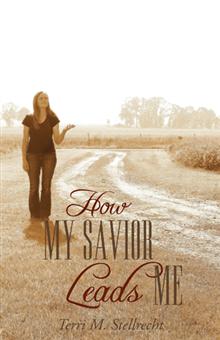
“How My Savior Leads Me” by Terri Stellrecht is a beautiful work of theological reflection.
Terri’s son, Trent, passed away at age 12. The first part of the book reflects upon the incident. Everything is set against the background of Terri’s faith. She describes Tren’s life from birth to death, and throughout focuses on the joys of a son and his coming to faith. The reality of sin in the life Trent is acknowledged, even from a young age (10-11). But Trent eventually repented, telling Terri, “I’m not right with God” and repenting, turning to Bible study, and glorying in the Lord (12ff).
But Trent’s life was cut short in a skiing accident. Terri describes the heart-rending scenes. The whole family saw his body, and Terri noted that “There was my son, but it was so clearly not Trent anymore. It was truly just a shell. A beautiful, young, 12-year-old shell of a body… It was so evident that there was no soul left” (32). The family took comfort in the last verses Trent had read, Isaiah 65:17-25, which starts, “See I will create new heavens and a new earth. The former things will not be remembered, nor will they come to mind.” Terri’s description of the funeral and other events surrounding Trent’s death is stirring and easily draws readers in. This is a Christian sister in mourning, and it rends the heart, even as readers rejoice with her that her son is in heaven.
The book continues with several chapters on sovereignty, mourning, and other topics. It concludes with a series of edited blog posts Terri wrote during the period shortly before and after Trent’s death. The blog posts are all worth reading. Readers will delight in Terri’s joy in her son and also weep with her in the times of sorrow. Her exhortations to fellow Christians to “wake up” reflect an intimate knowledge of one’s own standing with God that Christians would do well to remember (132ff).
Theology is found throughout “How My Savior Leads Me.” Terri is consistently affirming of God’s sovereignty. The book makes it very apparent how comforting a strong view of sovereignty can be in times of mourning. Terri writes, “When we are weak, God is strong/ He empowered us to walk through those church doors, and promised to be with us for it all… We acknowledged God’s goodness in His perfect plan…” (40). Later, she writes, “If God ordained the beginning, the middle, and every detail until the end of Joseph’s life, [see the Joseph narrative Genesis chapters 37-50] then isn’t it easy to conclude that He has ordained every detail in our lives as well?” (59). Clearly, the comfort is found in acknowledging that all things are part of God’s plan.
She turns also to the important question “Why has God ordained all things?” The answer Terri provides, on the basis of Ephesians 1:11-12 and Isaiah 43:7 is that it is for God’s glory to show through all things (59ff). “God’s sovereign hand” is found in suffering (61). It is part of a process of sanctification by which we are made holy (62ff).
Now, within the Christian tradition there are those who definitely do not agree that God “ordained” every detail of Joseph’s life, if the sense of “ordained” is “caused.” Here, this reader’s own philosophy of religion may be peeking through, but it does seem that, at times, “How My Savior Leads Me” is advancing theological determinism. That may indeed be the view Terri holds, but it seems to me that such a position is inconsistent with some other propositions she makes. For example, she clearly does seem to hold that Trent willingly came to the faith after being a willing rebel against God’s will earlier in his life. Further, Terri writes, “In God’s sovereign plan, man had to fall so that the glory of God would be revealed to it’s [sic] fullest” (65, emphasis mine). Now, this assertion is highly contentious and doesn’t receive any argument [there are verses on either side of it, but they are used to support propositions in conjunction with them… the quoted statement has no cited verses]. I realize this is a position most in the various Reformed schools hold, but it does require some kind of argument to support it. Many Christians–myself included–certainly do not agree that man “had to fall” in order to reveal God’s glory. Also, Terri briefly admits chagrin at the female chaplain presented to her at the hospital, noting “How many times… have I gone on about women pastors and what I believe about the churches embracing of a practice and position that the Bible clearly lays out as a man’s role?” (31). Again, no argument is made to support this position. It should be noted that these criticisms mostly come from treating the book as something it’s not. The book itself is a book of mourning and theological reflection; it is not a defense of a position. Readers like me who may disagree with some of Terri’s points, but can still laugh, cry, and jump for joy with Terri as we follow her reflective journey in this book.
Ultimately, “How My Savior Leads Me” deserves a read by anyone. I must use the word “beauty” to describe much of the book. It is beautiful to see a mother mourning her son while affirming the Lord. It is beautiful to weep with our fellow Christian as they endure suffering. It is beautiful to look ahead, and to marvel at how our savior leads us.
Terri Stellrecht, How My Savior Leads Me (Bloomington, IN: WestBow, 2011).
Disclaimer: I was provided a review copy of this book by the author. My thanks to Terri for the opportunity to review her book.
SDG.
——
The preceding post is the property of J.W. Wartick (apart from citations, which are the property of their respective owners) and should not be reproduced in part or in whole without the expressed consent of the author. All content on this site is the property of J.W. Wartick and is made available for individual and personal usage. If you cite from these documents, whether for personal or professional purposes, please give appropriate citation with both the name of the author (J.W. Wartick) and a link to the original URL. If you’d like to repost a post, you may do so, provided you show less than half of the original post on your own site and link to the original post for the rest. You must also appropriately cite the post as noted above. This blog is protected by Creative Commons licensing. By viewing any part of this site, you are agreeing to this usage policy.
Book Review: “Salvation and Sovereignty: The Molinist Approach” by Kenneth Keathley
 Molinism is a topic hotly debated in theological circles. There have been several books on the topic published just in the past few years, which, for a topic of analytic theology, is extraordinary. Kenneth Keathley’s work, Salvation and Sovereignty: A Molinist Approach
Keathley’s central position is that the Calvinistic “TULIP” (Total depravity; Uncondtiional election; Limited atonement; Irresistible grace; Perseverance of the saints) is the incorrect approach to salvation. Instead, he endorses the “ROSES” approach (Radical depravity; Overcoming grace; Sovereign election; Eternal life; Singular redemption).
The contrast is laid out in detail through the book, but to sum up, Keathley provides a comparison in the introduction. Radical depravity allows for free will while still emphasizing the fallen nature of people. Overcoming grace emphasizes “God’s beckoning that overcomes our wicked obstinacy” (3-4); sovereign election is the affirmation that God desires salvation of all; eternal life is to note that believers “enjoy a transformed life that is preserved and we are given a faith which will remain” (4); finally, singular redemption emphasizes that Christ’s atonement is not limited to the elect (4).
Keathley seeks to wed these concepts of salvation and sovereignty with the analytic theological concept of molinism. Molinism, Keathley argues, is a “middle way between Calvinism and Arminianism” (7). Molinists can affirm that God controls all things, that “man does not contribute to his salvation,” that the believer is eternally secure in Christ; further, they can affirm that “God is not the author of sin” that “God desires the salvation of all,” and that “At crucial times, humans have the ability to choose” (7).
Keathley then turns to a defense of molinism. Here, he touches briefly on some of the philosophical aspects of the molinist account. There are three “moments” of God’s knowledge: natural knowledge, middle knowledge, and free knowledge. These are not to be understood as temporal moments but rather moments of logical priority. The first moment, natural konwledge, is God’s knowledge of all possibilities. God’s middle knowledge is the knowledge of everything that “would” happen in given circumstances. Between this “moment” and the next, God chooses a world to actualize. Finally, God’s free knowledge is that knowledge of everything that will happen, given the created world (17). Keathley distinguishes these moments as “could” (natural knowledge), “would” (middle knowledge), and “will” (free knowledge) (17-18).
Next, the Biblical account is expounded. Before going into depth with individual verses, Keathley argues that the Bible teaches that God exhaustively knows all things (including the future), that God is holy and righteous and does not cause sin, and that humans do have freedom–contingent choices are placed before people (20). Keathley then turns to exegetical studies of various aspects of God’s knowledge and human freedom. First, he argues that God has exhaustive knowledge of all things (including the future), meticulous providential control, freedom, and righteousness (20ff). He then turns to a defense of the notion of human freedom in the Bible through a study of “contingent choices” put before people. He draws on both Old and New Testament examples to make his case. [In the interest of length I’ll not go through these arguments, but I would like to note that he utilizes over 30 separate verses in the first two pages of the Biblical evidence sections alone.]
The second chapter covers a side topic: Does God desire salvation for all people? Here, Keathley outlines 4 major positions regarding this. First, there is universalism–all are saved; second, there is double predestination–God chooses who will be saved and who will be reprobate; third, God has two wills–a revealed will in which God desires salvation and a decretive will in which, for unknown reasons, He passes over some; fourth, God has a consequent and antecedent will–“God antecedently desires that all be saved, but He consequently wills that faith is a condition to salvation” (42-43). Keathley argues that the fourth option is the most defensible (43ff).
Next, Keathley turns his work towards a specific defense of the “ROSES” position discussed above. This defense encompasses the rest of the book.
Radical depravity is a rejection of determinism along with an affirmation that humans are in bondage to sin and fallen (63). Keathley endoreses “soft libertarianism,” which affirms that people’s characters can determine the range of choices, but also that they are the “origin and source of their choices” and that they are genuinely free to reject or choose specific actions (70ff).
Overcoming grace holds that while grace is monergistic–God is the only worker in salvation, it is resistible. “God’s grace is truly offered and available. The difference between the saved and the lost is the continued rebellion of the unbeliever” (105). This is an “ambulatory” model, which basically means that God is drawing all people to Him at all times, such that the only way to not be saved is to resist belief in Him.
Keathley holds “sovereign election” in which “God ordains the salvation of the elect but only permits the damnation of the reprobate” (142). Keathley follows this chapter with “Eternal Life” in which he argues that believers can feel certainty about their salvation. Finally, “Singular Redemption” is the notion that “redemption is provided for all, but applied only to those who believe” (194). This reflects the “penal substitutionary atonement” view (ibid). Thus, God provides salvation to all who believe, and applies it to those who do.
Salvation and Sovereignty is not unique simply because of its emphasis on the theological utility of molinism. The book is also written at a level that general readership will find accessible. Considering the extreme nuances and significant philosophical groundwork which must go into an explication of molinism, Keathley does a simply phenomenal job making the concept accessible to readers who are not philosophically trained.
However, it should be noted that because of this simplification, several of the philosophical issues related to molinism drop off. Not only that, but it seems that Keathley is operating under very slightly different views of what molinism entails. For example he states that molinism is a kind of “compatibilism” (5). This is false for most molinists, because most molinists defend libertarian freedom in conjunction with God’s foreknowledge. Thus, it is not compatibilism but libertarianism. Finally, many philosophical objections to molinism are left untouched. Due to the focus of the book, however, these seem minor flaws for the overall work.
Keathley’s work is exciting in many ways. It brings the molinist discussion to a more general readership. It provides a significant challenge to theological determinism. Finally, and perhaps most interestingly, it provides an account which shows the theological fruitfulness of the concept of middle knowledge. Readers interested in any of these topics should immediately get the book and read it. For those who have engaged with molinism on a philosophically developed level, it provides an interesting account of how to apply those studies to a theological framework. For those who know little or nothing about molinism, it provides an excellent introduction. While readers may not agree with all of Keathley’s theological positions, his work will challenge and inform anyone who reads it. It comes highly recommended.
Source:
Kenneth Keathley, Salvation and Sovereignty: A Molinist Approach
SDG.
——
The preceding post is the property of J.W. Wartick (apart from citations, which are the property of their respective owners) and should not be reproduced in part or in whole without the expressed consent of the author. All content on this site is the property of J.W. Wartick and is made available for individual and personal usage. If you cite from these documents, whether for personal or professional purposes, please give appropriate citation with both the name of the author (J.W. Wartick) and a link to the original URL. If you’d like to repost a post, you may do so, provided you show less than half of the original post on your own site and link to the original post for the rest. You must also appropriately cite the post as noted above. This blog is protected by Creative Commons licensing. By viewing any part of this site, you are agreeing to this usage policy.

 J.W. Wartick - Reconstructing Faith