catechesis
Bonhoeffer’s Catechesis: Foundations for his Lutheranism and Religionlessness
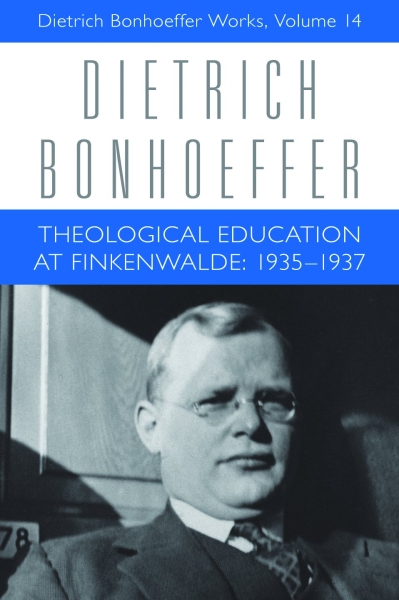
Dietrich Bonhoeffer was deeply involved in educating youths. He saw the need for it and was apparently quite skilled, building a reputation in Barcelona for caring for a rambunctious group of students. When teaching at the illegal seminary at Finkenwalde, one of the many subjects he touched upon was catechesis–basic Christian education. Bonhoeffer’s teaching on catechesis revealed that his thoughts on religionless Christianity were already quite embedded at this middle stage of his theology, and that his staunch Lutheranism held throughout his life.
When starting his lectures on catechesis, he began with some commentary on Christian instruction. However, this commentary was fronted with the notion that Christian instruction is embedded in proclamation. Conceptually, this is because those involved in catechesis have been baptized, and, due to their baptism, they are already Christian. Thus, Bonhoeffer declares that, related to the education of young people: “the struggle, the victory belongs to the church because God has long since brought the children into the church through baptism. Whereas the state must first make itself master [Herr], the church proclaims the one who is Lord [Herr].” Bonhoeffer goes on to clarify, “Christian education begins where all other education ceases: What is essential has already happened. You have already been taken care of. You are the baptized church-community claimed by God” (DBWE 14:538).
Because of the status of those learning from the church as the already baptized, Bonhoeffer argues, the church can proclaim from the start the reality that they are already in the church community. Baptism has made this happen, by the power of the Spirit. It would be hard to imagine a more Lutheran understanding of the starting point of Christian instruction than this. For Bonhoeffer, baptism was not an abstraction or a symbol: it was a very real status change of the person being baptized as becoming part of the church-community.
The same lecture series shows Bonhoeffer’s thoughts on religionless Christianity were not merely a late development while in prison. While commenting on “What makes Christian education and instruction possible…” Bonhoeffer notes that it is “baptism and justification” (DBWE 14:539). This obviously hearkens back to the discussion above; baptism as a reality-changing sacrament. But he goes on: “People may well argue about whether religion can be taught. Religion is that which comes from the inside; Christ is that which comes from the outside, can be taught, and must be taught. Christianity is doctrine related to a certain form of existence (speech and life!)” (ibid, 539-540).
Bonhoeffer here links religion with that that comes from within–something he not-infrequently links to idol-building. Religion in his own time is what allowed the German Christian movement to join and overwhelmingly support the Reich Church of the Nazis. By contrast, Christ comes from the outside, through baptism, and can and must be taught. Our religious ways are attitudes we shape and create, but Christ, the God-reality, comes from outside of us and must be proclaimed. And, ironically, this leads to true foundations of doctrine that entail a “certain form of existence” which Bonhoeffer clearly links to the reality of everyday life but also to resistance and calls to repentance for the church itself.
In this way, we can see the foundations, at the least, are here in Bonhoeffer’s thought for religionless Christianity. The fact that there is a contrast between religion and Christ is quite evident. The link between Christ, word, and sacrament is fully there. So while some may claim Bonoheffer’s religionless Christianity is anti-ritual, this cannot be further from the truth. Here, Bonhoeffer very clearly links religionlessness to sacrament and true faith. For Bonhoeffer, what signifies religion is not traditions or sacrament, but rather that which comes from within us and causes us to create our idols.
Links
Dietrich Bonhoeffer– read all my posts related to Bonhoeffer and his theology.
Be sure to check out the page for this site on Facebook and Twitter for discussion of posts, links to other pages of interest, random talk about theology/philosophy/apologetics/movies and more!
SDG.
——
The preceding post is the property of J.W. Wartick (apart from quotations, which are the property of their respective owners, and works of art as credited; images are often freely available to the public and J.W. Wartick makes no claims of owning rights to the images unless he makes that explicit) and should not be reproduced in part or in whole without the expressed consent of the author. All content on this site is the property of J.W. Wartick and is made available for individual and personal usage. If you cite from these documents, whether for personal or professional purposes, please give appropriate citation with both the name of the author (J.W. Wartick) and a link to the original URL. If you’d like to repost a post, you may do so, provided you show less than half of the original post on your own site and link to the original post for the rest. You must also appropriately cite the post as noted above. This blog is protected by Creative Commons licensing. By viewing any part of this site, you are agreeing to this usage policy.

 J.W. Wartick - Reconstructing Faith